
Flat and matte paint look almost identical on a swatch card. So most people pick one, take it home, and call it done.
Then three months later, they’re scrubbing a smudge off the wall and watching the paint lift right off.
I’ve watched this happen on client projects more times than I can count. Someone picks flat for a hallway or matte for a ceiling, and the finish fails before the first year is up.
The two look similar, but they don’t perform the same way. They reflect light differently, clean differently, and age differently. The wrong choice in the wrong room will cost you a repaint you didn’t budget for.
This guide breaks down every real difference between flat and matte paint, room by room, so you pick the right one the first time.
Are flat and matte paint actually the same thing?
No. But the confusion makes total sense.
Some paint brands slap “flat” and “matte” on the same can. Others treat them as two completely different finishes. That inconsistency is what trips people up at the store.
Here’s what you need to know: “matte” comes from the French word “mat,” which means dull or flat. So the words share a root.
But in the paint industry, they’ve split into two distinct sheen levels, and most major brands (Benjamin Moore, Sherwin-Williams, Behr) now treat them as separate finishes.
The industry separates them by sheen level, which is the amount of light a painted surface reflects.
Flat paint reflects almost no light: 0 to 5% gloss. Matte paint reflects a touch more: roughly 5 to 10% gloss.
That gap sounds small. On a wall, it’s noticeable.
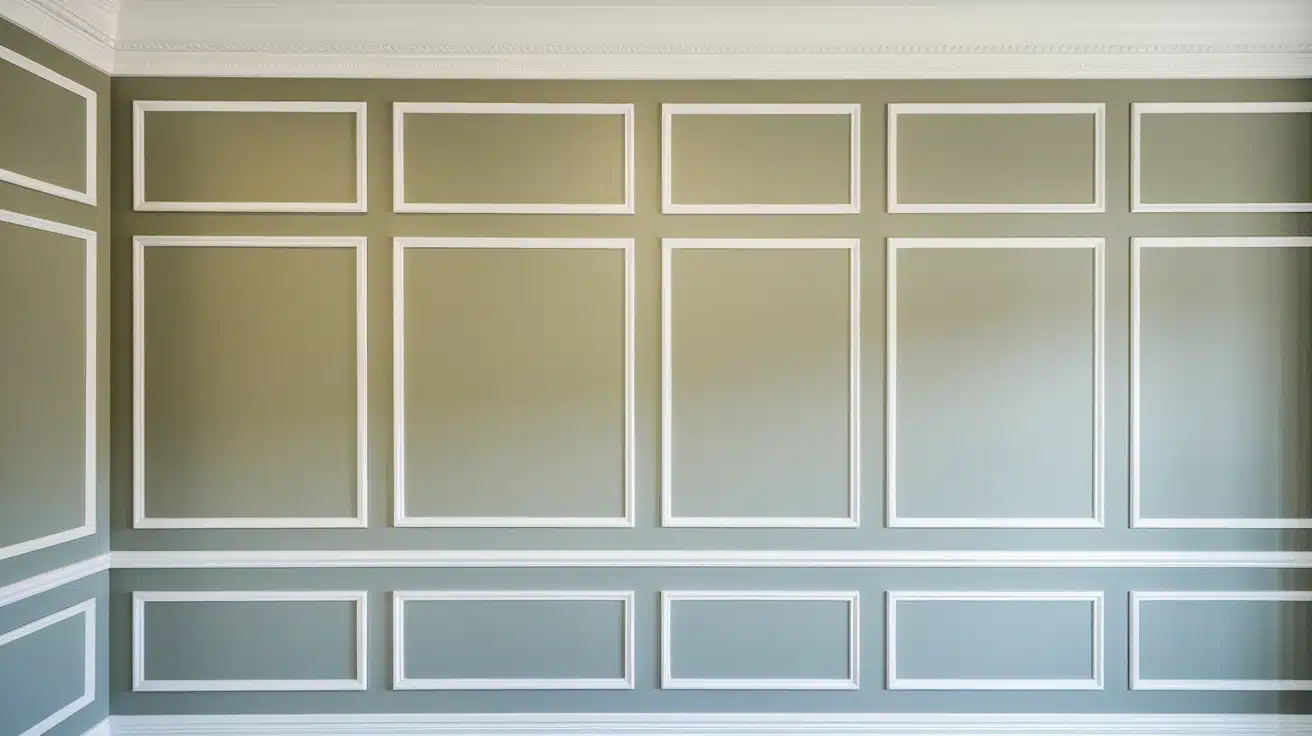
Flat gives you a completely dead, chalky surface. Matte gives you a soft, velvety finish with the faintest warmth of light. Neither looks shiny, but they don’t look identical either.
My advice: ignore the label on the front of the can. Flip it over and check the sheen percentage on the technical data sheet. That number tells you exactly what you’re getting, regardless of what the brand decides to call it.
Sherwin-Williams alone uses “flat,” “flat enamel,” “matte,” and “velvet” across different product lines, and the sheen overlap between them can be confusing even for pros.
How does each finish look and feel on a wall?
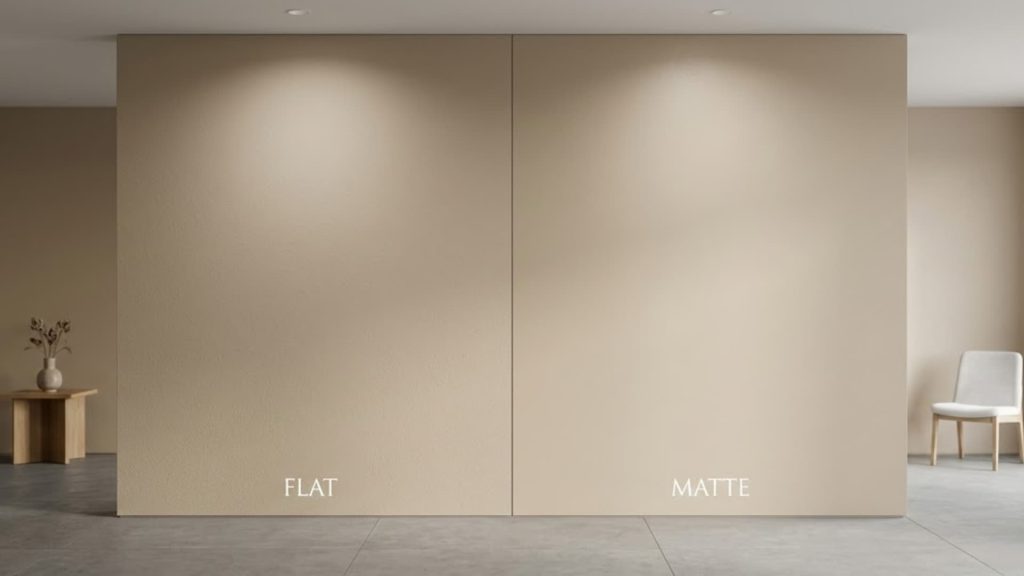
Stand a few feet back from a flat painted wall. It looks completely still. No shine. No movement. The color sits deep and rich, almost pressed into the surface. Run your hand across it, and it feels slightly chalky, almost powdery.
Now do the same with a matte wall. There’s a faint softness to it. Not shiny. Not glossy. A quiet warmth that flat doesn’t have. I always describe it to clients as the difference between construction paper and velvet. Both are soft, but one has a bit of life to it.
That difference comes down to light.
Flat paint absorbs it completely. Because nothing bounces back, your eyes can’t pick up bumps, cracks, or uneven patches. The wall looks smooth even when it isn’t. This is why flat is a go-to for older homes with plaster walls or patched drywall.
Matte absorbs most light but reflects enough to give walls a richer, slightly more modern feel. The trade-off: surface flaws become slightly more visible than under a flat finish.
Both finishes keep the walls calm and quiet. Neither competes with your furniture or decor. But looks are only half the decision. The other half is what happens once people start living with those walls.
Which finish is easier to clean and maintain?
This is where the two finishes really split apart.
Flat paint isn’t built for cleaning. Its surface is porous, so it absorbs everything: grease, fingerprints, dirt, moisture. Scrub it and you risk burnishing, where friction turns the surface shiny in patches. That shiny spot can’t be wiped away. The only fix is a repaint.
If you’ve ever tried to wipe crayon off a flat painted wall, you know exactly what I’m talking about. The mark comes off, but the wall never looks the same.
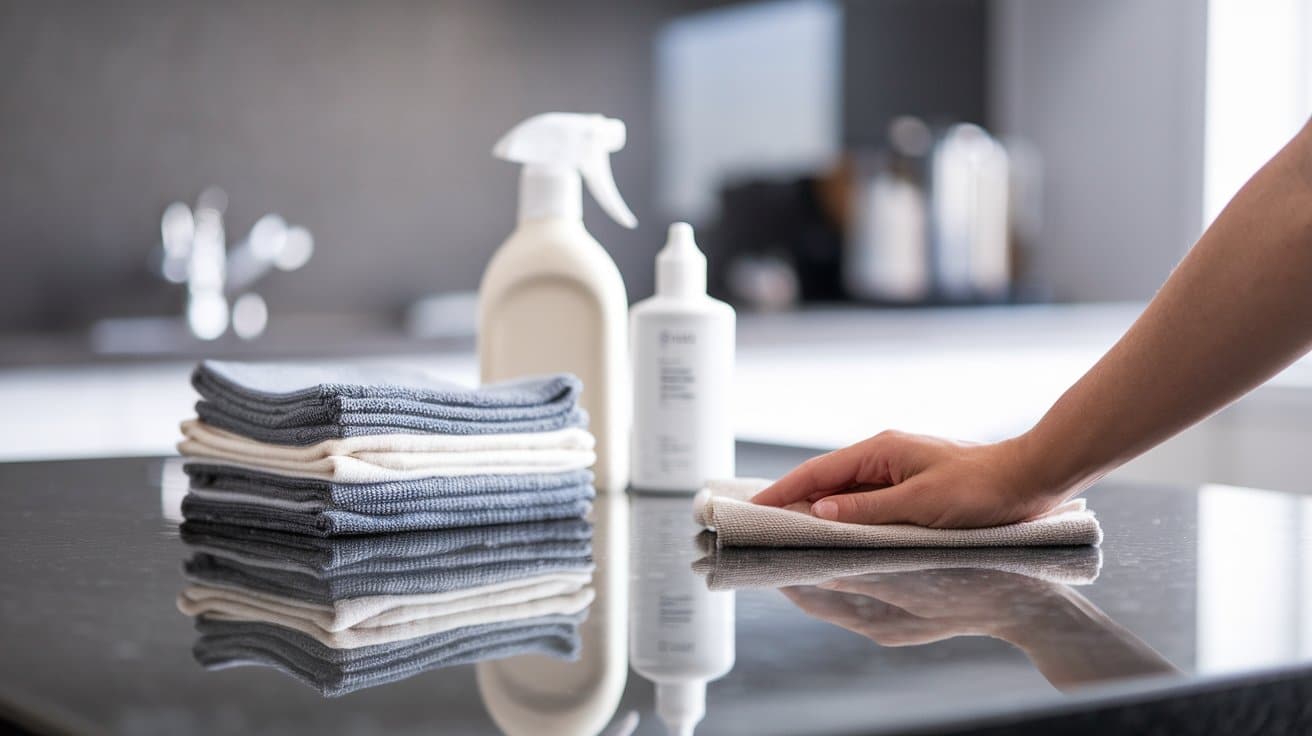
Matte paint handles everyday cleaning much better. Its slightly denser surface means a damp cloth can lift most marks without damaging the finish.
Premium options like Benjamin Moore Aura Matte, Sherwin-Williams Duration Home Matte, and Behr’s Marquee Matte are engineered to resist stains while maintaining a low-sheen look. If you need walls that can be wiped down regularly, these are worth the extra cost per gallon.
| Cleaning Scenario | Flat Paint | Matte Paint |
|---|---|---|
| Wipe with a damp cloth | Risks color pull | Handles it well |
| Light soap and water | Can damage the finish | Generally safe |
| Heavy scrubbing | Causes burnishing | Not recommended |
| Stain resistance | Low | Moderate |
| Best for | Surfaces rarely touched | Walls with regular contact |
| The rule is simple: if a wall will ever need to be wiped down, use matte. Save flat for surfaces that will not be touched. |
Cleaning tells you how a finish handles today. But how it holds up over months and years is a different question entirely.
How durable is flat paint compared to matte?
Cleaning keeps walls looking good week to week. But durability decides how long you go before pulling out the paint can again.
1. Scuff Resistance
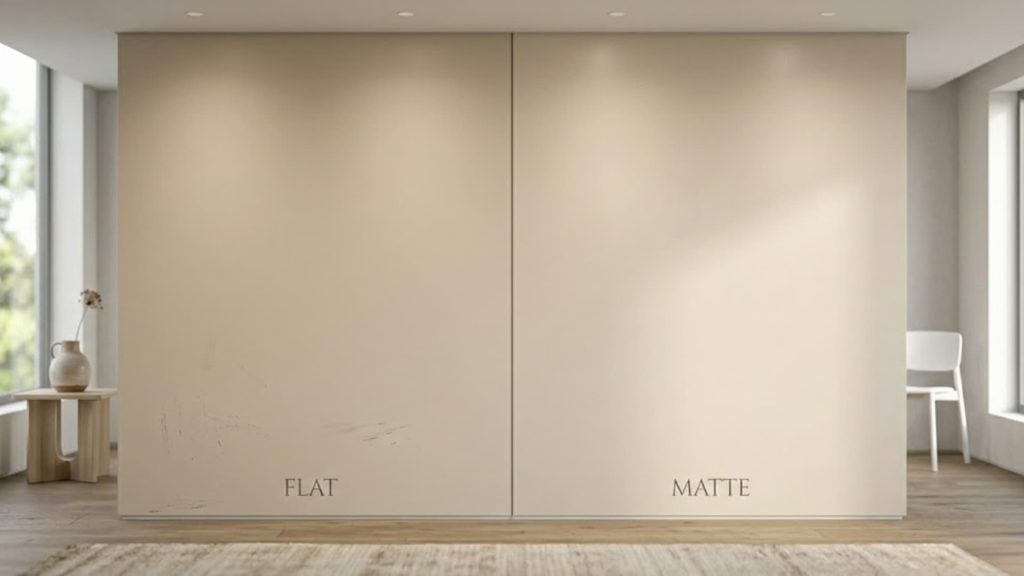
Flat paint is prone to wear on walls that are regularly touched. Scuffs show up fast. Bags brushing past, furniture getting moved, even a shoulder leaning against the wall while tying shoes. In a high-traffic hallway, flat paint can start looking worn within a year.
I renovated a client’s entryway two years ago using a flat finish (their choice, not mine). By month eight, the walls next to the coat hooks looked like they’d been through a school hallway. Matte would have handled that same traffic without breaking a sweat.
Matte holds up noticeably better. Its slightly denser surface resists light scuffs and minor contact, which means walls in active rooms stay cleaner for longer.
2. Touch-Up Behavior
This is where flat paint earns its reputation. Because it reflects no light, a fresh patch blends into the existing wall almost invisibly. No lap marks. No shiny spots where new paint meets old. For low-traffic spaces, flat is the most forgiving finish to maintain.
Matte touch-ups are slightly less forgiving. Most of the time, they blend fine. But if the original paint has aged or faded even a little, a fresh patch can look different under certain lighting. Pro tip: keep leftover paint in the original can, sealed tight, and feather your edges when touching up. Same batch, same brush, same result.
3. How Long Each Finish Lasts
In low-traffic rooms like formal dining rooms or adult bedrooms, both finishes last 5 to 7 years without issue.
In busier spaces, the gap widens. Flat paint in a high-traffic hallway may need repainting within 1 to 3 years. Matte in the same space will comfortably last 3 to 5 years. Over time, that difference adds up in both money and effort.
One thing worth noting: paint quality matters more than sheen for longevity. A premium flat (like Benjamin Moore Regal Select) will outlast a bargain matte from a big-box store. The formula is what drives durability, not the sheen level alone.
How much does flat vs matte paint cost?
Most people look at the price tag on the can and stop there. That is the wrong way to think about paint costs.
| Cost Factor | Flat Paint | Matte Paint |
|---|---|---|
| Standard price per gallon | $20 to $35 | $30 to $55 |
| Premium washable formulas | $35 to $50 | $60 to $80 |
| Coats needed (avg) | 1 to 2 | 1 to 2 (may need 3 on dark/patched walls) |
| Coverage per gallon | ~350 to 400 sq ft | ~300 to 350 sq ft |
| Repaint frequency (high-traffic room) | Every 1 to 3 years | Every 3 to 5 years |
| Repaint frequency (low-traffic room) | Every 5 to 7 years | Every 5 to 7 years |
| 5-year cost estimate (active room, ~400 sq ft) | $120 to $210 (2-3 repaints) | $60 to $110 (1 repaint) |
| Best value scenario | Low-traffic ceilings, guest rooms, rentals | Family rooms, hallways, kids’ rooms |
Which rooms should get flat paint and which should get matte?
Knowing the difference between these two finishes is one thing. Knowing exactly where to use each one is where most people get stuck. Here’s a room-by-room breakdown.
| Room | Finish | Why? |
|---|---|---|
| Ceilings | Flat | Rarely touched, needs zero glare, hides roller marks and seams |
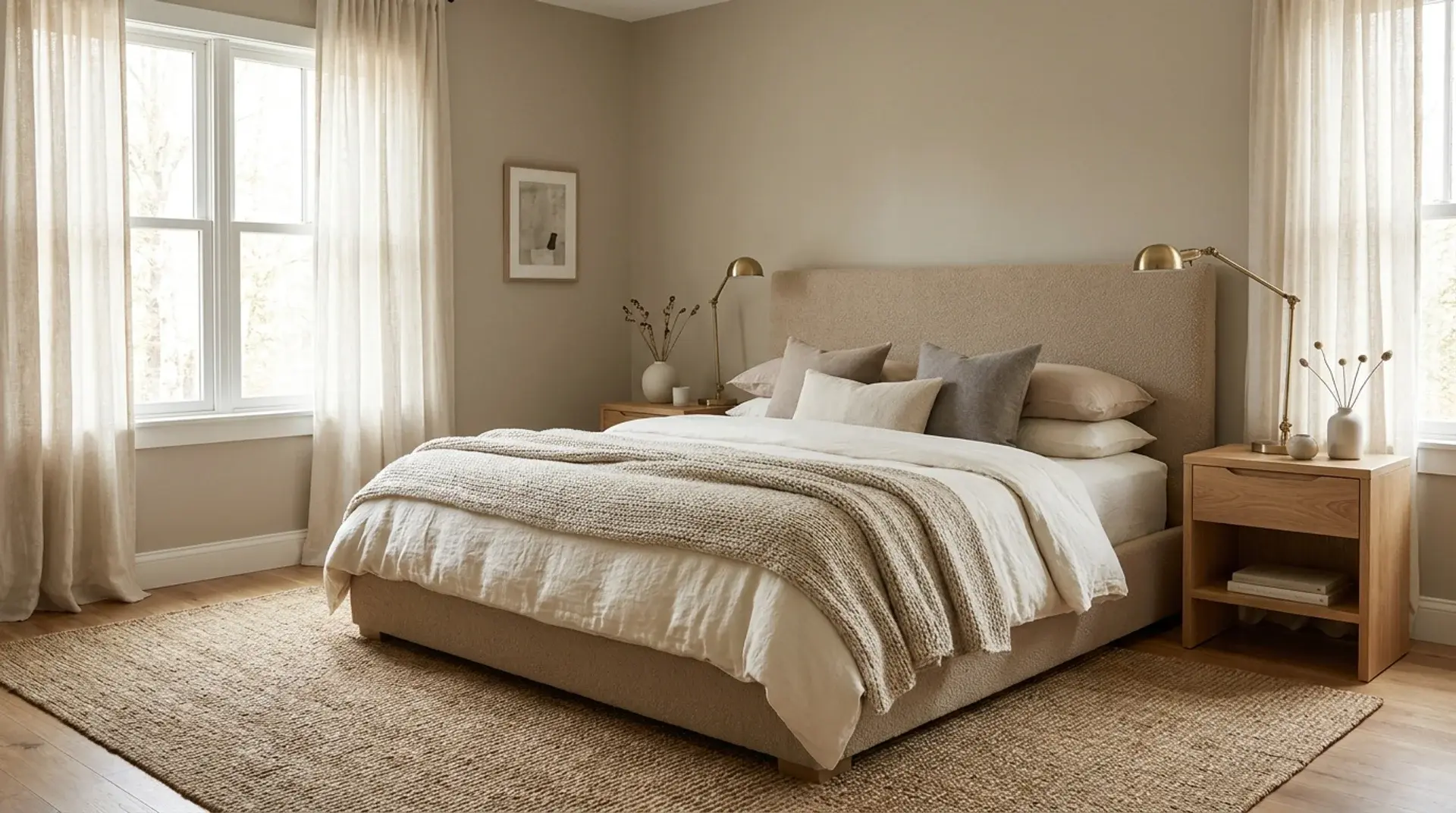
| Adult bedrooms | Flat | Minimal wall contact, easy touch-ups, rich color depth |
| Kids bedrooms | Matte | Handles handprints and scuffs without frequent repainting |
| Living and family rooms | Matte | Daily activity, walls get bumped and leaned against |
| Hallways | Matte | High contact area, bags, and shoulders brush against walls constantly |
| Formal dining rooms | Flat | Low traffic makes bold colors look deep and rich |
| Home offices | Flat or Matte | Depends on how much wall contact the space gets |
| Rental properties | Flat | Affordable, covers fast, touches up cleanly between tenants |
Should you use flat or matte paint on exterior walls?
This depends entirely on the surface.
Flat exterior paint works well on stucco, brick, and older siding where hiding surface flaws matters more than washability. It gives these textured materials a clean, uniform look.
Matte exterior paint is a better option for wood siding and smoother surfaces where you want a bit more durability against weather and UV. Matte exteriors resist chalking (that white powdery residue that forms over time) better than flat.
For doors, trim, and window frames, skip both and use satin or semi-gloss. These surfaces need to handle rain, temperature swings, and regular contact, and low-sheen finishes aren’t built for that.
One thing I’d add from project experience: in humid climates (the Southeast, Gulf Coast, Pacific Northwest), matte exterior paint tends to resist mildew growth better than flat. Flat’s porous surface holds onto moisture longer, which gives mildew a foothold.
How do flat and matte compare to eggshell and satin?
Flat and matte sit at the bottom of the sheen spectrum. If you’re trying to figure out where they fall relative to other finishes, here’s the full lineup from least to most reflective:
Flat (0-5% gloss) → Matte (5-10%) → Eggshell (10-25%) → Satin (25-35%) → Semi-gloss (35-70%) → High-gloss (70%+)
Most of the confusion comes from matte, eggshell, and satin, which are all in that “low to medium sheen” range where differences are subtle on a swatch but obvious on a wall.
Eggshell is the next step up from matte. It has a very subtle sheen (think of the surface of an actual eggshell) and cleans more easily than either flat or matte. For families with young kids or pets, eggshell is often the sweet spot between aesthetics and practicality.
I recommend it more than any other finish for main living spaces because it gives you that soft look without the cleaning headaches.
Satin adds more noticeable shine and is the standard recommendation for kitchens, bathrooms, and any high-moisture area. It’s tougher, handles scrubbing well, and resists mildew better than anything lower on the sheen scale. The tradeoff is that it shows every wall imperfection, so your prep work needs to be solid.
If you like the look of flat or matte but need more durability, try eggshell first before jumping to satin. It keeps that soft, non-reflective feel while giving you better stain resistance.
One thing I tell clients all the time: you don’t have to pick one finish for the whole house. Use the table below to match each room to the right sheen, and your home will look better and last longer for it.
| Feature | Flat | Matte | Eggshell | Satin |
|---|---|---|---|---|
| Gloss level | 0 to 5% | 5 to 10% | 10 to 25% | 25 to 35% |
| Light reflection | None | Very low | Low | Moderate |
| Hides wall imperfections | Best | Very good | Good | Poor |
| Washability | Not washable | Light wiping only | Handles regular wiping | Scrub-friendly |
| Scuff resistance | Low | Moderate | Good | Very good |
| Stain resistance | Low | Moderate | Good | High |
| Touch-up blending | Excellent | Good | Fair | Difficult |
| Moisture resistance | Poor | Poor | Moderate | Good |
| Best rooms | Ceilings, guest rooms, formal dining | Bedrooms, living rooms, hallways | Family rooms, kids’ rooms, offices | Kitchens, bathrooms, laundry rooms |
| Price per gallon (avg) | $20 to $35 | $30 to $55 | $30 to $50 | $30 to $55 |
| Ideal for | Low-traffic spaces, older walls, rentals | Moderate-traffic rooms wanting a soft look | Active family homes needing balance | High-moisture, high-scrub areas |
Conclusion
Flat and matte paint aren’t the same finish. They look different, clean differently, and age differently. Choosing the wrong one in the wrong room will cost you time, money, and a repaint you didn’t budget for.
The rule is simple. Use flat on ceilings and low-traffic rooms where walls stay clean. Use matte anywhere walls get touched, bumped, or wiped down regularly. And if you’re unsure, matte is almost always the safer call for walls that see any kind of daily life.
Both finishes belong in a well-painted home. I use them together on almost every project, each one doing what it does best. Match the finish to how the room actually lives (not how it looks on a swatch card) and you’ll be happy with the result for years.
Frequently Asked Questions
Can You Paint Matte Over Flat Paint?
Yes. Make sure the flat painted surface is clean and dry. No primer is needed unless the wall has damage or stains that need sealing first.
Can You Use Flat or Matte Paint in a Bathroom?
Avoid both in bathrooms. Humidity and moisture damage low-sheen finishes quickly. Use satin or semi-gloss for better water resistance and easier cleaning.
Can You Mix Flat and Matte Paint Together?
Yes. Mixing the two creates a finish somewhere between the two sheen levels. It works for touch-ups, but results can vary depending on the brand.
Does Flat or Matte Paint Work on Exterior Walls?
Flat exterior paint works on surfaces like stucco and brick, where hiding flaws matters. For doors and trim, use satin or semi-gloss for better weather resistance.