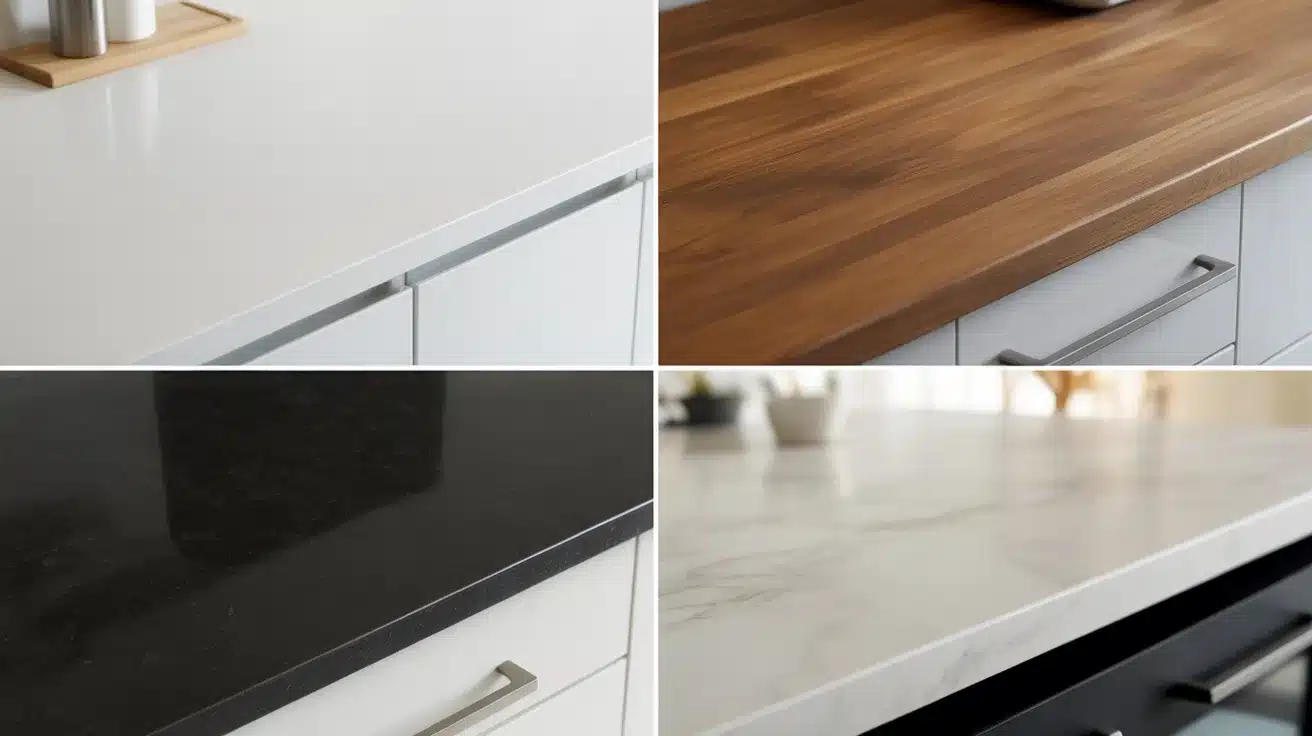

There are more types of countertops on the market right now than at any point I can remember.
And after years of helping clients pick surfaces for their kitchen remodels, I can tell you: the wrong countertop is the kind of mistake you live with every single day.
Granite, quartz, marble, butcher block, concrete, porcelain, and about two dozen more options are all fighting for your attention. Each one comes with a different price tag, maintenance schedule, and look.
This guide breaks down 33 kitchen countertop materials with honest pros and cons, real cost ranges per square foot, and tips I’ve picked up from years of sourcing and installing these surfaces. No filler. No fluff. The goal is to get you to the right material, fast.
Why Does Your Countertop Material Matter?
Your countertop takes more abuse than any other surface in your kitchen. Hot pans, acidic spills, knife slips, and kids dropping things. It also happens to be one of the most visible design elements and one of the most expensive to rip out and replace.
According to the Cost vs. Value Report 2025, a minor kitchen remodel offers an ROI of about 113%. Countertops play a direct role in that number. Buyers walk into a kitchen and look at the countertops before anything else. A scratched-up laminate surface sends a very different message than a clean slab of quartz.
The material you choose affects how you cook, how you clean, and how much time you spend maintaining the surface over 10 to 20 years. That matters more than most people think during the shopping phase.
How Do the Most Popular Countertop Materials Compare?
Here’s a quick reference table of the 10 most common kitchen countertop materials. Use it to narrow your options before reading the full breakdown below.
| Material | Cost per Sq. Ft. (Installed) | Durability | Maintenance | Best For |
|---|---|---|---|---|
| Quartz | $50–$200 | High | Low | Most kitchens, low-maintenance households |
| Granite | $40–$200 | High | Medium (seal yearly) | Heat-heavy cooking, classic style |
| Marble | $40–$250 | Medium | High (seal + careful use) | Baking areas, luxury kitchens |
| Quartzite | $65–$150 | High | Medium (seal periodically) | Marble look without marble fragility |
| Butcher Block | $55–$200 | Medium | Medium (oil regularly) | Farmhouse kitchens, food prep zones |
| Laminate | $10–$50 | Low | Low | Budget remodels, rentals |
| Concrete | $70–$200 | Medium | High (seal regularly) | Modern/industrial kitchens |
| Solid Surface | $35–$130 | Medium | Low | Seamless look, family kitchens |
| Porcelain | $55–$120 | High | Low | Busy kitchens, outdoor use |
| Stainless Steel | $70–$215 | High | Low (wipe clean) | Professional-style kitchens |
Prices reflect 2025–2026 US national averages, including fabrication and installation. Your actual cost will depend on edge profiles, sink cutouts, and regional labor rates.
What Are the Best Types of Countertop Materials?
1. Quartz Countertops
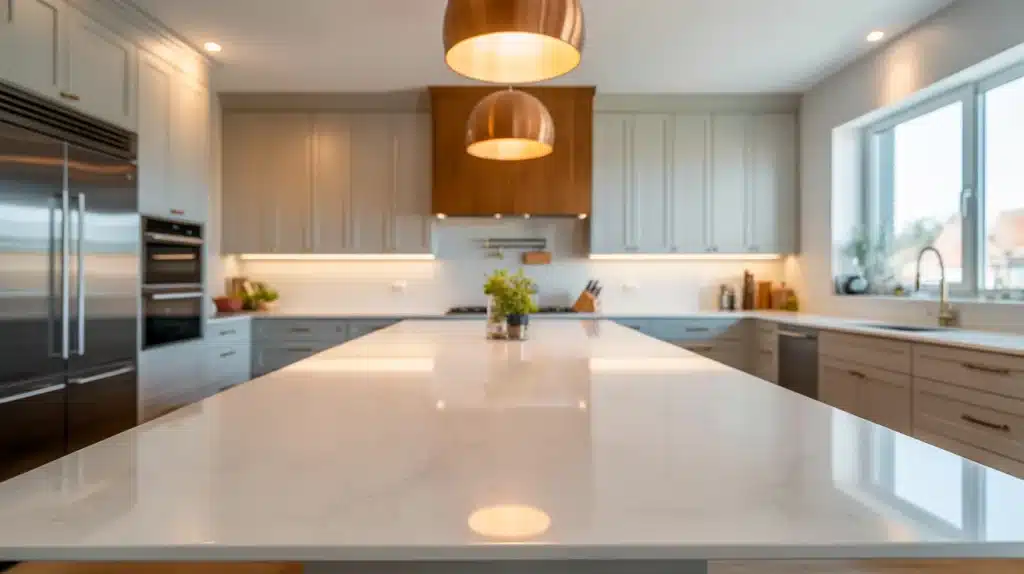
Quartz is the most popular countertop material in the US right now, and it’s earned that spot.
About 90–95% of ground natural quartz is bonded with polymer resins and pigments, creating a non-porous slab that doesn’t need sealing. No sealing means no annual maintenance ritual, which is a real selling point for busy households.
The color and pattern options have exploded in recent years. You can get quartz that mimics Calacatta marble veining so well that most people can’t tell the difference without touching it. Brands like Caesarstone, Cambria, and Silestone offer hundreds of styles.
Costs range from $50 to $200 per square foot installed, depending on the brand and edge profile. That puts it in the premium range, but the near-zero maintenance costs over its lifetime tend to balance things out.
I’ve recommended quartz for more kitchen remodels than I can count at this point, and the feedback loop is pretty consistent: clients love it two years in because it still looks the way it did on install day.
The one complaint I hear? Hot pans. A client left a screaming-hot cast-iron skillet on her white quartz island for about 30 seconds, and it left a faint discoloration mark. Trivets aren’t optional with this material.
| Pros | Cons |
|---|---|
| Durable and low-maintenance | More expensive upfront |
| Non-porous and stain-resistant | Less heat-resistant than natural stone |
Pro Tip: Keep hot pots off quartz surfaces. Always use a trivet to avoid damage.
2. Solid Surface Countertops
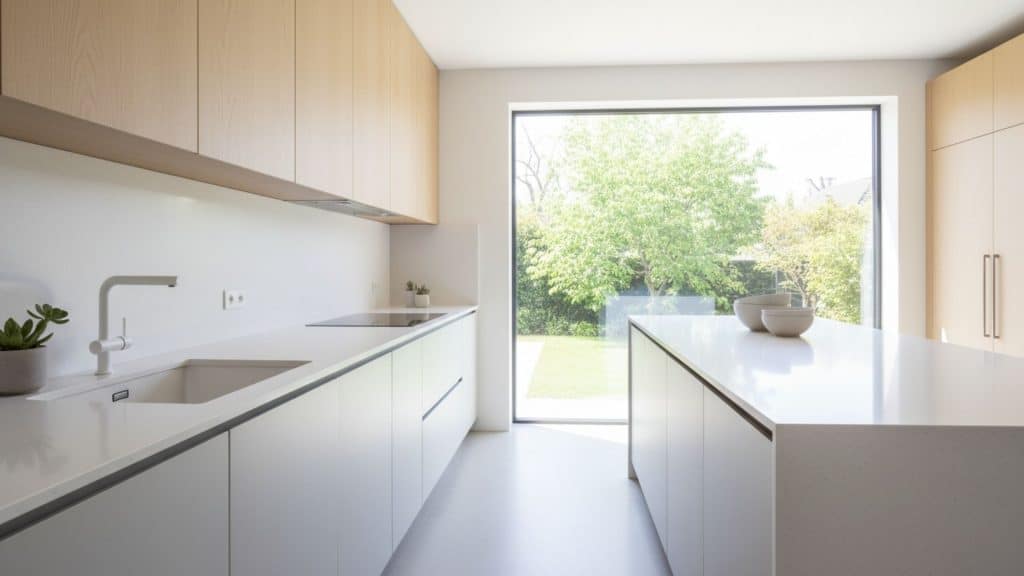
Solid surface countertops (Corian is the most recognized brand name here) are made from acrylic and minerals pressed into a smooth, non-porous slab.
The big draw is seamless installation: you can integrate the sink, backsplash, and countertop into one continuous piece with no visible joints. That means fewer spots where grime builds up.
Scratches happen, but they’re fixable at home with some fine-grit sandpaper and 10 minutes of your time. Solid surface runs about $35 to $130 per square foot installed, making it a solid mid-range option between laminate and natural stone.
The main downside? Heat tolerance is low. Set a hot pan directly on the surface, and you’ll end up with a scorch mark.
| Pros | Cons |
|---|---|
| Seamless look with integrated sinks | Prone to heat damage |
| Easy to clean and maintain | Scratches over time (but repairable) |
| Mid-range price ($35–$130/sq ft) | Can look less “premium” than stone |
Pro Tip: Use a fine-grit sandpaper to buff out light scratches yourself. You don’t always need a professional for minor surface repairs.
3. Laminate Countertops
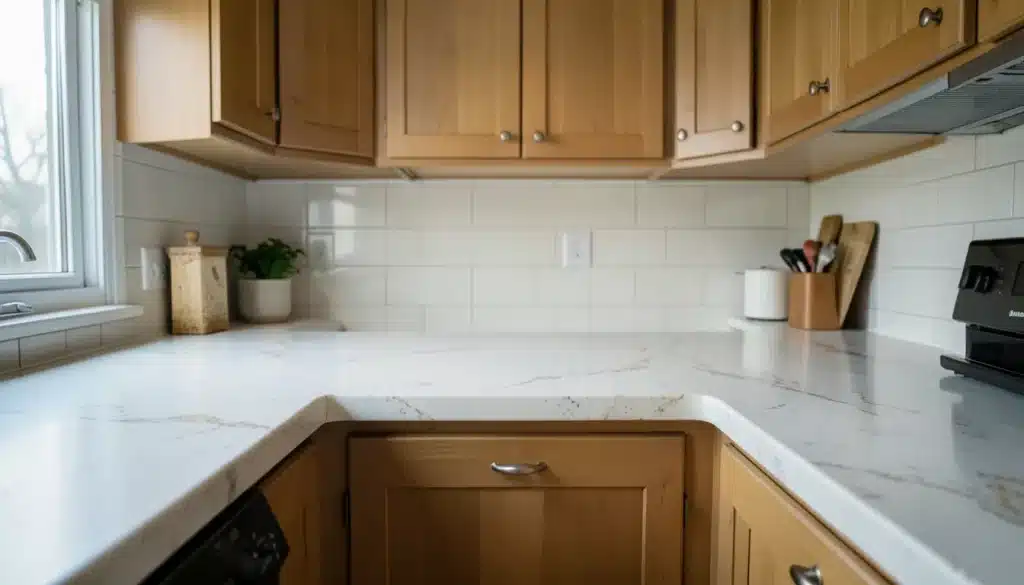
Laminate is the budget king. At $10 to $50 per square foot installed, nothing else comes close on price. Brands like Formica and Wilsonart have come a long way: modern laminate prints can mimic marble, concrete, and wood grain well enough to fool a casual glance.
It’s lightweight and DIY-friendly, which further reduces the total cost. For rental units, starter homes, and basement kitchens, laminate makes a lot of sense.
The tradeoffs are real, though. It won’t boost resale value the way stone does. A hot pan will leave a permanent scar. And once the surface chips or delaminates, there’s no sanding it back. You replace it.
I’ll be honest: I used to steer every client away from laminate. But the newer Formica 180fx line genuinely surprised me on a budget flip I consulted on last year.
Paired with the right cabinet hardware and backsplash, the kitchen looked like it cost three times what it did. Laminate won’t fool a contractor who runs their hand across it, but photos? It looked great.
| Pros | Cons |
|---|---|
| Most budget-friendly option ($10–$50/sq ft) | Prone to scratching and chipping |
| DIY-friendly installation | Not heat-resistant at all |
| Modern prints are convincing | Won’t increase home resale value |
Pro Tip: Always use a cutting board. Laminate cannot be repaired once it chips or cuts; prevention is the only option.
4. Ceramic Tile Countertops
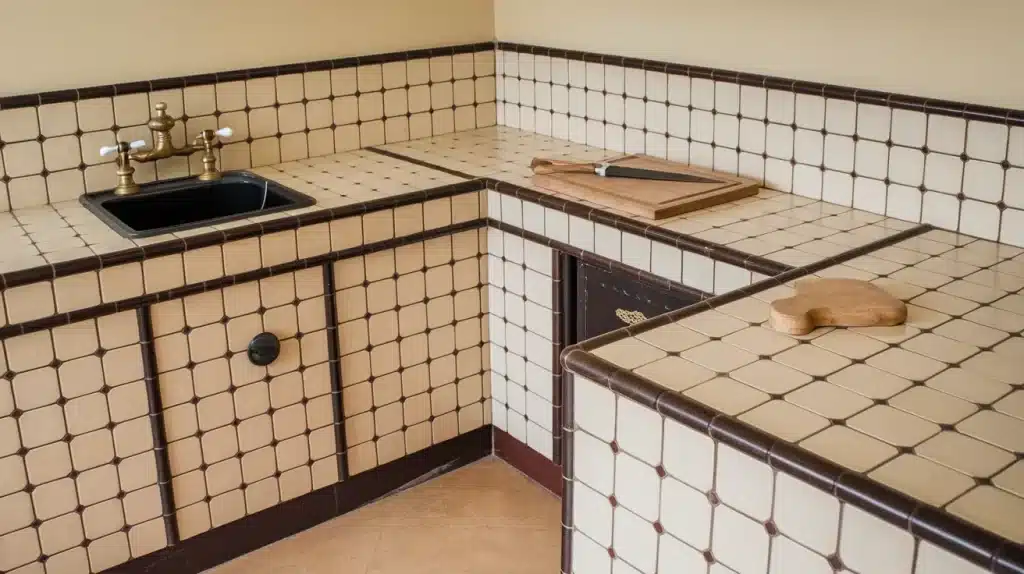
Ceramic tile gives you the widest design flexibility at a low price. Costs start around $2 to $29 per square foot for materials, and you can install it yourself to keep the total under budget. Mix and match sizes, colors, and patterns to create a custom look.
The elephant in the room is grout. Those lines between tiles are a magnet for stains, food residue, and bacteria. You’ll need to seal the grout every 6 to 12 months and scrub it regularly. Tiles themselves are heat- and stain-resistant, but drop a cast iron skillet on one, and it will crack.
Ceramic tile countertops have fallen out of fashion in recent years for kitchens (you don’t see them on many HGTV reveals anymore), but they still have a place in Mediterranean, Southwestern, and cottage-style spaces.
| Pros | Cons |
|---|---|
| Affordable and versatile | Grout stains easily |
| DIY-friendly | Tiles can crack under impact |
Pro Tip: Seal your grout lines every 6–12 months. This one step will save you hours of scrubbing and keep the surface looking fresh.
5. Granite Countertops
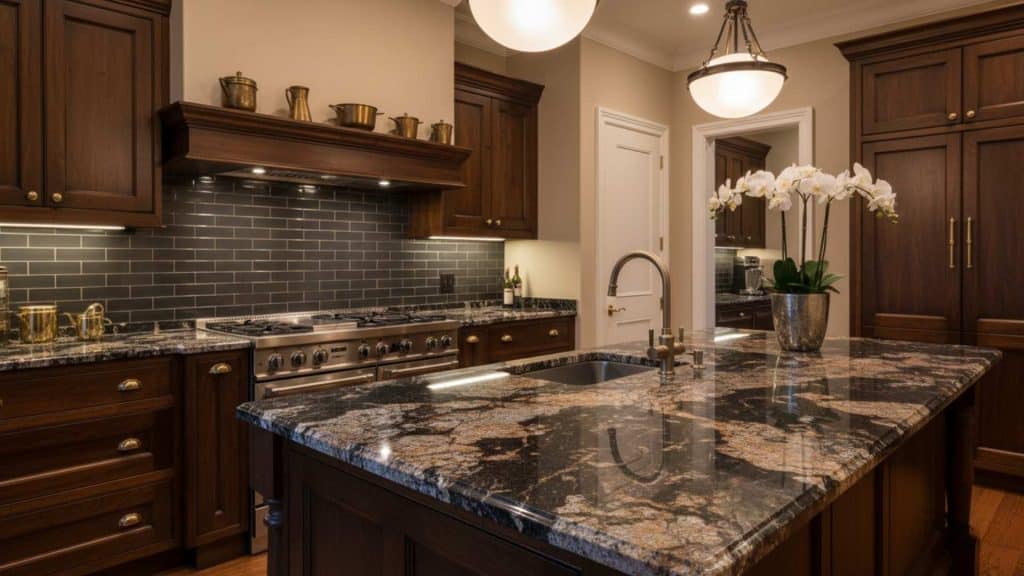
Granite was the top countertop choice for about two decades. It’s lost some ground to quartz in recent years, but it’s far from irrelevant.
Every granite slab is unique, with its own color variations and veining. That natural character is something engineered stone still can’t fully replicate.
Performance-wise, granite handles heat better than quartz. You can set a hot pan on it without panic (though I still recommend a trivet out of habit). It’s hard, scratch-resistant, and with annual sealing, it stays stain-resistant too.
Cost ranges from about $40 to $200 per square foot installed. Premium exotic colors and rare veining patterns push the price higher. Standard colors like Uba Tuba or Santa Cecilia sit at the lower end.
I still recommend granite for clients who cook with high heat daily. One homeowner I worked with ran a home-catering business and needed a surface that could withstand sheet pans straight from a 500-degree oven. Granite didn’t flinch. She’s had that same slab for eight years now with zero issues.
| Pros | Cons |
|---|---|
| Heat-resistant and long-lasting | Requires periodic sealing |
| Unique, high-end look | More expensive |
Pro Tip: Test your seal by dropping a few water droplets on the surface. If the water beads up, you’re good. If it soaks in, it’s time to reseal.
6. Concrete Countertops
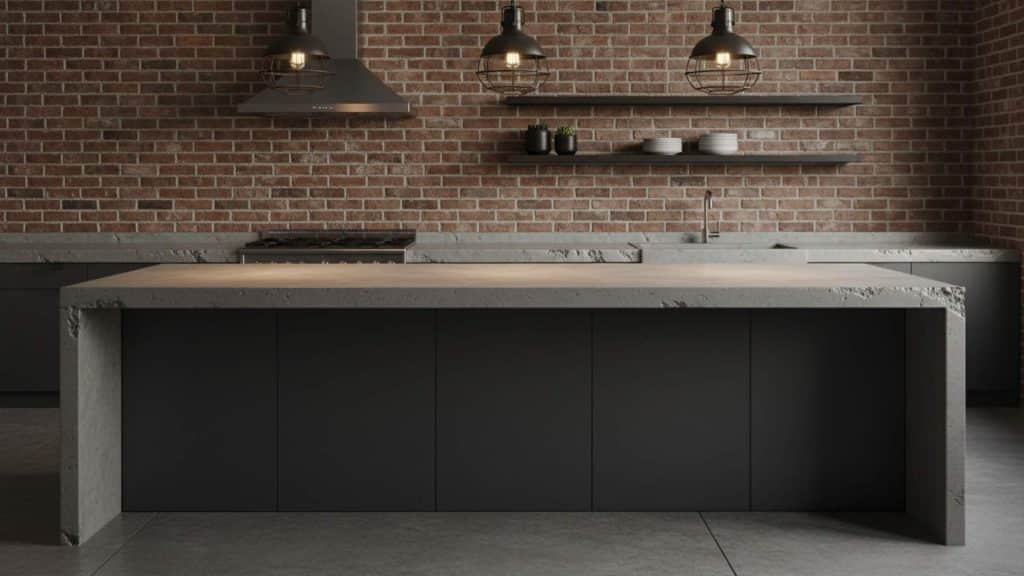
Concrete countertops can be shaped, colored, and finished in many ways. This makes them a popular choice for modern or industrial-style kitchens.
They can be cast to include embedded drains, trivets, or custom edges.
However, concrete is a high-maintenance material. It needs to be sealed to prevent stains and can develop cracks over time.
Expect to pay about $70 to $200 per square foot installed. Custom shapes, embedded elements, and specialty finishes push costs higher. Concrete is not a budget material despite what some DIY shows suggest.
| Pros | Cons |
|---|---|
| Highly customizable | Requires regular sealing |
| Modern, one-of-a-kind look | Can crack over time |
Pro Tip: Apply a food-safe penetrating sealer, not a topical one, for longer-lasting protection that won’t peel or cloud over time.
7. Butcher Block Countertops
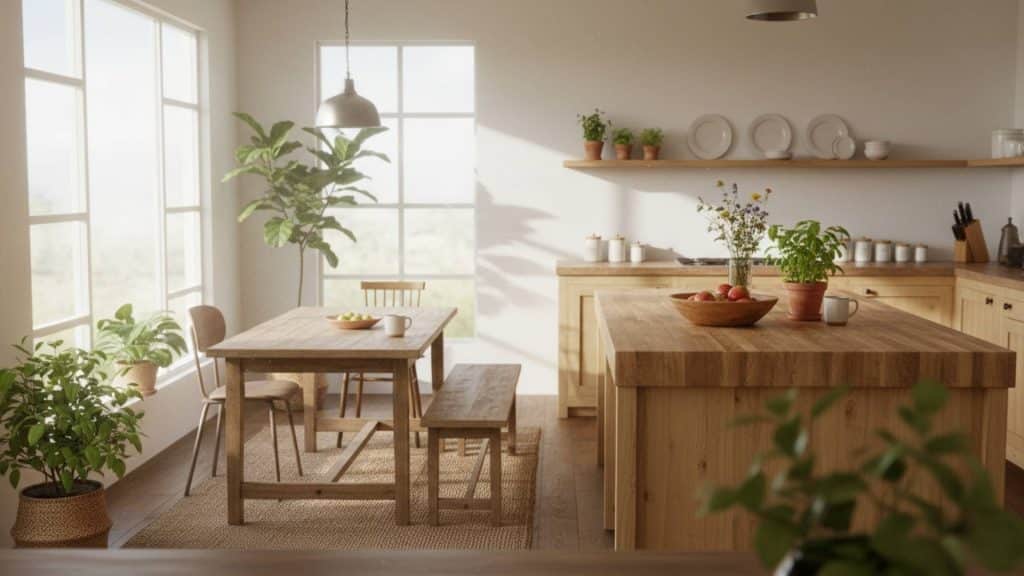
Butcher block countertops bring warmth and a natural feel to any kitchen. They are made from thick strips of wood joined together.
They work especially well in food prep areas, where you can chop directly on the surface. The wood can be sanded and refinished if it gets damaged.
That said, it needs regular oiling and is not suited to wet areas without proper care.
Butcher block runs about $55 to $200 per square foot installed, depending on the wood species. Maple and oak sit at the lower end. Walnut and cherry cost more but have richer tones. One advantage: this is one of the few countertop materials you can refinish multiple times over its lifespan.
| Pros | Cons |
|---|---|
| Warm, natural appearance | Prone to staining |
| Can be refinished | Scratches easily |
Pro Tip: For the first year, oil your butcher block with food-grade mineral oil once a month. After that, every 3–6 months is enough to keep it in good shape.
8. Marble Countertops
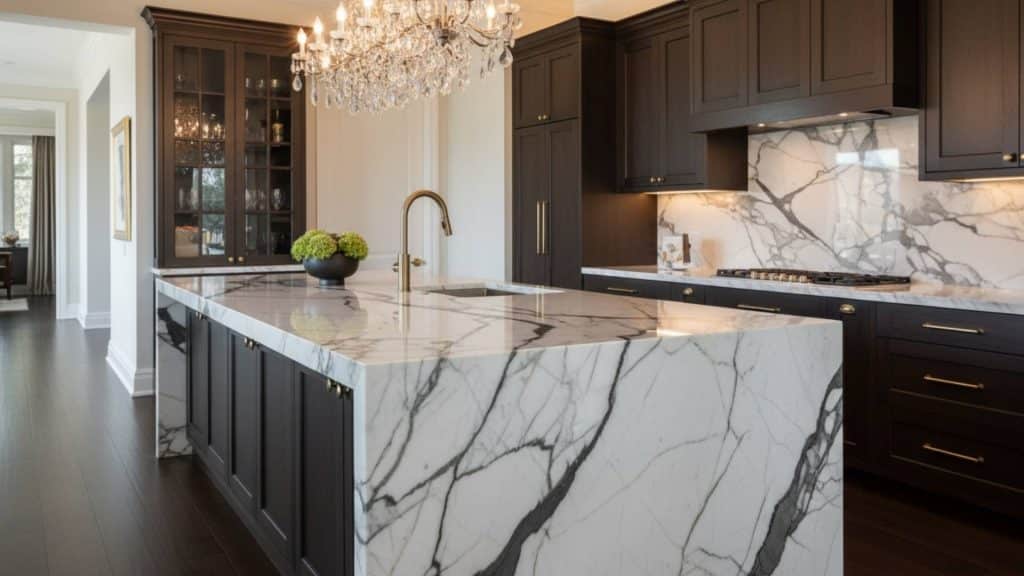
Marble is the material people picture when they think “luxury kitchen.” The veining, the polished finish, the cool-to-the-touch surface. It’s also the material that causes the most buyer’s remorse if you don’t know what you’re signing up for.
Marble is porous and soft compared to granite or quartz. Red wine, lemon juice, and coffee will etch and stain the surface if you don’t wipe them up quickly. You’ll need to seal it at least once a year, sometimes twice, depending on usage.
Cost ranges from about $40 to $250 per square foot installed. Carrara is the more affordable option (around $40 to $100/sq ft), while Calacatta marble commands premium prices. Marble is best suited to baking stations, bathroom vanities, or kitchens where looks matter more than heavy-duty cooking.
I had a client install Calacatta marble on her entire kitchen island. Gorgeous. Six months later, she called me about etching around the sink area. That’s marble’s reality: it’s stunning but demanding. If you’re the type who panics over water rings, marble will stress you out. If you embrace the patina, you’ll love it.
| Pros | Cons |
|---|---|
| Beautiful, luxurious appearance | Prone to scratching and etching |
| Adds home value | Stains easily without sealing |
Pro Tip: Wipe up spills, especially those from wine, coffee, and citrus juice, right away. Acidic liquids etch the surface fast, and the damage is hard to reverse.
9. Stainless Steel Countertops
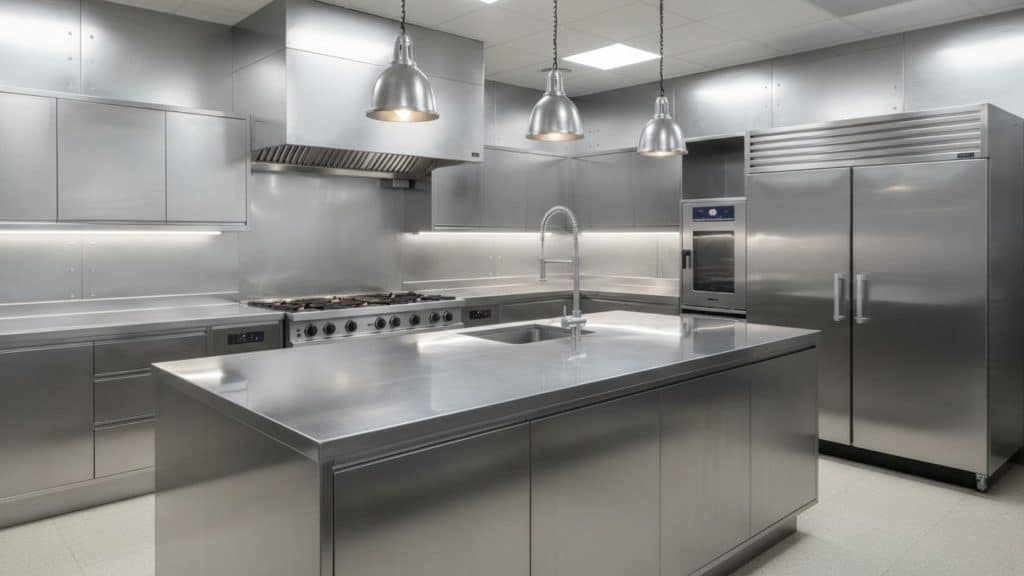
Stainless steel countertops are the go-to choice for professional-style kitchens. They are heat-resistant, hygienic, and easy to wipe clean.
Bacteria cannot survive easily on stainless steel, making it ideal for serious cooking spaces.
On the downside, it shows fingerprints and scratches. It may also feel too industrial for warmer, more traditional kitchen styles.
Stainless steel costs about $70 to $215 per square foot installed, putting it in the premium tier. Custom fabrication for unusual shapes or integrated features drives the price higher.
| Pros | Cons |
|---|---|
| Durable and hygienic | Scratches and shows fingerprints |
| Easy to clean | Can feel too cold aesthetically |
Pro Tip: Always wipe in the direction of the grain when cleaning. Wiping against it creates micro-scratches that dull the surface over time.
10. Recycled Glass Countertops
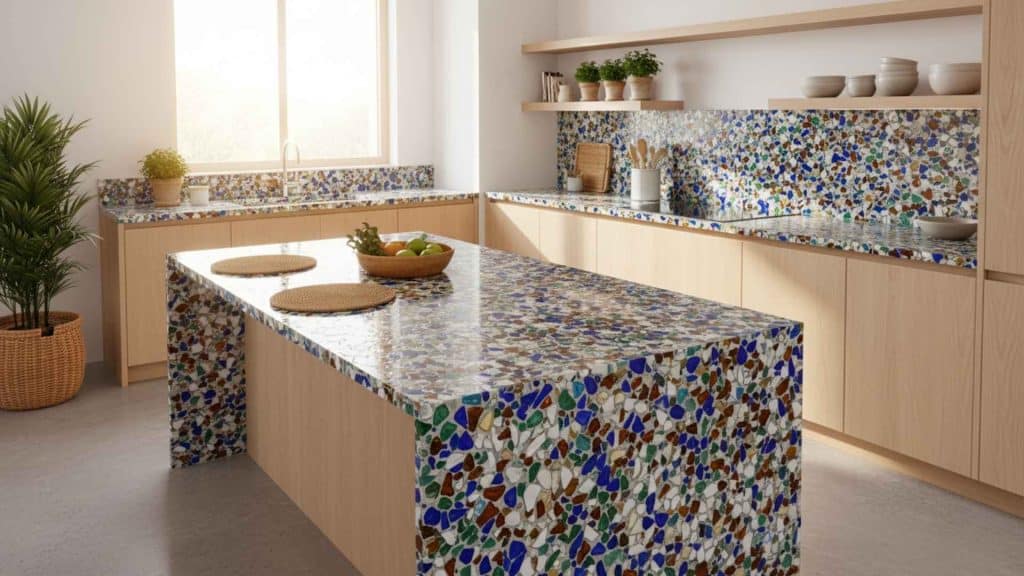
Recycled glass countertops are made from pieces of glass set in cement or resin. They come in a wide range of colors and finishes.
They are a good choice for homeowners who want an eco-conscious surface. The surface is durable and stain-resistant in most cases.
However, a strong impact can cause cracking, and they tend to cost more than standard materials.
| Pros | Cons |
|---|---|
| Eco-conscious and customizable | Can crack under strong impact |
| Stain-resistant | Expensive |
Pro Tip: Ask your supplier about the base material; cement-based versions need sealing, while resin-based ones generally do not. Know what you’re buying before you commit.
11. Slate Countertops
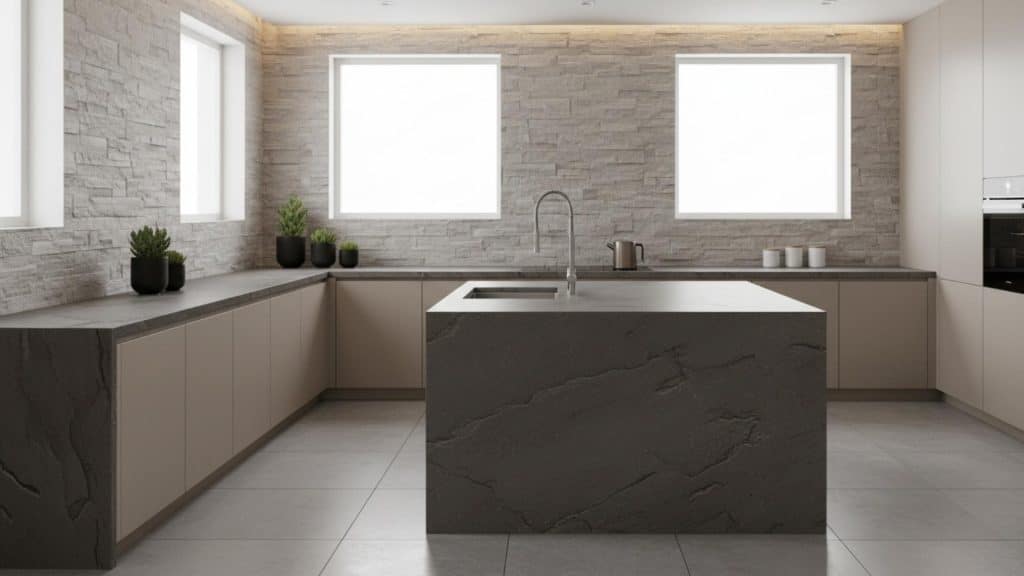
Slate is a natural stone with a matte finish and a refined, earthy look. It is non-porous, which makes it resistant to stains and moisture.
It works well in both modern and rustic kitchen designs. The main concern with slate is chipping. The edges and corners can break off if struck hard, so proper sealing helps extend its life.
Slate costs about $50 to $100 per square foot installed, making it one of the more affordable natural stone options.
| Pros | Cons |
|---|---|
| Non-porous and stain-resistant | Can chip at edges |
| Matte finish | Requires sealing |
Pro Tip: Request beveled or rounded edges when ordering. This reduces the risk of chipping and makes the countertop safer and easier to maintain in the long term.
12. Soapstone Countertops
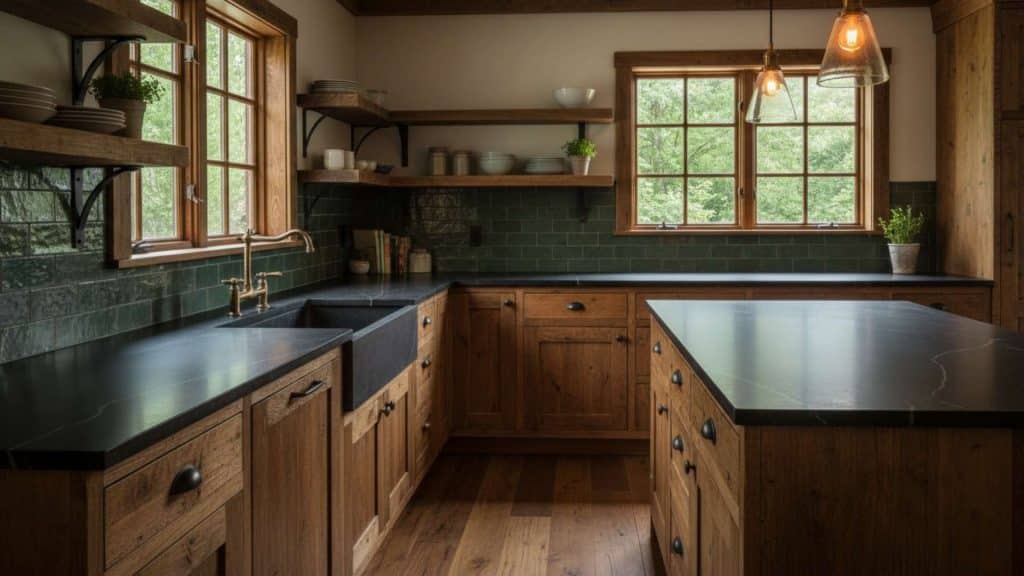
Soapstone has a smooth, soft texture that sets it apart from other natural stones. It is heat-resistant and less porous than marble, making it a practical option.
It works well near stoves and in high-traffic areas. Regular oiling keeps the surface looking its best.
Over time, soapstone can develop light scratches, though these often blend into the surface naturally.
Soapstone runs about $60 to $130 per square foot installed. It’s become a go-to material for the dark-and-moody kitchen trend that’s been picking up steam, especially in matte finishes with lighter veining for contrast.
| Pros | Cons |
|---|---|
| Heat-resistant | Requires regular oiling |
| Smooth and easy to clean | Can scratch over time |
Pro Tip: Rub mineral oil into the surface to even out the color and give it a consistent, dark finish. Without oiling, the surface can look patchy as it ages.
13. Reclaimed Wood Countertops
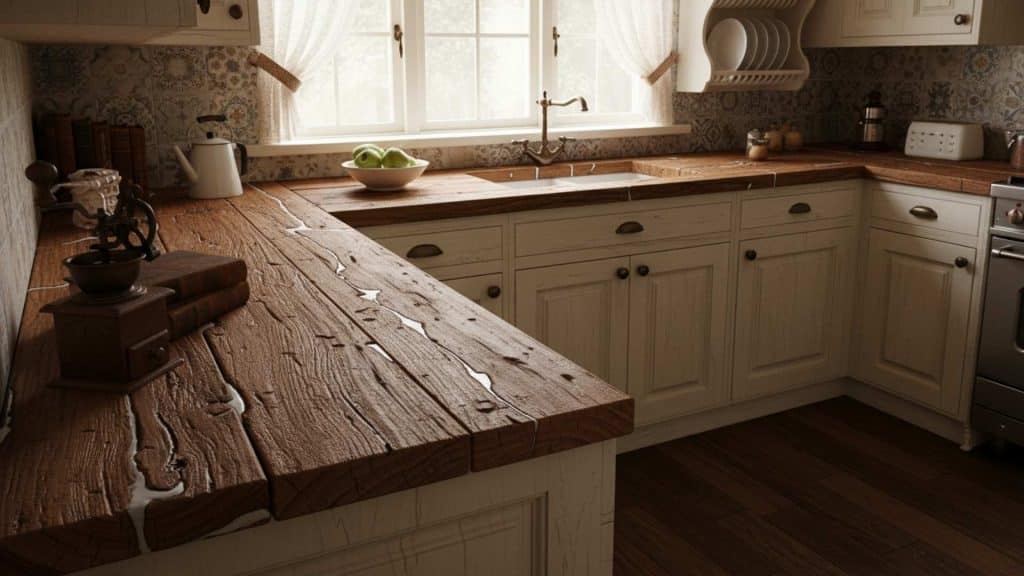
Reclaimed wood countertops are made from salvaged timber. Each piece carries its own history and unique character, making every countertop truly one of a kind.
They work well in farmhouse and vintage kitchen designs. However, reclaimed wood needs frequent sealing to keep out moisture.
Without proper care, it can harbor bacteria over time.
| Pros | Cons |
|---|---|
| Unique and full of character | Needs frequent sealing |
| Eco-conscious material | Can harbor germs without care |
Pro Tip: Use a food-safe sealant and reapply it every 6 months near the sink. Water damage is the number one reason reclaimed wood countertops fail early.
14. Zinc Countertops
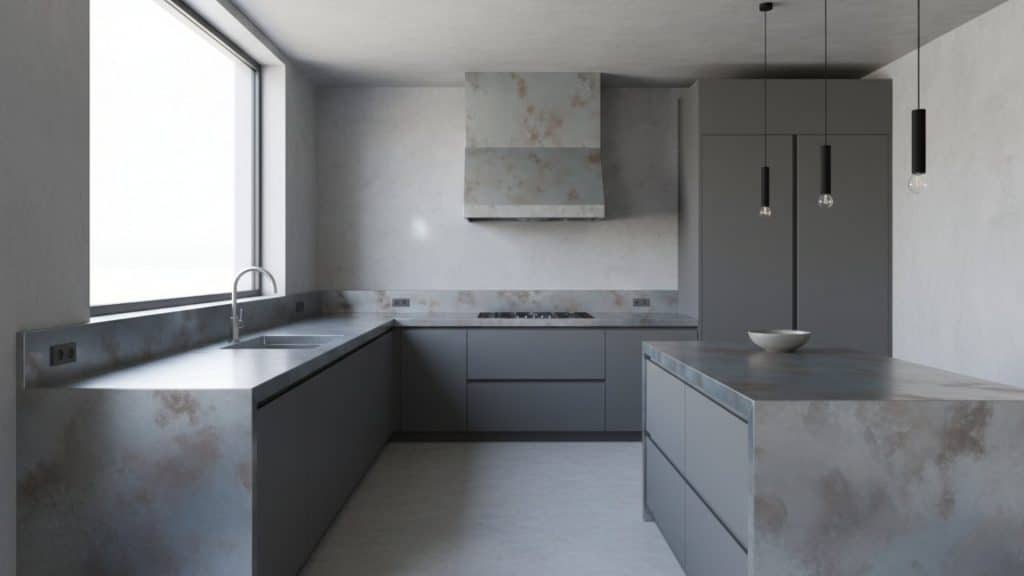
Zinc is a soft metal that changes appearance over time. It develops a natural patina that gives it an aged, lived-in look.
It also has antibacterial properties, which make it a clean surface for food prep.
However, zinc scratches easily and is not heat-resistant. It is also on the expensive side compared to more common countertop types.
| Pros | Cons |
|---|---|
| Naturally antibacterial | Scratches easily |
| Develops a unique patina | Not heat-resistant |
Pro Tip: If you want to speed up the patina process, wipe the surface with a damp cloth and leave it exposed to the air. If you prefer a consistent look, apply a clear wax to slow the change.
15. Bamboo Countertops
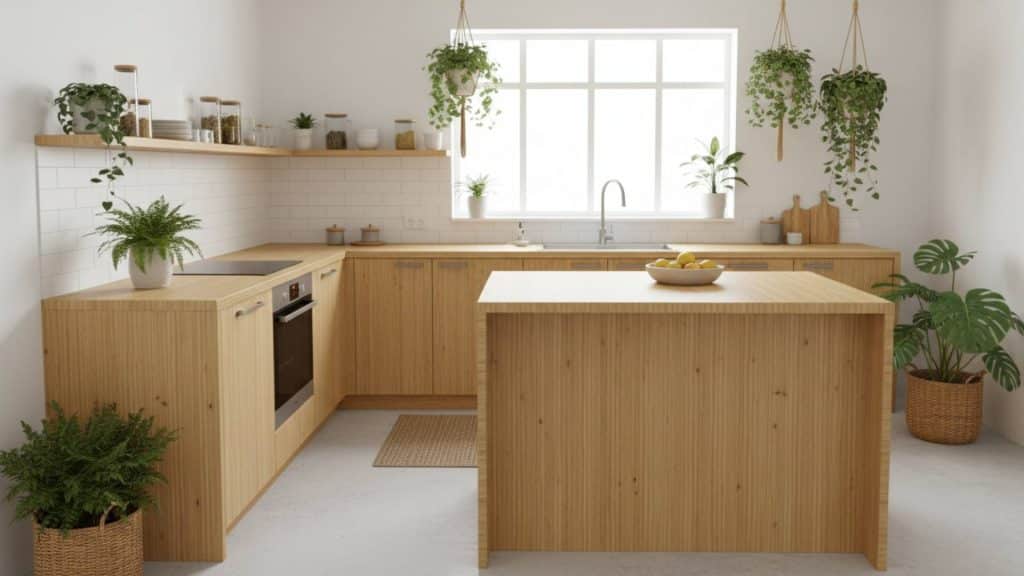
Bamboo is a fast-growing plant, which makes it a responsible material choice. It is harder than many traditional hardwoods and offers a clean, natural appearance.
It suits kitchens with a modern or organic style. The surface can stain if liquids are left sitting for too long.
It is also not suitable for use near direct heat sources.
| Pros | Cons |
|---|---|
| Eco-conscious and durable | Can stain easily |
| Clean, natural look | Not heat-resistant |
Pro Tip: Oil bamboo countertops with coconut oil or mineral oil every few months. This keeps the surface from drying out and cracking at the seams.
16. Porcelain Countertops
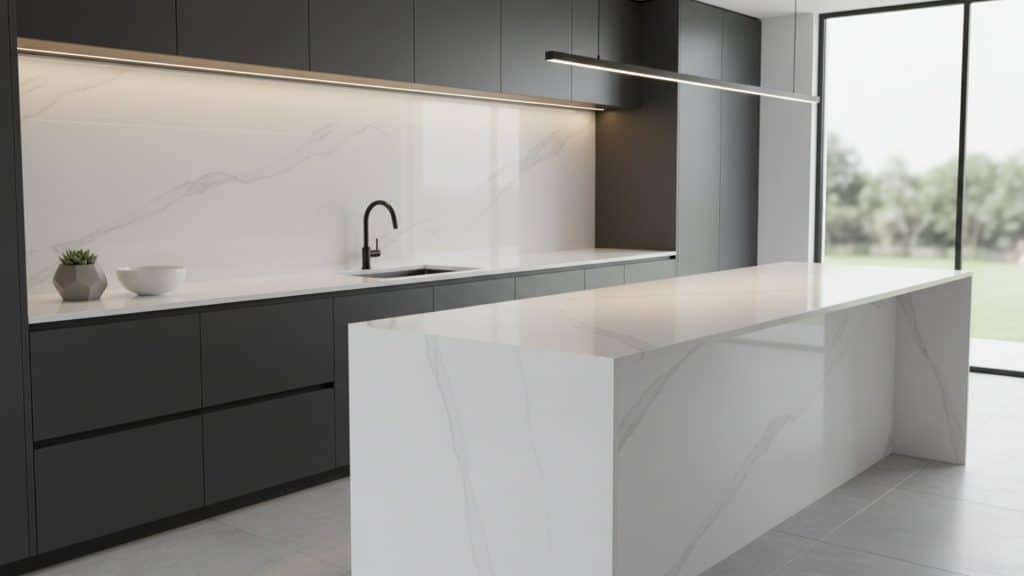
Porcelain slabs are one of the fastest-growing countertop categories right now. They’re dense, non-porous, and resist heat, scratches, and stains with minimal care. No sealing required.
Large-format porcelain slabs (think 5 by 10 feet) can be installed with minimal seams, giving you a look that competes with natural stone. The material also works for outdoor kitchens since it handles UV exposure and temperature swings without fading or cracking.
The catch: a hard impact (like a dropped cast-iron skillet from height) can crack the slab. Repair isn’t easy. Cost runs about $55 to $120 per square foot installed.
| Pros | Cons |
|---|---|
| Scratch and stain-resistant | Can crack under impact |
| Highly durable | Fewer design options |
Pro Tip: Ask your installer to use a thicker slab, at least 12mm. Thicker porcelain is far less likely to crack during installation and holds up better over time.
17. Paper Composite Countertops
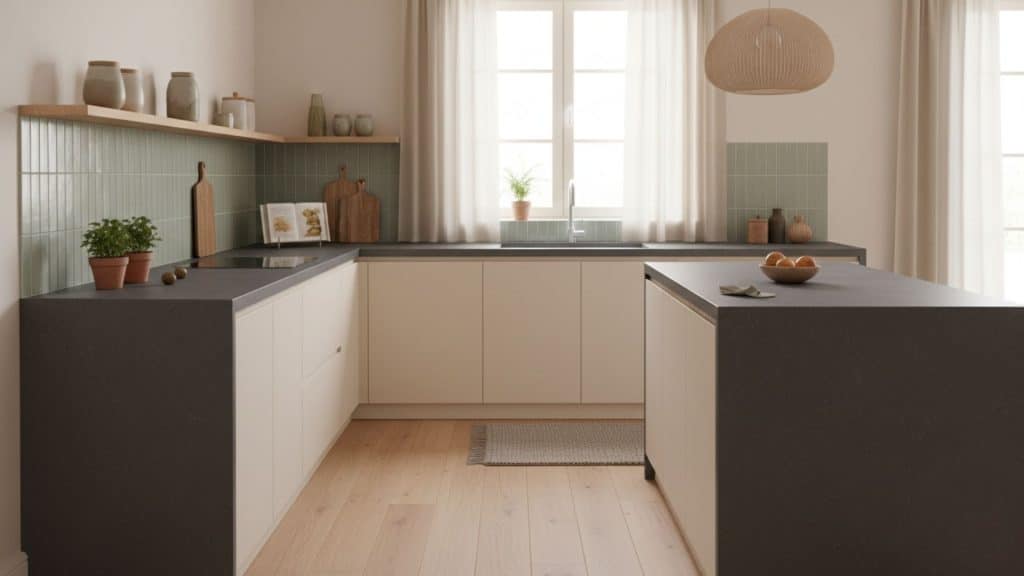
Paper composite countertops are made from recycled paper mixed with resin. The result is a surprisingly tough surface that holds up well in daily use.
They are a good choice for those who want an eco-conscious option without spending a lot.
However, they can be damaged by heat and are not widely available in all regions.
Brands like Richlite and PaperStone are the main options in this category. Cost runs about $45 to $70 per square foot, which is mid-range. The surface has a warm, soft feel similar to stone but lighter in weight.
| Pros | Cons |
|---|---|
| Made from recycled materials | Can be damaged by heat |
| Durable for everyday use | Limited availability |
Pro Tip: Always use a hot pad or trivet. Paper composite may look tough, but heat is its weak point — even a warm pan left on the surface can leave a permanent mark.
18. Terrazzo Countertops
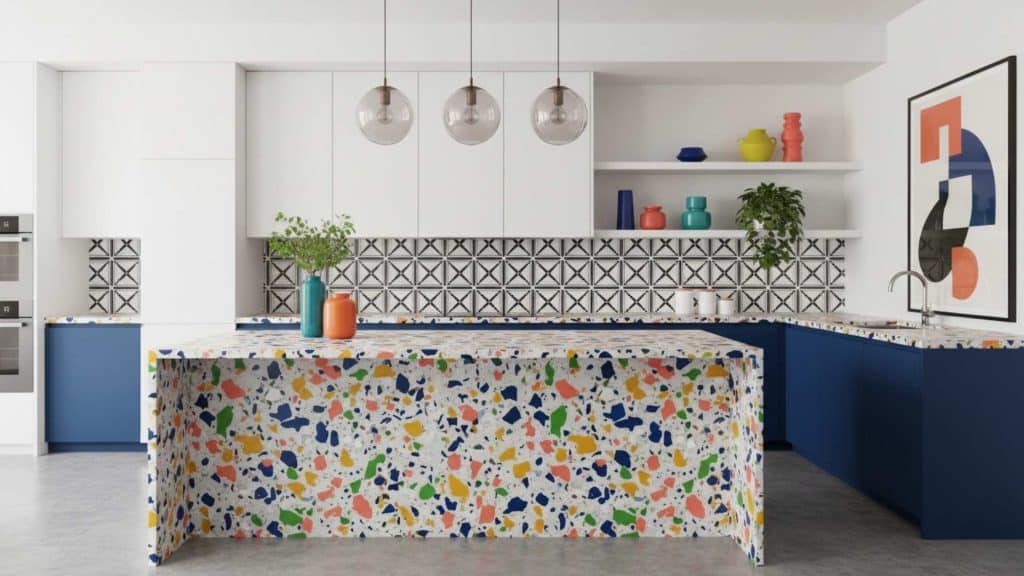
Terrazzo is made by setting chips of glass, marble, or stone into a concrete base. The result is a surface full of color and texture.
It is very durable and holds up well against heat. However, it needs to be sealed to resist staining.
Terrazzo is also one of the pricier countertop options on this list.
| Pros | Cons |
|---|---|
| Highly durable | Requires sealing |
| Heat-resistant | Expensive |
Pro Tip: Choose a penetrating sealer over a surface sealer. It protects from the inside out and won’t leave a shiny film that changes the look of the terrazzo.
19. Recycled Aluminum Countertops
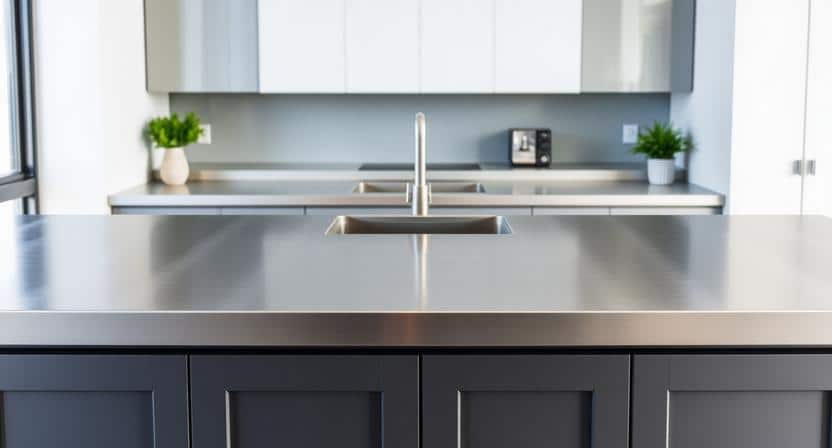
Recycled aluminum countertops offer a sleek, modern look with an eco-conscious background. The surface is stain-resistant and very easy to wipe clean.
They work well in contemporary kitchens. However, aluminum is a soft metal, and it can dent if something heavy drops on it.
It is also not heat-resistant, so care is needed around stovetops.
| Pros | Cons |
|---|---|
| Made from recycled material | Can dent under impact |
| Stain-resistant | Not heat-resistant |
Pro Tip: Place rubber mats in high-impact areas, like near the stove and sink. Small dents are difficult, sometimes impossible, to fix without professional help.
20. Live-Edge Wood Slab Countertops
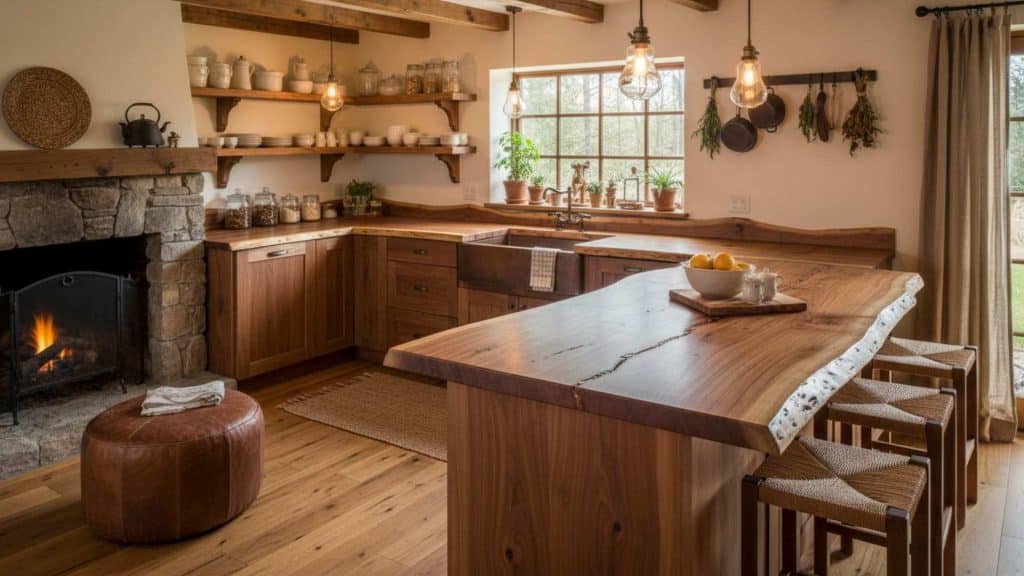
Live-edge wood countertops keep the natural, raw edge of the original tree slab. This creates a dramatic, organic look that is hard to replicate with any other material.
They are best suited to statement kitchens or open-concept spaces. Regular sealing and oiling are necessary to keep the wood protected.
They are also prone to scratching with daily use.
| Pros | Cons |
|---|---|
| Striking, one-of-a-kind look | Requires consistent maintenance |
| Eco-conscious option | Prone to scratching |
Pro Tip: Let the wood acclimate to your home’s temperature and humidity for at least a week before installation. This prevents warping or cracking after the slab is fitted.
21. Raw-Edge Stone Countertops
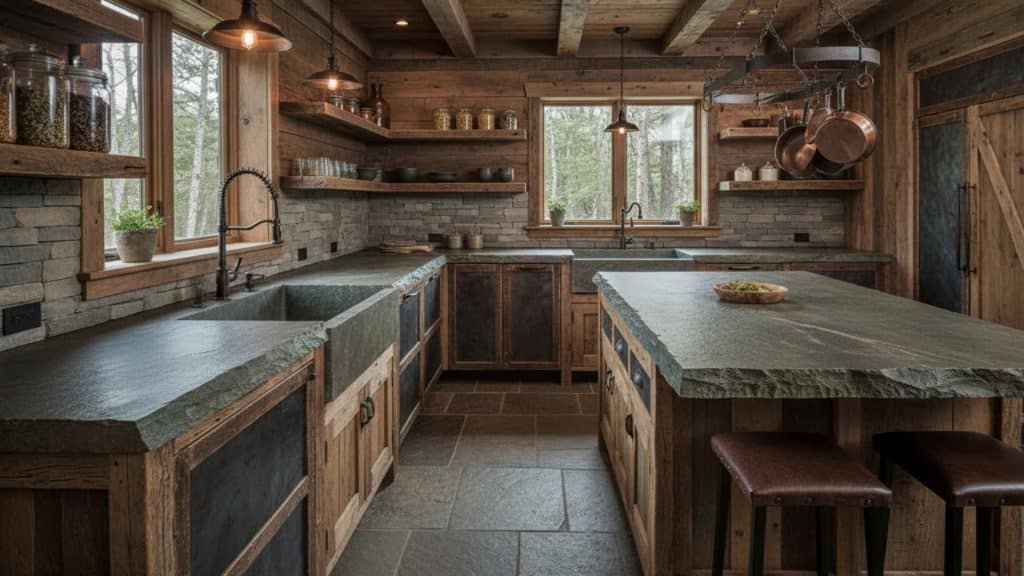
Raw-edge stone countertops feature rough, unpolished edges that preserve the stone’s natural shape. They offer a rugged, organic look that polished stone simply can’t match.
These countertops work well in rustic or nature-inspired kitchen designs. The rough surface can trap dirt and moisture, making cleaning more challenging.
Sharp edges can also be a safety concern in homes with young children.
| Pros | Cons |
|---|---|
| Natural, one-of-a-kind appearance | Harder to clean thoroughly |
| Rugged, organic look | Edges may be sharp |
Pro Tip: Use a small stiff-bristle brush to clean along the rough edges. A regular cloth won’t reach into the crevices where dirt and grease can build up.
22. Poured Epoxy Countertops
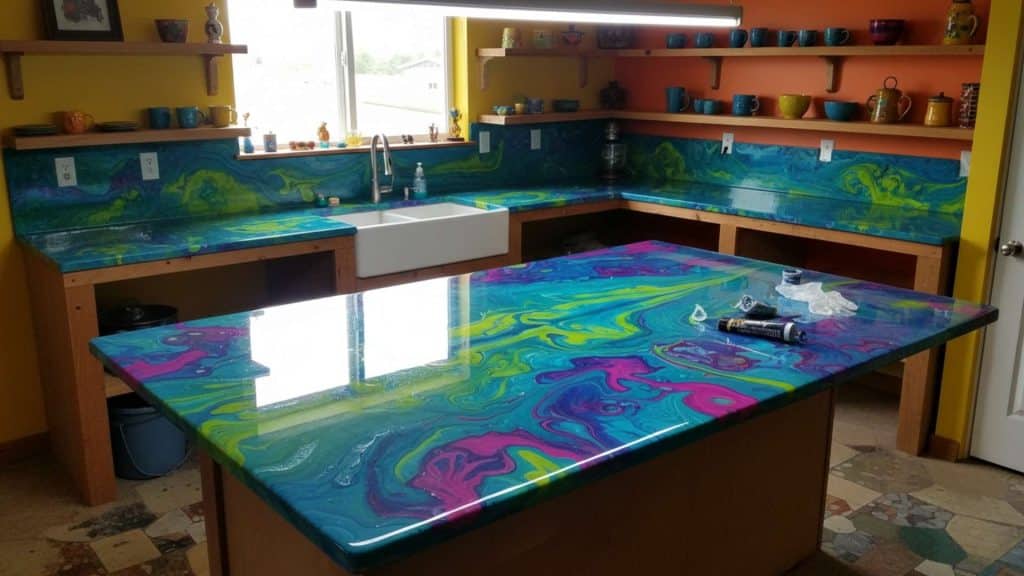
Poured epoxy countertops are applied as a liquid and left to harden in place. This creates a smooth, gap-free surface in any shape or size.
Epoxy can be mixed with pigments to mimic the look of marble, granite, or metallic finishes.
Epoxy is technically a DIY project, but don’t underestimate the learning curve. Temperature, humidity, and surface prep all need to be right, or you’ll end up with bubbles and an uneven finish.
| Pros | Cons |
|---|---|
| Fully customizable in look and color | Has a learning curve for DIY |
| Gap-free, smooth finish | Can stain or discolor over time |
Pro Tip: Work in a temperature-controlled space when pouring epoxy. Humidity and cold temperatures are the top causes of bubbling and an uneven finish.
23. Travertine Countertops
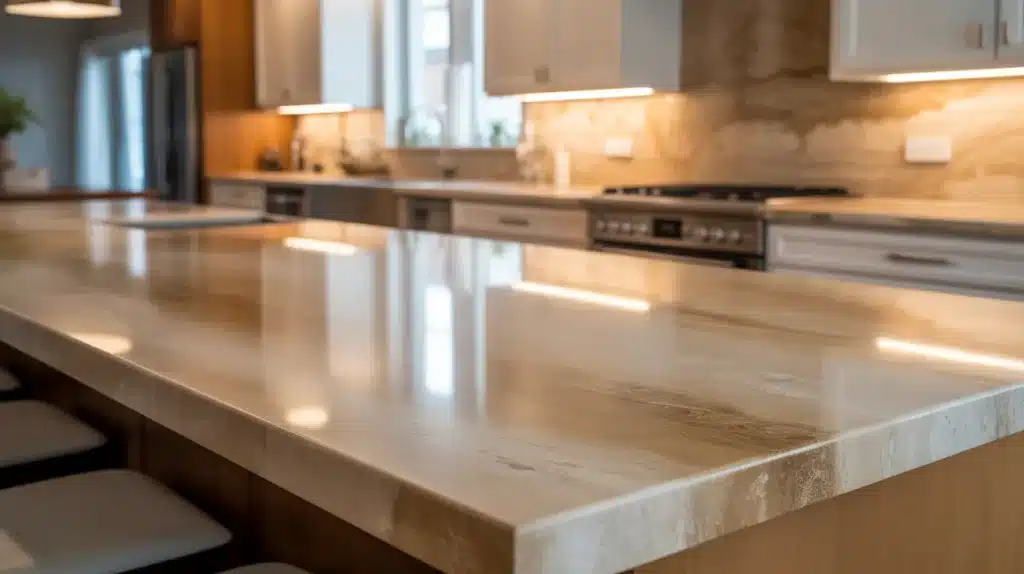
Travertine is a natural stone with a warm, earthy tone and a slightly textured surface. It costs less than marble but delivers a similar old-world charm.
It works well in Mediterranean or traditional kitchen styles. Like most natural stones, it requires regular sealing to stay protected.
Its soft surface is also prone to scratching with heavy use.
| Pros | Cons |
|---|---|
| Affordable compared to marble | Requires regular sealing |
| Warm, natural appearance | Scratches easily |
Pro Tip: Fill the natural holes in travertine with grout or epoxy filler before sealing. Left unfilled, those pits trap food, grease, and bacteria over time.
24. Dekton Countertops
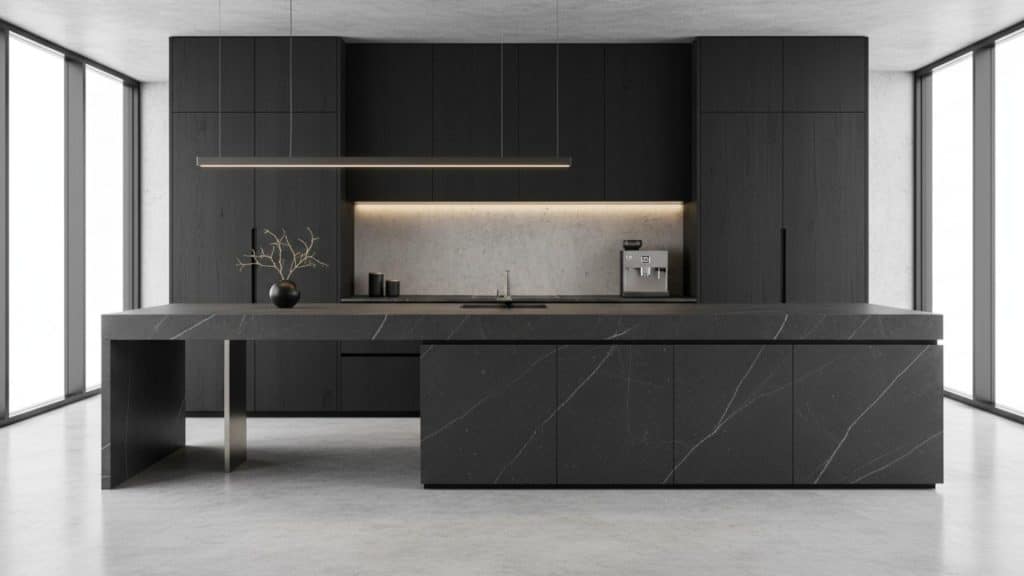
Dekton is an ultra-compact surface made by fusing glass, porcelain, and quartz under extreme heat and pressure. The result is arguably the most durable countertop material you can buy. It handles heat, scratches, UV exposure, and stains without breaking a sweat.
What sets Dekton apart from other engineered surfaces is its outdoor performance. Unlike quartz (which fades in sunlight) or marble (which deteriorates in weather), Dekton won’t crack, fade, or absorb moisture outdoors. If you’re building an outdoor kitchen or a pool-area bar, this is the material to look at.
Cost is the barrier. Expect $80 to $150 per square foot installed, and availability varies by region. Repairs are also tricky; chip a corner and you’ll need a specialist with matching material.
| Pros | Cons |
|---|---|
| Extremely durable | Higher price point |
| Heat and scratch-resistant | Limited availability in some areas |
Pro Tip: Dekton works great for outdoor kitchen countertops. Unlike most materials, it won’t fade, crack, or absorb moisture when exposed to sun and rain.
25. Corian Countertops
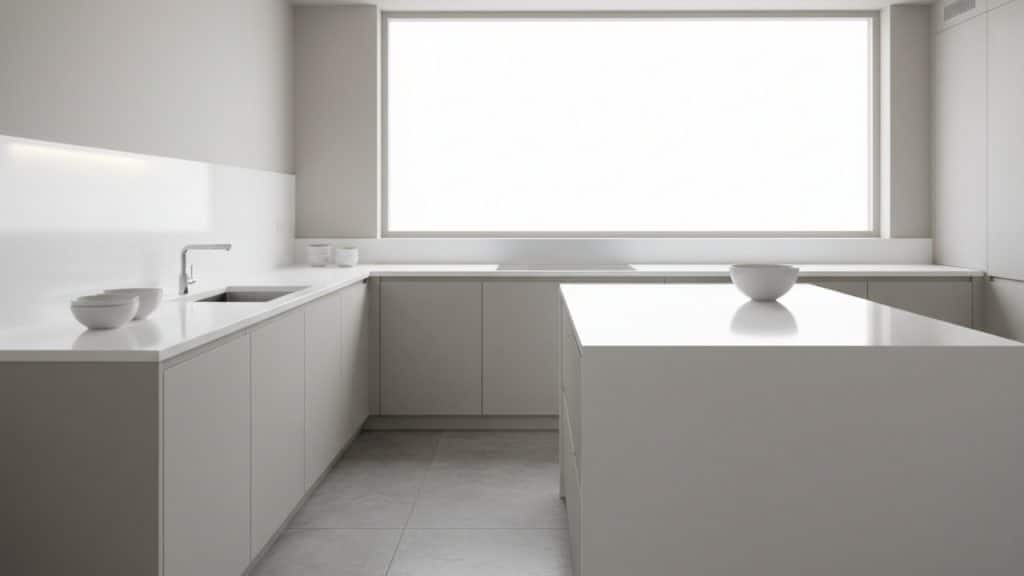
Corian is a solid-surface material made from acrylic and minerals. It was one of the first non-stone countertop materials to gain wide popularity.
It can be molded into custom shapes and colors, making it a flexible design choice. It resists stains well but scratches more easily than stone. Professional installation is often recommended for the best results.
| Pros | Cons |
|---|---|
| Customizable in color and shape | Scratches more easily than stone |
| Resistant to stains | Can be expensive |
Pro Tip: Request a matte or satin finish rather than a high-gloss one. Matte finishes hide everyday scratches much better and require less upkeep.
26. Polyester Countertops
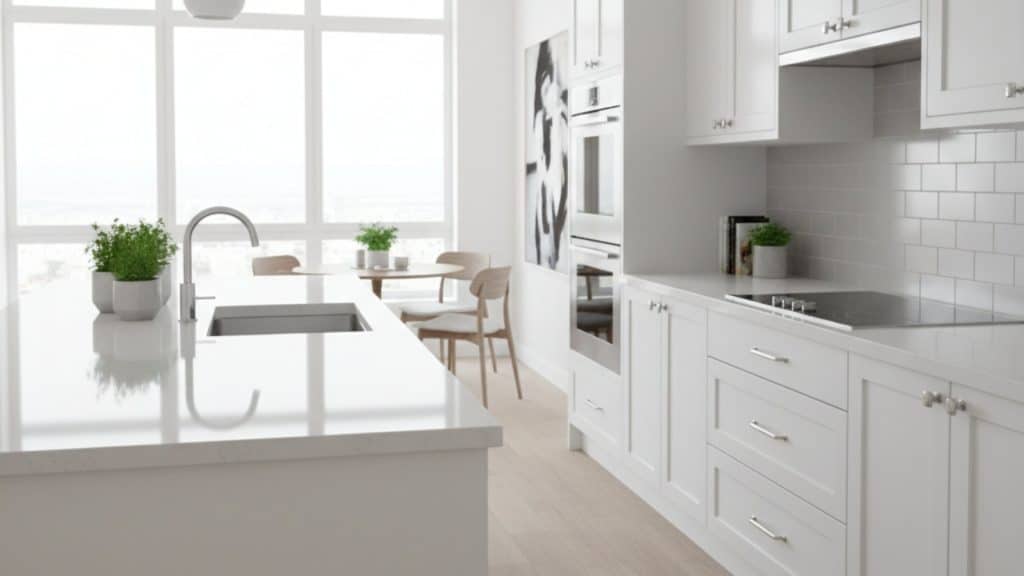
Polyester countertops offer a high-gloss finish at a more accessible price point than acrylic surfaces. They are durable enough for regular kitchen use.
However, polyester can be brittle during installation, making professional installation the safer choice.
The surface also scratches more easily than harder materials.
| Pros | Cons |
|---|---|
| Affordable with a glossy finish | Requires professional installation |
| Reasonably durable | Scratches easily |
Pro Tip: Avoid abrasive cleaning products. Stick to a mild dish soap and a soft cloth; harsh scrubbers will quickly dull the glossy finish.
27. River Rock Countertops
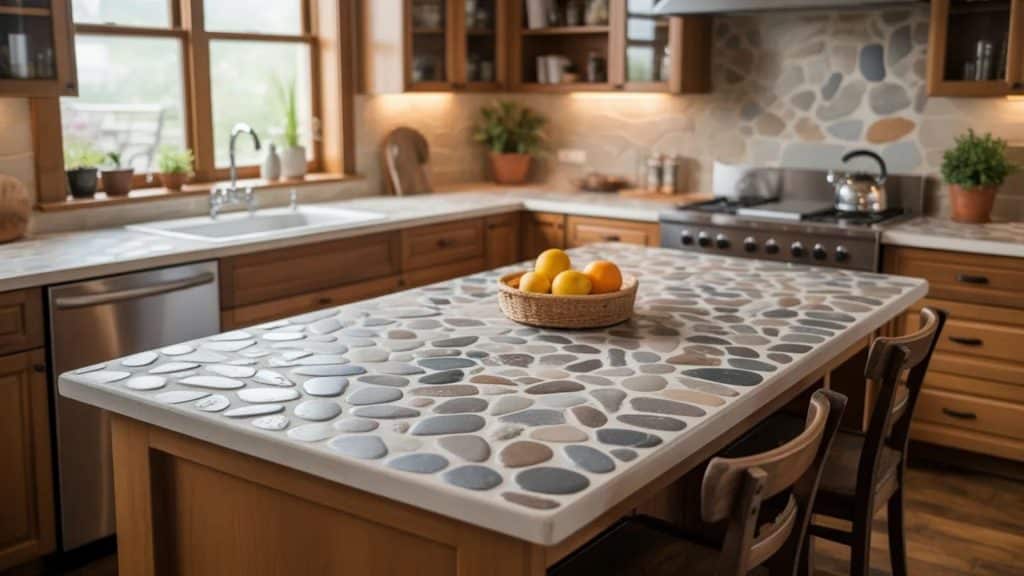
River rock countertops are created by setting smooth, rounded stones in cement or acrylic. They create a striking, natural surface unlike any other countertop type.
They are very durable. However, if not sealed properly, they can stain between the stones.
The uneven surface can also make cleaning more time-consuming.
| Pros | Cons |
|---|---|
| Unique, natural appearance | Can stain without proper sealing |
| Very durable | Surface texture makes cleaning harder |
Pro Tip: Use a grout sealer between the stones every year. The gaps between rocks are the most susceptible spots and the hardest to clean once stained.
28. Copper Countertops
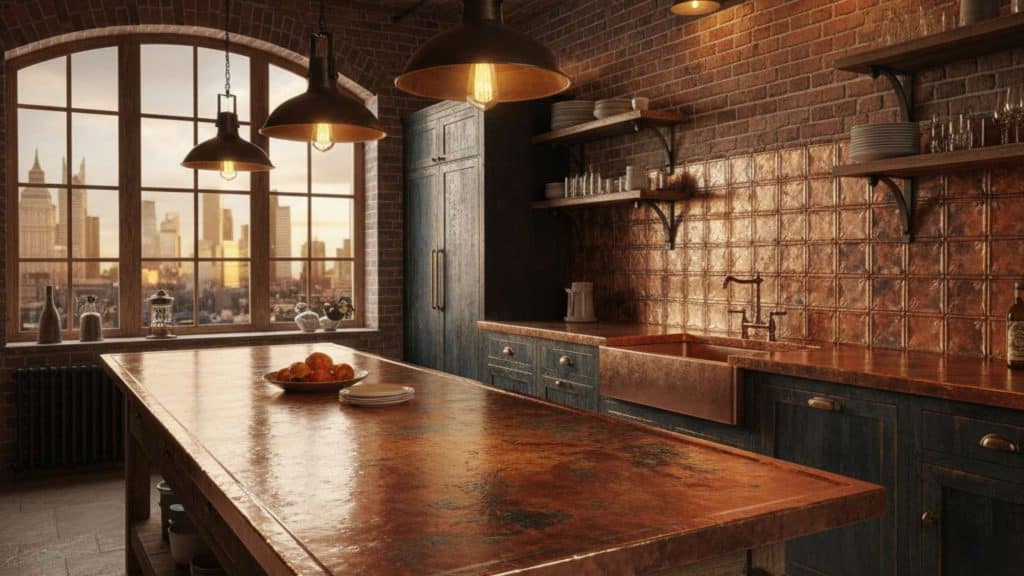
Copper countertops are bold and distinctive. Over time, they develop a rich patina that deepens their visual appeal.
Copper is also naturally antimicrobial, making it a clean-surface choice. The downsides include a higher cost and a tendency to scratch and dent.
Acidic foods can also cause the surface to react and discolor.
| Pros | Cons |
|---|---|
| Naturally antimicrobial | Scratches and dents easily |
| Develops a rich, unique look over time | Expensive |
Pro Tip: Never use bleach or acidic cleaners on copper. Stick to warm water and mild soap. Harsh chemicals will strip the finish and cause uneven discoloration fast.
29. Quartzite Countertops
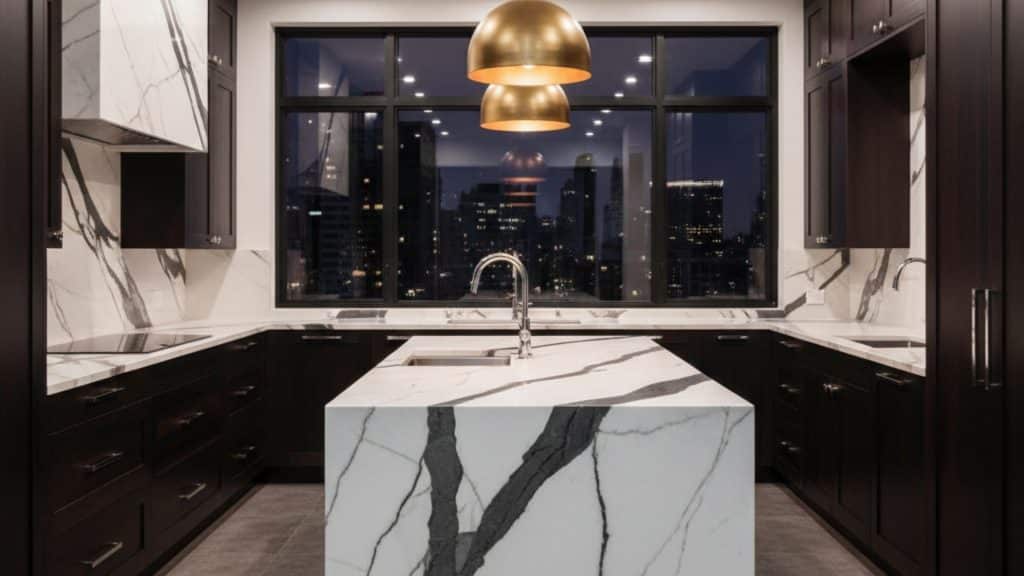
Quartzite is not the same thing as quartz, and that confusion costs homeowners money every year. Quartz is engineered (crushed stone + resin). Quartzite is a natural metamorphic rock formed from sandstone under intense heat and pressure. Completely different materials.
Quartzite gives you the dramatic white-and-gray veining of marble with the durability closer to granite. It’s hard, scratch-resistant, and handles heat well. That combination has made quartzite one of the fastest-growing countertop choices in the US.
The downside? It’s still a natural stone, so it’s porous and needs periodic sealing. Cost runs about $65 to $150 per square foot installed. And be careful when shopping: some suppliers mislabel softer marble as quartzite. Do a scratch test with a knife blade before you buy. True quartzite won’t mark.
I’ve had at least three clients come to me after buying what they thought was quartzite, only to find out it was soft dolomite marble that the supplier mislabeled. It etched within the first month. If the surface scratches easily with a knife, it’s not quartzite. Always test before you sign off.
| Pros | Cons |
|---|---|
| Beautiful and durable | Expensive |
| Better heat and scratch resistance than marble | Requires sealing |
Pro Tip: Be careful when buying; some suppliers mislabel softer marble as quartzite. Do a scratch test with a knife. True quartzite is hard enough that a knife blade won’t mark it.
30. Silestone Countertops
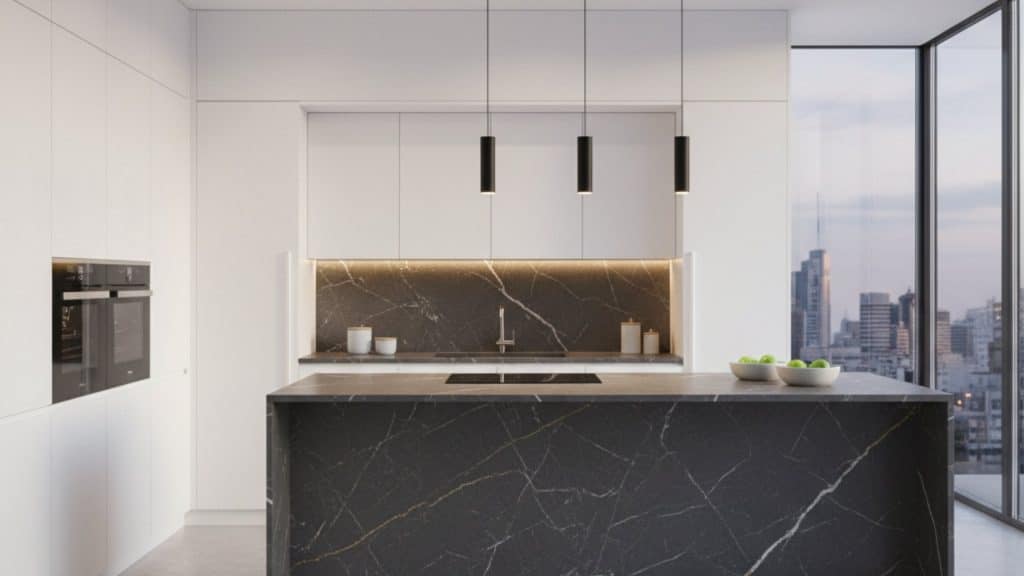
Silestone is a premium quartz-based surface with a wide variety of colors and finishes. It is non-porous, which makes it very easy to keep clean.
It resists scratches well and requires minimal upkeep day to day.
However, it costs more than standard quartz options. It is also not suitable for placing hot items directly on the surface.
| Pros | Cons |
|---|---|
| Durable and easy to clean | More expensive than basic quartz |
| Wide range of color options | Not suitable for direct heat contact |
Pro Tip: Use a pH-neutral cleaner for daily maintenance. Acidic or alkaline cleaners can break down the surface coating over time, even on a tough material like Silestone.
31. Poured Concrete with Aggregate
This version of concrete uses embedded materials, like stones, glass, or shells, to create a surface with built-in texture and color. No two slabs look the same.
It gives homeowners complete control over the final look. However, it requires skilled installation and proper sealing. Without the right care, the surface can crack or stain over time.
| Pros | Cons |
|---|---|
| Fully customizable look | Needs skilled installation |
| Unique surface with built-in detail | Requires regular sealing |
Pro Tip: Ask your contractor to add fiber reinforcement to the concrete mix. It won’t change the look, but it significantly reduces the chance of cracking after installation.
How Do You Choose the Right Countertop for Your Kitchen?
Start with your budget: Laminate and ceramic tile keep costs under $50 per square foot. Quartz, granite, and solid surface sit in the $50 to $200 range. Dekton, marble, and stainless steel push past $200 for premium options.
Then think about how you use your kitchen: Heavy daily cooking with high heat? Granite, quartzite, or porcelain. Lots of food prep and chopping? Butcher block or stainless steel. Minimal cooking and maximum aesthetics? Marble or terrazzo.
Factor in maintenance: If you want to wipe and forget, quartz and porcelain are your best bets. If you’re OK with an annual sealing routine, granite and quartzite open up. Marble, concrete, and wood demand the most ongoing care.
Match the material to your design style: Granite and quartzite complement classic and transitional kitchens. Stainless steel and concrete suit modern and industrial spaces. Butcher block and soapstone work well in farmhouse designs. And mixing materials (stone perimeter counters with a wood island, for example) is a strategy more designers are recommending in 2025 and 2026.
Here’s the exercise I run with every client: picture the messiest day you’ve had in your kitchen in the last year. Thanksgiving prep, a kids’ baking disaster, whatever it is. Now ask yourself: would this surface survive that day and still clean up fine? That single question cuts your options in half and saves hours of second-guessing.
Disclaimer: Countertop pricing reflects 2025-2026 US national averages and may vary by region, supplier, and installation complexity. Always get multiple quotes from local fabricators before committing to a purchase. For food-safety concerns related to countertop materials, consult your local health department guidelines.
Final Thoughts
Choosing the right countertop comes down to three things: your budget, how you use your kitchen, and how much upkeep you can handle.
Whether you go with affordable laminate or high-end quartzite, the best countertop is the one that fits your life.
Don’t pick based on looks alone. Think long-term. A surface that works hard and stays easy to clean will always be worth it.
Now it’s your turn. Go back through the types and shortlist your top three. Compare the pros and cons side by side.
Still unsure? Drop your questions in the comments below. We’d love to help you find the perfect fit for your kitchen.
Frequently Asked Questions
What Kind Of Countertop Is Best?
Quartz is the best all-around pick for most kitchens. It’s durable, stain-resistant, non-porous, and needs zero sealing. Hundreds of color options fit any design style.
What Is Cheaper, Granite Or Quartz?
Granite typically costs less than quartz, starting around $40 per square foot. Both overlap in the $50 to $200 range, but granite’s entry point is lower.
What Type Of Countertop Is The Cheapest?
Laminate is the cheapest at $10 to $50 per square foot installed. Ceramic tile is a close second, starting around $2 per square foot for materials alone.
How Long Do Kitchen Countertops Last?
It depends on the material. Granite and quartz can last 25 years or more with proper care. Laminate typically lasts 10 to 15 years before showing wear.
Which Countertop Is the Most Durable?
Dekton and quartz rank highest for overall durability. Dekton resists heat, scratches, UV rays, and stains. Quartz resists stains and scratches but needs trivets for heat.
Can You Install Countertops Yourself?
Laminate, ceramic tile, and butcher block are the most DIY-friendly. Stone, quartz, and porcelain slabs require professional fabrication and installation due to weight and precision cutting.