Ever held a date in your hand and thought about how it got there? That tiny, sweet fruit has a story worth knowing. It starts with a towering desert tree, moves through months of careful pollination.
I’ll walk you through everything. We will look at the tree behind the fruit, the stages it passes through, the conditions it demands, and the reasons some trees never produce a single date despite years of care.
I will also share real stories from home growers who learned these lessons firsthand, and yes, we will also talk about the surprisingly fascinating gender dynamics of date palms.
Ready? Let us get into it.
What Tree Do Dates Grow On?
Dates grow on the date palm tree, one of the oldest cultivated trees in the world. If you’ve ever seen where that sweet, chewy fruit actually comes from, the answer starts with this tall, striking tree built for the desert.
The Date Palm at a Glance:
I’ve always found the date palm one of the most fascinating trees to study. Its botanical name is Phoenix dactylifera, and it has been providing people with food for thousands of years.
This tree grows best in hot, dry climates. It needs long summers, very little rain, and well-drained sandy soil. It can survive extreme heat that would kill most other fruit trees.
Where Dates Are Commonly Grown:
In my years working with growers, I’ve seen dates thrive mostly in:
- Middle East (Saudi Arabia, Iraq, Iran)
- North Africa (Egypt, Algeria, Morocco)
- Desert regions with long, hot growing seasons, like California’s Coachella Valley
One thing growers often ask me about is humidity. High humidity during the fruiting stage causes mold and poor ripening. That’s why date palms fruit reliably in dry desert conditions, not in tropical or coastal regions.
The Sex Life of a Date Palm
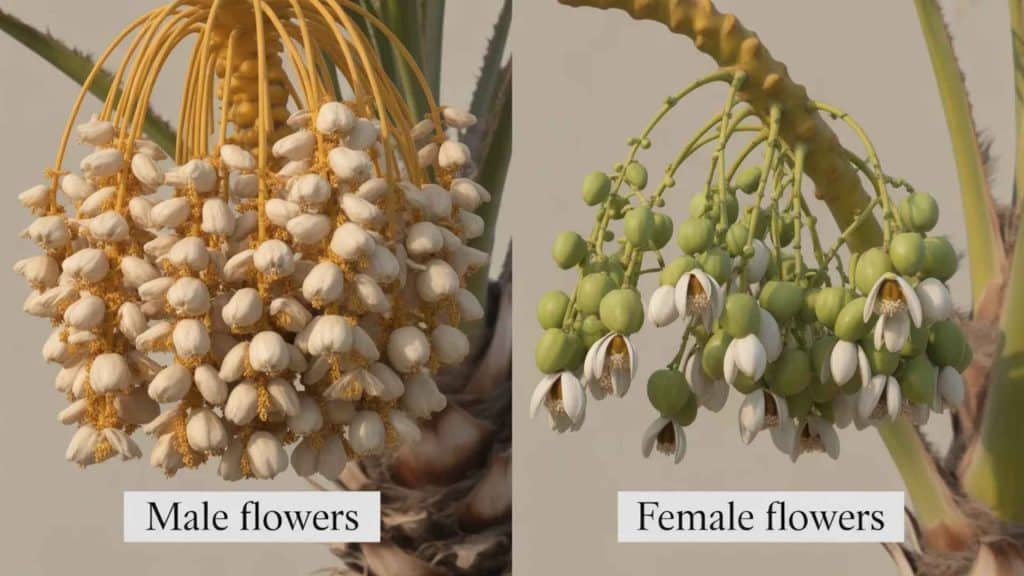
Most people do not realize that date palms have a gender. This is one of the most fascinating facts I share with home gardeners, and it almost always surprises them.
Date palms are dioecious, meaning male and female flowers grow on completely separate trees. You cannot get fruit from a male tree, and a female tree cannot fruit without pollen from a male.
Here is how it works:
- Male trees produce large flower clusters packed with pollen. Their only role is to supply that pollen.
- Female trees carry the flowers that develop into fruit after successful pollination.
- In nature, wind carries pollen from male to female trees. But wind is unreliable.
- A single male tree can pollinate up to 50 female trees, which is why most date farms keep very few male trees.
I always tell growers: if you are planting date palms at home, you need at least one male and one female tree to have any chance of fruit.
Skipping this step is the single most common reason home growers never see a single date on their tree.
| How Do Dates Grow?
Dates do not grow overnight. From the first flower cluster to the fully ripened fruit you find in stores, the process is a carefully timed journey that depends on the right climate, skilled hands, and months of patience. |
Stages of Date Growth
Dates pass through four distinct stages over several months, each marking a specific shift in texture, color, and sweetness.
Stage 1: Flowering
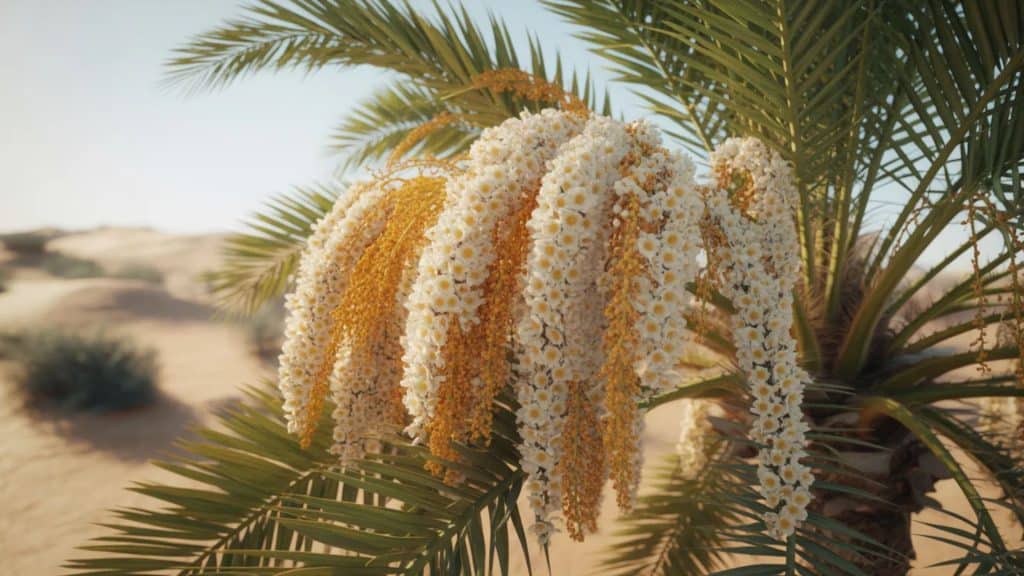
Time Period: Early spring (March through May)
Date palms are either male or female. Pollination is essential. Commercial growers often hand-pollinate to achieve higher yields and more consistent quality.
Stage 2: Fruit Set
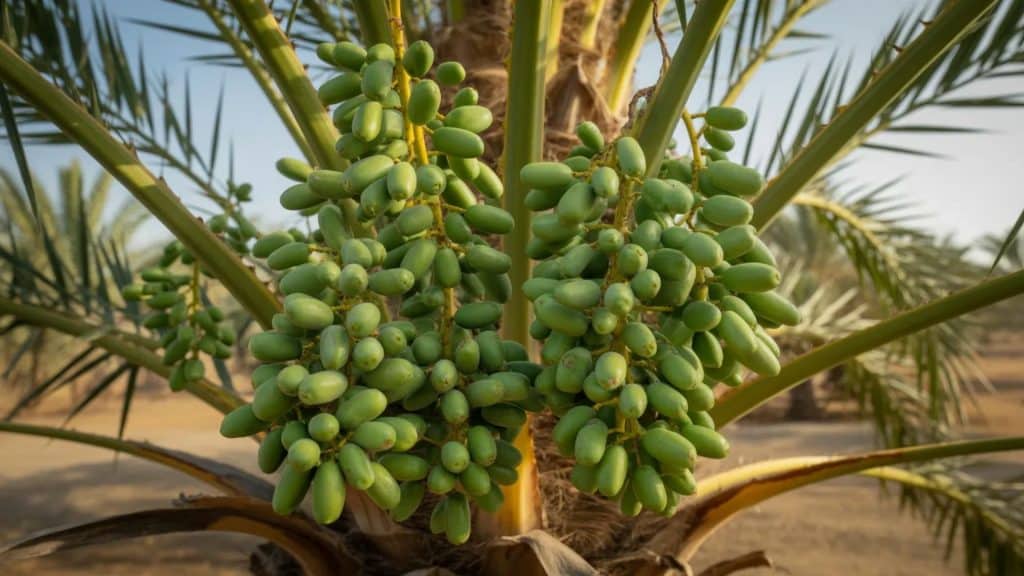
Time Period: Late spring, following pollination
Small green fruits form in tight clusters. They are sensitive to frost and excess moisture. Growers closely monitor the weather during this stage.
Stage 3: Maturation
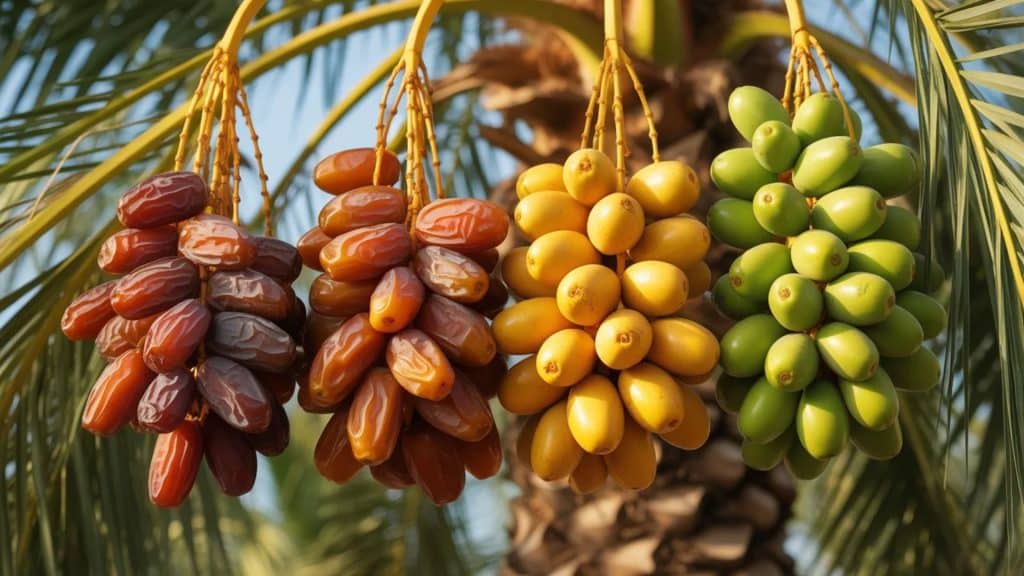
Time Period: Summer through early fall (five to seven months)
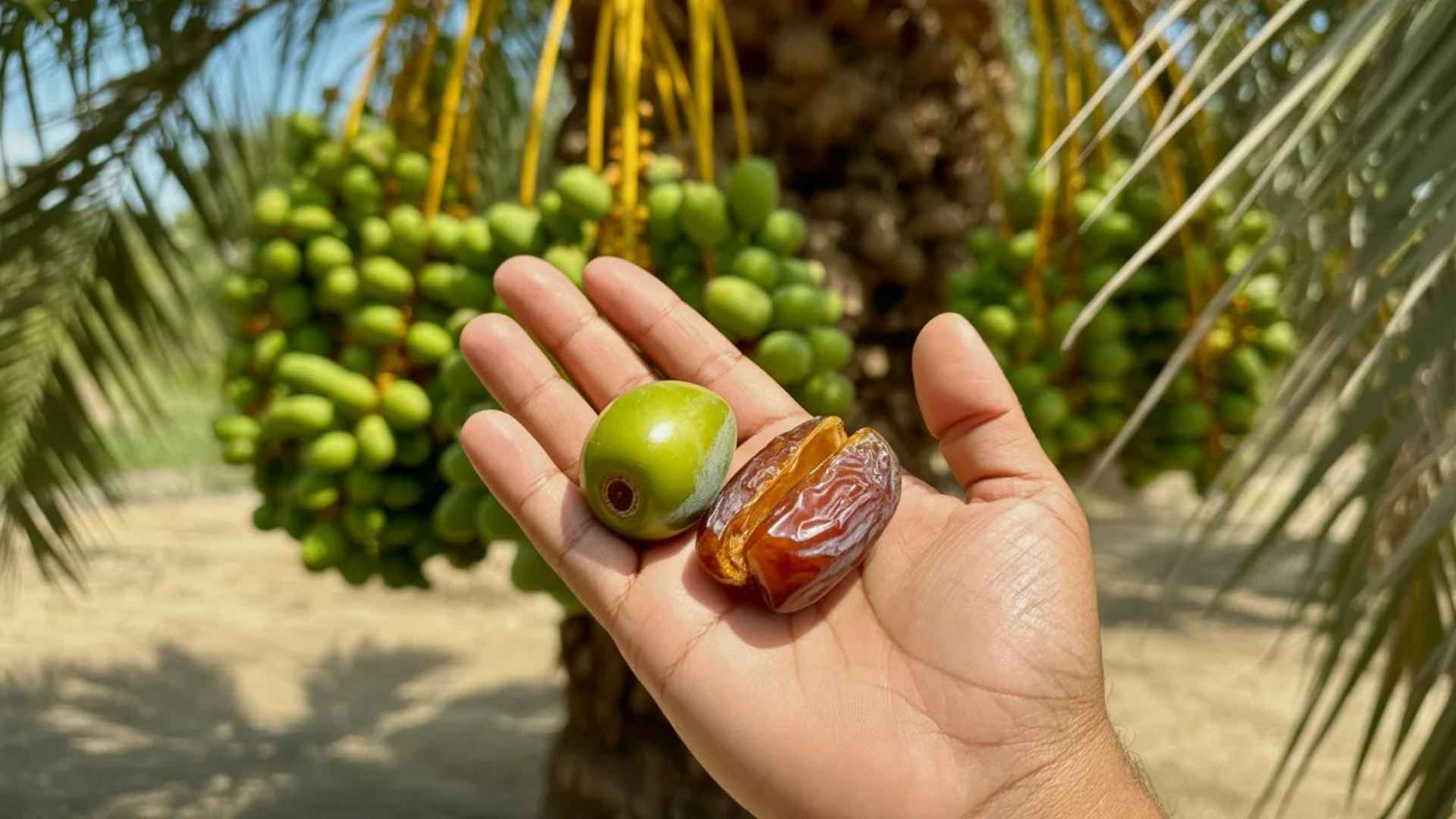
Dates progress through four ripening stages, each marked by distinct changes in color, texture, and sugar levels.
- Kimri: Green, hard, and bitter
- Khalal: Yellow or red, crunchy with mild sweetness
- Rutab: Soft, amber to brown, sugars concentrating
- Tamar: Deep brown, chewy, and fully sweet
Stage 4: Harvesting
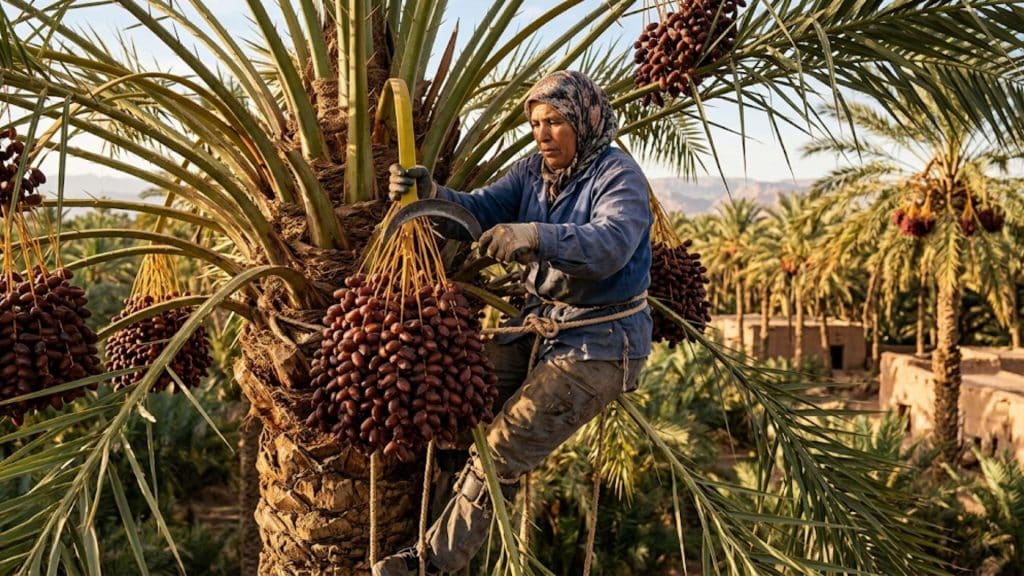
Time Period: Late summer through fall
Harvesters cut entire clusters carefully to avoid bruising. Fresh dates need refrigeration, while tamar dates naturally preserve due to their low moisture content.
| Where Do Dates Grow Best?
Dates grow best in hot, dry climates with long summers and very little rainfall. The ideal regions include the Middle East and North Africa, as well as desert areas such as California’s Coachella Valley, where the heat and low humidity create ideal growing conditions. |
What Conditions Do Date Palms Need to Produce Fruit?
Growing date palms successfully comes down to getting a few key conditions right. I have seen even experienced gardeners struggle when they overlook these basics.
1. Climate and Sunlight:
Date palms need long, hot summers with plenty of direct sunlight every day. I always recommend at least 8 to 10 hours of full sun for healthy fruit production.
Low humidity is generally better, as excess moisture in the air can significantly affect fruit quality.
2. Soil and Watering:
In my experience, well-draining sandy or loamy soil works best for date palms. Young trees need regular watering while they establish their root system.
Once mature, they handle dry conditions well. However, I always remind gardeners that consistent irrigation during the fruiting season is still essential for a good harvest.
Germination Timeline
In my years of working with date palms, I have found that germination is one of the most satisfying stages to watch.
Here is a clear breakdown of what happens at each stage, from the moment the seed hits water to the day it stands as a healthy young tree.
| Stage | Time Period | What Happens |
|---|---|---|
| Seed Soaking | Day 1 to 3 | Seeds are soaked in water to soften the outer coat |
| Germination Begins | Day 4 to 8 | The small root tip starts emerging from the seed |
| Shoot Emergence | Week 2 to 3 | First green shoot pushes through the soil surface |
| Seedling Stage | Week 4 to 6 | Small leaves begin forming, root system strengthens |
| Early Growth | Months 2 to 3 | Seedling grows steadily, needs regular water and sun |
| Transplant Ready | Months 3 to 4 | The plant is strong enough to move to a larger pot or the ground |
| First Fronds | Months 4 to 6 | True palm fronds start appearing |
| Established Seedling | Months 6 to 12 | Root system fully settles, tree begins steady growth |
Why Some Date Palms Do Not Grow Dates?
I get this question from home growers more than almost any other. You plant a date palm, care for it well, and still get no fruit. Here is a clear breakdown of the most common reasons why.
| Reason | What It Means | What You Can Do |
|---|---|---|
| The Tree is Male | Male date palms produce pollen but never fruit. Only female trees bear dates. | Identify the tree’s sex early. Replace with a female tree if needed. |
| The Palm is Too Young | Date palms typically take 4 to 8 years to produce fruit. | Be patient. Focus on healthy growth during the early years. |
| Poor Pollination | Without pollen reaching the female flowers, no fruit will form. | Hand-pollinate female flowers during the spring flowering stage. |
| Climate Not Hot Enough | Dates need long, hot summers to ripen fully. Cool or humid climates slow or stop ripening. | Grow in the warmest spot available or consider a greenhouse setup. |
| Container Growing | Pots restrict root growth, which limits the tree’s overall maturity and fruit output. | Move to a larger container or plant directly in the ground when possible. |
In my expertise, most home growers run into one of the first three issues. Identifying the problem early saves years of frustration and gets you much closer to your first real harvest.
Conclusion
I never get tired of telling people that one of the world’s sweetest fruits grows on a tree that refuses to be rushed.
The key takeaways are simple. Date palms need heat, direct sun, and dry air. Female trees need pollen from a male tree to fruit. Young trees need years to mature before producing a single date.
I have seen growers struggle and succeed with these trees. The ones who succeed always respect the tree’s natural process and never rush it.
Have you tried growing a date palm at home? Drop your experience in the comments below. I would love to hear how your tree is doing!
Frequently Asked Questions
What Kind of Tree Do Dates Grow On?
Dates grow on the date palm ($Phoenix\ dactylifera$), a desert-dwelling tree that thrives in hot, dry climates. These trees require long, intense summers and very little rain to fruit.
Why Do I Need Two Trees to Get Fruit?
Date palms are dioecious, meaning they have separate male and female plants. You must have a male tree to provide pollen and a female tree to bear fruit; one without the other results in no harvest.
How Long Does It Take for A Tree to Produce?
Patience is key, as date palms typically take 4 to 8 years to produce their first crop. They must reach a certain maturity level before they can support heavy fruit clusters.
What Are the Different Ripening Stages?
Dates transition through four stages: Kimri (green/bitter), Khalal (crunchy), Rutab (soft/amber), and Tamar (dark/sweet). Most people recognize the Tamar stage as the chewy, fully ripened fruit found in stores.
Can I Grow a Date Palm in A Container?
While possible for young plants, container growing often restricts root development. To produce a successful harvest, the tree eventually needs to be planted in the ground to reach full maturity.