
Can a single plant survive neglect, low light, and a forgetful watering schedule and still look great? Spoiler: Yes, and its name is pothos.
I have spent years guiding home gardeners through the ups and downs of indoor plant care. Pothos comes up every single time as the one plant that rarely disappoints.
I’ll cover everything from light and feeding to pruning, propagation, and troubleshooting. No complicated routines.
This pothos plant care guide covers watering, lighting, pruning, propagation, and common problems using simple, practical tips that are easy to follow.
Pothos Plant Profile
| Common Name | Pothos, Golden Pothos, Devil’s Ivy |
|---|---|
| Botanical Name | Epipremnum aureum |
| Family | Araceae |
| Plant Type | Evergreen Vine |
| Sun Exposure | Bright indirect light to low light |
| Soil Type | Well-draining potting mix |
| Bloom Time | Rarely flowers indoors |
| Native Areas | Southeast Asia |
| Toxicity | Toxic to cats and dogs |
What is a Pothos Plant?
Pothos is one of the easiest and most beginner-friendly houseplants you can grow indoors.
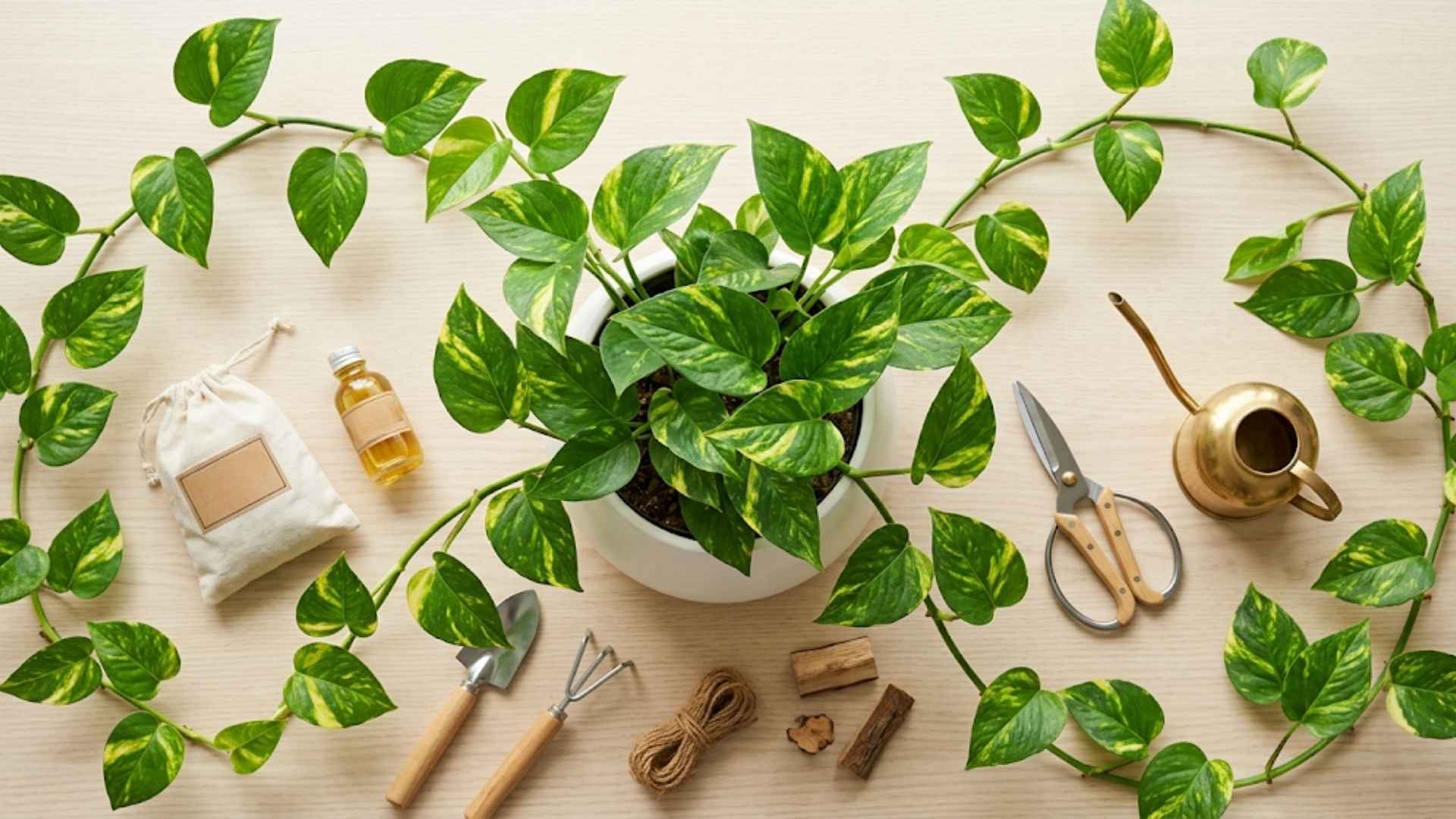
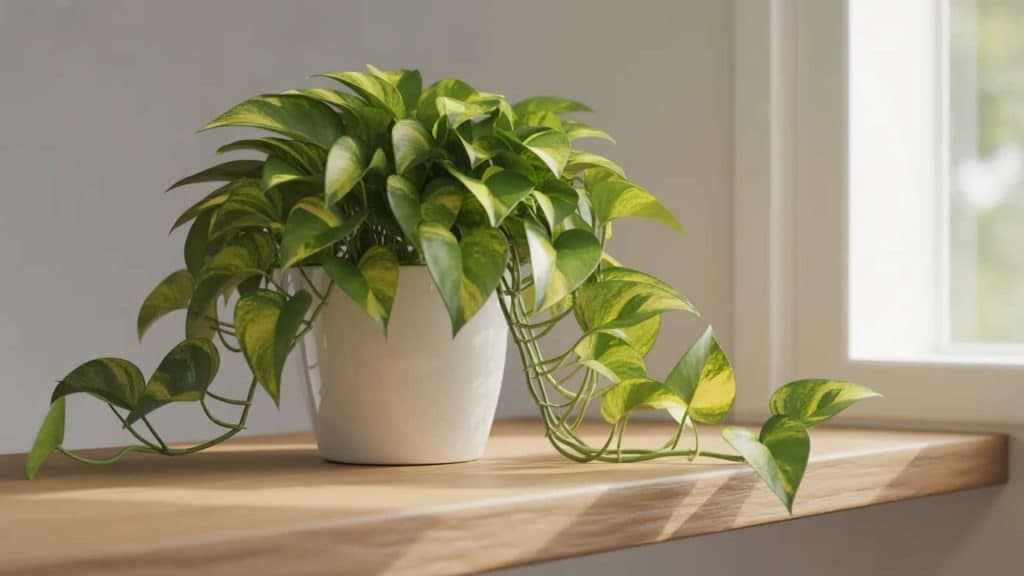
Known for its trailing vines and heart-shaped leaves, it adapts well to various indoor conditions and continues to grow with minimal effort.
I often recommend pothos to new plant owners because it tolerates occasional missed watering, grows quickly, and stays attractive year-round without demanding constant attention.
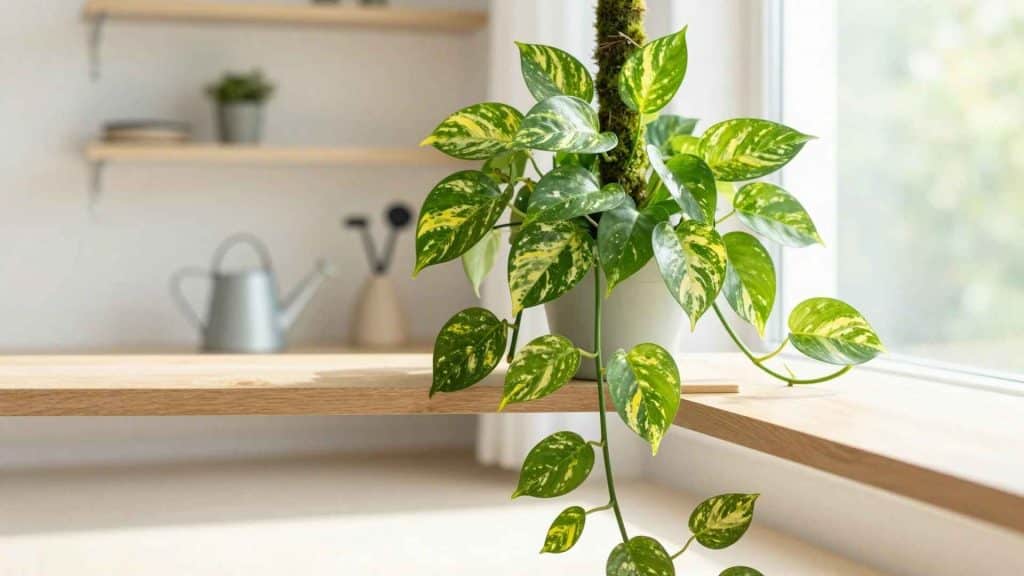
Its vines can trail beautifully from hanging baskets, climb moss poles, or spread naturally across shelves and plant stands.
During spring and summer, pothos grows actively and can produce several inches of new growth within weeks, making it especially rewarding for beginners.
| How Often to Water a Pothos Plant?
I always tell gardeners: underwater rather than overwater. Pothos roots rot fast in soggy soil. Check the soil before watering. Stick your finger two inches in. If it feels dry, water thoroughly. In summer, water every 7 days. In winter, stretch it to every 14 days. Always water at the soil level. Let excess water drain fully from the pot. |
So, How to Care for a Pothos Plant?
Having cultivated pothos in virtually every indoor environment, I’ve refined the essentials to keep your greenery lively and flourishing year-round.
Pothos grows best with the right balance of light, water, humidity, and occasional maintenance. These simple care tips will help your plant stay healthy, full, and fast-growing indoors.
1. Pothos Light Requirements
Pothos grows well in low to bright indirect light. Avoid direct sunlight, which can scorch the leaves. A north or east-facing window works best for healthy growth.
Variegated varieties usually need slightly brighter light to maintain their leaf patterns. Low light conditions may slow growth and reduce variegation over time.
2. Pothos Watering
Water only when the top 2 inches of soil feel dry. Always let excess water drain fully to prevent soggy soil and root rot.
Pothos prefers slightly dry soil over constantly wet conditions. Using pots with drainage holes helps prevent excess moisture from building up around the roots.
3. Temperature
Pothos prefers temperatures between 65°F and 85°F. Keep it away from cold drafts, air conditioners, and frosty windows.
Sudden temperature fluctuations can stress the plant and slow growth. Consistent indoor temperatures help pothos grow steadily year-round.
4. Humidity
Average indoor humidity works well for pothos, though it grows best around 40-60%. Dry indoor air may cause brown leaf tips over time.
During winter, indoor heating can significantly reduce humidity levels. Grouping plants together can help maintain better moisture levels around the foliage.
5. Pothos Fertilizing
Feed with a balanced liquid fertilizer once every 4 weeks during spring and summer. Avoid fertilizing during fall and winter.
Too much fertilizer can damage the roots and cause leaf discoloration. A diluted monthly feeding schedule is usually enough for healthy growth.
6. Soil for Pothos
Use a lightweight, well-draining potting mix. Adding perlite helps improve drainage and prevents excess moisture buildup.
Heavy soil retains too much water, increasing the risk of root rot. A loose soil mix allows roots to breathe and grow more efficiently.
7. Repotting
Repot pothos every 1 to 2 years or when roots begin growing through the drainage holes. Choose a pot only slightly larger than the current one.
Spring is the best time to repot because the plant is actively growing. Fresh soil also helps replenish nutrients and improve drainage.
8. Pothos Pruning
Trim vines just below a leaf node to encourage fuller, bushier growth. Regular pruning also helps control leggy stems.
Pruning encourages new side shoots and keeps the plant compact. Always use clean scissors to avoid spreading disease or damaging healthy stems.
9. Propagating Pothos
Place stem cuttings with at least one node in water or moist soil. Most cuttings develop roots within 2 to 3 weeks.
Propagation is easiest during spring and summer when growth is more active. Healthy cuttings root faster in warm and bright conditions.
10. Pests
Pothos may occasionally attract spider mites, mealybugs, or scale insects. Wipe leaves regularly and treat infestations early with neem oil or insecticidal soap.
Pests are more common in dry indoor environments or dusty foliage. Regular leaf cleaning helps prevent infestations before they spread.
11. Toxic to Cats and Dogs
Pothos is toxic to pets if eaten and may cause mouth irritation or vomiting. Keep the plant out of reach of cats and dogs.
The plant contains calcium oxalate crystals, which can irritate the mouth and digestive system. Contact a veterinarian if a pet shows signs of ingestion.
Do your Pothos Need a Humid Environment?
In my expertise, pothos handles average indoor humidity better than most houseplants. It does not need a humidifier or daily misting to survive.
But giving it slightly better conditions does make a real difference.
Pothos grows faster and looks fuller at 40-60% humidity. Most homes naturally fall in this range. If yours is drier, there are simple ways to help:
- Place a water-filled tray with pebbles beneath the pot
- Group your pothos with other houseplants
- Run a small humidifier nearby during the winter months
I always check my plants during winter. Indoor heating pulls moisture from the air quickly. That dry air is one of the main reasons pothos leaves develop brown tips.
Also, keep pothos away from air vents and radiators. Constant dry airflow stresses the plant more than low humidity alone ever would.
Should You Fertilize Your Pothos?
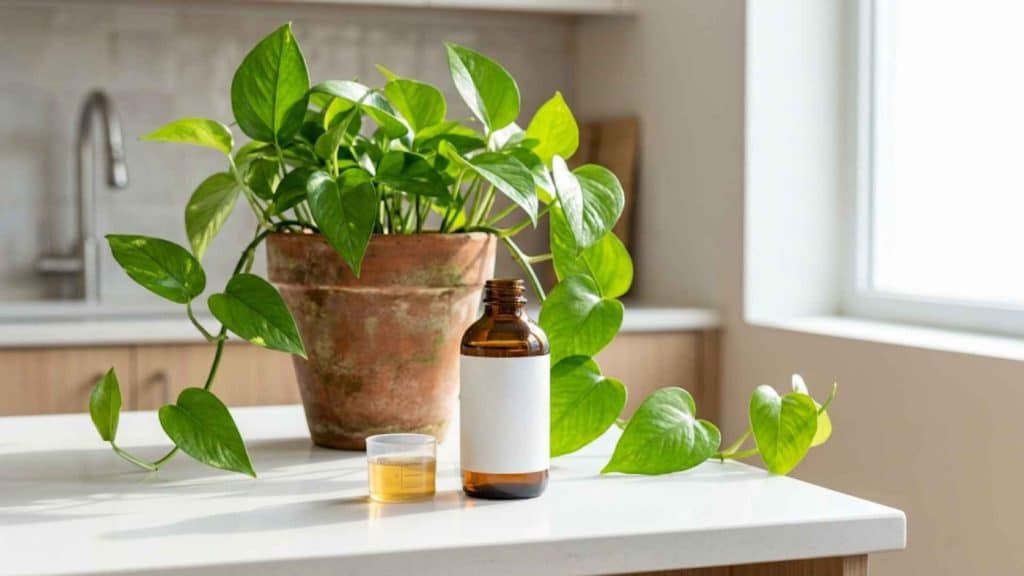
Pothos is a light feeder, which means it does not need heavy fertilizing to grow well indoors. In fact, too much fertilizer often causes more problems than benefits.
For healthy growth, use a balanced liquid houseplant fertilizer, such as a 10-10-10 or 20-20-20 formula, diluted to half strength.
Fertilizing Schedule
Pothos only needs occasional feeding during its active growing season. A light, consistent routine works best.
- Spring and summer: Feed once every 4 weeks during active growth
- Fall and winter: Stop fertilizing while the plant is dormant
Signs of Overfertilizing
Watch for these common signs:
- Yellow or brown leaf edges
- White crust forming on the soil surface
- Sudden leaf drop despite proper watering
Always water your pothos before applying fertilizer. Feeding dry soil can damage the roots and stress the plant. A simple monthly feeding routine is usually enough to keep pothos healthy and growing steadily.
Best Soil for Pothos
Using the right soil helps pothos grow faster, stay healthier, and avoid common problems like root rot. A loose, well-draining mix keeps the roots aerated while holding just enough moisture for steady growth.
Why Soil Matters
Good soil helps pothos roots stay healthy by improving drainage and airflow. The right mix also prevents overwatering issues and supports steady growth.
| BENEFIT | WHY IT HELPS |
|---|---|
| Prevents Root Rot | Stops excess moisture from sitting around the roots |
| Improves Drainage | Helps water flow through the soil more efficiently |
| Encourages Root Growth | Loose soil allows roots to spread and grow faster |
Characteristics of the Best Soil for Pothos
The best pothos soil should be:
- Well-draining
- Lightweight and airy
- Moisture-retentive without becoming soggy
- Slightly acidic to neutral in pH
DIY Pothos Soil Mix Recipe
A simple homemade pothos soil mix provides excellent drainage and airflow for healthy root development.
- 2 parts potting soil or coco coir
- 1 part perlite
- 1 part orchid bark
This combination keeps the soil light, prevents compaction, and improves aeration around the roots.
How to Prune Pothos to Make It Fuller?
One of the most common questions I get from home gardeners is: “Why does my pothos look so thin and straggly?”
My answer is always the same. It needs a good trim. Pruning is the single best thing you can do to keep pothos full and healthy.
| PRUNING FACTOR | WHAT TO DO? |
|---|---|
| Where to cut | Cut just below a leaf node using clean, sharp scissors |
| Why it helps | Cutting signals the plant to push out new stems and grow fuller |
| How often | Every 2 to 3 months during spring and summer only |
| Winter pruning | Avoid trimming in winter. The plant is resting |
| What to do with cuttings | Place in water or fresh soil. Roots appear in 2 to 3 weeks |
Each cutting with at least one node can grow into a brand new plant. It is one of the easiest ways to grow your collection without spending a dime.
Common Pothos Problems and How to Fix Them
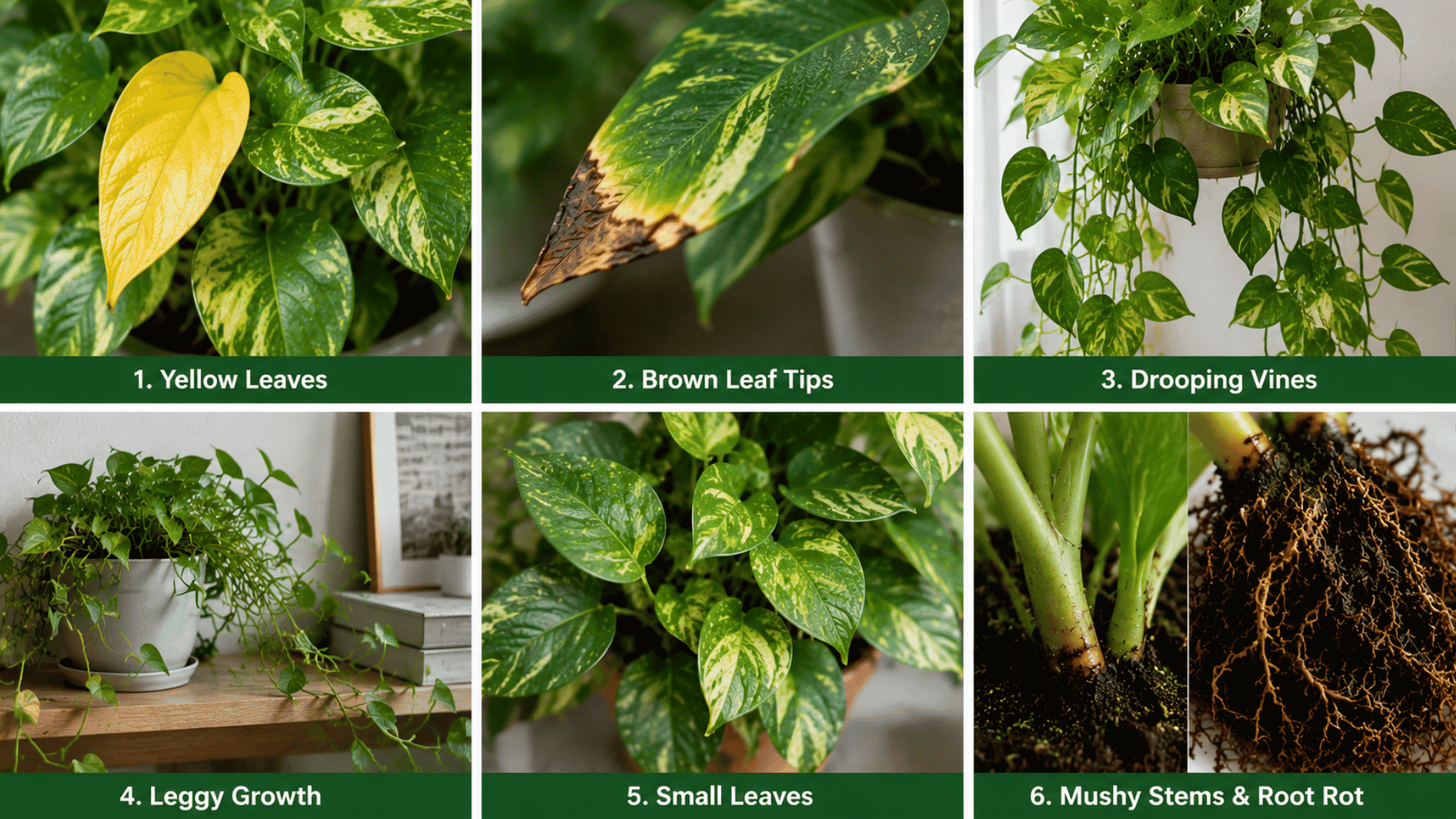
Pothos is tough, but it is not problem-free. The good news is that most issues show up clearly on the leaves and stems, making them easy to spot and fix early.
1. Yellow Leaves
- Problem: Overwatering or waterlogged soil is the most common cause. Too little light can also trigger yellowing.
- Fix: Let the soil dry out fully before watering again. Move the plant closer to a bright, indirect light source.
2. Brown Leaf Tips
- Problem: Dry air, underwatering, or fluoride buildup in tap water causes brown tips.
- Fix: Increase humidity around the plant. Switch to filtered or rainwater for watering.
3. Drooping Vines
- Problem: The plant is either too dry or sitting in waterlogged soil. Both cause drooping.
- Fix: Check soil moisture first. Water thoroughly if dry. If the soil is wet, hold off and improve drainage.
4. Leggy Growth
- Problem: Low light forces pothos to stretch toward any available light source, producing long, sparse vines.
- Fix: Move the plant to a brighter spot. Trim leggy vines just below a node to encourage fuller growth.
5. Small Leaves
- Problem: Lack of light or nutrients causes the plant to produce smaller-than-normal leaves.
- Fix: Move pothos to a brighter location. Feed with a balanced liquid fertilizer every 4 weeks during the growing season.
6. Curling Leaves
- Problem: Underwatering or exposure to cold drafts causes leaves to curl inward.
- Fix: Water the plant thoroughly and move it away from cold windows, air vents, or fans.
7. Mushy Stems and Root Rot
- Problem: Overwatering over a long period leads to mushy stems and rotting roots. This is the most serious pothos problem.
- Fix: Remove the plant from its pot immediately. Cut off all black or mushy roots. Repot in fresh, dry, well-draining soil. Hold off watering for at least one week.
Conclusion
Pothos is one of the most forgiving and rewarding plants you can grow indoors.
From getting the watering schedule right to fixing yellow leaves and leggy vines, every small step you take makes a real difference to your plant’s health.
I always say: start simple, watch your plant closely, and let it tell you what it needs. Pothos gives clear signals when something is off, and fixing most problems takes just a few minutes.
The best part? Once you get the basics right, this plant practically takes care of itself.
Have you run into any pothos problems I did not cover here? Or do you have a care tip that works brilliantly for you? Drop it in the comments below. I would love to hear how your pothos is growing!
Frequently Asked Questions
Is It Normal for Pothos Leaves to have “Sweat” Drops?
Yes, this is called guttation. When the soil is very moist, the plant releases excess water through tiny pores in the leaves. It is usually a sign of a well-hydrated plant.
Can I Grow Pothos in Water Permanently?
Absolutely. Pothos can live indefinitely in water as long as you provide liquid fertilizer occasionally. Just note that “water roots” are different from “soil roots,” so transitioning them later can be tricky.
Why Are My Variegated Pothos Leaves Turning Solid Green?
This usually happens due to low light. The plant produces more chlorophyll to absorb as much light as possible. Move it to a brighter spot to help the white or yellow marbling return.
How Do I Get My Pothos Leaves to Grow Much Larger?
To get giant leaves, give the plant a moss pole to climb. In the wild, pothos leaves grow large and develop splits (fenestrations) only when allowed to grow upward.