
Getting dahlias right starts underground. The way you plant your tubers decides everything that happens above the soil later.
A tuber dropped into cold, wet ground may rot before it ever sends up a shoot.
But a tuber placed in warm, loose soil with the eye facing up? That one turns into a plant loaded with flowers by August.
This guide focuses on the planting process itself.
You will learn how to inspect tubers, prepare your beds, and get each tuber into the ground correctly.
Why Plant Dahlia Tubers?
You can start dahlias from seeds or from tubers. Both work. But tubers give you a clear head start.
Faster Growth From Day One
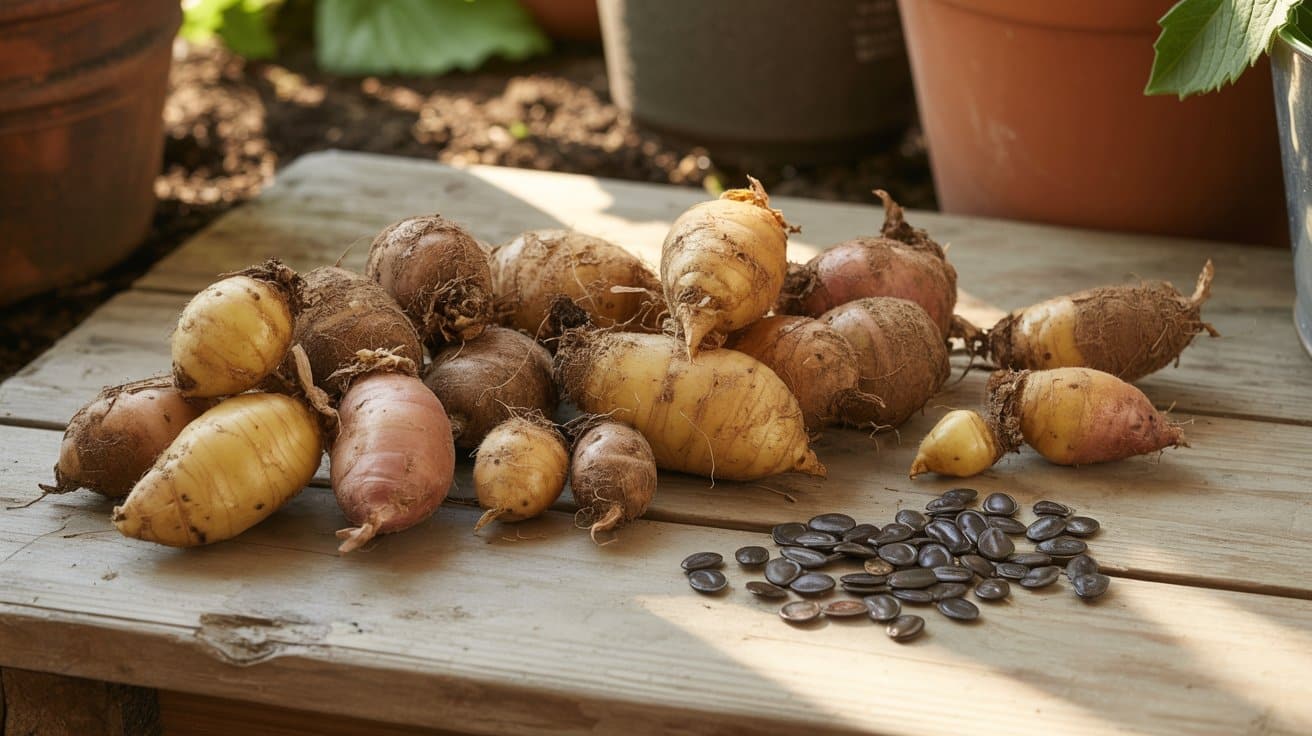
A tuber is a thick, fleshy root that stores energy from last season’s plant.
When you put it in the ground, it already has fuel to push up a strong shoot. Seeds need weeks just to sprout.
Then they need more weeks to build a root system from scratch.
Tubers skip all of that. Most send up green shoots within two to four weeks of planting.
Predictable Blooms Every Time
Each tuber is a genetic copy of its parent plant.
That means the blooms you get will match the variety you bought, same color, same petal shape, same size.
Seeds work differently. They create new genetic combinations every time.
The flowers may look nothing like what you expected. That can be fun for experimenting. But if you want a specific look in your garden, tubers are the safer bet.
Best Time to Plant Dahlia Tubers
Wait for Warm Soil
The ground has to be warm before you plant.
Soil temperature should be at least 60°F (15°C). Anything colder, and the tuber sits in damp conditions that invite rot.
A cheap soil thermometer takes the guesswork out. Push it 4 inches into the ground first thing in the morning.
That gives you the coolest reading of the day.
Timing by Climate Zone
A simple way to judge timing: plant your dahlias when you would plant tomatoes.
In most areas, that falls between late April and mid-June. If you are planning your planting schedule, it also helps to know when dahlias bloom so you can time your garden for consistent color through the season.
Gardeners in USDA Zone 7b and warmer can usually plant by late April. Those in cooler zones (3 to 5) should wait until late May or even early June.
Not sure about your local frost date? Your county extension office can tell you the average last frost for your area.
Preparing Your Garden for Dahlia Tubers
Selecting the Right Spot
Dahlias needfull sun for at least 6 hours each day. Morning sunlight is best.
In areas with intense afternoon heat (Zones 8 and above), a bit of afternoon shade actually helps protect the blooms.
Spacing and Air Flow
Crowded plants stay damp longer. That invites fungal problems, such as powdery mildew.
Space large varieties 18 to 24 inches apart. Smaller and dwarf types do fine at 12 to 18 inches.
Avoid planting next to tall shrubs, fences, or trees that cast shade during the middle of the day.
Dahlias in too much shade grow tall and leggy but produce very few flowers.
Soil Preparation
Dahlias need soil that drains fast. Standing water around a tuber, even for a day or two, can cause rot.
If your soil holds puddles for more than 24 hours after a heavy rain, drainage is a problem.
Process for Planting Dahlia Tubers
Step 1: Inspect Your Tubers Before Planting
This step gets skipped far too often. Before anything goes into the ground, take a close look at each tuber.
A healthy tuber feels firm, like a fresh potato. Toss any that feel soft, mushy, or smell bad. Also, discard tubers with visible mold or large cracks through the neck.
How to Find the Eye
The most important thing to look for is the eye. This is a small bump or nub on the crown, the part where the tuber meets the old stem. No eye means no plant.
A tuber without an eye will not grow, no matter how healthy it looks otherwise.
If you cannot find the eye, place the tuber in a shallow tray of lightly damp soil.
Keep it in a warm spot for 3 to 5 days. A tiny sprout should appear near the crown. That sprout is your eye.
Pro Tip: If you ordered tubers online and some arrived loose (broken off from the crown), those loose pieces likely have no eye. Set them aside rather than crowding your planting holes.
Step 2: Loosen and Amend the Soil
Use a garden fork or spade to break up the soil to a depth of at least 12 inches. Pull out any rocks, old roots, or clumps. Work the compost into the soil, then apply a light dusting of balanced organic fertilizer.
The goal is a loose, crumbly bed where new roots can spread easily.
If you are planting in raised beds, fill them with a blend of garden soil and compost. Avoid 100% potting mix, as it holds too much moisture for tubers.
Step 3: Dig the Hole and Position the Tuber
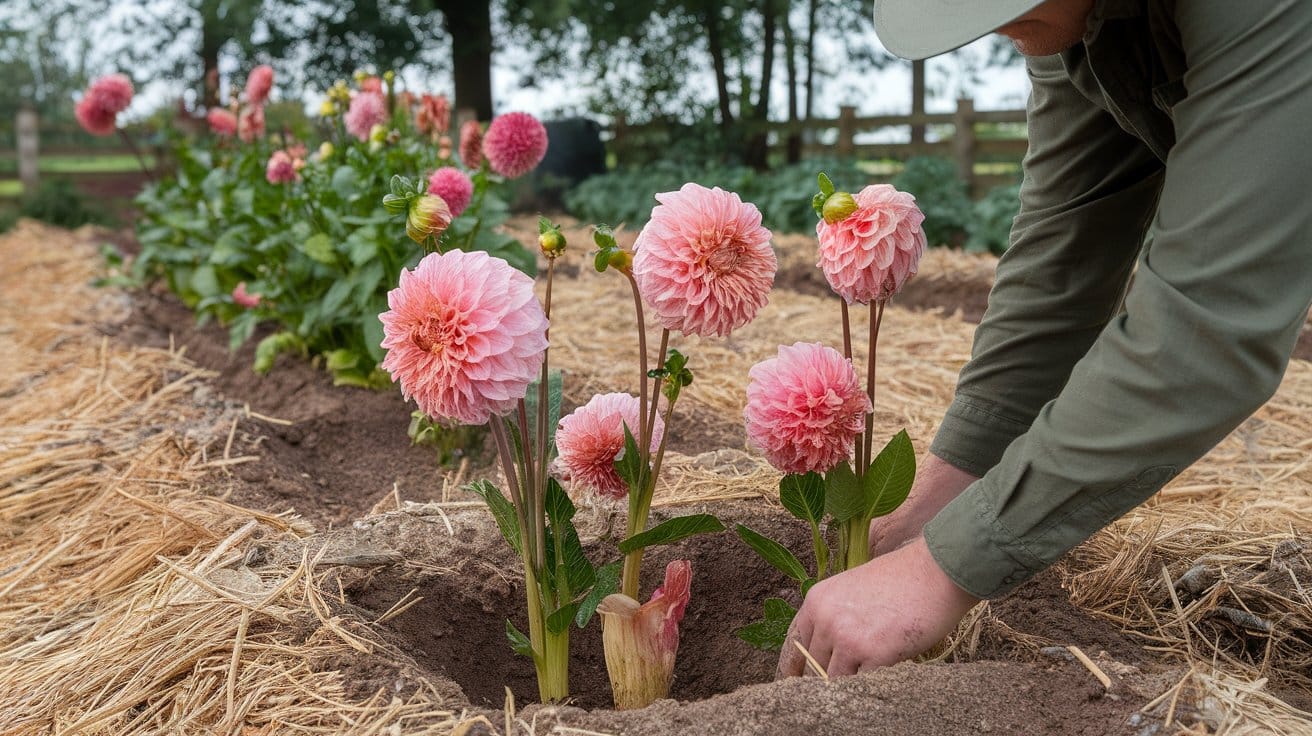
Dig a hole 4 to 6 inches deep and wide enough to lay the tuber flat. Place the tuber on its side with the eye pointing up.
Think of it like placing a small potato in the soil with the sprouting end aimed at the sky.
Do not plant too deeply. Burying a tuber 8 or 10 inches down makes it harder for the shoot to reach the surface. It also keeps the tuber in colder, wetter soil.
Step 4: Place a Stake Now
Push a sturdy stake (bamboo, wood, or metal) into the ground right next to the tuber before you fill the hole. This is not optional for varieties that grow over 3 feet tall.
Why now? Because once the plant is growing, pushing a stake into the ground risks spearing the tuber or tearing through new roots.
Doing it at planting time takes 10 seconds and saves you real problems later.
Tomato cages also work well for bushier, shorter varieties.
Step 5: Cover and Hold Off on Water
Fill the hole with soil and gently pat it down. Do not water heavily. This is the mistake that causes the most planting failures.
At this stage, the tuber has no roots. It absorbs moisture directly through its skin. Too much water around a rootless tuber is a recipe for rot. Keep the soil barely damp.
If you get rain within the first week, that is usually enough.
Wait for green shoots to push through the surface. This usually takes 2 to 4 weeks. Only then should you begin regular watering.
How to Care for Dahlia Tubers After Planting
1. Watering After Sprouting
Once shoots appear and reach 6 to 12 inches tall, your dahlia needs consistent moisture.
Water deeply 2 to 3 times a week rather than giving a little bit every day.
Deep watering encourages roots to grow downward. That makes the plant stronger and more stable.
Drip irrigation or a soaker hose laid along the base of your plants works best. Overhead sprinklers wet the leaves, inviting fungal issues.
2. When and How to Fertilize
Wait about 30 days after planting before your first application. Use a low-nitrogen fertilizer (a 5-10-10 ratio works well). Feed every 3 to 4 weeks through early autumn.
Too much nitrogen produces tall, weak stems with fewer blooms. Stick to balanced or bloom-focused formulas for the best results.
3. How to Tie and Support Stems
As your dahlias grow, tie the main stem to the stake every 12 to 18 inches.
Use soft garden twine or strips of cloth. Do not use wire or thin string, as these can cut into the stem.
4. Pinching for More Blooms
When the plant reaches about 12 inches tall, pinch out the top 3 to 4 inches of the center stem.
This encourages the plant to branch out sideways rather than growing straight up.
The result is a bushier plant with more stems and more flowers.
5. The Corral Method for Larger Beds
For larger beds, some growers use a “corral” method. They place metal posts every 10 feet along the edges of the bed. Then they run double rows of twine between them.
The plants grow up inside this frame, held upright without individual ties.
Conclusion
Planting dahlia tubers comes down to a few key steps. Start with firm tubers that have a visible eye.
Wait for the soil to warm above 60°F. Plant 4 to 6 inches deep with the eye facing up. Stake at planting time.
And hold off on watering until green shoots break through.
Get these basics right, and the tubers will do the rest.
In a few months, your garden will be full of bright, long-lasting blooms that keep coming until the first frost.
Which dahlia variety are you planting this season?
Frequently Asked Questions
What Should Not Be Planted Near Dahlias?
Avoid planting dahlias near heavy feeders like tomatoes or potatoes, and plants prone to similar pests, as they compete for nutrients and increase disease risk.
What is the Rarest Dahlia Color?
True blue dahlias are the rarest, virtually nonexistent due to genetic limitations, though breeders continue attempting to develop blue-toned varieties.
Do Dahlias Attract Spiders?
Dahlias don’t specifically attract spiders, but their blooms can draw insects, which may indirectly bring spiders seeking prey.