
Dahlias are one of the most loved flowers in home gardens.
Their bright, colorful blooms appear from midsummer through the first frost. That gives you months of color from a single plant.
But not every dahlia blooms at the same time. Your climate, planting date, and daily care all play a role.
Some gardeners see flowers by June. Others wait until August.
So when do dahlias bloom exactly? It comes down to where you live and how you grow them.
This guide will walk you through everything you need to know. You will learn the exact bloom window for dahlias. You will also learn when and how to plant them.
What is the Blooming Season for Dahlias?
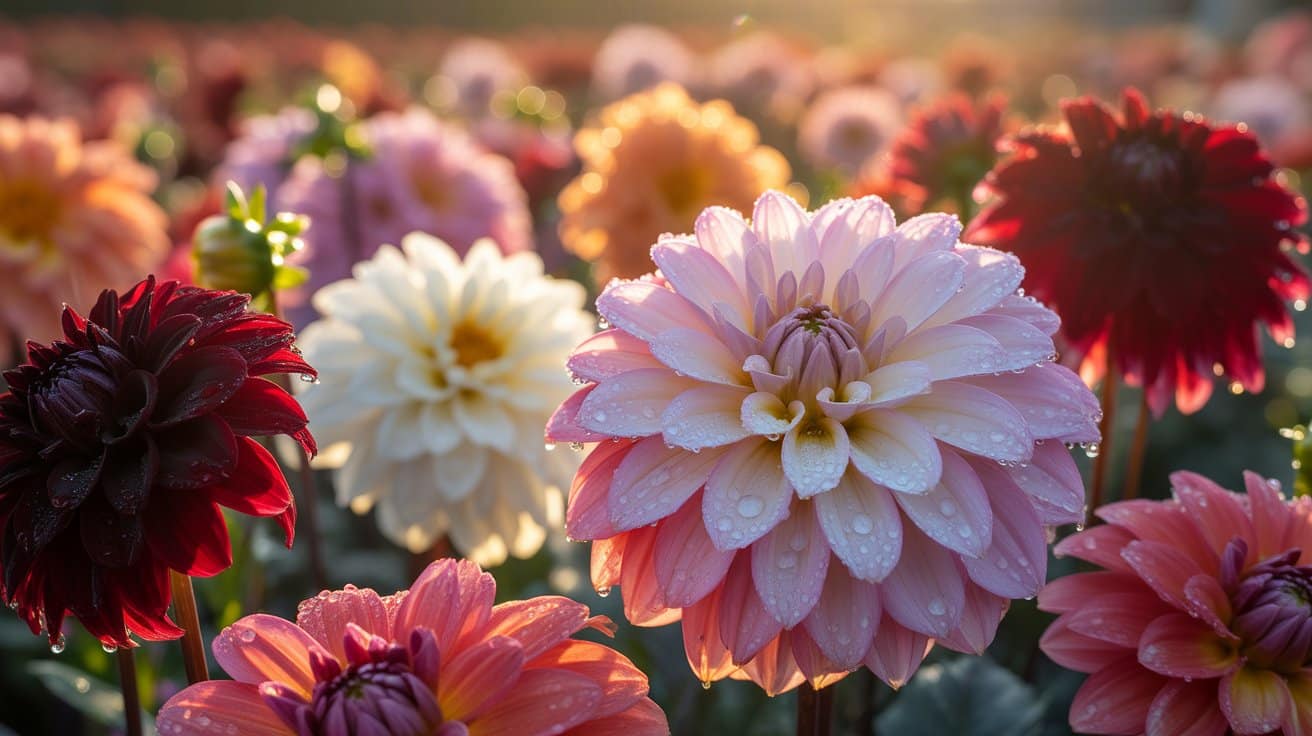
Most dahlias start blooming in midsummer. This usually means July in most parts of the country.
Their flowers keep coming until the first hard frost, which is usually in October or November.
That gives you roughly three to four months of blooms from a single plant.
August and September are the peak months for most varieties. During this time, the plants produce flowers at their highest rate.
Dahlias Bloom Timing by Region
Your local climate has a big effect on bloom timing. Here is a general guide:
- Warm climates (Zones 8 to 11): Dahlias can bloom as early as June and last well into November.
- Moderate climates (Zones 6-7): Expect blooms from July through October.
- In cold climates (Zones 3 to 5), blooms often start in late July or August. The season ends earlier due to early frost.
Early vs Late Varieties
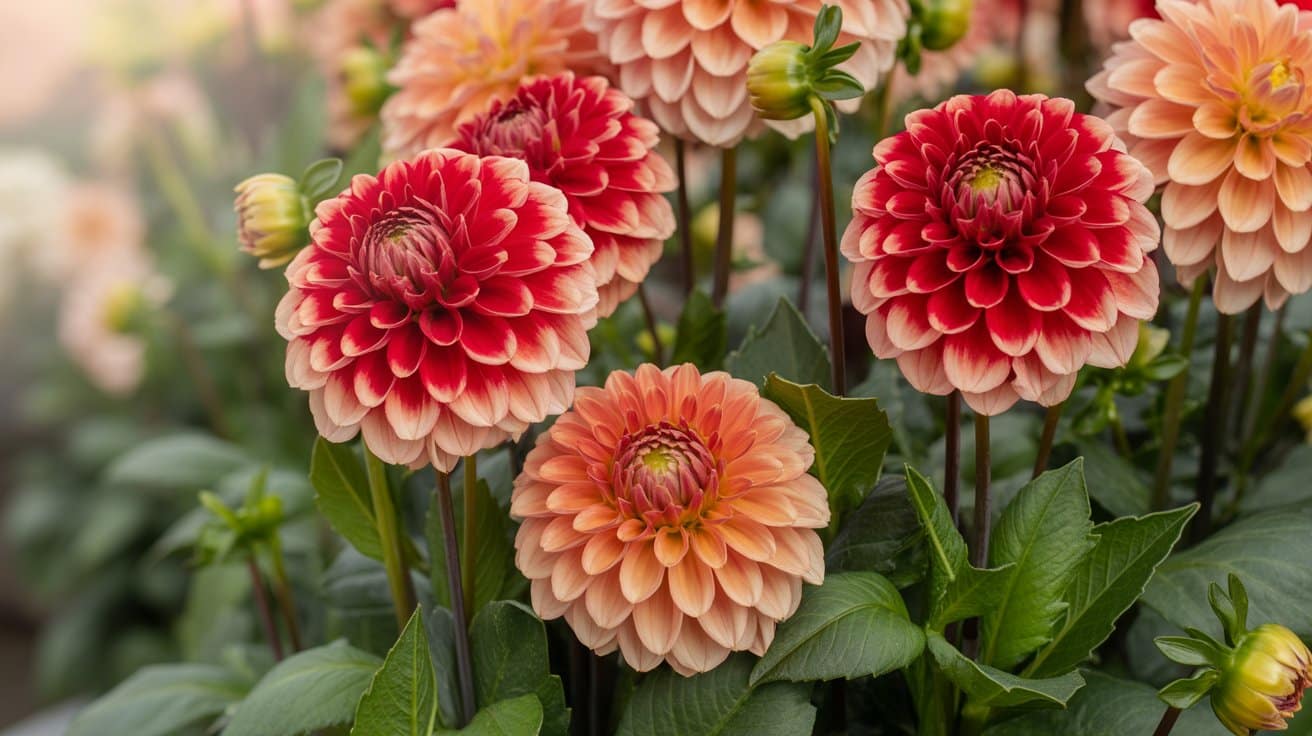
Not all dahlia types bloom at the same time. Dwarf and low-growing dahlias tend to bloom first.
They can start flowering within 60 to 70 days of planting.
Larger types like dinnerplate dahlias take longer.
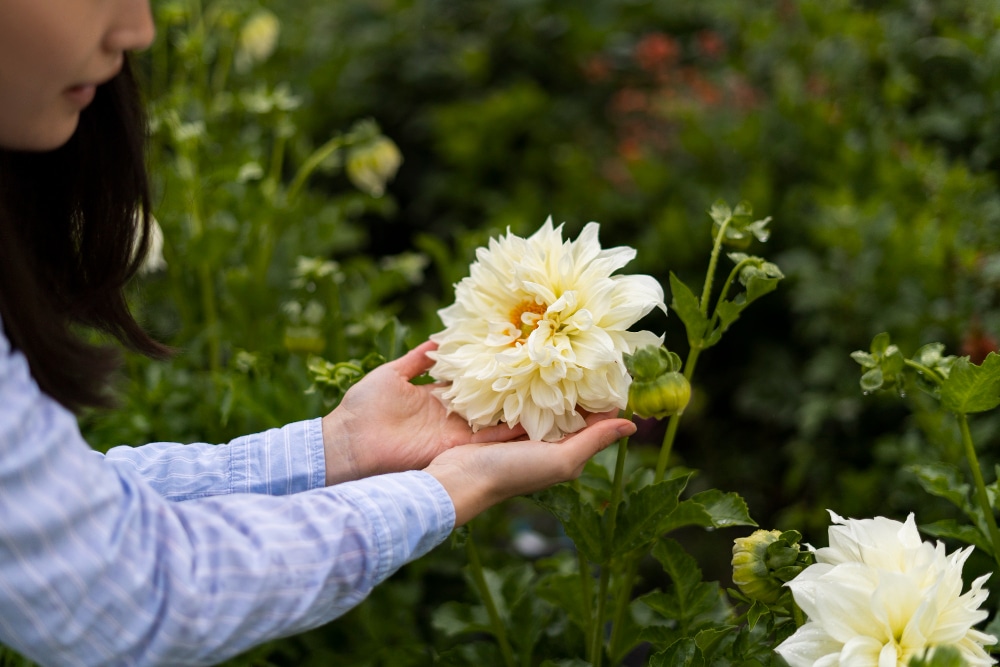
Varieties like Cafe Au Lait may not bloom until late August. Ball-type dahlias usually flower by July, while larger forms take longer to flower.
Pro Tip: If you want early flowers, choose dwarf or small-ball varieties. For late-season color, go with dinnerplate types.
How Long Do Dahlias Take to Bloom?
Most dahlias take 90 to 100 days from planting to first bloom. Faster varieties can flower in 60 days. Larger types may need up to 120 days.
Tubers bloom faster than seeds. They already store energy and sprout within two to four weeks.
Seeds need to be started 4 to 6 weeks indoors before the last frost and bloom later.
You can speed things up by pre-starting tubers in pots indoors a month early.
More sunlight, warm soil above 60 degrees Fahrenheit, and pinching also affect bloom timing.
When and Where to Plant Dahlias
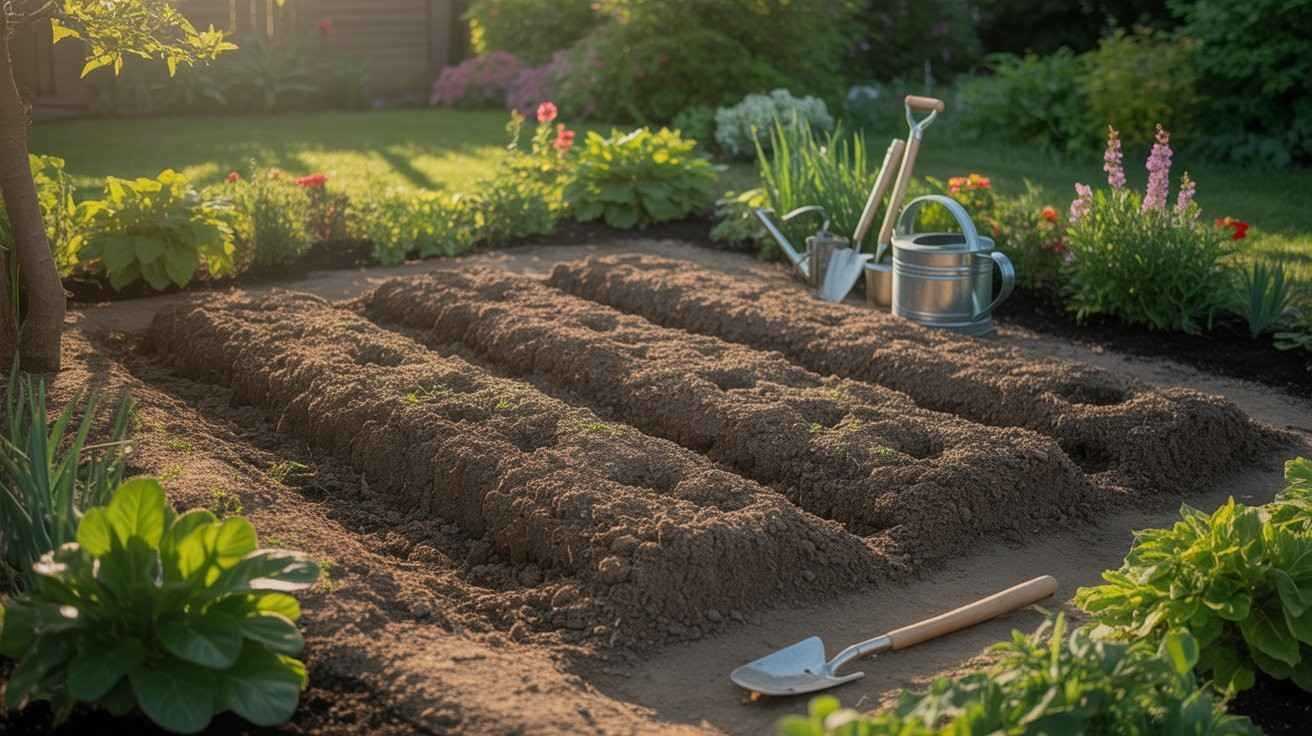
Plant tubers after your last frost date when the soil reaches 60 degrees Fahrenheit.
In most areas, this falls between late April and mid-June. A good rule is to plant when you would plant tomatoes.
Dahlias need six to eight hours of direct sun daily. Morning sun is best. They prefer rich, well-draining soil with a pH between 6.0 and 7.5. Loosen the soil to a depth of 12 inches and mix in compost before planting.
Pick a spot with good air flow. Space large varieties 18 to 24 inches apart and smaller types 9 to 12 inches apart.
How to Plant Dahlias: Step-by-Step Process
Step 1: Prepare the Soil
Loosen the soil to at least 12 inches deep. Add compost or rotted manure.
You can also mix in an all-purpose slow-release fertilizer (like 5-5-5) to give the tubers a good start.
Step 2: Dig the Hole
Dig a hole about four to six inches deep. Place the tuber flat in the hole with the eye (growth bud) pointing up.
The crown, where the tubers connect to the stem, should sit one to two inches below the soil surface.
Step 3: Add a Stake
Place a sturdy five to six-foot stake behind the tuber at planting time. Do this now, not later.
Staking after the plant has grown can damage the roots.
Step 4: Cover and Wait
Fill the hole back with soil. Do not water right away unless the soil is very dry.
Overwatering at this stage can cause the tuber to rot. Sprouts should appear in two to four weeks.
Step 5: Begin Watering
Once green shoots appear above the soil, you can start watering regularly. Keep the soil moist but not soggy.
How to Care for Dahlias for Healthy Blooms
Watering Routine
Dahlias are thirsty plants. Once they start growing, they need about one inch of water per week.
During hot summer months, increase this to two inches per week.
Water deeply rather than often. Shallow watering does not reach the roots.
Use a soaker hose or drip system to water at the base. Avoid wetting the leaves, as this can lead to disease.
Fertilizing Schedule
Start feeding your dahlias about 30 days after planting. Use a low nitrogen fertilizer, such as a 5-10-10 formula.
Feed every three to four weeks throughout the growing season.
Too much nitrogen is a common mistake. It causes lots of green leaves but very few flowers.
Once buds appear, switch to a fertilizer with even less nitrogen and more potassium.
Staking and Support
Most dahlias over three feet tall need support. Their hollow stems break easily in the wind and rain.
Tie stems to the stake every 12 to 18 inches as the plant grows. Use soft garden twine so you do not damage the stem.
You can also use tomato cages for support. Place them around the plant early in the season.
How to Keep Dahlias Blooming All Summer
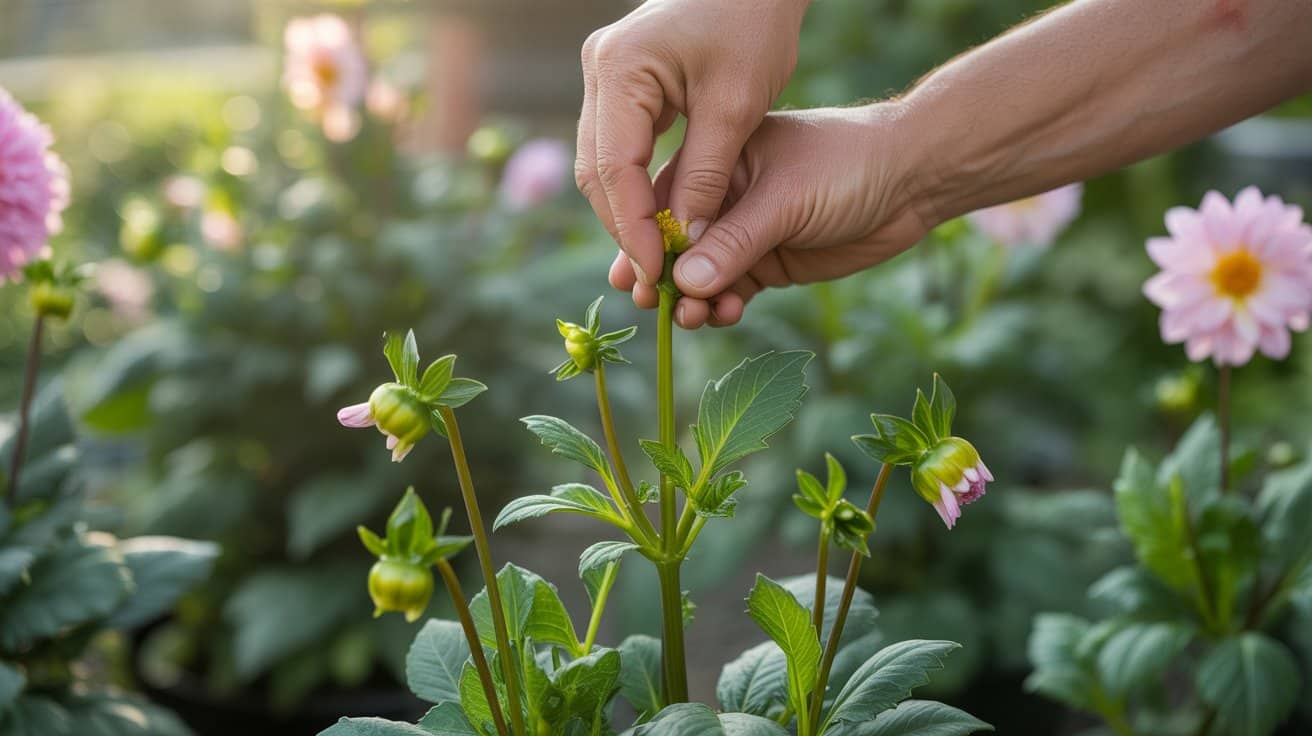
Deadhead weekly
Remove spent flowers above a leaf joint. This stops the plant from forming seeds and prompts it to form new buds.
Cut Flowers Often
The more you cut, the more they bloom. Cut stems 12 inches long in the early morning for the best results.
Keep Feeding
Use a potassium-rich fertilizer, such as tomato feed, every 3 to 4 weeks throughout summer.
If plants look healthy but lack buds, add 1/2 cup of Epsom salts per plant to boost magnesium levels.
Why Are My Dahlias Not Blooming?
This is one of the most common questions among dahlia growers.
If your plants are green and growing but not flowering, one of these issues is likely the cause.
1. Too Much Nitrogen
Excess nitrogen makes dahlias grow lots of leaves but very few flowers.
This is the top reason healthy-looking plants fail to bloom. Switch to a fertilizer with low nitrogen and higher phosphorus and potassium.
2. Not Enough Sunlight
Dahlias need at least six hours of full sun every day. Even a bit less can reduce blooms.
In heavy shade, they may not flower at all. Check if nearby trees or structures are blocking light.
3. Improper Watering
Both too much and too little water cause problems. Dry soil leads to stunted growth and no buds. Soggy soil rots the roots.
Aim for deep watering two to three times a week. Let the top inch of soil dry between waterings.
4. Late Planting
Dahlias need 90 to 120 days to bloom after planting. If you put them in the ground in late June or July, they may not flower before the first frost hits.
Always plant early, right after the last frost passes.
5. Skipping Deadheading
Old flowers left on the plant drain resources. The plant tries to form seeds rather than new buds.
Regular deadheading keeps the bloom cycle going all season.
6. Pests and Disease
Thrips, aphids, and spider mites can weaken plants and reduce blooming. Check your dahlias regularly.
Treat problems early with insecticidal soap or organic pest control.
Pro Tip: If your plants look lush and green but have zero buds, nitrogen is almost always the problem.
Cut back on nitrogen-rich fertilizer right away.
How to Store Dahlia Tubers for Next Season
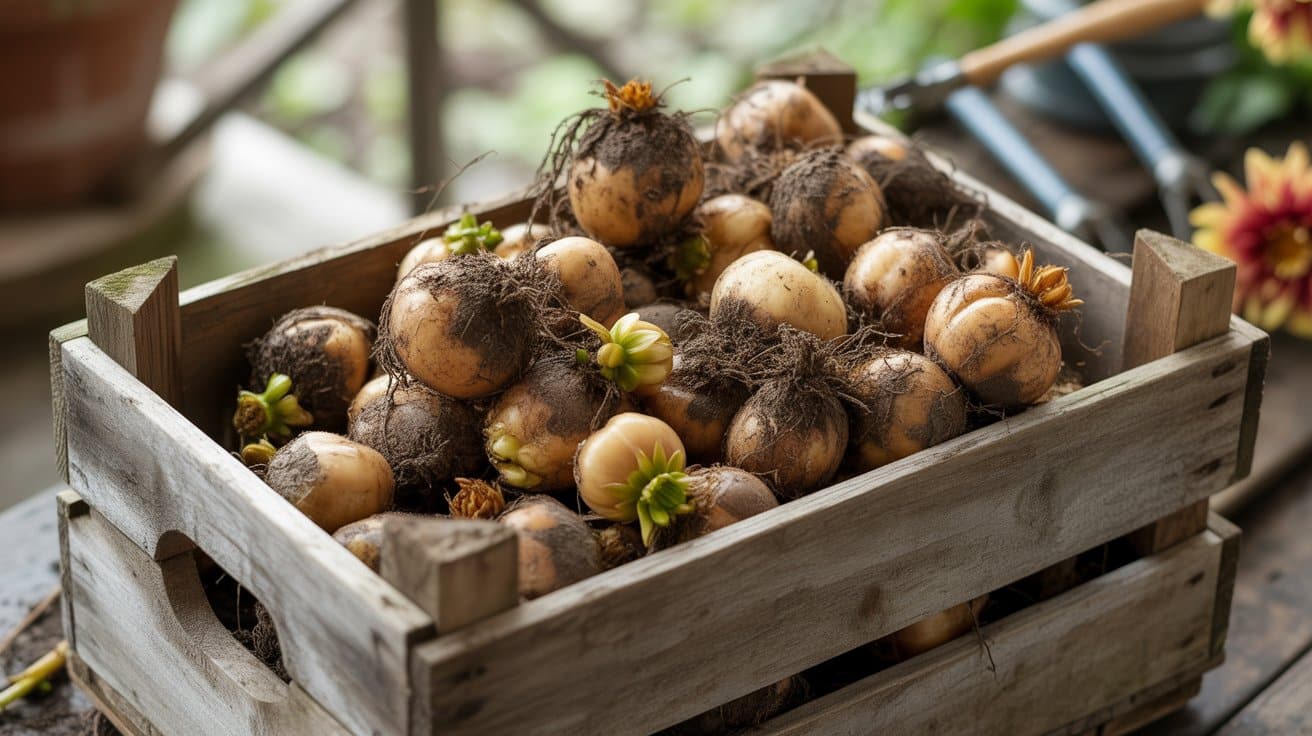
Wait until after the first hard frost. Cut stems to five to six inches. Wait one to two weeks, then dig up the clumps with a garden fork.
Rinse off dirt and cut away any rot. Let tubers dry for about a week.
Store them in a crate or bin with vermiculite or wood shavings. Keep them at 40 to 50 degrees Fahrenheit in a cool, dark place.
Check tubers every few weeks during winter. Remove any that rot. Mist lightly if they look dry.
Conclusion
Dahlias bloom from midsummer through the first frost. Most take 90 to 100 days from planting to first flowers.
With the right timing and care, you get months of bright color.
Plant after the last frost in full sun and well-draining soil. Water deeply, feed with low nitrogen fertilizer, pinch young plants, and deadhead old blooms.
Now that you know when dahlias bloom and how to care for them, it is time to start planting.
Pick up a few tubers this season and watch your garden fill with color.
What is your favorite dahlia variety?
Frequently Asked Questions
Do Dahlias Come Back Every Year?
Yes, dahlias are perennial in warm climates. In colder regions, they won’t survive frost unless you dig up and store the tubers for replanting next season.
What Do I Do With Dahlias In October?
Cut back foliage after frost blackens it, dig up tubers, dry them, and store them in a cool, dark, frost-free place until spring.
Does Epsom salt help dahlias?
Epsom salt can help if the soil lacks magnesium, supporting greener foliage and better blooms.
However, overuse isn’t beneficial; test the soil first, as dahlias usually thrive with balanced fertilizer.