What makes a tree worthy of appearing on a national flag and in ancient texts across thousands of years? The Lebanese cedar earns that place because of its size, lifespan, and deep cultural roots.
This large evergreen conifer can live for centuries and reaches heights that inspire awe. It also grows well in home gardens if conditions are right.
Growing a Lebanese cedar in the United States is possible if you live in the right climate zone. This conifer offers ornamental beauty and a direct link to one of the oldest cultivated trees on record.
Whether you want too plant one or simply understand what makes the Lebanese cedar so special, everything you need to know starts here.
What Is the Lebanese Cedar? Origins, Traits, and Growth
The Lebanese cedar (Cedrus libani) is a large evergreen conifer in the family Pinaceae. People also call it the cedar of Lebanon. This tree grows naturally in the mountains of Lebanon, Syria, Turkey, and Cyprus.
These areas have cold winters, dry summers, and rocky terrain. The harsh conditions made the tree strong and long-lasting.
Key Traits:
- Height: Mature trees reach 40–60 feet tall in gardens; wild specimens grow over 120 feet
- Trunk Width: Old specimens can measure up to 10 feet across
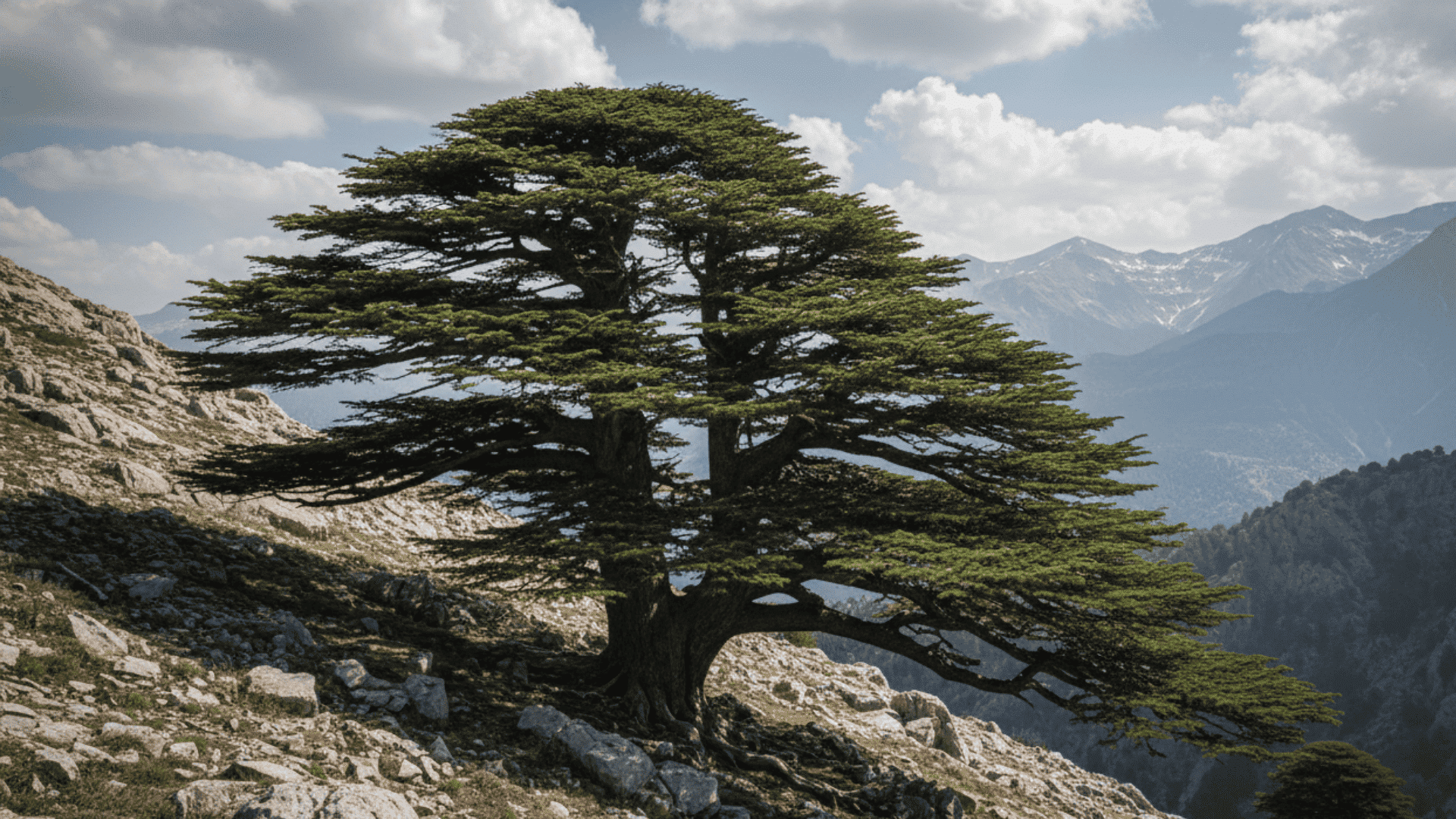
- Shape: Young trees have a pyramidal form; older ones develop a flat-topped crown with wide, horizontal branches
- Lifespan: Recorded specimens in Lebanon’s protected reserves have been estimated at over 1,000 years old
- Conservation Status: The IUCN Red List classifies it as Vulnerable due to habitat loss
Growth Zones: The Lebanese cedar grows best in Zones 6–8 and can survive in parts of Zone 5b and Zone 9 if conditions are right. Zone 6 is usually the most reliable choice for long-term success.
The tree handles moderate cold well but struggles with extreme temperature swings. Good drainage and shelter from harsh winter winds help the tree thrive in cooler zones.
History and Sacred Meaning of the Lebanese Cedar
The Lebanese cedar holds a place of honor unlike any other tree. The Phoenicians harvested cedar timber to build trading ships, establishing them as the first great sea-trading nation.
The cedar appears dozens of times in biblical texts as a symbol of strength, righteousness, and longevity.
King Solomon’s Temple was famously constructed from this durable wood, and its significance predates even that, featuring in the “Epic of Gilgamesh” as a symbol of sacred groves. Today, the Lebanese cedar holds deep cultural meaning and national identity.
It appears on Lebanon’s national flag and currency, representing the nation’s resilience and survival. Lebanese communities worldwide display cedar imagery in poetry, art, and cultural symbols, keeping the tree’s legacy alive across generations.
Benefits of the Lebanese Cedar
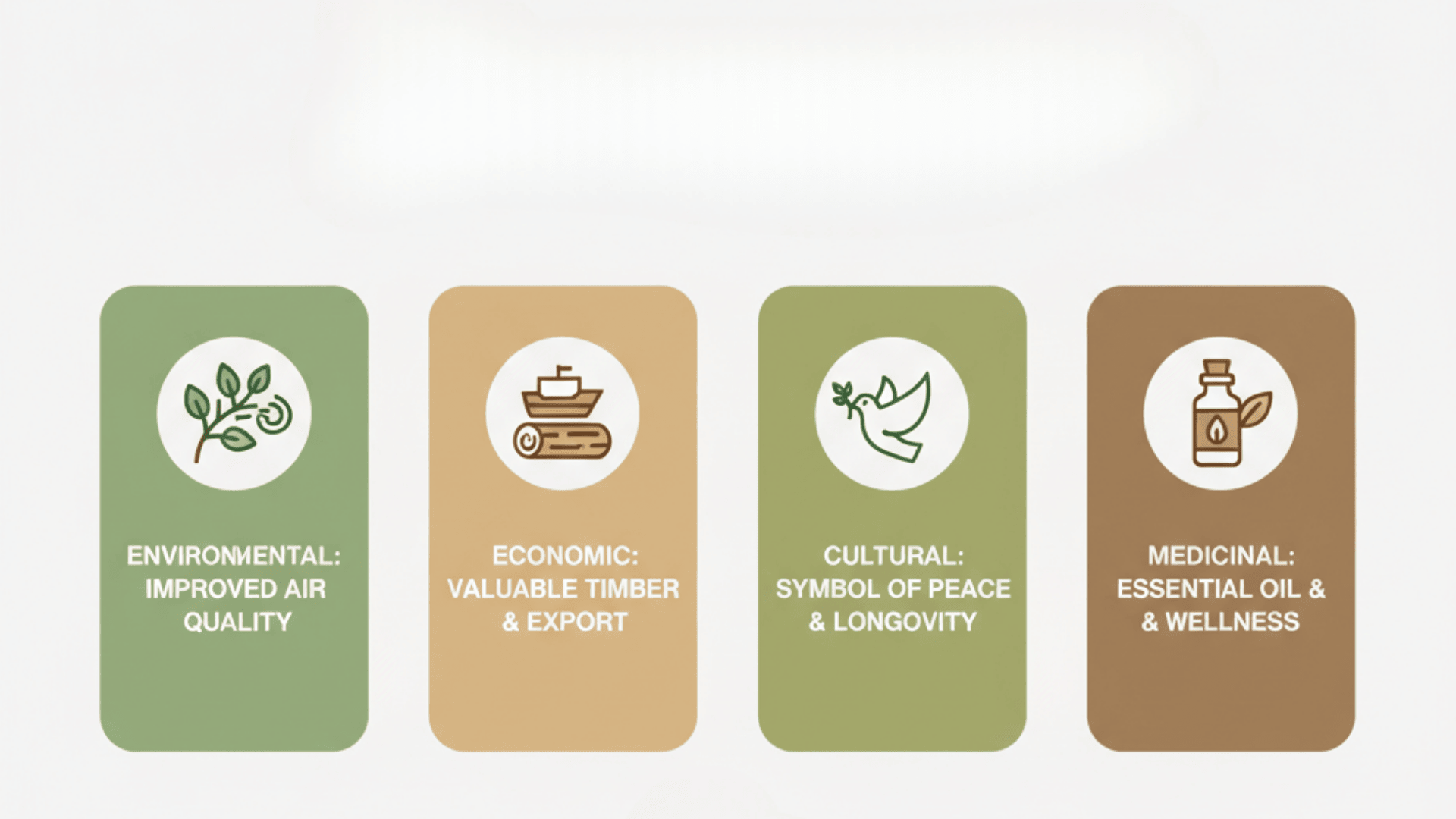
The Lebanese cedar offers lasting value that reaches beyond its appearance, influencing landscapes, cultures, and well-being in ways that have remained significant for centuries.
Environmental Benefits
The Lebanese cedar strengthens mountain landscapes by stabilizing soil, supporting wildlife habitats, improving air quality, and offering cooling shade in both native forests and planted gardens.
Economic Benefits
Sustainably managed cedar forests support specialized woodworking, attract ecotourism visitors, and create demand for ornamental trees in landscaping.
Cultural and Spiritual Benefits
The Lebanese cedar holds deep symbolic value, appearing in sacred stories, national imagery, and cultural traditions. It represents endurance and continuity across generations.
Health and Medicinal Uses
Cedarwood oil from the Lebanese cedar offers calming aromatherapy benefits, natural insect-repellent qualities, and traditional applications for respiratory comfort and skincare. These are traditional uses, not clinically proven medical treatments. Consult a professional before using cedarwood oil for health purposes.
These lasting benefits show how the Lebanese cedar connects nature, culture, and human wellbeing, giving this remarkable tree a role that remains relevant across time and place.
Different Types of Lebanese Cedar
This table covers popular varieties with different sizes, shapes, and needle colors.
| Cultivar Name | Common Traits | Mature Size (Estimate) | Key Feature |
| Standard Species | Classic pyramidal to flat-topped form. | 40–60 ft. tall | Full-sized, historic scale; most cold-hardy. |
| C. libani ‘Stenocoma’ | Sometimes called the Turkish Cedar or Hardy Cedar of Lebanon. | 60–80 ft. tall | Upright, conical form that tends not to flatten (more pyramidal than the type species). |
| C. libani’Green Prince.’ | Dwarf, compact form. | 4–6 ft. tall & wide | Excellent for rock gardens, containers, or small spaces; very slow growing. |
| C. libani ‘Aurea’ | Slow-growing, standard pyramidal form. | 30–50 ft. tall | Needles have a distinct golden or yellow-green hue when young. |
| C. libani ‘Sargentii’ | Semi-weeping habit, often trained. | 15–25 ft. tall (depending on staking) | Drooping branchlets create an artistic, pendulous silhouette. |
| C. libani ssp. brevifolia | Sometimes classified as the Cyprus Cedar. | 30–50 ft. tall | Characterized by significantly shorter needles and a slower growth rate; highly drought-tolerant. |
These varieties make it possible to grow a Lebanese cedar in spaces ranging from large estates to small rock gardens.
How to Identify a Lebanese Cedar
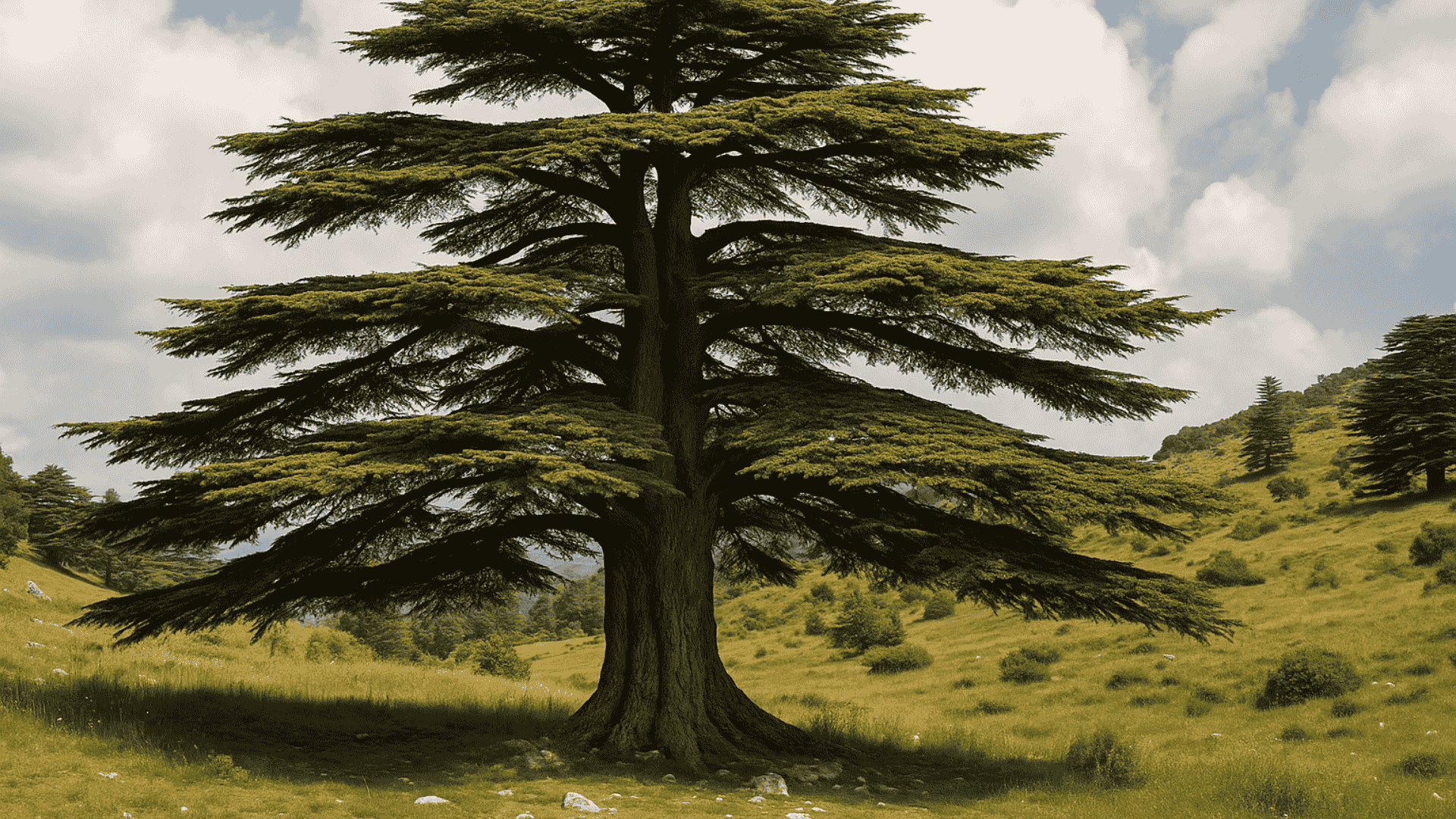
Young trees grow in a pyramid shape. Older trees flatten into a wide, layered crown that is easy to spot from a distance.
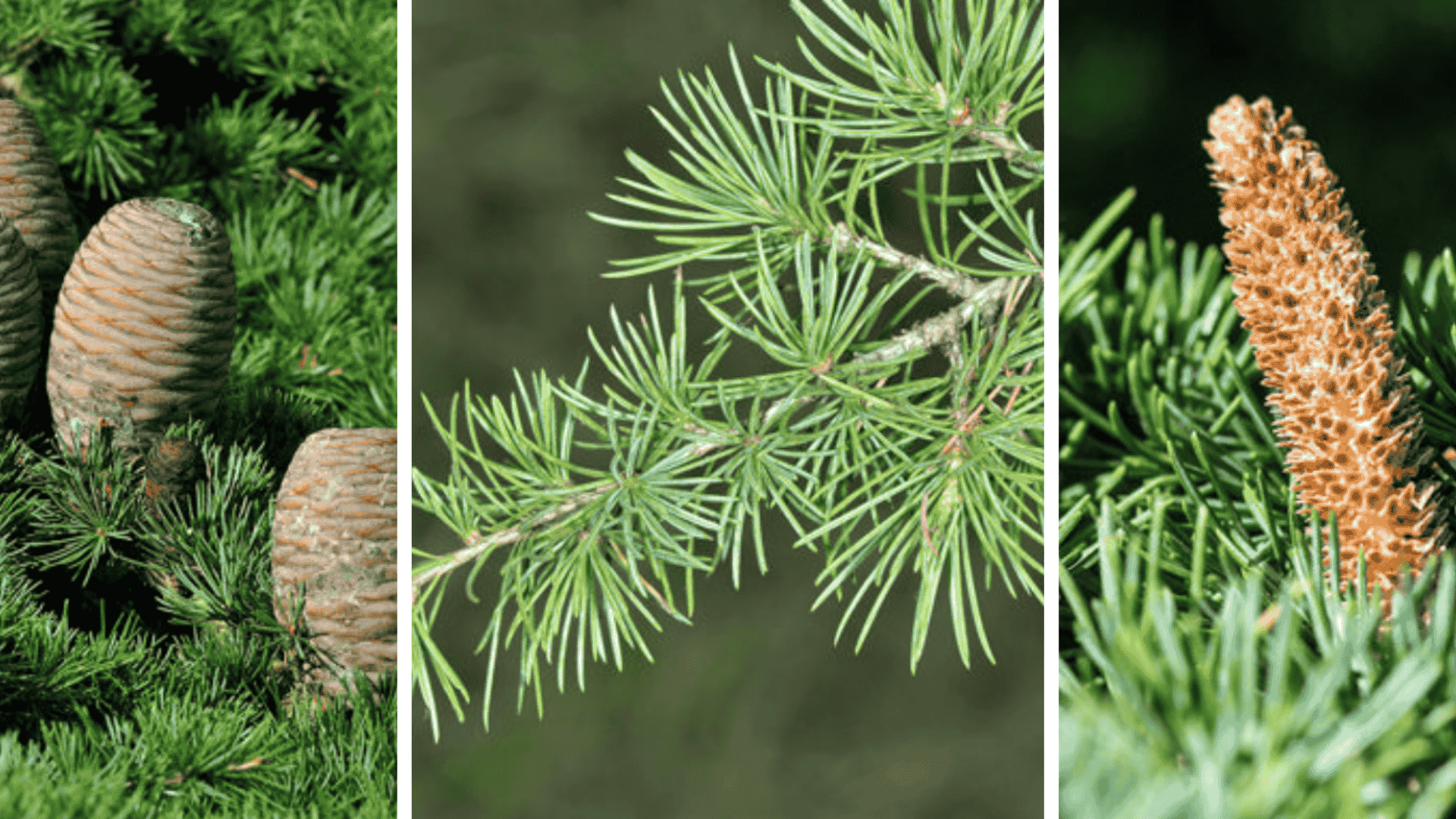
The trunk is massive, often multi-stemmed, and features deeply fissured, dark bark that tells the story of centuries of growth. The finest identification details are found in the foliage and cones:
- Needles: Short,four-sided, and clustered in dense bunches of 30 to 40, displaying a dark green to blue-green coloring.
- Cones: Produce two types: tiny yellow pollen cones on lower branches and larger,upright seed cones (up to 4 inches long) that ripen from green/purple to reddish brown over two years.
- Silhouette: The distinctive,horizontally tiered branch structure creates one of the most recognizable silhouettes in the plant world.
Natural Habitat and Ecological Niche
Lebanese cedars thrive at high elevations (1,300 and 3,000 meters) in their native mountains. The climate features cold, snowy winters and dry, hot summers.
Rocky, well-drained soils are essential for these trees, which grow naturally alongside native firs, pines, and junipers. These rugged mountain conditions produced trees durable enough to withstand cold, heavy snow, and prolonged summer drought.
How to Plant and Care for a Lebanese Cedar
Lebanese cedars can grow successfully across much of the continental U.S., thriving inUSDA Hardiness Zones 5b-9, with best performance in Zones 6-8. Picking the right spot matters more than any other step.
Key Site Requirements:
- Sun & Soil: Requires full sun exposure (6+ hours daily) and deep, well-drained soil (slightly acidic to neutral) to prevent lethal root rot. Avoid heavy clay or waterlogged areas.
- Space: Mature trees span 30–50 feet wide, so ample space is required; small gardens are rarely suitable.
- Climate: The trees dislikehigh summer humidity; regions with dry summers (Southwest, high elevations) are ideal.
- Protection: Shield young trees from severe winter winds, especially in zone 5b.
Step-By-Step Guide:
- Step 1: Choose a full-sun site with deep, well-drained soil and enough room for a mature spread of 30–50 feet.
- Step 2: Plant in spring, digging a hole twice as wide as the root ball and setting the tree so the root flare sits slightly above soil level.
- Step 3: Water deeply once or twice weekly for the first 2–3 years, allowing the top few inches of soil to dry between waterings.
- Step 4: Add a 2–3-inch mulch ring around the base (keep it a few inches away from the trunk) to protect the roots and conserve moisture.
- Step 5: Prune only dead or diseased branches, and avoid heavy fertilizing so the tree establishes naturally and stays healthy over the long term.
Planting and Long-Term Care:
Plant in spring and ensure consistent watering for the first three years to establish deep roots. Once roots are established, the tree handles drought well, but those first three years of regular watering are critical.
Patience is key: young trees grow slowly, adding only about 10–15 inches per year. Prune only dead or diseased branches, as these trees naturally self-prune. They are generally insect-resistant but cannot tolerate air pollution or heavy shade.
Uses of Lebanese Cedar Wood
Lebanese cedar wood earned its reputation over thousands of years. The wood is light orange, highly aromatic, and resistant todecay and insect damage.
Phoenicians used it for ships. Romans used it for construction. Egyptian priests used it in burial rituals. Solomon’s Temple builders chose it for its durability and spiritual significance. The wood’s natural oils create a distinctive fragrance that persists for centuries.
Today, native Lebanese cedar is protected by strict laws. Harvesting is prohibited in protected reserves throughout Lebanon, Syria, and Turkey.
If you’re interested in cedar wood products, seek sustainably certified options from reputable suppliers. Supporting legal, certified forestry helps protect remaining wild populations from illegal logging.
Why Is the Lebanese Cedar Vulnerable?
Lebanese cedars face mounting challenges after 4,000 years of exploitation. The species is listed as Vulnerable on the IUCN Red List due to population fragmentation and habitat loss.
Once-vast cedar forests now survive only in isolated high-altitude pockets. Turkey harbors the largest remaining population, but Lebanon retains only 5,000 to 7,000 acres of natural forest, less than five percent of its original coverage.
Modern Threats to Wild Populations:
- Climate Change: Shrinking snow cover and higher temperatures block natural regeneration and increase drought stress.
- Biotic Stress: Fungal infections (Botrytis cinerea), cedar shoot moth larvae damage, and historical grazing pressures.
- Habitat Loss: Urbanization and increased wildfire intensity encroach on protected reserves.
The future of the Lebanese cedar depends on restoring damaged forests, reducing ongoing pressures, and protecting the remaining stands that sustain this species.
Conclusion
The Lebanese cedar represents a blend of botanical interest, ancient history, and cultural symbolism found in few other trees.
From mountain reserves in Lebanon to gardens across the United States, this tree continues to grow wherever conditions allow.
Whether you’re planting a young cedar in your landscape, visiting one in a public garden, or supporting conservation efforts from afar, you’re participating in a story that spans millennia.
These notable trees grow slowly but reward patience with decades of beauty, architectural interest, and living history.
The Lebanese cedar grows slowly, but it rewards patience with decades of beauty and living history.
Frequently Asked Questions
Can you grow a Lebanese cedar from seed?
Yes, but it is difficult. Seeds come only from mature female cones, germination rates are low, and seedlings grow very slowly. Buying a nursery-grown tree is faster and more reliable.
What is the difference between a Lebanese cedar and an Atlas cedar?
Both are true cedars (Cedrus). The Lebanese cedar (C. libani) has darker bark and longer needles. The Atlas cedar (C. atlantica) tends toward silvery blue-green foliage and is native to North Africa.
Is a cedar of Lebanon the same as a red cedar?
No. “Red cedar” usually refers to Juniperus virginiana or Thuja plicata, neither of which is a true cedar. The Lebanese cedar belongs to the genus Cedrus.