
Your plant looks pale. Growth has slowed down. The older leaves are turning yellow, but you cannot figure out why.
Nitrogen deficiency in plants is one of the most common and most overlooked causes behind these symptoms. The usual response is to water more. Or add random fertilizer. Neither helps if nitrogen is the real problem.
This post covers every sign to watch for, the real reasons it happens, how to test for it properly, and the most effective ways to bring your plants back to full health fast.
What Is Nitrogen Deficiency in Plants?
Nitrogen deficiency in plants is a condition where a plant cannot get enough nitrogen from the soil to support normal growth.
Nitrogen is the nutrient plants need in the largest amount. It builds chlorophyll, which powers photosynthesis. It forms amino acids, which make up proteins.
It drives cell division, which creates new leaves, stems, and roots. When nitrogen runs short, all of these processes slow down at once.
Because nitrogen is a mobile nutrient, the plant does not shut down immediately. It pulls nitrogen out of older leaves and sends it to newer growth to keep the most active parts alive.
This is why the oldest, lowest leaves yellow first. The plant is essentially recycling what little it has.
The result is a plant that looks pale, grows slowly, produces fewer leaves, and eventually stops flowering or fruiting altogether. In severe cases, older leaves drop off early and stems become thin and weak.
Signs of Nitrogen Deficiency in Plants
Spotting nitrogen deficiency early gives you the best chance of a full recovery. Here are the key symptoms, starting with the most visible:
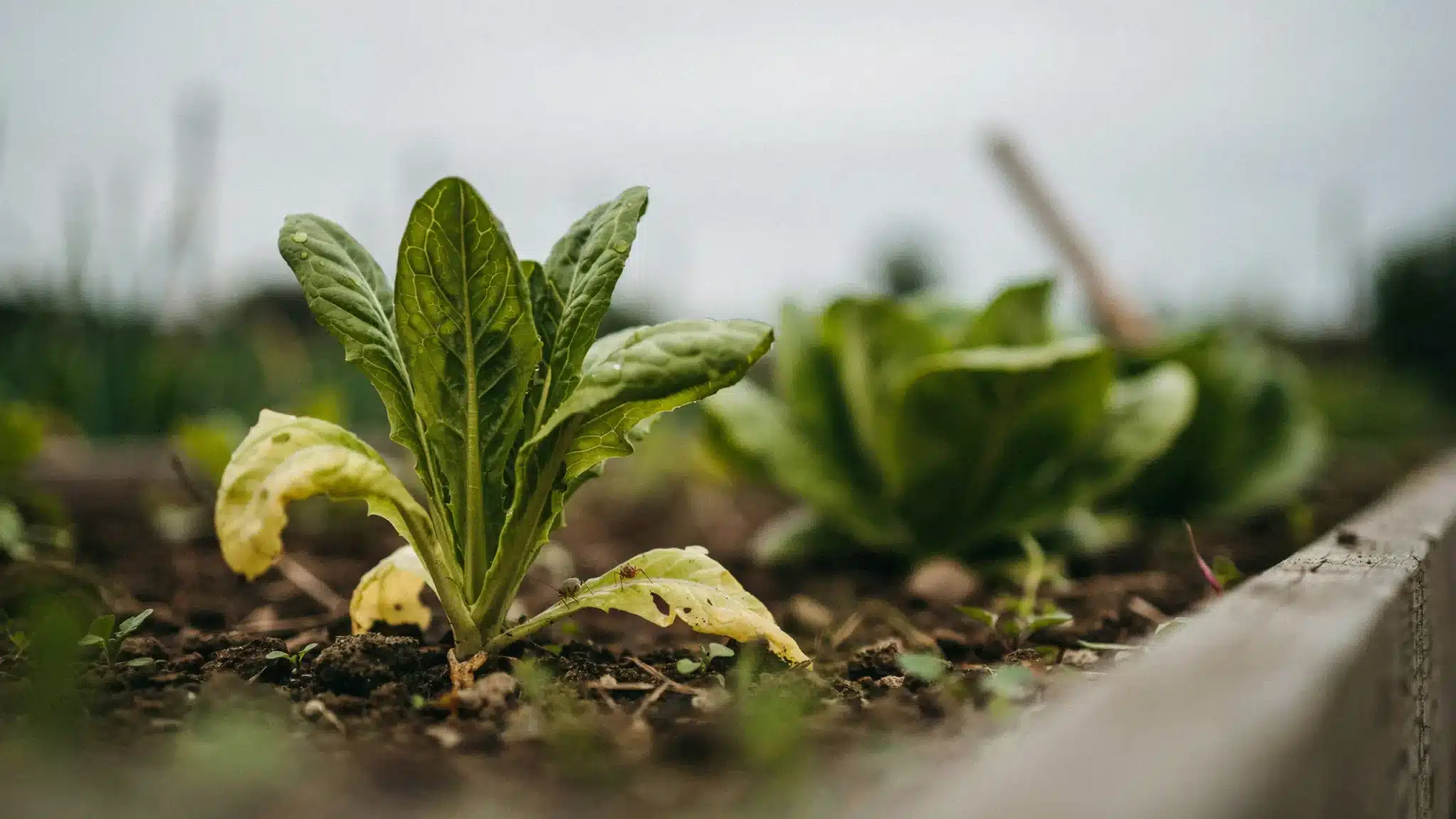
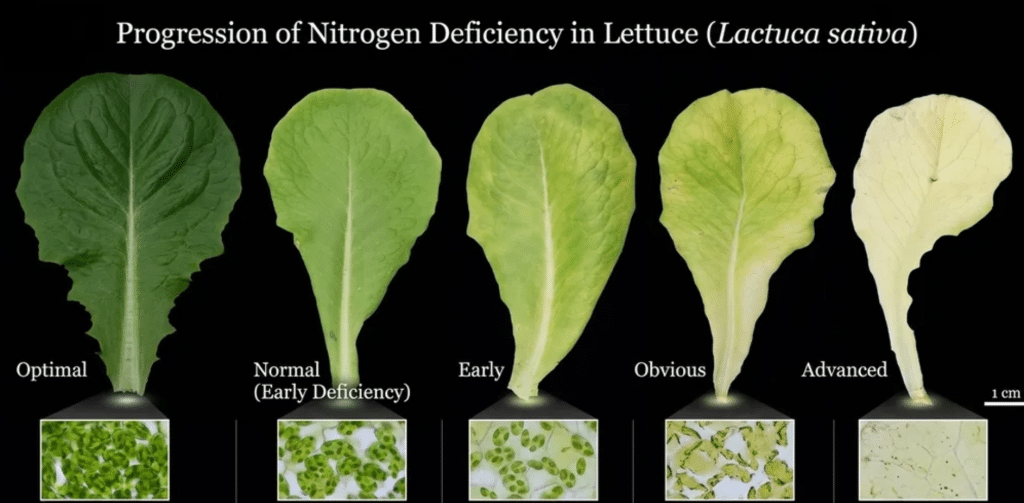
- Uniform yellowing (chlorosis) on older, lower leaves: this is the clearest sign. It starts at the leaf tips and spreads inward.
- Slow or stunted growth: the plant produces fewer, smaller leaves than normal.
- Pale green or yellow-green new shoots: in moderate to severe cases, even new growth looks washed out.
- Thin, weak stems: the plant lacks the protein structure to support itself.
- Premature leaf drop: older leaves fall off before their time.
- Poor flowering and fruit production: the plant lacks the energy for reproduction.
Pro Tip: Nitrogen chlorosis is uniform. The whole leaf turns yellow evenly. This sets it apart from iron or magnesium deficiency, which show yellow patches between the veins while the veins stay green.
Nitrogen Deficiency vs. Other Nutrient Deficiencies
Yellow leaves do not always mean nitrogen deficiency. Misreading the symptoms leads to the wrong fix. Here is how to tell the difference:
Iron deficiency occurs when a plant cannot access enough iron, causing yellow tissue between the veins on young leaves while the veins stay green.
Magnesium deficiency occurs when a plant lacks magnesium, causing older leaves to turn yellow or pale between the veins while the veins remain green.
Phosphorus deficiency occurs when a plant does not get enough phosphorus, causing older leaves to develop a dark green or purple tint and slowing root and flower development.
| Nutrient | Leaves Affected | Pattern | Color Change |
|---|---|---|---|
| Nitrogen | Older, lower leaves | Uniform yellowing | Pale yellow to yellow |
| Iron | Young, newer leaves | Yellow between veins (veins stay green) | Bright yellow |
| Magnesium | Older leaves | Mottled or spotty between veins | Yellow-green |
| Phosphorus | Older leaves | Dark green or purple tint | Purple-green |
The pattern matters more than the color. Nitrogen deficiency spreads evenly. Iron and magnesium deficiency leave a clear network of green veins running through yellow tissue.
Common Causes of Nitrogen Deficiency in Plants
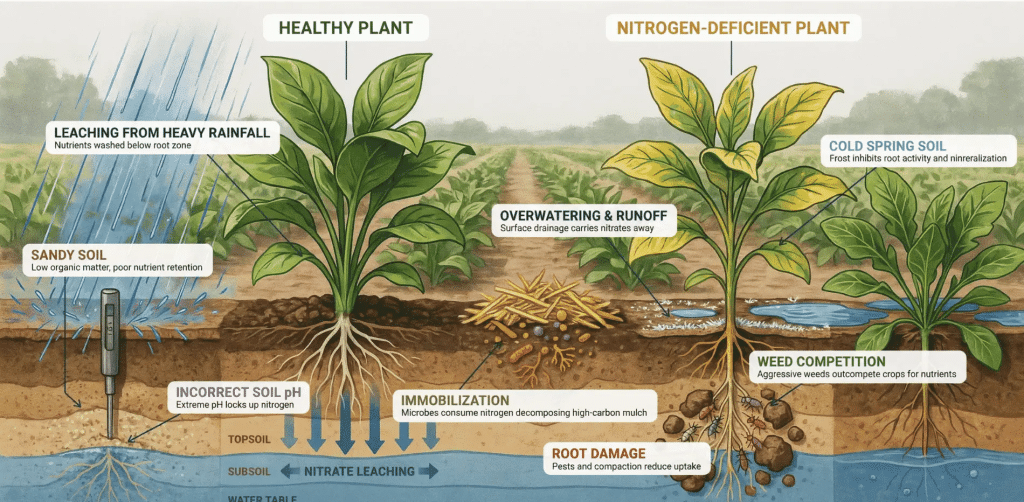
Nitrogen goes missing for several reasons. Knowing the cause helps you fix the right problem.
1. Leaching from heavy rain or overwatering: Nitrogen dissolves in water and moves through the soil fast. Excessive rain or too much irrigation washes it below the root zone before plants can absorb it.
2. Low organic matter in soil: Organic matter is the main natural source of nitrogen in soil. Sandy or depleted soils with low organic matter content struggle to retain sufficient nitrogen for plants.
3. Wrong soil pH: Both very high and very low pH block nitrogen uptake. Plants absorb nitrogen best at a pH between 6.0 and 7.0. Outside this range, nitrogen sits in the soil, but roots cannot access it.
4. High-carbon soil amendments: Adding sawdust, straw, or wood chips to soil causes soil microbes to consume available nitrogen to break down the carbon material. This temporarily starves plants of nitrogen.
5. Cold soil temperatures: Roots absorb nutrients poorly in cold soil. This is common in early spring when soil is still cold or waterlogged. Adding more fertilizer at this point does not help; the problem fixes itself as the soil warms.
6. Root damage: Compacted soil, pests like black flies on plants, root disease, or poor drainage all reduce a root’s ability to take up nitrogen even when plenty of it is available in the soil.
7. Weed competition: Weeds pull nitrogen from the same soil layer as your plants. Heavy weed growth can cause visible deficiency in nearby crops without any real shortage in the soil.
Which Plants Show Nitrogen Deficiency Most Often?
Some plants are more sensitive to low nitrogen than others:
1. Leafy greens: lettuce, spinach, and kale show yellowing and stunted leaves fast.
2. Fruit trees: apples, citrus, and stone fruits develop thin canopies and small fruits.
3. High-demand crops: corn and wheat need large amounts of nitrogen throughout their growth cycle.
4. Houseplants in old potting mix: Potting soil loses nitrogen over time, especially in pots that have not been refreshed in a year or two.
5. Legumes with poor nodule development: beans and peas fix their own nitrogen through root bacteria, but only if those bacteria establish early. A slow start leaves them short.
How to Test for Nitrogen Deficiency
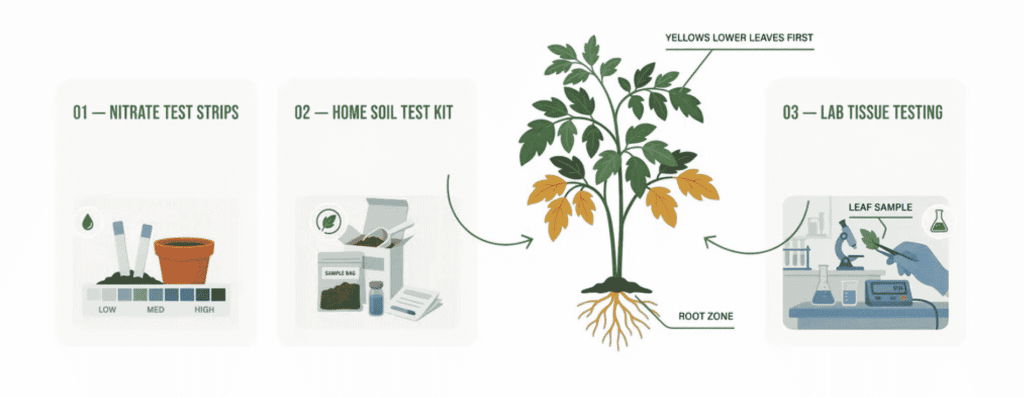
Visual observation is a starting point, not a final answer. Confirm the problem before treating it.
1. Nitrate test strips are the easiest tool for home gardeners. Press them into damp soil or dip them in plant sap. The color change tells you whether nitrate levels are low, adequate, or excessive.
2. Home soil test kits from garden centers measure organic matter content. Since organic matter drives nitrogen availability, a low reading signals a likely deficiency.
3. Plant tissue testing done at a lab is the most accurate method. It shows exactly how much nitrogen is inside the plant, not just what is in the soil around it.
Important: Standard soil tests at most labs do not measure nitrogen directly. Nitrogen is mobile and unpredictable in soil. Recommendations are usually based on organic matter levels and crop type instead.
How to Fix Nitrogen Deficiency in Plants
Once you confirm the deficiency, the fix depends on how fast you need results.
1. Fast-Acting Solutions: Liquid nitrogen fertilizers and fish emulsion work within days. Apply them directly to the soil around the root zone, or use foliar feeding by spraying a diluted solution on the leaves for faster absorption by the plant.
2. Organic Solutions: Compost and well-rotted manure release nitrogen slowly and improve soil structure at the same time. They are best applied after harvest, before the next planting season, so they have time to break down.
Blood meal, feather meal, and worm castings are concentrated organic nitrogen sources. They release faster than bulk compost and make a good mid-season boost.
When choosing an organic fertilizer,check the N-P-K label first. The first number represents nitrogen content. A ratio like 10-2-2 is high in nitrogen and works well for correcting a deficiency.
A common mistake is applying too much at once. Getting the fertilizer dose right matters as much as the product itself. The amount you apply depends on your pot or bed size, the fertilizer type, and the growth stage of your plant.
Even small overdoses can burn roots or push leafy growth at the expense of flowers, so measure carefully and follow the label rates for your specific setup.
3. Prevention for the Long Term:
- Rotate crops yearly. Include nitrogen-fixing legumes such as clover, alfalfa, or broad beans to restore soil nitrogen levels between seasons naturally.
- Avoid excessive watering. Consistent, moderate irrigation reduces leaching.
- Apply mulch around plants to protect soil moisture and add organic matter as it breaks down.
- Nitrogen rarely acts alone. When soil is also low in potassium, roots struggle to absorb nitrogen properly even after you add it. In that case, adding apotash fertilizeralongside nitrogen restores the balance that allows uptake to work as it should.
How Long Does It Take to Fix Nitrogen Deficiency?
Results depend on the treatment you use.
- Liquid and synthetic fertilizers: Most plants show visible improvement within 7 to 14 days.
- Organic amendments: These take several weeks to take effect. Organic matter must decompose before nitrogen becomes available to roots.
- Prevention applied at planting: Composted manure worked into the soil before planting gives a steady supply throughout the growing season.
One important note: plants rarely recover fully from severe, long-term deficiency. Older yellowed leaves do not turn green again.
What you are watching for is new growth that comes in a healthy, dark green color after treatment begins.
Conclusion
Nitrogen deficiency in plants is common, fixable, and easy to catch if you know what to look for. Uniform yellowing on older leaves, slow growth, and weak stems are your earliest signals.
Test before you treat, address the root cause first, and choose a fertilizer that matches your timeline.
Whether you need fast results or a long-term soil fix, the right approach gets your plants growing strong again.
Have you spotted any of these signs in your garden? Share what you found in the comments below.
Frequently Asked Questions
Do Coffee Grounds Add Nitrogen to Plants?
Yes, coffee grounds contain nitrogen (about 1.5% to 2%), but they do not immediately provide bioavailable nitrogen to plants.
Can Overwatering Cause Nitrogen Deficiency?
Yes. Overwatering leaches nitrogen out of the root zone, reducing what your plants can absorb.
Is Miracle-Gro a Nitrogen Fertilizer?
Yes. Standard Miracle-Gro is a nitrogen-rich fertilizer.
Can Nitrogen Deficiency Kill a Plant?
Rarely on its own. Severe deficiency stops growth and weakens the plant, but death typically comes from secondary problems like disease or pest damage.
How Often Should I Fertilize to Prevent Nitrogen Deficiency?
It depends on the soil and the crop. Test the soil each season. Sandy soils and heavy feeders like corn may need feeding every 4 to 6 weeks during active growth.