
You know your crops need nitrogen, phosphorus, and potassium. But potassium, the “K” in NPK, often gets skipped at application time.
That is a costly mistake. Every harvest pulls potassium out of your soil.
Over time, that gap quietly reduces your yields, weakens your crop’s disease resistance, and shrinks fruit quality. Potash fertilizer fills that gap.
This post covers what potash fertilizer is, the types available, why your plants need it, how to spot a deficiency, and the right way to apply it for the best results.
What Is Potash Fertilizer?
Potash fertilizer is a water-soluble fertilizer containing potassium and its compounds. The word “potash” refers to water-soluble salts containing potassium.
These salts are either mined from underground deposits or manufactured through chemical processes.
Potassium is one of three primary macronutrients plants need alongside nitrogen (N) and phosphorus (P). It is the “K” in every NPK fertilizer label you read.
Potash deposits form as beds of solid salts beneath the Earth’s surface. They also exist as brines in drying lakes and seas. Most commercial potash today comes from large mining operations in Canada, Russia, and Belarus.
Why Do Plants Need Potash Fertilizer?
Potassium does far more than support growth. It controls several key processes inside the plant.
1. Water regulation: Potassium regulates the opening and closing of stomata. Stomata are the tiny pores on leaves that control water loss. When potassium levels drop, plants lose water faster and wilt quickly in dry conditions.
2. Energy and photosynthesis: Potassium activates enzymes that drive photosynthesis and energy transfer inside plant cells. Without enough potassium, plants cannot produce and move energy properly.
3. Cell wall strength: Potassium strengthens plant cell walls. Stronger walls mean plants physically resist diseases, pests, and physical stress like wind or heavy rain.
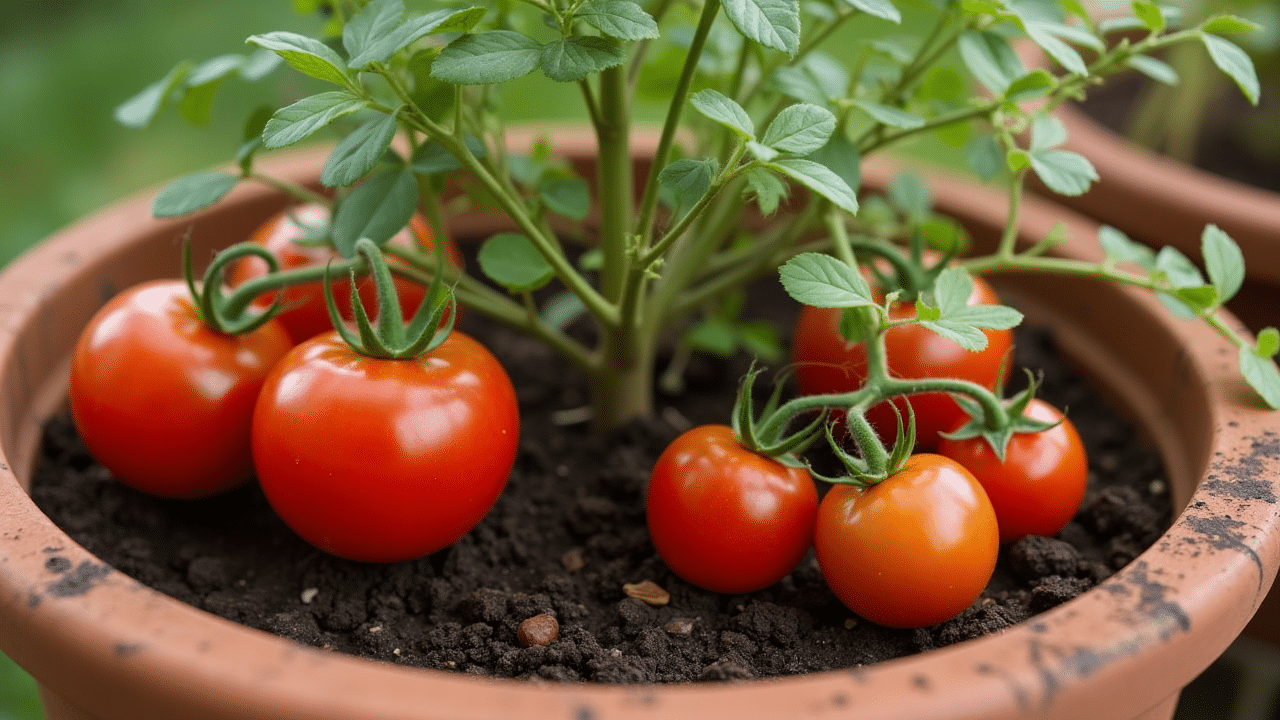
4. Fruit and food quality: Potassium supports starch synthesis and sugar accumulation. This is what makes fruits and vegetables taste sweet, smell good, and store well after harvest. Crops like tomatoes and potatoes are especially heavy potassium feeders during the fruiting stage.
5. Nitrogen use efficiency: Potassium improves how well crops absorb and use nitrogen. When potassium levels are right, less nitrogen is lost to the environment as runoff or gas emissions. This matters both for your budget and for soil health.
Crops deplete soil potassium with every harvest. High-yield crops pull dozens of pounds of potassium per ton of harvest.
Every crop has different potassium requirements, and the right fertilizer dose depends on your soil test results and the crop stage.
Types of Potash Fertilizer
Not all potash fertilizers work the same way. The right type depends on your crop, your soil, and your farming goals.
1. Potassium Chloride (MOP: Muriate of Potash)
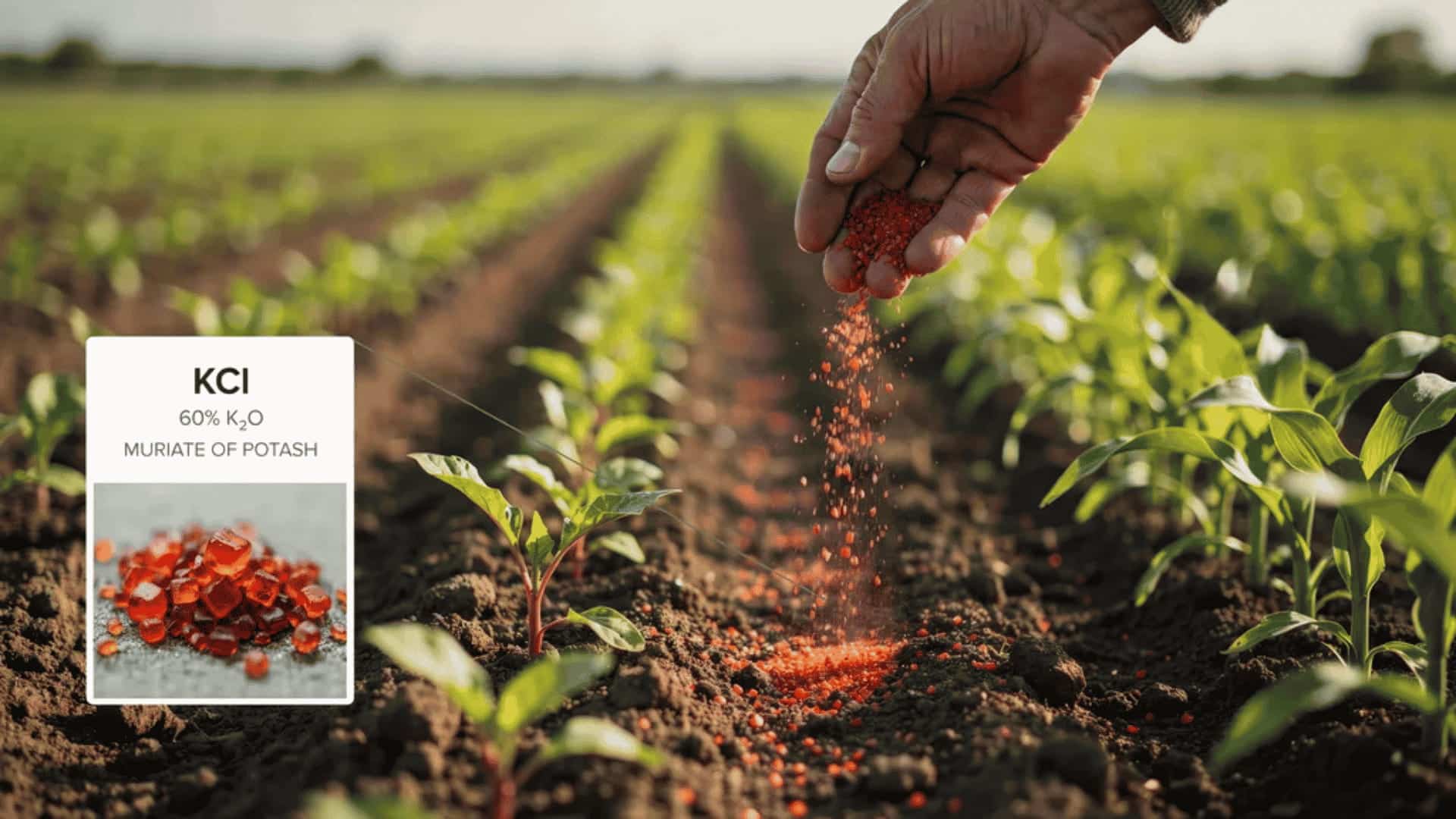
This is the most common and lowest-cost potash fertilizer. It typically contains 60% potassium oxide (K₂O). MOP works well for most field crops but has a high salt index.
That means it can damage seedlings if applied too close to the seed zone.
2. Potassium Sulfate (SOP: Sulfate of Potash)
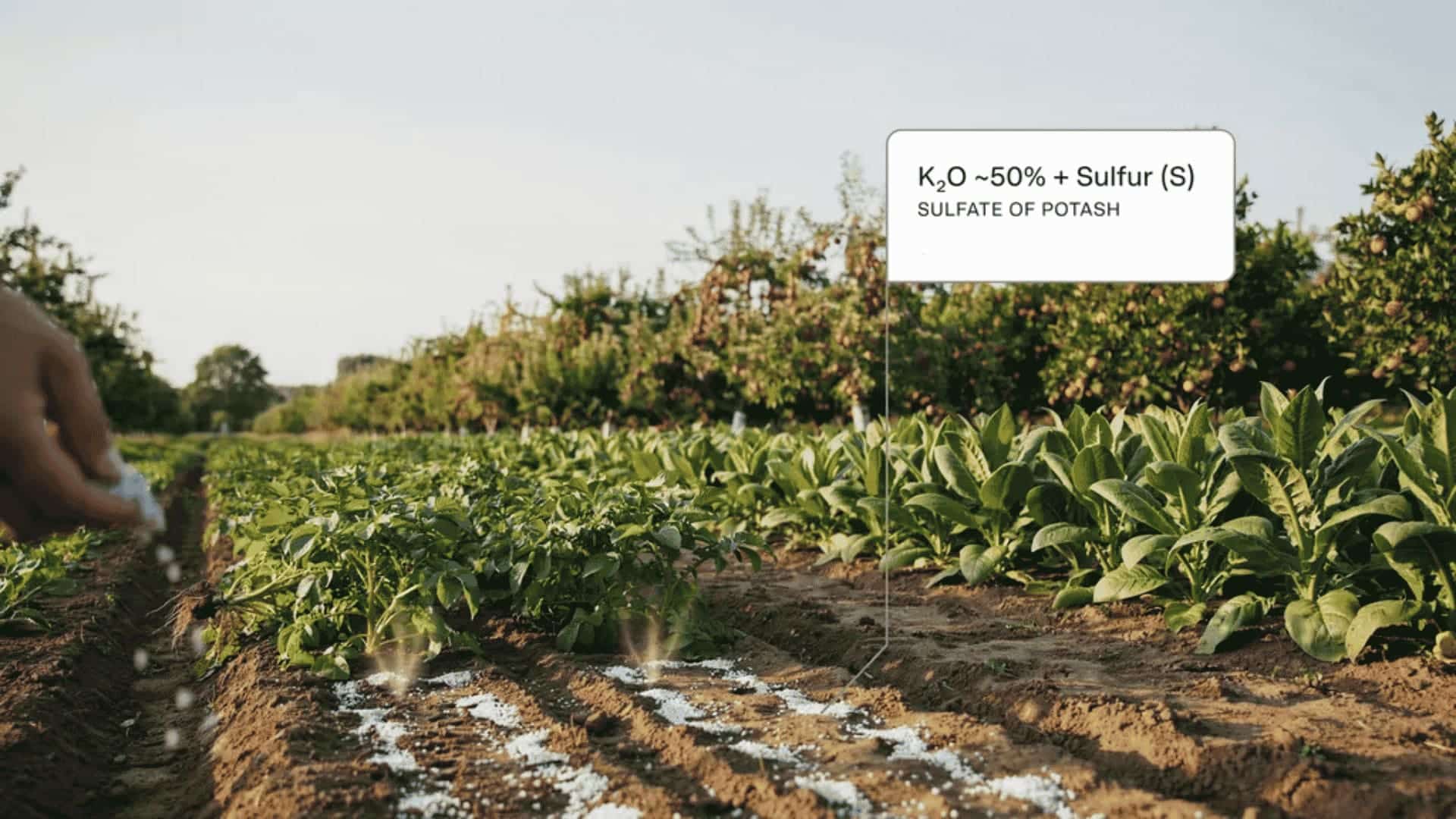
SOP contains about 50% K₂O and also supplies sulfur. It is better for chloride-sensitive crops like tobacco, potatoes, and some fruits. SOP costs more than MOP but is gentler on the crop and soil.
3. Potassium Nitrate
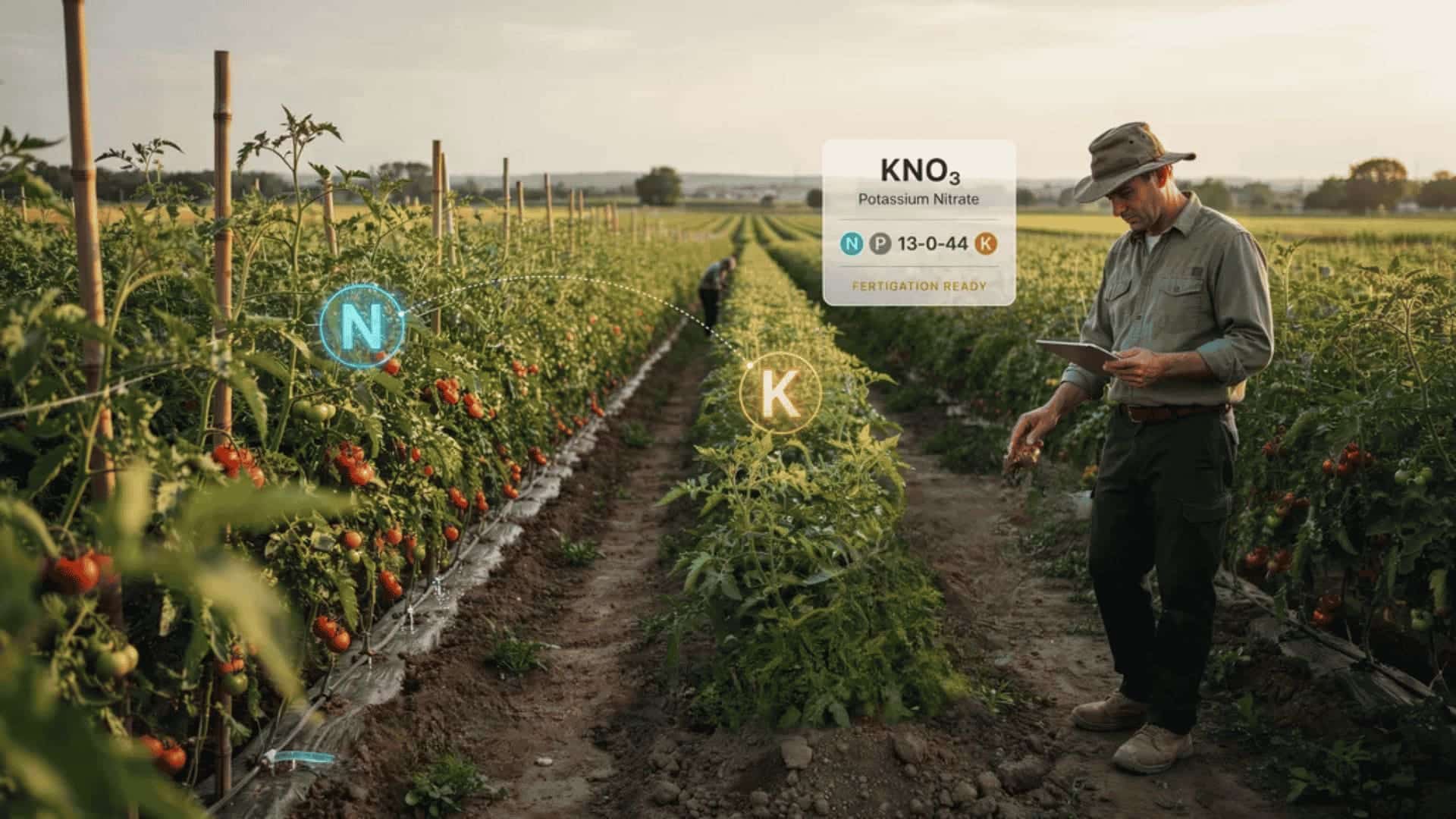
This type combines potassium and nitrogen into a single product. It works well in fertigation systems where you dissolve fertilizer in irrigation water. It suits crops in late growth stages that need both nutrients at once.
4. Potassium Magnesium Sulfate (Langbeinite)
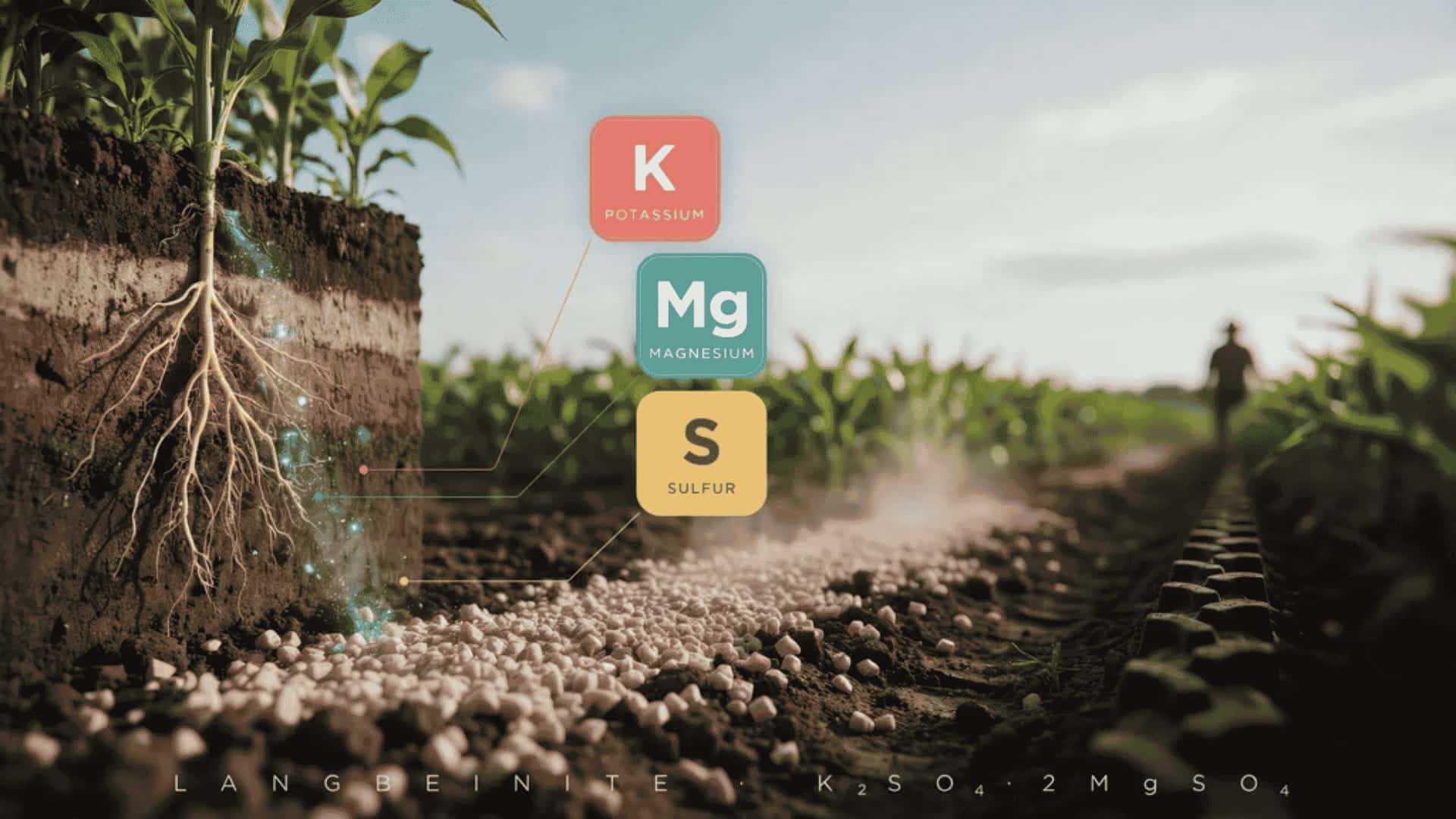
This provides potassium, magnesium, and sulfur. It is a good choice for soils that are low in both potassium and magnesium.
5. Organic Potash Sources
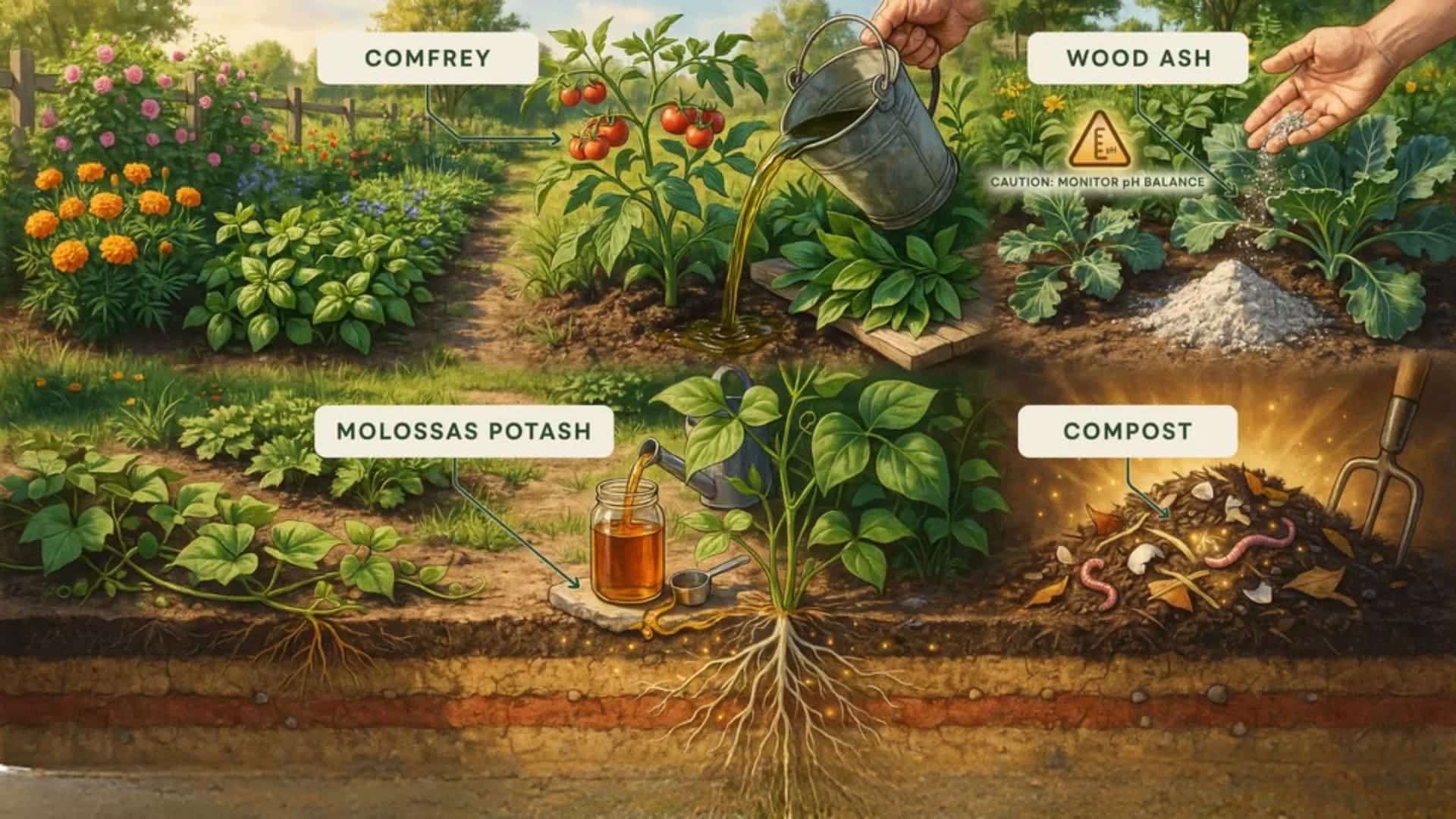
Organic options release potassium slowly and improve soil structure over time.
Common sources include:
- Comfrey liquid: Made from comfrey leaves soaked in water for a few weeks. It is naturally high in potassium and works well for flowering and fruiting plants.
- Wood ash: Apply carefully since it raises soil pH. Good for slightly acidic soils.
- Molasses-based potash: Feeds soil microbes and provides a slow potassium boost. It also supports stronger cell walls in plants.
- Compost: Slow-release potassium that also feeds soil microbes.
Compost and other organic fertilizers release potassium slowly, which may not be fast enough for crops experiencing active deficiency.
Signs Your Crops Need Potash Fertilizer
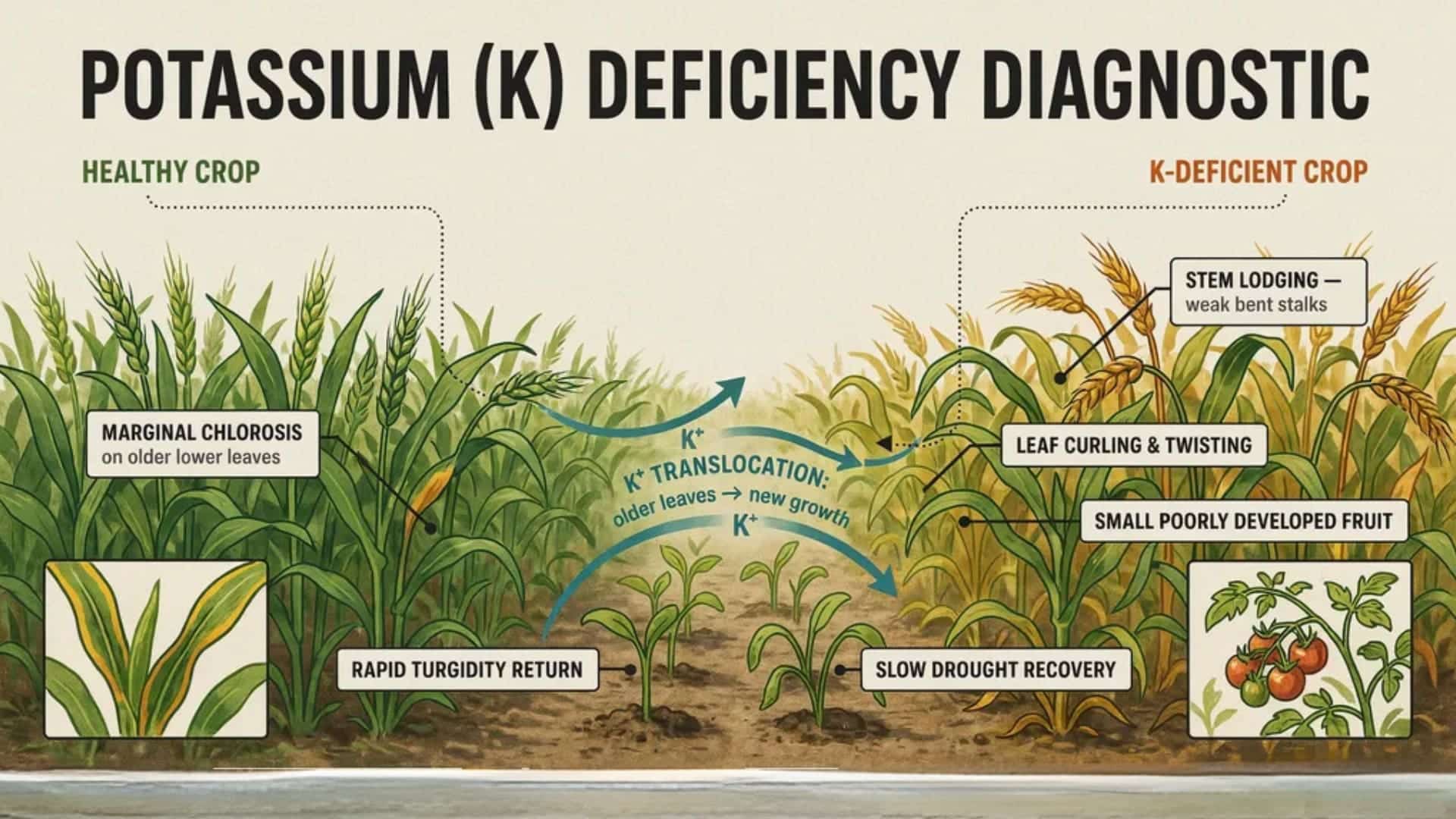
Catching a potassium deficiency early saves your yield. The signs are visible but easy to mistake for other problems.
1. Yellowing leaf margins (chlorosis): This is the first sign to watch for. The edges of older, lower leaves turn yellow first. Potassium is mobile within the plant, so it moves from older leaves to new growth when the supply runs low. That is why lower leaves show symptoms before upper ones.
2. Leaf curling: Leaves that curl or twist signal stress from low potassium levels.
3. Weak stems: Plants with low potassium develop weak stems. They fall over easily, a problem called lodging, especially in grain crops like corn and wheat.
4. Poor fruit quality: In fruit-bearing plants, low potassium leads to smaller fruit, poor flavor, and shorter shelf life.
5. Slow drought recovery: A plant with enough potassium bounces back quickly after a dry spell. One without it stays wilted and sluggish.
Yellowing leaves can also point to nitrogen deficiency, so always confirm with a soil test before applying potash.
The key visual difference is that potassium deficiency starts at the leaf edges of older leaves. Nitrogen deficiency causes a general pale yellowing that starts at the leaf tips and spreads upward.
How and When to Apply Potash Fertilizer
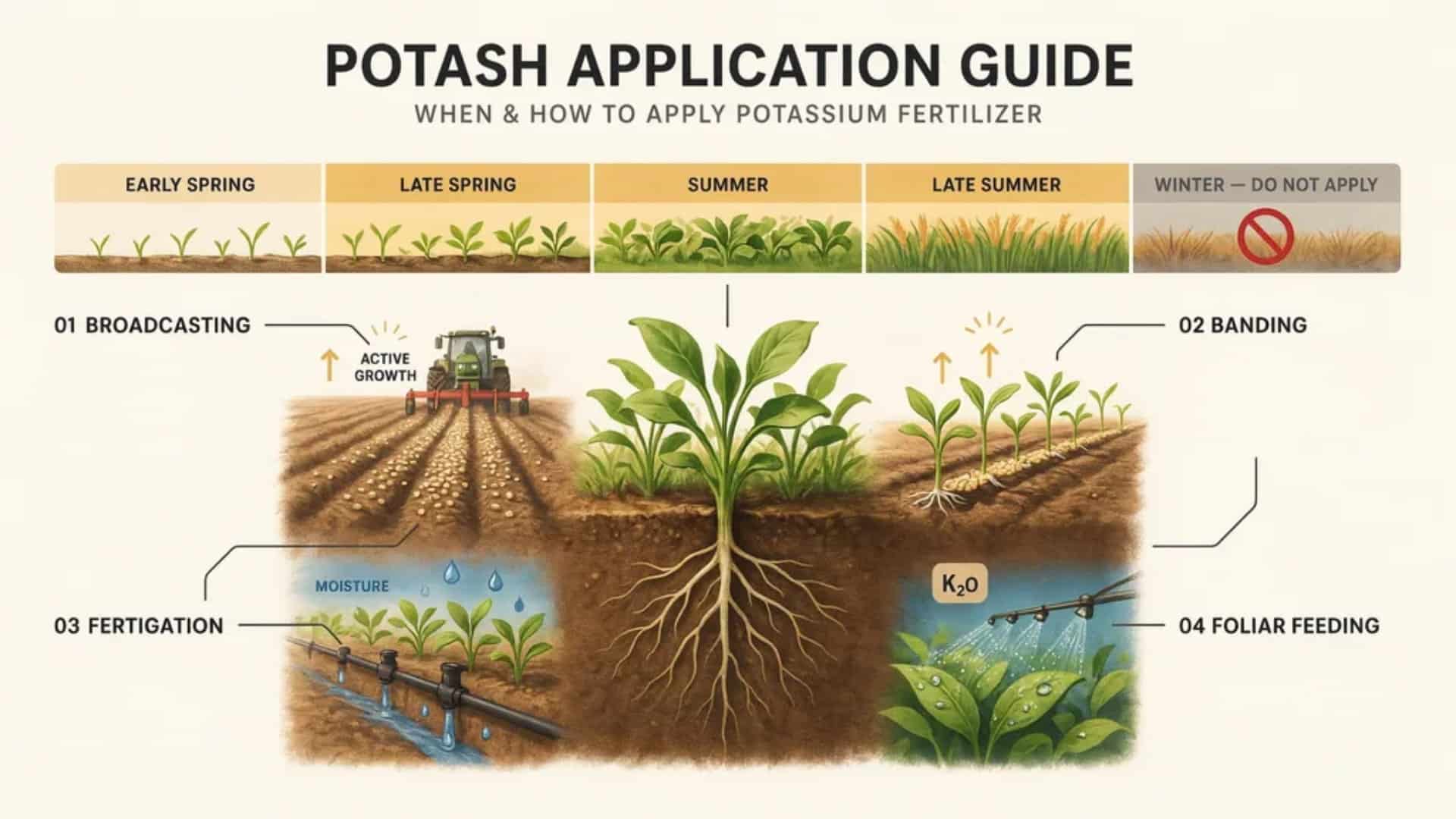
The best time to apply potash fertilizer is during the planting season or in the early growth stages, when root systems are developing.
Active growth is key. Plants can only take up potassium when they are growing and when the soil is moist.
Apply from early spring through late summer. Avoid applying in winter when plants are dormant.
Application methods:
- Broadcasting: Spread potash evenly across the field before planting and work it into the soil. This is the most common method for large fields.
- Banding: Place potash in a band near the seed row. This puts potassium close to developing roots, but keep it a safe distance from seeds to avoid salt damage.
- Fertigation: Dissolve potash in irrigation water and deliver it directly to the root zone. This method works well with potassium nitrate.
- Foliar feeding: Apply a diluted potassium solution directly to leaves. Use this only for quick corrections, not as a main application method.
For garden beds and lawns, a common starting rate is 1 to 2 pounds of K₂O per 1,000 square feet, but always base your rate on a soil test. Knowing how to dose fertilizer for plants correctly prevents both waste and nutrient imbalance.
For large-scale crop fields, follow the specific rate recommendations from your soil test report.
Common Mistakes to Avoid
Even the right fertilizer fails when applied the wrong way. These are the mistakes that quietly cost farmers yield every season.
1. Skipping the soil test: Clay soils already hold potassium well. Applying potash without testing on clay can lock out magnesium and calcium.
2. Applying near seedlings: Concentrated potash too close to young seedlings causes salt burn and stunts early growth.
3. Applying in winter: Plants in dormancy cannot absorb nutrients. Potash applied in cold, wet conditions will leach away before spring growth begins.
4. Ignoring drainage losses: On sandy soils, potash applied in one large dose before heavy rain risks significant leaching losses. Split your applications.
5. Assuming more is better: Luxury consumption happens when plants absorb more potassium than they need. While it does not directly harm the plant, it wastes money and can interfere with the balance of other nutrients in the soil.
Conclusion
Potash fertilizer gives your crops the potassium they need to grow strong, resist disease, hold water, and produce quality yields.
Skipping it or using it without a soil test costs more in the long run than getting it right from the start.
Test your soil, choose the right type for your crop and soil conditions, apply at the right time and rate, and watch your crops respond.
That is what good potash fertilizer management looks like.
Frequently Asked Questions
Is Potash Just Burnt Wood?
No. The word originally came from soaking wood ash in water and evaporating the liquid to collect potassium salts. Today, potash is mined from underground deposits, not produced from wood.
What Not to Use Potash On?
Do not apply potash to acid-loving plants, young seedlings, chloride-sensitive crops (like tobacco or grapes), or any soil that already has sufficient potassium.
Do Farmers Still Use Potash?
Yes, potash is one of the most widely applied fertilizers in commercial farming. It is a cornerstone of modern agriculture and the most widely used potassium fertilizer globally.
Can You Mix Potash with Other Fertilizers?
Yes, potash blends well with most nitrogen and phosphorus fertilizers. Avoid mixing potassium sulfate with high-chloride products, and always follow the manufacturer’s blending guidelines.
How Long Does Potash Take to Work?
Water-soluble potash, like MOP, starts releasing potassium within days of application when the soil is moist. Organic sources like compost take several weeks to months.
Is Potash Safe to Use Around Pets?
Keep pets off treated areas until the granules are watered in and the soil surface has dried. Ingesting concentrated potash granules can cause stomach irritation in animals.