
You planted your seed potatoes a few weeks ago. The soil looks the same. Nothing is poking through yet. And now you’re wondering if you did something wrong.
Trust me, I’ve been there. The first few weeks after planting potatoes are the most nerve-wracking part of the whole process. Everything happens underground, out of sight, and the waiting is real.
Most potatoes take 70 to 120 days to grow, from planting to harvest.
But that range depends on the variety you chose, your soil conditions, and a few factors most gardening guides skip entirely.
A study published in IntechOpen confirmed what experienced growers have known for years: soil temperature during the tuber formation stage directly affects how quickly potatoes develop and how well they yield.
Get the conditions wrong, and your timeline shifts.
This blog walks through exactly how long each variety takes, what’s happening underground week by week, and how to tell when your potatoes are actually ready to dig.
How Long Do Potatoes Take to Grow?
The time it takes for potatoes to grow depends on which category of potato you planted. Here’s a quick reference so you know where you stand before reading any further.
| Variety Type | Days to Harvest | Common Examples |
|---|---|---|
| Early | 60–80 days | Red Norland, Yukon Gold |
| Mid-season | 80–100 days | Kennebec, Fingerling |
| Late | 100–120+ days | Russet, Katahdin |
You don’t have to wait for full maturity. New potatoes (small, thin-skinned ones) can be harvested around the 10-week mark, right when the plant starts to flower. They won’t last long, but they’re worth every bite.
What Happens Underground as Potatoes Grow?
We often stare at the soil surface for weeks and assume nothing is happening, but a lot is going on beneath the surface.
Here’s what’s actually going on underground, broken into four clear stages.
Stage 1: Sprouting (Days 1–21)
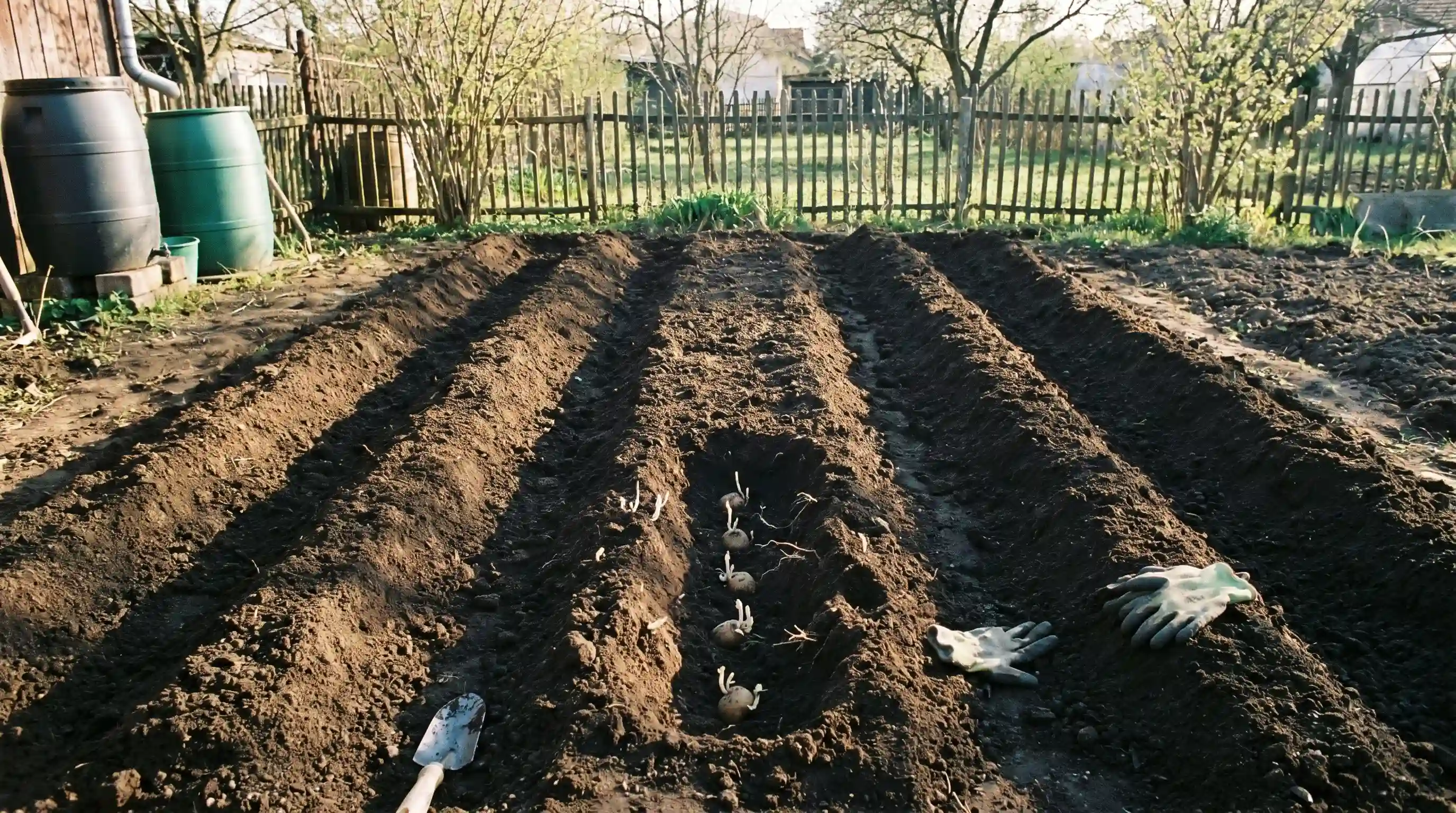
After you plant the seed potatoes, sprouts begin forming below the soil. You won’t see anything above ground for 1 to 3 weeks.
Soil temperature drives this stage more than anything else. Potatoes sprout best between 50°F and 70°F. If your soil is still cold (below 45°F), sprouting slows or stalls.
No green shoots after 3 weeks? Completely normal. No reason to dig.
Stage 2: Vegetative Growth (Days 21–60)
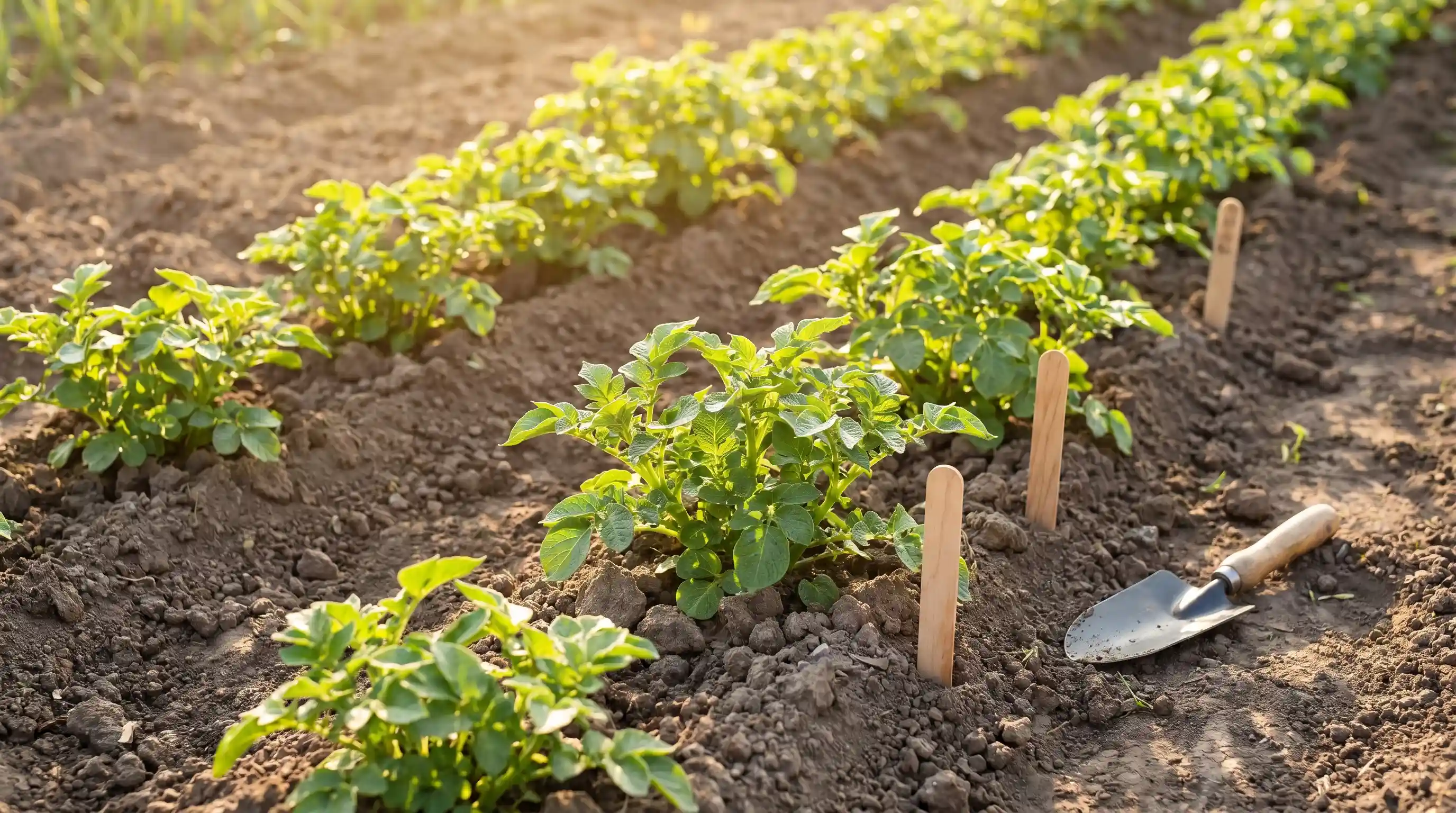
Stems and leaves push through the soil. The plant now generates energy from sunlight, and all of that energy fuels what comes next.
Your plants need at least 6 to 8 hours of sun daily during this phase. Water consistently, about 1-2 inches per week.
Stage 3: Tuber Formation (Days 40–70)
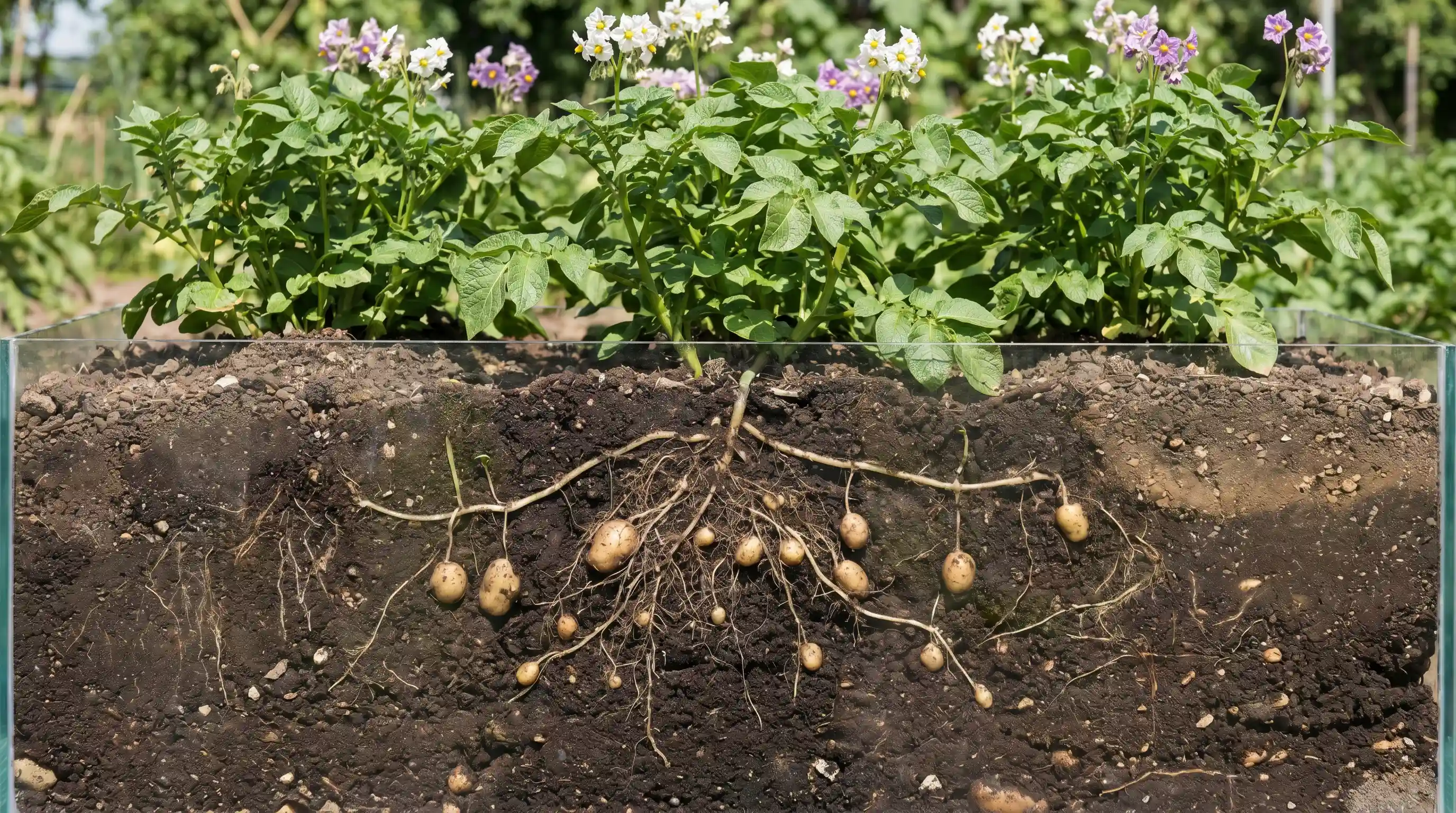
This is when the potatoes begin to form. The plant produces stolons (horizontal underground stems), and small tubers begin to develop at the tips of those stolons.
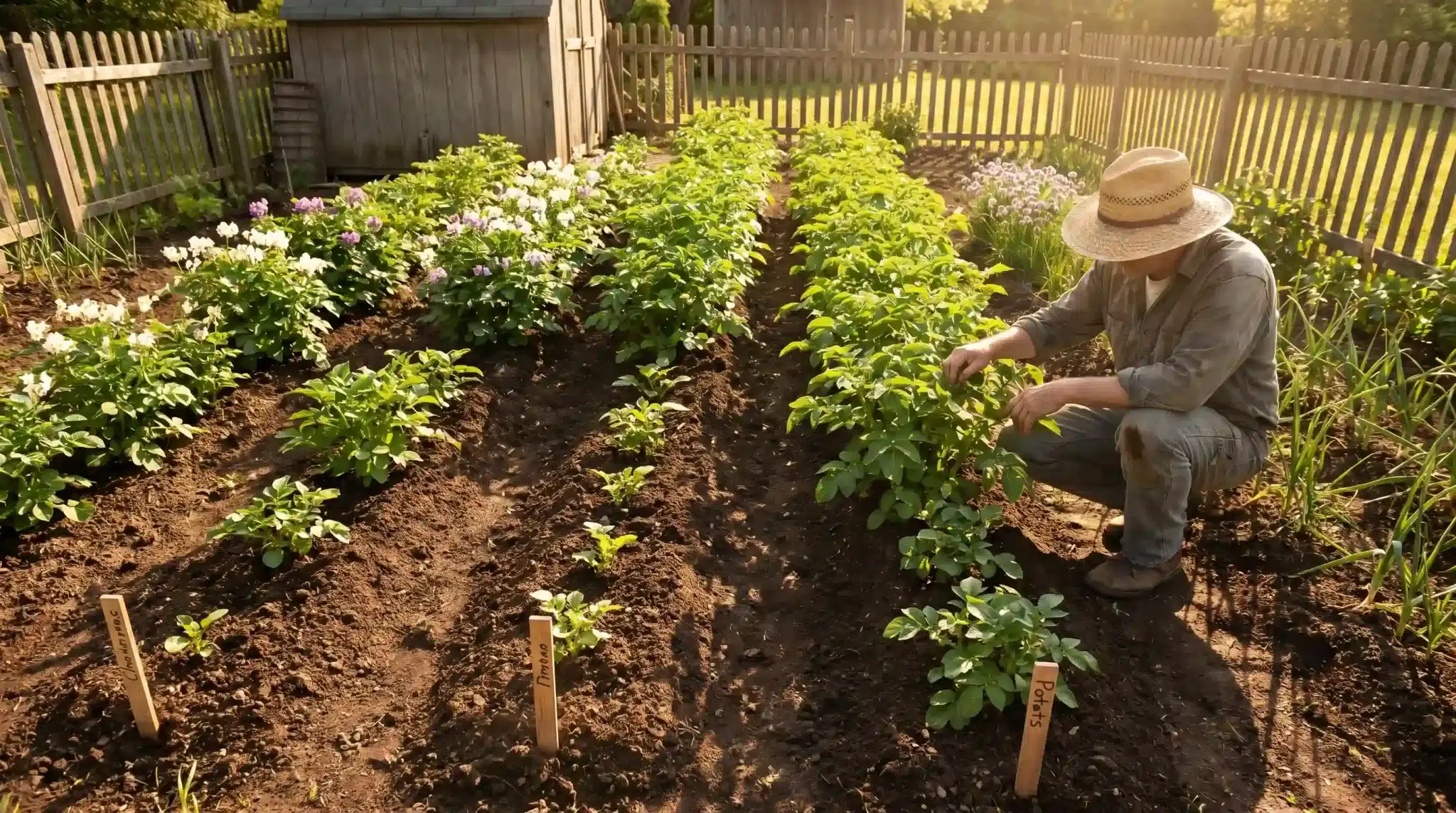
When you see the plant flowering above ground, that’s your signal that tubers are forming below. This is also the time to hill up soil around the base of the plant.
Covering the stems encourages more tuber development and keeps potatoes from turning green in sunlight.
Stage 4: Bulking and Maturation (Days 70–120)
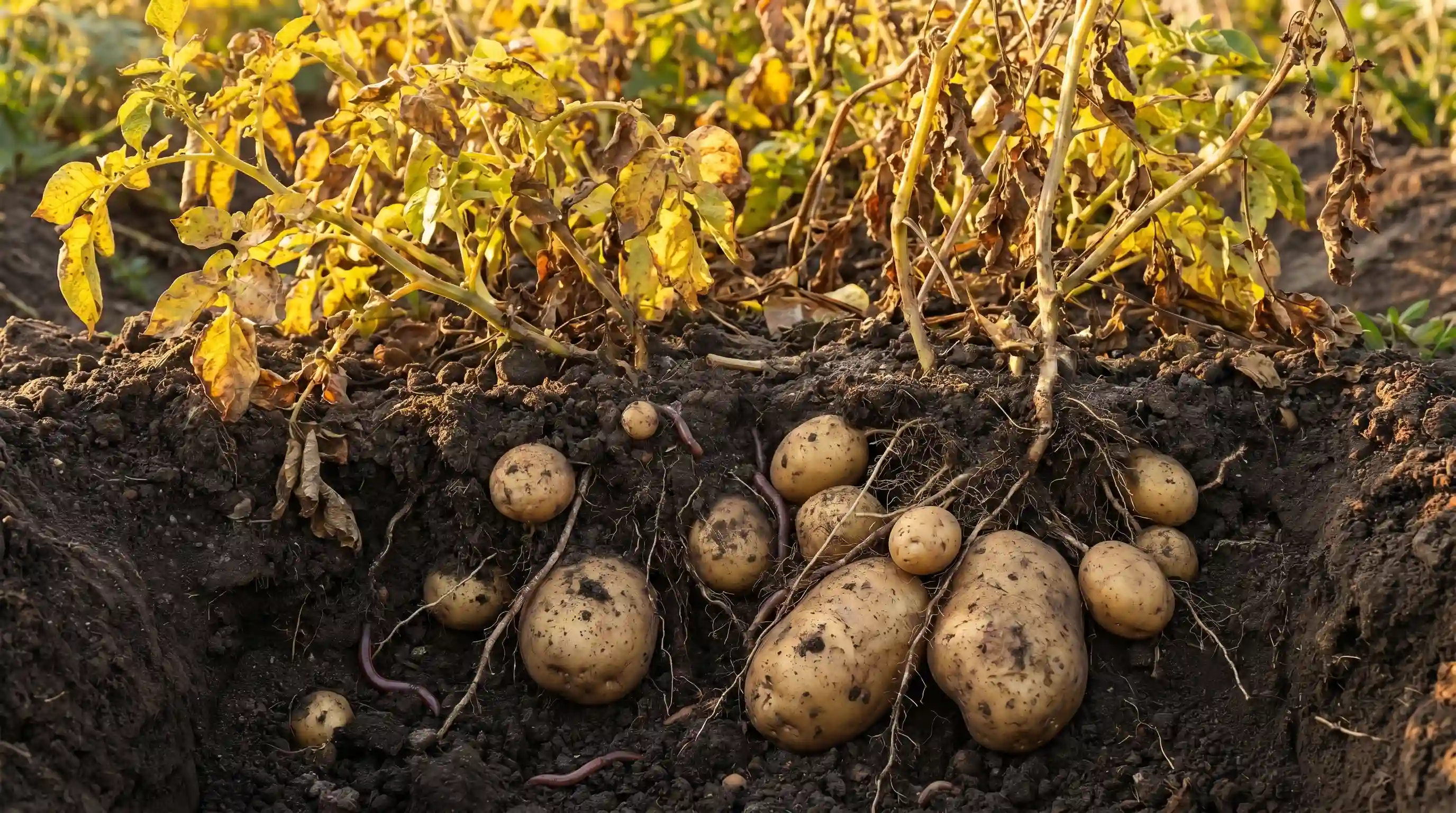
The tubers gain size and store nutrients. Above ground, the leaves start to yellow and fall over.
This looks alarming if you’ve never grown potatoes before. It’s not a problem. It’s the plant doing exactly what it’s supposed to do.
Wait for most of the foliage to die back before you dig for full-size potatoes.
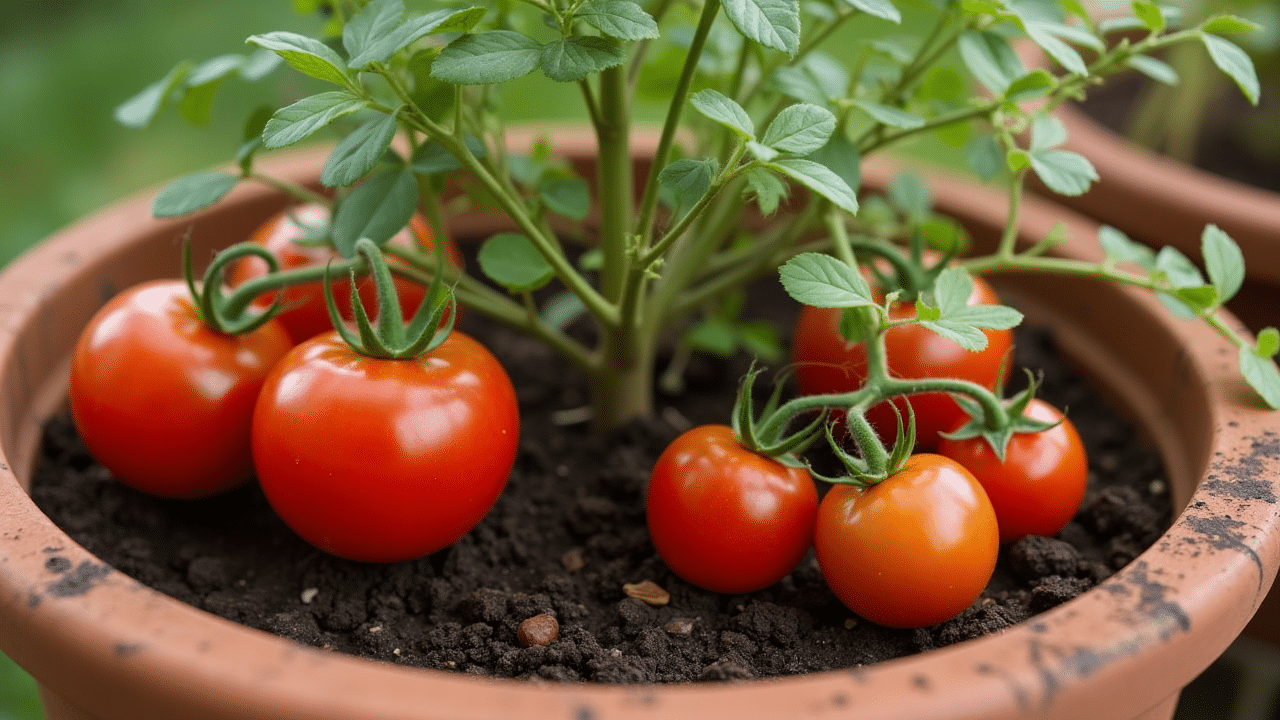
Does It Take Longer in Containers or Grow Bags?
Yes, a little longer. Container-grown potatoes generally take 90 to 130 days to reach harvest, slightly longer than in-ground beds, mostly because containers dry out faster.
Containers have a genuine advantage. The soil heats up faster in spring.
If you live in a colder climate, your container potatoes can often start sprouting a week or two before your in-ground plants wake up.
A few things to keep in mind if you’re growing potatoes in pots, grow bags, or buckets:
- Choose mid-season varieties. They layer tubers as the plant grows, giving you a better yield in a limited space.
- Water more often than you would for in-ground beds. In warm weather, check the soil daily.
- Want to check your progress without committing to a full harvest? Gently tip the container sideways and look for tubers. If they’re tiny, set it back and give it more time. It’s one of the better perks of growing in pots.
What Slows Potato Growth Down?
- Cold soil at planting. Below 45°F, seed potatoes are more likely to rot than sprout. Check soil temperature before planting, not just the date on the calendar.
- Soil that overheats in summer. Once soil temperature climbs above 75°F, tuber formation slows or stops completely. If your summers run hot, plant early so tubers form before the heat sets in.
- Inconsistent watering. Too little water during the bulking stage produces small, disappointing potatoes. Too much water right after planting can cause rot before sprouting begins. Steady, even moisture throughout is the goal.
- Not enough sunlight. Fewer than 6 hours of direct sun per day limit how much energy the plant can produce. Less energy means slower growth and smaller tubers.
- Late planting. Once you pass the summer solstice, daylight hours shorten and plant growth slows. If you’re planting in late summer for a fall harvest, build at least 90 days into your timeline before your first expected frost.
How Do You Know When Potatoes Are Ready to Harvest?
This is the question I get most often. The honest answer is that the plant tells you, if you know what to look for.
- Foliage dies back. When the leaves turn yellow and fall over, the plant is approaching full maturity. Wait about two more weeks after complete dieback for the skins to set properly. That skin-setting time is what makes potatoes store well.
- Plant flowers. Flowers blooming above ground signal that tubers are forming below. This is the right time to harvest new potatoes, not full-size ones.
- The skin test. Dig up one potato and rub your thumbnail against the skin. If the skin rubs off easily, put it back and wait another week or two. If the skin feels firm and doesn’t peel, your potatoes are ready to harvest.
- Test dig. Pull one plant and check the tuber size. Smaller than expected? Cover them back up and give them more time.
- Don’t wait too long. Once foliage dies back completely, harvest within 1 to 2 weeks. Leaving potatoes in the ground after that risks rot and re-sprouting.
Conclusion
Most potatoes take 70 to 120 days to grow, but the real skill is knowing which stage your plant is in right now. Sprouts still underground?
You’re in Stage 1. Flowers just appeared? Stage 3 is underway, and tubers are forming below. Leaves yellowing and falling? You’re getting close.
The variety you chose sets the baseline. Soil temperature, watering consistency, sunlight, and planting timing all adjust how fast you get there.
What variety are you growing this season? Drop it in the comments. I’d love to know if you’re going for a quick early harvest or waiting out a late-season Russet.
Frequently Asked Questions
1. What Do Coffee Grounds Do for Potatoes?
Coffee grounds enrich the soil with nitrogen, improve drainage, and attract beneficial worms, helping potato plants grow healthier and potentially increasing tuber size. Use in moderation to avoid acidity issues.
2. What Not to Do when Growing Potatoes?
Avoid planting in cold or waterlogged soil, overwatering, overcrowding plants, and exposing tubers to sunlight. These mistakes can cause rot, small yields, or green, inedible potatoes.
3. What is the Secret to Growing Big Potatoes?
Provide consistent watering, full sunlight, nutrient-rich soil, and regular hilling. Choose the right variety, space plants adequately, and avoid stress from pests or extreme temperatures for larger tubers.