
Growing your own lettuce is one of the most satisfying things you can do in a kitchen garden.
Within weeks of planting, you are pulling crisp, fresh leaves that taste nothing like the bagged mix that has been sitting in your refrigerator for three days.
And unlike most vegetables, lettuce does not ask much of you, just a little timing, the right soil, and consistent moisture.
I have worked with hundreds of home gardeners over the past 12 years, and lettuce is almost always where we start.
It grows fast, gives you feedback quickly, and is genuinely hard to kill if you understand its rhythm.
This DIY will walk you through everything from picking a variety to storing your harvest so you can skip the trial-and-error most beginners go through.
When to Plant Your Lettuce
Lettuce germinates best in soil between 40°F and 65°F (4–18°C); above 86°F (30°C), seeds often won’t sprout.
- Spring planting: Start seeds indoors 4–6 weeks before the last frost or sow outdoors as soon as the soil is workable.
- Fall planting: Sow 6–8 weeks before the first frost; late-summer planting yields a fall harvest.
Zone guide:
- Zones 3–4: May–June (spring), late July–August (fall)
- Zones 5–7: March–May (spring), August–September (fall)
- Zones 8–10: September–February (winter crop)
Pro tip: Succession sows every two weeks for a steady supply — and if you are planning a whole season of growing, it is worth checking which vegetables to plant in May for summer harvests to keep your plot productive alongside your lettuce. Cold frames or low tunnels extend harvest by 4–6 weeks in cooler climates.
Which Type of Lettuce Should You Grow?
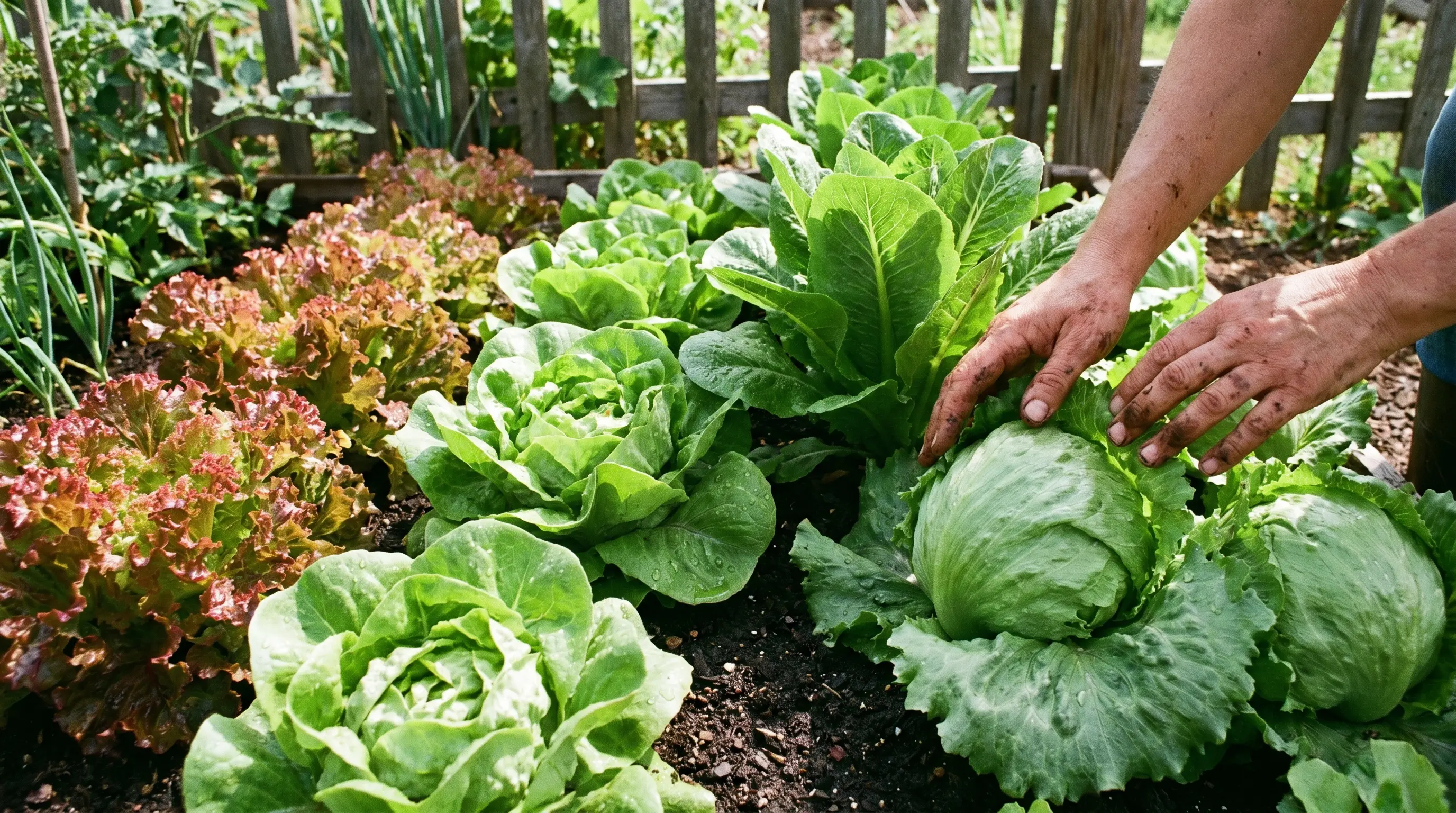
Before you plant a single seed, it helps to know the four main types. Each behaves differently in the garden.
- Looseleaf varieties: ‘Black Seeded Simpson’ and ‘Oak Leaf’ are ideal for beginners; start cutting outer leaves as early as 30 days, and plants keep producing.
- Butterhead (Bibb) types: ‘Buttercrunch’ and ‘Boston’ form soft, loose heads with mild, buttery flavor; slightly heat-sensitive but flavorful.
- Romaine (Cos): Sturdy, tolerates a wider temperature range, holds up after harvest, nutritionally dense; ‘Parris Island’ and ‘Little Gem’ recommended.
- Crisphead (Iceberg): Longest to mature (70–80 days), requires consistent cool weather; best avoided for beginners or warm climates.
If you live somewhere warm, look for bolt-resistant varieties specifically. ‘Nevada’, ‘Jericho’, ‘Flashy Trout’s Back’, and ‘Salad Bowl’ are bred to stay sweet longer before going to seed. This is the single most overlooked detail in most lettuce guides. Variety choice changes everything once temperatures start climbing.
How to Grow Lettuce in Your Backyard Step-by-Step
Growing your own lettuce is easier than you might think. With just a few seeds, some loose soil, and consistent care, you can enjoy fresh, crisp greens right from your backyard.
Follow these simple steps to plant, nurture, and harvest your lettuce, ensuring a continuous supply of homegrown salad for weeks.
Step 1: Choose Your Planting Time
Plant lettuce in the cool season. In hot climates, grow from October to March. In cold climates, plant from March to May and from August to October.
Mild climates allow March-to-May and August/September planting, with the latter possibly extending into November or December.
Step 2: Prepare Your Soil
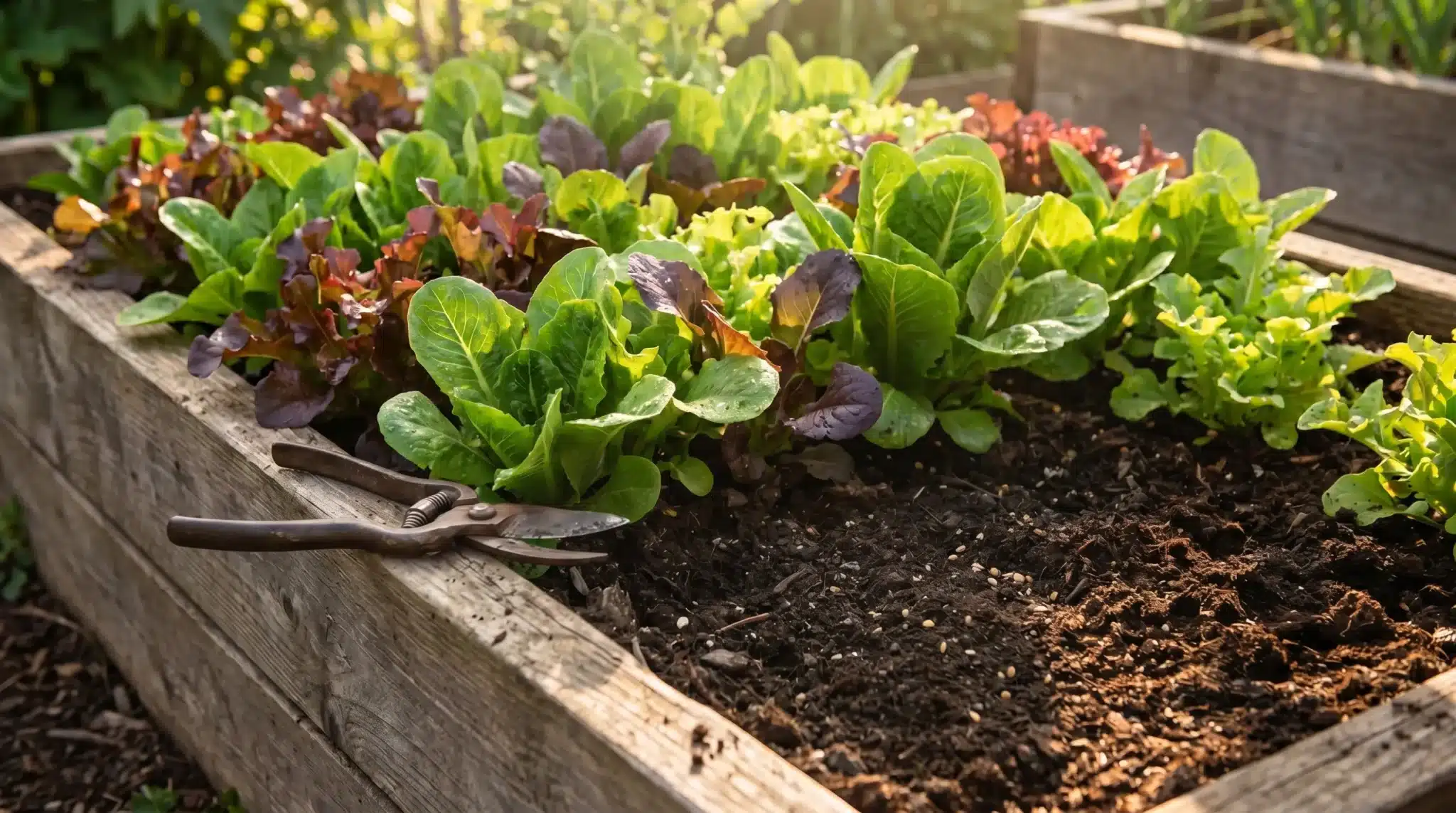
Use loose, porous soil. A blend of topsoil, compost, and sand works well. Ensure the soil is workable in the top 2–3 inches. Lettuce seeds have shallow roots and prefer to go straight into the soil rather than be transplanted.
Step 3: Plant Your Seeds
Lettuce seeds are tiny and oblong. Space them properly using one of these methods:
- Mix seeds with sand to distribute evenly.
- Use a seed spacing ruler to plant seeds every 2–3 inches.
- Pinch and sprinkle a few seeds at a time along the row.
- Lightly cover seeds with a thin layer of compost or gently pat them into the soil. Some lettuce seeds need light to germinate, so don’t bury them deeply.
Step 4: Water Consistently
Water daily to keep the soil moist but not soggy. Lettuce is about 70–90% water, so consistent watering is critical, especially right after planting. Avoid letting the soil dry out.
Step 5: Monitor Germination
Seeds usually sprout within 5–6 days. Check that seedlings are spaced properly (about 3–4 inches apart, roughly nine plants per square foot) and continue watering as needed.
Step 6: Harvest Correctly
Spring mix lettuce is “cut and come again.” Harvest by cutting older outer leaves near the base rather than pulling the whole plant. Take less than one-third of the plant at a time to allow regrowth from the center.
Step 7: Store and Preserve
After harvesting, rinse the leaves in cool water and wrap them in a tea towel or place them in a zip-lock bag in the fridge. Use freshly cut leaves immediately for best flavor and freshness.
Video Tutorial
I’d like to give credit to Gardenary for their informative video, which served as a reference for this guide.
Pests, Diseases, and Common Problems
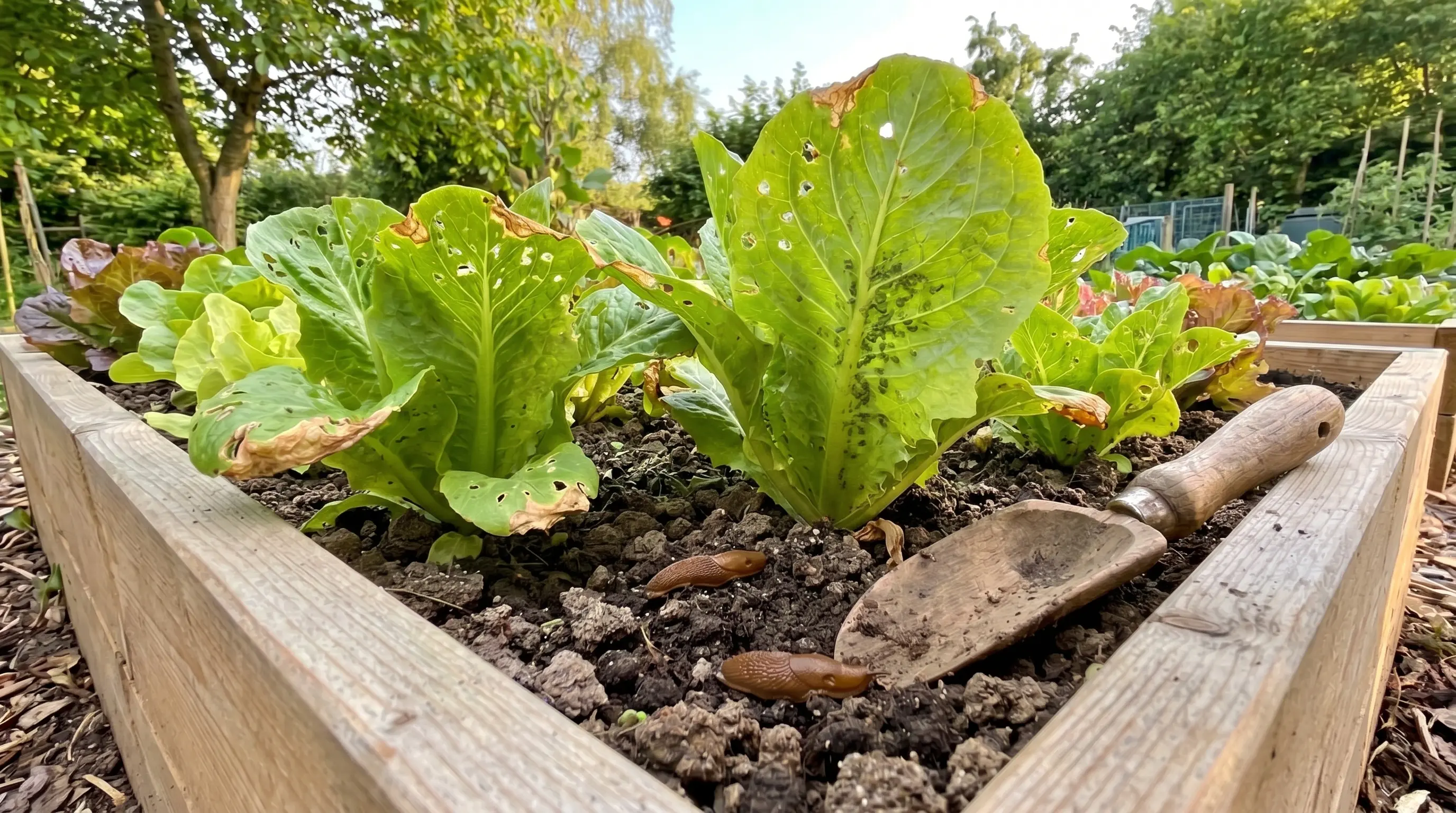
- Aphids: Cluster on undersides of leaves and crowns; cause leaf distortion. Spray with water or diluted soap (1 tsp per liter) every 3–4 days until gone.
- Slugs and Snails: Active at night; use iron phosphate bait, beer traps, or copper tape around raised beds. Safe for pets.
- Flea Beetles: Punch tiny holes in young leaves; protect seedlings with floating row covers in spring and early fall.
- Tipburn: Brown edges from inconsistent moisture; trim affected leaves and maintain regular watering. Non-contagious.
- Bolting: Triggered by heat or long days; leaves turn bitter. Use bolt-resistant varieties, shade afternoon plants, water deeply, and harvest frequently.
- Downy Mildew: Yellow patches on top, grey-white fuzz underneath; improve air circulation, avoid overhead watering, rotate crops, and don’t compost infected plants.
Growing Lettuce Indoors and in Containers
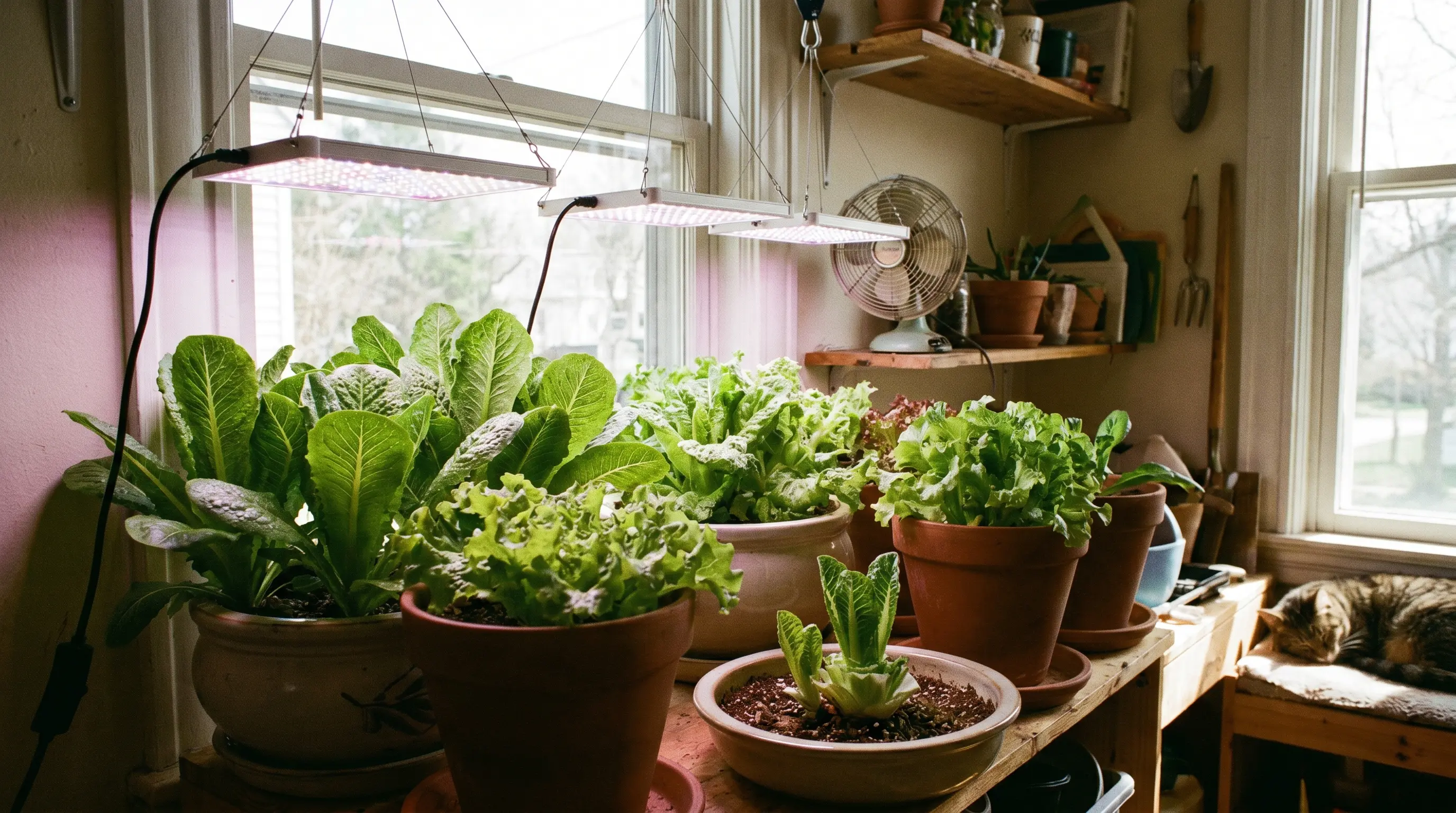
You do not need a garden to grow lettuce. A pot on a balcony or a tray under grow lights works just as well for a steady supply.
For containers, choose pots at least 6 inches deep. A deeper pot holds moisture longer, which is particularly useful if you are growing on a sunny balcony that dries out fast.
Windowsills usually provide too little light in winter, producing spindly seedlings. Use full-spectrum LED grow lights for 14–16 hours a day, keeping them 4–6 inches above plants.
A small oscillating fan for 30 minutes daily strengthens stems and improves air circulation.
Romaine scraps can regrow: cut the base about 2 inches from the bottom, place in a shallow dish with water in a bright spot. New leaves appear in a few days, providing a week or two of fresh garnish while reducing food waste.
Conclusion
The biggest mistake new growers make with lettuce is treating it like a set-and-forget crop.
It is not difficult, but it does respond to care; right timing, consistent moisture, and harvesting before the heat arrives make the difference between crisp, sweet leaves and a bitter, bolted plant.
Start with one bolt-resistant looseleaf variety, sow a short row every two weeks, and pay attention to what happens. Within a season, you will have more than enough confidence and lettuce to experiment further.
Frequently Asked Questions
Does Lettuce Grow Better in Pots or in the Ground?
Lettuce grows well in both pots and the ground, but it thrives best in the ground where roots have more space and consistent moisture. Pots are ideal for small spaces or controlled indoor growing.
What Cannot be Planted Next to Lettuce?
Lettuce should not be planted next to cabbage, broccoli, cauliflower, or parsley, as these plants can compete for nutrients or attract pests that harm lettuce.
How Long Does Lettuce Take to Grow?
Lettuce typically takes 30 to 80 days to grow, depending on the variety: looseleaf types are fastest (around 30 days), Butterhead and Romaine take longer, and Crisphead (Iceberg) is the slowest (70–80 days).