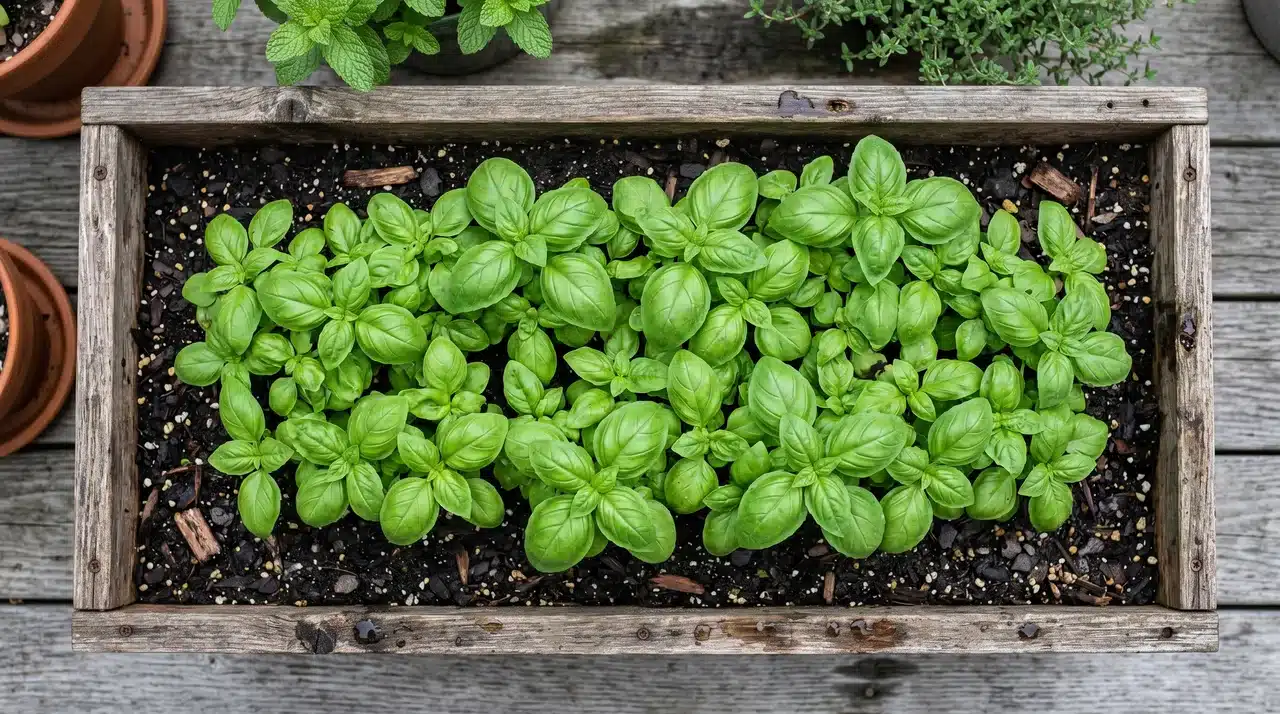
You’ve probably killed a basil plant. Many of you have.
You buy one, it droops within a week, and you end up back at the grocery store the following Tuesday. Here’s the thing: it’s not you.
Basil hates being treated like a houseplant when it wants to behave like a sun-loving summer herb. Learning how to grow basil is easier than you think.
You don’t need a garden. You don’t need special tools. One healthy basil plant or even one store-bought bunch can give you a steady supply for months.
This guide shows you exactly how to get there, from seed and cuttings to harvesting and keeping your plants alive all season long.
Which Type of Basil Should You Grow?
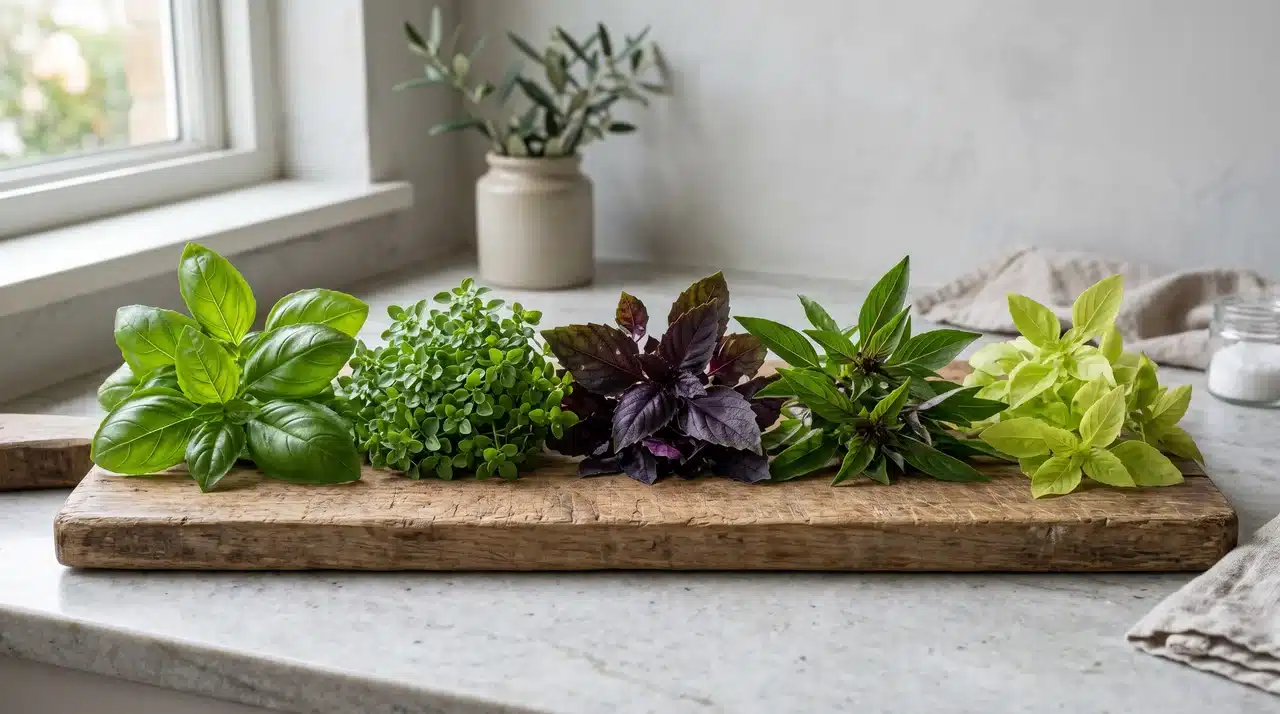
Sweet basil is the most common choice, but there are a few others worth knowing before you plant. Pick based on how you cook.
|
Variety |
Flavor |
Best For |
|
Genovese / Sweet |
Sweet, slightly peppery |
Pesto, pasta, pizza |
|
Thai Basil |
Spicy, anise-like |
Stir-fries, Asian dishes |
|
Greek Basil |
Compact, intense |
Containers, salads |
|
Purple Basil |
Mild, less sweet |
Color contrast, salads |
|
Lemon Basil |
Citrusy |
Fish dishes, dressings |
Easiest Ways to Grow Basil at Home
You can start basil two ways: from seed or from cuttings. Seeds cost almost nothing and give you more variety options. Cuttings are faster and work even with a store-bought bunch.
1. How to Grow Basil from Seed?
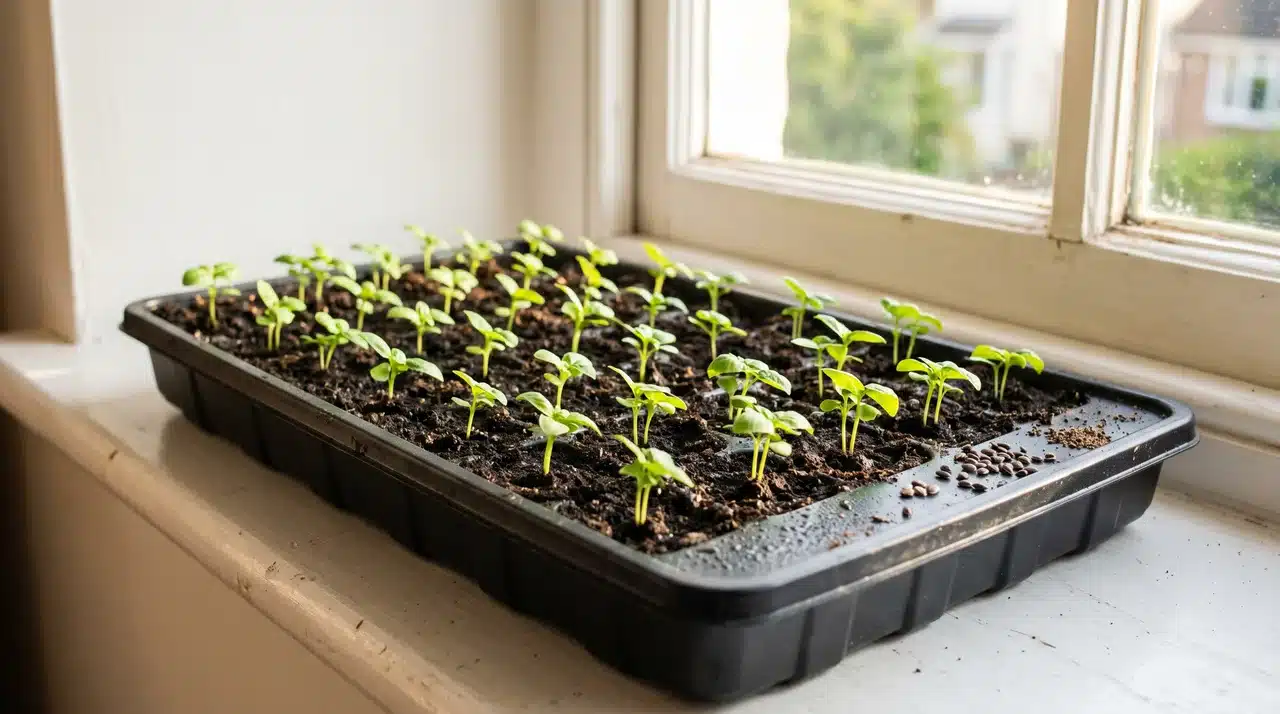
Starting basil from seed takes patience but costs almost nothing. It’s the best option if you want multiple plants or specific varieties.
- Start seeds indoors 6 weeks before your last frost date
- Sow no more than ¼ inch deep in peat-free potting mix
- Keep soil temperature between 70–85°F. Seeds sprout in 5–10 days
- Once seedlings have 2–3 sets of true leaves, thin to 10–12 inches apart
- Before moving outdoors, harden off seedlings over 7–10 days: start with 30 minutes outside, build up to full sun exposure daily
- Nighttime temps must stay above 50°F before transplanting outdoors
Pro Tip: Don’t rush transplanting. One cold night can set seedlings back by weeks.
2. How to Grow Basil from Cuttings?
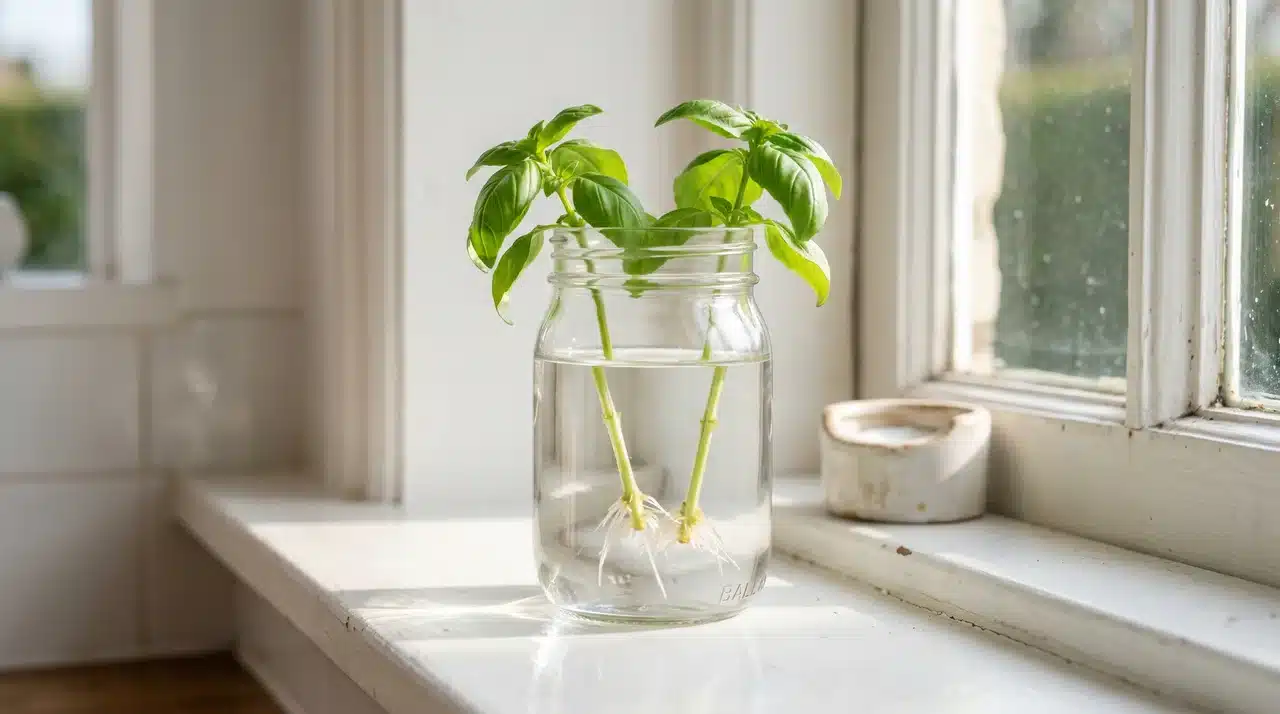
Skip the seeds entirely. One stem, even from a store-bought bunch, roots in water within days and grows into a full basil plant. Here’s how to do it.
Take the cutting:
- Pick a stem with leafy growth only, no flower buds
- Cut just above a leaf node on the parent plant
- Trim cutting to 3–6 inches long, strip lower leaves, keep top leaves only
Root it in water:
- Place the stem in a glass of mains water, leaves above the waterline
- Set on a bright, sunny windowsill
- Change the water if it turns cloudy
- Roots appear in 4–7 days; pot up after about 10 days
Pot it up:
- Use peat-free potting mix with a little perlite
- Held by the leaves, the stem is fragile
- Firm soil around the base, water in, and keep on a bright windowsill until roots settle
Video Reference
Special thanks to GrowVeg for providing valuable insights in their video, which I referenced while creating this guide.
What Does a Basil Plant Need to Grow?
Get the basics right first. Basil is forgiving once it has warmth, light, and well-draining soil, but it will stall fast if even one of those is missing.
|
Need |
Requirement |
|
Sun |
6–8 hours daily (south window indoors) |
|
Soil temp |
70–85°F for best growth |
|
Water |
Moist but never waterlogged |
|
Soil |
Well-draining potting mix |
How to Harvest Basil So It Keeps Growing?
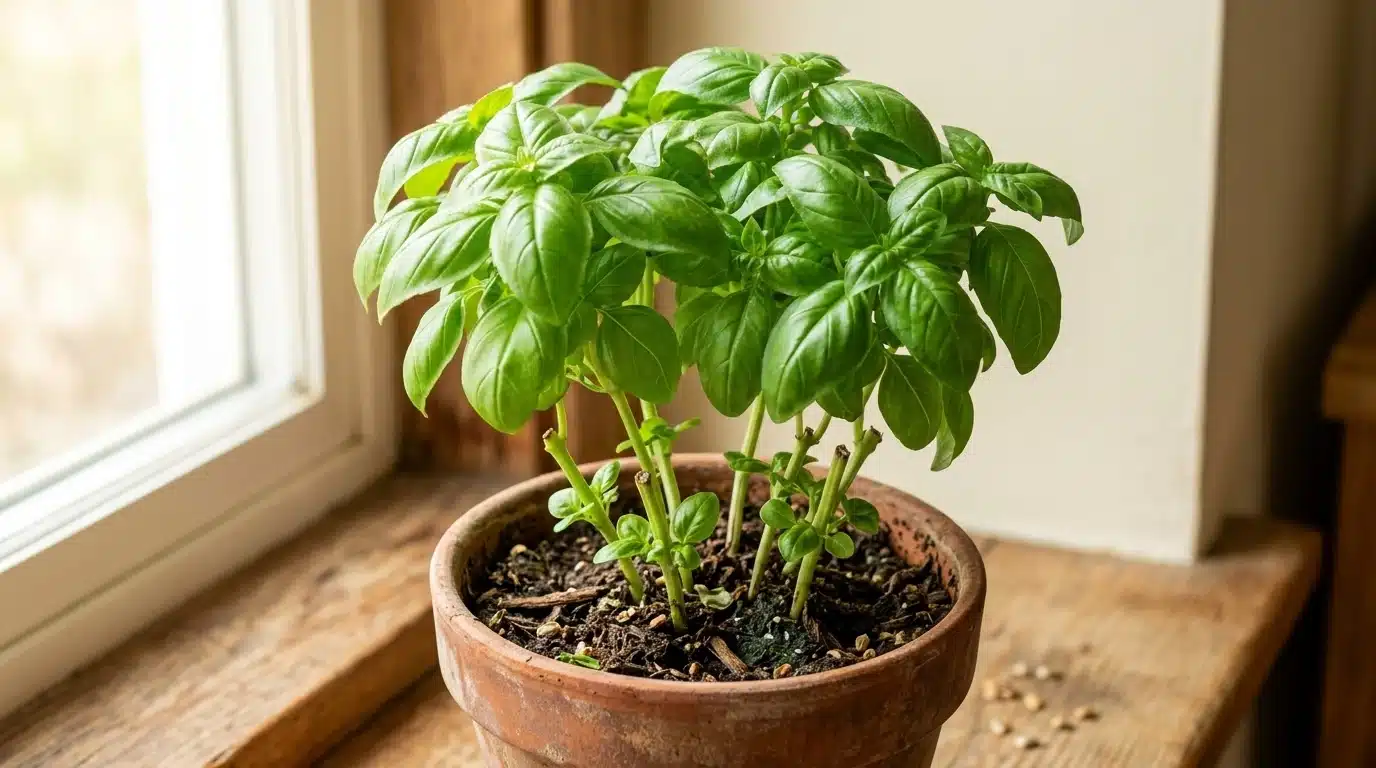
How you pick basil matters as much as how you grow it. Wrong harvesting makes plants go leggy and bitter fast.
- Start harvesting once the plant is 6–8 inches tall
- Always cut just above a leaf node, about ½ inch above a new set of leaves
- Cut the topmost stems first to push the plant outward, not upward
- Pick regularly, even if you don’t need the leaves right away; harvest and freeze
- Pinch off flower buds the moment they appear: flowering triggers bitter flavor and signals the plant to stop growing
- Never strip more than one-third of the plant at once
How to Store and Use Fresh Basil?
Once you’re harvesting regularly, you’ll want easy ways to keep basil fresh. None of these takes more than a few minutes.
- Short-term (up to 1 week): Stand the stems in a glass of room-temperature water, away from direct sunlight. Treat it like cut flowers.
- Freezing (best for flavor): Dry whole sprigs and seal in airtight bags in the freezer. Flavor stays intact.
- Olive oil cubes: Blend fresh leaves with olive oil and freeze in ice cube trays. Drop one straight into pasta sauce or soup.
- Drying: Lay leaves in a shaded, well-ventilated spot for 3–4 days; finish in the oven on the lowest setting if still damp.
Bonus: Those trimmings you removed when taking cuttings? Don’t throw them out. Blend with pine nuts, a hard cheese, and good olive oil for a quick pesto.
Basil Growing Problems and Easy Fixes
Basil signals trouble fast. Most problems have a simple fix if you catch them early enough.
- Wilting: Soil has dried out, or the plant is overheated. Water at the base and check soil moisture daily.
- Yellow leaves: Usually overwatering. Let the top inch of soil dry out before watering again, and feed every few weeks.
- Leggy, stretched stems: Not enough light. Move the pot closer to a window or under a grow light.
- Bitter flavor: The plant has flowered. Pinch off every flower bud immediately and harvest more often in the future.
- Brown leaf edges: Cold damage from a drafty window or overnight temperature drop. Move the pot away from the cold glass at night.
Conclusion
Growing basil at home is not complicated. Warm soil, plenty of sun, and regular harvesting are really all it takes to keep a basil plant going strong all season.
The part you miss is propagation. Once you know how to grow basil from a single cutting, you stop buying it altogether.
One bunch from the grocery store becomes five plants in a matter of weeks.
Start small. Take one stem today, drop it in a glass of water on your sunniest windowsill, and check back in five days. The roots will surprise you.
From there, pot it up, harvest often, and take more cuttings whenever plants get large. That one stem quietly becomes a supply that lasts all year.
What basil variety are you planning to try first? Drop it in the comments below.
Frequently Asked Questions
Why Does My Basil Keep Dying?
The most common causes are cold temperatures, overwatering, and too little light. Basil needs warmth above 50°F, moist but not soggy soil, and at least 6 hours of sun daily.
Can I Regrow Basil from a Store-Bought Plant?
Yes. Take stem cuttings 3–6 inches long, remove the lower leaves, and root them in a glass of water on a sunny windowsill. Roots appear in 4–7 days.
How Often Should I Water Basil?
Check daily. Water when the top inch of soil feels dry. Never leave the pot sitting in water, as it causes root rot quickly.