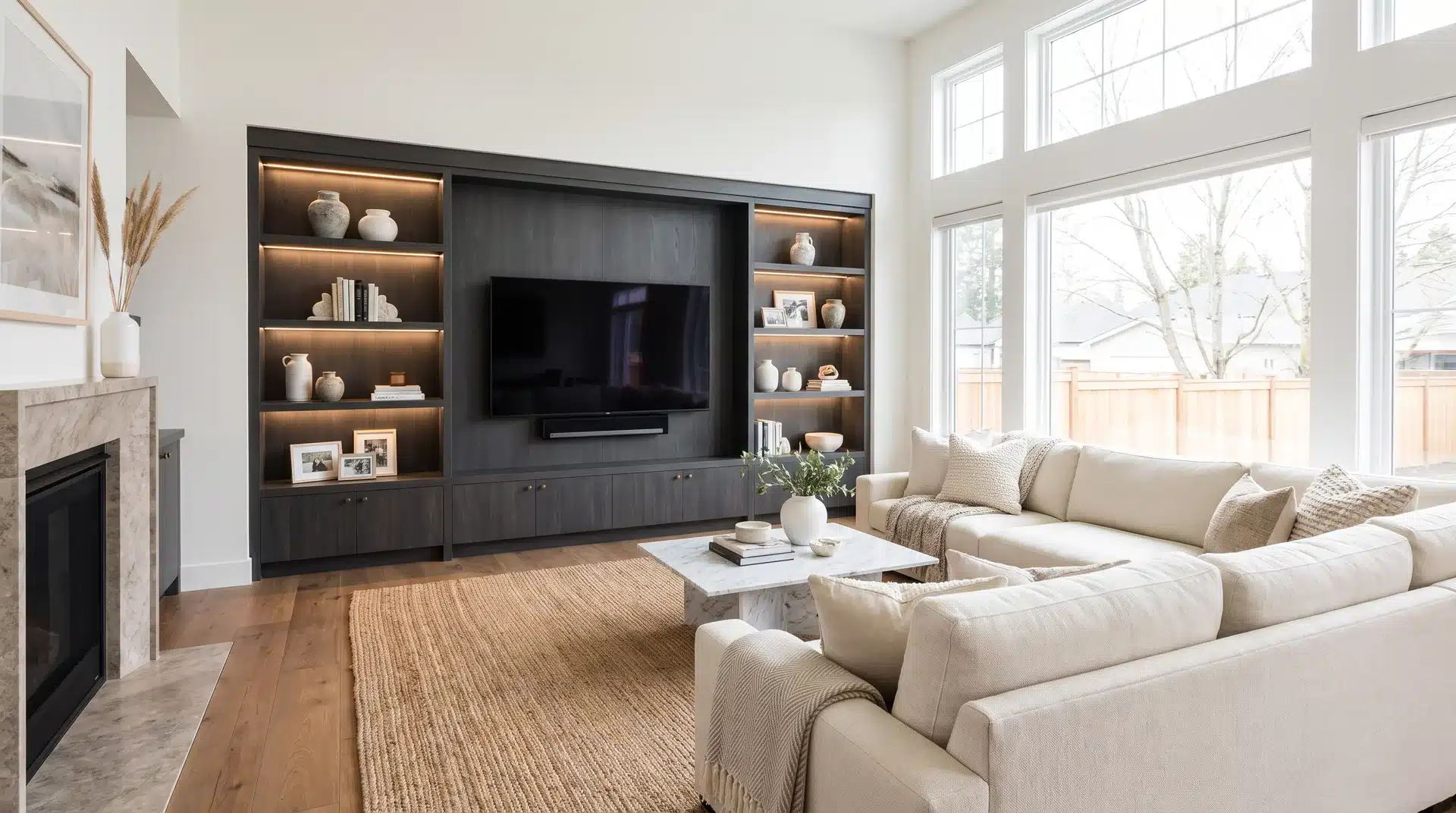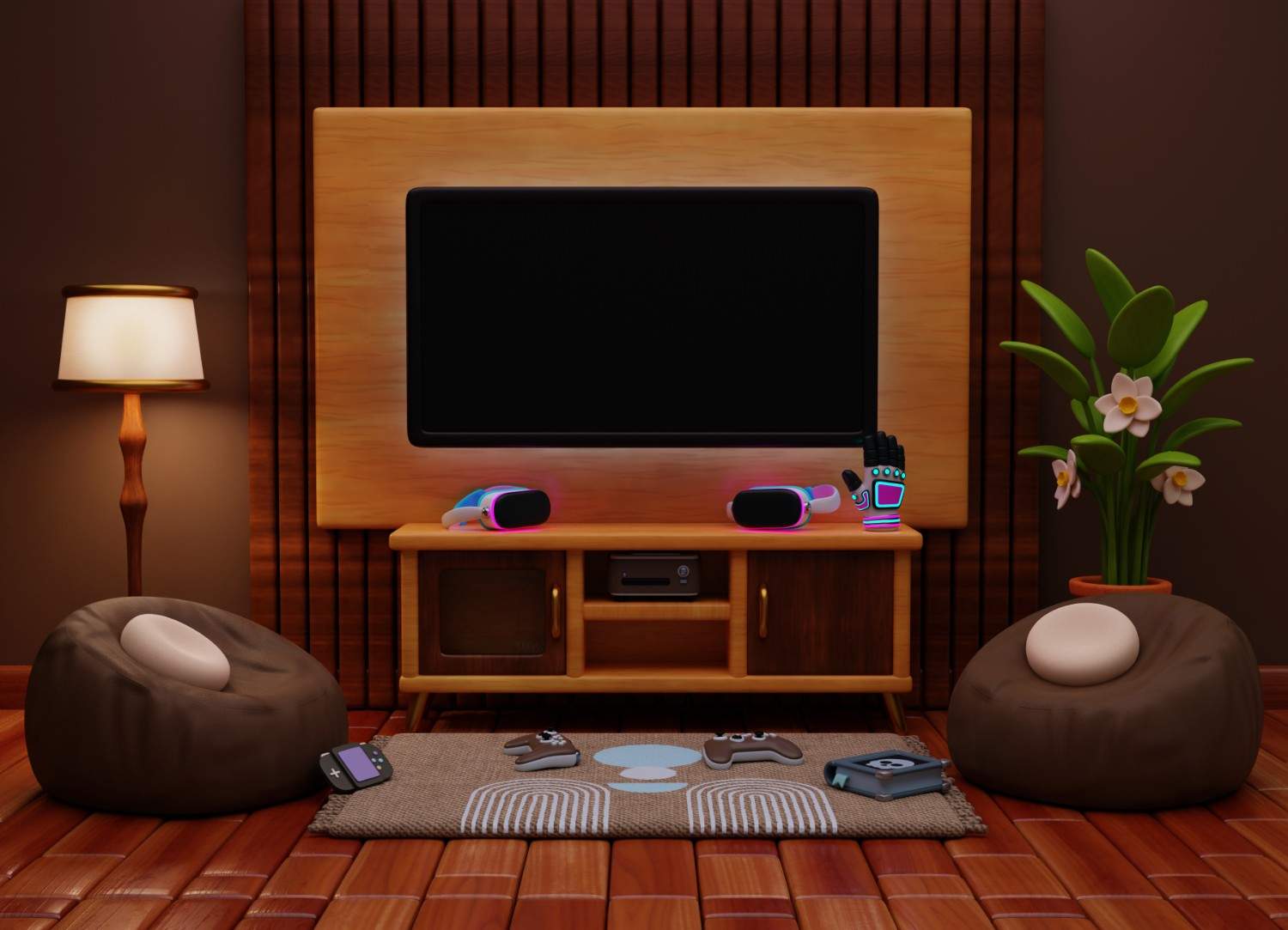

Media walls look great in photos, making them a popular feature in many modern homes with a clean, stylish finish.
But there is a side to them that most home improvement content completely glosses over.
The costs, the structural demands, the long-term limitations. Nobody talks about what happens after the build.
After years of specifying and troubleshooting these builds for clients, I can walk you through the real disadvantages of media walls so you can go in with both eyes open before you commit to one.
Media Walls Cost More Than You Think
A media wall is never just a one-line expense. The price climbs fast once you factor in everything the project actually needs.
The Hidden Costs Nobody Mentions
Most cost estimates you see online cover the unit itself. They rarely include what surrounds it. Here is what tends to get left out of the initial quote:
- Electrician fees for running new sockets and hiding cables inside the wall
- Plastering and repainting after cable channels are cut into the wall
- Fireplace installation costs if you want an integrated electric or gas option
- Permit fees in areas that require them for structural wall modifications
- Furniture repositioning or replacement if the new wall changes the room layout
Note: A media wall quoted at $2,500 can easily cost $4,000 or more once installation, electrical work, plastering, painting, and other extras are included.
Ongoing Maintenance Adds Up To
Ongoing costs continue even after the media wall is installed. Regular maintenance and occasional repairs can increase the total cost over time.
-
Annual servicing: Built-in electric fireplaces often require regular servicing to keep them working safely.
-
Component replacements: LED lights and built-in speakers may need replacement or recalibration over time.
-
Costly repairs: MDF units can warp in humid rooms, and repairing fitted media walls is usually expensive.
They Are Permanent and Hard to Change
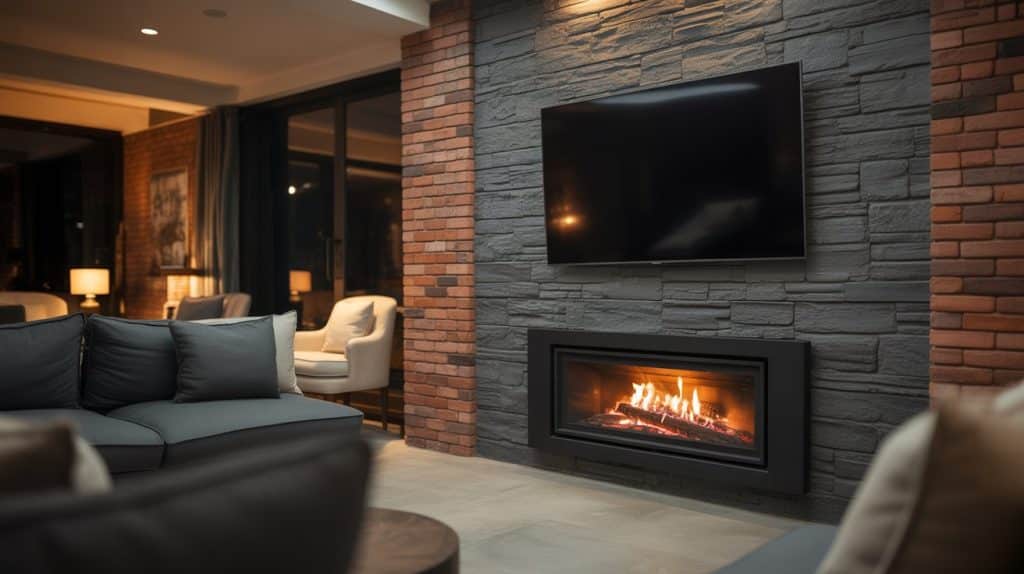
This is the disadvantage that stings the most. A media wall is not a piece of furniture you can move around on a whim.
Once It Is Built, It Is Built
A custom media wall is thoughtfully integrated into the design of your home, adding a personalized touch and enhancing the overall feel of your space.
Removing it means taking the unit apart, patching the wall behind it, replastering, and repainting.
In many cases, the wall behind a built-in unit has been chased out for cables, which means additional repair work on top of the cosmetic fixes.
The removal process can cost nearly as much as the original installation. This becomes a real problem if your circumstances change.
A growing family may need that wall space for something else. A new TV technology may make the current screen size obsolete.
If you move and the buyers do not want the media wall, you are either leaving it behind or spending money to undo it.
It Locks You Into One Layout
Living rooms change over time. Sofas get replaced. Rugs move. People rearrange. A media wall permanently establishes the focal point of the room.
The sofa has to face it. The lighting has to work around it. Every future decorating decision gets made in relation to that one wall.
For those who enjoy updating their space often, that strictness can quickly become frustrating.
They Do Not Work in Every Room
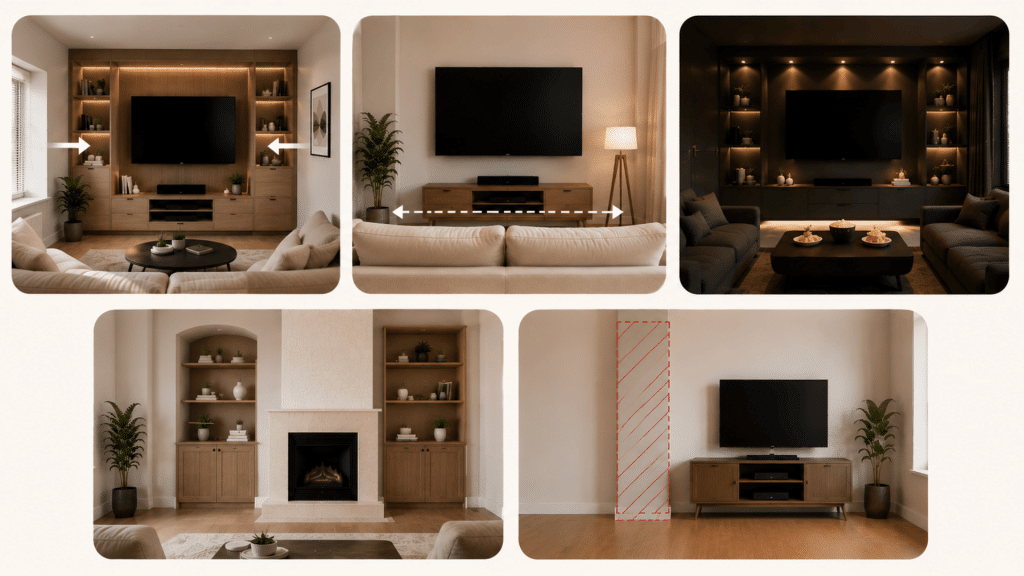
A media wall sounds like a universal upgrade. It is not. Several room types simply do not suit them, and knowing which ones can save you from a costly mistake.
- Small rooms feel boxed in: A large built-in unit on one wall draws the eye, leaving no visual breathing room. Rooms under 150 square feet often struggle the most.
- Viewing distance is too short: A big screen on a media wall in a small room sits too close to the sofa, causing eye strain over time.
- The look can feel like a cinema, not a home: When combined with a large TV, the effect can overwhelm the room rather than relaxing it.
- Alcoves and chimney breasts complicate installation: Fitting a unit around an existing chimney breast requires custom carpentry, which raises the cost fast.
- Load-bearing walls limit your options: Not every wall can be modified the way a standard media wall setup requires.
They Can Affect Your Home’s Saleability
This one surprises clients almost every time I bring it up. A media wall feels like an obvious selling point. But it does not always land that way with buyers.
Not Every Buyer Wants One
Taste is personal. A dark wood media wall that you love may feel heavy and dated to the next buyer.
A high-gloss white unit may look fresh to you, but feel cold to someone else.
Built-in features that reflect a very specific style can actually narrow your buyer pool rather than widen it.
Buyers who do not like the wall face a choice: accept it or pay to have it removed. Neither option is attractive.
It Can Date Quickly
Technology moves fast. The TV recess that fits your current 65-inch screen perfectly may not fit the screen sizes that become standard in five years.
Built-in speaker systems can become outdated as wireless audio technology improves.
A media wall can start to look tired if the finishes or technology feel behind the times. Unlike a standalone TV unit, you cannot simply swap it out.
Design choices are important from the beginning. Cleaner, more minimal media wall styles typically hold up better over time than those that are heavily styled or theme-based.
They Create Practical Day-to-Day Problems
Beyond the big-picture concerns, media walls come with smaller but real daily frustrations worth knowing about.
- Heat builds up with nowhere to go: A TV, soundbar, console, and streaming device all generate warmth. Poor ventilation inside a sealed unit can shorten its lifespan and even create a fire risk if cables sit too tightly packed.
- Cable access becomes a bigger job: A standard unit lets you pull it out and swap in a cable in minutes. A media wall runs cables inside the cavity, so fixing them often means cutting into the wall and replastering after.
- Dust collects in hard-to-reach spots: Open shelving, recesses around the TV, and gaps behind fireplace panels are tough to clean. A standard unit can be pulled out and cleaned behind. A fitted media wall cannot.
Conclusion
The disadvantages of media walls are real, and they deserve more attention than they usually get.
High hidden costs, a permanent structure, limited suitability for rooms, buyer-taste issues, and daily practical problems are all part of the picture.
None of this means a media wall is the wrong choice. But it does mean it is not the right choice for every home or every homeowner.
Go in knowing the full picture, and you will make a decision you are far less likely to regret.
Weigh these disadvantages against your own room size, budget, and timeline before the build starts, not after.
Frequently Asked Questions
What Devalues a House the Most?
Poor location, structural damage, outdated interiors, bad layout, noise, nearby crime, and lack of maintenance significantly reduce a home’s value.
What is the Average Cost of A Media Wall?
A media wall typically costs $1,000–$5,000, depending on materials, size, built-in storage, and electrical or fireplace additions.
Are Media Walls Outdated?
Media walls aren’t outdated; modern, minimalist designs remain popular, though bulky or overly decorative styles may feel dated.