
Fresh blueberries from your own garden taste better than store-bought fruit. Growing these nutritious berries at home is simpler than it looks once you know their basic needs.
In years of helping gardeners, nothing has affected blueberry harvests more than soil acidity.
How to grow blueberries successfully requires three essentials: acidic soil, consistent moisture, and full sunshine.
Learn how to plant blueberries, choose the best varieties, and care for them year-round.
If you’re planting in pots or garden beds, you’ll gain the confidence to grow delicious blueberries successfully.
Essential Requirements to Grow Blueberries Successfully
Blueberries need a few specific growing conditions to produce healthy plants and flavorful fruit. Meeting these basic requirements before planting gives your bushes the best chance to thrive.
- Acidic Soil (pH 4.5 to 5.5): Use acidic soil so plants can absorb nutrients properly. Test the soil before planting.
- Consistent Moisture: Keep the soil evenly moist, but avoid letting it become soggy.
- Good Drainage: Plant in well-draining soil or containers with drainage holes to prevent root rot.
- Full Sun (6+ Hours): Choose a sunny location for sweeter berries and stronger plant growth.
- Ericaceous Compost: Use ericaceous compost for containers instead of regular potting mix to maintain the right soil acidity.
Tools and Materials Required
Gather these basic tools and supplies before you start planting. Having everything ready makes the process quicker and helps your blueberry bush establish successfully.
| Item | Details |
|---|---|
| Pot | 16-18 inches wide, drainage holes |
| Soil | Ericaceous (acidic) compost |
| Mulch | Composted bark or pine mulch |
| Water | Rainwater preferred |
| Tools | pH tester, watering can |
Gather all materials before starting the planting process to ensure a smooth, efficient process.
Having everything ready prevents interruptions and ensures you complete each step correctly without rushing or making mistakes.
Step-by-Step Guide to Planting Blueberries
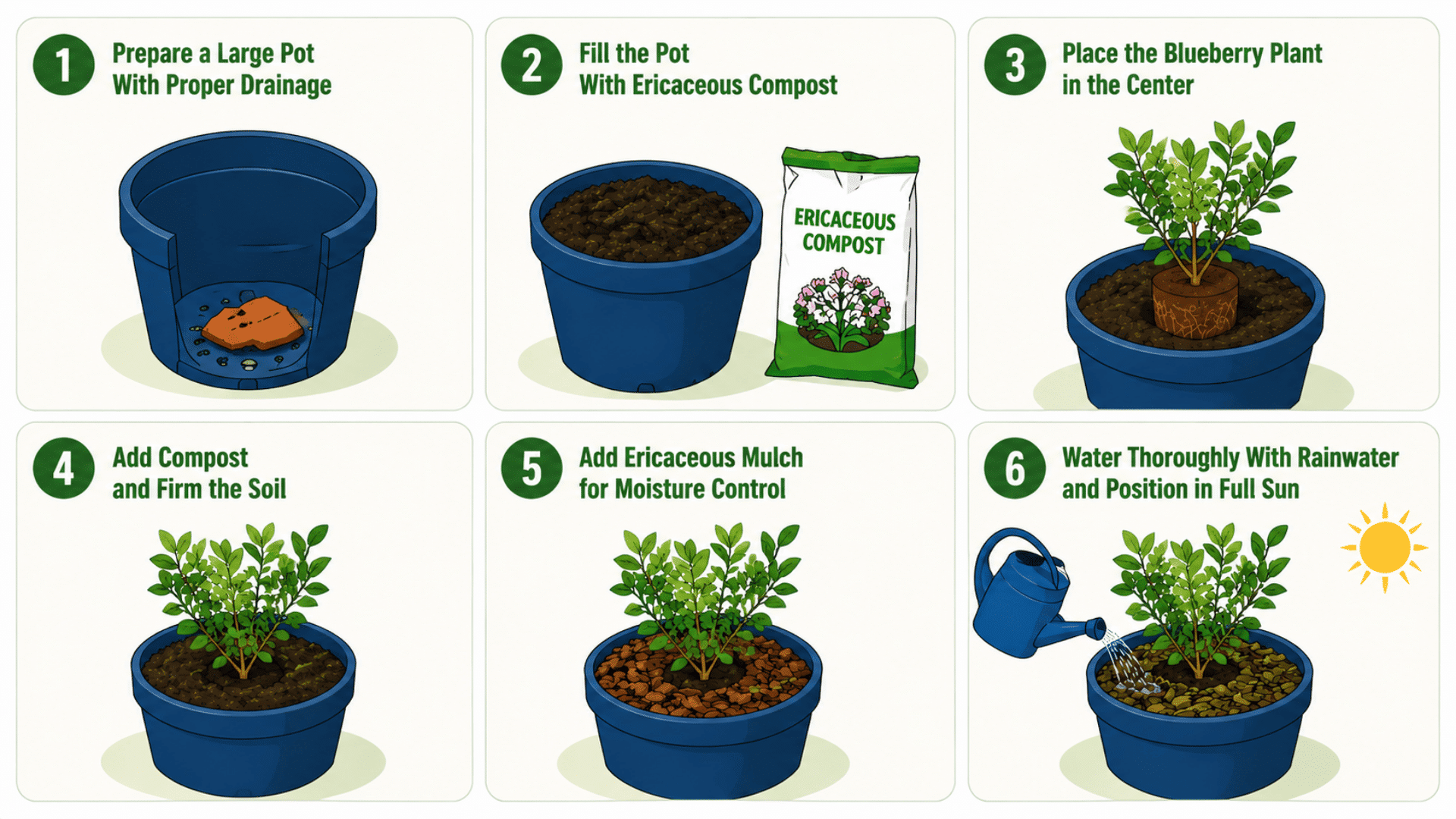
Follow these simple steps to give your blueberry bushes the best start. Proper planting helps develop strong roots, healthy growth, and better fruit production for years to come.
Step 1: Prepare a Large Pot With Proper Drainage
Choose a pot that’s at least as wide as a standard household ruler, roughly 16 to 18 inches across.
This size provides enough soil volume to maintain consistent moisture throughout the growing season.
Undersized pots stunt yields, as with tomatoes in pots. Make sure your container has drainage holes in the bottom.
Cover the drainage hole with broken terracotta or thick cardboard to prevent soil loss while allowing water drainage.
Don’t skip this step, or you’ll lose compost when watering.
Success indicators: The pot should feel sturdy with visible drainage holes at the bottom. Water should flow freely through when tested, not pool or drip slowly.
Step 2: Fill the Pot With Ericaceous Compost
Use only ericaceous compost, which is specially formulated for acid-loving plants. This type of compost maintains the low pH that blueberries require.
Fill the pot about two-thirds full, leaving space for the rootball and a gap at the top.
Level the compost surface so it’s even across the pot. Tap the pot gently on the ground to settle the soil and remove air pockets.
The compost should be firm yet loose enough, avoiding compaction.
Success indicators: Compost should be dark, moist, and crumbly with no dry patches. The surface should sit level and firm without being hard or compressed.
Step 3: Place the Blueberry Plant in the Center
Gently remove your blueberry plant from its nursery pot by squeezing the sides and tipping it upside down.
Support the rootball with your hand as it slides out. Try not to disturb the roots too much during this process.
Position the plant in the center of your prepared pot.
The top of the rootball should sit level with the compost surface. If it’s too low, add more compost underneath before settling it in place.
Success indicators: The rootball should be intact, with white, healthy roots visible. The crown sits level with the soil surface, neither buried too deeply nor sitting too high.
Step 4: Add Compost and Firm the Soil
Fill the space around the rootball with more ericaceous compost. Work the compost in gently with your fingers to eliminate air gaps. Fill until the soil level matches the top of the original rootball.
Firm the compost lightly by pressing down with your palms.
Don’t compact it too hard, or you’ll restrict root growth. Leave a 2-inch gap between the soil surface and the pot rim for watering.
Success indicators: No air pockets remain around the rootball when gently pressed. The plant stands upright without leaning, and the soil feels snug but not rock-hard.
Step 5: Add Ericaceous Mulch for Moisture Control
Spread a two-inch layer of composted bark or pine mulch over the soil surface. This mulch helps retain moisture during hot weather and suppresses weed growth.
It also breaks down slowly, adding organic matter to the soil over time. These beat rubber mulch for acid-loving plants.
Keep the mulch away from the plant stems by creating a small gap around the base. Direct contact between mulch and stems can lead to rot or disease problems.
Success indicators: Mulch layer should be even at two inches deep with a clear one-inch gap around the stem. The bark pieces should be chunky and partially decomposed.
Step 6: Water Thoroughly With Rainwater and Position in Full Sun
Water your newly planted blueberry thoroughly until water runs from the drainage holes.
This settles the soil around the roots and eliminates air pockets. Rainwater is best because it’s naturally acidic and helps maintain the low pH your plant needs.
Place your potted blueberry in a spot that receives full sun for most of the day. South or southwest-facing locations work well. The plant needs bright light to develop flowers and fruit in the coming seasons.
Success indicators: Water should drain freely from the bottom within minutes. The soil surface appears evenly moist and dark, with no dry spots or standing water visible on top.
Video Tutorial
I’d like to give credit to RHS (Royal Horticultural Society) for their informative video, which served as a reference for this guide.
Choosing the Right Blueberry Variety
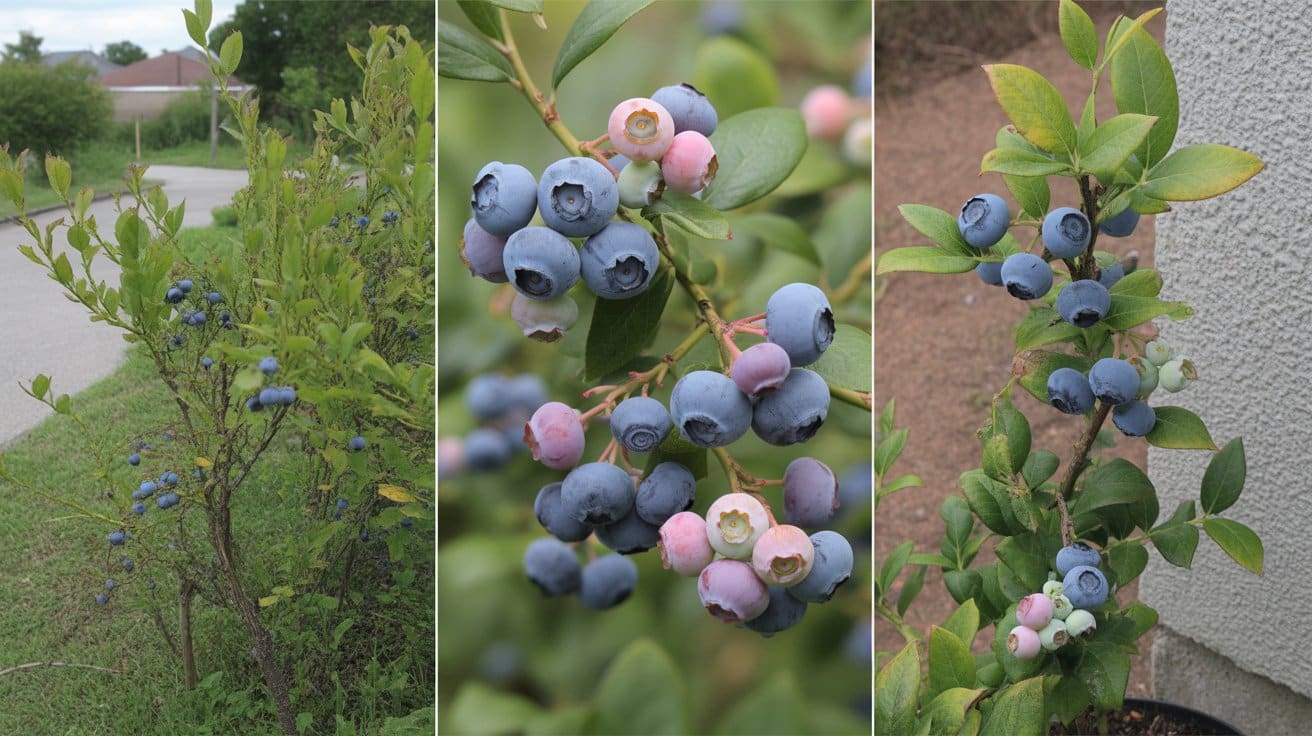
Blueberry varieties differ in size, climate needs, and fruiting patterns. Choosing the right type for your space and region directly impacts harvest success and plant health.
1. Why Variety Choice Matters
Variety choice matters because ripening time, cold tolerance, and yield differ significantly between cultivars.
Blueberry varieties ripen from June to August and perform best in different climates.
Yield also varies by type, with some producing abundant harvests and others yielding moderate crops.
Planting two or more varieties also improves pollination, which means more and larger berries even from self-fertile types.
Choosing several varieties extends your harvest window and provides fresh berries for months.
2. Best Varieties for Pots
Growing blueberries in containers starts with choosing a variety suited to smaller spaces. These compact cultivars produce reliable harvests while staying easy to manage.
| Variety | Best Features |
|---|---|
| Sunshine Blue | Grows about 3 feet tall, produces sweet berries, and performs well in warm climates. |
| Top Hat | Compact 2-foot plant, ideal for patios, balconies, and small containers. |
| Peach Sorbet | Ornamental variety with colorful foliage, pink flowers, and edible berries. |
| Jelly Bean | Dwarf variety under 3 feet that delivers heavy crops in limited space. |
3. Best Varieties for Larger Garden Beds
For garden beds, choose varieties with vigorous growth and dependable harvests. These larger blueberry bushes produce abundant fruit and perform well when planted directly in the ground.
- Bluecrop: Grows up to 6 feet tall and produces heavy crops of large, flavorful berries.
- Duke: An early-season variety that tolerates cold winters and ripens in June.
- Chandler: Produces extra-large berries with excellent flavor from mid to late summer.
- Elliott: A late-season variety that extends the harvest into September with reliable yields.
4. Matching Varieties to Your Climate Zone
Different blueberry varieties perform best in different climates. Matching your plant to your USDA hardiness zone helps improve growth, flowering, and fruit production.
| Climate Zone | Recommended Varieties |
|---|---|
| Zones 3–6 (Cold Climates) | Patriot, Bluecrop, and Duke tolerate harsh winters and produce reliable harvests. |
| Zones 7–10 (Warm Climates) | Sunshine Blue, Misty, and O’Neal require fewer chill hours to fruit well. |
| Zones 5–7 (Moderate Climates) | Most blueberry varieties grow successfully, offering the widest selection. |
| Coastal Regions | Legacy performs well in windy, coastal conditions with good salt tolerance. |
How to Care for Blueberries Through the Growing Season
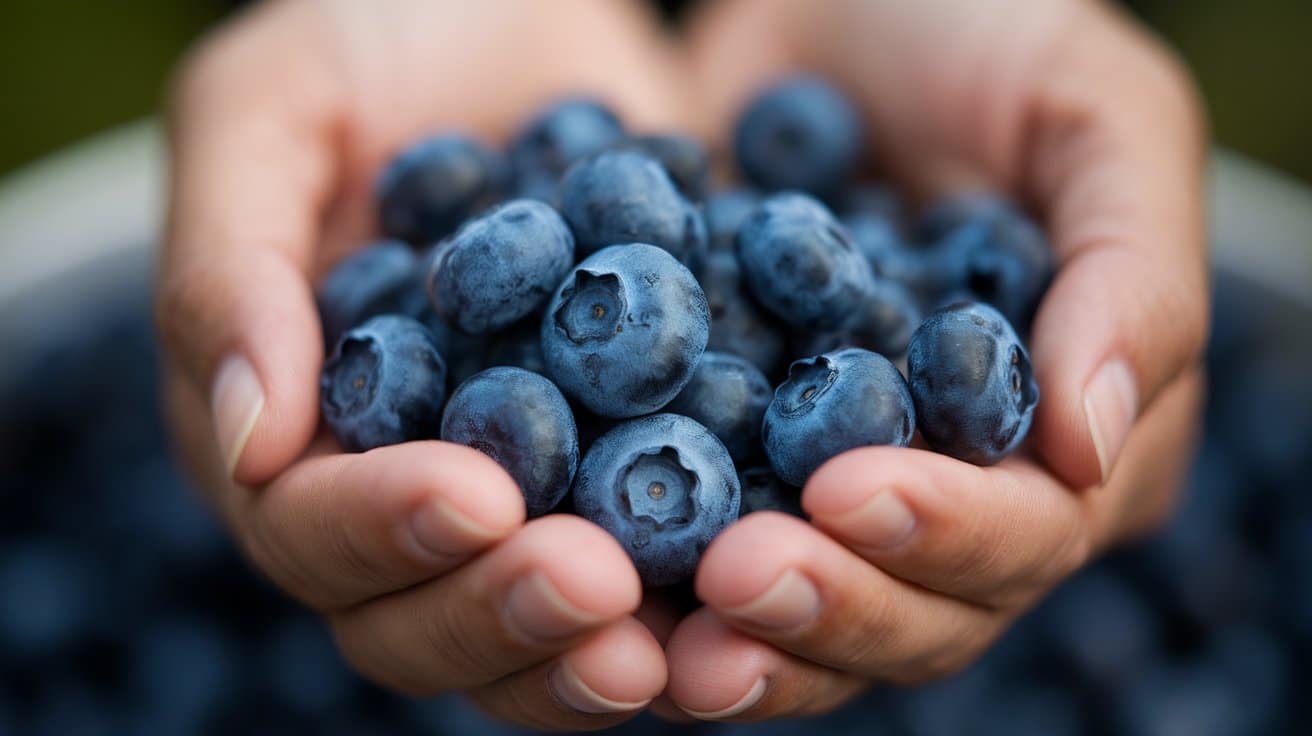
Regular watering, acid-specific feeding, and light seasonal pruning keep a blueberry plant healthy and productive year after year.
Watering Blueberries the Right Way:
Water your blueberries regularly during the growing season, especially from spring through early autumn.
Check moisture levels twice weekly using the “finger test.” If the soil feels dry two inches down, water thoroughly.
Rainwater is best because it’s naturally acidic and helps maintain the low pH your blueberry requires, unlike tap water, which can raise soil pH.
Feeding and Fertilizing:
Start feeding your blueberries in early spring when new growth appears, using ericaceous fertilizer designed for acid-loving plants. Organic fertilizer feeds roots gently.
Feed every four to six weeks from April through August, following package directions carefully to avoid root damage.
Stop feeding in late summer to allow the plant to harden off before winter arrives.
Seasonal Maintenance and Health Checks:
Refresh the top layer of compost each spring by removing old mulch and adding fresh ericaceous compost to replenish nutrients.
Check soil pH twice yearly with a test kit, adding sulfur if readings exceed 5.5.
Light pruning in late winter improves airflow and encourages stronger fruiting wood for the coming season.
Consistent care throughout the growing season rewards you with healthier plants and bigger harvests.
Monitor your blueberries’ needs regularly and adjust watering or feeding based on weather conditions and plant response.
Conclusion
Growing blueberries pays off fast once your plant settles in.
Starting with a single potted plant is a great choice because it allows you to easily manage soil and care, making your gardening experience enjoyable and stress-free.
Beyond just the berries, you’ll enjoy the beauty of spring blossoms and lively fall foliage year after year, bringing a touch of nature’s wonder to your everyday life.
Choose a variety suited to your climate zone, and plant your first bush today.
Frequently Asked Questions
How Long Does It Take for a Blueberry Bush to Produce Fruit?
Most blueberry bushes take two to three years to produce a full crop, and up to eight years to reach mature size and peak yield.
Why Are My Blueberry Leaves Turning Yellow?
Yellow leaves with green veins usually signal iron deficiency caused by soil that isn’t acidic enough. Test your pH and add sulfur if it’s above 5.5.
Can Blueberries Grow in Partial Shade?
Blueberries tolerate light shade but produce far less fruit. Full sun for at least six hours daily gives the sweetest, most abundant berries.
Do You Need to Protect Blueberry Bushes from Birds?
Yes. Birds strip ripening berries fast, so netting or a fruit cage around bushes as the fruit colors is the most reliable protection.