
Swap one for the other in a recipe, and you will notice immediately.
Cilantro brings a bright, almost electric freshness that lifts a plate of tacos or a bowl of pho.
Coriander adds warm, earthy depth to a curry or spice rub, the kind of flavor you miss the moment it is gone.
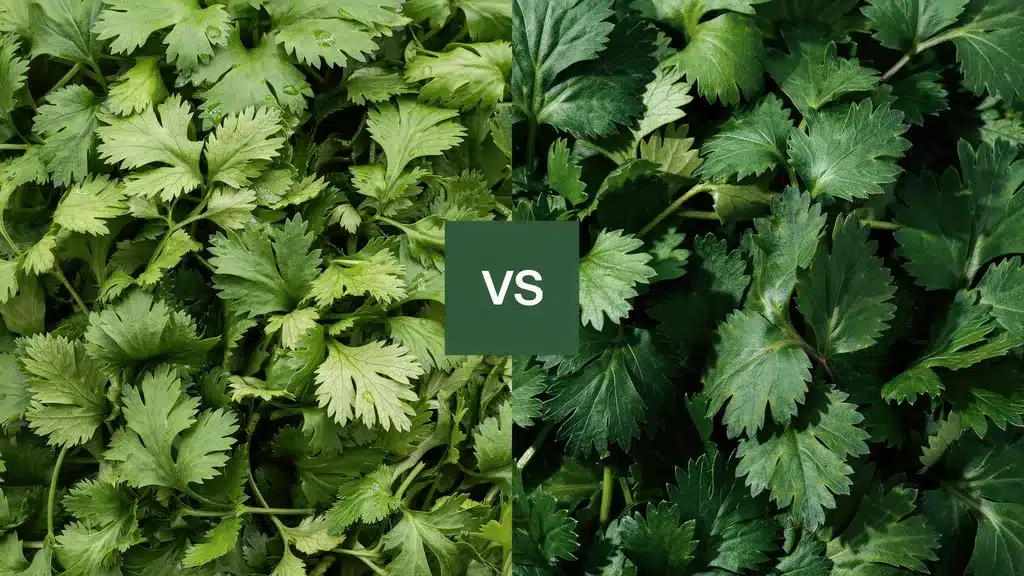
Both come from Coriandrum sativum, an annual herb in the parsley family. In the United States, cilantro means the fresh leaves and stems, while coriander means the dried seeds.
Outside North America, in the UK, Australia, and much of Asia, the whole plant is called coriander, with the seeds specified as “coriander seeds.” If a British recipe calls for “a handful of coriander,” it means the leaves. A teaspoon of coriander means the ground seed.
Anyone who has grown cilantro has seen this play out in real time: the plant produces fresh leaves for weeks, then bolts, flowers, and sets seed, at which point your cilantro has quietly become coriander.
Cilantro vs Coriander at a Glance
| Detail | Cilantro | Coriander |
|---|---|---|
| Part of Plant | Fresh leaves and stems | Dried seeds |
| Appearance | Flat, lacy green leaves on slender stems | Small, round, beige-brown seeds |
| Flavour | Bright, citrusy, peppery, slightly floral | Warm, earthy, nutty, gentle citrus undertone |
| Form Used | Fresh leaves, stems, dried flakes | Whole seeds, ground powder |
| When to Add | At the end or raw as garnish | Early, so heat develops its flavor |
| Best Substitutes | Flat-leaf parsley + lime juice, Thai basil | Cumin, caraway seeds, fennel seeds |
| Storage | Stems in water in fridge, or frozen in oil | An airtight container in a cool, dark pantry |
What Does Cilantro Taste Like?
Most people describe cilantro as bright, citrusy, and slightly peppery, the kind of ingredient that wakes up a dish the moment it hits the plate.
It works best when added raw or stirred in at the very end of cooking, when its volatile oils are still intact.
Not everyone experiences it that way. A gene called OR6A2 affects how olfactory receptors detect aldehyde compounds in the leaves, and people who carry certain variations perceive cilantro as soapy or metallic.
Research suggests aversion rates range from roughly 3 percent among Middle Eastern populations to around 21 percent among East Asian populations.
If cilantro tastes soapy to you: Cooking it briefly breaks down the aldehyde compounds. A squeeze of lime over the dish helps too. Flat-leaf parsley with citrus juice is the most reliable substitute.
What Does Coriander Taste Like?
Where cilantro is sharp and herbaceous, coriander is warm, nutty, and gently citrusy, closer to orange peel than fresh lime.
The shift happens because the volatile compounds in the leaves break down as the plant matures and sets seed, replaced by different aromatic molecules that give coriander its woody, warm character.
Whole seeds hold their flavor far longer than pre-ground coriander. Dry-toasting them in a pan for a minute or two before grinding them fresh makes a noticeable difference in whatever you are cooking.
Which Cuisines Use Which?
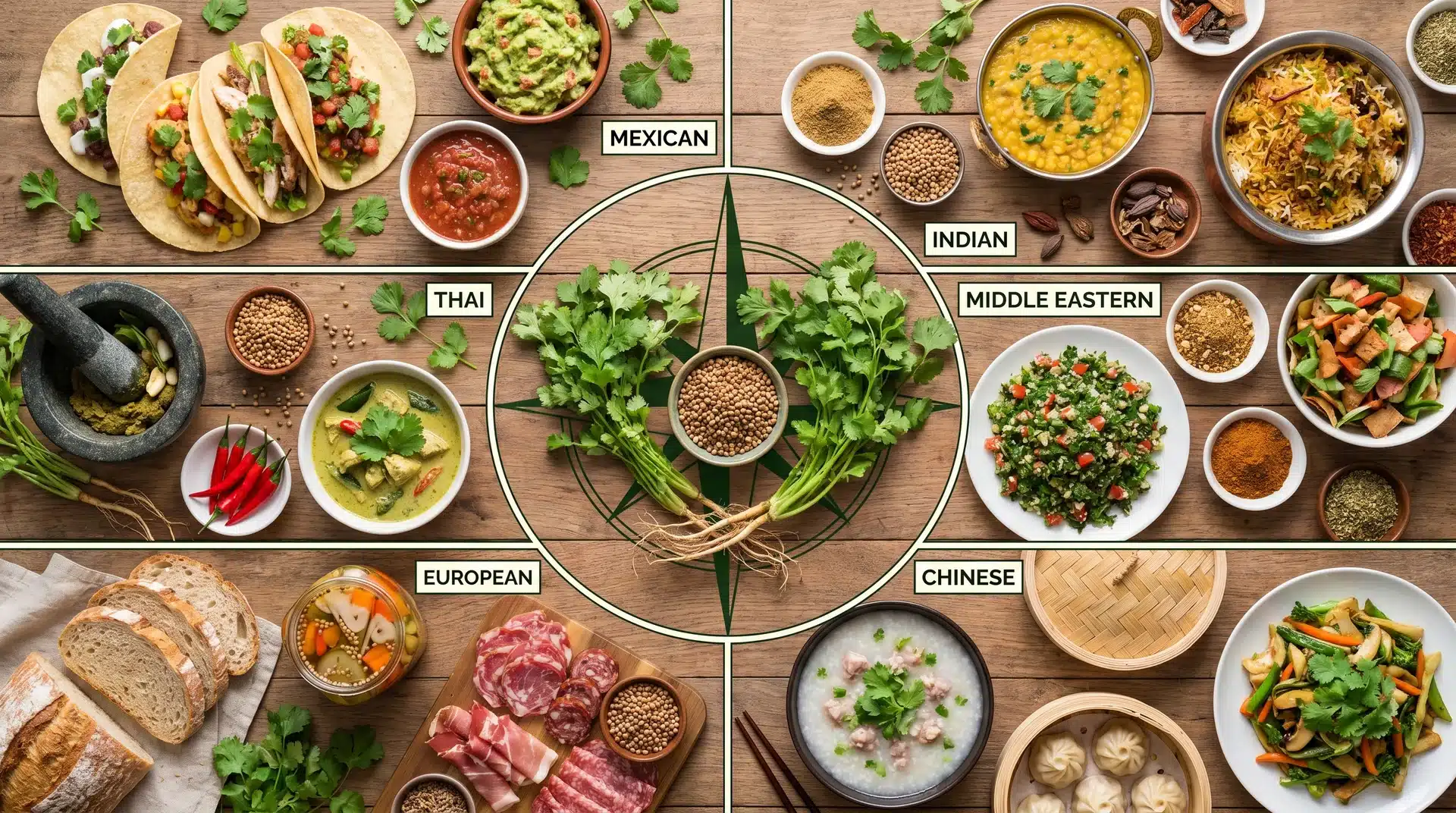
Mexican and Latin American: Almost exclusively fresh cilantro in salsas, guacamole, ceviches, tacos, and rice. Coriander seeds rarely appear.
Indian: Both, constantly. Ground coriander is a base ingredient in virtually every curry powder. Fresh cilantro is the default garnish over dal, biryani, and chutneys.
Thai and Southeast Asian: Both, plus the roots. Coriander seeds go into curry pastes; fresh cilantro garnishes soups and stir-fries; roots get pounded into spice pastes.
Middle Eastern: Cilantro in fresh salads like tabbouleh and fattoush. Coriander seeds in blends like baharat and dukkah.
Mediterranean and European: Leans toward coriander seeds for bread baking, charcuterie, and pickling. Fresh cilantro is less common, with the exception of Portuguese cooking.
Chinese: Fresh cilantro as garnish over congee, dumplings, and stir-fries, which is why it is sometimes called Chinese parsley.
The Bottom Line
Cilantro is bright at the finish. Coriander is warm at the start.
They come from one plant but play entirely different roles, and treating them as interchangeable is where most recipe mistakes happen.
Once you know which one a dish needs and when to add it, both become far more useful than they were before.
Frequently Asked Questions
How do I tell cilantro apart from flat-leaf parsley at the grocery store?
Rub a leaf between your fingers. Cilantro has a strong citrusy aroma; parsley smells grassy and mild. Cilantro leaves are also rounder and softer than parsley’s pointed leaves.
Does the soapy gene affect coriander seeds too, or just the leaves?
Just the leaves. The aldehyde compounds that trigger the soapy taste break down during the seed-drying process, so most people who dislike cilantro can enjoy coriander seeds without issue.
Can I still eat cilantro once the plant starts flowering?
Yes. The leaves become thinner and slightly more bitter after bolting, but they are still edible. The flowers are edible too and make a nice garnish.
Why does my store-bought ground coriander have almost no flavor?
Ground coriander loses its essential oils quickly. If the jar has been open for more than a few months, the flavor will have faded. Buy whole seeds and grind fresh.
Is cilantro powder the same thing as coriander powder?
No. Cilantro powder is made from dried leaves and tastes mildly herbal. Coriander powder is made from ground seeds and has a warm, earthy flavor. Different products, different uses.