
Does your garden get bright morning sun but shade by afternoon? East-facing gardens, I’ve learned, start softly with light that shields plants from harsh afternoon heat.
This pattern works well for spaces that need balance between sun and shade without the intensity of full exposure.
From my experience renovating outdoor spaces, this orientation is easier to manage because it avoids stress from intense rays.
It works best when plant choices match the area’s changing light conditions. With the right setup, it stays productive, attractive, and easy to maintain.
What Is an East-Facing Garden?
It receives direct sunlight during the morning hours and gradually moves into shade or softer light as the day progresses.
This orientation typically provides around four to six hours of gentler sun exposure before the space becomes shadier in the afternoon.
The environment created is balanced and suits many plants, particularly those that prefer moderate light without the intensity of full-day exposure.
Why Does it Work?
Gentler early light reduces the risk of leaf scorch and heat stress compared to intense afternoon sun. Conditions like these allow many shade-tolerant plants to grow and thrive.
Check where the sun first appears in the morning to confirm the garden faces east, or use a compass or smartphone app for accuracy.
I’ve found that this balanced light supports a wide range of gardening projects, from ornamental borders to kitchen crops.
What to Know Before Planting in an East-Facing Garden
Understanding how light moves and how soil behaves in this setting really helps when choosing plants, making the process much more enjoyable and straightforward.
1. Light Patterns and Seasonal Changes
Sunlight arrives in the early part of the day and often lasts for around 4 to 6 hours before shade develops.
In many gardens, nearby fences, houses, or trees shorten or shift this window.
Seasonal changes and their effect on light:
- The angle of the sun and the length of the day change with the seasons, altering how far into the garden light reaches
- Tracking these shifts makes it easier to place plants in the right spots and refine which species thrive through the year
2. Soil, Moisture, and Drainage
Reduced afternoon sun means the soil in these types of gardens dries more slowly than in full-sun positions.
Clay or compacted ground holds water for longer, which can benefit moisture-loving plants but may cause root rot in species that prefer drier conditions.
Ways to improve soil structure:
- Add organic matter such as compost or well-rotted manure to improve structure and drainage
- Use raised beds or mounded borders in persistently damp spots
- Apply mulch to moderate soil temperature and reduce surface evaporation without causing waterlogging
3. Microclimates and Structural Shade
Walls, fences, and buildings create distinct microclimates that alter temperatures, moisture levels, and wind exposure.
Conditions shaped by structures:
- Solid boundaries on the western side increase shade earlier in the afternoon
- North-facing walls stay cooler and damper throughout the year
- Trees with dense canopies shift partially shaded beds into deep shade
- Enclosed corners stay still and humid, raising the risk of poor ventilation
Recognizing these factors helps identify the best spots for sun-loving plants, sheltered seating, or shade-tolerant borders.
Best Plants for an East-Facing Garden
After clarifying the basic conditions, attention can shift to selecting plants that thrive in the conditions of this type of garden.
1. Shade-Tolerant and Partial-Shade Plants
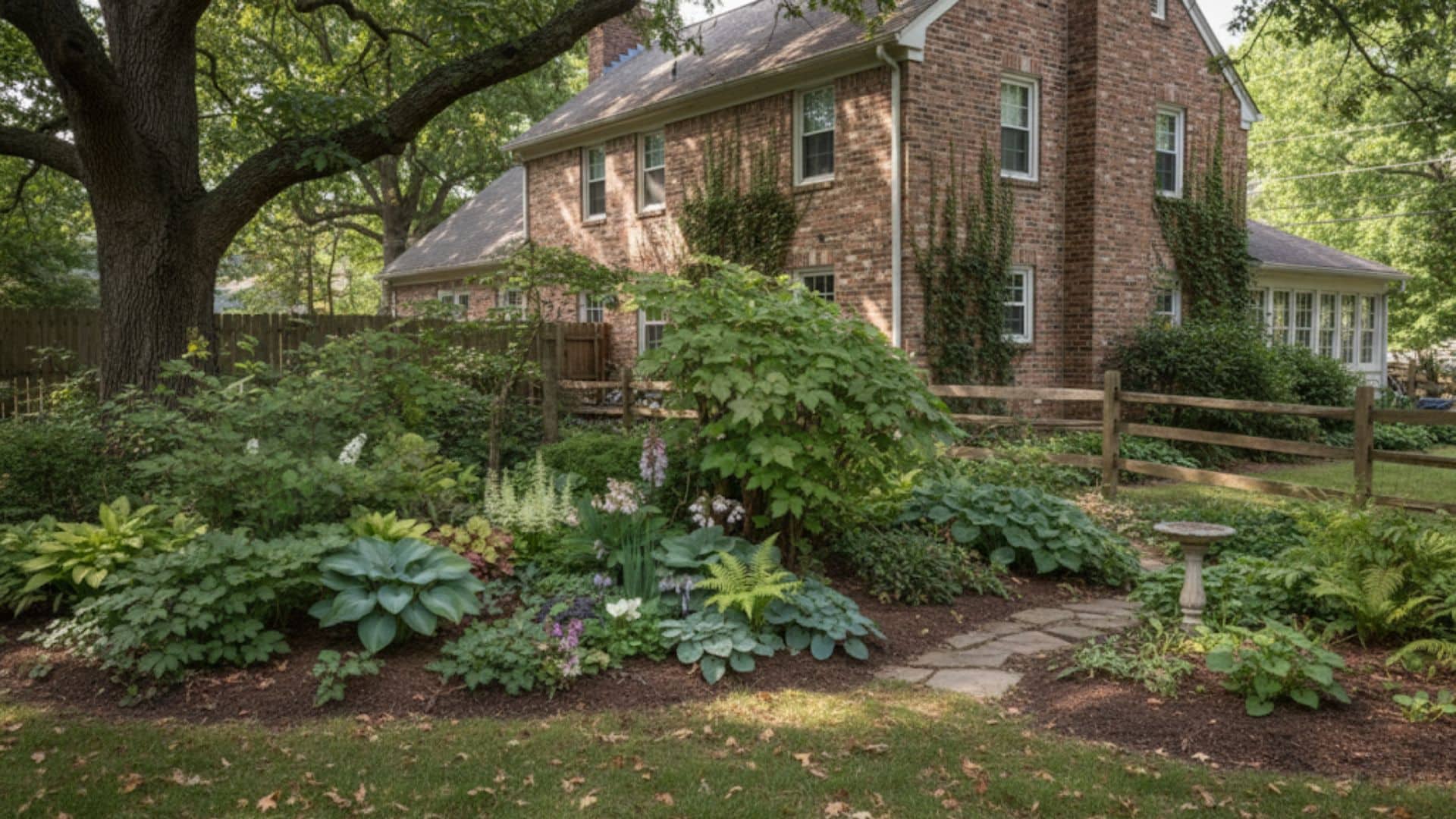
These plants cope well with limited direct light and add texture, color, and structure through the seasons.
- Foliage perennials: Hostas, ferns, heuchera, astilbe
- Flowering shade plants: Hellebores, bleeding heart, foxgloves
- Shrubs for structure: Hydrangeas for classic appeal, plus mahonia and skimmia
- Evergreen groundcovers: Ivy, periwinkle, Japanese spurge
- Woodland bulbs: Snowdrops, bluebells, cyclamen
2. Vegetables and Herbs for Partial Shade
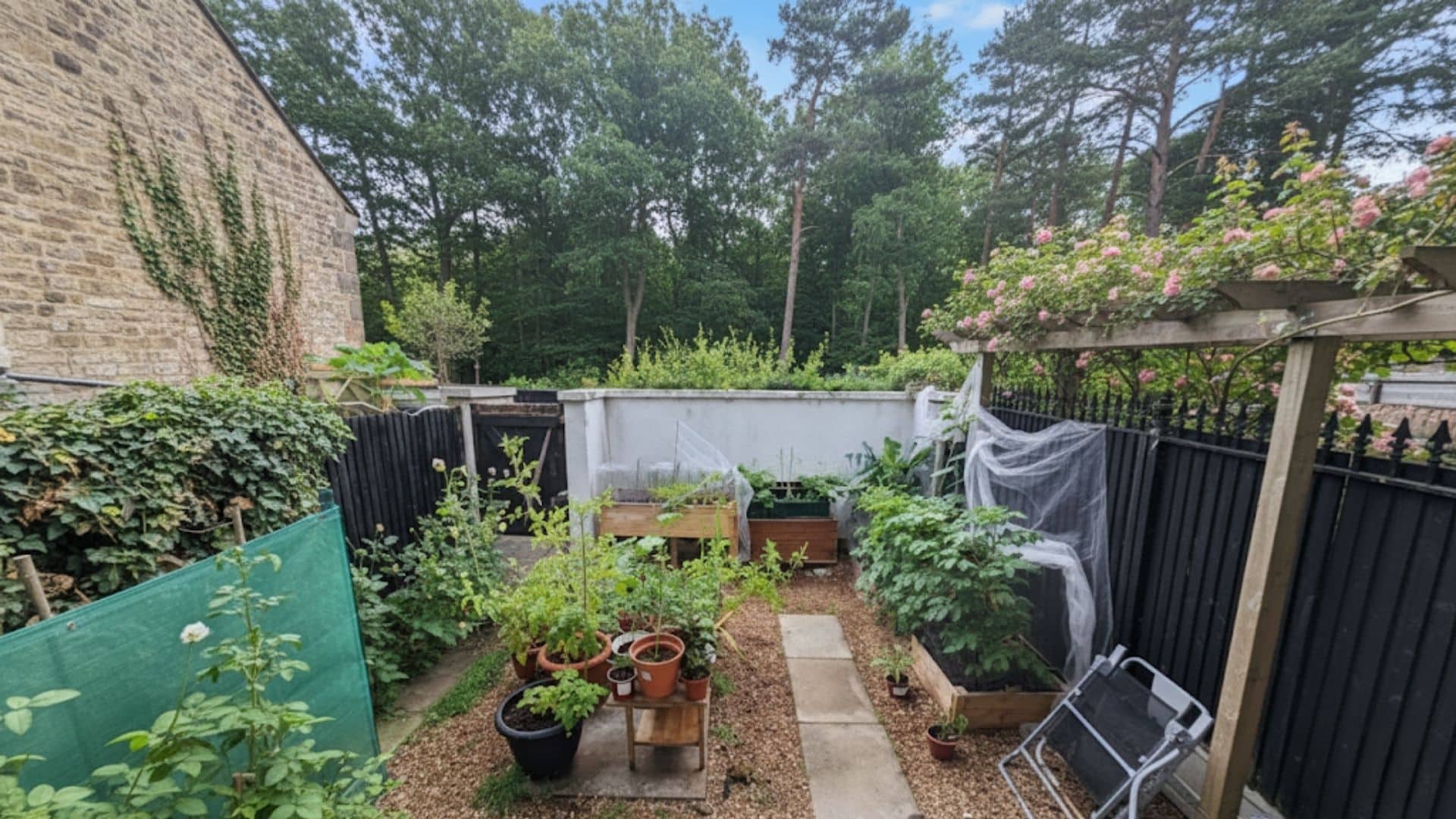
These crops tolerate limited direct sun and stay tender in cooler conditions.
- Leafy greens: Lettuce, spinach, kale, chard, arugula, mustard, beet greens
- Brassicas: Cabbage, broccoli, cauliflower, Brussels sprouts
- Legumes: Peas, snow peas, sugar snaps, broad beans for steady crops, bush beans
- Root crops: Radish, beetroot, turnips, small carrots
- Herbs: Parsley, chives, mint, cilantro, lemon balm, sorrel
- Fruits: Currants, gooseberries, rhubarb, alpine strawberries
Each plant responds differently, so shade levels, soil type, and seasonal shifts will influence how well each one performs in an east-facing spot.
Some vegetables, such as brassicas, beans, and root crops, will grow in partial shade, but yields may be lower than in full sun.
3. Lawns and Groundcovers
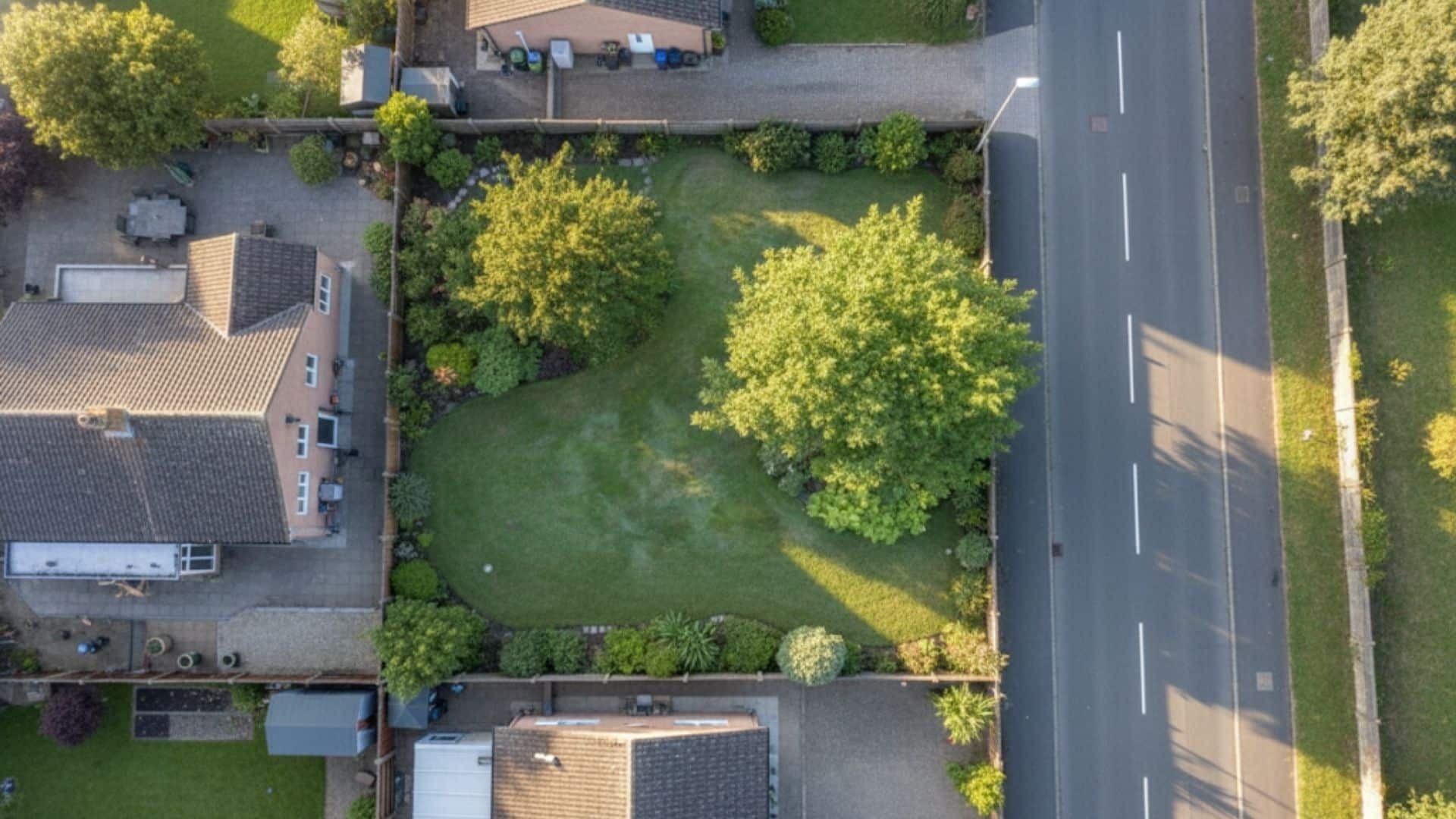
These low-growing plants suppress weeds, hold moisture, and fill gaps where grass struggles to establish.
- For partially shaded lawns: Fine fescue varieties tolerate lower light better than perennial ryegrass, while regular scarification and improved drainage reduce moss buildup
- Groundcover alternatives: Ajuga, Vinca, Pachysandra
Layout and Design for an East-Facing Garden
With plant types chosen, layout and design can make the most of available light while supporting varied lifestyle uses.
1. Arranging Plants by Height
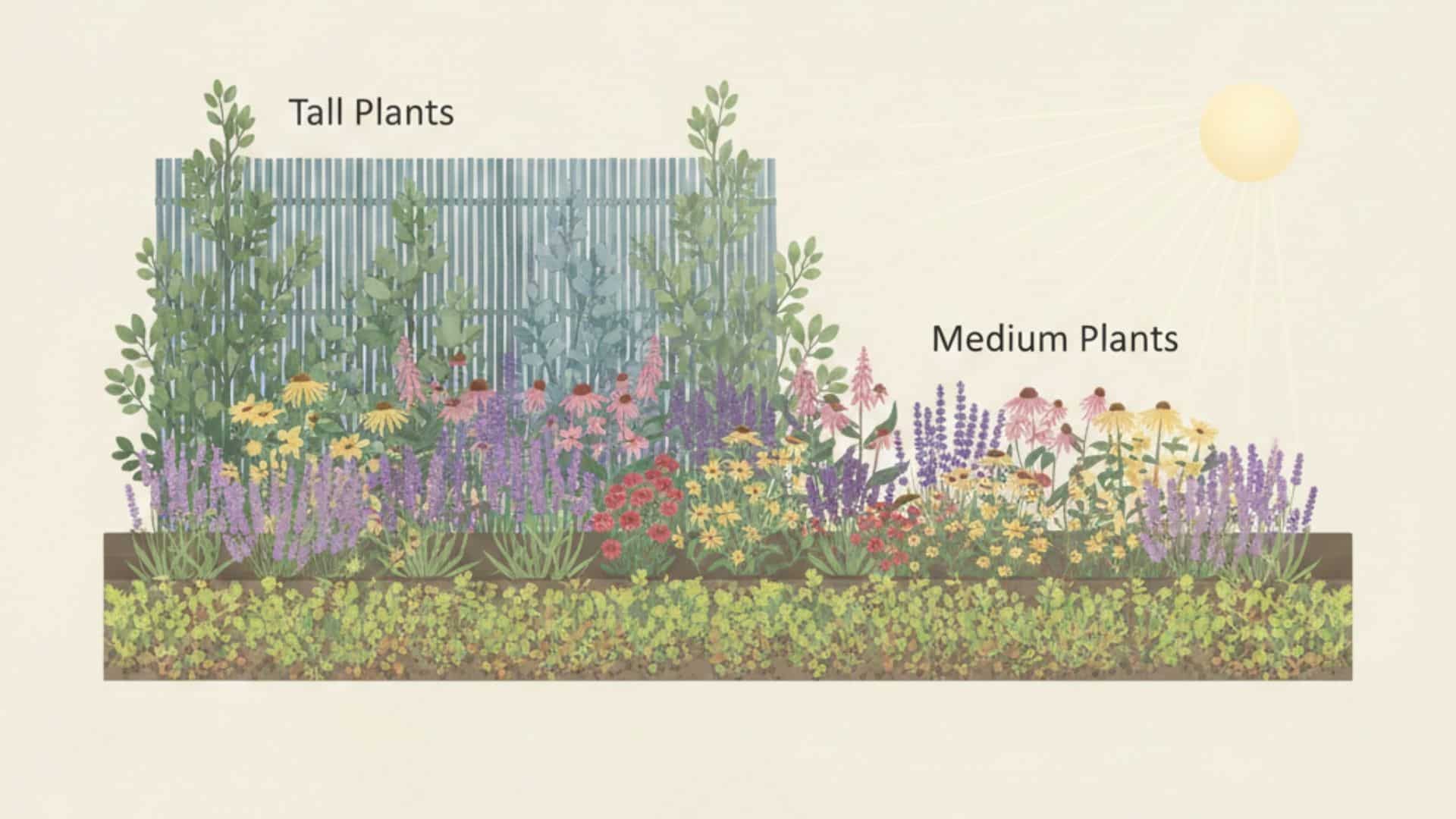
Place taller shrubs or screens where they will not throw heavy shade over lower beds during morning light hours.
Use layered borders with groundcovers at the front and medium plants behind to share light evenly.
2. Flexible Container Positioning
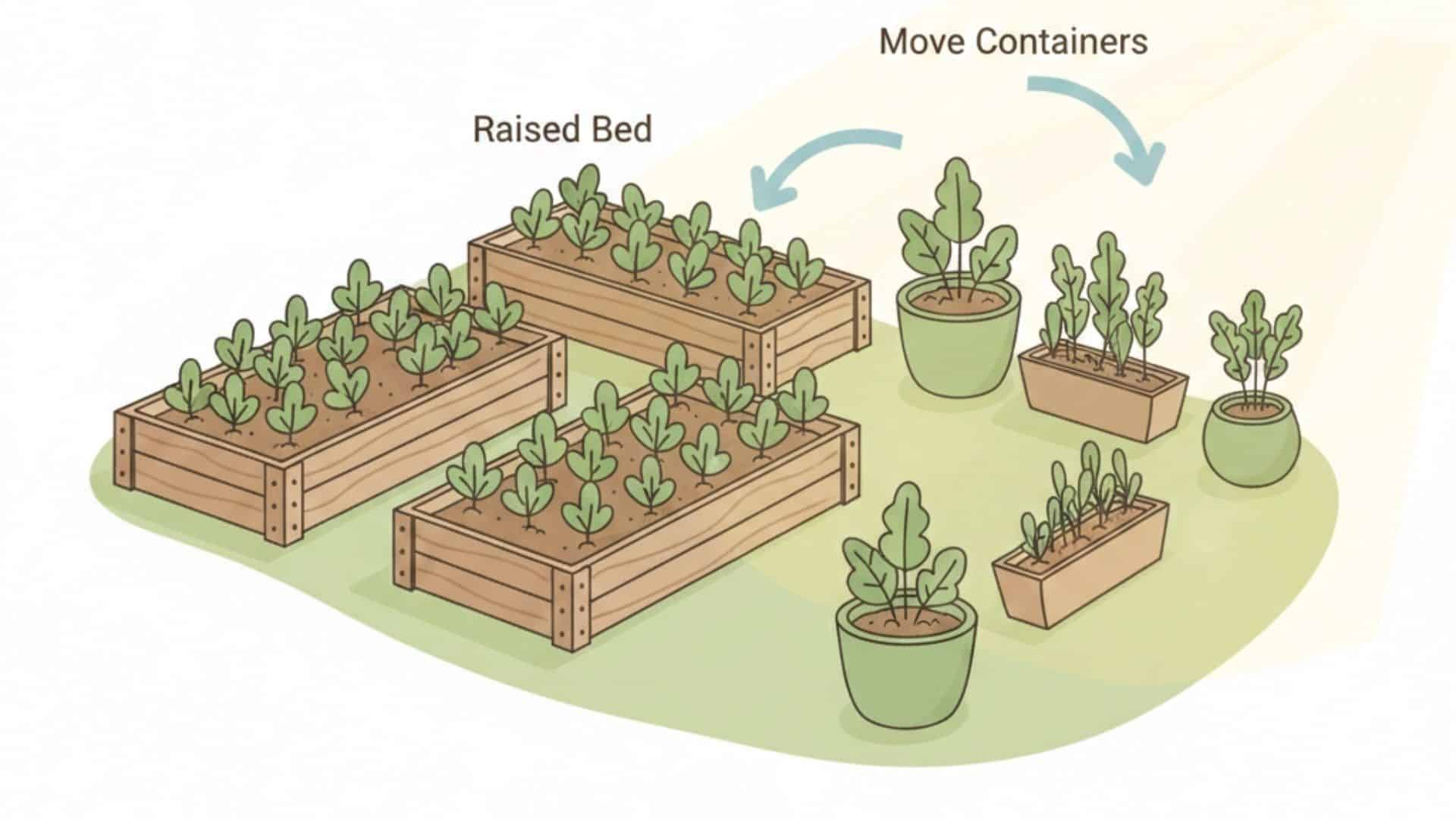
Position containers and raised beds where they can be shifted slightly between seasons as sun angles change.
This flexibility ensures each layer receives adequate light and remains productive.
3. Outdoor Living Spaces
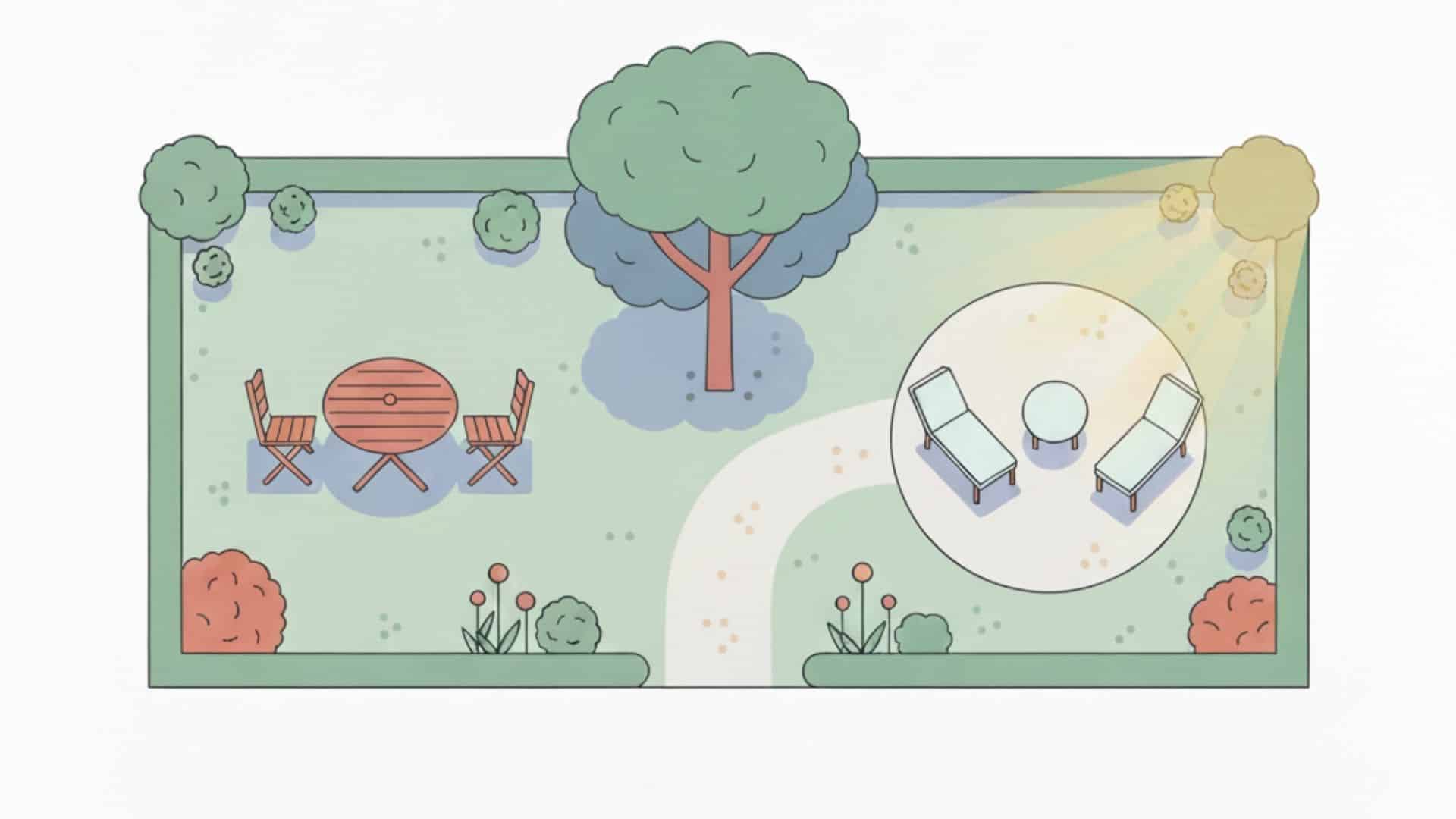
Patios or seating areas positioned to catch early sun provide pleasant breakfast spots.
Dining areas benefit from softer afternoon light during warmer months, avoiding intense heat, and strategic plantings create privacy, making these spaces feel more intimate.
4. Family and Wildlife Areas
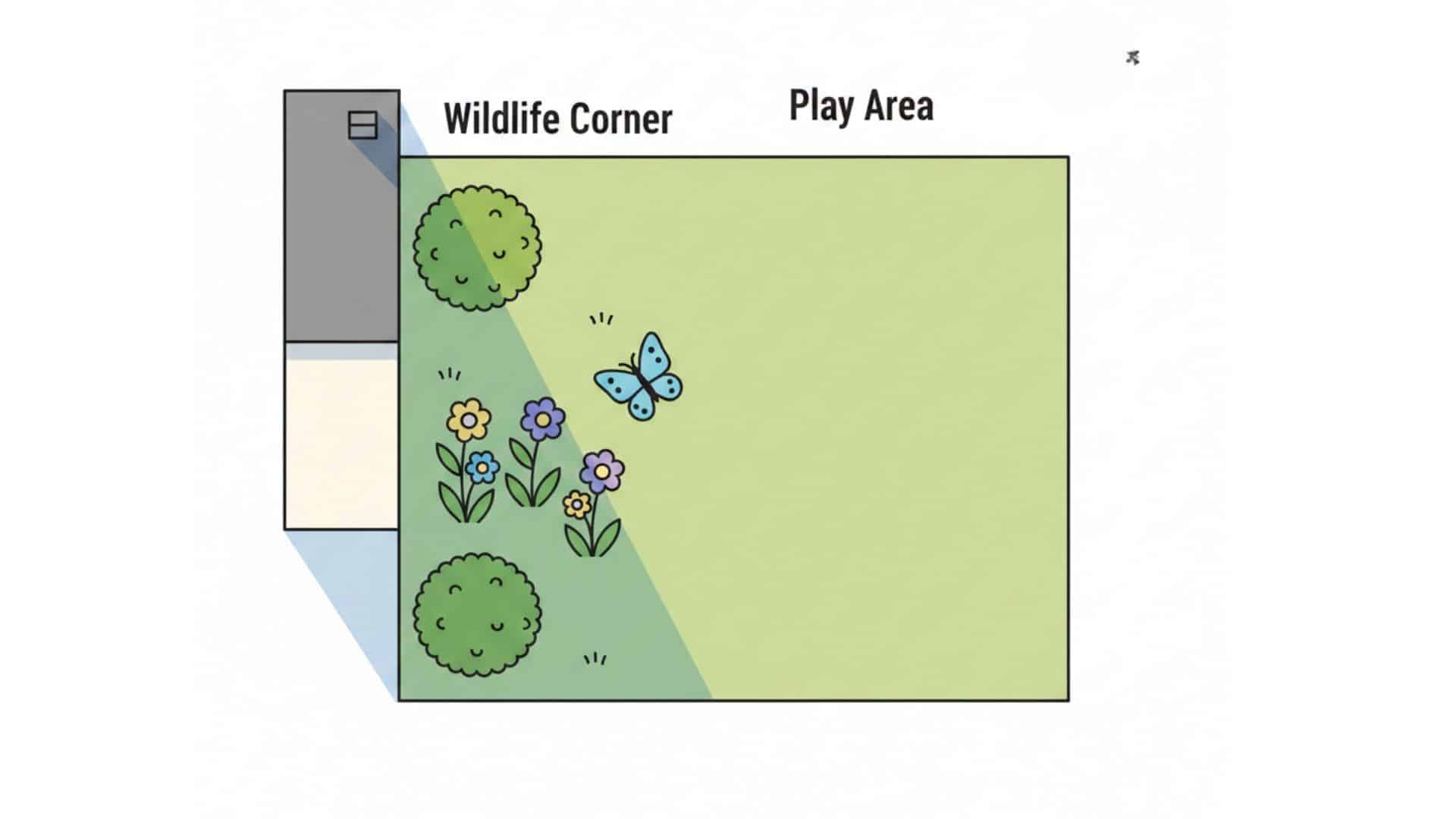
Play areas for children stay cooler in the afternoon, reducing heat exposure during active time.
Wildlife-friendly zones with native shrubs, like those I’ve used in past projects, encourage birds, pollinators, and beneficial insects throughout the seasons.
These design choices align with the natural rhythm of light in an east-facing space.
How to Maintain Your East-Facing Garden
After layout and plant choices are set, regular care keeps this type of garden healthy and consistent.
- Water early so foliage can dry during morning hours.
- Add mulch that suits your planting style to preserve soil moisture, suppress weeds, and buffer roots from temperature swings.
- Check shaded areas for persistent damp, moss, or mildew, and improve drainage or airflow where needed.
- Feed plants with balanced nutrients in spring to support steady, healthy growth.
- Remove dead leaves and spent blooms regularly to reduce fungal risks and keep air moving freely through beds.
- Monitor soil pH and structure over time, adding compost or grit as needed.
Pros and Cons of an East-Facing Garden
The orientation brings a mix of strengths and constraints that influence plant choice and daily use.
| PROS | CONS |
|---|---|
| Gentle morning sun supports healthy plant growth. | Full-sun plants may struggle without long afternoon light. |
| Lower risk of leaf scorch during hot weather. | Damp corners can encourage moss or fungal growth. |
| Comfortable outdoor conditions in warmer months. | Seating areas may feel cool outside of peak summer. |
| Ideal for shade-tolerant flowers, herbs, and greens. | Fruiting vegetables may produce smaller harvests. |
| Tender foliage stays fresher through the season. | Limited evening warmth reduces late-day sun exposure. |
Conclusion
This garden balances morning brightness with cooler afternoons, creating ideal conditions for shade-tolerant plants and comfortable outdoor living.
Understanding how light shifts and soil retains moisture makes plant selection straightforward.
Simple adjustments to the layout and drainage make this orientation a productive space for borders and edibles.
From my experience with budget-friendly makeovers, thoughtful planning delivers a calm garden that thrives year-round.
Frequently Asked Questions
Which Direction Receives the Most Sunlight for Gardening?
South-facing gardens get the most sun throughout the day, making them ideal for sun-loving plants. An east-facing garden receives 4-6 hours of gentler morning light, ideal for shade-tolerant species.
How Do You Maximize Space in an East-Facing Garden?
Layer borders with groundcovers at the front and taller plants behind, position seating to catch morning sun, and use containers you can shift seasonally as light angles change.
What Vegetables Grow Well in East-Facing Gardens?
Leafy greens like lettuce and spinach, brassicas such as cabbage, and herbs including parsley and mint thrive in the partial shade an east-facing garden provides.
Can You Grow Hydrangeas in an East-Facing Garden?
Yes, hydrangeas thrive in these gardens because they get morning sun without intense afternoon heat. The cooler conditions help blooms last longer and prevent leaf scorch during summer.