
If you’re looking into energy efficiency, you’re probably wondering what an EPC rating C monthly cost UK households actually face.
With energy prices still high and targets nudging more homes toward Band C by the early 2030s, it makes sense to ask what that means for your bills.
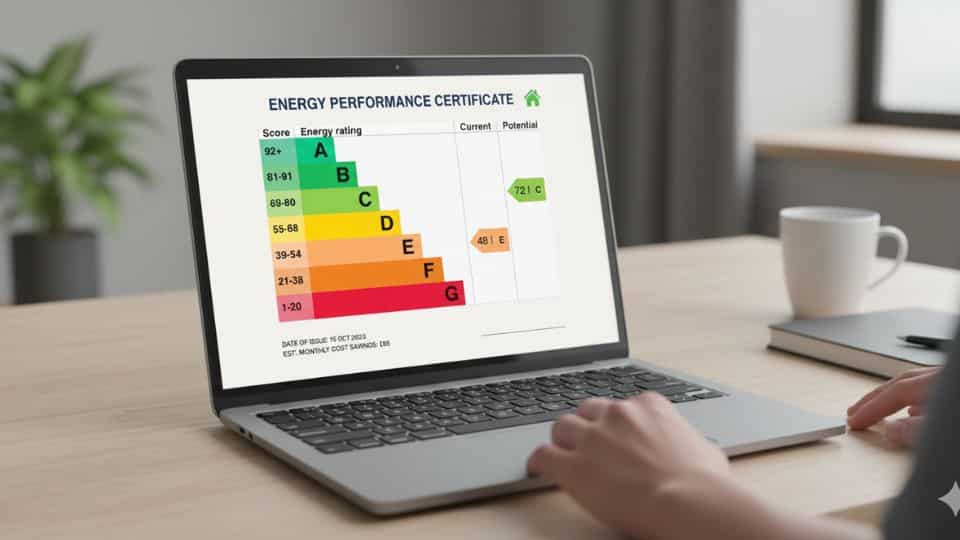
The Energy Performance Certificate system grades homes from A to G. Band C sits in the above-average range, scoring 69-80 SAP points, so running costs should be lower than a similar Band D property.
In this article, I’ll outline typical monthly EPC C costs, compare them with Band D, and explain why aiming for EPC C often hits the sweet spot.
What Does an EPC Rating C Mean for Your Monthly Energy Bills?
An EPC C rating represents properties scoring between 69 and 80 SAP points. These homes feature decent insulation, modern condensing boilers, and double glazing.
Imagine opening your January energy bill without that familiar dread that’s the Band C difference.
The UK government aims to set EPC C as the minimum standard for rental properties by 2035. Band C homes balance upgrade affordability with meaningful energy savings.
They waste significantly less heat than Band D or E properties, translating into lower monthly costs.
While less efficient properties see bills nearly double during cold months, Band C homes experience smaller seasonal spikes.
Your boiler fires up, quickly warms the house, then switches off rather than constantly fighting heat loss.
Now let’s break down the actual monthly costs by property type.
EPC Rating C Monthly Cost UK: Property Type Breakdown
Here’s what you’ll pay monthly in an EPC C home based on 2024-2025 Ofgem price cap levels. These reflect combined gas and electricity for typical consumption.
1-2 Bedroom Flats
Monthly costs: £80-£110. That’s £30-40 below the UK average of £140-150. Flats benefit from shared walls and smaller spaces, reducing heating demand. Summer bills drop to £60-75.
2-3 Bedroom Terraced/Semi-Detached Houses
Monthly range: £110-£150, at or slightly below the national average. Terraced homes benefit from shared walls that reduce heat loss by 20-25% versus detached properties. Winter peaks hit £170-180, while summer costs drop to £80-100.
4+ Bedroom Detached Homes
Monthly costs: £150-£200. Detached homes use 30-40% more energy than terraced properties due to increased external wall area. December-February bills spike to £220-250, with summer months at £100-130.
Band C homes avoid dramatic winter spikes that catch households off guard.
Knowing baseline costs is valuable, but how much will you actually save versus a lower-rated property?
EPC C vs EPC D Savings: The Real Monthly Cost Gap
Here’s where Band C proves its worth. Moving from EPC D to EPC C delivers a 15-25% reduction in heating requirements, translating into noticeable monthly savings.
For a typical three-bedroom house, upgrading saves £15-£30 per month in winter, or £180-£360 annually.
That £25 monthly saving?
It’s a family meal out or simply peace of mind. The savings stem from topped-up loft insulation, cavity wall insulation, and modern condensing boilers extracting more heat from every gas unit.
Electric-heated properties see bigger differences. Because electricity costs more per unit, the same percentage improvement delivers £25- £40 in monthly savings for electric heating systems.
For landlords, these savings translate into property appeal and tenant retention, reducing void periods. For homeowners, it’s straightforward affordability.
Several factors influence what you’ll pay monthly, even within Band C properties.
How Property Features Affect Your EPC C Monthly Costs
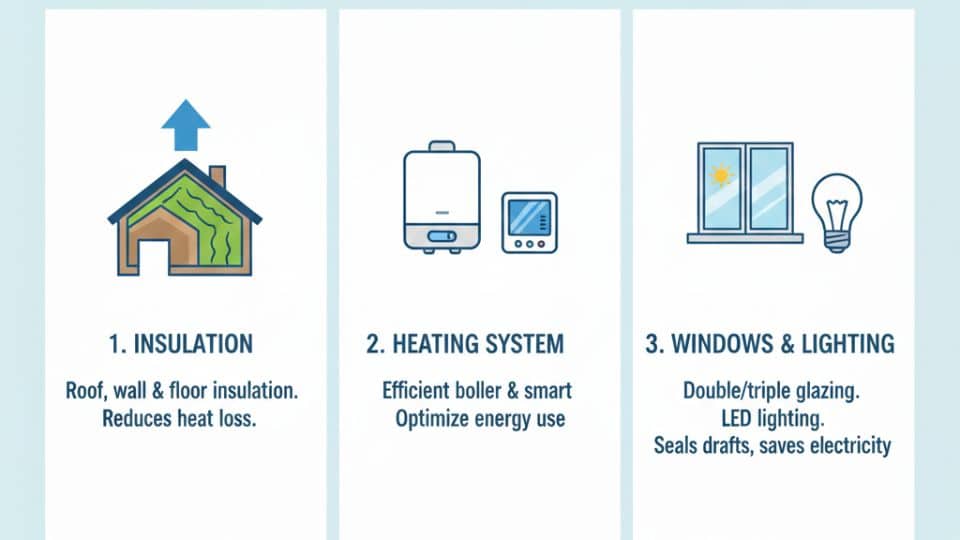
Even within Band C, costs vary. Here’s what moves the needle on your energy bills.
1. Property Type Makes the Biggest Difference
Flats cost 40-50% less than detached houses. Mid-terraced homes lose heat from just two sides instead of four.
- Flats: 40-50% less due to shared walls
- Mid-terraced homes: Efficiency champions
- Semi-detached/corner terraces: In between
- Detached houses: Highest costs
2. Your Heating System Matters
Modern condensing boilers run at 90-92% efficiency, compared with 75-80% for older systems.
- Modern condensing boilers: 90-92% efficiency
- Older systems: 75-80% efficiency
- Air-source heat pumps: 3-4 heat units per electricity unit
- Smart thermostats: 10-15% additional savings
3. How You Live Changes Everything
Work from home all day? Bills could be 30% higher than neighbors’ out of nine-to-five.
- All-day heating: 30% more than evenings only
- Hot water: Four daily showers versus one change costs drastically
- Thermostat at 19°C versus 22°C: Saves £15-20 monthly
- More occupants: Higher consumption
4. Location Isn’t Just About House Prices
Scotland and Northern England see bills 10-15% higher than the South.
- Northern regions: 10-15% higher bills
- Aberdeen: £160-180 monthly
- Brighton: £130-150 monthly
- Climate: Colder means more heating
Not at Band C yet? Getting there might be easier than you think.
Practical Steps to Achieve EPC C and Lower Your Monthly Costs
If your property is Band D or E, reaching EPC C is achievable. Most properties need just two to three targeted improvements, not a complete overhaul.
- Entry-level upgrades (£100-500) deliver immediate impact.
- LED lighting costs under £100 and cuts electricity by 80%. Draught-proofing is DIY-able for under £100.
- Smart thermostats at £200-300 pay for themselves within 18-24 months. Government ECO4 grants may cover eligible households’ costs.
- Mid-range improvements (£500-1,500) offer strong returns.
- Loft insulation to 270mm costs £300-500, saving £100-200 annually.
- Cavity wall insulation costs £500-1,500, saving £150-300 per year and lowering bills immediately.
- High-impact upgrades (£2,000-8,000) often guarantee Band C.
- Modern condensing boilers cost £2,000-3,500 but improve ratings by 10-20 points while cutting heating bills 20-30%.
- This single upgrade often pushes properties from Band D to Band C.
- Double glazing at £3,000-8,000 eliminates significant heat loss while changing comfort.
- Most homeowners report comfort improvements justified the investment before seeing bill reductions. Each improvement compounds better insulation, which means your boiler runs less frequently.
With these benefits and pathways, it’s clear why EPC C has become more than just a rating.
Why EPC C Is the Sweet Spot for the UK Property Market
EPC C has become the expected standard for compelling reasons affecting buyers, landlords, and renters.
For Buyers
Band C properties represent proven value with tangible financial benefits.
- Band C homes sell for 3-5% more than B and D properties
- That’s £7,500-12,500 extra on a £250,000 home
- Lower monthly running costs improve mortgage affordability
- More budget available for other expenses
For Landlords
Strong incentives make upgrading to Band C a wise business decision.
- Regulations are tightening toward the B and C minimum by 2035
- Properties not meeting standards become legally unrentable
- Band C properties command stronger rental demand
- Justify market rents more easily and deliver longer tenancies
- Lower void periods save thousands in lost income
For Renters
Direct monthly savings make Band C properties more affordable overall.
- Lower energy costs mean £15-40 more monthly for other expenses
- Band C, with £50 higher rent, often costs less than Band D overall
- Band D with cheaper rent but £80-100 higher winter bills costs more
The Economics Work at Every Level
The investment case for EPC C is compelling across all property stakeholders.
- Upgrades cost £3,000-6,000 with annual savings of £200-400
- Pay for themselves within ten years while increasing property value
- With 2035 standards approaching, delaying means paying more for longer
Conclusion
For EPC rating C, typical monthly energy costs for UK households range from £80 to £200, depending on property size and type, and are usually at or just below the national average.
The benefit becomes clearer when you compare with Band D homes, where monthly savings of roughly £15 to £40 add up to £180 to £360 each year.
Targeted upgrades such as insulation, smart heating controls, and efficient boilers can elevate a property to Band C while immediately improving comfort.
As standards tighten and expectations rise, EPC C is fast becoming the new baseline for balancing running costs with long-term value. Booking an EPC assessment shows where you stand.
Frequently Asked Questions
Do You Need an EPC C to Rent?
Not yet. You legally need at least an E in most cases, but aiming for a C future-proofs your rental and makes it easier to attract tenants.
How Do I Get My EPC Certificate?
Book an accredited energy assessor; they survey the property, then your EPC is issued and logged on the register for 10 years.
How Quickly Can I Get an EPC?
Often within a few days. Some assessors offer next-day slots and send the certificate shortly after the visit.