
When you start looking at properties, agents throw around terms like freehold, leasehold, and share of freehold as though everyone already knows what they mean.
So let’s settle this clearly: freehold means you own the property and the land it sits on, with no expiry date on that ownership. No landlord above you. No ground rent. No lease ticking down. The property is yours, outright.
That is the short version. But the full picture of what types exist, what owning a share of freehold actually means for you day-to-day, and where people get caught out deserves more than a dictionary definition.
That is what this guide is for.
Where the Word “Freehold” Actually Comes From
The term is older than most people realize. It traces back to feudal land law, where land was always held by someone for someone, a lord, the crown, or the church.
A freehold estate was one where the holder was “free from hold,” free from the obligations and conditions that governed most land tenure at the time.
Today, as defined by Cornell Law School’s Legal Information Institute, freehold refers to a property interest held for an unspecified and potentially infinite period.
The owner has title, not just the right to use the land, but actual legal ownership of it.
The Three Main Types of Freehold Estate
Not every type of estate works the same way. There are three distinct forms, and understanding which one applies to a property you are buying matters more than most buyers realize.
1. Fee Simple Absolute
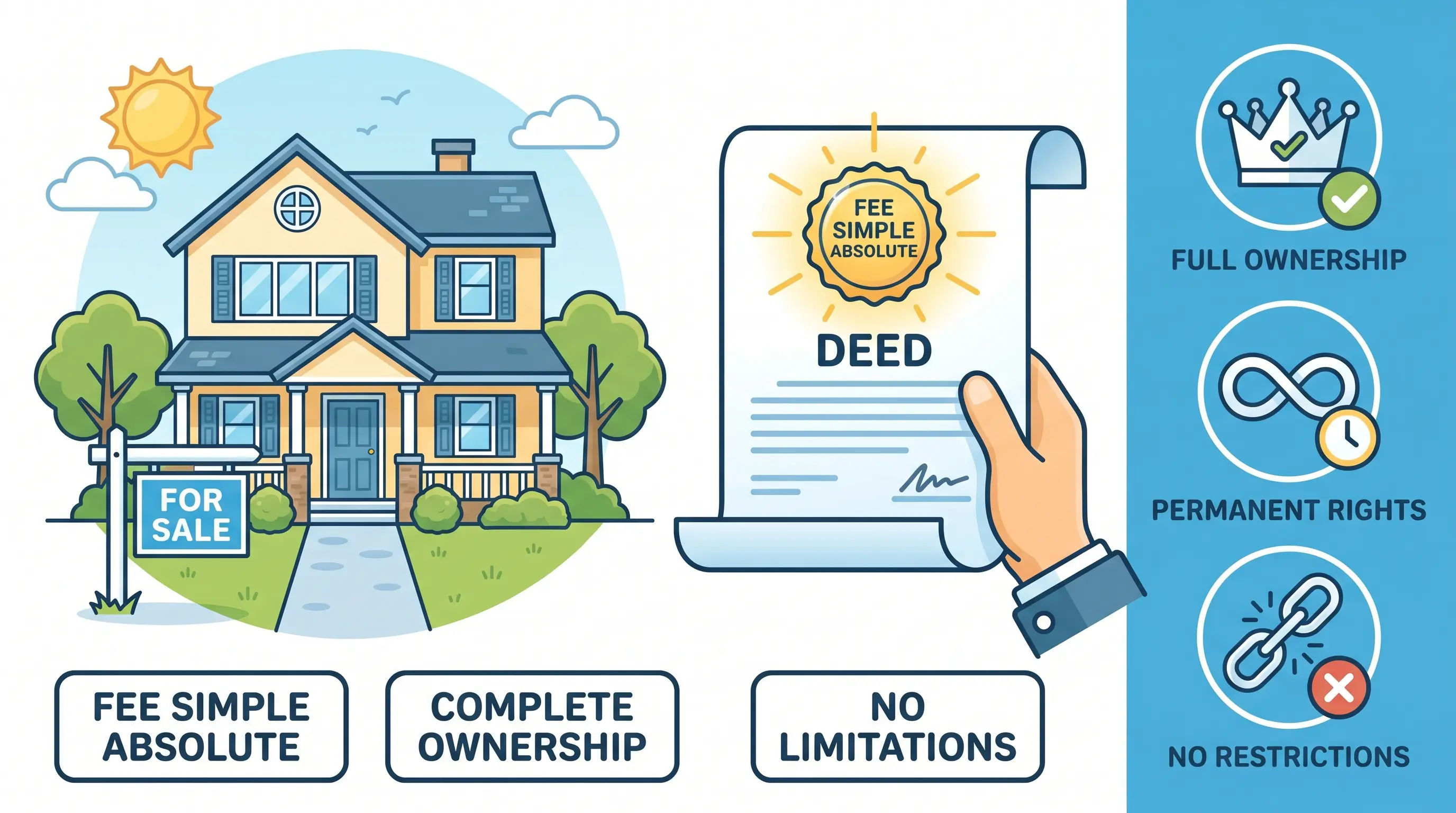
This is the most common form, and the one most residential buyers hold when they purchase a house. A fee simple absolute grants the owner full, permanent, and unconditional rights over the land and property.
You can sell it, rent it out, renovate it, pass it to your children, or leave it to a charity in your will with no conditions attached.
There are no time limits, no third-party approvals needed, and no restrictions beyond local planning law and any active easements on the title.
2. Fee Simple Defeasible
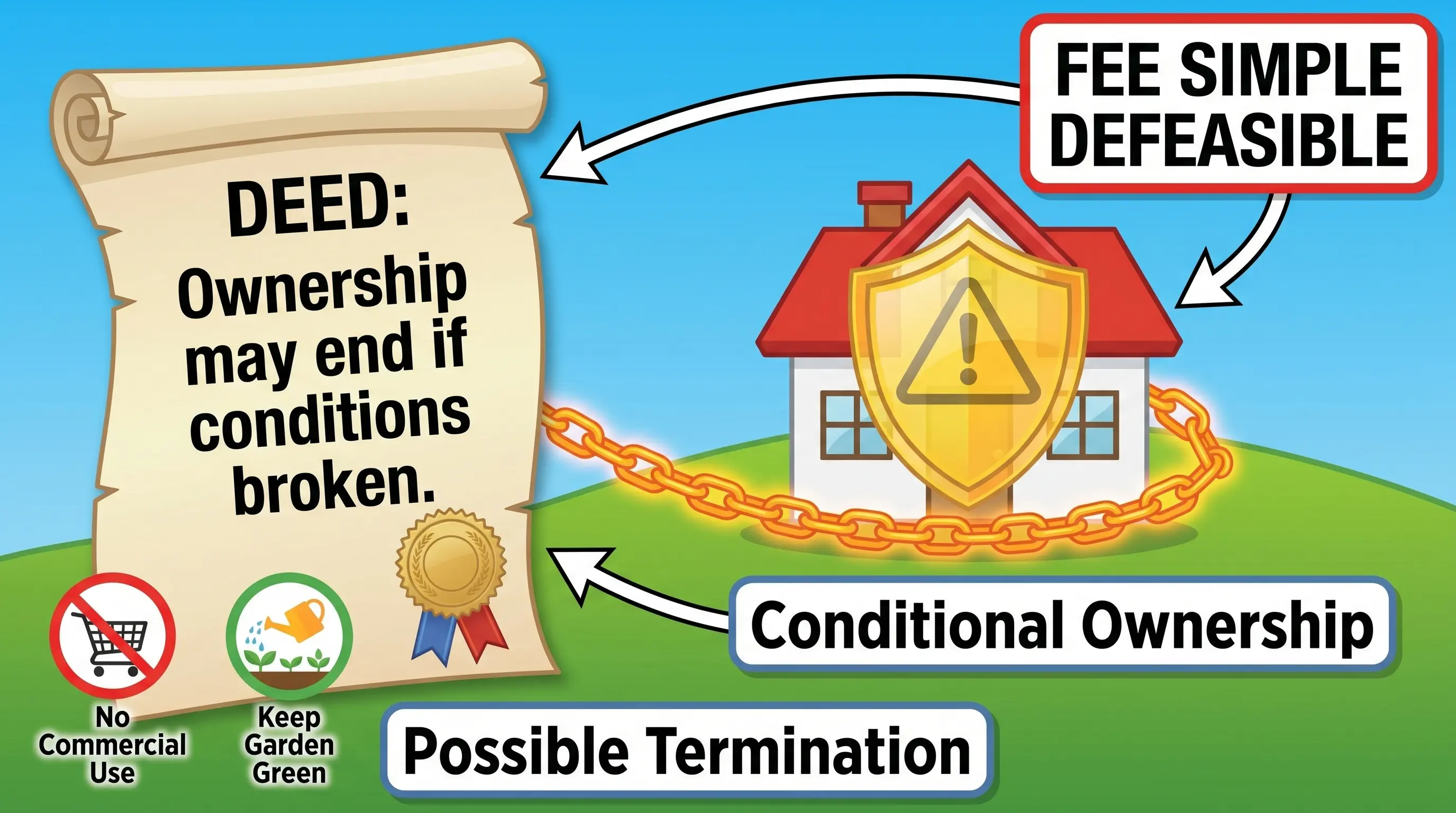
This form of estate comes with conditions. The owner holds the title unless and until a specified condition is broken.
A common real-world example: a plot of land sold on the condition it remains in agricultural use. If the new owner converts it to a housing development, the title can legally revert to the original seller or a named third party.
Before buying any property, your solicitor should check the title register for these conditions. They are not always obvious from the listing.
3. Life Estate
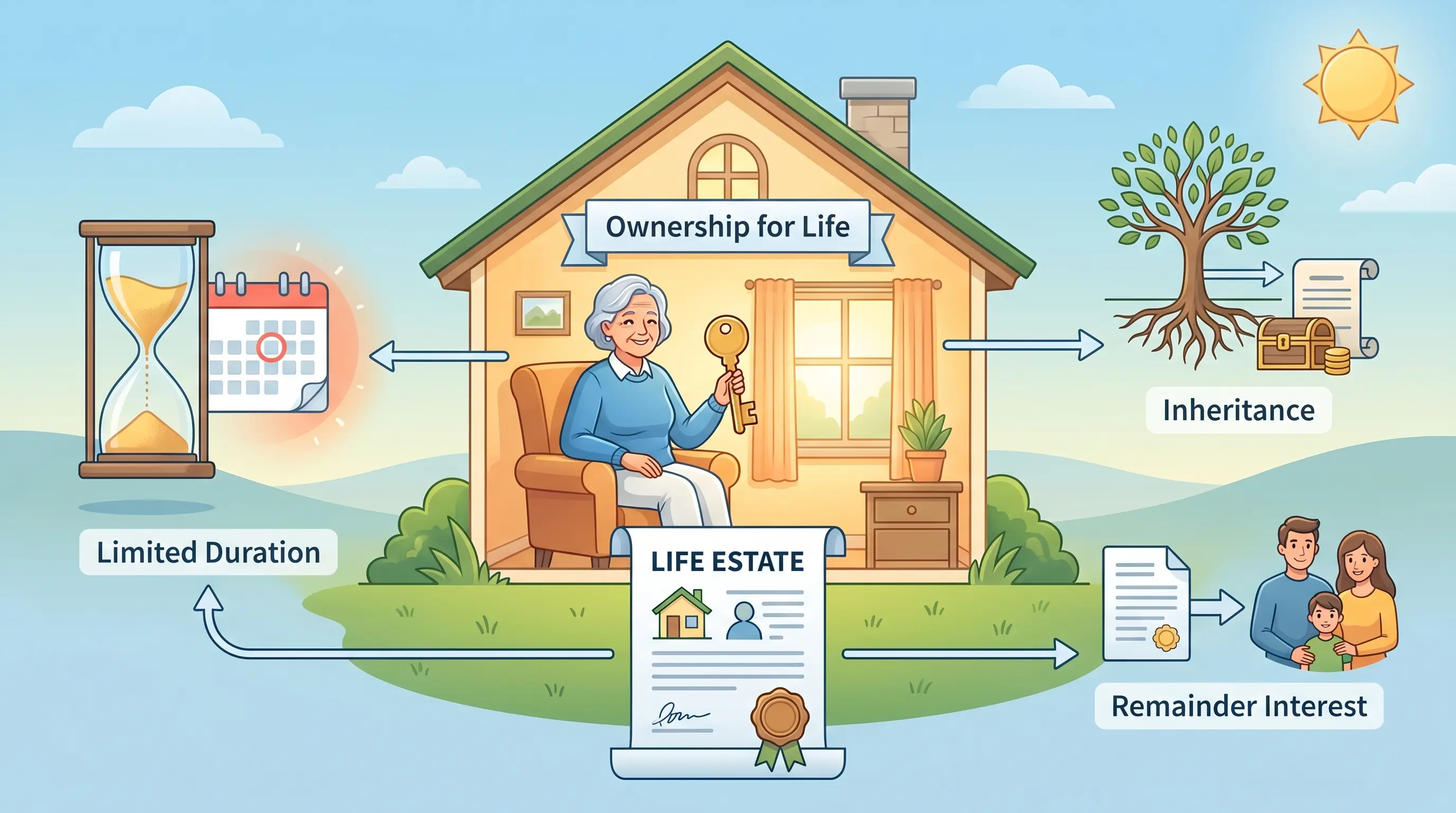
A life estate grants ownership only for the duration of the holder’s life. Once they die, the property passes to a named “remainderman,” a person specified in the original deed. It does not form part of the deceased’s estate and bypasses probate.
Life estates are used most often in estate planning. A parent might hold a life estate in their home, with a child named as the remainderman, ensuring the property transfers directly without going through the courts.
What “Share of Freehold” Means
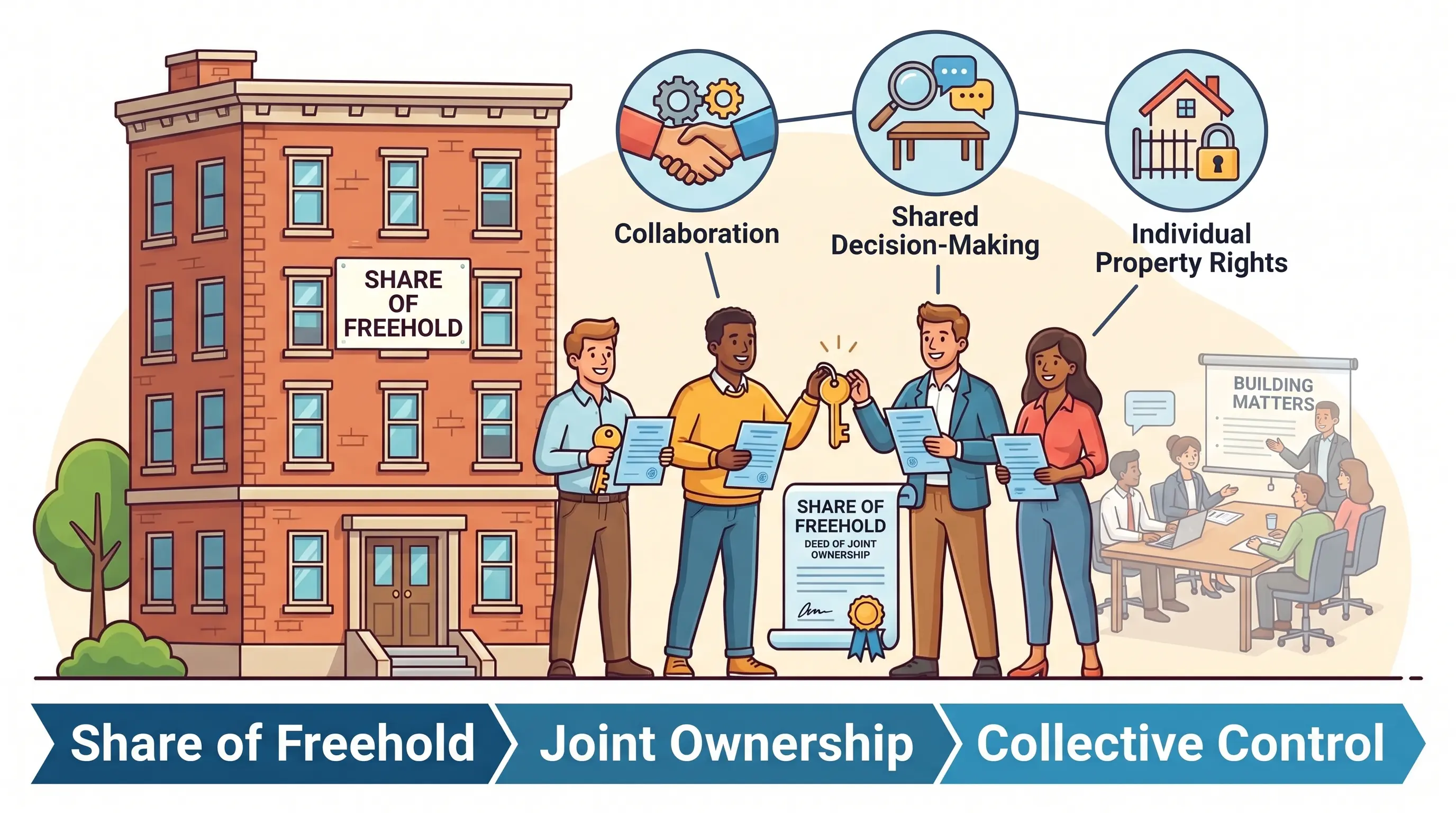
When you buy a flat, the building is usually owned by a single landlord, and you only hold a leasehold, which gives you the right to occupy your unit but not the building or the land.
A share of freehold changes this: the flat owners collectively own the building, typically through a company, so each owner holds both their leasehold and a share in the freehold.
What this means practically:
- There is no external landlord charging ground rent or service fees at their discretion
- The leaseholders collectively control building maintenance, insurance, and decisions about communal areas
- Extending a lease becomes significantly cheaper because you are negotiating with yourself (or your fellow shareholders)
- The building’s management is directly accountable to the people who live in it
It is not a perfect arrangement. Disputes between co-owners can be time-consuming, and decision-making requires consensus among shareholders.
If one owner is unresponsive or obstructive, getting agreement on repairs or alterations can be slow. For buyers who value independence over collaboration, a full freehold house may still be preferable.
That said, for flat buyers in particular, a share of freehold offers a level of security and control that standard leasehold does not.
Freehold vs. Leasehold: The Key Differences
| Detail | Freehold | Leasehold |
|---|---|---|
| Land ownership | Yes, the owner holds the land | No land stays with the landlord |
| Time limit | None | Fixed term (40 to 999 years) |
| Ground rent | Not applicable | Often payable to the landlord |
| Service charges | Owner decides | Set by the landlord or management company |
| Alterations | Generally permitted | Usually requires landlord’s consent |
| Mortgage terms | Favorable lenders prefer it | More complex: short leases can block financing |
| Maintenance responsibility | Fully on the owner | Shared or managed by the landlord |
Most houses in the UK are sold freehold. Most flats are leasehold, though a share of freehold is increasingly common, especially in converted buildings. In the United States, fee simple absolute dominates residential ownership.
The Legal Details Buyers Often Miss
Owning the land and building outright does not mean the property comes without restrictions. Two things can limit how you use it regardless of ownership type:
- Covenants: Rules written into the property’s title deed.
- Restrictive covenants: Prohibit certain actions, such as running a business from your home.
- Positive covenants require you to do something, such as maintaining a shared wall or replacing a boundary fence on schedule.
- Easements: Give other people legal rights to use part of your land, like a neighbor’s right of way or access for utility companies.
- Title registration: These covenants and easements stay in effect even if the property is sold.
When you instruct a solicitor on a purchase, a title search should flag both. Do not sign contracts until you have read and understood them.
Advantages and Drawbacks of Freehold Property
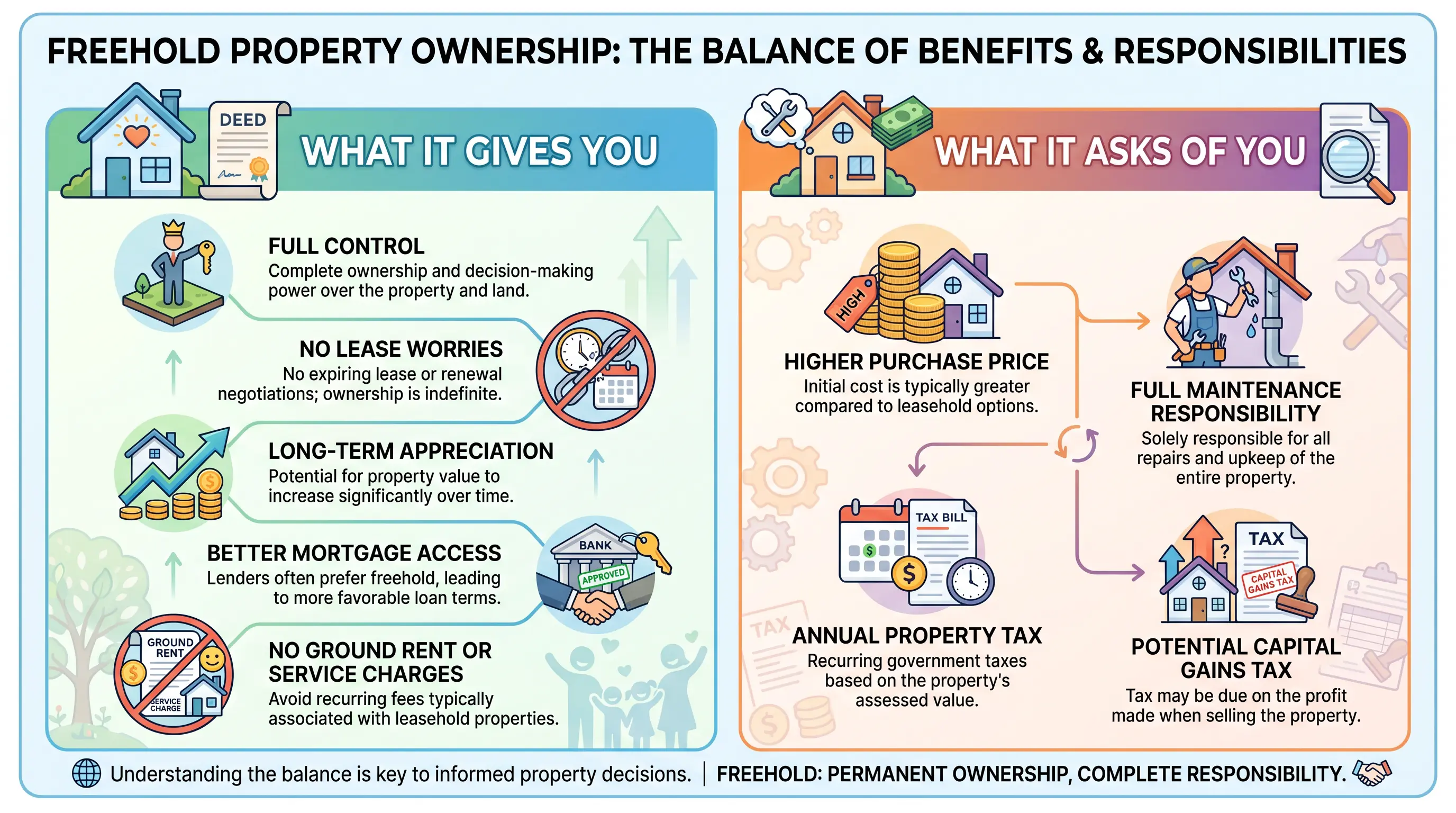
Advantages: Freehold ownership gives you full control over your property without needing permission for daily decisions.
There’s no lease to manage, and land values tend to appreciate over time. It also provides better access to mortgage financing, as lenders consider it lower risk, and you won’t pay ground rent or service charges to an external party.
Responsibilities: Freehold comes with a higher purchase price, especially in urban areas, and full responsibility for maintenance, repairs, and structural issues.
You are also responsible for annual property tax and may face capital gains tax when selling, depending on whether it is your primary residence.
Financing a Freehold Property
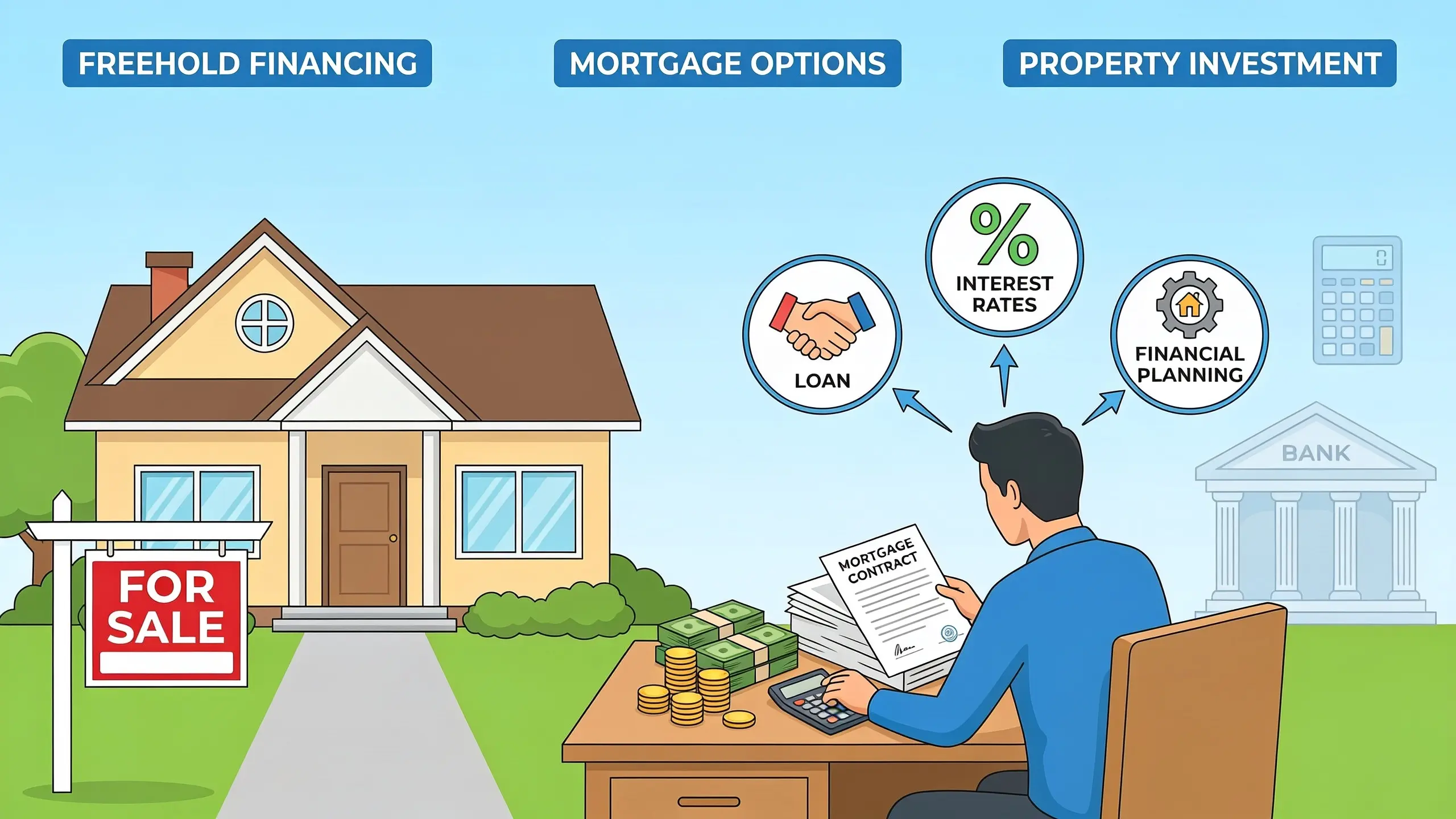
Banks and mortgage lenders treat this type of property as a lower-risk asset than a leasehold. There is no lease expiry to worry about, and the title is clear. As a result, loan-to-value ratios can reach 80–90%, and interest rates are generally more competitive.
For investors, this matters because it affects both the cost of borrowing and the flexibility to remortgage as the asset appreciates.
Tax treatment varies by country and personal circumstances. In the UK, a property held as a primary residence is exempt from capital gains tax on sale.
Investment properties are not. Deductions may be available for mortgage interest and maintenance costs, depending on whether the property is let. A tax adviser is worth consulting before purchase, not after.
How to Confirm a Property Is Freehold
Do not take an estate agent’s word for it. You can verify ownership status directly:
- UK: Search the property on the HM Land Registry website. The title register will state whether the property is freehold or leasehold.
- US: Check the county recorder or assessor’s office in the jurisdiction where the property sits.
If you are buying a flat with a share of freehold, ask your solicitor to confirm the structure of the freehold company, how many shares exist, who holds them, and how decisions are made. The articles of association of the company matter as much as the property deed itself.
A Final Word
Freehold is not just a legal category. It determines how much control you have over your property, what you will spend over time, how easily you can sell, and what you can pass on.
For most house buyers, fee simple absolute remains the gold standard: full ownership, no conditions, no countdown.
For flat buyers, a share of freehold is worth seeking out. Either way, get a solicitor to check the title thoroughly before you commit.
The differences between a clean title and one carrying historic covenants or disputed easements can be significant, and they will not always appear in the listing.
Frequently Asked Questions (FAQs)
What is an Example of a Freehold Property?
An example of a freehold property is a detached house where the owner owns both the building and the land it stands on.
What is the 3-3-3 Rule in Real Estate?
The 3-3-3 rule in real estate is a guideline for leasehold properties: check lease or ground rent reviews every 3 months, plan major maintenance every 3 years, and review 3 key lease points (restrictions, covenants, obligations).
Can a 70-year-old woman get a 30 Year Mortgage?
Yes, in both the US and UK, a 70-year-old can get a mortgage, but lenders may require repayment by a set age and will assess income, credit, and affordability.