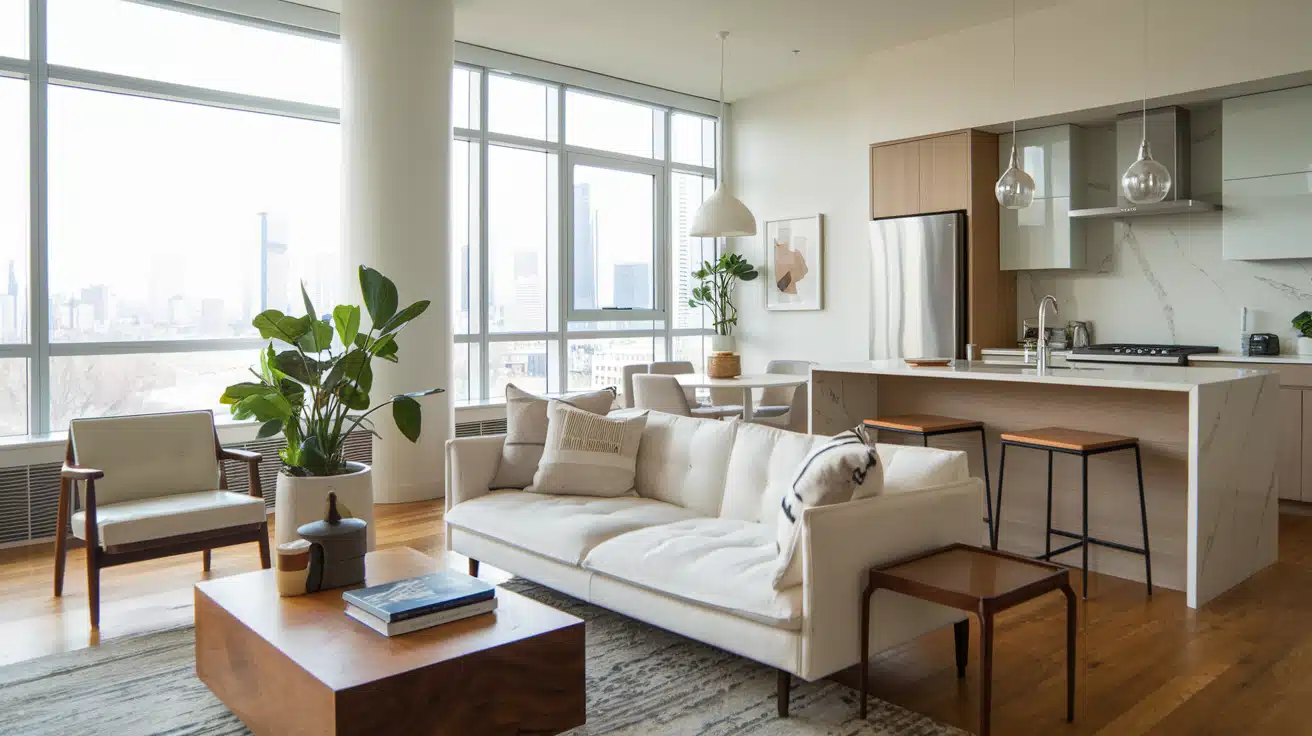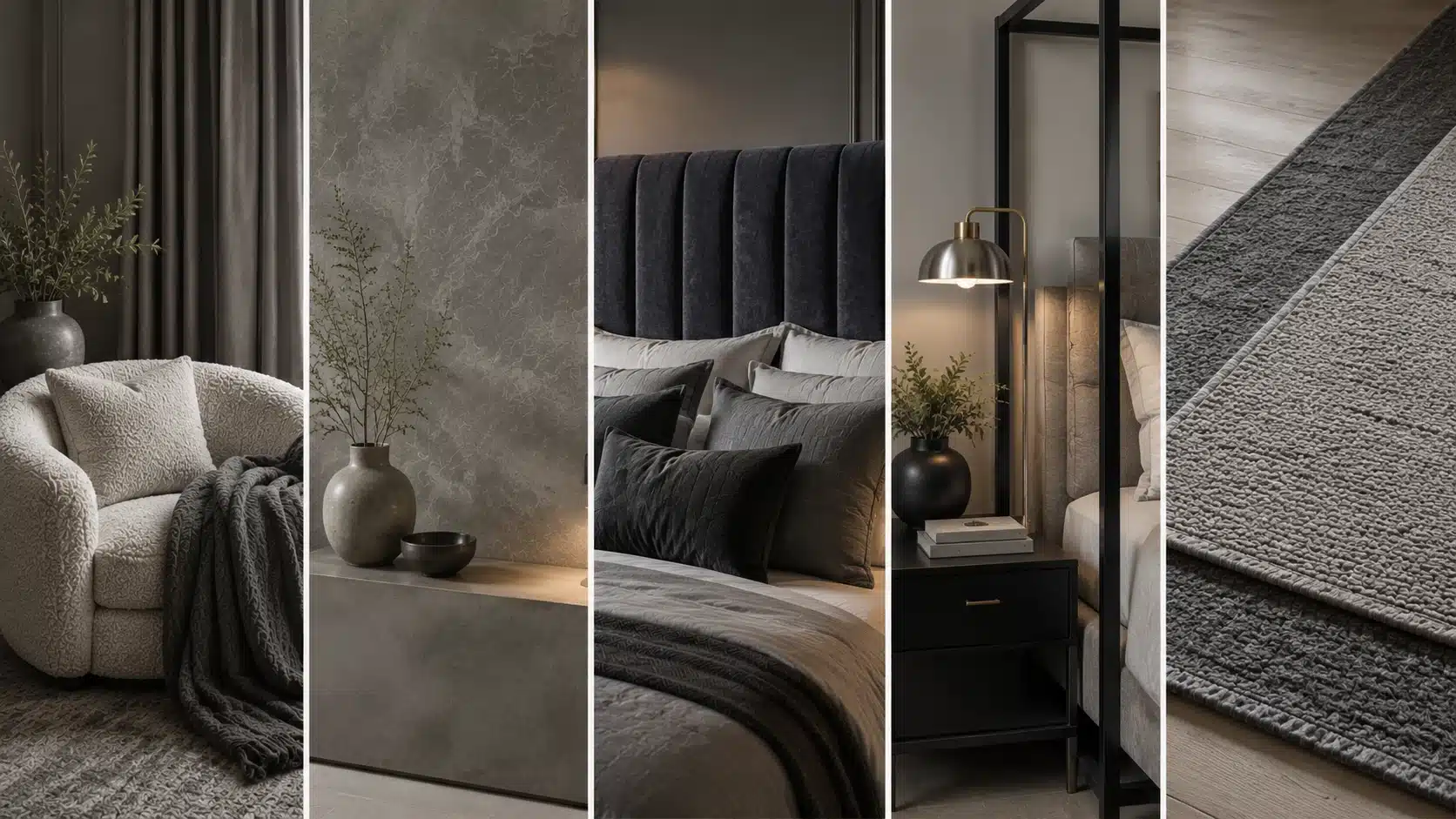

Grey has quietly become the most trusted color in bedroom design. Not because it’s safe, but because it’s smart.
It absorbs light, reflects mood, and adapts to whatever style you layer on top.
Imagine stepping into a serene hotel suite where the soothing hues of grey gently set a peaceful tone in the background.
These grey bedroom ideas go beyond the look: the undertones, the lighting behavior, and the small decisions that separate a flat grey room from one that feels expensive and intentional.
Why Grey Bedrooms Never Really Go Out of Style
Designers often call grey a “neutral backbone.” It holds a room together without competing for attention.
Unlike stark white, grey has enough depth to feel grounded. Unlike bold colors, it never fights with your furniture, art, or lighting choices.
What’s changed in recent years isn’t grey itself, but how it’s used. Flat, single-tone grey rooms, the kind that felt corporate or cold a decade ago, have given way to layered, tonal spaces.
Think three or four shades of grey working together with texture and light. This shift toward depth over flatness is one of the biggest things generic bedroom guides tend to skip. It’s the difference between a grey room that feels unfinished and one that feels curated.
The Hidden Language of Grey (Warm, Cool and Everything Between)
Not all Grey is created equal. Before choosing a shade, it helps to understand the three broad families:
- Cool greys lean toward blue or green undertones. They feel crisp, modern, and slightly formal.
- Warm greys carry hints of brown or violet, giving them a softer, more inviting feel.
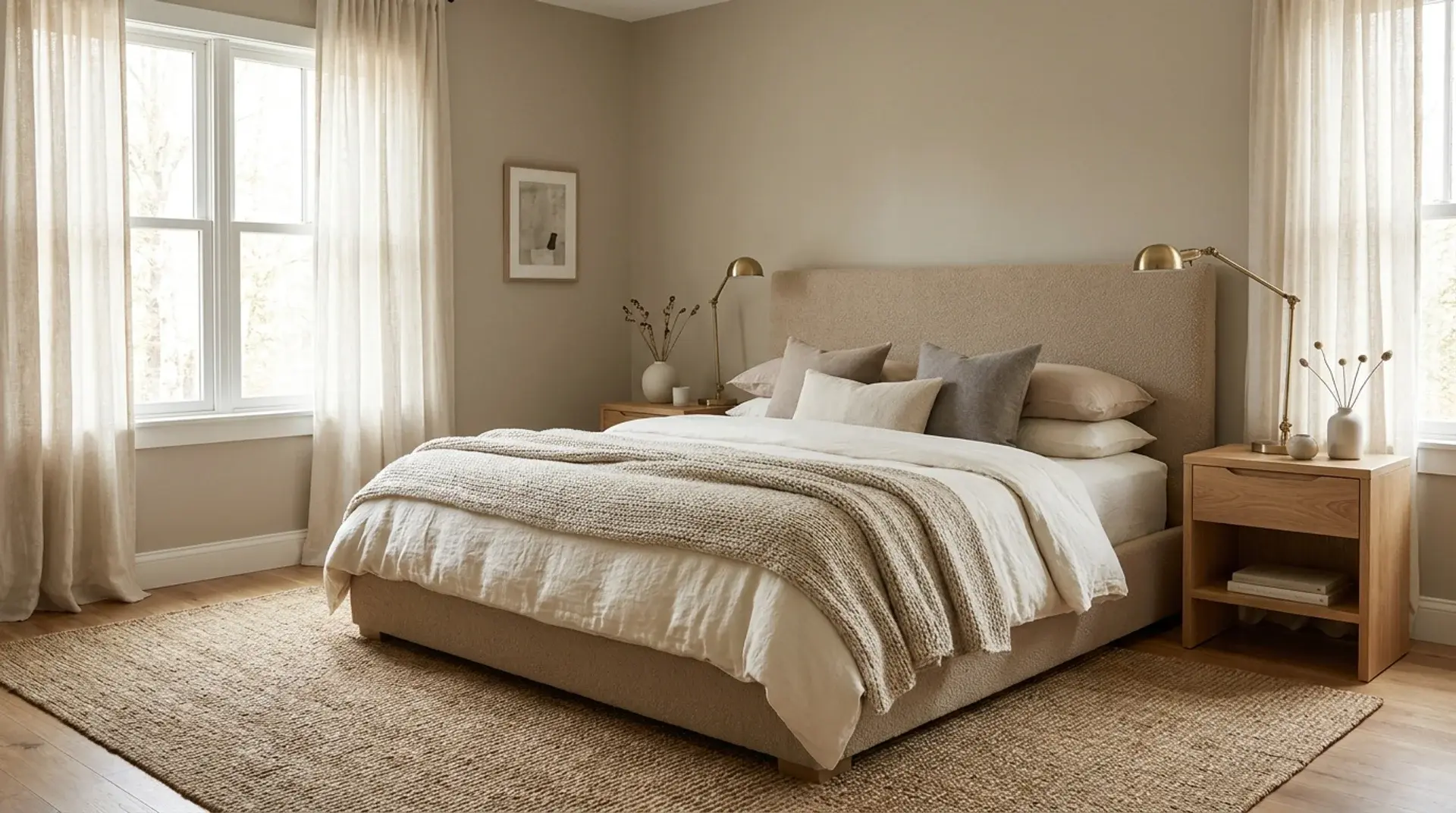
- Greige sits between grey and beige, offering warmth without losing the neutrality that makes Grey so flexible.
The undertone you choose changes the entire personality of the room. And interior designers will tell you the real decision-maker isn’t the paint swatch; it’s the light.
If you’re weighing grey against other neutral colors for your bedroom, the undertone test below is the fastest way to narrow it down.
North-facing light can make grey look cooler, while south-facing light warms it. Always test a sample at different times of day before painting.
Soft Minimal Grey Bedrooms That Breathe
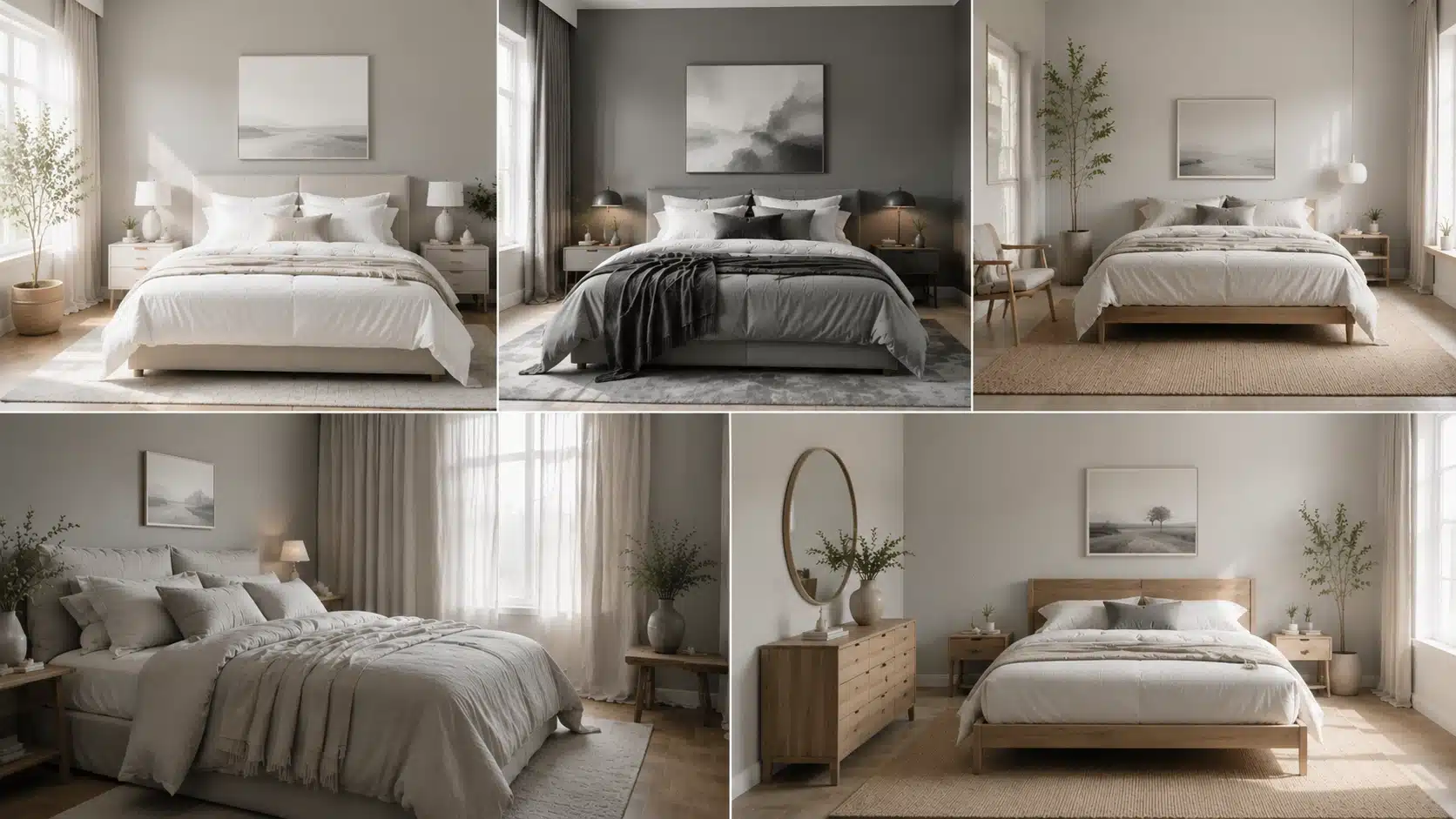
Soft minimal grey bedrooms feel calm and uncluttered, using gentle tones, simple furniture, and natural textures to create an airy, restful space.
1. Cloud-Grey Walls With Matte White Bedding
A soft, barely-there grey on the walls paired with crisp white linens creates an airy, cloud-like calm.
It works in almost any light, cool or warm. The gentle contrast makes it a forgiving starting point if you’re testing Grey for the first time.
2. Monochrome Layering With A Three-Tone Grey Palette
Combining a light grey wall, mid-grey textiles, and a charcoal accent avoids the flatness of single-shade rooms.
Each tone plays a distinct role rather than blending into a flat wash. The result stays entirely neutral while still feeling layered and considered.
3. Low-Contrast Scandinavian Calm
Pale grey walls, natural light, and minimal furniture create the quiet, uncluttered feel associated with Scandinavian design.
Nothing fights for attention here. Keep surfaces clear and let a single wood element carry the warmth.
4. Floor-To-Ceiling Linen Softness
Using linen textures in curtains, bedding, and upholstery softens Grey’s sometimes cool edge.
The slightly rumpled, natural texture of linen keeps things feeling lived-in rather than staged, adding tactile warmth without introducing any new color.
5. Barely-There Grey With Natural Oak Accents
Light oak furniture against soft grey walls introduces warmth without disrupting the neutral palette.
The wood grain adds just enough visual interest to keep the room from feeling flat. This pairing works especially well in bright, naturally lit rooms.
Grey Bedrooms with Architectural Depth
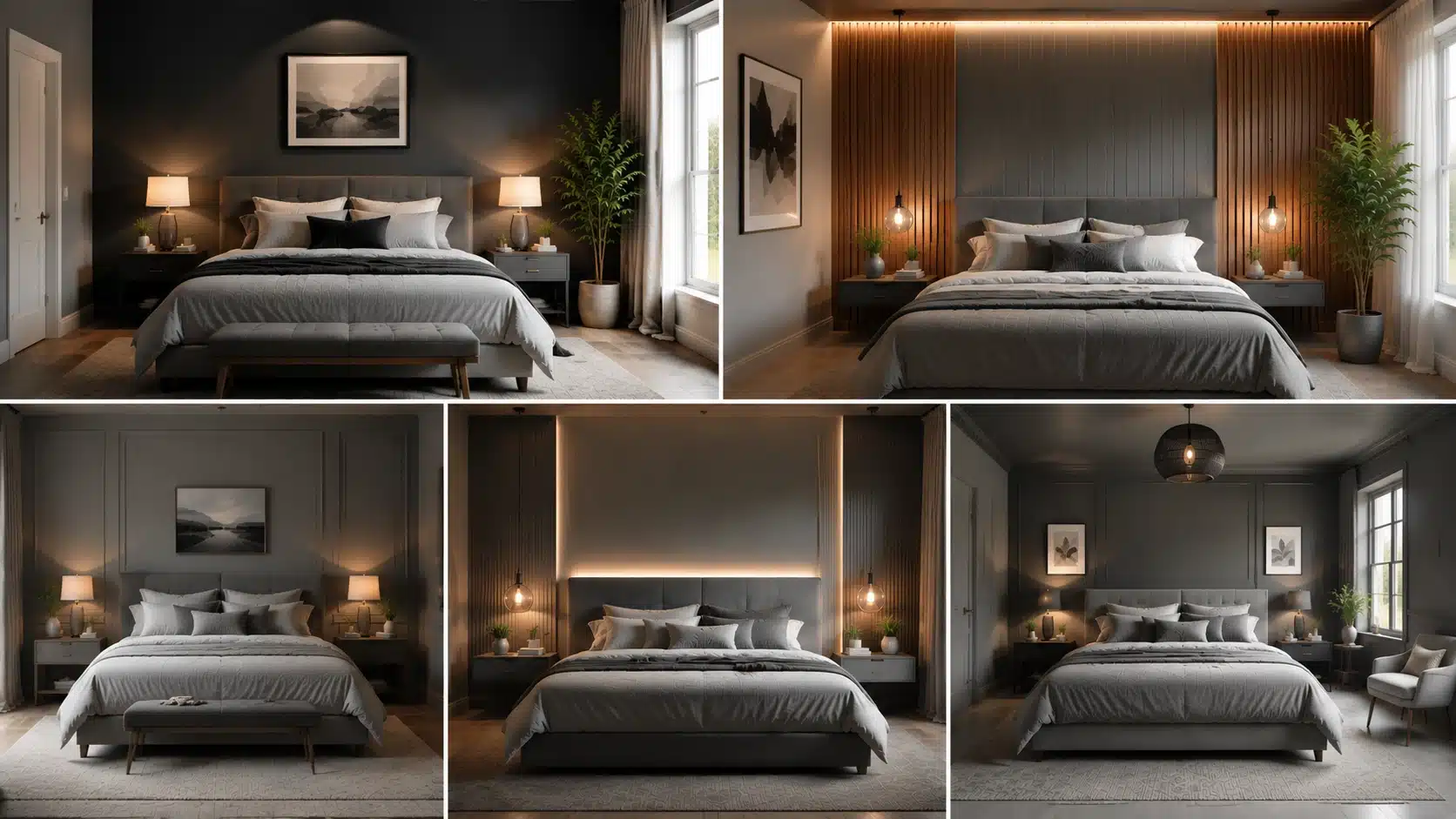
Architectural details like wall panels, alcoves, molding, and layered lighting add depth and character to a grey bedroom without overwhelming the space.
6. Dark Charcoal Feature Wall Behind The Bed
A single charcoal wall anchors the room and gives the bed a natural focal point.
The rest of the space stays lighter, so the contrast reads as intentional rather than heavy. It’s an easy way to add drama without repainting the whole room.
7. Slatted Wood And Grey Wall Fusion
Vertical wood slats against a grey backdrop add texture and a sense of architectural intention.
The rhythm of the slats draws the eye upward, making ceilings feel taller. This combination works well behind a bed or along one accent wall.
8. Paneled Walls In Layered Greys
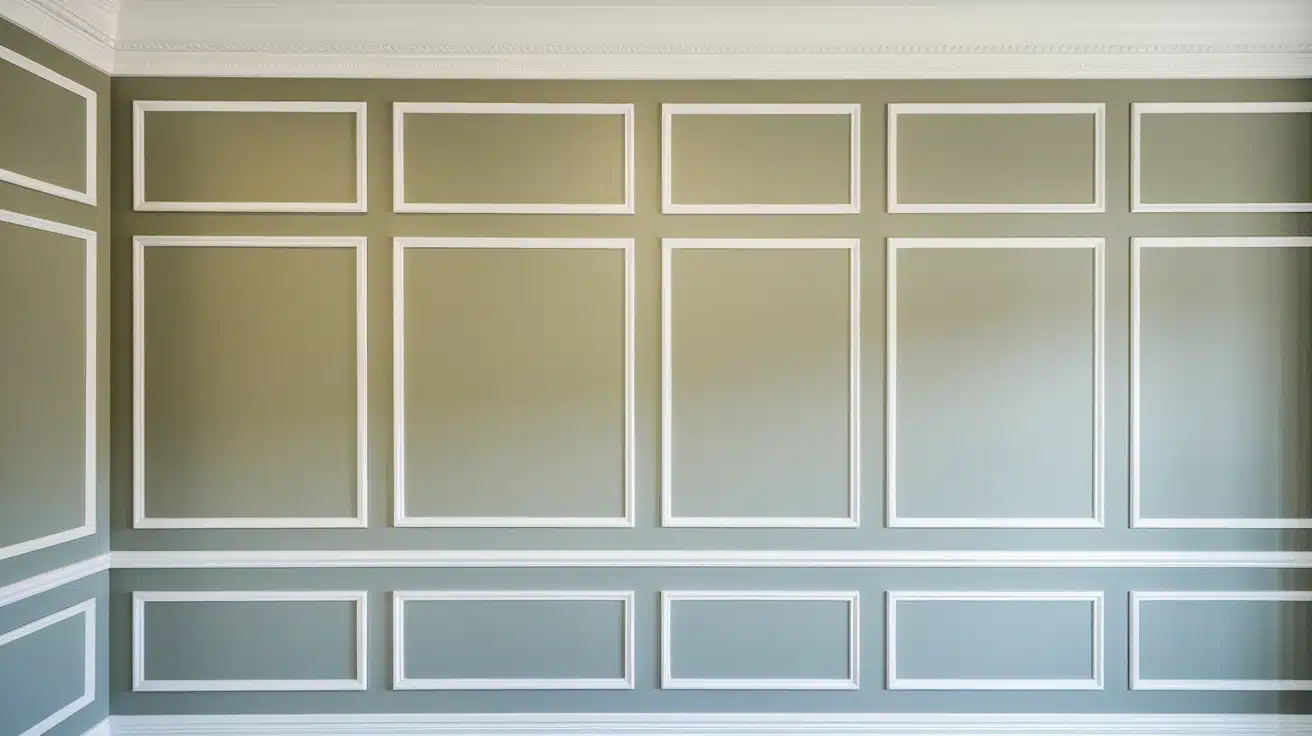
Wall paneling painted in two adjacent grey tones creates a subtle dimension that flat paint can’t achieve.
The shadow lines between panels do a lot of the visual work. It’s a detail that photographs beautifully and reads as custom-built.
9. Built-In Lighting Strips For Depth Illusion
LED strips behind headboards or along paneling make grey walls feel sculptural rather than flat.
The soft glow highlights architectural lines after dark. This trick is especially effective in rooms with lower ceilings, where it adds a sense of height.
10. Ceiling-To-Wall Color Drenching In Soft Graphite
Extending one grey tone across walls, trim, and ceiling, a technique known as “color drenching,” makes a room feel enveloping and cohesive rather than boxy.
The absence of contrasting trim removes visual breaks. It’s a bold but low-effort way to make a small room feel intentional.
Textured Grey Spaces That Feel Expensive
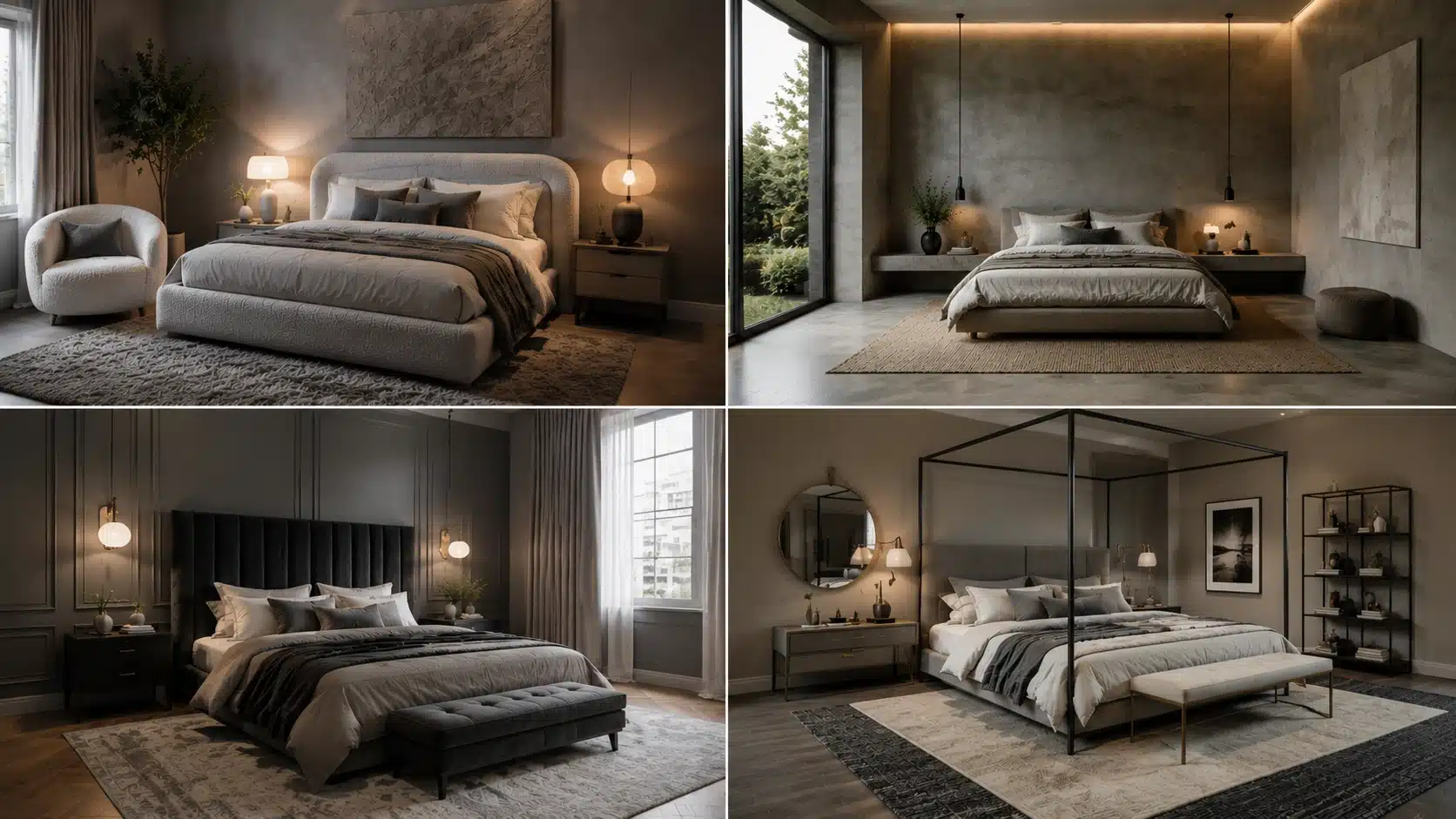
Layered fabrics, textured walls, and refined finishes make grey bedrooms feel rich, inviting, and thoughtfully designed.
11. Bouclé And Wool Layering
Bouclé chairs or wool throws in neutral grey tones add tactile richness that paint alone can’t provide.
The nubby texture catches light differently from smooth fabric. Layer two or three textures together for the best effect.
12. Stone-Inspired Grey Finishes
Microcement or limewash-style wall finishes bring an organic, slightly imperfect texture that reads as high-end.
The subtle variation in tone mimics natural stone. It’s a popular choice in newer luxury builds and boutique hotels.
13. Velvet Charcoal Headboards As A Focal Point
A deep-toned velvet headboard introduces both texture and quiet drama.
The fabric’s sheen shifts subtly depending on the light. Pair it with simple bedding so the headboard remains the standout element.
14. Mixed Metal Accents
Brushed nickel lighting paired with black steel frames keeps a grey room from feeling one-dimensional.
Mixing finishes, rather than matching them exactly, adds visual layering. Keep one metal dominant and use the second sparingly as an accent.
15. Rug Layering In Tonal Grey Gradients
Layering two rugs in slightly different shades of Grey adds visual depth underfoot.
A textured jute or wool rug beneath a smaller patterned one works particularly well. Designers often use this trick to make a room feel finished rather than sparse.
Grey Bedrooms with Personality Shifts
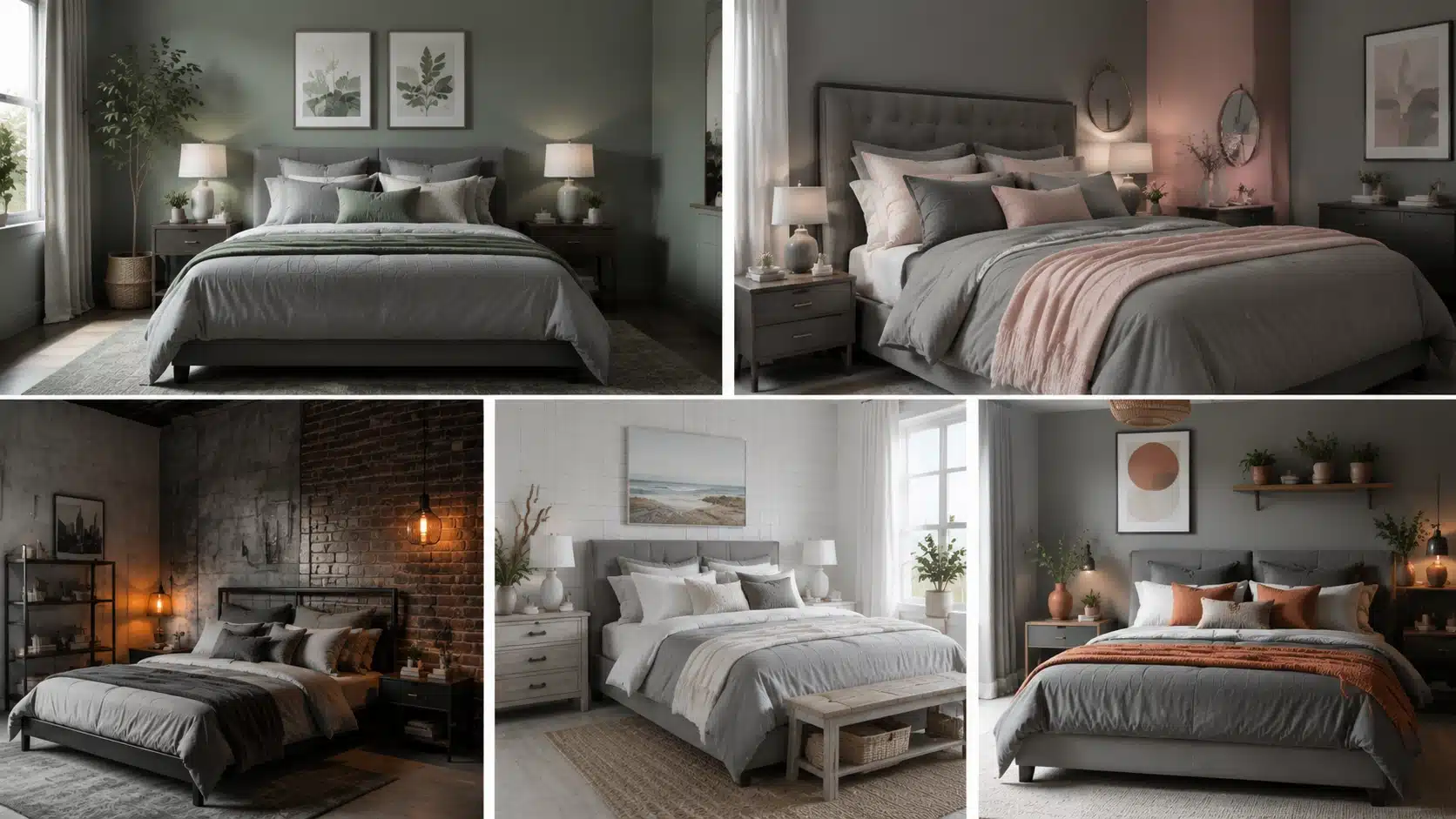
Small changes in lighting, accents, and textures can shift a grey bedroom from calm and minimal to bold, warm, or dramatic.
16. Grey And Muted Sage Green
Sage introduces a calming, nature-inspired contrast that softens Grey’s coolness.
The pairing feels organic rather than staged. It works especially well with botanical prints or a few potted plants.
17. Grey And Blush Undertones
A touch of dusty pink warms the palette while keeping the room feeling sophisticated rather than saccharine.
Use blush sparingly, in a throw pillow or a single wall. Too much can make the room feel overly sweet.
18. Industrial Grey With Warm Amber Lighting
Exposed textures paired with warm-toned bulbs balance an industrial aesthetic with comfort.
Concrete-look walls or exposed brick pair naturally with Grey. The warm lighting keeps the look from feeling cold or unfinished.
19. Coastal Grey With Airy Whites And Driftwood Tones
Weathered wood and white accents give Grey a relaxed, beach-house feel.
Sheer curtains and woven textures reinforce the casual mood. This combination works particularly well in rooms with a lot of natural light.
20. Grey And Warm Terracotta Accents
A muted terracotta throw, lampshade, or piece of pottery adds earthy warmth against a cool grey backdrop.
The contrast feels grounded rather than jarring. It’s a subtle way to bring in color without committing to a full accent wall.
Statement Grey Bedrooms That Break Convention
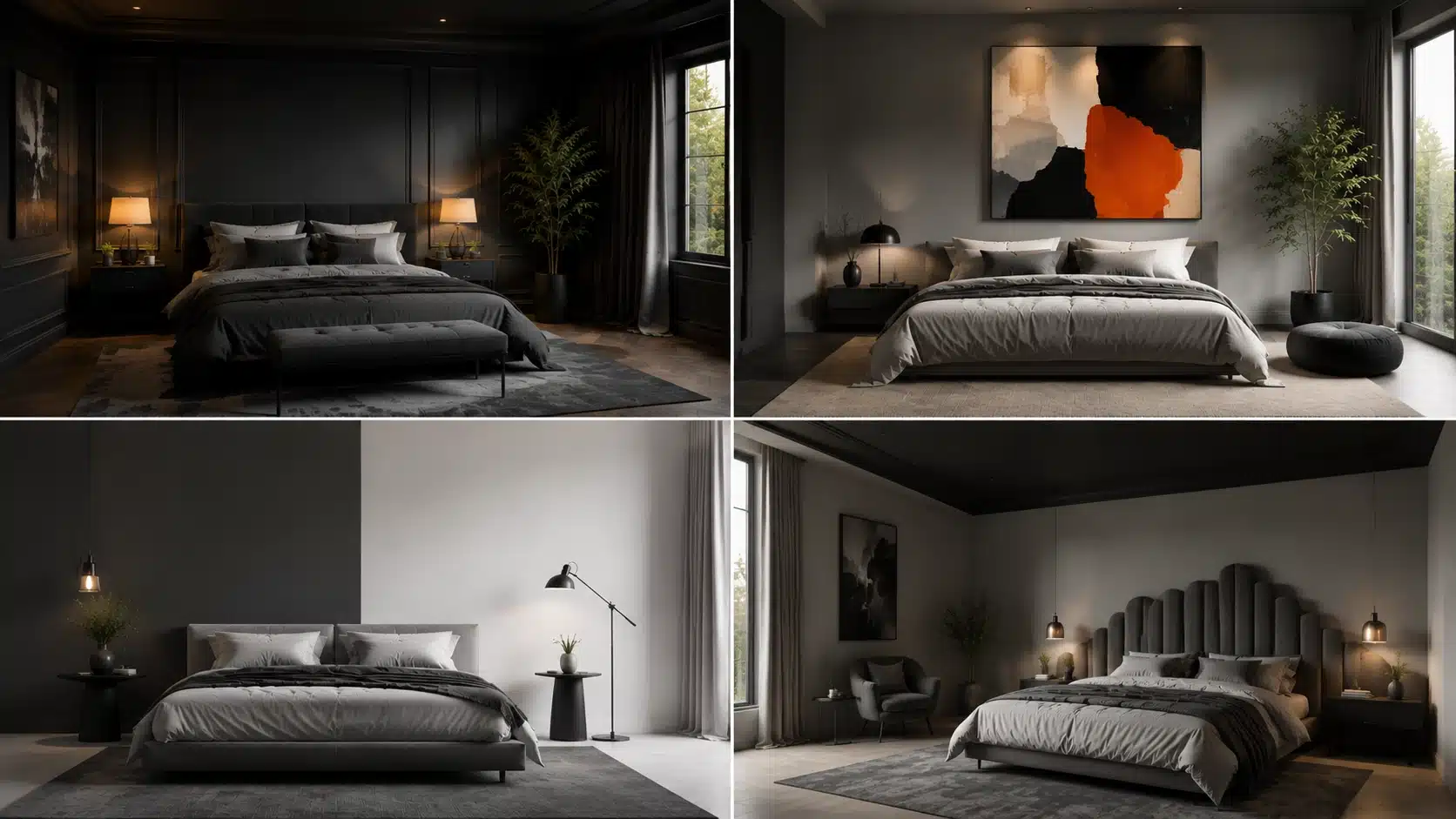
Statement grey bedrooms use bold contrasts, unexpected shapes, and striking finishes to create spaces that feel expressive rather than predictable.
21. High-Drama Dark Grey Cocoon Rooms
Near-black charcoal walls create an enveloping, cocoon-like atmosphere ideal for rooms with strong natural light.
The darkness feels intentional rather than gloomy when balanced with good lighting. This works best in larger rooms where the depth doesn’t feel confining.
22. Grey With Bold Artwork Contrast Walls
A muted grey backdrop lets a single bold artwork piece become the room’s centerpiece.
The neutral wall does the quiet work while the art takes center stage. Choose one statement piece rather than several competing ones.
23. Two-Tone Vertical Split Walls
Splitting a wall between Grey and off-white in a clean vertical line adds a modern, gallery-like edge.
The sharp division reads as deliberate and architectural. It’s an easy way to add visual interest without repainting the whole room.
24. Matte Black Ceiling With Soft Grey Walls
A matte black ceiling paired with lighter grey walls adds unexpected drama and makes the room feel cocooned.
The dark ceiling visually lowers the space, creating a sense of intimacy. This works especially well in bedrooms with high ceilings.
25. Sculptural Grey Headboard as an Art Piece
An oversized, sculptural headboard in a grey finish doubles as art rather than just furniture.
Curved or fluted shapes add softness to an otherwise geometric room. It’s a strong focal point that reduces the need for additional wall décor.
Small-Space and Practical Grey Bedrooms
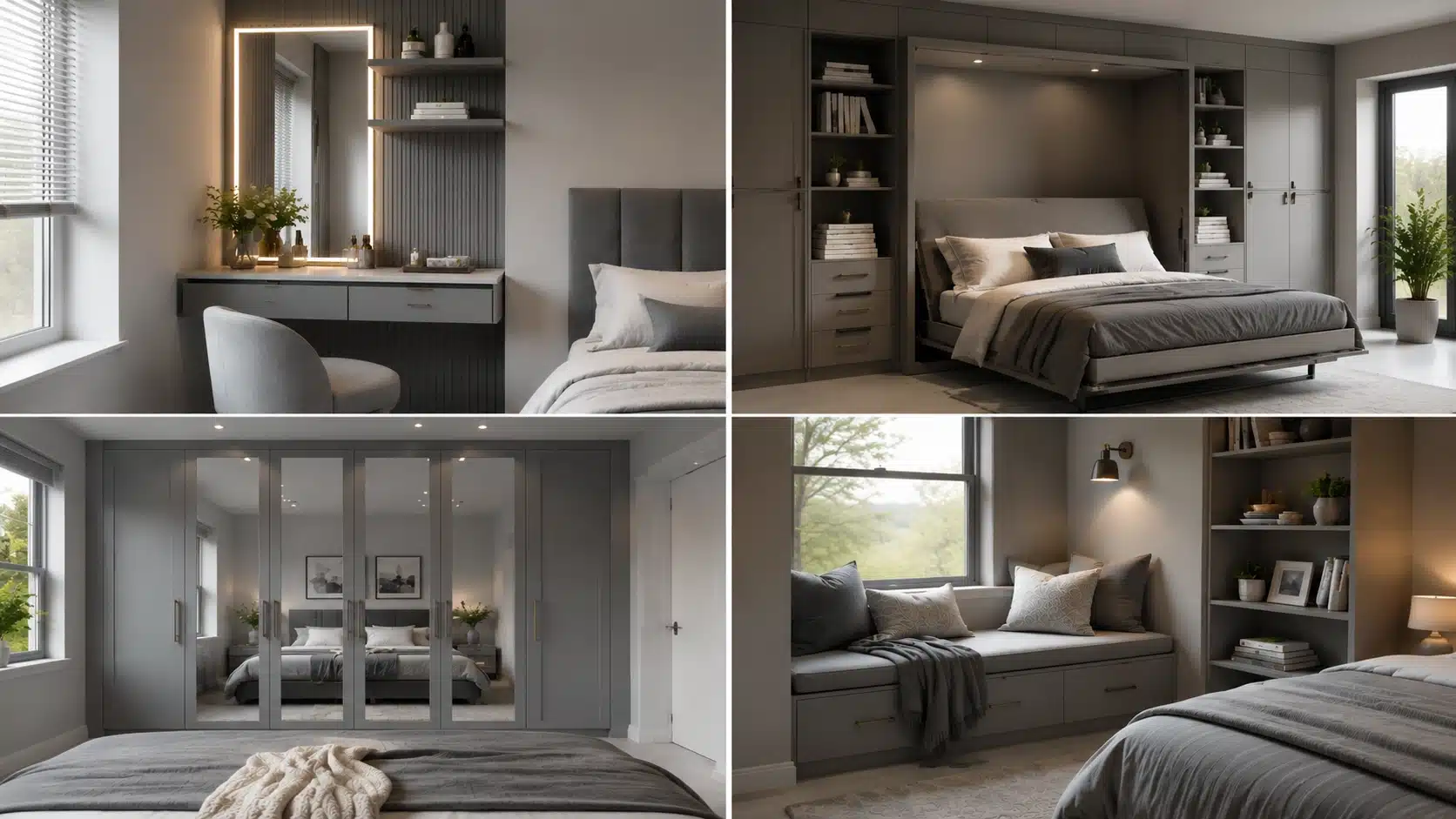
Small grey bedrooms use smart storage, light-reflective shades, and simple layouts to feel open, organized, and comfortable.
26. Fold-Down Or Wall-Mounted Grey Vanity Nook
A slim, wall-mounted vanity in soft grey tones adds function without eating up floor space.
Mirrored surfaces bounce light back into the room. It’s a smart addition for bedrooms, doubling as a getting-ready space.
27. Grey Murphy Bed With Built-In Storage
A grey-toned Murphy bed frees up floor space during the day while keeping the room’s palette cohesive.
Built-in shelving around the frame adds practical storage. This works especially well in studio apartments or multi-use rooms.
28. Light Grey Walls With Mirrored Wardrobe Doors
Mirrored wardrobe doors set against pale grey walls bounce light around the room, making it feel larger.
The reflective surface also doubles as a full-length mirror. This is one of the simplest tricks for visually expanding a small bedroom.
29. Under-Bed Drawer Storage In Tonal Grey
Built-in drawers beneath the bed frame, finished in a matching grey tone, keep storage hidden and the room feeling uncluttered.
The seamless finish makes the storage disappear visually. It’s a practical option for bedrooms without a separate closet.
30. Multi-Functional Grey Window Seat Or Reading Nook
A built-in window seat upholstered in grey fabric provides seating and storage in a single footprint.
Layer in a few cushions for comfort. It’s an efficient way to add a cozy corner without sacrificing space elsewhere.
Luxury and Contemporary Grey Bedrooms
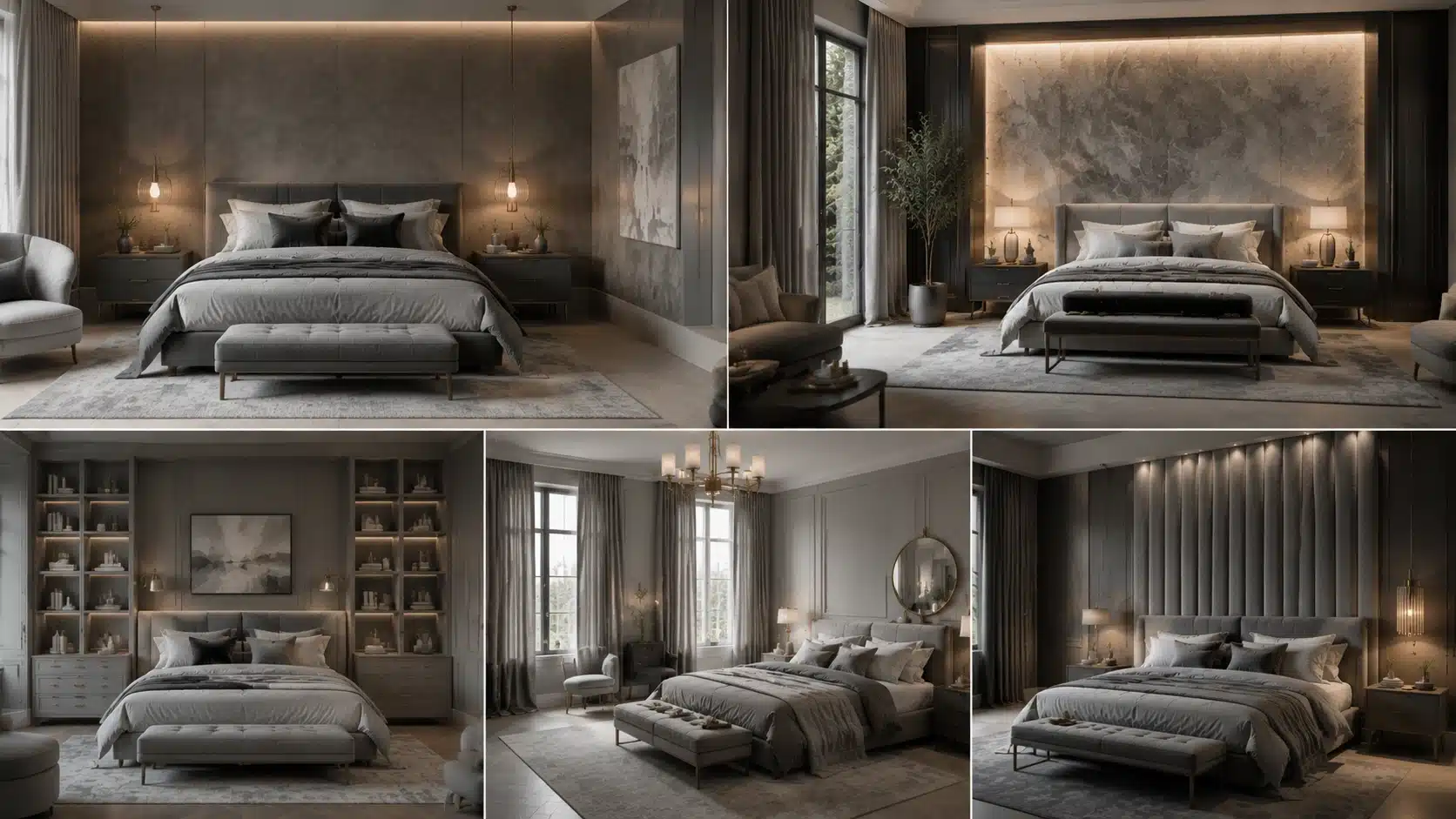
Luxury contemporary grey bedrooms pair sleek finishes, layered lighting, and refined textures to create a polished, hotel-like retreat.
31. Grey Suede Or Leather Accent Wall
A suede- or leather-textured accent wall adds a tactile, high-end finish that catches light differently than paint does.
The soft texture contrasts nicely with metal or glass fixtures. It’s a striking choice for a single feature wall rather than the whole room.
32. Backlit Grey Onyx Or Stone Panel Headboard
A backlit stone-effect panel behind the bed creates a soft, ambient glow and a genuine sense of luxury.
The natural veining in the stone adds visual movement. This idea works particularly well in larger primary suites.
33. Custom Grey Millwork With Integrated Shelving
Built-in millwork painted in a soft grey tone blends storage and display seamlessly into the wall.
Integrated shelving keeps the room feeling tailored rather than generic. It’s an investment feature, but one that adds real resale value.
34. Grey Silk Drapery With Brass Hardware
Floor-length silk drapery in a soft grey tone adds a soft sheen and formality to the room.
Brass rods and finials warm up the look and keep it from feeling too cool. This pairing works especially well in rooms with tall windows.
35. Hotel-Style Grey Upholstered Wall Paneling
Upholstered wall panels behind the bed, finished in a channel-tufted grey fabric, bring a boutique-hotel feel into a home bedroom.
The padded surface also softens noise. It’s one of the more dramatic ways to make a grey bedroom feel custom-built.
How Lighting Quietly Rewrites Your Grey Bedroom
Lighting changes how grey looks throughout the day, so the right bulb temperature and layered lighting can keep a bedroom from feeling flat or cold.
- Natural Light: Reveals the true undertone of grey paint.
- Warm Bulbs: Around 2700K make grey feel softer, warmer, and more beige.
- Cool Bulbs: Around 4000K or higher can make grey appear blue and slightly clinical.
- Layered Lighting: Combine overhead, task, and accent lights to create depth and change the room’s mood.
Grey Bedroom Styling by Room Size
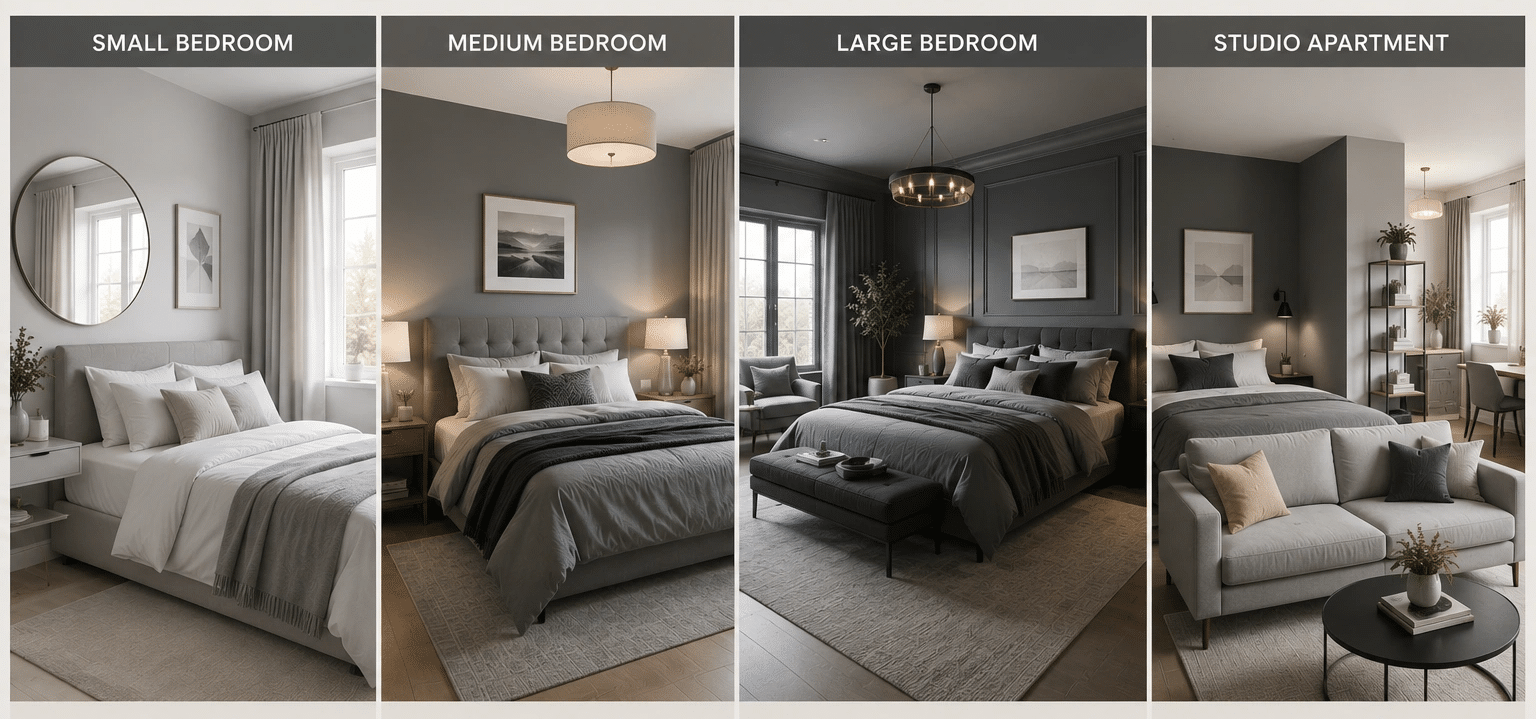
Grey behaves differently depending on the size of the room it’s in:
- Small bedrooms benefit from lighter greys and reflective surfaces like mirrors or glossy finishes, which bounce light and prevent the space from feeling boxed in.
- Medium-sized rooms can handle balanced contrast, a mid-tone grey wall with darker or lighter furniture layered in.
- Large bedrooms can absorb deeper charcoal tones, which help “zone” oversized spaces and create a cozier, more intimate feel, a technique often seen in modern main bedroom ideas where scale allows for bolder contrast.
- Studio apartments often use grey as a spatial separator, distinguishing a sleeping nook from a living area without adding walls.
Material Pairings That Upgrade Grey Beyond Flat Design
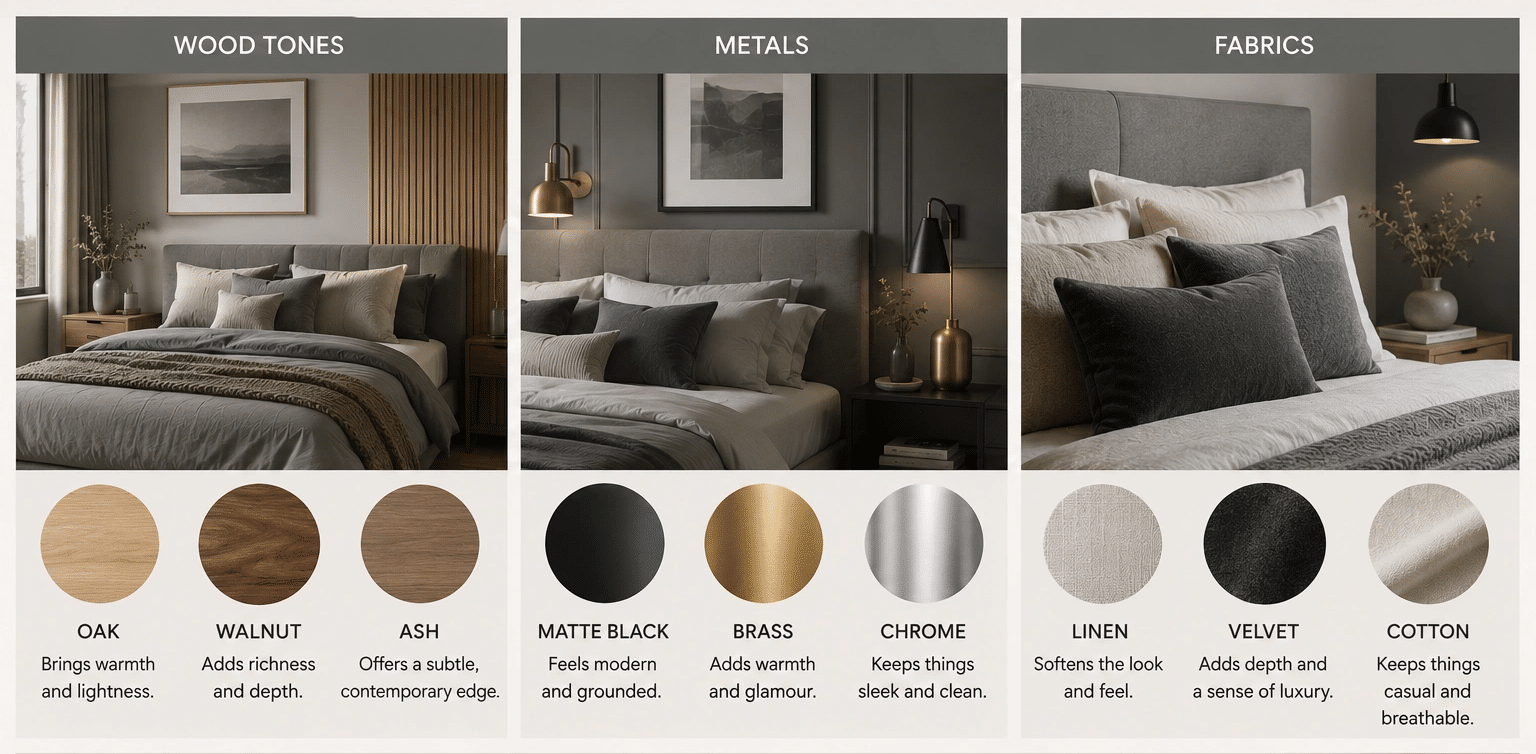
Grey rarely stands alone in a well-designed room; it works best as a canvas for other materials.
- Wood tones: Oak brings warmth and lightness, walnut adds richness, ash offers a subtle contemporary edge, and dark teak or mahogany can ground a room with a moodier, luxe feel.
- Metals: Matte black feels modern and grounded; brass adds warmth and a touch of glamour; chrome keeps things sleek; and aged bronze brings a softer, vintage-inspired warmth.
- Fabrics: Linen softens, velvet adds depth and formality, cotton keeps things casual and breathable, and wool or bouclé introduces cozy, tactile texture for colder months.
- Glass and stone: Smoked glass lighting or a marble-topped nightstand adds a subtle sheen that keeps a grey room from feeling too matte or heavy.
As a general rule, texture matters more than color when working with a neutral palette. A room with varied textures will always feel richer than one that relies on paint color alone, a principle that recurs in the best neutral bedroom ideas.
Psychology of Grey Bedrooms
Grey is closely associated with calm and mental rest, which is part of why it’s a popular choice for spaces meant for sleep.
It’s a favorite in luxury hotels and wellness-focused interiors precisely because it doesn’t overstimulate the senses the way brighter colors can.
That said, an all-grey room without contrast can start to feel emotionally flat or sterile.
The fix isn’t to abandon Grey, but to introduce contrast through texture, a single accent color, or varied light sources enough to keep the room feeling alive rather than muted into blandness.
Designer-Level Grey Bedroom Styling Tricks
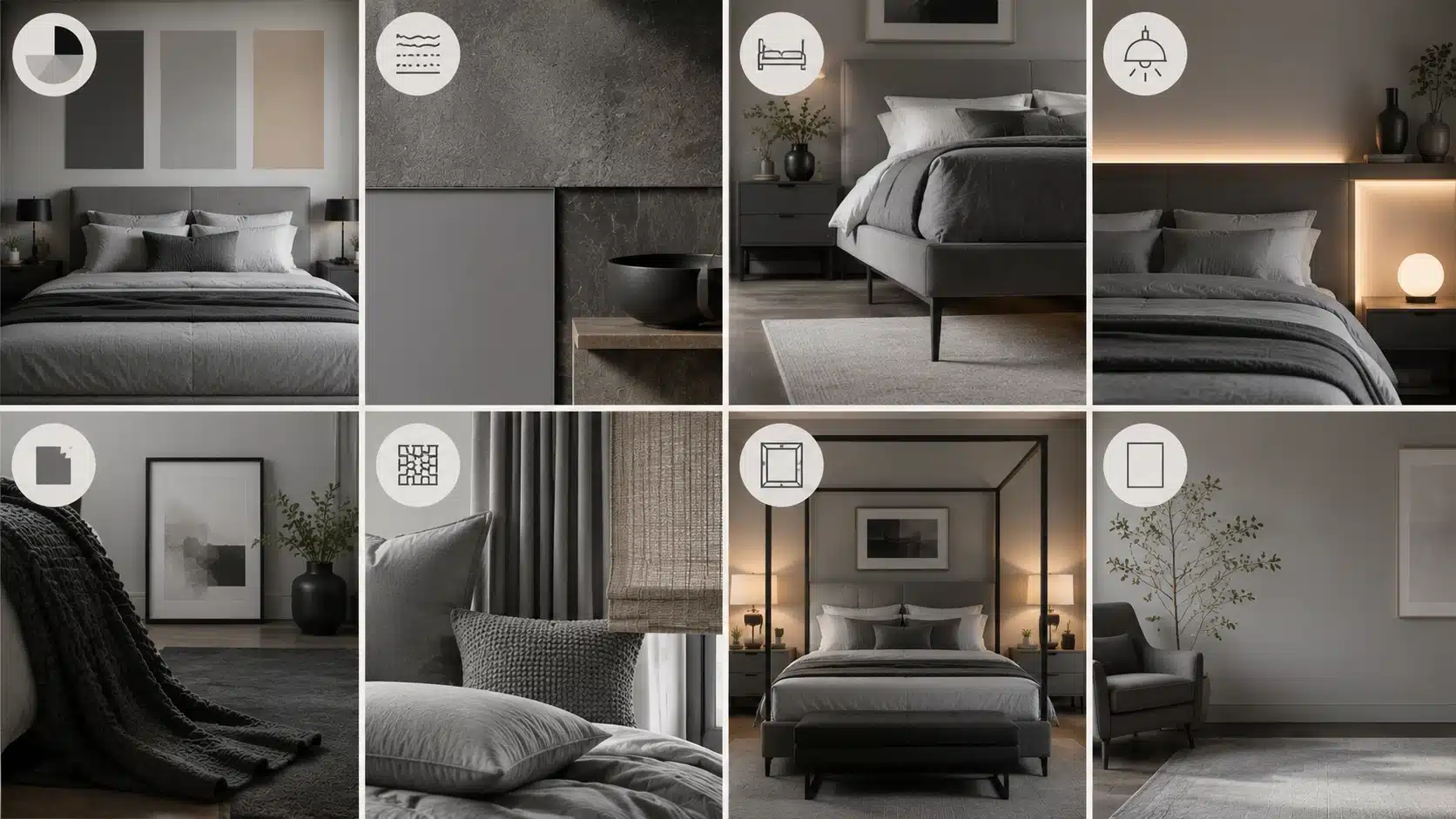
A few professional habits can upgrade a grey bedroom from “fine” to “considered”:
- Adapt the 60-30-10 rule: 60% dominant grey tone, 30% secondary tone (a deeper or lighter grey, or a complementary neutral), and 10% accent color or material.
- Use contrast edges instead of color contrast: pairing matte and glossy finishes, or rough and smooth textures, creates visual interest without introducing new colors.
- Create a floating furniture illusion: beds and nightstands with visible legs make a room feel more spacious and modern.
- Add hidden lighting: under-shelf or behind-headboard lighting softens architectural lines and adds a sense of depth after dark.
- Anchor the room with one dark tone: a single charcoal or graphite element (a rug, a frame, a throw) grounds an otherwise light palette and stops it from feeling washed out.
- Repeat a texture at different heights: echoing the same fabric or material in the bedding, a cushion, and a window treatment ties the room together without extra color.
- Frame the bed like a focal point: a canopy, an oversized headboard, or symmetrical nightstand lighting draws the eye and adds a sense of intentional design.
- Leave negative space: resisting the urge to fill every wall or surface lets the grey palette read as calm rather than cluttered.
Grey Bedroom Ideas by Lifestyle
- Minimalists tend to favor a tight two- or three-tone grey palette with almost no additional color, letting texture do all the work.
- Creatives often use grey as a backdrop for bold art or an unexpected accent wall, letting the room’s personality show through objects rather than paint.
- Luxury-focused homeowners lean into velvet, stone-effect finishes, and mixed metals for a richer, more layered look, a hallmark of contemporary main bedroom ideas found in high-end interiors.
- Renters can achieve a grey aesthetic through removable elements, such as bedding, rugs, curtains, and lighting, without touching the walls.
- Comfort-first sleepers benefit from warmer greys, layered textiles, and soft ambient lighting that prioritizes coziness over sharp design lines.
Conclusion
Pulling these grey bedroom ideas together comes down to one sequence: pick the undertone before the décor, based on your room’s natural light.
Build outward in layers: wall color, then bedding, then texture, then lighting.
Keep one clear visual anchor per room, a headboard, an art piece, a fixture, rather than competing focal points.
Let grey act as a canvas, not the subject. The goal is a space that feels calm and cohesive, with just enough personality to make it truly yours.
Frequently Asked Questions
Do Grey Walls Make A Bedroom Feel Smaller?
No. Pale or cool greys with a glossy or matte finish reflect light and often make small bedrooms feel more open rather than smaller.
What Furniture Colors Go Best With Grey Bedroom Walls?
Warm woods like oak or walnut, plus white, black, or navy furniture, all pair naturally with grey walls.
What Is the Most Popular Grey Paint Color For A Bedroom?
Benjamin Moore Classic Gray and Sherwin-Williams Agreeable Gray are two of the most requested shades for bedrooms right now.
Does Black And Grey Work Well Together In A Bedroom?
Yes. Pair charcoal or dove grey walls with black accents like a bed frame, lamp, or frames for contrast without feeling harsh.