
Most people scatter grass seed, water it once, and wonder why nothing grows. The seed dries out within hours on a warm day, and germination stops before it starts.
I have grown lawns from bare soil more times than I can count, and the difference always comes down to how you water during the first few weeks. Timing, frequency, and soil attention matter more than the seed brand you pick.
This guide covers the full watering schedule from day one through establishment, different approaches for overseeding versus new lawns, realistic sprouting timelines by grass type, and the most common watering mistakes that set gardeners back.
If you are starting a lawn from seed or patching bare spots, this is the routine I follow every time.
How Often to Water Grass Seed?
I water grass seed in stages, and that makes all the difference. Most people either water too much or too little. Both kill the seed before it even gets started.
Here is what works, broken down by growth stage:
- Day 1: Water lightly right after sowing. Just enough to wet the top layer of soil.
- First 1 to 2 weeks: Water 2 to 4 times a day, keeping the soil consistently moist. Short sessions work best here.
- After germination, cut back the frequency. Water once a day or every other day, but go a bit deeper each time.
- After establishment: Shift to deep watering 2 to 3 times a week. This builds stronger roots.
The goal is to match water to growth. Too much early on causes rot. Too little and the seed dries out fast.
The goal is to match water to growth. Too much early on causes rot. Too little and the seed dries out fast.
|
When Is the Best Time of Day to Water Grass Seed? Early morning is the best time. The soil stays moist longer, and the sun slowly dries any excess water. I aim for the window between 6 a.m. and 10 a.m. when temperatures are still cool. If the soil dries out by afternoon on a hot day, I add a second short session in the late afternoon. Avoid watering in the evening. Moisture sitting on the soil surface overnight creates the right conditions for fungal growth, which can kill new seedlings before they get established. |
Prepare the Soil Before You Seed
This is a step most gardeners skip, and it costs them later. I always soak the soil a few days before I spread any seed. The goal is to get moisture down to 6 to 8 inches deep so the ground is already damp when the seeds come into contact.
To check the depth, I push a screwdriver straight into the soil. If it slides in easily to about 6 inches, the moisture is where it needs to be. If the ground resists, I water again and check the next day.
While preparing, I also clear debris, break up any compacted areas, and rake the surface smooth. If you are working with clay or sandy soil, adding a thin layer of compost or topsoil improves water retention and gives the seeds a better bed to settle into.
This prep work takes an afternoon, but it makes a real difference in germination rates.
How Often and How Long to Water Grass Seed?
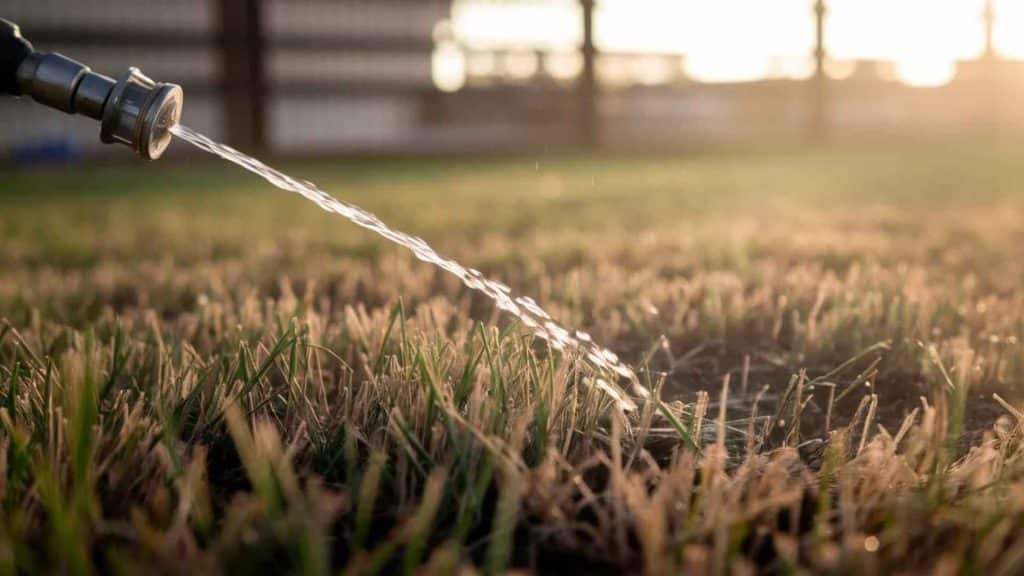
Getting the frequency right matters just as much as the timing. When I seed a new lawn, I water 2 to 4 times a day. I keep each session short, around 5 to 10 minutes.
My goal is to keep the top inch of soil moist without soaking it. Once the seed germinates, I pull back to once a day. I run the water a little longer, around 10 to 15 minutes.
This helps roots start pushing deeper into the soil. After the grass is fully established, I shift to watering 2 to 3 times a week. Each session lasts up to 20 to 30 minutes.
Less frequent but deeper watering trains the roots to grow down, not stay near the surface. These small changes at each stage make a big difference in how well the grass takes hold.
Week-by-Week Watering Schedule After Germination
Once I see sprouts poking through, I do not stop watering frequently right away. The roots are still shallow, and a single hot afternoon can undo days of progress. Here is the schedule I follow after germination:
Weeks 3 and 4: I cut back to one watering session per day, sometimes two on very hot or windy days. The grass is still fragile, and the roots have not pushed deep enough to find moisture on their own. I run each session for about 15 minutes.
Weeks 5 and 6: I water every other day and let each session run for about 30 to 40 minutes. This trains the roots to grow deeper. If it rains, I skip that day entirely.
Weeks 6 to 8: By now the grass should have a strong root system. I shift to a regular lawn watering schedule of 2 to 3 times per week, giving the lawn about 1 to 1.5 inches of water per week total. Each session should soak the soil 6 to 8 inches deep.
I always check the soil with my finger before watering. If the top inch still feels damp, I skip that session. The transition period is where most gardeners make mistakes by either cutting back too early or continuing to water too often.
Straw Mulch and Seed Covers
Covering freshly seeded soil with a thin layer of straw mulch is one of the easiest ways to improve germination. The mulch slows evaporation, keeps the seeds in place during rain or watering, and protects them from birds.
I spread a light layer, thin enough that I can still see the soil underneath. Too thick and it blocks sunlight from reaching the seeds. Straw works best because it breaks down slowly and does not mat the way leaves do.
Peat moss is another option, and it changes color as it dries, which gives you a visual cue for when the surface needs more water.
Overseeding vs. Reseeding Bare Patches vs. Seeding a New Lawn
Not every seeding job is the same. I adjust my watering based on what I am trying to fix or grow.
| Factor | Overseeding | Bare Patches | New Lawn |
|---|---|---|---|
| What it is | Adding seed to thin grass | Fixing dead or empty spots | Starting from scratch |
| Watering frequency | 2x daily | 3 to 4x daily | 3 to 4x daily |
| Session length | 5 to 10 mins | 5 to 10 mins | 5 to 10 mins |
| How long to keep up | 2 to 3 weeks | 2 to 3 weeks | 3 to 4 weeks |
| Biggest risk | Dry surface soil | Seed wash-away | Uneven moisture |
| When to cut back | After sprouting | After sprouting | After full cover |
Overseeding is a bit different from the other two because you are working with an existing lawn. The established grass already has deep roots that need less frequent, deeper watering.I try to balance moist topsoil for the new seed with the deeper irrigation schedule that keeps the mature grass healthy. For bare patches and new lawns, I water more often because there is no established root system helping hold moisture in the soil.
How Long Does It Take for Grass Seed to Grow?
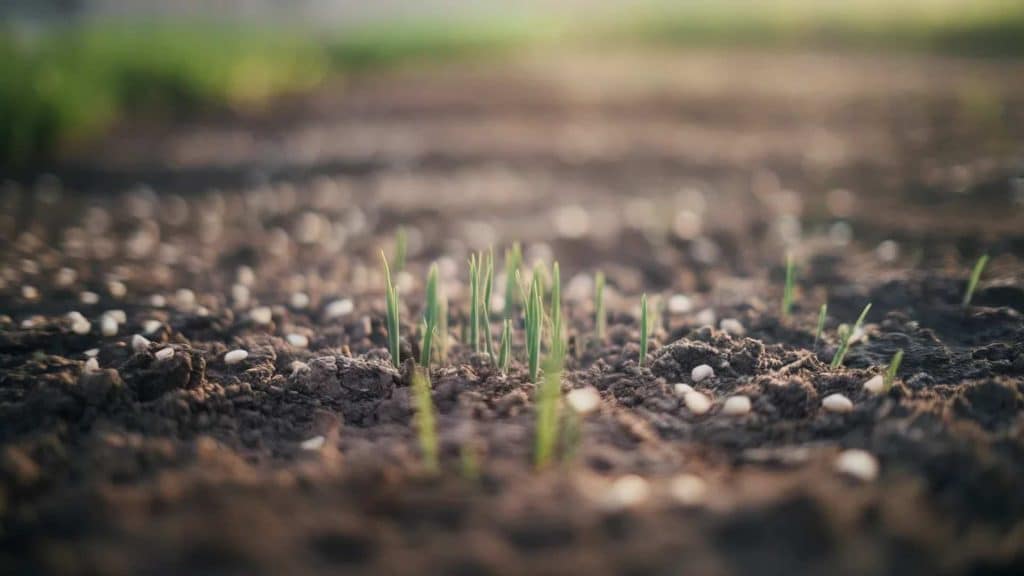
I get this question a lot, and the honest answer is that it depends on the grass type and how well you water it. Most grass seeds start to sprout within 7 to 21 days.
Cool-season grasses like Kentucky bluegrass can take up to 30 days. Warm-season grasses like Bermuda tend to sprout faster, usually within 10 to 14 days.
Here is a rough breakdown I follow:
| Grass Type | Germination Time |
|---|---|
| Ryegrass | 5 to 10 days |
| Tall Fescue | 7 to 14 days |
| Kentucky Bluegrass | 14 to 30 days |
| Bermuda | 10 to 14 days |
| Zoysia | 14 to 21 days |
After germination, the grass needs another 4 to 8 weeks to fully fill in. I always tell gardeners not to rush this stage. Cutting or walking on new grass too early sets it back significantly.
Keep in mind that seeds do not all sprout at the same time, even within a single grass species. Seeds buried at slightly different depths or in areas with more shade will germinate at their own pace.
With a seed mix, expect even more variation. I keep watering consistently until I see even coverage across the full area.
Consistent watering at every stage is what keeps the timeline on track.
How Soil Type and Weather Affect Your Watering Schedule
I have worked with clay soil that holds water for days and sandy ground that dries out within hours. Both need adjustments to the basic watering schedule.
Clay soil is dense and drains slowly. Two watering sessions a day may be enough during germination because the soil retains moisture well. The risk with clay is overwatering, so I check the surface before every session.
Sandy soil is the opposite. It drains fast and dries out quickly. I usually add an extra session on sandy ground and keep each one short to avoid runoff.
Hot, windy days dry out the topsoil faster than anything else. If temperatures are above 85°F (30°C) with wind, I water 3 to 4 times a day. On cool, overcast days, twice is usually enough. Rain counts toward the day’s total, so I skip a session after a good shower.
A light drizzle in the morning, though, will not keep the soil moist through a sunny afternoon.
Shaded areas of the lawn hold moisture longer than spots in direct sun. I pay close attention to sprinkler coverage and sometimes water sunny sections separately to keep moisture levels even.
Signs You Are Overwatering or Underwatering Grass Seed
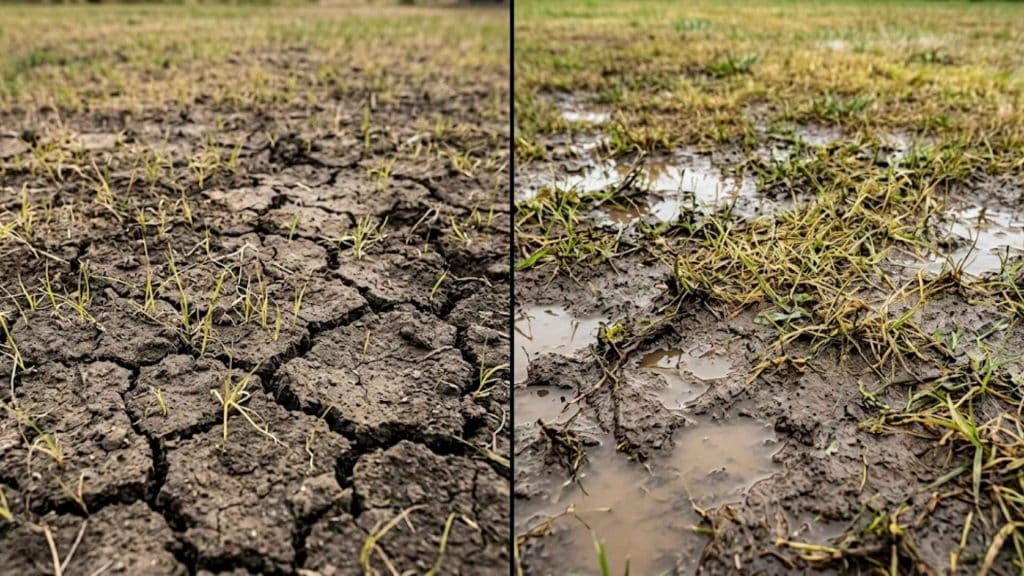
I have made both mistakes in my years of gardening. Knowing what to look for early saves the seed before it is too late.
Signs of Overwatering
- Puddles forming on the surface are the first thing I notice. Water should soak in, not sit on top.
- Soggy soil that stays wet hours after watering is a red flag. Roots cannot breathe in waterlogged ground.
- Seed movement indicates that the water pressure is too high. Seeds wash into uneven patches and never grow where you placed them.
- Fungus or moss appearing on the soil surface indicates that moisture has been sitting too long. This kills new seedlings fast.
- Patchy thin growth in random spots often points back to overwatering in earlier stages.
Signs of Underwatering
- Dry, crusty soil is the most obvious sign. If the top layer cracks, the seed underneath has no chance.
- Seed not sprouting after two to three weeks usually means the soil dried out too soon after sowing.
- Wilted tiny seedlings that look limp right after sprouting are struggling for moisture. This stage is very fragile.
- Uneven germination across the lawn tells me some areas got water and others did not. I check sprinkler coverage when I see this.
Common Mistakes to Avoid When Watering Grass Seed
I have seen these mistakes slow down even the most careful gardeners. Here is what goes wrong and how I fix it.
1. Watering at the Wrong Time of Day
- Problem: Watering in the afternoon leads to rapid evaporation. The seed dries out before it can absorb moisture.
- Fix: I always water early in the morning. The soil holds moisture longer, and the seed stays consistently damp.
2. Watering Too Deeply Too Soon
- Problem: Heavy watering in the early stage pushes seeds deeper into the soil or washes them away completely.
- Fix: I keep sessions short and light for the first two weeks. The goal is moisture, not soaking.
3. Skipping Watering Sessions
- Problem: Even a single missed session on a hot day can dry out the top layer and kill newly sprouted seedlings.
- Fix: I set a watering reminder or use an automatic sprinkler timer to stay consistent.
4. Using Too Much Water Pressure
- Problem: High water pressure moves the seed around, creating bare, uneven patches.
- Fix: I use a gentle spray setting or a low-pressure sprinkler to keep seeds exactly where I placed them.
5. Stopping Watering Too Early
- Problem: Many gardeners cut back on water the moment they see sprouts. The roots are still very shallow at this stage.
- Fix: I keep watering daily until the grass reaches at least 3 inches tall, then reduce frequency.
6. Not Checking Soil Moisture
- Problem: Watering on a fixed schedule without checking the soil leads to both overwatering and underwatering.
- Fix: I press my finger one inch into the soil before every session. If it feels damp, I skip that watering.
Choosing the Right Sprinkler for New Grass Seed
The type of sprinkler you use matters more than most people realize. Oscillating sprinklers work well for large, flat areas because they distribute water evenly in a rectangular pattern.
For smaller sections or bare patches, I use a fan sprinkler or a hose with a mist nozzle so I can control the pressure.
The worst choice for new seed is a high-pressure impulse sprinkler. The water hits the soil hard enough to move seeds out of place and create bare spots. I always test a sprinkler before seeding to make sure the coverage is even and the pressure is low enough.
If you are using a timer, set it for 5 to 10 minute sessions, 2 to 4 times a day during germination. Automatic timers remove the risk of forgetting a session on a busy afternoon.
Conclusion
Getting grass seed to grow is not about luck or complicated systems. It comes down to matching your watering to each stage of growth, checking the soil before every session, and being patient through the 6 to 8 weeks it takes for a lawn to fill in.
I have grown lawns in clay, sand, full sun, and deep shade. The one thing that stayed the same every time was the routine: keep the topsoil moist during germination, transition to deeper watering as roots develop, and never stop paying attention to what the soil is telling you.
Start with the schedule in this guide, adjust for your conditions, and give your grass the time it needs. The results will follow.
Frequently Asked Questions
How Many Times a Day Should I Water New Grass Seed?
For the first two weeks, water 2 to 4 times daily. Keep sessions short (5–10 minutes) to ensure the top inch of soil remains consistently moist without puddling.
Can I Water My Grass Seed at Night or In the Evening?
It is best to avoid evening watering. Excess moisture sitting overnight can lead to fungal diseases. Stick to early morning sessions to allow the sun to manage excess dampness.
How Do I Know if I Am Overwatering My New Lawn?
Look for puddles, soggy soil, or seeds washing away. If you see fungus or moss forming on the surface, your soil is likely waterlogged and needs less frequent watering.
When Can I Start Reducing the Frequency of Watering?
Once you see germination (usually after 7–21 days), reduce watering to once daily. Transition to deep watering 2–3 times a week only after the grass is fully established.
Does the Grass Type Change How Long I Need to Water?
Yes. Varieties like Kentucky Bluegrass take up to 30 days to sprout, requiring longer periods of frequent misting compared to faster-germinating seeds like Ryegrass, which sprouts in 5–10 days