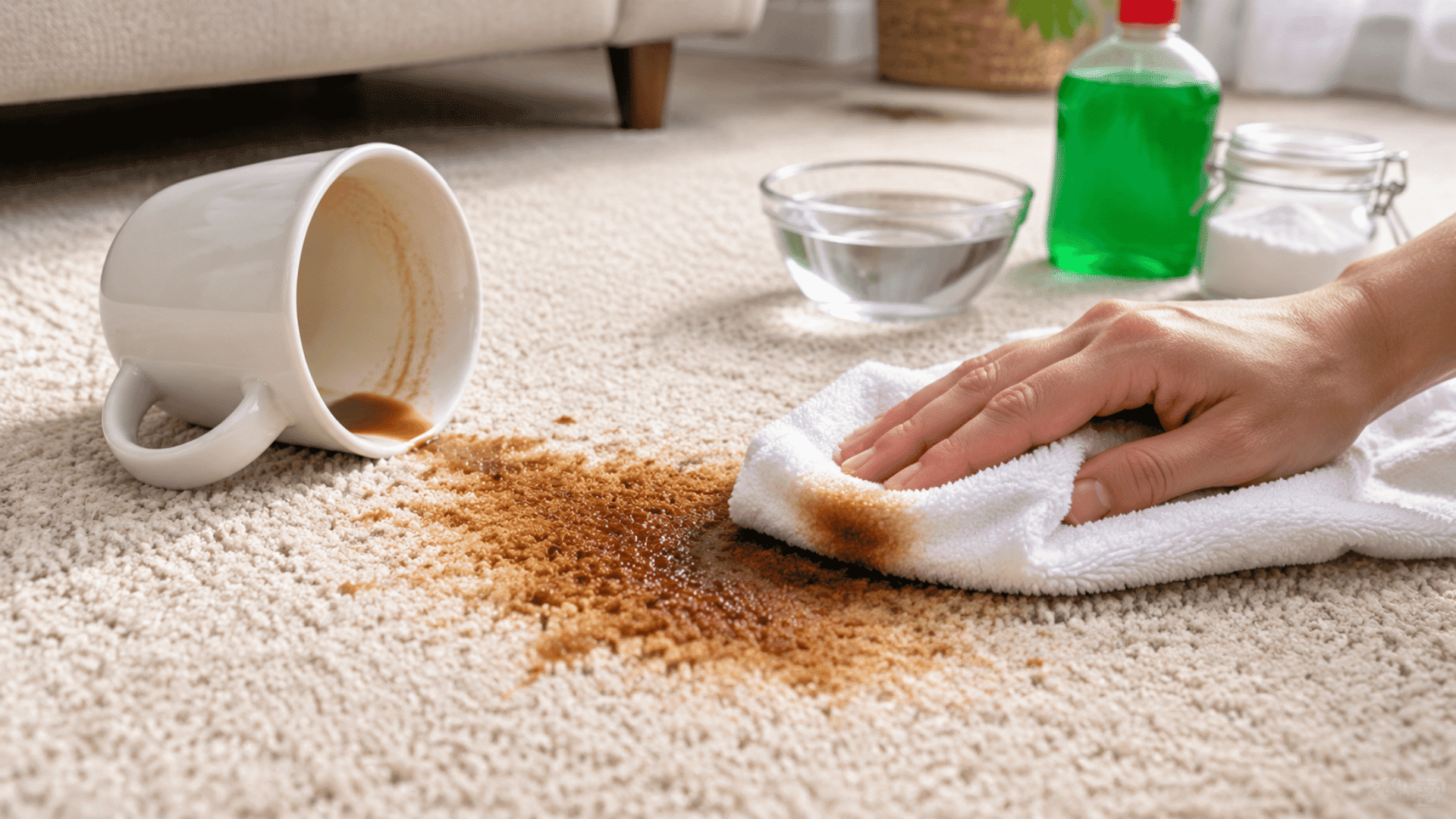

The fastest way to remove a coffee stain from carpet is to blot it as soon as possible, then treat the area with a simple mixture of dish soap, white vinegar, and water.
Work from the outside of the stain toward the center you avoid spreading it further.
A coffee spill can soak into carpet fast, but acting early makes most stains much easier to remove at home.
Fresh coffee usually needs only a few minutes of careful blotting and cleaning. Older stains can take longer, but they are often still removable with the right process and a little patience.
Why Coffee Stains Are Hard to Remove
Coffee is not just colored water, and that is exactly why it clings to carpet fibers so well.
Tannins give coffee its dark color. They bond with fibers almost as soon as the liquid touches them. Heat makes this worse. A hot cup of coffee slightly opens carpet fibers.
That lets tannins settle in deeper before you even reach for a towel. If your coffee had milk, cream, or sugar, the stain gets more complicated.
Milk adds proteins that bind to fibers. Sugar leaves a sticky film that pulls in dirt over time. Black coffee stains are simpler to treat, since you are only dealing with tannins and heat.
A coffee spill can soak into carpet fast, but acting early makes most stains much easier to remove at home.
What You Need to Remove a Coffee Stain from Carpet
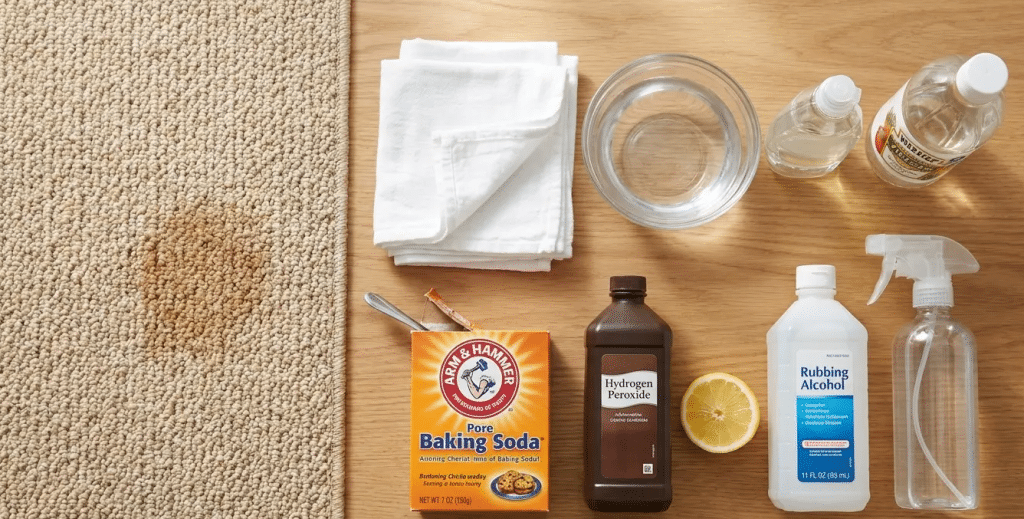
A few common household items are usually enough to tackle coffee stains on carpet safely and effectively.
| Item | How It Helps |
|---|---|
| Clean white cloths | Blot the stain without transferring dye |
| Cold water | Dilutes fresh coffee stains |
| Mild dish soap | Breaks down coffee residue |
| White vinegar | Helps loosen stubborn stains |
| Baking soda | Absorbs moisture and odors |
| Hydrogen peroxide | Helps lift older stains |
| Lemon juice | Works as a mild natural cleaner |
| Rubbing alcohol | Helps break down dried residue |
| Spray bottle | Applies cleaning solution evenly |
How to Remove a Fresh Coffee Stain from Carpet
Fresh coffee stains are easier to remove when treated quickly, before the liquid has time to soak deep into the carpet fibers.
Method 1: Dish Soap and Vinegar Solution
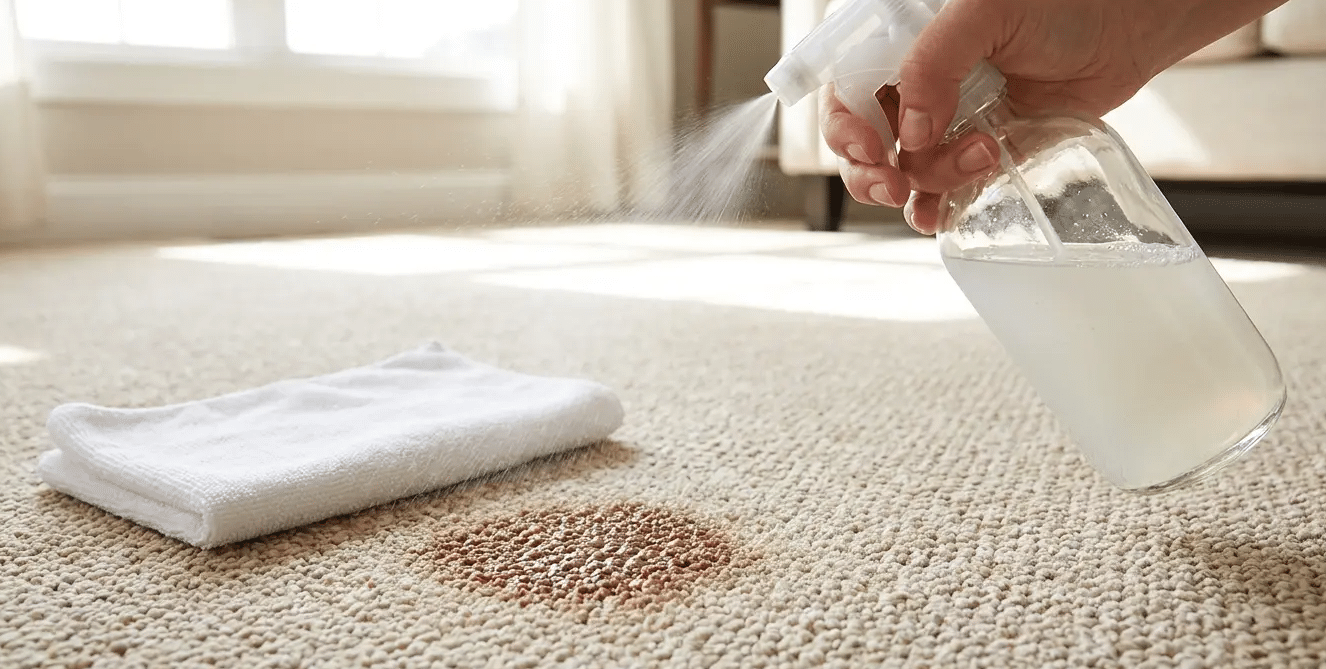
This is the main method to reach for on most fresh and lightly set stains.
- Combine 1 tablespoon dish soap, 1 tablespoon white vinegar, and 2 cups cool water. Mix them in your spray bottle.
- Spray the solution lightly over the stained area. Avoid a heavy soak.
- Let it sit for a minute or two, then blot with a dry cloth until no more color transfers.
- Rinse the spot with a small amount of cold water, blot dry, and let it air dry fully.
Note: The soap breaks down oily residue, and the vinegar loosens tannins clinging to the fibers. Skipping either ingredient tends to leave a faint shadow behind.
Method 2: Baking Soda Paste
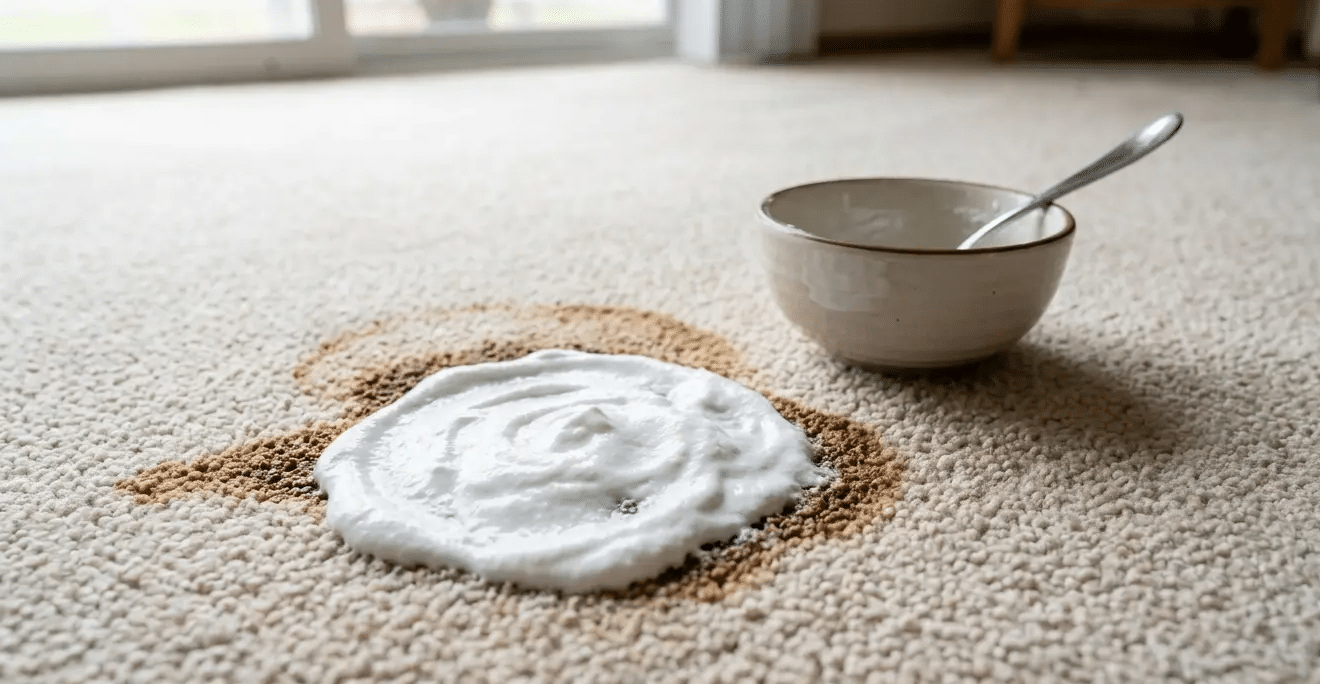
Use this method when the soap and vinegar mix alone isn’t lifting the color.
- Mix three parts baking soda with one part water until it forms a thick paste.
- Spread the paste directly over the damp stain with a spoon or an old cloth.
- Let it sit for 15 to 20 minutes, so it has time to draw out both color and odor.
- Vacuum up the dried paste once it has set.
Note: Baking soda works best on stains that also smell, since it absorbs odor along with color. It can take a couple of rounds to fully clear darker spots.
Method 3: Hydrogen Peroxide Solution
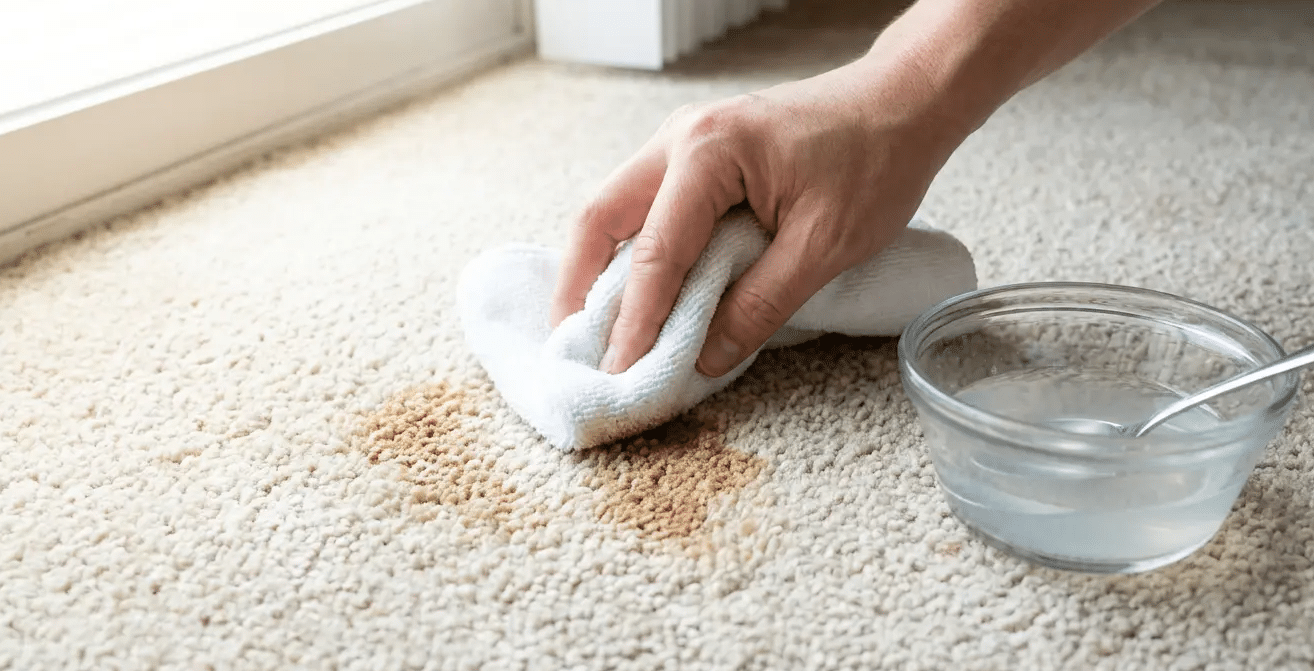
This method gives you extra lifting power on lighter carpet, though it needs a bit of caution.
- Mix one part hydrogen peroxide with two parts cool water in a small bowl.
- Spot test it on a hidden corner of the carpet first, since it can lighten some colors.
- Apply the mix to the stain and let it sit for 5 to 10 minutes.
- Blot with a clean cloth, rinse with cold water, and let the area air dry.
Note: Hydrogen peroxide acts as a mild bleaching agent. Save it for stubborn or set-in spots it as your first attempt on a fresh stain.
Method 4: Lemon Juice Solution
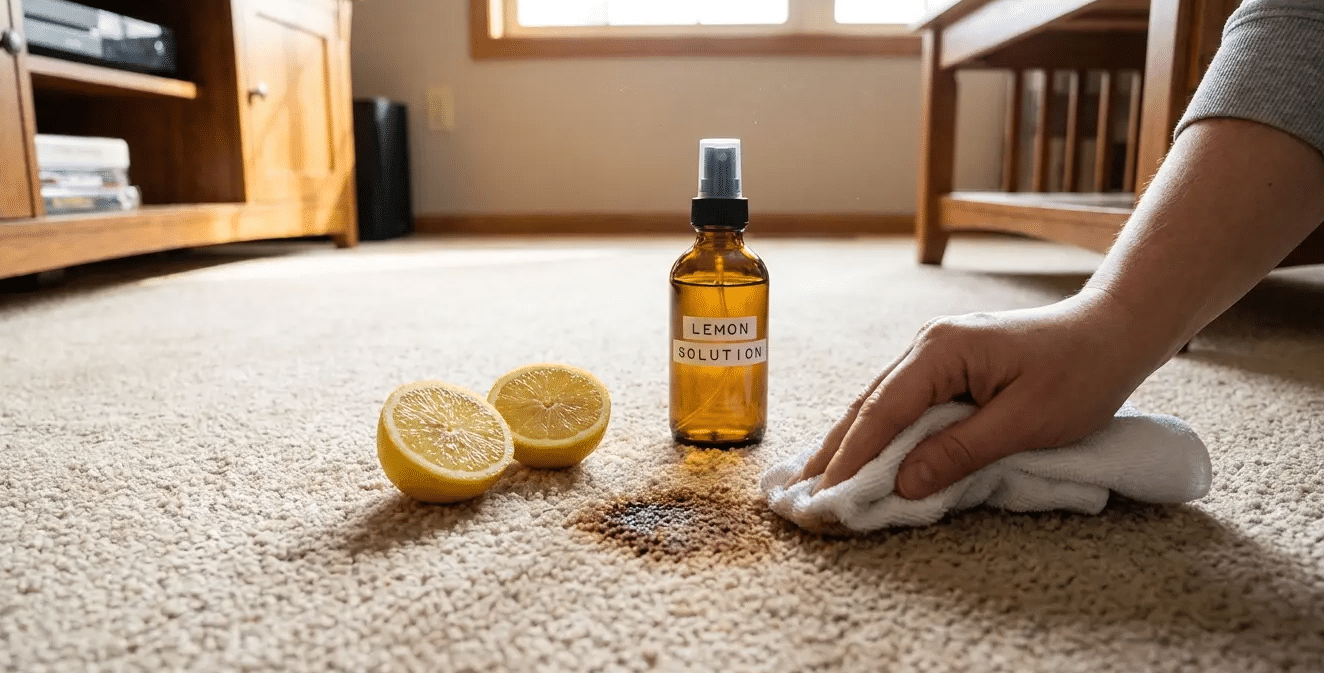
Lemon juice brings more acidity than vinegar, which can help on carpet that tolerates it well.
- Mix one quarter cup of lemon juice with two cups of cool water in your spray bottle.
- Spot test it on a hidden section of carpet first, since lemon juice can lighten some fibers.
- Spray a light mist over the stain and let it sit for five minutes.
- Blot with a clean cloth, rinse with cold water, and let the area air dry.
Note: Lemon juice works best on synthetic carpet that resists discoloration. Skip it on wool or other natural fibers unless you have already spot tested it.
Method 5: Rubbing Alcohol
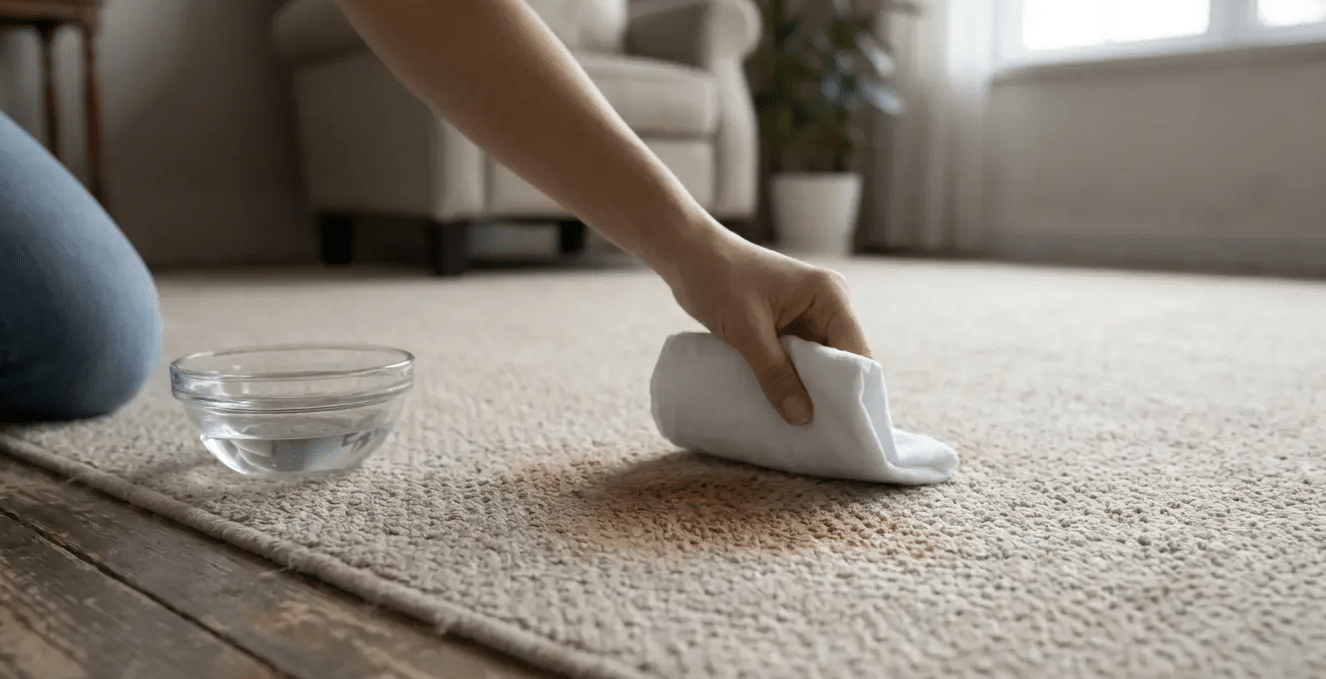
Rubbing alcohol targets stains that have already started to set, since it breaks down bonds that plain water cannot.
- Mix one part isopropyl alcohol with one part cool water in a small bowl.
- Spot test it on a hidden area, since alcohol can affect certain carpet dyes.
- Dab the mix onto the stain with a cloth, working from the outer edge inward.
- Blot with a dry cloth, rinse with cold water, and let the spot air dry.
Note: Rubbing alcohol works well on tannins that have already bonded to the fibers. That makes it a good backup when dish soap and vinegar alone are not enough.
Removing Coffee Stains from Carpet with Milk or Sugar
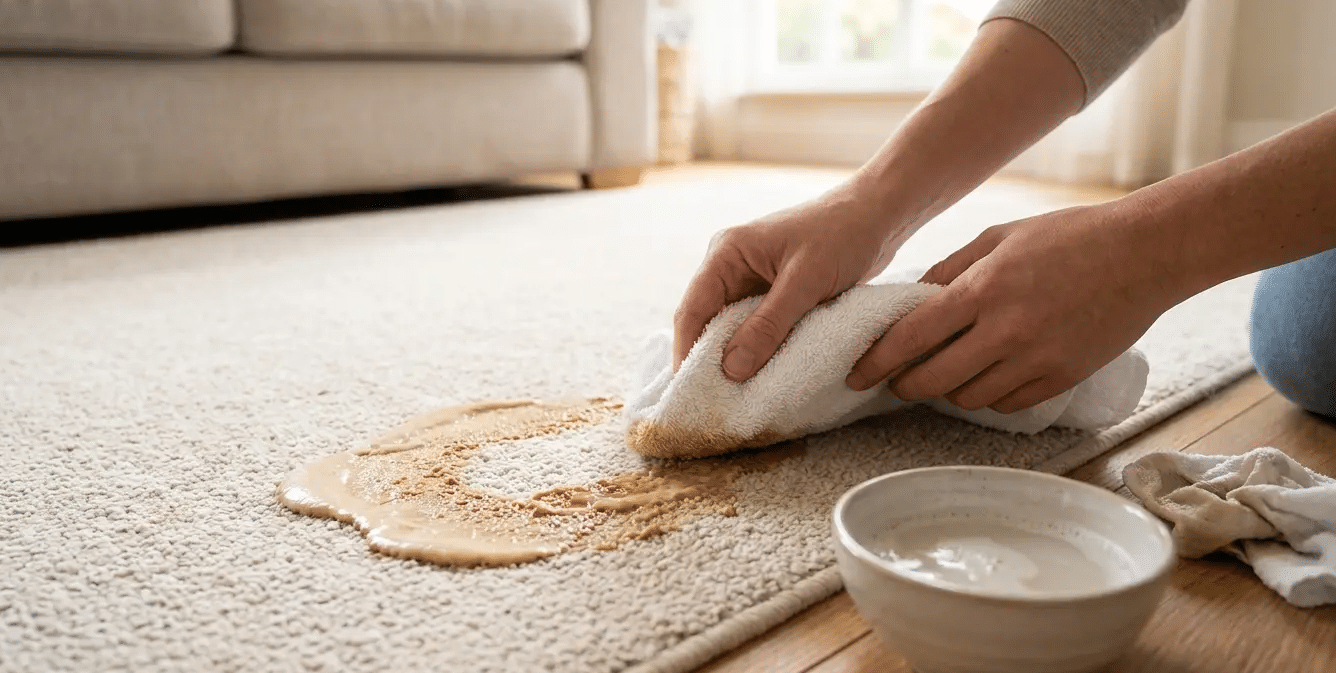
Cream and sugar turn a simple stain into a stickier, smellier problem if you skip this extra step.
- After the basic cleaning steps above, mix one capful of enzyme laundry detergent with a cup of warm water in a separate bowl.
- Dab the mix onto the spot with a fresh cloth to help break down proteins from the milk and any leftover sugar.
- Let the enzyme mix sit on the spot for a few minutes before you blot it up.
- Rinse the area with a little cold water once the stickiness is gone, then let it air dry fully.
This step matters most for spots that still smell faintly sour once the color has lifted.
Removing a Coffee Stain from Carpet by Carpet Type
Different carpet fibers react differently to stain treatments, so choosing the right cleaning method can help prevent damage or discoloration.
| Carpet Type | Best Approach |
|---|---|
| Nylon | Use mild dish soap or diluted vinegar; rinse well afterward. |
| Polyester | Clean with mild soap and avoid leaving sticky residue behind. |
| Wool | Use gentle, wool-safe cleaners and avoid strong acids or peroxide. |
| Berber | Blot carefully and avoid over-wetting, which can reach the backing. |
| Dark carpet | Avoid bleaching agents that may fade the color; always spot-test first. |
| White/light carpet | Diluted peroxide may help with discoloration, but test it first. |
When to Call a Professional
Some stains are simply better left to someone with the right equipment.
If a stain keeps reappearing after you clean it, that often means something. Coffee has likely reached the padding, not just the surface fibers.
Fragile, natural fiber carpets are another good reason to call in a professional. The same goes for large spills that have set for weeks.
Repeating home methods that are not working rarely helps at that point. A professional carpet cleaner has access to hot water extraction and stronger, safer solvents than most home cleaners.
That equipment can pull moisture and coffee residue out of the padding, not just the surface.
Common Mistakes to Avoid
A few small missteps can turn an easy stain into a stubborn one, and most of them happen in the first minute, before you have even reached for a cleaner.
- Scrubbing instead of blotting: Spreads the stain and pushes coffee deeper into the fibers.
- Using too much water: Soaks the carpet backing and padding, which slows drying and invites wicking.
- Skipping a spot test: Before trying bleach or any new solution on colored carpet.
- Mixing cleaning products together: Like vinegar and hydrogen peroxide, which can weaken their cleaning power or damage the carpet.
- Walking on a damp spot too soon: This presses new dirt right back into the fibers before the carpet dries.
The same blot-first, spot-test-first approach carries over to other tough household stains, including the deep-set marks that show up on granite worktops.
Frequently Asked Questions
Will Dawn Remove Coffee Stains from Carpet?
Yes, Diluted Dawn dish soap breaks down oily residue and lifts coffee stains, especially when milk or cream is involved.
Will Wd-40 Remove Coffee Stains from Carpet?
No, WD-40 is oil-based and can leave its own residue on carpet fibers, making the stain worse instead of better.
What Stains Cannot Be Removed from Carpet?
Bleach marks, permanent dye, and deeply set-in stains often alter carpet fibers permanently and resist most home cleaning methods.
Does Club Soda Work on Carpet Coffee Stains?
Club soda can help lift a fresh stain through its fizzing action, but dish soap and vinegar work more reliably on set-in coffee.
Will an Old Coffee Stain Ever Fully Disappear?
Old stains usually lift with repeated treatment. Very set-in ones may leave a faint shadow that needs a professional clean.
Final Thoughts
Removing a coffee stain from carpet almost never means giving up on the floor.
Blot first, pick the method that matches your carpet and how set the stain is, then rinse well before letting the spot dry completely. Fresh spills lift within minutes.
Older ones may need two or three rounds before the color fully disappears, and that is normal, not a sign the stain has won.
Save this blog before your next spill, since knowing the steps ahead of time is what actually protects a carpet. Your floor will look like itself again.