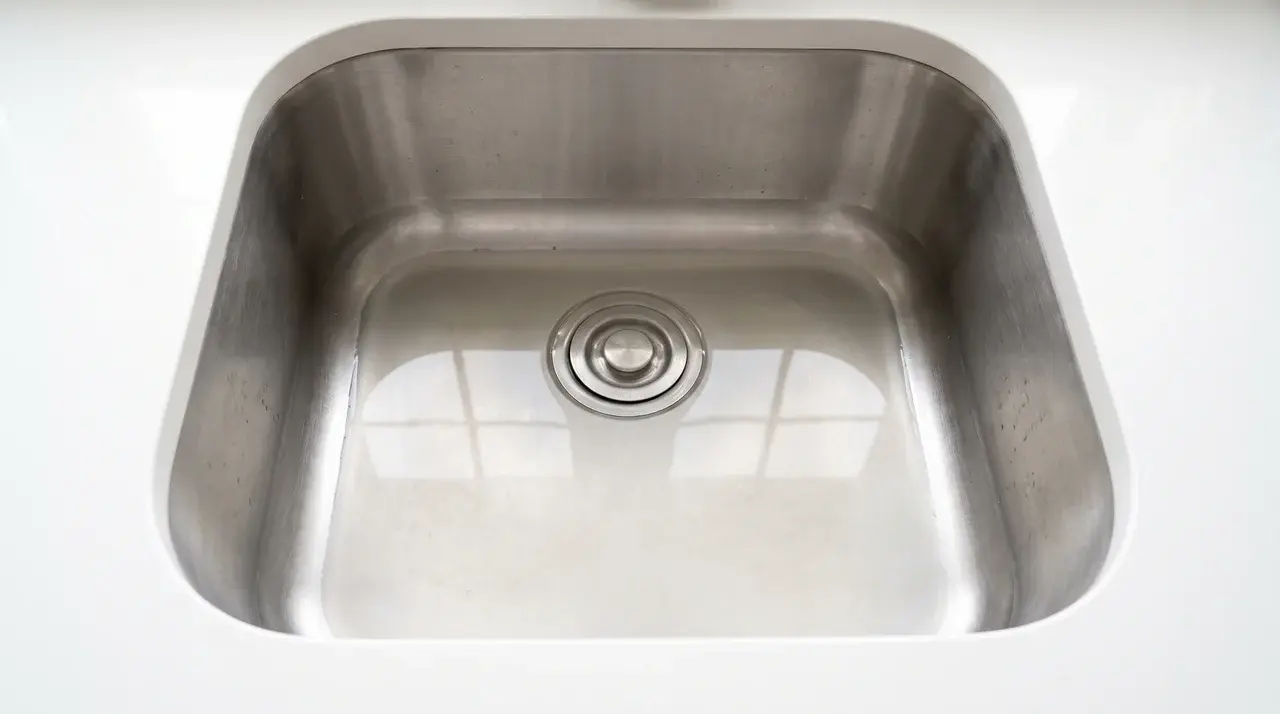

A blocked kitchen sink happens to almost every home at some point, and it always seems to pick the worst possible time.
Grease, food, and everyday debris build up in the pipes until the water stops draining, and a plunger is not always within reach when it does.
A plunger is not the only fix.
Keep reading to learn how to unblock a sink without a plunger, using six simple methods ranging from the easiest fix to the most hands-on, so you can get your sink running again with what is already under the sink.
What is Blocking Your Sink?
Grease, food debris, and foreign objects are the three causes of almost every kitchen sink blockage. Each one sits in a different part of your drain and needs a different fix.
Signs your sink is blocked:
- Drainage has slowed over several weeks, not overnight.
- Water drains partially, then stalls completely.
- The sink clears faster with cold water than hot.
- Greasy film sits around the drain opening.
Safety Checks Before You Start
One skipped safety step can turn a 20-minute fix into a repair job. Go through these before you open a cabinet or pour anything down the drain.
- Never mix chemical drain cleaners with baking soda or vinegar. The reaction produces heat and can spray back at you.
- Turn the garbage disposal off at the breaker before inserting a hanger or snake into the drain opening.
- Wear rubber gloves for every method. Drain residue carries bacteria.
- Place towels under the P-trap area before loosening any fitting. Even a small drip soaks a cabinet floor quickly.
- Do not force anything against resistance in older pipes. Joints loosen, and loose joints leak.
Ways to Unblock a Kitchen Sink Without a Plunger
These methods go from the easiest fix to the most hands-on. Start at Method 1 and move down only if the clog does not clear. Working in order saves time and avoids unnecessary effort.
Method 1: Hot Water Flush
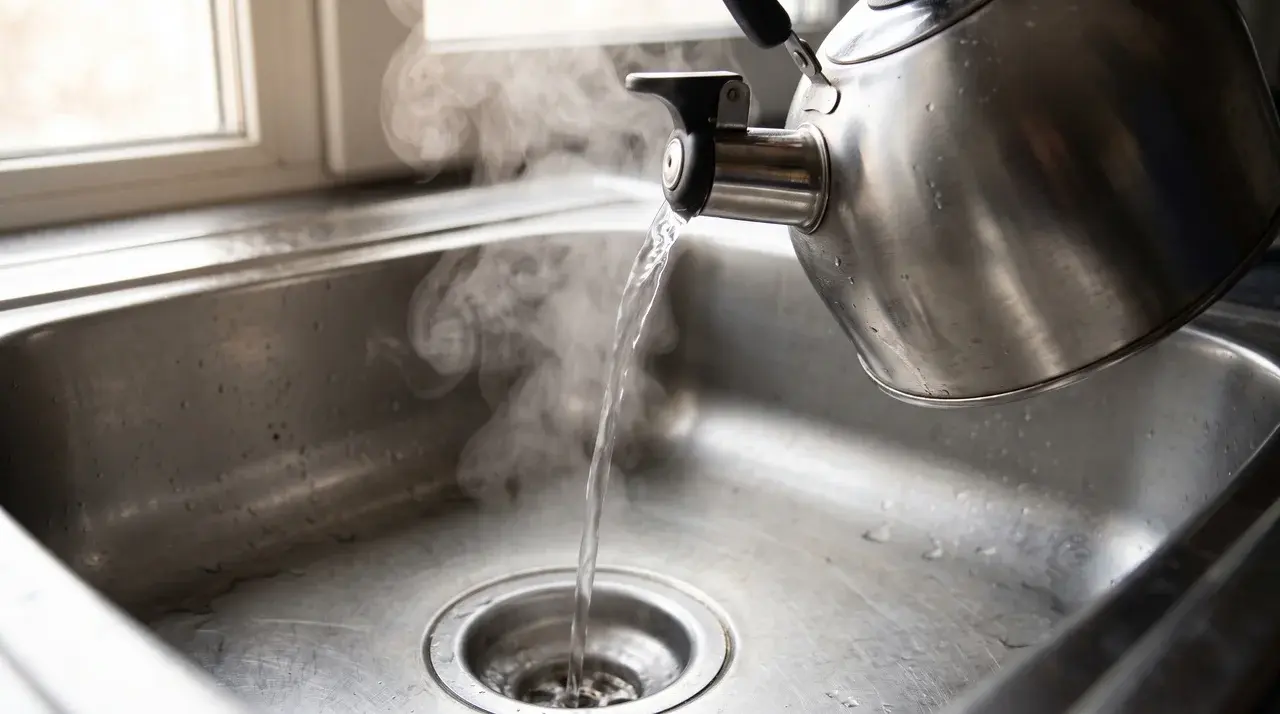
Hot water is the right first move for any slow drain. It softens light grease and soap film before they pack into a solid blockage, and it costs nothing.
What you need:
- A kettle or access to the hottest available tap water.
- A cup or bowl to remove standing water.
Steps:
- Remove standing water from the sink with a cup or bowl
- Boil a full kettle (metal pipes only) or run the hottest tap water you have (PVC pipes)
- Pour in two or three stages with a 30-second pause between each
- Let it sit for two minutes, then test drainage
Pro tip: If water still pools after two rounds, move to Method 2. Do not repeat this more than three times as it may push a grease clog further down the pipe rather than clearing it.
Method 2: Baking Soda and Vinegar
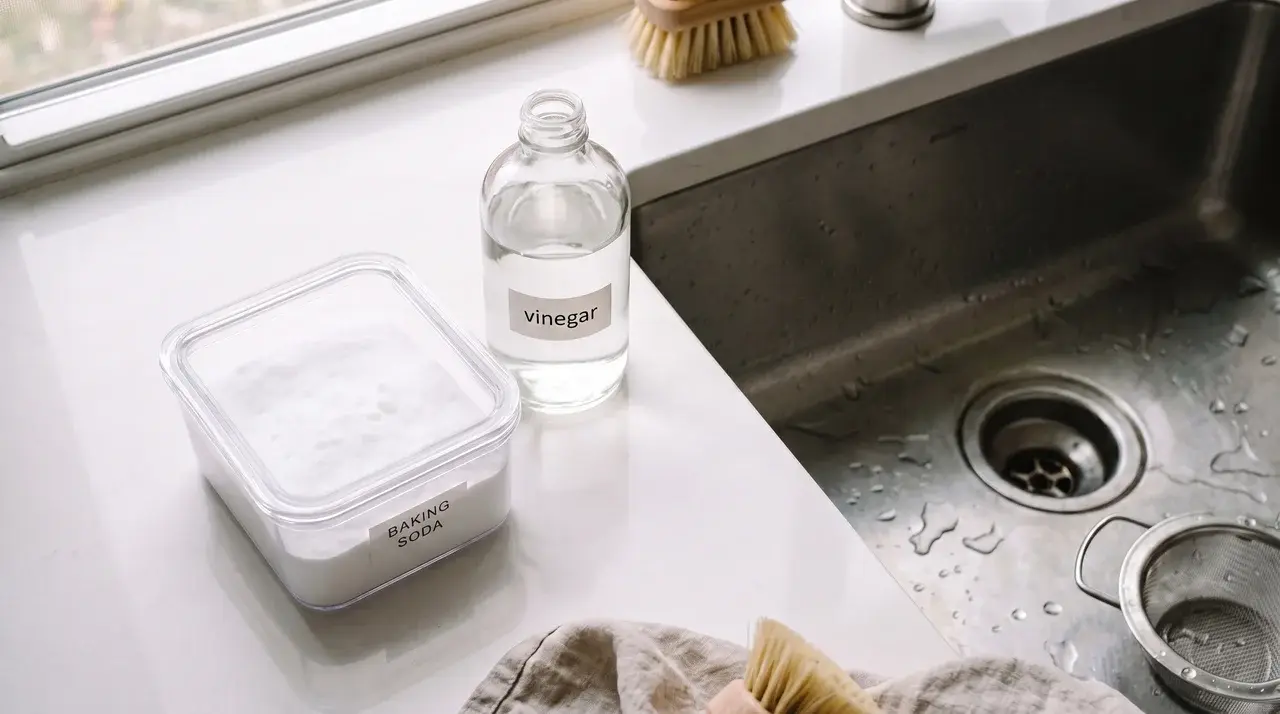
Baking soda and vinegar break down soft organic buildup clinging to pipe walls. This method works on food residue, light grease, and soap scum but will not shift a solid object.
What you need:
- Half a cup of baking soda.
- Half a cup of white vinegar.
- A cloth or drain stopper.
Steps:
- Scoop out any standing water first.
- Pour half a cup of baking soda directly into the drain.
- Follow with half a cup of white vinegar straight away.
- Cover the drain with a cloth or stopper to keep the reaction inside the pipe.
- Wait 15 to 20 minutes.
- Flush with hot water.
Pro Tip: Repeat once if drainage improves but does not fully clear. No change at all means the clog is solid move on to Method 3 or 4.
Method 3: Baking Soda and Salt
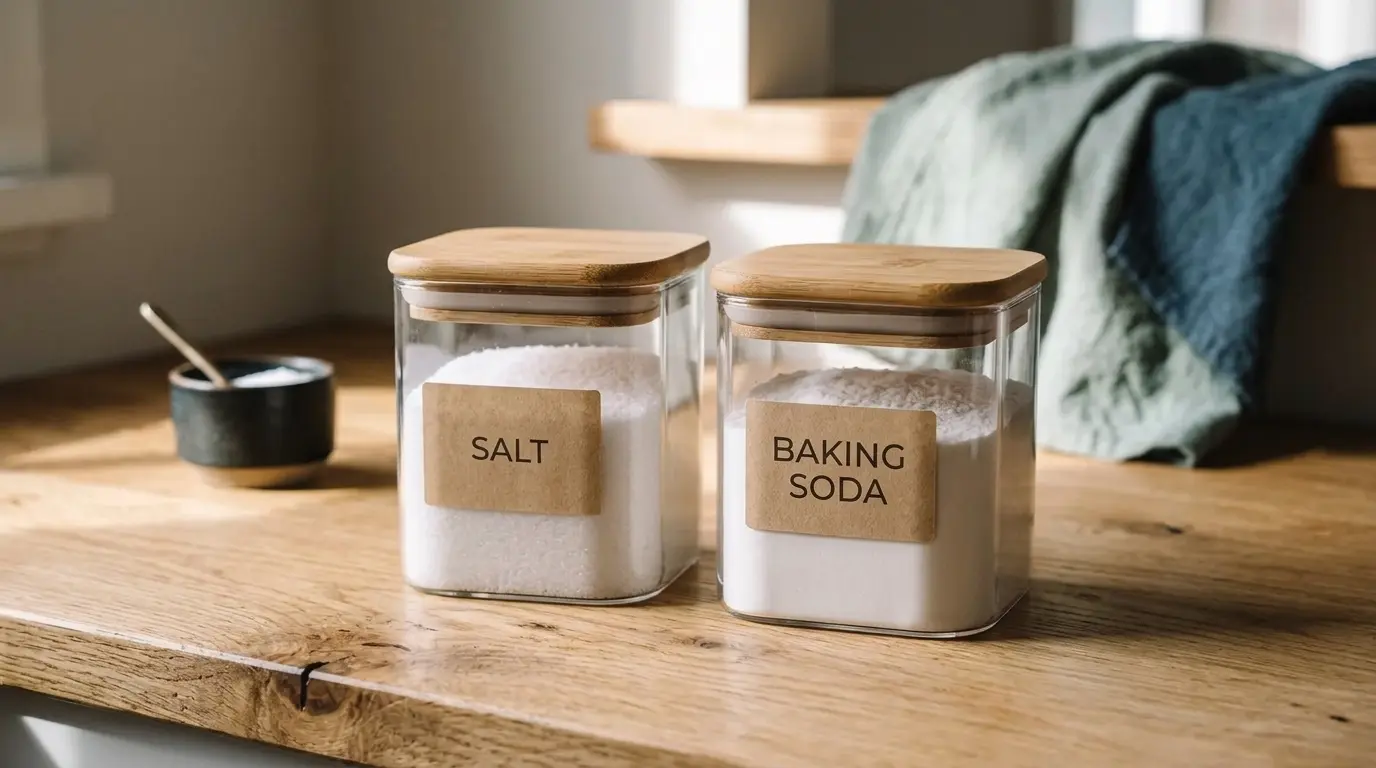
Baking soda and salt scrub pipe walls clean when you have no vinegar. Salt is abrasive, whereas vinegar is chemical; it physically scours residue off the inside of the pipe.
What you need:
- 1 cup of baking soda.
- Half a cup of table salt.
Steps:
- Mix 1 cup of baking soda with half a cup of table salt
- Pour the dry mixture into the drain
- Leave it for at least two hours overnight; it works better
- Flush with hot water
Method 4: Wire Coat Hanger
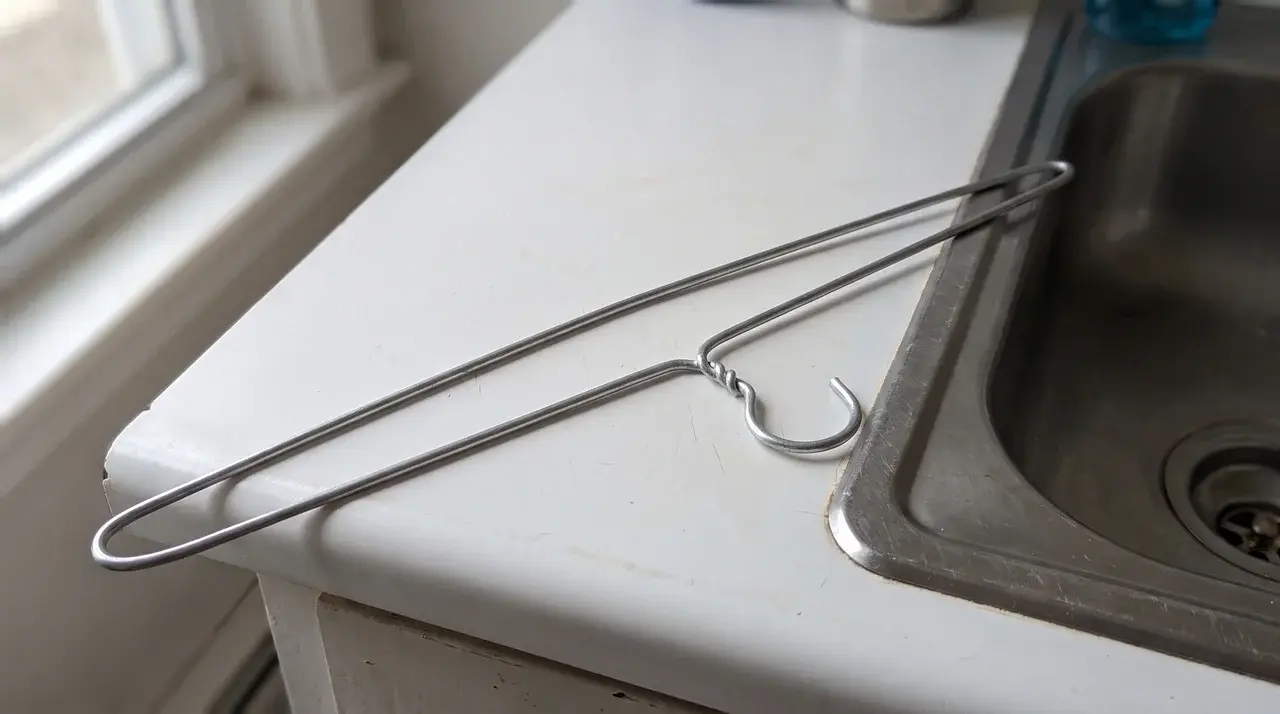
A wire hanger pulls food debris and hair directly out of the P-trap opening. It cannot reach deep clogs, but it clears the most common blockage location without any special tools.
What you need:
- One wire coat hanger.
- Rubber gloves.
- A wet cloth (for double sinks).
Steps:
- Straighten a wire coat hanger fully
- Bend one end into a small hook about 1 inch long
- Suppose you have a double kitchen sink; stuff a wet cloth into the second drain to stop pressure escape and direct it to the clog.
- Insert the hooked end and move it in a slow circular motion
- Pull out debris rather than pushing it in further
- Flush with hot water after clearing
Pro tip: Do not force the hanger around sharp bends. Strong resistance means stop. Forcing it can scratch the inside of your pipe and cause small leaks over time.
Method 5: Clean the P-Trap
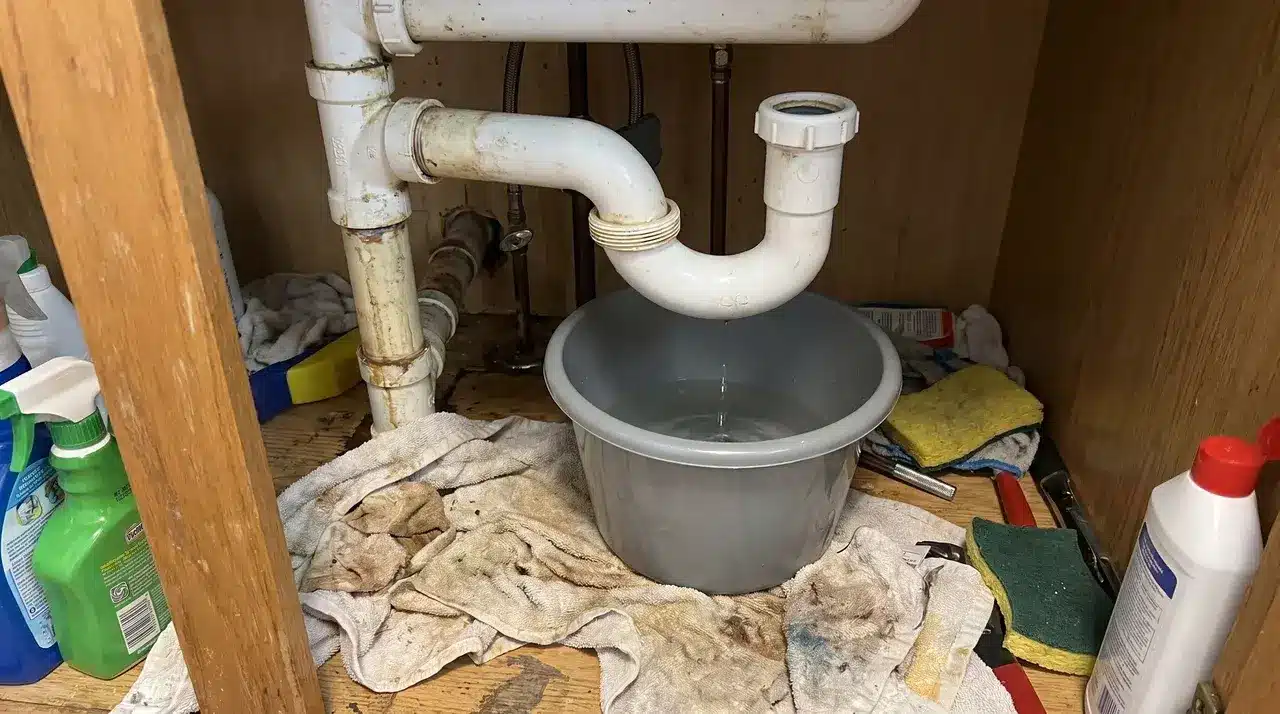
Cleaning the P-trap is the most effective fix for heavy grease and complete blockages. The P-trap collects most of the drain debris, and clearing it solves the problem at the source.
What you need:
- Adjustable pliers
- A bucket
- Rubber gloves
- Old towels
- An old toothbrush
Steps:
- Clear the cabinet, place a bucket under the P-trap, and lay towels around the base.
- Loosen the slip nuts on both ends and carefully remove the P-trap.
- Empty the trapped water and debris into the bucket while wearing gloves.
- Scrub the inside of the P-trap with an old toothbrush to remove buildup.
- Reattach the P-trap and hand-tighten the slip nuts without overtightening.
- Run water slowly and check for leaks before using the sink normally
Method 6: Drain Snake
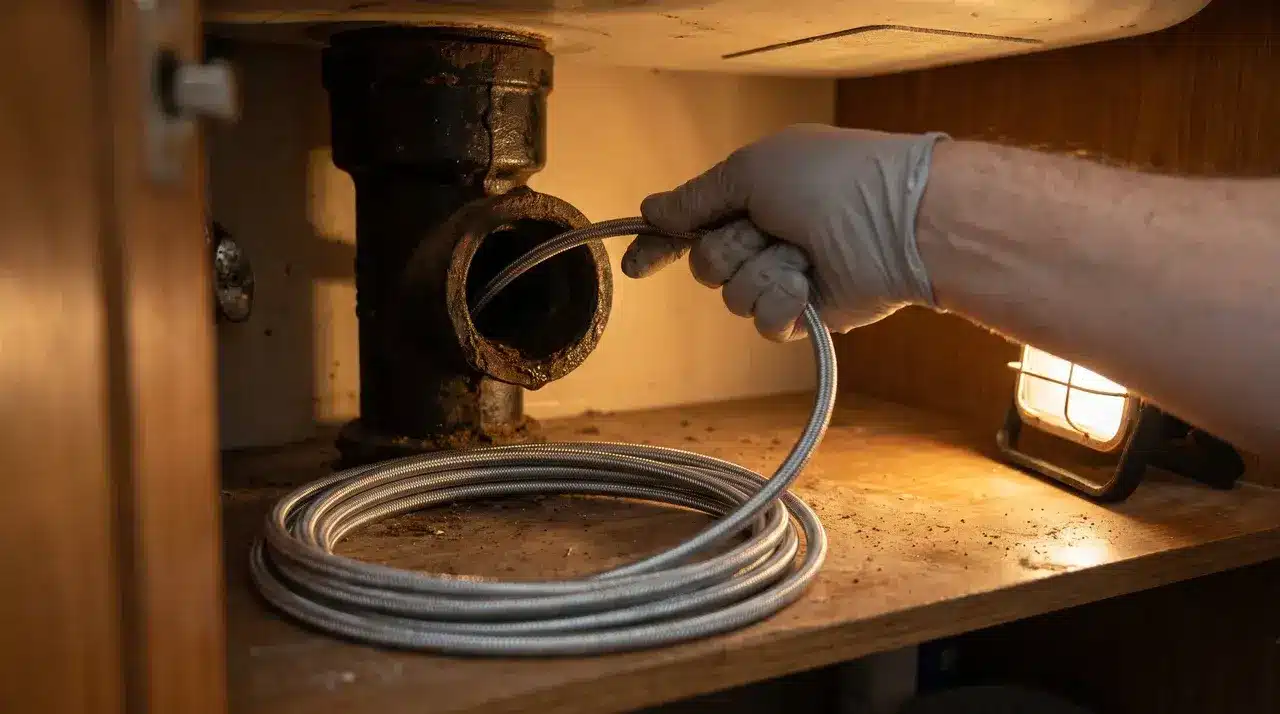
A drain snake reaches clogs that sit past the P-trap in the pipe running into the wall. Use this method when every other fix has failed, and the drain still runs slow.
What you need:
- A hand auger (drain snake).
- Rubber gloves
- A bucket
- Adjustable pliers (to remove the P-trap first).
Steps:
- Remove the P-trap first to give the snake a clear path into the drain pipe.
- Feed the snake cable into the drain pipe opening in the wall.
- Crank the handle clockwise as you push the cable forward.
- When you feel resistance, you’ve found the clog. Turn a bit more to break or hook it.
- Pull the cable back slowly and bring the debris out with it.
- Reattach the P-trap and test with water.
How to Keep Your Kitchen Drain Clear?
The best outcome is not needing to fix it at all. These habits take under a minute each.
- Never pour cooking oil or grease down the drain. Let it cool in the pan, wipe it into the bin, then wash the pan.
- Run hot water for 30 seconds after every dishwash to flush residue before it sets, which also stops fruit flies from breeding in sink sludge.
- Do a baking soda and vinegar flush once a month as routine maintenance.
- Fit a mesh drain strainer. It costs a few dollars and prevents food debris from entering the pipe.
- Keep coffee grounds, rice, and pasta out of the sink. These swell inside pipes and quickly create stubborn clogs.
Common Mistakes that Make a Blocked Sink Worse
These mistakes turn a simple 20-minute fix into a bigger, costlier problem. Avoid them before you start working on your drain.
- Mixing chemicals without checking first. Pouring vinegar after using a chemical drain cleaner can cause a dangerous reaction.
- Using boiling water on plastic pipes. Boiling water warps PVC fittings and loosens slip joints. Use very hot tap water instead.
- Pushing debris in instead of pulling it out. A wire hanger works by hooking onto the clog and removing it.
- Overtightening the P-trap after cleaning it. Hand-tight is enough. Forcing the slip nuts with pliers cracks the fitting, causing a slow leak inside your cabinet.
- Ignoring a clog that keeps returning. A blockage that comes back within a few days points to a deeper pipe issue, not a surface buildup.
Conclusion
Most kitchen clogs stem from grease, food debris, or a blockage in the P-trap, and few of them actually need a plumber.
Start with hot water, then add baking soda and vinegar; use a P-trap or drain snake only if needed.
A clog that keeps coming back within days usually points to a deeper pipe issue rather than surface buildup, and that is worth a plumber’s attention before it turns into a bigger repair.
Now that you know how to unblock a sink without a plunger, save this guide so it is ready the next time your kitchen sink backs up.
Frequently Asked Questions
What is the Fastest Way to Unclog a Sink?
Pouring hot water down the drain in stages clears most light blockages in under five minutes. For stubborn clogs, cleaning the P-trap works fastest.
Does Dawn Really Unclog Drains?
Dawn dish soap loosens light grease buildup when combined with hot water. It does not clear solid blockages or heavy grease packed inside the P-trap.
Plumbers use a hand auger or hydro-jet machine to physically break up and remove blockages. Both clear clogs without damaging pipe walls or joints.
Can You Use a Plastic Bottle to Unblock a Sink?
Yes. Fill an empty bottle with water, place it over the drain, and squeeze to force pressure down the pipe. It works best on light clogs.
Can a Wet Vacuum Unblock a Kitchen Sink?
Yes, with a tight seal over the drain. Set it to liquid mode first. Never use a standard vacuum; it can damage the motor.