

Thinking about selling your home quickly, or perhaps you’ve spotted a property listed through an unfamiliar selling format?
The modern auction method has changed how properties are bought and sold, offering a convenient online platform where buyers can bid on homes over an extended period.
Unlike traditional auctions that require in-person attendance, this approach allows for a more flexible process.
This guide explains how the modern method of auction works, including the costs, process, and key differences from traditional property sales.
What Is the Modern Method of Auction?
The modern auction method has changed the property-selling process, offering a convenient, accessible online platform where buyers can bid on homes over an extended period.
Unlike traditional auctions, which require buyers to be physically present in an auction room, the modern method offers greater flexibility.
Sellers can list their properties online, and buyers can place bids over several days or even weeks, giving them more time to make informed decisions.
This extended bidding period not only increases buyer participation but also helps sellers achieve a fair market price for their property.
Online auctions give buyers more time to bid and arrange mortgage financing, unlike traditional auctions with strict 28-day deadlines.
How Property Auctions Have Changed Over a Period of Time

Property auctions have changed over the decades. What started in crowded auction rooms has moved online, creating faster and more open processes for everyone involved.
Here is how the two formats compare:
| Aspect | Traditional Auctions | Modern Method |
|---|---|---|
| Location | Physical auction room | Online platform |
| Bidding Period | Single day, a few minutes | 30+ days |
| Legal Status | Unconditional (binding on hammer fall) | Conditional (not binding until exchange) |
| Accessibility | Local buyers only | Global reach |
| Information | Limited advance details | Full legal packs upfront |
| Completion Time | 28 days | 56 days |
| Buyer Type | Mainly cash buyers | Cash and mortgage buyers |
Note: The modern method of auction combines the speed of auctions with the flexibility of traditional property sales, making the process more accessible for buyers and sellers.
Key Features of a Modern Auction

Several unique features clearly set this method apart from both traditional auctions and standard estate agency sales processes.
1. Online Bidding Platforms
Bidding stays open for 30 days or longer. Buyers place bids anytime from computers or phones.
The system operates much like eBay, with automatic bidding and real-time tracking to make the process smooth for all parties.
Most auction platforms add extra time if bids arrive in the final minutes, so last-second sniping is less of a problem than on standard auction sites.
2. Reservation Fee System
The winning bidder pays a non-refundable reservation fee, typically around 4.5% of the sale price, with a minimum of roughly £6,600 including VAT.
This fee goes to the auctioneer and estate agent, not the seller, and is not deducted from the purchase price. On a £250,000 property, your real outlay is closer to £261,250.
Always double-check the exact percentage before placing your bid.
3. Extended Completion Timeline
Buyers typically have 56 days to complete the purchase, rather than the standard 28 days in traditional auctions.
Having a longer timeline means there’s extra time for mortgage approval, surveys, and legal checks, making the process smoother and less stressful.
4. Marketing and Accessibility
Properties appear on Rightmove, Zoopla, and PrimeLocation throughout the bidding process. Legal packs are available upfront.
The online format attracts buyers from across the UK and beyond, increasing competition and potentially raising prices.
What Fees Are Involved When Buying at a Modern Auction?
Buying through the modern auction method involves additional costs beyond the property price. Knowing these fees early helps buyers budget properly and avoid unexpected expenses.
| FEE TYPE | WHAT IT COVERS | EXAMPLE COST |
|---|---|---|
| Reservation Fees | Non-refundable fee paid after winning the auction | 4.5% of the sale price (min ~£6,600 inc VAT) |
| Legal Fees | Solicitor costs, searches, and conveyancing | £1,500 to £3,000+ |
| Survey Costs | Property inspections and valuation reports | £500 to £1,500 |
| Mortgage Costs | Lender fees, broker fees, and valuations | Varies |
| Seller’s Legal Fees | Some auction terms require the buyer to pay the seller’s legal pack costs | Up to £450+ |
| Stamp Duty (SDLT) | Calculated on the purchase price PLUS the reservation fee | Varies by property value |
| Winning Bid | Final accepted property price | £250,000 |
| Estimated Total Cost | Approximate overall purchase cost | £262,000+ (on a £250,000 property) |
Note: Many buyers overlook that SDLT is charged on the property price plus the reservation fee. If overpaid, refunds can be claimed from HMRC within four years with proper evidence.
Step-by-Step Process for Sellers and Buyers
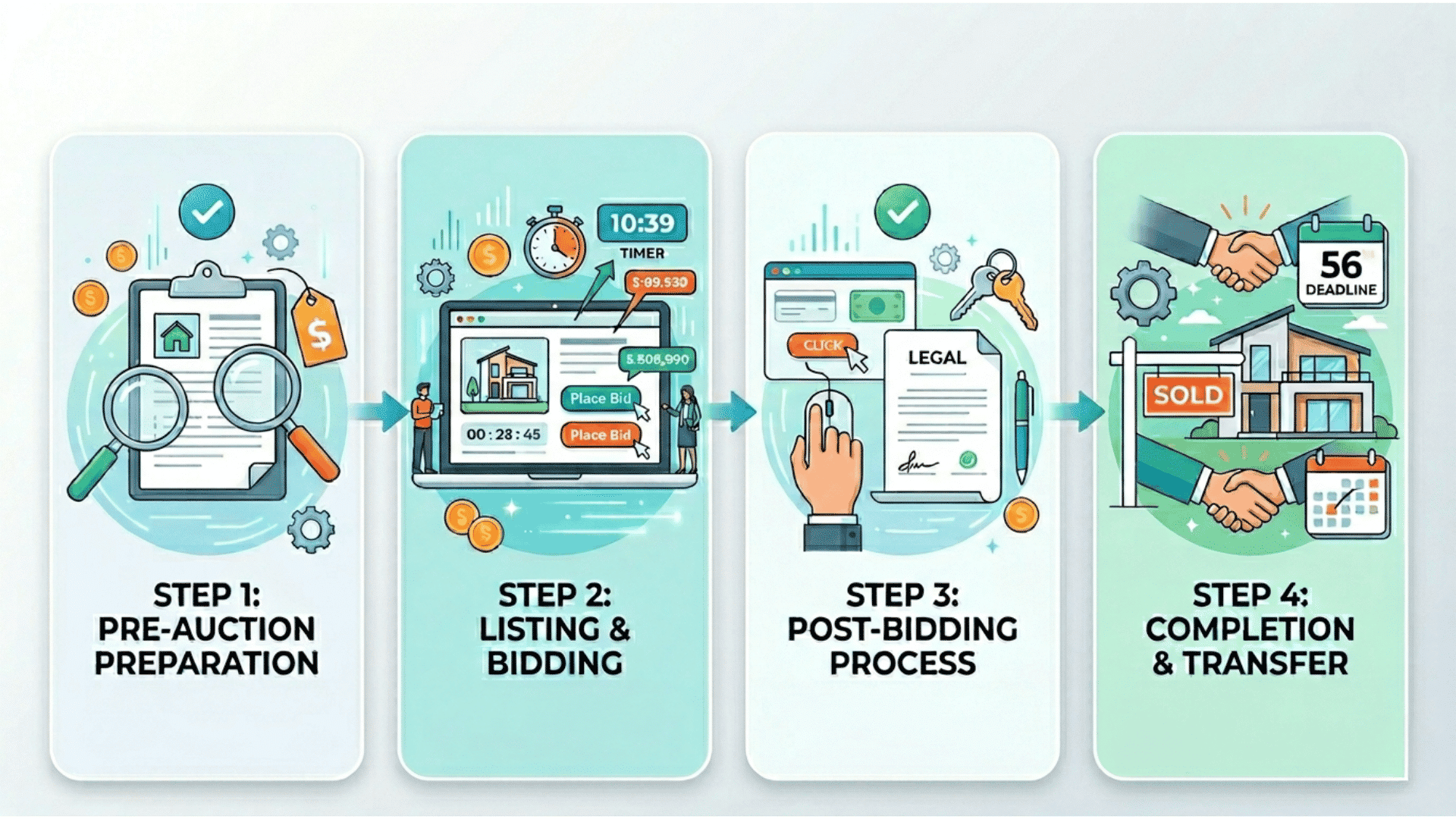
The modern auction process follows a clear timeline from start to finish. Each stage has specific requirements and deadlines that both sellers and buyers must follow carefully.
Step 1: Pre-Auction Preparation
Sellers receive a property appraisal and set a confidential reserve price, the minimum amount they will accept.
A legal pack is then prepared, including key documents such as title details, searches, property forms, and the EPC.
Preparation costs can reach £450, and in some cases, buyers may be required to cover these fees.
Step 2: Listing and Bidding Phase
Properties are listed on major portals for 30 days or more. Buyers can view details, schedule viewings, and place bids online anytime.
All bidding activity remains visible, creating an open record of offers throughout the auction period.
Step 3: Post-Bid Process
The winning bidder pays the reservation fee immediately when bidding ends. This payment is usually taken by credit or debit card.
Contracts must be exchanged within 28 days of the buyer’s solicitor receiving the draft contract.
The completion is typically expected to occur within 56 days after the auction ends.
Note: HMRC includes the reservation fee in the total property price for stamp duty calculations, which can increase the overall tax you pay on the purchase.
Risks and Pitfalls to Watch For
The modern auction method offers speed and flexibility, but it also carries significant financial and legal risks. Understanding these common pitfalls can help buyers and sellers avoid costly mistakes.
- Reservation fees are non-refundable and do not reduce the property purchase price.
- Buyers can still withdraw after winning, leaving sellers at risk of collapsed deals.
- Some estate agents may overprice properties to secure higher auction-related fees.
- Buyers may need surveys before bidding, risking wasted costs if outbid later.
- Bridging finance can help meet deadlines, but it adds extra borrowing costs and interest.
Modern Method Vs Traditional Auctions
Both auction types help sell properties quickly, but they work very differently. The choice between them depends on your situation, timeline, and the type of property being sold.
Here’s how they compare:
| Feature | Traditional Auction | Modern Method |
|---|---|---|
| Bidding | Single day, minutes | 30+ days online |
| Location | Auction room | Online platform |
| Exchange | Immediate | Within 28 days |
| Deposit | 10% upfront | 4.5% reservation fee (non-refundable, on top of price) |
| Buyers | Cash only | Mortgage accepted |
| Legal Status | Unconditional (binding) | Conditional (not binding until exchange) |
| Who Pays Agent Fees | Seller | Buyer (through reservation fee) |
Note: Traditional auctions are often used for hard-to-sell or distressed properties, while the modern method suits standard homes that need a faster sale with mortgage-friendly timelines.
Pros and Cons of the Modern Method of Auction
Every selling method has trade-offs. Here is what both sides should weigh up before committing.
| ASPECT | PROS | CONS |
|---|---|---|
| For Sellers | Faster sales, fewer fall-throughs (~5% vs ~30% for estate agency) | The sale is conditional, not binding. The buyer can still pull out. Seller receives nothing from the reservation fee. |
| For Buyers | Time to arrange mortgages, no chain pressure, online convenience | Non-refundable reservation fee on top of the purchase price, higher SDLT liability, and possible seller legal costs passed to the buyer |
| Overall | Broader market exposure, setting deadlines, prevents indefinite delays | The fee structure benefits the agent more than either party. Properties can be overvalued to attract instructions. |
Legal Obligations and Timeline Requirements
The modern auction method operates under strict legal deadlines once a bid is accepted. Buyers and sellers must act quickly to avoid delays and protect the transaction.
- Day 0: Buyer signs a reservation agreement securing exclusive purchase rights.
- The seller’s solicitor usually sends the draft contract within 3 working days.
- Buyers get 28 days to exchange contracts after the auction ends.
- A further 28 days are allowed to complete the property purchase.
- Mortgage checks and legal inquiries can take weeks, so early action is essential.
Is the Modern Auction Right for Your Situation?
The modern method suits sellers with mortgageable properties, no onward chain, and enough local buyer interest to drive competitive bids.
It is less suited to renovation projects, slow markets, or sellers who need the certainty of an unconditional sale.
For buyers, it works well when you need time to arrange a mortgage and run surveys. Be cautious if you are also selling a property in a chain, because your own sale could push you past the 28-day exchange deadline
Conclusion
The modern auction method sits between the speed of a traditional auction and the flexibility of an estate agency sale.
Sellers get a fixed timeline with fewer collapsed deals. Buyers get time to arrange a mortgage without same-day pressure.
But the reservation fee, the SDLT treatment, and the risk of losing money if the deal collapses all need to be in your budget from day one.
If you are selling or weighing up a property investment, have a solicitor review the auction terms before you commit.
Frequently Asked Questions
Can You View a Property Before Bidding at a Modern Auction?
Yes. Most auctioneers arrange viewings or open house events during the bidding window. Always visit in person, and consider bringing a surveyor if the property appears to need work.
Can the Seller Extend the 56-Day Deadline?
Yes, but it is not automatic. The seller can agree to an extension if the buyer faces delays, though they are under no obligation. If no extension is granted, the buyer loses their reservation fee.
What Types of Property Are Sold Through the Modern Method?
Any property type, from family homes to leasehold flats. It suits mortgageable properties best. Homes needing heavy renovation tend to perform better in a traditional unconditional auction.
Can You Get a Mortgage for a Modern Auction Property?
Yes. The 56-day window gives most buyers enough time to secure a mortgage offer. Start your application before you bid, because a decision in principle does not guarantee a formal offer.
What Happens if the Reserve Price Is Not Met?
The property does not sell. The seller can accept the highest bid below reserve, relist, or withdraw. No reservation fee is charged when the reserve is not met.
Is the Modern Method of Auction a Scam?
No, but it has drawn scrutiny from consumer groups over unclear fee disclosure. Reputable auction houses now state all costs upfront. If an auctioneer is vague about fees, treat that as a warning sign.