
Tropical rainforests cover less than 6% of Earth’s surface, yet they contain more than half of all known plant species.
That contrast alone reveals how extraordinary these ecosystems truly are.
Rainforests are widely recognized for their importance, but fewer people explore how the plants inside them survive and thrive in such extreme conditions.
This guide explores key tropical rainforest plants, how they adapt, what they provide to humans and the planet, and what is at risk as these ecosystems continue to disappear.
What Makes the Tropical Rainforest Different?
Tropical rainforests are located close to the equator. The three major rainforest regions are the Amazon Basin in South America, the Congo Basin in Central Africa, and the rainforests of Southeast Asia.
These regions receive between 79 and 394 inches (2,000–10,000 mm) of rainfall annually, and temperatures remain consistently warm throughout the year with very little seasonal variation.
Several environmental factors make survival challenging for plants:
- Limited sunlight at ground level: The dense upper canopy blocks most sunlight, leaving the forest floor in deep shade.
- Nutrient-poor soil: Heavy rainfall causes nutrients to be quickly washed away (leaching), so most nutrients are stored in living plants rather than the soil.
- Intense competition: Thousands of plant species grow in close proximity, forcing constant competition for light, water, and space.
As a result, tropical rainforest plants have evolved highly specialized survival strategies that are not commonly seen in other ecosystems.
The 4 Layers of a Tropical Rainforest
A tropical rainforest is not one uniform green mass. It is a structured system with four distinct layers, each with its own set of plants adapted to very different light and moisture conditions.
| Layer | Key Idea | Adaptation |
|---|---|---|
| Emergent | Tallest trees above the canopy, fully exposed to sun and wind | Strong roots, wind-resistant structure |
| Canopy | Dense “roof” of the forest, richest biodiversity | Epiphytes like orchids and bromeliads grow on trees |
| Understory | Shaded, low-light environment | Large leaves to capture limited sunlight |
| Forest Floor | The darkest layer with very little sunlight | Shade-tolerant plants, fast decomposition |
How Tropical Rainforest Plants Survive: 7 Key Adaptations
These survival strategies show up across many of the plants on this list. Knowing them first makes each plant profile easier to understand.
1. Drip Tips: Long, pointed leaf tips that channel rainfall off the leaf surface, preventing rot and fungal buildup.
2. Buttress Roots: Wide, flat roots that spread out from the base of tall trees. They provide stability in shallow, nutrient-poor soil.
3. Epiphytic Growth: Some plants grow on tree trunks and branches instead of soil. They draw moisture from the air and collect nutrients from leaf debris.
4. Waxy Leaf Coatings: A protective wax layer keeps water from sitting on leaf surfaces too long, reducing the risk of disease.
5. Cauliflory: Certain trees produce flowers and fruit directly from their trunks rather than from branch tips. This gives pollinators easier access in low-light conditions.
6. Air Roots: Roots that grow above the ground and absorb water and nutrients directly from the surrounding air.
7. Parasitic Growth Strategy: Some plants attach themselves to a host plant and draw water and nutrients from it, without needing soil at all.
As someone who has grown epiphytic plants in a greenhouse setting, I can confirm these traits are not just useful in the wild. They are part of why many tropical plants adapt well to indoor growing conditions, too.
19 Tropical Rainforest Plants You Should Know
From towering trees to carnivorous traps, these plants have found ways to survive one of the most competitive places on Earth. Each one tells a different story about adaptation, utility, and survival.
Trees
These are the giants that hold the entire rainforest structure together. Without them, none of the layers below would exist.
1. Kapok Tree
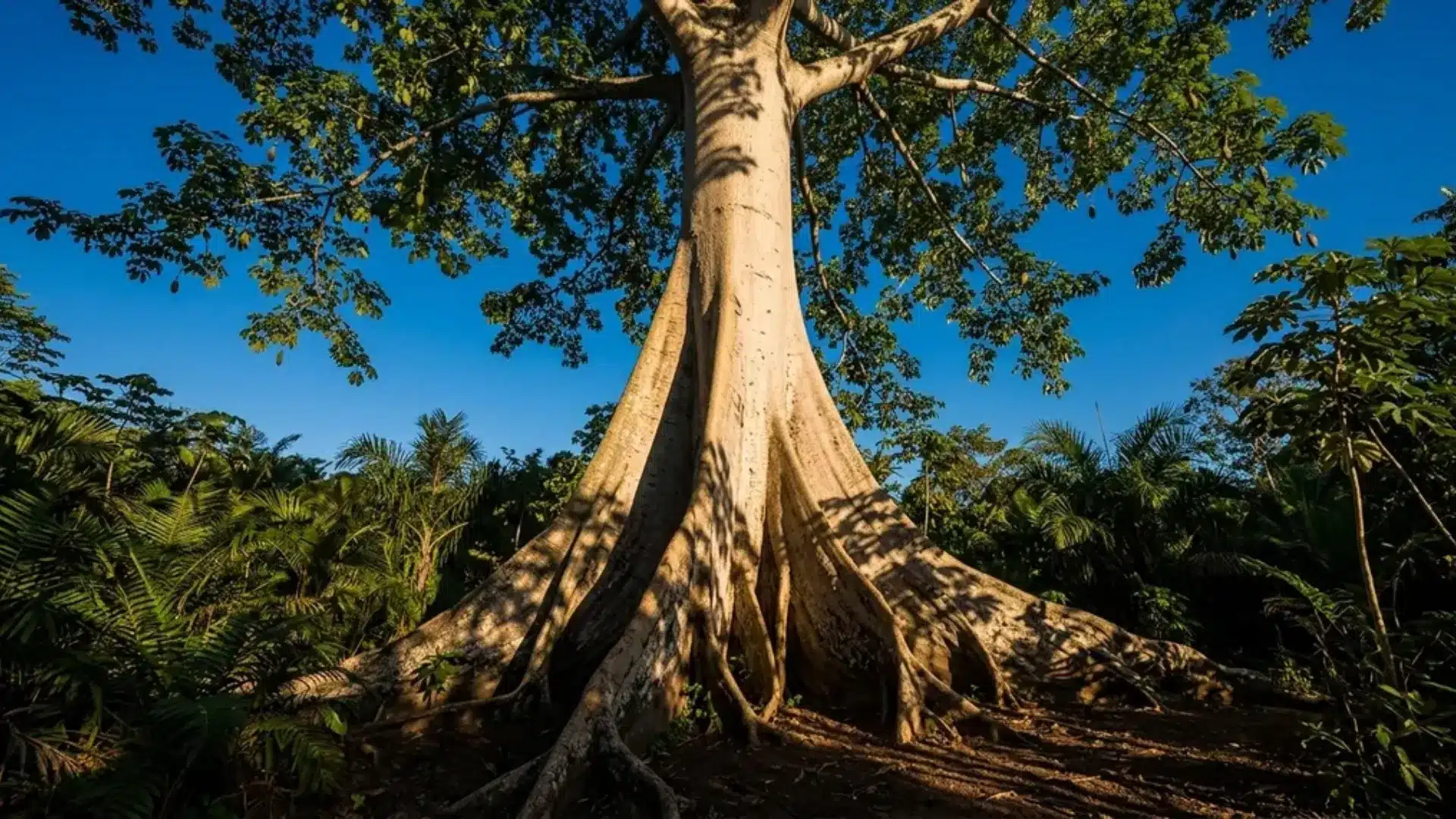
The Kapok tree is one of the tallest in the Amazon. It grows over 200 feet tall, placing it firmly in the emergent layer above the main canopy.
Wide, flat buttress roots fan out from its base to anchor it in shallow forest soil. The tree produces a cotton-like fiber inside its seed pods. This fiber was historically used for stuffing life jackets and insulation.
2. Brazil Nut Tree
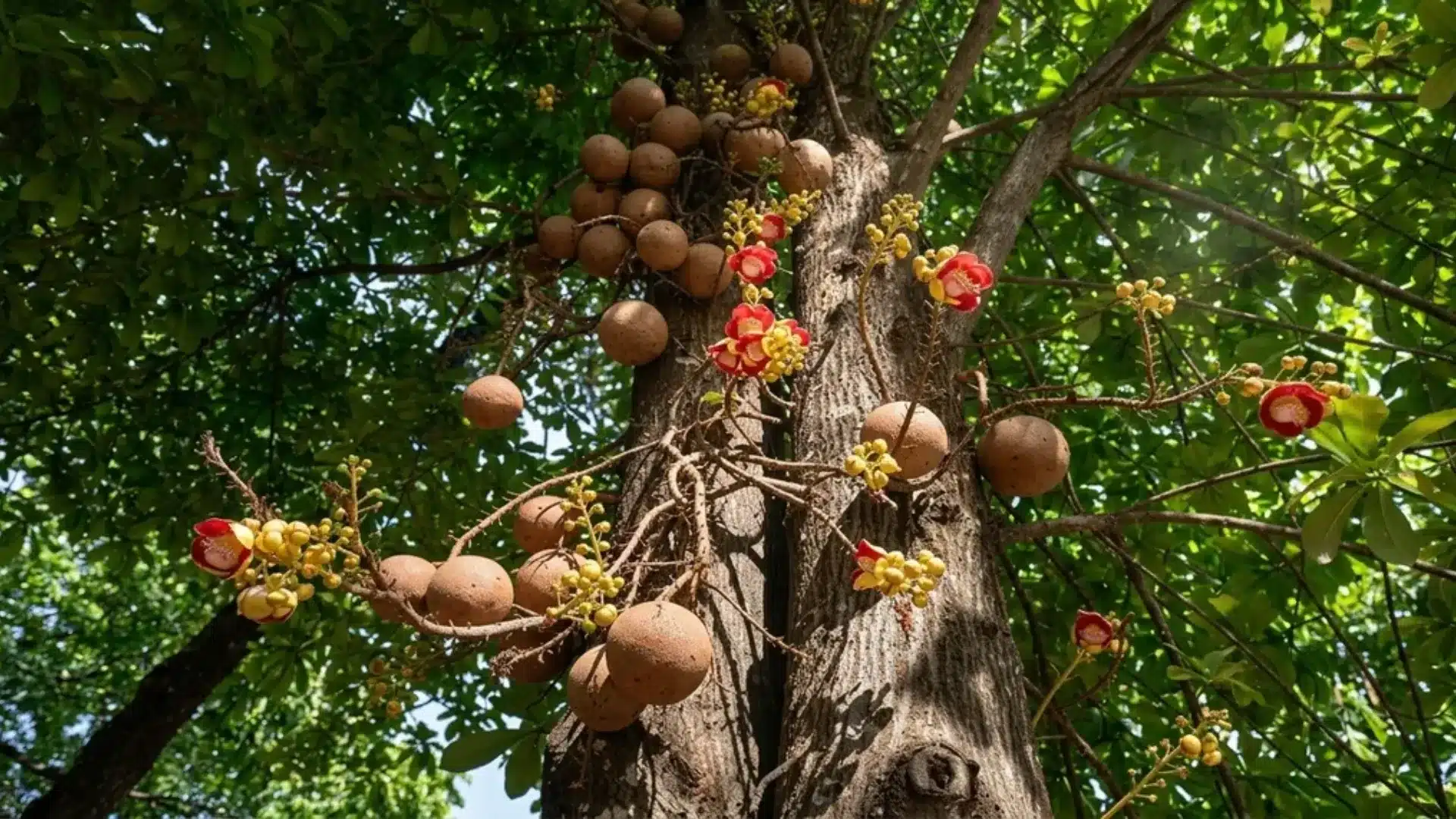
The Brazil nut tree grows only in the undisturbed Amazon rainforest and depends entirely on one bee species, the orchid bee, for pollination. It cannot be commercially farmed on cleared land.
Each woody fruit pod holds 10 to 25 seeds arranged like orange segments. The tree can live for over 500 years and produces food for both local wildlife and human communities.
3. Rubber Tree
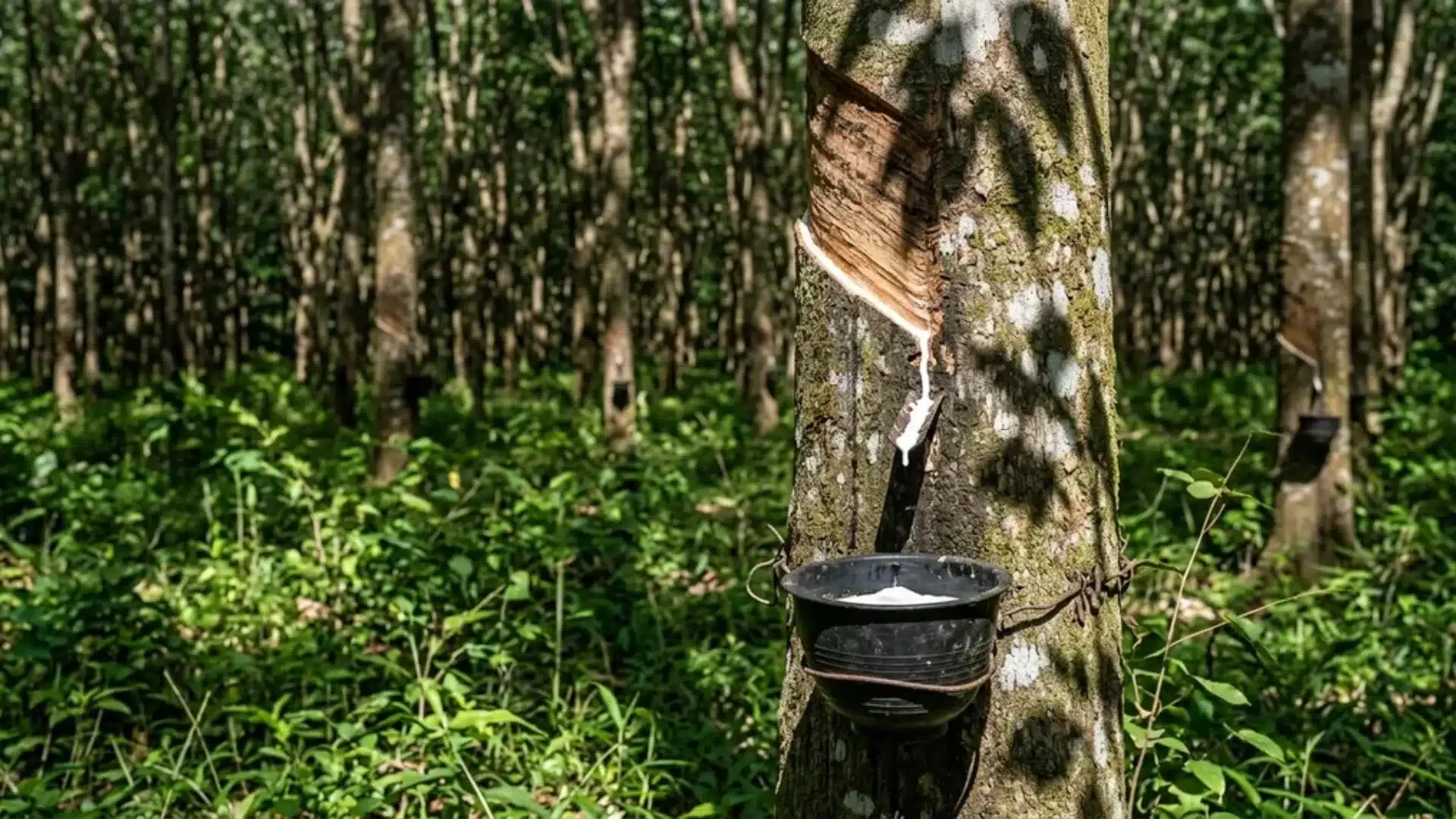
The rubber tree is native to the Amazon but is now also grown across tropical Asia and Africa. It produces a milky fluid called latex in vessels beneath its bark.
Harvesters cut the bark in a process called rubber tapping, and the latex drips into collection cups. Natural rubber from this tree is used in car tires, hoses, and clothing.
Over 1.9 million rubber trees grow in the Amazon today.
4. Strangler Fig
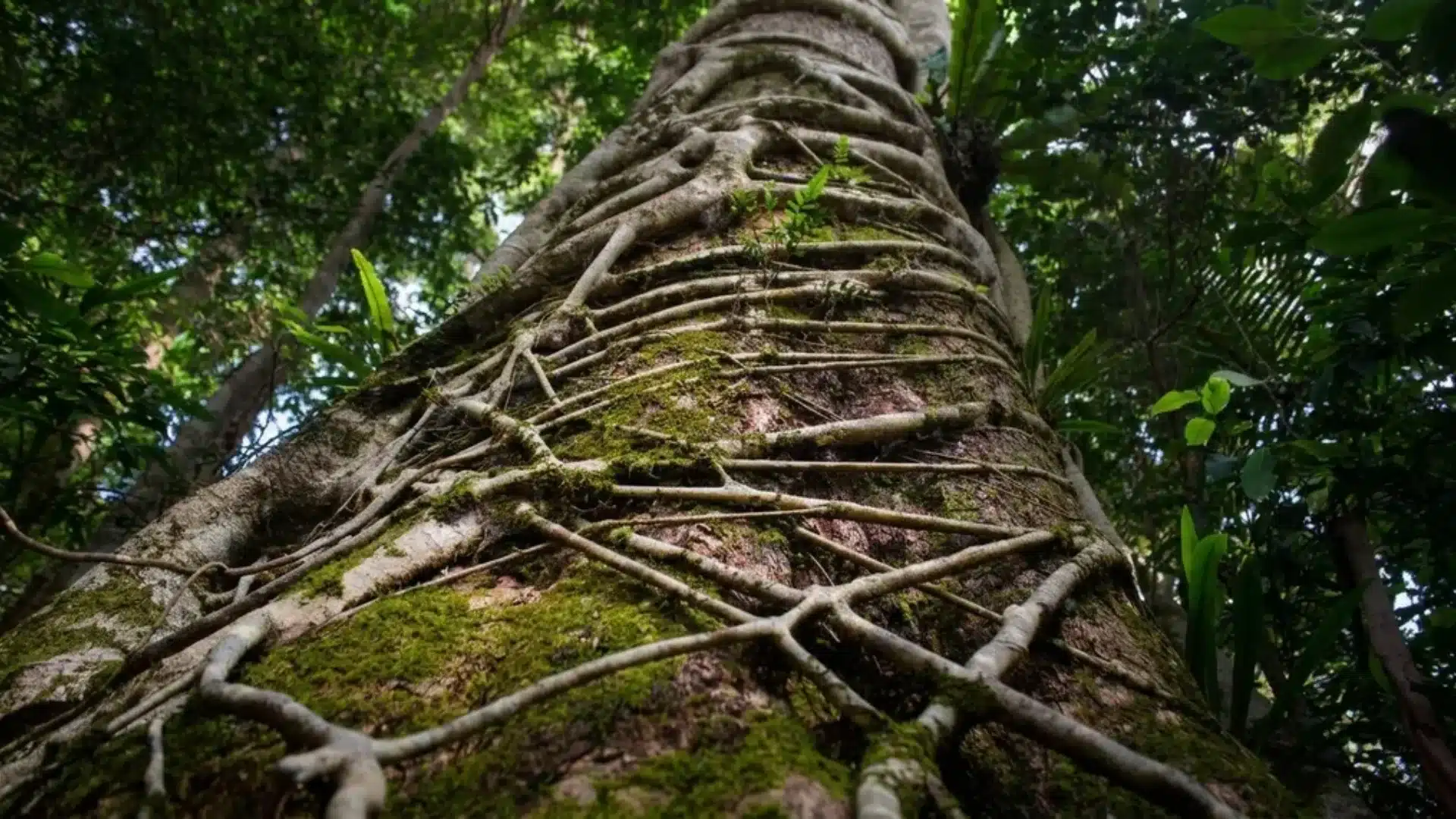
The strangler fig starts life as a small seed dropped by a bird onto a tree branch. It sends roots down toward the ground while its stems grow upward toward the light.
Over decades, these roots wrap around the host tree and eventually replace it, leaving a hollow fig trunk standing where the original tree once was.
It is one of the most effective light-competition strategies in the entire rainforest.
5. Cacao Tree
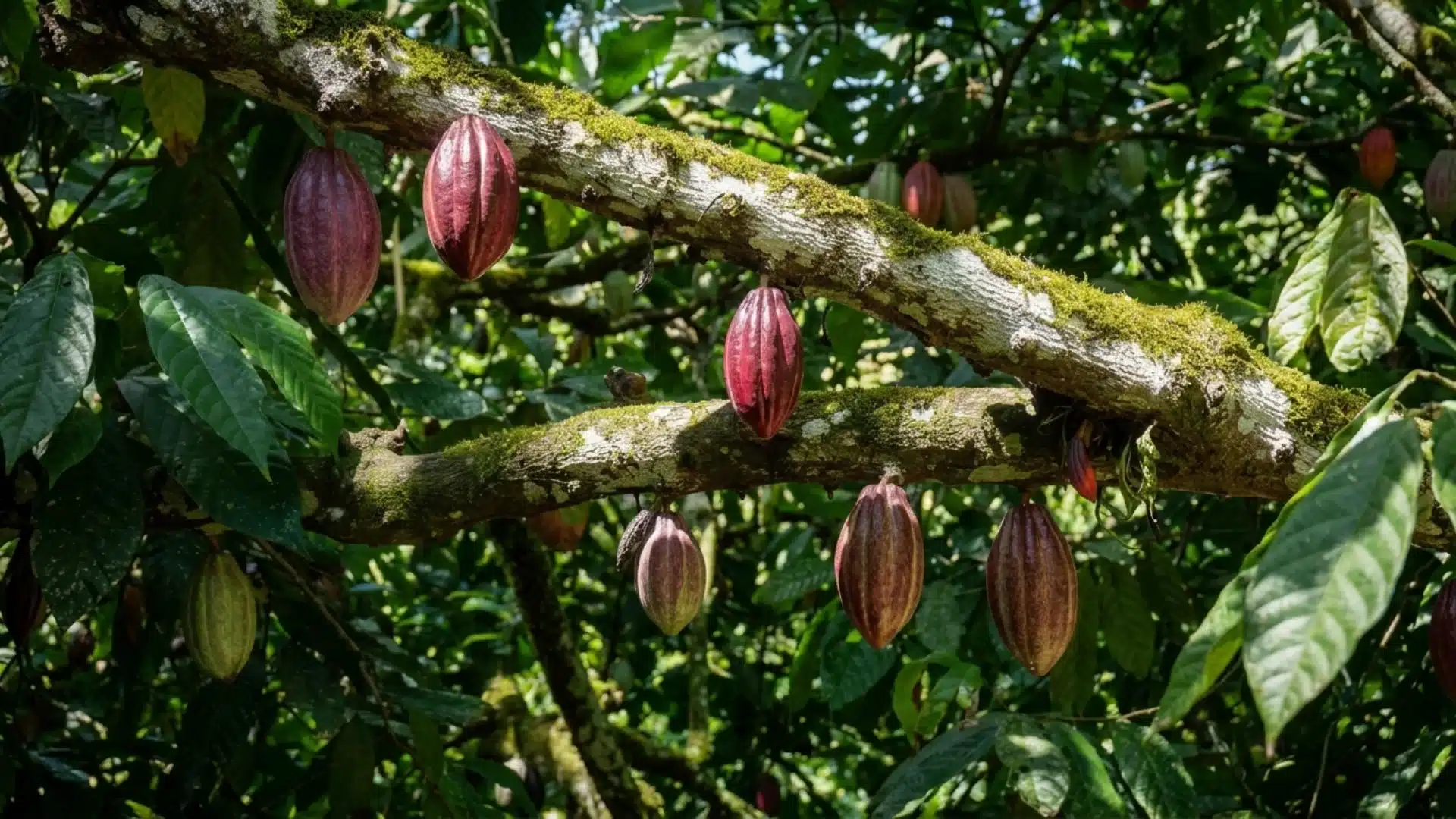
The cacao tree grows in the understory and flowers directly from its trunk, a trait called cauliflory. This makes its small flowers accessible to the midges that pollinate them in low-light forest conditions.
Each cacao pod contains 20 to 50 seeds, which are the raw material for chocolate.
The tree is also a key part of the local economy across Central and South America and West Africa.
Flowering Plants
Rainforest flowers are not just beautiful. They are precision-built survival tools shaped by millions of years of co-evolution with specific pollinators.
6. Heliconia

Heliconia plants are native to tropical America, including Brazil. Their striking bracts, the leaf-like structures around the flowers, come in red, orange, and yellow.
Hummingbirds are their primary pollinators. The plant grows in the understory and along forest edges where some light breaks through.
Several species are grown as ornamental plants in warm-climate gardens worldwide.
7. Passion Flower
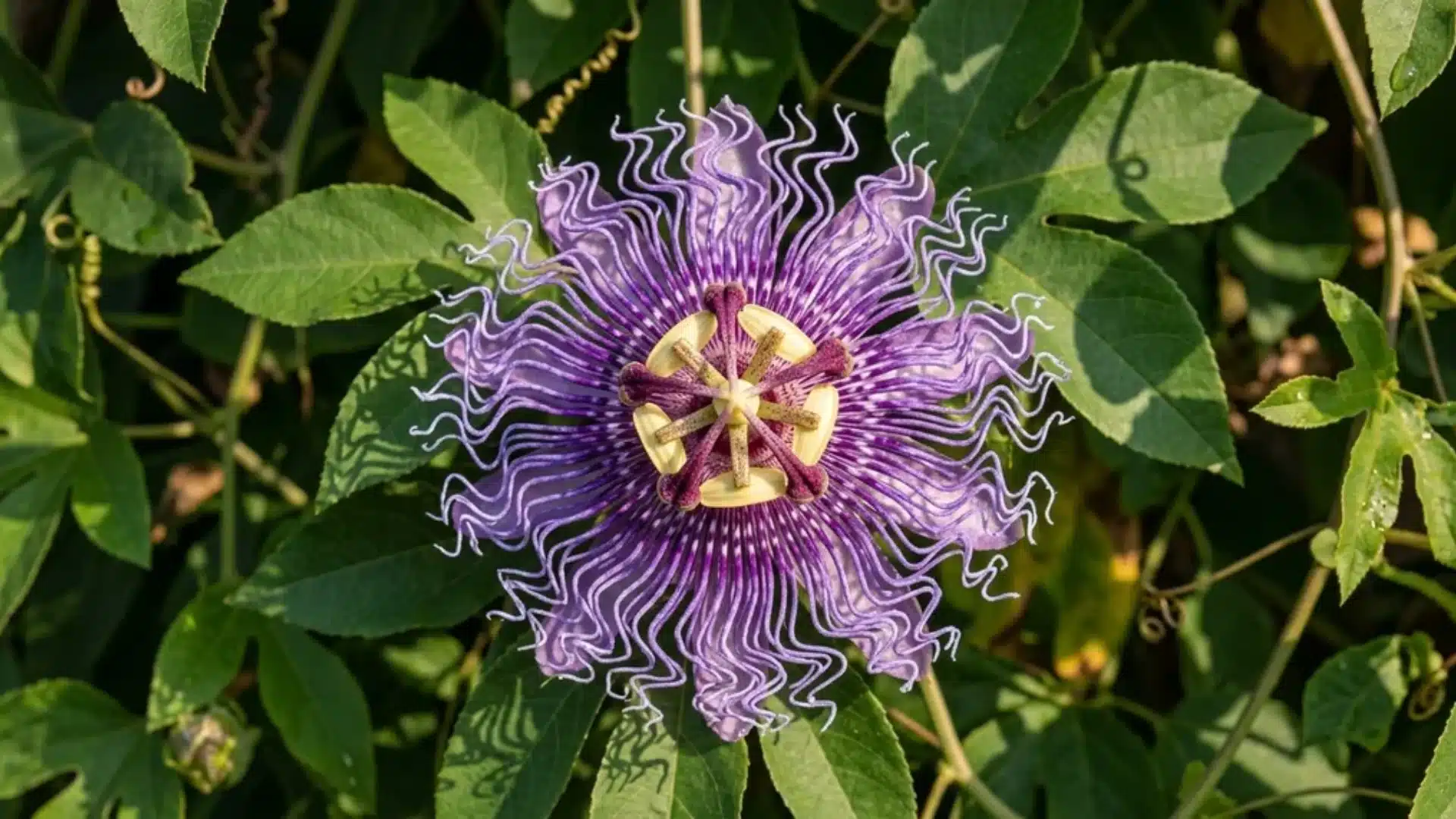
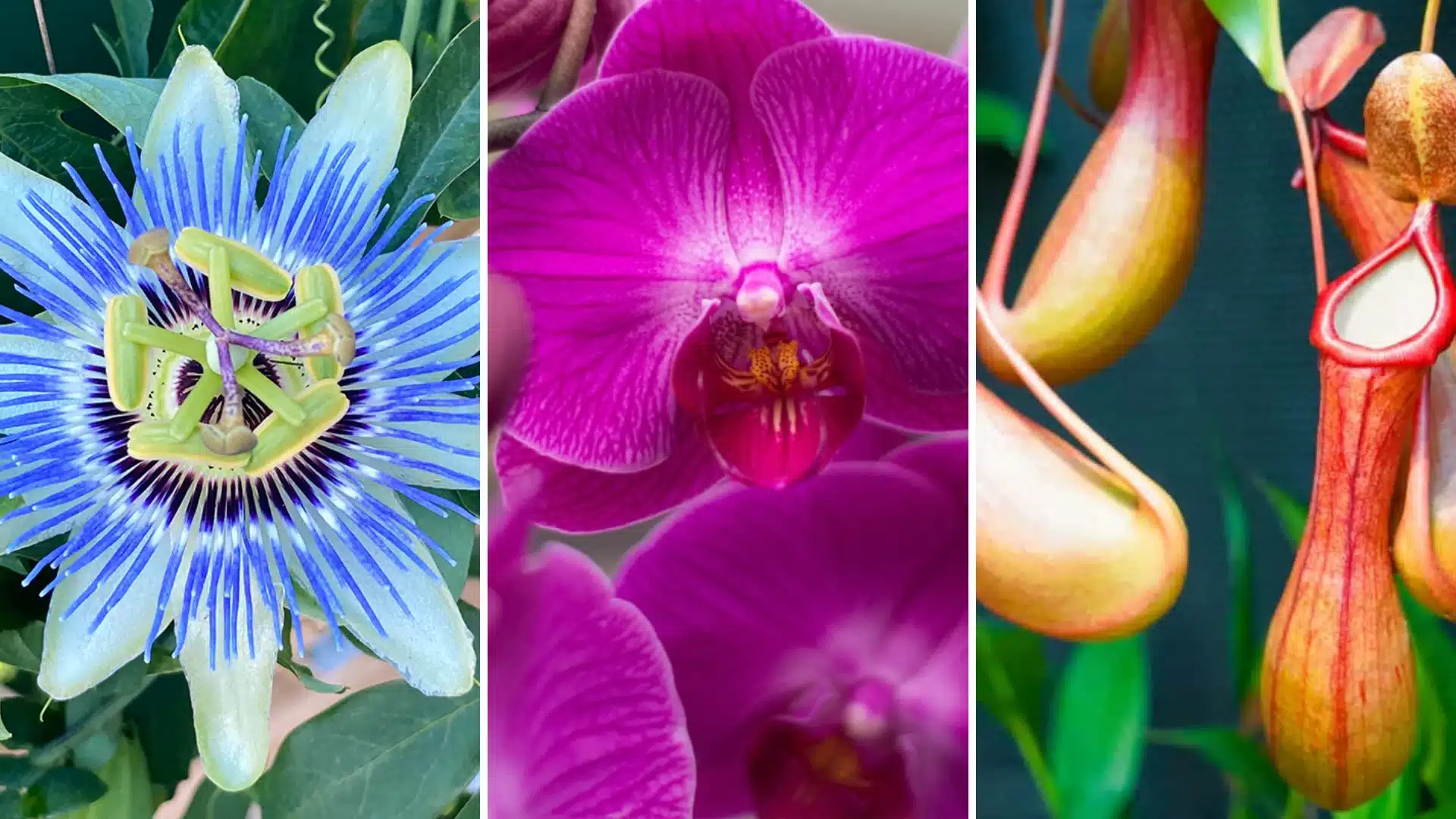
The passion flower is a climbing vine with one of the most distinctive floral structures in the plant world. Its shape evolved to match the exact body dimensions of particular bee and butterfly pollinators.
This tight relationship means each species relies on a limited set of insects for reproduction.
Many passion flower species also produce edible fruit, including the common passionfruit found in grocery stores.
8. Amazon Water Lily
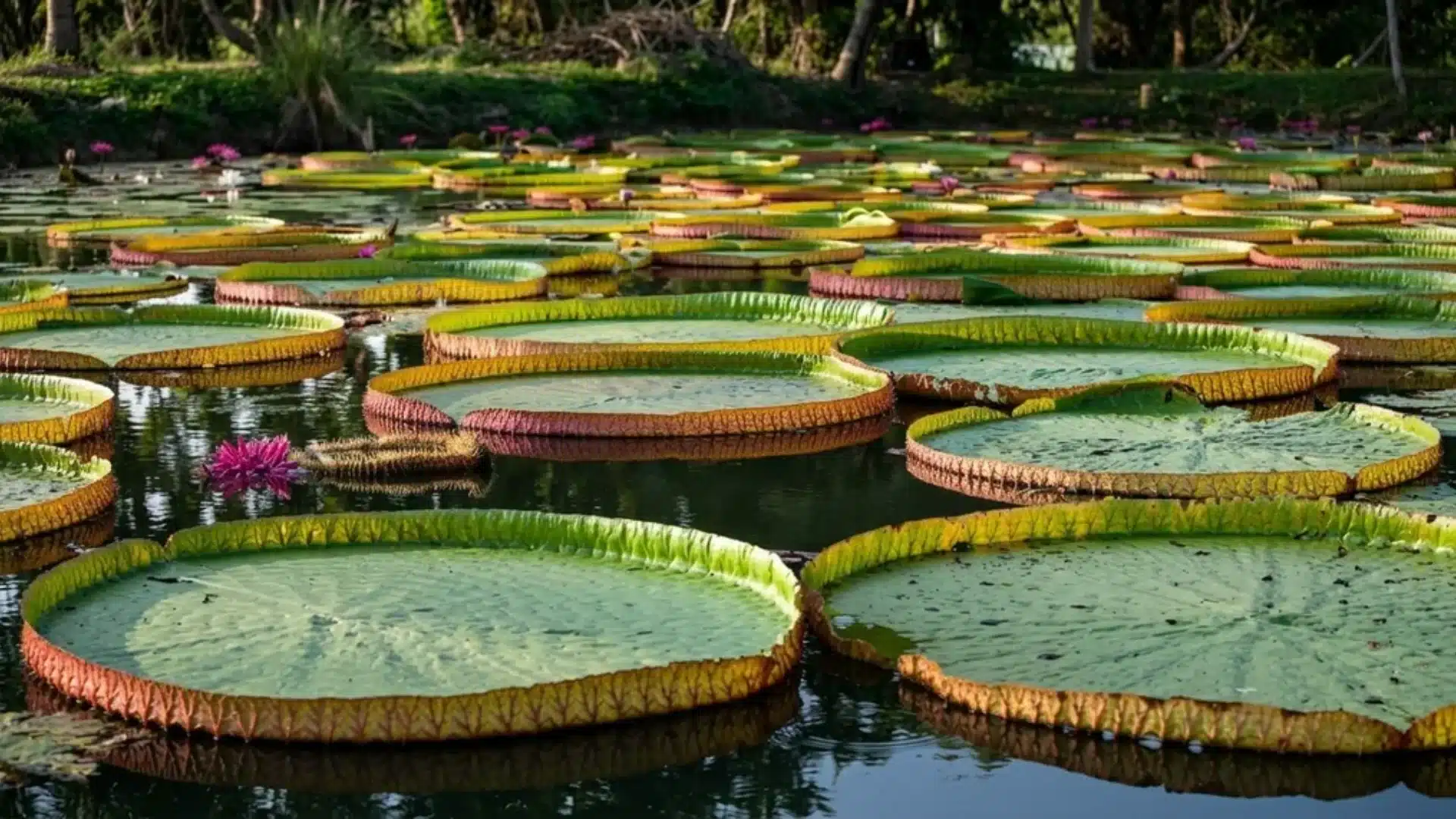
The Amazon water lily grows in lakes and slow-moving rivers across South America. Its leaves can reach up to 3 meters in diameter, making them among the largest leaves of any plant on Earth.
Sharp spines on the underside protect the plant from being eaten by manatees and other aquatic animals. At night, the flowers open white. By the second night, they turn pink.
The plant relies on beetles for pollination during this two-day cycle.
9. Rafflesia
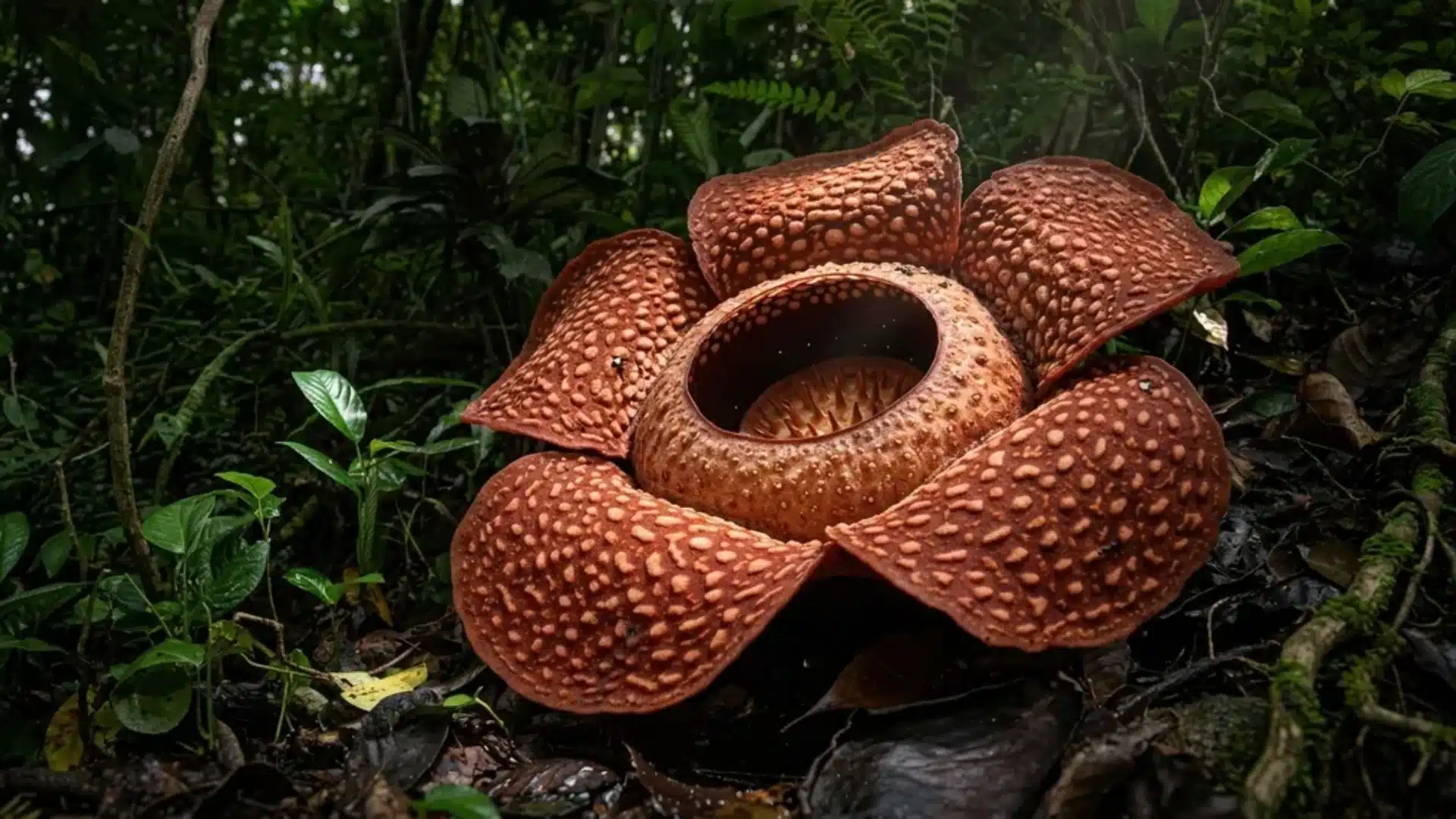
Rafflesia produces the largest single flower in the world. Found in the rainforests of Southeast Asia, the flower can reach up to 3 feet across and weigh up to 15 pounds.
The plant has no leaves, stems, or visible roots. It lives entirely inside the tissue of a host vine and only becomes visible when it flowers.
The flower emits a smell similar to rotting meat to attract carrion flies, which act as pollinators.
Epiphytes and Climbers
These plants gave up on soil entirely. Instead, they grow on other plants, climb toward light, and pull everything they need from the air around them.
11. Orchids
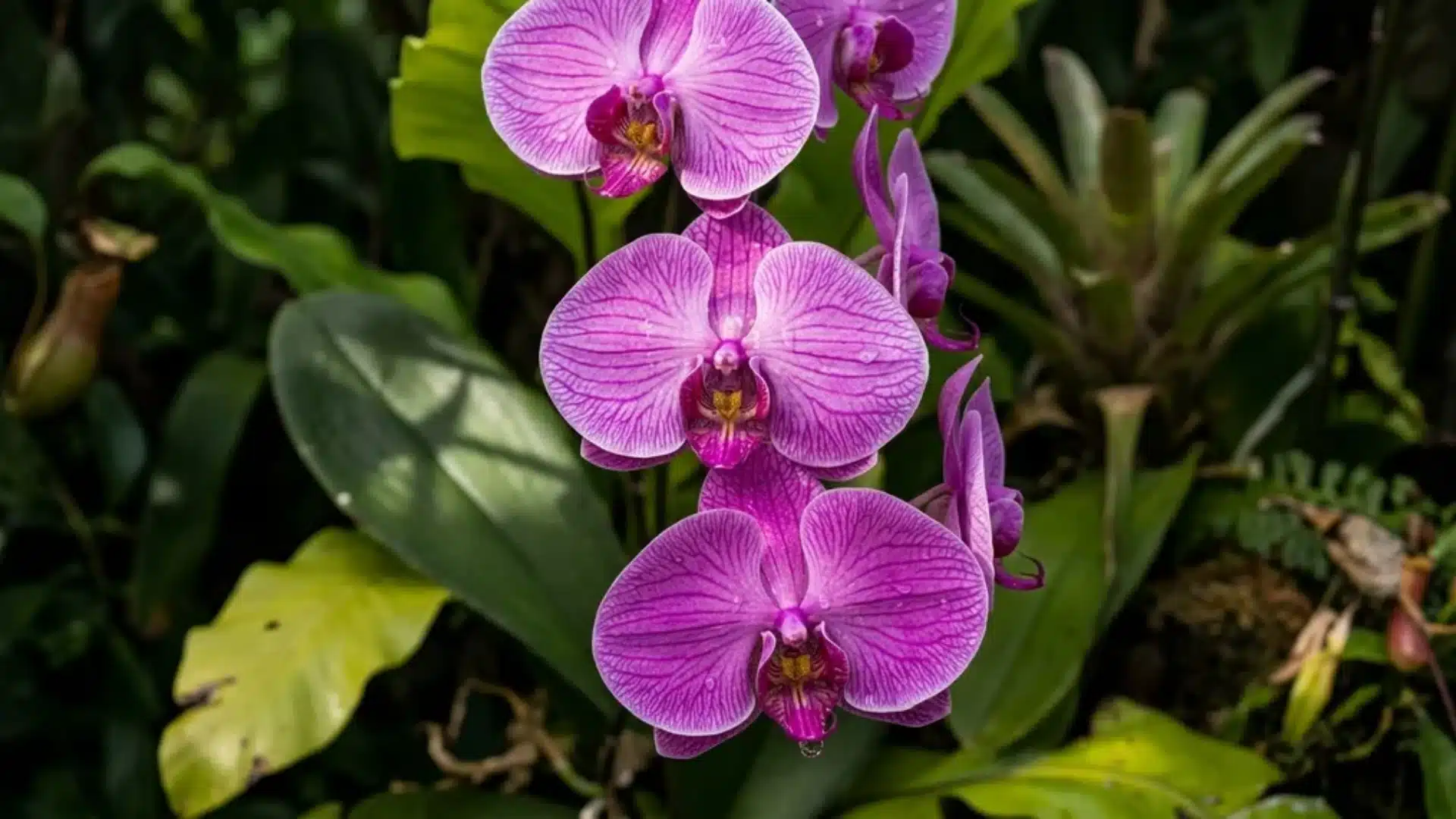
Orchids make up the largest plant family in the world. Over 10,000 species live in tropical forests alone. Most grow on tree branches rather than in soil, absorbing moisture directly from the air through a layer of spongy root tissue called velamen.
Their flowers are built to match specific pollinators so closely that some orchids can only be pollinated by a single insect species.
The Amazon rainforest is home to thousands of orchid species, many still unnamed.
12. Bromeliads
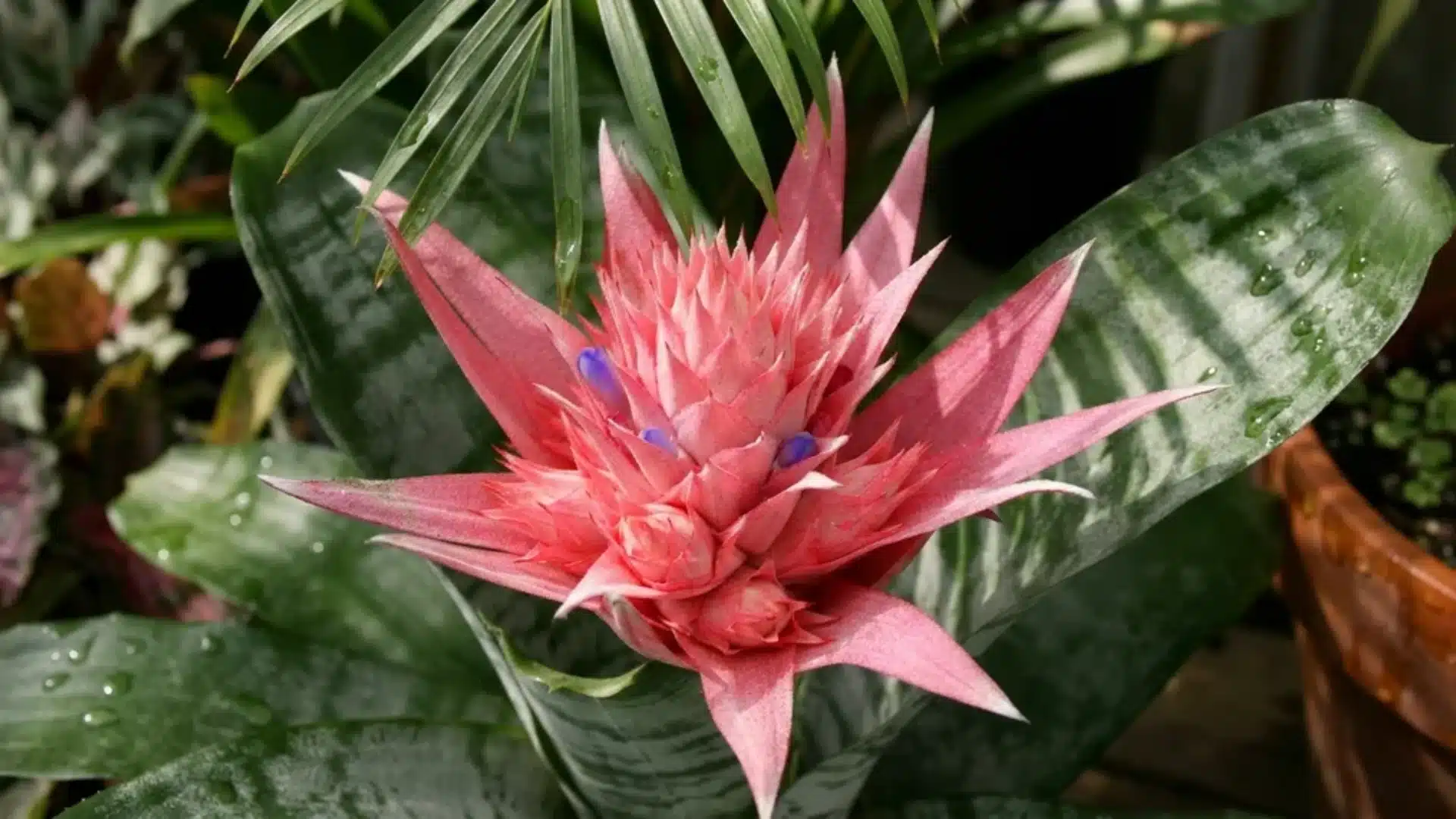
Bromeliads arrange their stiff leaves in a cup shape that collects rainwater that stands. That pool of water becomes a tiny habitat of its own. Tree frogs lay eggs in it. Insects breed in it.
Some bromeliads hold up to 12 gallons of water in their central cup. The plants grow on tree trunks and branches and pull nutrients from leaf litter that falls into their water reservoir rather than from the soil below.
13. Philodendron
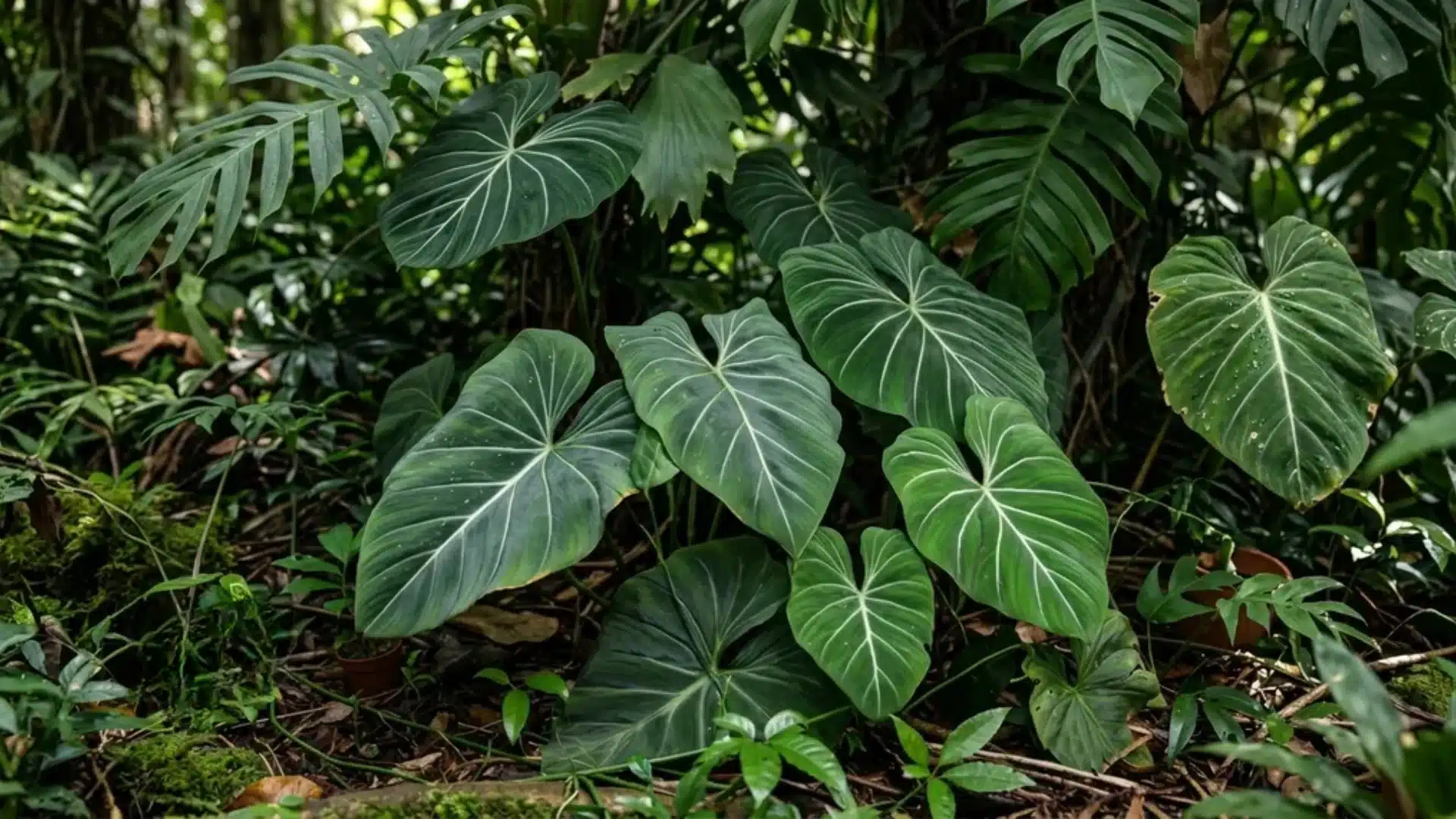
Philodendrons grow as climbers in the understory, sending out long aerial roots that grip bark and pull the plant upward toward the light.
As they climb, they move from their juvenile form, with smaller leaves, to a mature form with much larger leaves positioned to capture maximum canopy light.
Their aerial roots also absorb water from humid air between rainfalls. This is one reason philodendrons are so tolerant of indoor conditions with indirect light.
14. Monstera
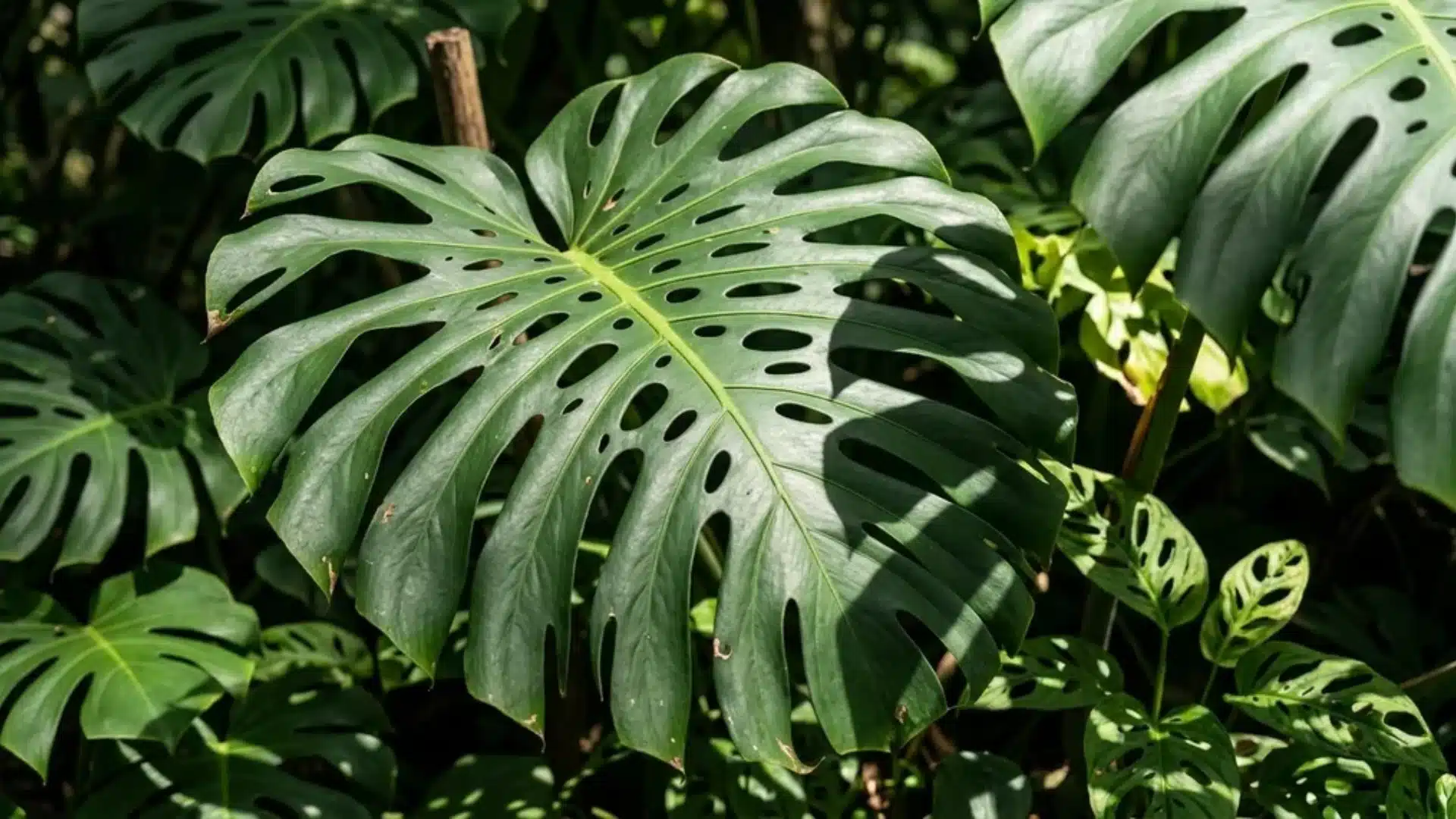
Monstera plants are well known for their split and hole-riddled leaves. In my greenhouse, I have watched this pattern develop as the plant matures.
These gaps allow air and light to pass through the leaf without tearing it during storms or high-wind events in the forest. The holes also allow light to reach lower leaves behind the same plant.
Monstera climbs using aerial roots and can reach heights of 60 feet or more in its natural rainforest habitat.
Medicinal and Useful Plants
Some of the most important plants in the world grow quietly in the shade of rainforests. Many have shaped modern medicine, global food supply, and industrial production.
15. Cinchona Tree
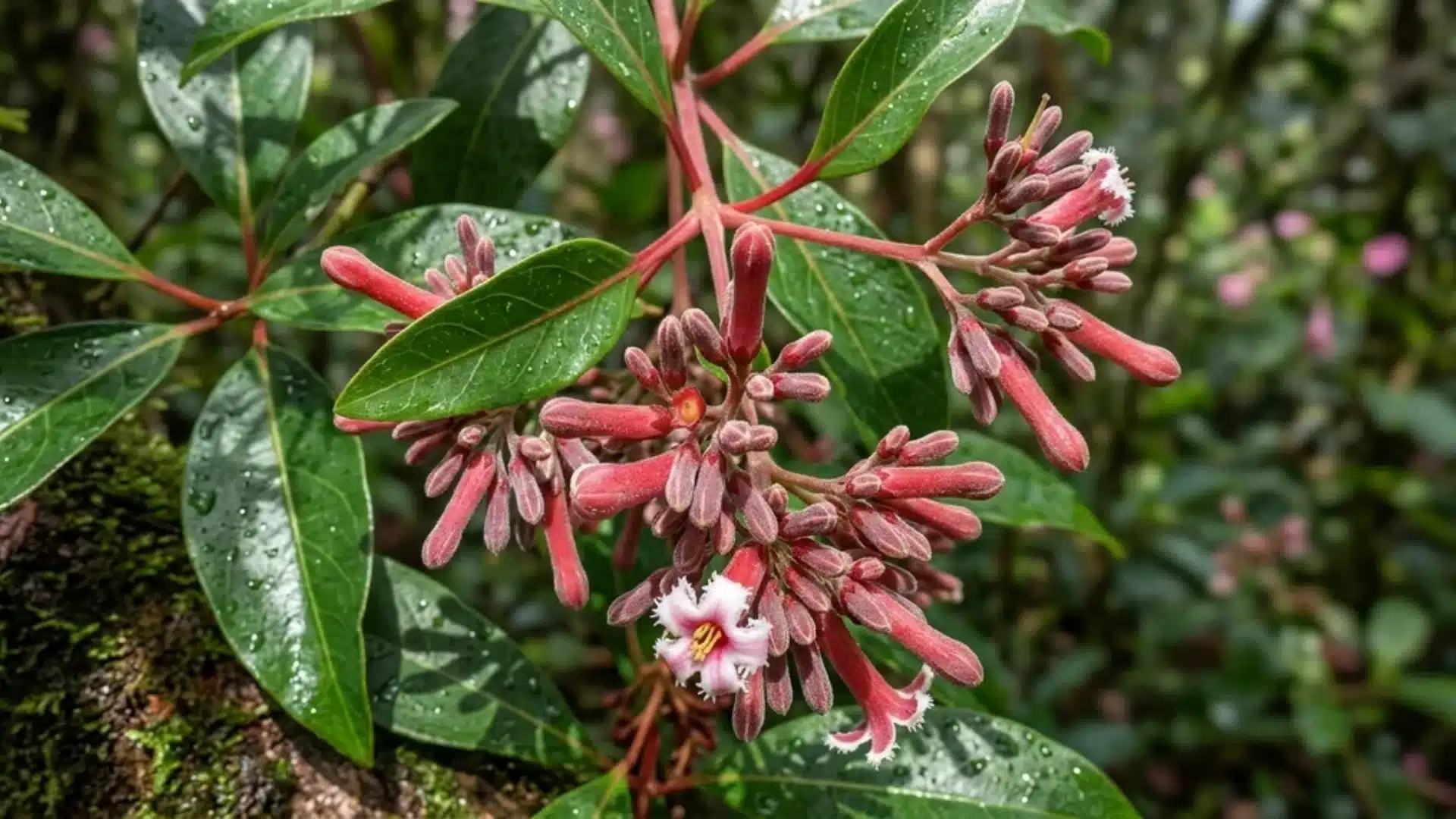
The cinchona tree, native to the Andean rainforest slopes of South America, is the source of quinine. Quinine was the first known treatment for malaria and remained the primary malaria medicine for centuries.
The bark of the tree contains the compound. Indigenous communities in South America used cinchona bark medicinally long before Western science identified the active ingredient.
The tree is still used in the production of antimalarial drugs.
16. Cat’s Claw Vine
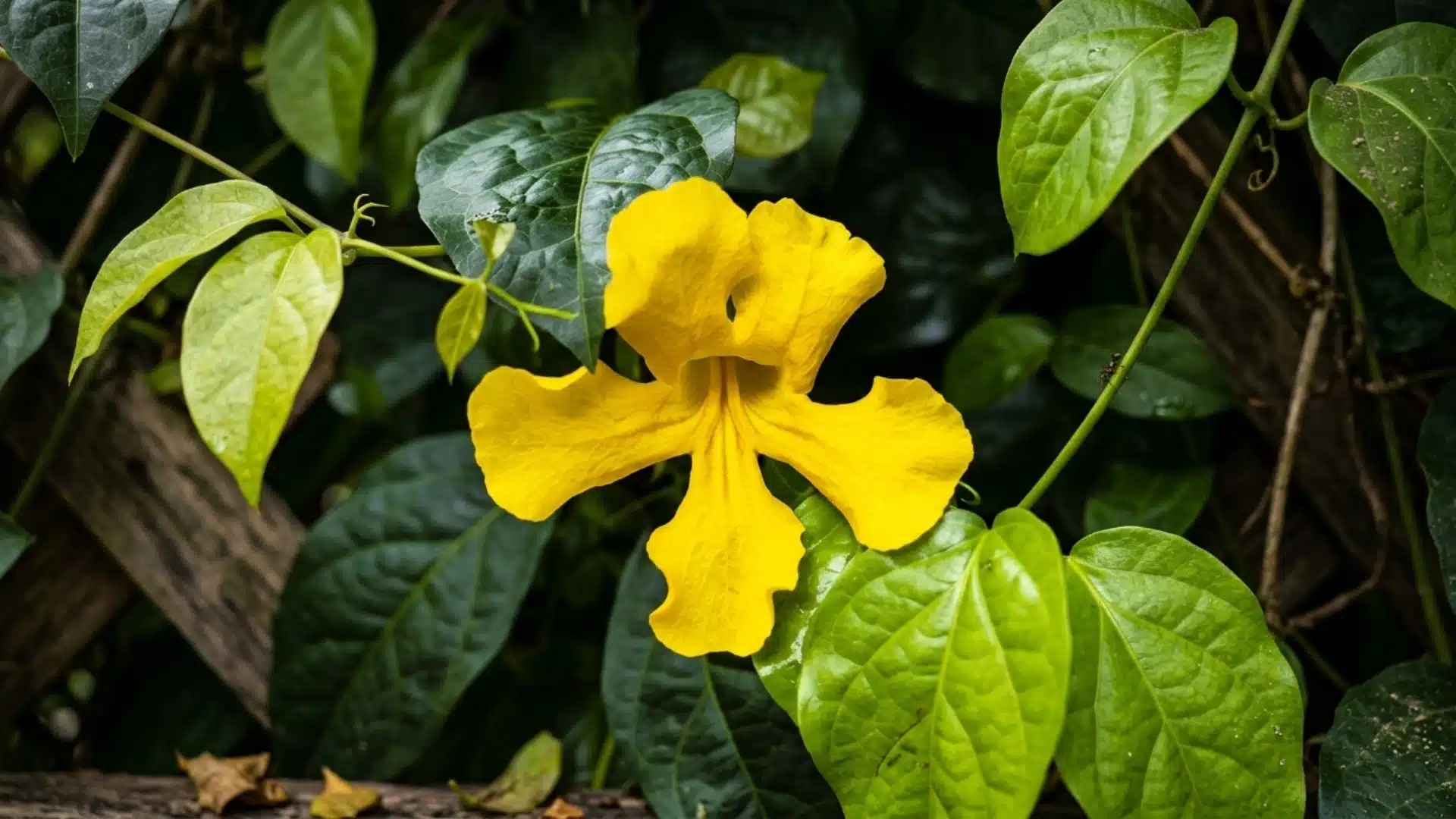
Cat’s claw is a woody vine found across Central and South American rainforests. It gets its name from the small hook-shaped thorns that allow it to grip and climb tree trunks.
Indigenous communities throughout the Amazon have used the bark and root for centuries to treat inflammation and support immune health.
Current research is examining its compounds for potential applications in modern medicine.
17. Acai Palm
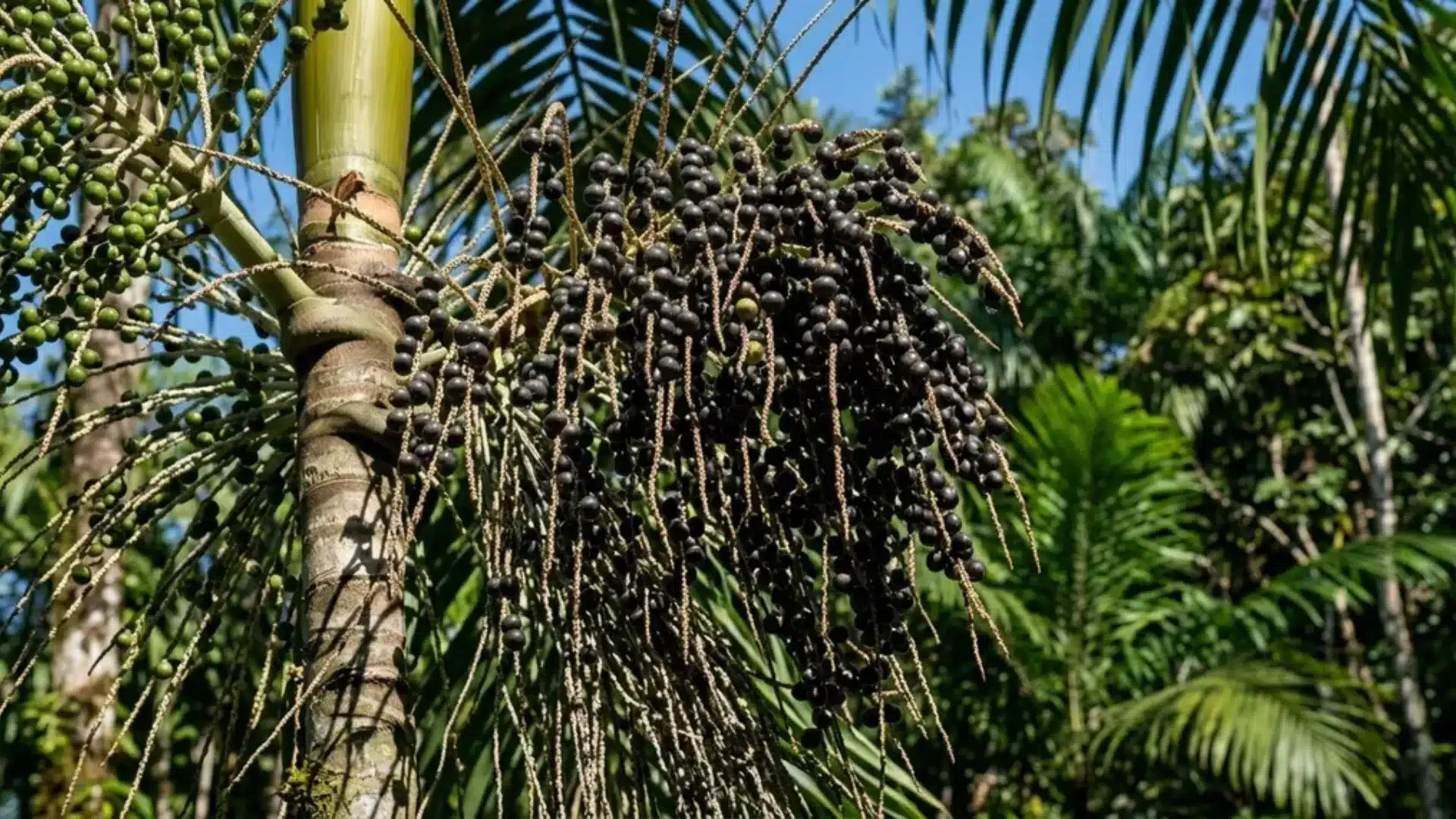
The acai palm is the most common tree in the Amazon rainforest, with an estimated 5 billion trees across the region.
It grows in clusters and produces small, dark purple berries that are a staple food for riverside communities. The berries are high in fat, fiber, and plant compounds.
Local economies in the Brazilian Amazon depend heavily on acai harvesting. The fruit is perishable and must be processed within hours of picking.
18. Vanilla Orchid
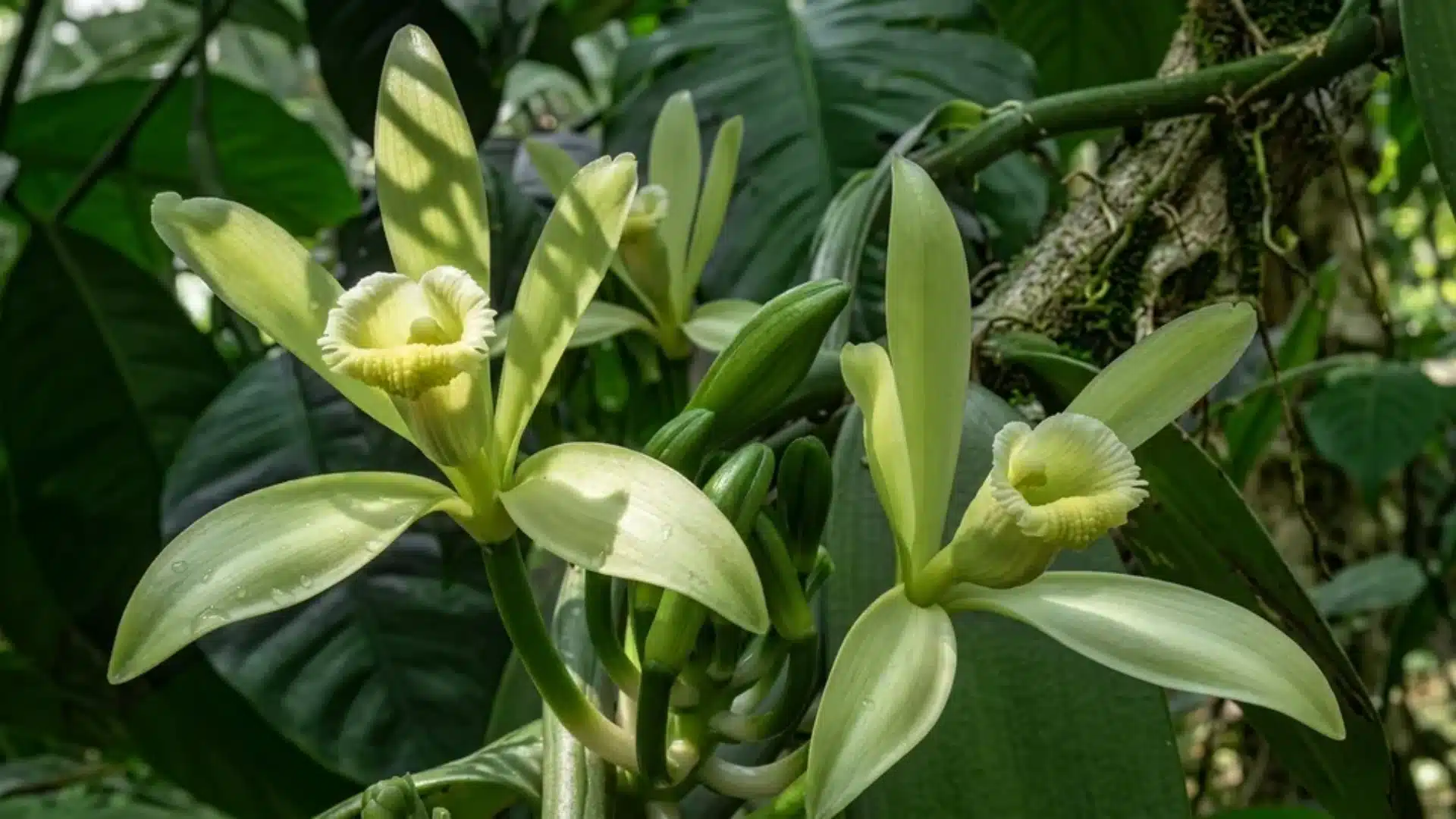
Vanilla is a climbing orchid native to Mexico and Central America. Its flowers remain open for only a single day, and pollination in the wild depends on specific bee species.
Outside its native range, every vanilla flower must be hand-pollinated to produce a pod. The pods are cured for months before producing the vanilla flavor used in cooking.
Madagascar now supplies most of the world’s vanilla, all of which is grown from plants originating in rainforest environments.
19. Pitcher Plant
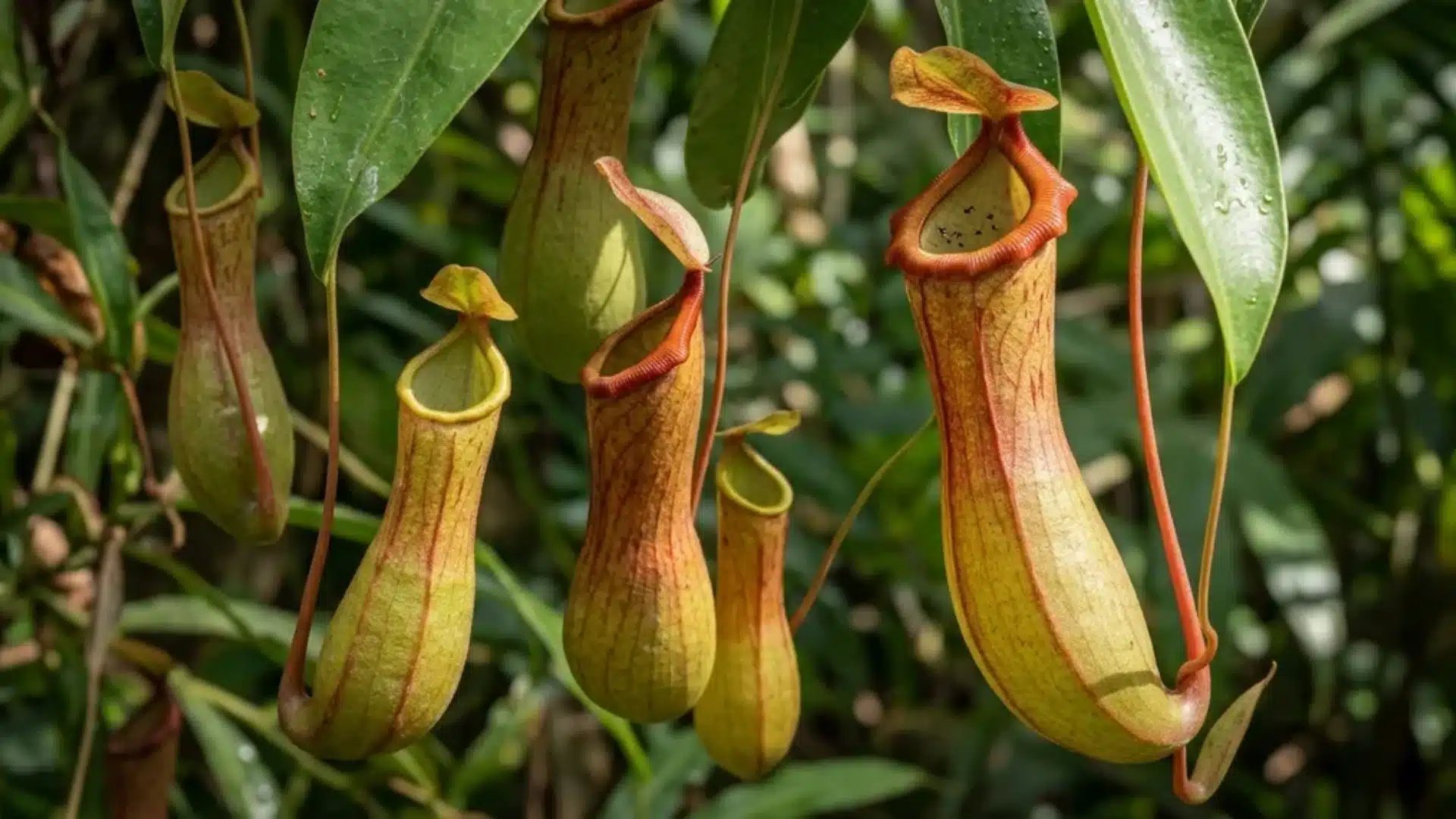
Pitcher plants are carnivorous. They grow in nutrient-poor, waterlogged soils along forest edges and in open clearings across Southeast Asia, particularly in Borneo and Sumatra.
Their leaves form a deep cup shape filled with digestive fluid. Insects and occasionally small frogs or lizards fall into the cup and are broken down to supply the plant with nitrogen it cannot get from the soil.
Some pitcher plants are large enough to hold over two liters of fluid.
Why Tropical Rainforest Plants Matter Beyond the Forest
The chocolate on your shelf, the medicine in your cabinet, the air you breathe, and tropical rainforest plants are behind more of your daily life than you realize.
1. Medicine: About 25% of all Western medicines on the market today trace back to plants found only in tropical rainforests. Treatments for various cancers, malaria, multiple sclerosis, Parkinson’s disease, and high blood pressure have all come from rainforest plant compounds.
The more striking fact is that less than 3% of known tropical plant species have been tested for medical use. The vast majority remain scientifically unexamined.
2. Food: Many foods in everyday kitchens originate in tropical rainforests. Chocolate comes from the cacao tree. Vanilla comes from a climbing orchid.
Brazil nuts, acai, various tropical fruits, and spices all trace back to rainforest plants. Rubber, used in countless industrial products, comes from a single rainforest tree species.
3. Climate: Tropical forests store an estimated 250 billion tonnes of carbon in their trees. They regulate rainfall patterns across entire continents and protect soil from erosion.
When they burn or are cleared, that stored carbon goes directly into the atmosphere. In 2024, fire-driven degradation across the Amazon alone released 791 million metric tonnes of carbon dioxide.
What Is Threatening Tropical Rainforest Plants Right Now?
The threats are real and well documented. In 2024, satellite monitoring recorded the highest loss of tropical primary rainforest since records began: 6.7 million hectares in a single year.
That is roughly the size of Panama, cleared in 12 months.
The main drivers are:
- Agricultural expansion for soybeans, palm oil, and cattle ranching
- Illegal logging fueled by weak enforcement
- Climate-driven wildfires made worse by El Niño conditions
- Infrastructure development cutting through intact forest areas
Over 17% of the Amazon has been lost in the past 50 years. The species that disappear with cleared forests, plants, insects, and fungi take their ecological relationships with them.
A Brazil nut tree without its orchid bee cannot reproduce. A vanilla orchid without its native pollinator cannot fruit. These are not isolated problems. They are connected losses.
Conclusion
Tropical rainforest plants do far more than fill a forest floor. They feed communities, supply medicines that treat serious diseases, and store carbon that keeps the planet’s climate stable.
From the 200-foot Kapok tree anchored by buttress roots to the carnivorous pitcher plant thriving in nutrient-poor soil, every plant on this list has solved a survival problem in a way nothing else on Earth has.
Losing these plants means losing solutions we have not yet found. Over 17% of the Amazon has already been lost.
The rest still stands, and it still matters. Which plant surprised you most? Leave your answer in the comments below.
Frequently Asked Questions
Which Country Is Known as The Lungs of The Earth?
Brazil is the country most famously known as the “lungs of the Earth” due to its housing nearly 60% of the Amazon Rainforest.
Is Amazon Forest 100% Explored?
No, the Amazon is definitely not 100% explored. Experts estimate that nearly 60% of the Amazon rainforest remains unexplored in detail.
What Is the 3 Biggest Rainforest in The World?
The three biggest rainforests in the world are the Amazon Rainforest, the Congo Basin Rainforest, and the New Guinea Rainforest.