
Ever wondered why bubbles suddenly show up under your paint after a storm, or a few days after a fresh coat?
I’ve dealt with this exact scenario myself. Paint bubbles when air or moisture gets trapped under the film, usually from grease on the wall, a skipped primer coat, a second coat applied too soon, or water leaking in behind the surface.
I’ve seen it enough times: the answer is almost always one of these seven things, nothing mysterious. Fix the cause, and the repair holds. Skip it, and you’re starting over again next season.
What Is Paint Bubbling?
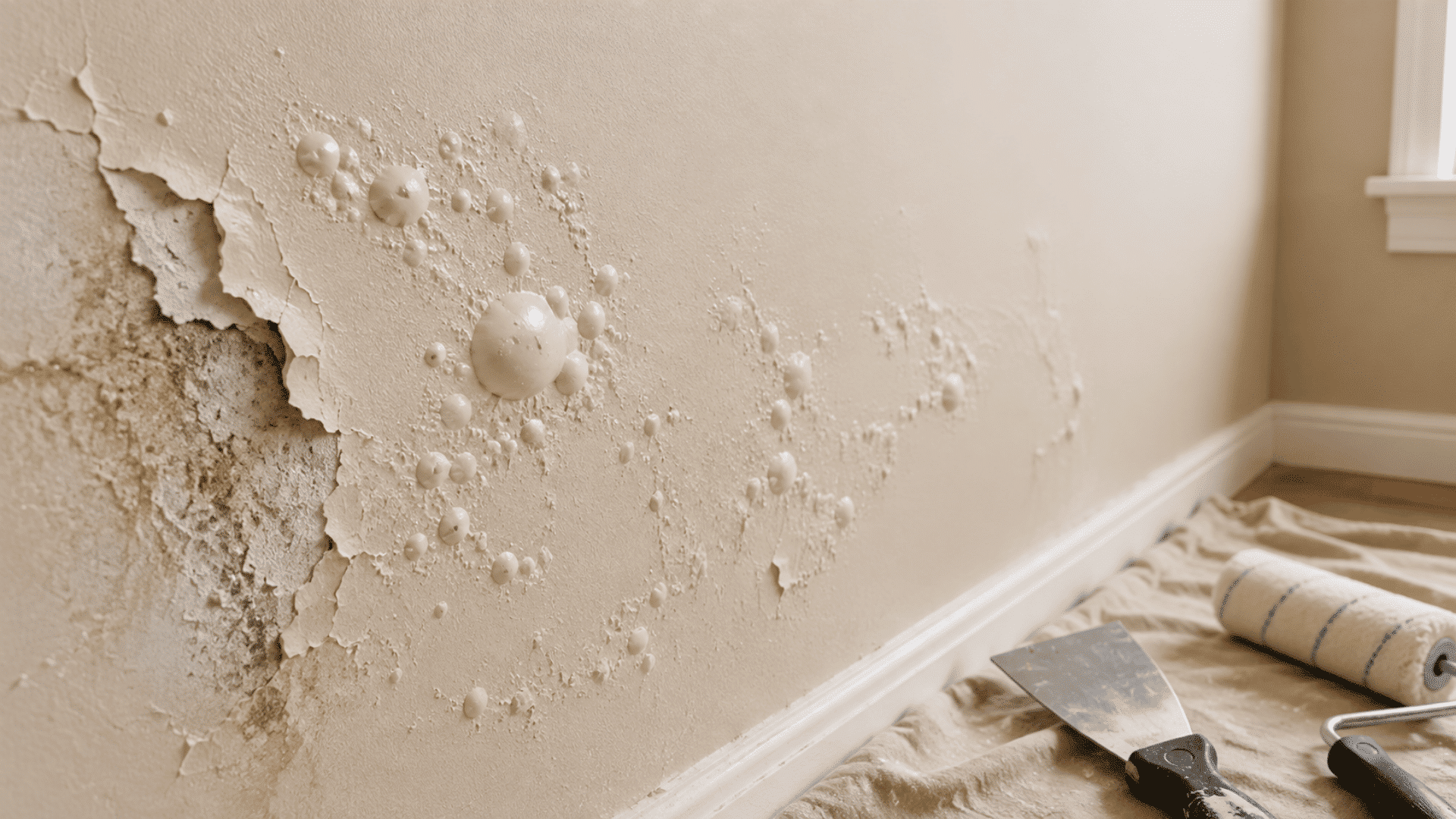
Paint bubbling is when the paint film lifts away from the wall instead of lying flat, forming raised pockets across the surface.
Each pocket traps either air or liquid underneath it. Air pockets are typically just a surface-level issue. Liquid pockets mean moisture is sitting between the wall and the paint.
It can show up right after a fresh coat dries, or weeks later on a wall that looked perfectly fine. The location, size, and pattern of the bubbles each tell you something different about what went wrong.
The 2-Minute Test to Find Your Real Cause
Grab a small blade or pin and pop open one bubble. Peel it back and look at what’s underneath.
If only the top coat lifted and the wall or primer below feels dry and solid, heat or application speed caused it.
If several layers came up together, down to the bare wall, or the spot feels damp to the touch, water is getting in.
This quick check tells you which fix to use before you patch anything. Skipping this step means you could repaint a spot that just keeps bubbling again, since the real cause never got fixed.
Paint Bubbling vs. Paint Blistering: What’s Really Happening
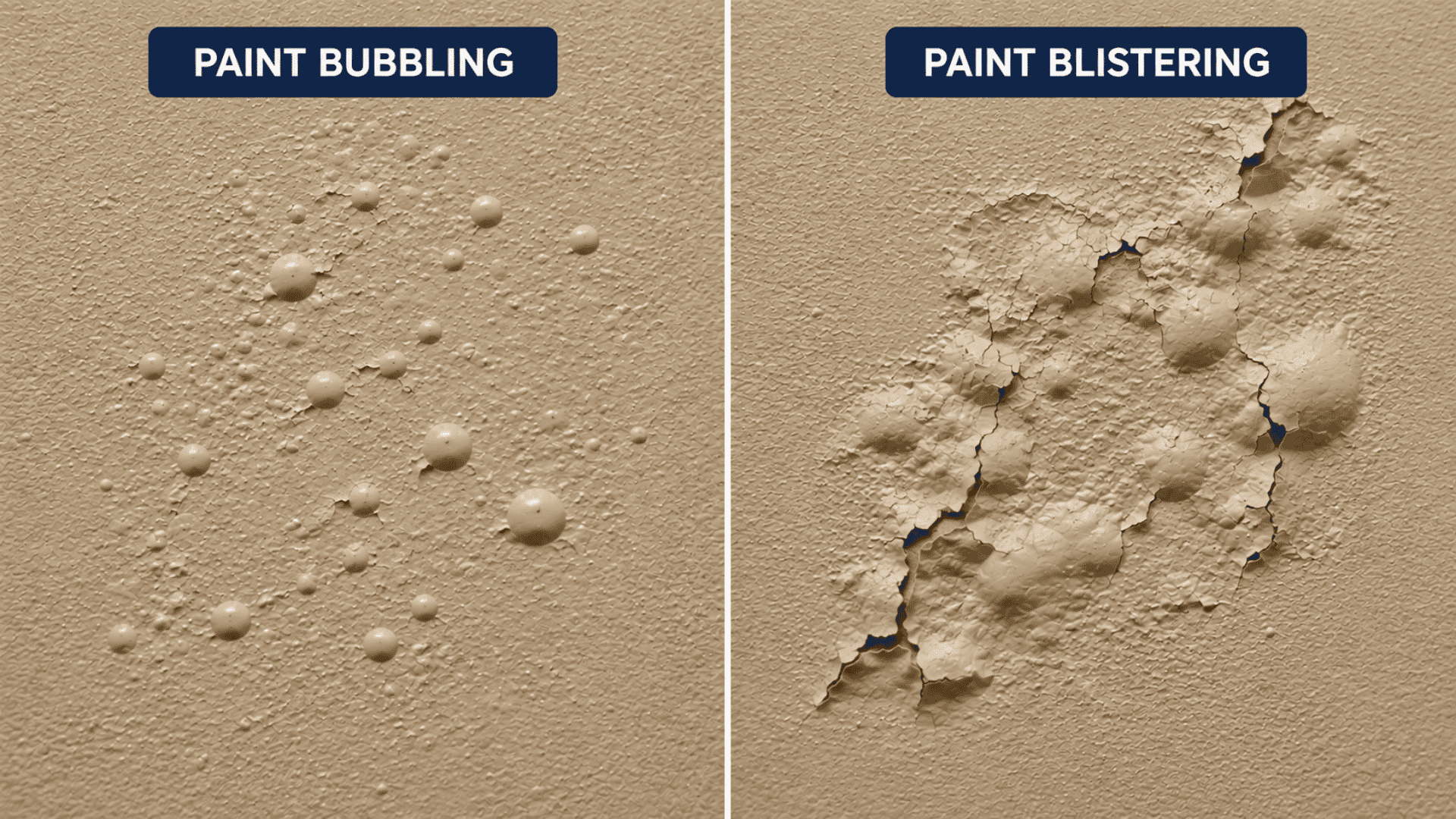
Paint bubbling and blistering may sound different, but they point to the same surface failure. A simple finger test can help you tell whether the damage is old or still active.
| Check | What It Means | What to Do |
|---|---|---|
| Paint bubbling or blistering | Both terms describe the same paint failure. Contractors often say “blistering,” while homeowners usually say “bubbling.” | Treat them as the same issue. |
| Bubble feels hard | The trapped damage has dried in place. | Scrape, repair, prime, and repaint. |
| Bubble feels soft | Moisture or another problem may still be active. | Find and fix the source before repainting. |
Common Causes of Paint Bubbling
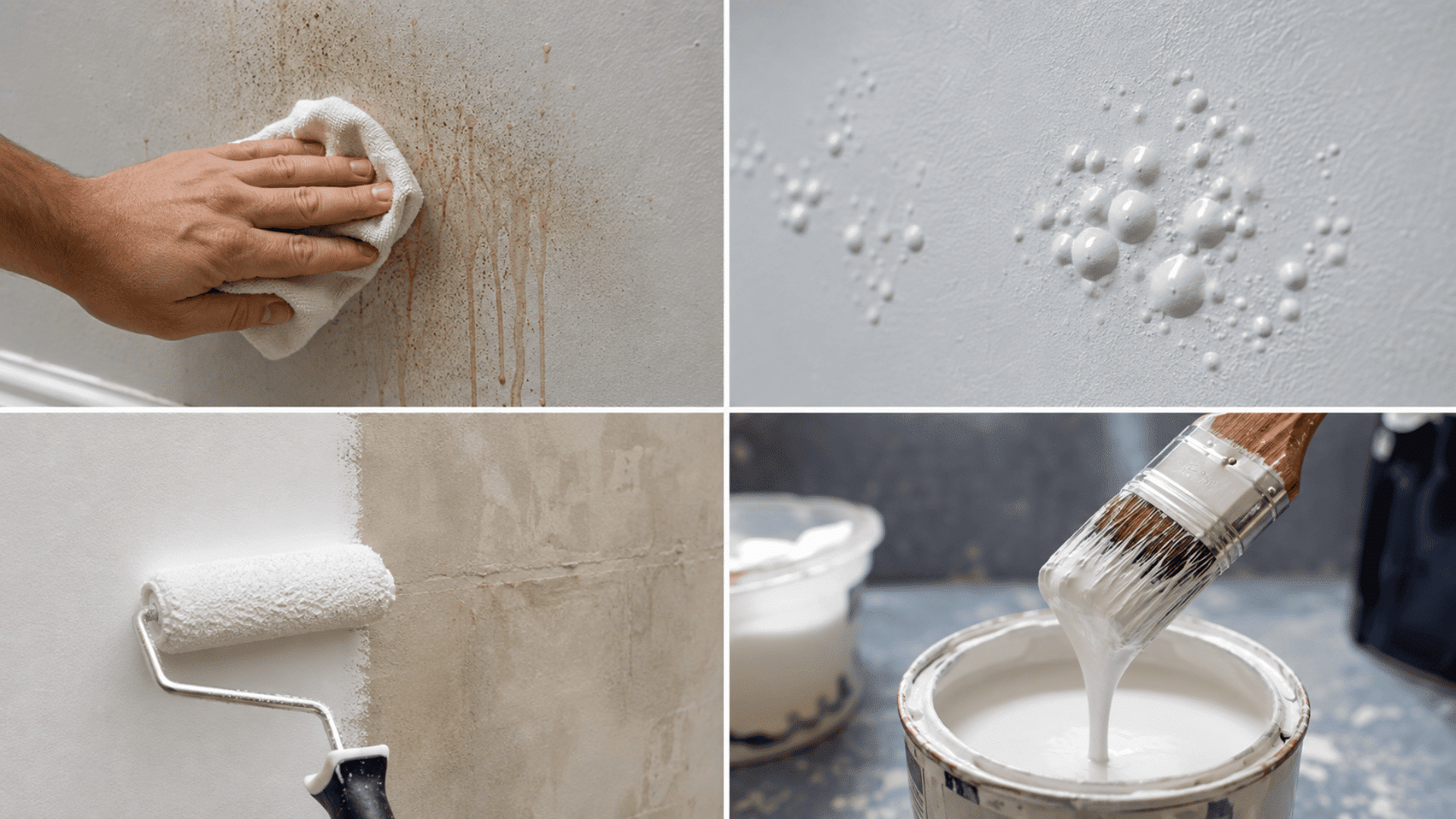
Paint bubbles for a handful of clear reasons, and most trace back to what was on the wall or in the air before the coat went on. Spotting the pattern helps you match the fix to the actual cause instead of guessing.
1. Dirty or Greasy Walls Stop Paint From Gripping Properly
Paint cannot grip oil, soap film, or dust. It sits on top of the contamination instead of the wall, and as it dries, it pulls away in scattered patches.
Walls near a stove and bathroom walls are the most common offenders, even when they look clean.
2. Skipping Primer Leaves Bare Walls Absorbing Paint Unevenly
Raw drywall and plaster absorb paint unevenly, making finishes look less smooth. This is especially common on newly dry-lined walls, where the boards haven’t fully cured before the first coat goes on.
The spots that absorb the most end up with a very thin paint layer, and thin spots never form a proper film. Air pockets open up underneath them.
3. Direct Sun and Heat Trap Vapors Under Fresh Paint Coat
The outer layer of paint dries and seals beautifully first, creating a nice barrier, while the inner layer is still releasing vapors.
These vapors naturally rise and can sometimes cause tiny bumps, often within the first hour after applying a coat.
It’s a common part of the painting process, so don’t worry; just give it some time, and everything will settle smoothly.
4. Second Coats Applied Too Fast Trap Solvents Inside Walls
Solvents from the first coat need time to escape before a new layer goes on top. If you seal them in early, they push outward as they work toward the surface.
This kind of bubbling tends to appear just a few hours after applying the second coat.
5. Mixing Oil and Water-Based Paint Layers Causes Splitting
Oil-based and water-based paints expand at different rates. Temperature swings through the seasons pull the layers apart over time, often appearing months after the job was finished.
To check what is on your wall, rub a cotton ball soaked in rubbing alcohol over a hidden spot. Paint that comes off is water-based. If the surface stays unchanged, it’s oil-based.
6. Hidden Water Leaks Behind the Wall Cause Bubbling Later
Bubbles that appeared weeks after painting, or that cluster near a pipe or window frame, point to water coming in from somewhere.
A pipe leak behind the wall or a gap in exterior caulking is a common source. This is a home problem, not a painting one.
I’ve traced this exact pattern back to a slow pipe leak more than once: the bubbling shows up nowhere near the pipe itself, because water travels along the framing before it ever reaches the surface.
7. Low-Quality or Over-Thinned Paint Fails to Form a Strong Film
Cheap paint often skips on binders, the ingredient that holds the film together as it dries. Adding too much water or thinner weakens that bond even further.
The result is a coat that looks fine going on but never fully hardens, so it lifts, bubbles, or flakes long before a properly mixed paint would.
Where Paint Bubbling Shows Up Most
Some spots bubble more often than others because of what happens around them every day. Knowing these hot spots helps you catch trouble early.
- Bathrooms and kitchens: Steam and condensation from showers and cooking soften paint from behind. Run the exhaust fan during and after painting to help the coat cure properly.
- Ceilings: Trapped moisture from roof leaks or poor attic ventilation often shows up here first, since heat and damp air both rise.
- South and west facing exterior walls: These sides get the most direct sun exposure, which causes heat blistering more than any other side of the house.
- New construction interiors: Fresh drywall and plaster are still releasing moisture as they cure, which can trap vapor under paint applied too soon.
Step-by-Step Guide to Fixing Bubbling Paint
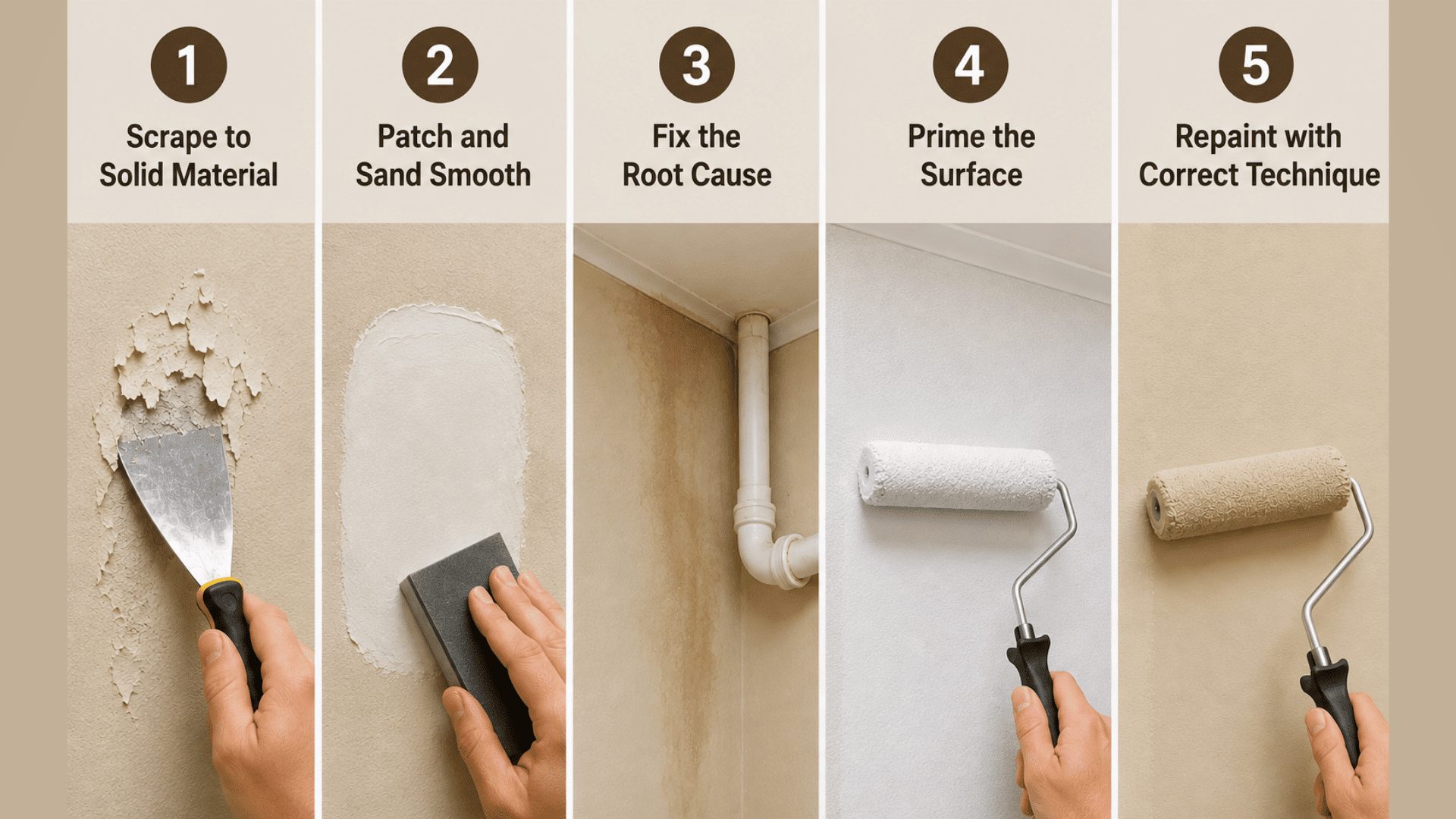
Fixing bubbling paint requires more than covering the damaged area with a fresh coat. Follow these steps to address the cause, repair the surface, and reduce the chance of the bubbles returning.
Step 1: Scrape It Back to Solid, Stable Material
Before any repair can hold, every bit of lifted paint has to go. Skipping this step means new paint sits on the same weak base that failed before.
Use a putty knife to remove all bubbled or peeling paint down to a surface that is firm and fully attached. Work the edges of each spot until nothing flakes off when pressed.
Step 2: Patch and Sand the Damaged Area Smooth
Bare spots left behind after scraping need to be built back up before they can hold paint. This step brings the wall back to one level surface.
Fill any gouges or dips with spackling compound, then let it dry completely before touching it again. Once dry, sand the patch until it blends evenly with the surrounding wall.
Step 3: Fix the Root Cause Before Repainting Anything
This is the step most people skip, and it is why bubbles come back. Repainting over an unresolved problem just delays the same failure.
Fix the leak, let the surface fully dry out, or wait out the humidity, depending on what caused the bubbling. Painting before this is done means the new coat fails the same way the last one did.
Step 4 : Prime the Surface to Match What Caused the Bubbling
The right primer seals the surface and gives new paint something solid to grip. Skipping it or using the wrong type sets up the same failure again.
Choose a primer suited to the surface underneath. If moisture played any role in the original bubbling, use a stain-blocking primer to seal in any leftover staining and prevent it from bleeding through.
Step 5: Repaint Using the Correct Type and Technique
The final coat only holds if it matches what is already on the wall and goes on the right way. Rushing this step reintroduces the same problems.
Use the correct paint type for the surface, a roller nap suited to the texture, and a moderate application speed. Going too fast traps air bubbles in the film before it has a chance to level out.
The same thin, even-coat approach applies anywhere you’re painting, including painting stairs, where a heavy coat on high-traffic treads is even more likely to fail.
How to Prevent Paint Bubbling Next Time
A few habits during prep and application stop bubbling before it starts, so you’re not stuck redoing the same wall twice.
- Clean and dry the surface completely before any tape or primer goes on
- Check the weather and humidity before starting an exterior job
- Match your primer to your paint type to avoid oil/latex conflicts
- Don’t thin paint beyond the label’s instructions
- Ventilate the room while painting and while it cures
When to Call a Painting Pro Instead of DIY-Fixing It
Not every paint bubble can be fixed with scraping, sanding, and repainting. Some signs indicate hidden moisture damage or structural issues that require professional diagnosis before cosmetic repairs.
| Sign | Why You Should Call a Pro |
|---|---|
| Widespread bubbling | Often indicates extensive moisture or adhesion failure. |
| Bubbling returns after repairs | Suggests the root cause has not been resolved. |
| Musty odor or visible mold | May point to hidden moisture and mold growth. |
| Expanding water stains | Usually signals an active plumbing or roof leak. |
| Soft drywall or damaged plaster | Requires repairs before repainting. |
| Unsure of the moisture source | A painting contractor or moisture inspector can identify hidden problems and recommend the right solution. |
Frequently Asked Questions
Can I Just Paint Over Bubbling Paint?
No, painting over a bubble traps the same air or moisture underneath, and the new coat blisters in the exact same spot within weeks.
Can High Humidity Cause Paint to Bubble?
Yes, painting over a surface that still holds moisture traps it under the film, and as it warms and turns to vapor, it pushes the paint away.
Does Bubbling Paint Mean There Is Mold?
Not always, but the trapped moisture behind bubbling paint creates the damp environment mold needs, so check for dark spots or a musty smell before ruling it out.
Is There a Difference Between Peeling and Bubbling?
Yes, peeling is paint lifting away in flakes, while bubbling is air or moisture forming raised pockets underneath an intact paint layer.
Will a Dehumidifier Stop Paint From Bubbling?
It helps; pulling excess moisture from the air reduces the risk, but it won’t fix an active leak or bad prep work underneath.
Wrapping It Up
Most bubbling paint traces back to something simple: grease, a skipped primer coat, trapped moisture, or a leak working through the wall.
Run the 2-minute test, match what you find to the cause list, and follow the repair steps in order.
I say this from my own renovation work: answering “why is my paint bubbling” is the one thing that actually stops it from coming back.
If the bubbles keep returning or feel soft, call a pro before repainting. Handle it right once, and you won’t be back here next season. Go fix that wall.