
Buying a home is often linked to a 20% down payment, which can feel out of reach for many buyers. But some mortgages require much less, and certain options need no down payment at all.
A 0-deposit mortgage, also called a zero-down or 100% financing mortgage, lets eligible buyers purchase a home without paying a deposit upfront.
This blog explains how these mortgages work, who may qualify, what costs still apply, and what to consider before applying.
What Is a 0 Deposit Mortgage?
Most buyers assume a deposit is non-negotiable, but a small number of UK lenders now offer routes that require none at all.
A 0 deposit mortgage lets you borrow the full property value, with nothing to pay upfront beyond legal and survey costs.
Your equity is initialized to zero upon the completion of the process.
These loans come mainly through Skipton’s Track Record mortgage, based on rent history, or guarantor mortgages, where a family member secures the loan with their own property or savings.
How Does a 0 Deposit Mortgage Work?

A 0 deposit mortgage works the same way as any other mortgage application, except the lender covers 100% of the purchase price instead of the usual 90–95%.
Step 1: 100% Financing
Your loan-to-value ratio is 100% from day one. The full property price is borrowed, and you start with no equity.
Step 2: Security Instead of a Deposit
The lender needs something to offset the risk of lending 100%. That’s either a strong rent payment history or a guarantor’s property or savings standing behind the loan.
Step 3: Standard Purchase Process
Application, affordability check, valuation, mortgage offer, exchange, and completion all work the same as any other purchase.
Step 4: Fees Still Apply
You’ll still need funds for legal fees, a survey, mortgage arrangement fees, and stamp duty if it’s due on the purchase.
Step 5: Repayment Begins
Your monthly payment starts the month after completion day and covers interest, capital, and any linked insurance.
Three Genuine Pathways to a 0 Deposit Mortgage
Zero-deposit routes in the UK come down to three real options, each with different eligibility rules and different people taking on the risk.
1. Skipton’s Track Record Mortgage
This route lets renters borrow 100% of the property value based on their rent payment history, with no guarantor needed.
Who qualifies: renters with at least 12 months of on-time rent payments at or above the proposed mortgage payment, usually first-time buyers, subject to standard credit checks.
2. Guarantor Mortgages
A family member agrees to guarantee your mortgage, using their own property or savings as security if you fall behind.
Who qualifies: you still need to pass standard affordability checks, and your guarantor needs enough equity or savings and independent legal advice before signing on.
3. Family Deposit and Springboard Mortgages
A family member deposits a lump sum, often 10% of the purchase price, into a savings account linked to your mortgage instead of you paying a cash deposit.
Barclays’ Family Springboard mortgage works this way: a relative or friend opens a Helpful Start account, deposits 10% of the property price, and gets it back with interest after five years, provided you’ve kept up your payments.
Who qualifies: your family member needs the savings to deposit, and you still need to pass the lender’s affordability checks on your own income.
This service isn’t available for new-build properties or in Northern Ireland.
How to Qualify for 0 Deposit Mortgages?
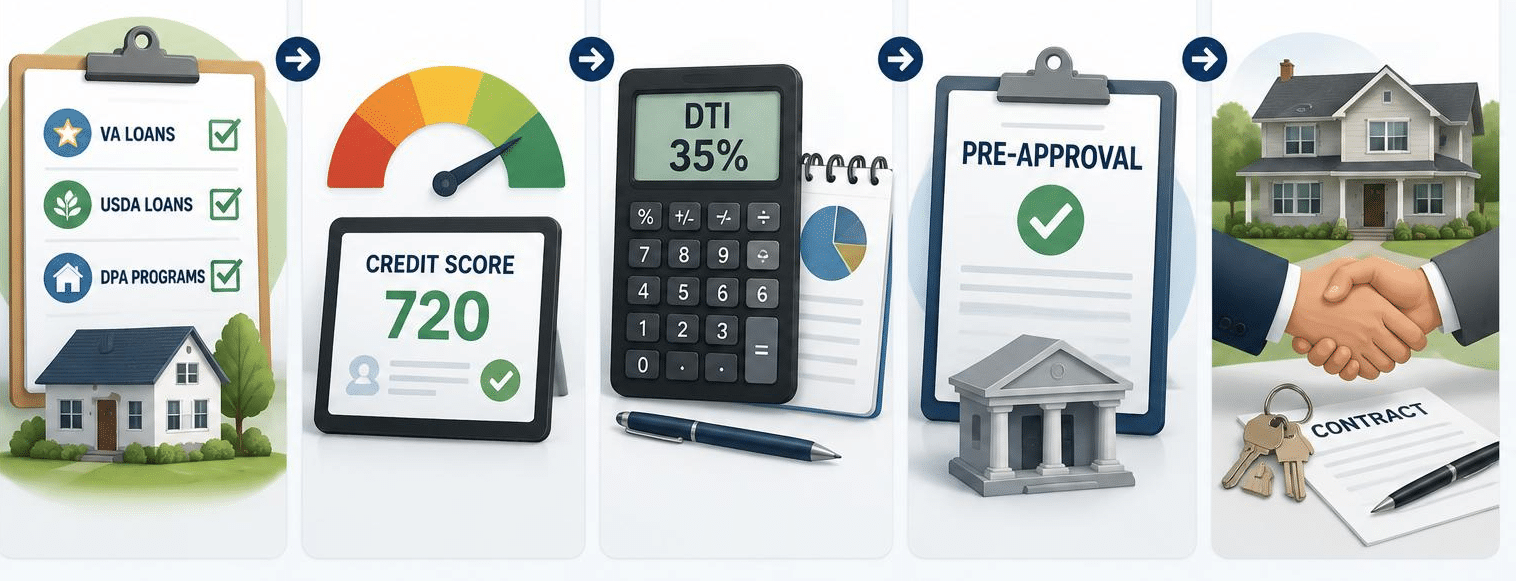
You qualify by meeting your chosen route’s specific rules, plus the same credit and affordability checks any mortgage applicant faces.
Step 1: Work Out Which Route Fits You
Check whether you have the rental history for Skipton’s Track Record product, or whether a family member is willing and able to act as guarantor or provide a linked deposit.
Step 2: Check Your Credit Score
Pull your report from Experian, Equifax, and TransUnion and fix any errors before applying. A clean credit history matters more on 0 deposit products, since lenders have less cushion if something goes wrong.
Step 3: Get a Mortgage in Principle
A decision in principle shows sellers and estate agents you’re a serious buyer, and it tells you roughly how much you can actually borrow before you start viewing properties.
Step 4: Speak to a Whole-of-Market Broker
0 deposit deals aren’t offered by every lender, so working with a specialist mortgage broker who covers the whole market gives you the best shot at finding one you actually qualify for.
Pro Tip: VA buyers should work with an agent experienced in VA loans, as appraisals, MPR rules, and concessions can be tricky.
Pros and Cons of a 0 Deposit Mortgage
A 0 deposit mortgage can remove one of the biggest upfront barriers to buying a home, but it also comes with important trade-offs. Here are the main pros and cons to consider.
| Pros | Cons |
|---|---|
| Buy sooner without years of saving | Zero equity from day one |
| Preserve cash for reserves and expenses | Higher loan balance = more total interest |
| No PMI on VA/USDA (major monthly savings) | Eligibility restrictions limit access |
| Competitive rates (especially VA) | Closing costs are still required |
| VA funding fee tax-deductible starting 2026 | Market declines can quickly put you underwater |
| Allows buyers in high-cost areas to act faster | Less room to absorb life changes if you need to sell |
Common Mistakes to Avoid With 0 Deposit Mortgages
Buyers using a zero-deposit mortgage still need to prepare carefully, since eligibility, closing costs, lender terms, and long-term affordability can affect the purchase.
- Assuming zero down means zero preparation: Lenders still check credit score, income stability, debt-to-income ratio, and job history.
- Ignoring USDA income limits: Many buyers don’t realize they may exceed local income caps, which can make them ineligible.
- Not comparing lenders: Requirements and rates vary, so checking multiple lenders can significantly improve terms.
- Overlooking closing costs: Even with no deposit, buyers still need 2%–5% for closing costs.
- Buying too much house: No down payment means higher risk, so affordability matters more than ever.
Is a 0 Deposit Mortgage Right for You?
It depends on your rental history and whether you have family who can act as a guarantor.
If you’ve paid rent on time for a year and it matches what your mortgage would cost, the Track Record route is worth checking first since it doesn’t put anyone else at risk.
If not, a guarantor or family deposit mortgage may be your only route to 100% financing, but it’s worth being honest with your family about what they’re taking on before you go further.
If neither applies, a shared ownership purchase is often a more realistic low-deposit path.
Disclaimer: This article is for informational and educational purposes only. It does not constitute financial, legal, or mortgage advice. Loan requirements, rates, and programs change frequently. Always consult a licensed mortgage professional or financial advisor before making any borrowing or purchasing decisions.
Frequently Asked Questions
Does my guarantor need to already own their own home?
Usually, yes. Most guarantor mortgages require the guarantor to be a homeowner with enough equity or savings to meet the lender’s security requirement.
Are 0 deposit mortgages available for all property types?
No. Most lenders exclude new-build flats, ex-local authority homes, and non-standard construction from 0 deposit products.
How many lenders currently offer 0 deposit mortgages in the UK?
Only a handful at any given time. Skipton’s Track Record deal and a small number of guarantor-backed products, like Barclays’ Family Springboard, are usually the main options.
What happens if I miss a payment on a guarantor mortgage?
The lender can ask your guarantor to cover the missed payment, and in serious cases, pursue their secured property or savings.