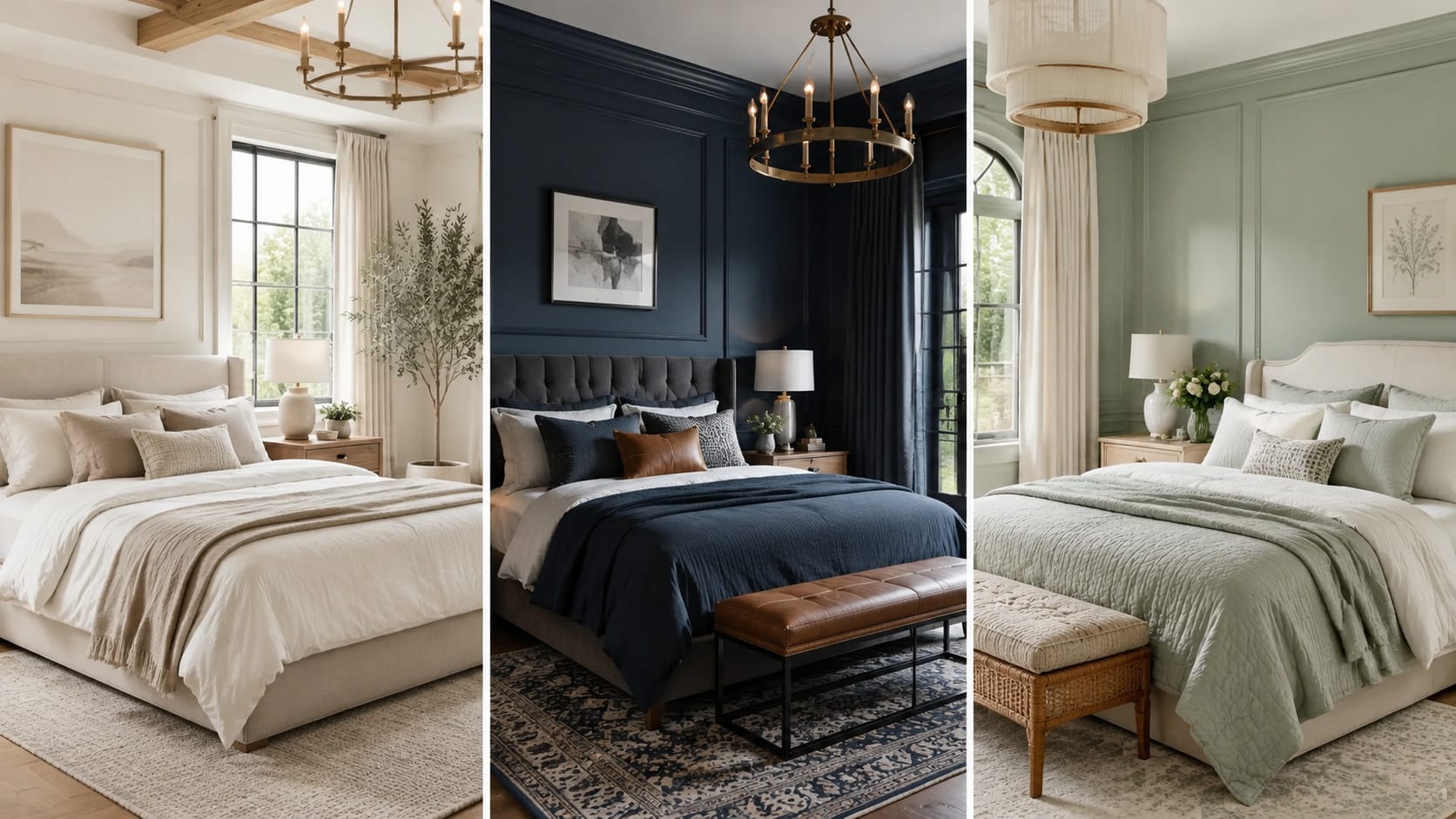

I always tell clients that great bedroom color ideas start with how the room makes you feel, not just how it looks in photos.
Soft, muted shades create a restful mood, while richer tones bring warmth and personality.
The right shade depends on your furniture too. Oak pieces pair best with warm neutrals, while white or pastel furniture suits lighter, airy tones.
Darker wood or painted furniture works well with balanced, grounded colors. Match your color choice to your space and feel instantly at home.
Top Bedroom Colors at a Glance
With so many shades to choose from, here’s a quick way to scan every category before you dive into the details below.
| Colour Category | Colour Palette | Style Tip | Room Consideration |
|---|---|---|---|
| Soft Neutral | Warm Beige, Soft Ivory, Greige | Add texture through fabric | Works in most room sizes |
| White & Off-White | Crisp White, Pastel Accents | Pair with soft linens | Best for low-light rooms |
| Grey | Light Grey, Charcoal | Use as an accent wall | Light grey suits small rooms |
| Blue | Sky Blue, Dusty Blue, Navy | Add warm lighting | Sky blue suits small rooms |
| Green | Sage, Olive | Pair with wood tones | Works well in most rooms |
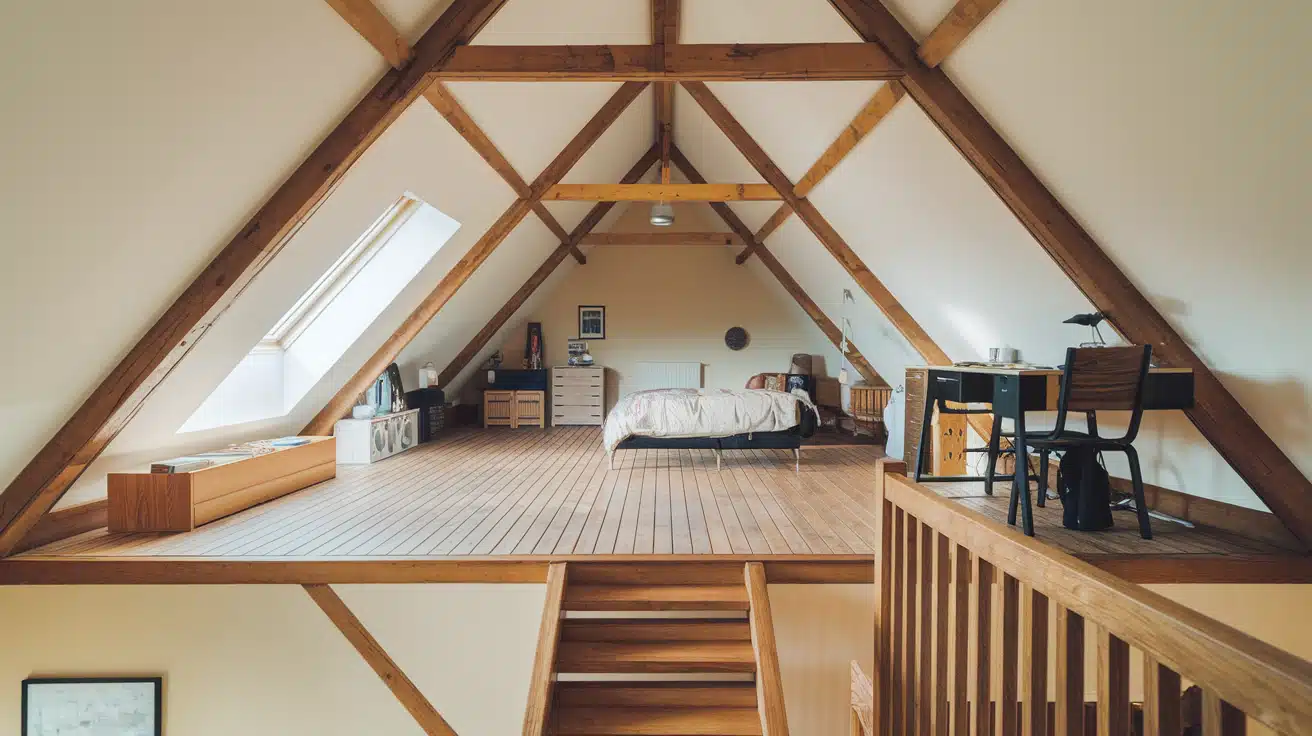
| Earth-Tone | Terracotta, Sandstone, Clay | Layer with linen or wicker | Good for angled ceilings |
| Bold & Statement | Emerald, Burgundy, Black | Balance with soft decor | Best for larger rooms |
| Pastel | Blush Pink, Lavender | Keep decor simple | Suits calm, quiet spaces |
| Dual-Tone | Two complementary shades | Use to highlight features | Good for rooms with architectural detail |
Soft Neutral Bedrooms
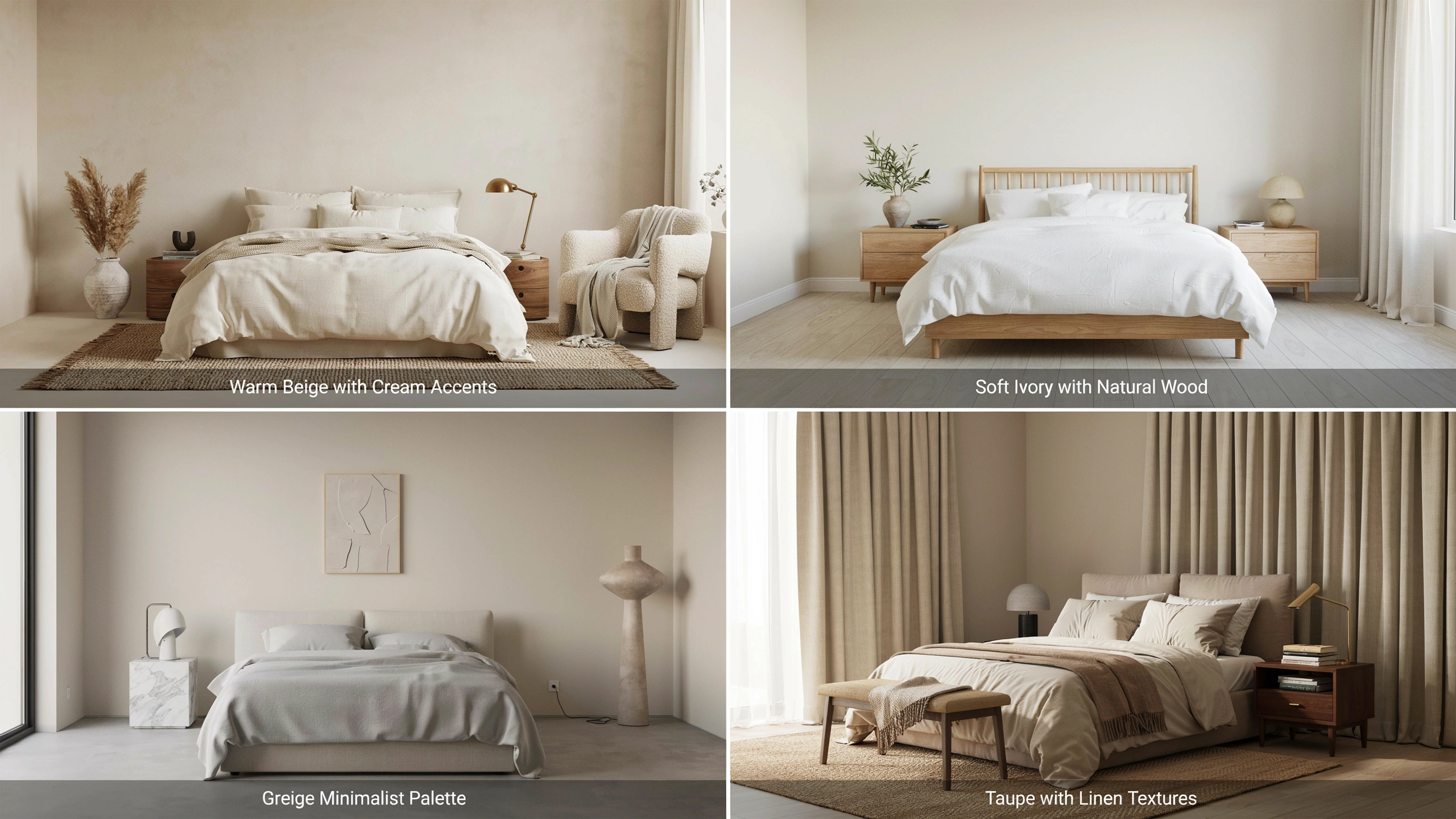
Soft neutral tones create a calm, airy bedroom that lets your furniture stand out. They work in almost any layout and hide everyday wear well.
1. Warm Beige with Cream Accents
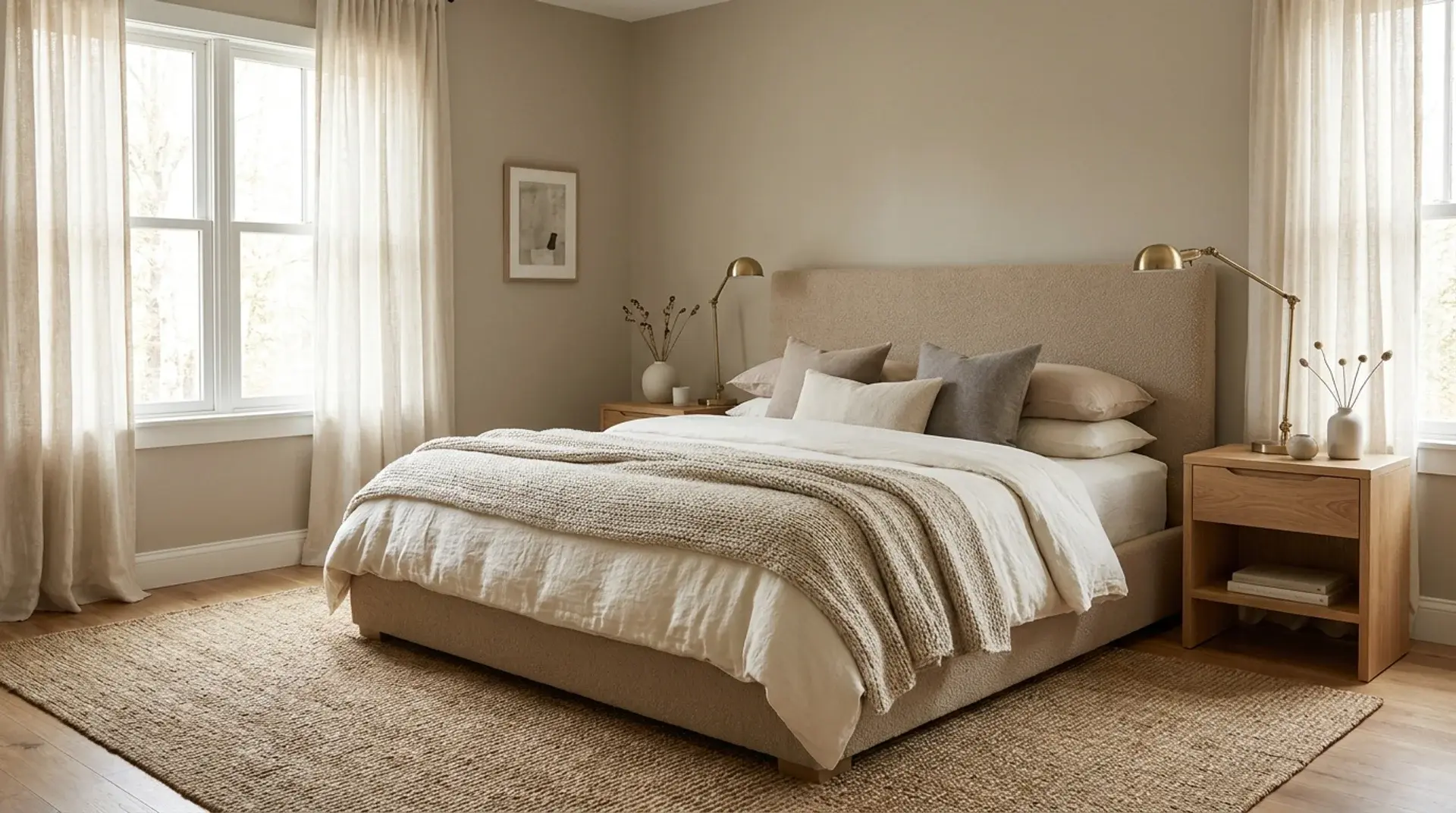
Warm beige walls offer a soft, inviting foundation, and adding layered textures such as rugs, throws, or woven baskets improves the room’s depth and makes it feel lived-in.
Cream accents in bedding or curtains bring balance and warmth to the space without overpowering the neutral palette.
2. Soft Ivory with Natural Wood
Soft ivory walls brighten the bedroom while creating a gentle backdrop for natural wood furniture. The combination adds warmth and keeps the room feeling fresh, airy, and comfortable.
I like pairing oak furniture, like beds and wooden side tables, with this shade, since woven textures add a relaxed, organic feel to the space.
3. Greige Minimalist Palette
Greige walls combine grey and beige tones to create a balanced neutral look that feels modern yet comfortable. This shade works well in bedrooms where simplicity and flexibility are important.
Pairing greige with soft fabrics, warm lighting, and minimal décor helps create a calm space without making the room feel plain.
4. Taupe with Linen Textures
Taupe walls create a warm, understated bedroom backdrop that feels calm and versatile. The muted tone works well in relaxing spaces where comfort and simplicity are the main focus.
Linen bedding, woven rugs, and wooden furniture add natural texture while keeping the room cozy and balanced.
White and Off-White Bedrooms
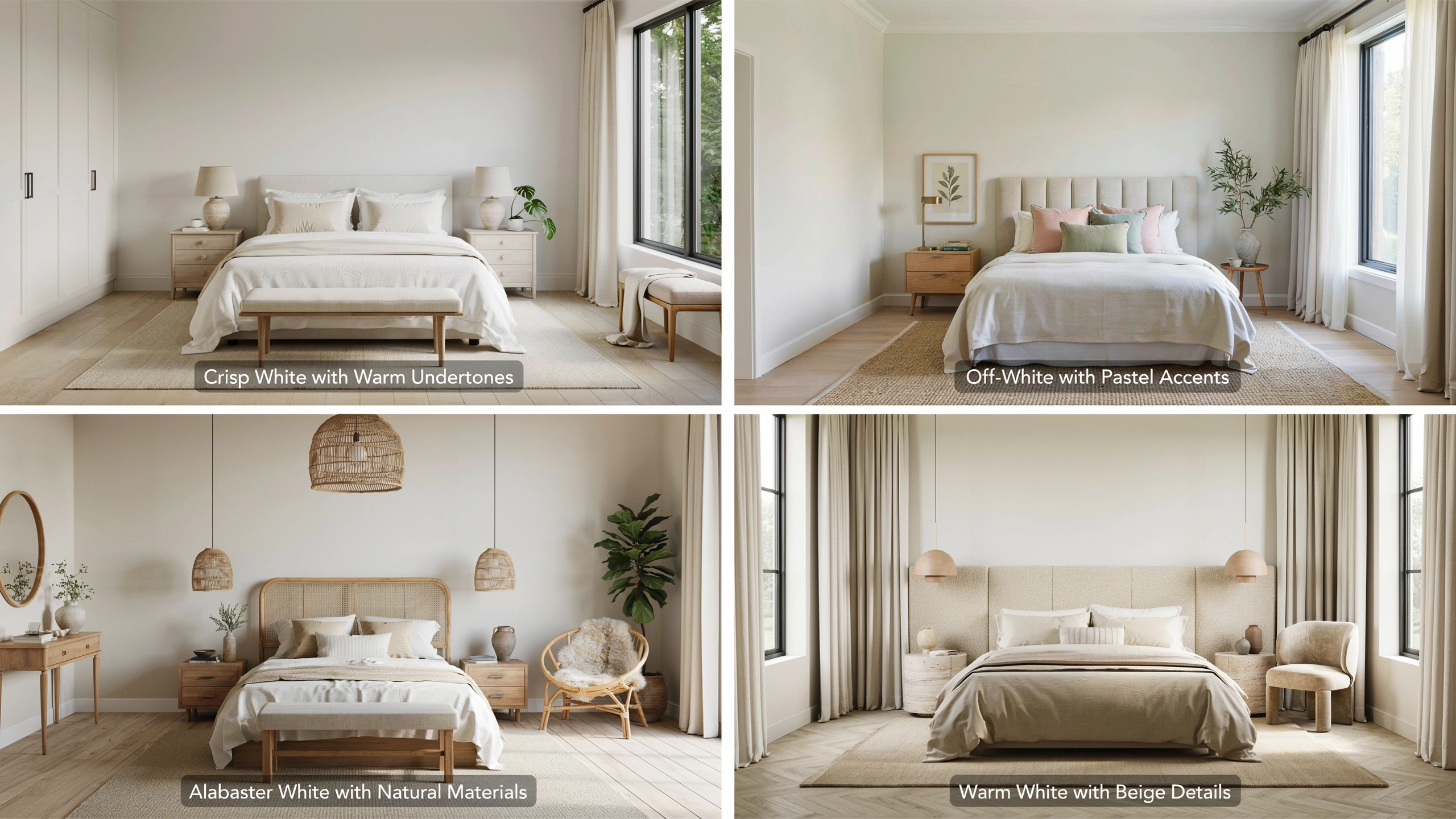
White and off-white shades give bedrooms a timeless, fresh look that suits almost any style. Warm undertones keep them from feeling stark, especially in smaller or darker rooms.
5. Crisp White with Warm Undertones
Crisp white walls create a bright, open bedroom atmosphere, while warm undertones prevent the space from feeling harsh. This shade works well for rooms that need a fresh and airy appearance.
Soft linen bedding, wooden furniture, and warm lighting help add comfort and balance to the clean white backdrop.
6. Off-White with Pastel Accents
Off-white walls provide a soft foundation that pairs beautifully with gentle pastel shades. The combination keeps the bedroom feeling light while adding subtle color through décor and accessories.
Pastel pillows, throws, artwork, and rugs bring personality without taking away from the calm neutral base.
7. Alabaster White with Natural Materials
Alabaster white creates a warm and welcoming bedroom look with a slightly creamy appearance. It works especially well in spaces that use natural textures and simple design elements.
Wood furniture, rattan accents, and woven fabrics improves the warmth of this shade while keeping the overall style relaxed.
8. Warm White with Beige Details
Warm white walls create a soft backdrop that feels comfortable throughout the day. Adding beige details introduces gentle contrast while maintaining a peaceful bedroom palette.
Beige bedding, curtains, and upholstered furniture help create a layered look without making the space feel too busy.
Grey Bedrooms
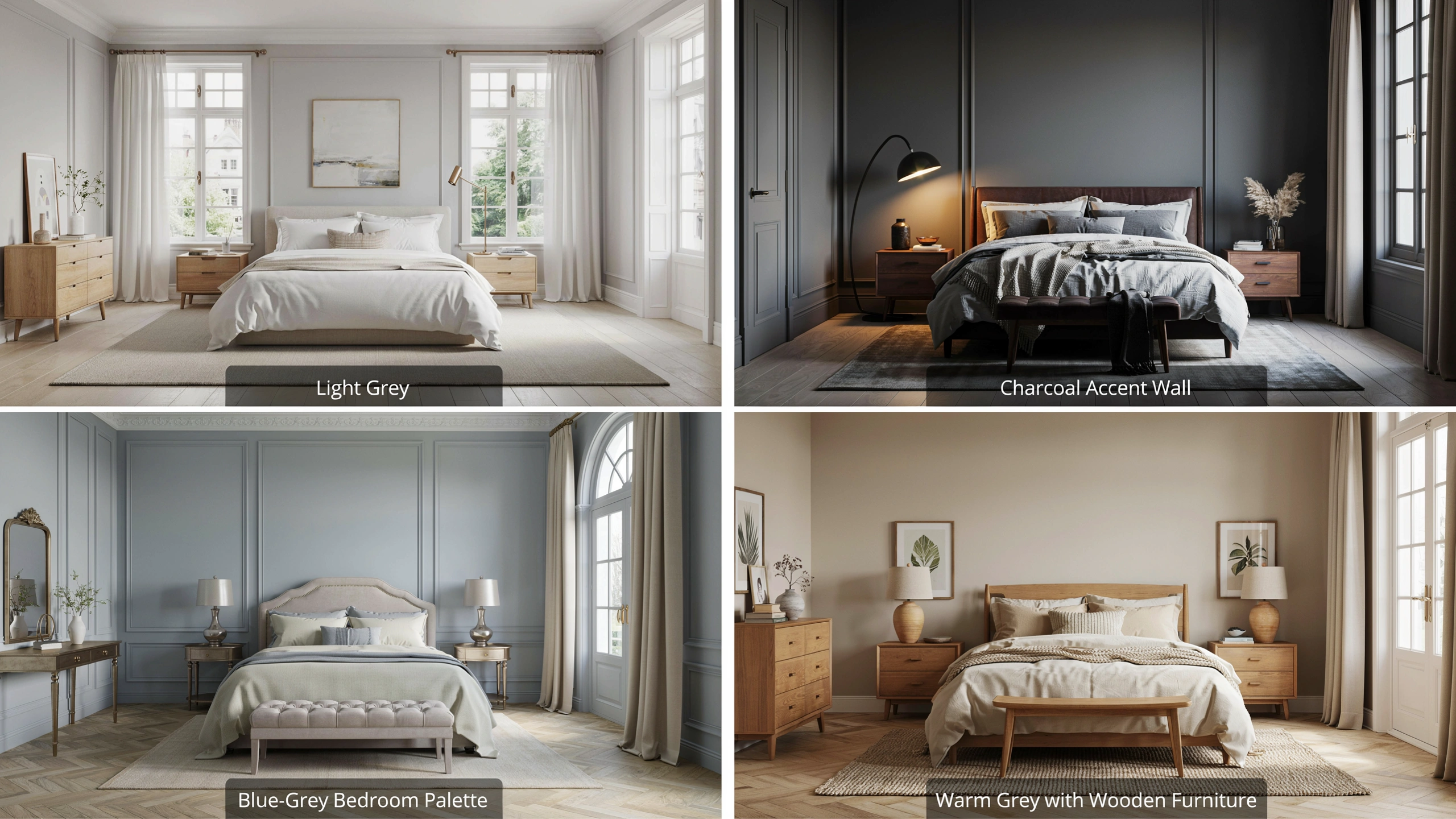
Grey bedrooms can feel calm and understated or bold and dramatic, depending on the shade. Lighter greys open up small rooms, while darker tones add depth.
9. Light Grey
Light grey walls reflect natural light and help smaller bedrooms feel more spacious. The soft shade creates a neutral foundation that works well with different decorating styles.
White bedding, wooden furniture, and soft textiles keep the room feeling balanced while adding warmth to the cooler grey tone.
10. Charcoal Accent Wall
Charcoal adds depth and creates a strong focal point when used on a bedroom accent wall. It brings a modern feel while keeping the space comfortable with the right styling.
Warm lighting, lighter bedding, and natural wood elements help soften the darker shade and maintain balance.
11. Blue-Grey Bedroom Palette
Blue-grey walls combine the calming qualities of blue with the balanced feel of grey. This muted shade creates a peaceful bedroom atmosphere without feeling too bright or overwhelming.
White furniture, silver accents, and soft fabrics complement the color while keeping the room relaxed and comfortable.
12. Warm Grey with Wooden Furniture
Warm grey walls create a cozy neutral backdrop that pairs naturally with wood tones. The combination adds depth while keeping the bedroom feeling welcoming and easy to style.
Wooden floors, oak furniture, and beige textiles bring warmth and prevent the grey from feeling too cool.
Blue Bedrooms
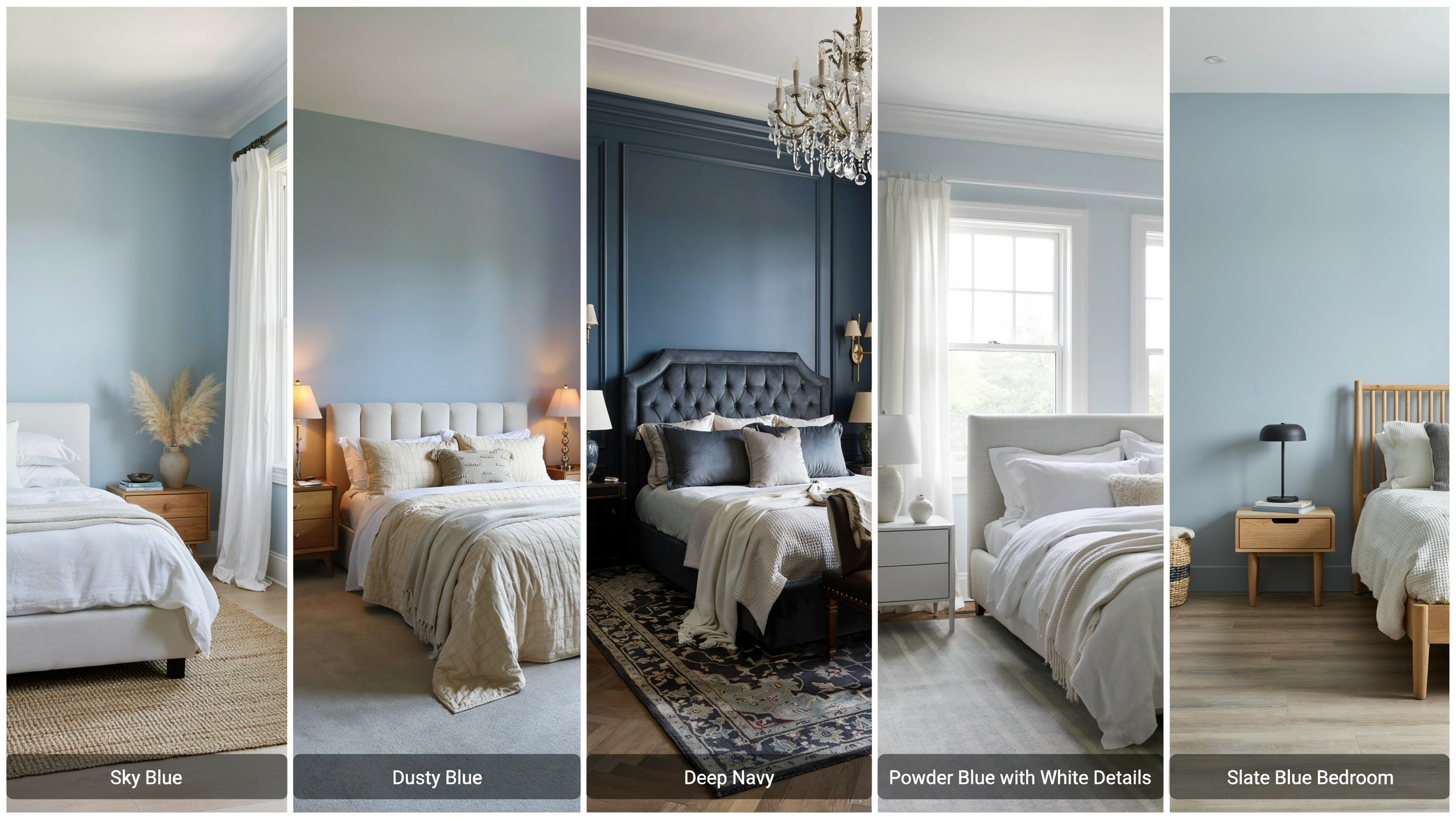
Blue tones create a serene, calming bedroom. Soft blues feel peaceful and light, while deeper blues add richness that pairs well with neutral or wood furniture.
13. Sky Blue
Sky blue walls create a light and refreshing bedroom atmosphere that makes smaller spaces feel more open. The soft shade works well with simple furniture and natural textures.
White bedding, light wood furniture, and airy curtains enhance the brightness while keeping the room comfortable.
14. Dusty Blue
Dusty blue offers a softer alternative to brighter blues, creating a cozy and relaxed bedroom setting. Its muted tone works well in both modern and traditional interiors.
Warm lighting, cream fabrics, and wooden accents help bring out the inviting qualities of this shade.
15. Deep Navy
Deep navy walls add richness and create a dramatic bedroom backdrop without feeling overwhelming. The darker shade works especially well when balanced with lighter elements.
White bedding, metallic accents, and warm lamps help soften the intensity and create a comfortable atmosphere.
16. Powder Blue with White Details
Powder blue creates a gentle and airy bedroom look that feels peaceful and refreshing. This soft shade works well for spaces where a subtle touch of color is preferred.
White furniture, sheer curtains, and light fabrics enhance the calm appearance while keeping the room bright.
17. Slate Blue Bedroom
Slate blue adds depth while maintaining the calming qualities of traditional blue shades. Its slightly muted appearance creates a sophisticated yet comfortable bedroom setting.
Pairing it with cream bedding, natural wood, and soft lighting helps create a balanced and inviting space.
Green Bedrooms
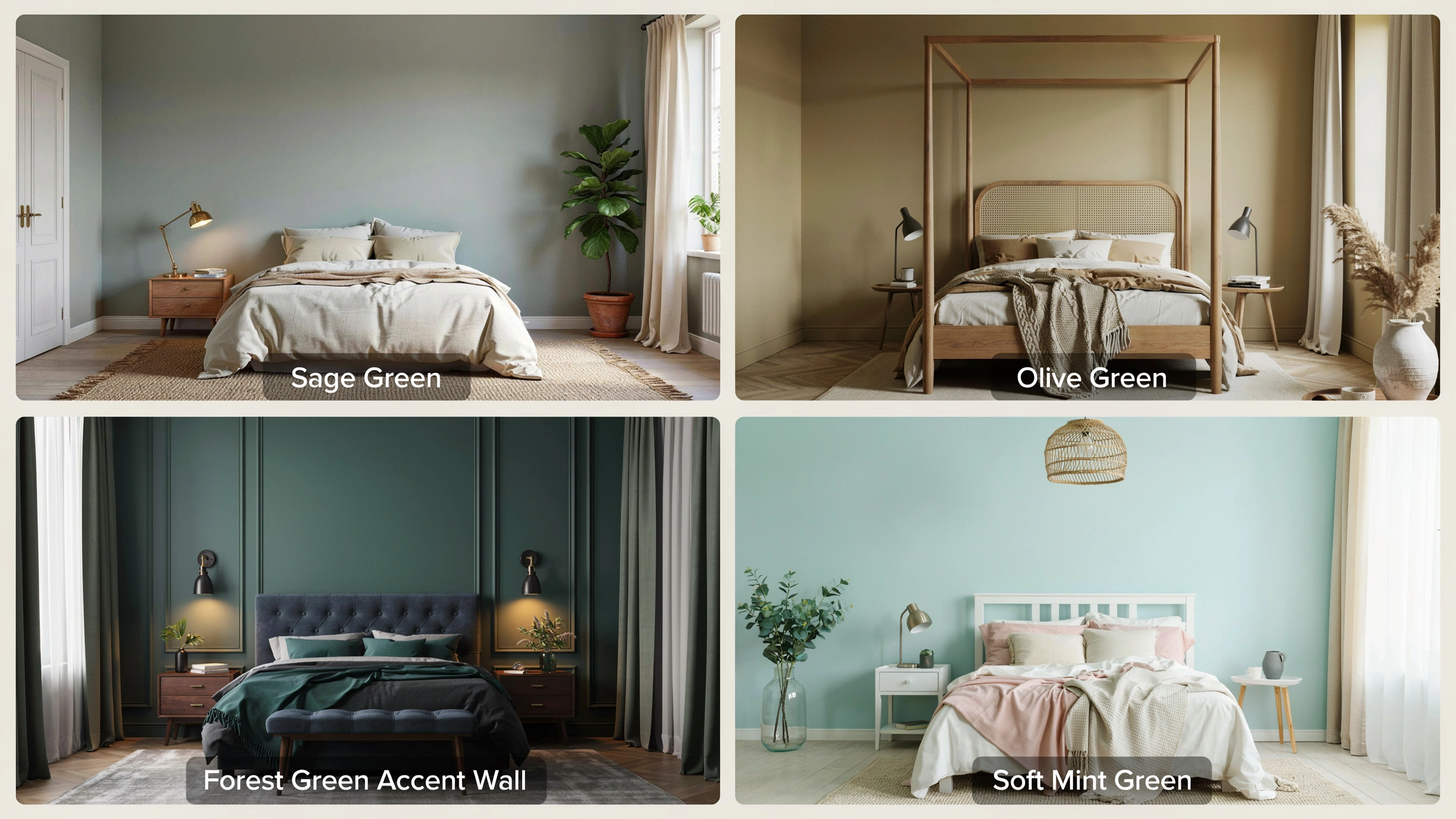
Blue tones create a serene, calming bedroom. Soft blues feel peaceful and light, while deeper blues add richness that pairs well with neutral or wood furniture.
18. Sage Green
Sage green walls create a soft, natural bedroom look that feels calming and balanced. The muted shade works well in rooms where comfort and a connection to nature are the main focus.
Wood furniture, cream bedding, and brass accents add warmth while keeping the overall palette relaxed and inviting.
19. Olive Green
Olive green adds depth and warmth while creating a cozy bedroom atmosphere. This shade works especially well in larger spaces where deeper colors can add richness without feeling too heavy.
Neutral bedding, woven textures, and natural wood furniture help balance the darker green tones.
20. Forest Green Accent Wall
Forest green creates a bold focal point while bringing a strong natural element into the bedroom. Using it on one wall adds depth without making the entire space feel enclosed.
Light bedding, warm lighting, and wooden furniture soften the darker shade and create a comfortable balance.
21. Soft Mint Green
Soft mint green adds a fresh and airy feel to bedrooms while keeping the overall look gentle. The light shade works well in spaces that need a subtle touch of color.
White furniture, pastel textiles, and natural materials enhance the refreshing appearance without overpowering the room.
Earth-Tone Bedrooms
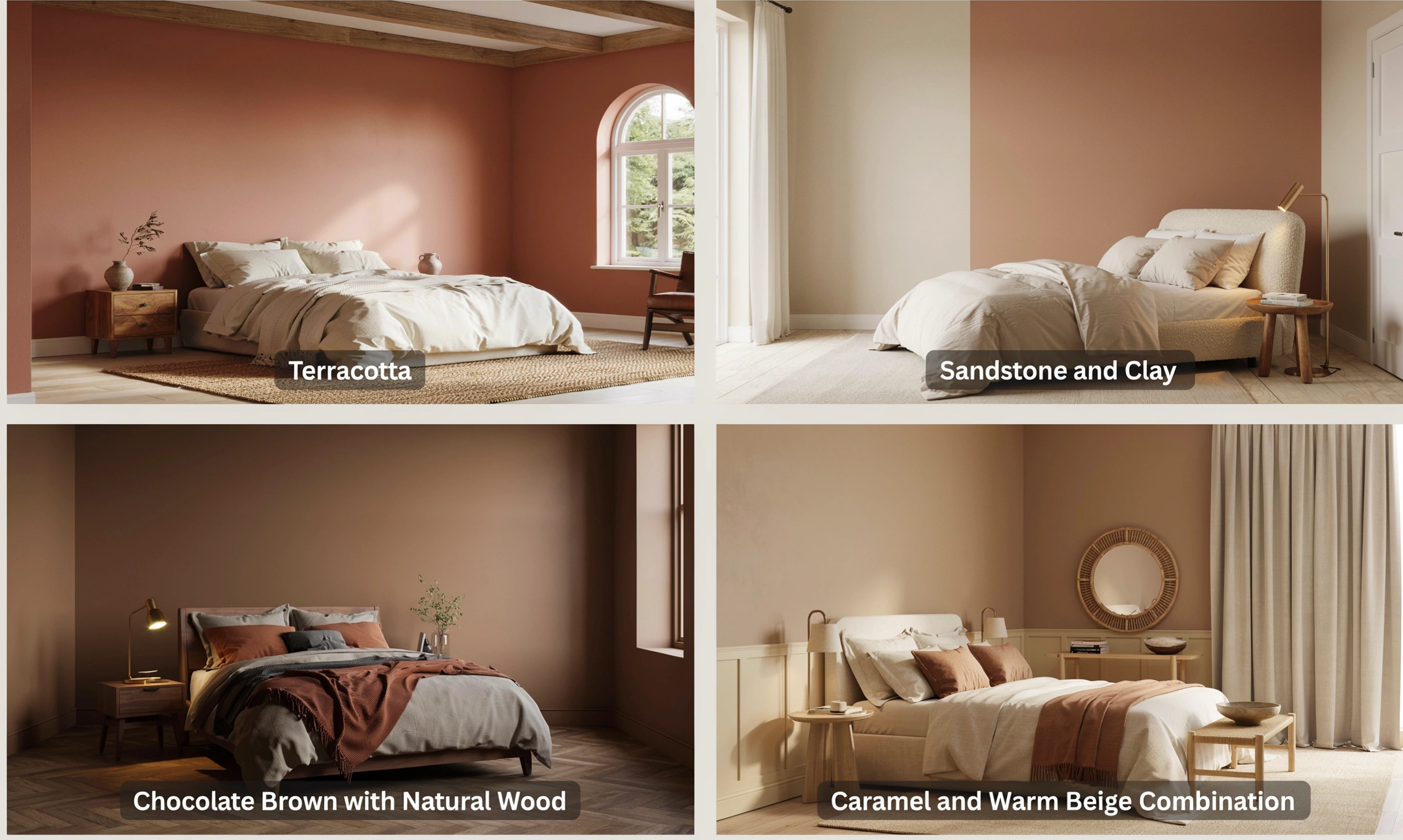
Earthy colors like terracotta, sandstone, and clay bring warmth and a grounded feel to the bedroom. They pair well with wood, wicker, and linen furniture.
22. Terracotta
Terracotta walls add warmth and personality with their rich clay-inspired tones. This shade creates a cozy bedroom atmosphere while adding depth to spaces with neutral furniture.
Cream bedding, wooden accents, and woven décor help soften the color and create a welcoming feel.
23. Sandstone and Clay
Sandstone and clay tones create a warm, grounded bedroom palette that feels natural and comfortable. These shades work well for creating a cozy environment without using very dark colors.
Layering soft fabrics, beige textiles, and natural wood elements adds texture and keeps the room balanced.
24. Chocolate Brown with Natural Wood
Chocolate brown walls create a rich and cozy bedroom setting that feels warm and intimate. The deep shade works well when paired with lighter furniture and natural materials.
Oak furniture, cream bedding, and soft lighting help balance the darker tone while adding comfort.
25. Caramel and Warm Beige Combination
Caramel and warm beige create a welcoming bedroom palette with subtle contrast and layered warmth. This combination works well for spaces that need a cozy yet light appearance.
Adding linen curtains, neutral bedding, and wooden décor enhances the natural feel of the colors.
Bold and Statement Bedrooms
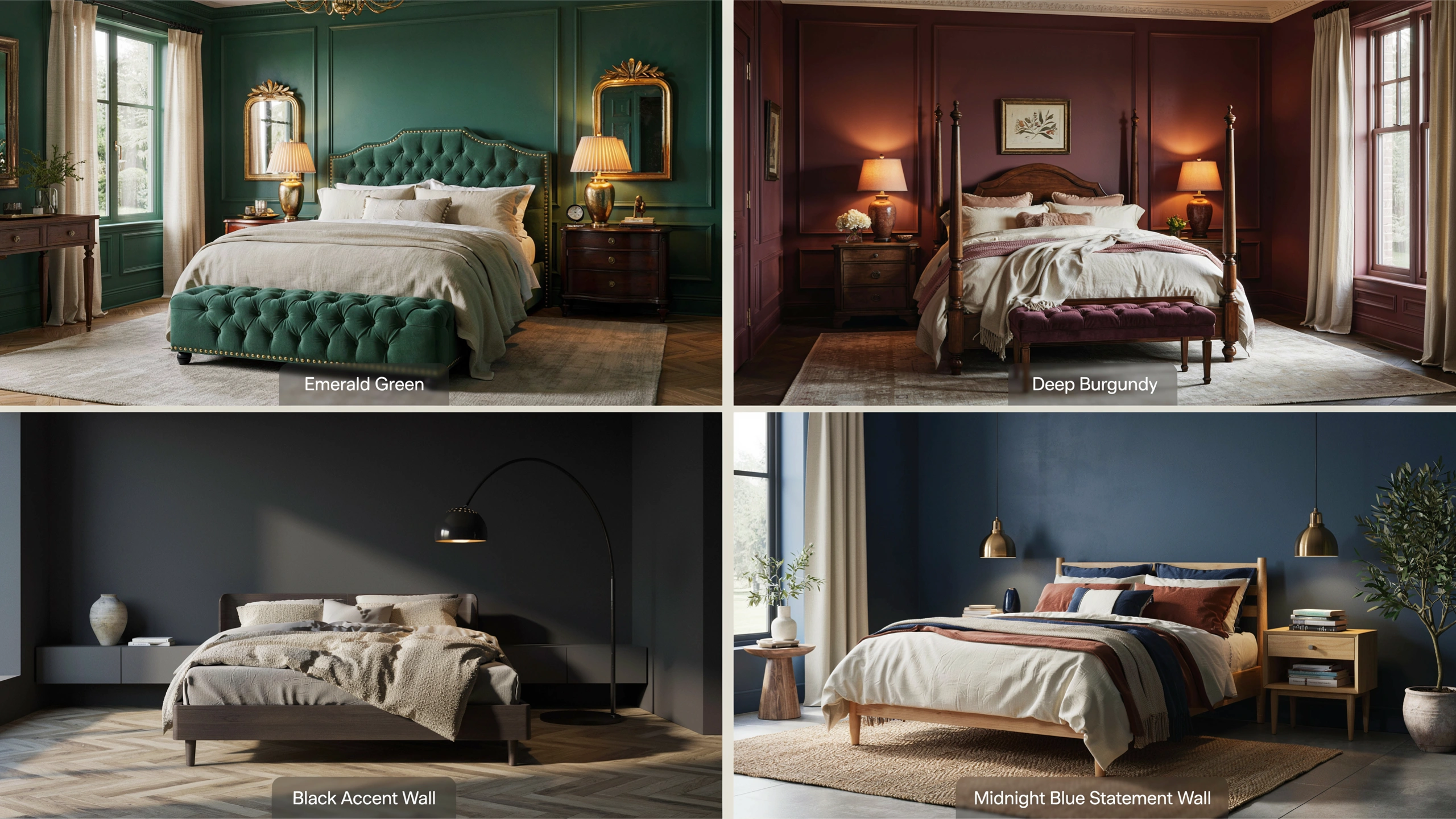
Bold shades like deep green, burgundy, or black give a bedroom personality. Pair them with soft fabrics and warm lighting so the room still feels practical.
26. Emerald Green
Emerald green walls create a rich and dramatic bedroom atmosphere while maintaining a connection to nature. The deep shade works well as a feature wall or throughout larger rooms.
Neutral bedding, gold accents, and wooden furniture help balance the intensity and add warmth.
27. Deep Burgundy
Deep burgundy adds warmth and richness to bedroom walls, creating a cozy and luxurious feel. This shade works well in rooms where a stronger color statement is desired.
Cream bedding, soft lighting, and subtle metallic accents help keep the space balanced and comfortable.
28. Black Accent Wall
A black accent wall creates a modern focal point, similar to a dark academia bedroom look, while adding depth to the space.
Using it behind the bed can create contrast without making the entire room feel dark. Warm lighting, textured fabrics, and lighter décor pieces help soften the bold color choice.
29. Midnight Blue Statement Wall
Midnight blue creates a dramatic bedroom backdrop while maintaining a calm and relaxing feel. The deep shade works especially well as an accent wall behind the bed.
White bedding, natural wood, and warm lighting help create contrast and prevent the room from feeling too heavy.
Pastel Bedrooms
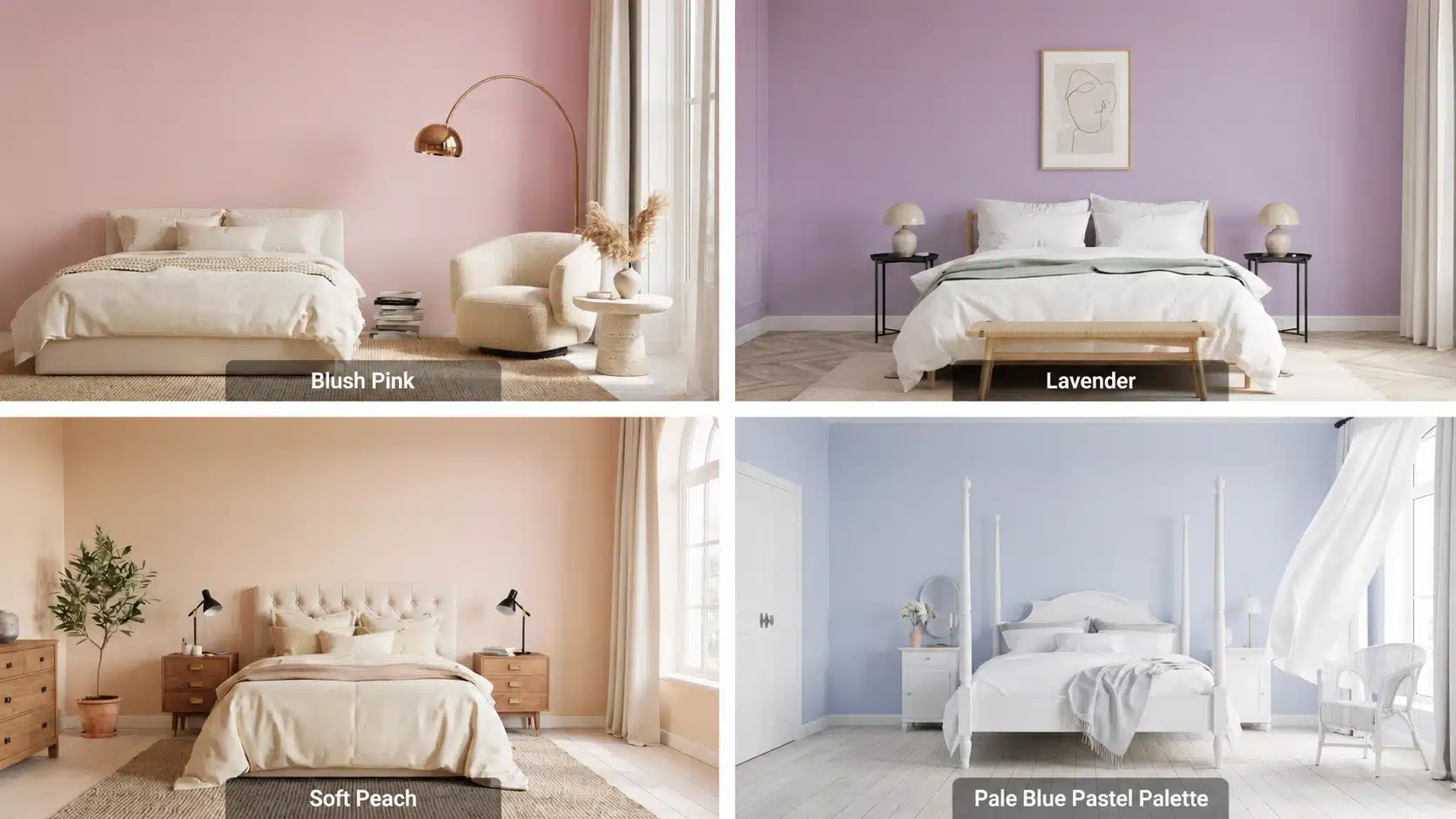
Pastel shades make a bedroom feel soft, gentle, and relaxing. They work well in spaces meant for unwinding, adding subtle personality without overwhelming the room.
30. Blush Pink
Blush pink walls add warmth and softness while creating a comfortable bedroom atmosphere. The muted shade works well with neutral furniture and natural textures.
Cream bedding, wooden accents, and soft fabrics help maintain a balanced look without making the room feel overly bright.
31. Lavender
Lavender walls create a peaceful bedroom setting with subtle purple undertones. The soft color works well in relaxing spaces where a calm atmosphere is important.
Simple décor, warm lighting, and neutral textiles help keep the shade soothing without overwhelming the room.
32. Soft Peach
Soft peach adds warmth and a gentle touch of color to bedroom walls. This shade creates a welcoming feel while keeping the space light and comfortable.
Cream furniture, beige textiles, and natural wood accents complement the color and create a cozy appearance.
33. Pale Blue Pastel Palette
Pale blue creates a soft and airy bedroom look that feels refreshing and calm. The gentle shade works well in rooms where a peaceful atmosphere is the goal.
White furniture, sheer curtains, and light fabrics enhance the brightness while keeping the overall design relaxed.
Dual-Tone and Accent Bedrooms

Pairing two complementary colors adds layers and depth to a bedroom. Accent walls or simple color-blocking highlight key features without making the room harder to live in.
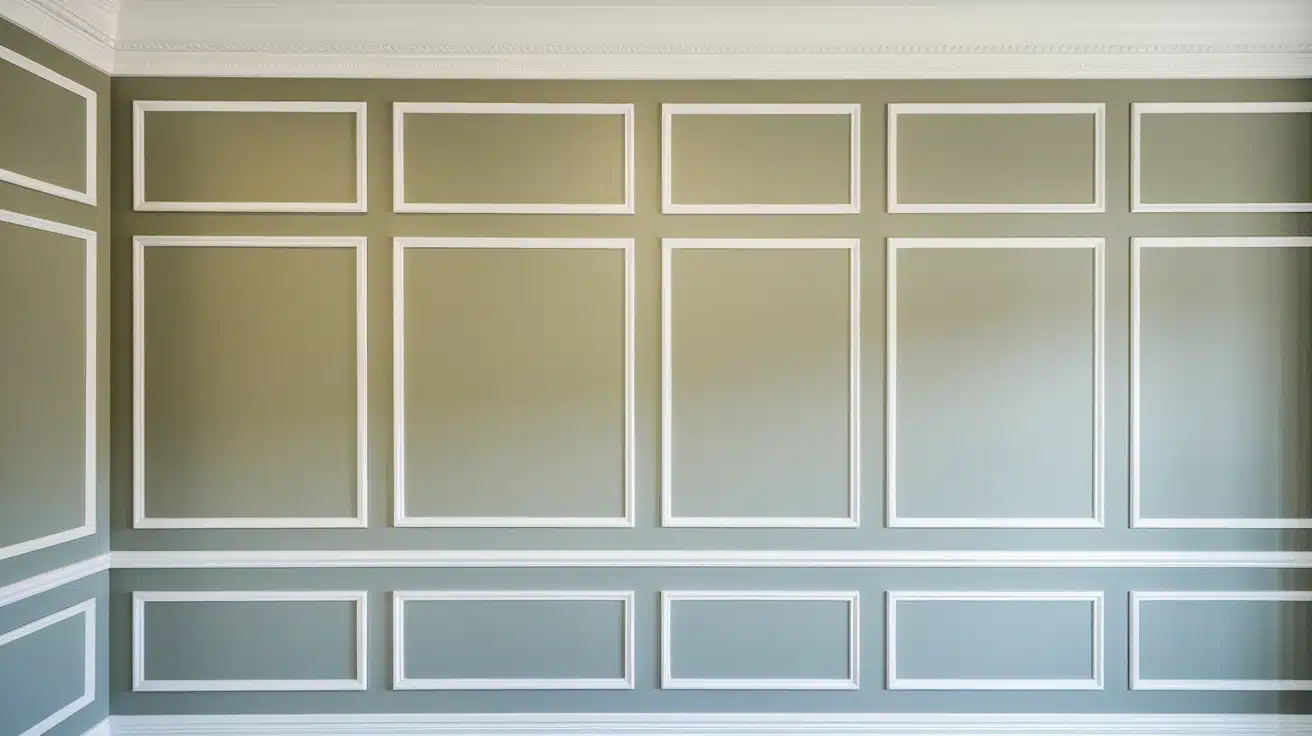
34. Half-Wall Technique
Painting the lower half of a bedroom wall in a different shade creates a layered and modern appearance. This approach adds visual interest while keeping the overall design balanced and easy to style.
Pairing darker lower sections with lighter upper walls can make the room feel structured while allowing furniture and décor to stand out.
35. Ceiling-Wall Contrast
A contrasting ceiling color draws attention upward and adds character to the bedroom. This technique works especially well in rooms with interesting ceiling details or spaces that need extra depth.
Soft wall colors paired with a slightly darker ceiling shade create a balanced look without making the room feel smaller.
36. Geometric Accent Wall
A geometric accent wall adds personality through shapes, lines, and carefully chosen color combinations. It creates a focal point while allowing the rest of the bedroom to remain simple.
Using complementary shades with minimal décor helps the design feel intentional without making the space appear too busy.
37. Color Blocking with Complementary Shades
Color blocking combines two or more coordinated shades to create a structured and creative bedroom design.
This approach adds depth by separating different sections of the room with intentional color placement.
Pairing complementary tones on adjoining walls, behind the bed, or around architectural features creates a balanced and personalized look.
Things to Consider Before Painting Your Room
Choosing a wall color involves more than picking a shade you like. Light, room size, and existing furniture all affect how it looks and feels day to day.
- Check the lighting: Colors can look different in natural sunlight and artificial lighting, so observe them at different times of day.
- Consider room size: Colors that make a room look bigger work well in smaller spaces, while darker shades add warmth to larger ones.
- Coordinate with furniture and flooring: Walls should complement what’s already in the room for a cohesive look.
- Look at undertones: Some colors may lean warmer or cooler on the wall than they appear in the sample.
- Think about daily use: Bedrooms get a lot of wear, so choose shades that are easy to maintain and live with.
Conclusion
These bedroom color ideas are meant to inspire, not hand you one right answer. Your space should reflect your comfort and mood.
Before you commit to a color, test a few paint swatches on the wall and live with them for several days.
Watch how each shade shifts under morning and evening light.
Small updates, like new bedding or a single accent wall, can refresh a room without a full repaint. Pick your favorite shade from this list and grab a sample pot this weekend.
Frequently Asked Questions
How Do I Choose A Bedroom Color That Won’t Feel Outdated Quickly?
Stick to balanced tones like soft neutrals, muted blues, or earthy shades. These colors stay relevant longer and adapt easily when you change furniture, decor, or lighting over time.
What Paint Finishes Work Best for Bedroom Walls?
Eggshell or matte finishes work well. They hide small wall flaws and give a soft look.
How Often Should Bedroom Paint Colors Be Updated?
Bedroom paint usually lasts well for five to seven years, though it may need a refresh sooner if the color no longer fits your style or the feel you want in the space.
What Bedroom Color Is Best for Sleep?
Soft, muted shades like sage green, dusty blue, or warm gray support rest best. Bright, saturated colors tend to feel stimulating rather than calming.
Does Bedroom Paint Color Affect Home Resale Value?
Yes. Warm, grounded tones like chocolate brown and soft sage often appeal to buyers more than stark white walls, according to recent real estate studies.