I’ve killed more succulents than I’d like to admit before I learned that how to plant succulents right has less to do with the plant and everything to do with soil, depth, and that first watering.
Succulents need fast-draining soil, in a pot or bed with strong drainage, with roots covered but leaves kept above the soil line.
This blog covers how to plant succulents indoors, outdoors, and from cuttings, along with the care steps that keep them healthy once they’re settled in, whether on a windowsill or out in a garden bed.
What Do You Need To Know Before You Plant Succulents
To get succulents off to a strong start, match each plant to the right light, drainage, soil, container size, and climate before you touch the roots.
- Choose a succulent for the available light: Not every succulent wants full, direct sun. Check the light needs for your specific variety first. Some tolerate shade far better than others.
- Decide between indoor and outdoor planting: Some succulents work best as houseplants. Others grow well in outdoor containers. A smaller group can handle permanent placement in a garden bed year-round.
- Check cold hardiness before outdoor planting: Varieties like certain Sedum and Sempervivum species handle much colder winters than tender succulents do, according to the North Carolina Extension Gardener Plant Toolbox.
- Check pet safety when choosing indoor succulents: This deserves a quick check, not a long review. Jade and aloe can be toxic to cats and dogs. The ASPCA lists many Echeveria and Sempervivum varieties as non-toxic.
Tools Needed For Planting Succulents
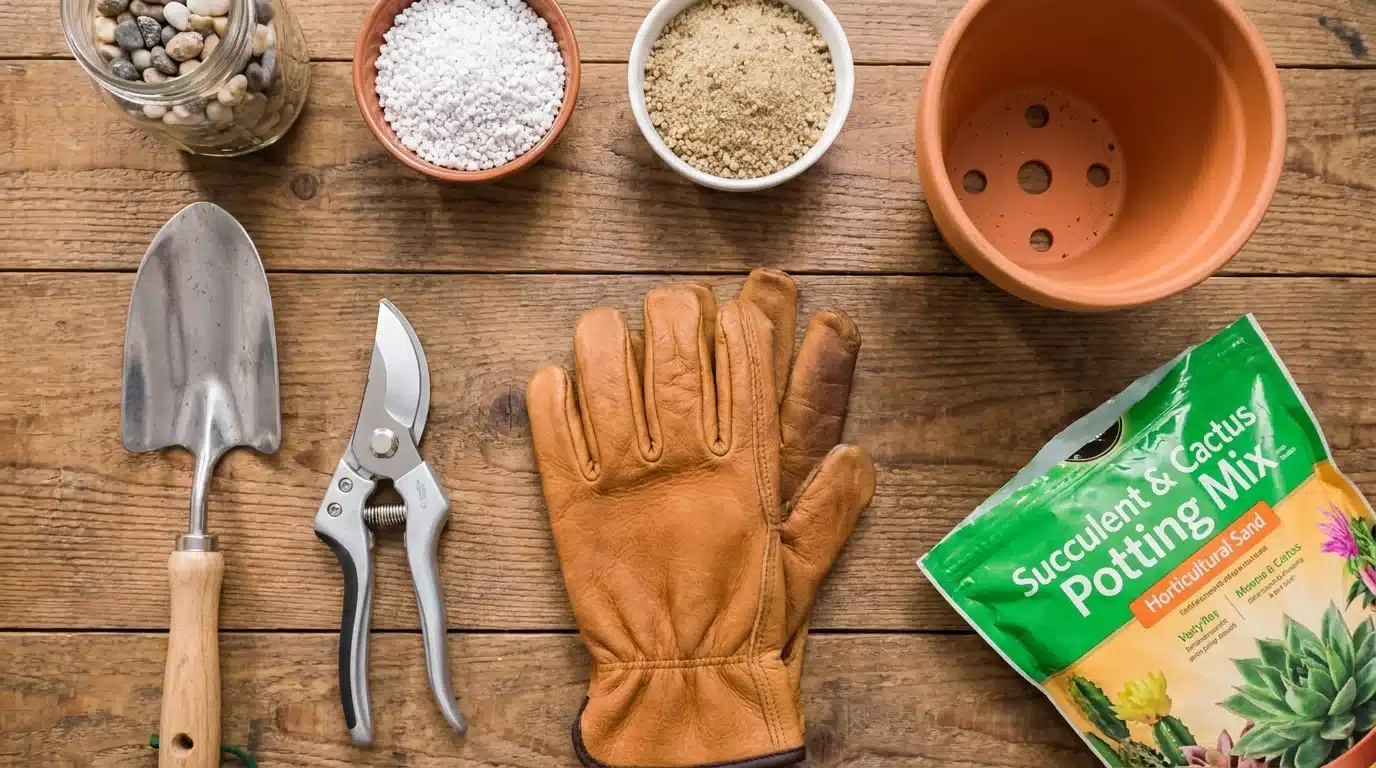
Having the right tools ready makes planting succulents easier and helps protect their roots. A few basic supplies are enough to support good drainage, healthy growth, and cleaner planting.
| Tool | Purpose |
|---|---|
| Succulent potting mix | Provides fast drainage and prevents excess moisture around roots. |
| Pot with drainage holes | Lets extra water escape and reduces the risk of root rot. |
| Perlite, pumice, or coarse sand | Improves soil aeration and helps the potting mix dry faster. |
| Small trowel or scoop | Helps add, move, and level soil around the plant. |
| Clean pruning shears | Removes damaged roots, stems, or leaves cleanly. |
| Gardening gloves | Protects hands when handling spiny or sharp-edged succulents. |
| Decorative top dressing | Gives the finished pot a neat appearance after planting. |
How to Plant Succulents in Pots
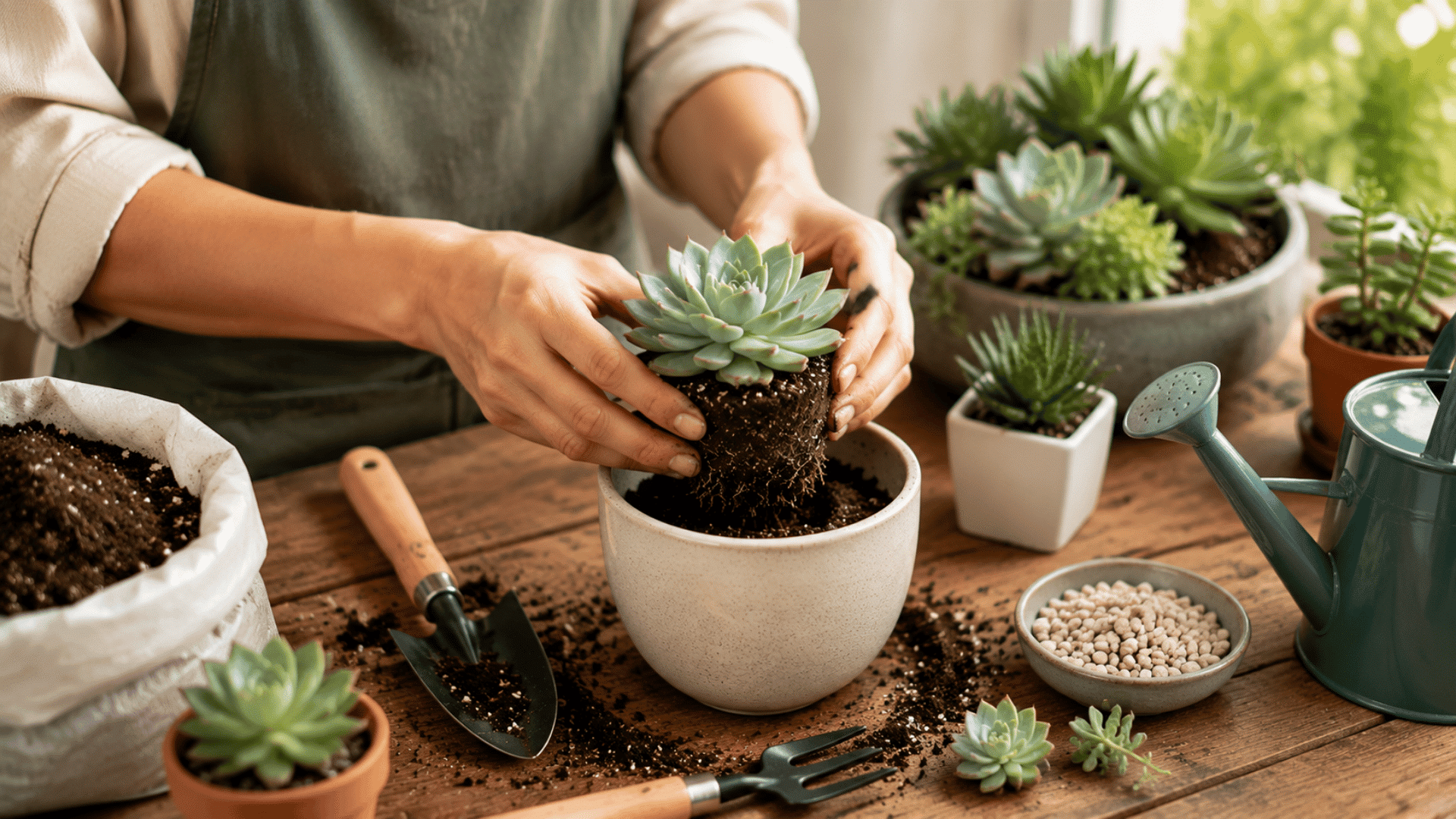
Planting succulents in containers comes down to careful root handling, correct planting depth, fast-draining soil, and a drainage hole that stays clear so water never pools around the roots.
Step 1: Choose the Right Pot and Soil
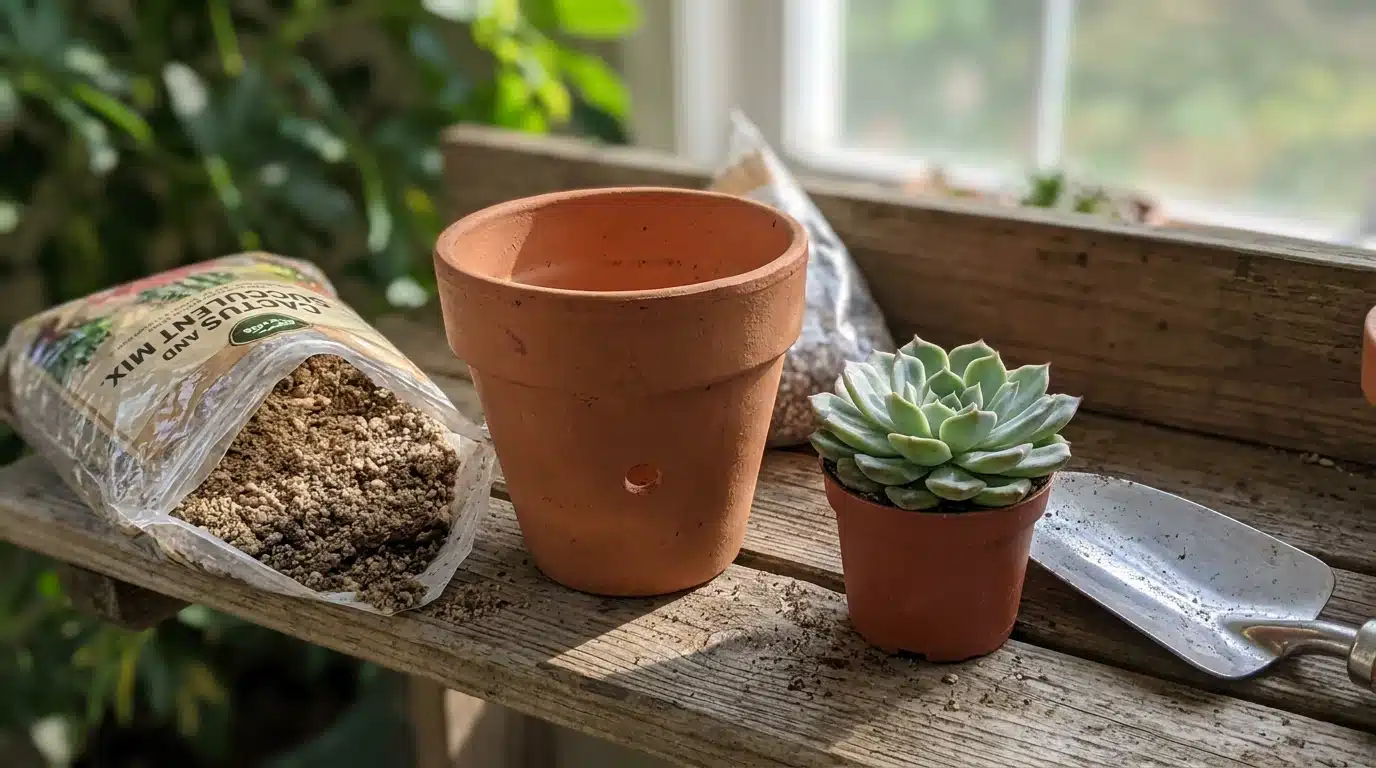
Choose a pot with a proper drainage hole, not just a decorative dish. This helps ensure your plants stay healthy and happy!
Terracotta works well since its porous walls help soil dry faster. Skip ordinary garden soil, since it holds too much moisture.
Step 2: Remove and Inspect the Roots
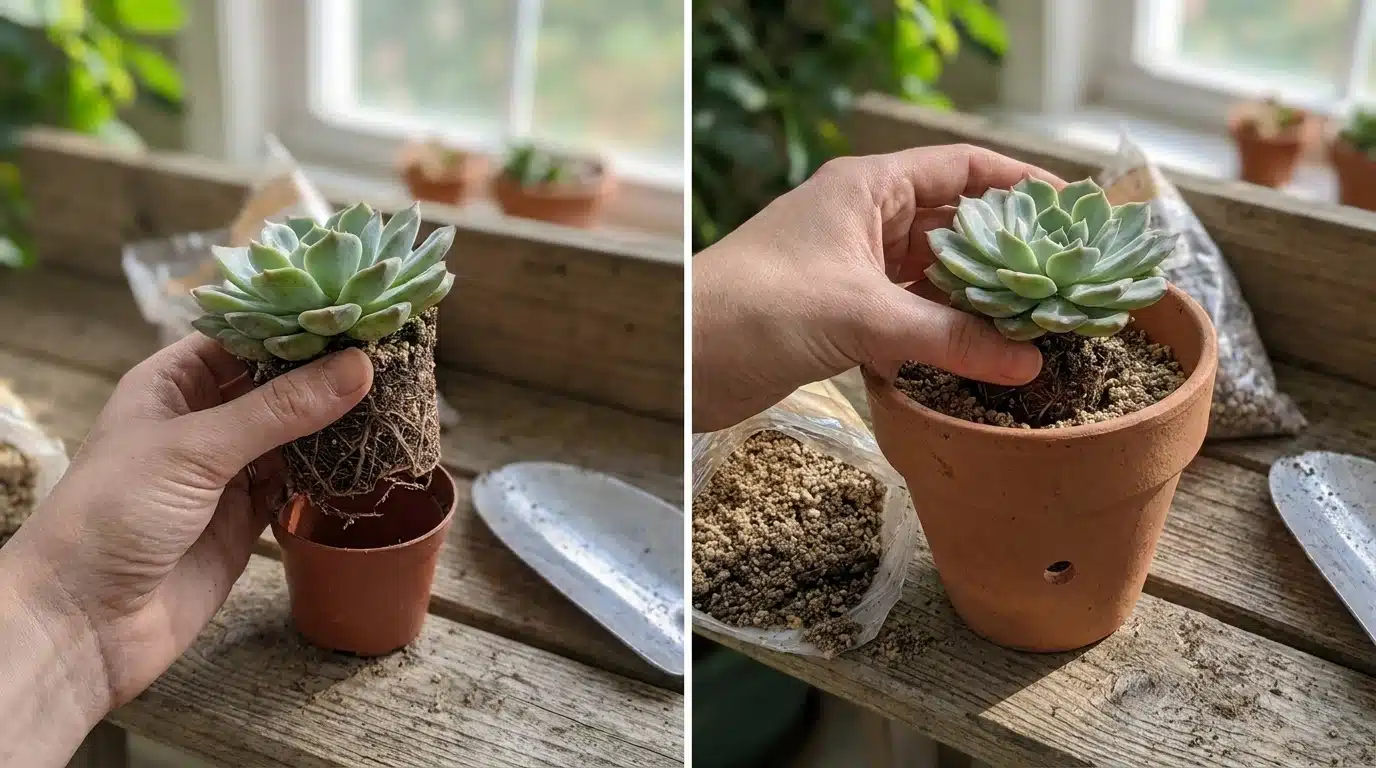
Support the base of the plant and gently loosen the container. Avoid tugging on the leaves or stem, which can tear the plant.
Look over the root ball for anything dead, mushy, or tightly circling the pot.
If the roots are circling the pot in a tight mass, gently tease them apart by hand before planting, since root-bound succulents settle in more slowly and are more prone to stress.
Step 3: Add Soil and Position the Succulent
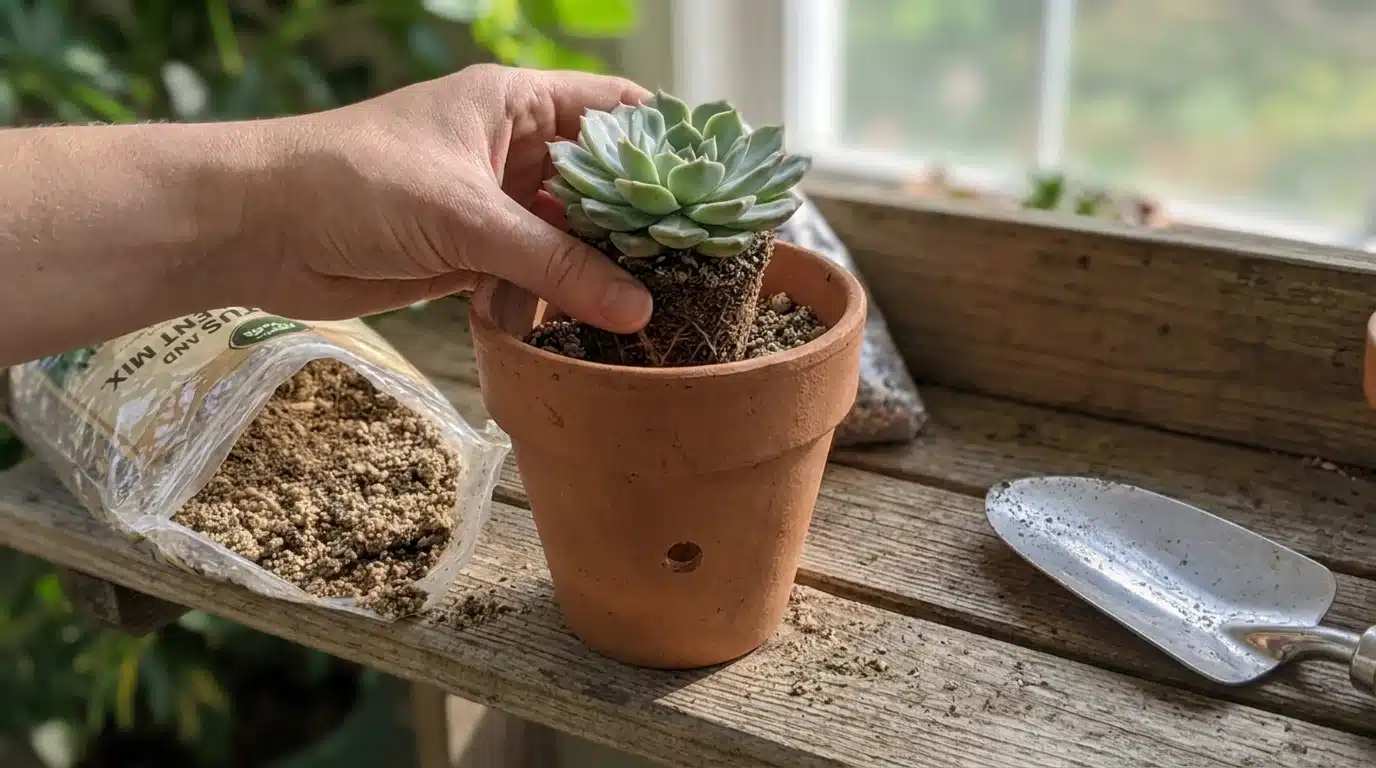
Add enough soil so the succulent sits at its original growing depth. Set the plant so the crown and lowest leaves stay above the soil surface.
To keep your plants healthy, it’s a good idea not to bury fleshy foliage since it can trap moisture and cause rot.
This small step can really help your plants thrive! Burying fleshy foliage can hold in moisture and lead to rot, so it’s best to avoid doing that.
Step 4: Fill Around the Roots and Leave Room at the Top
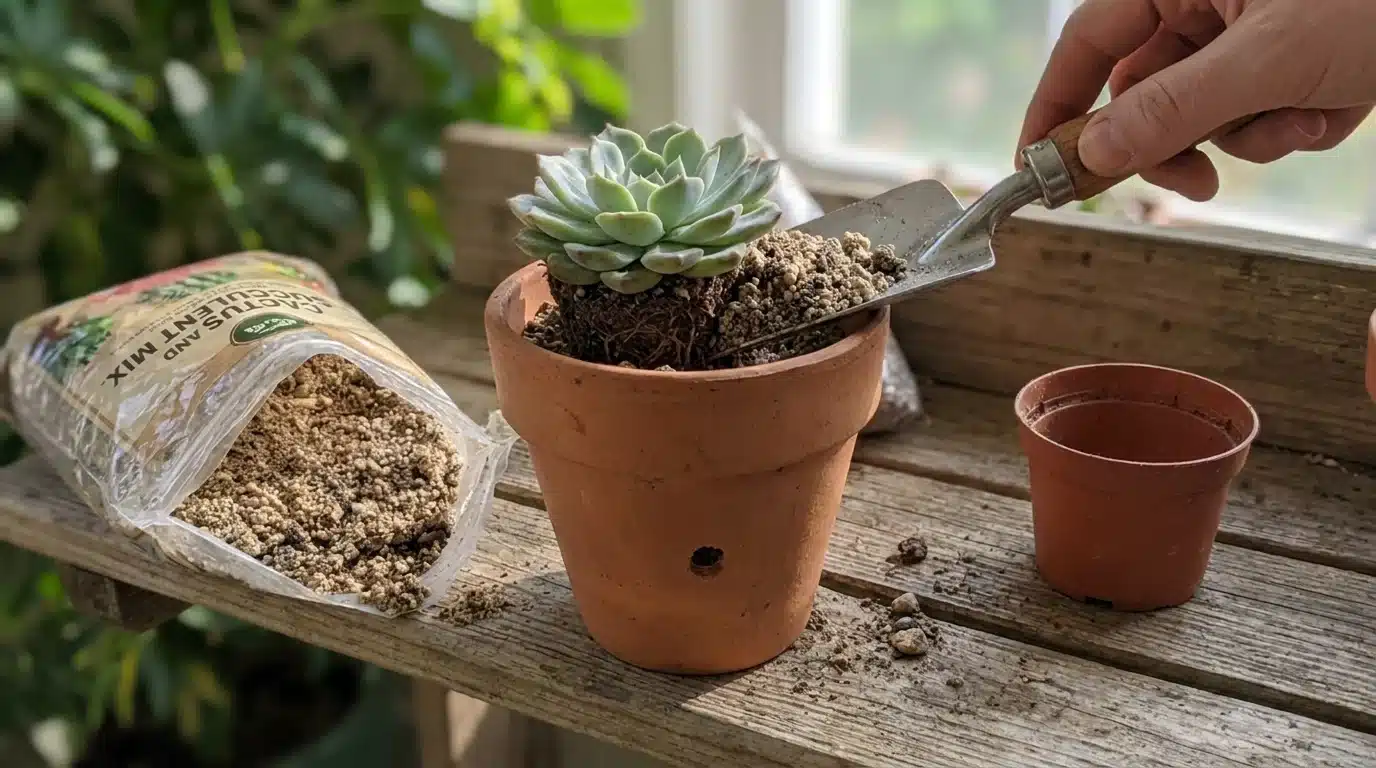
Backfill soil around the roots without pressing it down too firmly, since compacted soil drains more slowly and limits root growth.
Please leave about half an inch to an inch of space from the rim to allow water to soak in easily. This small gap helps everything work smoothly and keeps things running nicely.
Step 5: Add Top Dressing If Desired
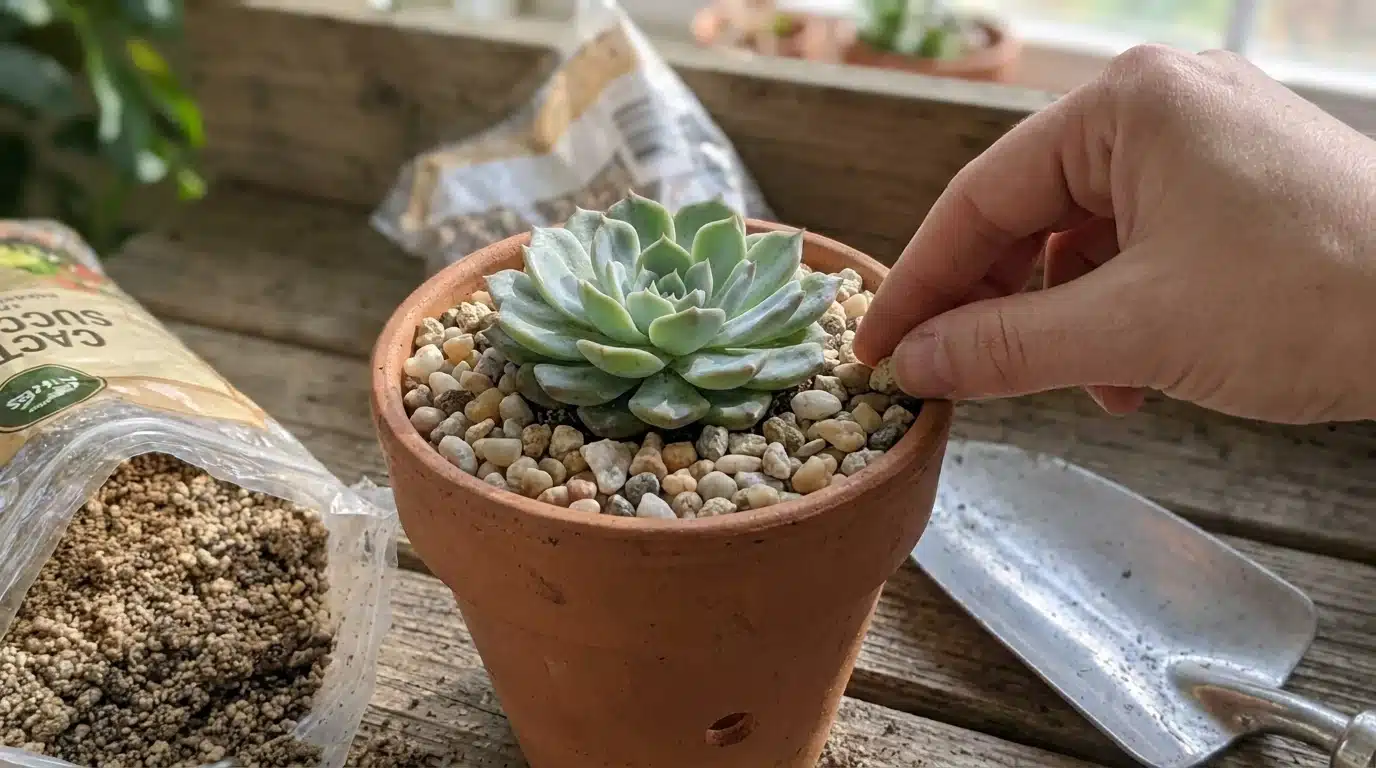
Adding a layer of gravel or decorative stone on top can enhance the appearance and complete the arrangement.
However, keep in mind that it should not replace a proper drainage hole in your pot, which is essential for preventing excess moisture buildup.
How to Plant Succulents Outdoors in the Ground
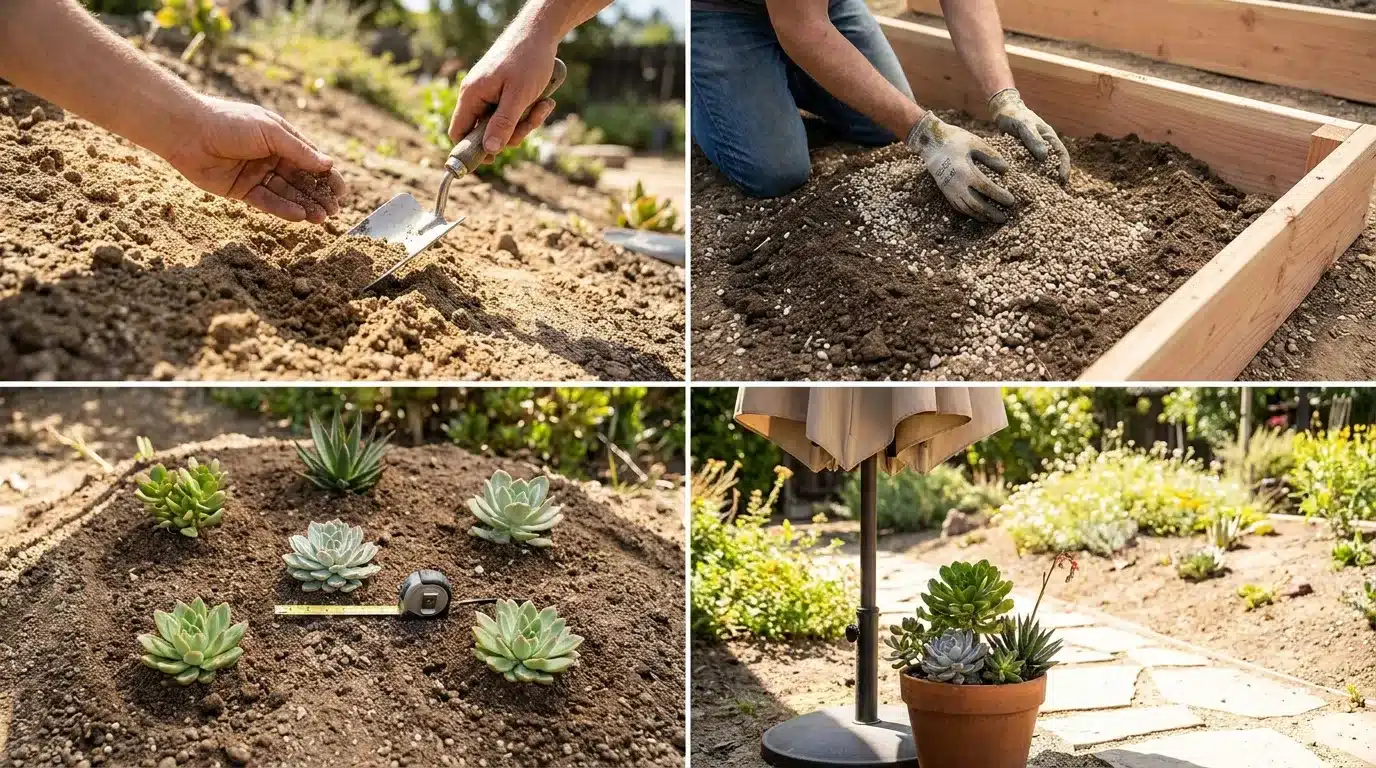
Outdoor succulents need a spot that fits their hardiness, sun exposure, rainfall, and soil drainage, since garden conditions shift far more than a controlled indoor container ever will.
Step 1: Choose a Well-Drained Location
Skip low spots in the yard where rainwater tends to collect. Standing water around the roots leads to rot fairly quickly.
Step 2: Check the Soil Before Planting
Dense clay or heavily compacted soil may need amending. Mix in coarse sand or grit to help it support succulent roots long-term.
Step 3: Consider Raised Beds or Mounded Planting Areas:
A raised bed or a mounded area gives roots an easy way to shed extra water. Then, space plants out for mature growth.
Step 4: Acclimate Succulents to Strong Outdoor Sun
Gradually move succulents into brighter outdoor light. Penn State Extension notes that sudden exposure to intense sun can scorch foliage used to gentler indoor conditions.
How to Plant Succulent Cuttings, Leaves, and Offsets
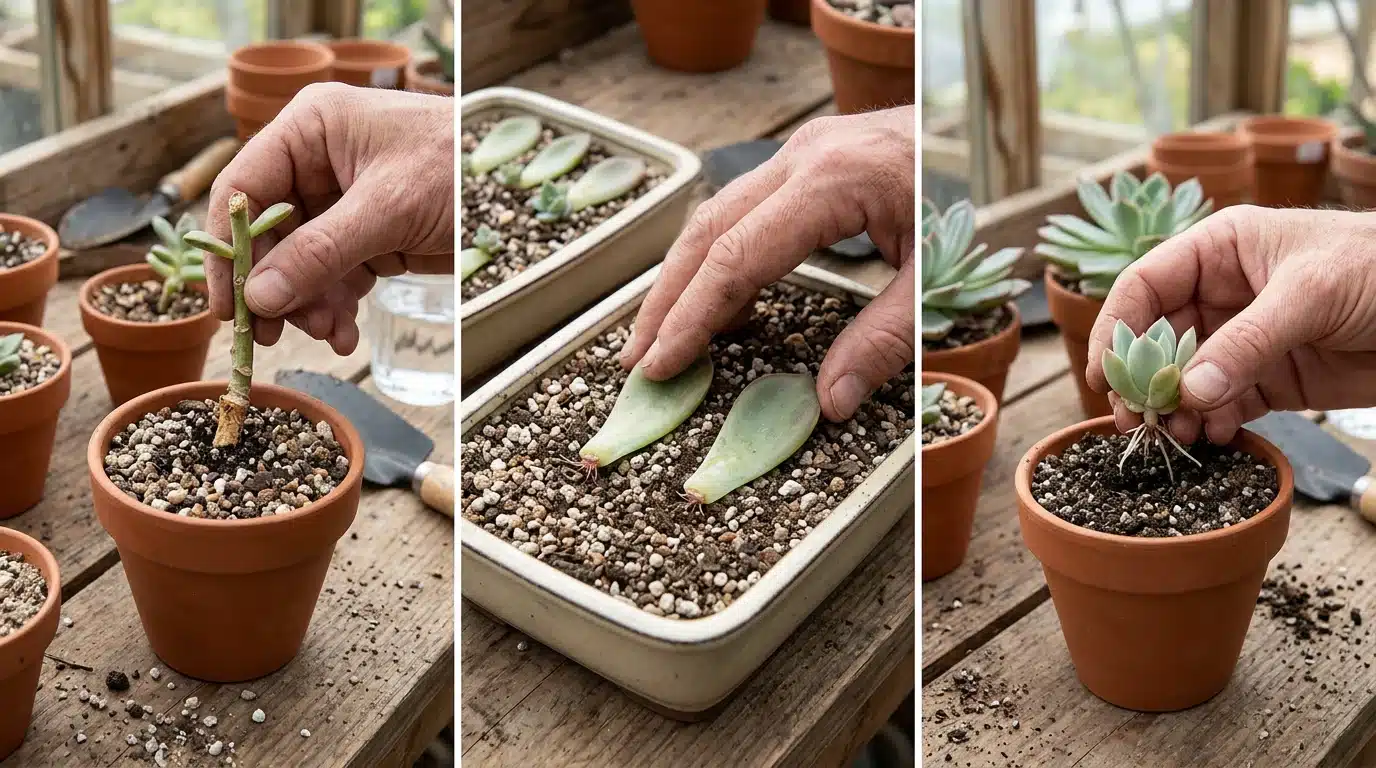
Cuttings, leaves, and offsets need a slightly different approach than rooted nursery plants, mainly because a fresh cut needs time to dry and heal before it goes into soil.
Step 1: Planting Stem Cuttings
Let the cut end callus over for a few days. Then set the healed stem into succulent mix and wait for roots to form.
Step 2: Planting Succulent Leaves
Rest a healthy leaf on top of the soil, or lean it gently against the growing medium. Avoid burying it under the surface.
Step 3: Planting Offsets or Pups
Wait until an offset has grown its own root system. Then separate it from the parent plant and move it into its own pot.
What to Do Immediately After Planting Succulents
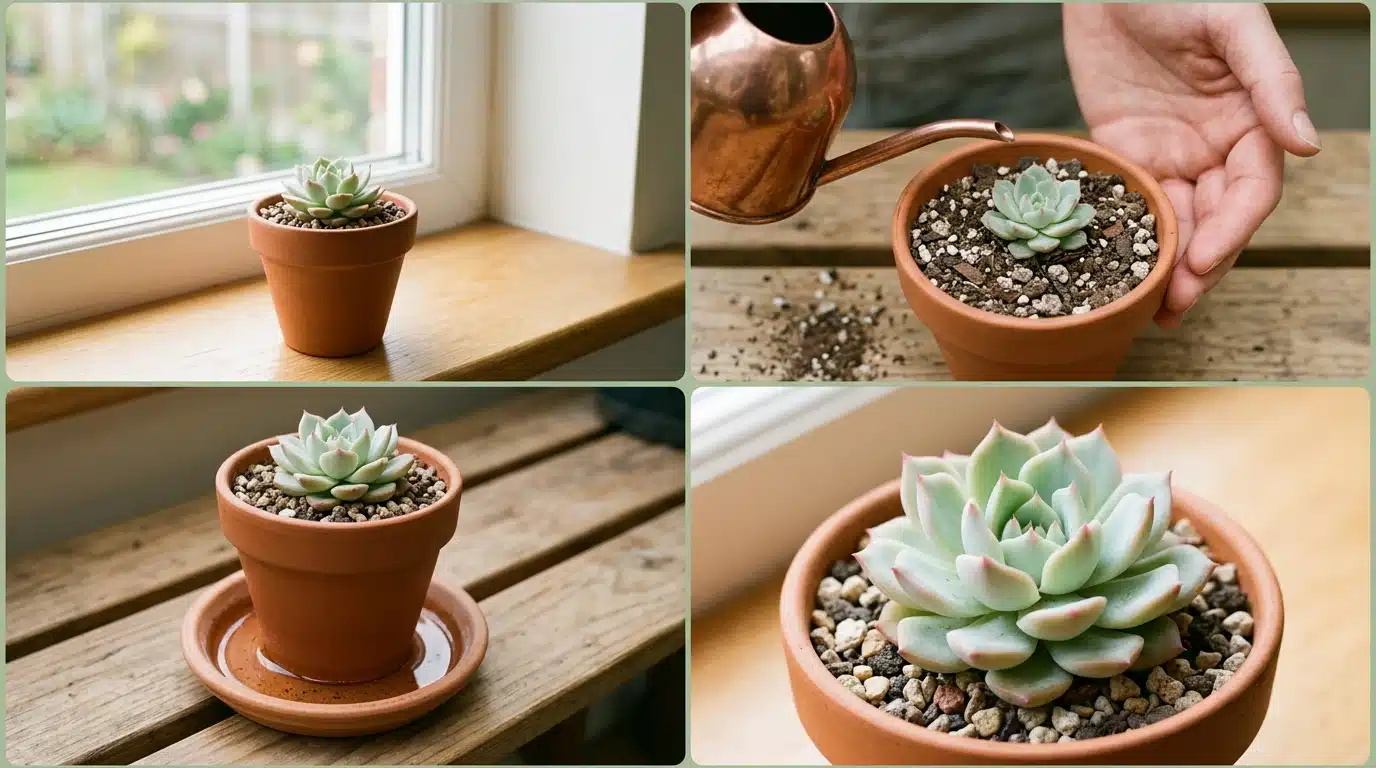
The first few days after planting shape how well a succulent settles in, so light, watering timing, temperature, and root disturbance all deserve close attention early on.
- Place the Plant in Suitable Light: Skip the assumption that a newly planted succulent needs harsh afternoon sun right away. Ease it into brighter conditions over the following days.
- Decide When the First Watering Is Needed: How soon you water depends on root condition. A plant with intact roots handles water differently than a fresh cutting that still needs to heal.
- Allow Excess Water to Drain Completely: Never let a pot sit in a saucer full of standing water. Roots left soaking in place are prone to rot within days.
- Watch for Short-Term Transplant Stress: A little softness or minor leaf drop right after planting is normal. Ongoing mushiness, discoloration, or collapse usually points to too much moisture or root damage.
How to Care for Succulents After Planting
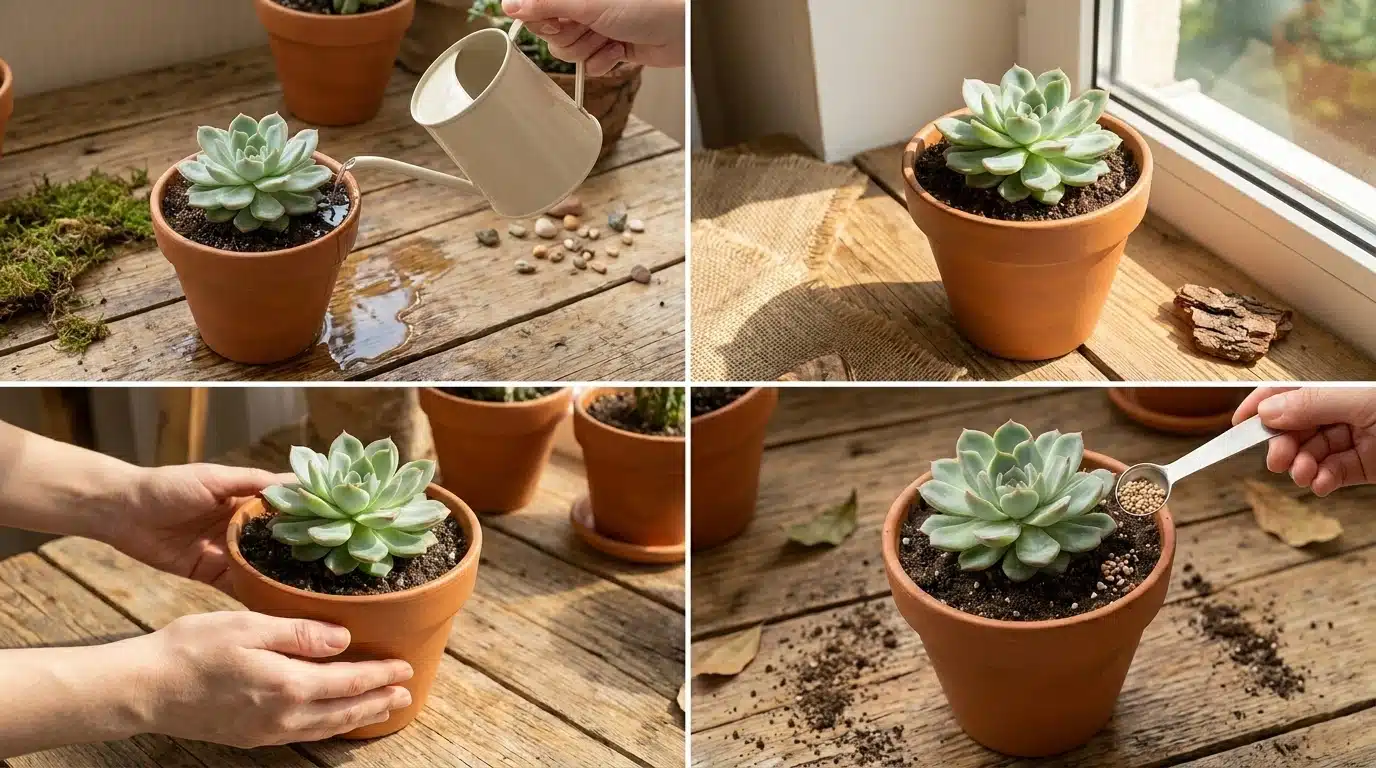
Once a succulent is established, healthy growth depends on watering by soil dryness instead of a fixed schedule, along with steady light, mild feeding, and seasonal adjustments.
- Water Using the Soak-and-Dry Approach: Water thoroughly, then let the soil dry out fully before watering again- the approach the University of Minnesota Extension recommends over any rigid calendar. Skip the spray bottle when you water succulents long-term, since light misting dampens the topsoil without ever reaching the roots.
- Provide Enough Light: Watch for stretched, leaning growth. This usually signals the plant needs more light than it’s currently getting.
- Rotate Indoor Pots: Turning a pot every so often helps plants near a window grow more evenly, since light from one direction alone pulls growth off balance. If you’re growing several succulents together, group varieties with similar water needs, since Illinois Extension notes mismatched needs mean one plant usually ends up over- or underwatered.
- Fertilize Lightly: Succulents need very little feeding compared to most houseplants. A light hand with fertilizer goes a long way here, and a diluted natural fertilizer for plants is usually plenty rather than a full-strength houseplant feed.
- Adjust Care with the Seasons: Growth slows, and water needs drop during lower-light months. Ease off watering frequency as the seasons change.
Wrapping It Up
After years of trial and error in my own greenhouse, planting succulents comes down to a few habits that matter more than anything else: good drainage, fast-draining soil, and careful root placement.
Choose a pot or garden spot with strong drainage, use a soil mix built for succulents instead of regular potting soil, and keep the crown above the surface so moisture never sits against the plant’s base.
Watch the light your succulent gets, let the soil dry out fully between waterings, and start with just one pot this week to get the basics right.
Frequently Asked Questions
Can you plant succulents in gravel alone?
No, gravel has no nutrients or organic matter to feed the roots, so mix it into a proper succulent soil blend instead.
How deep should you plant a succulent?
Plant at the same depth it grew before in its original pot. Cover only the roots and keep the crown above the soil line.
How long before you can water a new succulent?
Rooted plants with healthy roots can usually be watered within a few days. Fresh cuttings need one to two weeks to callus and root first.
Can succulents grow indoors?
Yes, most common varieties adapt well near a bright, sunny window. Just make sure the soil dries out completely between each watering.