
You have already decided you want a pyracantha hedge. The problem is finding one clear answer. Which variety should you buy? How many plants do you need? What will it cost?
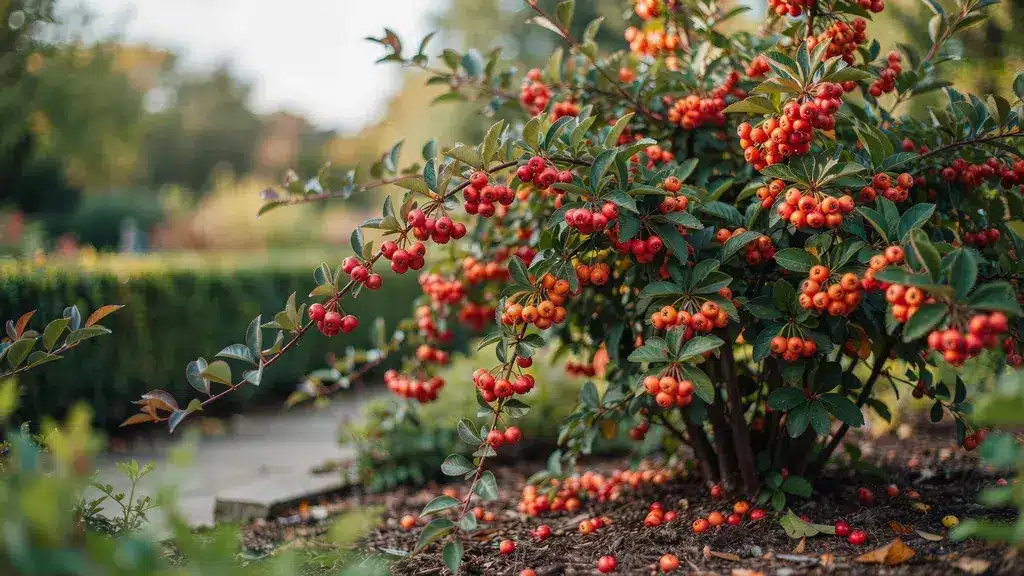
Pyracantha varieties suit different goals, from tall privacy screens to compact borders.
Others stay compact for borders or low boundaries. Picking the wrong variety wastes money and sets your hedge back by a full season.
I’ve experienced every mistake possible with pyracantha hedges at least once.
Plant Profile
| Common name | Firethorn |
|---|---|
| Type | Evergreen shrub |
| Mature height | 8–15 ft, depending on variety |
| Growth rate | Fast (12–24 in per year) |
| Sun | Full sun to part shade |
| Soil | Well-drained, moderately fertile |
| USDA Zone | 6–9 |
| Best for | Security hedges, screens, espalier |
What Makes a Good Pyracantha Hedge?
Not every pyracantha bush or hedge delivers the same result. Before you compare varieties or place an order, you need to understand what separates a hedge that performs from one that looks thin, diseased, or disappointing after the first winter.
The three things that separate a strong hedge from a weak one:
- Thorn density: Some cultivars develop dense, long thorns, while others have shorter or more widely spaced thorns.
- Disease resistance: Choose varieties with good resistance to pyracantha scab and fire blight for healthier long-term growth.
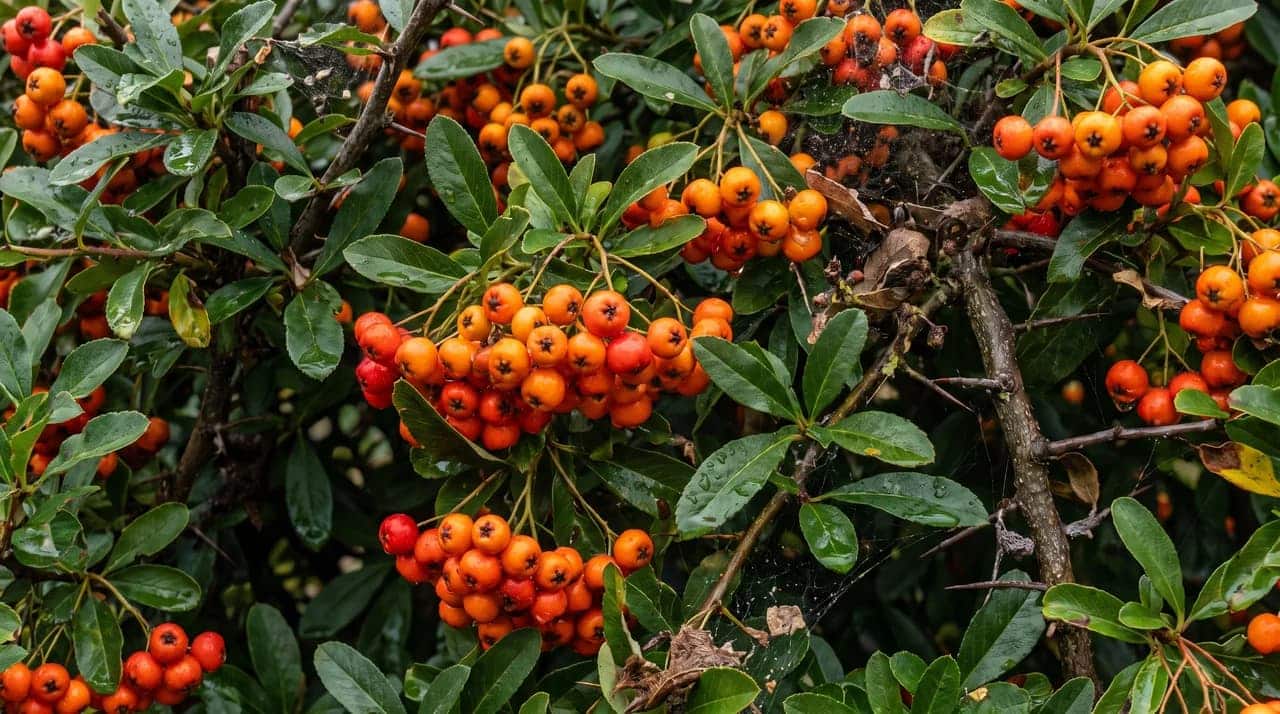
- Berry retention: Some varieties drop berries early, while others hold their color well into winter.
Which Variety Should You Buy?
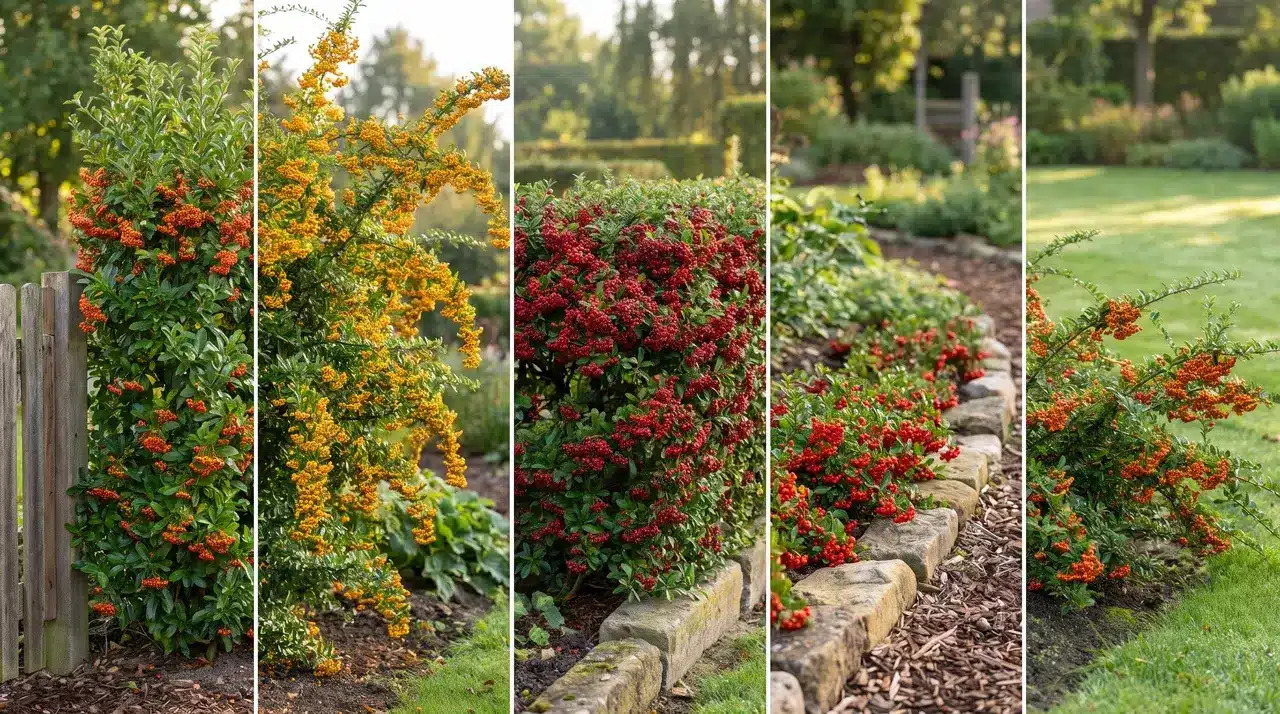
The variety you choose sets the height, disease resistance, and how long your hedge holds berries.
This section matches each cultivar to a specific goal so you can order the right plant without second-guessing your choice.
| Variety | Best For | USDA Zone |
|---|---|---|
| Mohave | Security hedge | 6–9 |
| Teton | Tall privacy screen | 6–9 |
| Victory | Dense barrier hedge | 6–9 |
| Red Elf | Low border/container | 6–9 |
| Rutgers | Groundcover / low hedge | 6–9 |
For long property boundaries where you want a natural deterrent, either variety works well.
Mohave is the stronger choice if disease resistance is your main concern. Each variety grows with different care, pruning needs, and techniques.
For wall coverage, pyracantha works alongside other wall-trained evergreens where vertical screening is the goal
How Many Pyracantha Plants Do You Need?
Getting the plant count wrong before you order can leave gaps in your hedge or result in more plants than you need.
The spacing depends on what you are growing the hedge for, not just how long the boundary is.
Spacing rules by use:
- Security hedge: 18–20 inches apart.
- Privacy screen: 24 inches apart.
- Espalier or wall cover: one plant per 5–6 feet of wall.
Simple Formula to Calculate Your Order
This formula works for any boundary length. Use it to get an accurate plant count before you order, and always add a small buffer to your total.
Measure your boundary in feet. Divide by your chosen spacing in feet. Round up to the nearest whole number. Then add 10% as a buffer for plant failures or gaps.
30 ÷ 1.67 (20 inches in feet) = 18 plants. Add 10% = order 20 plants.
For a 30-foot wall espalier at one plant per 5 feet: order 6 plants, plus one extra.
Keep the formula simple. Measure twice, order once. The cost of two extra plants is far lower than a second mid-season nursery trip.
What Does a Pyracantha Hedge Cost?
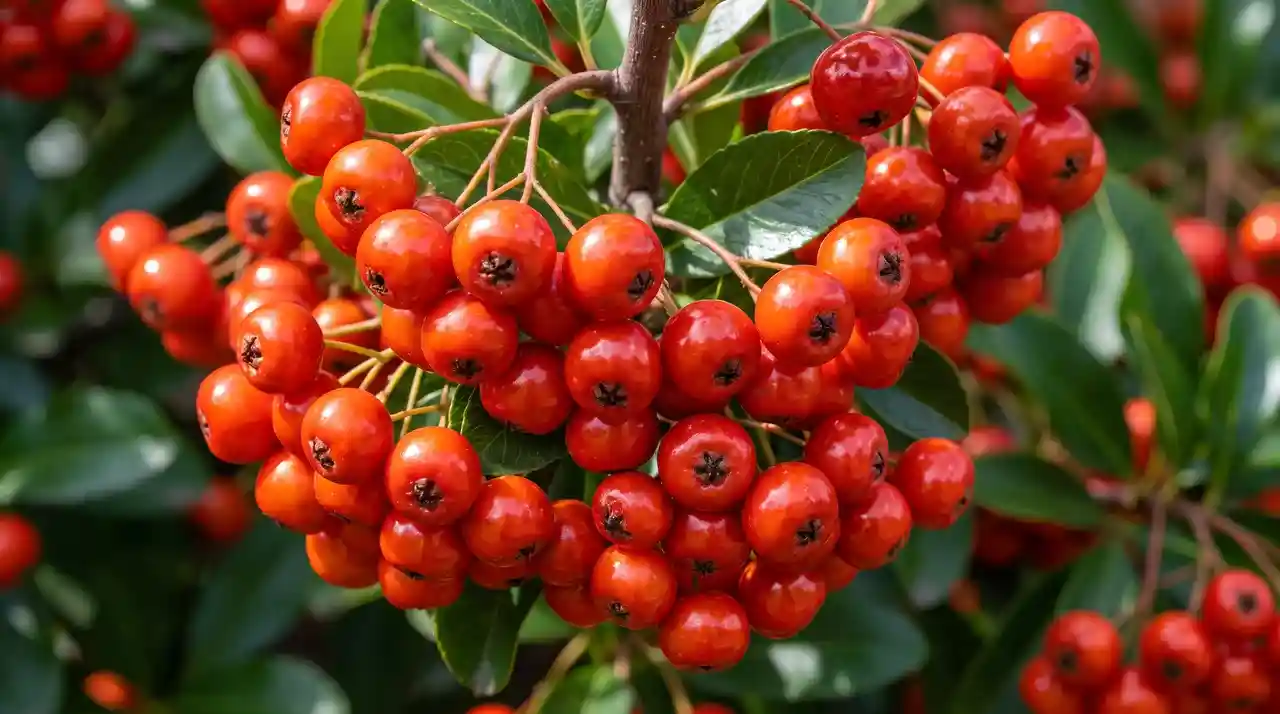
Cost varies widely depending on plant form, variety, and supplier. Setting a budget before you browse saves time.
These figures give you realistic numbers to work with before you make any decisions.
| Plant Form | Typical Cost |
|---|---|
| Bare root | $4–$8 per plant |
| Pot grown (1–2 gal) | $12–$20 per plant |
| Pot grown (3–5 gal) | $25–$40 per plant |
| Instant hedge | $80–$150 per linear metre |
Hidden Costs that One Should Consider
Beyond the price of the plants, a pyracantha hedge can involve extra costs for soil preparation, supports, pruning, and ongoing maintenance. These expenses can affect the total budget over time.
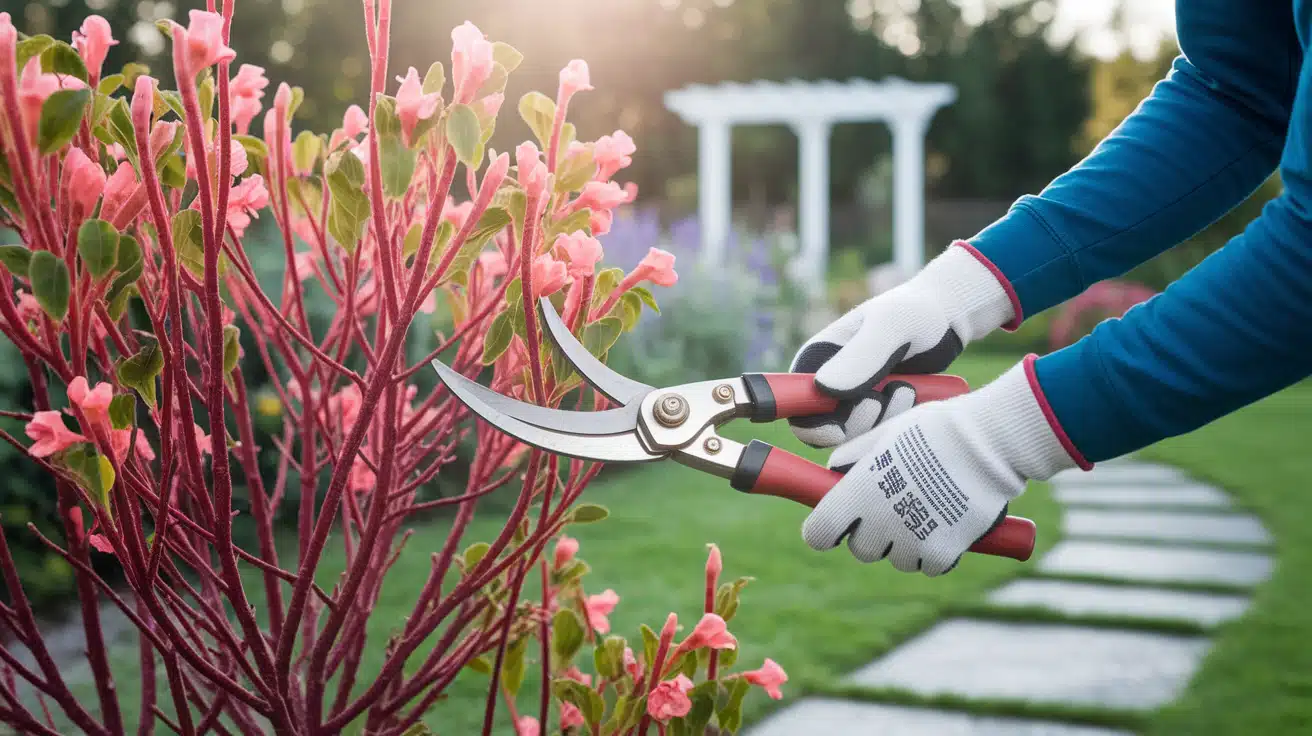
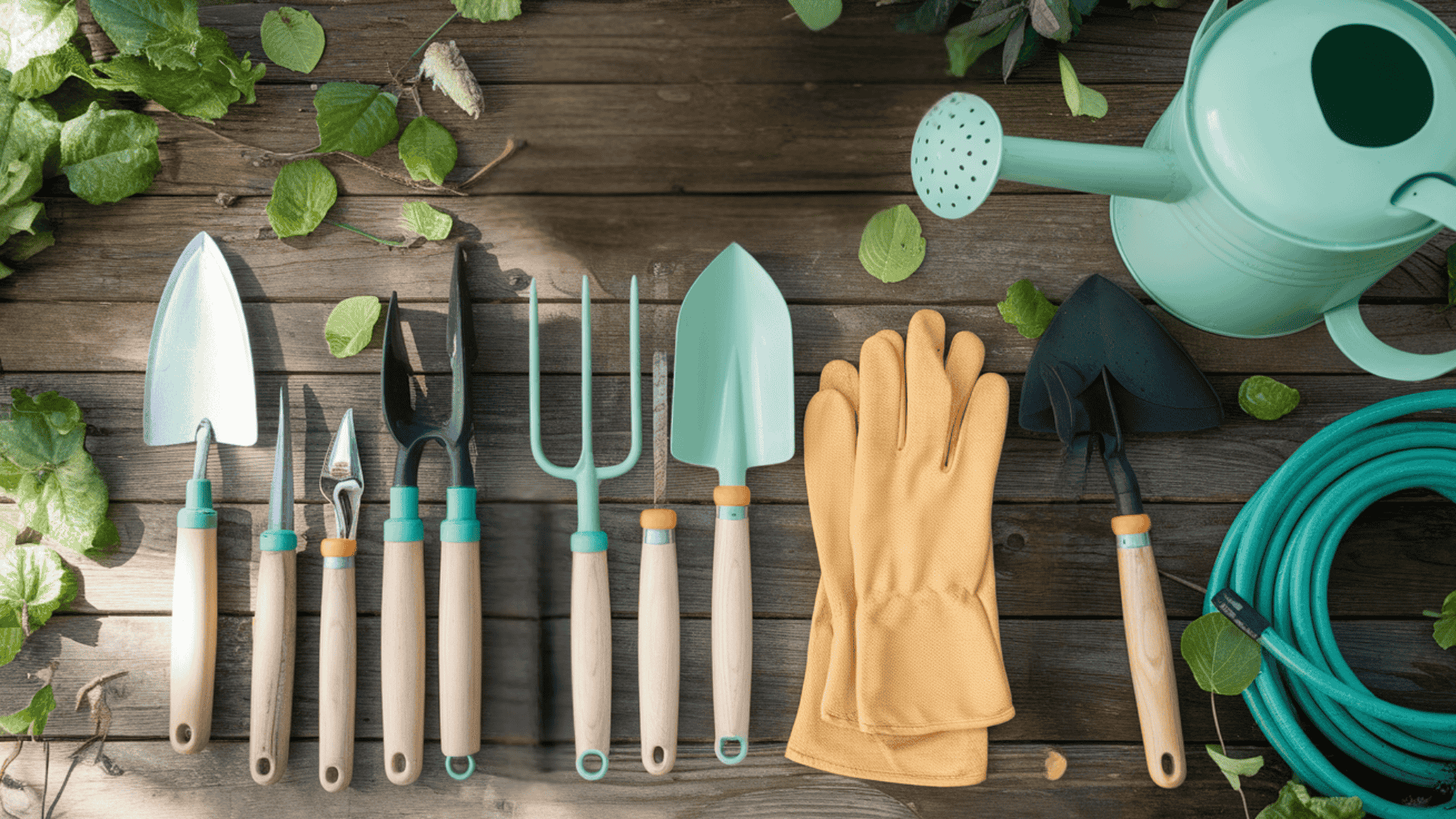
- Heavy-duty gloves: Protect your hands from sharp pyracantha thorns and puncture injuries during planting and pruning.
- Compost amendment: Adding compost at planting can improve soil conditions and help roots establish more effectively.
- Wire and fixings: Wall-trained pyracantha may need vine eyes, tensioned wire, wall plugs, and other support hardware.
- First-season watering: New hedges need regular watering, and a soaker hose can make longer planting runs easier to manage.
Having the right tools for the job before your plants arrive makes the whole planting process faster and safer.
What to Check in Pyracantha Before You Buy?
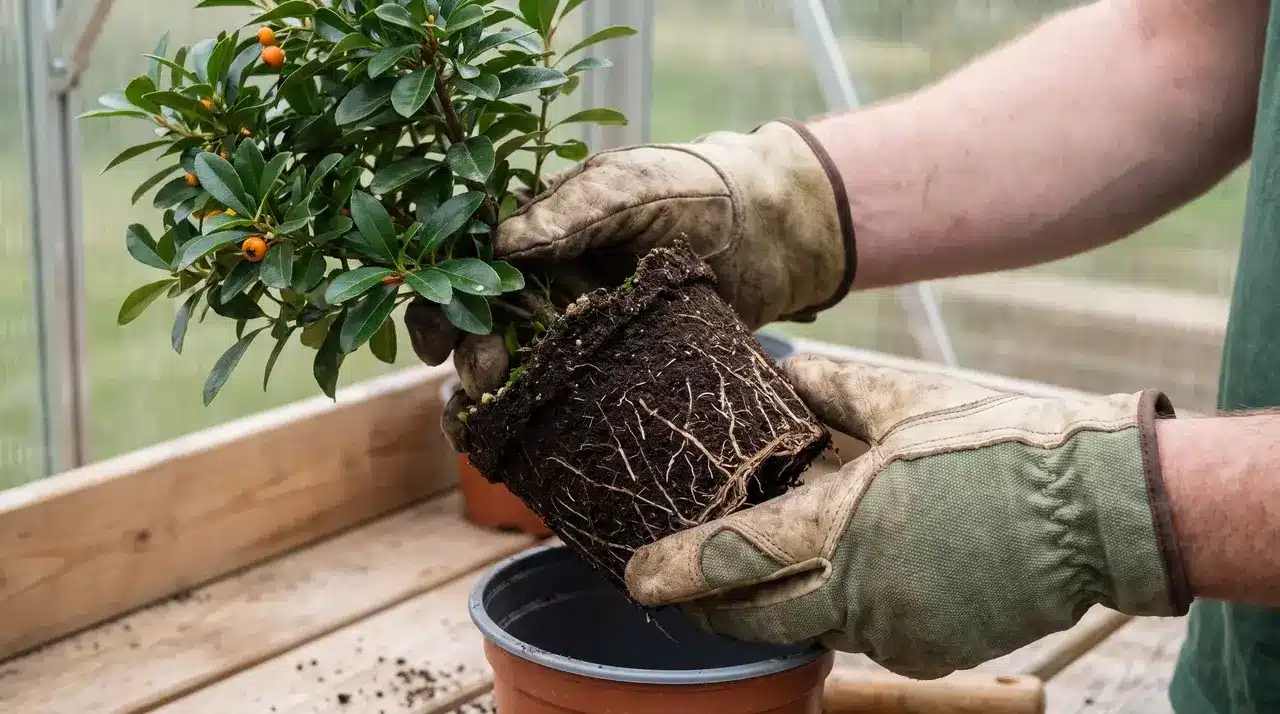
At a nursery or when unboxing an online order, the same quality indicators apply. Spotting a problem plant before it goes in the ground is far easier than fixing one that fails after planting.
- Root ball: Firm, with white or cream root tips visible at the edges. Brown, mushy roots point to rot.
- Leaves: Clean, dark green, and free from black spots. Black spotting on leaves or berries is an early indicator of pyracantha scab.
- Shoot tips: Upright and green. Wilted, brown, or scorched shoot tips are a warning sign for fireblight.
- Stem count: Pot-grown plants should have at least 3–4 main stems. A single-stemmed plant takes much longer to form a useful hedge section.
If any of these indicators are off, ask for a replacement or choose a different plant.
How to Plant Your Pyracantha Hedge?
Getting planting right in the first season sets up your pyracantha hedge for strong, even growth with no weak spots.
- Timing matters: Plant bare roots in dormancy (late autumn–early spring); pot-grown plants any time, avoiding heatwaves or hard frost.
- Prep the soil: Dig holes twice the root ball’s width, work in compost, and keep espaliers 20 inches from walls.
- Plant level: Set the root ball flush with surrounding soil, then backfill and firm gently.
- Water and mulch: Soak thoroughly after planting, then add 2–3 inches of mulch away from the stem.
- Space for purpose: 18–20 inches apart for security hedging, 24 inches for privacy screens.
Pyracantha Hedge Mistakes Worth Skipping
One mistake I made early on was planting pyracantha too closely because I assumed tighter spacing would create a fuller hedge faster.
Instead, the plants became crowded and needed extra pruning to correct weak growth.
Other common mistakes include choosing plants based only on height, ignoring disease resistance, planting during extreme heat or hard frost, and overlooking extra costs such as gloves, compost, supports, and first-season watering.
It is also worth checking the root ball before buying, since soft roots, poor branching, or weak growth can slow establishment from the start.
Wrapping Up
Choosing a pyracantha hedge is easier when you start with the space you have and the job you want it to do.
Some varieties suit security, while others work better for height, berries, or smaller gardens.
Plant size, spacing, soil condition, and first-season care also affect how quickly the hedge fills out. I would rather spend a little more time planning at the start than fix crowded plants later.
Check your measurements, compare suitable varieties, and choose healthy plants before ordering. A thoughtful start can make future pruning and maintenance much simpler.
Frequently Asked Questions
What is the Best Pyracantha Hedge for Security?
Mohave and Victory are the top choices. Both produce dense, heavily thorned growth and carry strong disease resistance, which keeps intervention low over time.
How Fast Does a Pyracantha Hedge Grow?
Pyracantha hedge plants typically add 12–24 inches of growth per year in full sun with well-drained soil. Most reach their full height within 3–5 years.
Can I Plant a Pyracantha Hedge in Winter?
Yes, bare root plants are best planted in late autumn through early spring. Pot-grown plants can go in at any point as long as the ground is not frozen.
How Long Does a Pyracantha Hedge Take to Fill in?
Pot-grown plants begin to knit together in one to two seasons at 20-inch spacing. Bare root plants take one to two seasons longer to reach the same density.
Is Pyracantha Hedge Evergreen Year-Round?
Yes, in Zones 7–10. In Zones 5–6, plants may drop some leaves in a hard winter but recover fully in spring with no lasting damage to the plant.