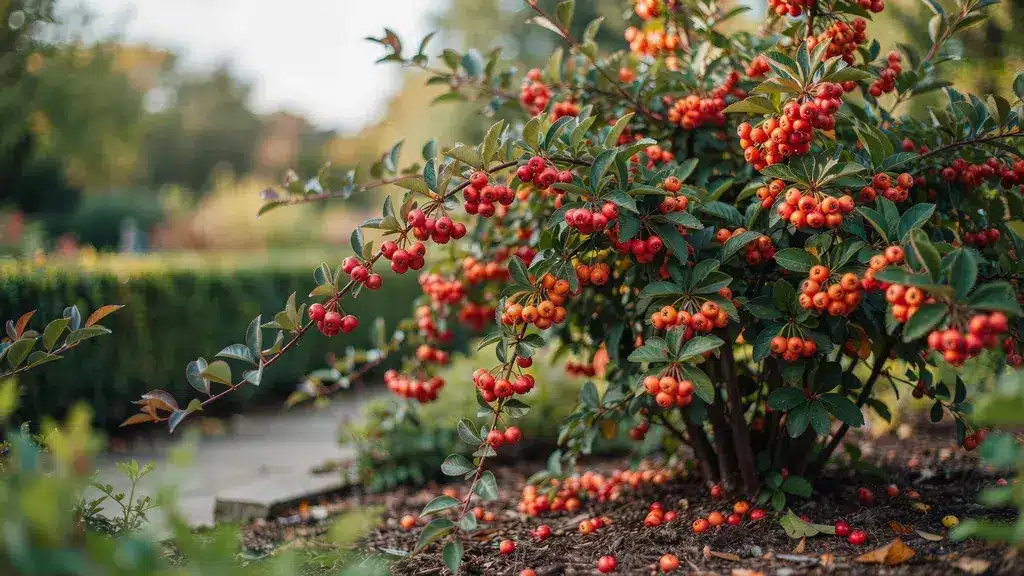

Most gardeners want a shrub that earns its keep all year, not just pretty in spring, then forgotten. It should hold color through winter, work as a barrier, and feed birds when nothing else will.
A pyracantha bush does all three without much fuss. It shrugs off drought better than most things in the yard.
Over the years, I’ve found that hands-on gardening and trial and error often lead to the most practical tips for everyday garden care.
Before you plant one, it helps to know what pyracantha is, where it’s from, and how fast it grows.
What Is a Pyracantha Bush?
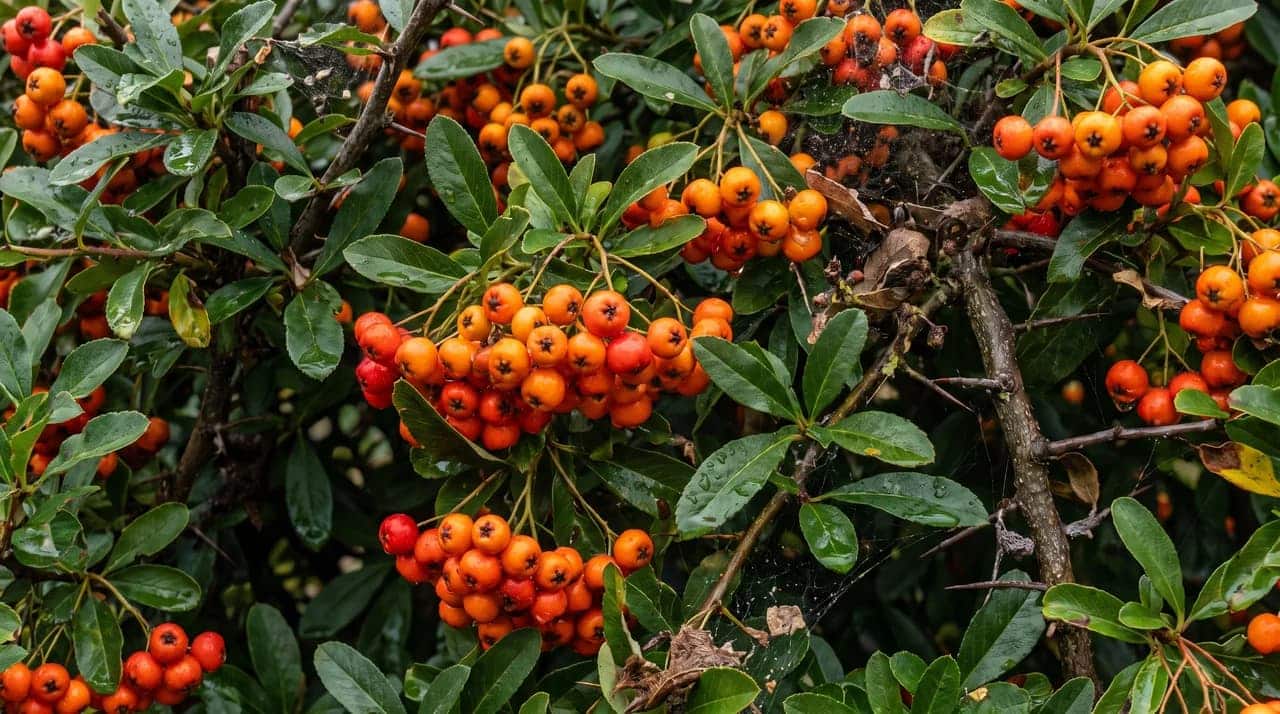
Pyracantha goes by the common name firethorn, and both names tell you something true. The fire refers to the berry color.
The thorn becomes obvious the first time you brush against a branch without gloves on. Pyracantha belongs to the rose family (Rosaceae).
It is native to southern Europe and Asia, from the Mediterranean east to China. The genus name comes from the Greek “pyr” (fire) and “akantha” (thorn).
It is related to apple and pear trees. That relationship matters because all three share some of the same diseases.
What Are the Main Pyracantha Bush Varieties?
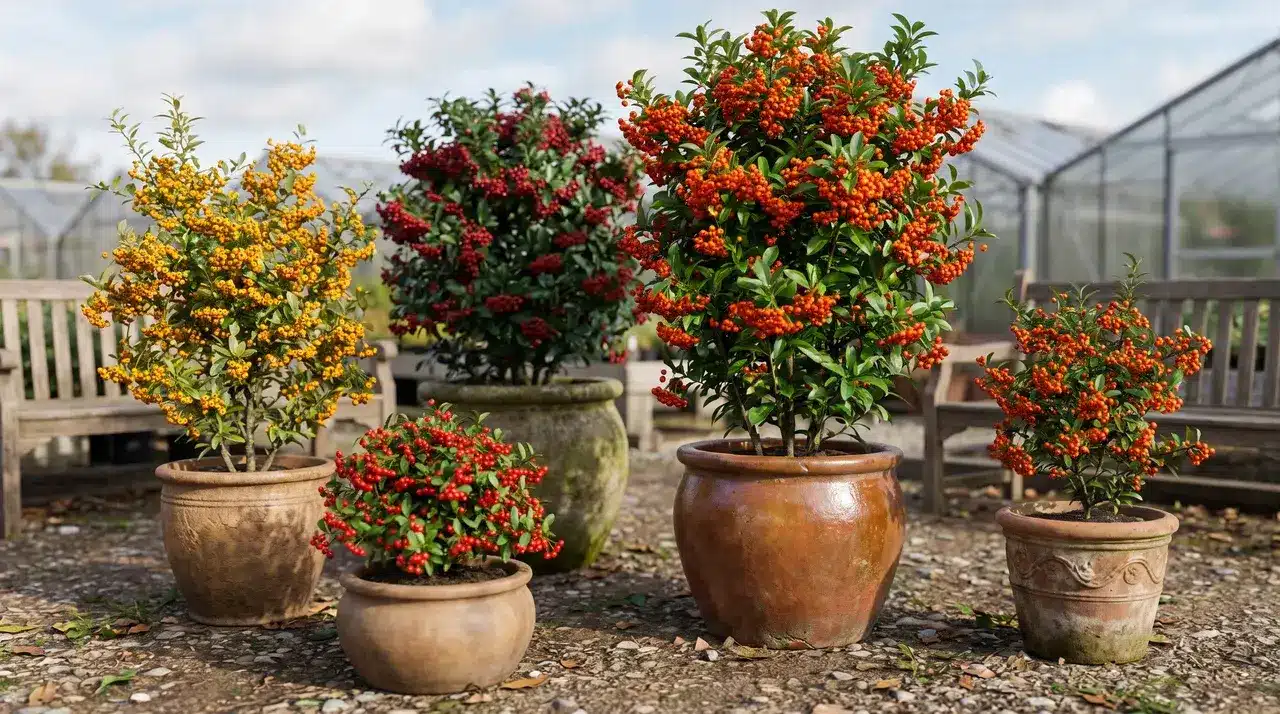
Berry color, mature size, and disease resistance separate one cultivar from the next.
Choosing based on your actual use case saves you from planting something that outgrows its space within a few seasons.
| Variety | Mature Height | Berry Colour |
|---|---|---|
| Mohave | 10–12 ft | Orange-red |
| Teton | 10–15 ft | Yellow-orange |
| Victory | 8–10 ft | Deep red |
| Red Elf | 2–3 ft | Red |
| Rutgers | 2–3 ft | Orange-red |
How Fast Does a Pyracantha Bush Grow?
Growth rate is one of the first questions gardeners ask before planting a new shrub. Pyracantha tends to surprise people here. It is not a slow-and-steady grower. Under the right conditions, it adds height fast.
Pyracantha can grow more than 2 feet per year in full sun with well-drained soil. It typically reaches full size within 3–5 years after planting.
Points worth knowing before you put it in the ground:
- Self-pollinating: One bush produces a full crop of berries. You do not need a second plant.
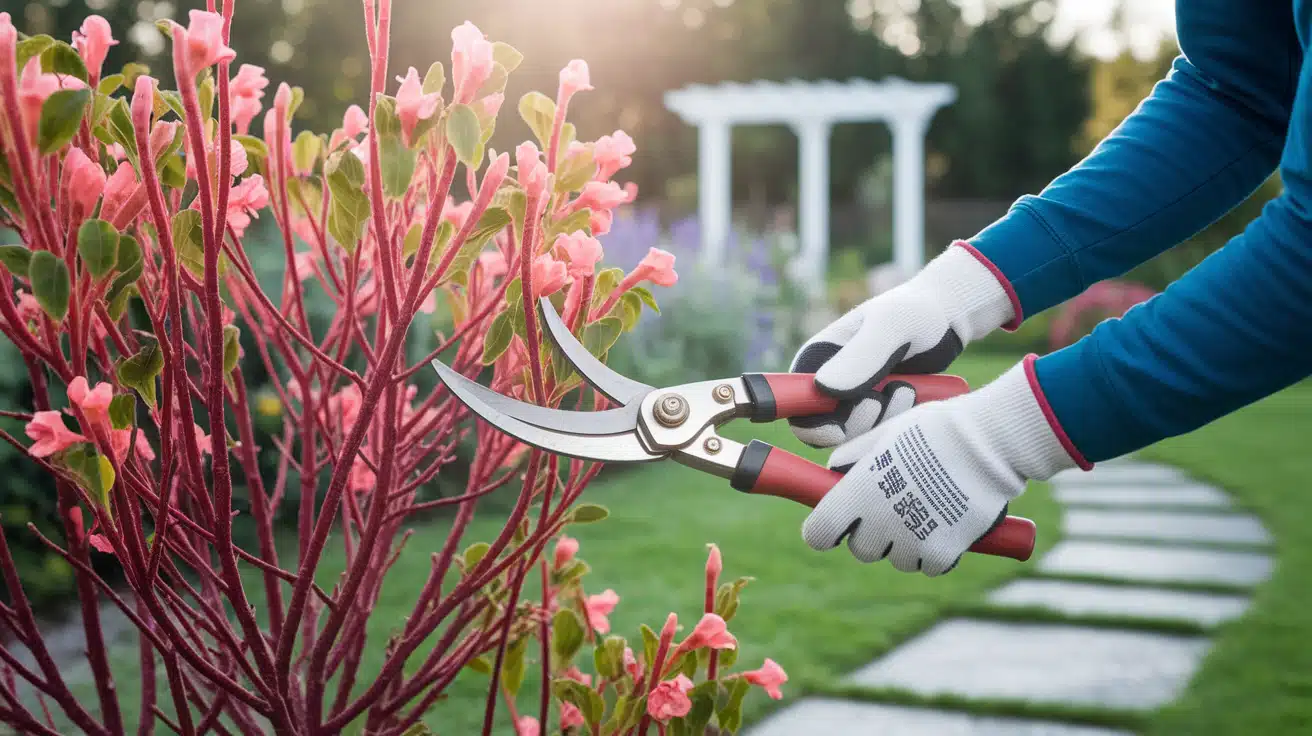
- Trim to thicken: The more you prune pyracantha, the denser it grows, and knowing when to make those cuts is what turns a leggy bush into a full one. This is useful for hedging.
- Growth slows once the plant is well rooted and fully established.
- Zones 5–6: The plant may drop leaves in a hard winter. It recovers fully in spring.
- Zones 7–10: It stays green and dense all year.
How Is a Pyracantha Bush Used in The Landscape?
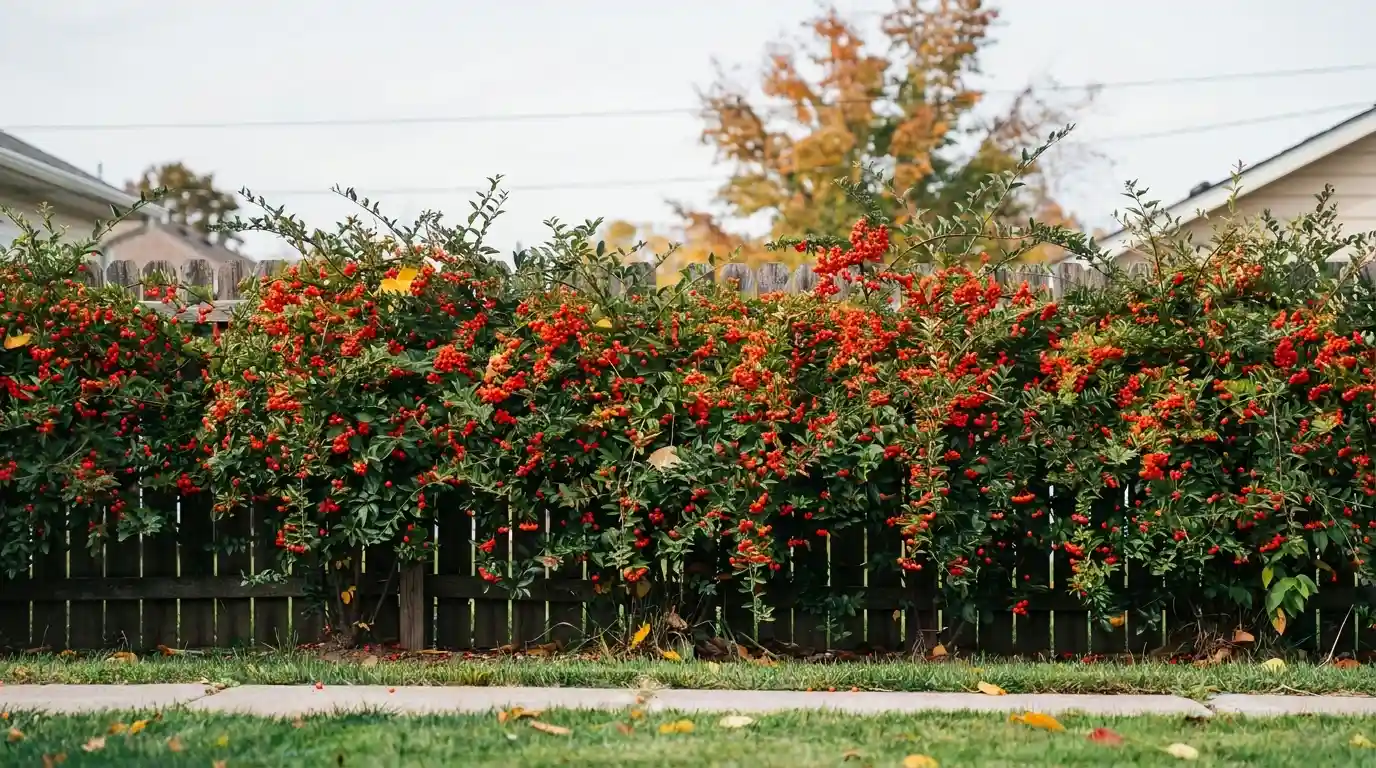
Pyracantha earns its place in more ways than most shrubs. It works as a security hedge, a wall cover, a slope filler, a container plant, and a year-round wildlife habitat, all drawing on the same core toughness.
1. As a Security Hedge
A pyracantha hedge is one of the most effective natural garden privacy barriers you can plant. Its thorns are sharp enough to stop most animals and people from pushing through.
- Working out the exact spacing and best variety for a hedge run usually means planting 20 inches apart for security hedging, or 5 to 10 feet apart if grown as a specimen.
- Regular trimming produces denser, more impenetrable growth over time.
- Pyracantha still flowers and berries well when trimmed regularly.
- Works along property lines, below windows, and at entry points.
- Considered reliably deer-resistant due to the thorns
2. Grown as Espalier on Walls
Espalier training lets you cover a large wall while using almost no ground space. A pyracantha trained this way makes a striking display at every season of the year.
Plant at least 20 inches from the wall base. The soil right against a wall dries out fast, and roots struggle there.
- Attach horizontal wires to the wall, spaced 18 inches apart.
- Tie long stems along the wires as the plant grows.
- Shorten new side shoots to 2–3 leaves once basic coverage is in place.
- That shortening builds a dense, berry-heavy surface.
- Plants trained this way can reach 15 feet high while sitting only 12 inches deep.
3. For Wildlife in The Garden
Pyracantha supports garden wildlife across multiple seasons. Few shrubs deliver as much at the times when cold-weather plants need it most.
- Spring flowers attract bees and other pollinating insects.
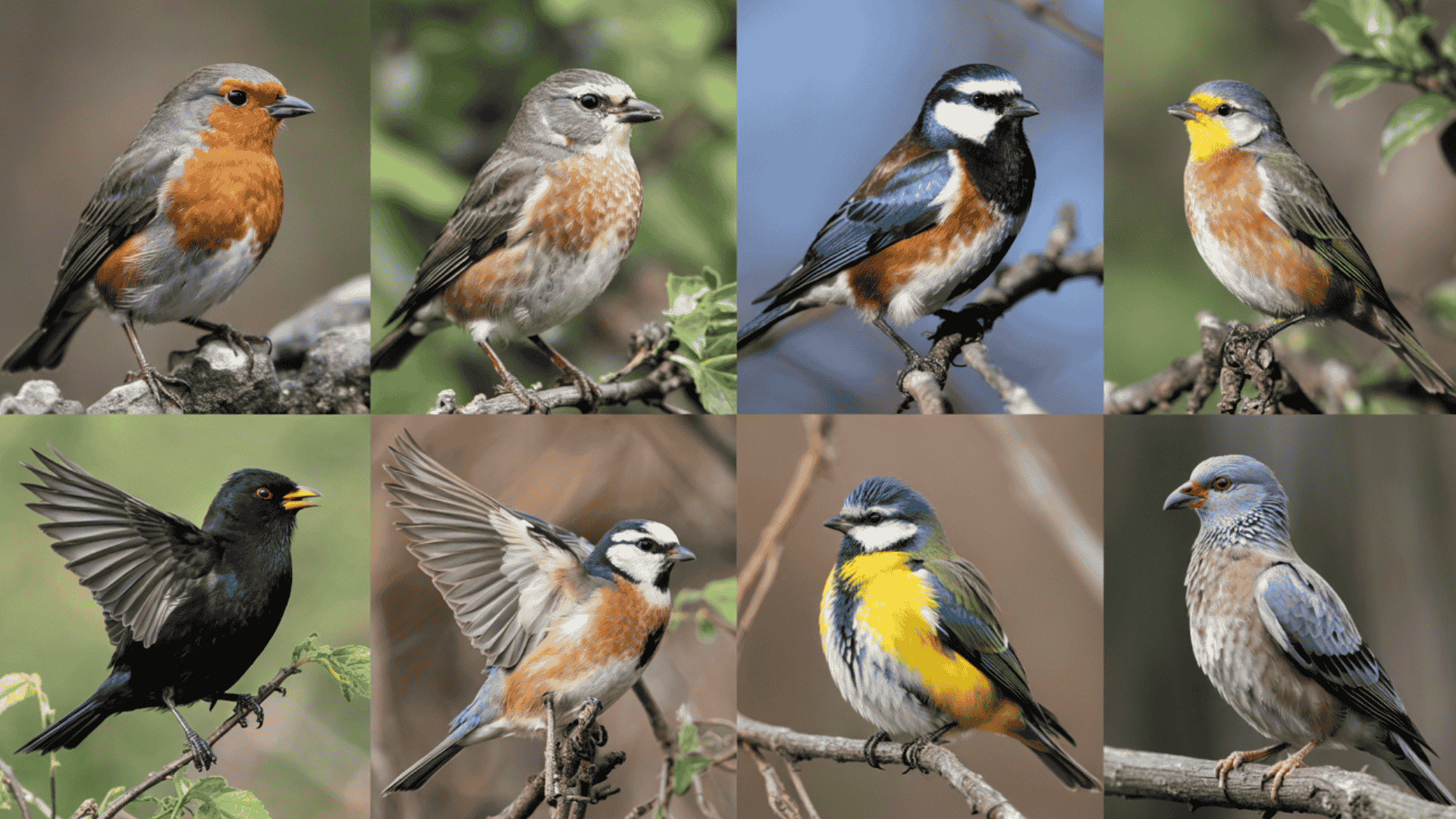
- Berry clusters feed birds in winter, including robins, thrushes, and cedar waxwings.
- Dense branching offers nesting sites and year-round shelter.
Fact: birds often ignore pyracantha berries in early fall when other food is still available. They return in February and March, when most other food sources have run out.
Are Pyracantha Berries Toxic?
Pyracantha berries are not generally considered highly toxic, but raw seeds can contain compounds that may cause problems if eaten in large amounts. Cooking and careful preparation reduce the risk.
| Area | What to Know |
|---|---|
| Raw berries | Bitter; seeds contain cyanogenic compounds. |
| Cooked berries | Commonly used in properly prepared jams and jellies. |
| Pets | May cause stomach upset if eaten. |
| Children | Supervise closely; thorns are a bigger hazard. |
| Skin | Wear gloves to avoid thorn irritation. |
What Plants Grow Well With a Pyracantha Bush?
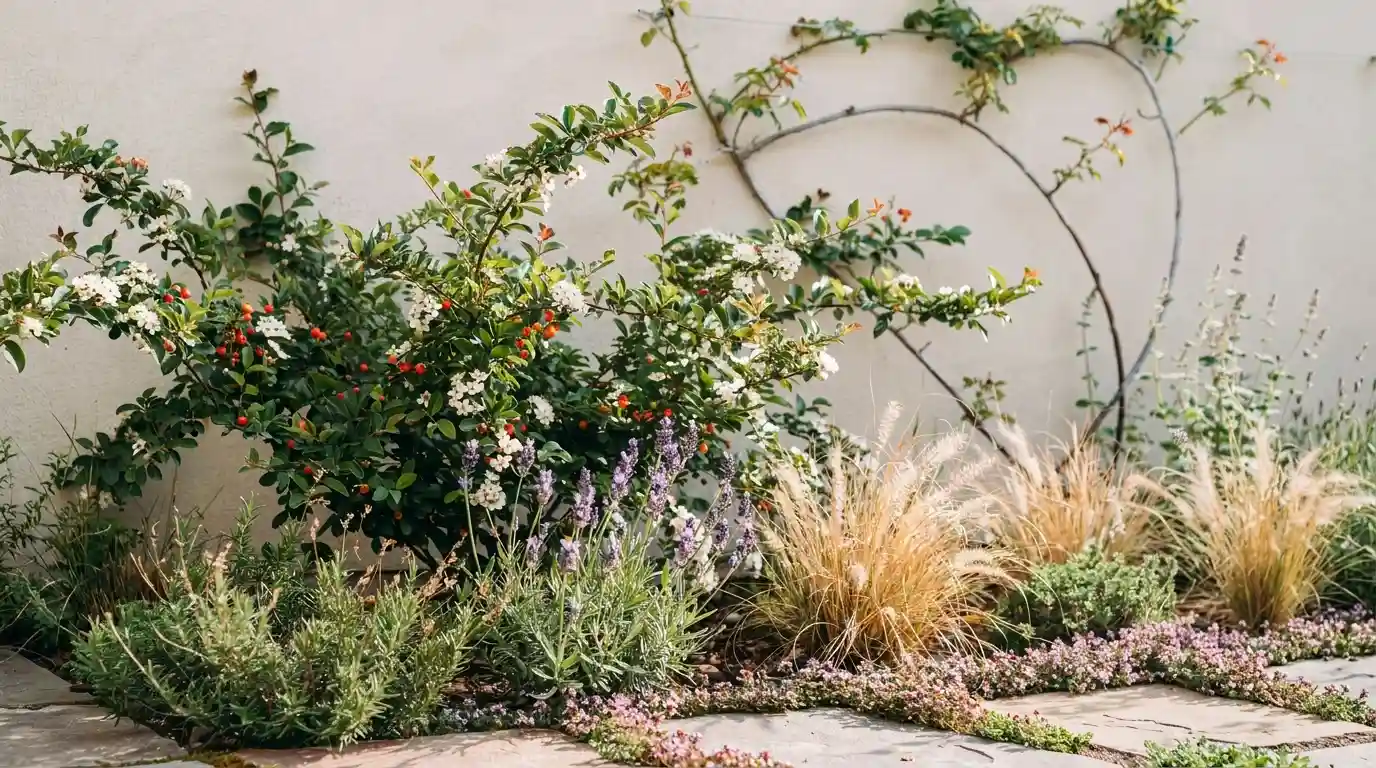
Companion planting works best when nearby plants share the same growing conditions. Pyracantha is drought-tolerant and sun-loving, so its best partners share those same traits.
Good companions for pyracantha:
- Russian sage (Salvia yangii): Tolerates drought well; soft lavender-blue flowers contrast with orange and red berries in late summer and fall.
- Karl Foerster feather reed grass: Structural contrast in form and texture; golden in fall alongside pyracantha berries; same sun and drainage needs.
- Lavender: Water-wise and sun-loving; works as a low, aromatic border planted in front of a pyracantha hedge. Growing lavender with pyracantha is a suitable choice.
- Rosemary: Tolerates dry, well-drained conditions; year-round evergreen foliage that holds interest between seasons.
| One important caution: Do not plant pyracantha near apple or pear trees. All three are susceptible to fire blight (Erwinia amylovora). Proximity raises the risk of disease spreading between plants in the same garden. |
Wrapping It Up
This shrub is among the most hardworking plants to cultivate in a garden.
It gives four-season structure, berry color through fall and winter, a security barrier, and food for birds when they need it most, all from one low-maintenance plant.
Pick your cultivar based on what you need. Mohave or Victory for a tall, disease-resistant hedge.
Red Elf or Rutgers for a container or low border. Any vigorous cultivar trained on wires for a wall covering.
After years of pruning and shaping these plants, I still think the payoff is worth the thorns. Which pyracantha bush are you planning to try?
Frequently Asked Questions
Is Pyracantha Invasive?
Pyracantha is not considered invasive in most regions, but it can spread through seeds carried by birds and may naturalize.
Where is the Best Place to Plant a Pyracantha?
The best place for pyracantha is a sunny, well-drained spot near fences, walls, or boundaries where its thorns are manageable.
Can Pyracantha be Cut Back Hard?
Yes, pyracantha tolerates hard pruning, but heavy cutting should be timed carefully to protect flowers and berry production.
What Month Does Pyracantha Flower?
Pyracantha usually flowers from April to May, producing clusters of small white blooms that later develop into colorful berries.
Is Pyracantha Deep-Rooted?
Pyracantha develops a strong root system but is not considered extremely deep-rooted, growing mainly through spreading fibrous roots