
Your garden deserves better than a random mulch pick at the hardware store.
The type you use directly affects how your soil holds moisture, how often weeds show up, and how much maintenance your garden needs over time.
If you have been comparing rubber mulch and wood mulch, you have probably noticed they are often recommended for completely different purposes. That is because they work in very different ways.
In this comparison, you will see how rubber mulch and wood mulch differ in durability, cost, safety, and overall performance, so you can decide which one actually fits your yard.
Let’s find out which.
Why Mulch is Important for Your Garden?
Mulch does more than improve appearance. It acts as a protective layer over soil and supports plant health in several ways.
It helps reduce moisture loss by limiting evaporation, which keeps soil consistently hydrated. It also regulates soil temperature by insulating roots from extreme heat and cold.
Weed growth is reduced because mulch blocks sunlight from reaching weed seeds. In addition, mulch helps prevent soil erosion from wind or heavy rain.
Without mulch, soil tends to dry out faster, compact more easily, and require more frequent maintenance.
A properly applied layer creates a more stable growing environment and reduces the need for constant intervention.
What Is Rubber Mulch?
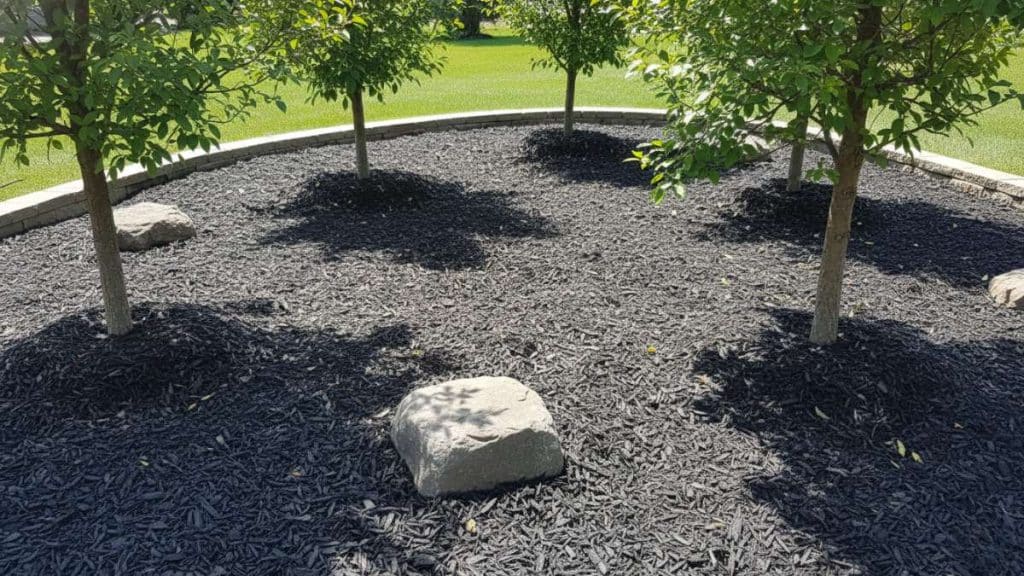
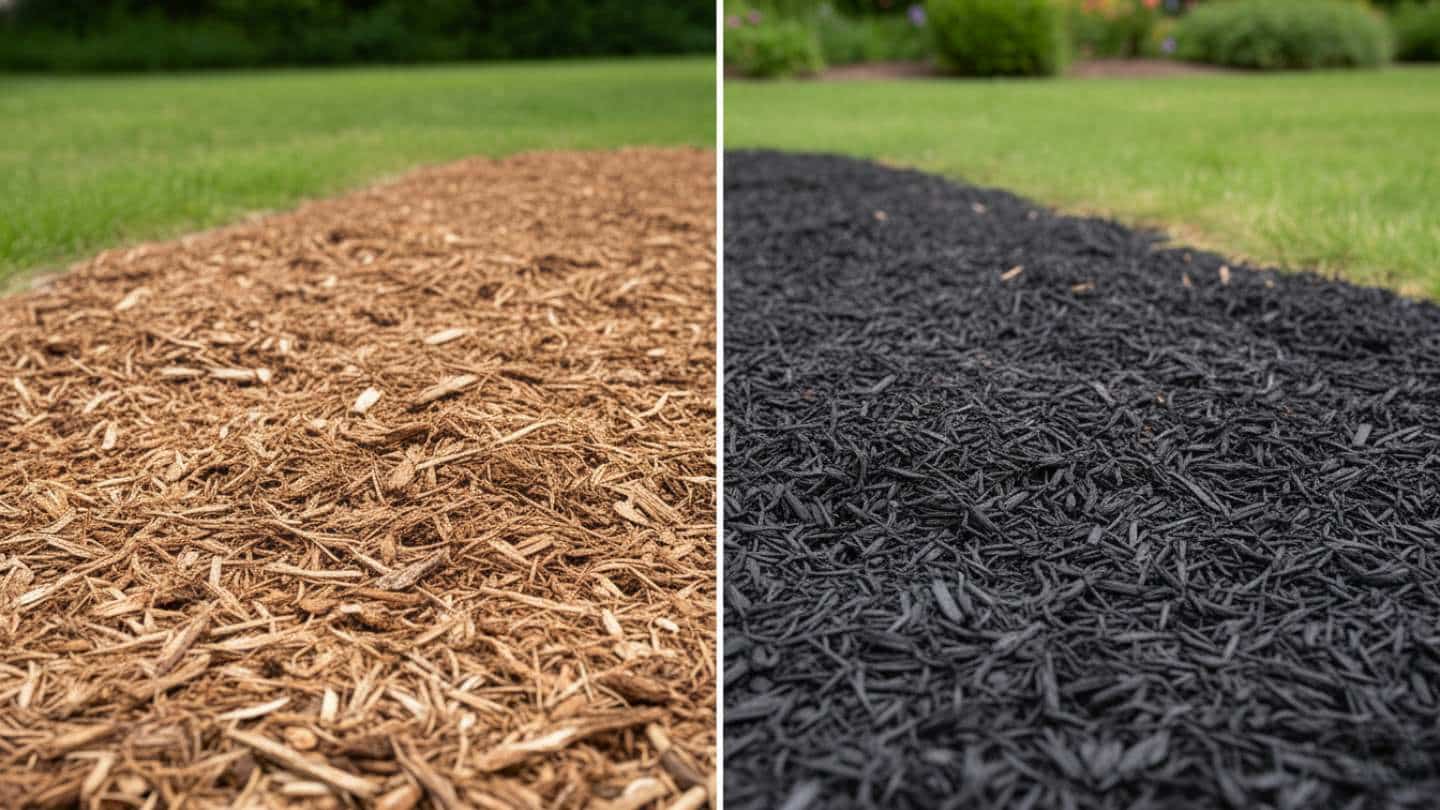
Rubber mulch is made from recycled tires that are shredded, stripped of metal wires, and processed into small chips. It is then dyed in various colors to resemble natural mulch.
Commonly used in playgrounds, pathways, and landscaped areas, it holds its shape over time and does not decompose like organic alternatives.
Pros and Cons of Rubber Mulch
Rubber mulch has built a solid reputation in certain landscaping circles, and for good reason. But like any material, it comes with trade-offs worth knowing before you commit.
Pros:
- Lasts 10 to 12 years with minimal upkeep, making it a smart long-term investment.
- Holds its form and color far longer than organic alternatives, with little seasonal refreshing needed.
- Creates a dense weed barrier when installed correctly over landscape fabric.
- Excellent shock absorption makes it a recognized choice for playground safety.
- Does not attract insects or develop fungal growth like damp wood mulch often does.
Cons:
- Costs two to three times as much as standard wood mulch, with added transportation costs.
- Surfaces can reach dangerously high temperatures on hot days, posing a risk to pets, children, and nearby plants.
- Does not decompose, meaning it adds zero nutrients or organic matter to the soil.
- It can leach heavy metals and volatile organic compounds into the soil over time.
- Not suitable for vegetable gardens where soil quality and food safety matter.
What is Wood Mulch?
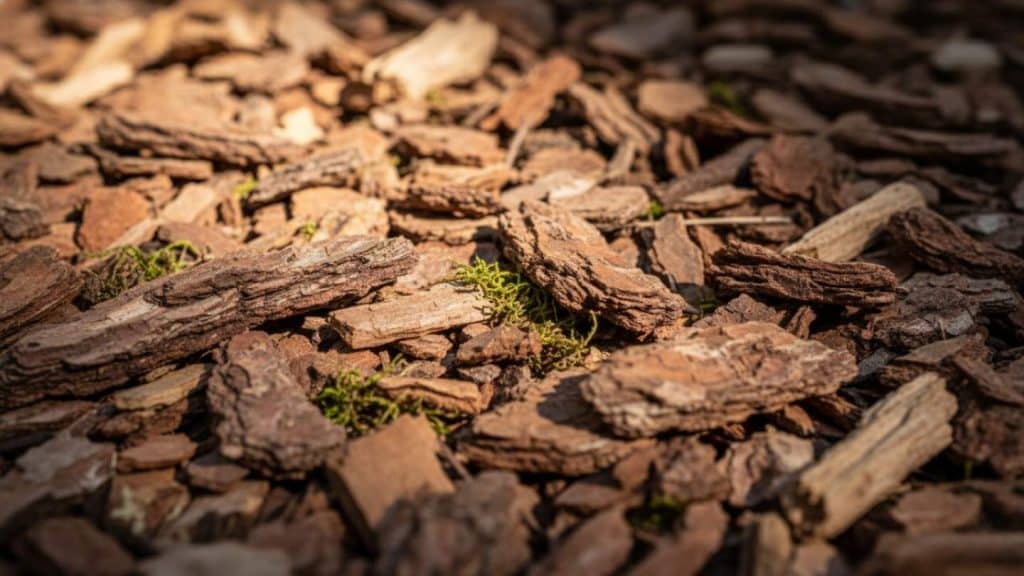
Wood mulch is an organic material made from shredded bark, wood chips, or tree waste. Common varieties include bark, hardwood, and pine mulch, each widely used in gardens, flower beds, and landscaping.
Unlike synthetic options, it breaks down naturally over time, quietly enriching the soil beneath it. It is arguably the most traditional and trusted mulching choice among gardeners and landscaping professionals alike.
Pros and Cons of Wood Mulch
Wood mulch has been a gardening staple for generations, and its natural benefits keep it firmly at the top of most landscapers’ lists. That said, it does come with a few practical limitations worth considering.
Pros
- Breaks down over time and adds valuable nutrients and organic matter directly back into the soil.
- More affordable than rubber mulch, making it accessible for both small gardens and large landscaping projects.
- Natural appearance blends effortlessly with garden beds, trees, and surrounding greenery.
- Helps retain soil moisture and regulates temperature across both warm and cold seasons.
- Supports healthy microbial activity in the soil, improving its overall structure over time.
Cons
- Needs replenishment every one to two years as it decomposes, adding to long-term maintenance effort.
- It can attract insects, such as termites and ants, particularly when placed too close to wooden structures or home foundations.
- Prone to mold and fungal growth in consistently damp or poorly drained conditions.
- Lightweight varieties can wash away or shift during heavy rain, requiring redistribution after storms.
Best Uses for Each Mulch
Choosing the right mulch comes down to where and how you plan to use it. Here is where each type truly earns its place.
Rubber Mulch
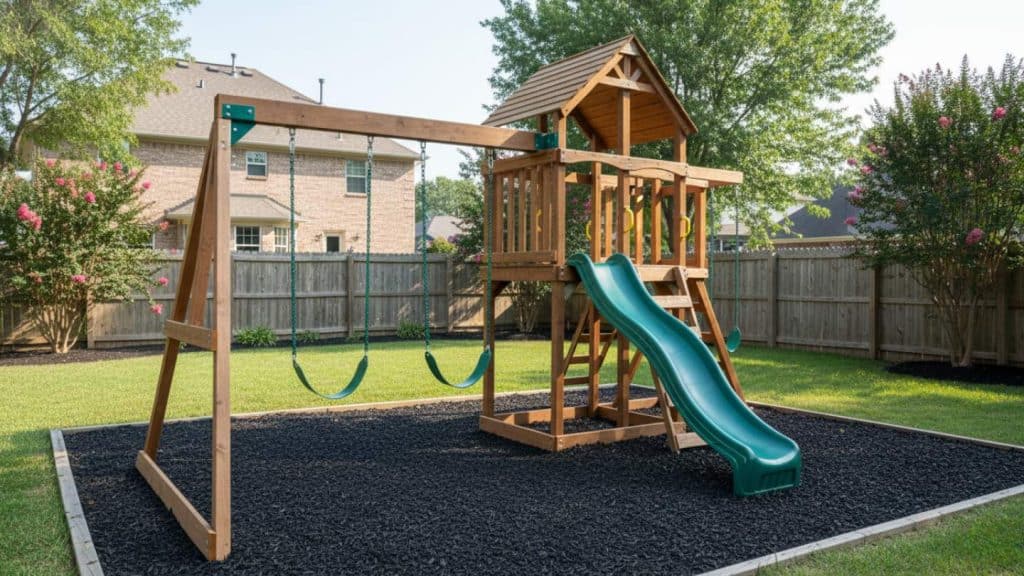
- Rubber mulch is the go-to choice for playgrounds and recreational areas where fall cushioning and durability matter most.
- It works exceptionally well along pathways and decorative landscaping zones where long-lasting coverage with minimal upkeep is the priority over soil nutrition.
- Commercial properties, schools, and public parks have also increasingly adopted it for its low replacement costs and consistent appearance year after year.
Wood Mulch
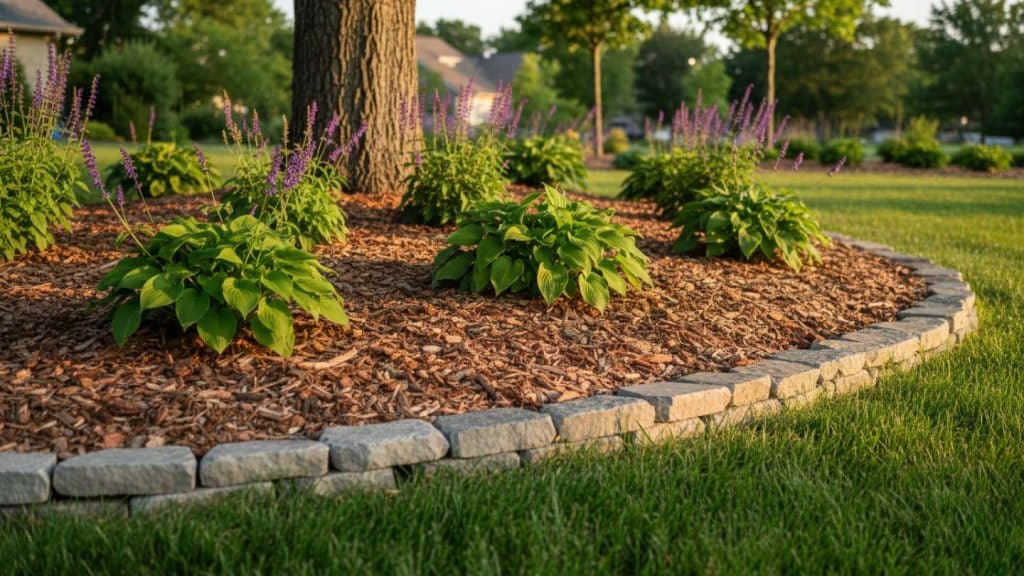
- Wood mulch shines in flower beds, garden landscaping, and vegetable growing areas where soil health is a genuine priority.
- As it breaks down, it steadily enriches the ground beneath it, making it the preferred choice wherever plants thrive on nutrient-rich, well-supported soil.
- It is also the more sensible option for homeowners who want a natural, budget-friendly mulch that works with their garden rather than just sitting on top of it.
Rubber Mulch vs Wood Mulch:Cost Comparison
| Cost Factor | Rubber Mulch | Wood Mulch |
|---|---|---|
| Price Per Cubic Yard | $120 to $180 | $30 to $110 |
| Bagged Price | $6 to $12 per bag | $3 to $6.50 per bag |
| Installation Cost | $20 to $45 per cubic yard | $20 to $45 per cubic yard |
| Delivery Fee | $50 to $100 | $70 to $140 |
| Lifespan | 10 to 12 years | 1 to 2 years |
| Replacement Frequency | Once per decade | Every 1 to 2 years |
| Long Term Cost (10 years) | Low, one-time investment | Higher due to repeated replacement |
| Best Value For | Large areas, playgrounds, pathways | Gardens, flower beds, and small budgets |
Key Differences Between Rubber Mulch and Wood Mulch
Both mulch types differ significantly across several key factors. Here is a closer look at how they stack up.
1. Environmental Impact
Rubber mulch repurposes recycled tires, keeping them out of landfills, but raises concerns about chemical leaching into soil and water over time.
Wood mulch, being fully biodegradable, supports healthy soil ecosystems and beneficial microorganisms as it breaks down.
For long-term sustainability, wood mulch remains the more environmentally responsible choice for most gardens.
2. Longevity
Rubber mulch can last up to 10 years or more, standing firm against harsh weather and heavy use without breaking down.
Wood mulch, by contrast, decomposes within 1 to 2 years and requires regular replenishment. For those in high-rainfall or extreme-temperature climates, this lifespan difference becomes a significant deciding factor.
3. Appearance
Rubber mulch comes in a wide range of colors, offering a uniform and consistent look that holds up well over time. Wood mulch delivers a natural, earthy aesthetic that blends seamlessly into garden landscapes.
While both can fade with prolonged sun exposure, wood mulch ages more gracefully in organic settings.
4. Safety
Rubber mulch offers excellent cushioning for playground falls, but it can reach dangerously high surface temperatures in direct summer heat.
Wood mulch generally stays cooler on the surface in warm conditions and is often preferred in planting areas because it is organic and breaks down naturally.
5. Maintenance
Rubber mulch requires very little upkeep, rarely needs replacement, and stays in place through most weather conditions.
Wood mulch demands periodic replenishing as it breaks down, along with regular raking to keep it tidy. Both benefit from a weed barrier underneath, though rubber mulch makes that layer especially worthwhile.
6. Pest and Weed Control
Rubber mulch naturally resists insects and does not create the damp conditions that attract common garden pests. Wood mulch, if left too thick or wet, can occasionally harbor termites and fungi.
Both types suppress weeds more effectively when paired with a landscape fabric base installed at the correct depth.
Which One Should You Choose?
Choose rubber mulch for playgrounds, pathways, and decorative areas where durability and low maintenance matter most. Opt for wood mulch in flower beds, vegetable gardens, and anywhere soil health is the priority.
If budget and replacement frequency are key concerns, wood mulch wins upfront while rubber mulch pays off over time.
For non-plant spaces, rubber mulch is the smarter long-term investment. For living, growing gardens, nothing beats the natural benefits of wood mulch.
Conclusion
There is no universal winner in the rubber mulch vs wood mulch debate, and honestly, there should not be.
Rubber mulch is a powerhouse for durability, low maintenance, and playground safety, making it a smart pick for high-traffic and decorative spaces.
Wood mulch, on the other hand, is the gardener’s trusted companion, quietly feeding the soil, supporting plant life, and keeping costs manageable season after season.
The right choice comes down to what your space actually needs: a playground or a pathway? Go rubber. Nurturing a vegetable patch or flower bed? Wood mulch wins every time.
Before making a decision, think about what your space actually needs long term, not just what looks good today.
Frequently Asked Questions
What Is the 3-3-3 Rule for Mulch?
The 3-3-3 rule means applying mulch 3 inches deep, keeping it 3 inches from plant stems, and refreshing it every 3 years.
Why Do People Use Rocks Instead of Mulch?
People use rocks instead of mulch for their permanent, low-maintenance nature, better drainage, and suitability in drought-prone or arid climates.
Why Do People Put Saran Wrap Around Trees?
People wrap Saran Wrap around trees to protect bark from harsh weather, pests, lawn equipment damage, and to retain moisture during dry conditions.