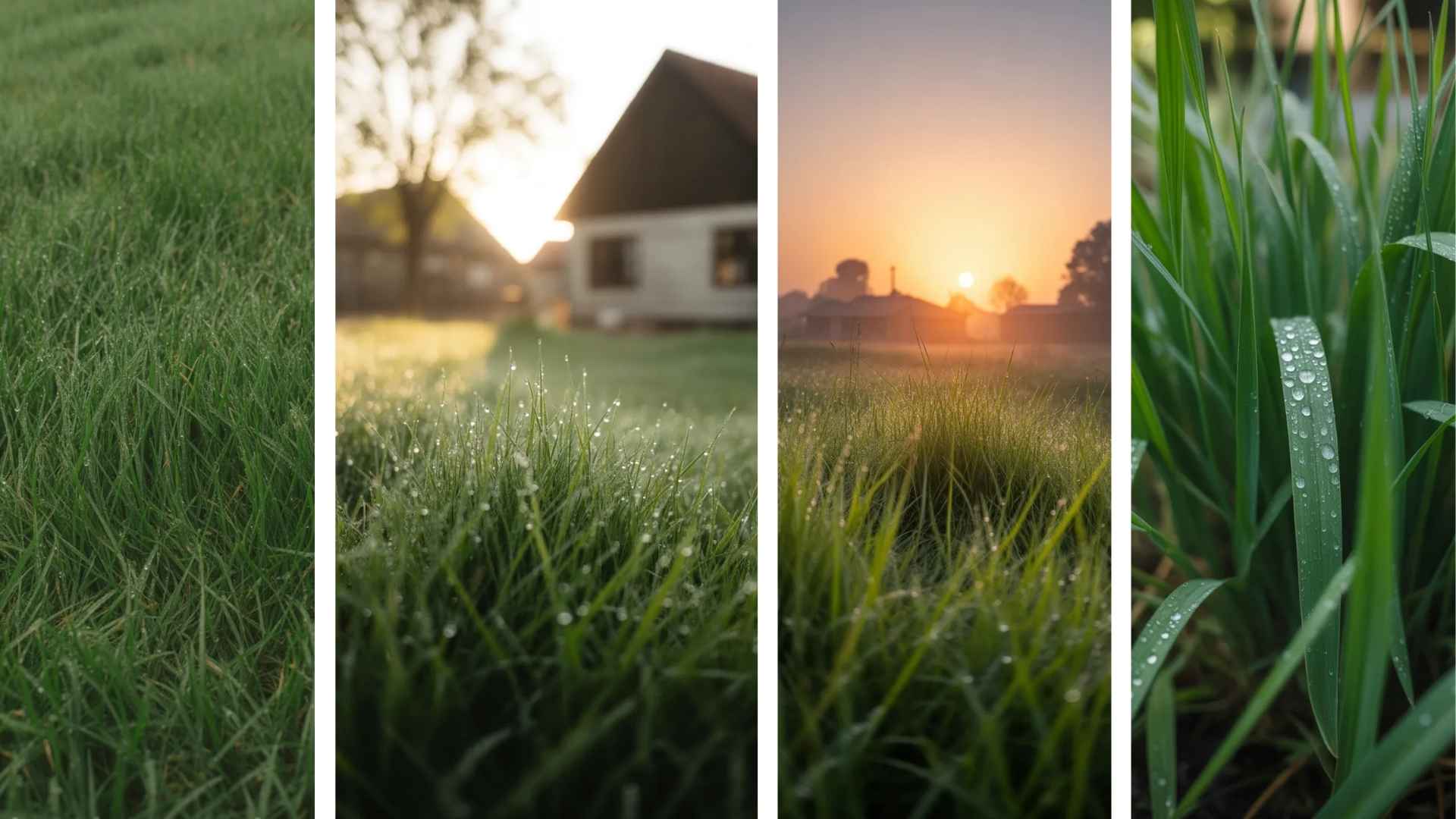

There are roughly a dozen grass species used in American lawns, and most yards contain a mix of them.
They split into two camps: cool-season grasses that peak in spring and fall, and warm-season grasses that take over when temperatures climb past 80°F.
A third group sits in the transition zone, a belt running from Kansas to Virginia, where neither category fully dominates, and grass selection gets tricky.
Here are the 14 types you are most likely to encounter, what makes each one different, and how to figure out which one is already growing in your yard.
14 Common Different Types of Grass for Lawns
1. Kentucky Bluegrass
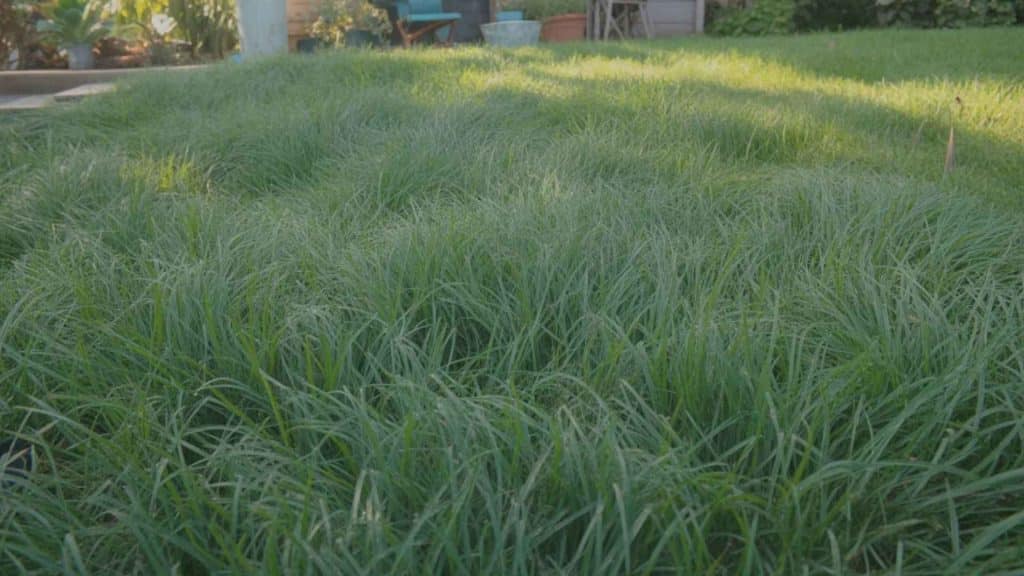
Kentucky Bluegrass is the gold standard for cool-season lawns. It spreads through underground stems called rhizomes, filling in bare patches on its own over time. That self-repair ability is why sod farms across the north grow more bluegrass than anything else.
It does need consistent moisture and struggles badly in shade. If your yard has large tree canopy coverage, bluegrass will thin out in those areas, no matter how well you care for it. It is also susceptible to dollar spot, leaf spot, and summer patch when heat and humidity spike.
- Blade: Narrow, boat-tipped
- Color/Texture: Rich blue-green, soft
- Growth: Slow to establish
- Water: High
- Popularity: Very high in northern states
2. Tall Fescue
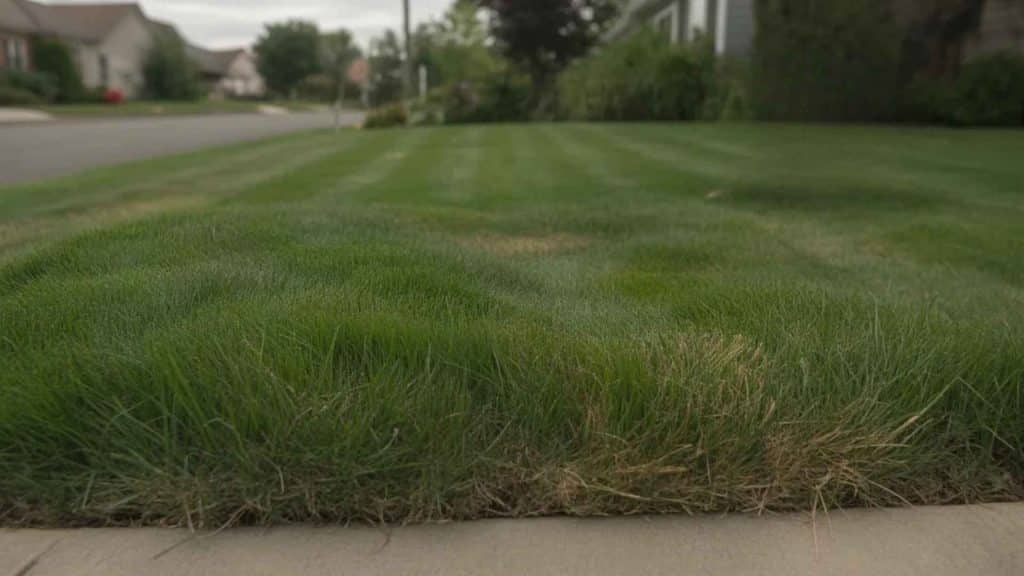
Tall Fescue handles heat, drought, and foot traffic better than most cool-season grasses. It is a solid pick for lawns that get heavy daily use, and it performs better in warmer regions than Kentucky bluegrass or ryegrass.
One thing to know: Tall fescue is a bunch-type grass. It does not spread via runners or rhizomes, so if a patch dies, it will not fill in on its own. You need to reseed bare spots.
Newer cultivars like turf-type tall fescues are finer-textured and denser than the old Kentucky 31 variety that most people picture. Brown patch can show up during humid summers, especially if the lawn is overwatered in the evening.
- Blade: Wide, coarse
- Color/Texture: Dark green, rough
- Growth: Fast germination
- Water: Moderate
- Popularity: High across transition zones
3. Fine Fescue
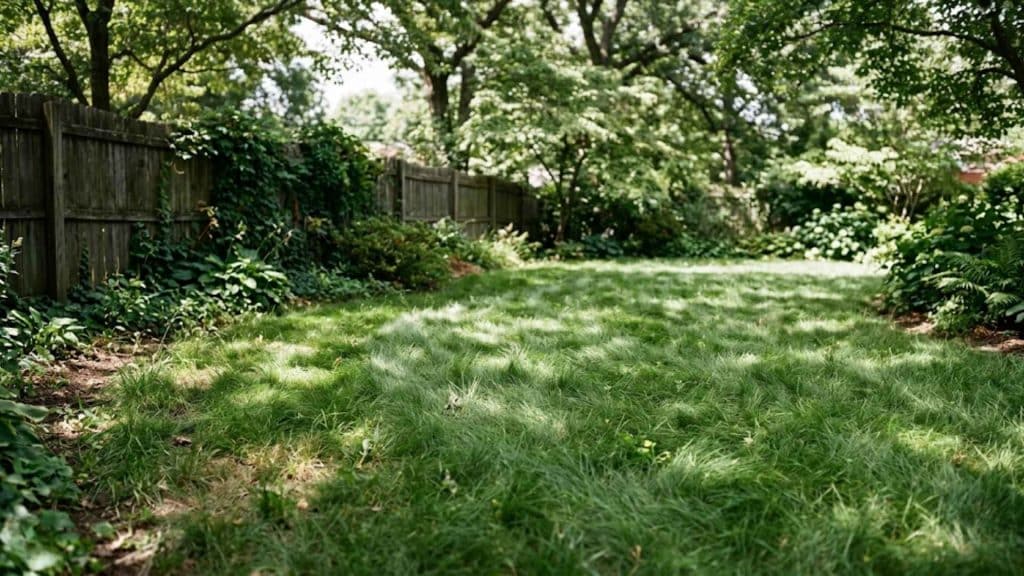
Fine Fescue covers shady spots where other grasses give up. It needs very little fertilizer and stays low with minimal mowing through most of the season.
“Fine fescue” is actually a group name covering four species: creeping red fescue, chewings fescue, hard fescue, and sheep fescue. They all share fine, needle-like blades and shade tolerance, but creeping red is the most common in residential seed mixes.
These grasses are a key component in no-mow and low-mow lawn blends. The trade-off is poor traffic tolerance. A play area or dog run planted in fine fescue will thin out fast under heavy use.
- Blade: Very fine, hair-like
- Color/Texture: Medium green, soft
- Growth: Moderate
- Water: Low
- Popularity: Moderate in shaded northern lawns
- Mowing height: 2-3 inches (or leave unmowed in eco-lawns)
- Disease risk: Red thread in humid conditions
4. Perennial Ryegrass
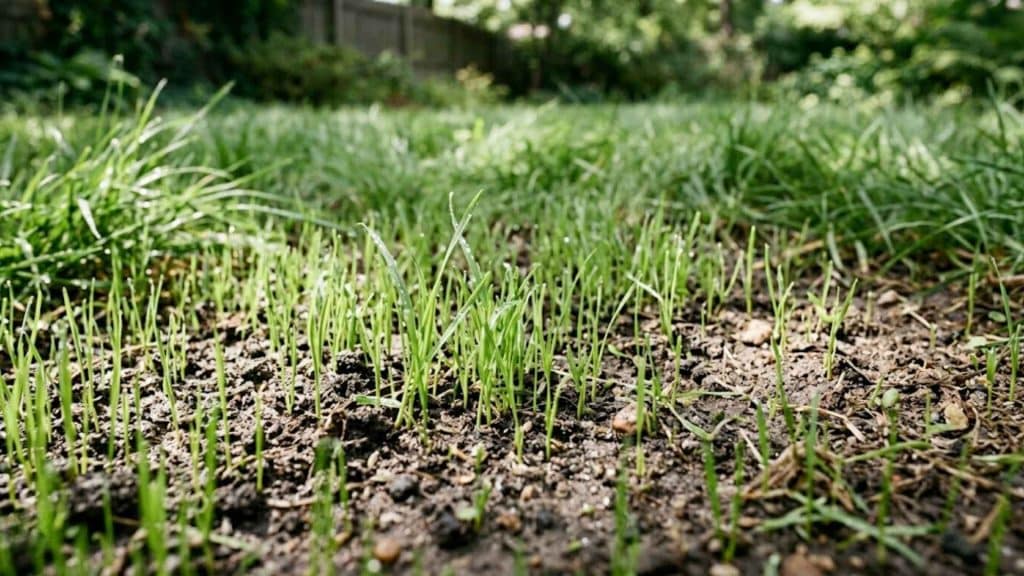
Perennial Ryegrass germinates fast, sometimes within five days. I have used it often for quick overseeding jobs where bare patches need cover before winter sets in.
- Blade: Narrow, glossy underside
- Color/Texture: Bright green, fine
- Growth: Very fast
- Water: Moderate to high
- Popularity: High for overseeding and sports fields
5. Bentgrass
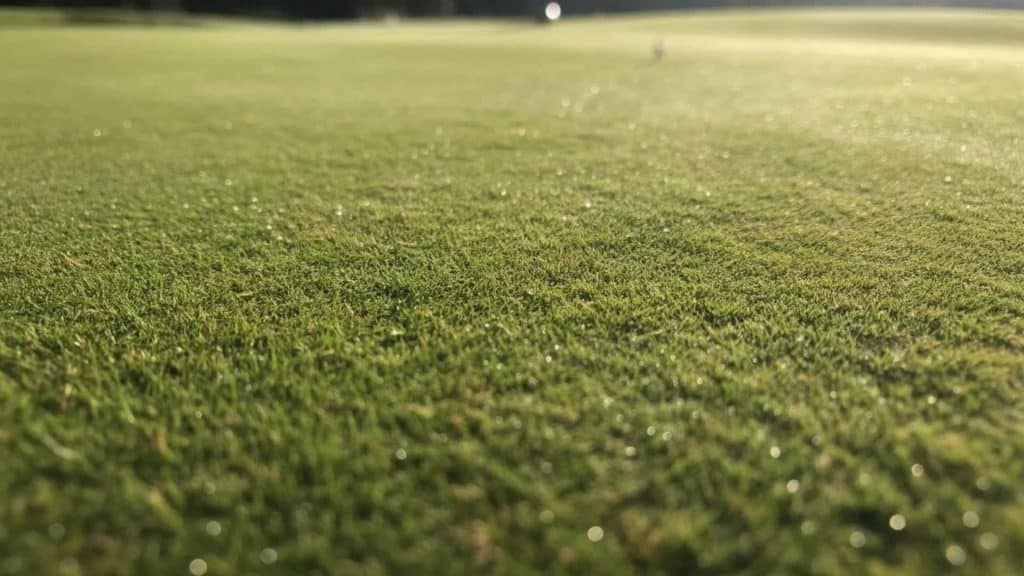
Bentgrass is the grass you see on golf course putting greens. It demands frequent mowing, strong drainage, and consistent care to stay in good shape.
- Blade: Very fine, dense
- Color/Texture: Light green, velvety
- Growth: Slow, creeping
- Water: High
- Popularity: Low for home lawns, high for golf courses
6. Rough Bluegrass (Poa trivialis)
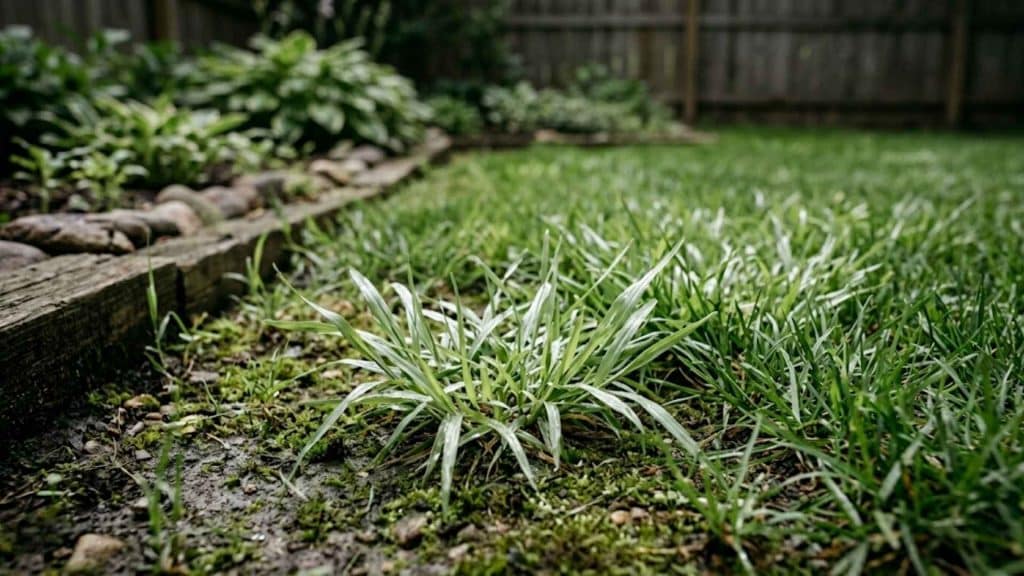
Rough Bluegrass thrives in wet, shady conditions where other grasses thin out. It is often considered a weed in drier lawns, but it works well in specific settings.
- Blade: Flat, soft, pointed tip
- Color/Texture: Light green, shiny
- Growth: Fast in cool, moist conditions
- Water: High
- Popularity: Low, mostly used in shaded or damp areas
7. Bermudagrass
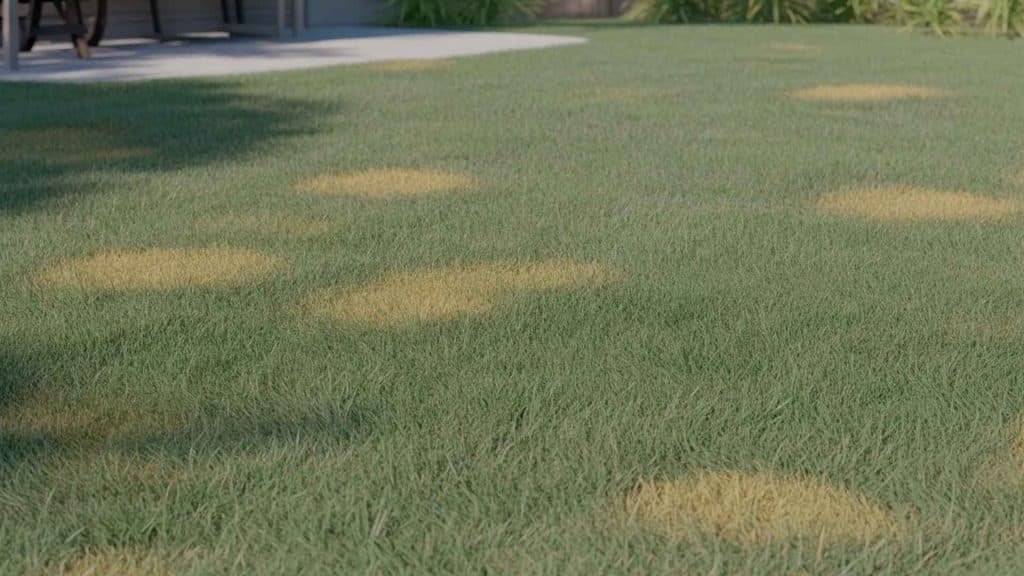
Bermudagrass is one of the toughest warm-season grasses available. It recovers fast from damage, spreads aggressively, and holds up well under heavy foot traffic.
That aggressive spread is a double-edged sword, though. It will creep into garden beds, sidewalk cracks, and anywhere else it can reach, and removing it from places you do not want it is a real chore.
It requires full sun. In any meaningful shade, Bermuda thins out and eventually dies. There is also a practical distinction between common Bermuda (seeded, coarser, cheaper) and hybrid Bermuda (sodded, finer-textured, higher maintenance). Hybrids look better but cannot be grown from seed.
- Blade: Fine to medium, pointed
- Color/Texture: Grey-green, dense
- Growth: Very fast
- Water: Low to moderate
- Mowing height: 1-2 inches
- Disease risk: Spring dead spot, dollar spot, large patch
- Popularity: Very high across southern states
8. Zoysiagrass
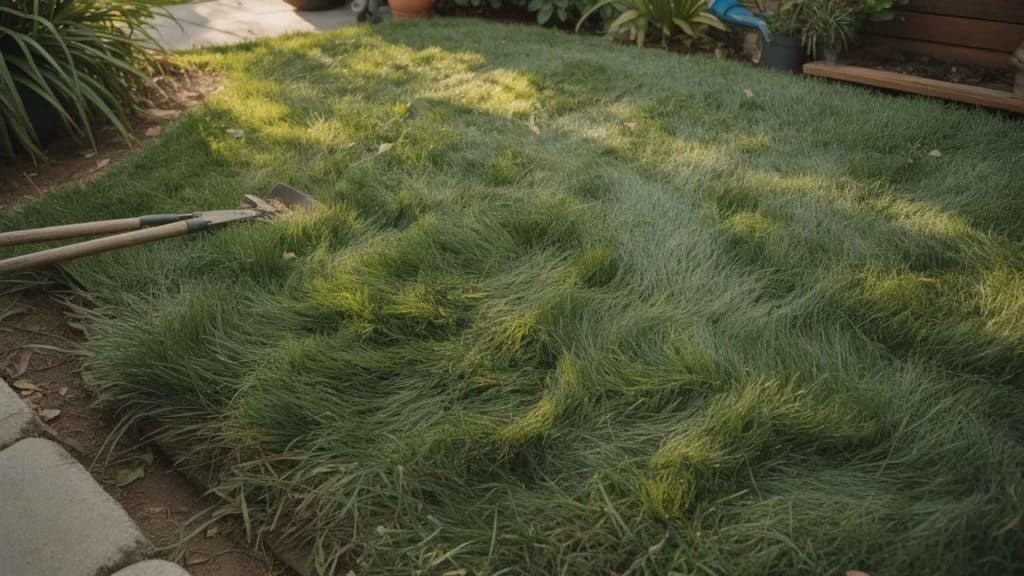
Zoysiagrass forms a thick, cushion-like surface that crowds out most weeds on its own. It is slow to establish, but very low maintenance once it fills in. Unlike most warm-season grasses, zoysia handles partial shade reasonably well, which makes it a strong transition zone pick.
The density that makes zoysia great at choking out weeds also means it builds thatch faster than most grasses.
Plan on dethatching every one to two years, or the thatch layer will block water and nutrients from reaching the roots. Zoysia comes in both fine-textured and coarse cultivars, so check what you are buying. Fertilize once per year in late spring. That is usually enough.
- Blade: Fine to medium, stiff
- Color/Texture: Medium green, dense
- Growth: Slow
- Water: Low
- Popularity: High in warm and transition zones
9. St. Augustinegrass
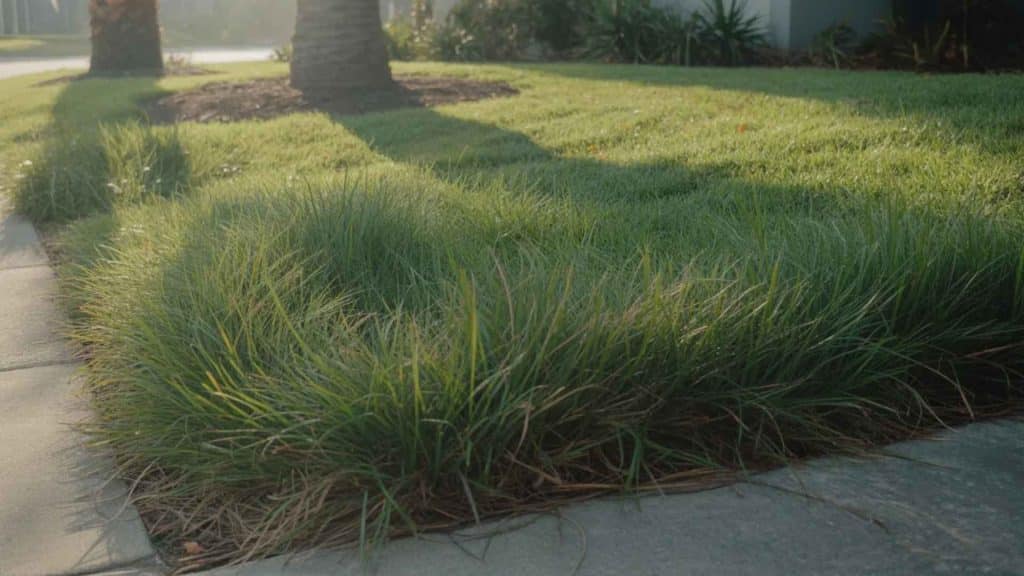
St. Augustinegrass is the top choice for humid, coastal climates. It handles shade better than most warm-season grasses and spreads quickly through above-ground runners called stolons.
- Blade: Wide, flat, rounded tip
- Color/Texture: Blue-green, coarse
- Growth: Fast via stolons
- Water: Moderate to high
- Popularity: Very high in Florida and Gulf Coast states
10. Centipedegrass
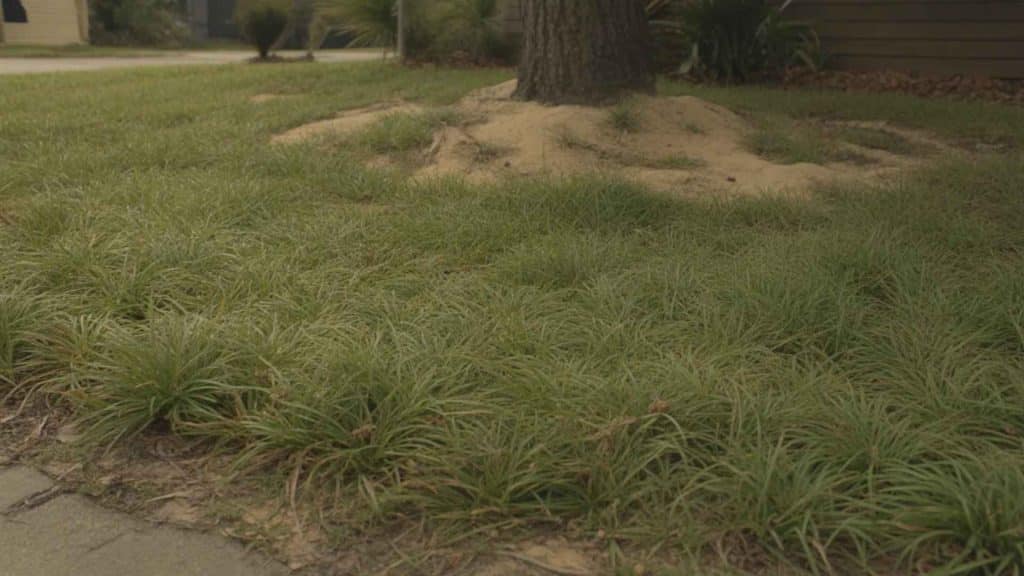
Centipedegrass suits homeowners who want a low-effort lawn. It is often called “the lazy man’s grass” for good reason. It grows slowly, needs very little fertilizer, and does well in poor, acidic soils across the Southeast.
The one catch: Centipede does not tolerate drought as well as Bermuda or Bahia. In hot, dry areas without supplemental irrigation, it will die rather than just go dormant.
If your region gets reliable summer rainfall, centipede is a set-it-and-forget-it choice. If not, budget for regular watering.
- Blade: Medium width, notched tip
- Color/Texture: Light to medium green, coarse
- Growth: Slow
- Water: Low to moderate
- Popularity: High in the southeastern US
11. Bahiagrass
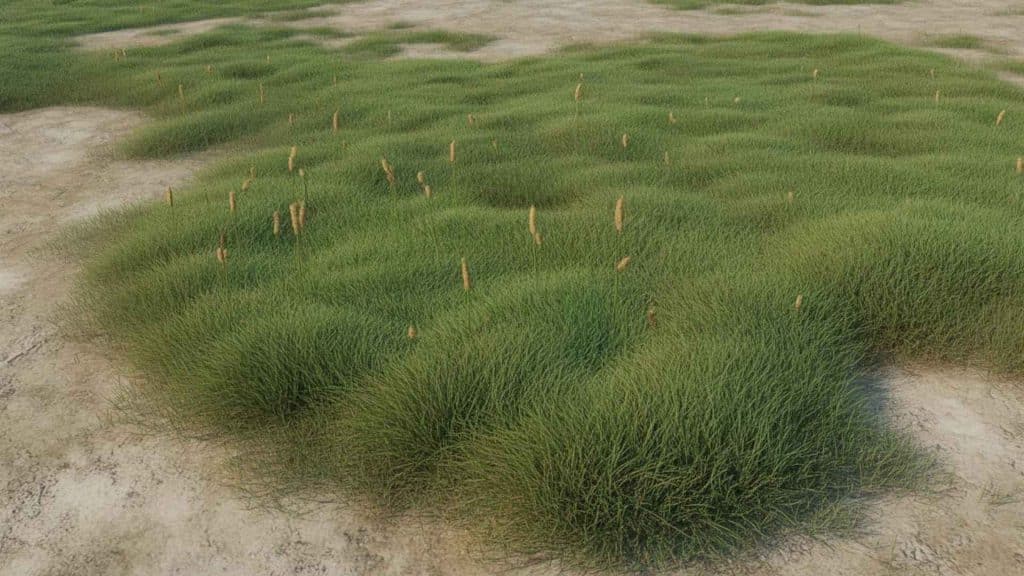
Bahiagrass is built for tough conditions. It roots deep, tolerates drought well, and stays green in sandy soils where other warm-season grasses struggle to survive.
- Blade: Coarse, V-shaped
- Color/Texture: Medium green, rough
- Growth: Moderate
- Water: Very low
- Popularity: Moderate, mainly in Florida and the Gulf states
12. Buffalograss
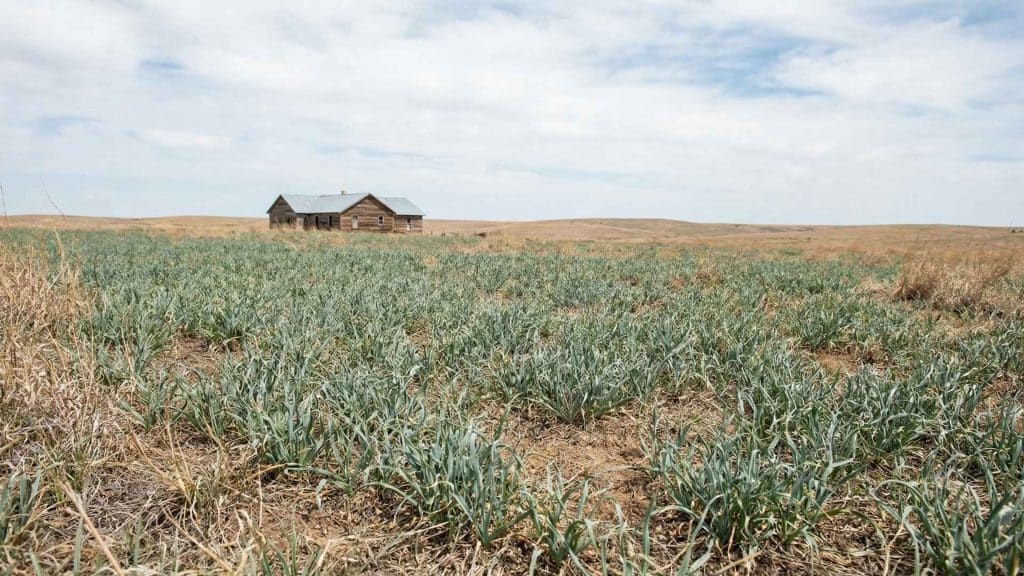
Buffalograss is native to the Great Plains and one of the most water-efficient options on this list. It goes dormant in drought rather than dying, then bounces back when moisture returns. Once established, it can survive on natural rainfall alone in many regions of the central US.
It is also one of the few lawn grasses native to North America, which makes it a strong ecological choice if you are trying to reduce inputs.
The limitation is sunlight: buffalograss needs at least 6 hours of direct sunlight per day and has almost no shade tolerance. In partial shade, it thins out and gets overtaken by weeds.
- Blade: Fine, curly
- Color/Texture: Blue-green, soft
- Growth: Slow
- Water: Very low
- Popularity: Moderate in arid central states
13. Carpetgrass
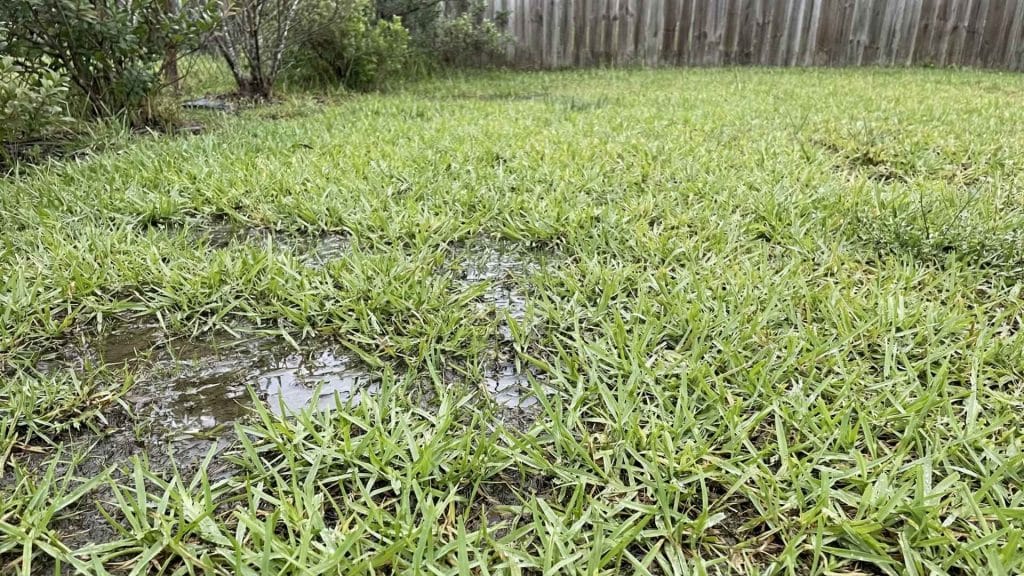
Carpetgrass grows well in wet, low-lying areas with poor drainage. It tolerates shade and moist soil, but it does not hold up well under heavy traffic.
- Blade: Broad, blunt tip
- Color/Texture: Light green, coarse
- Growth: Moderate via stolons
- Water: High
- Popularity: Low, used mainly in wet coastal areas
14. Kikuyugrass
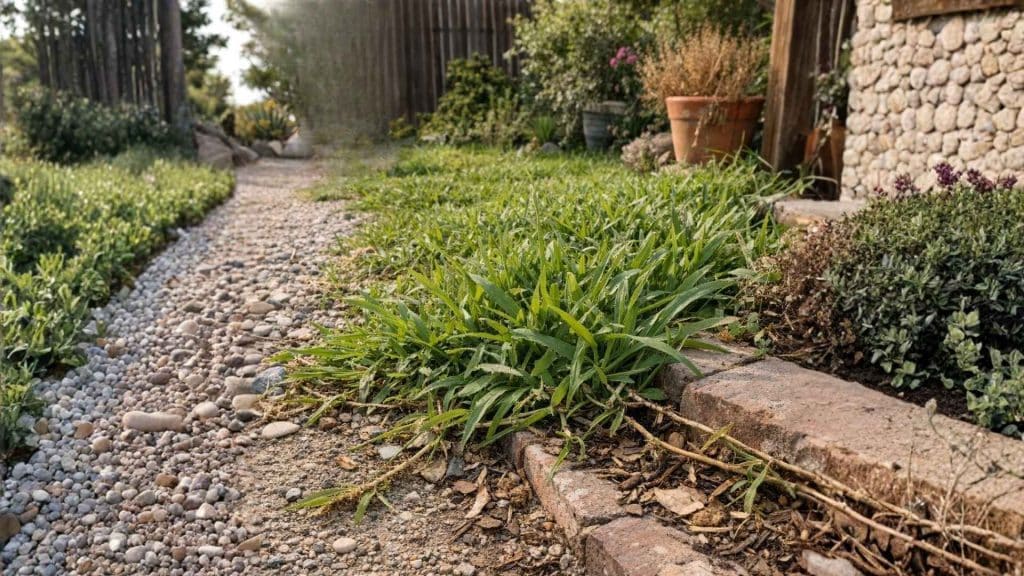
Kikuyugrass originated in East Africa and spreads rapidly via stolons and rhizomes. It is aggressive, hard to control, and often treated as an invasive species outside California.
- Blade: Medium, slightly hairy edges
- Color/Texture: Bright green, coarse
- Growth: Very fast, aggressive
- Water: Moderate
- Popularity: Limited, mainly coastal California
Grass Type Comparison Table
| Grass | Season | Sun Needs | Water Needs | Traffic Tolerance | Mowing Height | Maintenance |
|---|---|---|---|---|---|---|
| Kentucky Bluegrass | Cool | Full sun | High | Moderate | 2-3 in | High |
| Tall Fescue | Cool | Sun to part shade | Moderate | High | 2.5-3.5 in | Medium |
| Fine Fescue | Cool | Shade tolerant | Low | Low | 2-3 in | Low |
| Perennial Ryegrass | Cool | Full sun | Moderate-high | High | 2-3 in | Medium |
| Bentgrass | Cool | Full sun | High | Low | 0.1-1 in | Very high |
| Rough Bluegrass | Cool | Shade/wet | High | Low | 2-3 in | Low |
| Bermudagrass | Warm | Full sun | Low-moderate | Very high | 1-2 in | High |
| Zoysiagrass | Warm | Sun to part shade | Low | High | 1-2 in | Medium |
| St. Augustinegrass | Warm | Sun to part shade | Moderate-high | Moderate | 2.5-4 in | Medium |
| Centipedegrass | Warm | Sun to part shade | Low-moderate | Low | 1.5-2 in | Low |
| Bahiagrass | Warm | Full sun | Very low | Moderate | 3-4 in | Low |
| Buffalograss | Warm | Full sun | Very low | Low | 2-3 in | Very low |
| Carpetgrass | Warm | Sun to part shade | High | Low | 1-2 in | Low |
| Kikuyugrass | Warm | Full sun | Moderate | High | 1-2 in | High (invasive) |
How to Identify the Grass Already in Your Yard?
Most lawns are a mix, but you can narrow it down with a few quick checks.
Start with the blade tip. Kentucky bluegrass has a distinctive boat-shaped tip that looks like the prow of a canoe. Tall fescue blades are pointed with parallel veins running the full length.
St. Augustine has wide, flat blades with rounded tips. Fine fescues are hair-thin and needle-like.
Next, check how the grass spreads. Pull up a small section at the edge of the lawn. If you see horizontal stems running above the soil surface, those are stolons, which point to Bermuda, St. Augustine, or zoysia.
If the stems run underground, they are rhizomes, indicating Kentucky bluegrass or smooth bromegrass. If the grass grows in distinct clumps with no runners at all, you are looking at a bunch-type grass, such as tall fescue or perennial ryegrass.
Color and texture help confirm. Bermuda tends toward grey-green and feels wiry. Kentucky bluegrass is blue-green and soft. St. Augustine is coarse and wide-bladed. Zoysia feels stiff and dense, almost like a carpet.
Your region narrows the list further. If you live north of the transition zone, you almost certainly have some combination of Kentucky bluegrass, fescue, and ryegrass.
South of it, Bermuda, zoysia, and St. Augustine dominate. When in doubt, clip a small sample and take it to your county extension office. They will identify it for free.
Why Lawn Seed Mixes Matter More Than Most People Think?
Most bags at the hardware store are blends, not single species, and that is by design. A single grass has weak points that a blend covers. Perennial ryegrass sprouts fast and holds soil, while slower species like bluegrass catch up underneath.
Fine fescue fills the shaded corners where bluegrass thins out. Tall fescue anchors deep roots that pull the lawn through dry spells. Each grass compensates for what the others cannot do alone. The result is a lawn that recovers faster from damage and stays more even through the seasons.
Pure seed percentage: Look for 80% or higher. This tells you how much of the bag is actual viable grass seed versus filler.
Germination rate: Below 80% is a red flag. You are paying for seed that will not sprout.
Weed seed percentage: Under 0.5% is acceptable. Zero is better.
Noxious weeds: This number should be zero. Any noxious weed content means the bag is not worth buying, period.
A bag labeled “Premium Sun Mix” on the front might contain 40% annual ryegrass on the back, a grass that dies after one season and leaves you with bare dirt the following spring. The label is the only place that tells you what you are actually buying.
Common Mistakes to Avoid
I’ve seen the same lawn problems repeat across hundreds of gardens. Most come down to a handful of avoidable errors.
1. Choosing Grass Based on Looks Alone
- Problem: Many homeowners pick a grass because it looks thick and green in photos, without checking the climate fit.
- Fix: Match the grass to your USDA hardiness zone and average rainfall first. Looks follow function.
2. Planting at the Wrong Time of Year
- Problem: Planting cool-season grass in summer or warm-season grass in early spring leads to poor germination and weak roots.
- Fix: Plant cool-season grasses in early fall and warm-season grasses after the last frost date in your area.
3. Overwatering After Seeding
- Problem: Keeping soil too wet after seeding drowns young roots and encourages fungal growth.
- Fix: Water lightly twice a day until germination, then shift to deeper, less frequent watering.
4. Mowing Too Short Too Soon
- Problem: Cutting new grass before it reaches the right height stresses the plant and slows root development.
- Fix: Wait until the grass reaches at least 3.5 inches before the first mow. Never cut more than one-third of the blade at once.
5. Skipping Soil Testing
- Problem: Most lawn failures I’ve diagnosed trace back to poor soil pH, not poor grass selection.
- Fix: Test your soil before seeding. Most grasses prefer a pH between 6.0 and 7.0. Adjust with lime or sulfur as needed.
6. Using the Wrong Seed Mix for Sun and Shade Conditions
- Problem: Planting a sun-loving grass under tree cover or a shade mix in full sun results in thin, patchy growth.
- Fix: Map your lawn’s sun exposure through the day before buying seed. Most bags specify sun, shade, or mixed conditions on the label.
Conclusion
Choosing the right grass comes down to three things: your climate zone, your soil pH, and how the lawn gets used day to day.
Get those right, and the grass mostly takes care of itself. Get them wrong, and no amount of watering or fertilizer fixes the mismatch.
If you are still unsure which grass fits your yard, drop your location and soil type in the comments.
I will point you in the right direction. And if this guide saved you from buying the wrong seed bag, pass it along to someone who is about to reseed this season.
Frequently Asked Questions
How Do I Identify My Lawn’s Soil Type at Home?
Perform a “squeeze test” by moistening a handful of soil; if it holds shape, it’s clay; if it crumbles immediately, it’s sandy; and loamy soil holds shape briefly.
What Is the Best Way to Control Lawn Weeds Organically?
Maintain thick grass coverage by properly aerating and overseeding to crowd out weeds naturally, or use corn gluten meal as a pre-emergent herbicide to prevent weed seeds from germinating.
How Often Should I Sharpen My Lawn Mower Blades?
Sharpen blades at least twice per season or every 25 hours of use. Dull blades tear grass rather than cutting it, which leaves the lawn vulnerable to various diseases.
Does Leaving Grass Clippings on The Lawn Cause Thatch Buildup?
No, clippings are mostly water and break down quickly, returning nitrogen to the soil. Thatch is actually caused by an accumulation of woody roots and stems that decompose slowly.
What Is the “One-Third Rule” in Lawn Mowing?
Never remove more than one-third of the grass blade height during a single mowing. Cutting more stresses the plant, limits root growth, and makes the lawn susceptible to pests.