
Spider plant care sounds like the easiest thing in the world. And for the most part, it should be.
But something small always seems to go wrong. The tips turn brown. The leaves droop. The plant just sits there. Not growing. Not dying. Just looking sad.
Usually, the problem comes down to one or two habits that are slightly off. Fix those, and the plant bounces right back. This post covers exactly that.
You will learn how often to water a spider plant and what light it actually needs. You will also find out which soil works best and how to catch problems early.
By the end, you will have a clear plan for keeping your plant looking full and healthy all year long.
What Is a Spider Plant?
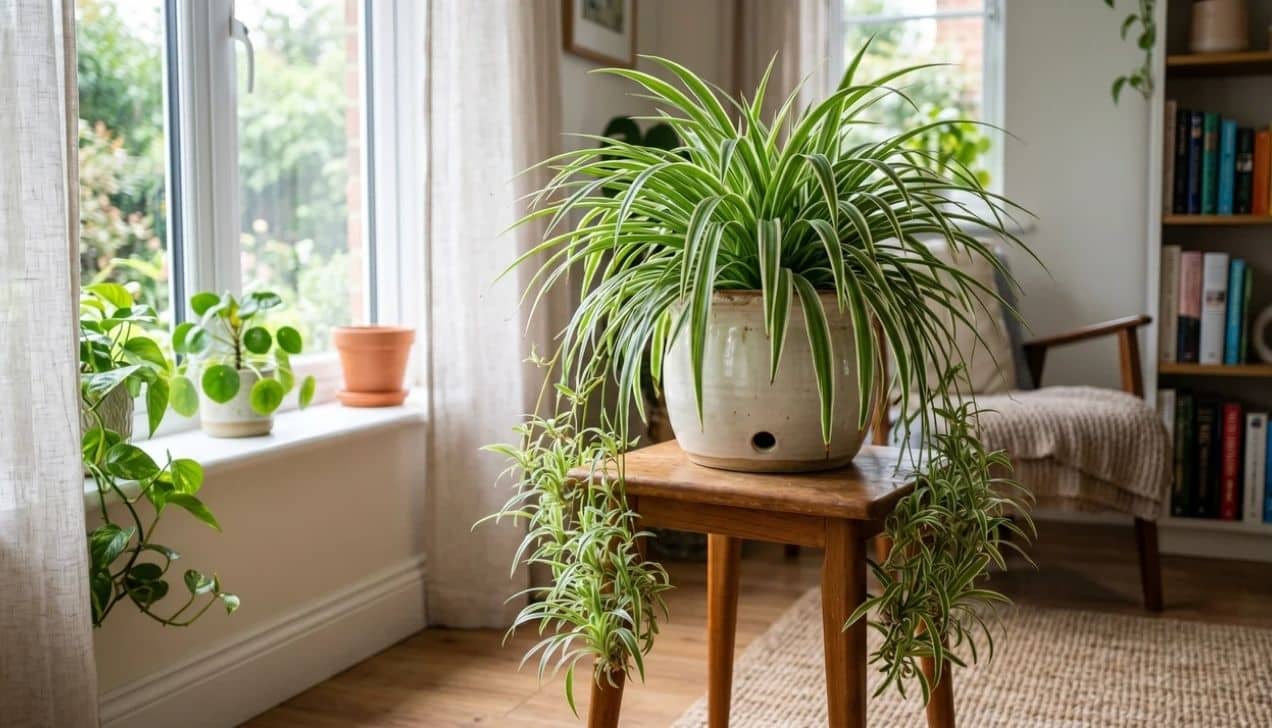
The spider plant, scientifically known as (Chlorophytum comosum), is a tropical plant grown mainly as a houseplant. It earns its name from the dangling baby plantlets it produces on long, arching stems.
The most common varieties feature green leaves with white stripes, though solid green types are also available.
It is one of the easiest indoor plants to keep alive. It grows quickly and adapts well to indoor conditions.
| Scientific name | Chlorophytum comosum |
| Native | Tropical and southern Africa |
| Produces | Offshoots called spiderettes on long, trailing runners |
| Common Varieties | Variegatum, Vittatum, Bonnie Spider Plant, Solid Green Spider Plant |
| Variegated types | More commonly sold in nurseries and garden centres |
| Does well | They do well in hanging baskets, on shelves, or in standard pots indoors |
Why Are Spider Plants Great Indoor Plants?
Spider plants are great indoor plants because they grow in a wide range of conditions, recover from neglect, and need almost no special care.
Here is what makes them stand out.
1. Beginner-Friendly Nature
Spider plants are often recommended to new plant owners because they are forgiving and easy to manage.
- Handles occasional missed watering without major damage
- Requires only light and watering
- Recovers quickly from common care mistakes
- Grows well in most indoor environments
2. Fast Growth and Easy Propagation
A healthy spider plant does more than grow leaves. It also produces new plants that can be propagated easily.
- Produces spiderettes once mature
- Roots quickly in water or potting soil
- Creates fuller growth within a relatively short time
- Makes it easy to grow multiple plants from one parent plant
3. Adaptability to Different Indoor Conditions
Spider plants adjust to different spaces without much fuss.
- Tolerates a range of light conditions
- Grows well in average household temperatures
- Handles normal indoor humidity levels
- Suitable for living rooms, bedrooms, kitchens, and offices
4. Safe for Pets and Children
pider plants are non-toxic to cats, dogs, and children, which makes them a safer choice than many common houseplants.
- Cats may be attracted to the leaves and occasionally chew on them.
- Eating small amounts can sometimes cause mild stomach upset, but serious reactions are rare.
- Dogs rarely consume enough of the plant to experience any noticeable effects.
- Keeping the plant in a hanging basket or on a shelf can help prevent unnecessary chewing.
How to Care for a Spider Plant Indoors
Spider plant care is simple once you understand the basics. These spider plant care tips help prevent common problems.
Best Location and Light Requirements for Spider Plants
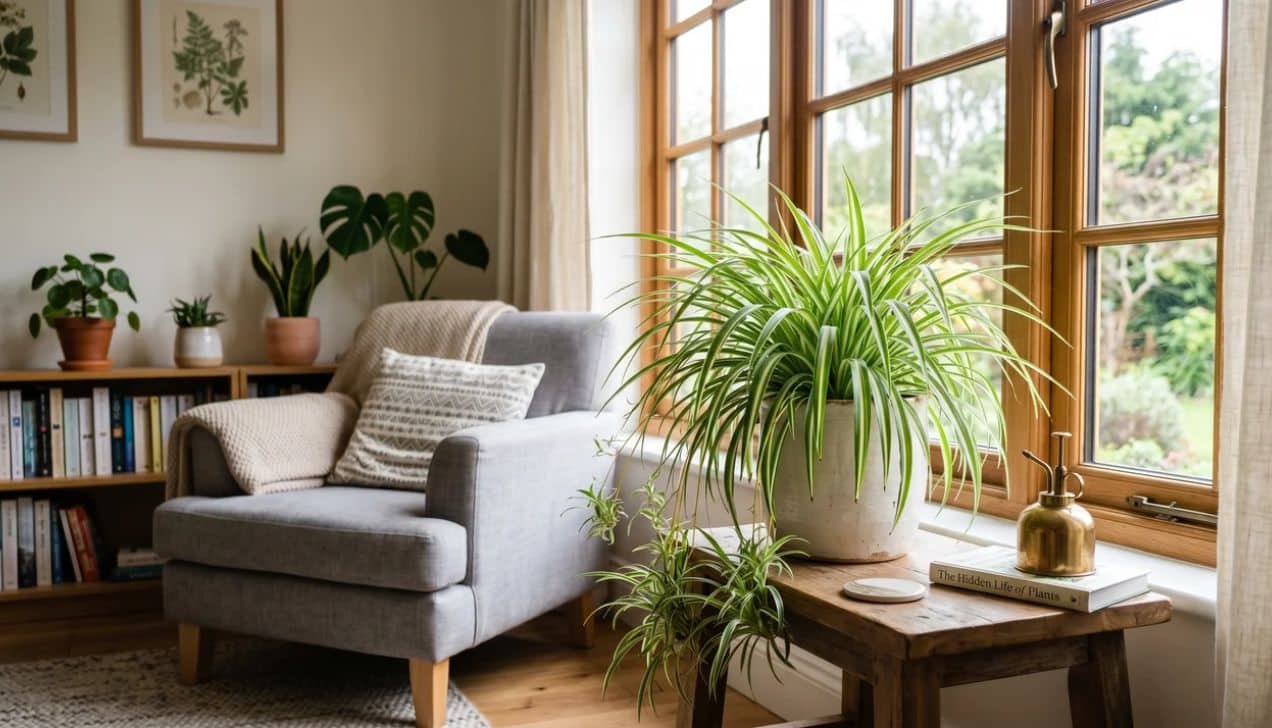
Choosing the right location is one of the easiest ways to improve spider plant health. Good light supports stronger growth, healthier leaves, and more spiderette production.
- Place the plant near an east-facing or north-facing window for bright, indirect light.
- Keep it away from direct afternoon sun, which can scorch and fade the leaves.
- Variegated spider plants need slightly more light to maintain their white stripes.
- Low-light areas may slow growth and reduce spiderette production over time.
- If natural light is limited, fluorescent lighting can help support healthy growth indoors.
Spider Plant Watering Schedule and Watering Tips
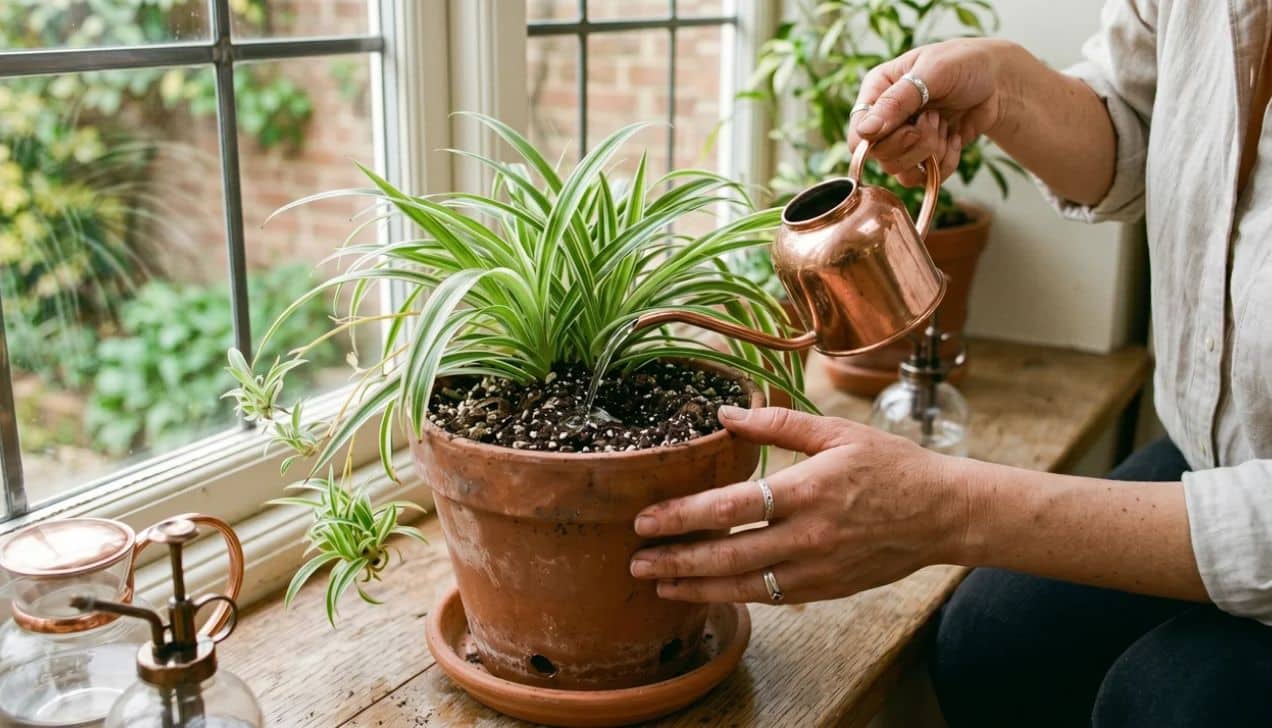
Watering is the care habit that causes the most issues. The goal is simple: keep the soil lightly moist, never soggy or bone dry.
| Watering Situation | What to Do |
|---|---|
| Spring & Summer | Water every 1–2 weeks after checking the top inch of soil |
| Fall & Winter | Water every 2–3 weeks as growth slows |
| Soil Still Feels Damp | Wait a few more days before watering |
| Yellow Leaves or Musty Soil | Reduce watering and check drainage |
| Drooping Leaves or Dry Soil | Water thoroughly until excess drains out |
| After Watering | Empty the saucer to prevent roots from sitting in water |
Choose the Right Soil Mix for Spider Plants
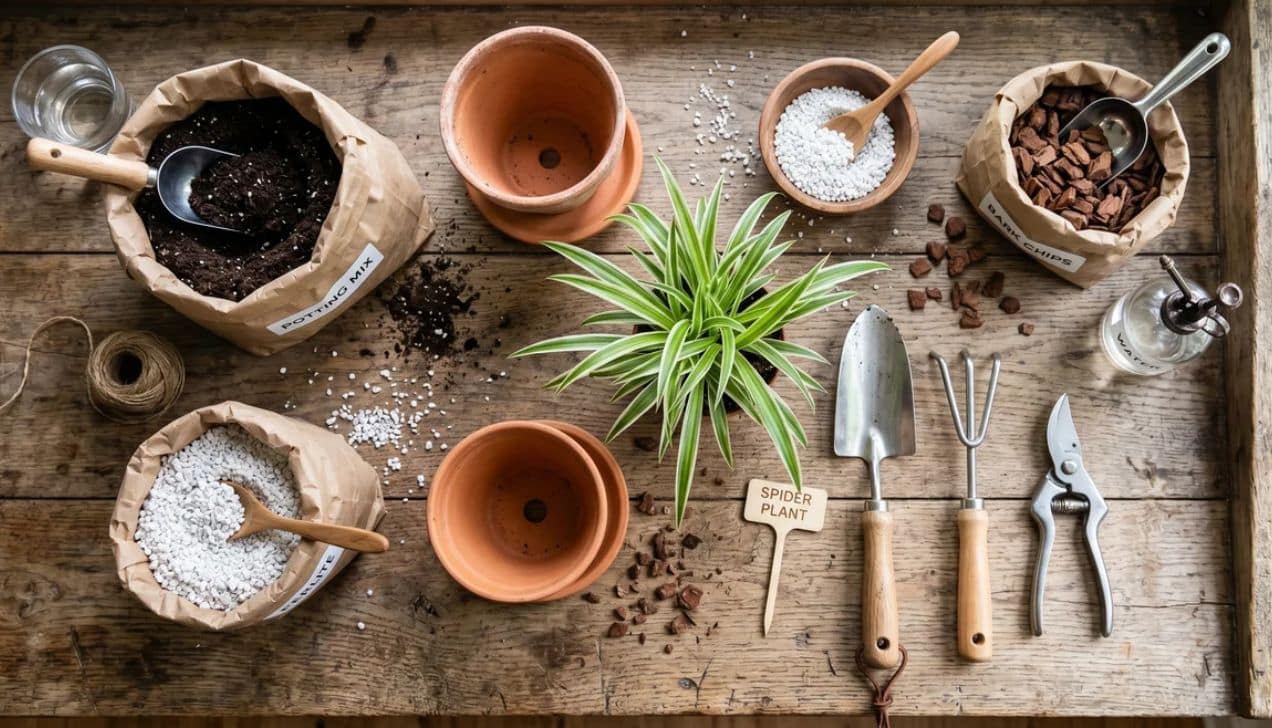
The right soil helps prevent root problems and supports steady growth. Spider plants are adaptable, but they grow best when excess water can drain away quickly from the roots.
-
Use a standard potting mix combined with perlite to improve airflow and drainage.
-
Avoid heavy garden soil or clay-based mixes that hold too much moisture.
-
A slightly acidic to neutral soil pH helps support healthy root development.
-
Materials such as perlite, coarse sand, or bark chips help keep the soil loose.
-
Replace old potting mix when repotting to provide fresh nutrients and better drainage.
Spider Plant Temperature and Humidity Requirements
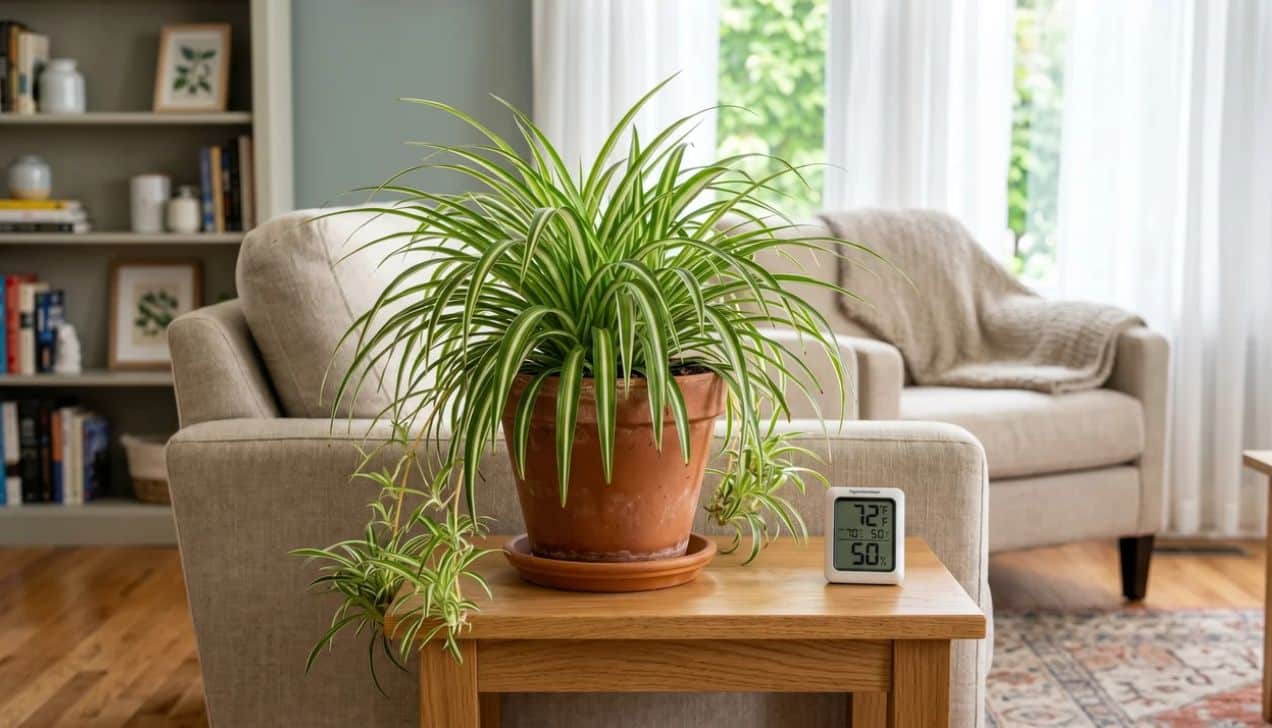
Spider plants grow best in normal indoor conditions, but sudden temperature changes can stress the plant.
Keeping temperatures stable helps maintain healthy foliage and steady growth throughout the year.
-
Keep temperatures between 60°F and 80°F for the best growth and overall health.
-
Avoid temperatures below 50°F, as cold conditions can slow growth and damage leaves.
-
Keep plants away from cold drafts, heating vents, and air conditioning units.
-
Spider plants prefer indoor humidity levels between 40% and 60%.
-
Brown leaf tips during winter may indicate dry air, so occasional misting or a humidity tray can help.
Fertilizing Spider Plants for Healthy Growth
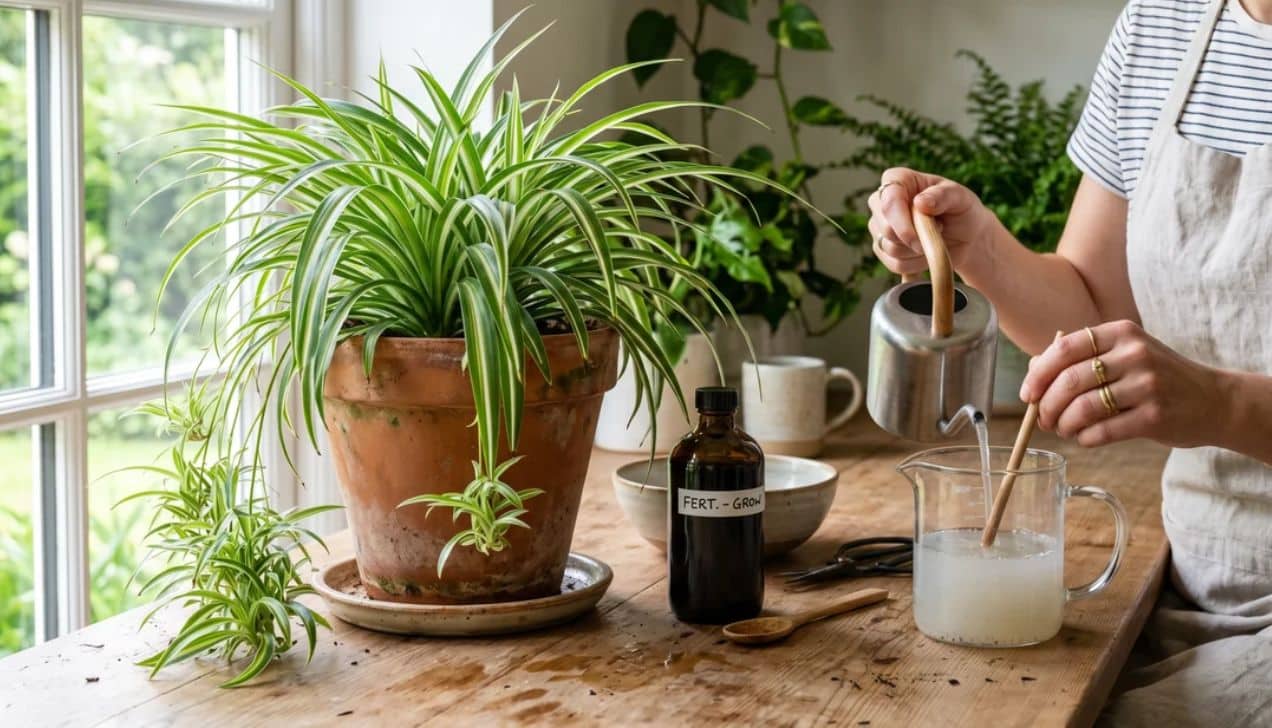
Spider plants do not need frequent feeding to stay healthy. In fact, too much fertilizer often causes more problems than too little. A light feeding schedule is usually enough to support healthy growth.
-
Feed once a month during spring and summer when the plant is actively growing.
-
Use a balanced liquid fertilizer and dilute it to half strength before applying.
-
Stop fertilizing during fall and winter, as growth naturally slows.
-
Brown leaf tips and slow growth can result from excess fertilizer in the soil.
-
White crust on the soil surface often signals mineral buildup, which can be reduced by occasionally flushing the soil with plain water.
Repotting Spider Plants at The Right Time
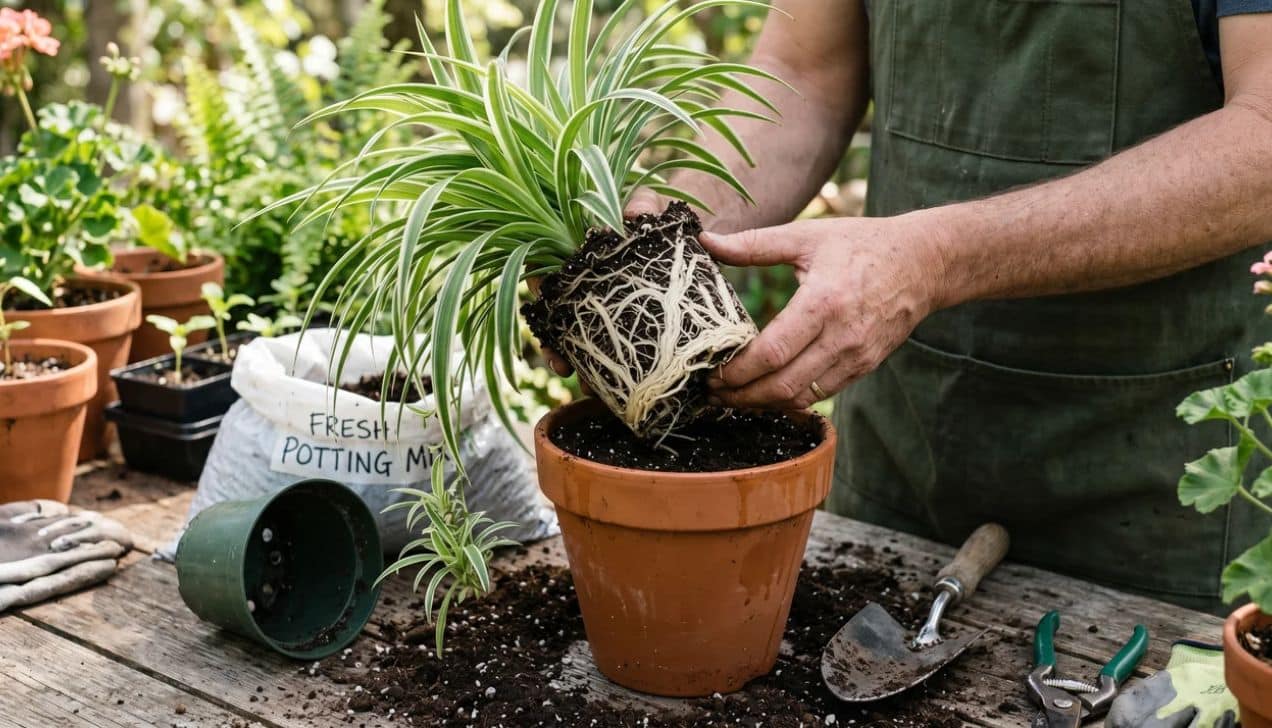
Repotting gives crowded roots more space to grow and helps maintain healthy development. Spider plants typically need repotting every one to two years, especially when growth begins to slow.
-
Repot when roots emerge from drainage holes or the soil dries unusually fast after watering.
-
Choose a container that is one size larger and has proper drainage holes.
-
Water the plant a day before repotting to reduce stress on the roots.
-
Gently loosen the root ball, then place the plant into fresh potting mix.
-
Water lightly after repotting and return the plant to its usual growing location.
Pruning tip: Trim off any brown, yellow, or dead leaves with clean scissors every few months. This keeps the plant looking tidy and redirects energy toward healthy new growth.
Note: Never jump more than one pot size. A pot that is too large retains excess moisture and raises the risk of root rot between waterings.
Propagating New Plants from Spiderettes
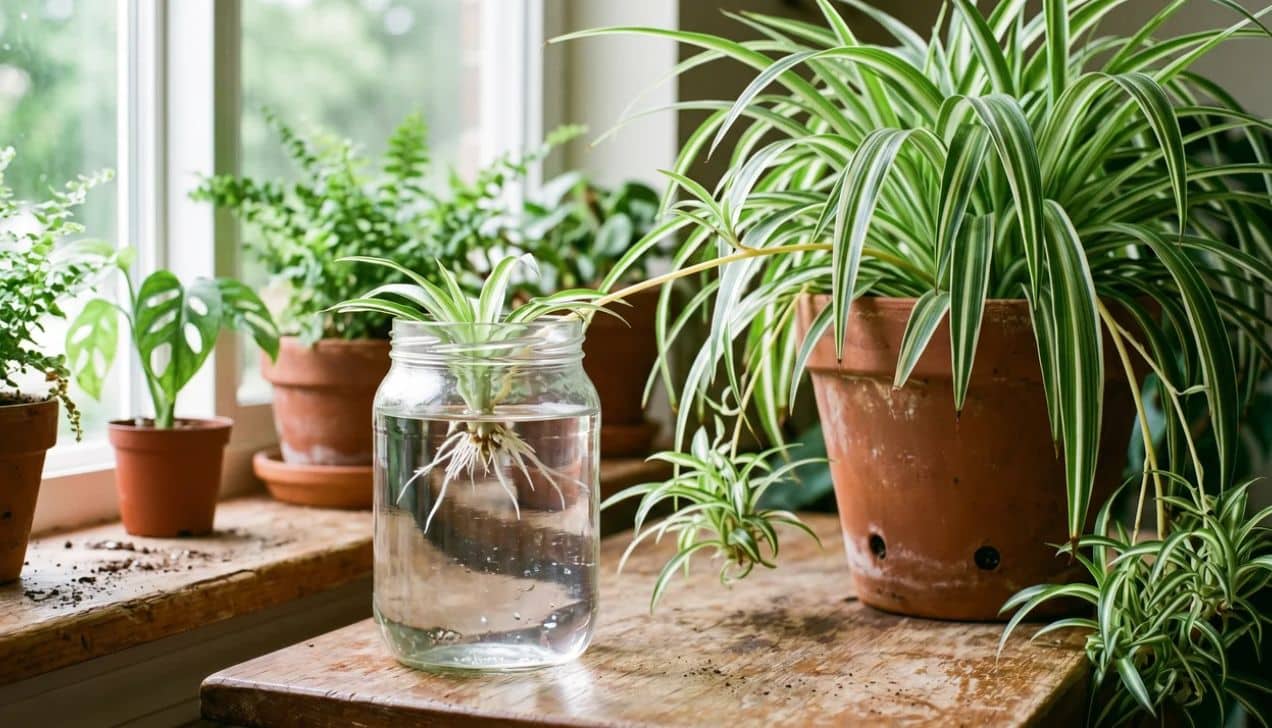
Spider plants make propagation easy by producing baby plants called spiderettes. Once mature, a single plant can produce many plantlets that can be rooted and grown into new plants.
-
Root spiderettes in water by placing the base in a glass while keeping the leaves above the surface. Roots usually appear within one to two weeks.
-
Root spiderettes directly in moist potting soil for a simple method that avoids transplanting later.
-
Leave the spiderette attached to the parent plant until roots develop and the plantlet feels secure in the soil.
-
Water rooting lets you monitor root growth, while soil rooting allows the plant to establish naturally in its future container.
-
Once roots are established, care for the new plant the same way as a mature spider plant.
| Method | Time to Root | Best For |
|---|---|---|
| Water rooting | 1–2 weeks | Watching root progress |
| Soil rooting | 2–4 weeks | Skipping the transplant step |
Common Spider Plant Problems and Easy Ways to Fix Them
Nearly every spider plant issue traces back to water, light, or soil. Each one has a direct fix. The table below covers every common issue home growers face, along with the cause and the fastest way to correct it.
| Problem | Cause | Fix |
|---|---|---|
| Brown leaf tips | Tap water fluoride or dry air | Switch to filtered water; mist leaves lightly |
| Yellow leaves | Overwatering or root rot | Cut back watering; check roots for rot |
| Pale, washed-out color | Too much direct sun | Move to bright, indirect light |
| Drooping leaves | Underwatering or root bound | Water thoroughly; check if repotting is needed |
| No spiderettes forming | Over-fertilizing or low light | Reduce feeding; move to a brighter spot |
| White crust on soil | Mineral buildup from tap water | Flush soil with plain water every few months |
| Slow or stopped growth | Root-bound or dormant season | Repot in spring; stop fertilizing in fall and winter |
Conclusion
Spider plant care comes down to a few simple habits. Just provide bright indirect light, water when the soil begins to dry, and use a well-draining potting mix.
Repot it when the roots push out of the drainage holes. The plant does the rest. What surprises most people is how fast it recovers. Miss a week of watering? It comes back.
Move it to a better spot? Watch what happens. Small adjustments often make a big difference. If your plant is struggling, start by checking its light and watering routine.
If black flies appear on your plants, treat them early before they spread.
Have a favorite spider plant care tip? Share it in the comments below.
Frequently Asked Questions
Where is the Best Place to Put a Spider Plant?
Place a spider plant near an east- or north-facing window with bright, indirect light. Avoid direct afternoon sun, which can scorch and fade the leaves.
How to Make a Spider Plant Happy?
Provide bright indirect light, well-draining soil, consistent watering, and moderate temperatures. Repot when root-bound and avoid overwatering or excessive fertilizer.
Should I Cut the Brown Tips Off My Spider Plant?
Yes. Trim brown tips with clean scissors to improve appearance. Also address the cause, such as dry air, mineral buildup, or inconsistent watering.
How Long Do Spider Plants Live?
Spider plants can live for decades with basic care. Well-maintained plants have been known to survive 20 to 30 years or longer indoors.
Do Spider Plants Clean the Air?
Yes. Research, including a NASA study, found spider plants effective at removing indoor pollutants like formaldehyde and carbon monoxide from enclosed spaces.
Can I Grow a Spider Plant in a Bathroom?
Yes. Bathrooms with a window provide the humidity and indirect light spider plants prefer. Avoid windowless bathrooms with no light source.