
Your plants are growing slowly. The leaves look pale. The soil feels dead. You have tried watering more, but nothing changes. The problem might not be water.
It might be what you are feeding your soil. Organic fertilizer is one of the most practical ways to fix poor soil and grow healthier plants.
It works slowly, but the results last longer than most quick-fix products on the market.
This post covers what organic fertilizer is, the main types, how to read the label, how to apply it correctly, and the most common mistakes to avoid.
What Is Organic Fertilizer?
Organic fertilizer comes from natural sources such as plants, animals, and minerals. It does not go through heavy chemical processing.
Instead, soil microbes break it down over time and release nutrients gradually into the root zone.
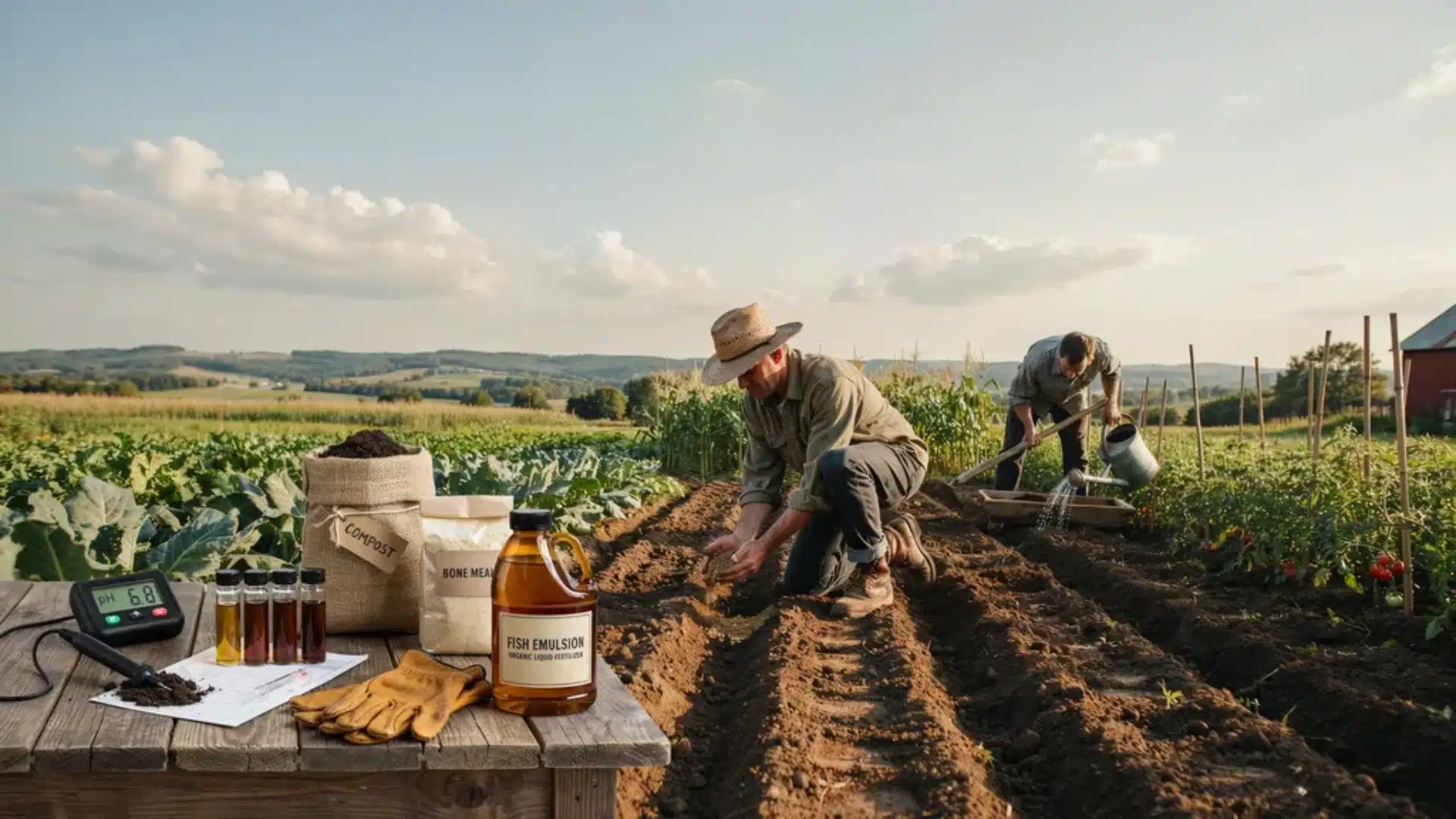
Common examples include compost, aged manure, bone meal, blood meal, fish emulsion, and seaweed extract.
The slow release is one of its biggest strengths. Nutrients become available when plants need them most, reducing the risk of burning roots or washing nutrients into nearby waterways.
Types of Organic Fertilizer
Not all organic fertilizers work the same way. Each type has a different nutrient focus, release rate, and best use case. Knowing which one fits your garden saves money and gives better results.
Plant-Based Options
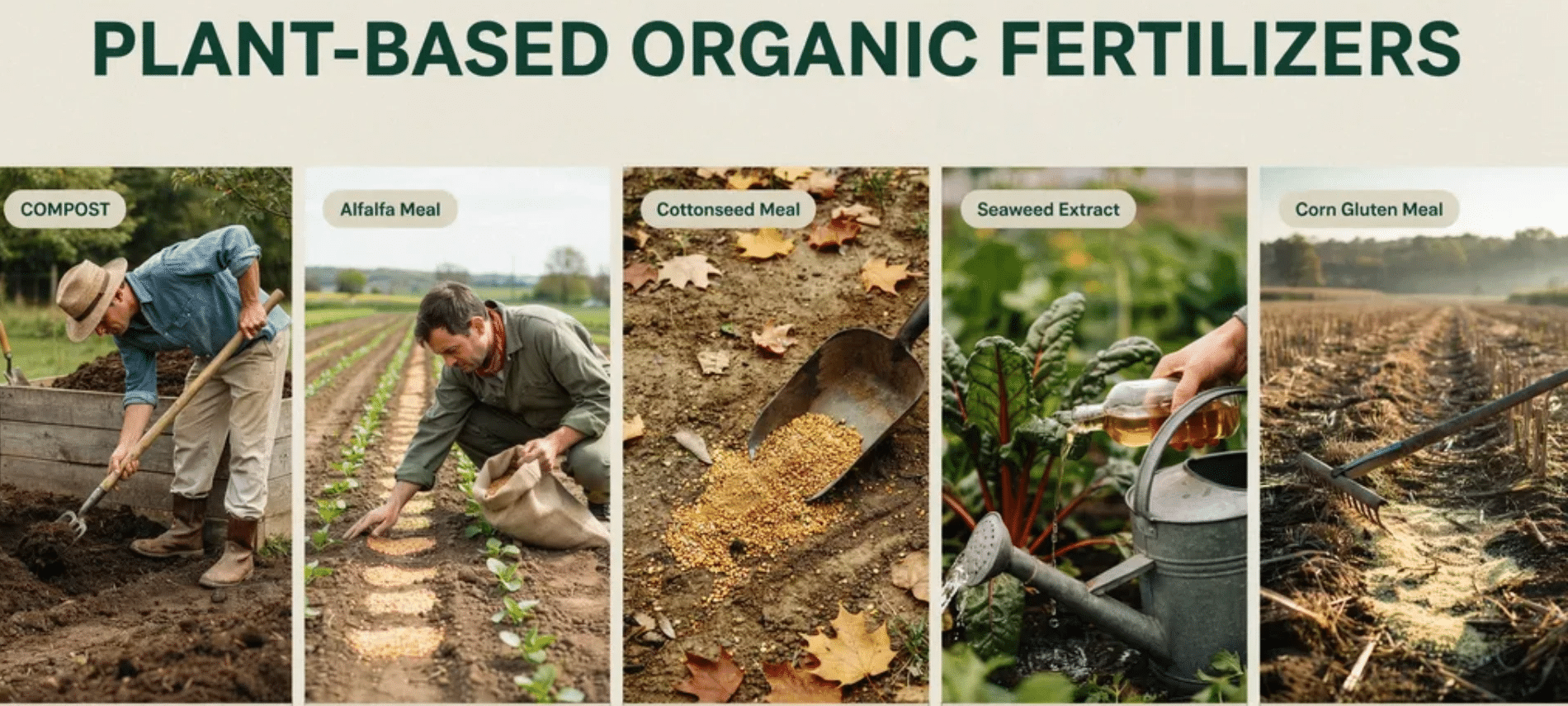
1. Compost is the most common choice. It improves soil structure, holds moisture, and feeds beneficial microbes. You can make it at home from kitchen scraps and garden waste.
2. Alfalfa meal is rich in nitrogen and potassium. It works well as an early-spring soil booster before the planting season begins.
3. Cottonseed meal contains about 6% nitrogen, along with small amounts of phosphorus and potassium. Adding it in the fall means the nutrients are ready by spring.
4. Seaweed extract brings trace minerals and natural growth compounds. It also helps plants handle stress better during dry periods.
5. Corn gluten meal feeds soil microbes and works slowly. It is best added in the fall so it has time to break down over winter.
Animal-Based Options
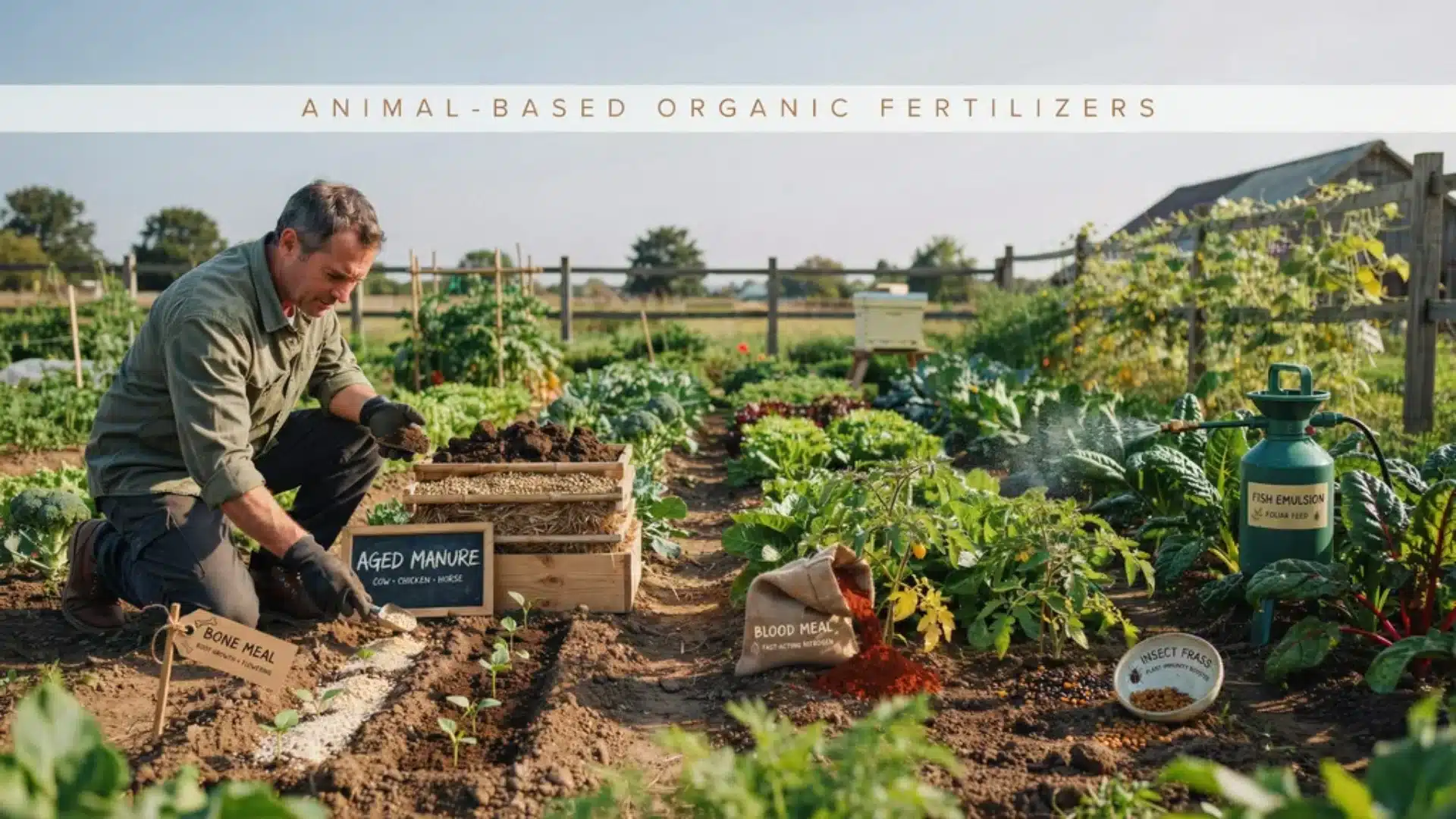
6. Aged manure from cows, chickens, or horses adds nitrogen and organic matter. Always use aged manure, not fresh. Fresh manure can burn plant roots and introduce harmful bacteria.
7. Bone meal is high in phosphorus and supports root growth and flowering. It is a slow-release option that works well mixed into soil before planting.
8. Blood meal is the fastest-acting nitrogen source in the organic category. If you notice nitrogen deficiency in plants, blood meal is one of the quickest natural fixes available.
9. Fish emulsion is a liquid fertilizer made from fish byproducts. It provides a balanced mix of nutrients and works well as a foliar spray or soil drench.
10. Insect frass is a newer option gaining ground in home gardening. It contains nitrogen, phosphorus, potassium, and chitin, which support plant immunity.
Mineral-Based Options
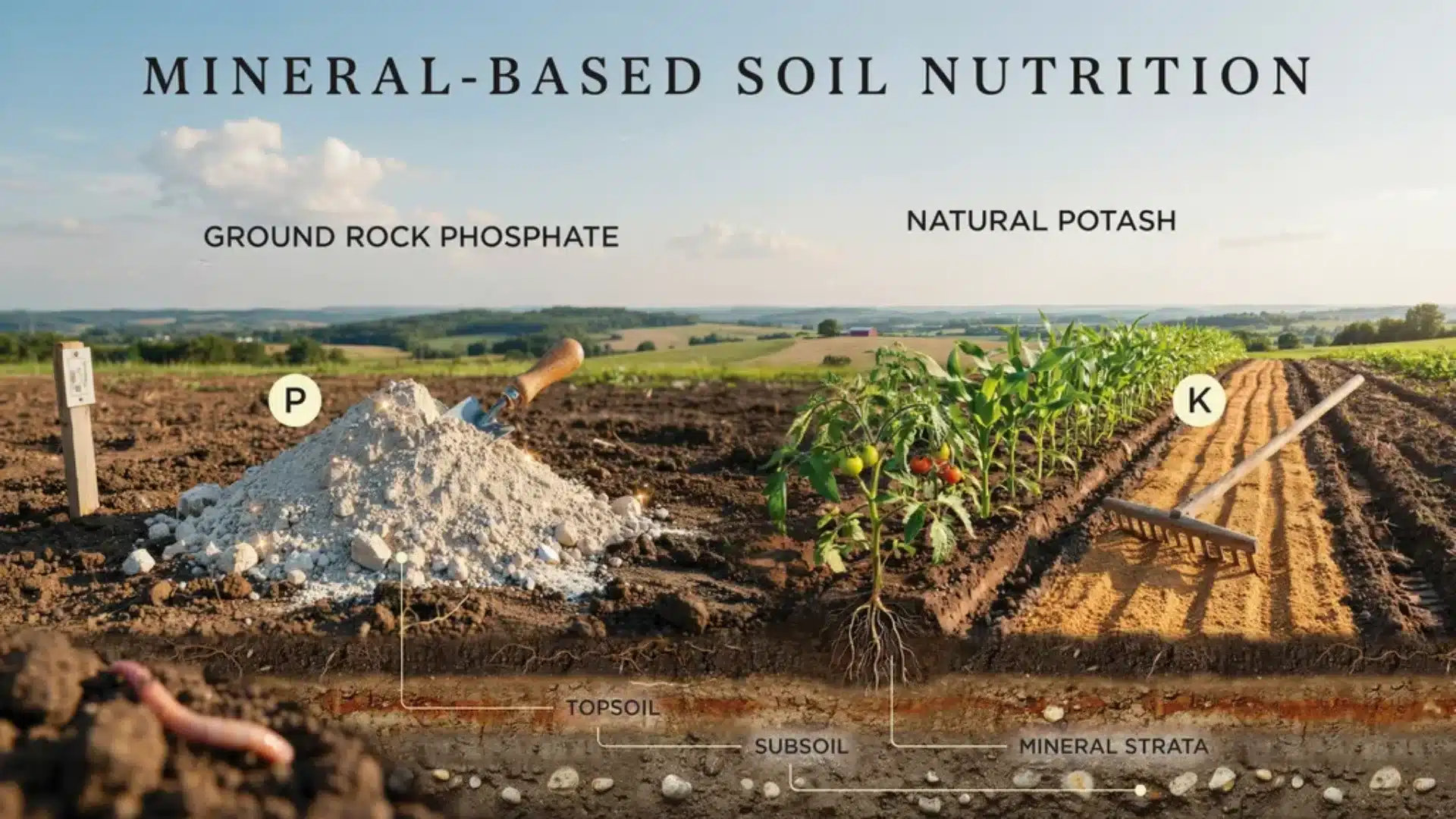
11. Rock phosphate comes from ground-up rocks. It releases phosphorus slowly and does not dissolve in water, which makes it a long-term soil amendment.
12. Potash fertilizer from natural sources like greensand or wood ash strengthens plant cell walls, supports fruit development, and helps plants resist disease. It works best when your soil test shows a potassium gap.
How to Read an Organic Fertilizer Label
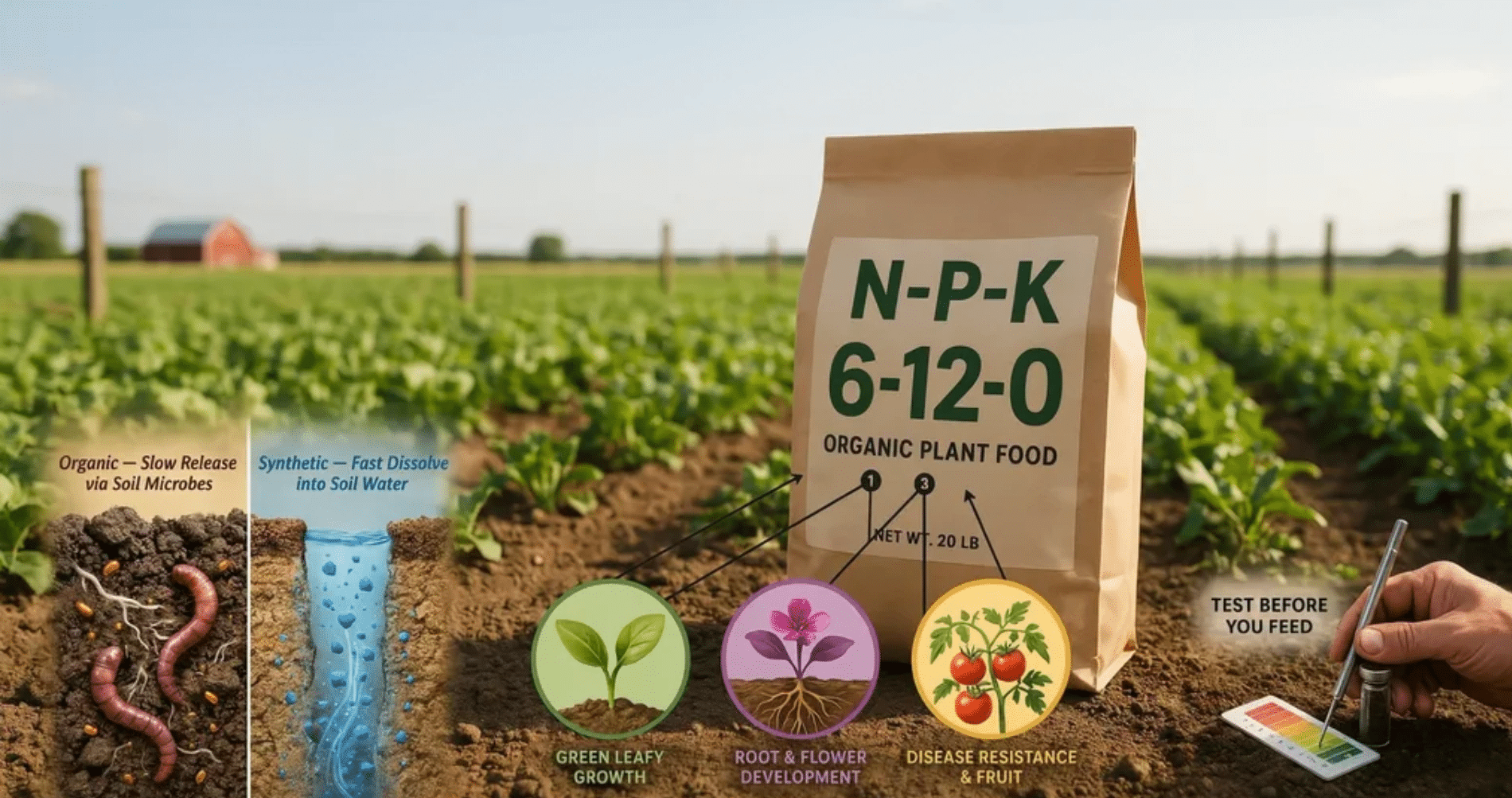
Every fertilizer bag shows three numbers on the front. They always appear in the same order: N-P-K.
- N = Nitrogen: Drives green leafy growth and fast development.
- P = Phosphorus: Supports root growth, flowering, and fruiting.
- K = Potassium: Strengthens cell walls, supports disease resistance, and helps fruit develop.
A bag labeled 6-12-0 (bone meal) contains 6% nitrogen, 12% phosphate, and 0% potassium. A 100-pound bag of that product gives you 6 pounds of nitrogen and 12 pounds of phosphate.
By law, organic labels follow the same format as synthetic ones so that you can compare them side by side.
The difference is that organic nutrients release slowly through microbial activity, while synthetic nutrients dissolve directly into soil water.
Before you buy anything, do a soil test. Testing costs between $10 and $40 per sample and tells you exactly which nutrients your soil is missing. That removes all the guessing from fertilizer selection.
How to Apply Organic Fertilizer Step by Step
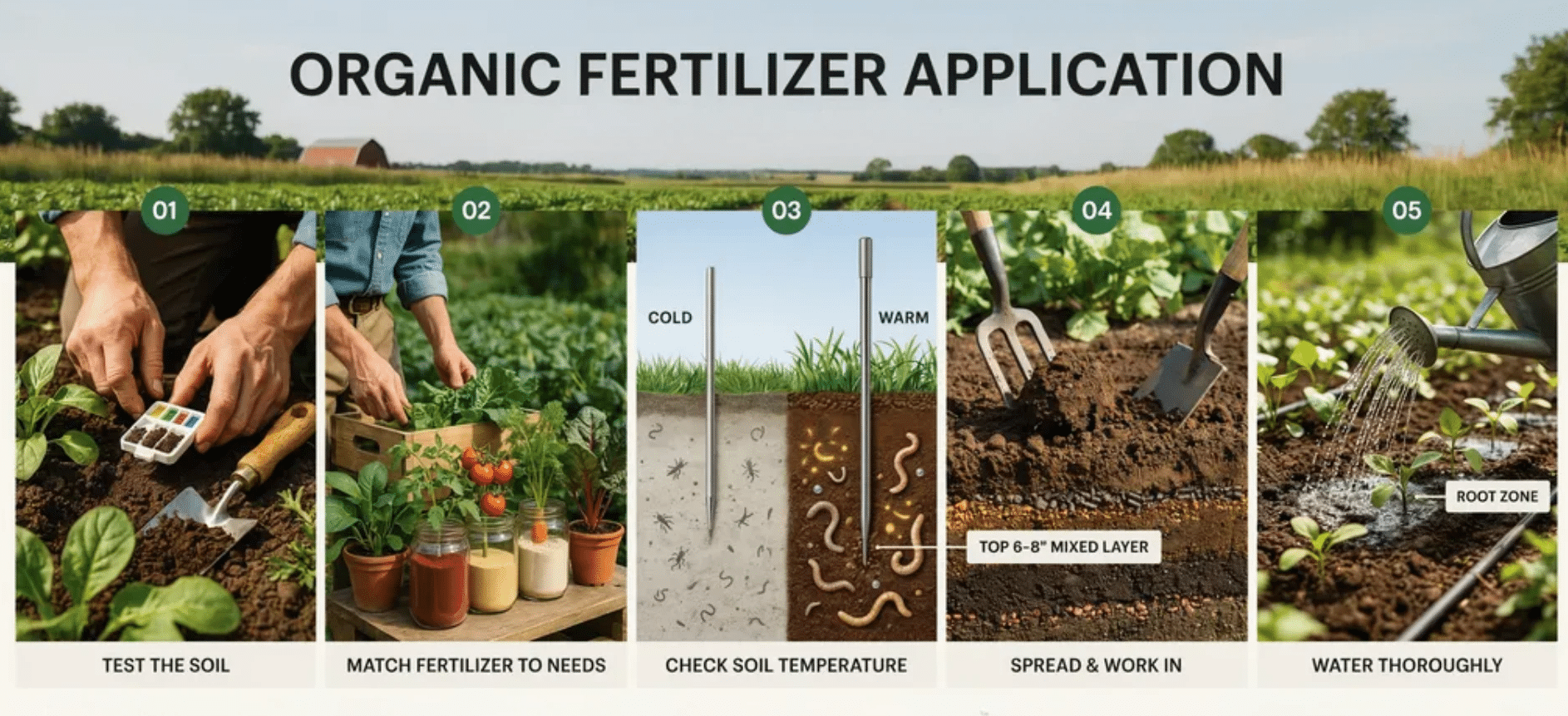
Getting the application right matters as much as choosing the right product. Here is a clear process to follow.
Step 1 – Test your soil first: A soil test every two to three years tells you which nutrients your soil actually needs. Applying the wrong fertilizer wastes money and can create nutrient imbalances.
Step 2 – Choose the fertilizer that matches your gap: If nitrogen is low, use blood meal or fish emulsion. If phosphorus is low, use bone meal. If potassium is low, use a natural potash source, such as greensand.
The amount you apply matters just as much as the type. Too little and your plants stay hungry. Too much and you risk burning roots.
Getting the right fertilizer dose for your plants depends on three factors: the plant type, the plot or pot size, and the form of fertilizer you use.
Step 3 – Check your soil temperature: Organic fertilizer depends on microbial activity to release nutrients.
Microbes go dormant when soil temperature drops below 50°F (10°C). Apply organic fertilizer in spring once the soil starts to warm up, or in early fall before temperatures drop too far.
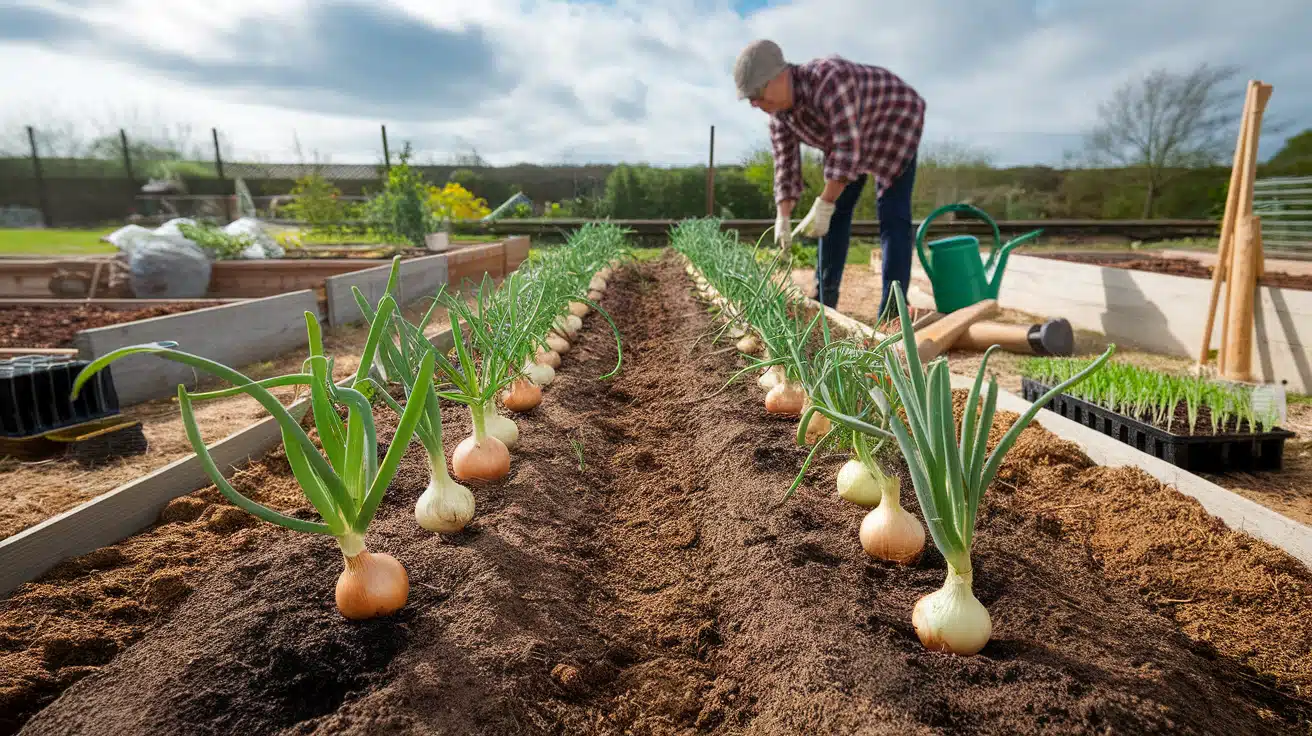
Step 4 – Work it into the soil: Spread the fertilizer over your garden area and mix it into the top 6 to 8 inches using a fork, spade, or tiller. This puts it where roots can reach it.
Step 5 – Water thoroughly: Water the area well after application. This starts the breakdown process and moves nutrients toward the root zone. Never apply liquid fertilizers to dry soil, as it can stress plant roots.
How Often Should You Apply?: Frequency depends on your soil type:
- Sandy, well-drained soil: every 3 to 4 weeks during the growing season
- Clay soil: every 4 to 6 weeks
- Rich organic soil: small amounts every 3 to 4 weeks
Smaller, more frequent doses often outperform a single large dose. Plants absorb nutrients more evenly when the supply stays consistent rather than spiking and fading.
Benefits of Organic Fertilizer for Your Soil and Plants
The most important benefit is what organic fertilizer does to your soil over time, not just what it does to your plants right now.
Here is what regular use builds up:
- Better soil structure: Organic matter loosens compacted soil and helps sandy soil hold water longer.
- Stronger microbial life: Soil microbes break down organic matter and make nutrients available to plant roots. Organic fertilizer feeds those microbes directly.
- Fewer applications needed: One application can feed plants for two to six months, depending on the type.
- Broader nutrient range: Organic fertilizers contain calcium, magnesium, iron, and trace minerals. Most synthetic products only carry the three main nutrients.
- Lower burn risk: The slow nutrient release means it is very hard to damage plant roots, even with a slightly generous application.
- Safer for people and pets: No harmful chemical residues on edible plants, garden beds, or lawns.
- Less runoff pollution: Slow release means nutrients stay in the soil rather than washing into streams and groundwater.
Organic Fertilizer vs. Synthetic Fertilizer
Both work, but they work very differently.
Synthetic fertilizer is a chemically manufactured plant food made from processed mineral salts that delivers nutrients directly to plants in a fast, water-soluble form.
| Feature | Organic | Synthetic |
|---|---|---|
| Nutrient release | Slow (weeks to months) | Fast (days) |
| Soil health impact | Builds over time | Can degrade long-term |
| Plant burn risk | Very low | Higher with over-application |
| Micronutrient content | Yes | Usually not included |
| Cost upfront | Higher | Lower |
| Application frequency | Less often | More often |
Useorganic fertilizer as your main soil-building strategy. Synthetic products can fill in when you need quick results, but they should not be the foundation of your feeding plan.
Common Mistakes to Avoid
Even with organic fertilizer, mistakes are easy to make. These are the ones that show up most often.
1. Using fresh manure: Fresh manure can burn plant roots and carry harmful pathogens. Always use aged or composted manure.
2. Applying when the soil is cold: Below 50°F, microbial activity slows dramatically. Organic fertilizer barely breaks down in cold soil, so the nutrients stay locked up.
3. Skipping the soil test: Without a test, you are guessing. You might add more of a nutrient that is already high, which creates an imbalance and blocks other nutrients from being absorbed.
4. Over-applying: Even organic fertilizers can cause salt burn and nutrient toxicity if used too heavily. The safest approach is to apply, observe for two to three weeks, then adjust.
5. Expecting fast results: Organic fertilizer takes weeks to show its full effect. If you need rapid correction, use a small amount of targeted liquid fertilizer while the organic material builds up.
6. Applying to dry soil: Always water the area before and after application. Dry soil slows the breakdown and can stress plant roots.
Conclusion
Organic fertilizer feeds your soil and your plants at the same time. That is what makes it more than just a nutrient delivery tool.
Over months and years, it builds the kind of soil that grows stronger plants with less effort and fewer problems.
Start with a soil test. Pick one type that matches your biggest nutrient gap. Apply it at the right soil temperature and water it in well.
The results will not appear overnight, but they will last far longer than any fast-fix product.
What type of organic fertilizer have you had the best results with? Share your experience in the comments below.
Frequently Asked Questions
What Is the Best Organic Fertilizer?
There is no single “best” organic fertilizer; the ideal choice depends on what you are growing and your soil’s needs.
Does Organic Fertilizer Expire?
Dry organic fertilizers like bone meal and compost last for years when stored in a cool, sealed container. Liquid types like fish emulsion lose potency faster once opened.
Does Organic Fertilizer Smell Bad?
Some types do. Fish emulsion and fresh manure have strong odors. Worm castings, compost, and bone meal are nearly odorless and work well indoors.
Can You Mix Organic and Synthetic Fertilizer Together?
Yes. Use organic fertilizer for long-term soil health and add a targeted synthetic product when plants need a quick nutrient boost.