
A sloped yard looks like wasted space. That changes the moment you stop fighting the hill.
Most homeowners spend years mowing around a slope, watching soil wash away after every storm, and putting off any real work.
According to Penn State Extension, unprotected slopes shed topsoil far faster than soil can regenerate, so waiting often costs more than acting.
This blog covers sloped garden ideas on a budget, from the fastest erosion fix to DIY terracing you can finish in a weekend.
9 Sloped Garden Ideas on a Budget
Sloped gardens can be tricky, but with a few smart ideas, you can make them beautiful and useful without spending much.
1. Plant Groundcovers to Stop Erosion Fast
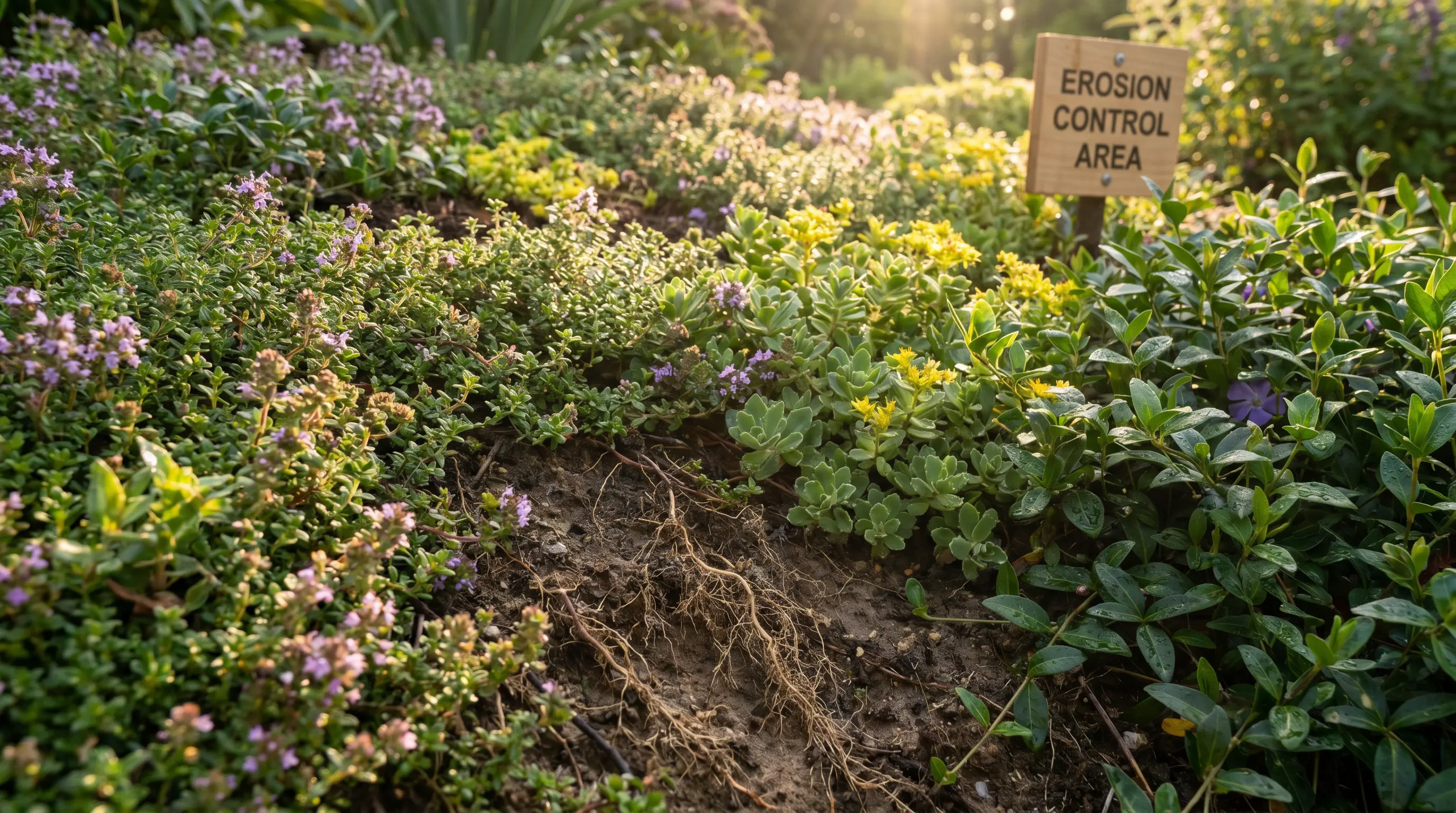
This is the cheapest fix on the list, and it works on any slope under 30%.
Creeping thyme, sedum, vinca, and creeping juniper grip soil with fibrous roots that anchor at multiple depths. That matters on a slope because the roots reach several inches down, not just the top layer.
- Cost: $2-$5 per plant, or free if you divide from existing plants
- Best for: gentle to medium slopes, full sun to part shade
Plant in fall or early spring. Water regularly in the first season.
2. Build Low Timber Retaining Walls
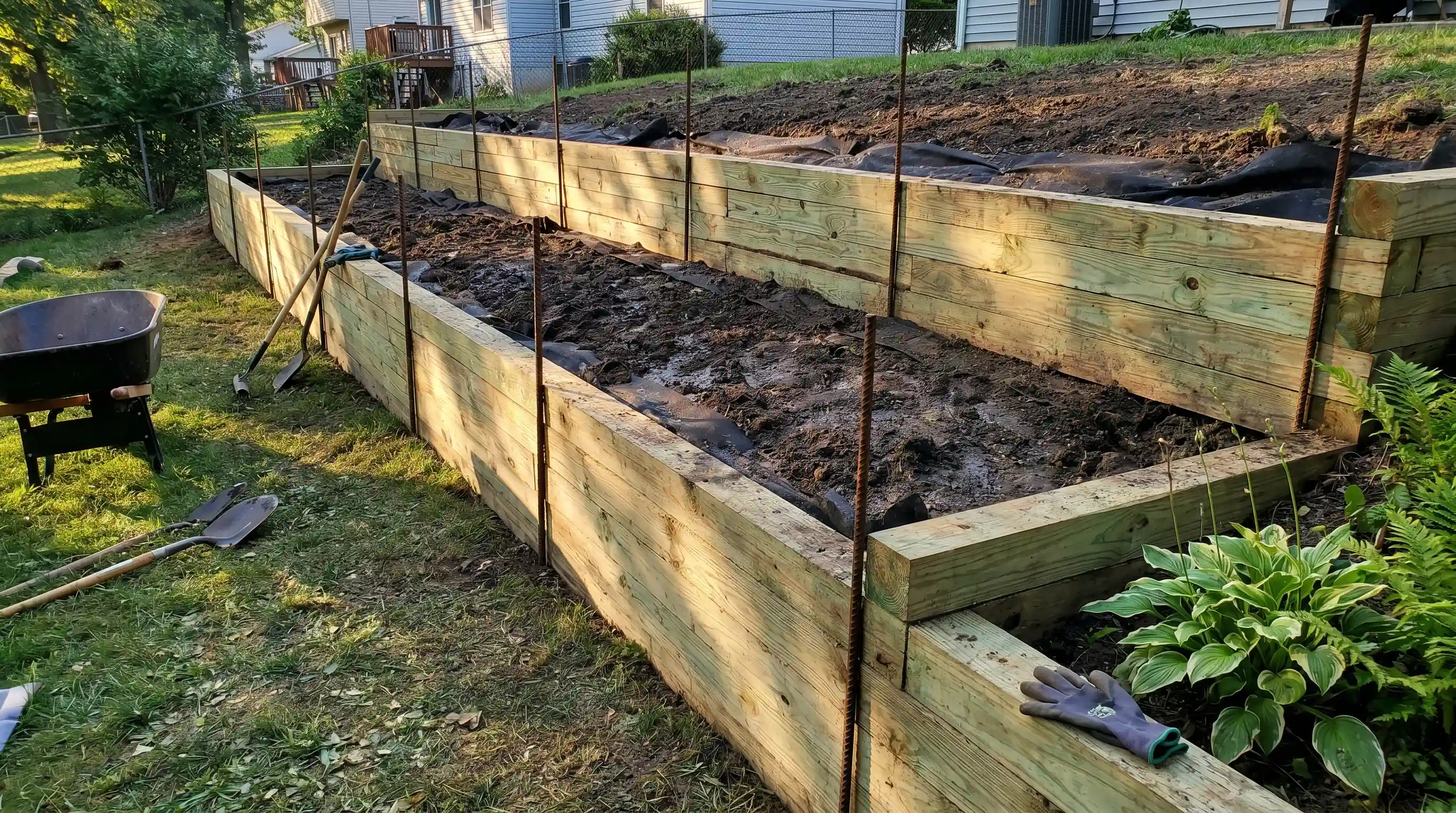
Pressure-treated lumber is the most budget-friendly structural fix for medium slopes.
Stack treated wood horizontally and drive rebar through each layer into the ground.
Keep each wall under two feet. Multiple short walls handle soil pressure better than one tall wall and cost less per linear foot.
- Cost: $20-$40 per linear foot DIY
- Best for: medium slopes (15-30%)
- Note: Most US counties require permits for walls over two feet high
3. Create a Rock Garden With Salvaged Stone
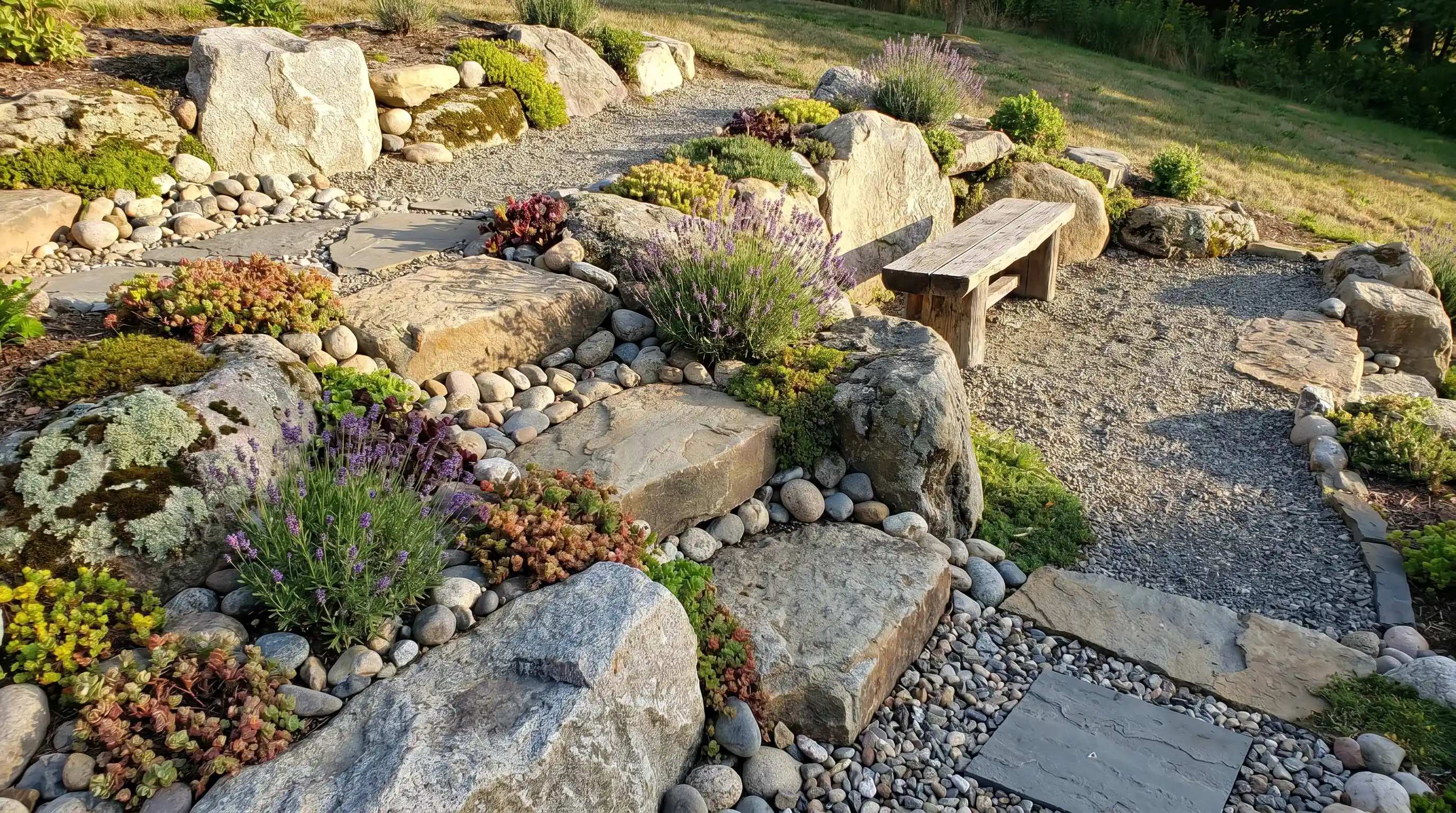
A rock garden costs almost nothing if you source stone locally and works on dry, sunny slopes.
Bury at least one-third of each anchor rock so it doesn’t shift through freeze-thaw cycles. Fill gaps with stonecrop, ornamental grass, or lavender.
- Cost: Near zero with sourced stone; $2-$4 per sq ft retail
- Best for: gentle slopes, full sun
4. Dig Swales to Redirect Water Flow
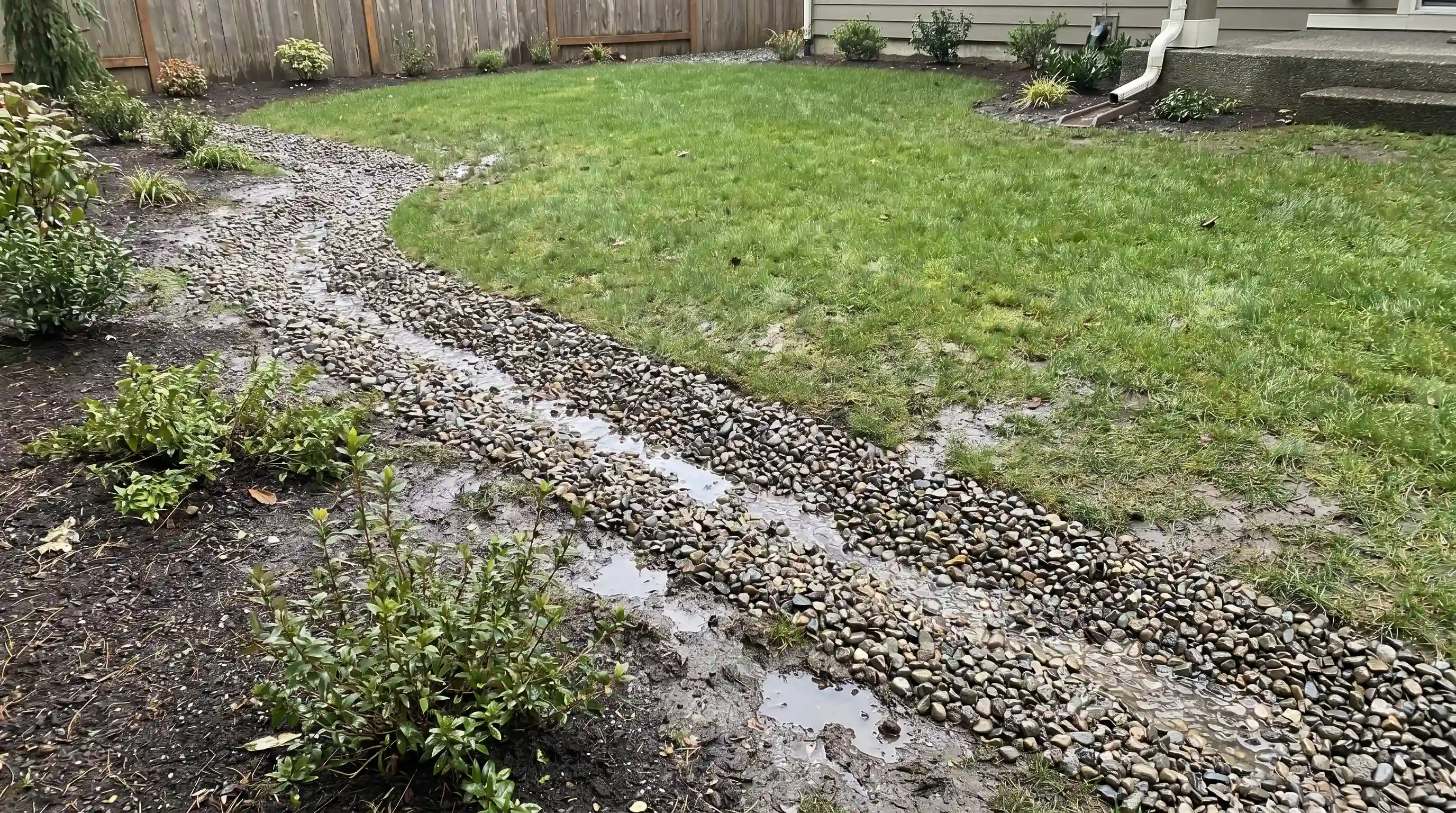
This is the most overlooked fix on the list, and skipping it is why many slope gardens fail within a year.
A swale is a shallow trench cut diagonally across a downward-sloping garden to slow water before it rushes off your property. Line the swale with gravel to prevent erosion.
- Cost: Free with DIY labor; gravel adds $30-$50
- Key tip: Dig swales before installing plants or walls
5. Lay a Mulch Switchback Path
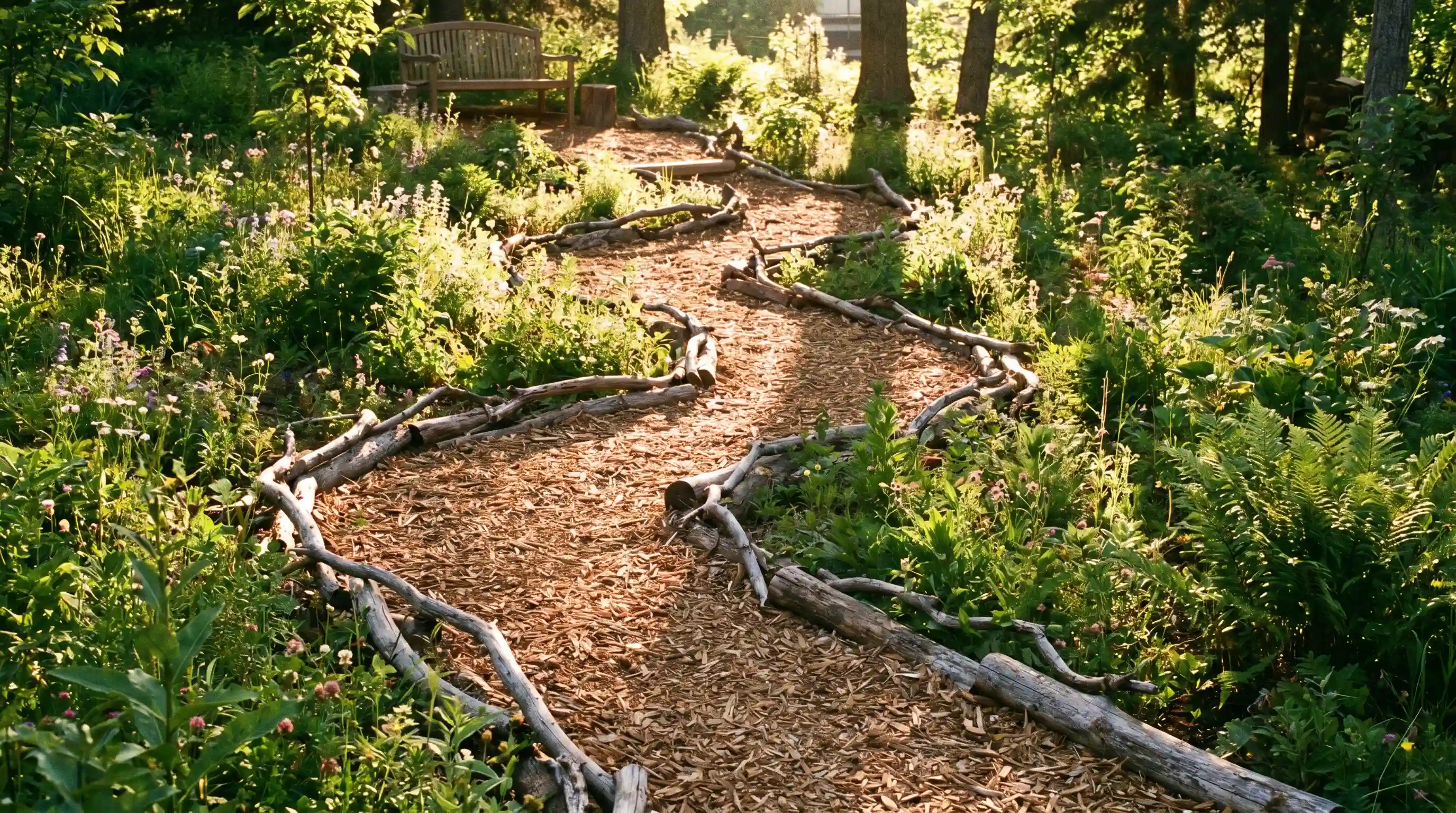
A straight path down a slope channels water. A switchback path slows it.
Cut a zigzag route across the slope using hardwood mulch or wood chips. Edge each side with salvaged branches to keep mulch in place. Replenish annually.
- Cost: $30-$50 per cubic yard; under $200 for most residential slopes
- Best for: making any slope walkable while reducing erosion
6. Terrace With Reclaimed Wood or Pallets
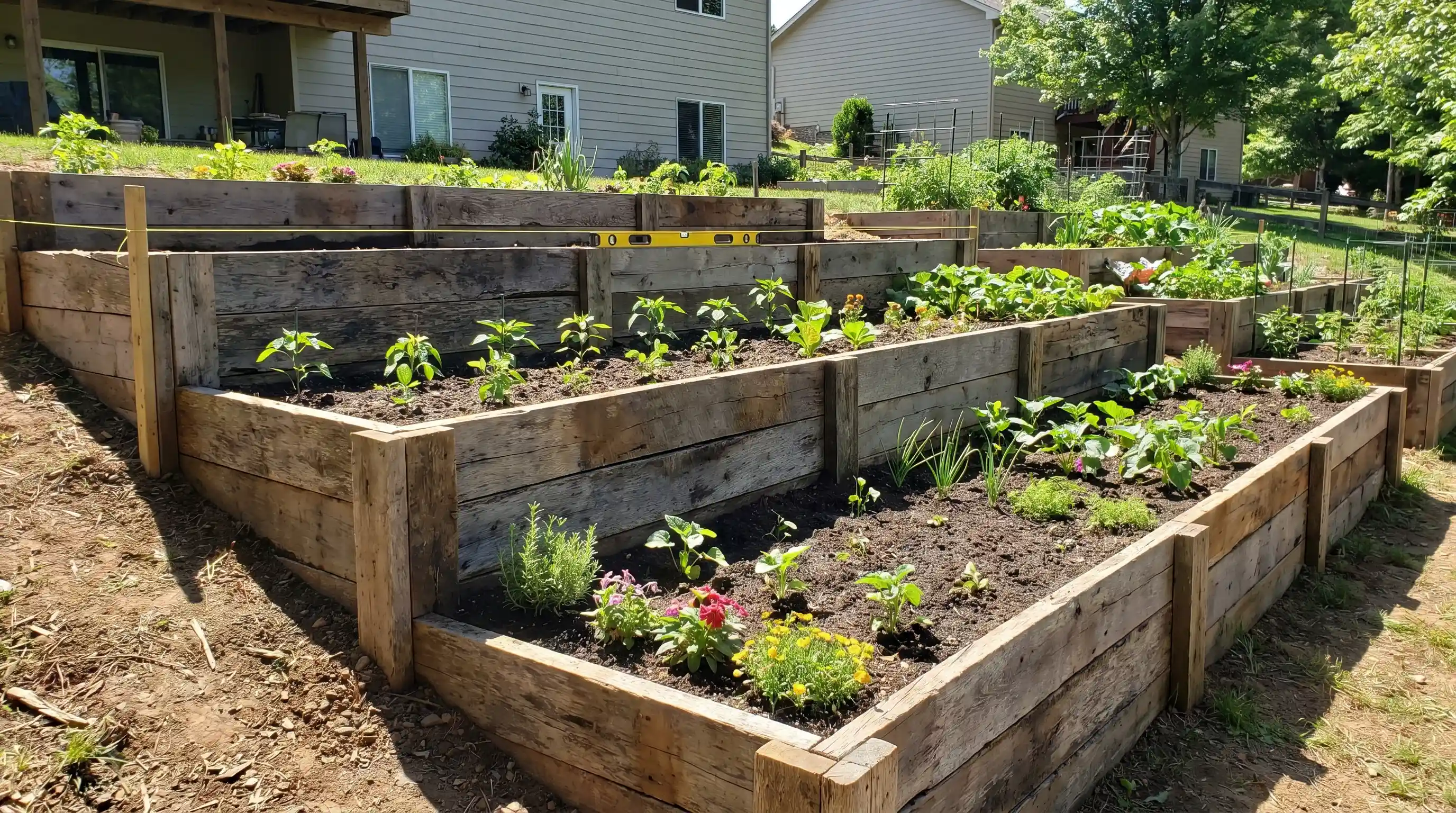
Reclaimed wood from old fences, pallets, or construction site offcuts builds tiered garden beds at a fraction of the cost of new lumber.
Source material from Facebook Marketplace or curbside pickup. Cedar and redwood hold up best outdoors. Secure boards with rebar stakes and use a string line to keep each terrace level.
- Cost: Near zero for salvaged wood; rebar and gravel add $40-$80
- Best for: medium slopes; raised bed growing on terraced steps
7. Plant Native Shrubs and Grasses
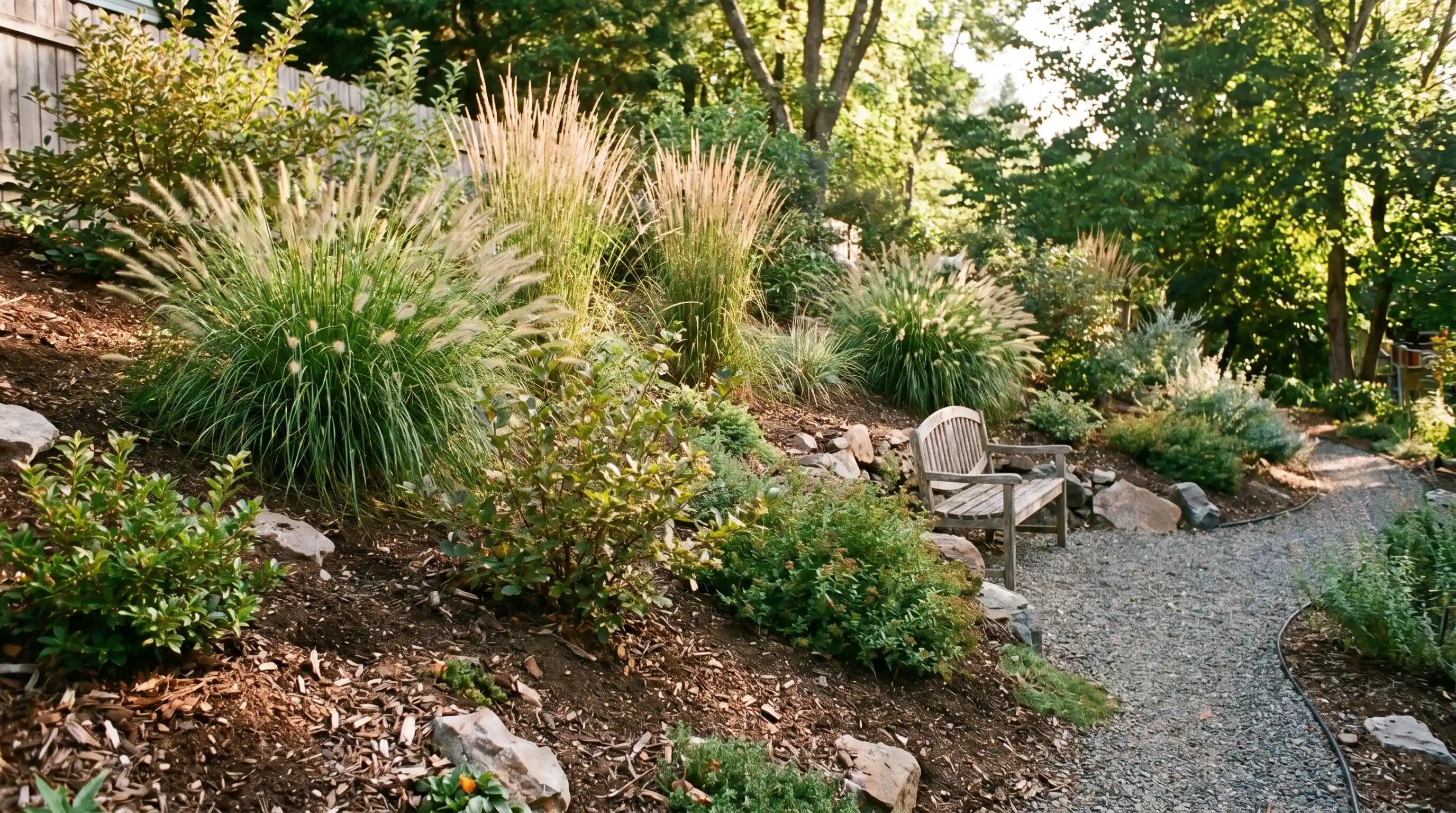
Native plants are the most underrated tool for slopes.
Good choices for US slopes include fountain grass, prairie dropseed, switchgrass, and native blueberries. Their roots reach deep through multiple soil layers, not just the surface.
- Cost: $5-$15 per plant; seeds cost less
- Best for: all slope types, especially gentle slopes
Visit your local cooperative extension office for natives suited to your USDA hardiness zone.
8. Build a Dry-Stack Stone Wall
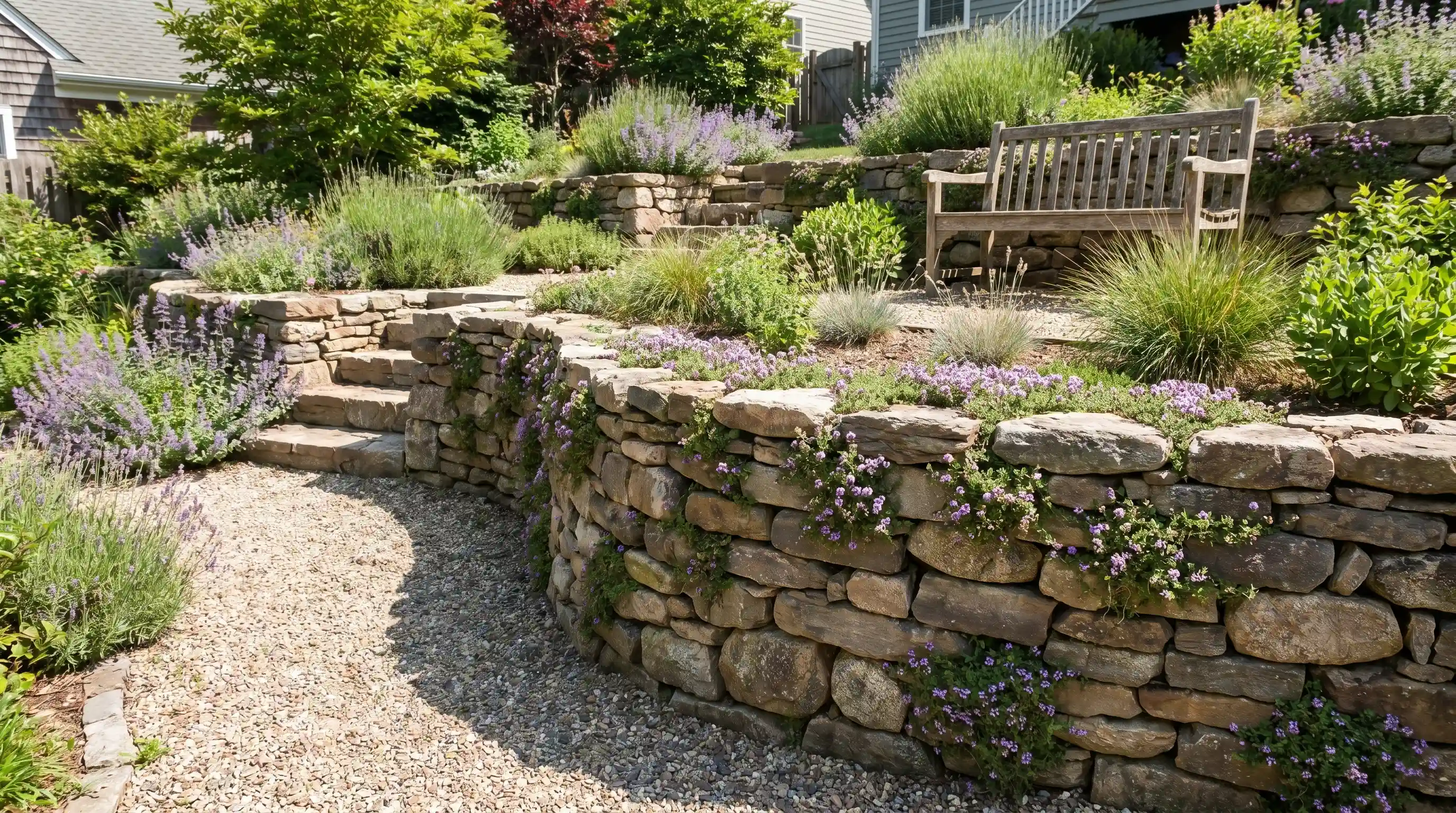
A dry-stack stone wall uses no mortar. Stones lock by weight and placement, drain naturally, and won’t crack during freeze-thaw cycles.
Source fieldstone from demolition sites at 50-70% below retail. Plant creeping thyme between stones to soften the edges.
- Cost: $2-$4 per sq ft fieldstone; $3-$6 reclaimed brick
- Best for: medium slopes; walls up to 18 inches
9. Create a Simple Hillside Seating Area
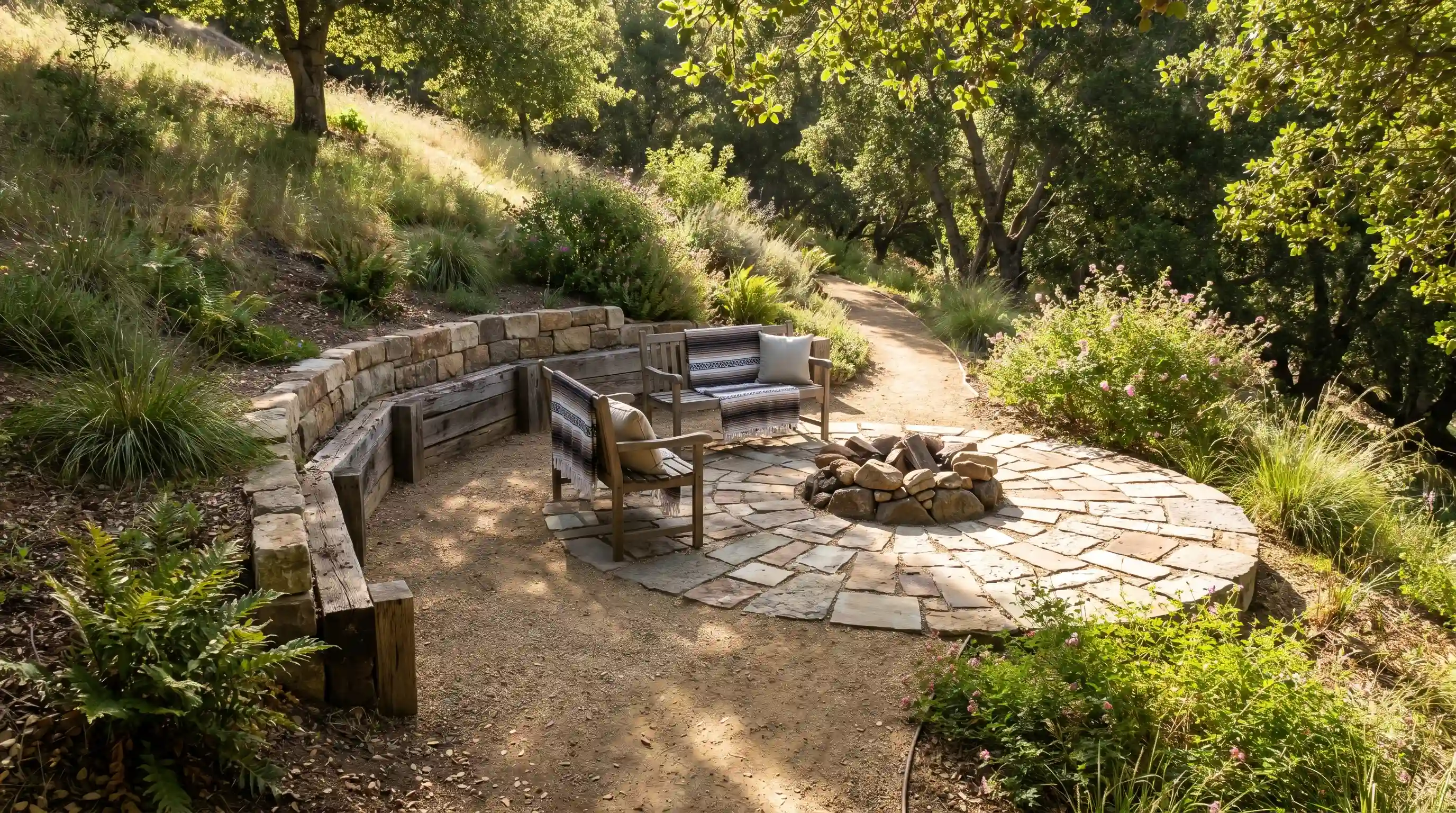
One short retaining wall and a gravel floor carve out a flat seating area from almost any slope.
Build a single wall on the downhill side, backfill with compacted gravel, and lay pavers over the top.
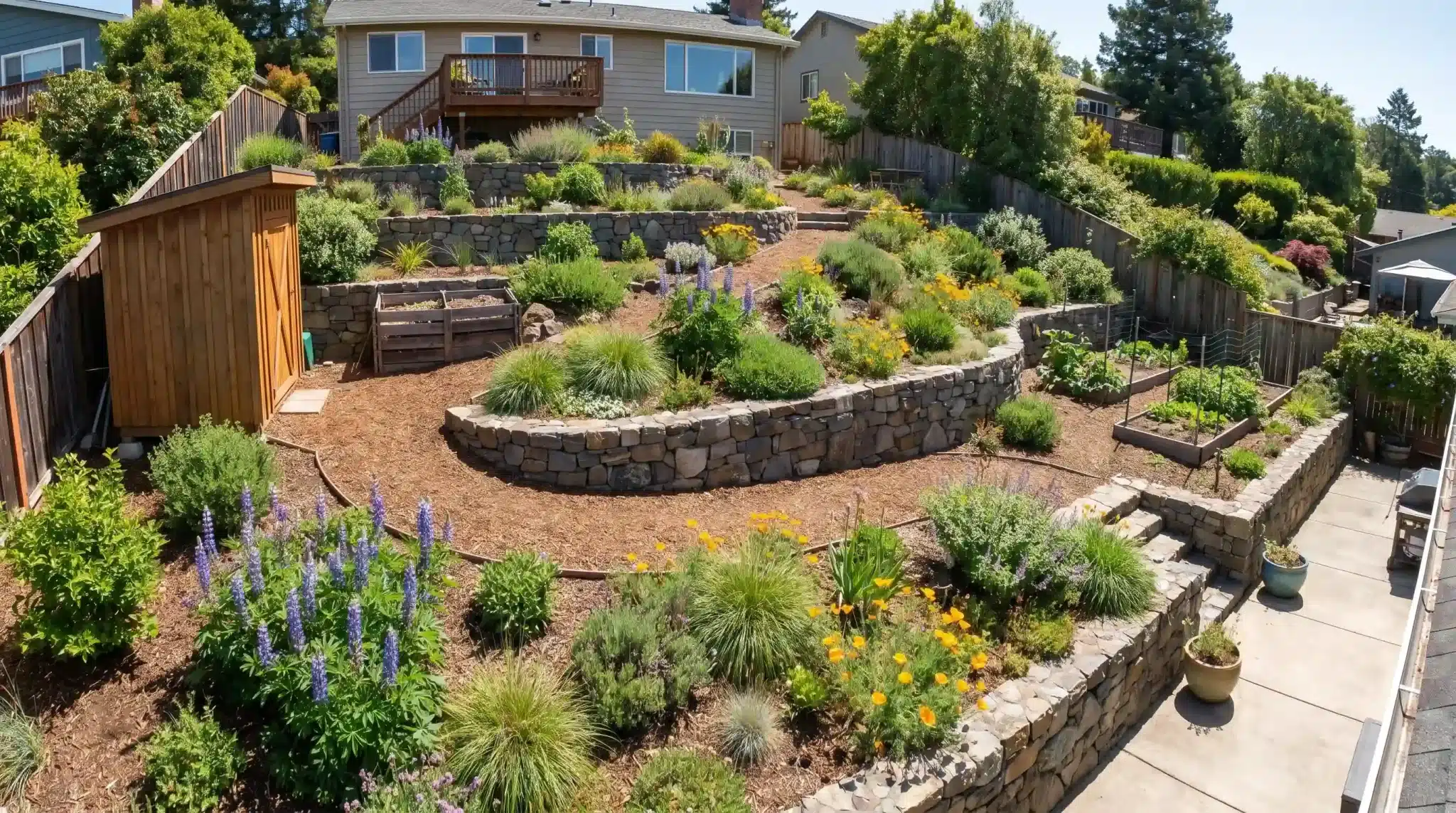
Many sloping gardens follow this exact approach, and real-world project examples with cost breakdowns show just how far a modest budget can stretch.
- Cost: $200–$600 DIY using gravel and reclaimed pavers
- Best for: Medium slopes with a sun-exposed section mid-slope
What Kind of Slope Are You Working With?
Match the right idea to your slope angle, and you avoid buying materials that won’t hold.
- Gentle slope (under 15%): Groundcovers, swales, and stepping stone paths are enough. No major hardscaping required.
- Medium slope (15-30%): Timber terracing and low retaining walls work well. This range suits most DIY projects.
- Steep slope (over 30%): Structural walls are often needed. Anything over two feet usually requires a permit.
A free phone-level app gives you a rough angle reading in under a minute.
What to Do Before You Start
Every slope project mistake I’ve seen comes back to skipping this step. Before buying anything:
- Watch where water flows after rain. That pattern determines where your swales go.
- Measure your slope angle. A free phone-level app takes 30 seconds to install.
- Check permit requirements. Most US jurisdictions require a permit for walls over two feet. Call your local building department first.
- Note sun exposure. South-facing slopes dry two to three times faster than north-facing ones. Plant choices follow from this.
How to Keep Costs Low
Order matters as much as what you choose.
Work in this sequence: erosion control first, hardscaping second, planting last. Soil movement during construction can undercut a new wall in a single storm if drainage isn’t sorted first.
For materials, Facebook Marketplace and Craigslist regularly turn up free stone, timber, and cinder blocks within 20 miles of most US neighborhoods.
Local quarries sell offcuts and irregular pieces at 50–70% below retail. Native plant society sales, held in most states each spring, offer regionally suited groundcovers for $1–$3 per plant.
Walls under two feet are manageable for most homeowners to build themselves.
Anything taller or any slope steeper than 30% is worth at least one professional opinion before you commit to a plan.
Conclusion
Most sloped garden problems come down to water moving where you don’t want it. Solve drainage first, and walls become optional rather than urgent.
Pick one or two sloped garden ideas on a budget that match your terrain, work in the right order, and build from there.
A switchback mulch path and a few well-placed groundcovers will outlast a poorly drained stone wall every time.
What’s your slope like? Drop it in the comments.
Frequently Asked Questions
1. What is the Cheapest Way to Landscape a Slope?
The cheapest option is using ground covers, mulch, and native plants. These help control erosion, reduce maintenance, and improve appearance without expensive retaining walls or hardscaping.
2. What is the Rule of 3 in Landscaping?
The rule of 3 involves planting in groups of three to create a balanced, natural-looking design. It adds visual interest and makes landscape layouts feel more cohesive.
3. What is the Best Low-Maintenance Hillside Landscaping?
Native ground covers, ornamental grasses, and drought-tolerant shrubs are ideal for hillsides. They stabilize soil, require minimal watering, and reduce long-term maintenance needs.