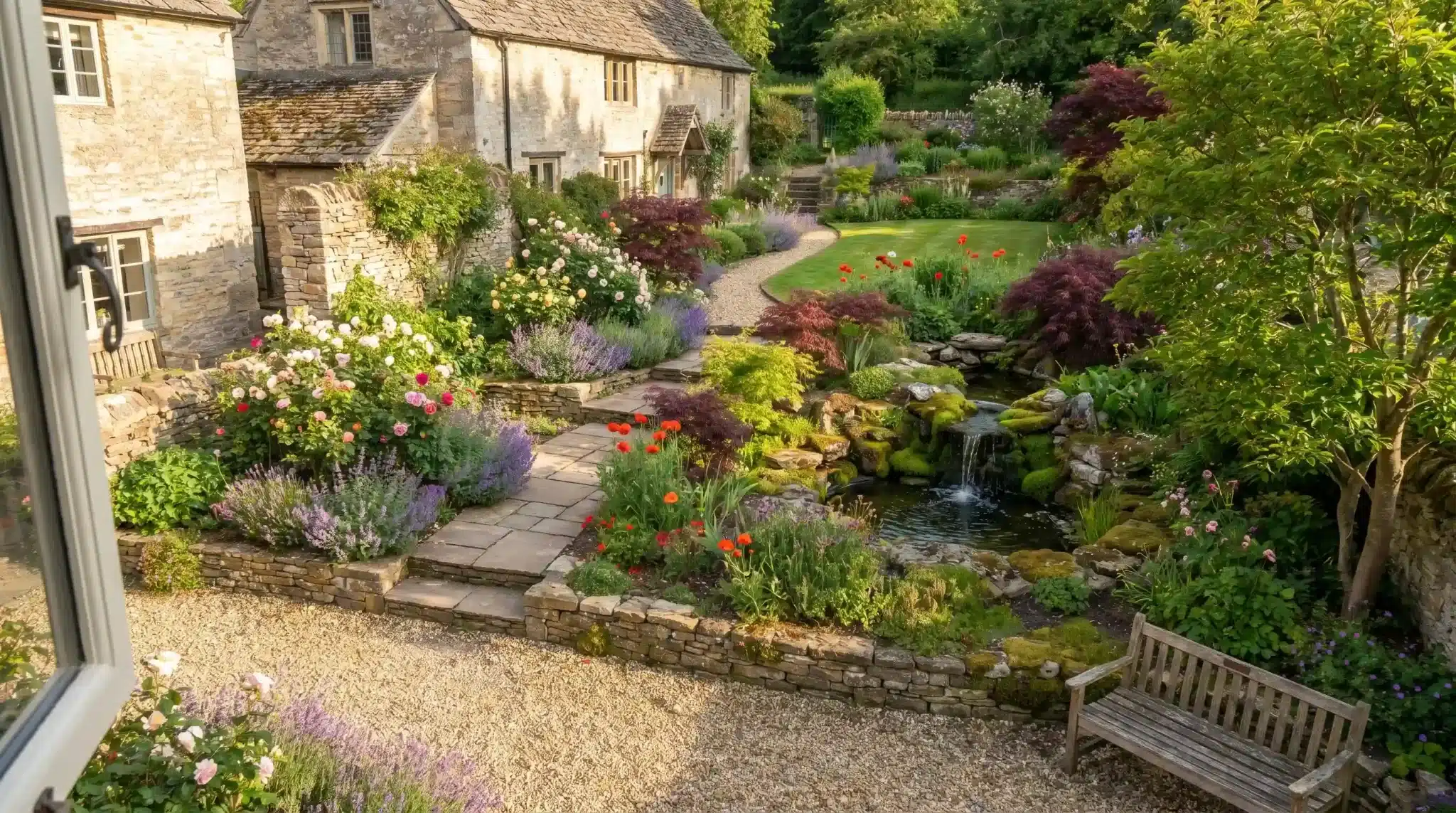

A downward-sloping garden gives you something most homeowners would pay for: a view.
When the land falls away from the house, it opens up the far end of the yard and pulls your eye toward it every time you look out a window.
Most people treat every slope the same. They shouldn’t. A garden that drops away from the house behaves differently from one that rises.
Water runs toward the foundation. The view opens at the bottom. Every plant is seen from above. None of that is addressed in generic sloped garden posts.
This blog covers various downward-sloping garden ideas built for yards that fall away from the house.
Drainage first. Then views, structure, and planting.
Why a Downward Slope Needs its Own Design Rules
Knowing which direction your slope runs changes everything.
On a downward slope, water moves toward the house. That reverses most standard drainage priorities.
You also look down into the garden from inside, which means plants are seen from above rather than at eye level. Low, spreading plants read clearly from this angle. Tall spiky plants mostly disappear.
The sun varies by elevation, too. The top is drier and warmer. The base is cooler and often shadier.
15 Stunning Ideas for a Downward Sloping Garden
Start with drainage and access. Atmosphere comes after.
1. Let the Grade Create Natural Outdoor Rooms
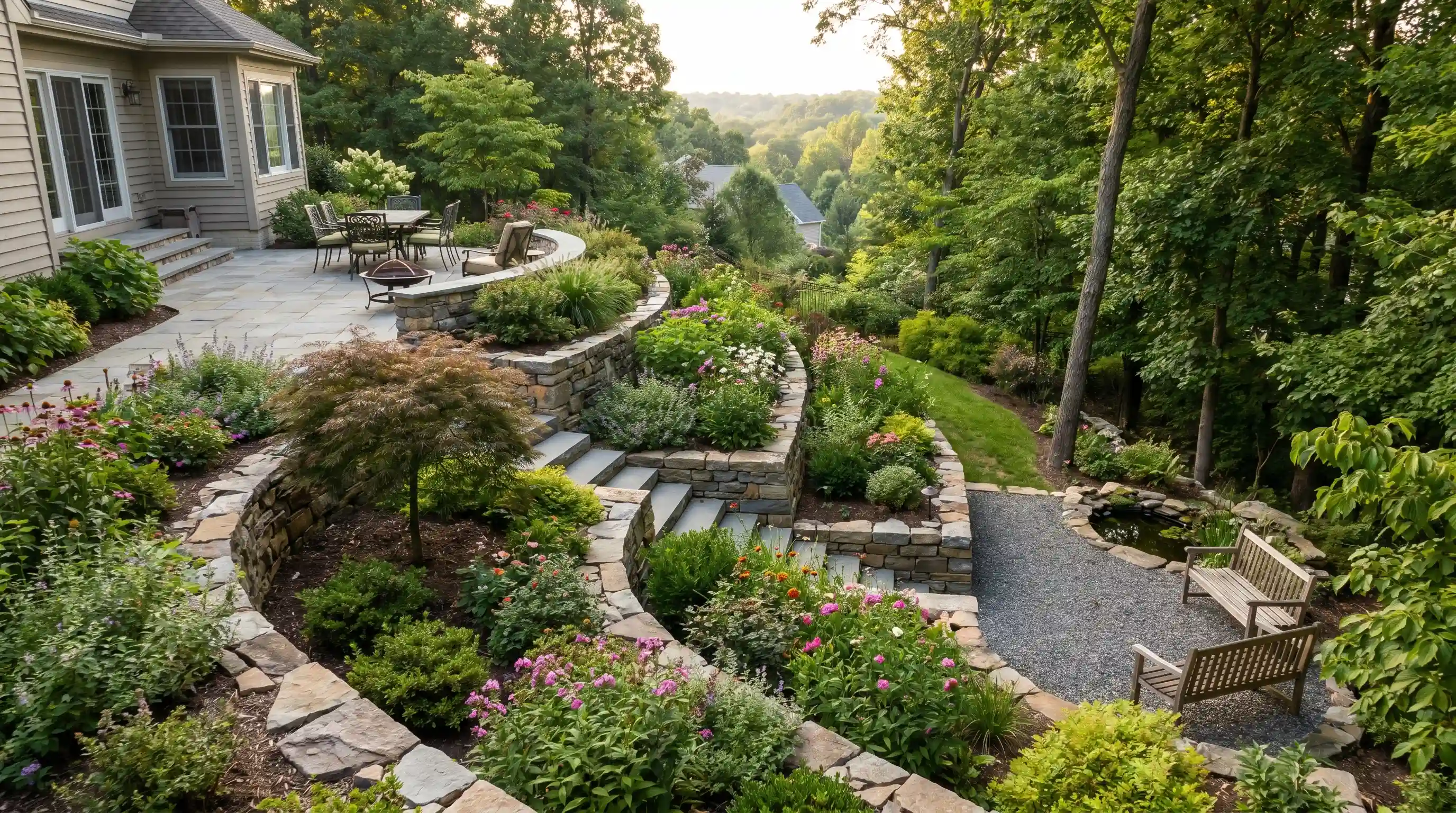
A downward slope gives you natural zone separation without requiring walls.
Place your main entertaining area near the house on level ground. Use the mid-slope for planting. Put a destination at the bottom.
Each zone feels separate because the elevation change does the work. I’ve seen clients spend a lot of money trying to achieve this effect on flat ground, and a naturally sloped site just hands it to you.
2. Terrace the Slope Into Level Planting Beds
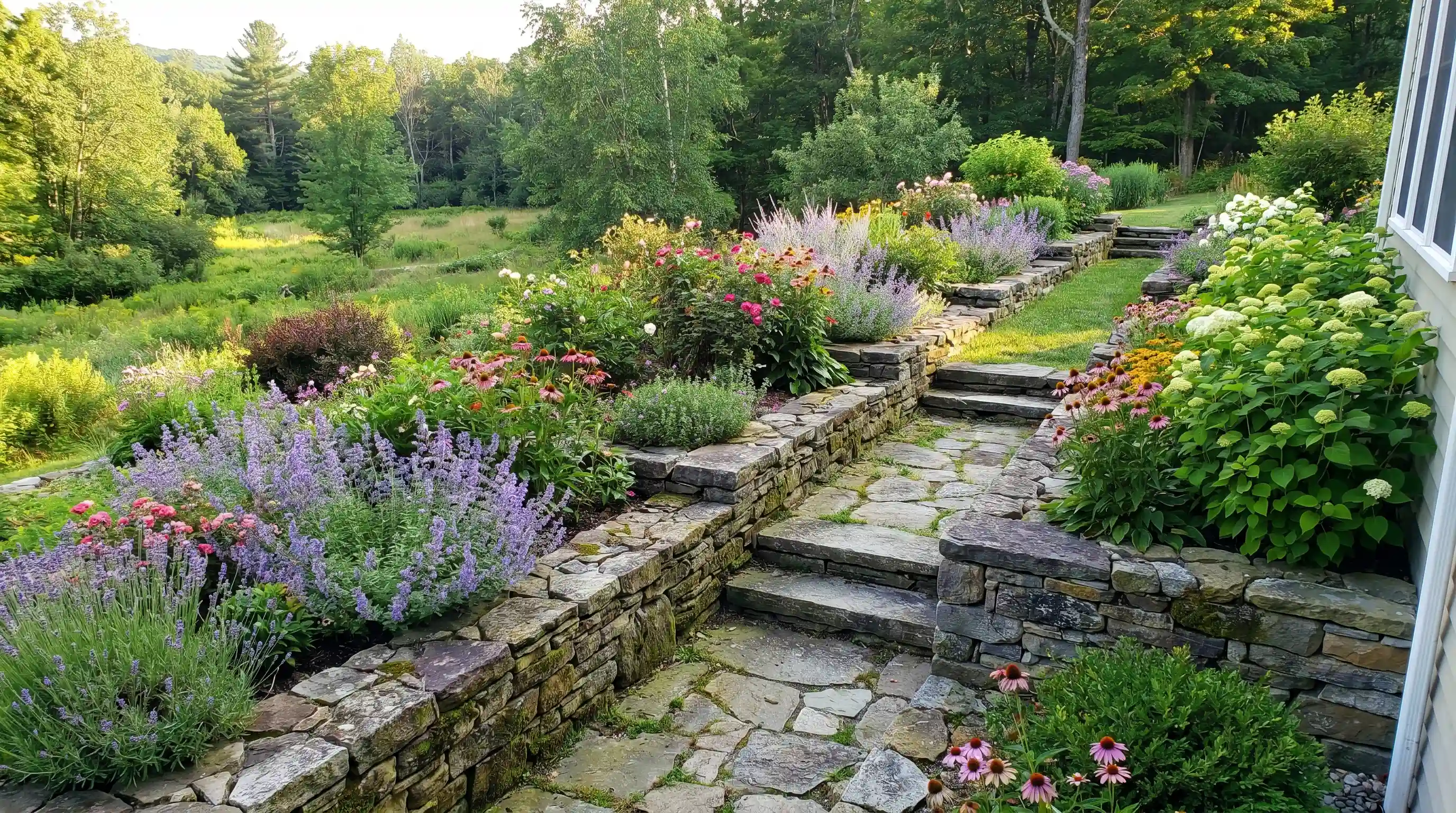
Terraced plantings can slow water runoff on a downward slope and create level planting zones you can actually maintain, similar to a tiered garden.
Keep individual terrace drops under 18 inches. Multiple short walls cost less, require less engineering, and look better than a single tall wall that dominates the space.
On a downward slope, terrace walls face away from the house, so they show from indoors. Choose your material with that in mind.
- Dry-stack stone suits informal gardens; concrete block suits modern styles
- Timber sleepers blend into planted slopes and cost less than stone
3. Add Steps That Double as a Design Feature
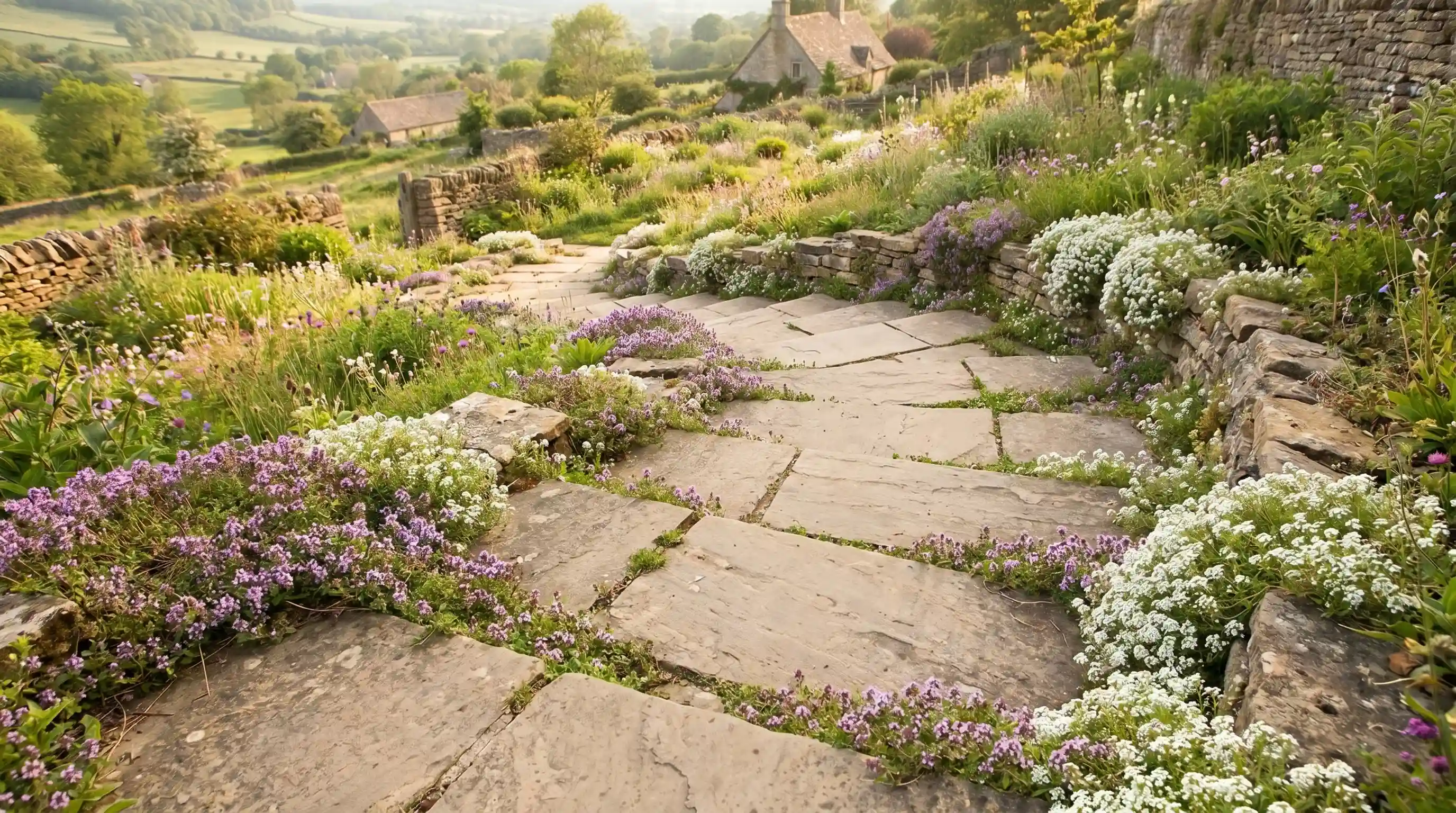
Steps on a downward slope should lead the eye outward, not just provide safe footing.
Wide, shallow steps slow your walking pace and make the garden feel longer.
Edge each step with creeping thyme or sweet alyssum to soften the riser and prevent erosion at the edges where water concentrates first.
4. Redirect Water With a Swale or Dry Creek Bed
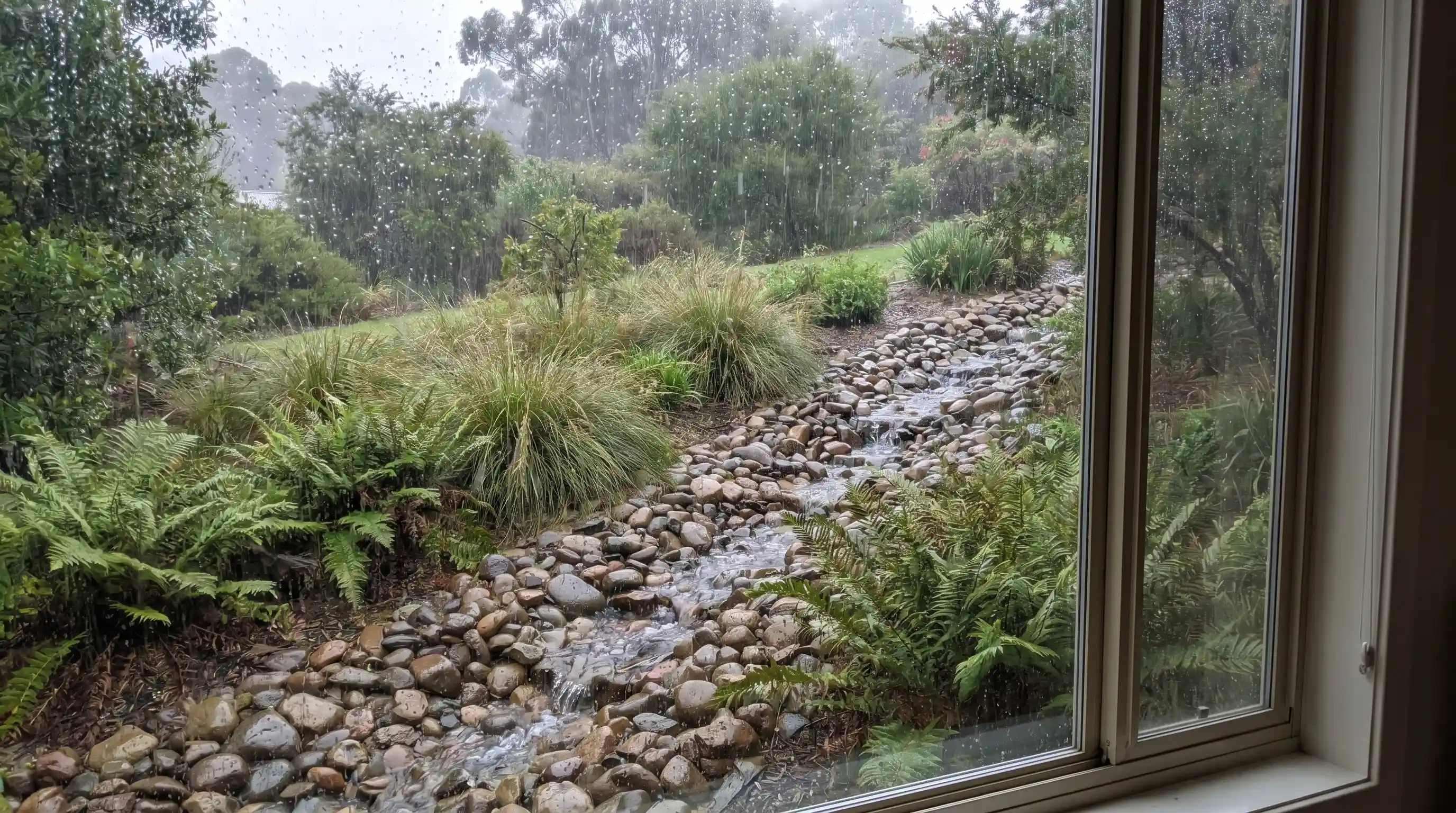
On a downward slope, water runs toward your house if left unchecked.
A cross-slope swale runs diagonally across the grade, not down it, intercepting flow before it reaches the foundation.
A dry creek bed does the same job but reads as a garden feature rather than infrastructure. Line it with river rock and plant the edges with native sedges or ferns.
- Position at the mid-slope where surface water concentrates most
- Line with gravel or river rock; plant edges with sedges or ferns
5. Frame the Bottom Boundary as a Focal Point
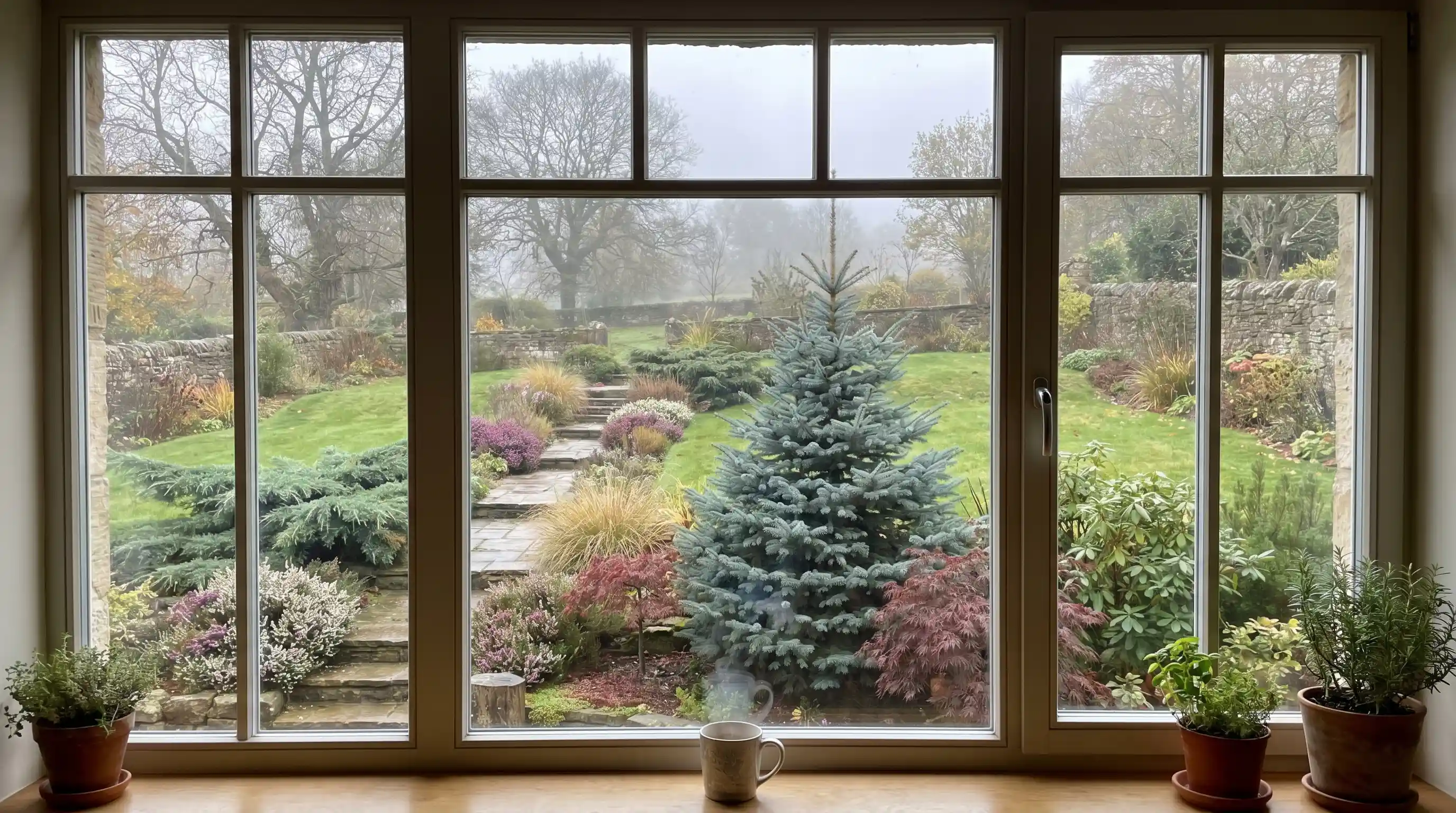
A downward slope always puts the far end of your garden in your sightline. That is a design opportunity almost no one uses on purpose.
Place something worth looking at at the base: a bench, a container with a bold evergreen, a piece of garden art, or a specimen tree.
The focal point draws the eye along the slope and creates a sense of depth.
If the boundary has a borrowed view beyond it (open sky, neighboring trees, or a distant field), keep planting low there to preserve the view.
- A single well-chosen focal point reads more clearly than multiple competing elements
- Use tall ornamental grasses if privacy matters more than preserving the view
6. Build a Level Deck at the Top of the Slope
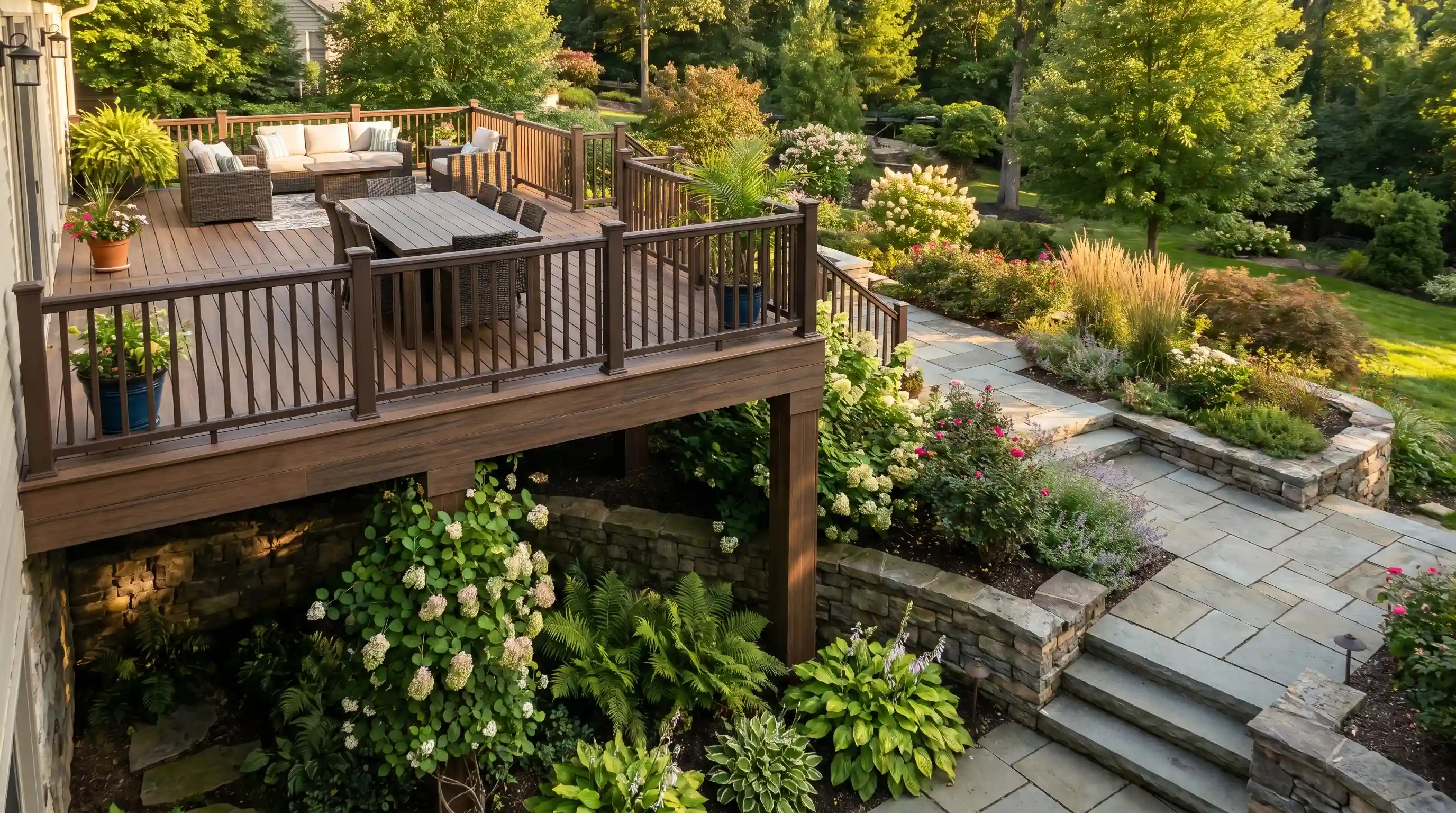
A deck at the top of a downward slope creates a level entertaining surface without excavation.
Below the deck, the slope continues naturally or becomes a sheltered planting zone. Composite decking handles moisture better than timber, which matters more here than on flat ground.
- Composite resists moisture better than timber on sloped sites
- Space beneath the deck can be planted or used for storage
7. Use a Winding Path to Control the Descent
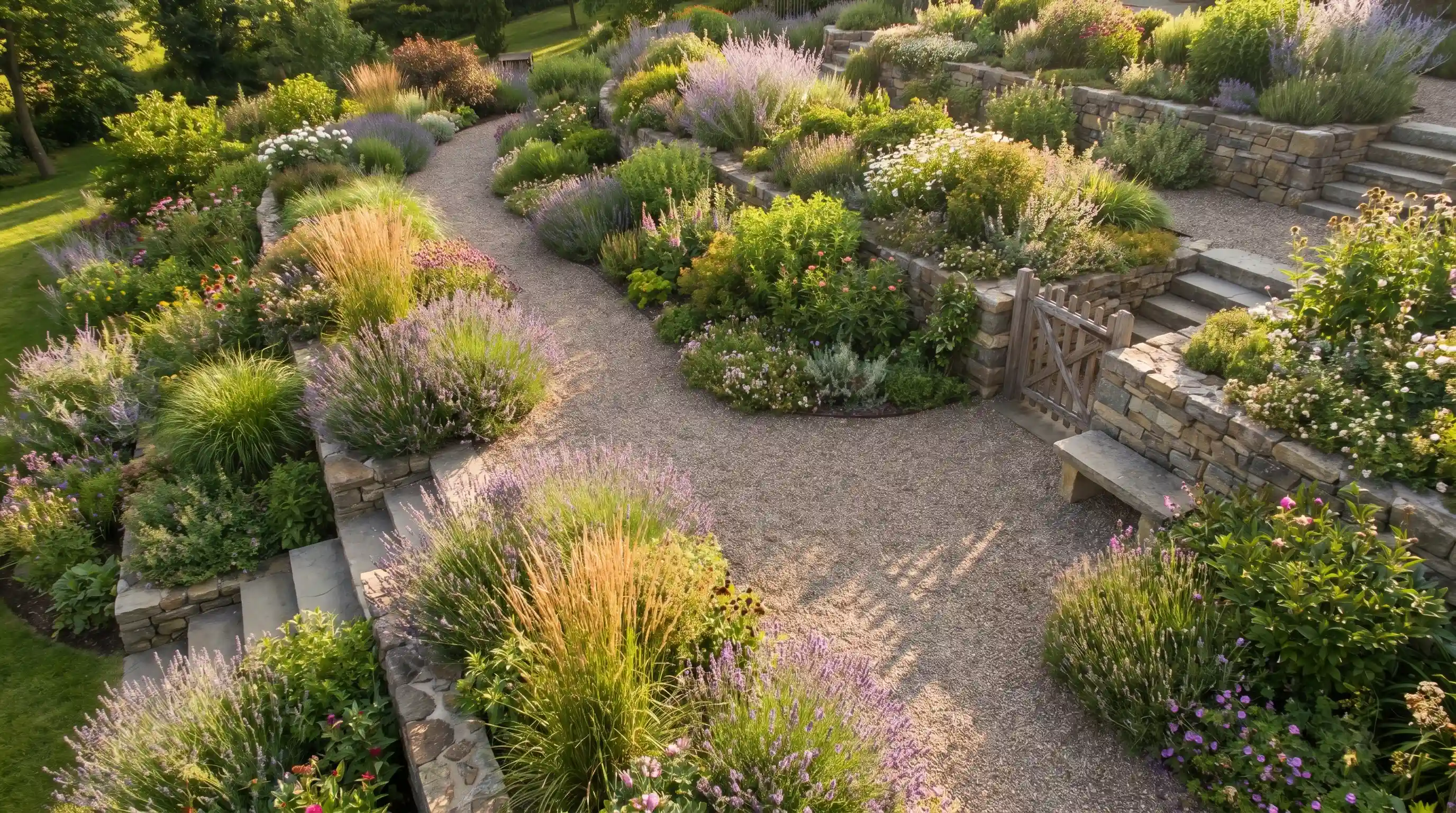
A straight path down a slope channels water and hurries your pace. A winding path slows both.
Curve the path across the slope in gentle arcs. The route gets longer, water slows down, and the garden feels bigger.
Height variation in planting along each side creates a layered effect when viewed from the house that flat ground simply cannot produce.
- Curve arcs across the slope, not straight down it
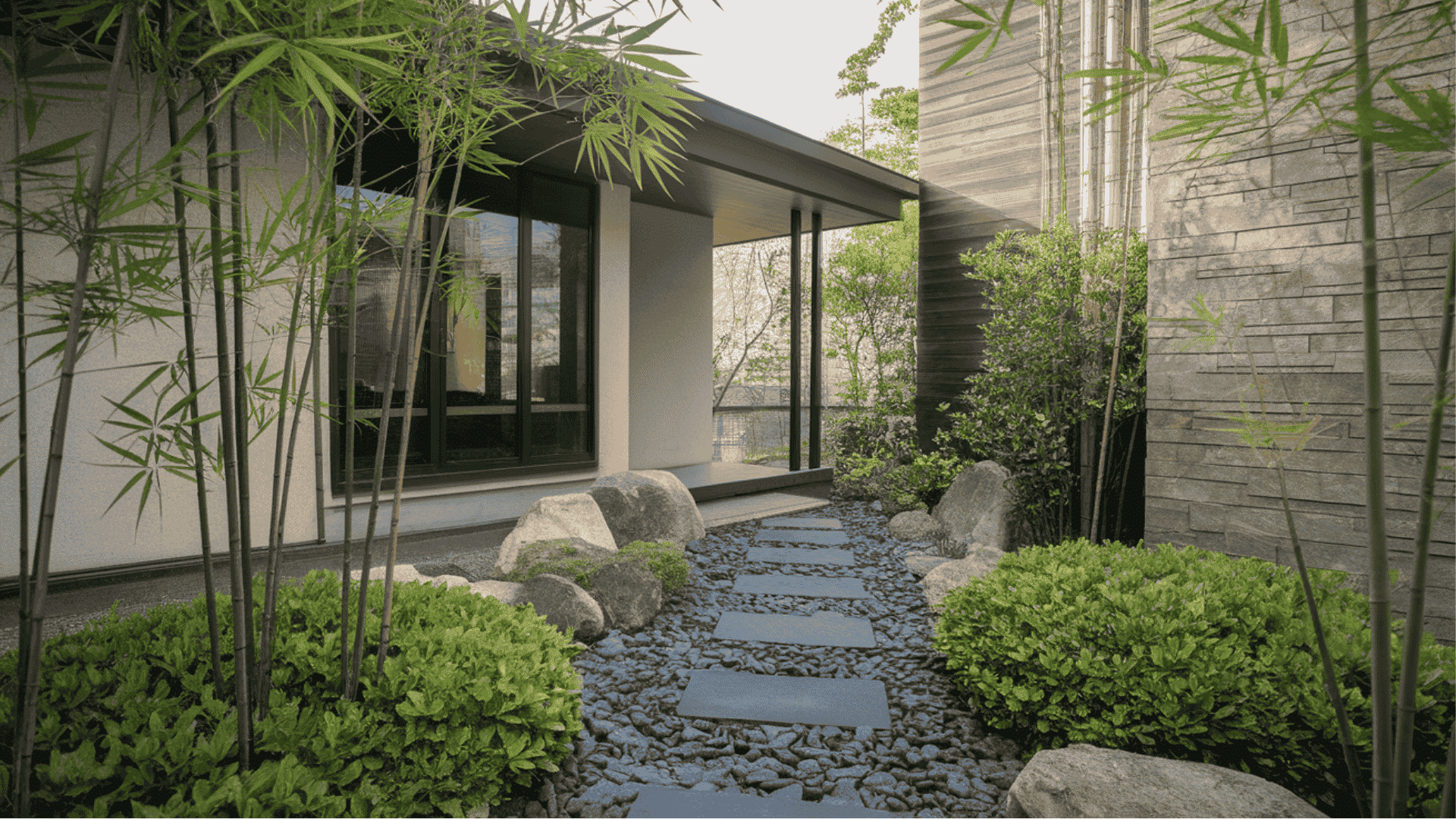
- Use gravel, stepping stones, or bark chips for the surface
8. Add a Water Feature That Follows the Grade
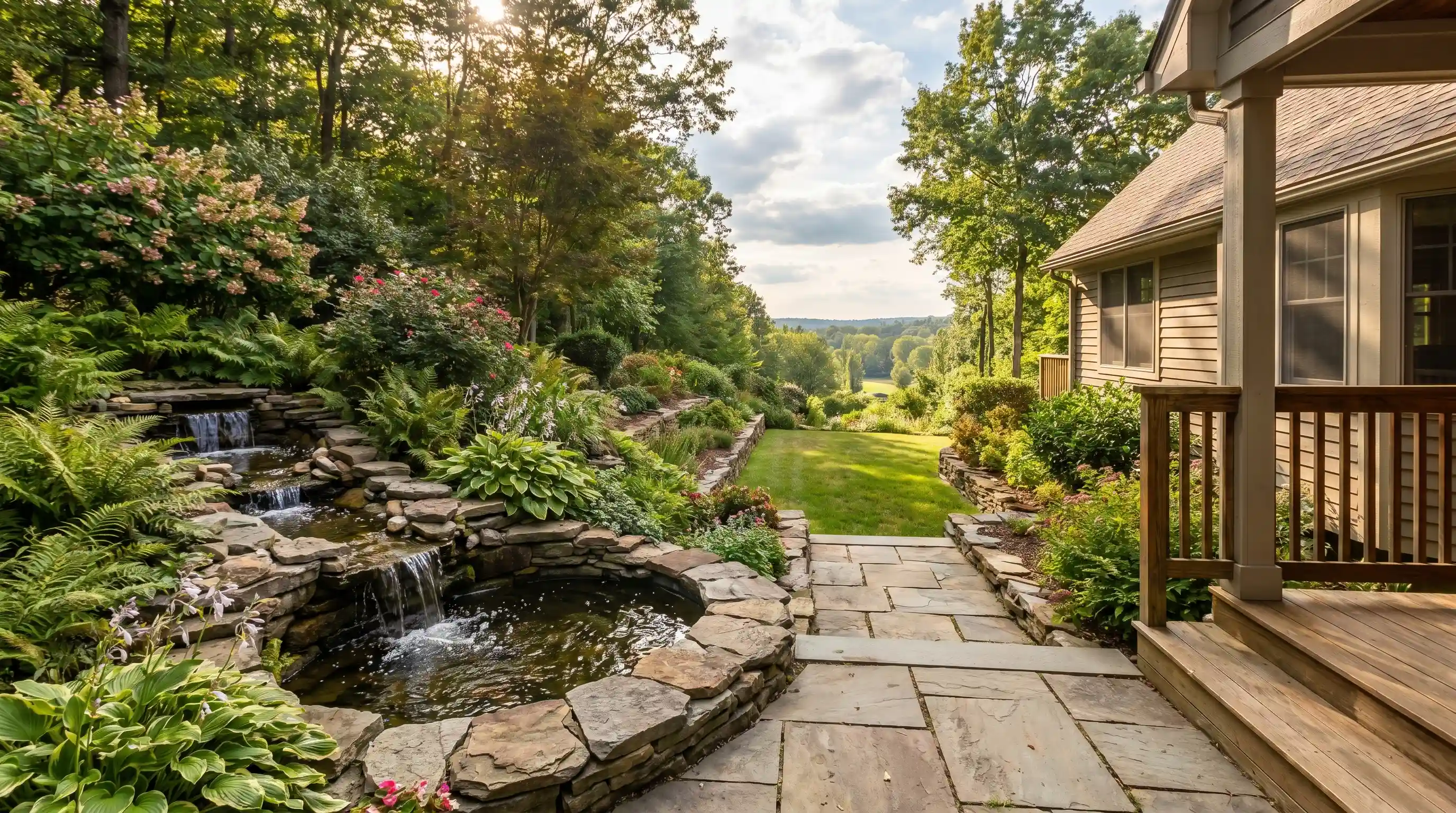
A downward slope is the natural setting for a water feature. Gravity does the structural work.
A rill along one edge or small cascades between terrace levels add sound and movement without complex engineering.
A recirculating pump sends water back to the top via a buried pipe. Position it on one side so the central view corridor stays open.
- A recirculating pump requires no natural water source
- Position along one side to leave the main view open
9. Turn the Slope Base Into a Sunken Seating Area
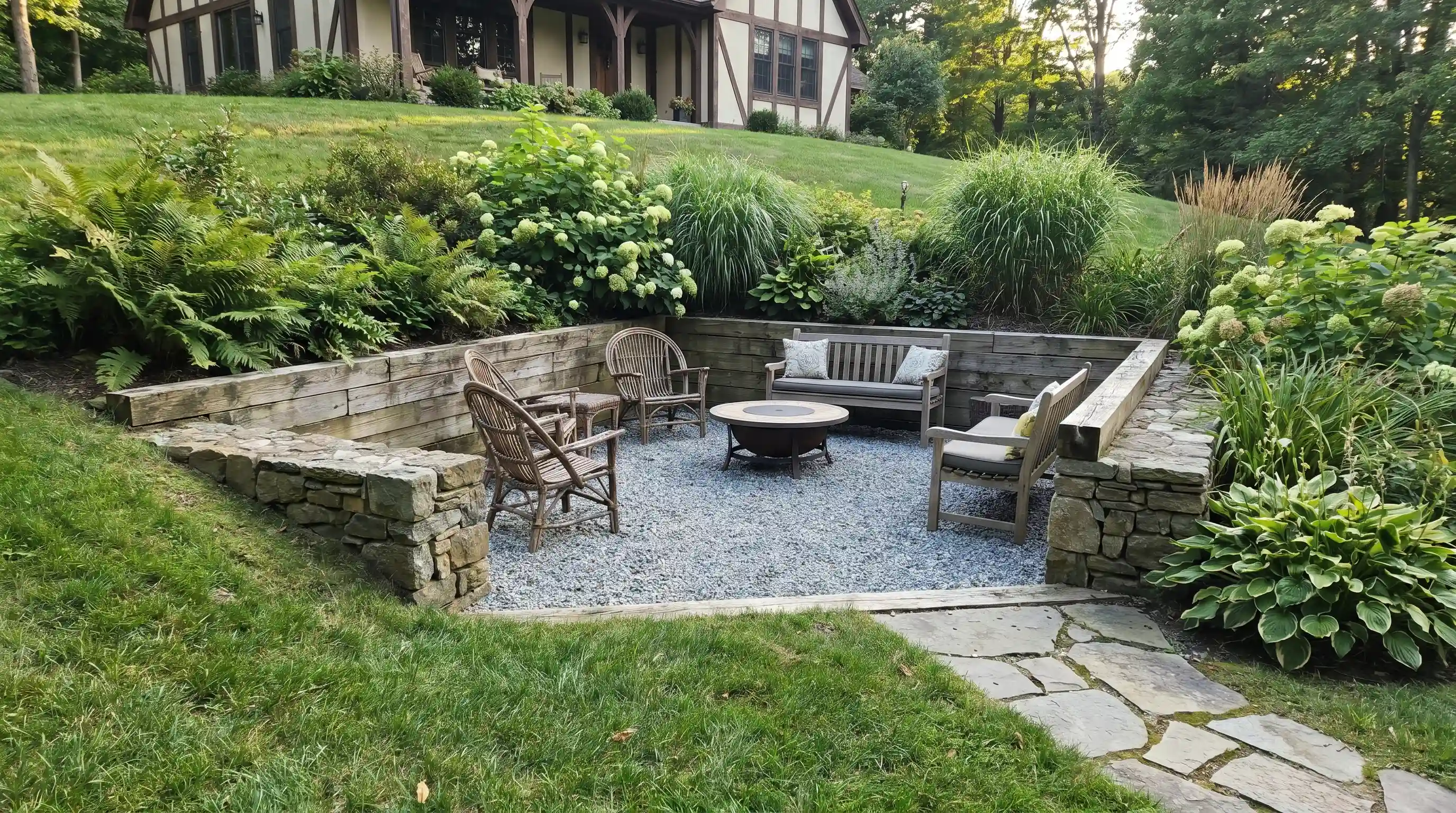
The base of a downward slope often becomes a dead end. A shallow excavation turns it into a destination.
Surround it with planting on three sides. Leave the fourth side open, facing back toward the house. The cost is lower than expected because the excavation is shallow and the walls are short.
- Leave the house-facing side open for visual connection
- A gravel floor with movable furniture keeps costs down
10. Choose Plants That Perform From Above
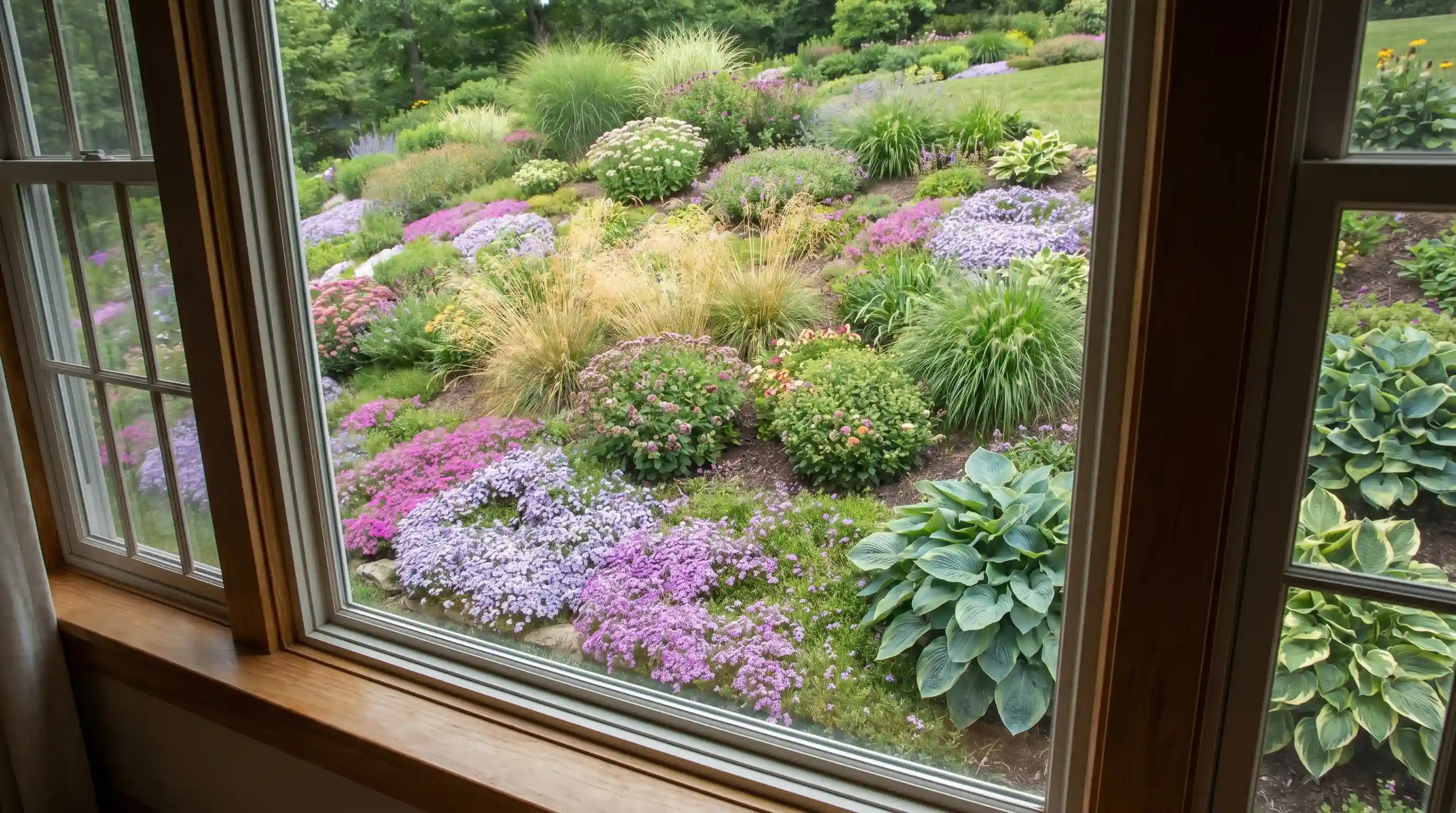
On a downward slope, plants are seen from above. Horizontal spread, leaf texture, and upward-facing flower clusters all read better from this angle than tall spiky plants.
Columnar shrubs near the house block the view down the slope, which is the main asset of this slope type.
Good plants for US downward slopes viewed from above:
- Ornamental grasses (switchgrass, prairie dropseed) move visibly in the wind
- Spreading groundcovers (creeping phlox, creeping juniper) create bold texture
- Mounding perennials (black-eyed Susan, coneflower) hold flower clusters upward
- Bold-leaved hostas at the base of shadier slopes add contrast
11. Add Lighting to Define the Levels After Dark
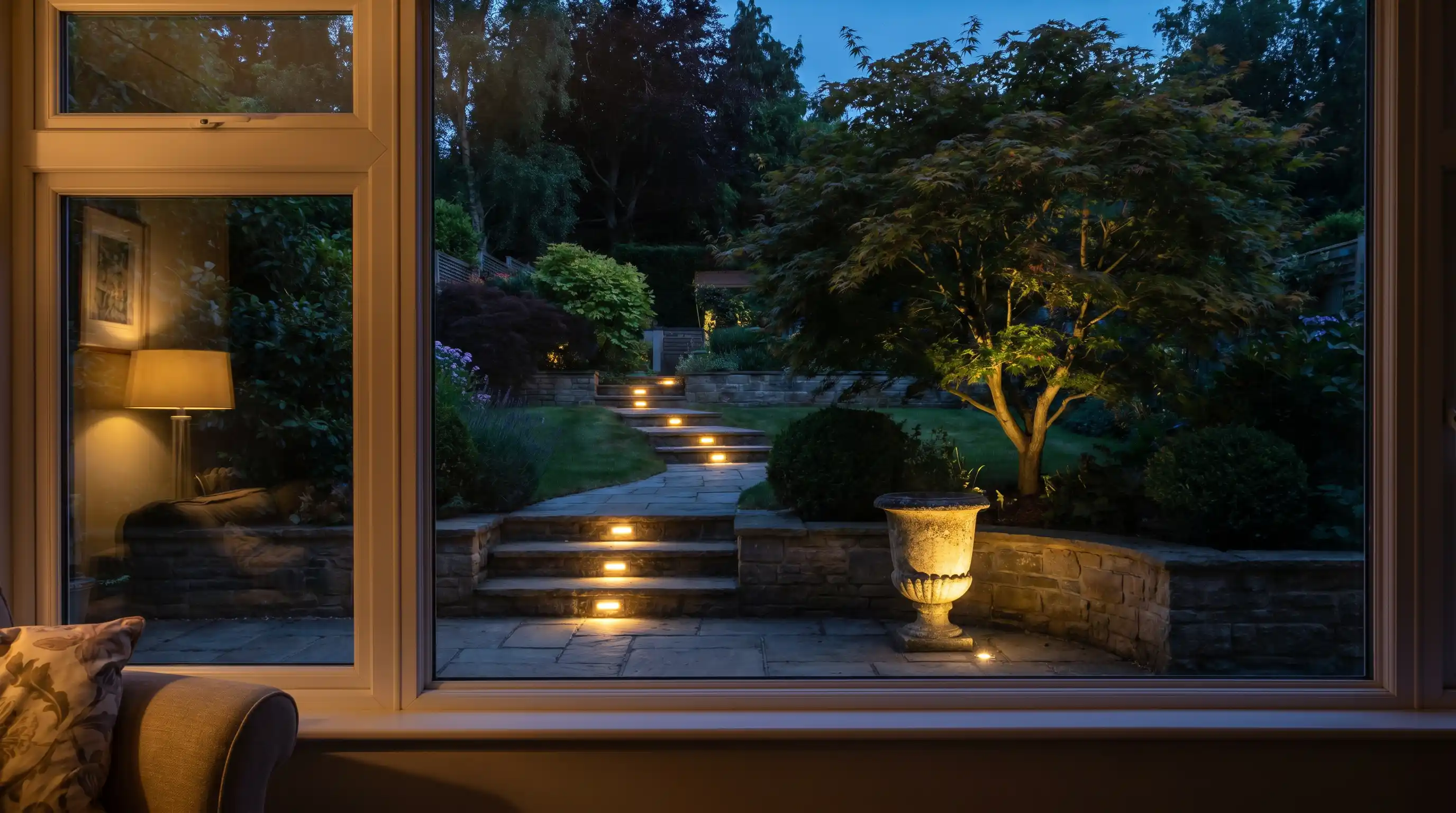
After dark, a downward slope gives you levels for independent lighting. No flat garden can do this.
Step lights trace the descent, creating a staircase of light visible from indoors. One uplighter at the base focal point catches the eye through the window.
Solar stake lights along path edges need no wiring and work for most of the growing season.
- Step lights improve safety and create a night-time pattern visible from indoors
- One uplighter at the base focal point is usually enough
12. Use a Mid-Slope Privacy Screen
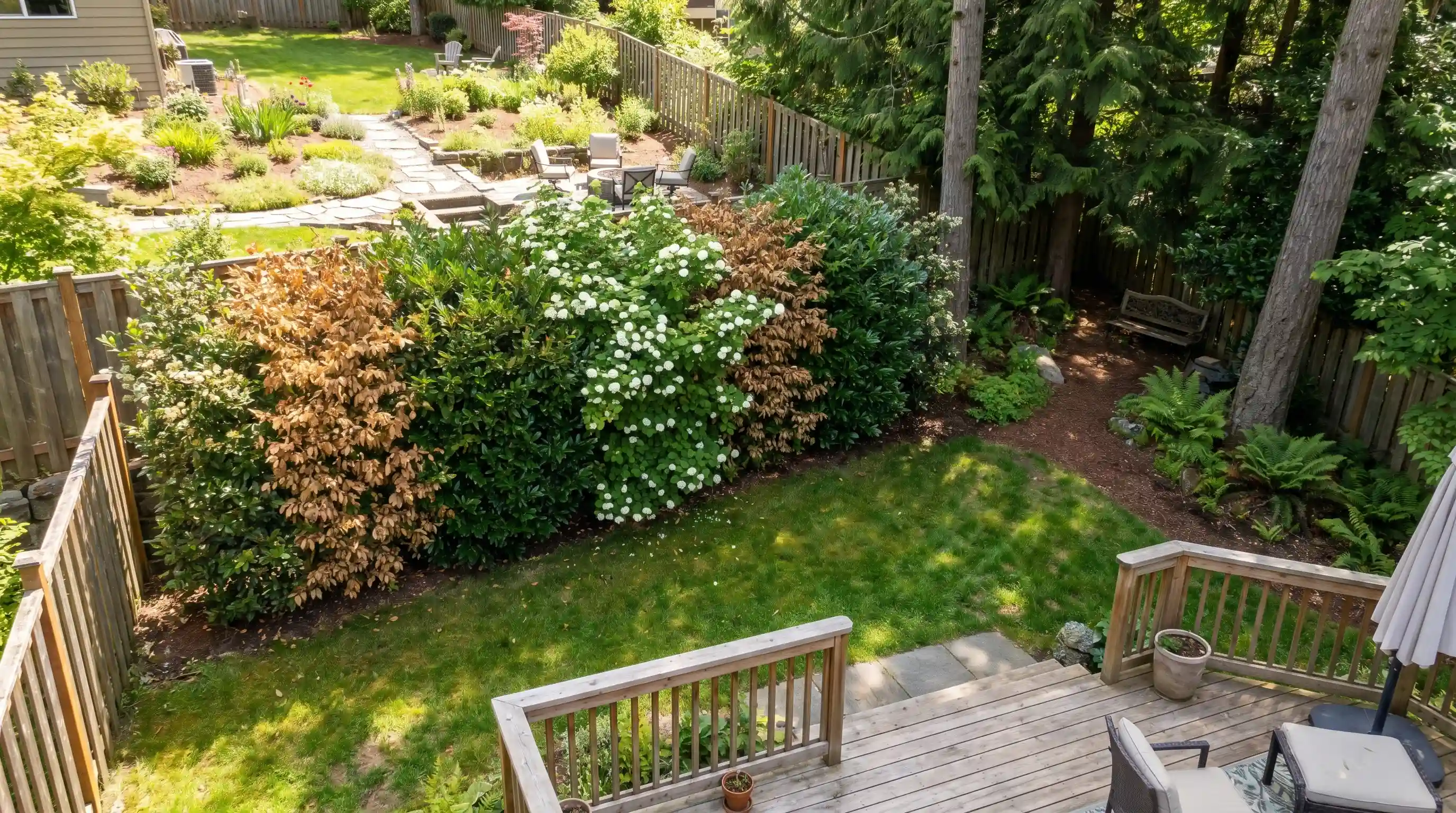
On a downward slope, neighboring properties at a similar elevation look directly into your garden from the side.
A perimeter fence does not fix this because the sightline comes from mid-slope, not the boundary.
Position a screen of dense, upright shrubs one-third of the way down the slope, where those sightlines cross your garden.
Hornbeam, viburnum, and native inkberry all reach 5 to 6 feet and work well in most US zones.
The screen divides the garden into an open upper zone connected to the house and a sheltered lower zone. Two privacy conditions from one planting.
13. Keep a Terraced Lawn Panel for Usable Flat Space
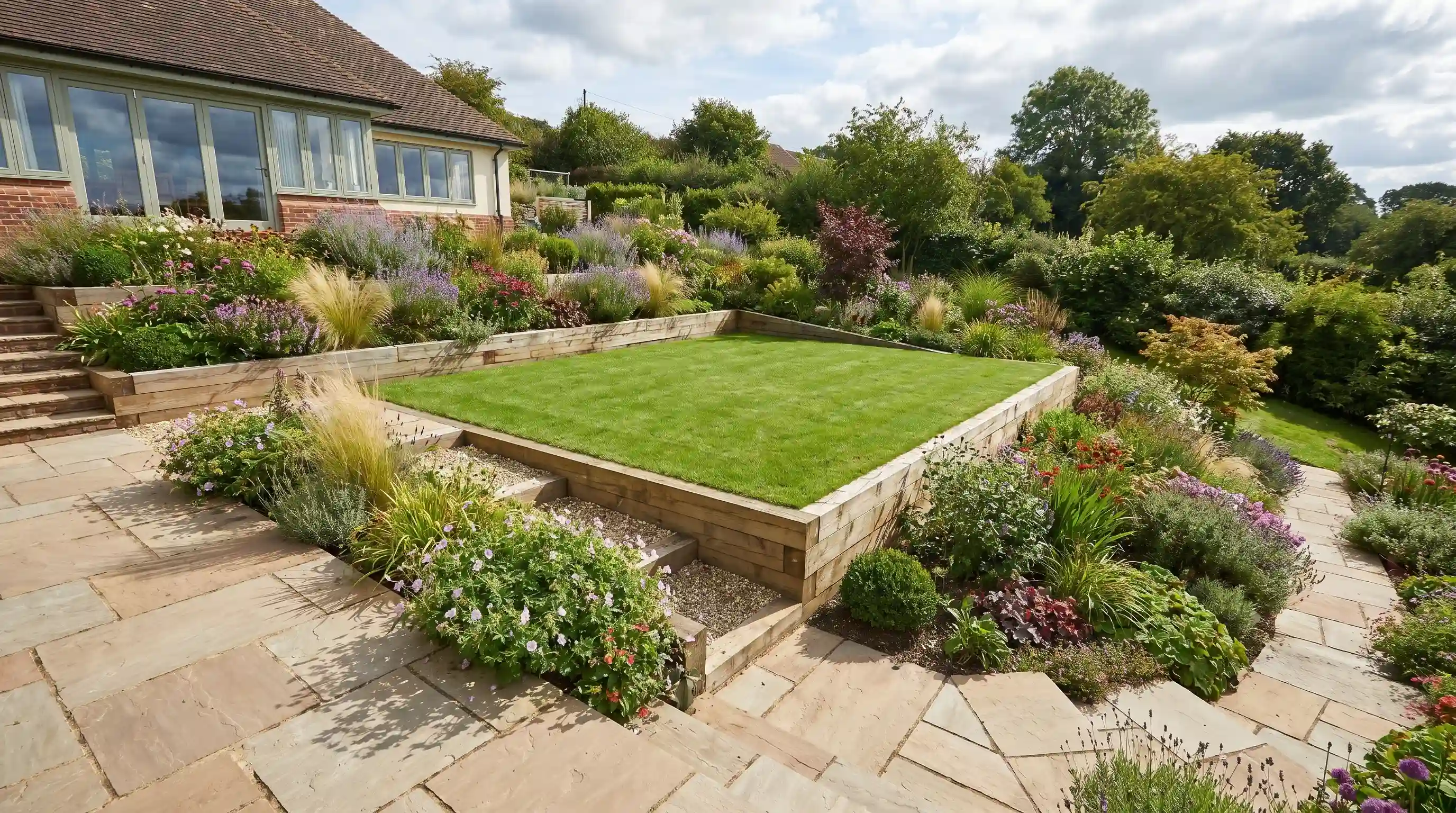
A fully planted sloped garden on a budget looks good from the house, but leaves nowhere to simply stand or sit on grass.
Retain one flat level at the widest, most accessible point of the mid-slope. Around 15 to 20 square feet is enough for practical use.
It gives people somewhere to stand without watching their footing, which matters more than it sounds when guests are not used to navigating a terraced yard.
Keep retaining walls on the downhill side to a height under 18 inches to remain within permit-free construction in most US jurisdictions.
14. Add a French Drain Along the Base Boundary
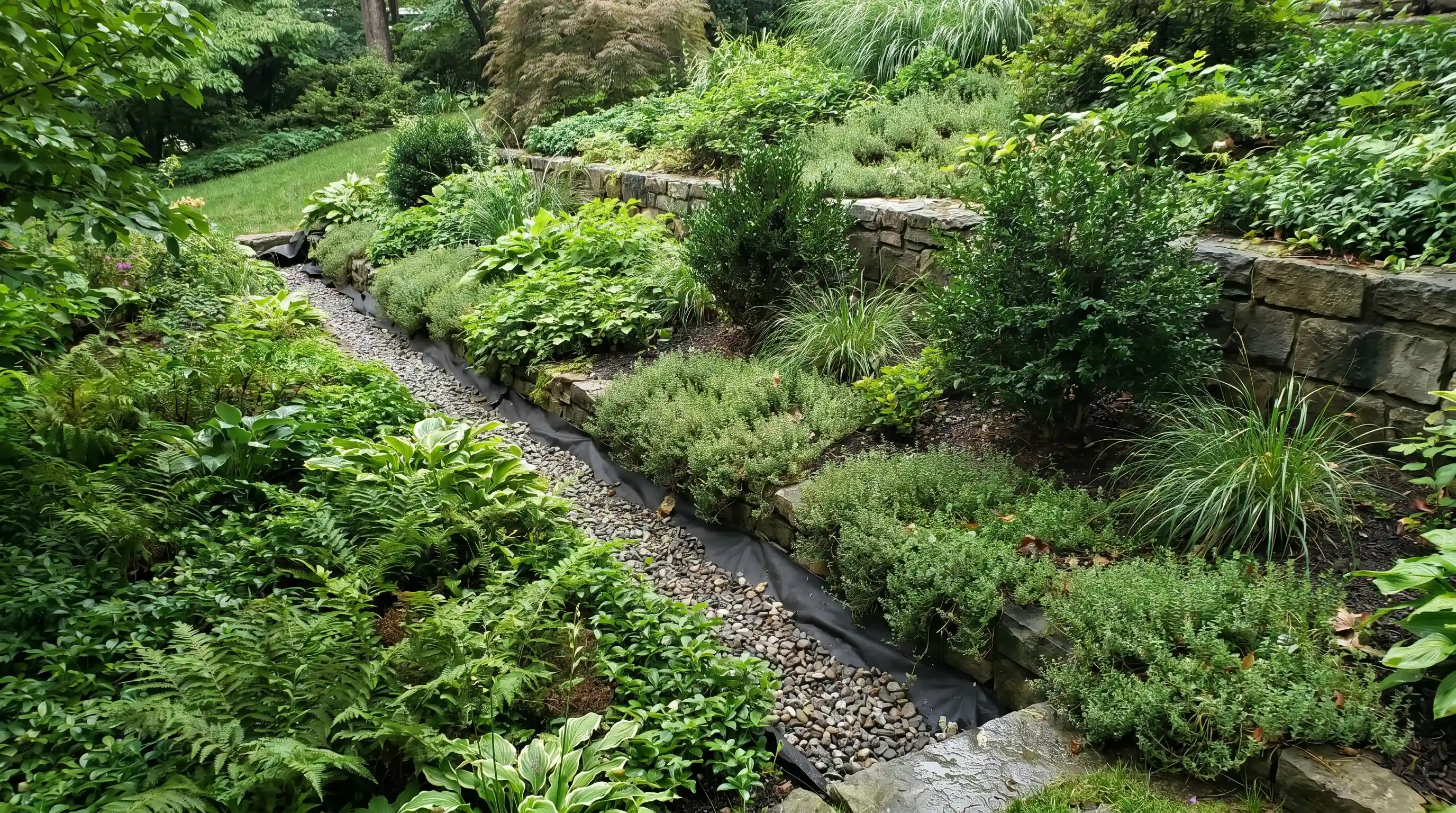
A cross-slope swale catches water mid-slope. A French drain at the base catches whatever reaches the bottom before it pools against your fence or spills into a neighboring property.
A French drain is a perforated pipe in a gravel-filled trench, typically 12 inches wide and 18 to 24 inches deep, running along the lowest boundary.
It channels water to a storm drain or dry well and stays invisible once capped with gravel and landscape fabric.
Without it, base-level planting beds sit in standing water after heavy rain rather than the consistently moist but drained conditions moisture-tolerant plants need.
15. Plant a Night Garden at the Slope Base
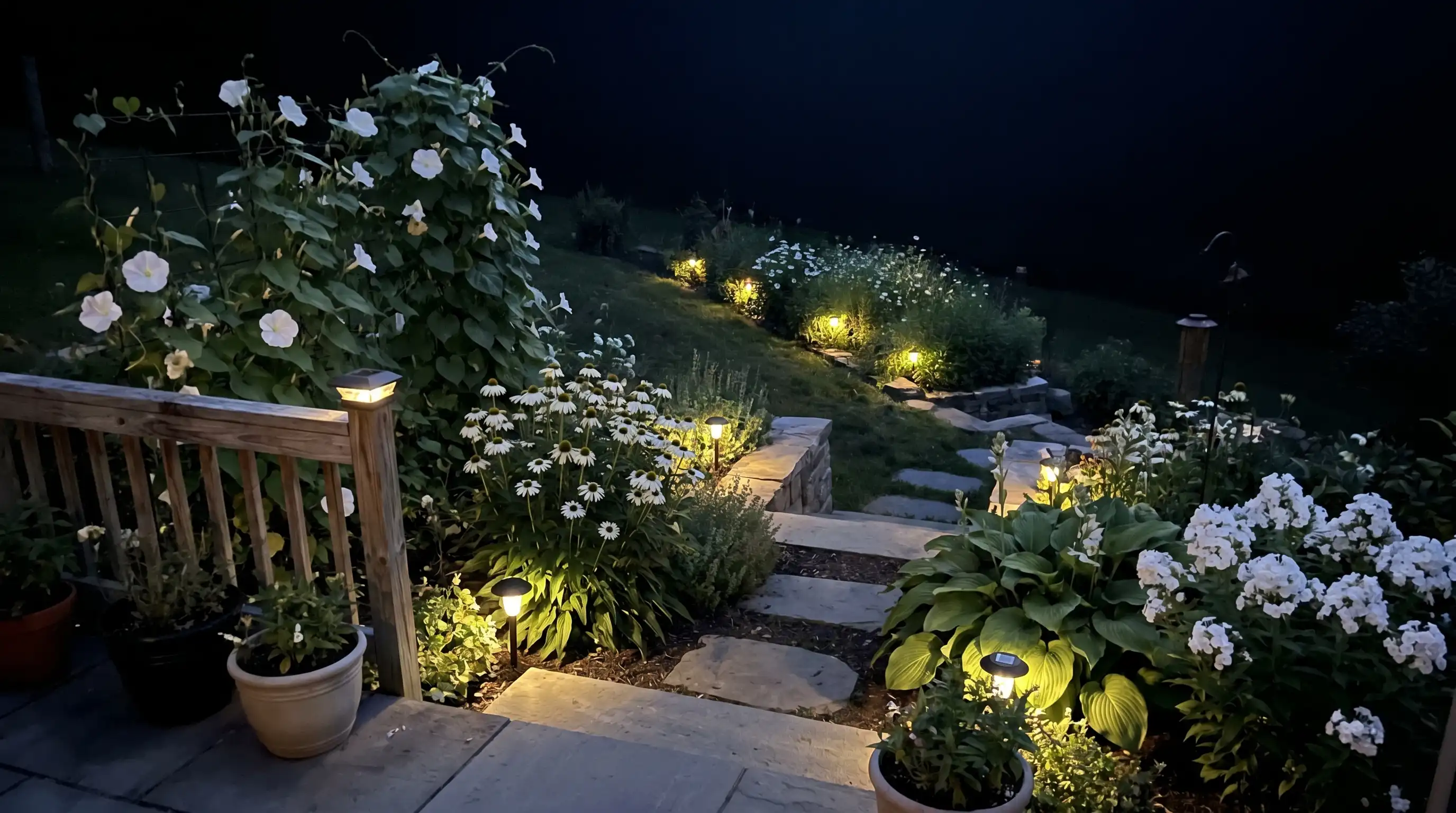
The base of a downward slope is where you arrive last in the evening. Walking down toward the far boundary in fading light makes this the natural spot for a night garden.
Use white-flowering, fragrant species that read clearly after dark: white echinacea, moonflower vine, night-blooming phlox, white yarrow, and fragrant hostas such as ‘Guacamole.’
Pale flowers stay visible at low light long after colored blooms disappear.
Position them along the lowest planting bed or around the sunken seating area.
Key Design Rules for a Downward Slope
These principles apply specifically to gardens that are set back from the house.
- Drainage moves toward the house. Hardscaping must carry water sideways along the property line, not down toward the foundation.
- The bottom boundary is always in view. Treat it as a design element, not just a fence.
- The garden is seen from above. Low, spreading, textured plants perform best. Tall specimens are mostly wasted on this slope type.
- Privacy and views pull in opposite directions. Tall planting at the base screens neighbors but blocks borrowed sky. Decide which matters more before planting anything.
- Sunlight varies by elevation. The top is drier and warmer. The base is cooler. Plant the zones differently.
Conclusion
Drainage is the first thing to solve on a downward slope. Sort that, and most other problems become much easier.
Use what the sloping gardens already give you: the view, the level changes, the sense of arriving somewhere at the bottom.
Which of these 15 ideas fits your slope? Drop your yard setup in the comments, and I will help figure out the best direction from there.
Frequently Asked Questions
1. What is the 70/30 Rule in Gardening?
The 70/30 rule suggests that 70% of the garden space should be easy-care plants and 30% should be more decorative or experimental varieties for balance, appearance, and maintenance efficiency.
2. What Plants Should Never Be Planted Together?
Avoid pairing plants that compete for nutrients, attract the same pests, or inhibit each other’s growth, such as onions with beans or tomatoes with fennel.
3. What Plants Thrive in Hillside Gardens?
Plants with deep roots, good drainage tolerance, and erosion control traits thrive, including ornamental grasses, creeping groundcovers, sedums, lavender, and hardy perennials suitable for slopes.