
A tiered garden does something a flat garden cannot. It creates rooms.
Not zones. Actual outdoor rooms. When you build levels into a garden, you give people a reason to move through it and stop at different points.
Most people treat tiering as a problem-solving exercise for a difficult slope. What they miss is that tiering is also a design choice, even on flat ground.
A tiered design can increase property value by adding usable outdoor living space.
So whether you’re working with a steep backyard slope or a flat plot that needs more character, these tiered garden ideas show what’s possible when you start thinking in levels.
What Makes a Tiered Garden Work?
Design logic matters more than materials. Get this right first.
The most common mistake is building walls before planning what each level will be used for. You end up with a stone structure too shallow to plant into and too short to create real separation.
Before you pick stone, timber, or block, answer one question about each tier: what is this level for?
Entertainment zones need at least 12 feet of depth. Planting tiers need 3 to 4 feet to be useful.
Steps and landings should use the same material as the walls so the design reads as a single unit.
17 Creative Tiered Garden Ideas to Beautify Your Slope
These ideas run from formal to informal, structural to plant-led. All of them give each level a purpose.
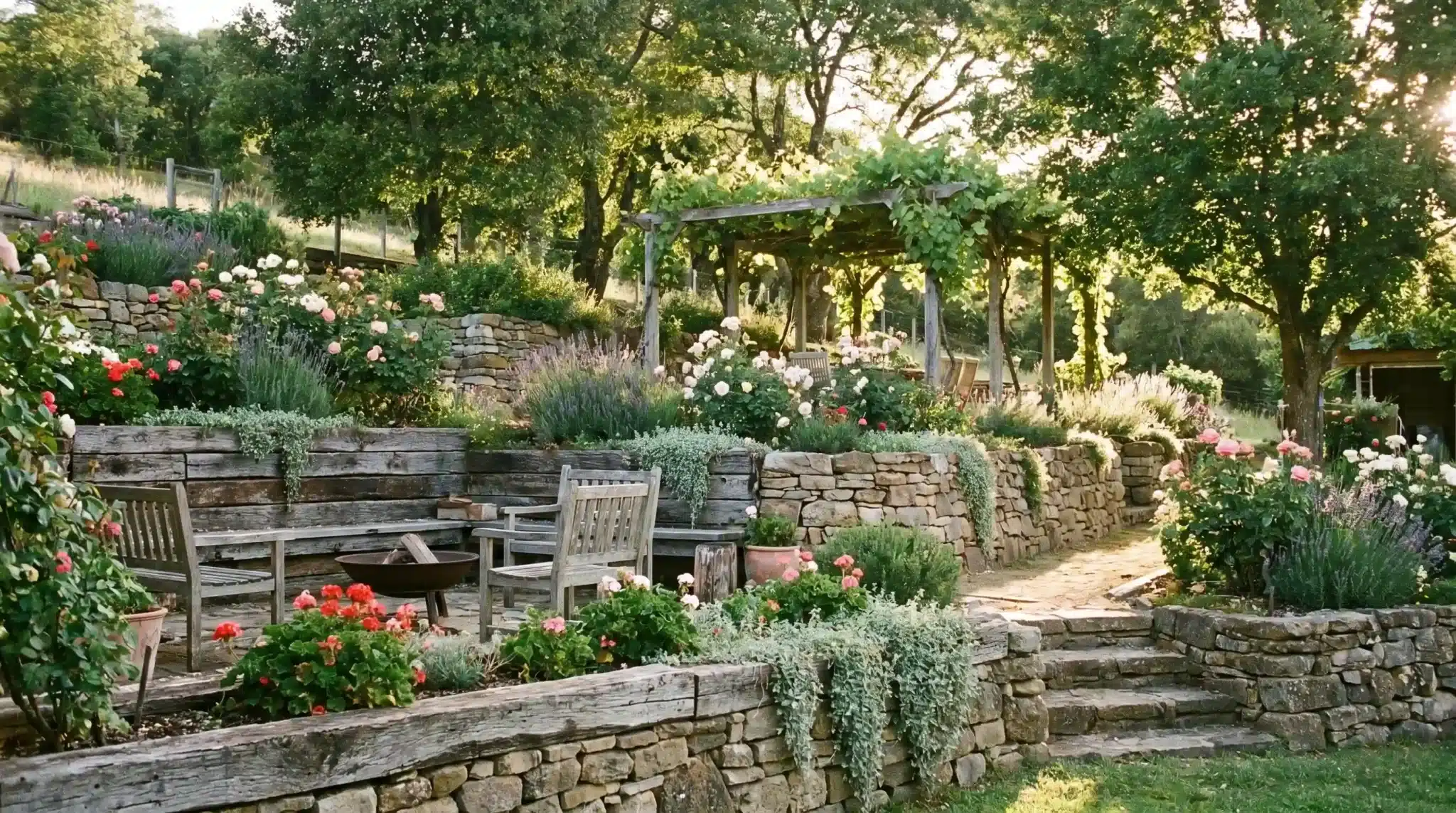
1. The Classic Stone Terrace Garden
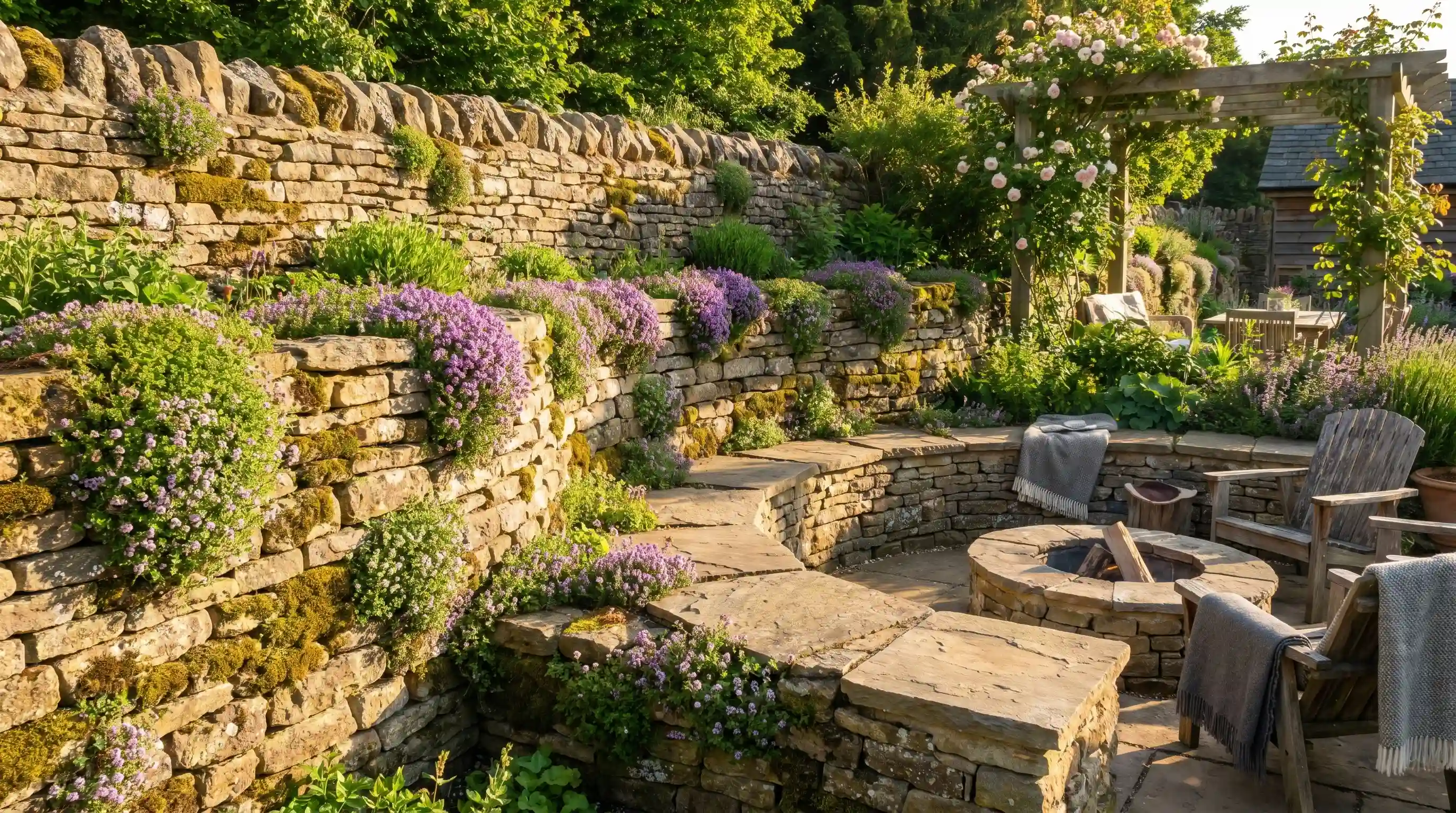
Natural stone is still my first choice for tiered gardens that need to last and age well.
Dry-stack or mortared stone walls improve with age as moss and creeping plants soften the joints.
Cap the top course with flat flagstone at 17 to 19 inches, and the wall becomes informal seating, which is a detail worth building in from the start.
Tuck creeping thyme or sedum into crevices as you build, and the wall face softens on its own within a season.
2. Timber Sleeper Tiers for a Natural Look
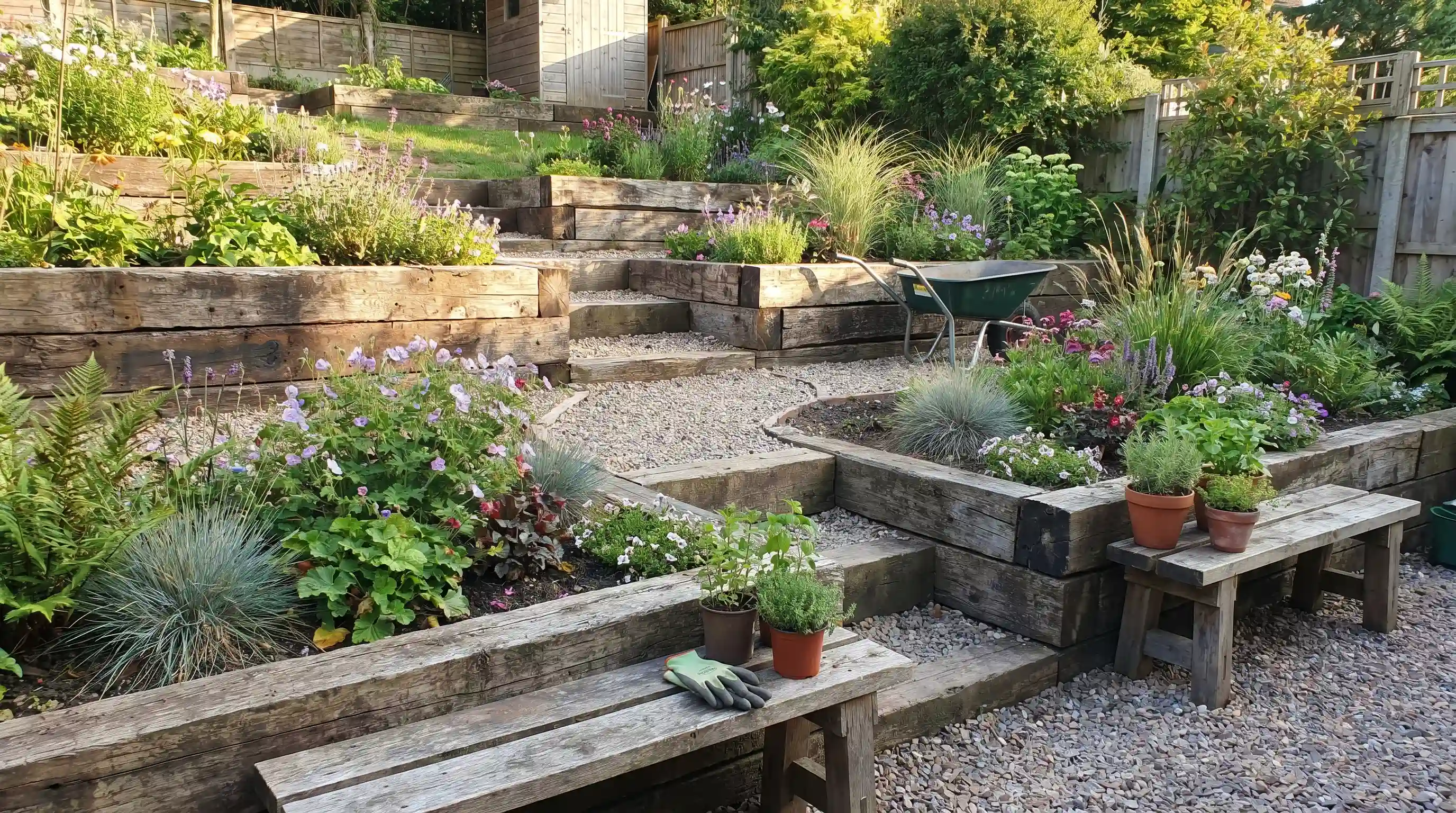
Pressure-treated softwood sleepers are the most accessible DIY option for informal terracing, and they work best on shallow slopes where stone would feel overbuilt.
Timber weathers beautifully in naturalistic gardens. Stack horizontally and secure with rebar or vertical posts driven into the bank.
One safety note that I always repeat: avoid old railway sleepers. Many were treated with creosote, a confirmed carcinogen. Use new pressure-treated landscape timbers instead.
3. Formal Steps That Match the Walls
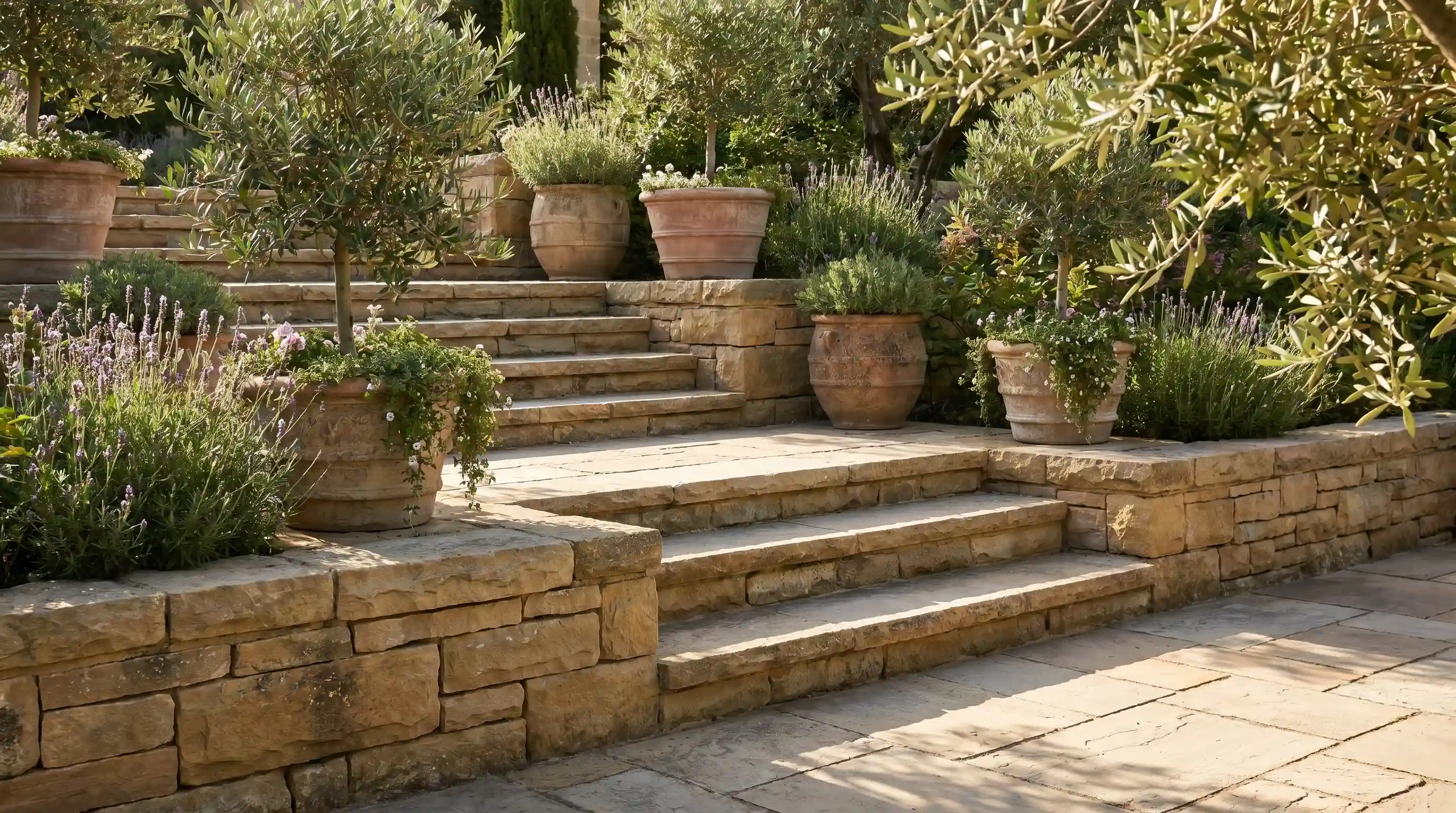
When steps match the retaining wall material, the whole garden reads as one thing. When they don’t, you notice it immediately.
Aim for treads at least 12 to 14 inches deep and risers no higher than 5 to 6 inches.
Shallow steps slow your pace. Rushed steps feel like fire escapes. Generous steps feel like invitations.
Add planters at landings to turn structural transitions into planting opportunities.
4. Raised Edible Tiers for Growing Food on Multiple Levels
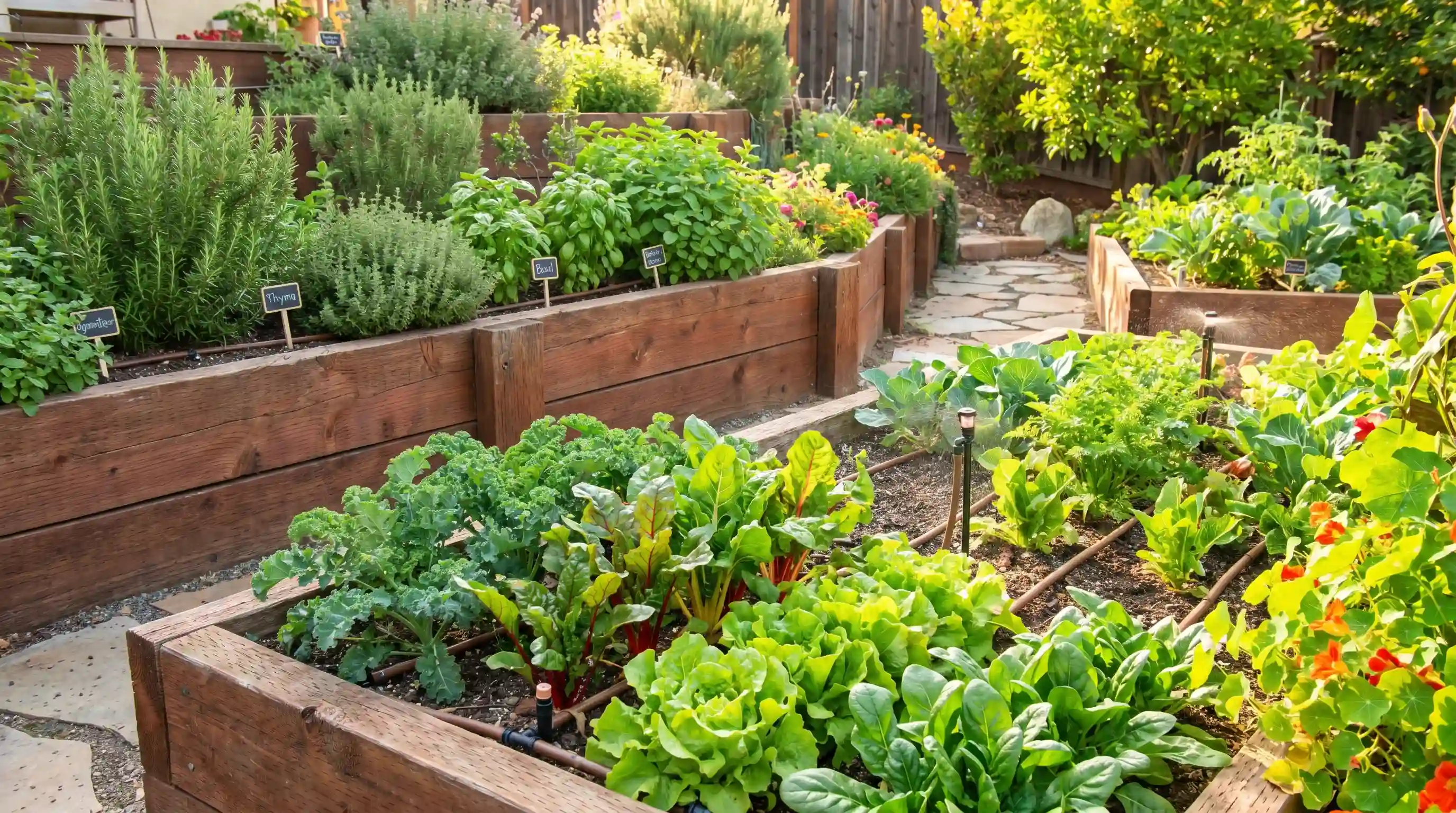
A budget-friendly sloped garden is actually a better setup for growing food than a flat one, if you plan tiers around sun exposure and access.
The top tier of a south-facing slope gets the most direct sun and sits closest to the house.
That is where herbs and salad crops belong. Lower tiers suit less sun-sensitive crops, such as leafy greens, root vegetables, and fruit canes.
One critical detail: higher tiers dry out faster. Top-tier edibles need consistent watering or a drip line. Reserve moisture-tolerant crops for the base.
5. The Fire Pit Destination Tier
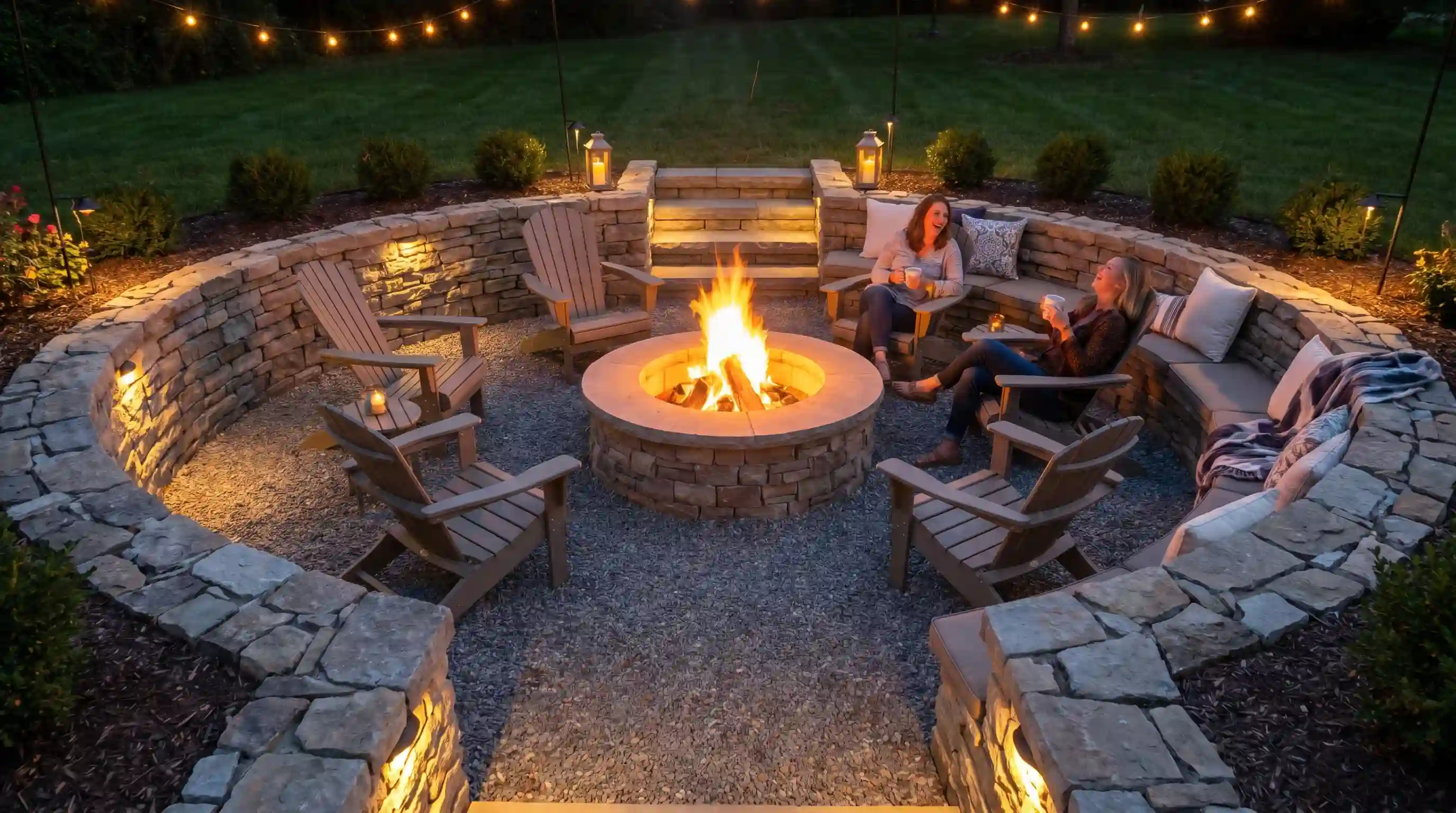
I keep coming back to this one with clients who want a reason to actually use the lower levels after dark.
A dedicated fire pit tier at a lower level creates an outdoor room enclosed on three sides by retaining walls, sheltered from wind, and genuinely separate from everything above.
The walls do all the work. The level change itself creates the enclosure.
Size it at 12-15 feet in diameter for a functional gathering space.
Use crushed gravel, decomposed granite, or concrete pavers on the floor. All are non-combustible and drain well. Connect it to upper levels with wide, well-lit steps.
6. Gabion Wall Tiers with Industrial Character
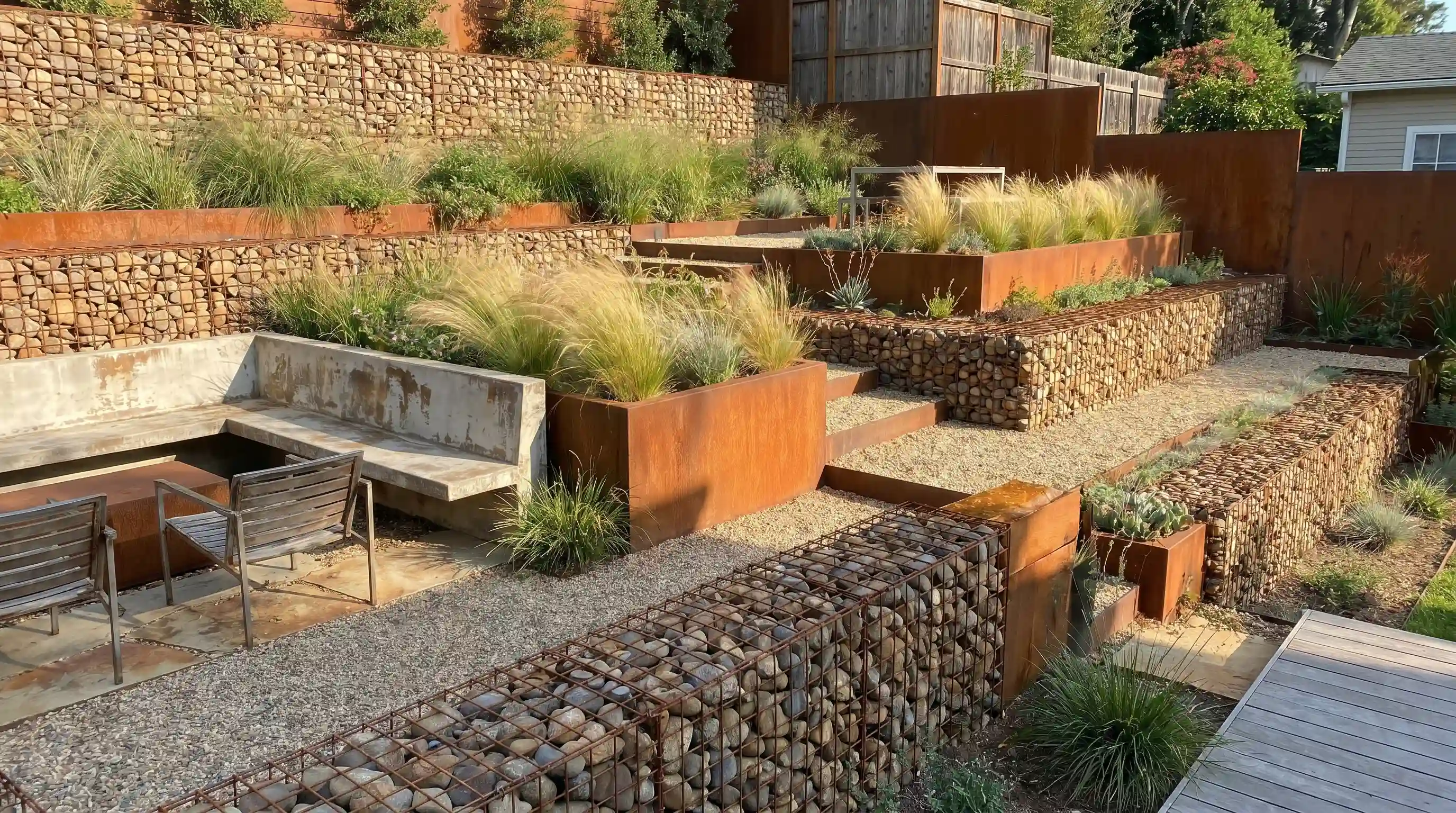
Gabion baskets are the contemporary option that punches above its weight in visual impact.
Gabion walls are wire mesh cages filled with stone or rubble.
Drainage is built in. Unlike mortared walls, they flex and settle without cracking, which matters in regions with significant freeze-thaw cycles.
Over time, creeping plants establish themselves in the gaps in the mesh without effort. Cor-Ten steel frames oxidize to a warm rust tone that pairs well with ornamental grasses.
7. A Tiered Garden on a Flat Yard
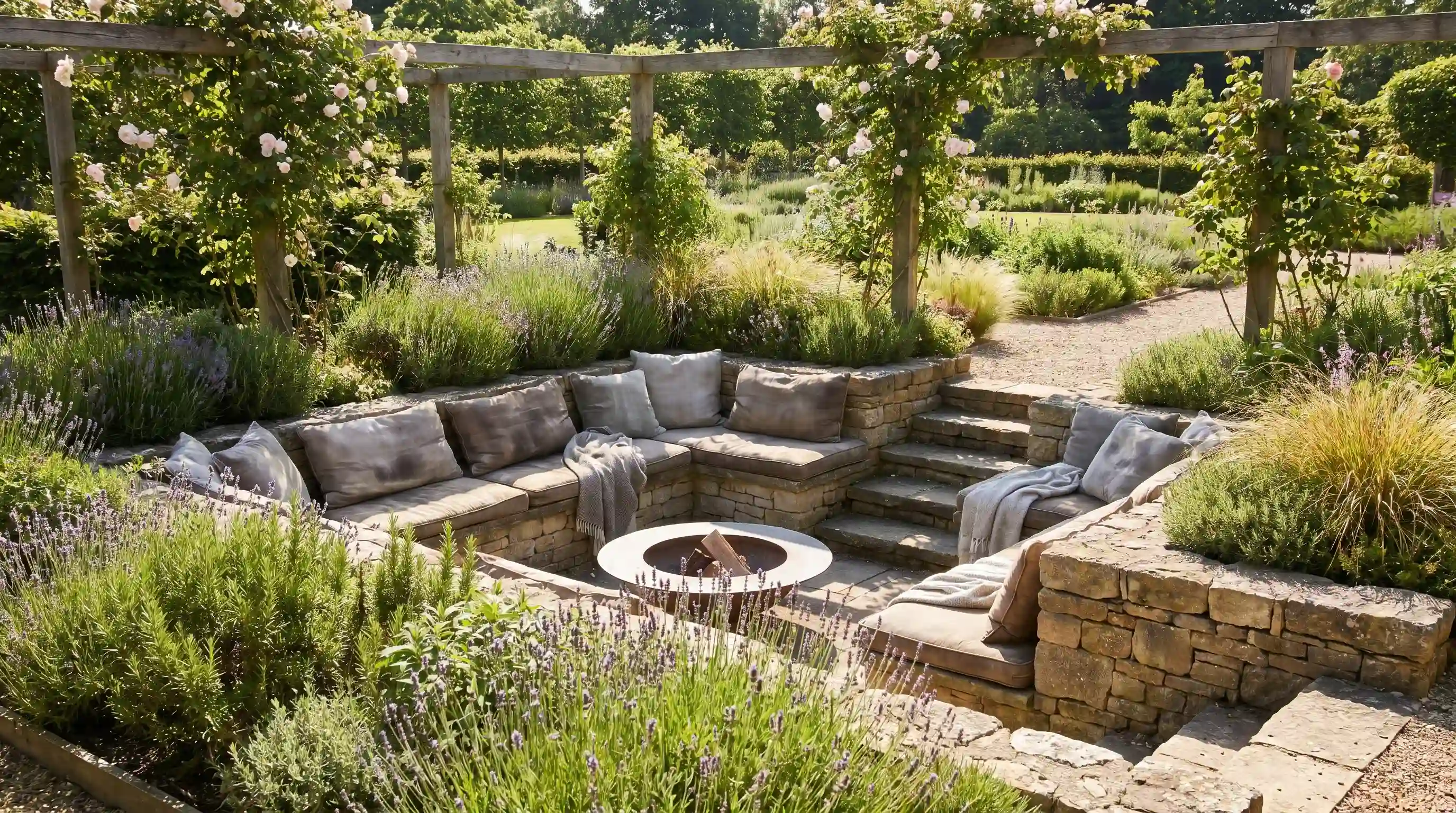
You can create tiers in a flat yard with this unique garden technique.
Level changes are created through excavation (digging down for a sunken level) or addition (building up a raised tier with retained fill).
Excavate in one spot and use the soil from that spot for the adjacent raised tier.
A sunken seating area is the simplest version: excavate 12 to 18 inches, retain the edges with low walls, and the zone feels immediately private.
8. Modern Tiered Garden With Steel or Concrete Edges
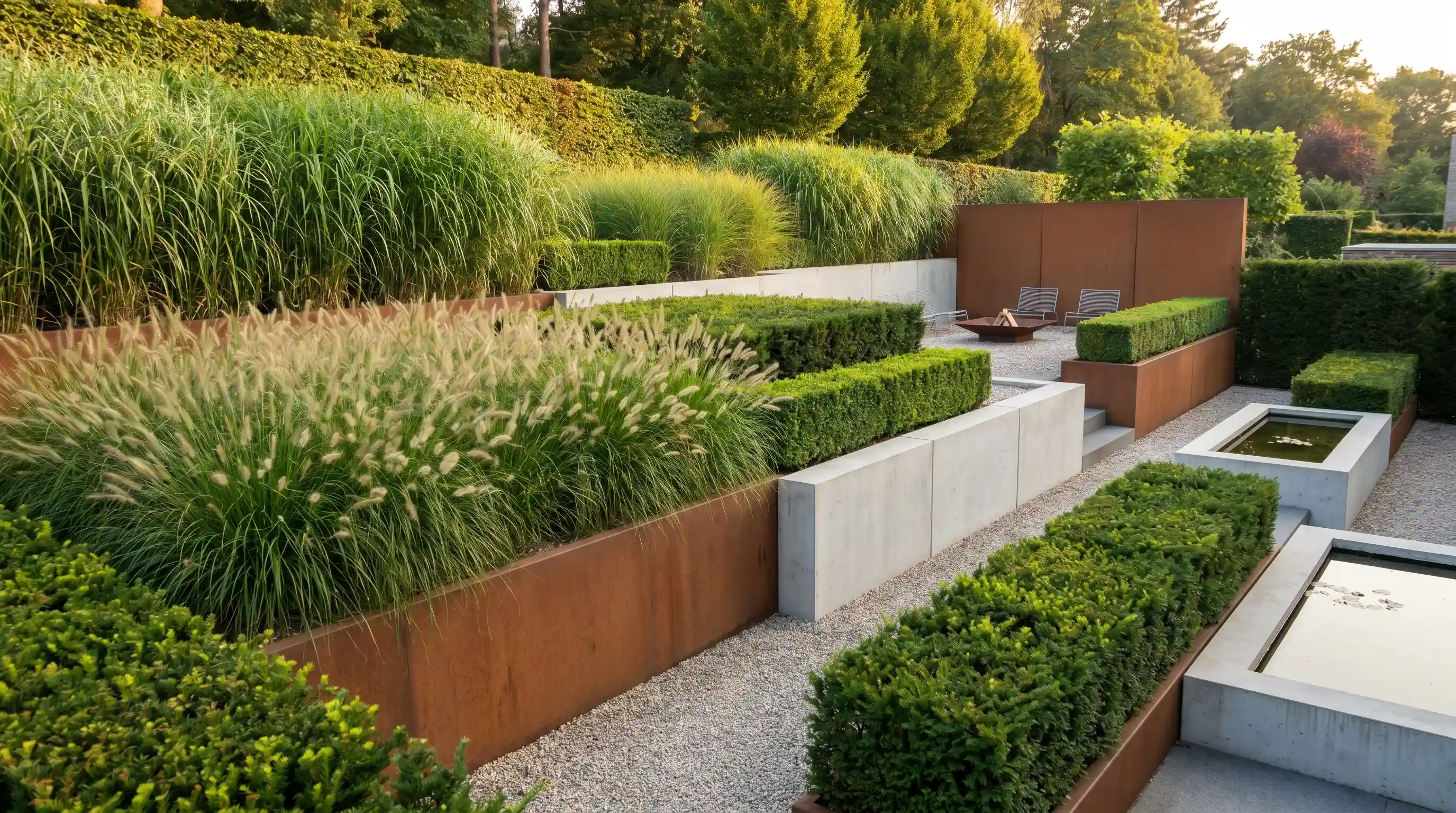
Contemporary tiered gardens swap natural roughness for clean, architectural lines.
Corten steel panels and precast concrete blocks make the geometry explicit. The tiers read as horizontal bands, and that precision is the entire point.
Corten steel panels weather to a warm rust-brown. Concrete block systems cost less than stone and require less skill.
Plant choice matters more here than in any other style. Ornamental grasses and clipped hedges work with the lines.
Soft cottage-style planting conflicts with the geometry. Commit to the style, or it won’t read as a style.
9. Plant-Led Tiered Garden
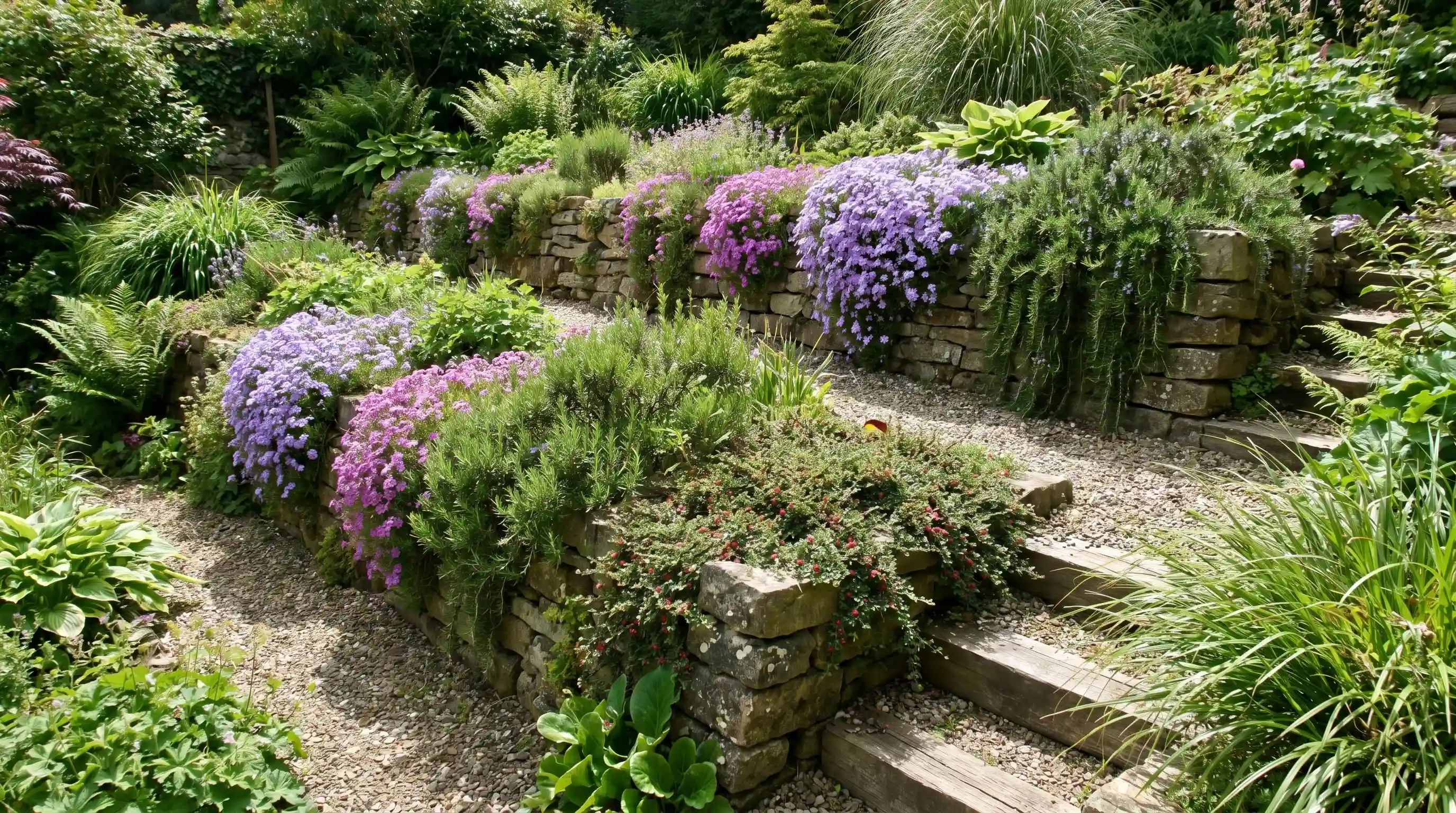
Not every tiered garden needs to show its walls.
In an informal garden, the hard structure recedes behind generous planting.
Plant in drifts across multiple tiers rather than treating each level separately. When the same species reappears on tier one and tier three, the eye reads the garden as unified.
Best plants for cascading over tiered faces: creeping phlox, trailing rosemary, vinca minor, and rock cotoneaster all show results within one season.
10. Sunken Garden Within a Tiered Design
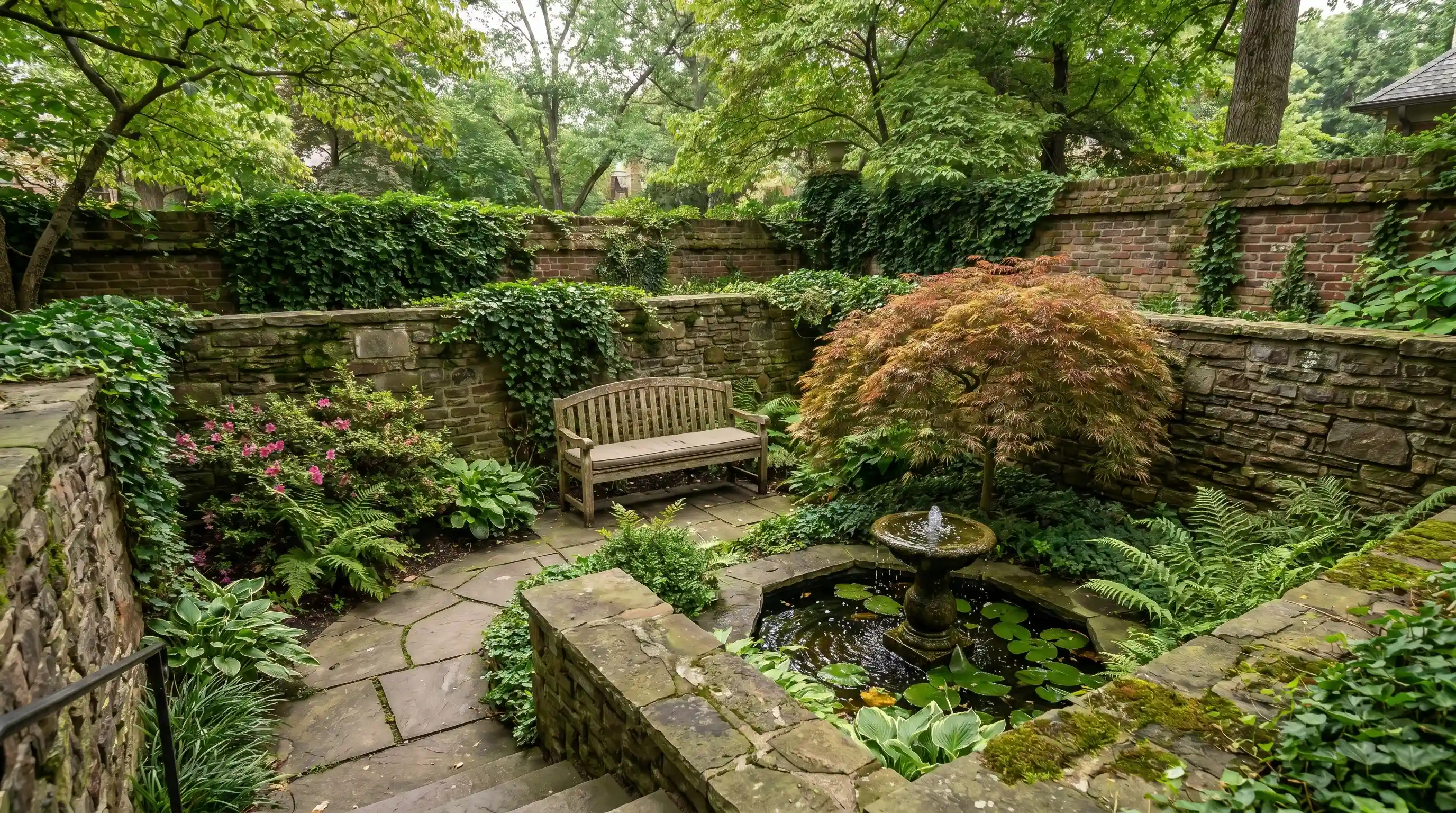
Different from the fire pit tier in idea five, a sunken garden is quieter and more contemplative.
Think a single bench, a small ornamental tree, or a compact water feature. The walls create genuine shelter without a roof, and that combination of open and private is hard to achieve any other way.
Position it at the lowest natural point so drainage exits underneath. Paved floors need a drainage layer.
Get this right, and the space works year-round. The sunken zone also anchors the visual composition from above.
Your eye naturally falls toward the lowest enclosed point when standing at the house.
11. Multi-Level Deck System with Planted Tiers Between
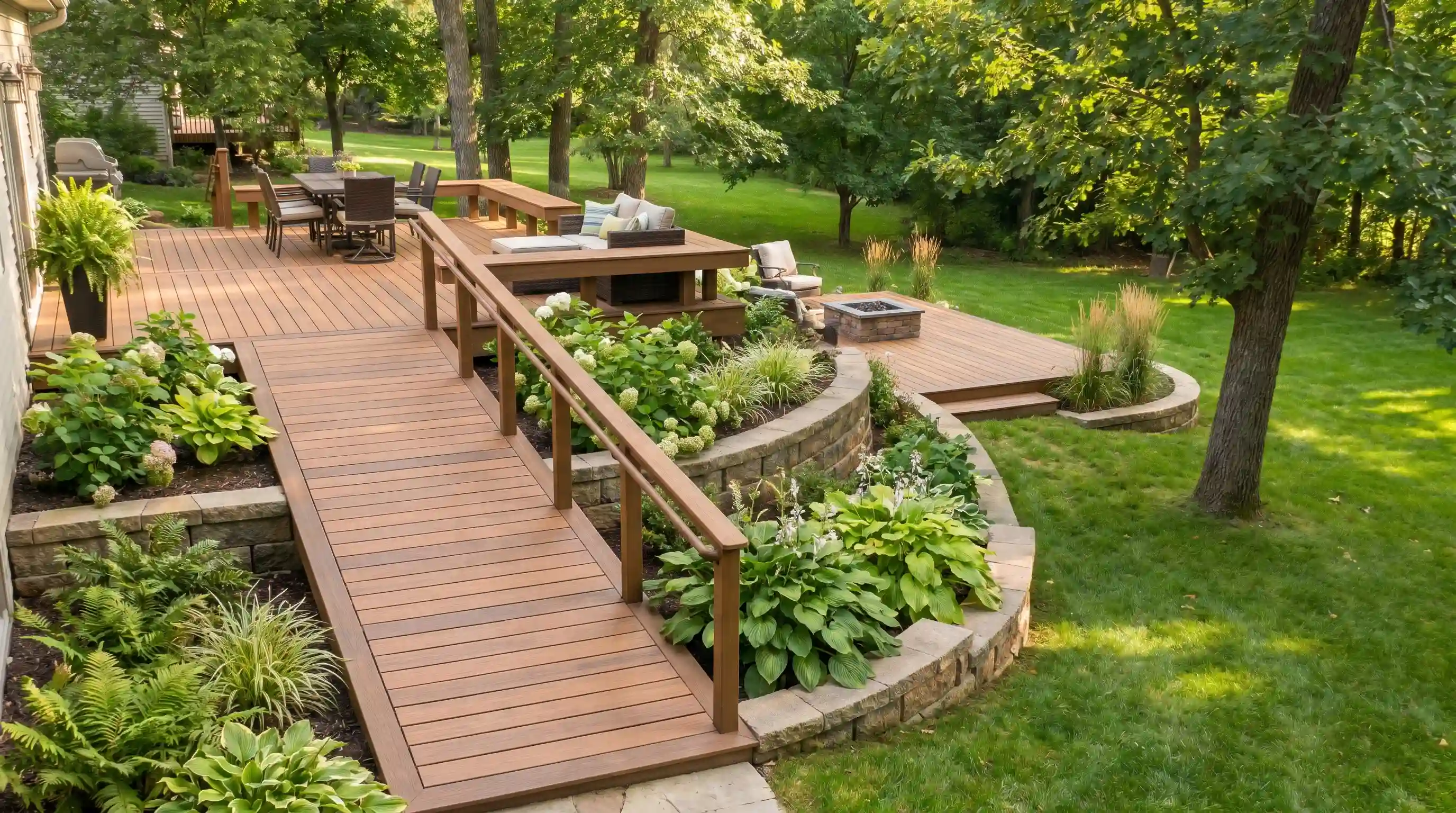
A tiered deck solves the usable-space problem on a slope while keeping each planted zone genuinely accessible for maintenance.
Build two or three-deck platforms at different elevations, connected by short flights of steps.
Between the deck levels, retain a planting bed on each slope face. The deck gives you hard, weather-resistant outdoor living space.
The planted tiers between decks give you year-round greenery that softens what could otherwise look like a construction site.
Composite decking handles moisture better than timber on sloped sites, particularly where the planting beds channel water toward the deck posts over time.
This idea works especially well when the slope faces the house. Each deck level is visible from the windows above, so the planted tiers are always in view.
12. Tiered Herb Spiral
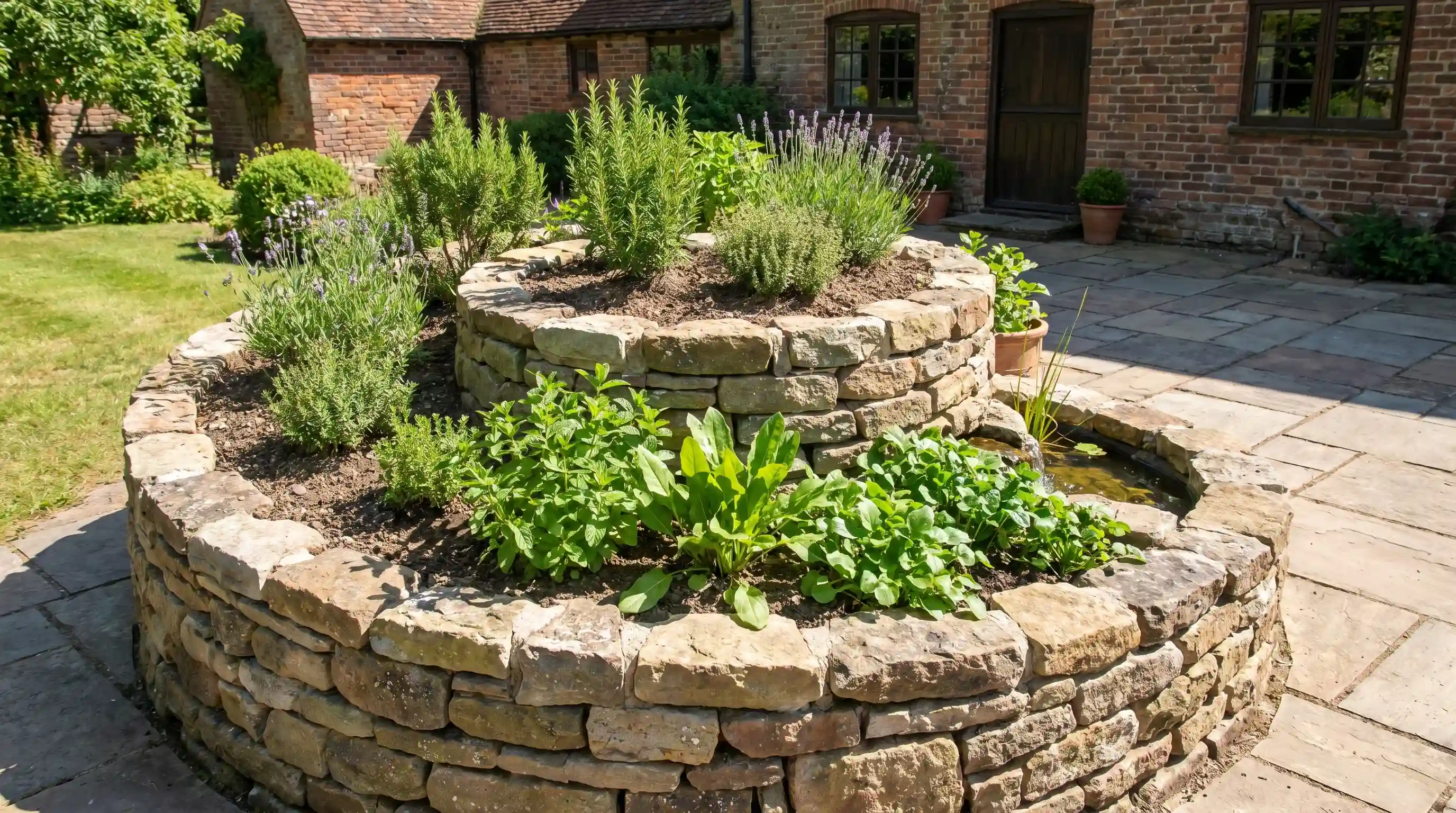
A herb spiral is a raised planting structure that creates multiple microclimates in a small footprint, and it is one of the few tiered designs that works equally well on flat ground and on a slope.
The structure spirals upward from a wide base to a narrow top, typically reaching three to four feet at the peak.
The south-facing upper zone stays dry and warm: plant Mediterranean herbs such as thyme, rosemary, and sage there.
The lower, shadier north-facing section retains moisture: mint, chives, and parsley belong here.
Coriander sits in the middle zone. The whole structure creates five or six distinct growing environments within about six square feet of ground space.
Build the outer walls from dry-stack stone, brick, or treated timber. Fill each level with free-draining growing medium.
A single herb spiral can replace a much larger conventional herb border and takes up a fraction of the planting space.
13. Colour-Zoned Tiered Planting
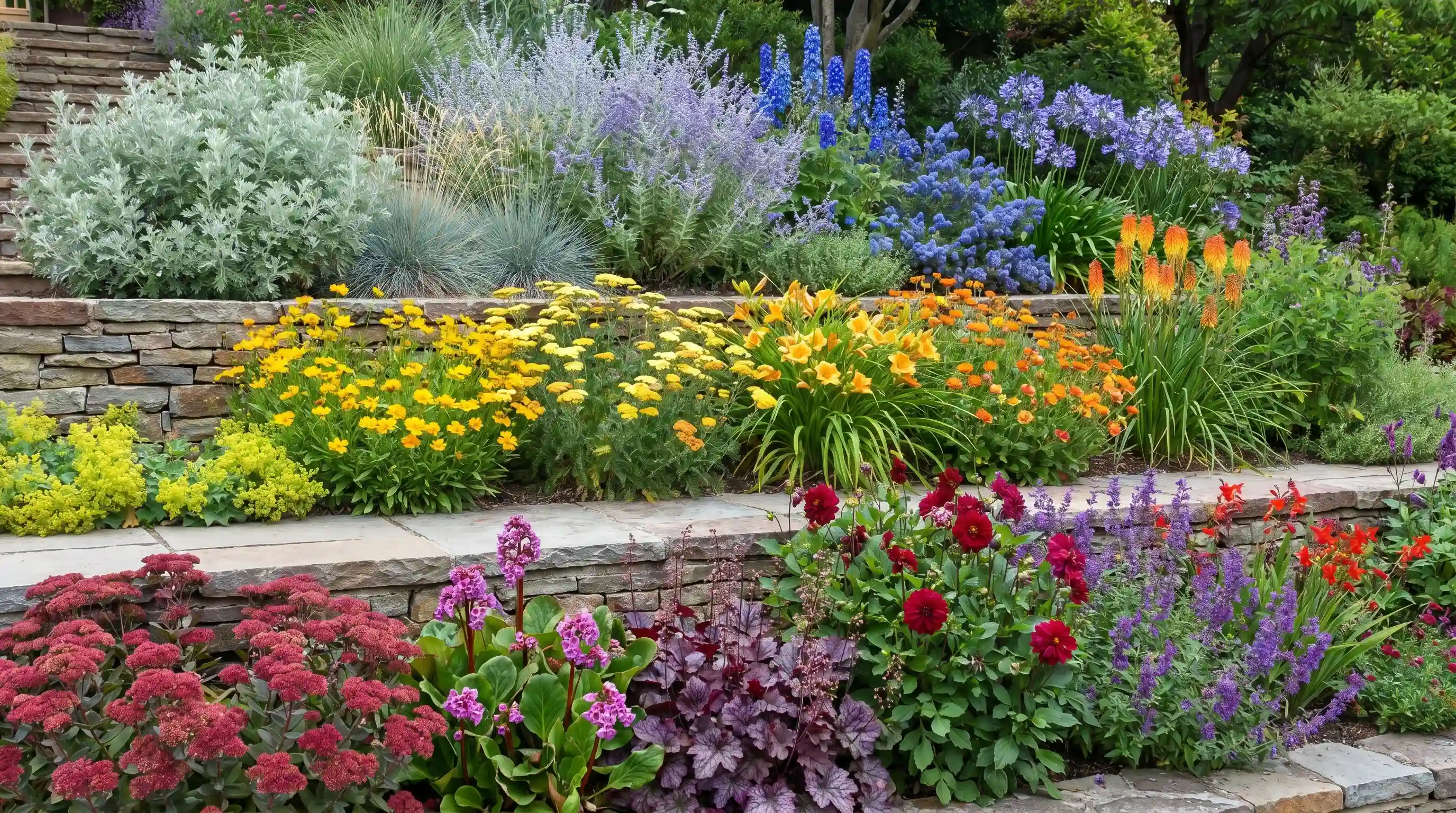
Most tiered gardens treat each level as a separate growing space and plant them independently.
A colour-zoned approach does the opposite: it designs the entire slope as one coordinated planting canvas.
Assign a palette to each tier, and let the palettes flow into one another rather than stop abruptly at the wall face.
A common sequence that works well: cool silvers and blues at the top (catmint, Russian sage, blue fescue), shifting to warm yellows and oranges in the middle levels (rudbeckia, helenium, achillea), ending with rich deep reds and purples at the base (astrantia, salvia, dark heuchera).
The colour gradient pulls the eye through the tiers from top to bottom, making the whole slope read as one designed piece rather than a series of retaining walls with plants in between.
This approach works best on south or west-facing slopes where the full colour range gets enough light to perform well through the season.
14. Tiered Garden With Integrated Pergola or Shade Structure
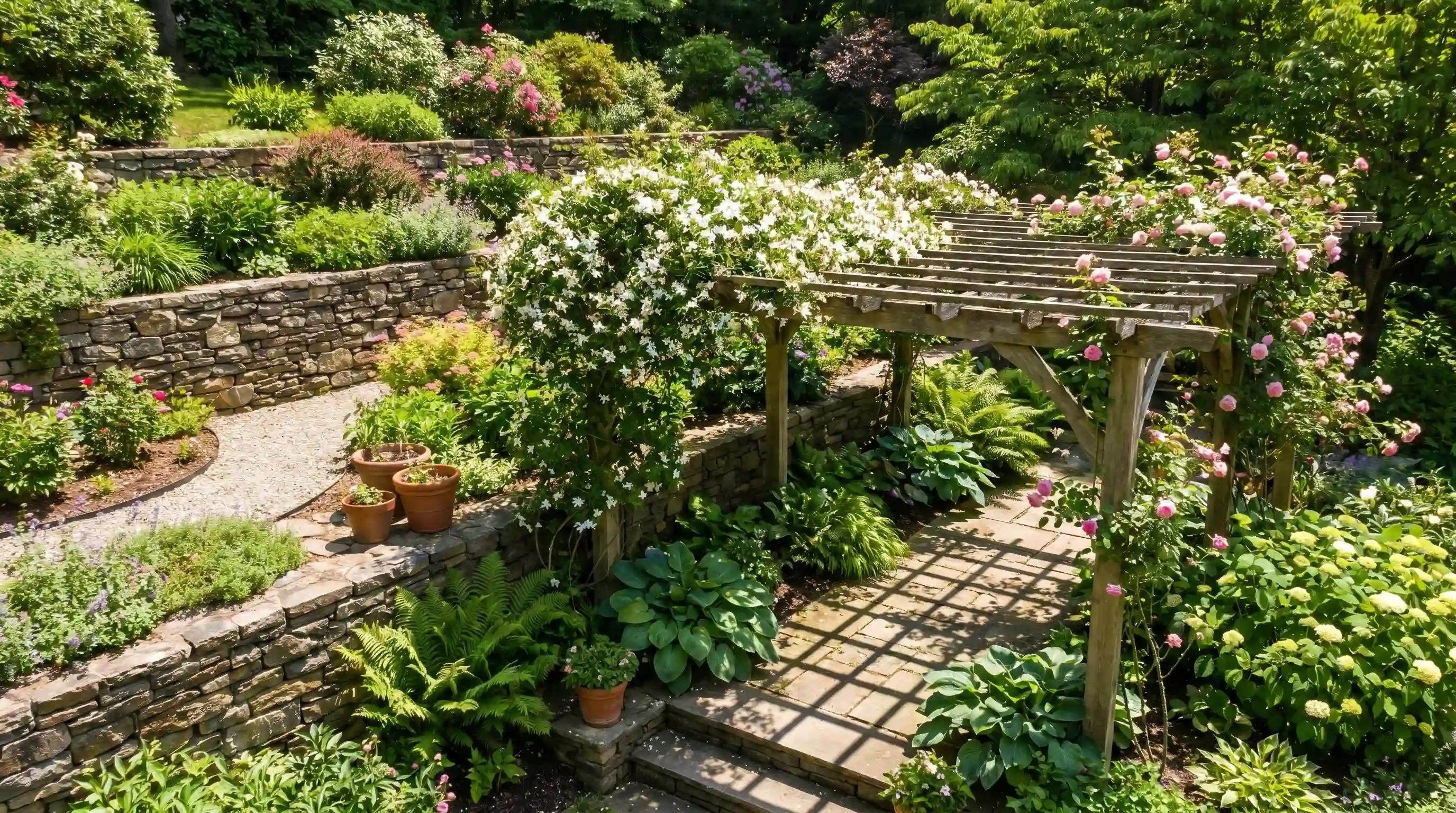
A pergola sited on one of the mid-slope tiers creates a destination on a level that would otherwise just be a planting area.
It also adds vertical structure, making the whole design feel more intentional when viewed from below or from the house.
Position the pergola on the widest tier that gets the most use. The uprights anchor directly into the retaining wall if it is substantial enough, or into independent footings set just behind the wall face.
Grow climbing roses, jasmine, or wisteria up the uprights to soften the structure from the start.
The pergola casts dappled shade on the tier below, creating a separate microclimate for shade-tolerant plants without any additional structure.
This combination of horizontal tiers and vertical pergola gives a sloped garden genuine three-dimensional presence, not just a series of level changes.
15. Natural Meadow Tier as Contrast to Manicured Levels
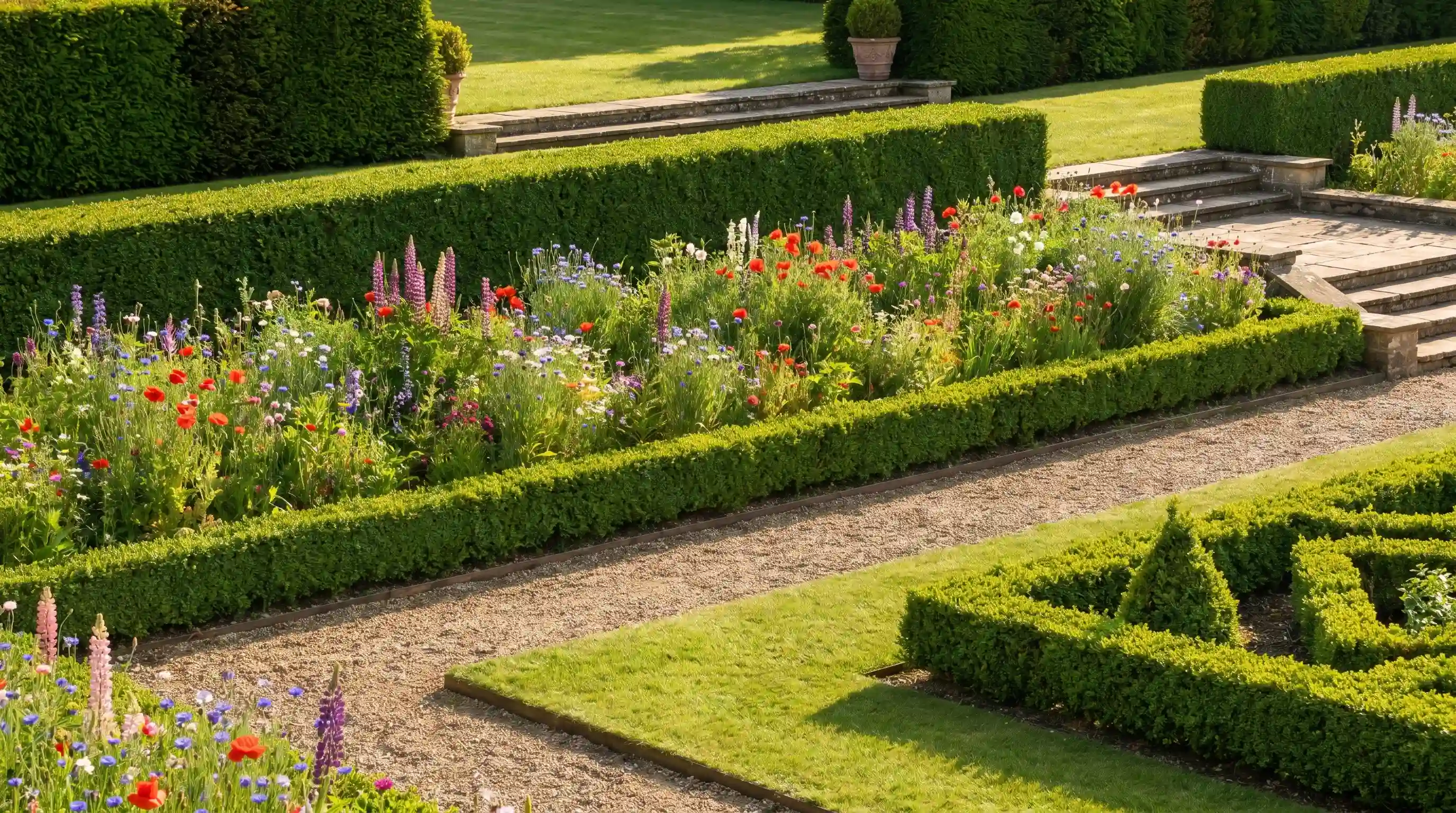
One of the most effective things you can do in a tiered garden is let one level go deliberately wild.
Choose a mid-slope or upper tier and sow it with a native wildflower or prairie mix rather than maintaining clipped grass or formal planting.
The contrast between the structured, maintained tiers and the loose, flowering meadow tier creates a tension that makes both look better.
The meadow also acts as a habitat zone: one tier of native planting supports far more insect and bird life than three tiers of ornamental species.
Mow a clean edge where the meadow tier meets the retaining wall to make it clear the wildness is intentional, not neglect. Cutting once in late autumn keeps the meadow productive year after year.
16. Rain Garden Tier
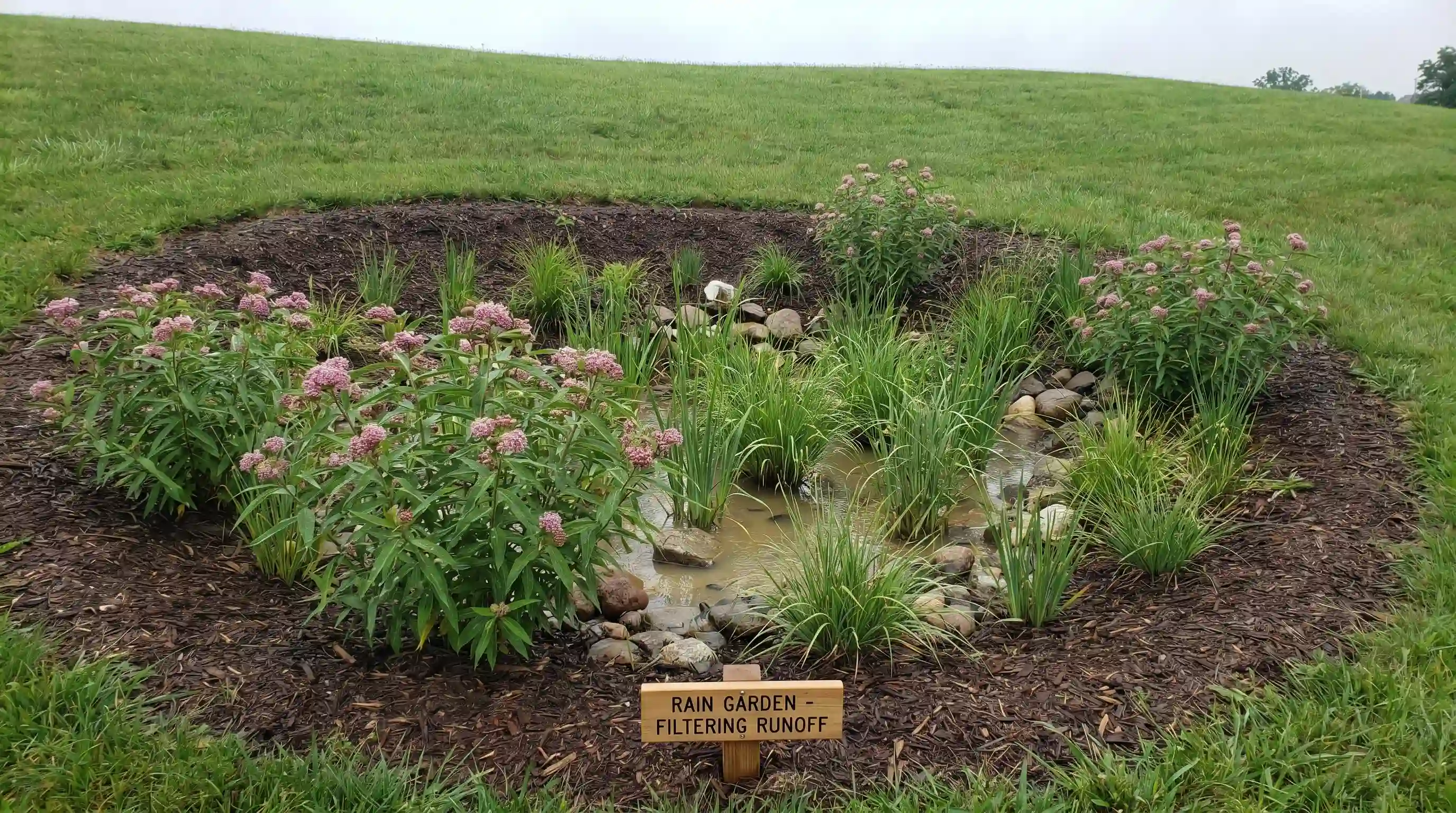
A rain garden is a shallow planted basin that captures and filters surface runoff. On a tiered slope, a dedicated rain garden level turns a drainage problem into a designed feature.
Position the rain garden tier at the lowest natural collection point of the design, typically the widest tier at the base.
The basin is slightly concave rather than flat, with sides that taper to a planted centre. Water from the upper tiers collects here, slowly soaks into the soil, and is filtered by the planting before draining away.
The basin should be dry within 24 to 48 hours after rainfall. If it stays wet longer than that, the underlying drainage is inadequate and needs improving before planting begins.
Plant the rain garden tier with species that tolerate both wet and dry conditions: swamp milkweed, blue flag iris, switchgrass, and native sedges all perform well.
This tier also tends to be the most visually productive planting zone in the garden because the extra moisture drives strong, consistent growth.
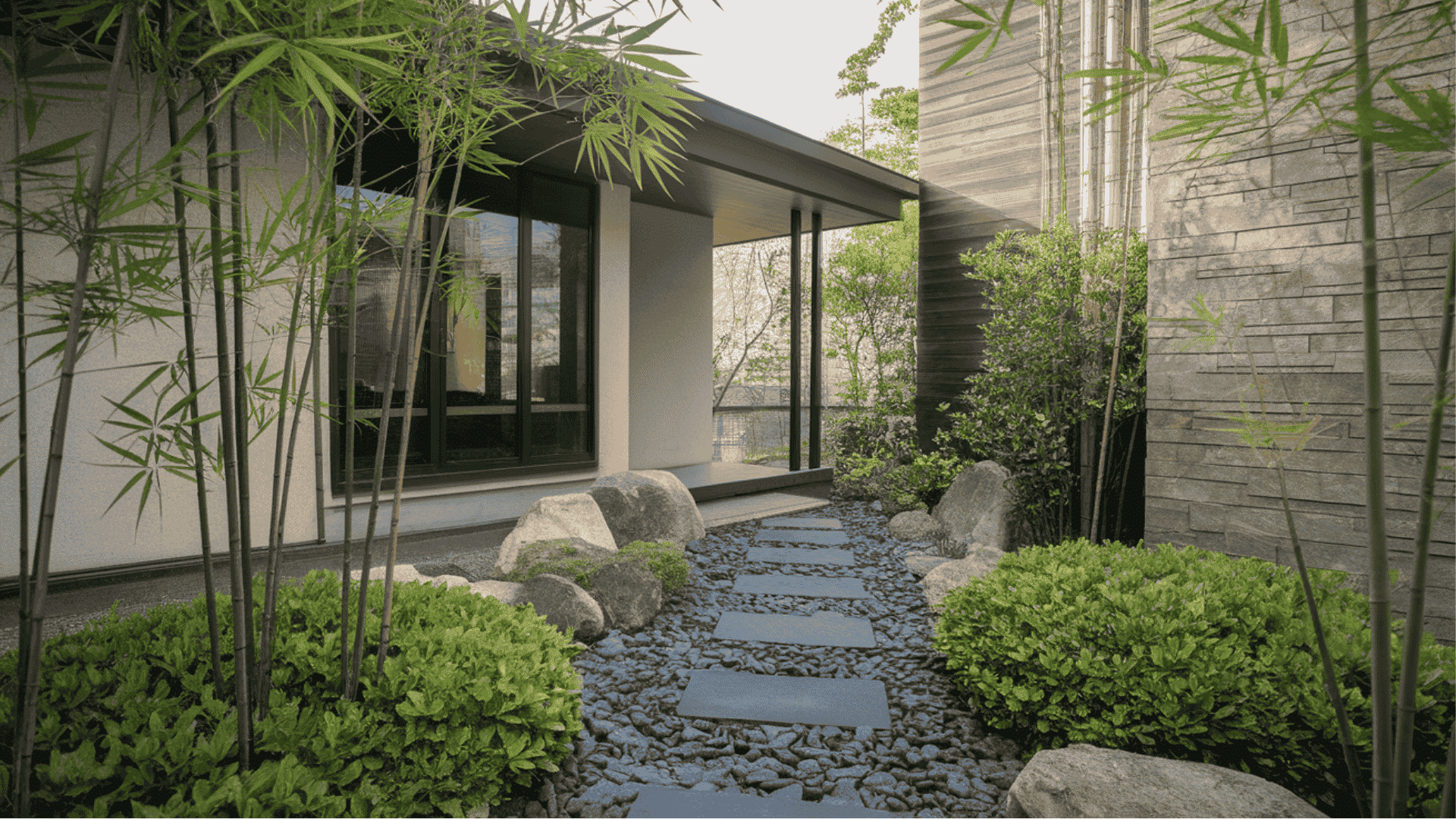
17. Privacy Screen Tier Using Ornamental Grasses or Bamboo
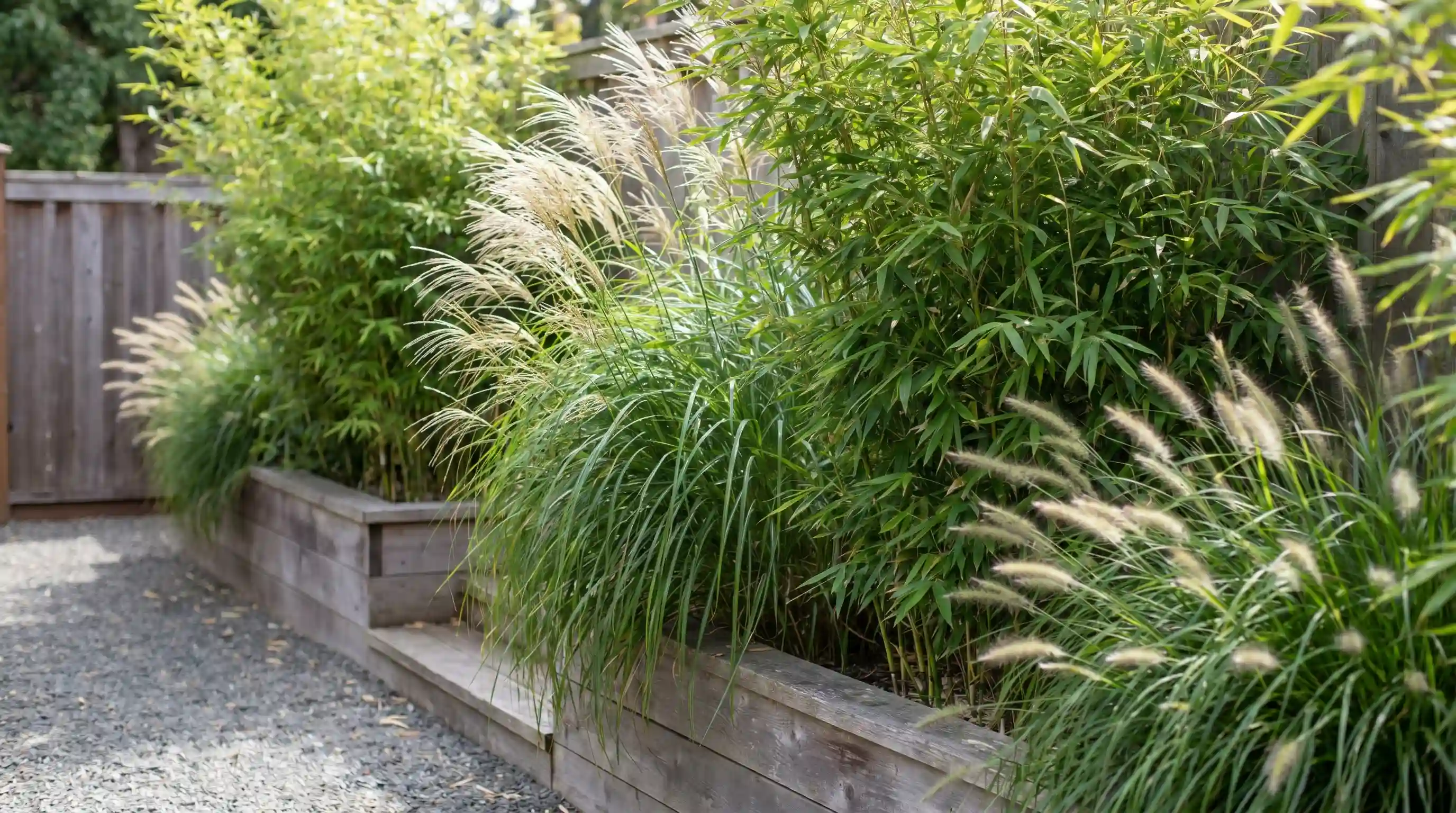
The boundary at the edge of a tiered garden is usually a wall or a fence. It does not have to be.
A dedicated planting tier at the garden’s perimeter, filled with tall ornamental grasses or clumping bamboo, creates a living screen that performs better than a hard boundary in almost every way.
It filters wind rather than deflecting it, which prevents the turbulence that solid fences create.
It changes with the season, moves in the breeze, and provides habitat. It is also far cheaper than a fence at any meaningful height.
For a 6 to 8-foot privacy screen, Karl Foerster feather reed grass reaches 5 to 6 feet and holds through winter.
Clumping bamboo (Fargesia species) reaches 8 to 12 feet without spreading aggressively. Giant miscanthus reaches 10 to 12 feet in a single season in most US growing zones.
Position the privacy tier at the downhill boundary of a downward-sloping garden, or along the sides if you want to screen views from adjacent yards.
The tier retaining wall creates the base height boost that makes even medium-height grasses perform like tall ones.
How to Plan a Tiered Garden Before You Build
Zone first, then measure depth. Assign a purpose to each tier before picking materials. Each usable tier needs at least 3-4 feet of depth. Anything shallower is a decorative ledge.
Pull a permit. Most US counties require permits for retaining walls over two feet. Some require engineering review for heights above 4 feet. This is not optional. Call your local building department before any wall exceeds two feet.
Plan drainage before anything. Water collecting behind a retaining wall destabilizes it during the rainy season. Mortared walls need weep holes. Every tiered design needs a plan for where surface water exits.
Commit to materials before ordering. Switching materials mid-project is the most common cause of visual incoherence in finished tiered gardens.
Many sloping gardens follow these exact steps, and real finished projects with timelines and costs show how the sequence plays out from start to finish.
Conclusion
The tiered garden ideas that work long-term are the ones where each level was designed before it was built. A fire pit tier planned this way serves as a fire pit zone.
A planting level designed at the right depth ensures proper planting. A formal stone terrace that had its step materials matched to its walls looks intentional from day one.
Go back through the list and pick the two ideas that fit your yard and your style. Then ask yourself: what is this level for? Answer that question for each tier before you buy a single bag of cement.
Which tiered garden idea fits your space? Drop your yard sit. Drop your yard setup in the comments below, and I will help you figure out which direction makes the most sense.
Frequently Asked Questions
1. What is the 70/30 Rule in Gardening?
The 70/30 rule suggests dedicating about 70% of a garden to dominant plants and 30% to accent varieties, creating balance, visual interest, and a cohesive design.
2. What to Style a Tiered Garden?
Style a tiered garden with layered plant heights, retaining walls, pathways, and focal points. Mix textures and colors to add depth while maximizing usable space.
3. What is the Most Efficient Garden Layout?
The most efficient garden layout groups plants by water and sunlight needs, uses vertical space, and incorporates raised beds or rows for easy access and maintenance.