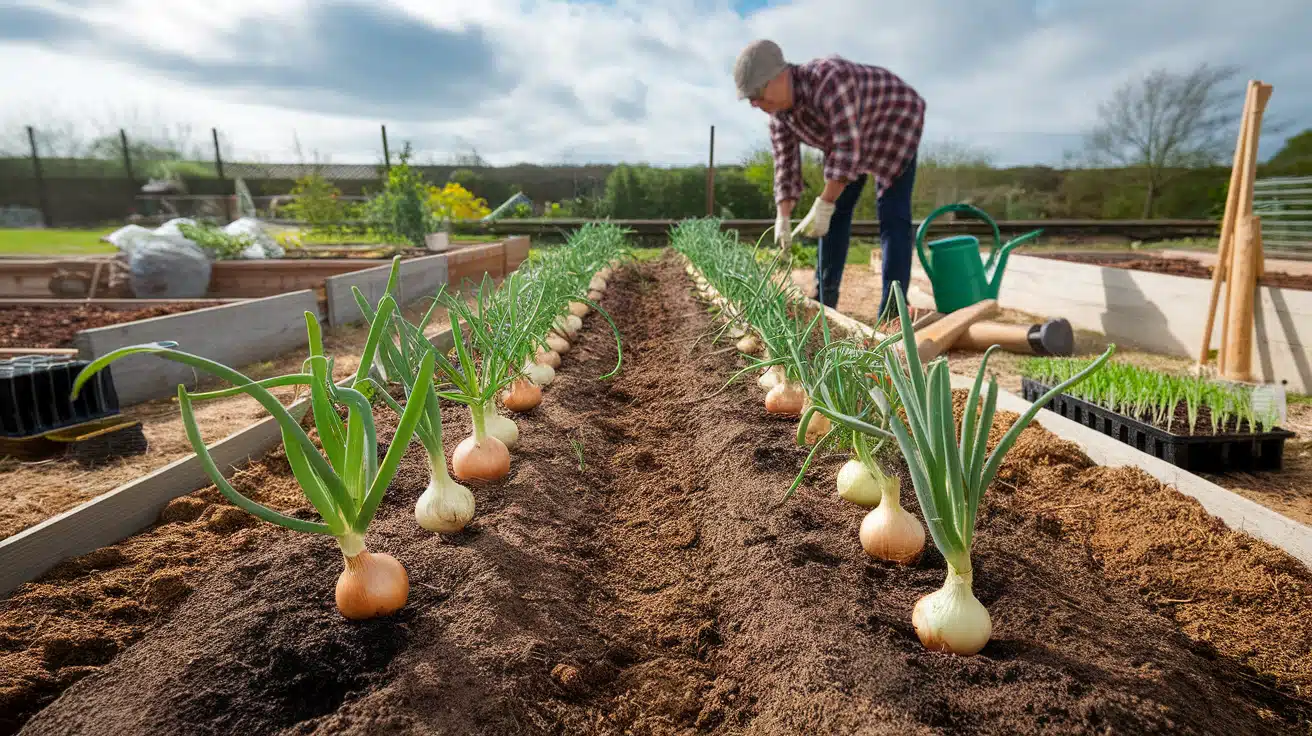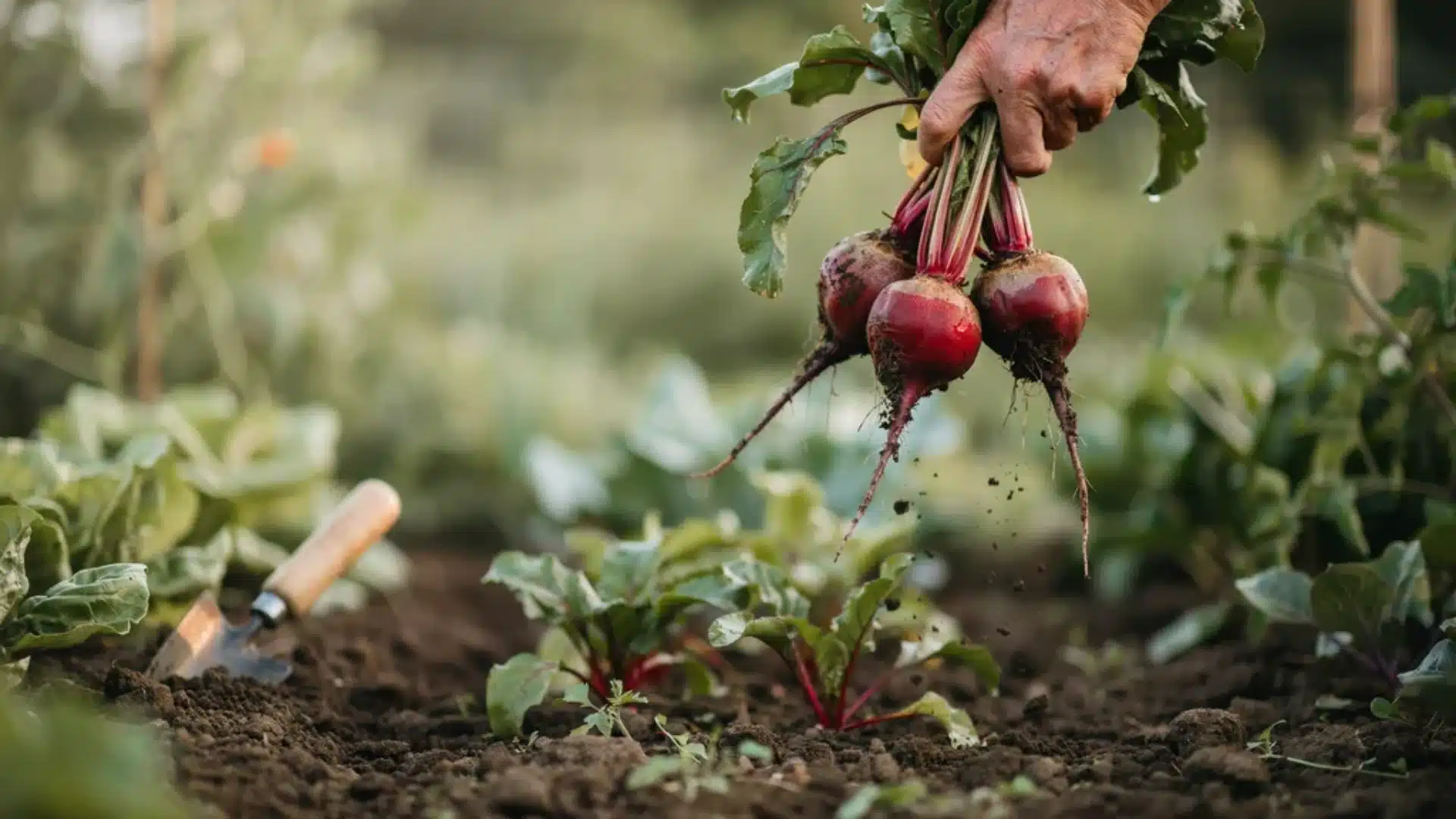

Most people think growing beetroot is complicated. It is not.
You have probably pulled out small, woody, or cracked roots before and blamed yourself. But the truth is, a few simple mistakes during sowing or watering cause almost all of those problems.
Learning how to grow beetroot the right way changes everything. This post covers every stage from choosing the right variety and sowing beetroot seeds correctly to harvesting, storing, and avoiding the most common mistakes.
Follow these steps, and you will have fresh, sweet roots ready to pull from the ground in as little as 50 days.
Why Growing Beetroot Is Worth Your Time
Beetroot is one of the fastest, most forgiving crops in the kitchen garden. Here is why it deserves a spot in yours:
- Ready in 50–70 days from sowing for full-sized roots. Baby beets can be picked in as little as 40 days.
- You eat the whole plant: Young leaves go well in salads. Mature leaves can be wilted and used like spinach.
- Shop varieties are limited: When you grow your own, you can choose from red, gold, white, pink, and candy-striped types.
- It fits small spaces: Beetroot grows well in raised beds, containers, and grow bags.
- It is packed with nutrients: Beetroot contains folate, potassium, vitamin C, and antioxidants such as betanin, which gives red varieties their deep color.
Growing it yourself also means you harvest at peak sweetness, something a supermarket shelf cannot offer.
Best Beetroot Varieties to Choose
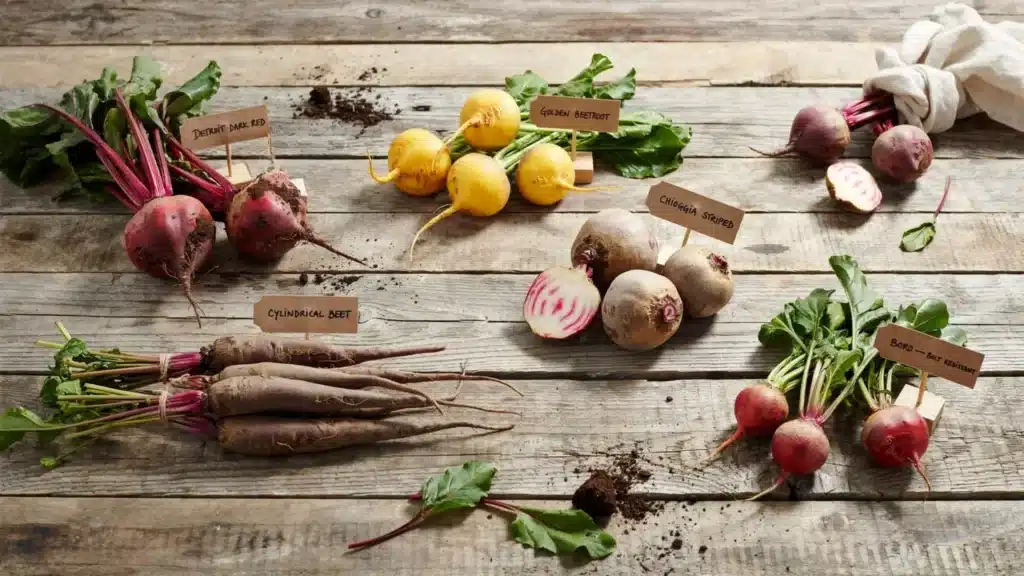
Choosing the right variety makes a real difference, especially for early sowings. Here are the main types:
1. Red and purple varieties are the most common. Detroit Dark Red, Bull’s Blood, and Early Wonder are reliable choices. They produce firm, sweet roots and handle most growing conditions well.
2. Golden varieties are milder and slightly sweeter than red types. They are a good choice for people who find red beetroot too earthy.
3. Striped varieties like Chioggia (also called Candy Stripe or Bull’s Eye) have a white-and-red interior. They look striking when sliced.
4. Cylindrical varieties grow longer roots rather than round ones. They produce evenly sized slices and are often grown for showing.
5. Bolt-resistant varieties are the most important pick for early sowings. If beetroot gets a cold snap after germination, it can bolt, meaning it runs to seed instead of forming a root.
Varieties like Boro, Avalanche, and Merlin are bred to resist this. Avalanche also reduces the risk of Cercospora leaf spot, while Merlin offers some protection against downy mildew.
Soil and Location: Getting the Base Right
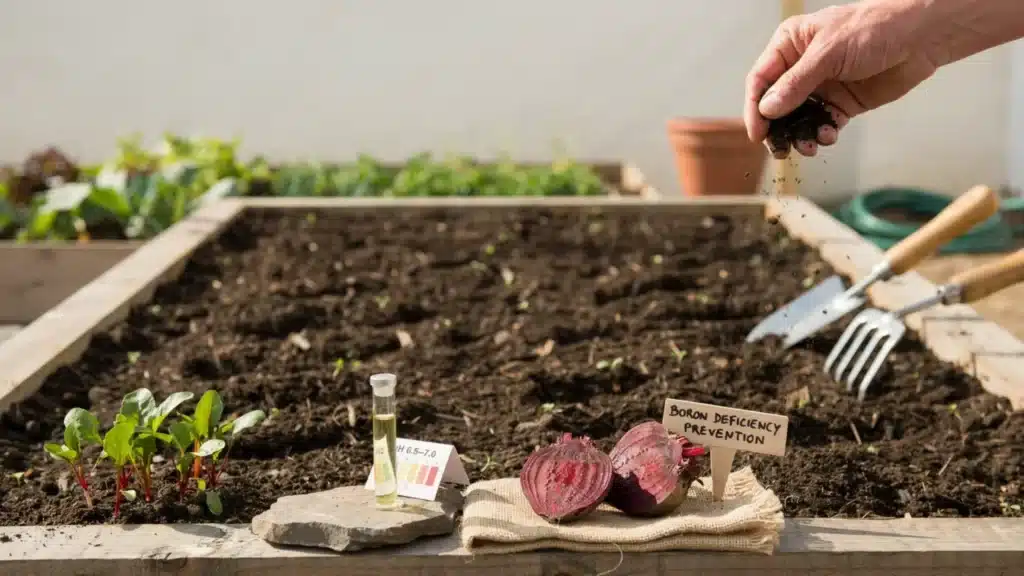
Beetroot needs full sun. Aim for at least 6–8 hours of direct sunlight each day.
The soil should be well-drained and rich in organic matter. A soil pH between 6.0 and 7.0 works best. If your soil is acidic, lime it before sowing.
Beetroot does not grow well in heavy clay or stony ground, which causes forked or misshapen roots.
Before sowing, work compost into the top layer of soil. Beetroot grows best in potassium-rich conditions, and compost helps supply that without chemical inputs.
One nutrient to watch is boron. Unlike most vegetables, beetroot is sensitive to boron deficiency. It shows up as black spots inside the root or corky, cracked skin.
If you grow beetroot in the same spot year after year, test your soil and correct any deficiency before sowing.
When to Start Sowing Beetroot
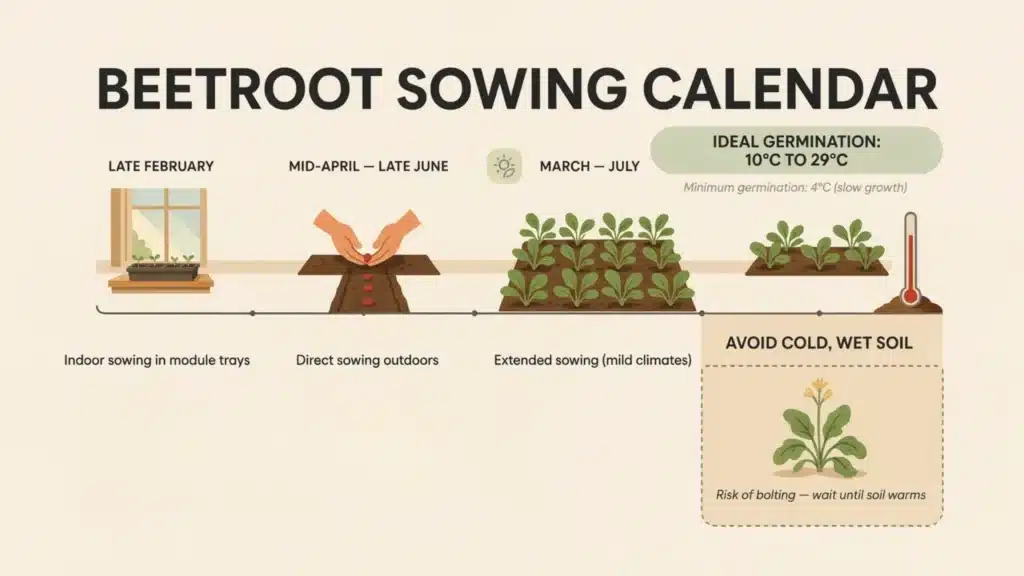
Timing matters. Here is a simple schedule to follow:
- Indoors (module trays): from late February
- Outdoors (direct sow): mid-April to late June
- In milder climates: March through July
Seeds germinate best when soil temperatures sit between 10°C and 29°C. They can germinate as low as 4°C, but growth will be slow.
Avoid sowing when the ground is still cold and wet in early spring this is a common trigger for bolting.
The best approach for a continuous harvest is to sow small batches every two to three weeks. This gives you roots ready to pull from early summer right through to mid-autumn, rather than everything maturing at once.
How to Sow Beetroot Seeds Step by Step
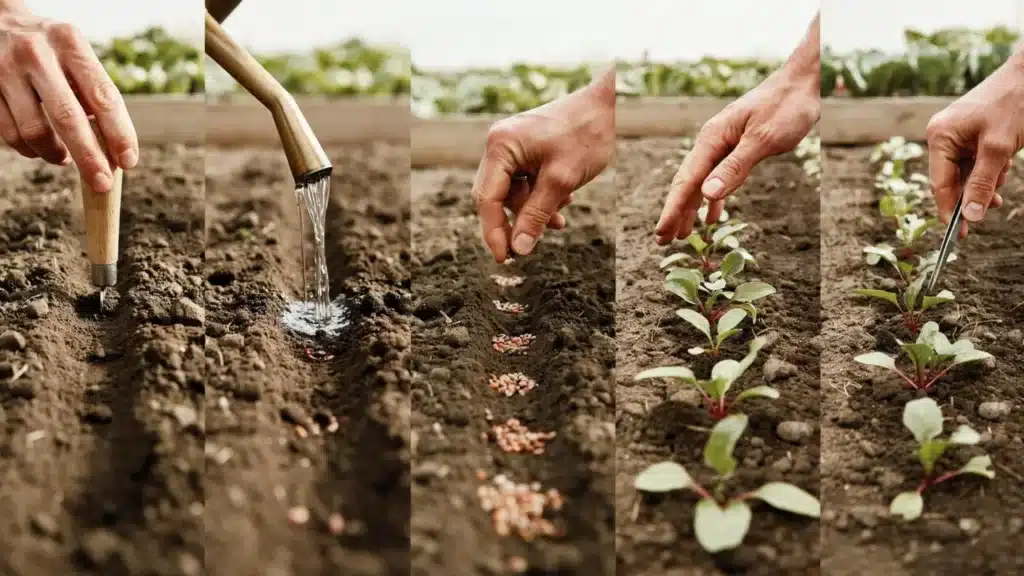
Beetroot seeds look like small, rough, corky clusters. Each one is actually a fruit containing two or three seeds. That means you will often see multiple seedlings pop up from one sowing station, and thinning is essential.
Follow these steps for sowing beetroot outdoors:
Step 1: Make a shallow drill about 1–2.5 cm deep in prepared soil.
Step 2: Water the base of the drill before you drop the seeds in.
Step 3: Place seeds 10 cm apart along the row. Leave 30 cm between rows.
Step 4: Cover lightly with soil and firm down gently.
Step 5: Seedlings emerge in 10–14 days.
Step 6: Once seedlings reach 4–5 cm tall, thin to one plant per station.
Do not replant the seedlings you remove. They rarely establish well after disturbance.
For indoor sowing, drop two or three seeds per module cell. Thin to the strongest seedling per cell when they reach 4 cm.
Transplant outdoors when the soil has warmed, and harden off plants by leaving them outside during the day for a week before planting out.
Watering and Feeding Your Beetroot Plants
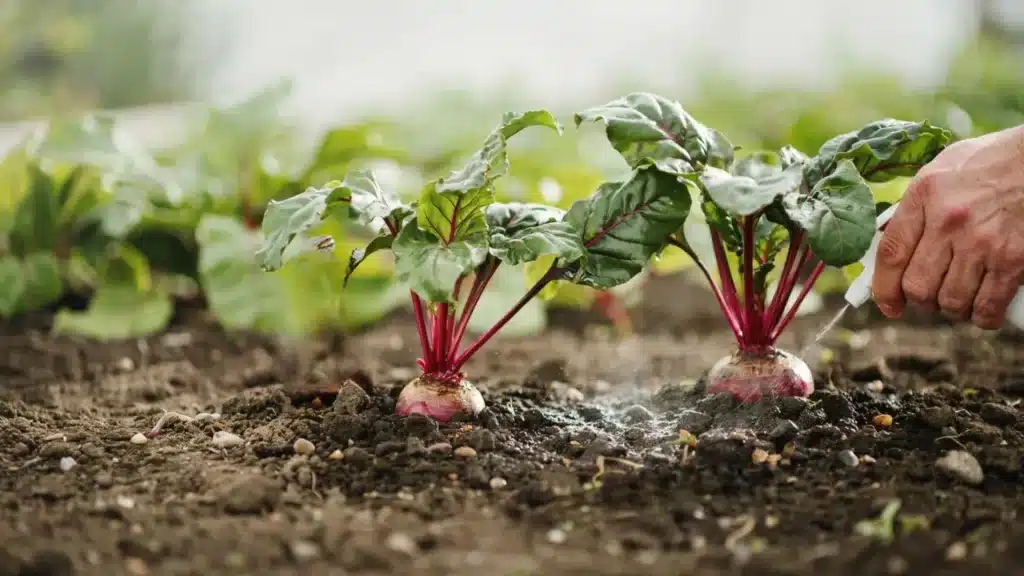
Consistent watering is one of the most important parts of growing beetroot well. Aim for about 25 mm (1 inch) of water per week.
Uneven watering, soaking the soil one week and letting it dry out the next, is the main cause of cracked and split roots. Keep moisture levels steady throughout the growing season.
Water at the base of the plant, not over the leaves. Wet foliage in damp conditions encourages fungal disease. Drip irrigation works well for beetroot beds.
For feeding, start with a balanced fertilizer after sowing to support early root development. As spring turns to summer, add a nitrogen-based feed every 4–6 weeks to support leaf growth.
Pale or yellowing leaves at this stage are often a sign of nitrogen deficiency in plants. Catching it early keeps your crop on track.
Switch to a potash fertilizer in mid-summer to help the roots swell properly. Potassium supports root development and improves the sweetness of the finished beet.
If you prefer to avoid synthetic inputs, using an organic fertilizer such as pelleted chicken manure works well through the whole season and feeds the soil at the same time.
Reduce feeding in autumn as the growing season winds down. Unlike carrots and parsnips, beetroot benefits from nitrogen throughout its growth. Do not skip it in the belief that root crops should not have it.
Thinning and Ongoing Care
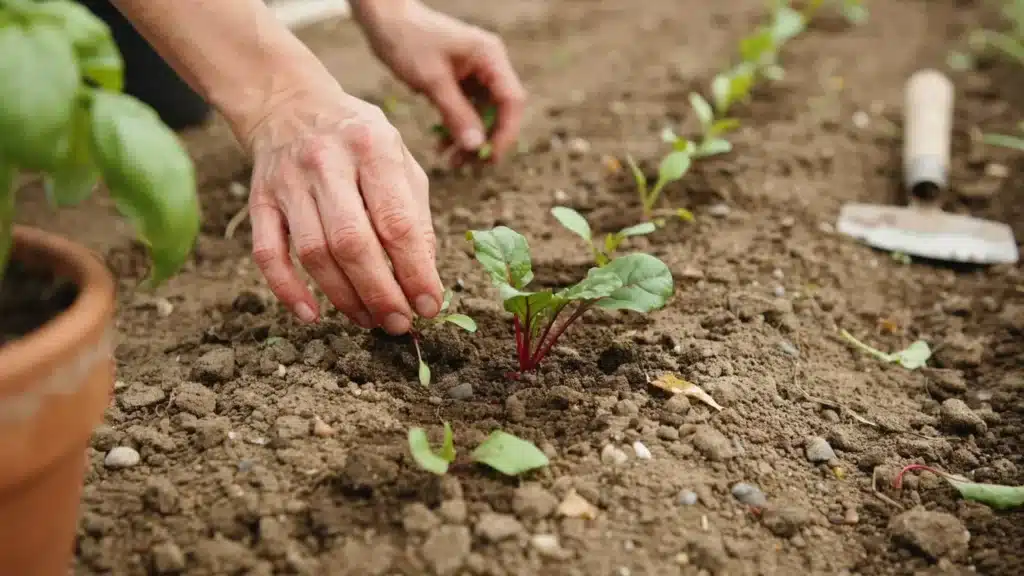
Once seedlings reach 4–5 cm tall, thin them to one plant per 10 cm station. Leaving plants too close together is one of the main reasons roots stay small.
Keep the growing area free of weeds. Weeds compete for the same nutrients and moisture that beetroot needs. Hoe carefully beetroot roots sit close to the surface, and rough hoeing can damage them and affect growth.
For container plants, remove outer leaves as they become very full. This helps the root develop instead of the plant putting all its effort into foliage.
Common Beetroot Problems and How to Fix Them
Here are the most frequent problems and what to do about each one:
1. Bolting (plant runs to seed early): Caused by cold temperatures or sudden changes in day length. The root fails to form properly. Use bolt-resistant varieties for any sowing before late April.
2. Woody or cracked root: Usually caused by irregular watering or harvesting too late. Water consistently and harvest before roots exceed 7 cm (3 inches) in diameter.
3. Small roots that do not swell: Plants are either too close together or the soil lacks nutrients. Thin seedlings to 10 cm apart and enrich soil with compost before the next sowing.
4. Beet leaf miner: The larvae of a small fly tunnel inside the leaves, creating large, irregular pale patches. Remove affected leaves and use row covers as a barrier for future sowings.
5. Aphids (blackfly and greenfly): Spray with a diluted solution of water and a few drops of washing-up liquid, or use neem oil. Plant alliums nearby; they help deter flea beetles and aphids.
6. Cercospora leaf spot and downy mildew: These are both fungal diseases. Remove infected plants immediately to stop the spread. In future seasons, choose resistant varieties such as Boro for leaf spot and Merlin for mildew.
How to Store Beetroot After Harvest
Proper storage means you can enjoy your harvest for months after the growing season ends.
1. After lifting:
- Do not wash the roots. Brush off loose soil gently.
- Twist off the leaves rather than cutting them. Cutting the stems causes the root to bleed and shortens its shelf life.
2. Short-term storage: Place roots in a perforated plastic bag in the vegetable drawer of your fridge. Stored this way, beetroot keeps for one to three months.
3. Long-term winter storage: Layer roots in wooden crates or boxes with damp sand, sawdust, or peat moss. Roots should not touch each other. Keep the crate in a cool, dark place at around 3–4°C, such as an unheated cellar or garage. Check monthly and remove any roots that show signs of rot.
4. Freezing: Peel, chop, and freeze raw or cooked. Raw frozen beetroot works well for soups and roasting.
5. Saving seed: Let one or two plants go to seed at the end of the season. Dry the seeds fully, then store them in a labeled paper bag in a cool, dry spot. Beetroot seeds stay viable for three to five years.
Conclusion
Growing beetroot is straightforward when you get the basics right. Choose the correct variety for your sowing time, prepare your soil well, sow in batches, water consistently, and harvest before the roots get too large.
These are the steps that separate a strong harvest from a disappointing one.
The real reward in learning how to grow beetroot is that you get to taste something the supermarket never offers fresh, sweet roots pulled at their peak.
Try a golden or striped variety this season and see the difference for yourself.
Have you grown beetroot before, or are you starting from scratch? Share your experience in the comments below.
Frequently Asked Questions
Can Beetroot Help with High Cortisol?
Yes, beetroot can help manage stress and cortisol levels. Its rich nutrient profile supports the body’s stress response and mitigates the physical effects of high cortisol.
Are Coffee Grounds Good for Growing Beets?
No, beets generally do not like coffee grounds. Beets thrive in soil that is neutral to slightly alkaline, whereas coffee grounds can make the soil too acidic.
What Will Happen if I Drink Beetroot Juice Daily for 30 Days?
Drinking beetroot juice daily for 30 days can lower your blood pressure, enhance exercise stamina, and reduce inflammation.