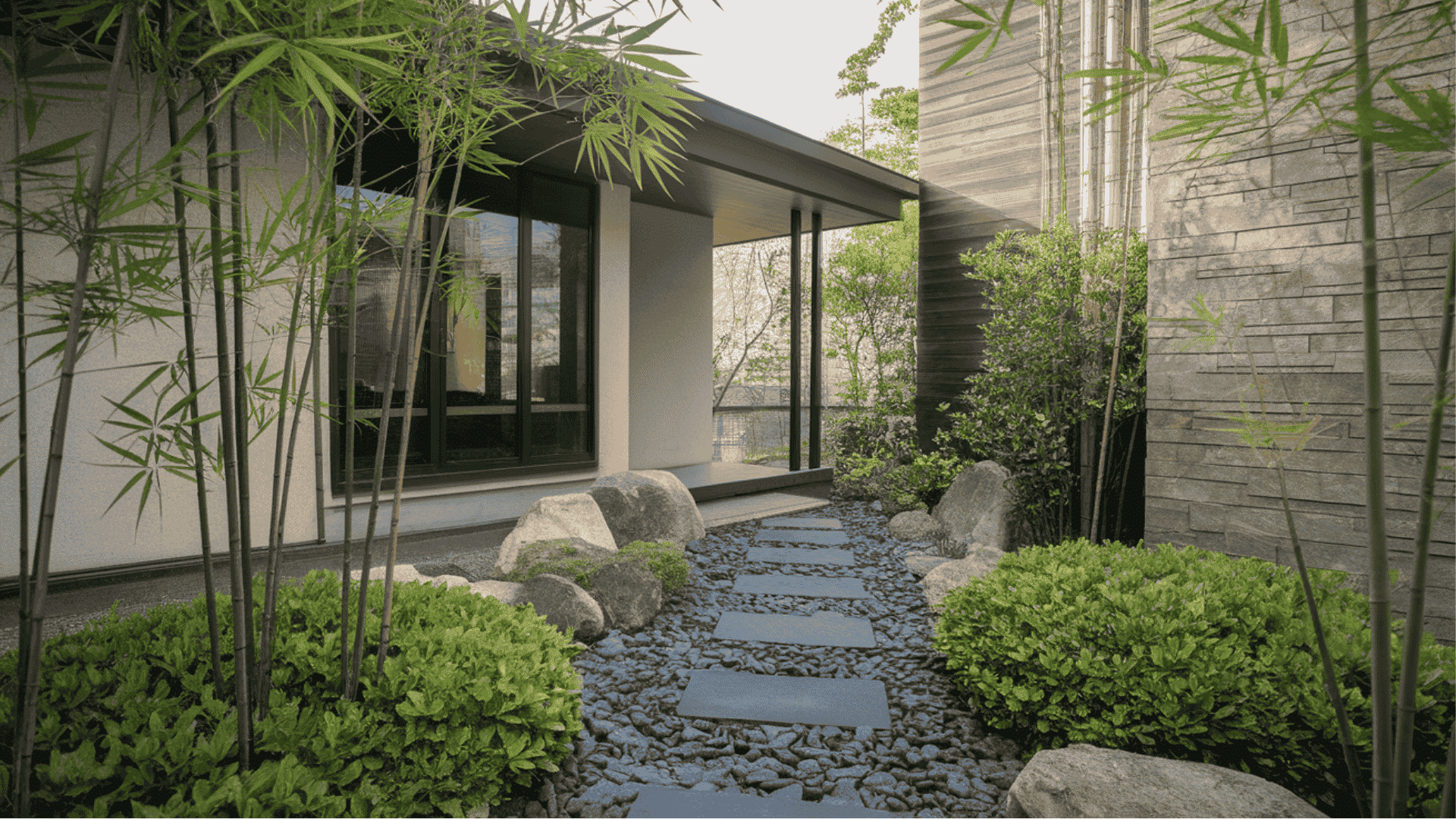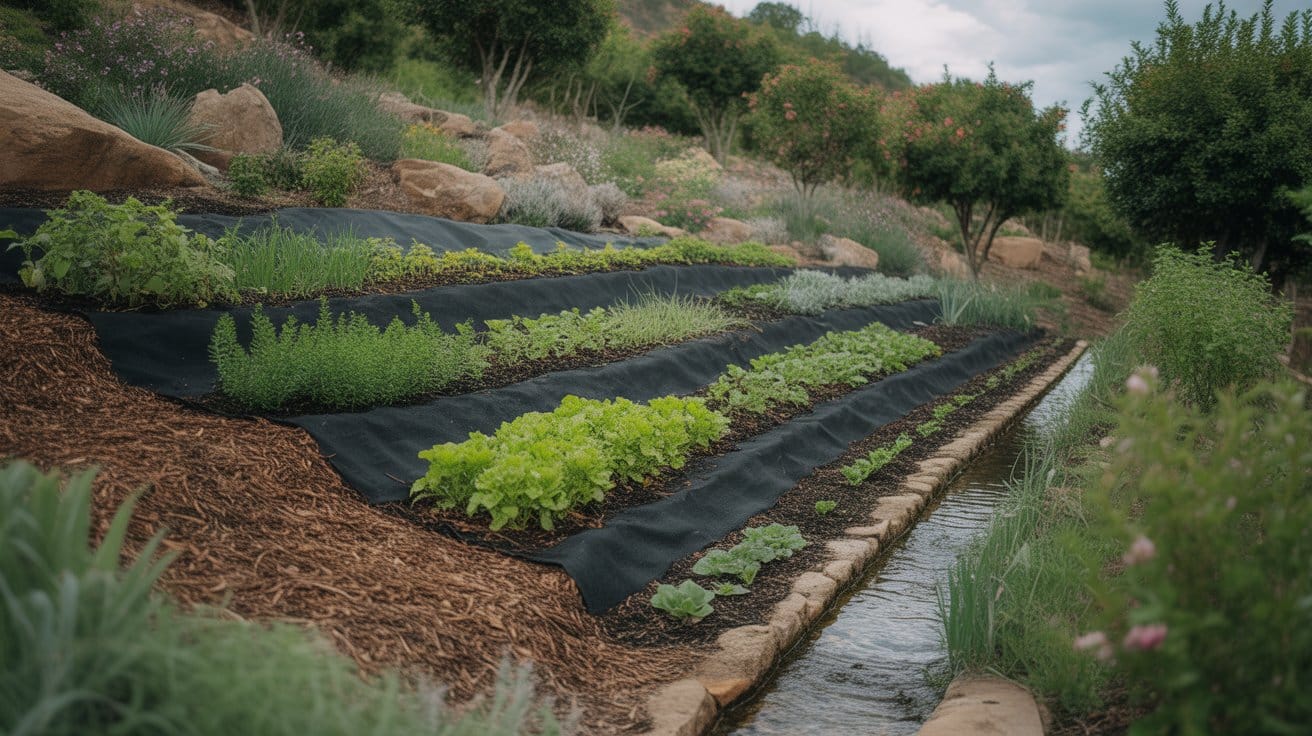

You’ve chosen the right plant, prepared the soil, and planted with care. Then a heavy rain sets in and washes part of it away.
Sloping gardens need careful plant choices to prevent growth problems.
The right plants need to do two things at once. They must tolerate challenging growing conditions and help anchor the soil rather than cause erosion.
This blog looks at strong plant choices for sloping gardens and how to position them effectively.
It also looks into which combinations might cause the ground to become less stable instead of making it better.
Why Choosing the Right Plants Helps Stabilize a Slope
Flat gardens are forgiving. Slopes are not. On a flat surface, water soaks in slowly and evenly. On a slope, water runs fast.
It pulls up soil, leaves roots exposed, and strips your garden bare over time. That pattern shows up clearly in real sloped garden revamps.
The plants you choose must do two jobs at once. First, they need to survive tough conditions: less water retention, more sun exposure, and sometimes poor soil.
Second, they need to hold the ground together.
A plant that does only one of these two things is not the right plant for a slope.
Best Ground Cover Plants for a Sloping Garden
Ground cover plants are your first line of defense on a slope. They spread low and wide. Their roots bind the soil together. And they keep weeds from taking hold.
1. Creeping Juniper (Juniperus horizontalis)
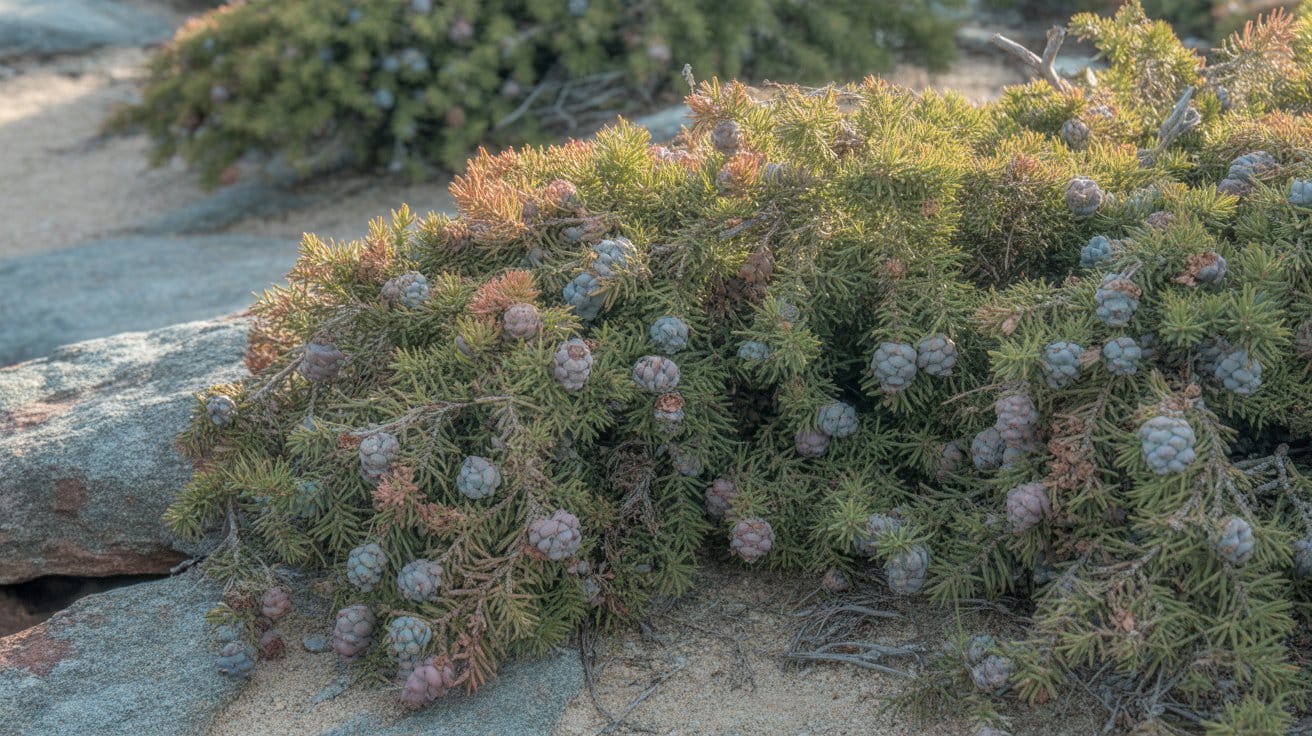
This is one of the most reliable slope plants out there. It spreads wide, roots deeply, and holds soil firmly in place even during heavy downpours.
- Spreads up to 8 feet wide
- Roots hold soil firmly, even on steep gradients
- Handles drought well once established
- Works in full sun to partial shade
It’s really not much to ask, and it can be a great help during heavy rain by keeping your slope secure.
2. Ivy (Hedera helix)
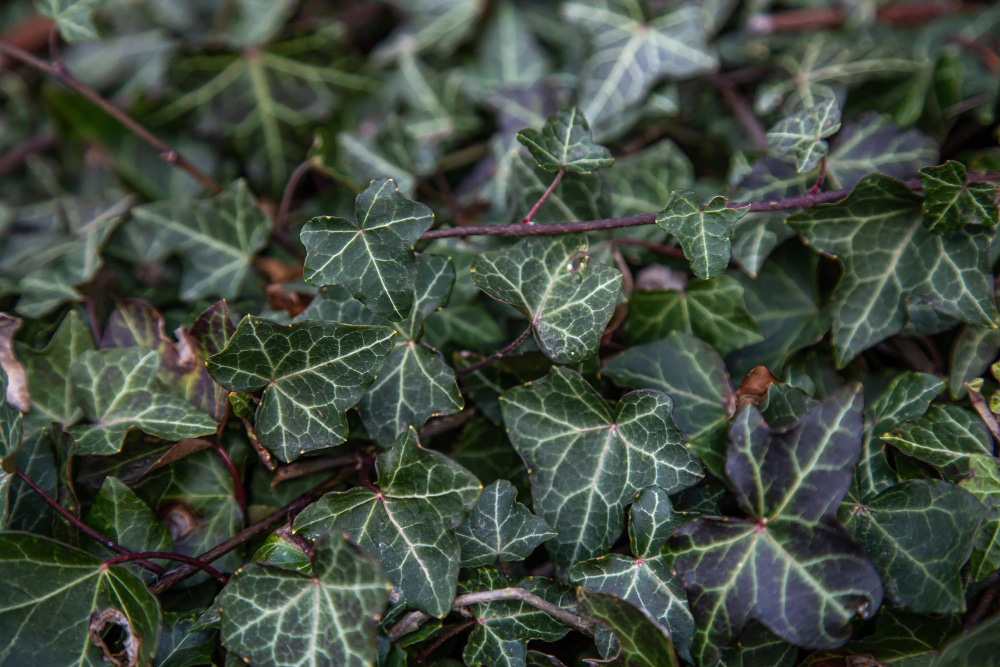
Ivy is fast-growing and can quickly cover large areas of bare slope. It works especially well in shaded spots where most other plants fail to establish.
- Great for shaded slopes where other plants struggle
- A strong root system anchors loose soil
- Stays green year-round
One Caution: Ivy can spread beyond its intended area. Keep it trimmed or use a border to control it.
3. Creeping Phlox (Phlox subulata)
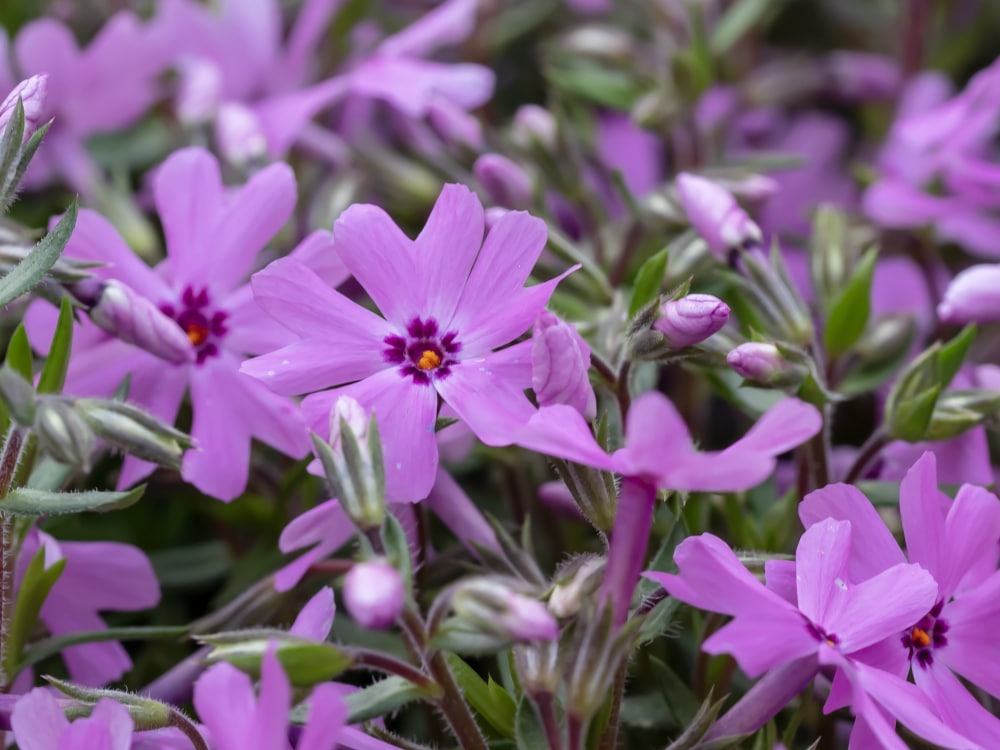
If you want color along with function, creeping phlox delivers both. It spreads into a low, dense mat that covers the ground well and keeps weeds out.
In spring, it produces a thick blanket of flowers that makes a sloped area look well-cared-for without requiring extra effort from you.
- Produces a thick mat of pink, white, or purple flowers in spring
- Low-growing and dense, excellent at blocking weeds
- Handles dry, sandy, or rocky soil well
It looks great and is really effective. That combination is quite special and hard to find.
Best Shrubs for a Sloping Garden
Shrubs add structure to a slope. Their deep, wide-spreading roots are excellent at holding soil through wet winters and dry summers.
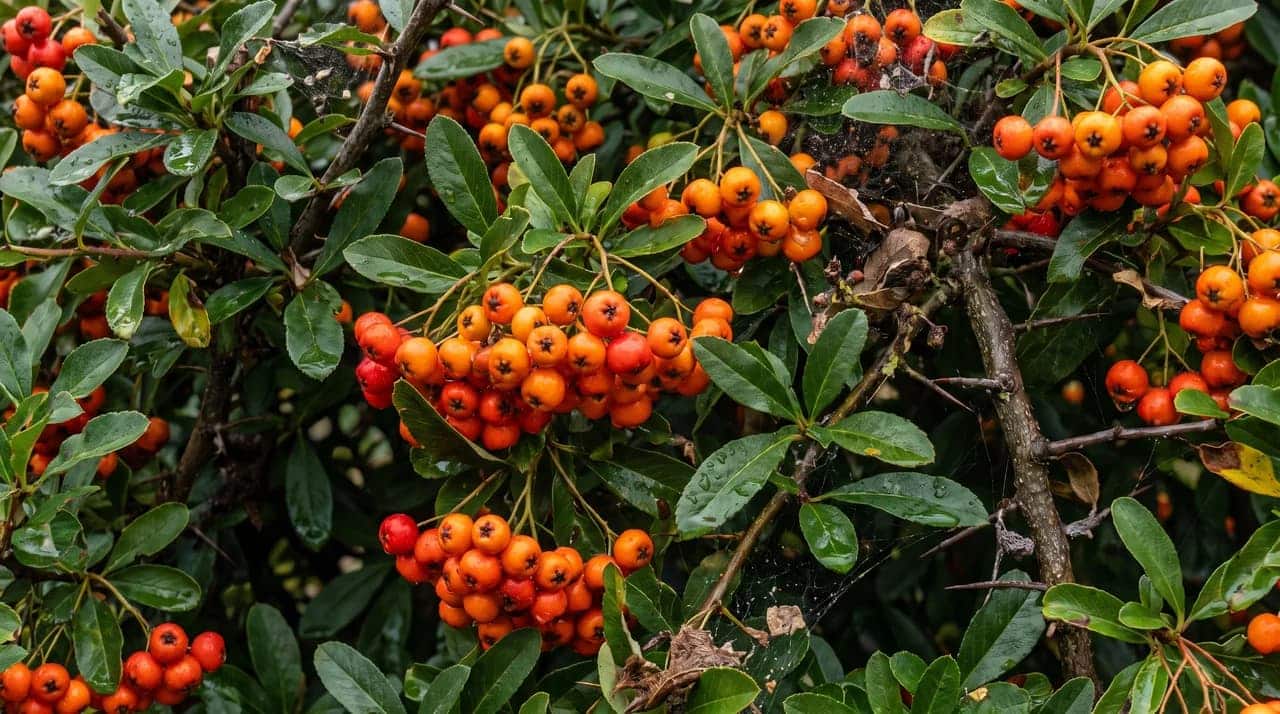
4. Cotoneaster (Cotoneaster horizontalis)
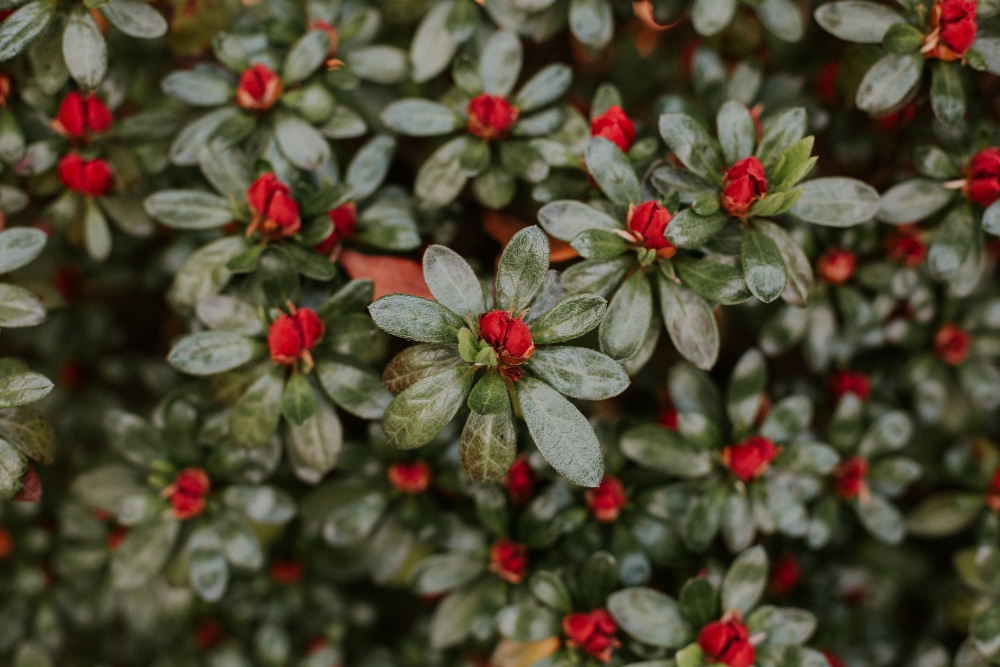
This shrub is built for slopes and performs well in difficult conditions. It grows flat against the ground rather than upright, which makes it useful on sections where other plants might struggle.
Its wide-spreading branches cover a good amount of ground over time and produce berries that attract birds.
- Flat, spreading growth habit hugs the ground
- Produces berries that attract birds
- Handles poor soils and full sun
- Low maintenance once established
Golden Rule: Plant it on steeper sections where soil movement is most likely.
5. Forsythia (Forsythia x intermedia)
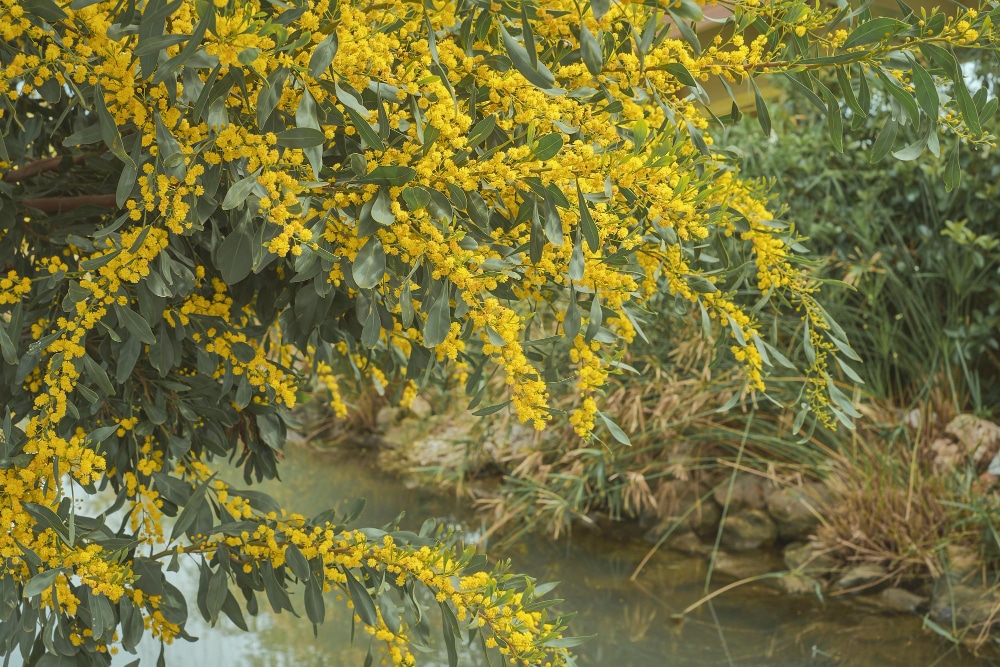
Forsythia is fast-growing and produces bright yellow flowers in early spring. It fills space quickly, which makes it useful when you need visible coverage on a slope in a short time.
Its roots spread widely and help hold soil on mid-level sections, even during heavy rain and wind.
- Roots spread wide and anchor soil on mid-level slopes
- Tolerates heavy rain and wind
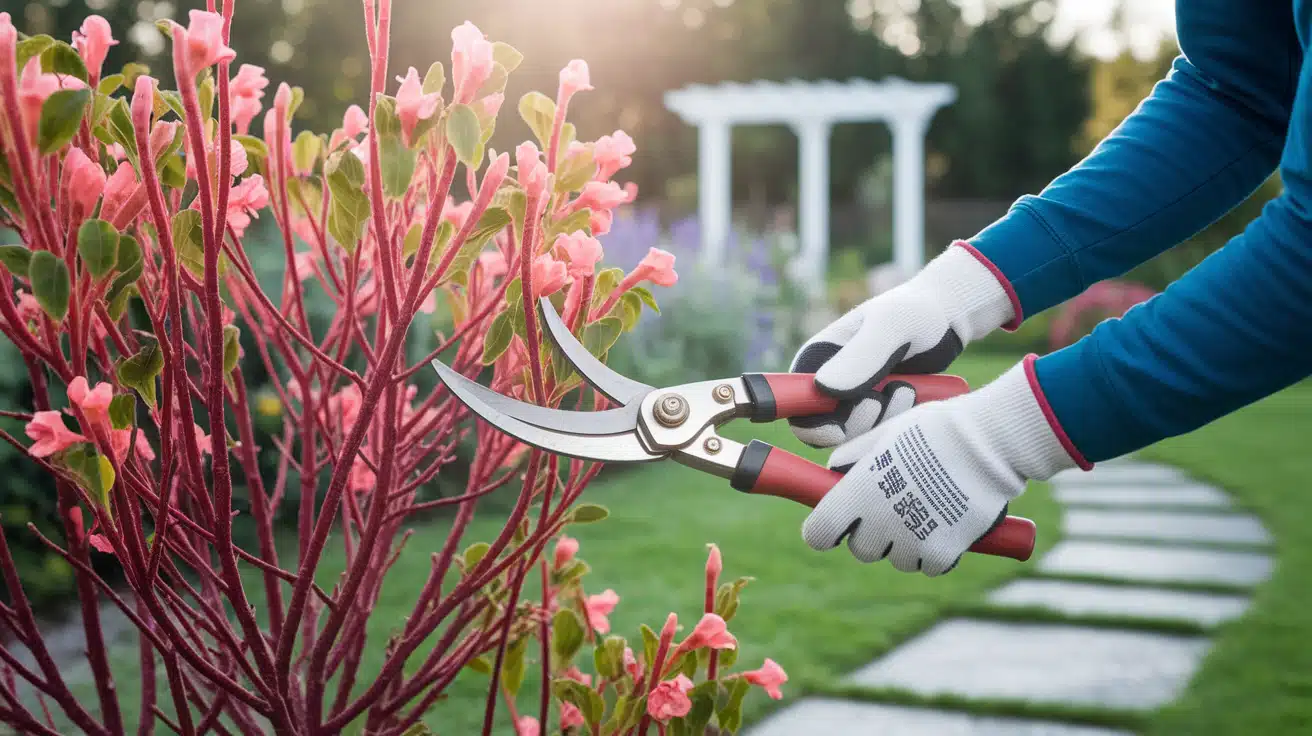
- Easy to prune back if it gets too large
Golden Rule: It’s a good mid-slope plant when you need something that fills space quickly.
6. Spiraea (Spiraea japonica)
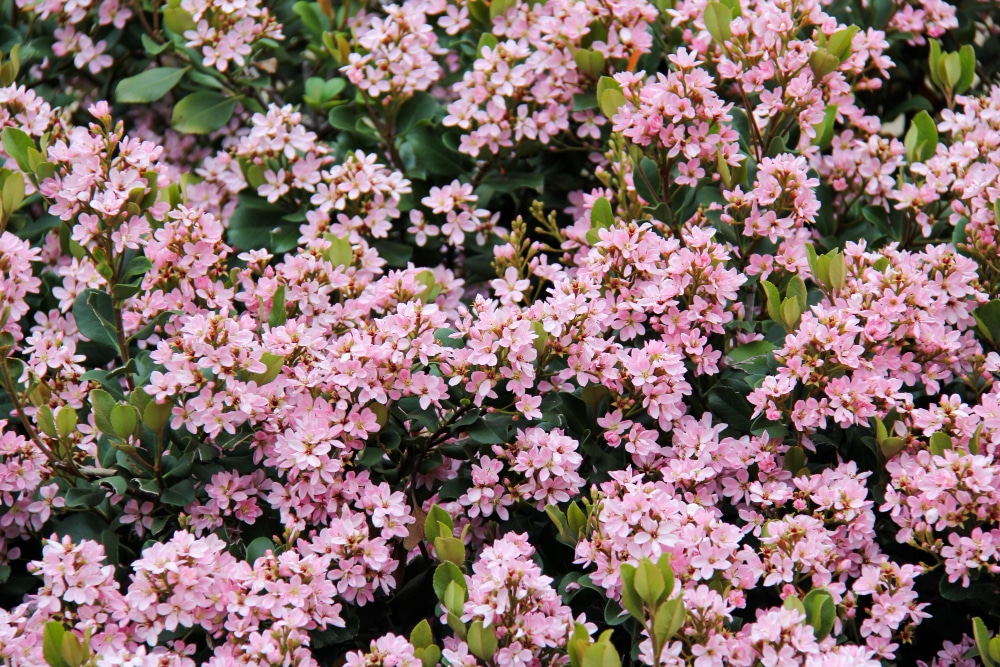
Spiraea is a smaller shrub that works well on gentler slopes. It stays neat and rounded, which makes it easy to manage without frequent trimming.
It also handles a range of conditions, making it a flexible choice for different parts of a slope throughout the year.
- Neat, rounded shape, easy to control
- Flowers from late spring through summer
- Handles both wet and dry conditions
Golden Rule: Use it in groups of three or five for the best visual effect and maximum ground coverage.
Best Flowering Plants for Color on a Slope
A slope can be both beautiful and stable! These blooming plants bring vibrant color, making the area lively and alluring, all while staying steady and secure.
7. Black-Eyed Susan (Rudbeckia hirta)

Black-eyed Susan is a bright, reliable flowering plant for slopes. It produces bold yellow flowers from summer through autumn and spreads gradually to fill open patches.
Its deep taproots help hold loose or sandy soil in place without much attention from you.
- Bright yellow flowers from summer through autumn
- Deep taproots hold well in loose or sandy soil
- Drought-tolerant once established
- Spreads slowly and naturally fills gaps
8. Daylily (Hemerocallis)

Daylilies are underrated slope plants that offer more than just color. Their dense root clumps grip the soil and resist movement even during heavy rain.
They are tough enough to survive poor drainage, drought, and periods of neglect without losing their ability to hold the soil.
- Dense root clumps prevent soil movement
- Extremely tough, they survive neglect, drought, and poor drainage
- Available in dozens of colors
- Spread gradually, filling bare patches over time
Golden Rule: Plant them in large groups. Single plants look sparse. Groups of five or more create a solid, attractive mass.
9. Lavender (Lavandula angustifolia)

Lavender thrives on sunny, well-drained slopes and performs better there than in flat, rich soil.
It produces fragrant flowers that attract pollinators, while its deep roots hold the surface layer of soil in place.
Because lavender spreads slowly but steadily once established, it holds its ground in a mixed slope planting rather than getting crowded out.
- Fragrant and attractive to pollinators
- Deep roots prevent surface erosion
- Handles poor, dry soils better than rich ones
- Dislikes sitting in waterlogged ground, so slopes suit it perfectly
Best Trees for a Sloping Garden
Some trees are well-suited to slopes. Others will cause long-term problems. Choosing the right tree for a sloped garden depends on soil type, moisture levels, and the steepness of the slope.
10. Birch (Betula)
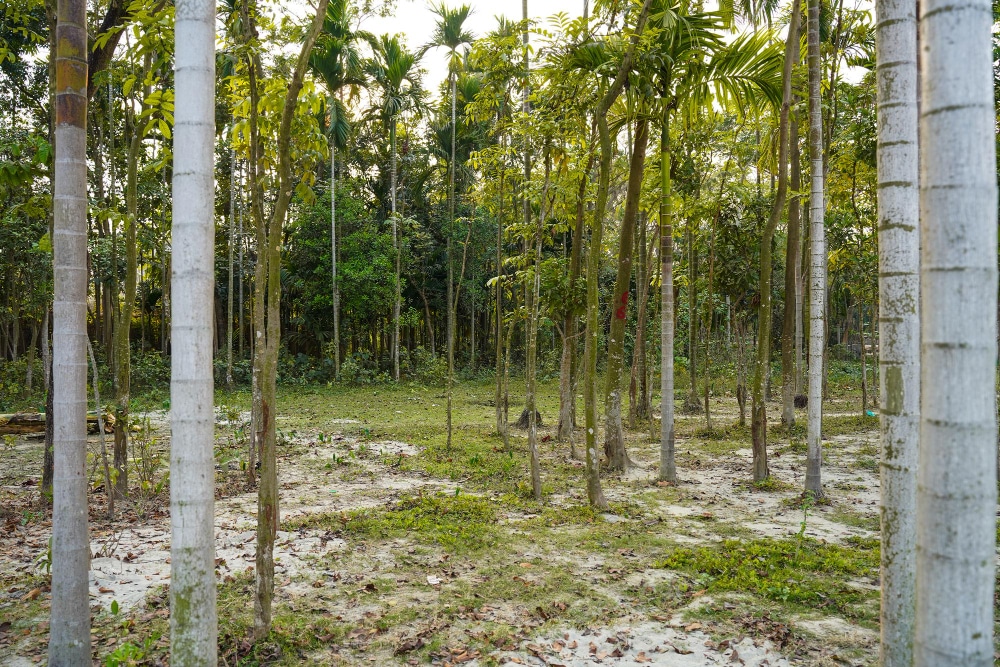
Birch is a fast-growing tree that works well on sloped ground. Its roots spread wide near the surface, helping to hold the top layer of soil in place.
It also provides shade below, benefiting smaller plants growing farther down the slope.
- Shallow but wide-spreading roots stabilize the surface layer of soil
- Handles wet and dry conditions
- Grows quickly, providing shade for plants below
11. Alder (Alnus glutinosa)
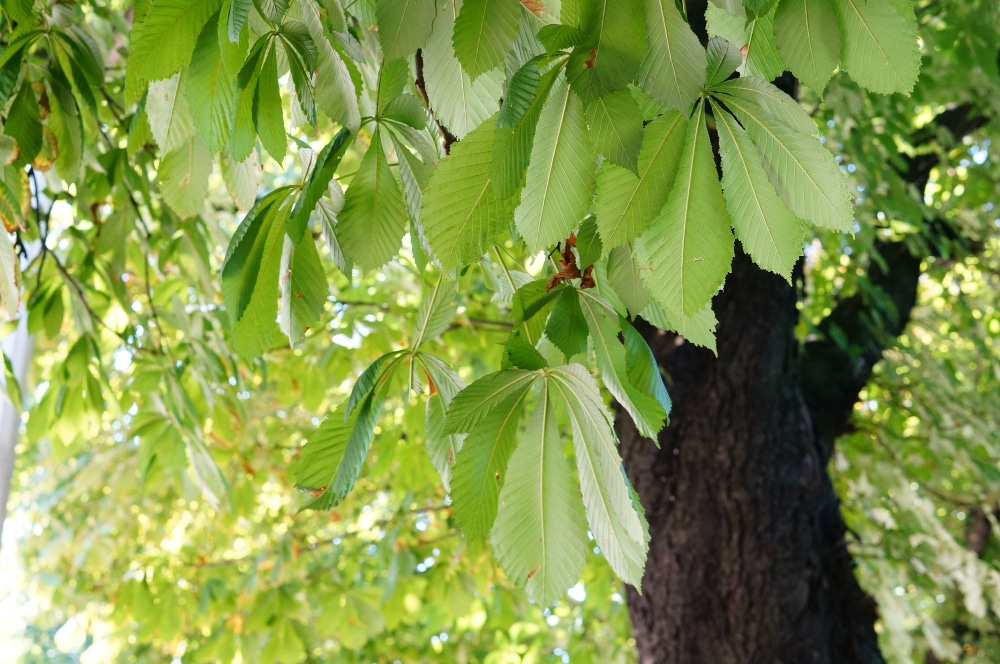
If your slope has a drainage issue or sits near water, alder is an ideal choice. It roots well in wet, unstable ground that most trees would struggle in.
It also improves the surrounding soil by fixing nitrogen, benefiting nearby plants over time.
- Fixes nitrogen in the soil, improving conditions for other plants nearby
- Roots hold wet, unstable ground well
- Grows fast in difficult spots
Best Ornamental Grasses for a Sloping Garden
Grasses get overlooked on slopes, but their root systems are some of the deepest and densest of any plant category. They fill the gap between low ground cover and taller shrubs.
12. Switchgrass (Panicum virgatum)
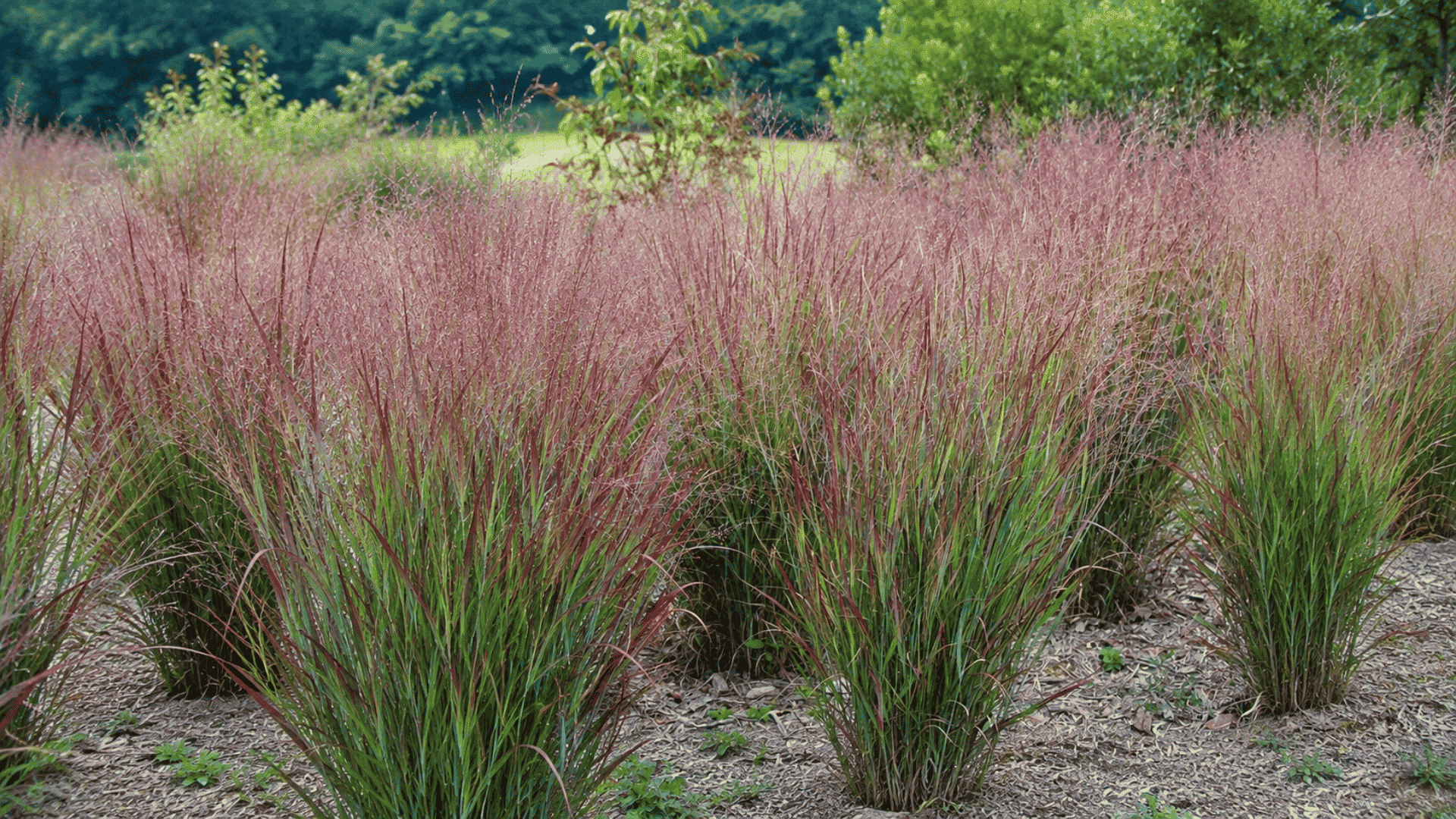
Switchgrass sends roots several feet down, which makes it one of the strongest options for holding soil on an exposed bank.
- The deep root system reaches several feet into the soil
- Handles wind, drought, and poor soil
- Turns gold in autumn for late-season color
Golden Rule: Plant it on open, sun-exposed slopes where erosion risk is highest and few other plants take hold.
13. Little Bluestem (Schizachyrium scoparium)
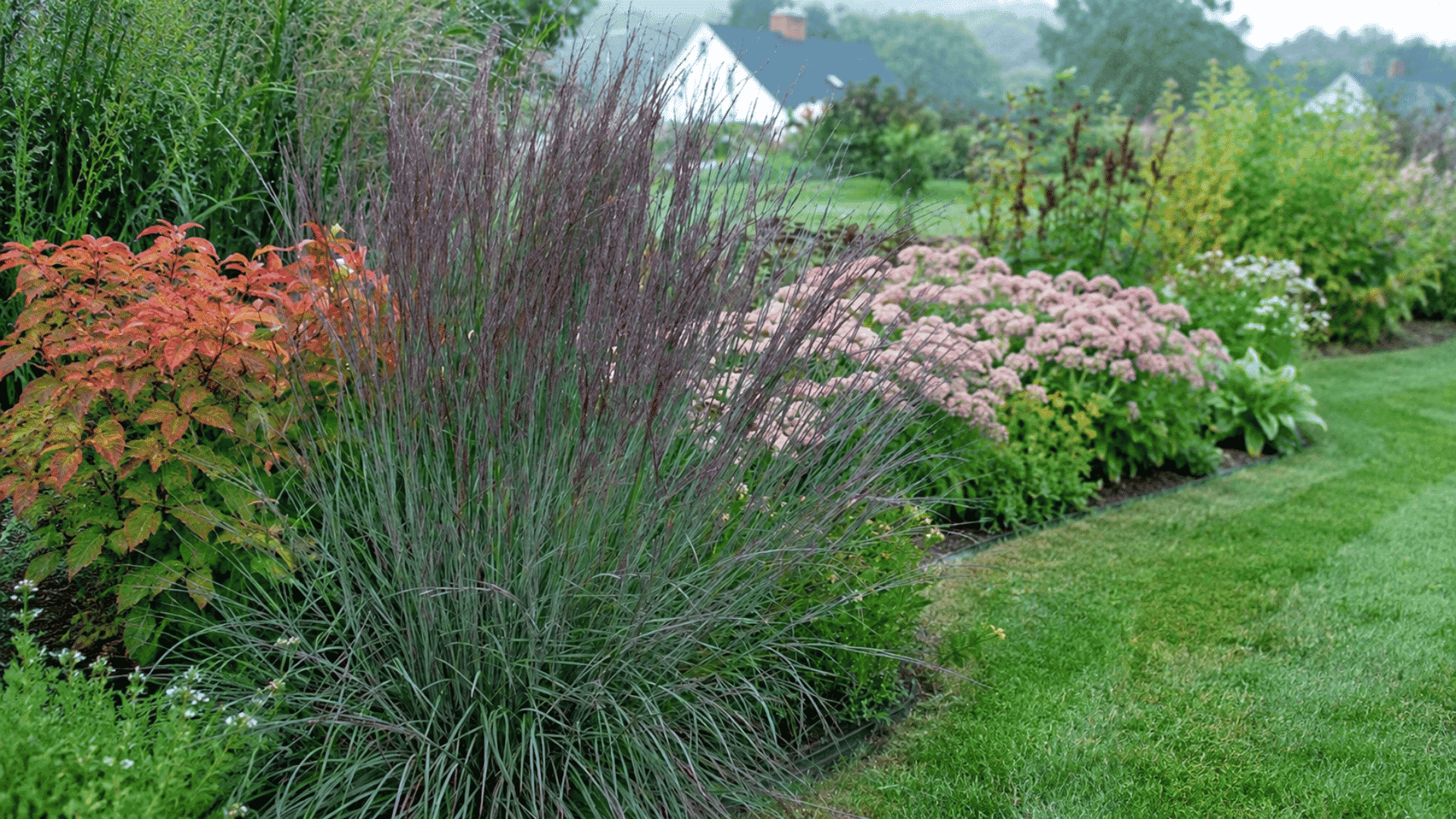
Little bluestem grows in tight clumps rather than spreading wide, so it works well mixed between shrubs without crowding them.
- Roots grow up to 8 feet deep
- Turns bronze-orange in fall and winter
- Needs little to no fertilizer once established
What to Never Plant Together on a Slope
This section is just as important as the plant list above. Certain combinations will create problems, some quickly and some over several years.
Knowing what to avoid saves you time, money, and the frustration of watching your slope deteriorate after planting.
1. Ivy + Any Other Ground Cover
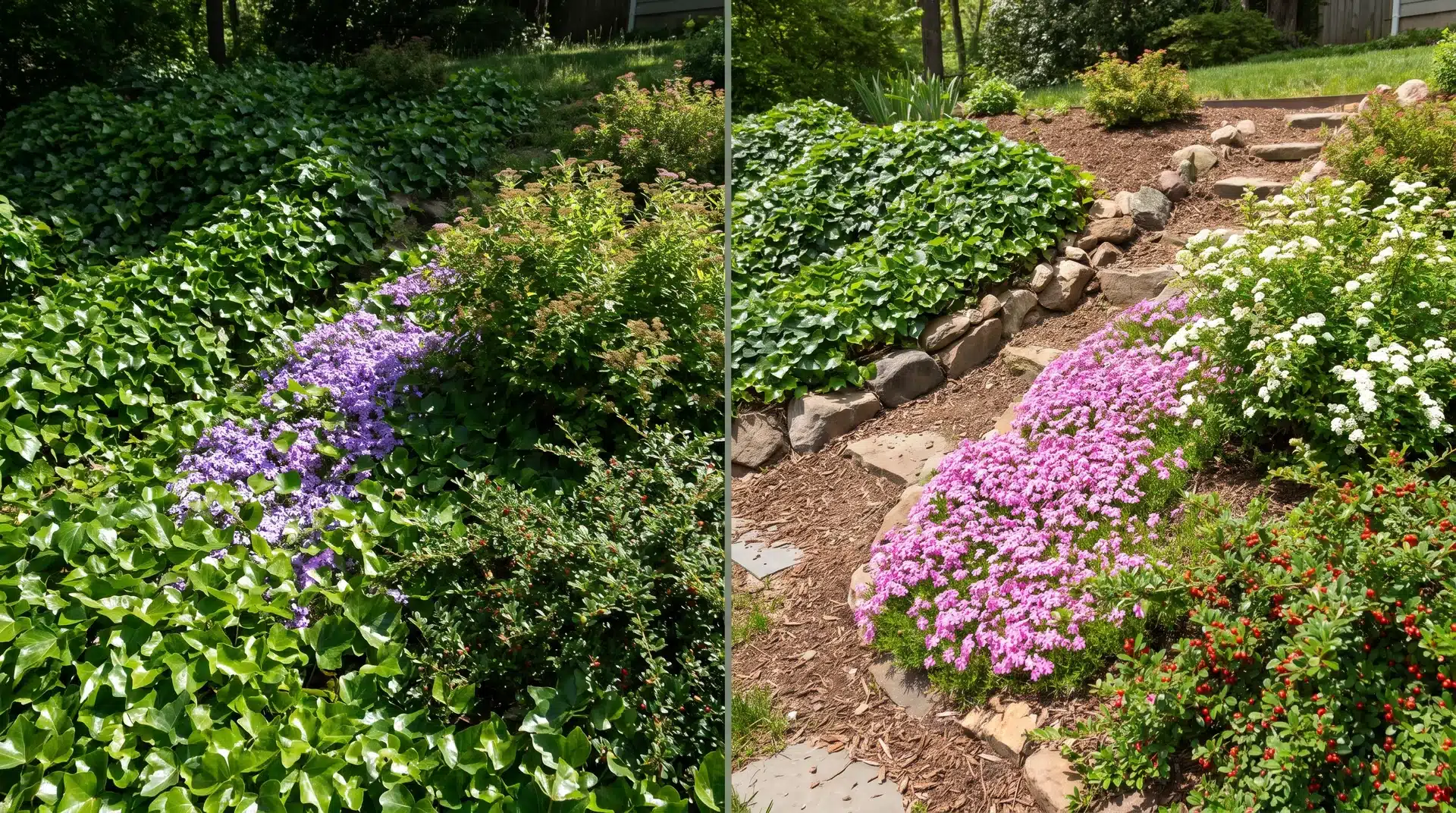
Ivy is fast. It wins. Every time. If you plant ivy next to creeping phlox, spiraea, or even cotoneaster, the ivy will eventually take over.
It spreads rapidly, shading and sometimes overshadowing nearby plants, making it harder for them to get sunlight.
Golden Rule: Give ivy its own section of the slope. Don’t mix it with other ground cover plants.
2. Lavender + Moisture-Loving Plants
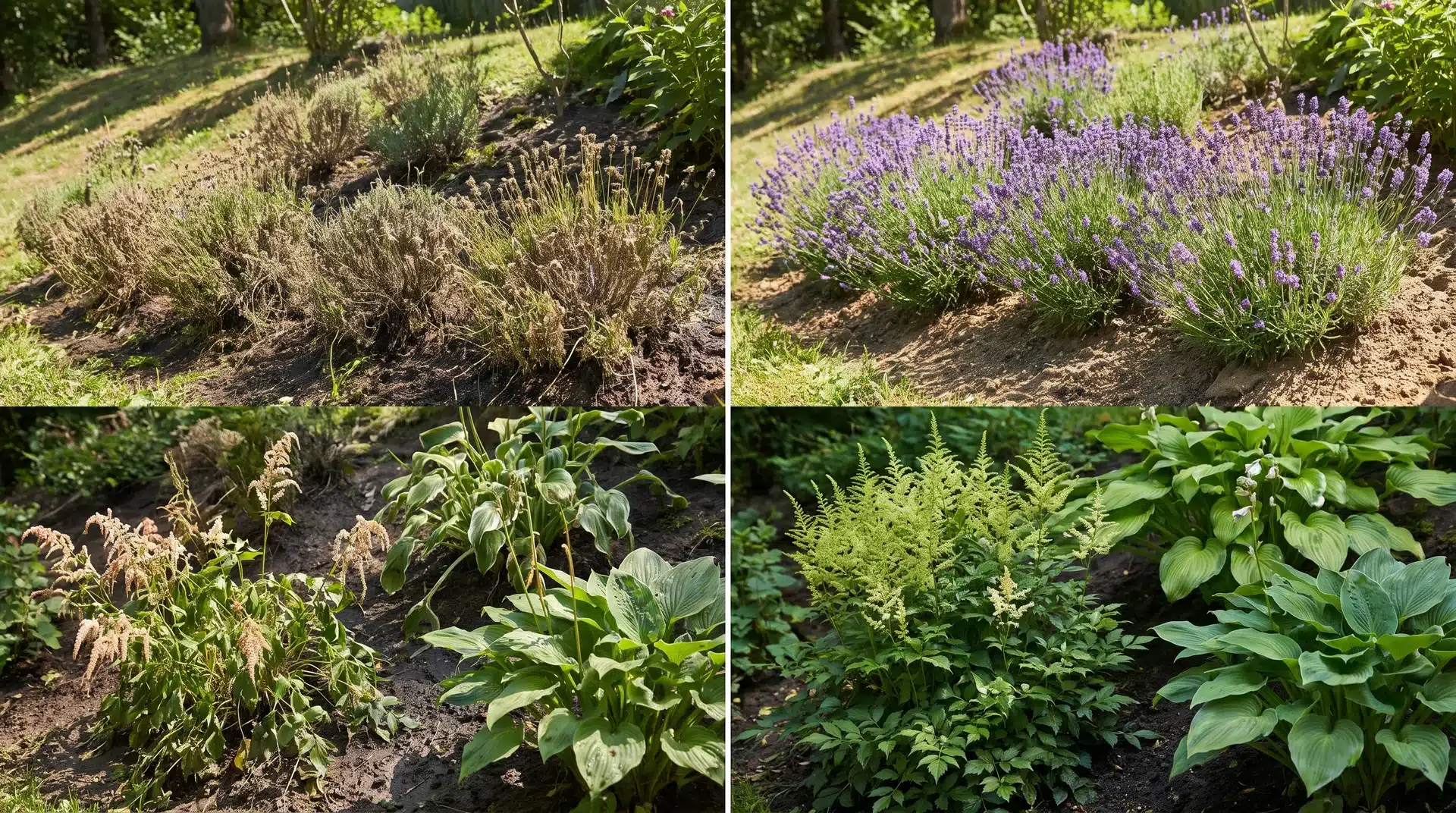
Lavender needs dry, well-drained soil. Plants like astilbe or hostas need consistent moisture. Planting them together creates a problem.
You either overwater the lavender (which causes root rot) or underwater the moisture-loving plants (which causes them to dry out and die).
Golden Rule: Group plants by water needs. Dry-soil plants on one section, moisture-loving plants on another.
3. Fast-Spreading Plants Near Slow Growers
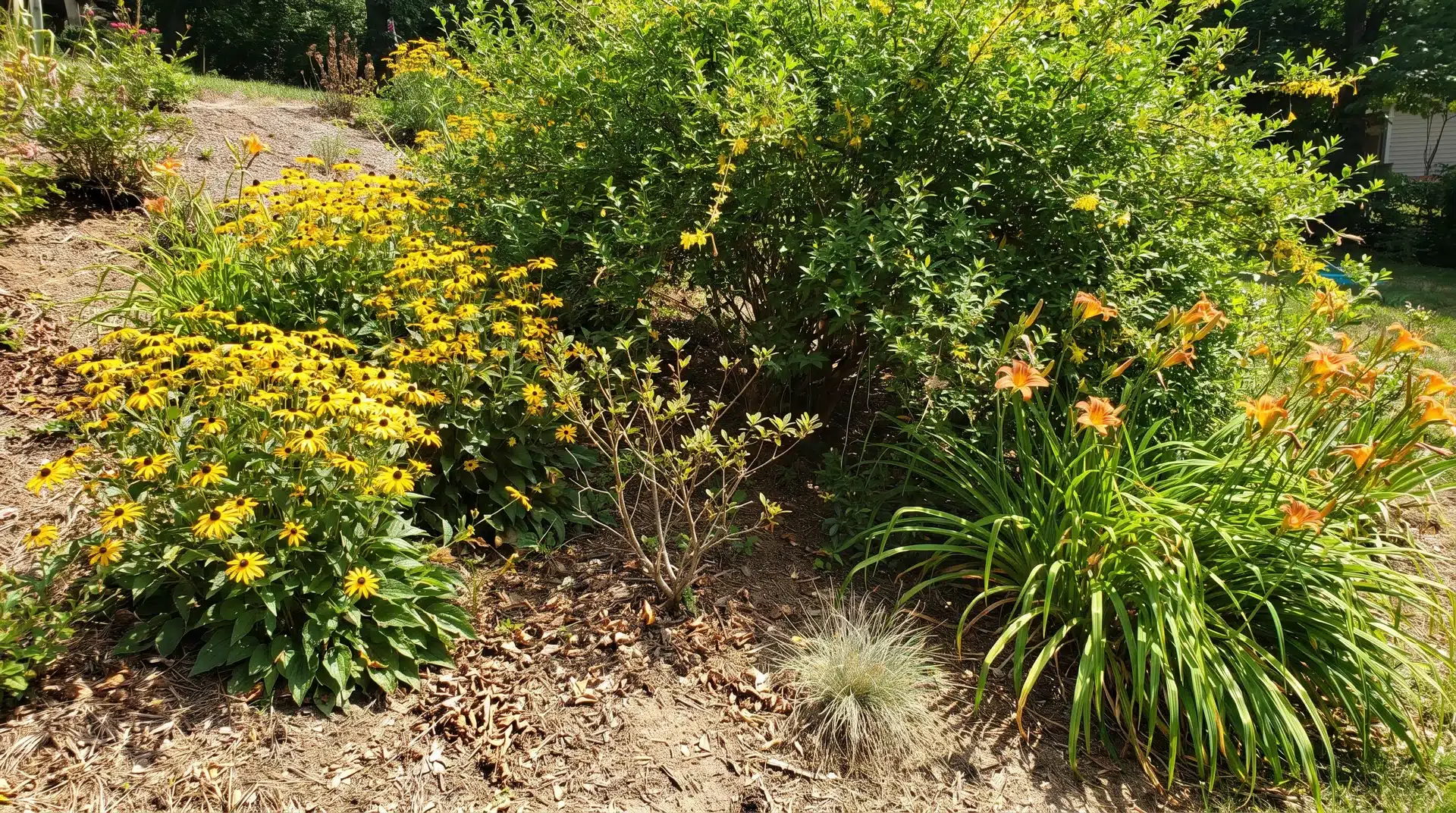
Black-eyed susans spread. Forsythia spreads. Daylilies clump outward over time. Planting them next to slow-growing plants, such as young shrubs or small ornamental grasses, can create problems.
Within two to three seasons, fast-spreading plants may crowd out slower growers.
Golden Rule: Check mature spread before planting. Leave space, or group similar-speed plants together.
4. Shallow-Rooted Plants at the Top of Steep Slopes
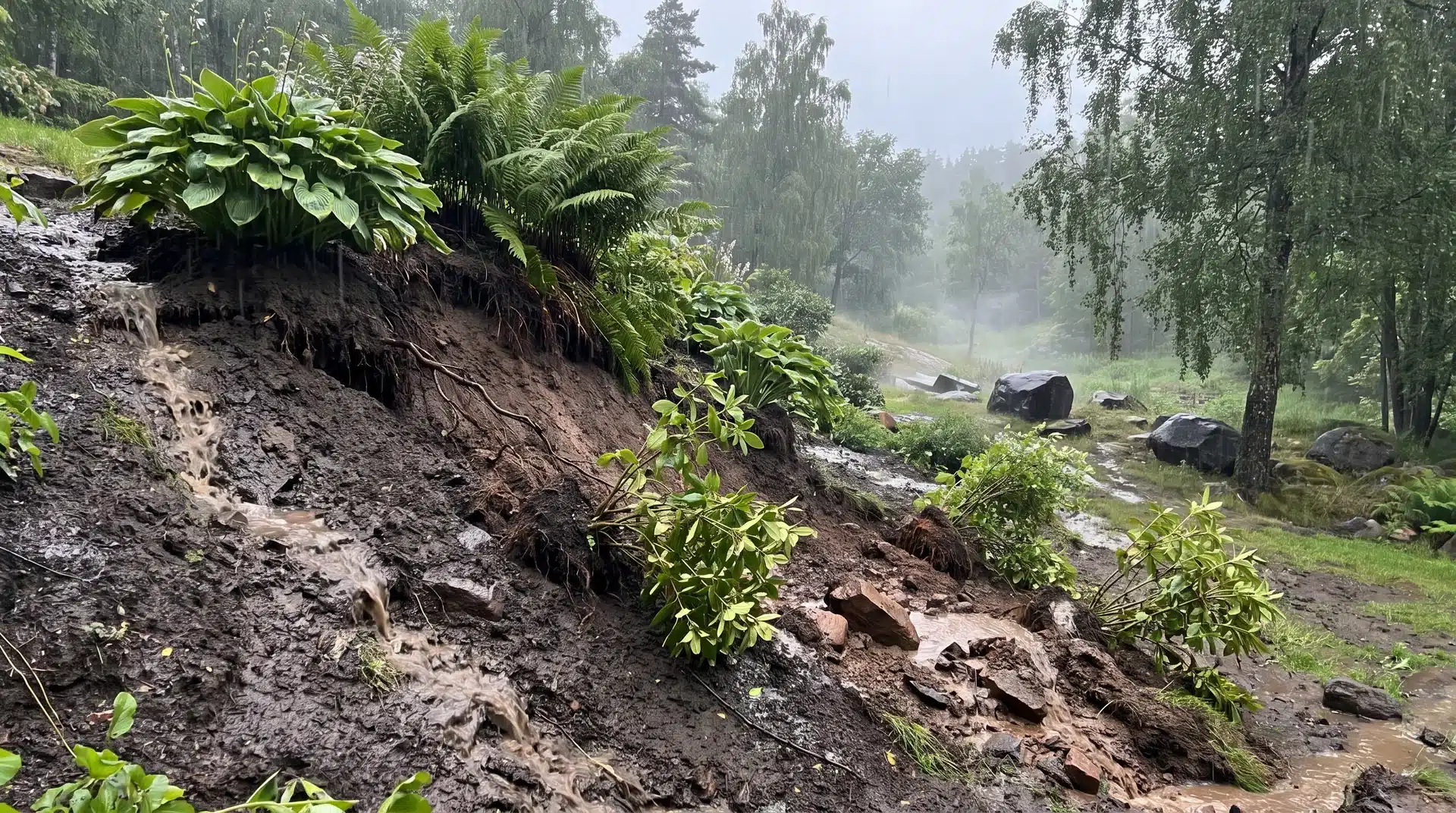
Plants like hostas and ferns have shallow root systems. They look great but offer very little soil grip.
Placing them at the top of a steep slope is a mistake. When heavy rain hits, the soil under them shifts. The plants move with it.
Planting Zones for Better Slope Stability
Planting zones help place plants where they can best control erosion, improve water flow, and keep a slope stable.
| Slope Area | Best Plant Types | Examples |
|---|---|---|
| Upper steep sections | Deep-rooted plants | Juniper, cotoneaster, lavender, shrubs |
| Middle zones | Medium-rooted plants | Ornamental grasses, perennials |
| Lower gentle areas | Shallow-rooted spreading plants | Ground covers, low-growing plants |
Golden Rule: Use deep-rooted plants on the steepest areas and shallow-rooted plants on lower, gentler slopes to reduce runoff.
Pro Tips for Planting on a Slope
Good plant choices alone won’t hold a slope together. How you plant matters just as much as what you plant. These tips help you get the most out of every plant you put in the ground on a slope.
- Use Staggered Rows: Avoid planting in straight lines on a slope. Staggered rows help slow water runoff, reduce soil movement, and allow plants to cover the area more effectively.
- Water at the Base: Overhead watering on slopes can cause surface erosion, washing away soil before roots establish, and is one of the reasons grass dies on slopes.
- Add Erosion-Control Fabric: Use jute netting or erosion-control fabric on steep sections while plants are getting established. It provides temporary support and naturally breaks down once the roots can hold the soil on their own.
- Mulch Around New Plants: Apply a 3- to 4-inch layer of mulch around plants to retain moisture, protect exposed soil, and slow erosion between plants during heavy rainfall.
- Plant from the Top Down: Start planting at the top of the slope and work downward. This helps prevent loose soil from shifting onto areas that have already been planted and keeps the installation process more manageable.
Conclusion
A successful sloping garden comes down to more than just plant choice.
The right plants need to anchor the soil, tolerate challenging conditions, and coexist without competing with one another.
When they’re placed thoughtfully across the slope, the garden becomes more stable, easier to maintain, and consistently better looking through the seasons.
If you’ve found a planting combination that works particularly well on your slope, feel free to share it in the comments.
Frequently Asked Questions
What is the Rule of 3 in Landscaping?
The rule of 3 suggests planting in odd-numbered groups, especially three, to create a natural, balanced, and visually appealing arrangement.
How to Group Plants in A Garden?
Group plants by similar light, water, and soil needs. Use varying heights, textures, and colors, placing taller plants at the back and shorter ones in front.
What is the Best Layout for Garden Plants?
A layered layout works best: tall plants at the back, medium in the middle, and low-growing plants in front, ensuring good spacing and sunlight access.