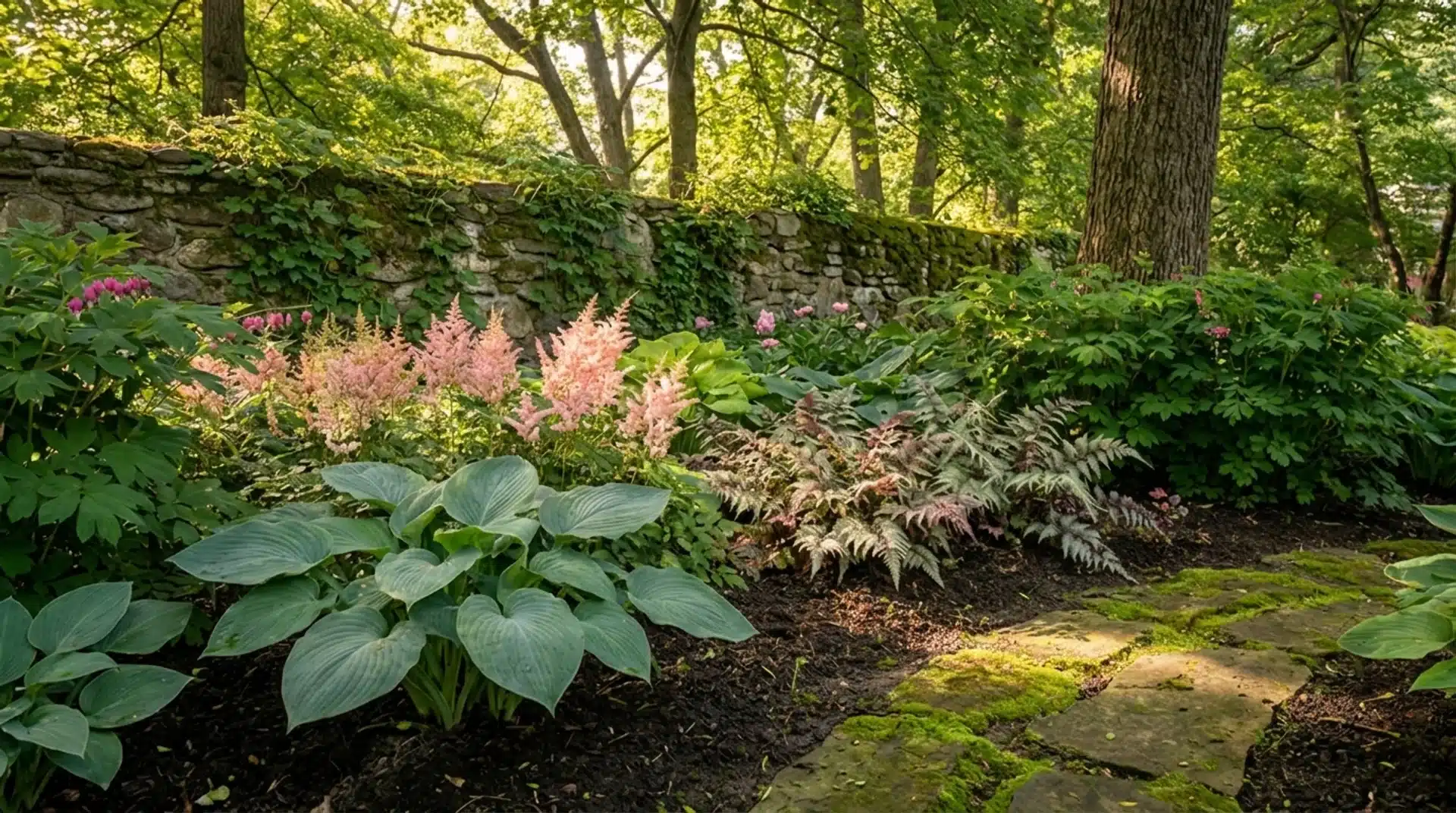
Every gardener I know has one of those spots. The corner under the old maple, the strip along the north-facing fence, the side of the porch where sunlight never quite reaches.
The instinct is to cover it in bark mulch and accept defeat.
I spent a few years doing exactly that in my own yard before I stopped thinking about shade as something to work around and started choosing plants that belong there.
These garden plants for shade grow and look their best in low-light conditions.
Some flowers stay beautiful all season through foliage alone, and a few will take dry conditions under mature trees where most shade plants give up entirely.
Garden Plants for Shade That Bring Color All Season
Match your plants to your actual conditions; dry shade under a canopy is nothing like moist shade along a north wall, and each entry below is honest about what it needs versus what it merely tolerates.
1. Hosta
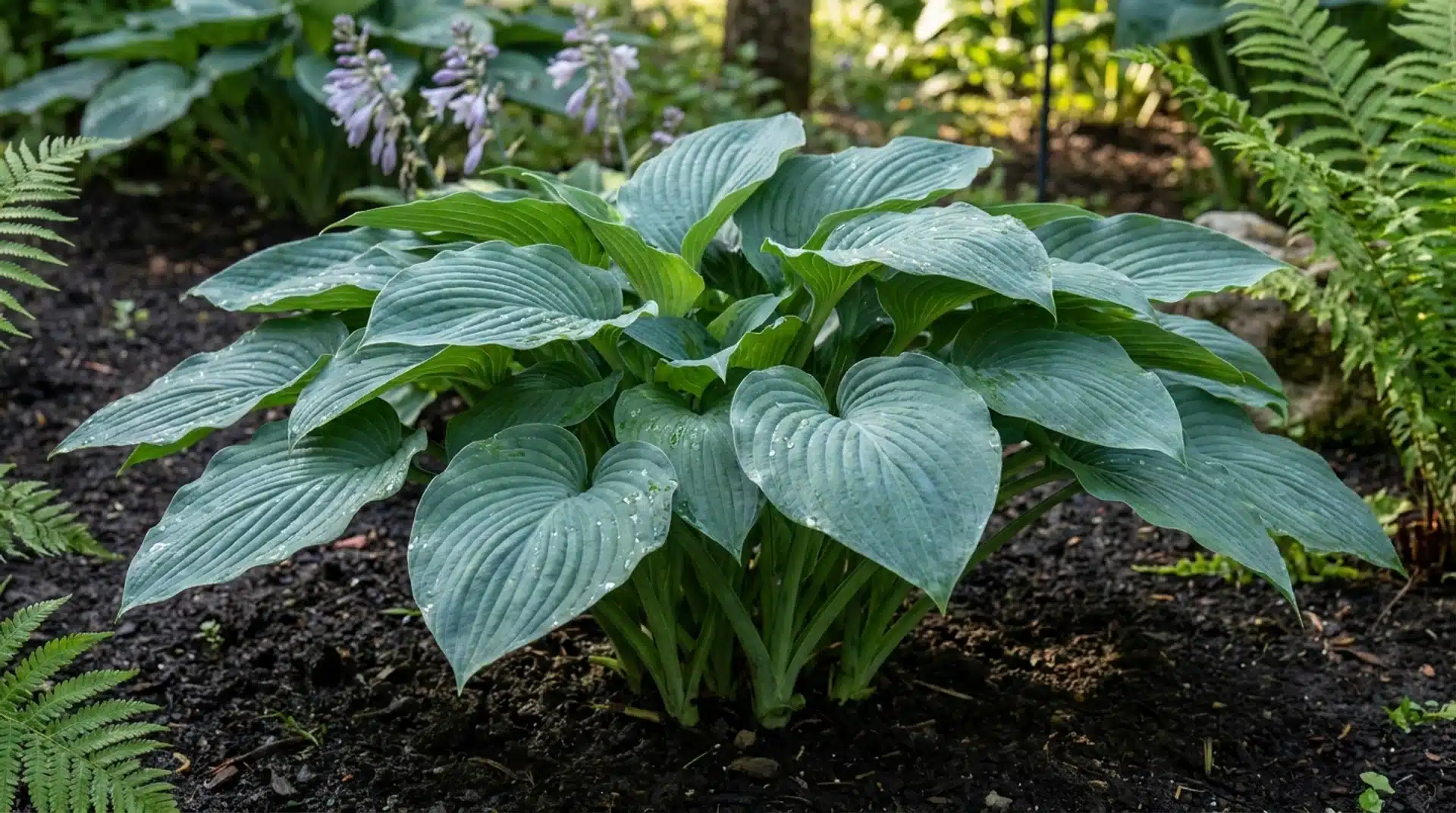
Hosta is the shade garden staple, and for good reason: it comes in a size range that runs from four-inch miniatures to five-foot giants like ‘Sum and Substance.’
Foliage colors span deep blue-green, chartreuse, and creamy white-edged variegated forms, which is what makes hostas so diverse in a layered bed.
Zones 3-9: moist, well-drained soil rich in organic matter. While it tolerates full shade, most varieties show their best color with a few hours of morning light.
Slugs target thin-leaved varieties especially; pair hostas with slug-resistant plants nearby to protect the whole bed.
2. Astilbe
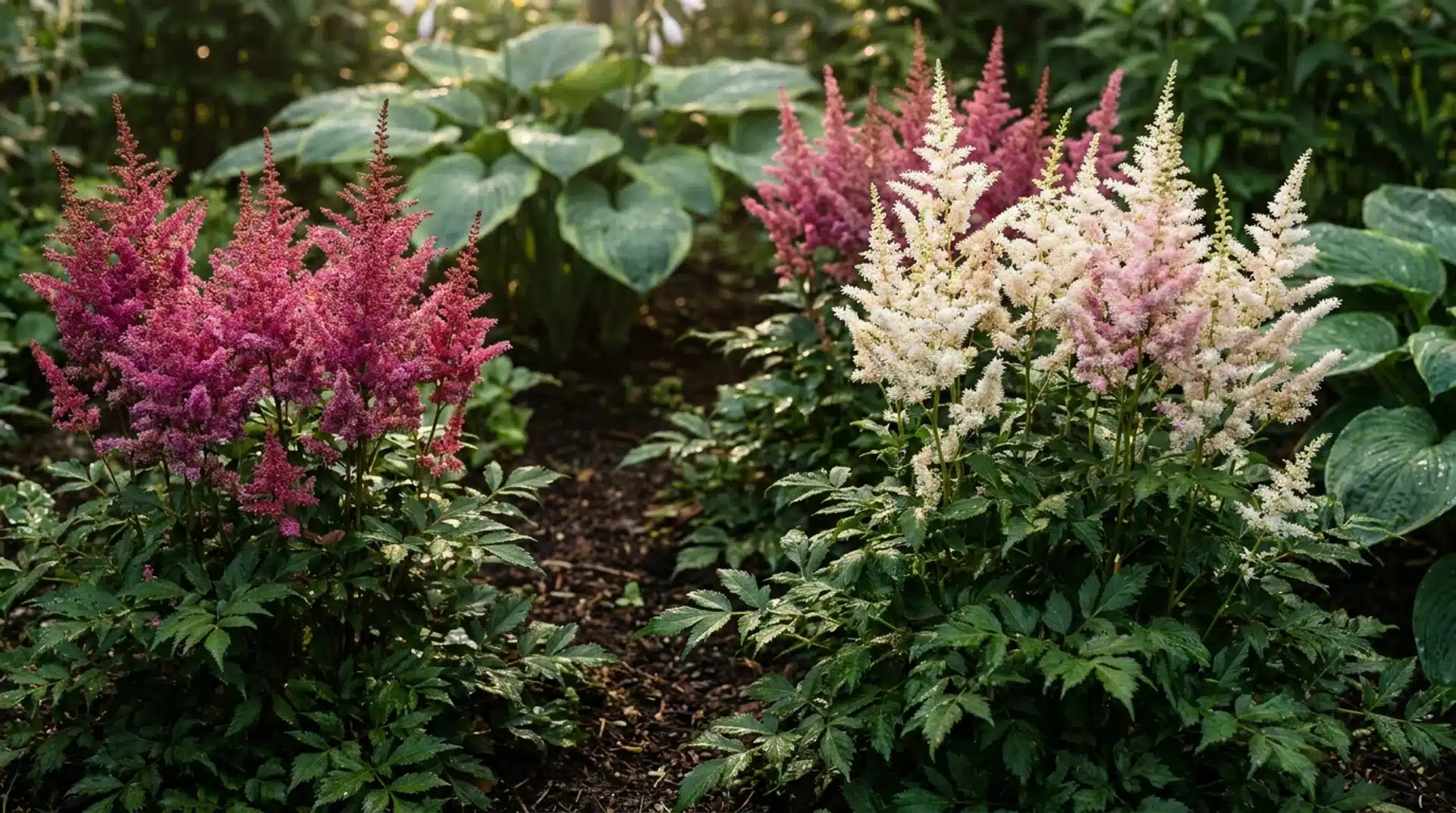
Astilbe earns its place as one of the best flowering plants for shade by blooming in summer, when most spring shade perennials have gone quiet.
The feathery plumes rise above ferny, dark green foliage in shades of pink, red, white, and deep burgundy, holding their shape well enough that the dried seed heads are worth leaving through fall.
It grows in Zones 4-8 and performs best in partial shade with reliably moist, humus-rich soil. If astilbe wilts, the whole bed is too dry.
Pair with hostas and ferns for color from May through September.
3. Bleeding Heart
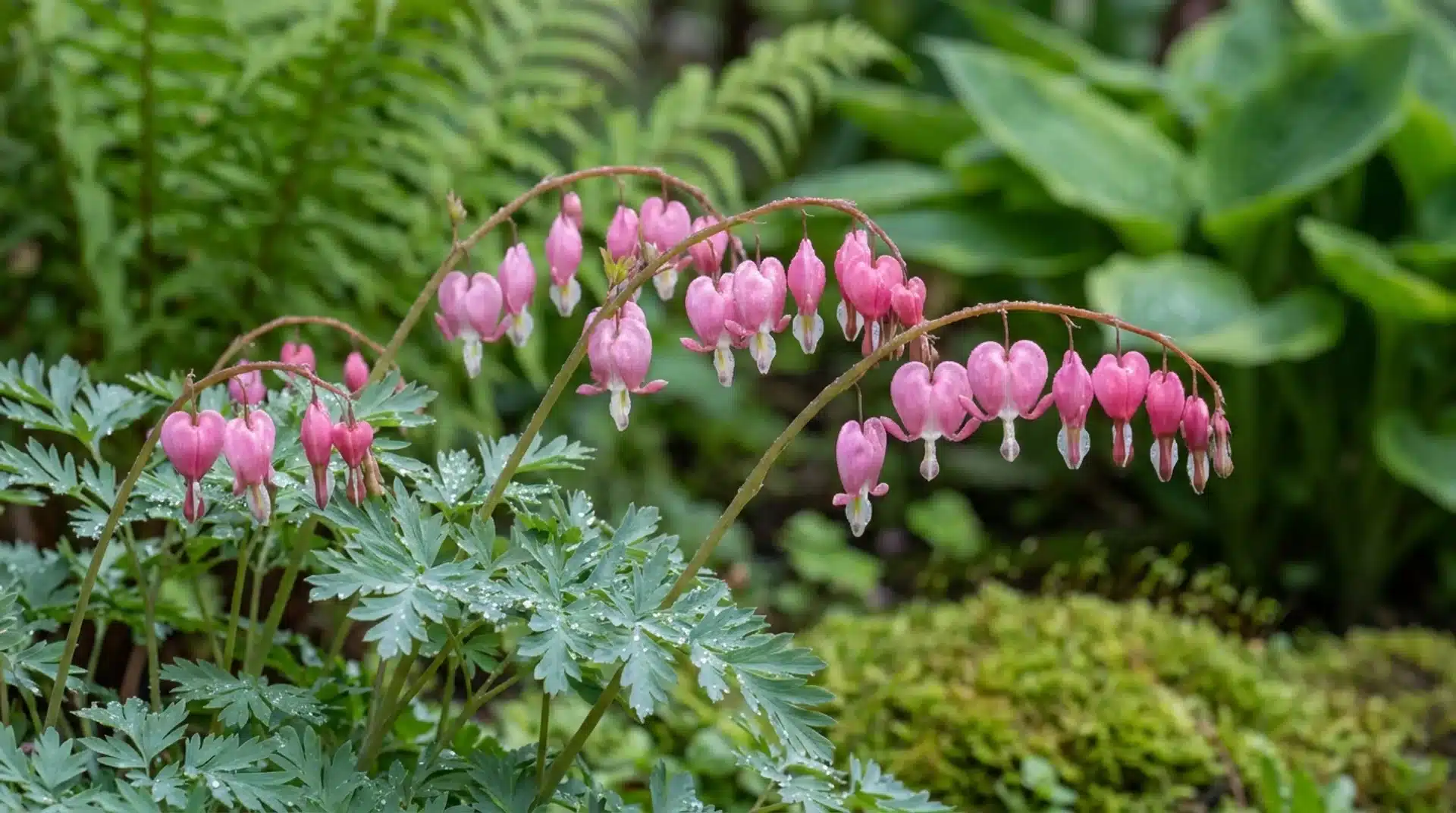
Bleeding heart is the plant that makes people stop on a garden tour and ask what it is.
The heart-shaped pink or white flowers dangle from arching stems in mid-spring, when the shade garden needs them most.
The classic species, Lamprocapnos spectabilis, goes fully dormant by midsummer, so plant it alongside late-emerging hostas or ferns that will fill the space as it fades.
Fringed bleeding heart (Dicentra eximia) blooms longer, from spring through fall in mild conditions, and suits the South better.
Both grow in Zones 3-9, in cool, moist, humus-rich soil under deciduous trees.
4. Hellebore
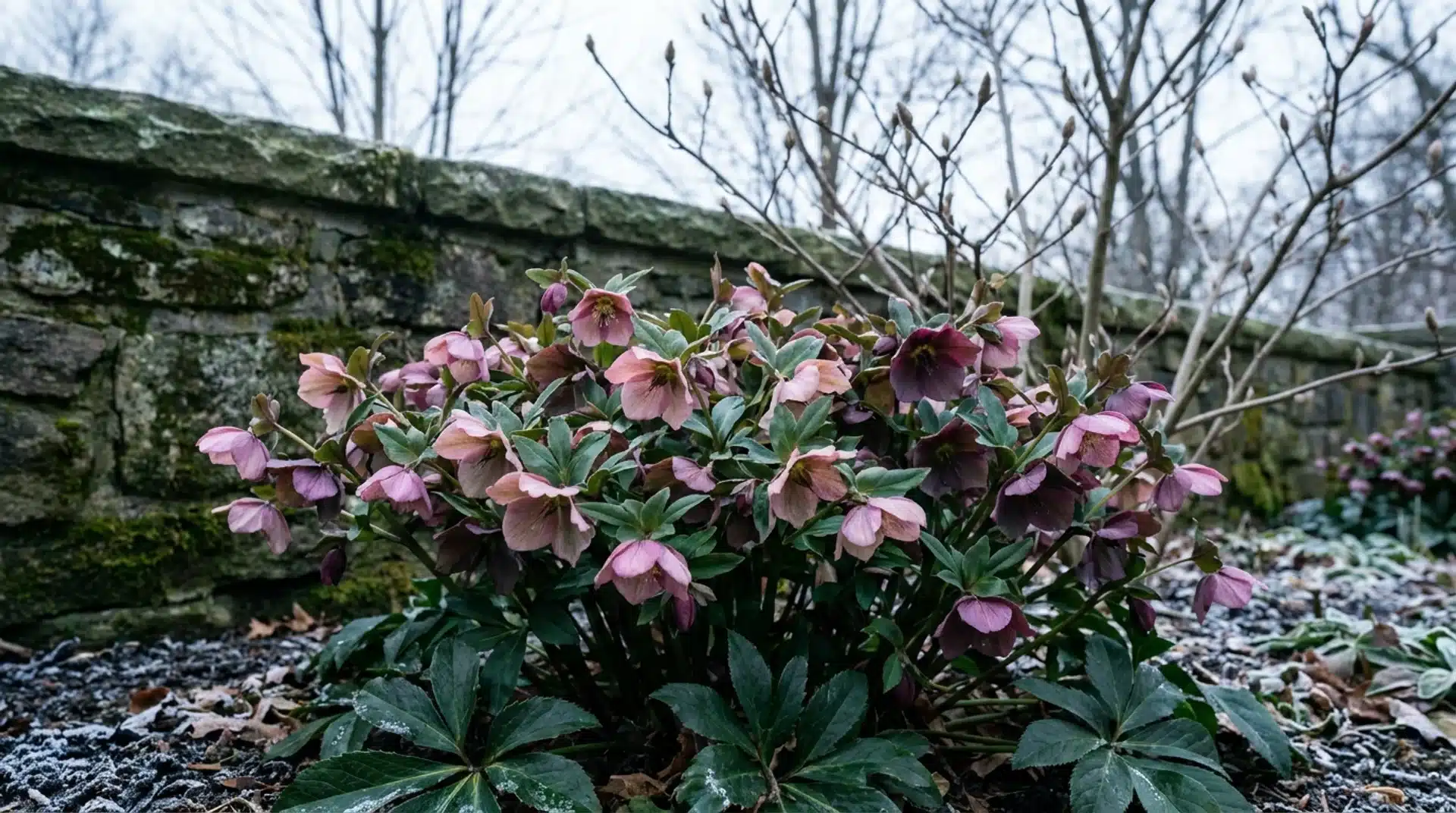
Hellebores do something nothing else in the shade garden does: they bloom in late winter, January through March, when the rest of the garden is dormant.
The nodding flowers in dusty pink, plum, white, cream, and near-black are subtle rather than showy, but in February, subtle looks remarkable.
Zones 4-9, tolerant of dry shade once established, and reliably deer-resistant.
Don’t move them once planted; they resent disturbance. Because the flowers nod downward, plant them on a slope, raised bed, or alongside other plants suited to a sloping garden.
5. Heuchera (Coral Bells)
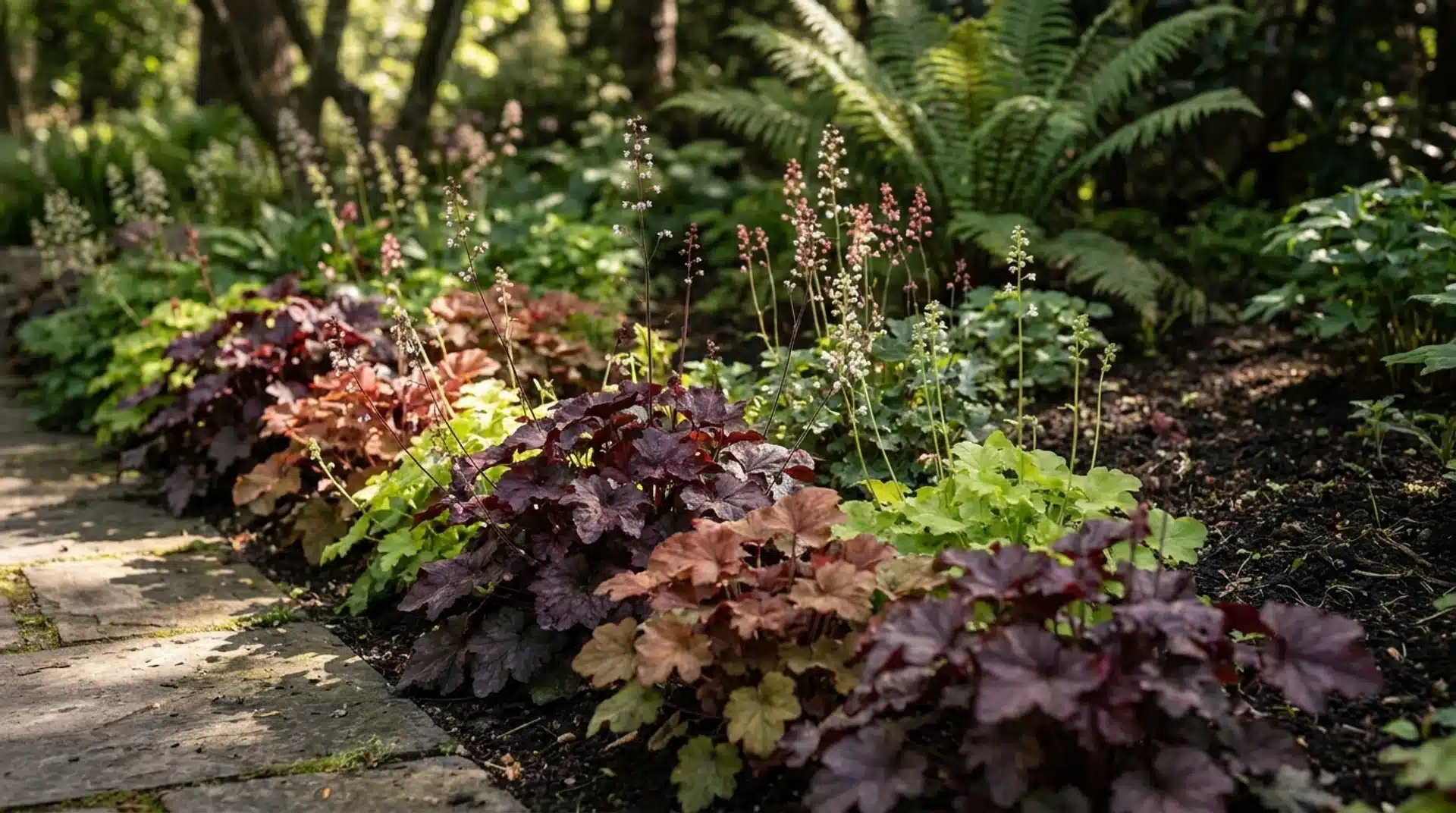
Heuchera is grown almost entirely for its foliage, which ranges from burgundy, copper, caramel, lime green, and silver to varieties so dark they read nearly black.
Small bell-shaped flowers on tall, wiry stems attract hummingbirds in summer, but the leaves are the real draw.
Zones 4-9, best color in partial shade; full shade fades lighter, silvery varieties, while darker cultivars hold their color.
It’s diverse at borders and in containers, and as ground cover; it’s semi-evergreen in mild winters and heaves during freeze-thaw cycles, so press lifted crowns back each spring.
6. Ferns
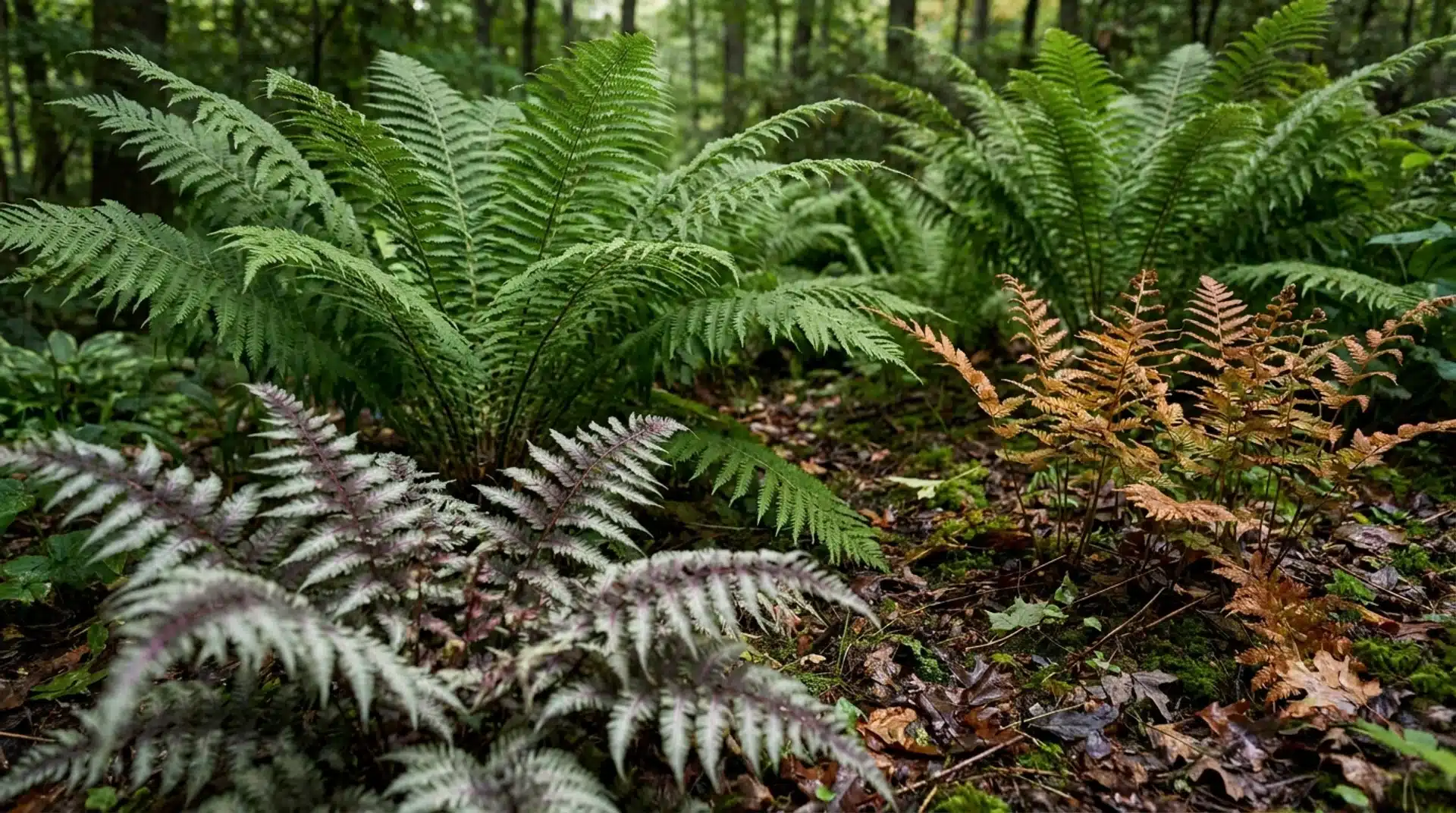
No flowering plant brings what ferns bring to a shade garden: fronds that move with every breath of air, creating a visual quiet that feels like a woodland floor.
Three species cover most situations. Japanese painted fern has silver-and-burgundy variegation that brightens dark corners; autumn fern produces coppery-red new growth that turns deep glossy green by summer; ostrich fern grows to five feet and naturalizes in moist soil under large trees.
Most fall within Zones 3-9, and consistent moisture is the main requirement. Native ferns, including cinnamon and royal fern, support local wildlife.
7. Brunnera (Jack Frost)
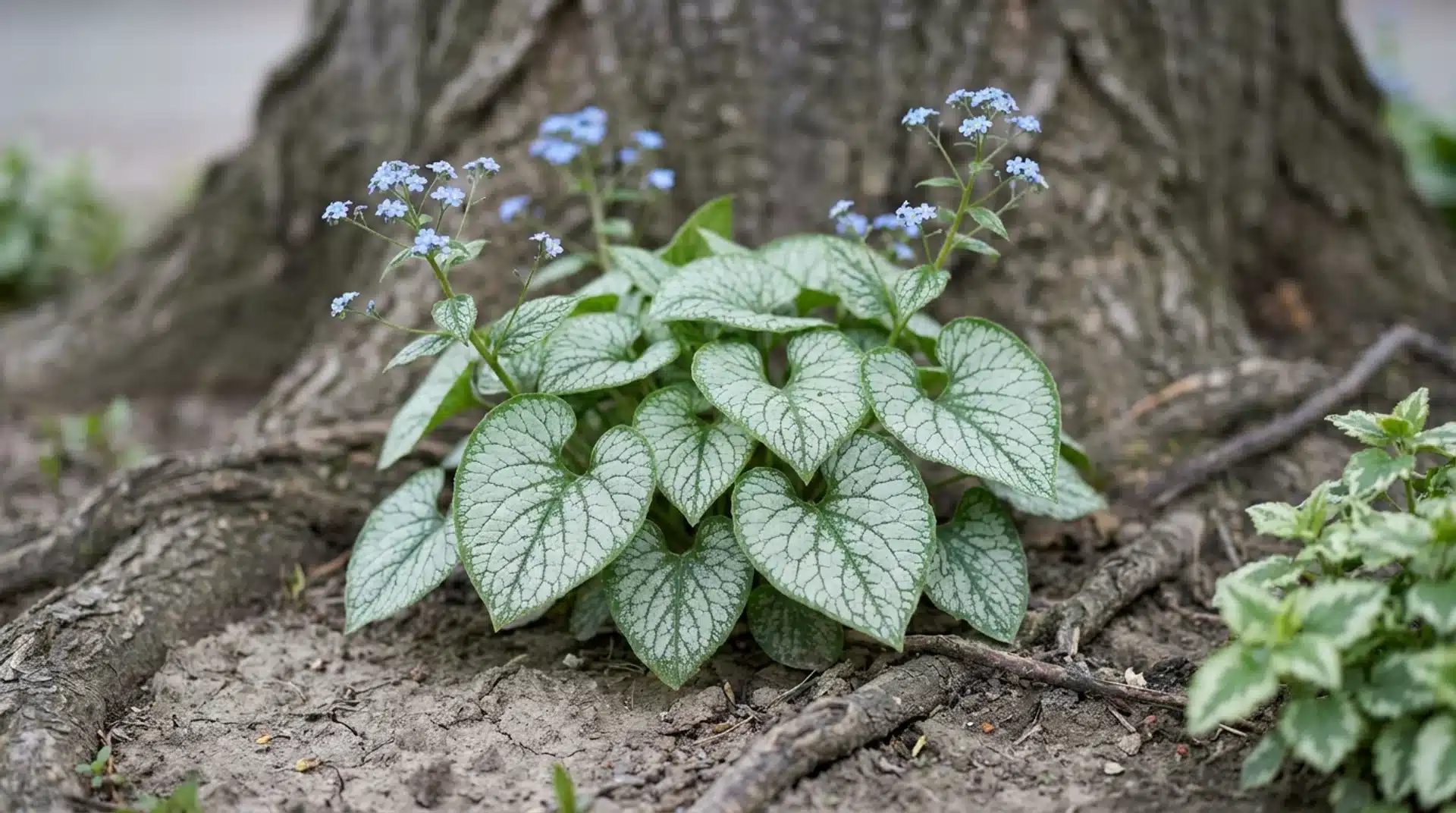
Brunnera is the shade perennial to recommend for the toughest conditions: dry soil under mature trees, where root competition makes most shade plants struggle within a season or two.
‘Jack Frost’ and its relatives tolerate drier shade better than almost anything else in this category once established.
The foliage is the main attraction, large heart-shaped leaves covered in silver frosting over green veining that brightens dark corners, with small forget-me-not blue flowers in early spring.
Zones 3-7: more sun works in northern climates, more shade in the South. Divide every three to four years; otherwise, it’s low-maintenance.
8. Impatiens
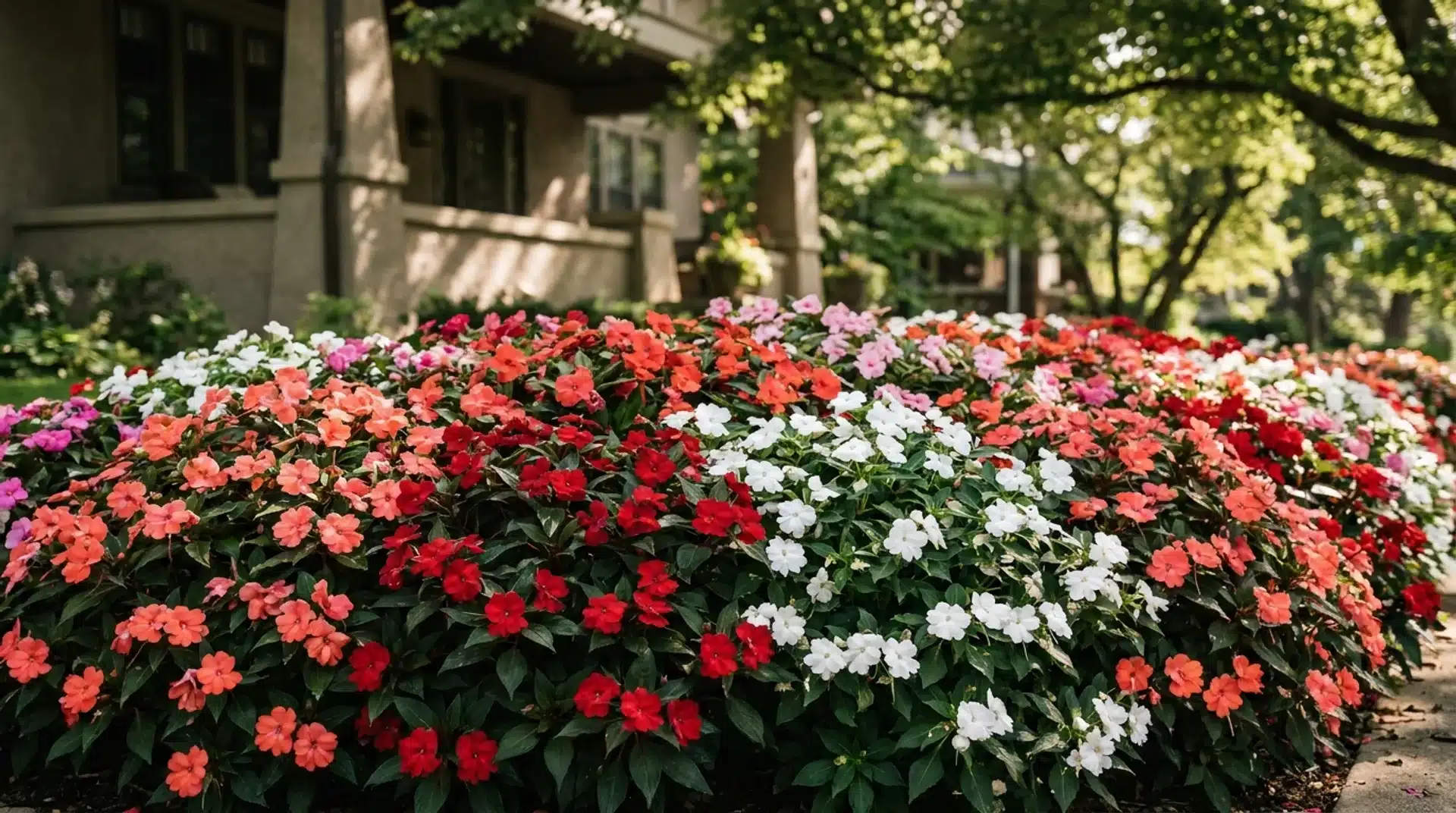
Impatiens is the most widely planted annual for shade in the US, blooming from late spring to the first hard frost with no deadheading. It stays tidy and mounding in white, coral, red, pink, and purple.
Standard impatiens (Impatiens walleriana) suffered widespread losses to downy mildew beginning in 2011, according to the University of Maryland Extension, and the disease remains present in many regions.
New Guinea impatiens and the SunPatiens series resist downy mildew and handle heat and humidity better, making them the safer choice in the Southeast and humid Midwest.
Everyone needs consistent moisture; avoiding both drought and standing water helps keep things healthy and happy.
9. Caladium
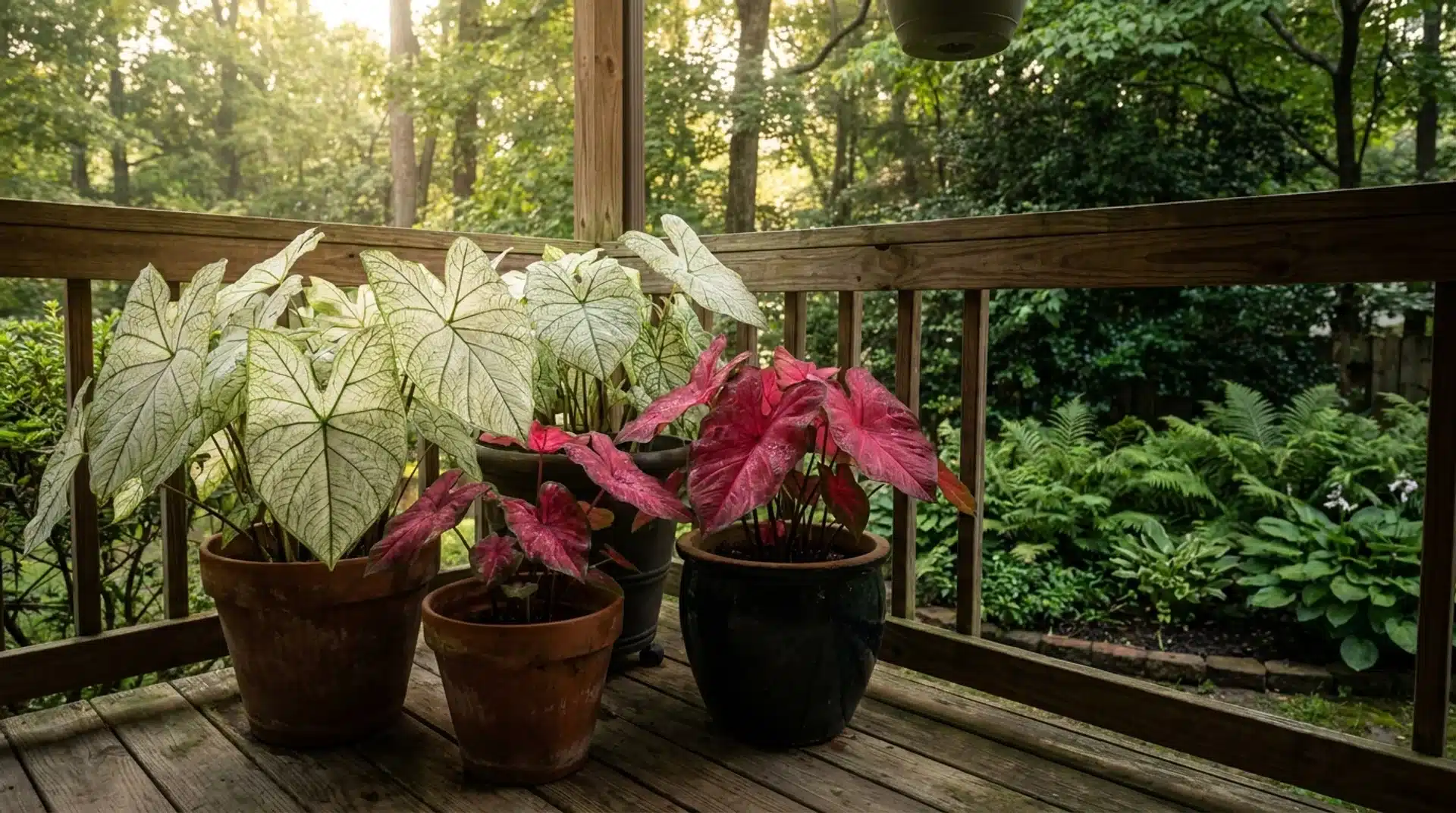
Caladium is a tropical plant grown as an annual through most of the US, thriving where many shade perennials struggle: in summer heat and humidity.
The large, paper-thin leaves in white, pink, crimson, and green are more visually striking than those of almost any other flowering plant, holding color from planting through the first frost.
In Zones 9-11, caladium is perennial; everywhere else, plant tubers once the soil reaches 70 degrees Fahrenheit, since planting too early in cool, wet soil is the most common reason they rot before they establish.
Caladiums grow in containers on shaded patios, needing consistent moisture and wind protection.
10. Foxglove
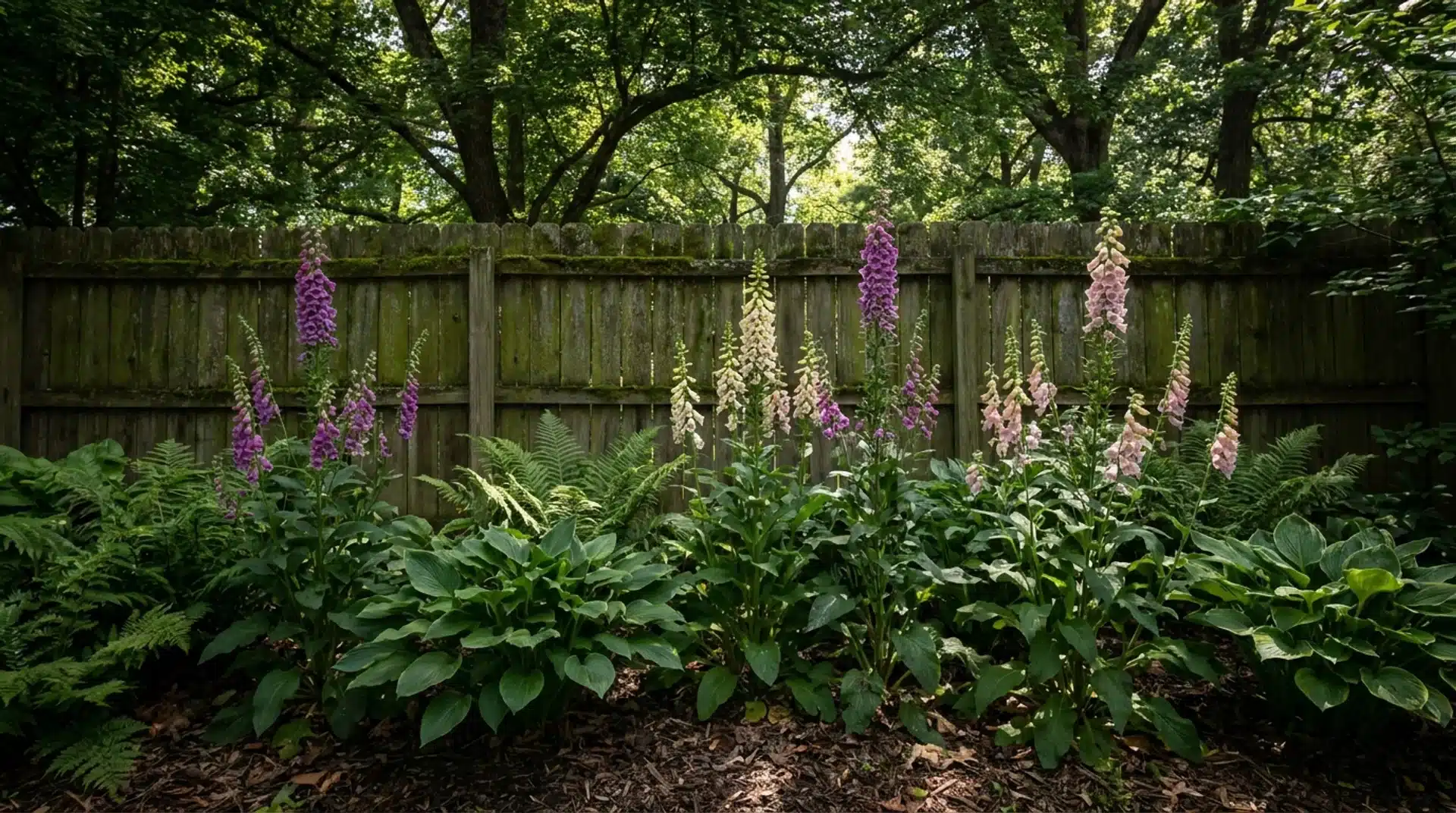
Most plants in shade gardens tend to stay low and have a mounding growth habit.
Foxglove is the exception: tall flower spikes in purple, pink, white, and cream reach four to six feet, giving vertical structure shade gardens rarely get elsewhere.
It’s biennial, flowering in its second year, then setting seed and dying, though once established, it self-seeds prolifically for a continuous presence.
Grow it in Zones 4-9, in part shade, at the back of a border or against a wall where the height reads as a backdrop.
All parts of foxglove are toxic if ingested, according to the ASPCA, worth knowing before planting near children or pets.
11. Hydrangea
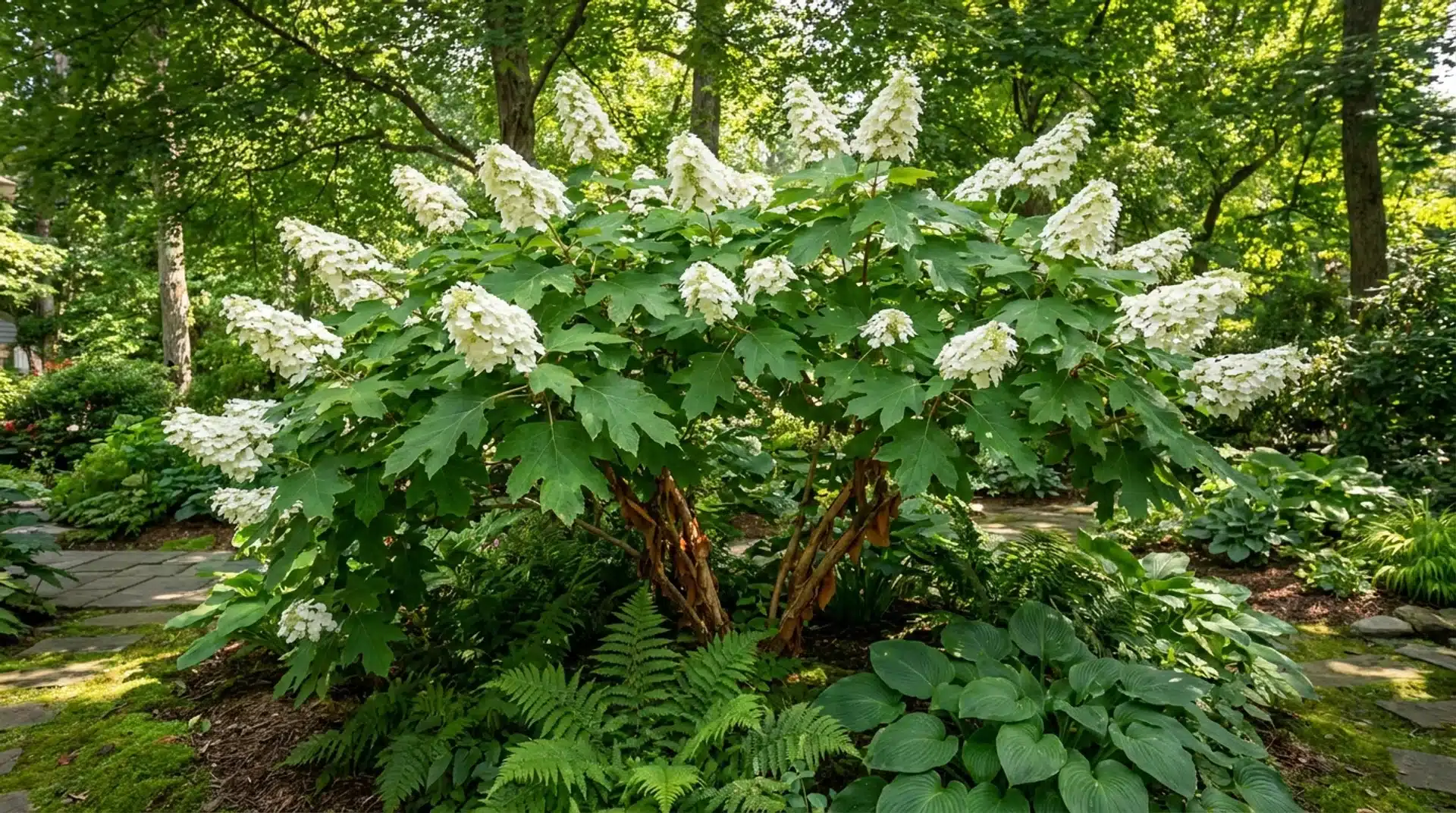
Two hydrangeas belong in a conversation about shade-loving garden plants in the US.
Bigleaf hydrangea (Hydrangea macrophylla) produces the large mophead and lacecap flowers most people picture, and it does well in part shade with consistent moisture; soil pH shifts its color between pink and blue.
Oakleaf hydrangea (Hydrangea quercifolia) is the stronger choice for most gardens: native to the southeastern US, drought-tolerant once established, deer-resistant, and offering four seasons of interest.
Zones 5-9. Bigleaf needs reliable moisture and frost protection, and getting the timing of pruning hydrangeas wrong costs you a season of blooms; oakleaf is tougher overall.
12. Lamium (Dead Nettle)
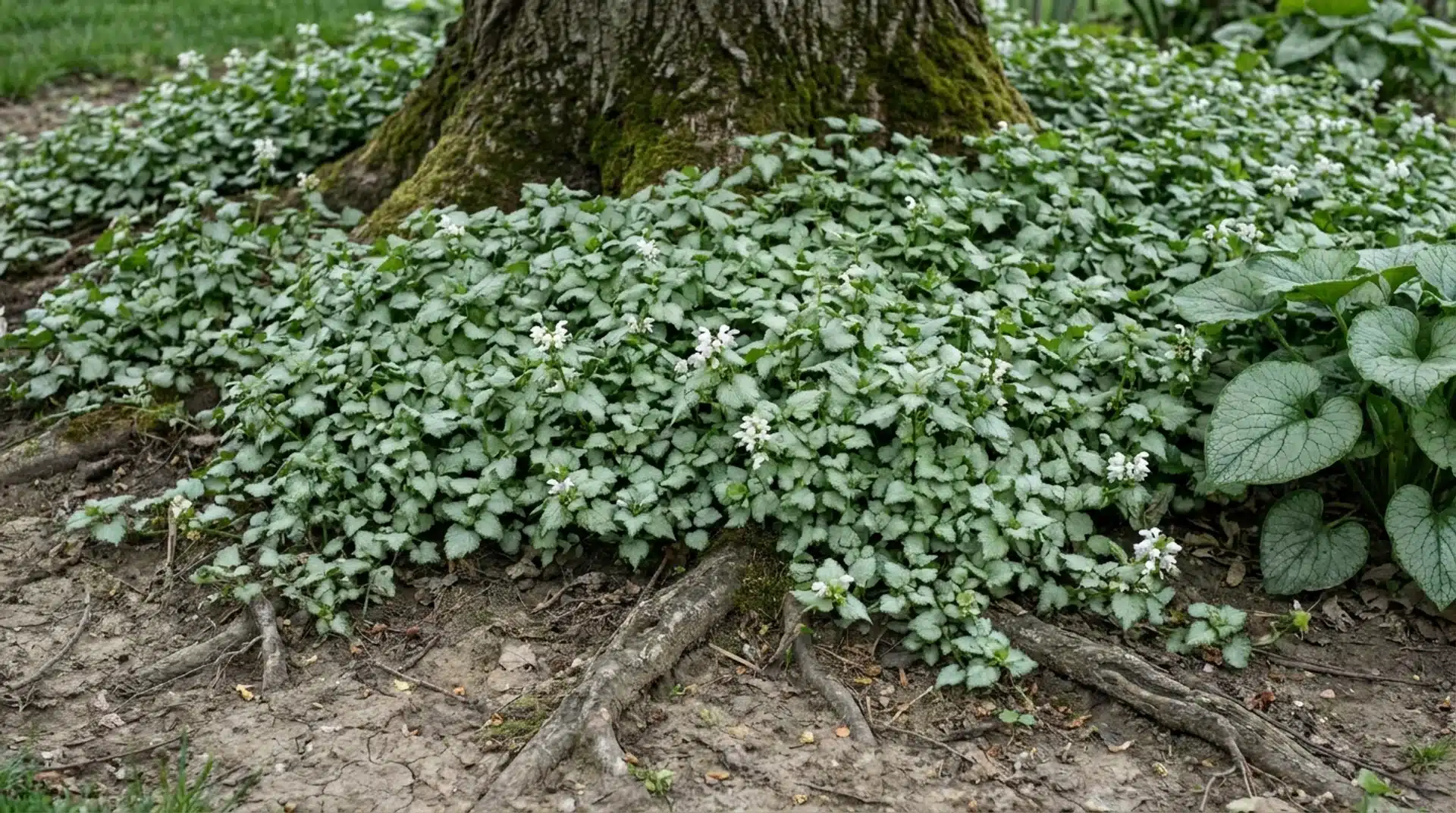
Lamium is the plant to reach for when nothing else will establish: dry soil under a dense tree canopy, heavy root competition, low light with little organic matter.
The silver-splashed foliage brightens dark spots, with small pink, purple, or white flowers in spring; ‘White Nancy’ and ‘Beacon Silver’ are the most ornamental cultivars worth seeking out.
Zones 3-8. Lamium spreads aggressively, a feature when coverage is the goal and a problem when it’s not, so use it for full ground cover under trees, not a contained border, where it crowds out most common garden weeds.
13. Japanese Forest Grass (Hakonechloa)
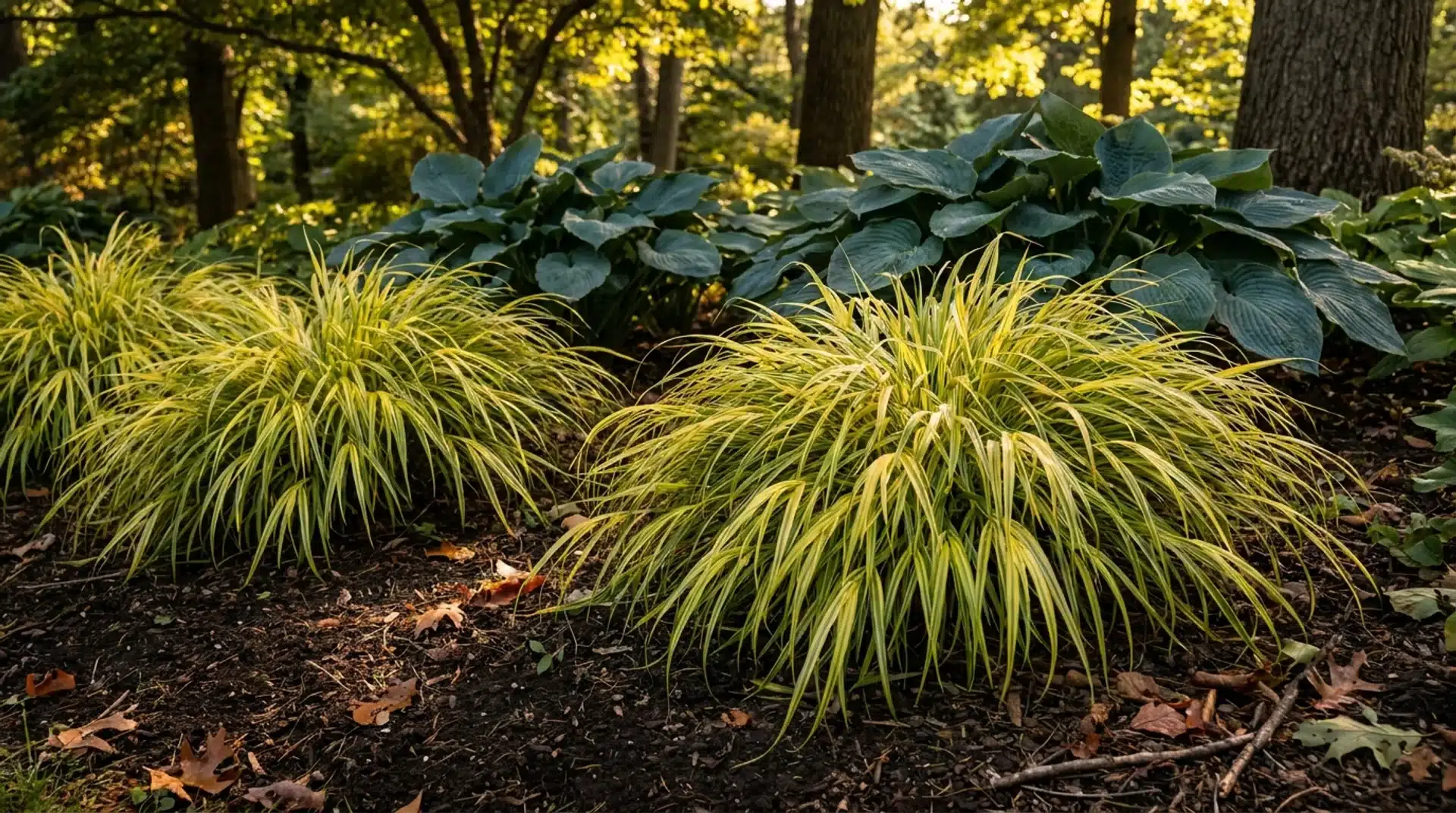
Most guides on ornamental grasses emphasize sun tolerance, but Japanese forest grass (Hakonechloa macra) is among the few that thrive in shade.
It offers a unique aspect: a slow-moving, cascading texture that gracefully responds to even the lightest breeze, showcasing a grace that rigid-leaved plants can’t match.
The variety ‘Aureola’ has golden-yellow-striped leaves that brighten a shaded space even more than the best foliage hostas, and then turns russet-orange in fall before dying back.
Growth is slow, so plant it as if it were permanent. Zones 5-9, moist, well-drained, humus-rich soil, part to full shade.
How to Layer a Shade Garden With These Plants
A list of plants is a starting point. What makes a shade garden look designed rather than assembled is how those plants relate to one another in height, texture, and seasonal timing.
The principle that works across almost every shaded space is layering: ground cover, mid-layer, and tall layer, with each tier doing a different job.
1. Ground Cover, Mid-Layer, and Tall Plants for a Shade Garden That Looks Intentional
Building a shade garden by height is the fastest way to make a planted space look considered rather than random. Use this as your layering reference before you put anything in the ground.
| Layer | Height Range | Plants That Belong Here | Design Role |
|---|---|---|---|
| Ground Cover | Under 12 inches | Lamium, low hosta varieties, and brunnera | Covers bare soil, suppresses weeds, and ties the planting together at the base |
| Mid-Layer | 1 to 3 feet | Heuchera, astilbe, bleeding heart, ferns, caladium | Carries most of the color and texture interest through the season |
| Tall Layer | Above 3 feet | Large hostas, foxglove, Japanese forest grass, oakleaf hydrangea | Provides structure, vertical interest, and a backdrop for everything below |
2. Dry Shade vs Moist Shade: Match the Plant to Your Actual Conditions
Most shade plants fail not because of the light but because of the water. Before you choose anything, dig down six inches and check what is actually there; surface soil after recent rain tells you nothing useful.
| Condition | What It Looks Like | Best Plants |
|---|---|---|
| Dry Shade | Under a mature tree with dense surface roots, compacted soil, and moisture pulled by root competition | Hellebore, lamium, Japanese forest grass, brunnera, oakleaf hydrangea |
| Moist Shade | North-facing wall, woodland edge, open canopy with decent organic soil that retains water | Astilbe, bleeding heart, large-leaved hostas, ferns |
The two conditions look similar on the surface after rain. Check soil moisture at a depth of 6 inches before you plant.
Dry shade under a dense canopy and moist dappled shade along a north wall are completely different growing environments, and a plant suited to one will not last a full season in the other.
Conclusion
The shaded part of your yard does not have to be the part you apologize for on garden tours. Given the right plants, it tends to become the part where people linger.
Start with two or three from this list, observe how the light moves through the space across the seasons, and build from there.
Hostas and ferns are the lowest-risk entry point for most US shade gardens.
Once you see what they do in their first full season, the more nuanced choices become much easier to make.
The goal for year one is just learning the space. The planting that fits it well comes after that.
Frequently Asked Questions
Can You Grow Grass In A Shaded Garden?
Most lawn grass varieties fail in shade with less than 4 hours of direct sun daily. Ground covers like lamium, liriope, or pachysandra are more reliable and require far less maintenance than struggling turf.
Should You Leave Leaves In A Shade Garden Over Winter?
Yes. Fallen leaves act as natural mulch, insulate plant crowns, and provide overwintering habitat for beneficial insects. Removing them entirely does more harm than leaving them in place.
Do Shade Garden Plants Need Fertilizer?
Shade plants thrive with a balanced fertilizer for foliage, not flowers. Apply once in early spring. Too much fertilizer in low light causes weak, leggy growth instead of healthy leaves.