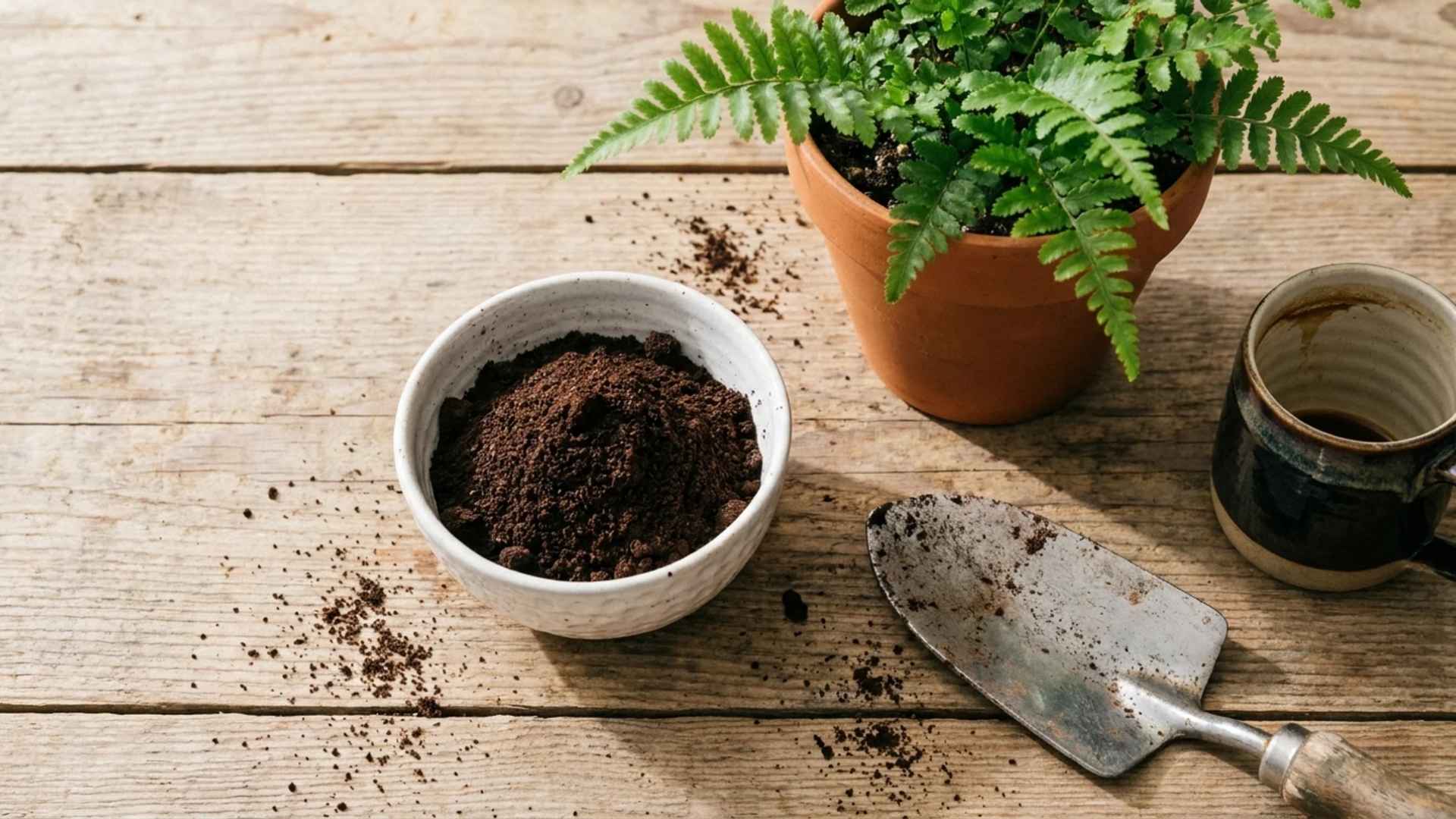

Coffee grounds for plants work, but only for some plants and only in the right amounts. Blueberries, azaleas, and roses respond well to them. Succulents, lavender, and seedlings do not.
Finished your coffee and wondering what to do with the used grounds?
The truth sits between the two extremes you’ll find online: coffee grounds are not a miracle fertilizer, but they are not garden poison either.
This post covers which plants benefit, which ones suffer, how to apply grounds safely, and the mistakes that ruin most attempts.
What Coffee Grounds Do for Plants and Soil
Coffee grounds add organic matter and nitrogen to soil over time. They also improve drainage and feed earthworms, both of which support healthier plants overall.
The main myth is that coffee grounds are strongly acidic. Used grounds are actually close to neutral in pH. The acid from coffee is carried away with the water during brewing.
What stays behind is mostly organic matter and a modest amount of nitrogen.
So the idea that sprinkling coffee grounds will rapidly acidify your soil is not accurate. If your goal is to lower soil pH for acid-loving plants, coffee grounds alone will not get you there quickly.
They are a soil amendment, not a dedicated pH treatment.
What Nutrients Do Coffee Grounds Contain?
Used coffee grounds contain roughly 2% nitrogen by weight. Nitrogen is the nutrient most responsible for leafy, green growth, and too little of it in the soil often shows up first as pale or yellowing leaves.
According to Linda Brewer, a soil scientist with the Oregon State University Extension Service, coffee grounds also hold small amounts of potassium, magnesium, and copper.
Potassium helps with root development and flower production. Magnesium supports photosynthesis.
Neither is present in high quantities in coffee grounds, but together they contribute meaningfully over the course of a composting season.
The organic matter in coffee grounds is also useful on its own. Added to soil, it improves texture, increases water retention in sandy soils, and helps heavy clay soils drain better.
Over time, it feeds the microorganisms that keep soil healthy and loose.
Which Plants Benefit from Coffee Grounds?
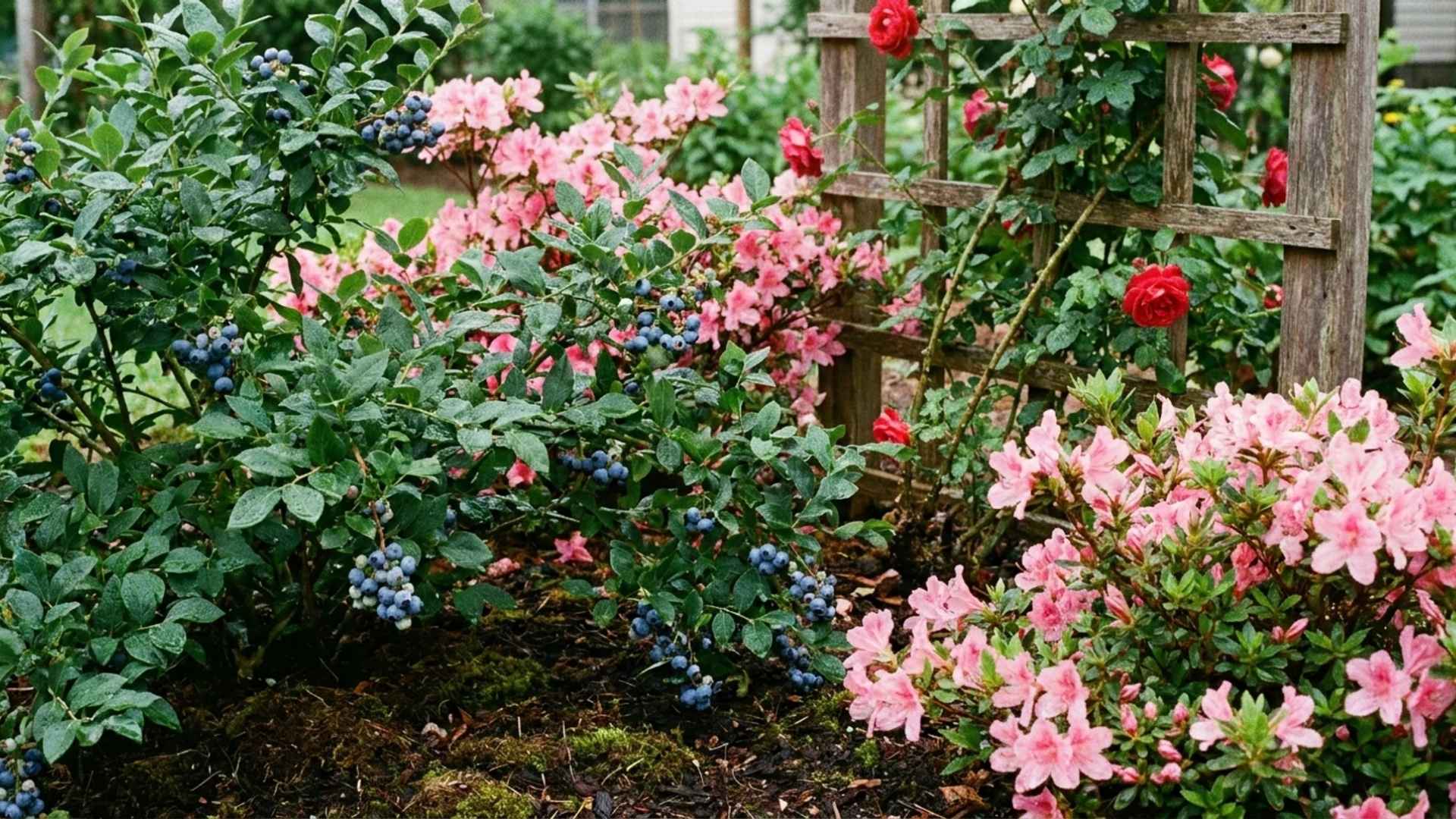
Acid-loving plants that prefer nitrogen-rich soil respond best to coffee grounds. These are the ones worth targeting first.
- Blueberries: Blueberries need a soil pH between 4.5 and 5.5. Coffee grounds in compost help maintain this range over time.
- Azaleas and rhododendrons: Both thrive in acidic, nitrogen-rich conditions. Adding composted grounds around these shrubs can improve leaf density and bloom size.
- Roses: Roses grow well with steady nitrogen availability. A light application in early spring encourages leafy growth and stronger flowers.
- Hydrangeas: For blue varieties, slightly acidic soil enhances color intensity. Composted coffee grounds support this environment.
- Camellias: Camellias prefer moist, acidic soil. Coffee grounds work well when mixed into mulch around the base of the plant.
- Ferns: Most ferns do well in slightly acidic, organic-rich soil. Coffee grounds suit them nicely when composted.
- Carrots and radishes: Root vegetables grown in loose, well-amended soil benefit from the organic matter coffee grounds provide.
For all of these, composting the grounds first delivers better results than direct soil application.
The Royal Horticultural Society recommends working any organic amendment into compost before adding it to established beds.
Which Plants Don’t Like Coffee Grounds?
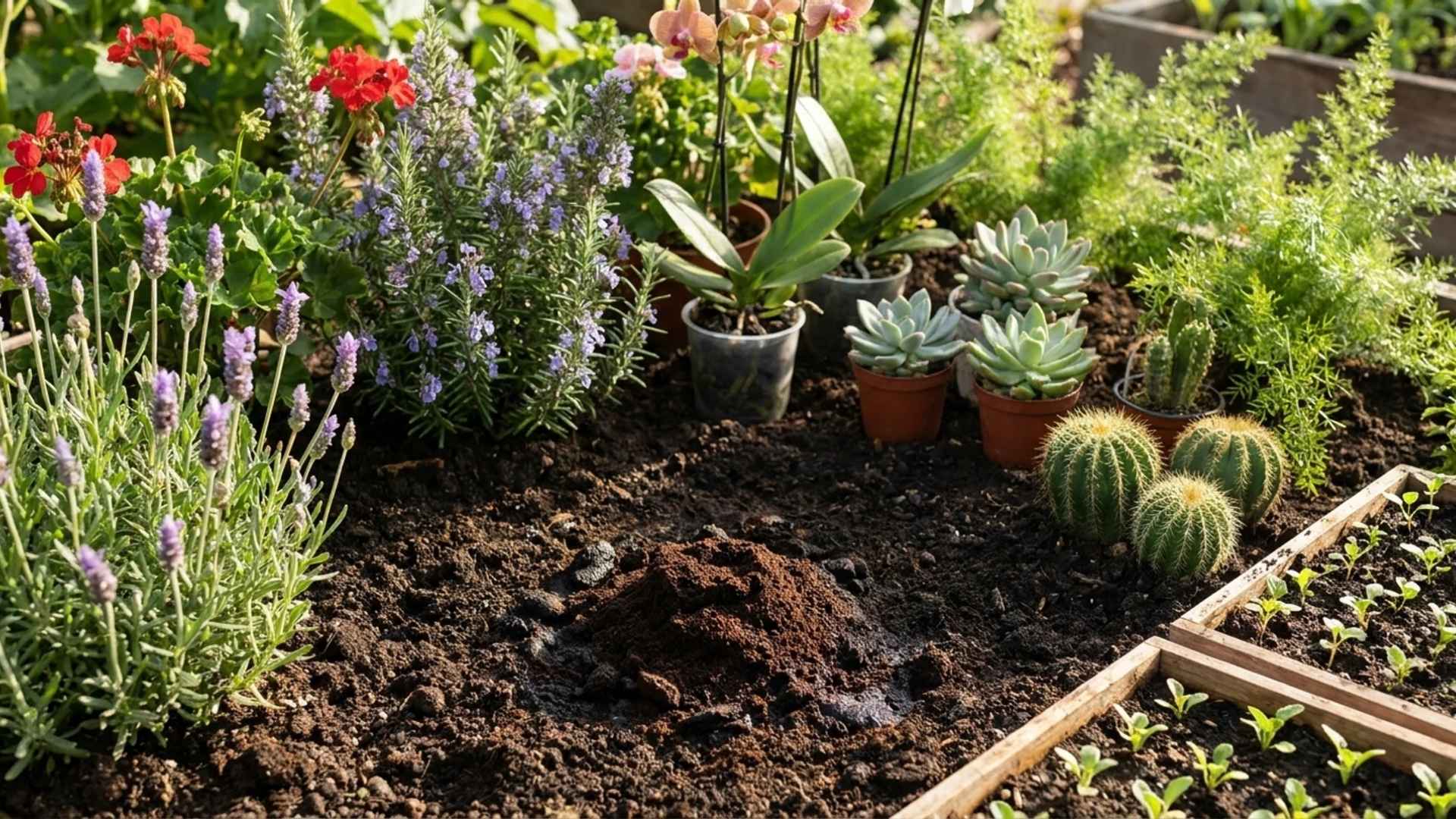
Succulents, cacti, lavender, rosemary, asparagus, orchids, and young seedlings don’t respond well to coffee grounds. Some plants will genuinely struggle if you add coffee grounds near them.
- Succulents and cacti: These plants need very specific watering habits to stay healthy and grow in dry, nutrient-poor conditions. Moist coffee grounds near their roots can cause rot within days.
- Lavender: Lavender thrives in alkaline, well-draining soil. Coffee grounds push conditions in the wrong direction.
- Geraniums: University extension research has shown that coffee grounds can noticeably reduce geranium growth performance.
- Asparagus: Asparagus prefers slightly alkaline soil. Coffee grounds work against that preference.
- Orchids: Orchids need low-nutrient, very specific growing conditions. Adding grounds can quickly throw off their balance.
- Rosemary: Like lavender, rosemary does best in dry, alkaline soil. Skip coffee grounds near this herb.
- Young seedlings: Coffee grounds contain caffeine, which can suppress seed germination and stunt early growth. Keep them entirely away from seedling trays and newly sprouted plants.
If a plant grows well in dry, alkaline, or nutrient-poor conditions, coffee grounds are likely to cause harm rather than help.
How to Use Coffee Grounds on Plants
There are three main ways to use coffee grounds in the garden. Each has a different risk level and works best in different situations.
The Compost Method
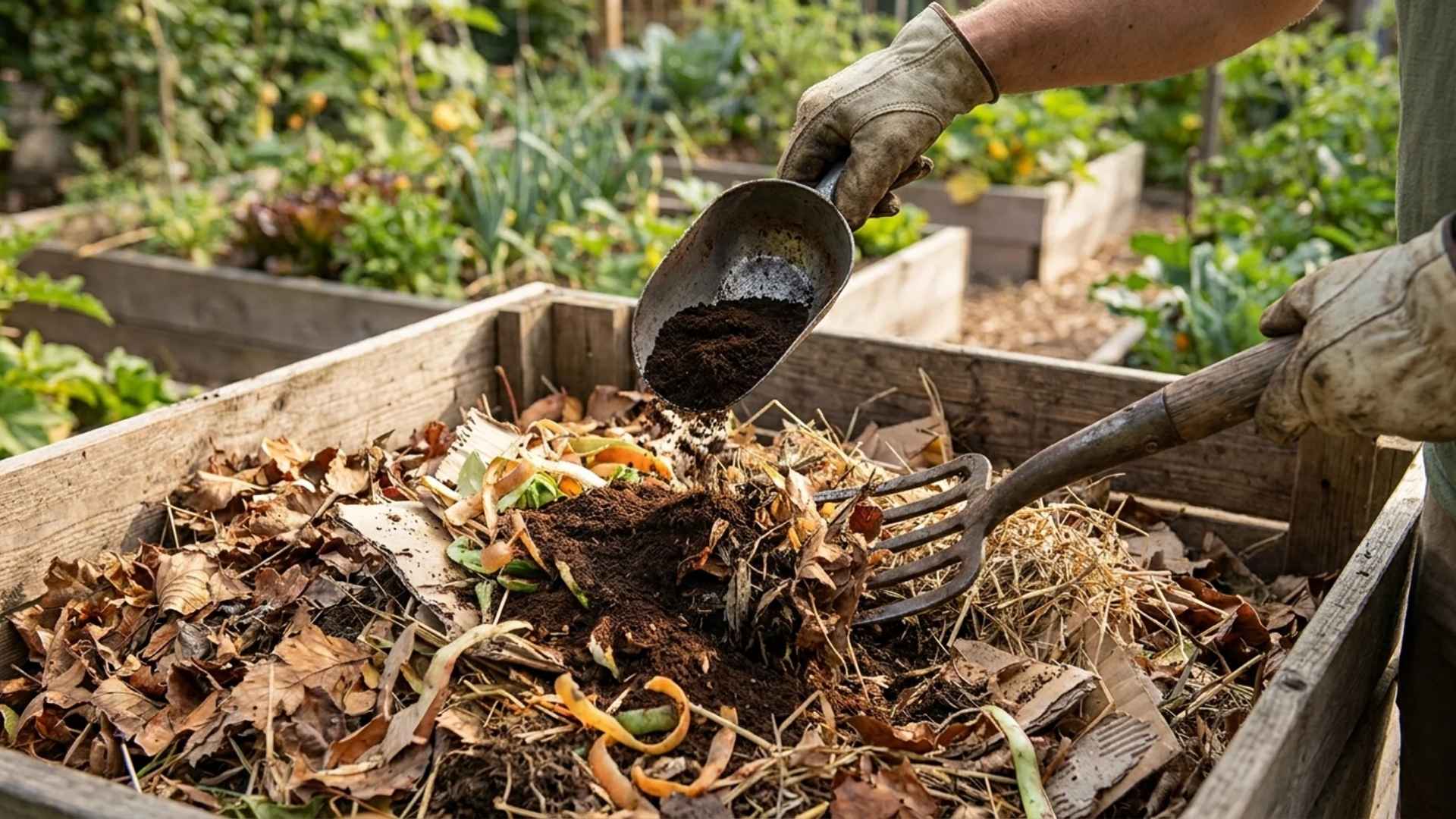
Add used grounds to your compost pile. Mix them in with dry materials like dried leaves, shredded cardboard, or straw.
In composting terms, coffee grounds are considered a “green” material because they provide nitrogen. A good ratio is 1 part grounds to 4 parts dry material.
The compost breaks down the ground slowly. By the time you apply finished compost to your garden, the grounds have decomposed into balanced organic matter. The pH stabilizes.
The nutrient concentration spreads evenly. This method removes most of the risk that comes with direct application.
Mixing diverse organic materials into compost, rather than adding coffee grounds alone, produces more stable, plant-available nutrients than any single material added raw.
Mixing Directly Into Soil
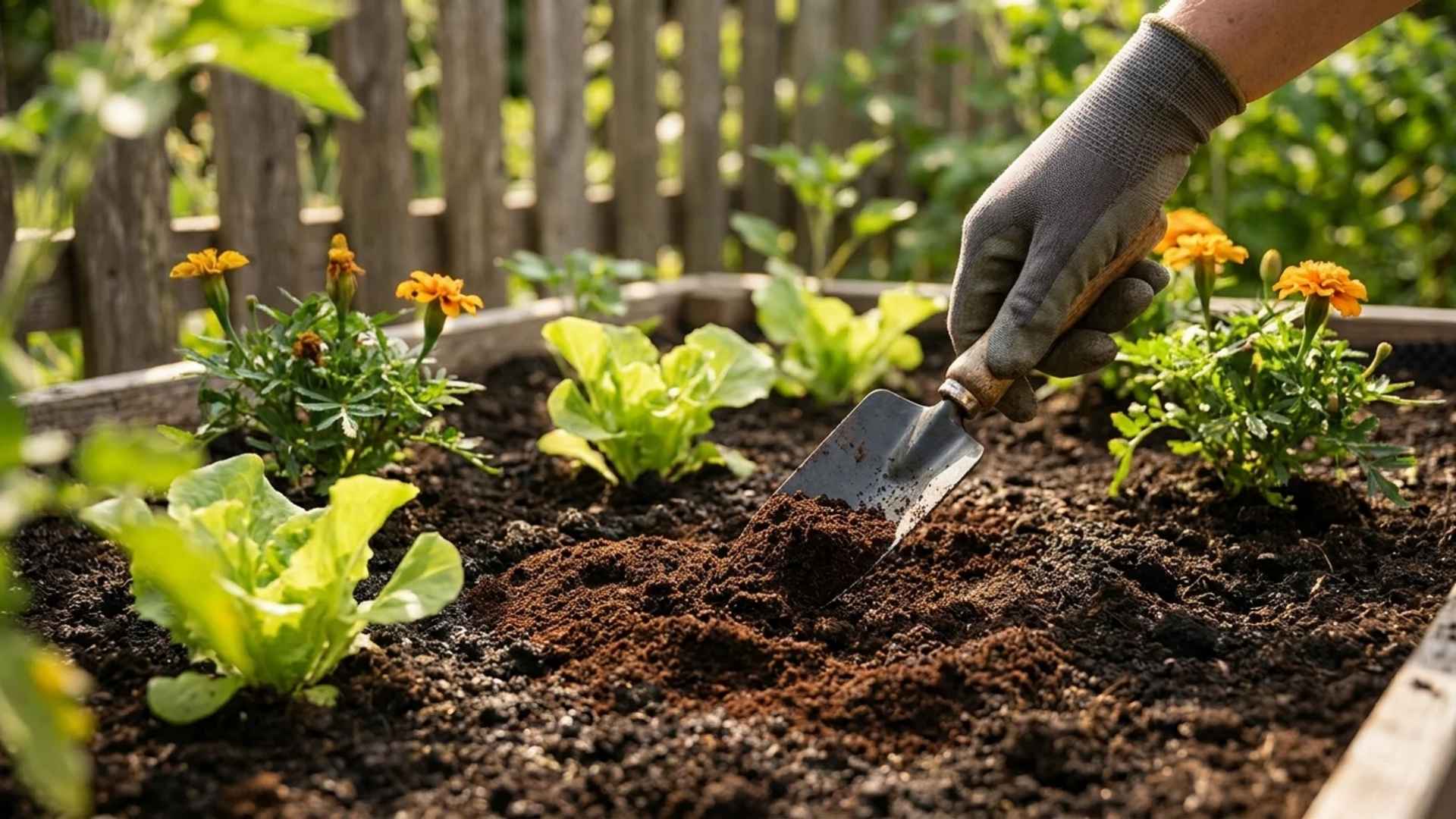
You can work small amounts of used grounds directly into garden soil. Limit the application to roughly half an inch mixed into the top layer.
Do this once at the start of the growing season, not repeatedly throughout the season.
Too much at once causes problems fast. Coffee grounds form a dense crust on the soil surface that blocks water from soaking in.
Your plants may sit in dry soil even after you water them because the crust prevents water from penetrating.
Using as Mulch
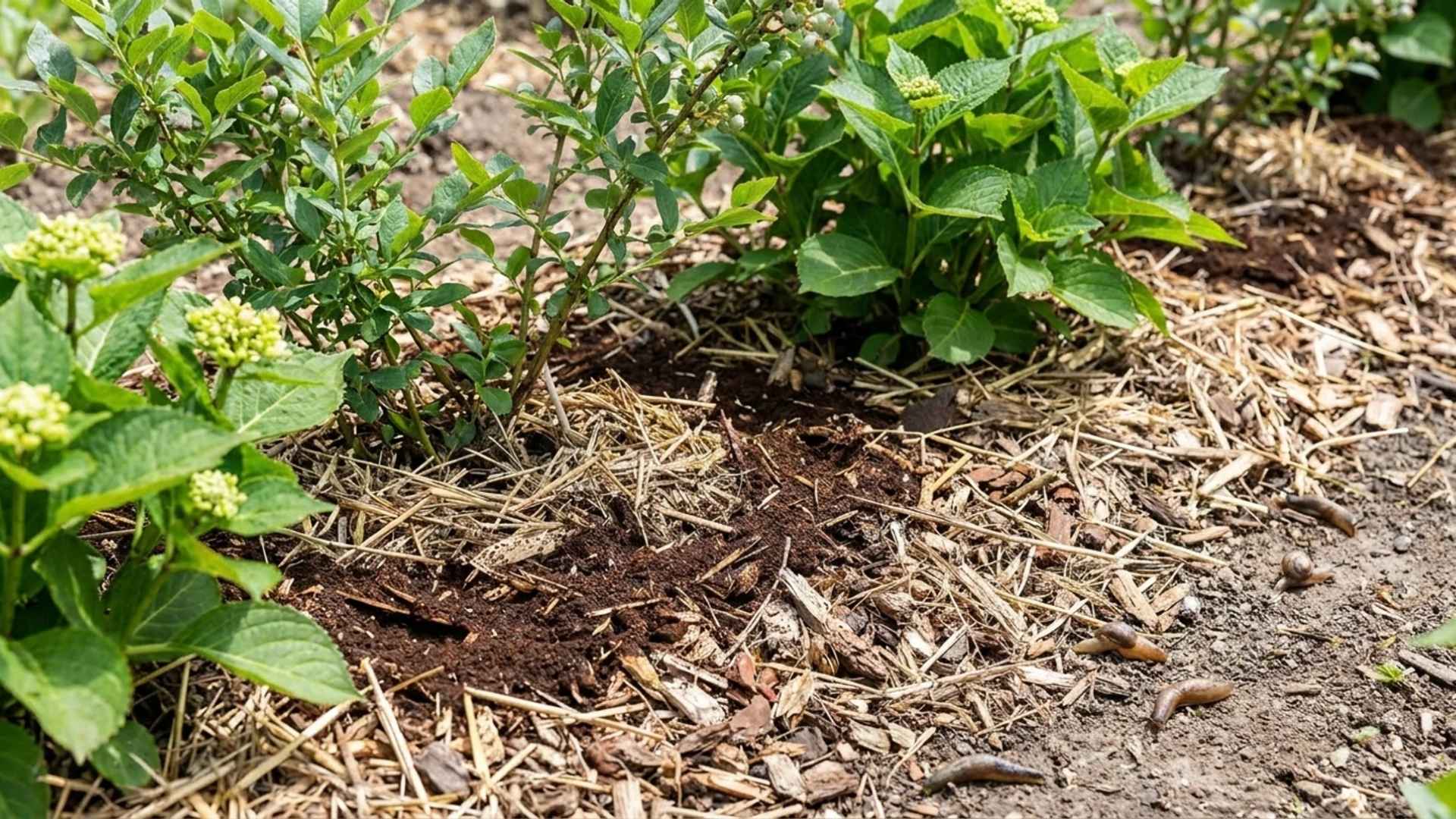
Scatter a thin layer of dry coffee grounds around the base of acid-loving plants. Keep the layer to a quarter inch or less.
Mix the grounds with other mulch materials, such as wood chips or straw, to prevent clumping.
Dry grounds spread thinly also act as a mild pest deterrent.
Slugs and snails find caffeine unpleasant and tend to avoid areas where grounds are scattered around plant bases.
Pro tip: If your coffee grounds are still wet from brewing, spread them on a baking sheet and let them dry before using them as mulch.
Common Mistakes to Avoid with Coffee Grounds
Gardeners facing issues with coffee grounds might have made one of these common mistakes.
- Using too much at once: A thick layer on the soil surface dries into a hard crust. Water cannot pass through it. Plants suffer from drought stress even when watered regularly.
- Using fresh, unbrewed grounds: Fresh grounds are more acidic and contain more concentrated caffeine. Both can slow or stop plant growth. Always use cooled grounds.
- Applying them to the wrong plants: Adding grounds to succulents, lavender, seedlings, or alkaline-loving plants without checking can cause visible damage within days.
- Skipping the compost step: Direct application can work when done carefully, but composting first is always safer. It dilutes the grounds and prevents excessive nitrogen concentration in one area.
- Letting wet coffee grounds sit on soil: In warm conditions, they grow mold quickly. Apply them thin and fresh, or dry them out first.
Conclusion
Coffee grounds for plants earn their place in the garden when you match them to the right plant and the right amount. Blueberries, azaleas, and roses take to them fastest.
Compost first if you can. It’s the safest route for most plants.
Applying grounds directly works too, as long as the layer stays thin and you skip succulents, lavender, and anything that prefers dry or alkaline soil.
Your coffee pot already makes a free soil amendment every morning. Start a small pile of grounds this week and check your soil texture again at the end of the season.
Drop a comment below and share which plants you plan to try this on.
Frequently Asked Questions
Can I Just Sprinkle Coffee Grounds in My Garden?
Yes, you can sprinkle coffee grounds directly into your garden, but do so in thin layers and with caution.
What Plants Does Ground Coffee Help?
The plants that generally benefit most from the nutrients and slight acidity of coffee grounds are acid-loving plants.
Disadvantages of Coffee Grounds in The Garden?
While coffee grounds are a great source of nitrogen for your compost pile, they can compact and block water, stunt the growth of young plants, and create a breeding ground for mold.