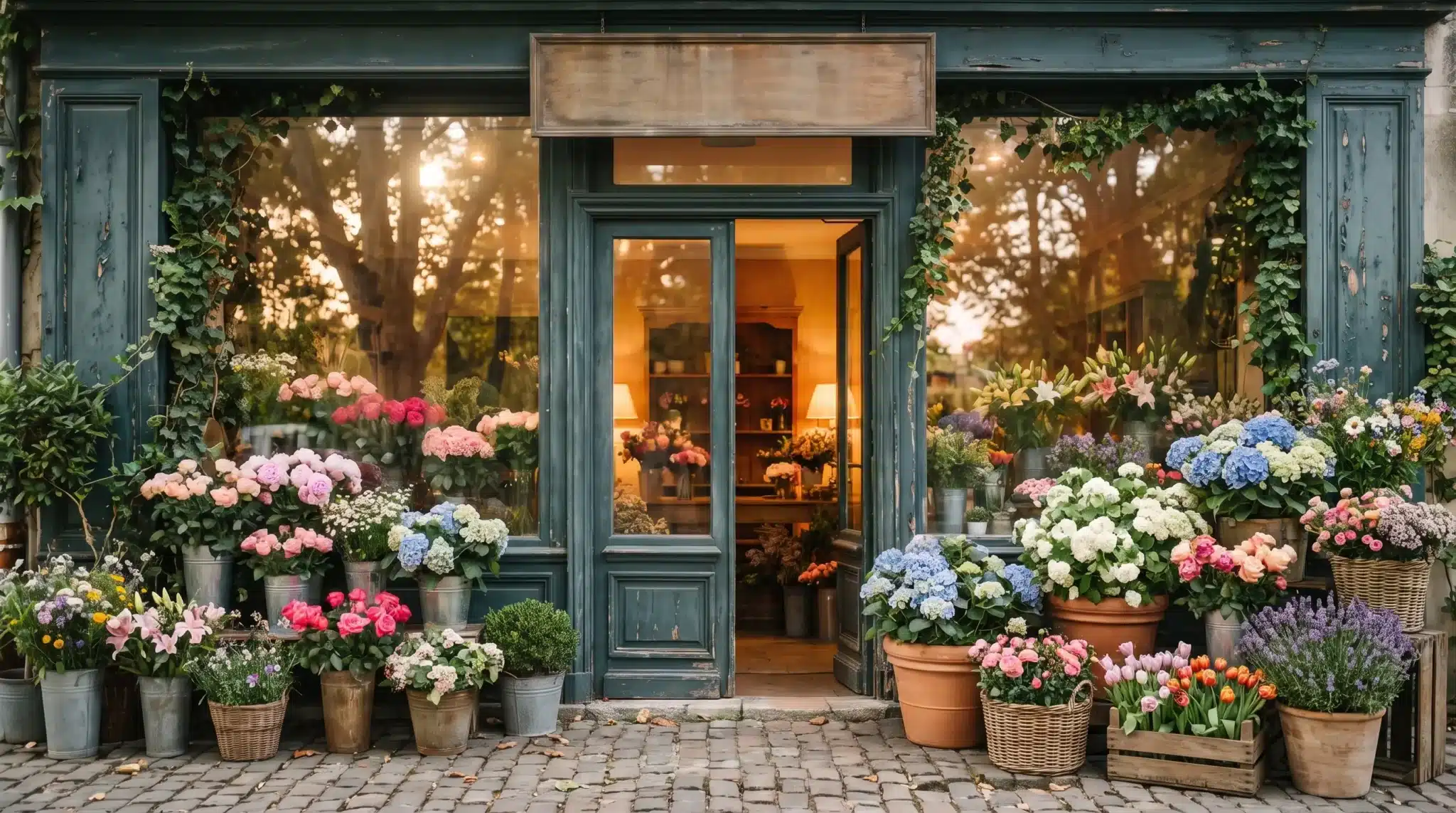
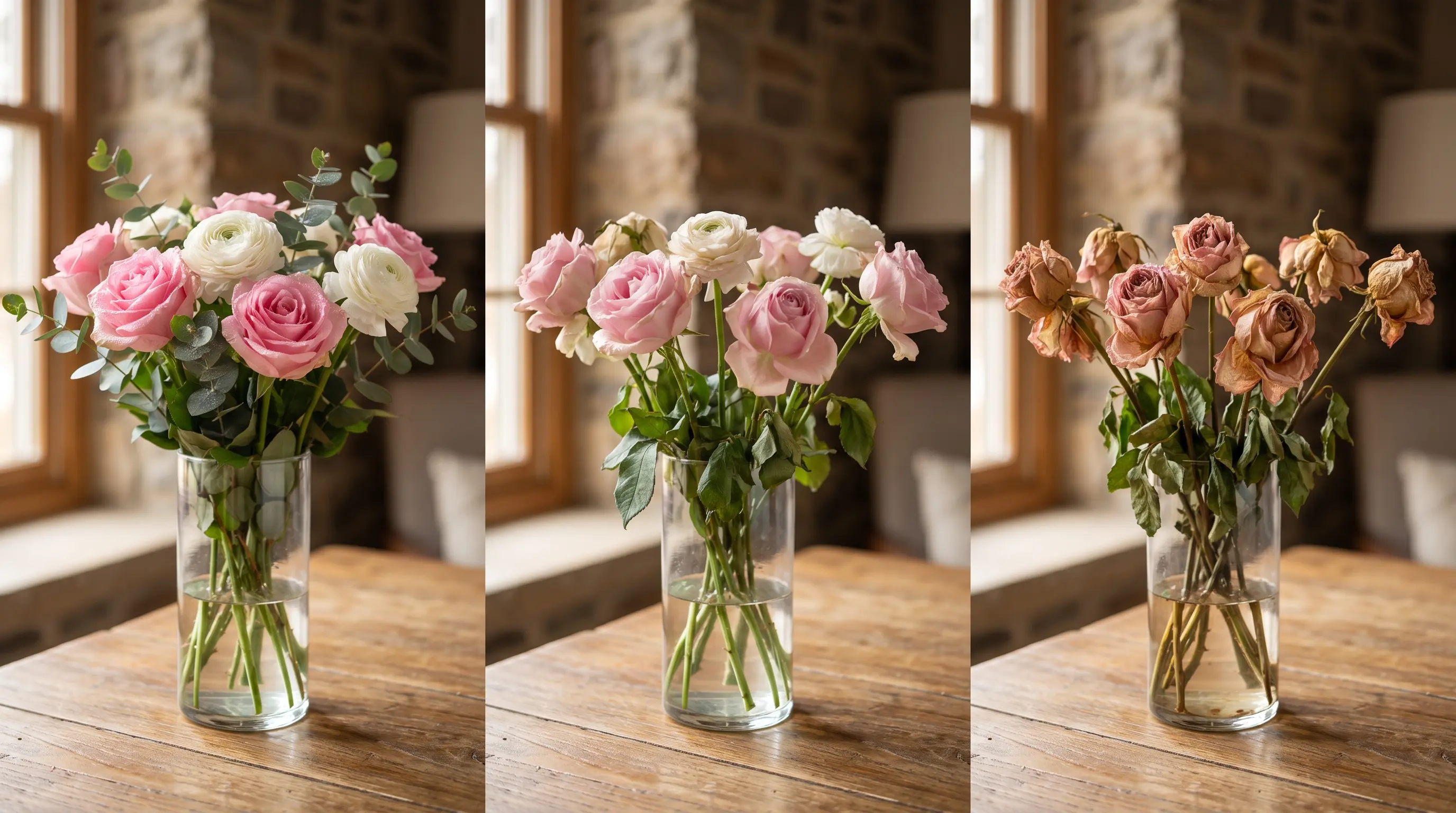
You bring home a fresh bouquet, place it in your favorite vase, and then comes the question every flower lover eventually asks: how long will flowers stay fresh?
Most fresh-cut flowers stay fresh for5 to 14 days in a vase, although hardy varieties can last longer while delicate blooms may fade within a week.
Once flowers are removed from water, the clock moves much faster, with most blooms starting to wilt within a few hours.
How long they last depends on a few key factors:
- Flower type: Some varieties naturally hold their shape and color longer than others.
- Freshness when purchased: Recently cut flowers usually have a longer vase life.
- Water quality: Clean water helps slow decline and keeps stems hydrated.
- Temperature and light: Heat and direct sunlight can speed up wilting.
- Stem condition: Freshly cut stems absorb water more effectively.
| Flower Condition | Average Lifespan |
|---|---|
| Fresh-cut bouquet | 5–14 days |
| Long-lasting varieties | 2–3 weeks |
| Delicate blooms | 3–7 days |
| Without water | A few hours |
From average vase life by flower type to simple ways to slow wilting, knowing what affects freshness can help you enjoy your blooms longer.
How Long Do Different Types of Flowers Last?
Not all flowers age at the same speed. Some naturally have stronger stems and thicker petals, allowing them to stay fresh much longer than delicate blooms.
| Flower | Average Vase Life | Care Notes |
|---|---|---|
| Carnations | 2–3 weeks | One of the longest-lasting cut flowers |
| Chrysanthemums | 2–3 weeks | Dense blooms help them hold up longer |
| Orchids | 2–3 weeks | Avoid overwatering and keep conditions stable |
| Roses | 7–10 days | Remove lower leaves and refresh water regularly |
| Lilies | 7–14 days | Remove pollen to prevent staining |
| Daisies | 7–14 days | Keep stems trimmed and water clean |
| Sunflowers | 7–10 days | Need strong stems and fresh water |
| Tulips | 5–7 days | Continue growing even after cutting |
| Peonies | 5–7 days | Last longer when cut while still in bud form |
For bouquets that need to stay fresh for longer, flowers like carnations, chrysanthemums, orchids, alstroemeria, lilies, and roses are reliable choices.
Their stronger structure helps them handle vase life better, which is why florists often use them for arrangements that need to look good for several days.
What Makes Flowers Die Faster?
A handful of everyday habits quietly shorten vase life, often without anyone realizing it.
- Dirty Vase Water: Bacteria buildup in old water blocks stems from absorbing water properly, causing flowers to wilt faster.
- Heat and Direct Sunlight: Warm spots speed up a flower’s internal clock. A vase sitting on a sunny windowsill will age noticeably faster than one kept in a cool room.
- Not Trimming Stems Properly: A flat, blunt cut reduces the surface area available for water absorption. An angled cut does the opposite, giving the stem more room to drink.
- Leaving Dead Leaves or Blooms Attached: Decaying plant material breaks down in the water and feeds bacteria, which then spreads to healthy stems nearby.
- Placing Flowers Near Fruits: Ripening fruit releases ethylene gas, and even small amounts can accelerate wilting in sensitive flowers like roses, lilies, and carnations.
How to Make Flowers Last Longer
Simple care habits can significantly extend the life of a bouquet.
Proper preparation, clean water, regular maintenance, and the right placement help flowers stay hydrated, slow down wilting, and keep their color and shape for longer.
This section covers the key steps to keep fresh-cut flowers looking fresh after bringing them home.
1. Start With a Clean Vase and Fresh Water
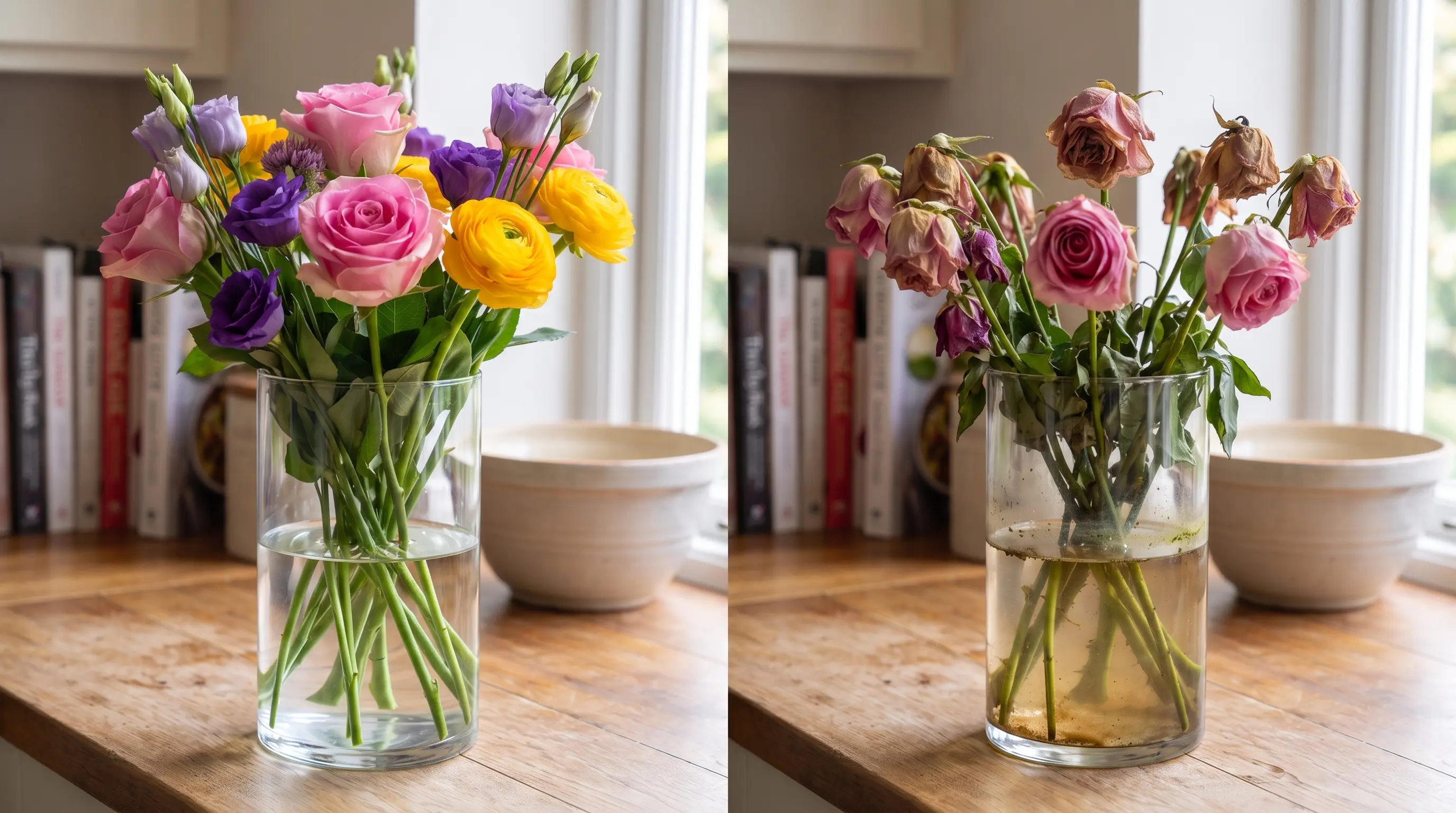
Wash the vase with warm water and soap before use, since old residue often carries bacteria. From there, replace the water every one to three days and rinse the vase each time rather than just topping it off.
2. Trim Stems Before Arranging
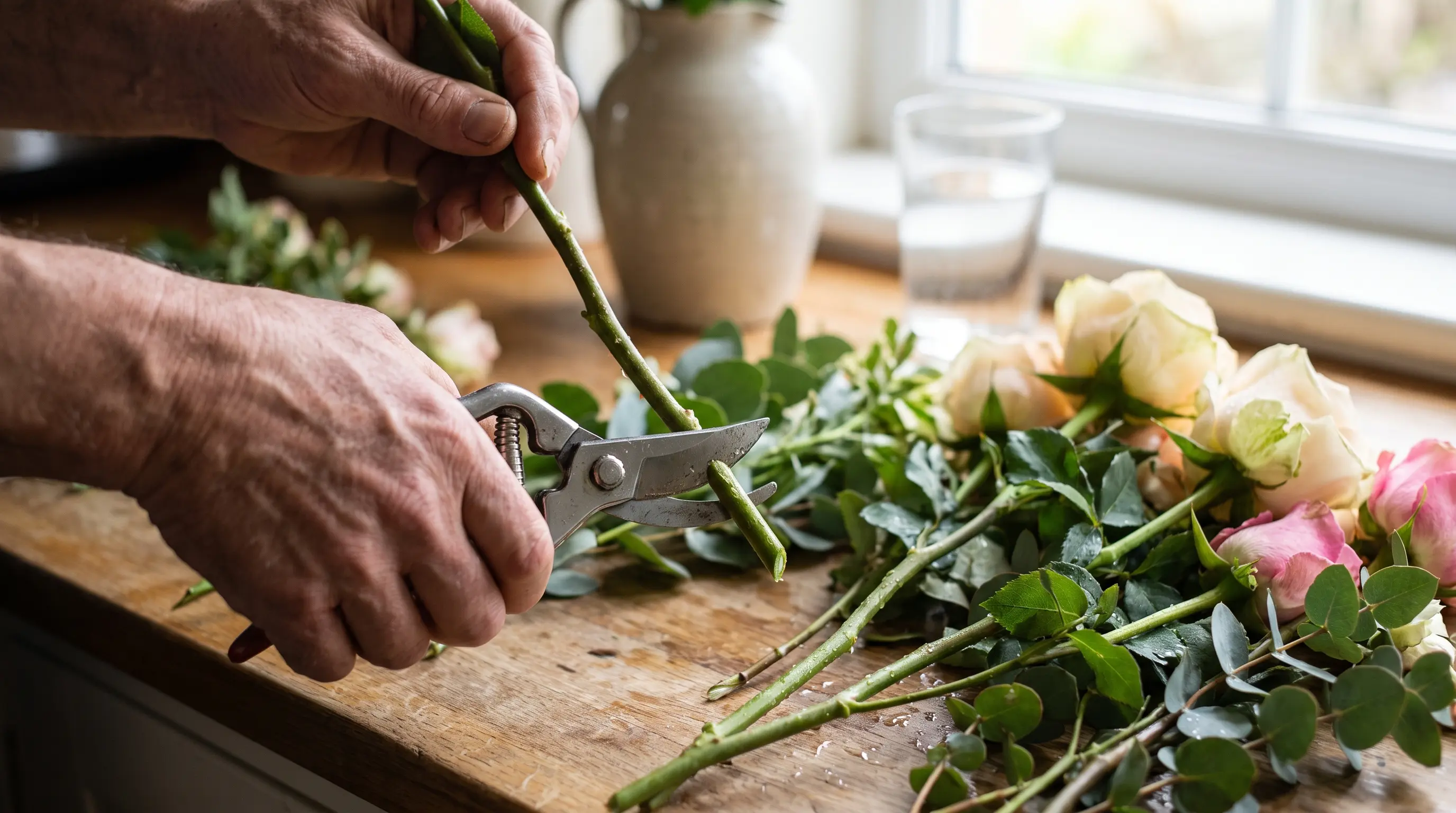
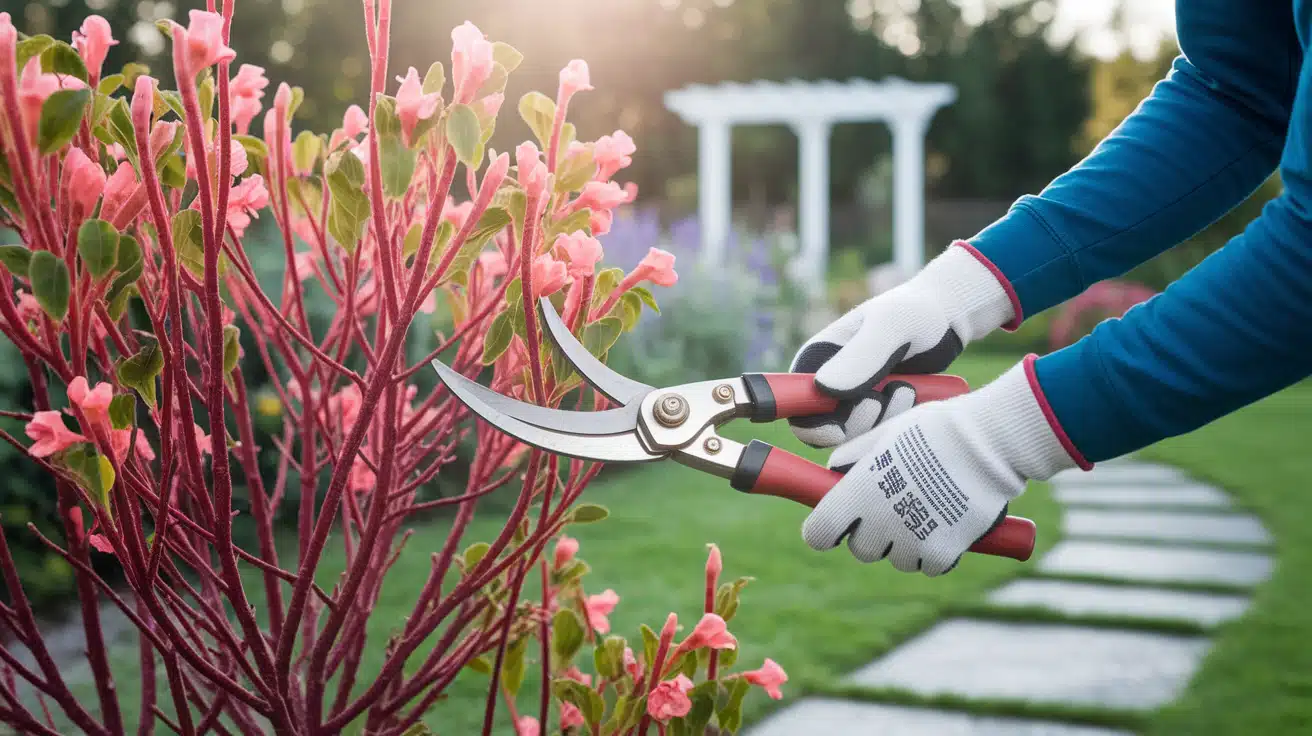
Cut each stem at a 45-degree angle using clean scissors or shears. This simple step alone can add several days to a bouquet’s life.
3. Remove Leaves Below the Water Line
Submerged leaves decay quickly and encourage bacterial growth, so stripping them off before arranging pays off later.
4. Keep Flowers in the Right Location
Aim for a cool room, away from direct sunlight and away from heating vents or drafts.
Can You Make Flowers Last Longer With Home Remedies?
Plenty of vase hacks circulate online, but not all of them hold up under scrutiny.
| Method | Does It Help? | Explanation |
|---|---|---|
| Sugar in water | Limited benefit | Can feed bacteria if not balanced properly |
| Aspirin | Mixed results | Not a reliable substitute for flower food |
| Vinegar | Limited evidence | May help adjust water conditions slightly |
| Flower food packets | Most reliable | Formulated with nutrients and antibacterial ingredients |
Flower food packets, the small paper sachets that come with most bouquets, are genuinely the most dependable option here.
They’re built specifically to feed the bloom while keeping bacteria in check, something home remedies typically can’t do both of at once.
How Long Do Dried Flowers Last?
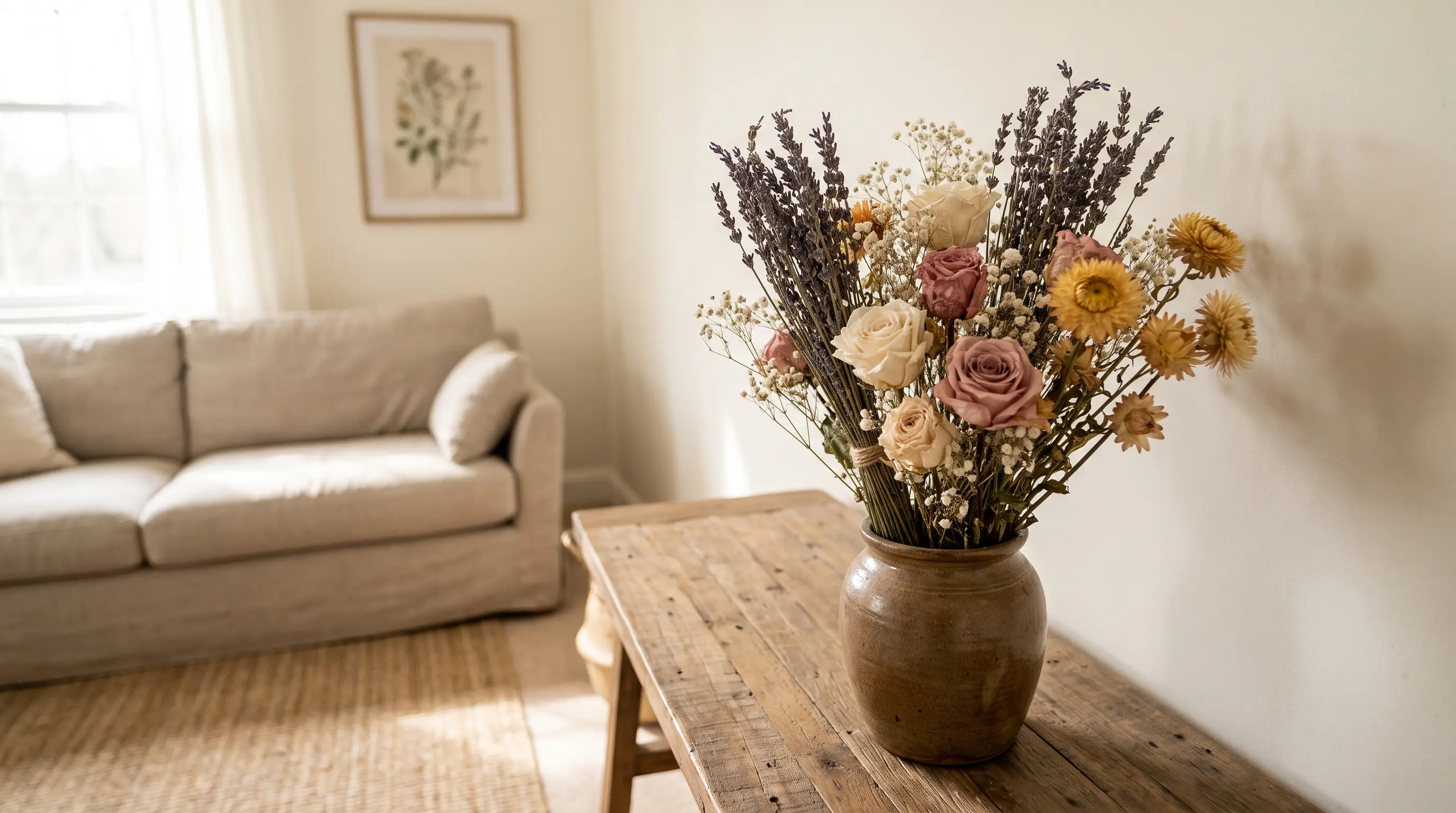
Dried arrangements can last anywhere from several months to a few years, making them a good option for anyone who wants something more permanent than a fresh bouquet.
Some flowers dry particularly well and hold their shape and color longer than others:
- Lavender
- Roses
- Baby’s breath
- Strawflowers
To keep dried flowers looking their best, store them away from moisture and direct sunlight, and dust them gently with a soft brush every so often.
How to Preserve Flowers for Long-Term Display
Flowers are beautiful, but they are also temporary. A bouquet that brightens your room today will eventually lose its freshness, with petals fading and stems becoming softer over time.
But that does not mean you have to say goodbye to those blooms right away.
With simple preservation methods like drying, pressing, silica gel, or resin, you can hold on to flowers from special moments for much longer.
Whether they came from a wedding, a thoughtful gift, or your own garden, preserved blooms can keep those memories alive.
Disclaimer: No flower preservation method can keep a fresh bouquet exactly the same forever. Preserved flowers will naturally change over time. The goal of preservation is to slow this process and maintain the beauty and memory of the flowers for as long as possible.
1. Air Dry Flowers for a Simple Preservation Method
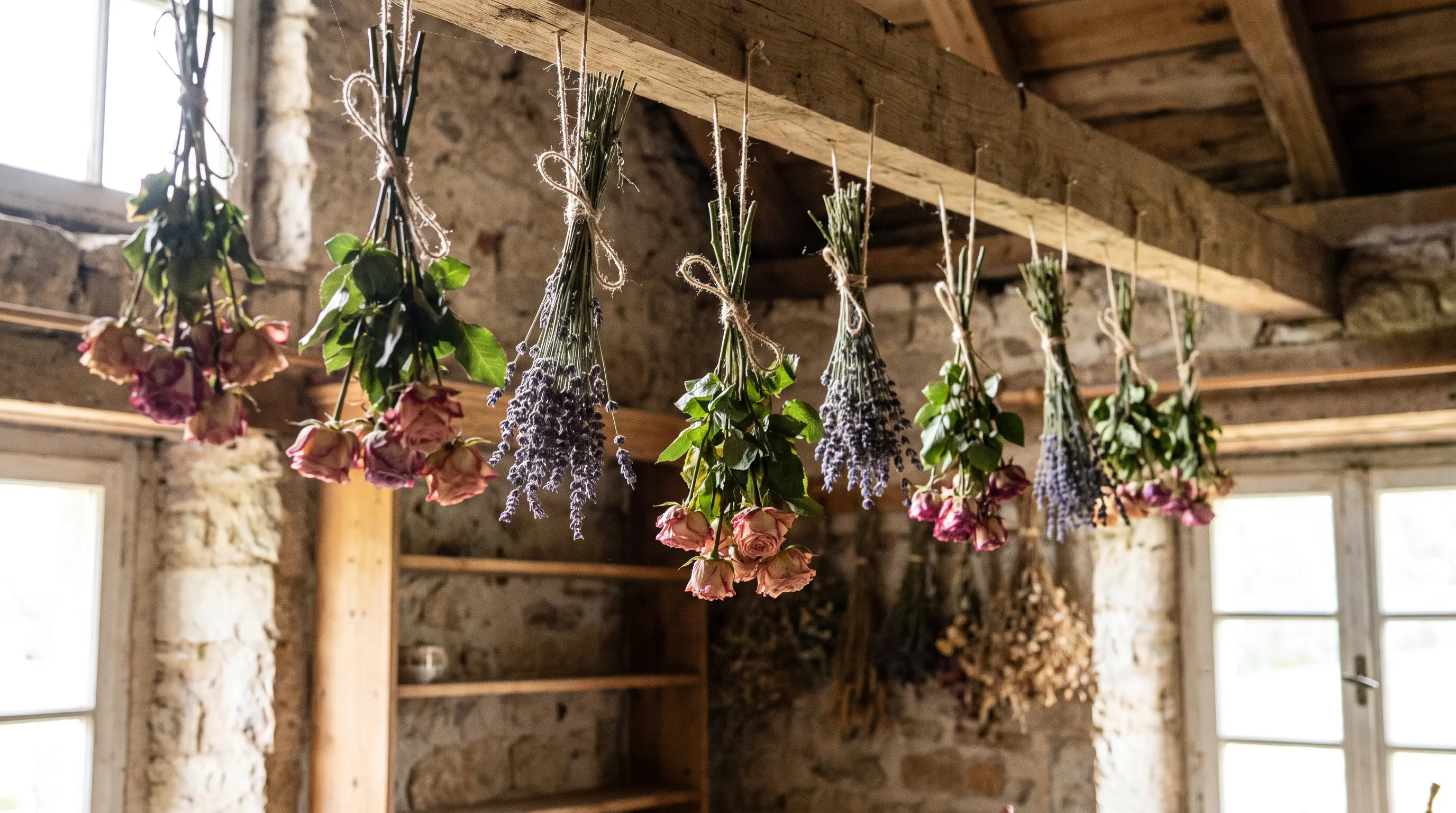
Air drying is one of the easiest ways to preserve flowers at home, especially for sturdy varieties like roses, lavender, and baby’s breath.
To air dry flowers:
- Remove extra leaves and damaged petals.
- Tie small bundles of stems together.
- Hang them upside down in a dark, dry area with good airflow.
- Allow several weeks for the flowers to fully dry.
Keeping flowers away from direct sunlight helps reduce fading and keeps their natural color for longer.
2. Use Silica Gel to Preserve Flower Shape and Color
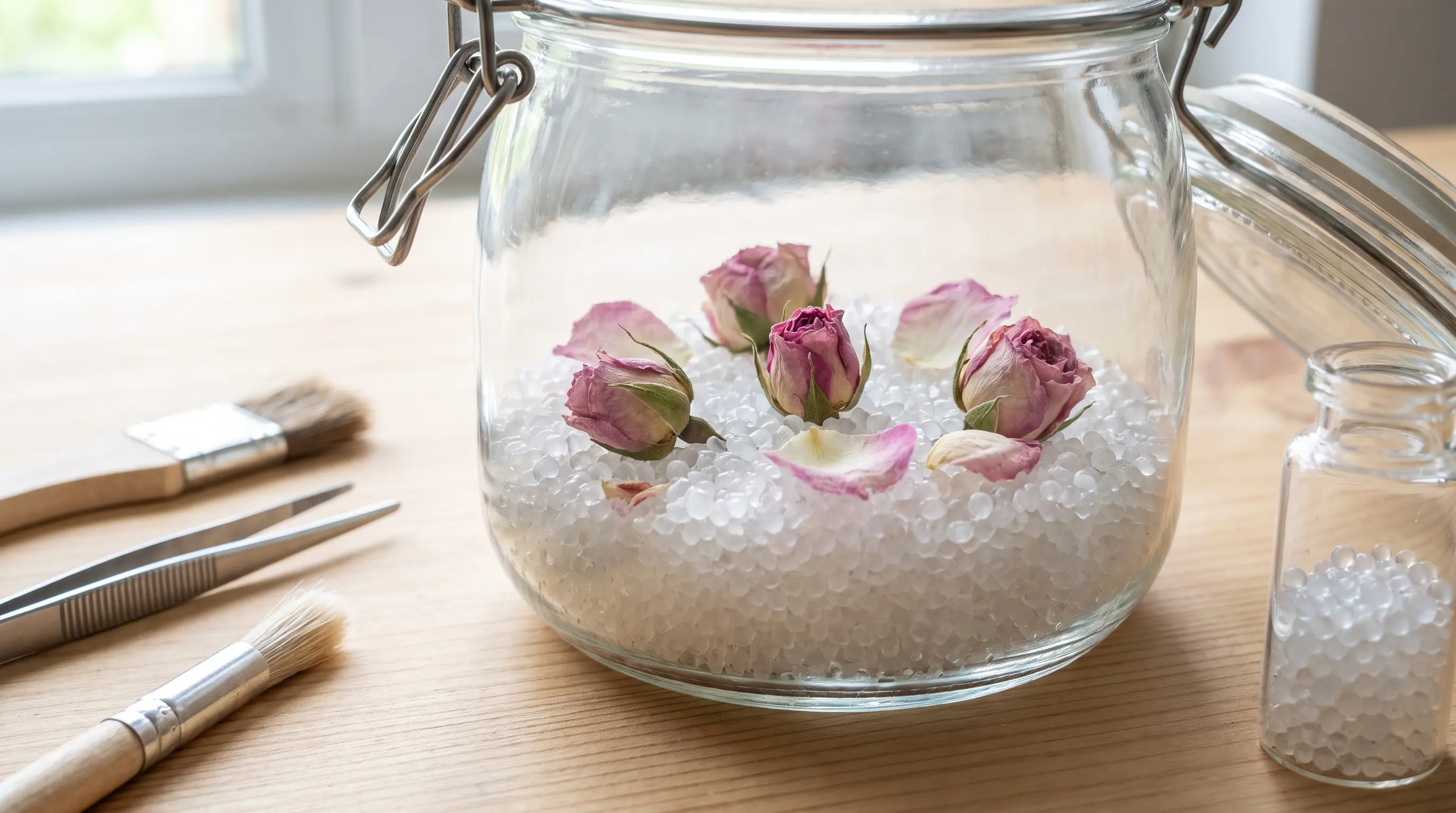
Silica gel works well for delicate flowers because it removes moisture while helping blooms keep their original structure.
This method is useful for flowers like roses, orchids, and peonies that may lose their shape during traditional air drying.
Place flowers in an airtight container, cover them completely with silica gel, and leave them until the petals feel dry and firm. Once finished, gently remove the crystals with a soft brush.
3. Press Flowers for Crafts and Displays
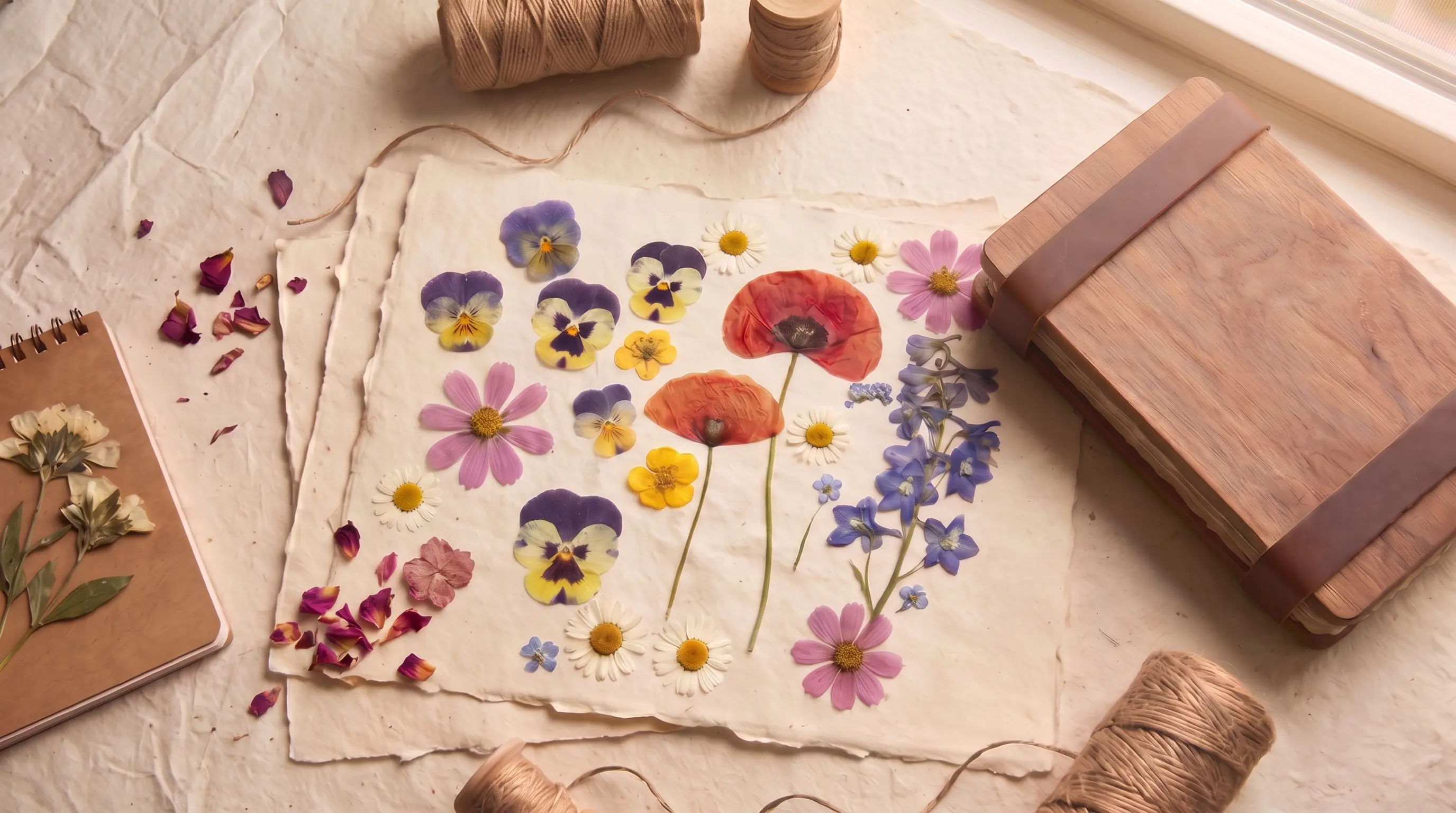
Pressing is a good option when you want to use flowers for framed artwork, greeting cards, bookmarks, or other flat displays.
For best results:
- Choose flowers with thinner petals.
- Place blooms between absorbent paper.
- Keep them inside a heavy book or flower press.
- Leave them undisturbed until completely dry.
Pressed flowers can last for years when protected from moisture and excessive sunlight.
3. Seal Dried Flowers in Resin for Keepsakes
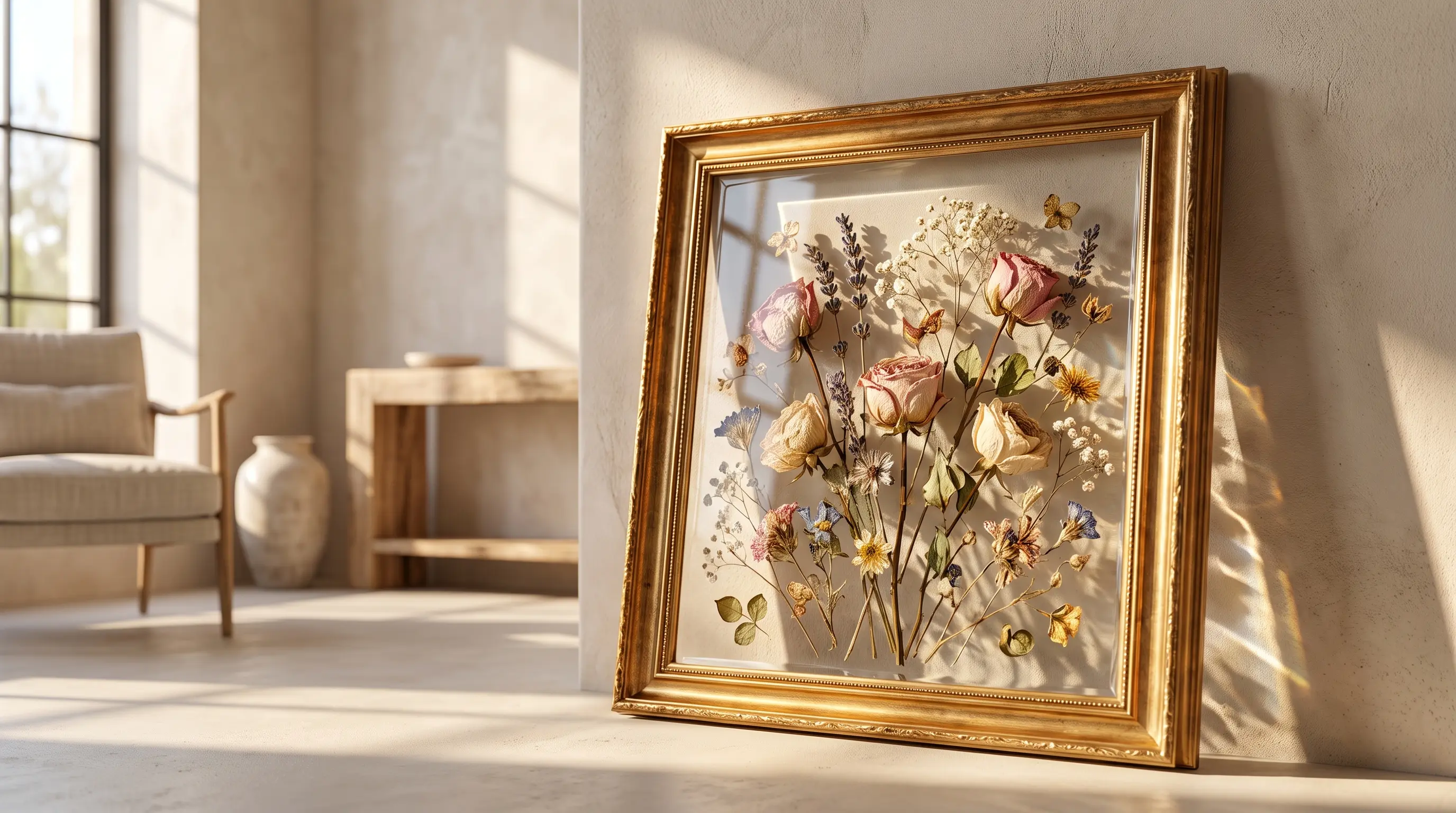
Resin preservation turns dried flowers into decorative pieces such as ornaments, coasters, jewelry, or display items.
The flowers must be completely dry before adding resin because trapped moisture can cause discoloration or mold over time. Once sealed properly, resin helps protect the flowers from dust and everyday handling.
4. Store Preserved Flowers Properly
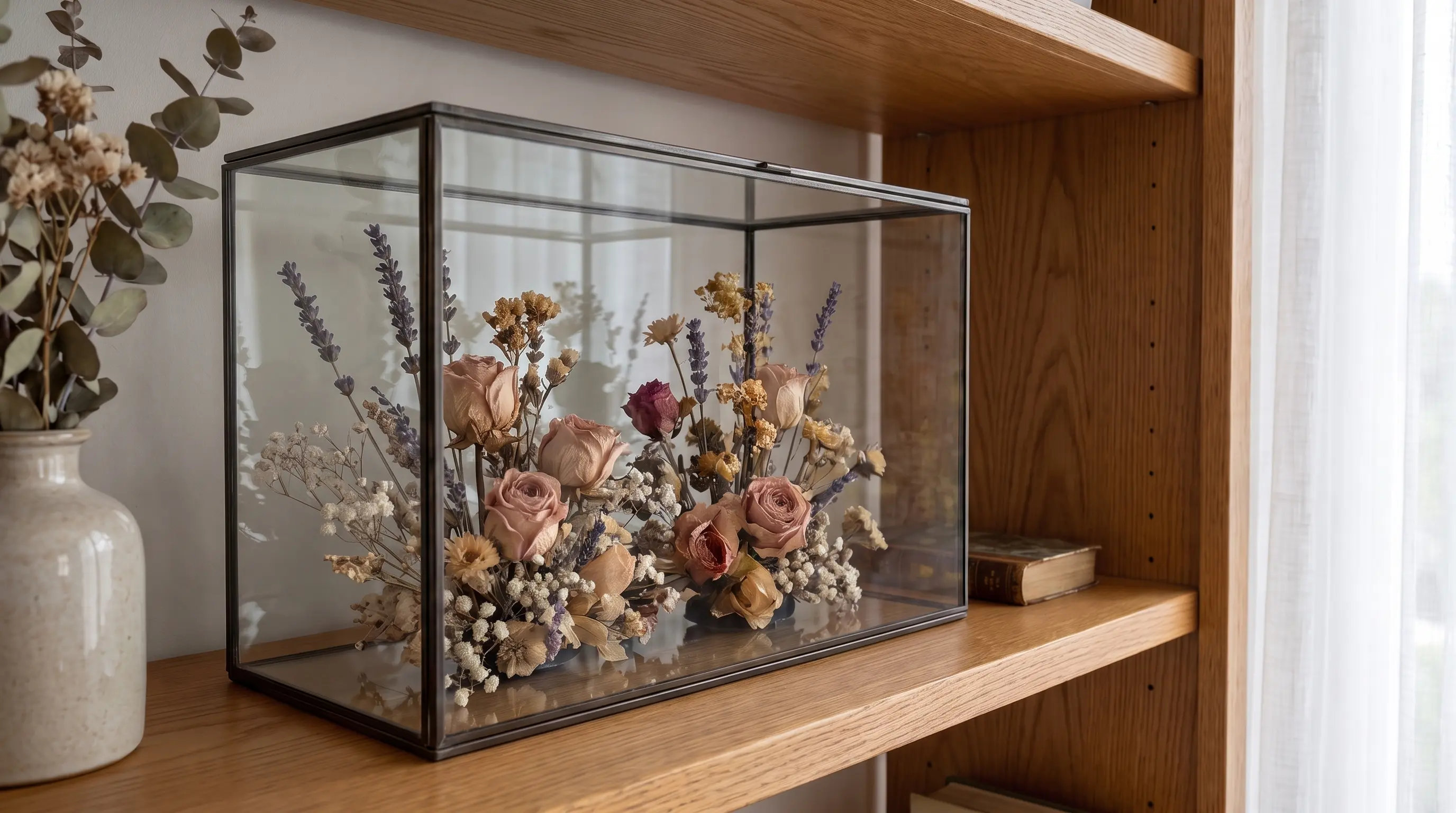
Proper storage plays a major role in how long preserved flowers remain attractive.
Keep preserved blooms:
- Away from direct sunlight to prevent fading
- In dry areas with low humidity
- Protected from dust and frequent handling
- Away from heat sources and moisture
With the right preservation method and storage conditions, flowers can remain beautiful for months, years, or even longer as meaningful keepsakes.
Signs Your Flowers Are Starting to Die
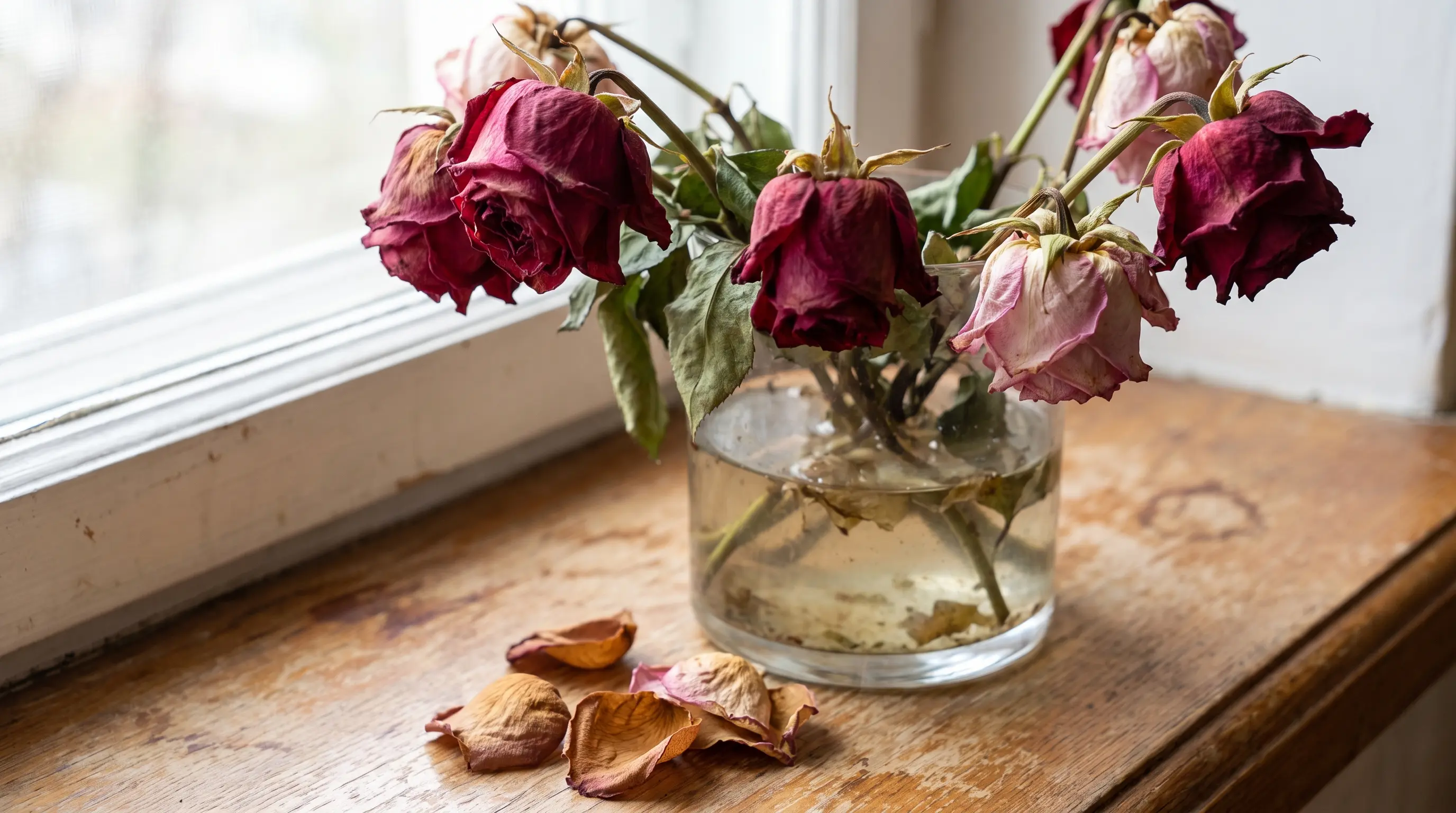
A few visible cues let you know when a bouquet is past saving:
- Drooping stems that won’t perk back up after fresh water
- Brown or transparent, papery petals
- Cloudy or discolored water
- Petals falling on their own
- Soft, mushy stems near the base
- An unpleasant smell coming from the vase
Another sign is when flowers stop responding to normal care.
For example, blooms may remain closed, fail to regain their shape overnight, or develop uneven fading where some petals look healthy while others appear damaged.
If only the water looks cloudy and the stems still feel firm, a fresh cut and clean water can often revive the arrangement.
But once stems turn soft and petals are dropping steadily, it’s usually time to let that particular bouquet go.
At this stage, removing the healthiest remaining blooms and using them for drying or small craft projects can help you enjoy them a little longer.
Final Thoughts
Flowers have a funny way of changing the mood of a room without asking for much in return.
They may not stay at their freshest forever, but that is part of what makes a bouquet worth enjoying while it is there.
Whether it came from a special occasion or was simply picked up because it looked beautiful, each arrangement brings its own little moment of joy.
So enjoy the blooms while they are around, and when the petals finally start to fade, let them become a reminder of the moments they were part of.
Frequently Asked Questions
How often should you change flower water?
Change flower water every one to three days and rinse the vase before refilling. Fresh water helps reduce bacteria and keeps stems hydrated longer.
Can flowers last longer in the refrigerator?
Some flowers benefit from cool temperatures, but household refrigerators are not suitable for every variety. Proper care at room temperature is usually safer.
Why do flowers die so quickly?
Flowers often wilt faster because of dirty water, heat, dehydration, or starting with older blooms. Clean water and proper placement can slow the process.