
Your AC is running, yet the room still feels warm.
I see this a lot: it’s not always the AC’s fault. A room can trap heat in ways a thermostat can’t fix on its own.
You don’t need a bigger unit or a higher power bill to solve this. You just need to know which tricks actually work, and why they work.
Here’s what I’d try first: thirteen simple fixes for how to cool down a room fast, that go well beyond turning on a fan, and how to tell when the room needs more than a hack.
Why AC Alone Won’t Cool a Room?
Turning on the AC alone doesn’t help because your body still needs to release its own heat before it feels cool. A chilly room does little if your skin stays sticky and warm.
- That is why blasting the AC sometimes still leaves you tossing and turning at midnight.
- A room that leaks heat fights back against the AC all night long. Warm air creeps in through cracks in windows and thin walls. Your AC keeps working, your bill keeps climbing, and the room barely gets cooler.
- Some rooms need steadier care than others. A nursery has to stay at a safe, even temperature for a baby. A home office needs to stay cool enough that you can actually focus for hours.
- Basic advice like “just turn on a fan” completely skips over rooms like these.
Ways to Cool Down a Room
These fixes are grouped by what they actually solve: moving air, keeping heat out, cooling your own body, clearing damp air, and a few extras.
Work through them in order, or jump to the group that best matches your Room’s biggest problem.
1. Flip Your Box Fan Around
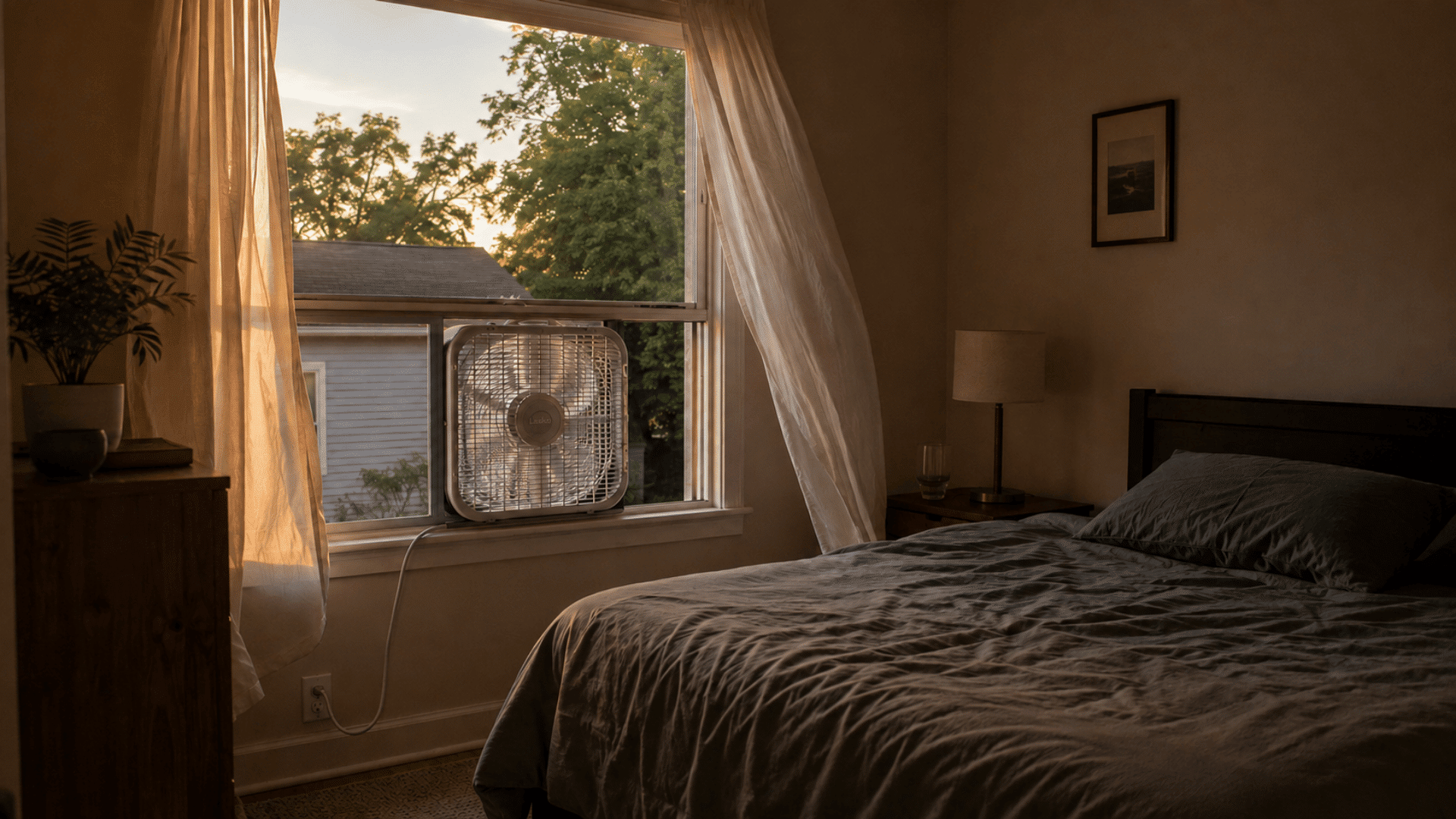
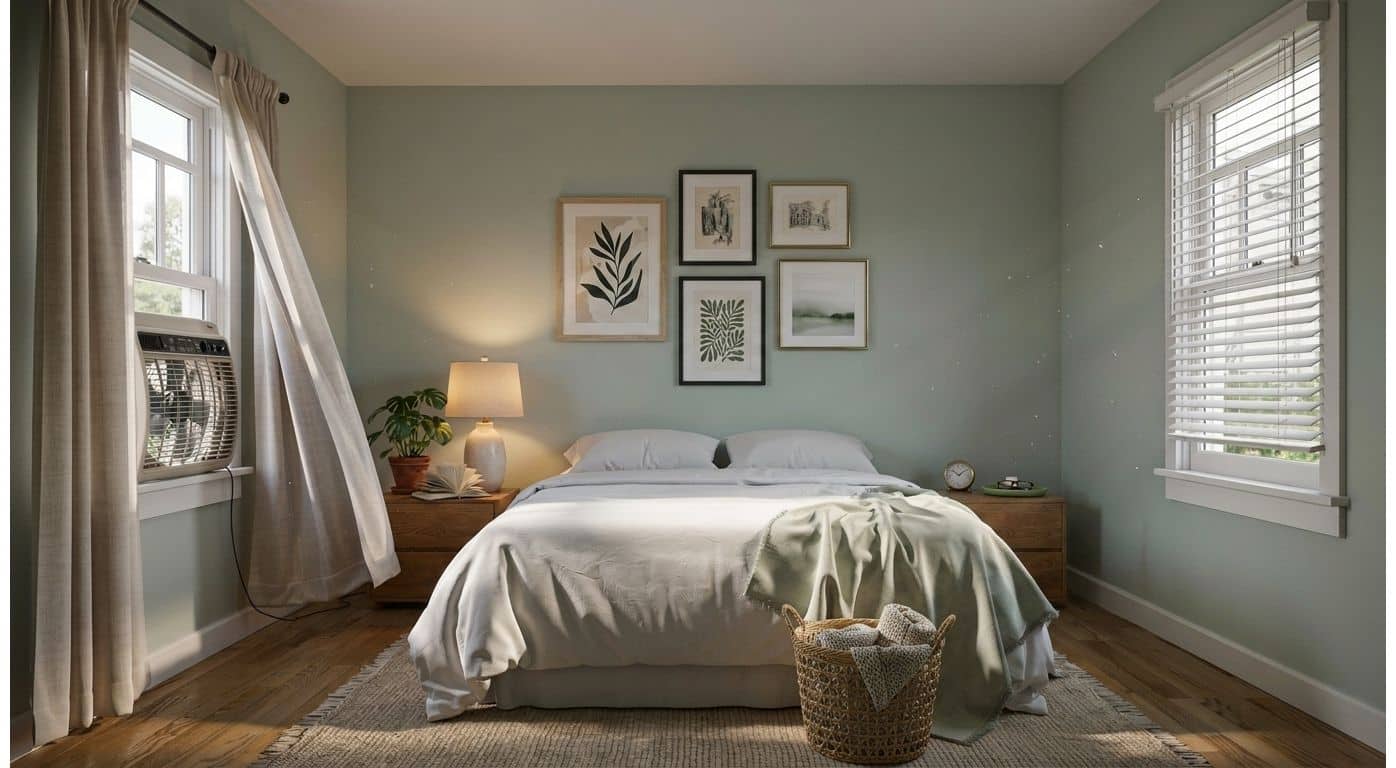
Point a fan straight at yourself, and you’re just pushing the same warm air in a circle. Instead, set your box fan in an open window and turn it so the blades face outward.
This forces hot, stagnant air out of the room instead of just stirring it around. As that air leaves, it creates negative pressure that pulls cooler air in through doorways or a second window.
This trick works best in the early morning or evening; once outdoor temperatures drop below indoor ones during peak afternoon heat, flip the fan back to blow inward instead.
I’ve seen this work well in client bedrooms, though it needs a real temperature gap between indoors and outdoors to pull air through.
2. Build a Mini Wind Tunnel with Two Windows
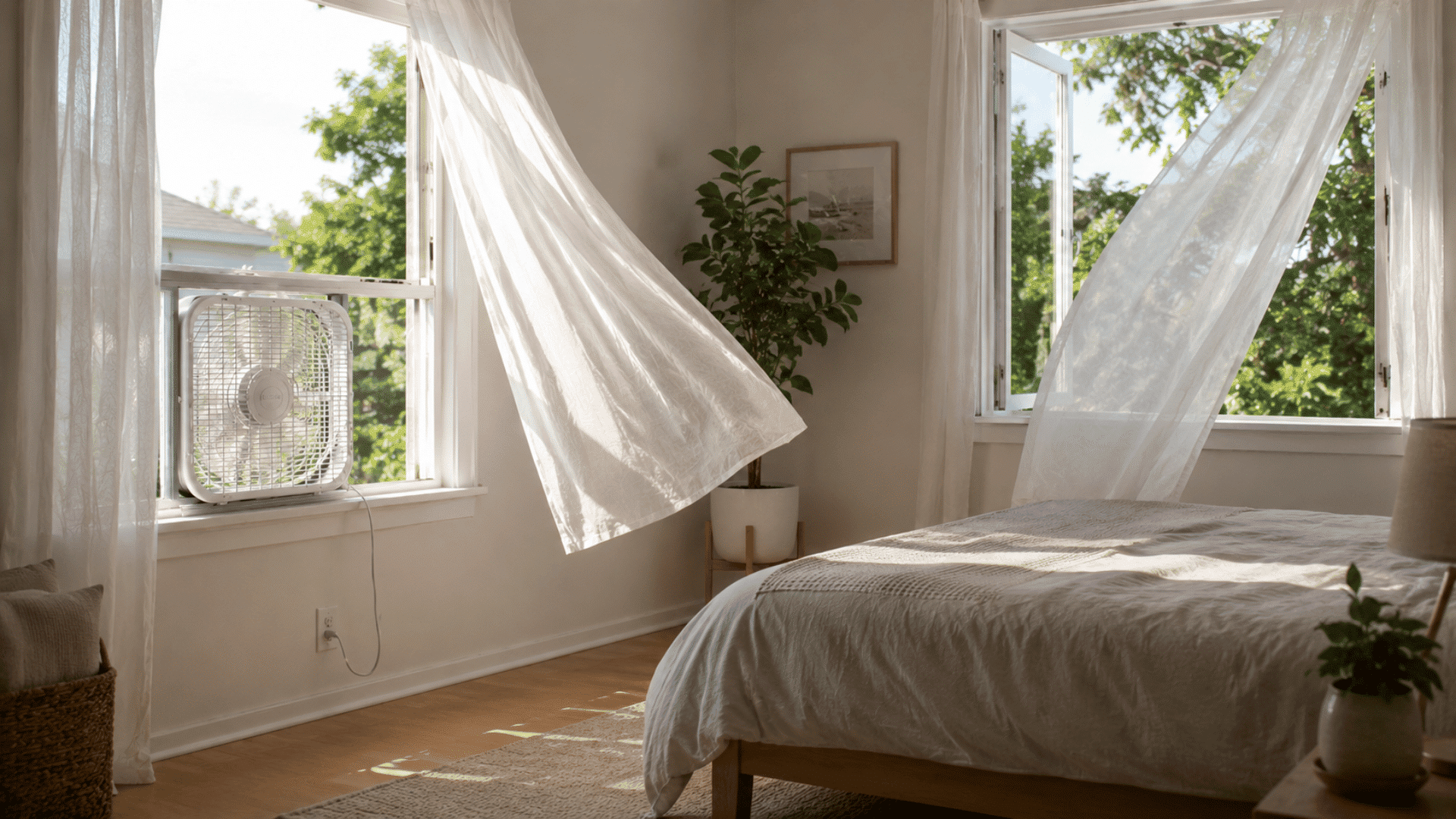
One fan can only do so much. For a stronger effect, open a window on each side of the room.
Place a fan in one window, blowing air outward, and leave the opposite window open with nothing blocking it. Shut the bedroom door and any other openings so air has only one path to travel.
This creates real cross-ventilation: as the fan pushes air out one side, the pressure difference actively pulls fresh, cooler air in through the other window.
Within a few minutes, you’ll notice a steady pull of air moving through the whole room instead of just near the fan.
3. Skip the Melting Ice Cubes
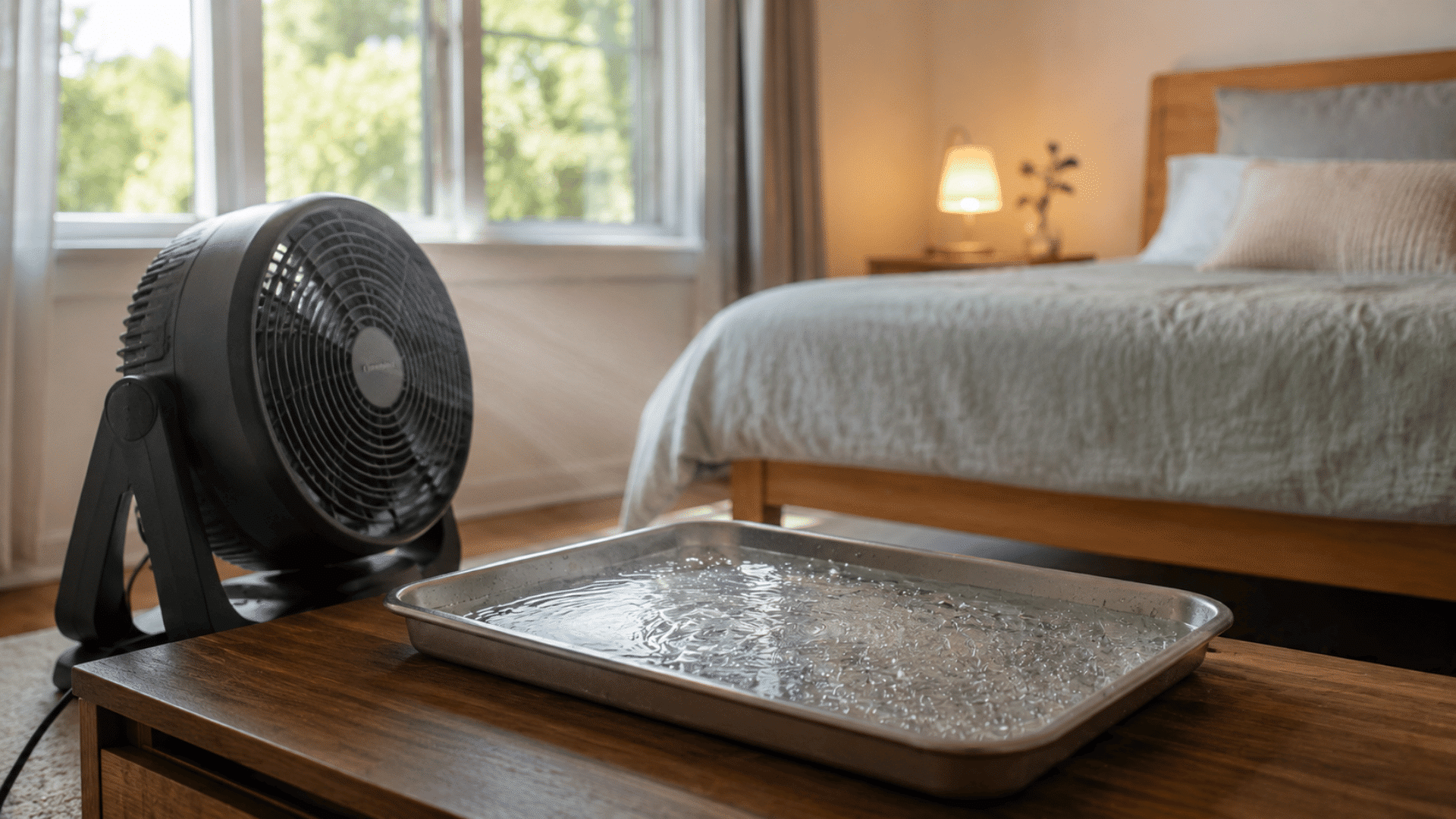
Ice cubes in front of a fan cool the air, but they melt fast and leave puddles on the floor. A shallow tray of cold water solves both problems.
Fill a wide, low dish or baking tray with cold tap water and set it directly in the fan’s airflow path. As air blows across the water’s surface, it picks up a light, natural chill through evaporation, similar to how a swamp cooler works, but without any dripping mess to clean up afterward.
For extra cooling power, swap the water for a partially frozen bottle laid on its side in the tray.
4. Let Hot Air Escape Through the Attic
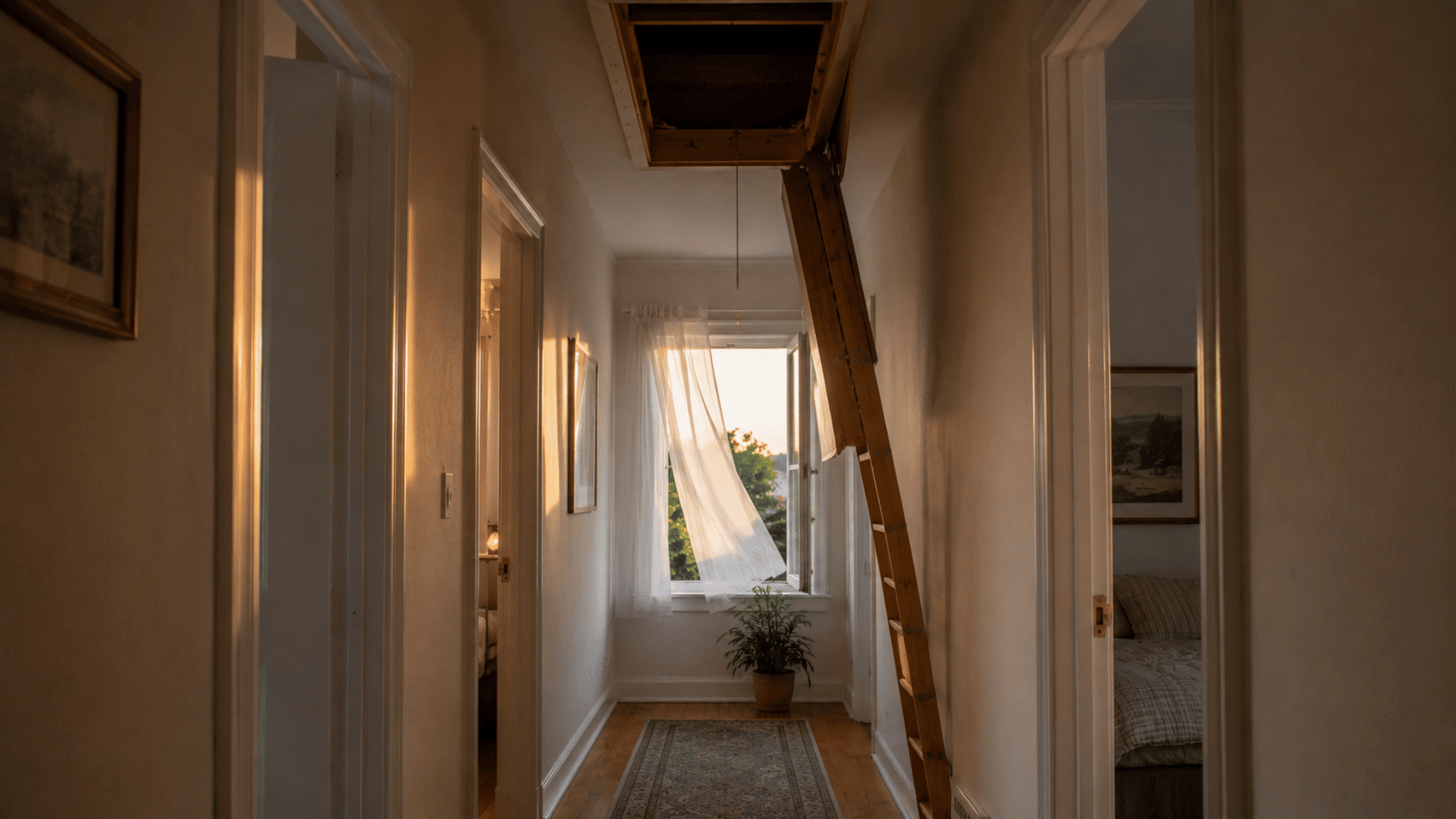
Heat naturally rises, and you can use that to your advantage. Open a window on the lowest floor of your home to let cooler air in near the ground.
Then open your attic hatch or any attic vents you can access. As warm air collects near the ceiling and roofline, it rises and escapes through the attic opening, drawing cooler air in behind it from below.
This passive “stack effect” operates around the clock without electricity, and it’s especially effective overnight when outdoor air is coolest.
One note from loft work: skip this if the hatch needs a wobbly ladder, and get someone else to open it instead.
5. Shut Your Blinds Before the Sun Even Hits
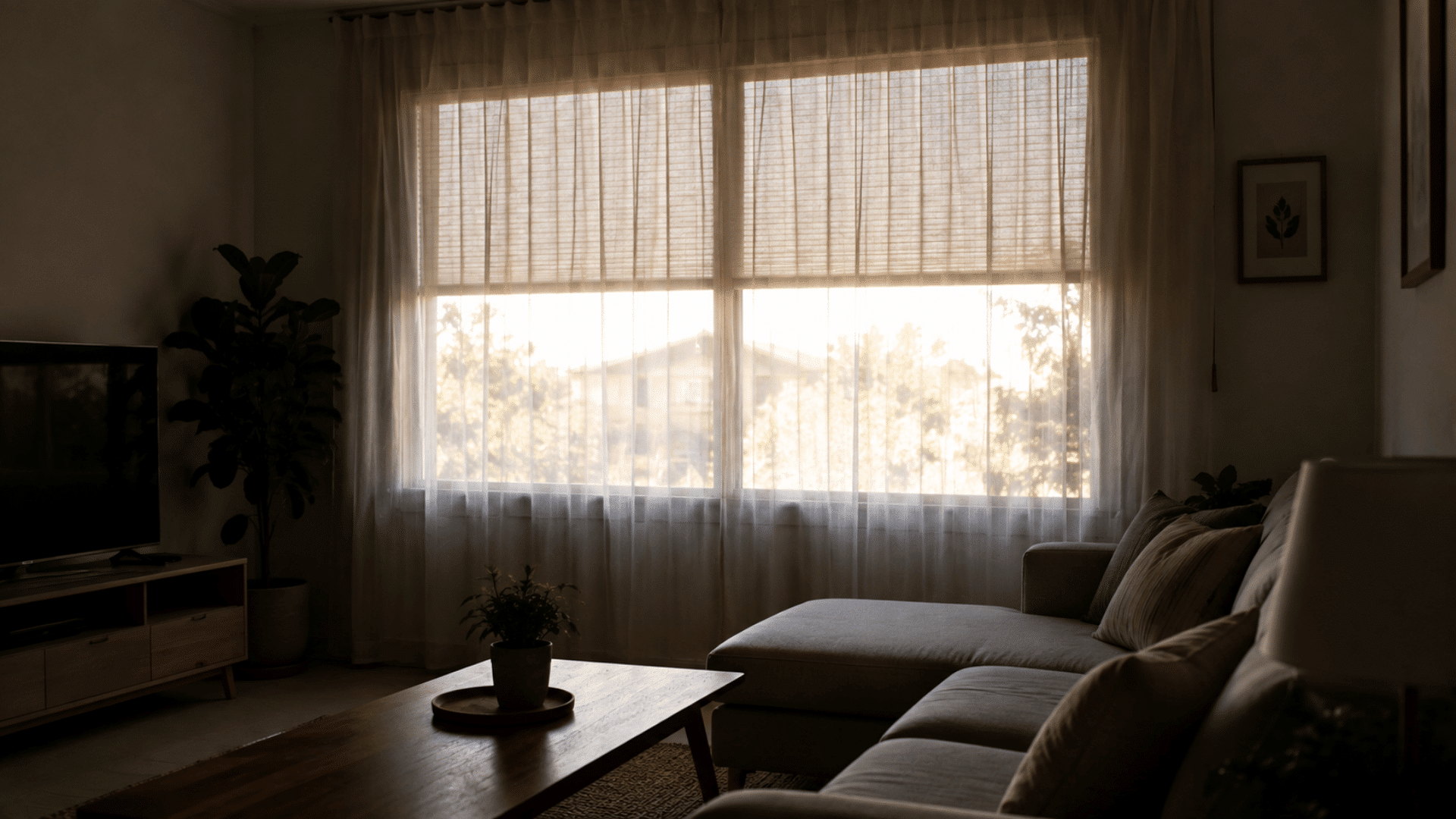
By the time a room feels hot, direct sunlight has already been heating it for hours. The fix is to get ahead of it.
Figure out which side of your house faces the sun in the morning, then close those blinds or curtains before the light even reaches the glass.
Blocking sunlight before it enters keeps window surfaces and the air near them from heating up in the first place, which means the room stays noticeably cooler well into the afternoon.
6. Plug the Small Gaps Around Your Windows
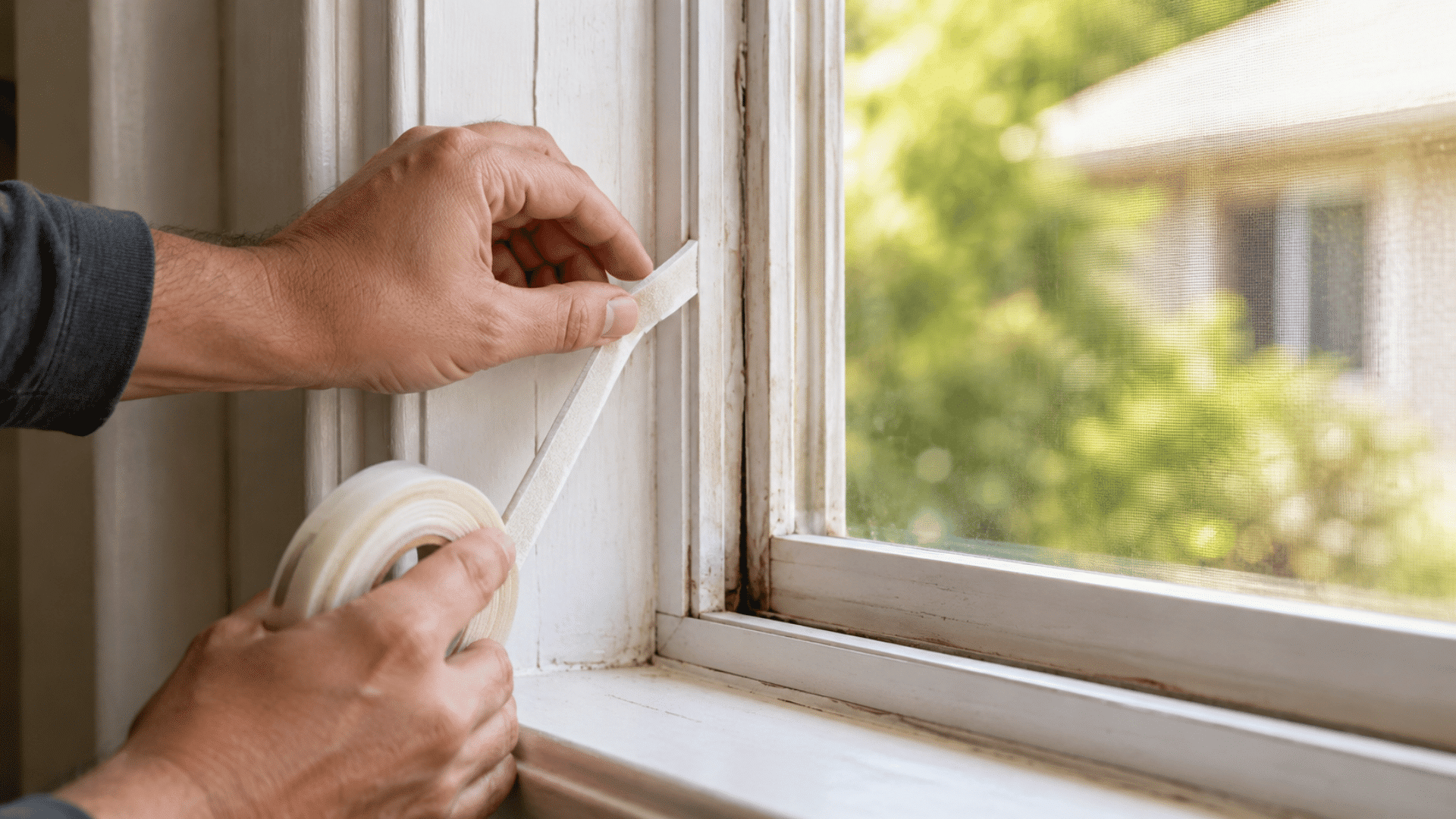
Old window frames often have tiny gaps that let warm outdoor air seep in all day, undoing whatever cooling progress you’ve made.
That’s a different fault from condensation trapped between double-glazed panes, which needs a proper reseal rather than tape, but frame gaps are the easy DIY win in the meantime.
Use removable weatherstripping tape around window edges to seal cracks and loose gaps. It’s quick to apply, rental-friendly, and won’t damage the frame.
You’ll likely notice a real difference in room temperature within a single day.
7. Swap out Any Bulbs that Still Run Hot
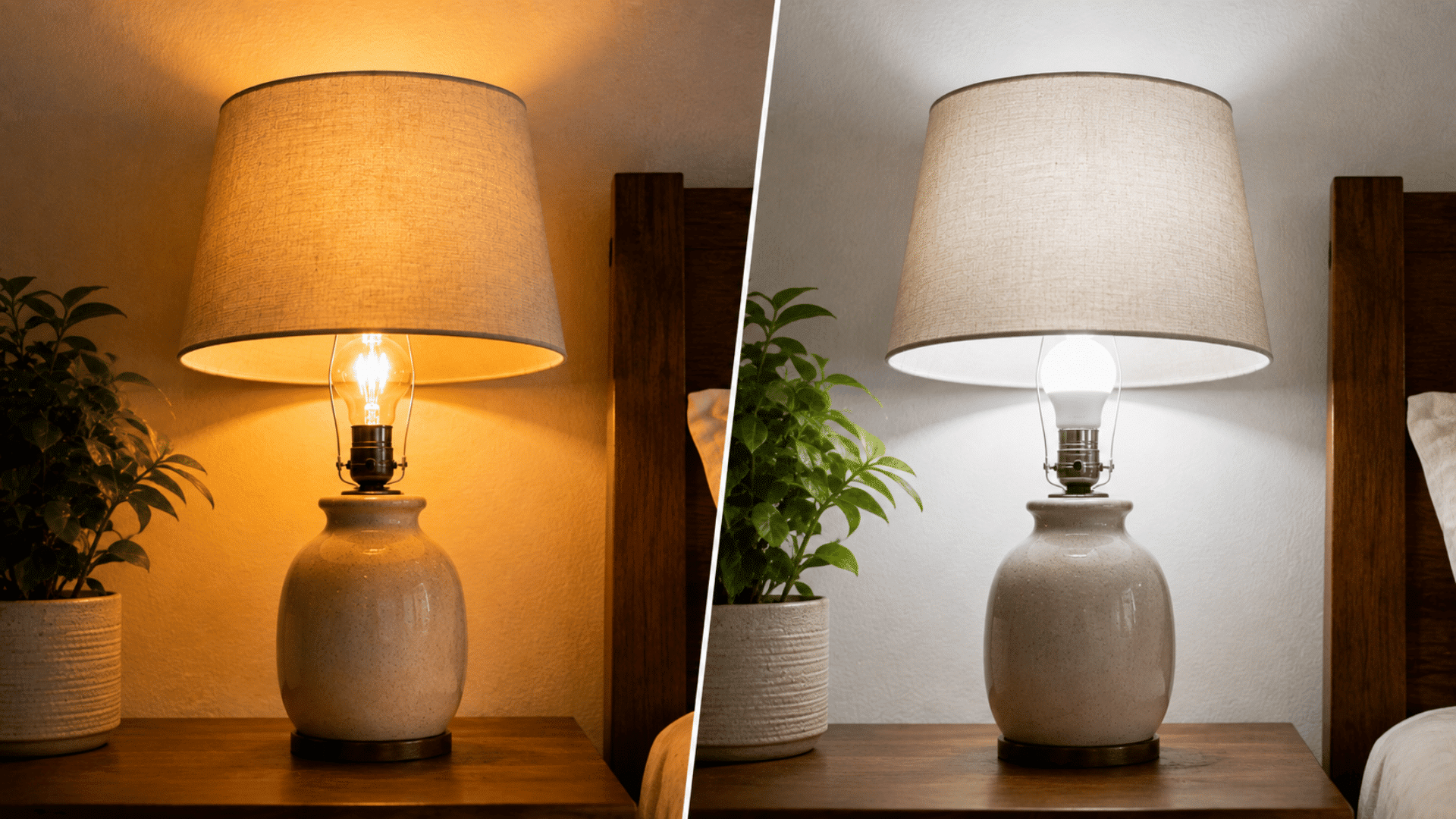
Traditional incandescent bulbs waste most of their energy as heat rather than light, and in a small room, that adds up fast.
Check any lamps for bulbs that feel warm to the touch after being on for a while. Replace them with LED bulbs, which use far less energy and stay cool even after hours of continuous use.
It’s a small swap, but in rooms with several lamps running throughout the day, it can measurably lower the ambient temperature.
Incandescent bulbs get very hot, while LEDs stay cooler and help reduce heat in small rooms.
8. Save Your Loud Chores for Nighttime
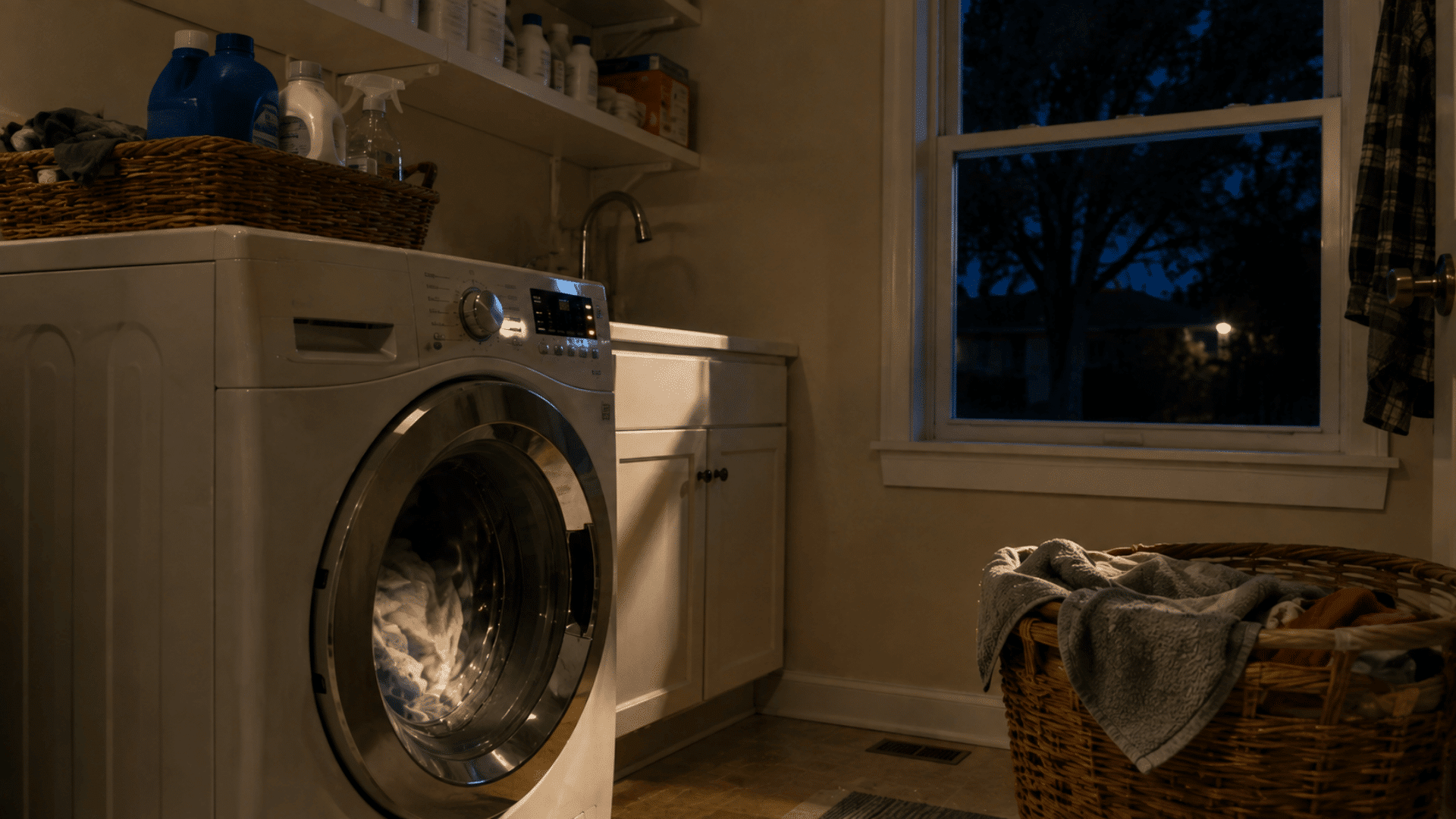
Ovens, dishwashers, and washing machines all emit noticeable heat while running, and using them during the hottest part of the day only compounds the problem.
Push these chores to later in the evening, once the sun has gone down and outdoor temperatures start dropping.
Your kitchen and laundry area will stay noticeably cooler during peak daytime heat, and you’ll avoid fighting your appliances’ heat output on top of the heat from the weather.
9. Cool Your Skin First

Before adjusting the thermostat or setting up any fans, try cooling your body directly. Run cold water over your wrists and the back of your neck for about thirty seconds.
Blood vessels sit close to the skin’s surface in these spots, so chilling them helps cool your whole body faster than most other methods.
It’s a quick, free trick that works almost instantly and pairs well with any of the other tips on this list.
10. Keep a Set of Pillowcases in The Freezer

Set aside one pillowcase to keep in the freezer specifically for hot nights. Right before bed, pull it out and slide it onto your pillow.
The chill won’t last all night, but it feels wonderful for the first twenty minutes or so, which is often exactly long enough to help you drift off to sleep instead of tossing around in the heat.
11. Turn on The Exhaust Fan After Every Shower
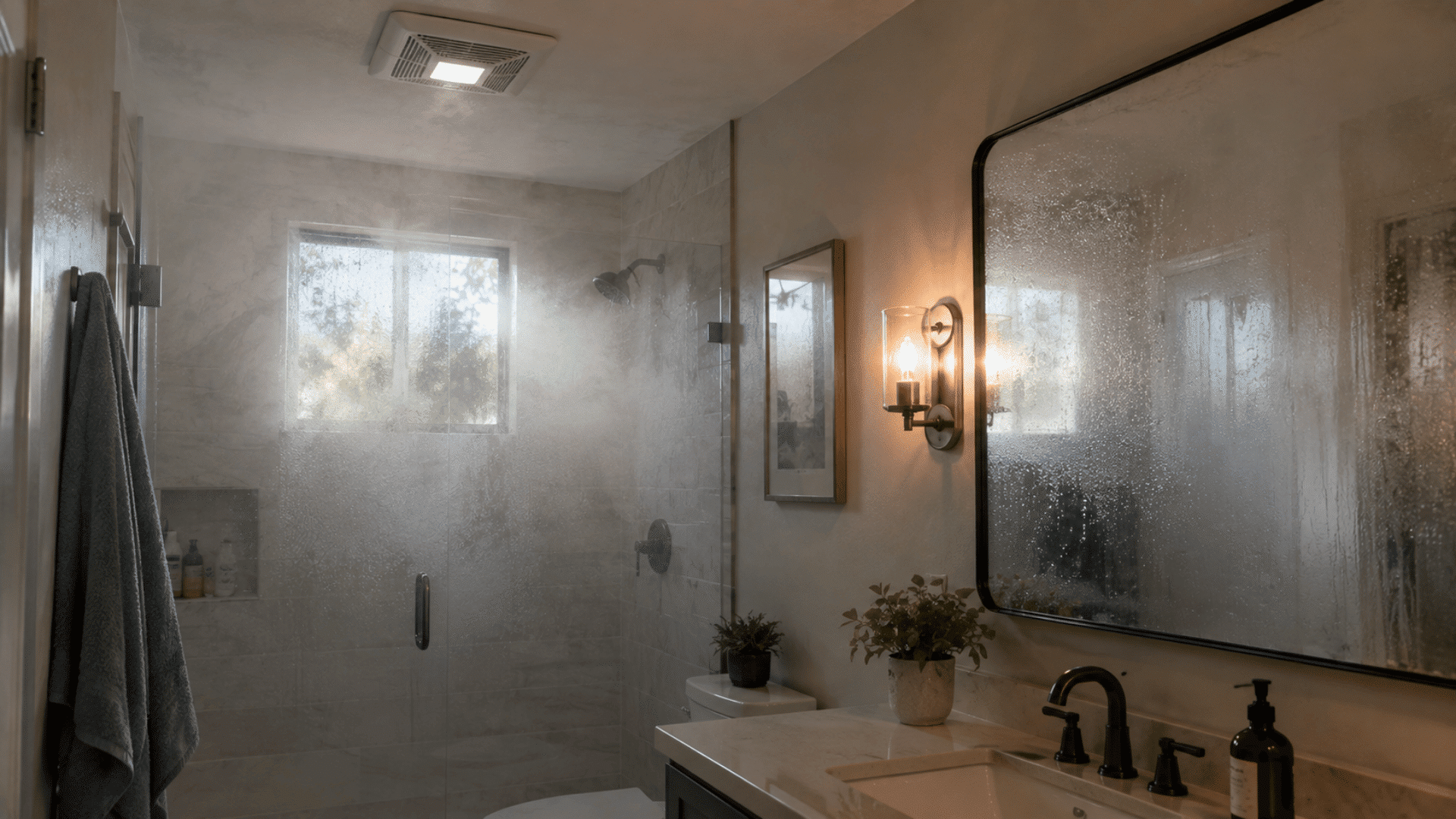
A hot shower releases a surprising amount of moisture into the air, and damp air feels hotter than dry air even at the exact same temperature.
Flip on your bathroom exhaust fan for about fifteen minutes after every shower to clear that steam out before it spreads to the rest of your home.
This one small habit can noticeably reduce how muggy nearby rooms feel throughout the day.
Skip it regularly, and that trapped moisture is also exactly the kind of damp environment that leads to mould in bathrooms and hallway ceilings, so the habit pays off twice over.
12. Give Your Pets Their Own Cool Spot

Dogs and cats can’t sweat the way people do, so they rely on other ways to regulate their body heat, and a hot room affects them more than we often realize.
Pick up a cooling mat and place it in your pet’s favorite napping spot. It gives them a dedicated place to escape the heat, even on days when the rest of the room is still warming up.
13. Try a Small Evaporative Cooler for One Room
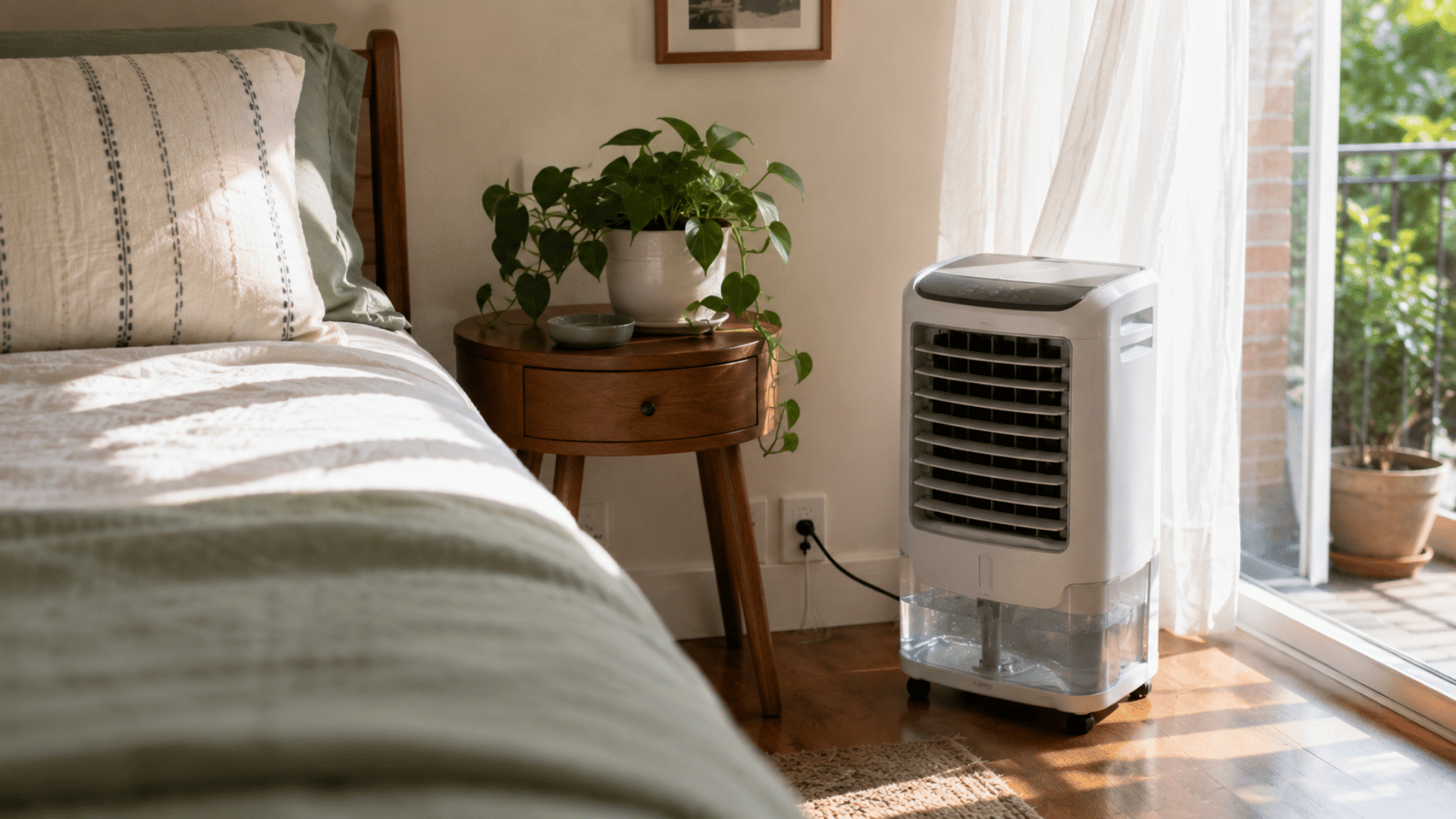
A whole-house AC system isn’t the only way to cool down. A portable evaporative cooler works well in a single room and requires no installation at all, just water and an outlet.
It’s a strong option if you’re renting and can’t modify your walls or windows, offering a real drop in temperature without any permanent changes to your space.
What to Do When Your Room Still Feels Too Hot
If your room still feels hot after trying the usual cooling methods, a few hidden factors may be working against you. Identifying the cause can help you find a more effective fix.
- Some rooms have a bigger problem hiding underneath. No amount of fans or frozen pillowcases can fix a room with no real airflow, single-pane windows, or an attic above it with zero insulation.
- Some rooms have a bigger problem hiding underneath. No amount of fans or frozen pillowcases can fix a room with no real airflow, single-pane windows, or an attic above it with zero insulation.
- These are structural issues, not habit issues, and they need a different kind of fix.
- Here’s the one sign to watch for: if you’ve tried several of these tips together for more than a week and the room still won’t hold a comfortable temperature, that’s your answer.
- It’s time to look at a window AC unit or a mini-split system instead of piling on more workarounds.
- Once your room finally settles into a comfortable temperature, you don’t need to keep running all thirteen fixes every single night.
- Pick the two or three that made the biggest difference for your specific room and stick with those. That’s usually all it takes to keep the heat from creeping back in.
Conclusion
You don’t need all thirteen fixes at once, and I wouldn’t recommend it. Pick two or three that best match your room and use those every night.
If you’ve genuinely tried and the room still won’t cool down, that’s not on you. In my experience, that’s a sign the problem is bigger than a fan or a cold pillowcase: it’s the room itself.
Old windows, blocked airflow, or a hot attic will beat the best tricks I can give you.
That’s your sign to consider a window AC unit or a mini-split; they’re great options for cooling down your room easily.
Frequently Asked Questions
Should I Keep My Windows Open or Closed During the Day?
Keep windows and curtains closed during hot hours to block heat. Open them early in the morning or at night when the air outside is cooler.
Do Ceiling Fans Actually Cool a Room Down?
Ceiling fans cool people, not the Room. Run them counterclockwise in summer and turn them off when you leave.
How Do I Cool an Upstairs Bedroom without AC?
Close blinds during the day, use breathable bedding, sleep lower if possible, and try fans or ice bottles to reduce heat.