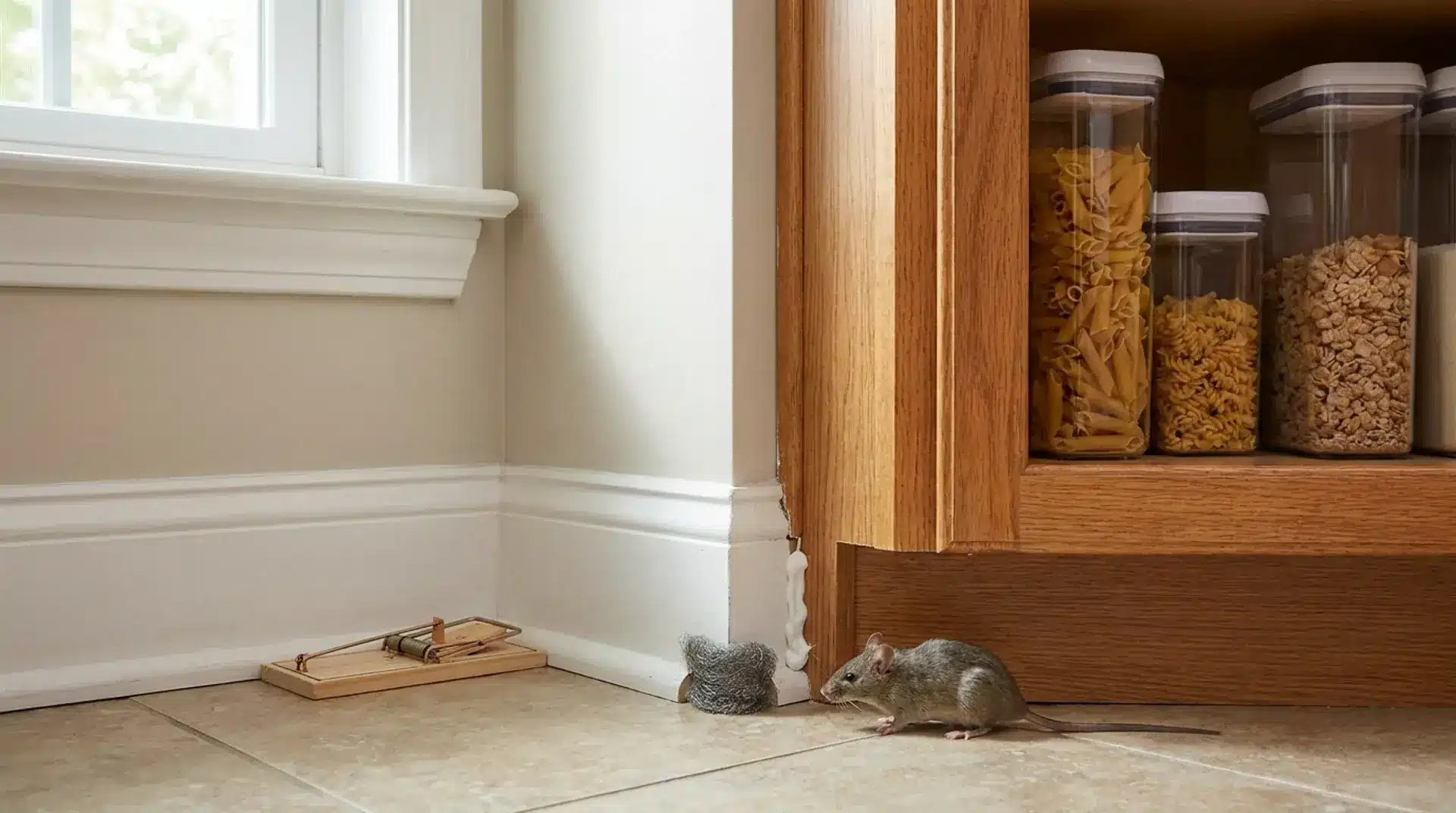

A single mouse sighting rarely stays a single mouse. I’ve seen small sightings turn into full infestations fast, and sealing entry points is the first move I make every time.
Learning how to get rid of mice means combining the right traps, sealed entry points, and clean habits, not just one random trick.
This blog walks you through proven removal methods, natural deterrents, and the warning signs you should never ignore.
Follow these steps and your home can be mouse-free within weeks.
How to Spot a Mouse Infestation Early
Before you can learn how to get rid of mice, you need to know what to look for. Mice are excellent at staying out of sight, but they leave behind plenty of clues:
- Musty odor and nesting materials: Shredded paper, fabric, or insulation used for nesting often confirms mice have settled inside your home.
- Gnaw marks: Look for chew damage on cardboard, plastic, furniture, or electrical wires.
- Scratching or squeaking sounds: Noises inside walls or ceilings at night usually reveal hidden activity.
- Dark droppings: small, dark droppings around cabinets, pantries, baseboards, or food storage areas are often the first warning sign.
What Are the Most Effective Ways to Get Rid of Mice at Home?
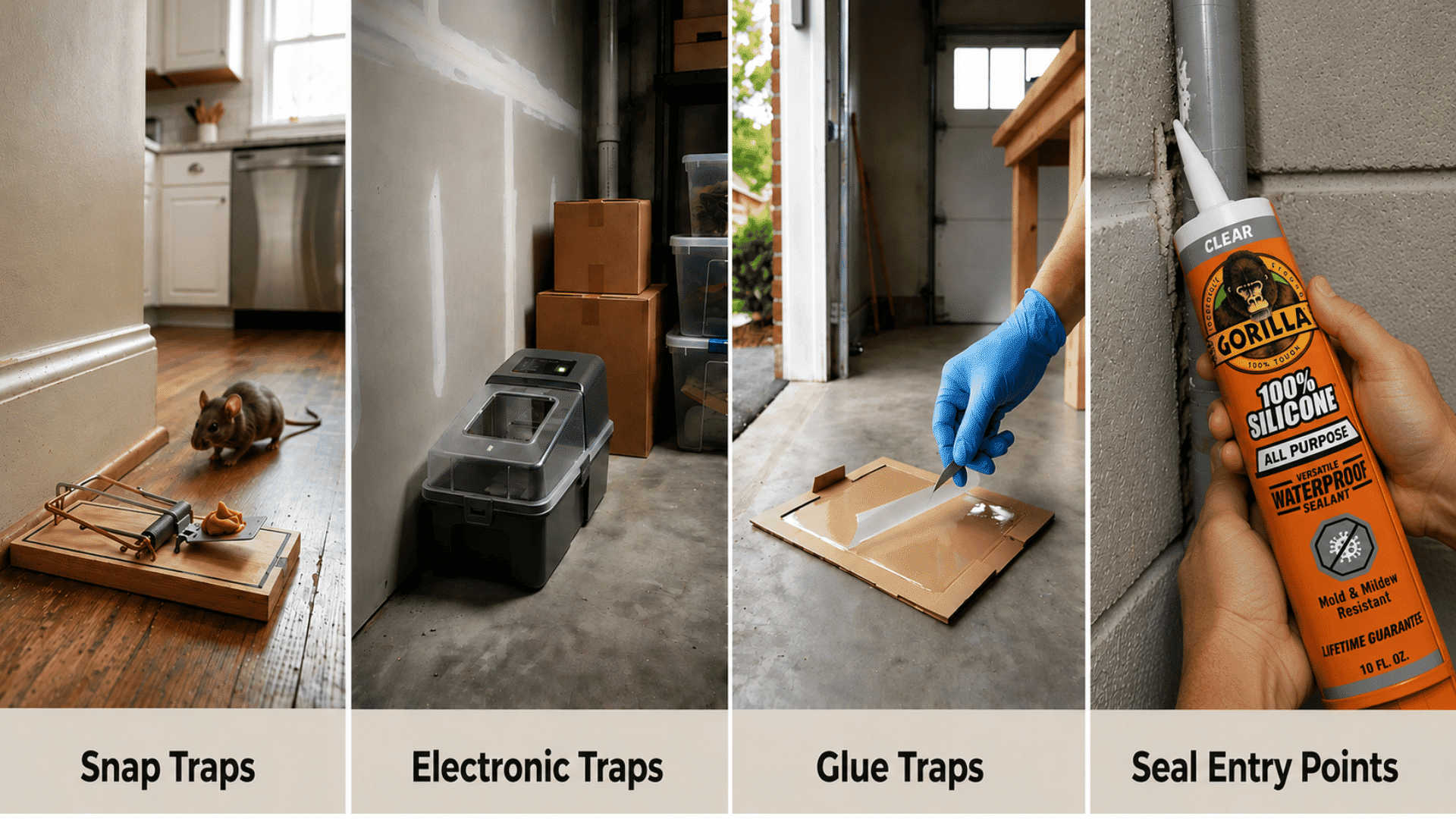
The most effective approach to getting rid of mice combines identifying mouse activity, removing food sources, trapping existing mice, sealing entry points, and preventing their return
1. Snap Traps for Quick Mouse Removal
Snap traps are one of the most commonly used options because they are affordable, easy to set, and effective when positioned correctly.
Place them along walls, behind appliances, and near areas with mouse activity, since rodents usually follow edges when moving.
Keep traps away from children and pets, and check them regularly to ensure safe and effective use.
Where to buy: Victor Metal Pedal Snap Traps, 12-Pack
2. Electronic Mouse Traps for a Modern Solution
Electronic mouse traps use a small electric charge to quickly eliminate mice, offering a cleaner alternative to traditional traps.
These traps are reusable, easy to monitor, and often feature enclosed designs that minimize contact with captured mice.
They work best when placed in quiet areas where mice frequently travel, such as basements, cabinets, and storage spaces.
Where to buy: Walmart
3. Glue Traps and Their Limitations
Glue traps capture mice by holding them on a sticky surface, but they are often considered a less suitable option.
These traps can cause prolonged stress for trapped animals and may create hygiene concerns during handling.
If used, they require frequent monitoring and careful disposal, with proper safety precautions to avoid contact with waste or germs.
Where to buy: Amazon
4. Seal Entry Points to Stop Mice for Good
I’ve watched owners set trap after trap and never win, simply because mice kept finding new gaps to slip through.
A mouse can squeeze through an opening the size of a dime, so check your foundation, vents, and the spots where utility pipes enter the house.
Pack any gaps with steel wool or caulk, since mice can chew straight through plastic, rubber, and wood.
Weatherstripping on doors and windows seals off the small cracks mice most often use.
Best Home Remedies for Getting Rid of Mice

Natural remedies can help discourage mice from entering your home, especially when used alongside trapping, sealing entry points, and proper sanitation.
While they are not a complete solution for an active infestation, they can strengthen your overall mouse control strategy.
- Peppermint oil: Soak cotton balls in peppermint oil and place them near entry points, baseboards, vents, and areas where mice are active. The strong scent may discourage mice from entering.
- Cayenne pepper and garlic spray: Mix cayenne pepper or crushed garlic with water and spray the solution around exterior entry points, garages, sheds, and garden borders.
- White vinegar: Wipe countertops, floors, and areas where mice have been seen with a vinegar solution to help remove scent trails. Although it will not completely repel mice, it can reduce odor cues.
- Clove oil: Add a few drops of clove oil to cotton balls and place them near cabinets, storage areas, and spots where mice are active. The strong scent may help discourage mice from staying in these areas.
- Eliminate food attractants: Store food in airtight containers, clean spills immediately, and avoid leaving pet food out overnight. Reducing access to food makes natural deterrents more effective.
Home remedies work best as preventive measures rather than standalone treatments.
For lasting results, combine them with traps, sealed entry points, and regular home maintenance to keep mice away.
What Problems Can a Mouse Infestation Cause?
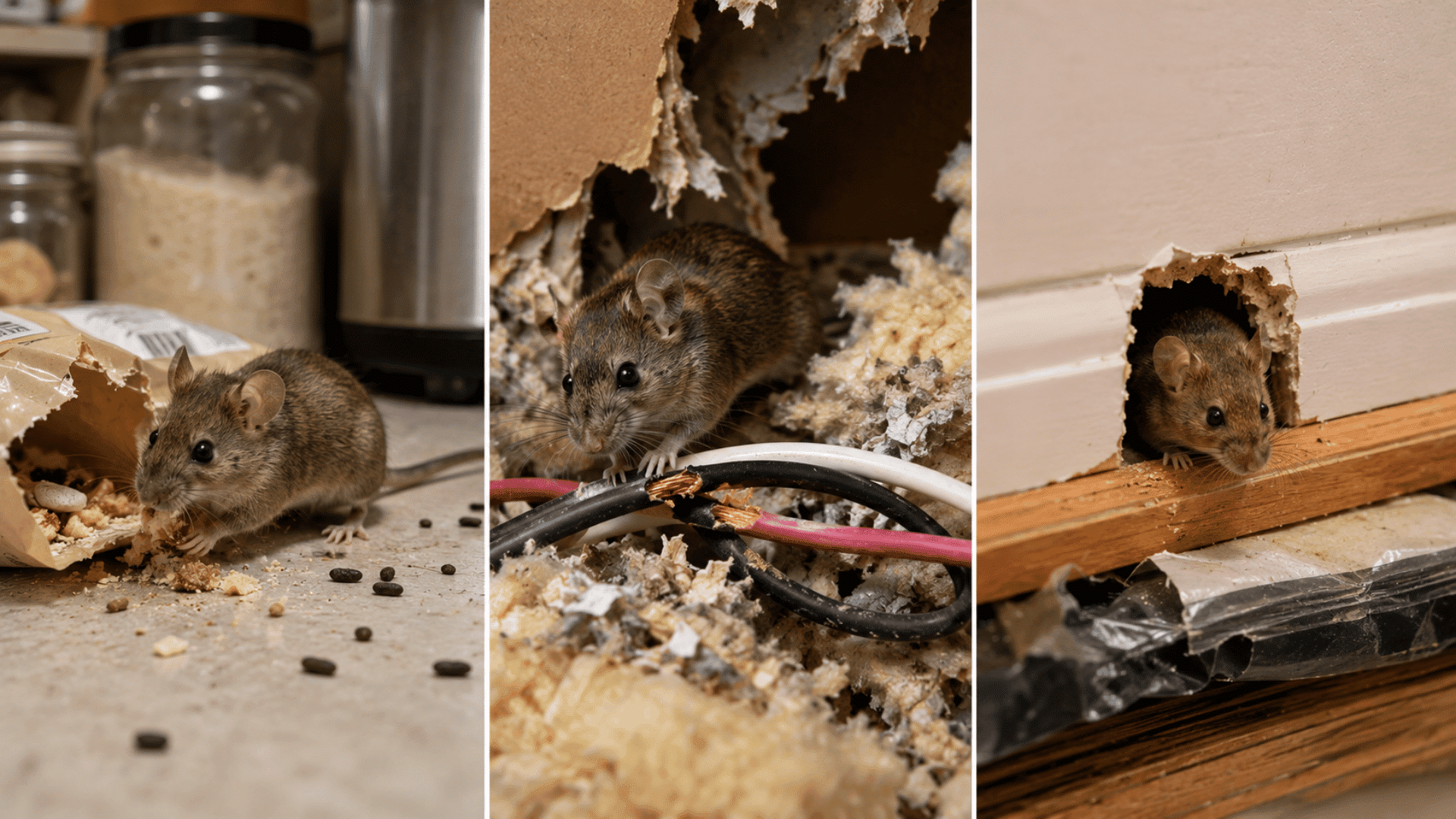
Mouse infestation can lead to more than chewed food packages and unwanted sightings.
Knowing these risks helps you act quickly and remove mice before the problem becomes more difficult and expensive to control.
1. Health Risks You Should Know
Mice can contaminate food, kitchen surfaces, and pantry items with their urine, droppings, and saliva, increasing the risk of illnesses such as salmonella and hantavirus, according to the CDC.
They can also trigger allergies and asthma by leaving behind dried waste and nesting materials that release harmful particles into the air during normal household activities or improper cleanup.
Taking immediate action and following safe cleaning practices can significantly reduce your family’s exposure to bacteria, viruses, and other disease-causing organisms.
Regularly wiping down kitchen surfaces, including granite worktops, cuts that exposure even further.
2. Damage Mice Can Cause Inside Your Home
Mice constantly chew to keep their teeth from overgrowing, which means they can damage electrical wiring, insulation, drywall, wooden furniture, plastic pipes, and stored food packaging throughout your home.
Chewed electrical wires increase the risk of fire hazards, while damaged insulation and hidden nests can reduce your home’s energy efficiency and lead to expensive repairs over time.
The longer mice remain indoors, the greater the chance they will multiply and cause widespread structural damage that becomes much harder to fix.
When Should You Call Pest Control?
If you continue finding droppings, hearing scratching sounds, or noticing other signs of mice after using traps and prevention methods, it’s time to consider professional help.
Mice hiding inside walls, attics, crawl spaces, or other hard-to-reach areas can be difficult to eliminate without specialized equipment.
If sealing visible entry points hasn’t stopped them from returning, there may be hidden gaps that require a thorough inspection.
Professional pest control can also safely clean contaminated areas and reduce health risks associated with mouse droppings, especially in homes with children or pets.
Not sure who to call? The National Pest Management Association runs a free licensed pest professional locator by zip code, or you can reach them directly at (800) 678-6722.
Final Thoughts
Getting rid of mice comes down to three things: sealed entry points, removed food, and well placed traps.
In my own pest control work, I’ve seen homes go mouse free in just a few weeks once owners stuck to this plan.
If mice keep coming back after your efforts, that is your sign to call a licensed pest control pro instead of guessing.
Have you dealt with a mouse problem in your home? Drop a comment below and share what worked for you. Your story could help a neighbor solve theirs too.
Frequently Asked Questions
Do Ultrasonic Pest Repellers Work on Mice?
No, Mice can quickly become used to the sound, so traps and sealing entry points are usually more effective for long-term control.
What Keeps Mice Away Permanently?
Mice stay away when you combine sealed entry points, proper food storage, regular cleaning, and ongoing prevention methods to remove what attracts them.
Why Do Mice Suddenly Enter Homes?
Mice often enter homes when they find easy access to food, water, warmth, and shelter through small gaps around doors, walls, pipes, and foundations.
Where Do Mice Hide During the Day?
Mice usually hide in dark, quiet areas like wall cavities, attics, cabinets, basements, and behind appliances where they can stay protected.
Can Mice Return after Removal?
Yes, mice can return if openings remain unsealed or food sources are available, so prevention steps are necessary after removing an infestation.