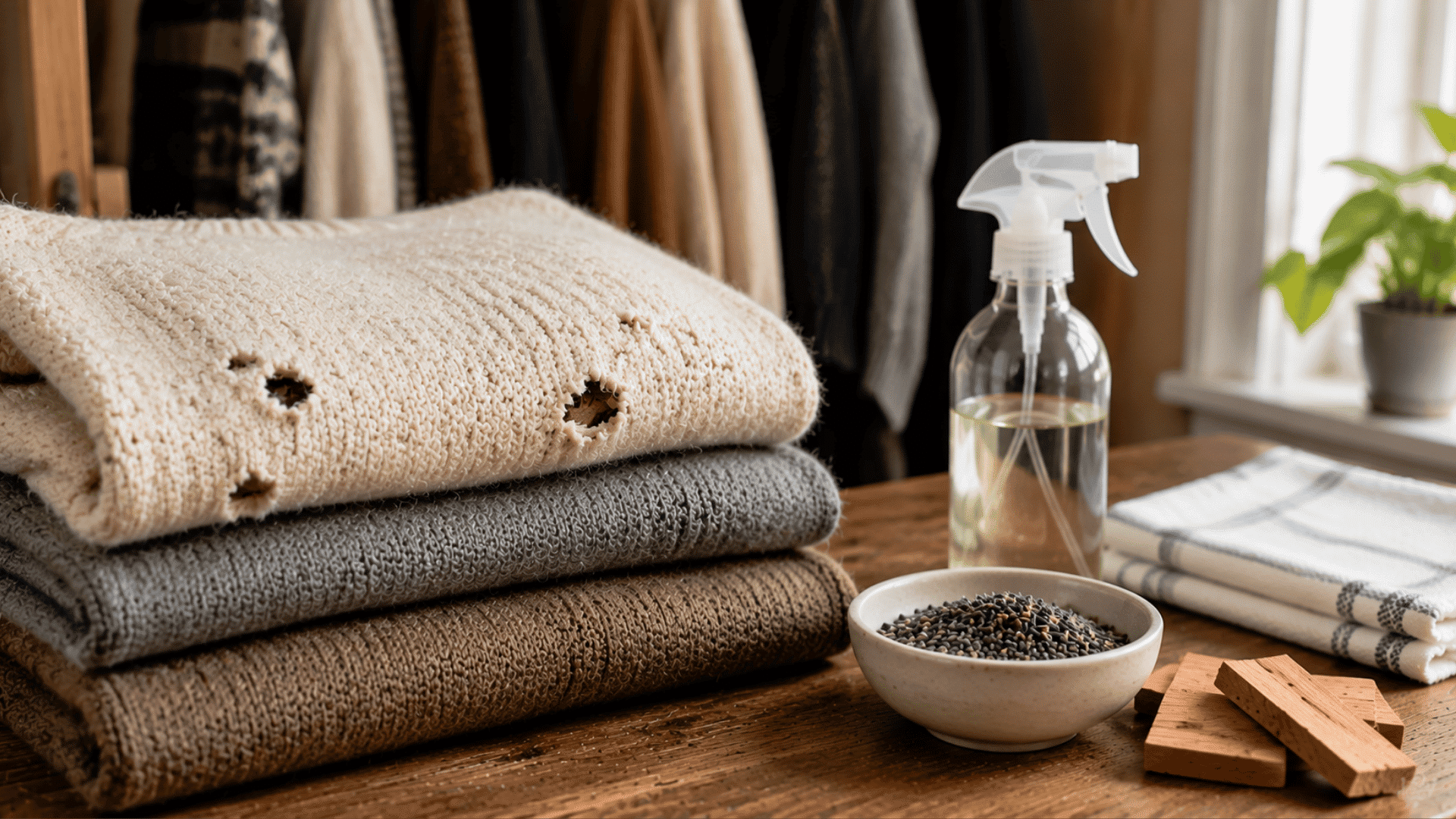

Getting rid of moths starts with figuring out which type you have.
Clothes moths and pantry moths need different fixes, and killing the moths you see flying around will not stop an infestation on its own.
The larvae hidden in your closet or pantry cause the real damage, chewing through wool sweaters or clumping up flour and cereal while you look the other way.
Learning how to get rid of moths means tracking down that hidden source first, then cleaning it out completely.
Find the larvae, remove them, and the problem goes away for good.
Why Moths Show Up in Your House in the First Place
Moths do not appear at random. They show up because something in your home offers food or shelter.
Fabric moths look for animal fibers like wool and fur. Pantry moths look for grains, cereal, and other dry goods left open or loose.
Warm, dark, undisturbed spots make the problem worse. A closet that rarely gets cleaned or a pantry shelf that never gets emptied gives moths exactly what they need. They settle in and multiply from there.
This is also why moths tend to return even after you think you have solved the problem. If the food or fabric source stays in place, new moths will keep finding it.
First, Find Out What Type of Moth You Have
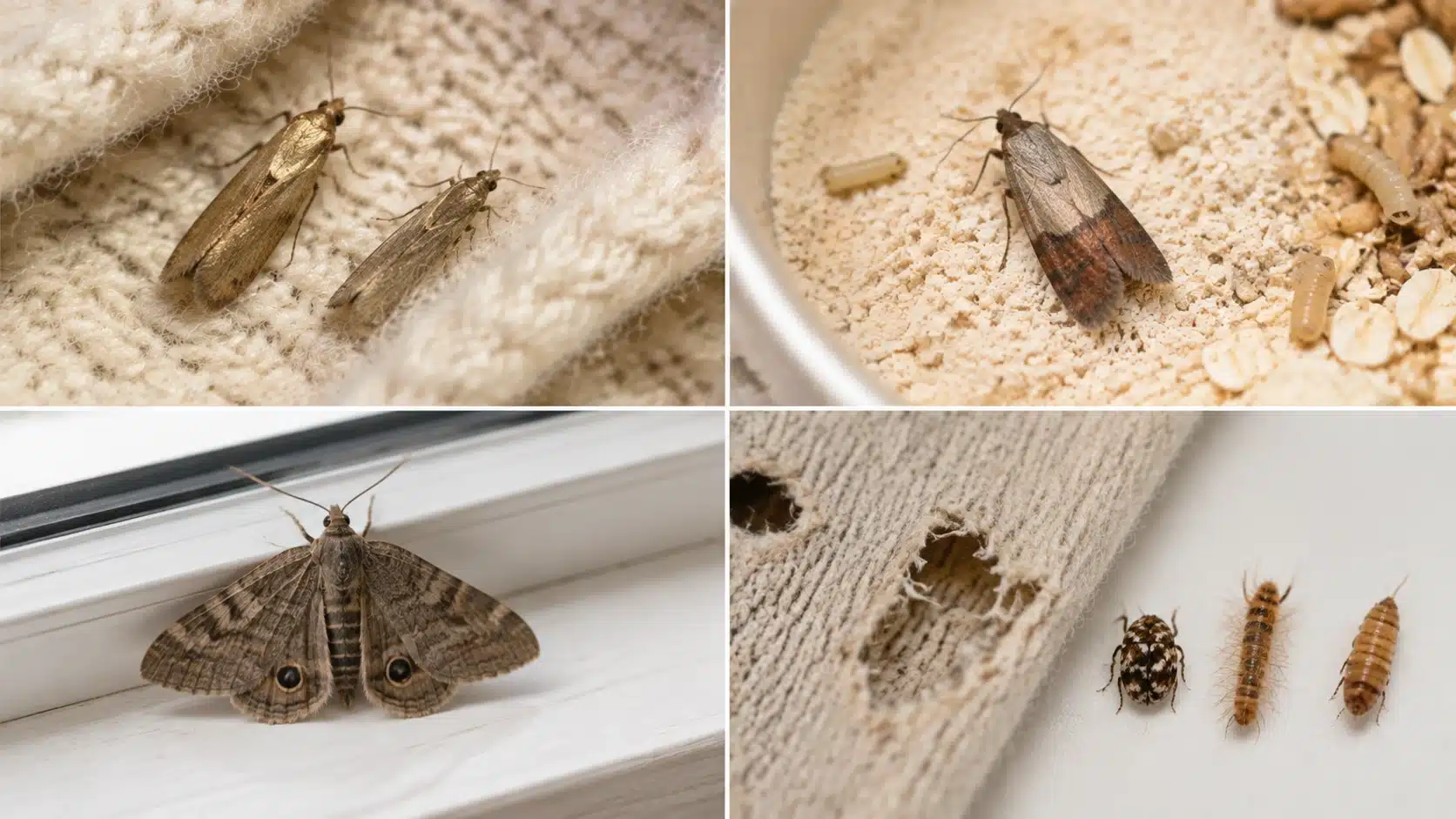
Before choosing a treatment, identify the moth type first. Different moths target different areas and materials, so correct identification helps you clean and prevent the problem more effectively.
| Type | How to Identify |
|---|---|
| Clothes Moths | Small golden or tan moths that avoid light. Their larvae feed on wool, fur, and other animal-based fibers. |
| Pantry Moths | Usually Indian meal moths with two-toned wings. Commonly found around cereal, flour, rice, nuts, dried fruit, and pet food. |
| Outdoor Moths | Larger moths found near windows, doors, or porch lights. A single moth indoors usually does not indicate an infestation. |
| Carpet Beetles | Often confused with clothes moths because their larvae can also damage fabrics and leave small holes behind. |
Signs You Have a Moth Infestation
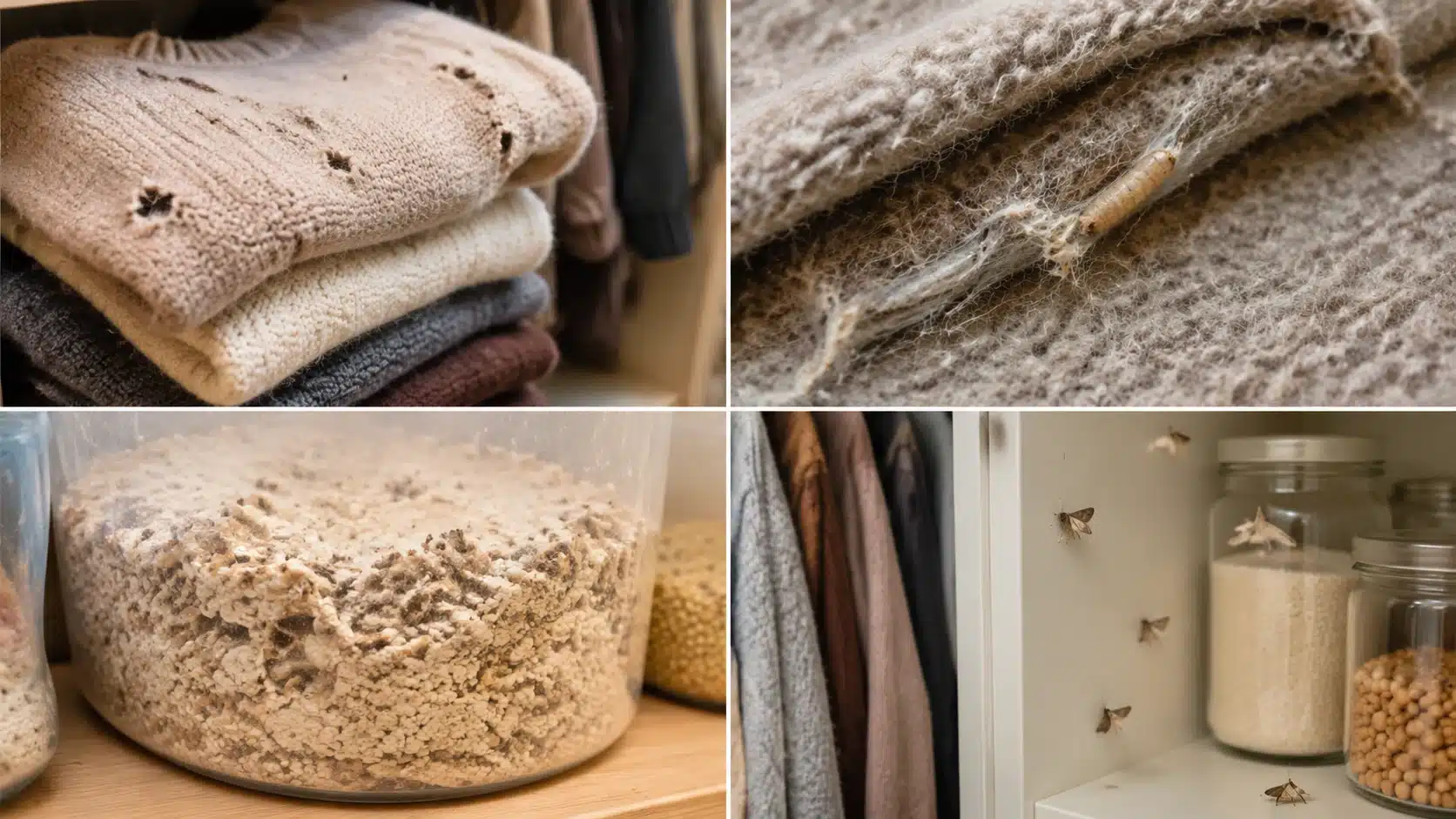
Moth damage often builds up slowly, so signs are easy to miss. Knowing what to check in fabric and food helps you act before it spreads.
- Holes or Thin Patches in Clothes and Fabric: Check wool sweaters, cashmere, silk blends, carpets, upholstery, and anything stored for a long stretch of time.
- Silky Webbing or Cases: Clothes moth larvae leave behind silky tubes or case-like coverings. You will usually find these tucked into fabric folds or along carpet edges.
- Larvae in Closets or Pantry Foods: Small, worm-like larvae in your closet or pantry are a clear sign of active feeding, not just a passing moth.
- Webbing or Clumping Inside Dry Food: If flour, cereal, or grains look clumped together with fine webbing, treat that container as contaminated.
- Adult Moths Appearing Repeatedly: One moth is not a crisis. Seeing several small moths in your kitchen or closet week after week is worth investigating further.
How to Get Rid of Clothes Moths
Clothes moths call for a thorough approach that covers your whole closet, not just one sweater. Follow these steps in order for the best results.
Step 1: Empty and Inspect the Entire Closet
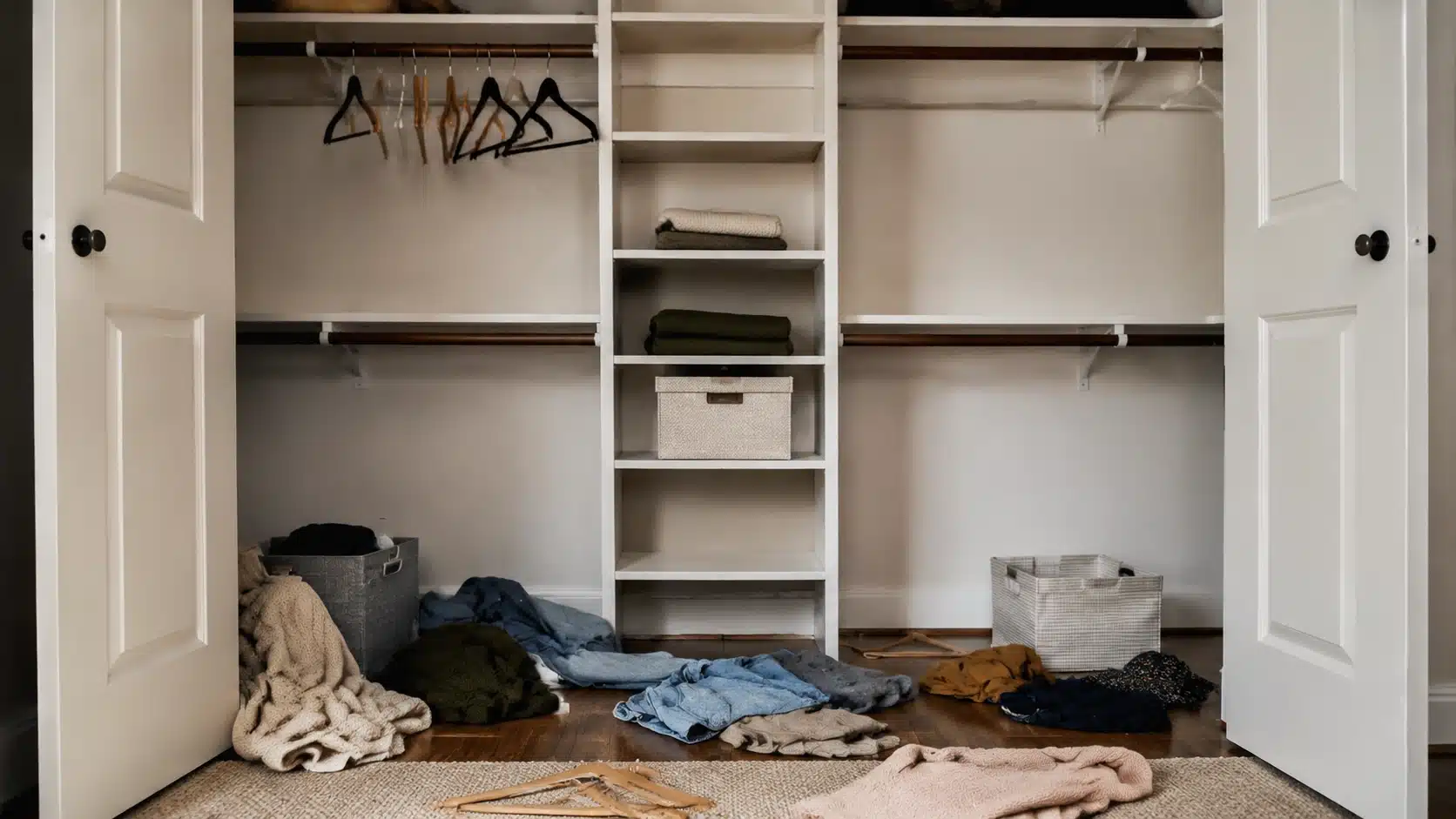
Pull everything out of the closet, including clothes, blankets, rugs, fabric storage boxes, and drawer contents.
Check upholstery and carpet edges too. Larvae hide in far more places than most people expect, including corners you rarely touch.
Step 2: Separate Infested and Unaffected Fabrics
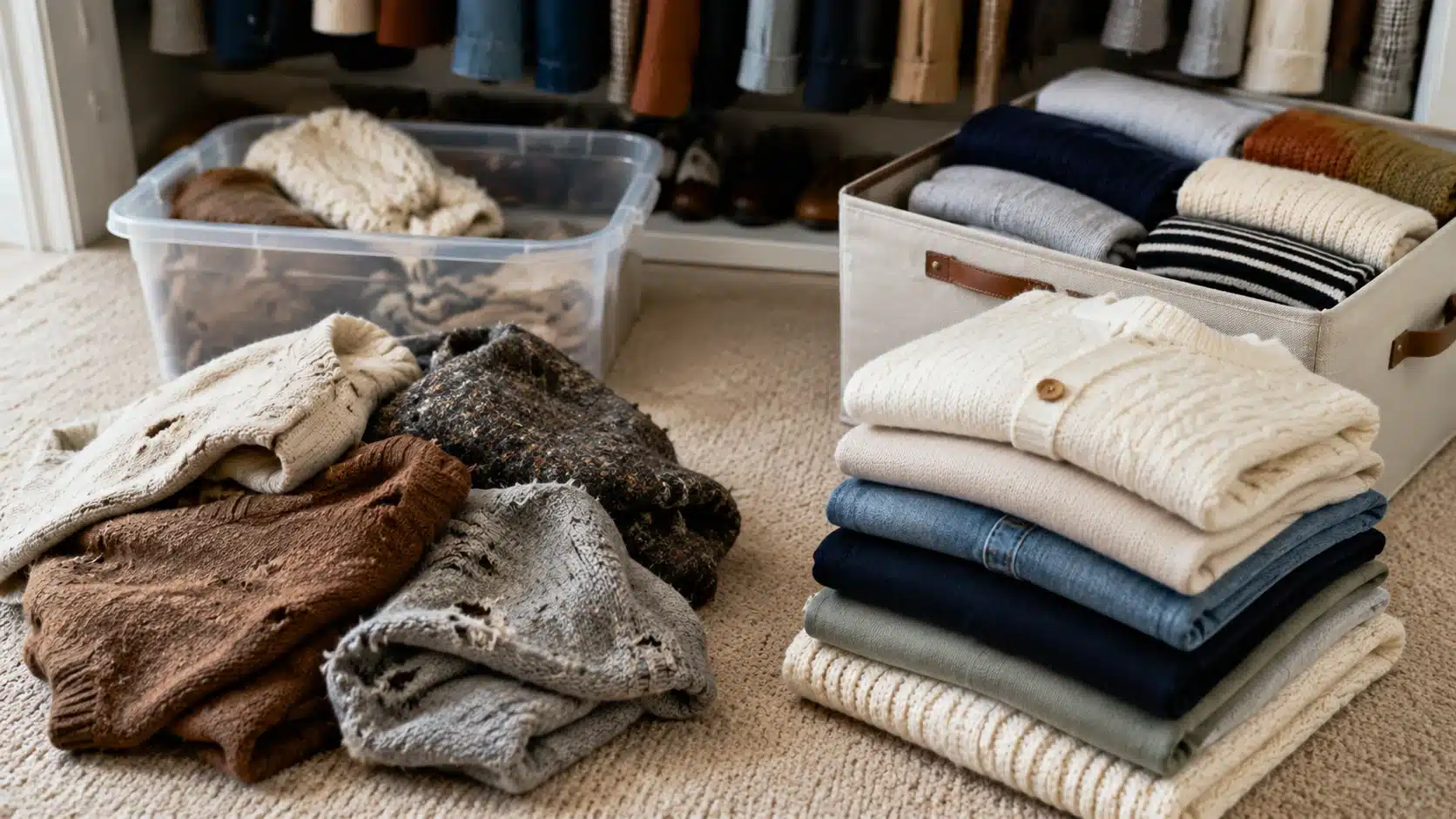
Set aside any items that show signs of damage, and keep them separate from clean ones during your inspection.
This keeps everything organized and makes it easier to identify what needs attention.
This simple separation step stops larvae or eggs from spreading. It keeps the rest of your fabric completely clean and safe to wear.
Step 3: Wash or Dry Clean Affected Clothing
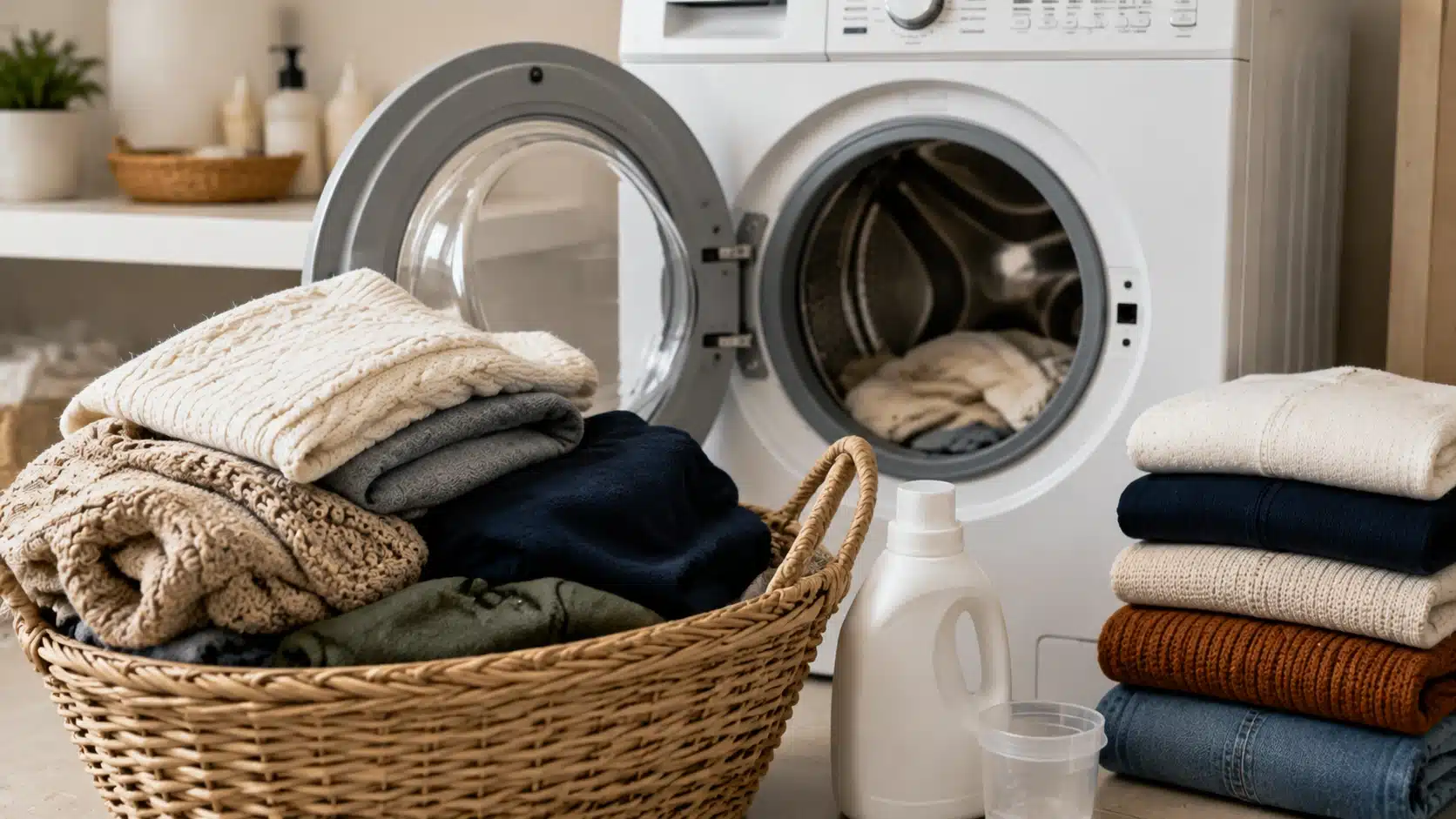
Follow the care label for each item before doing anything else. Clothes moth larvae are drawn to fabric that carries body oils, sweat, or food residue.
Washing not only gets rid of the larvae but also helps eliminate the things that initially attracted them, keeping things safer and cleaner.
Step 4: Freeze Items That Cannot Be Washed
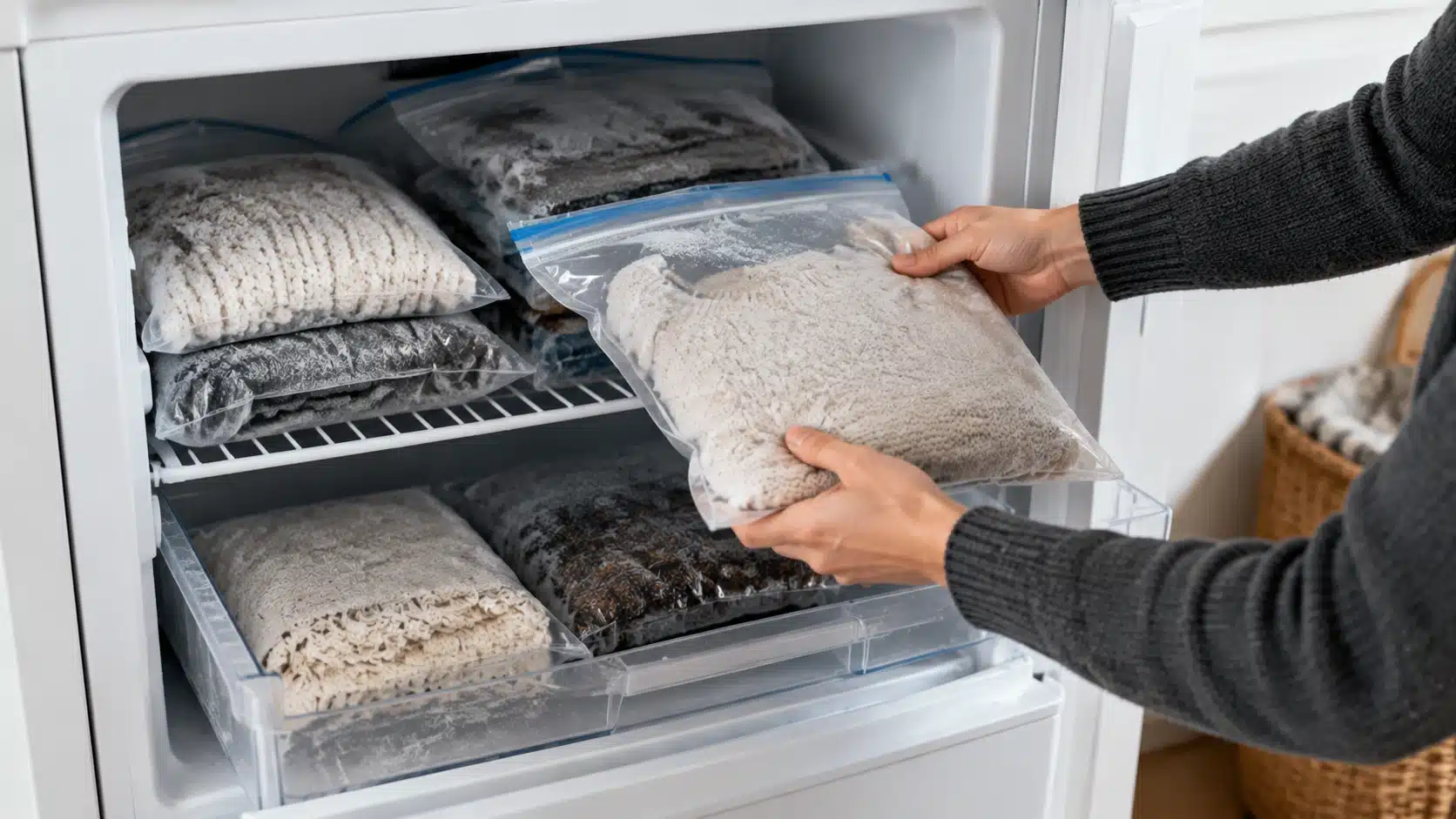
Freezing is a great option for soft fabrics that shouldn’t go in the washing machine. It helps keep them clean and fresh without any worry.
Check the material-specific guidance first. Recommended times and temperatures can vary widely by fabric type and thickness.
Step 5: Vacuum Closets, Carpets, and Hidden Areas Thoroughly
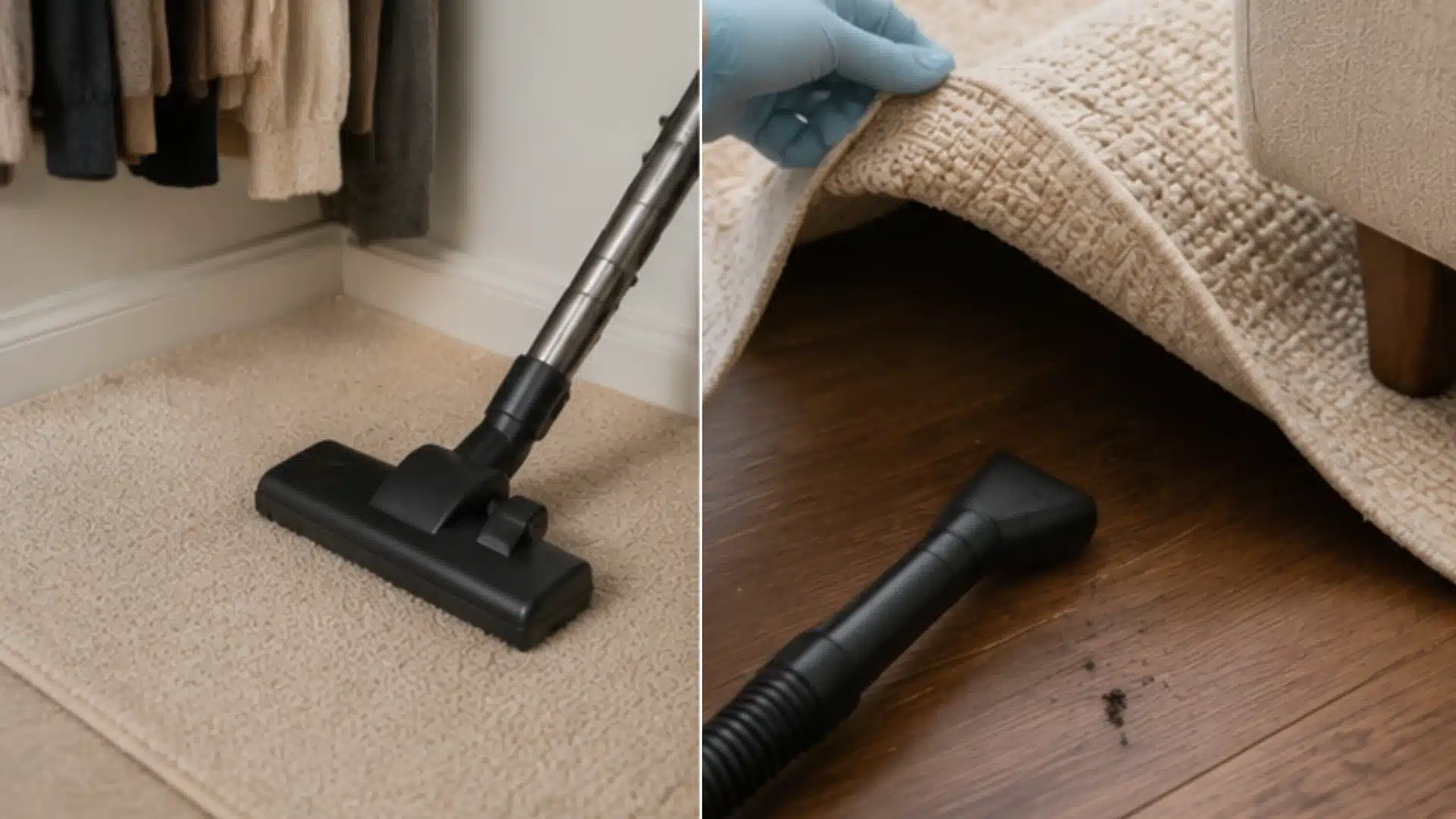
Go over baseboards, cracks, under furniture, carpet edges, shelving, vents, and furniture cushions thoroughly.
Empty and dispose of the vacuum contents right after you finish. This keeps nothing left inside that can crawl back out again.
Step 6: Check Rugs, Upholstery, and Other Natural Fibers
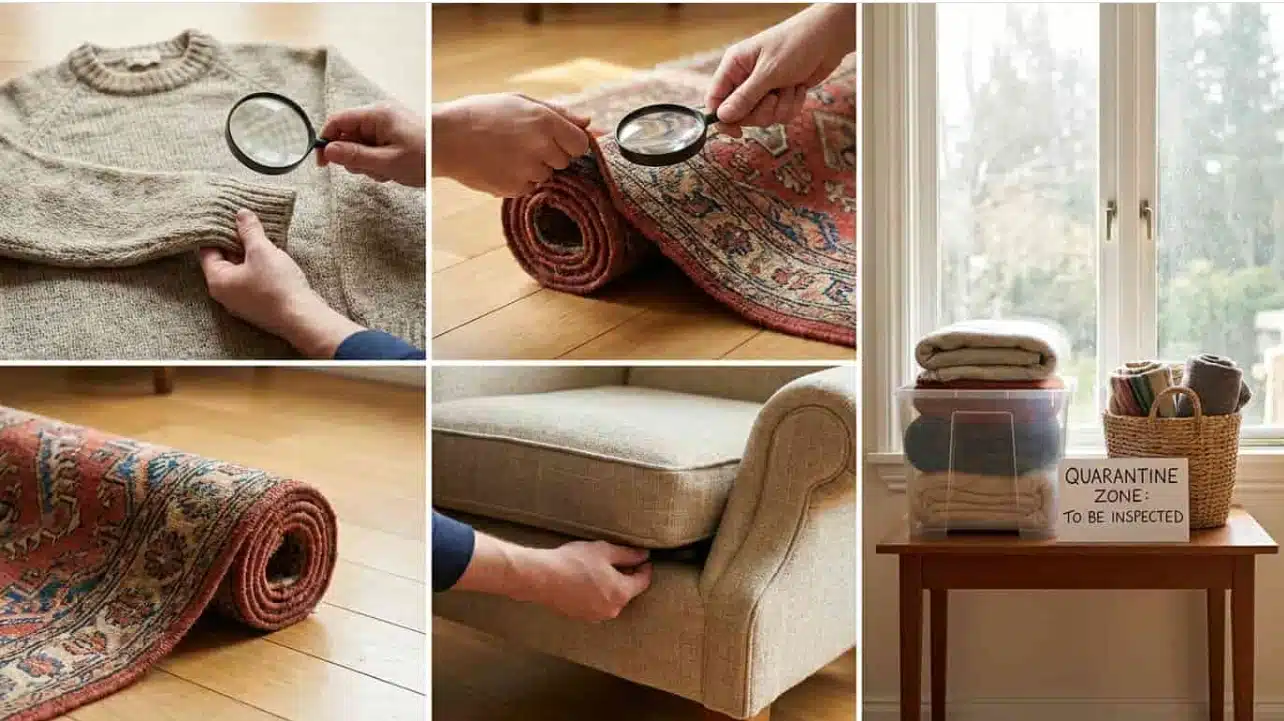
Do not stop your closet inspection at clothing alone. Clothes moth larvae also target rugs, upholstered furniture, and drapes around the house.
Because these materials are also made from animal fibers, examine them carefully during cleanup to ensure thoroughness and safety.
Step 7: Use Clothes Moth Pheromone Traps for Monitoring
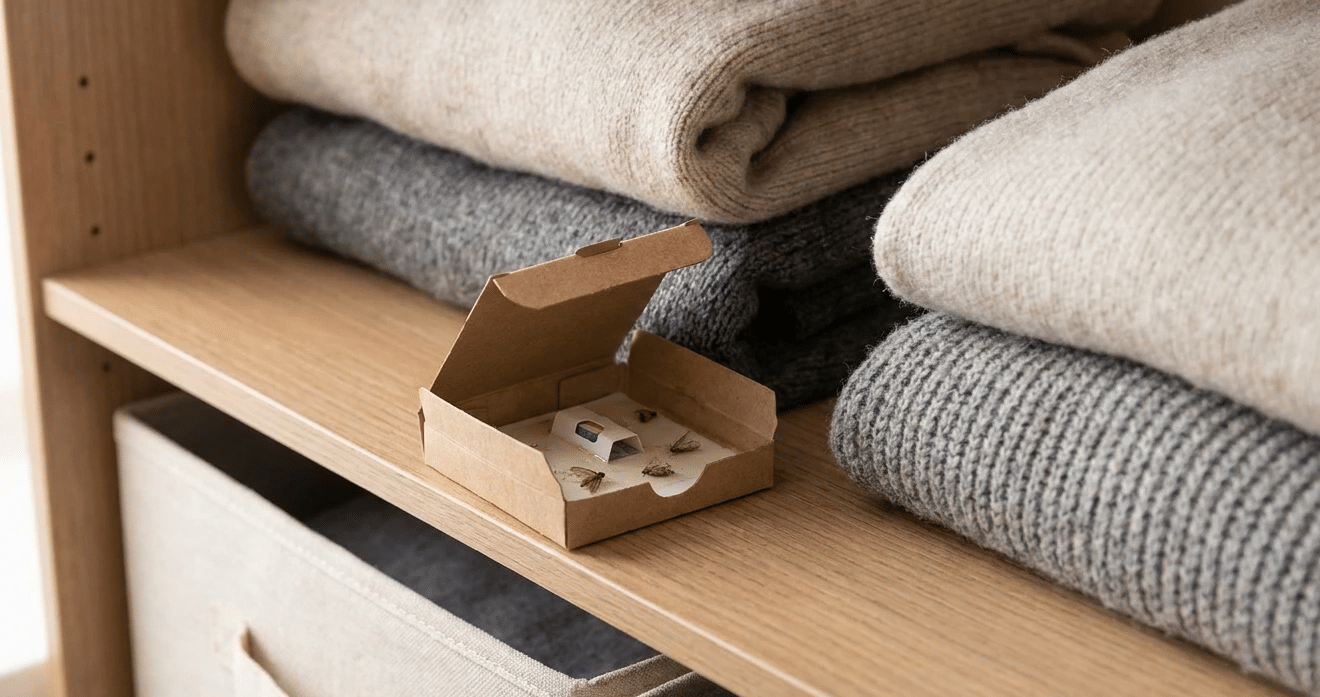
Pheromone traps attract male moths using a scent lure, making it easier for you to monitor their activity.
Utah State Extension notes that these traps mainly catch male webbing clothes moths. Place traps in closets, but do not rely on them instead of cleaning.
Step 8: Store Treated Clothes Properly
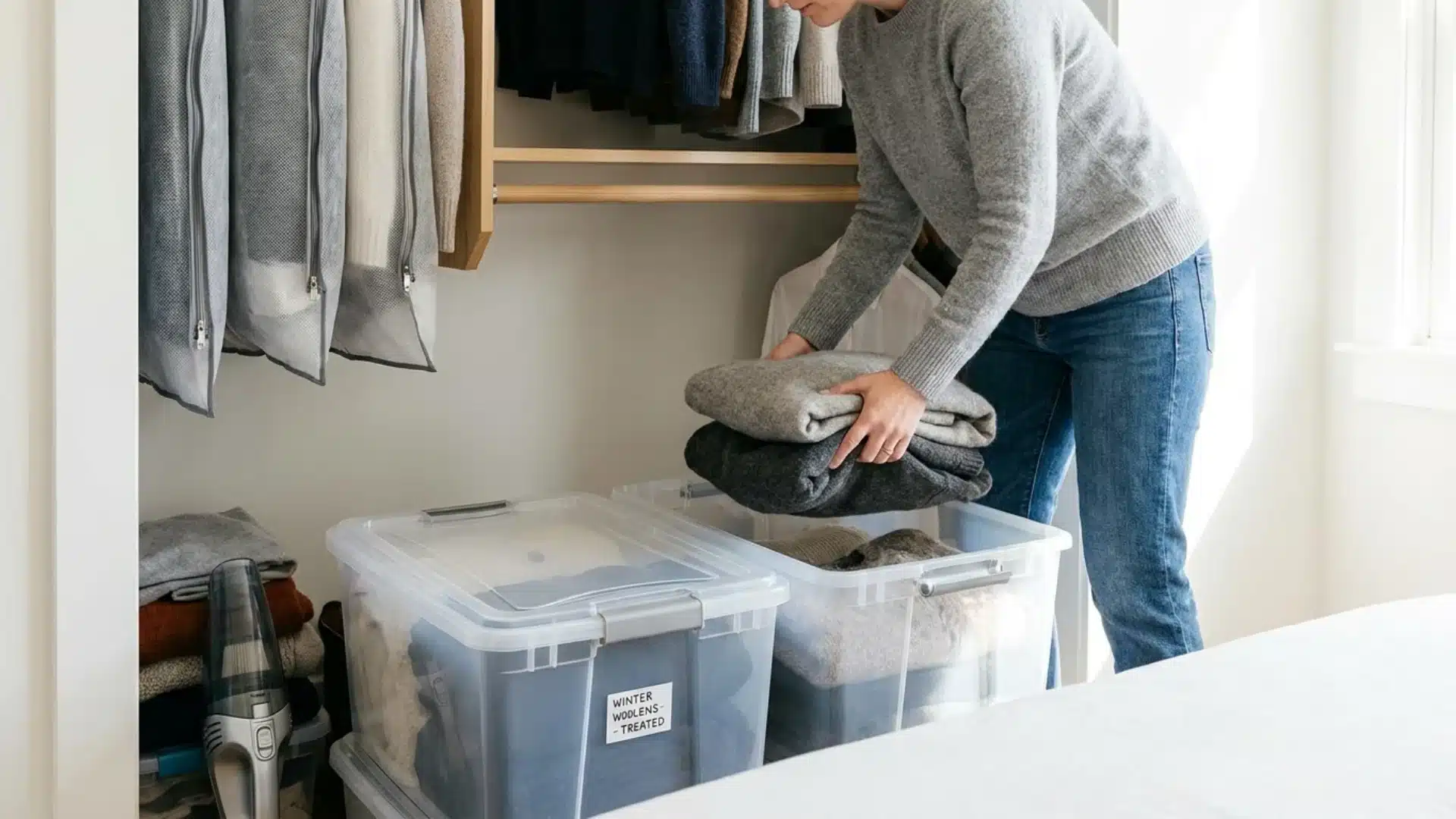
This easy final step helps ensure that new moths won’t find their way back into your freshly cleaned closet, giving you peace of mind.
Once every item is clean and completely larvae-free, store it in sealed containers or garment bags right away.
Do Natural Moth Repellents Actually Work?

Natural repellents can help discourage moth activity, but they are not a replacement for removing an infestation.
- Regular Vacuuming and Cleaning: Consistent vacuuming removes eggs and larvae before they mature. This It one of the most reliable non-chemical steps you can take.
- Heat Treatment Where Appropriate: Some fabrics tolerate high heat from a dryer cycle, which can kill larvae and eggs without chemicals.
- Cedar: Cedar has a pleasant smell and mild repellent qualities. Utah State Extension notes it has limited value against an established clothes moth infestation.
- Freezing Suitable Items: Freezing works on pantry items too, especially grains or nuts you plan to store for a while.
- Lavender and Other Herbal Repellents: Lavender and similar scents may discourage adult moths from settling in a space. They will not kill eggs or larvae already present.
Note: Herbs and scented sachets can support prevention. Removing the actual food or fabric source, then cleaning the area, is what solves an infestation.
Should You Use Mothballs or Insecticides?
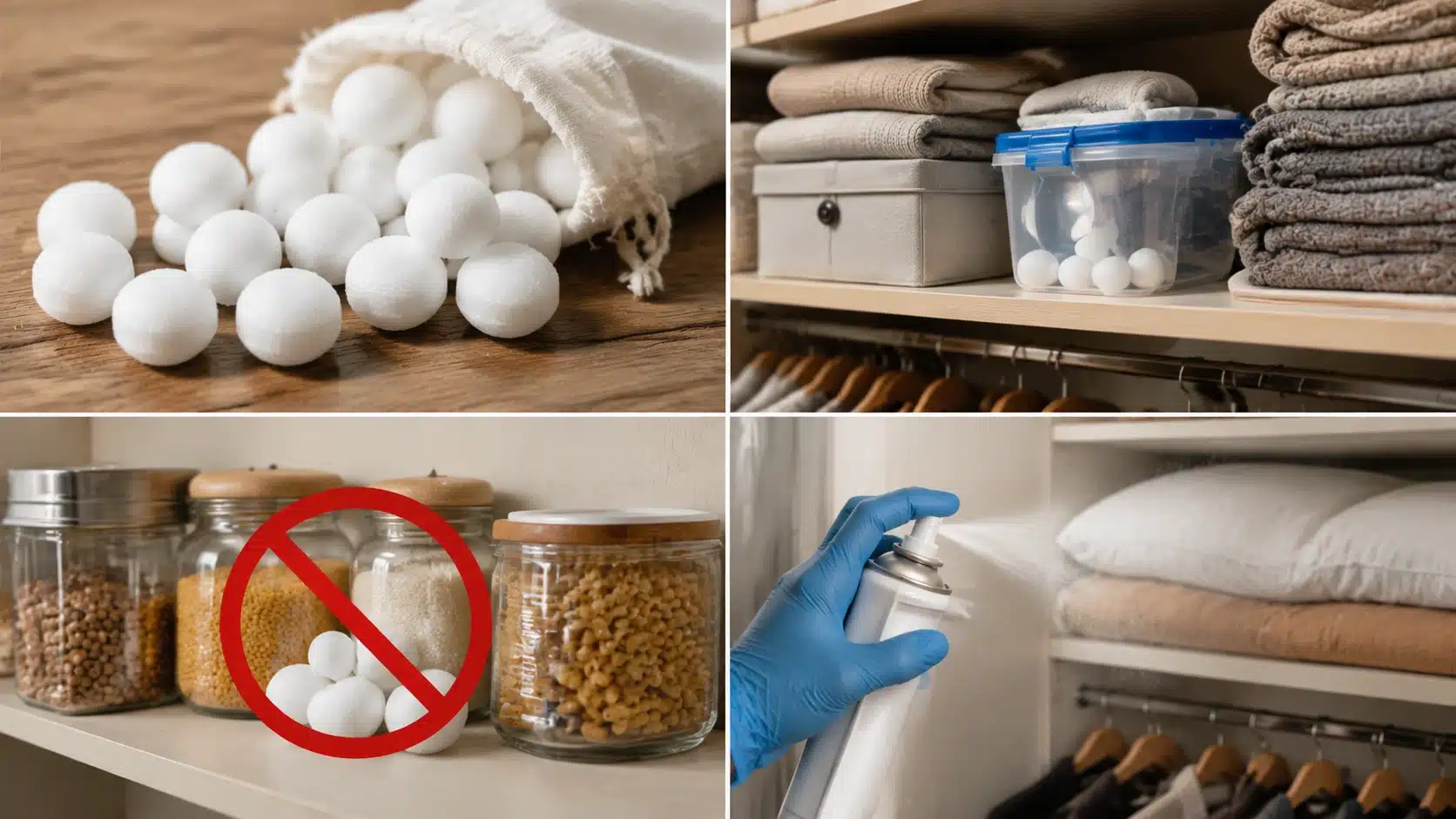
Mothballs and insecticides may help with severe moth problems, but they require careful use. Always follow label directions and keep treatments away from food and living areas.
| Method | What to Know |
|---|---|
| Mothballs | Registered pesticides that release toxic vapor. Use only in tightly closed containers as directed. |
| Around the Home | Do not leave mothballs exposed in rooms where people regularly spend time. |
| Near Food | Never use mothballs in kitchens, pantries, or food-storage areas. |
| Insecticides | Use only as directed on the product label for stubborn infestations. |
| Professional Help | Consider licensed pest control for widespread or recurring moth activity. |
How to Prevent Moths from Coming Back
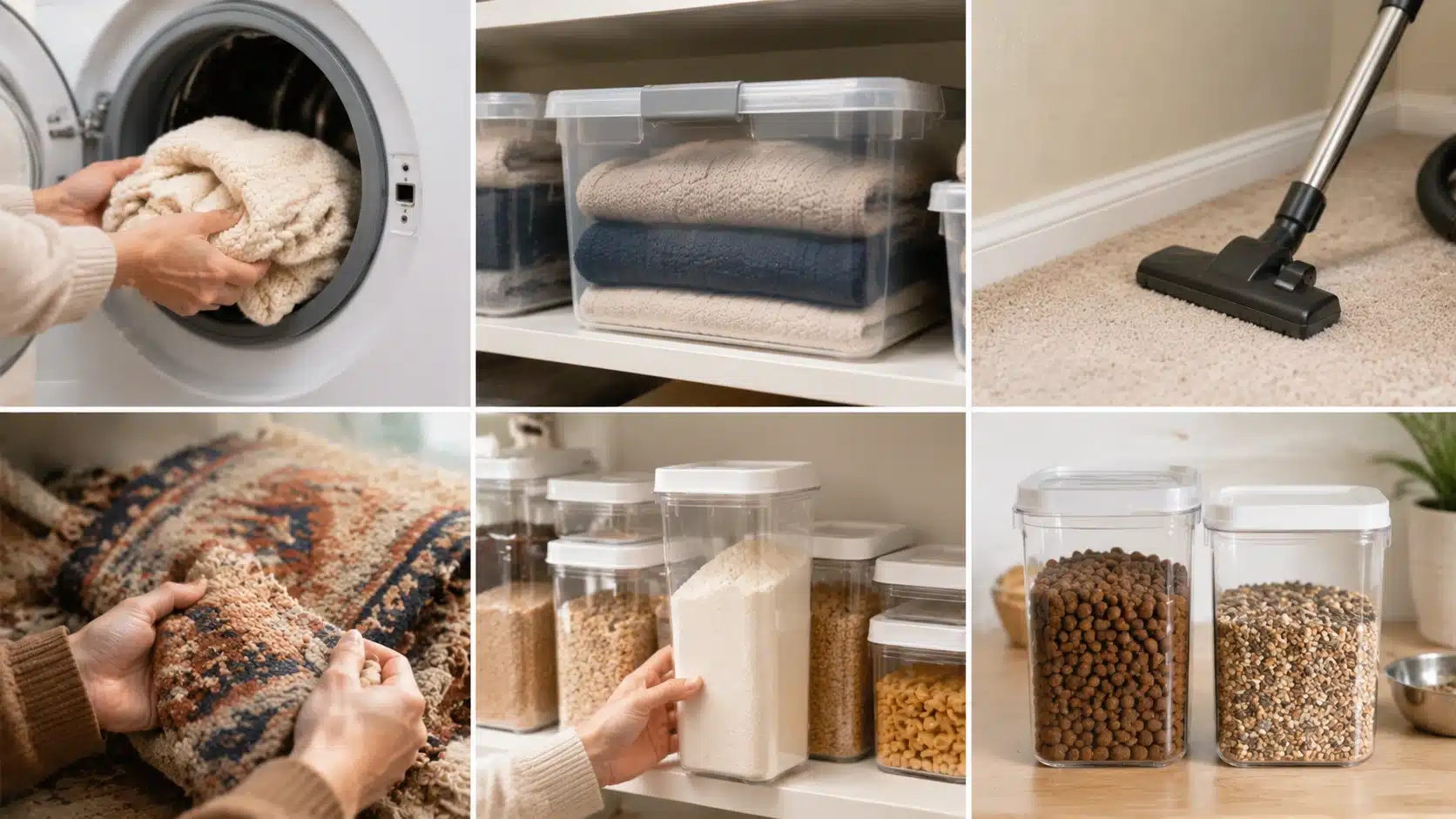
Once you clear up your moth problem, a few consistent habits keep it from returning. These steps cover both fabric storage and pantry organization for long-term protection.
- Clean Clothes Before Seasonal Storage: Washing removes the oils and residue that attract clothes moth larvae in the first place.
- Store Vulnerable Fabrics in Sealed Containers: Wool, cashmere, and similar materials stay safer in tightly sealed bins rather than open shelves.
- Vacuum Closets and Carpet Edges Regularly: Regular vacuumingkeeps eggs and larvae from getting a foothold.
- Inspect Secondhand Clothes, Rugs, and Furniture: Check anything you bring home from a thrift store or estate sale before it touches your other belongings.
- Check Dry Food Before Storing It: Look over flour, cereal, and grains for any sign of webbing or larvae before you put them away.
- Transfer Pantry Staples Into Sealed Containers: Airtight storage blocks new moths from laying eggs directly in your food supply.
- Keep Pet Food and Birdseed Properly Sealed: These two items are common blind spots. Store both in sealed containers just like you would flour or rice.
- Vinegar as a Cleaning Aid: A diluted white vinegar solution can help clean moth-affected closets, shelves, and containers. Use it with washing and vacuuming, not as a stand-alone treatment.
When Should You Call Pest Control for Moths?
Not every moth problem requires professional help, but some situations need expert treatment.
Consider contacting a licensed pest control service if moths continue appearing after thorough cleaning and treatment, the infestation has spread to multiple rooms, or valuable rugs, furniture, and fabrics are being damaged.
Professional help may also be needed when you cannot find the source, the problem keeps returning despite repeated cleanup, or moths are hiding in hard-to-reach areas such as under flooring or inside walls.
A pest control professional can locate hidden sources and apply specialized treatments that are not usually available for household use.
Frequently Asked Questions
Can Moths Live in Carpets?
Yes, clothes moth larvae can live in carpet fibers, especially along edges and under furniture where the carpet goes undisturbed.
Will Moths Eventually Go Away on Their Own?
An infestation will not resolve without action. The source of food or fabric needs to be found and removed before the moths stop appearing.
Do Moths Bite or Sting?
Adult moths do not bite. Larvae can carry irritating hairs or spines that cause itching or a mild rash if you handle them directly.
What Temperature Kills Moth Eggs?
Freezing at 0°F for at least one week kills moth eggs and larvae. Seal items in a bag first to keep moisture from damaging them.
How Do You Know an Infestation is Fully Gone?
No new larvae, webbing, or holes for two to three weeks after cleaning is a good sign. Keep a trap out to confirm activity has actually stopped.
Wrapping It Up
Getting rid of moths for good comes down to three steps. First, identify which type of moth you are dealing with. Next, locate and remove it food source.
Then clean the area thoroughly so nothing is left to crawl back out. Clothes moths need clean, sealed fabric storage.
Pantry moths need airtight food containers and a fully cleaned pantry.
Traps and natural repellents can support your effort, but they will not replace the work of removing the source.
Stay consistent with inspection and storage habits, and moths should stay away for good.