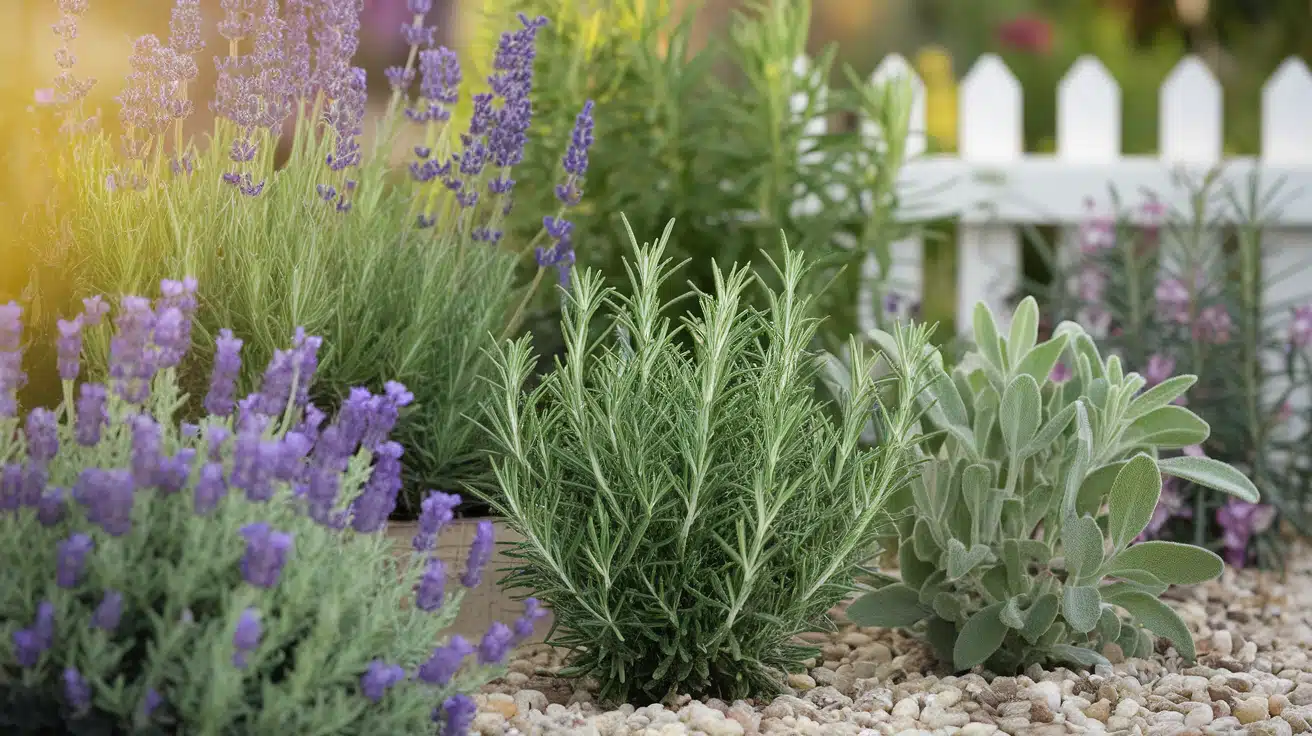
Most gardeners pick up a lavender plant and call it done. Purple flowers. Good scent. Into the ground it goes.
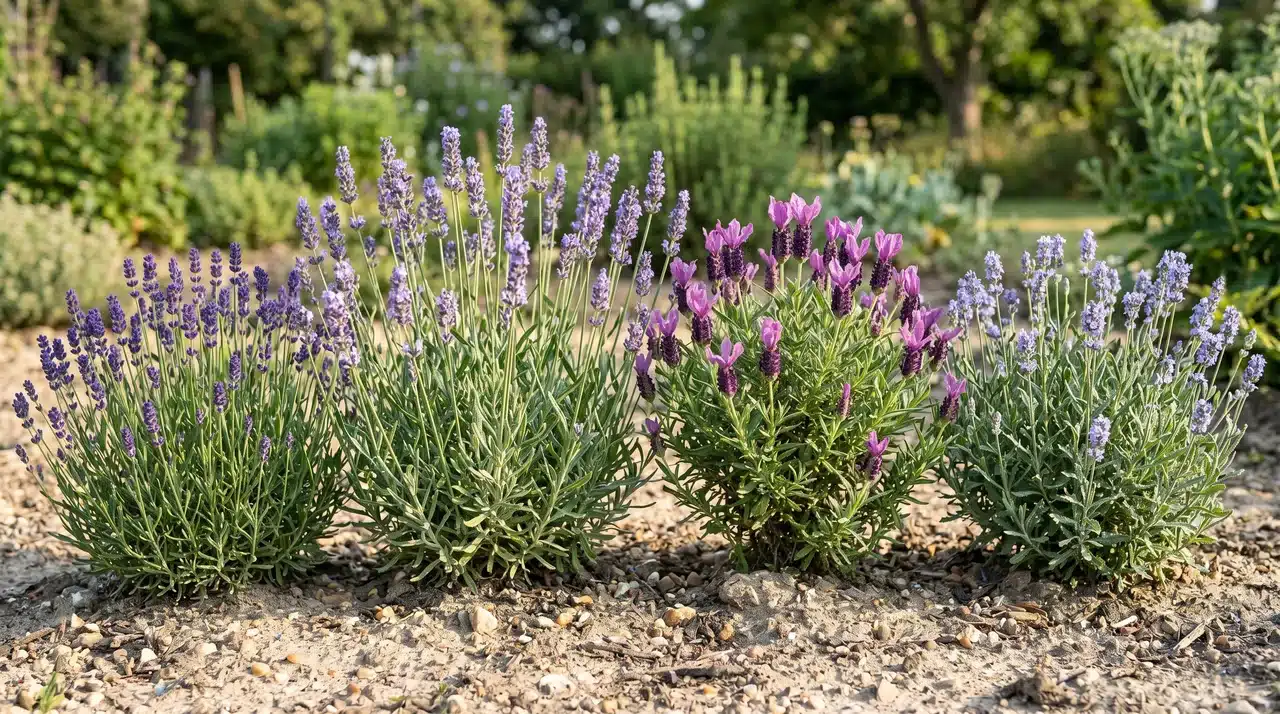
That works until it does not. Lavender is not one plant. It is a genus with 45 accepted species and over 450 named cultivars. English lavender looks and smells nothing like Spanish lavender.
Lavandin grows three times the size of a compact French variety. Fernleaf lavender has foliage that resembles a fern more than a flower.
Planting the wrong type leads to poor blooms, the wrong fragrance, or a plant that outgrows its space within one growing season.
This post covers every major type of lavender plant, with clear identifiers, fragrance profiles, bloom times, and practical garden uses for each.
Why Is Lavender So Easy to Grow?
Lavender thrives on neglect. Most garden plants demand regular feeding, frequent watering, and careful soil preparation. Lavender asks for almost none of that once it settles in.
It grows in poor, dry soil where other plants struggle. It needs very little water once established. It rarely attracts pests or serious disease and spreads easily.
Three conditions cover almost everything that lavender needs:
- Full sun: At least 6 to 8 hours of direct sunlight daily
- Good drainage: Soil that does not hold water around the roots
- Lean soil: Low nutrients, no heavy compost, slightly alkaline pH
How Many Types of Lavender Plants Are There?
There are 45 accepted lavender species and over 450 named cultivars. Most home gardens work with four primary types.
The four main groups are English, French, Spanish, and Lavandin. Each has a distinct appearance, fragrance, and flowering habit.
1. English Lavender (Lavandula angustifolia)
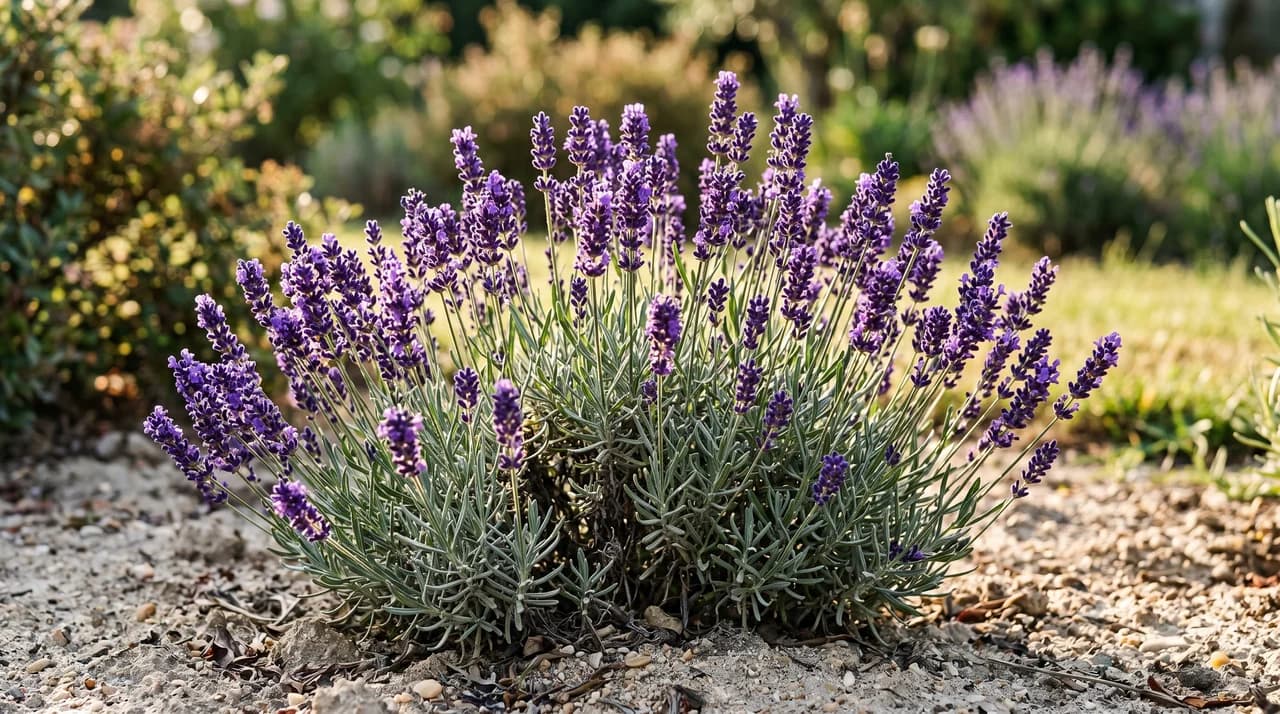
English lavender is the most widely grown lavender species in home gardens. It has a compact, tidy growth habit, narrow silver-grey foliage, and the classic sweet floral fragrance most people associate with lavender.
- Leaves:Narrow, smooth-edged, silver-grey to grey-green, 1 to 2 inches long.
- Flower spikes:Upright, unbranched, tightly packed florets in pale lavender-blue to deep violet.
- Mature size:1 to 3 feet tall and wide.
- Fragrance:Sweet, clean, floral; lowest camphor content of all lavender types.
- Bloom time:Late spring to early summer; once per season with a lighter second flush after deadheading.
- Hardiness: USDA Zones 5 to 8. The most cold-tolerant of all lavender types.
- Best for:Cooking, baking, dried sachets, low borders, and pollinator gardens.
- Top cultivars:Hidcote (deep violet, compact), Munstead (pale blue, early), Vera (culinary), Alba (white flowers).
2. French Lavender (Lavandula dentata)
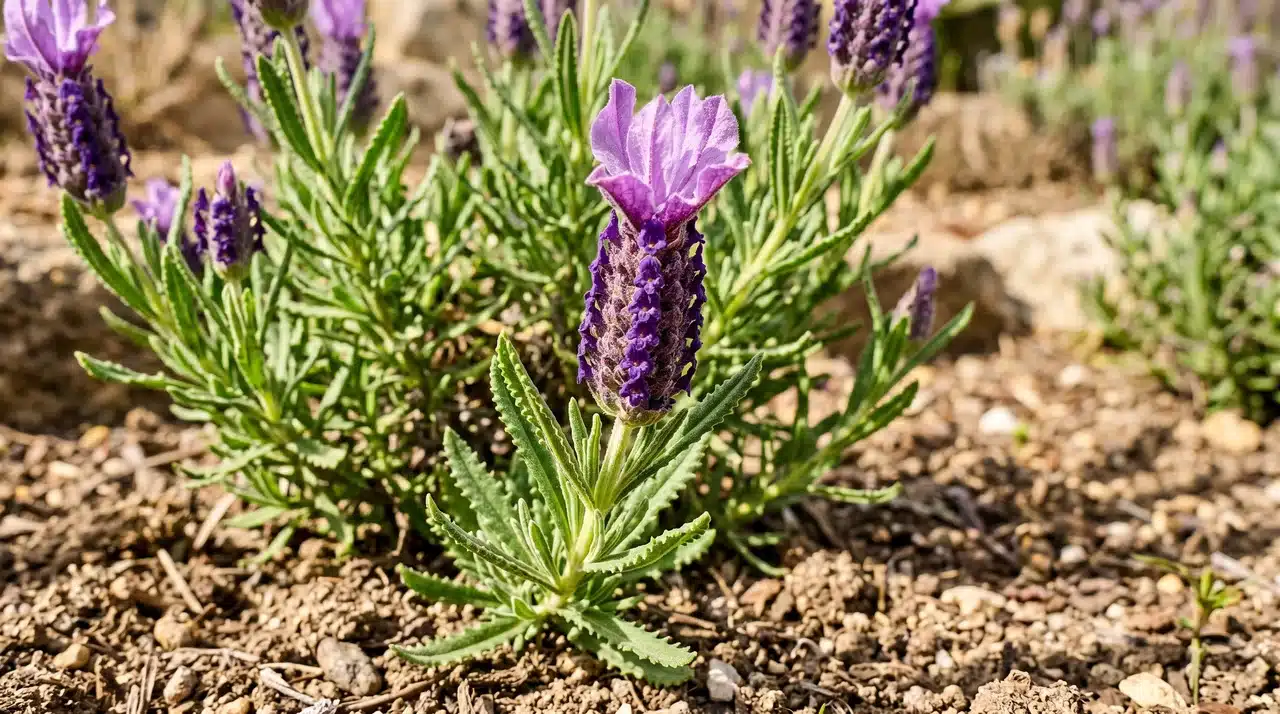
French lavender stands apart from other types by its distinctive toothed leaf edges and long, almost year-round flowering habit in mild climates. It is the most free-flowering lavender species and one of the most visually distinctive in a garden bed.
- Leaves: Broad, grey-green with clearly toothed or scalloped edges; the clearest single identifier of this species.
- Flower heads: Cylindrical with small soft bracts at the top; more open than English lavender spikes.
- Flower color: Soft lavender-blue to purple.
- Mature size: Up to 3 feet tall and wide.
- Fragrance: Light, herbal-green; not suitable for culinary use.
- Bloom time: Spring through early autumn; the longest blooming window of all four main types.
- Hardiness: USDA Zones 8 to 11. Not frost-hardy, so treat as an annual in colder regions.
- Best for: Ornamental beds, patio containers, mixed borders, and sheltered gardens where extended color matters.
Spanish Lavender (Lavandula stoechas)
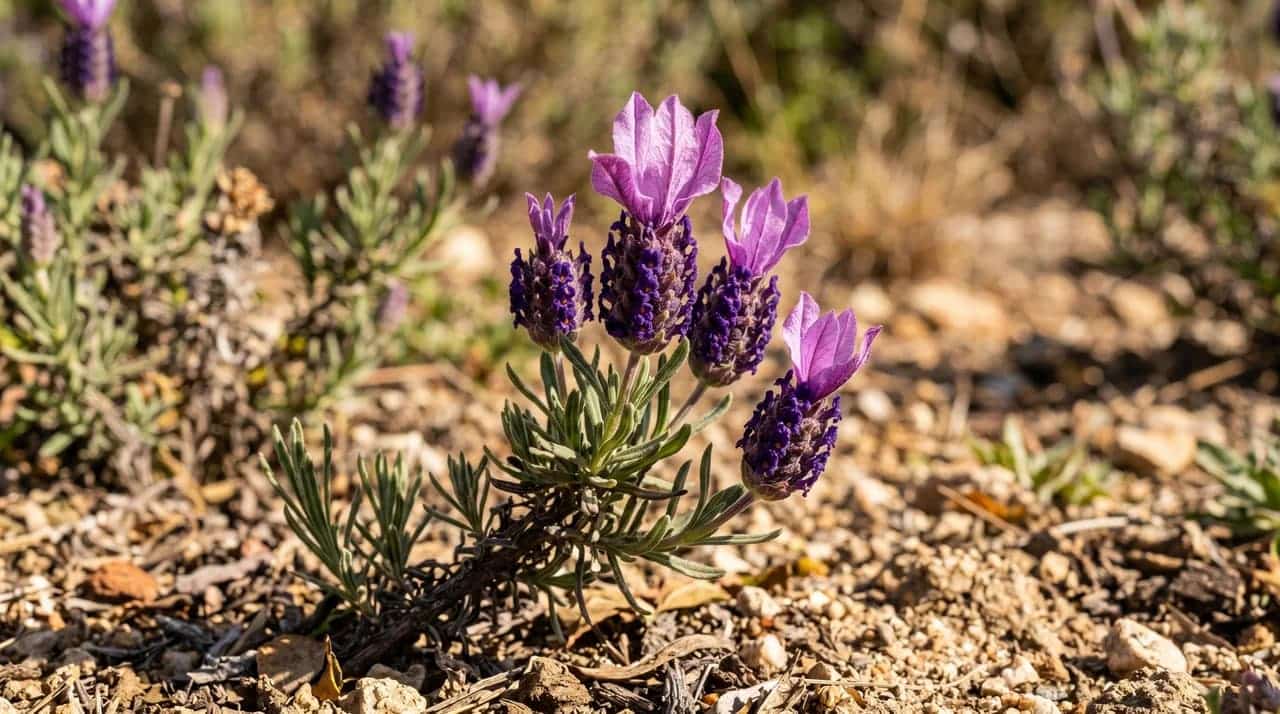
Spanish lavender is the most visually dramatic of the main lavender types. Its distinctive winged flower heads set it apart from other species, making it one of the most recognizable ornamental lavenders for home gardeners.
- Leaves: Narrow, grey-green, intensely aromatic when crushed.
- Flower heads: Compact and rounded with prominent upright wing bracts at the top, resembling rabbit ears.
- Flower color: Deep purple to burgundy; some cultivars carry pink or white bracts.
- Mature size: Up to 2 feet tall and wide.
- Fragrance: Strong, resinous, camphor-forward; not suitable for cooking.
- Bloom time: Spring; re-blooms in autumn in mild conditions with regular deadheading.
- Best for: Ornamental beds, containers, and garden displays where flower shape is the main attraction.
- Top cultivars: Kew Red (crimson and pink), Otto Quast (deep purple), Regal Splendor (purple and white), Papillon (pale purple and white).
Lavandin (Lavandula × intermedia)
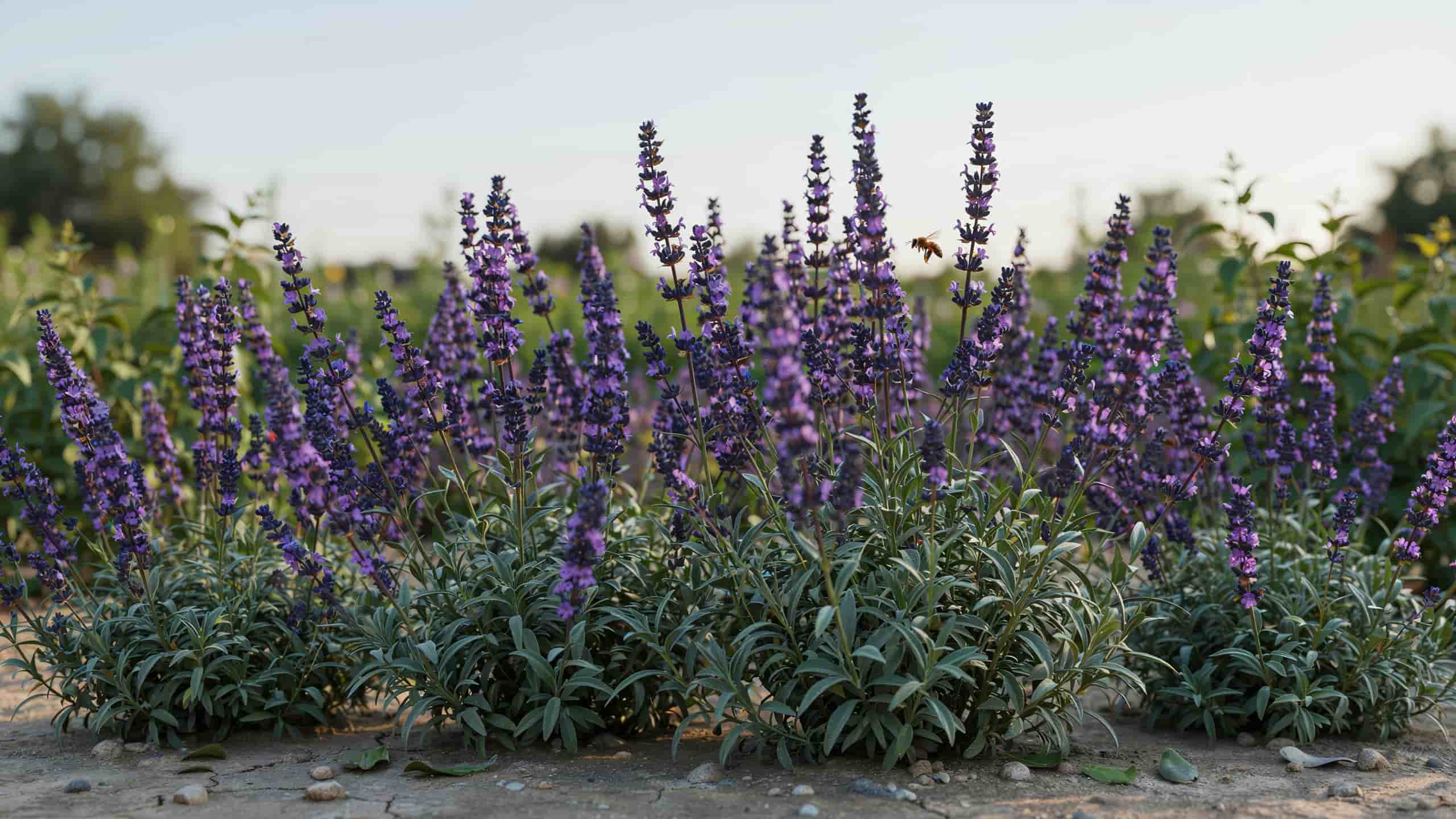
Lavandin is a natural hybrid between English lavender and Spike lavender.
It grows larger than any pure lavender species, needs regular pruning to stay in shape, produces more essential oil than either parent plant, and dominates the commercial fragrance and cosmetic industries worldwide.
- Leaves: Long, narrow, silver-grey; slightly wider and more textured than English lavender
- Flower spikes: Tall and branched at the base, clearly different from the single, unbranched spikes of English lavender
- Flower color: Mid-blue to violet-blue
- Mature size: Up to 40 inches tall and wide; the largest of the four main types
- Fragrance: Strong, sharp, camphor-forward; more intense than English lavender
- Bloom time: Mid to late summer; flowers later than all other main types
- Seeds: Sterile hybrid; produces no viable seeds and will not spread or self-seed in garden beds
- Best for: Large hedges, mass plantings, dried bundles, and fragrance gardens
- Top cultivars: Grosso (most commercially grown worldwide), Provence (lighter scent), Hidcote Giant, Super (high oil yield)
Three Lesser-Known Lavender Types Worth Growing
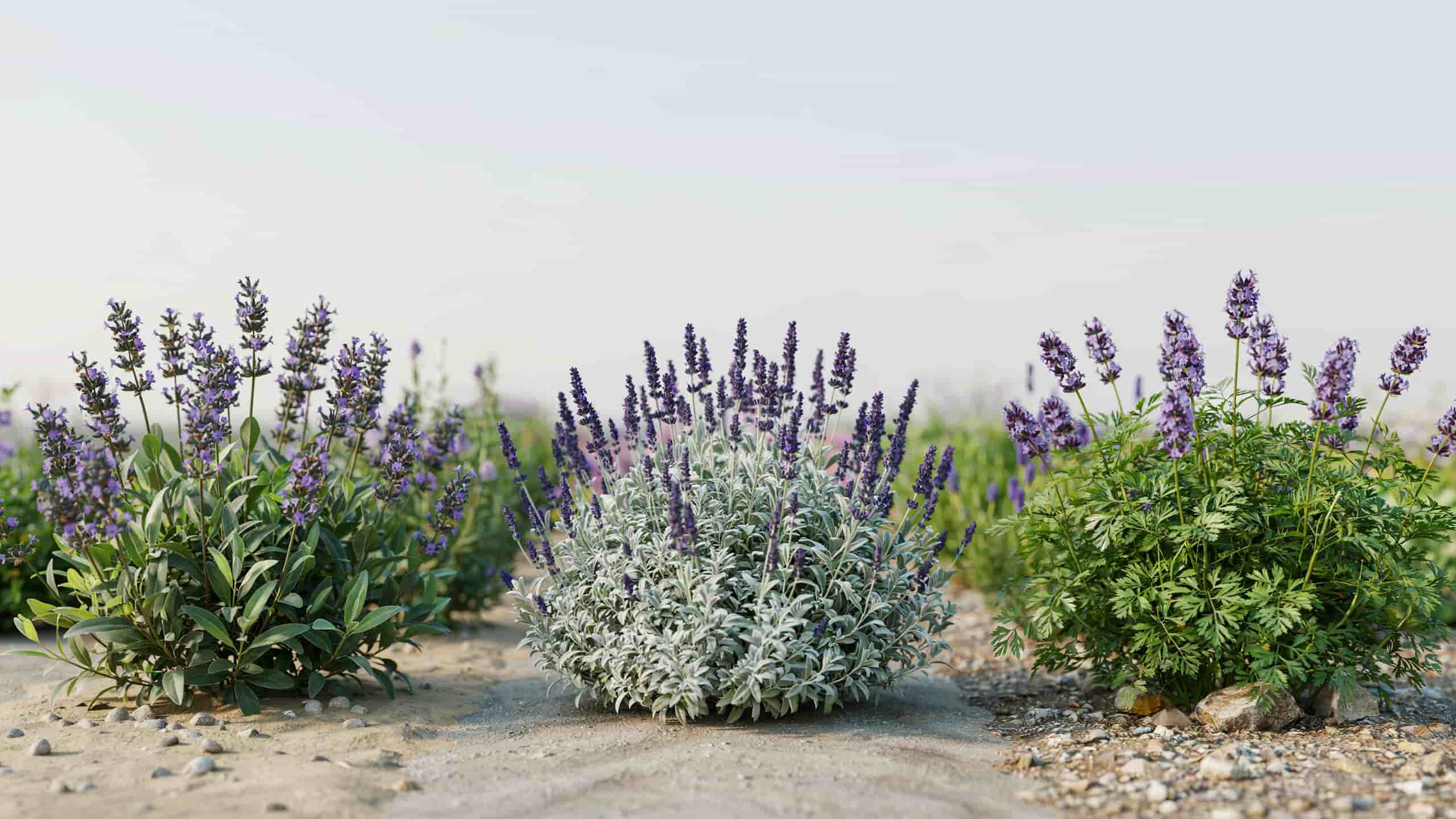
Beyond the four main types, three other lavender species deserve more attention in home gardens. Each one offers something the primary types do not: unusual leaf texture, a distinct fragrance character, or a growth habit suited to specific planting situations.
Spike Lavender (Lavandula latifolia)
Spike lavender is a larger, wilder-looking species with branched flower spikes and a strong camphor-forward fragrance. It fills bold, open garden spaces better than most compact lavender types.
- Broad, flat grey-green leaves; noticeably wider than English lavender foliage
- Branched flower spikes with a loose, open structure
- Fragrance: strong camphor and eucalyptus notes; quite different from English lavender
- Used in essential oil production where high camphor content is specifically required
Woolly Lavender (Lavandula lanata):
Woolly lavender is grown primarily for its striking silver-white foliage. The dense woolly leaf coating gives this species a texture and color no other lavender type brings to a mixed planting.
- Leaves covered in dense, soft white hairs, giving a bright silver-white appearance year-round
- Tall, slender flower spikes with small violet flowers
- Fragrance: sweet with a mild camphor note
- Best used for textural contrast in dry, sunny rock gardens and silver-themed borders
Fernleaf Lavender (Lavandula multifida):
Fernleaf lavender has the most unusual foliage of any lavender species. Its deeply cut, feathery leaves give it an entirely different texture from all other commonly grown types.
- Leaves deeply cut, feathery, and bright green rather than grey; visually unlike any other lavender
- Slim, branched flower spikes with small violet-blue flowers
- Fragrance: lighter and greener than English lavender
- Best suited to containers and sheltered spots; less cold-hardy than the four main types
How to Choose the Right Type of Lavender for Your Garden
Choosing between lavender types is easier when you know what you want the plant to do. Match your goal or garden condition to the right type below before anything goes into the ground.
| Your Goal or Condition | Best Lavender Type |
|---|---|
| Cooking and baking | English lavender only |
| Dried flowers and sachets | English lavender or Lavandin |
| Longest flowering season | French lavender |
| Ornamental flower shape | Spanish lavender |
| Large hedge or mass planting | Lavandin |
| Textural contrast in borders | Woolly lavender |
| Containers and small spaces | Spanish, Fernleaf, or compact English |
| Cold winters | English lavender or Lavandin |
| Mild winters, warm seasons | French, Spanish, or Fernleaf |
| Dry, poor, or rocky soil | All main types; Woolly lavender ideal |
How to Tell Different Lavender Types Apart
Several types of lavender look similar before they bloom.
Knowing three key identifiers, leaf shape, flower structure, and fragrance, makes identification straightforward at any point in the growing season without needing flowers present.
By leaf shape:
- Narrow, smooth-edged, silver-grey: English lavender or Lavandin
- Toothed or scalloped edges: French lavender
- Dense white-woolly surface: Woolly lavender
- Feathery, deeply cut, bright green: Fernleaf lavender
By flower structure:
- Single unbranched upright spike: English lavender
- Tall branched spike with offshoots at the base: Lavandin
- Cylindrical head with small soft bracts on top: French lavender
- Rounded head with prominent wing bracts: Spanish lavender
By fragrance when foliage is crushed:
- Sweet, clean, floral: English lavender
- Sharp, camphor-forward: Lavandin or Spike lavender
- Light, herbal-green: French lavender
- Strong, resinous: Spanish lavender
Conclusion
Seven types of lavender plants cover every garden need, from cooking to cut flowers to ornamental hedges.
The four main types, English, French, Spanish, and Lavandin, each perform differently. Three lesser-known species add texture and fragrance that the primary four do not offer.
Choosing the right type of lavender plant from the start saves years of poor performance, wrong fragrance, or a plant that never quite suits the space you gave it.
English lavender for cooking and classic scent. French for the longest bloom season. Spanish for ornamental drama. Lavandin for large spaces and bold hedges. Once you know your type, timing is the next decision.
Getting the planting timing right gives your chosen variety the strongest possible first season.
Frequently Asked Questions
Which Type of Lavender Smells the Strongest?
Lavandin produces the most intense fragrance of all lavender types. Its high camphor and linalool content gives it a sharp, piercing scent that is stronger than any pure lavender species.
Which Lavender Type is Best for Cooking?
English lavender is the only type suited to culinary use. French, Spanish, and Lavandin all carry too much camphor to use comfortably in food or drink.
What is the Difference Between English and French Lavender?
English lavender has narrow, smooth leaves and blooms once in early summer. French lavender has toothed leaf edges and blooms across multiple flushes from spring through to autumn.
Can You Grow Lavender Indoors?
Yes, but it needs at least six hours of direct sunlight daily. A south-facing window or a grow light works. Containers with fast-draining soil keep roots healthy indoors.
How Long Does a Lavender Plant Live?
English lavender and Lavandin last 10 to 15 years with yearly pruning. French and Spanish types have shorter lifespans, typically three to five years before turning woody and sparse.
Which Lavender Type Grows the Fastest?
Lavandin grows fastest and largest, reaching full size in two to three seasons. Spanish lavender also establishes quickly in warm climates with good drainage.