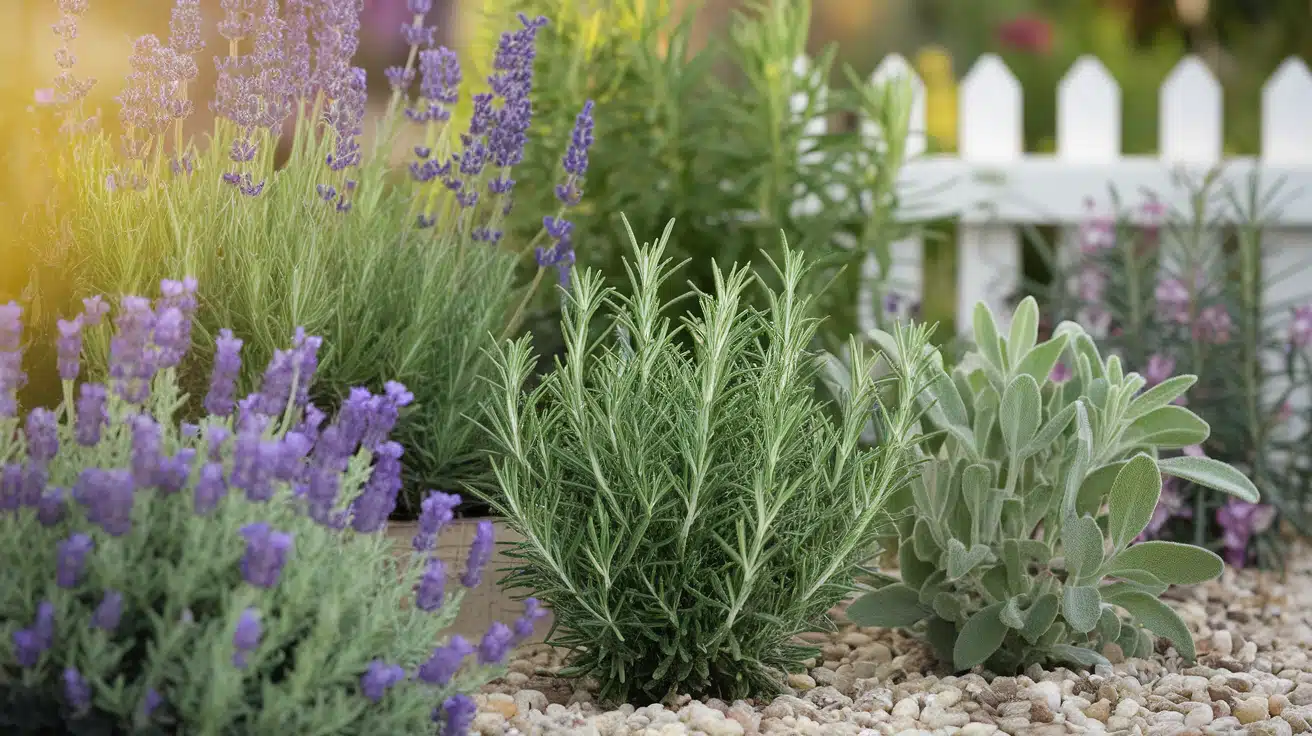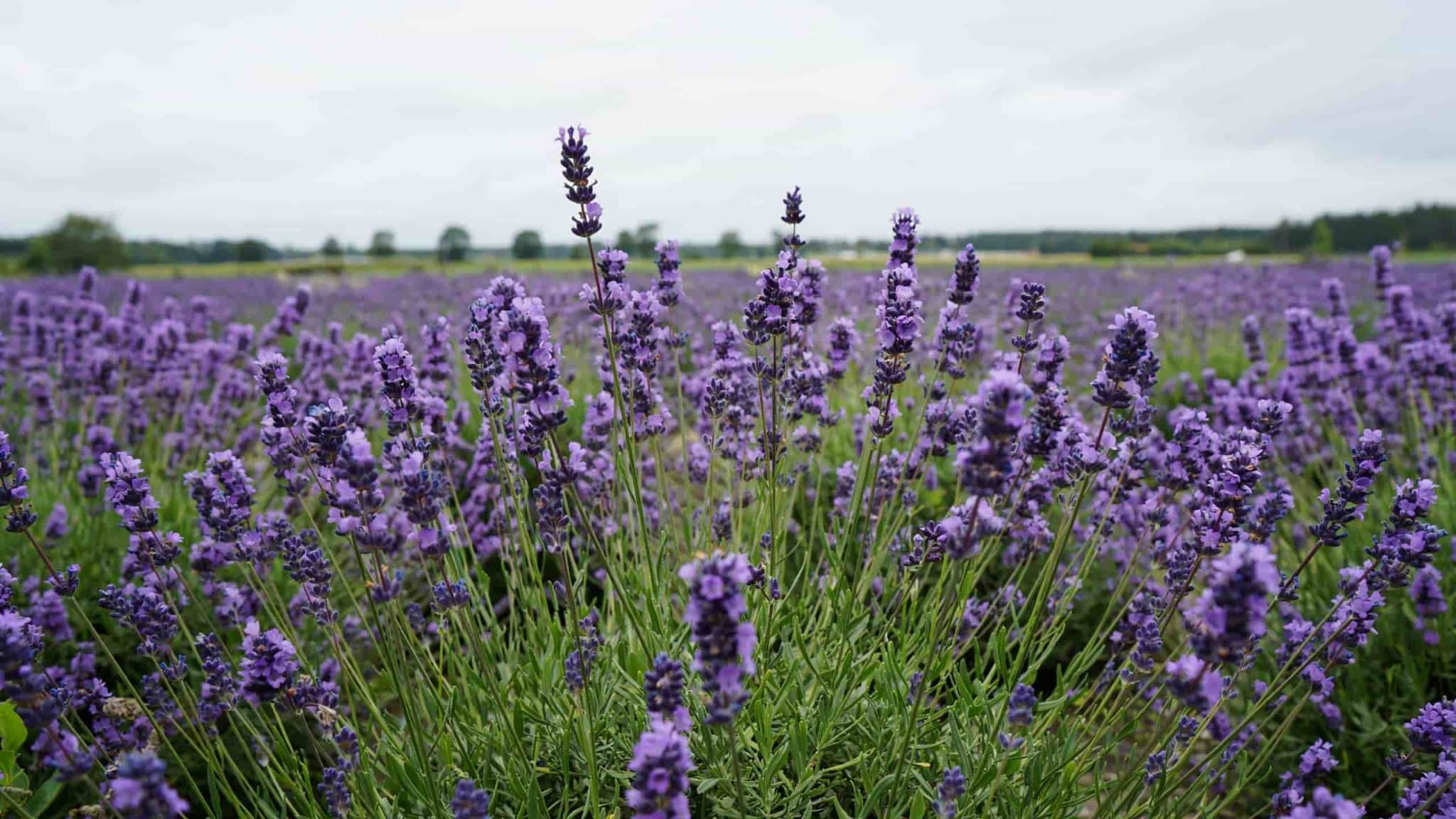
You planted lavender. It sat there for weeks.
No new growth, no signs of life, and barely any color by the end of the season. The plant was not the problem. The timing was. Lavender is one of the most rewarding plants a home gardener can grow.
But it punishes poor timing more than most. Plant it in cold soil, and roots stall. Plant it in peak summer heat, and the whole plant goes into shock. This post covers when to plant lavender.
How to prepare the right conditions, which planting method gives the fastest results, and what first-season care actually looks like.
Follow these steps, and your lavender will spend less time struggling and more time growing exactly the way it should.
When Is the Best Time to Plant Lavender?
Spring, after the last frost date, is the best time to plant lavender for most gardeners.
At that time, the soil is warming up, frost risk has passed, and roots have weeks to settle before summer heat arrives and puts any new plant under stress.
Wait until the soil reaches at least 60°F before planting. A soil thermometer is more reliable than the calendar alone.
- Spring is the safest window for almost all lavender varieties
- Fall works well where winters stay mild and short
- Summer and winter are the two seasons to avoid entirely
Lavender grows as a perennial in USDA hardiness zones 5 through 9. In zones 5 and 6, spring planting gives roots the longest warm season to establish.
In zones 7 through 9, early fall planting also works well because mild winters let roots settle without heat stress.
What Type of Lavender Should You Plant?
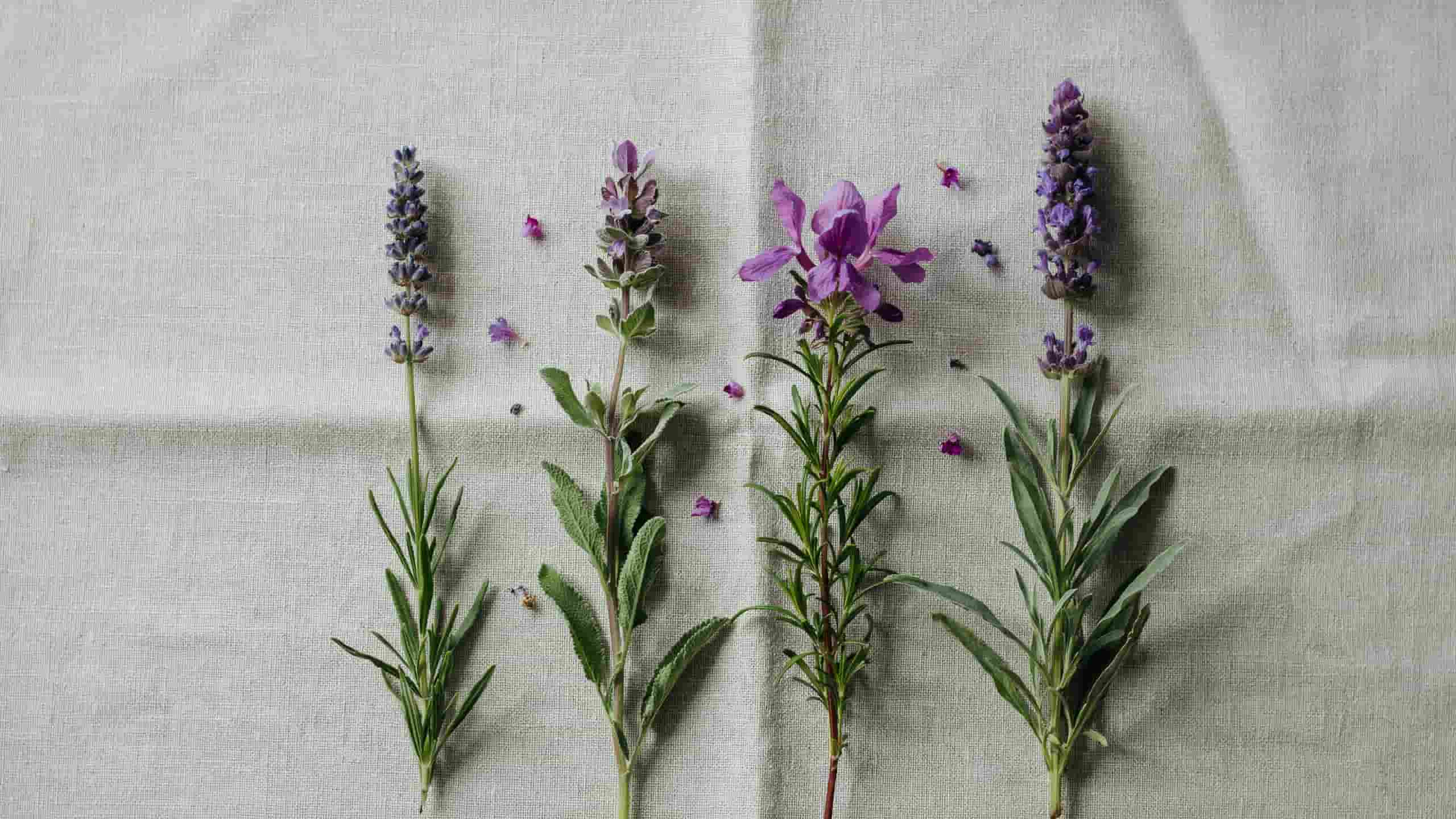
English lavender (Lavandula angustifolia) is the best type of lavender for beginners.
It handles cold better than other types and works in the widest range of climates. The variety you choose affects your planting window and the amount of first-season attention the plant needs.
Picking the right one saves a lot of frustration.
1. English Lavender (Lavandula angustifolia)
- The most cold-tolerant variety available
- Handles cooler springs better than any other type
- Low seed production; easy to manage after planting
- Best choice for gardeners with short or unpredictable growing seasons
2. Lavandin (Lavandula × intermedia)
- A sterile hybrid that produces no viable seeds
- Handles wetter conditions better than most varieties
- Grows larger than English lavender; needs more space at planting time
- Strong performer in a wide range of garden conditions
3. French Lavender (Lavandula dentata)
- Prefers a long, warm growing season
- Plant in spring once temperatures are reliably warm
- Moderate seed production; benefits from regular deadheading after planting
4. Spanish Lavender (Lavandula stoechas)
- The most heat-tolerant variety
- Best planted in early spring before temperatures climb
- Produces seeds more freely than other types; needs watching in warm conditions
What Does Lavender Need to Grow Well?
Before timing even matters, the conditions need to be right for growing lavender well. If planted in the wrong soil or the wrong light, it will struggle no matter what season you choose.
These three requirements stay the same across all varieties and all planting methods.
| Requirement | Details |
|---|---|
| Sun | Needs 6–8 hours of full, direct sunlight daily. Partial shade is not enough. Low-light plants produce fewer blooms and are more prone to disease. |
| Drainage | Roots rot in waterlogged soil. Test drainage by digging a 12-inch hole and filling it with water. If it doesn’t drain in an hour, amend the soil. |
| Soil Quality | Prefers poor, low-nutrient, alkaline soil (pH 6.7–7.3). Avoid compost. Improve heavy soil with coarse sand or horticultural grit for proper drainage. |
How to Prepare Your Soil Before Planting
Soil preparation done before planting day prevents most first-season problems. Lavender is forgiving once it gets established, but it needs the right start.
These steps apply whether you are planting in spring or fall.
- Test your pH: Aim for 6.7 to 7.3. Add garden lime a few weeks before planting if your soil is too acidic.
- Improve drainage: Work coarse sand or horticultural grit into heavy or clay-heavy soil before you plant.
- Skip the compost: Lavender does not need rich soil. Adding compost can cause excessive growth and weaken the plant in the long term.
- Clear the bed: Remove all weeds before planting. Young lavender does not compete well with established weeds in its first season.
- Confirm sun exposure: Check that the spot receives at least 6 to 8 hours of direct sun daily before any plant goes in the ground.
How to Plant Lavender: Seeds, Cuttings, or Transplants
The method you use to start lavender changes your timing as much as the season does. Seeds go indoors months before planting day. Cuttings follow a different schedule entirely.
Nursery transplants are the simplest to time and the easiest to establish. Each method has a different starting point and a different payoff.
1. Starting Lavender from Seed
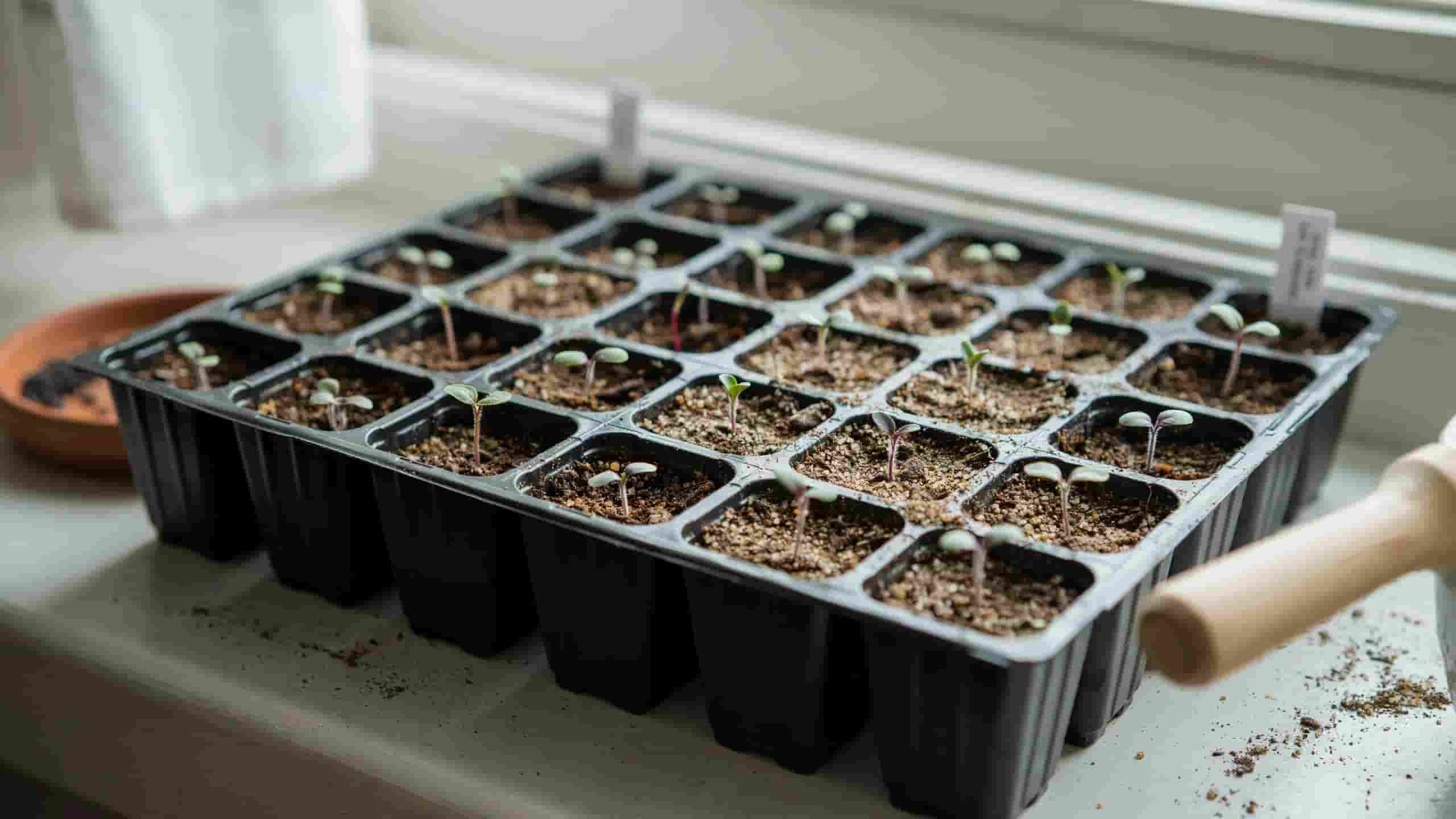
Seeds need an indoor start well before planting day. Begin them 10 to 12 weeks before your last expected frost date. Keep them in a warm spot with good light.
Germination is slow and uneven, sometimes taking up to three months before seedlings appear. Move them outdoors only after all frost risk has passed.
Lavender grown from seed often takes two full growing seasons before it produces a strong flowering plant. Patience is the main requirement with this method.
2. Growing Lavender from Cuttings
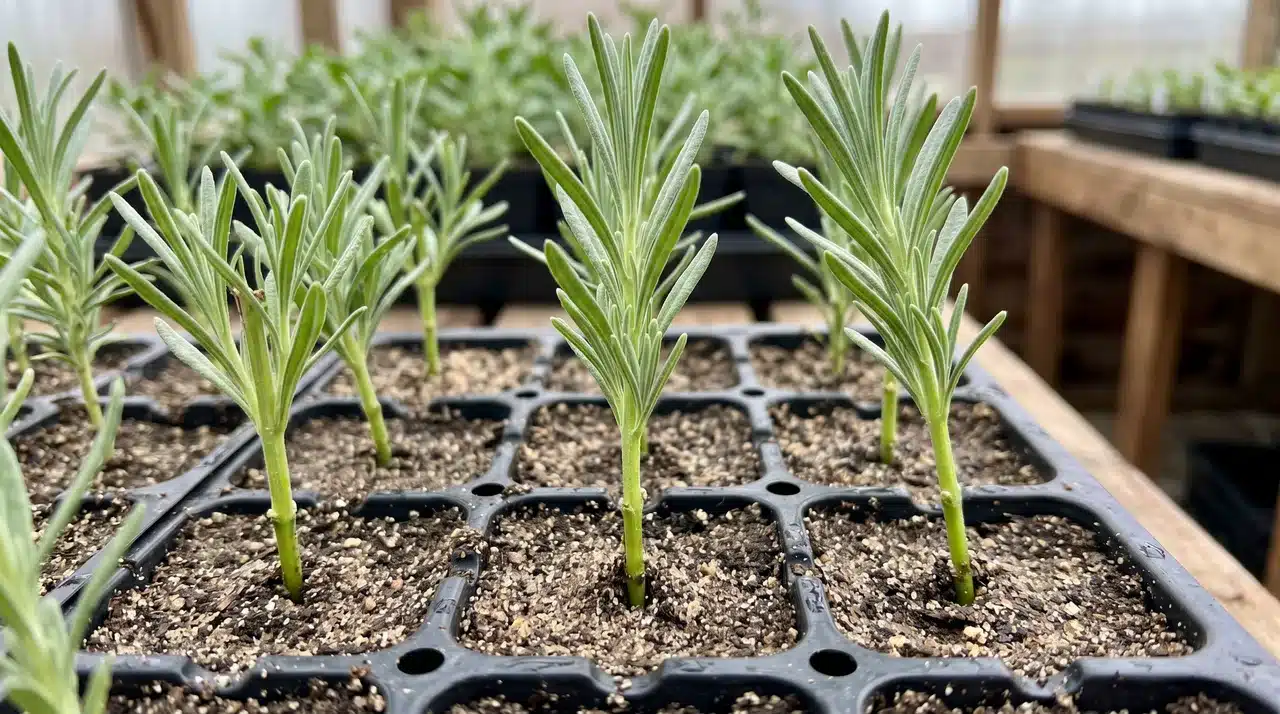
Cuttings are more reliable than seeds and give faster results. Take softwood cuttings of 4 to 6 inches from healthy new growth in late summer.
Strip the lower leaves and place them in moist, sandy soil. Keep them in a sheltered spot with good light while roots develop through autumn.
Transplant them outdoors the following spring, after the root systems have strengthened. This is the most predictable propagation method available to home gardeners.
3. Using Nursery Transplants
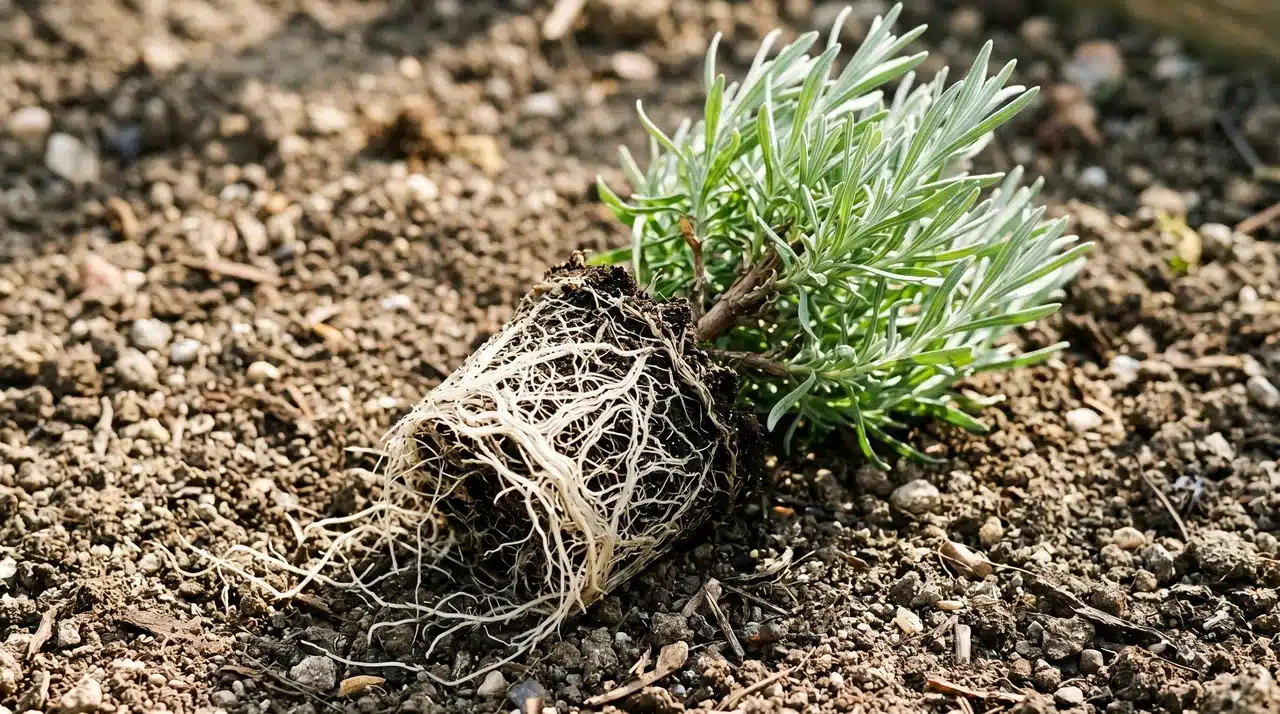
Nursery transplants are the easiest option for timing and the fastest path to blooms. Plant them in spring after frost risk is gone. Check the root ball before buying.
Healthy roots are white or light cream-colored, firm, and not tightly matted around the base. Water well on planting day, then switch to deep watering every 10 to 14 days.
Lavender prefers dry conditions between waterings. Overwatering in the first season is one of the most common reasons new plants fail.
Container vs. In-Ground Planting
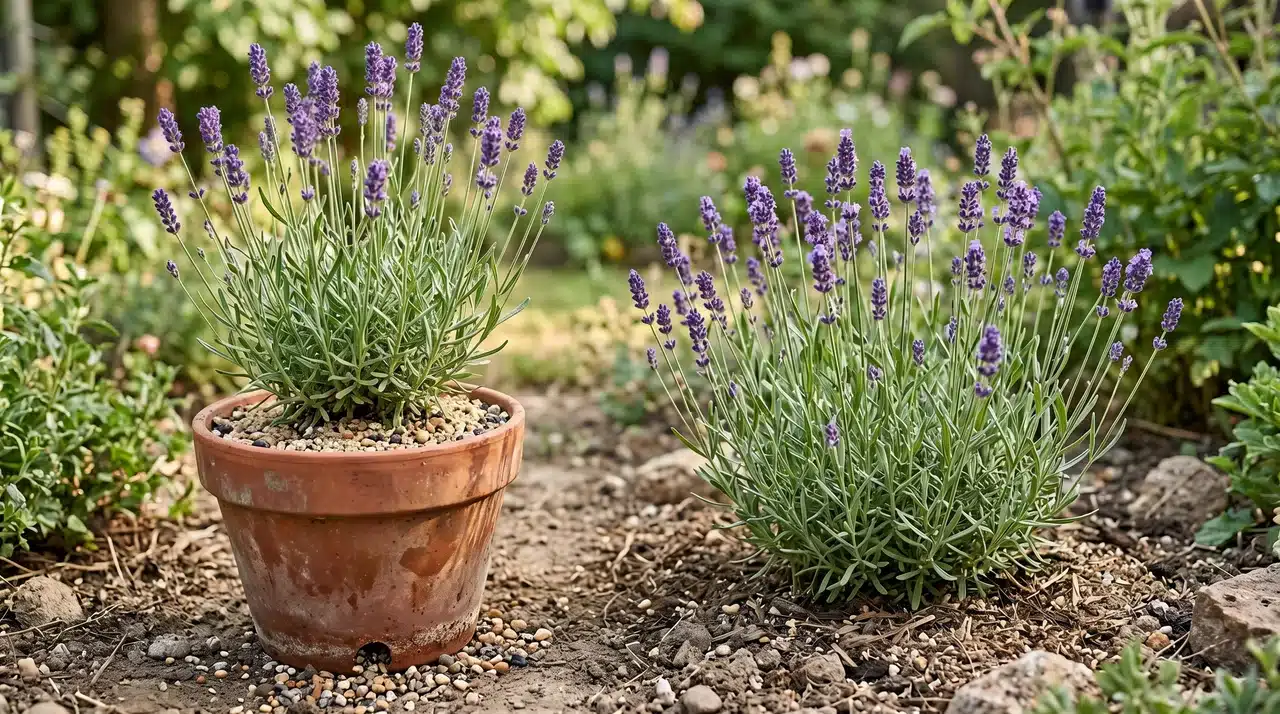
How you plant lavender changes what timing looks like in practice. Containers give you more control from the start. In-ground planting depends more on external conditions.
Both methods work well when set up correctly.
| Container Planting | In-Ground Planting |
|---|---|
| Can start 2–4 weeks earlier than in-ground due to controlled soil and drainage | Depends on last frost date and natural soil conditions |
| Use pots at least 16 inches wide with drainage holes | Raised beds help if the soil is heavy or slow-draining |
| Mix standard potting soil with coarse sand or grit | Flat garden beds warm up more slowly than raised beds |
| Move indoors if late frost threatens | Space plants at planting: 24″ for English, 30″ for French, 36″ for Lavandin |
| Plants stay 20% smaller than in-ground, easier for small gardens | Larger growth, less frequent watering once established |
First-Season Care After Planting
Getting planting timing right is only half the job. What you do in the weeks after planting determines whether roots anchor properly and the plant survives its first season.
First-season care is simpler than you might expect.
- Water on planting day, then leave the soil to dry before watering again
- Deep water every 10 to 14 days rather than light, frequent watering
- Do not fertilize in the first season; lavender does not need it, and rich feeding causes problems
- Remove spent blooms as they fade to reduce seed production in the first year
- Hold off on hard pruning lavender until after the first full bloom cycle; never cut into old woody stems
- Check drainage after heavy rain; standing water around the base needs attention immediately
Common Planting Mistakes and How to Avoid Them
Lavender failures in year one almost always trace back to the same handful of mistakes. The plant is not difficult, but it has clear preferences. Ignore them early on and you lose the whole season.
| Mistake | What Happens | Ways to Fix it |
|---|---|---|
| Planting before soil hits 60°F | Roots stall; the plant sits without growing | Use a thermometer, not the calendar date |
| Planting in summer heat | Transplant stress before roots can anchor | Stick to spring or fall; move to the following season if needed |
| Skipping drainage prep | Root rot develops in the first season | Amend soil with grit before planting, not after |
| Adding compost to the bed | Weak, leggy growth; plant loses structure | Leave the bed lean; lavender does not need rich soil |
| Overwatering new plants | Root stress and fungal problems take hold | Deep water every 10 to 14 days only |
| Planting too close together | Plants compete for light and airflow drops, increasing disease risk. If you are wondering whether lavender spreads enough to fill gaps on its own, it does widen slowly, but proper spacing from the start prevents problems. | Follow spacing guidelines at planting time |
Give Your Lavender the Right Start
Knowing when to plant lavender is the first and most important step toward growing it well. Timing is the foundation of a healthy lavender plant.
Get it right, and almost everything else falls into place. Get it wrong, and even the best care in the world cannot fully recover a stressed plant in its first season.
Spring, after the last frost date, is the safest and most reliable time to plant lavender. Fall works where winters are mild and short. Containers give you an earlier start and more control.
Nursery transplants are the simplest method to time. And soil preparation always comes before planting day, not after. Plant lavender in the right season, give it full sun, lean soil, and sharp drainage.
It will reward you with color and fragrance for years with very little input.
Frequently Asked Questions
What is the 8-8-8 Rule for Lavender?
The 8 8 8 rule refers to planting lavender in full sun, spacing eight inches apart, and watering every eight days for healthy growth.
What is the Trick to Growing Lavender?
Lavender thrives in poor, well-drained soil, full sun, minimal water, and regular pruning after blooms. Timing planting to frost-free periods is essential.
What Should Not Be Planted Next to Lavender?
Avoid planting water-loving or high-nitrogen plants near lavender, such as basil, mint, or lettuce, which compete for resources and risk root rot.