
I have redone more backyard corners than I can count, and a bare one does not need much to become the spot everyone ends up in.
A pea gravel patio gets there fast: small, rounded stones that feel soft underfoot and settle into whatever shape the yard gives you.
It costs a fraction of poured concrete or laid stone, which matters to me as much as it does to my clients.
I have built a pea gravel patio in a weekend with basic tools, no contractor required. Below are layout ideas that I believe are worth stealing for your own yard.
What Makes Pea Gravel a Good Patio Material?
Pea gravel earns its spot as a patio surface for a few practical reasons. The rounded stones look natural and settle into almost any backyard style. They handle rain better than solid surfaces and cost far less to install.
Why owners choose it:
- Natural look that fits any yard: The soft, pebbled texture pairs with cottage gardens, modern layouts, and rustic settings alike. It never fights the plants or structures around it.
- Drainage that beats hard surfaces: Rain slips through the gaps between stones instead of pooling on top. Your patio stays usable soon after wet weather.
- A friendlier price tag: Pea gravel costs a fraction of what you pay for pavers, flagstone, or poured concrete. You cover more ground for less money.
- Shapes to fit odd spaces: Curved edges, narrow strips, and irregular corners are simple to fill. The loose stones mold to whatever boundary you set.
Pea Gravel Patio Ideas for Backyard Inspiration
The right design changes loose stone into a functional backyard. Some layouts fit small corners; others accommodate large gatherings.
Some are modern, others warm and rustic. Each pea gravel patio idea serves a clear purpose and style. Choose one suited to your yard, budget, and outdoor habits.
1. Classic Round Pea Gravel Patio With Fire Pit
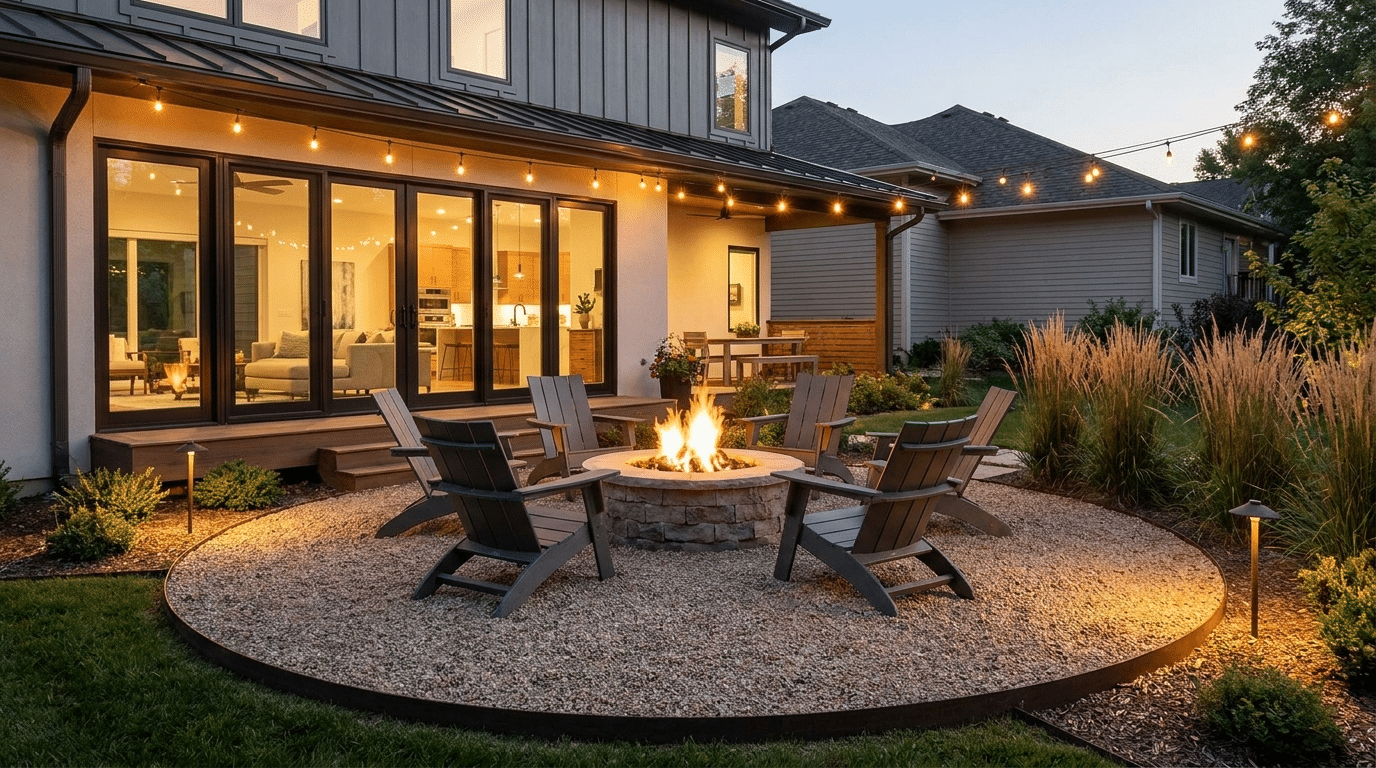
A circle of gravel wrapped around a fire pit pulls people together fast. Aim for a 12-to-16-foot diameter, which seats six to eight comfortably.
Set Adirondack chairs in a loose ring, leaving a few feet between each for walking room. Steel or stone edging keeps the round shape crisp and holds stones in place.
Plant ornamental grasses slightly beyond the border to enhance the outer edge’s softness.
2. Small Pea Gravel Patio for Compact Backyards
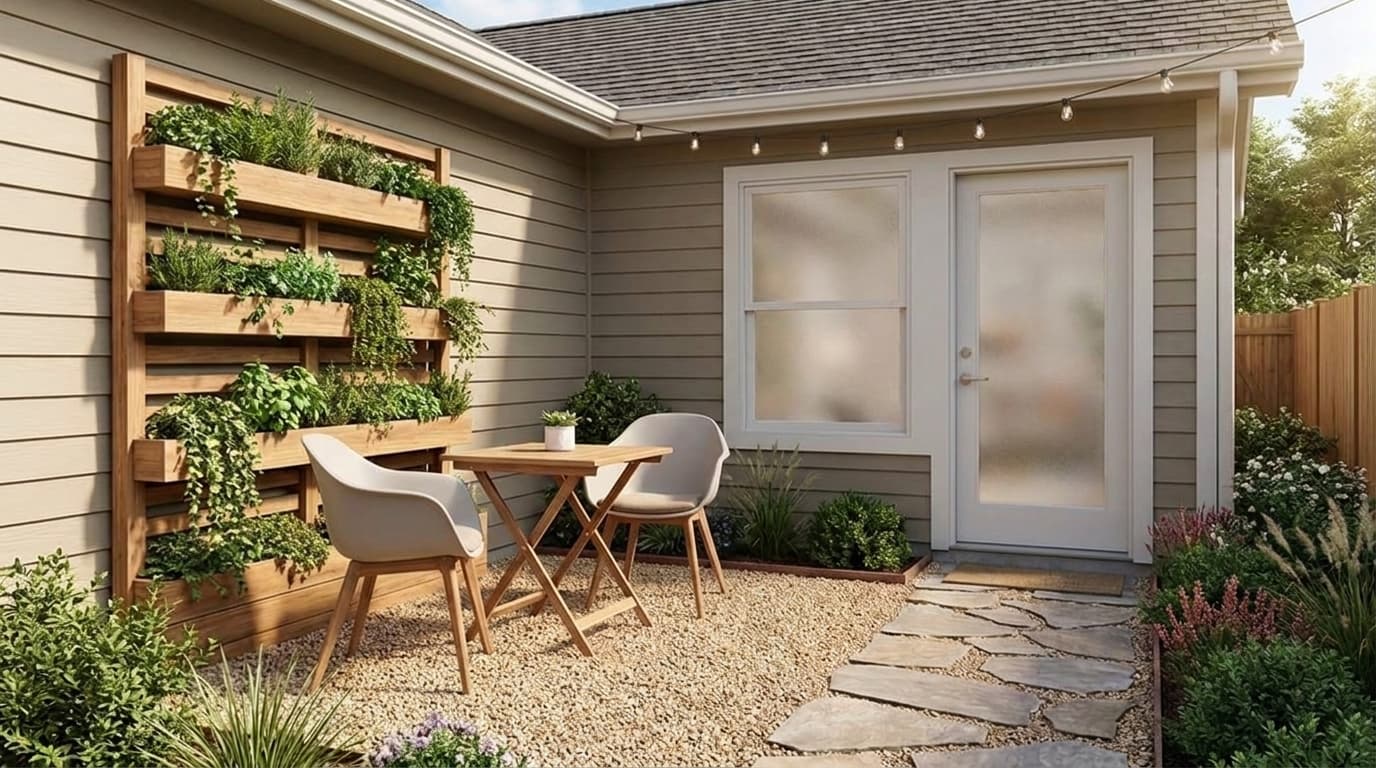
Tight yards still fit a proper sitting spot with the right plan. A folding bistro table and two chairs need only a 6-by-6-foot gravel square.
Grow herbs and trailing plants up a wall trellis to save floor space. Choose slim, stackable furniture you can tuck away when friends come over.
The gravel makes the corner feel finished without swallowing precious square footage.
3. Pea Gravel Patio With Stepping Stone Pathway
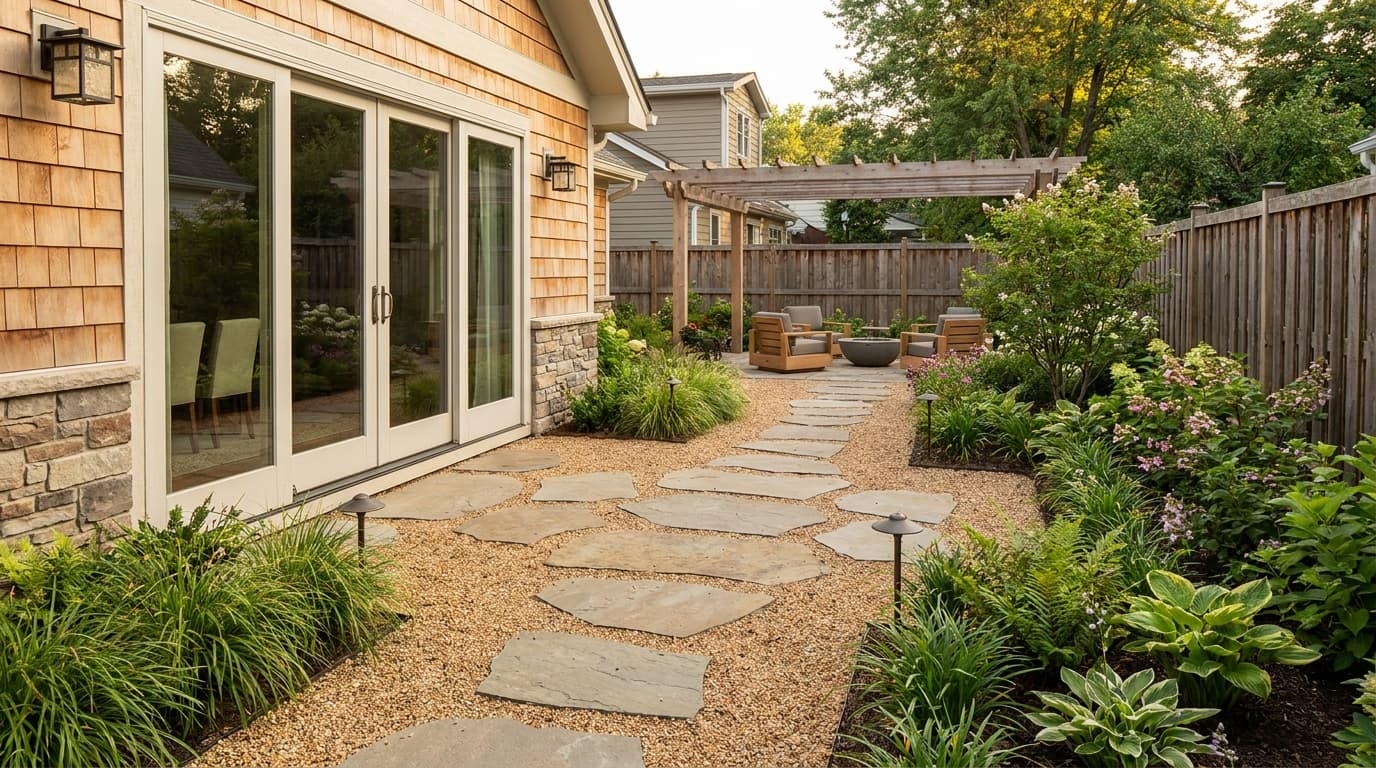
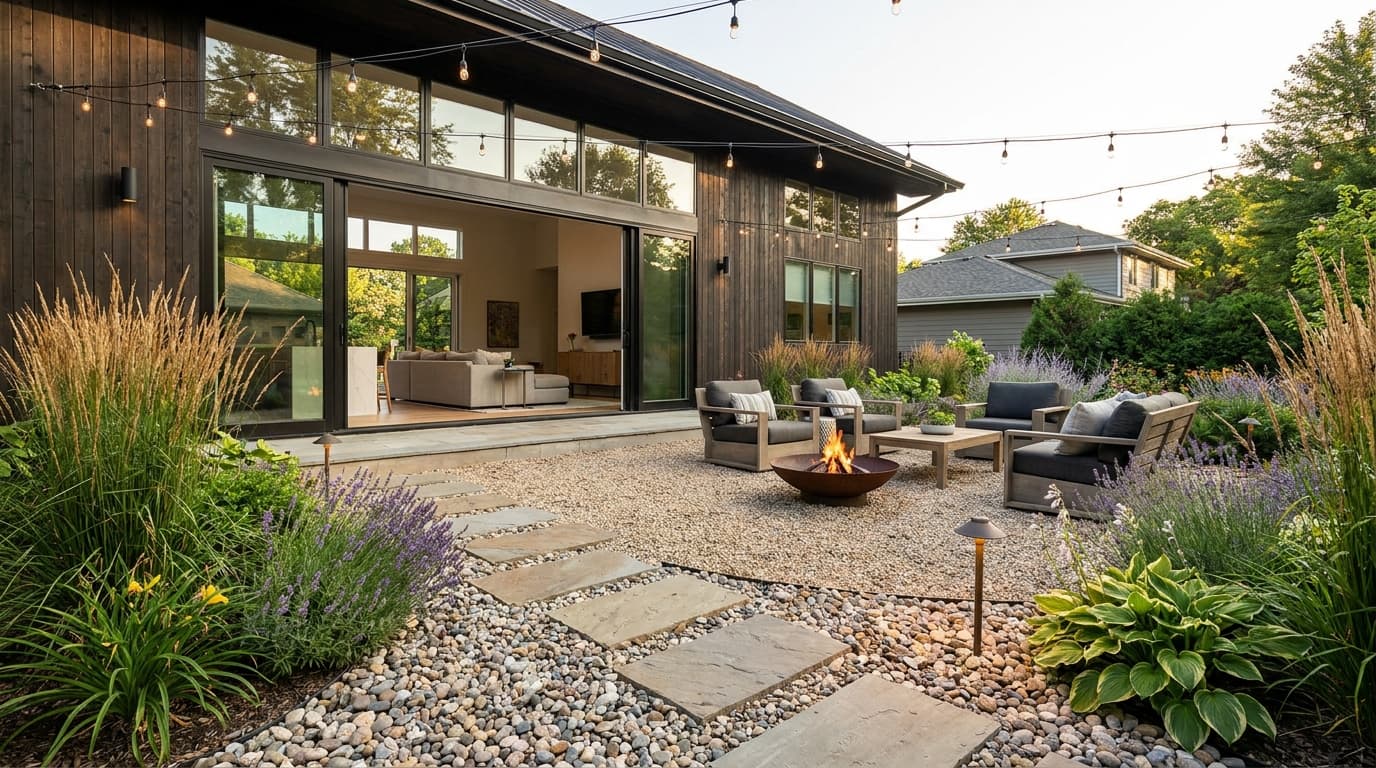
Large stones set into gravel give your feet a stable, mud-free route. Space stepping stones about 18 to 24 inches apart, center to center, for a natural stride.
Flagstone brings irregular, organic edges that suit relaxed gardens. Bluestone offers a cooler, more polished tone for modern yards.
Concrete pavers are more affordable and create a neat, square or rectangular grid.
4. Modern Pea Gravel Patio With Clean Edging
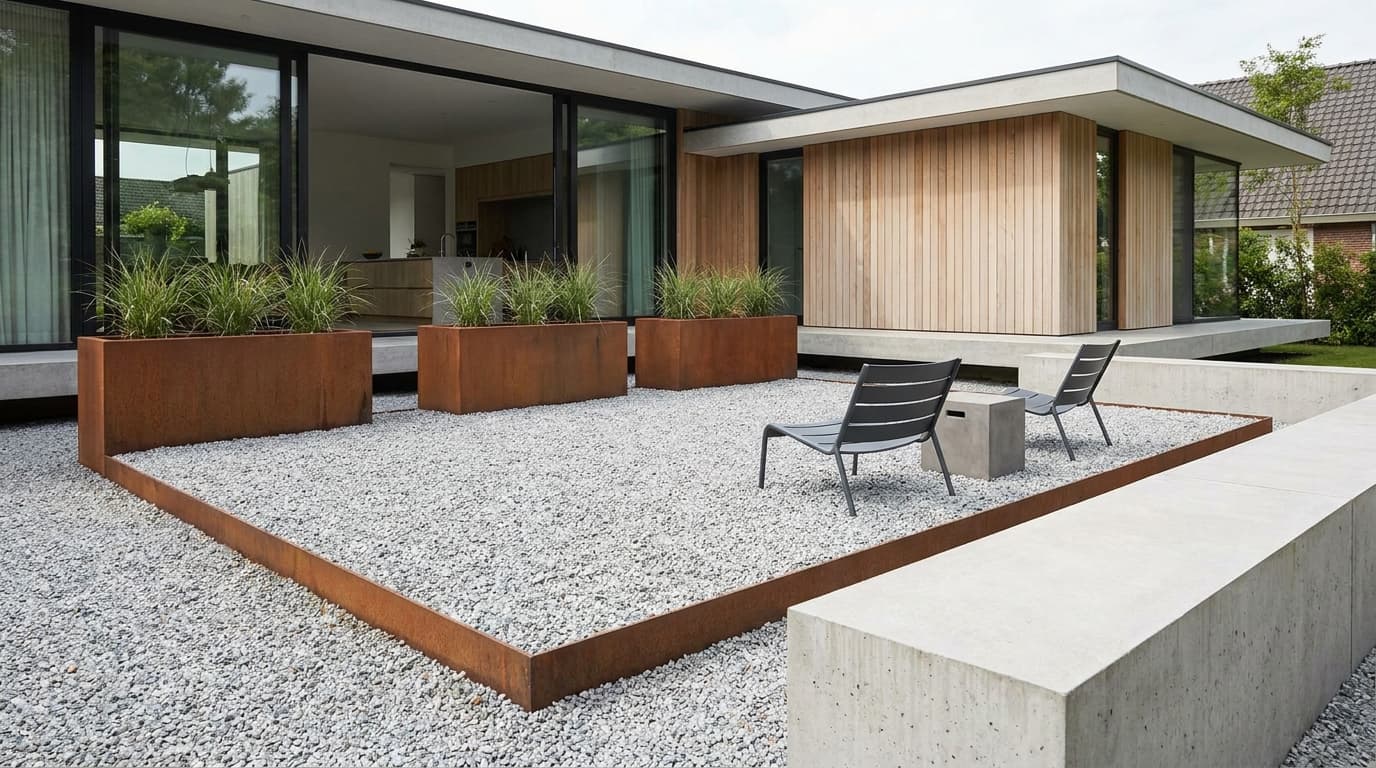
Sharp borders and pared-back furniture give this gravel patio a current, tidy feel. Corten steel edging rusts to a warm bronze and frames the stone in straight lines.
Poured concrete borders read even cleaner and last for decades. Keep planting simple, with a single species repeated in matching planters. The restraint lets the texture of the gravel do the talking.
5. Cozy Backyard Lounge Area With Pea Gravel
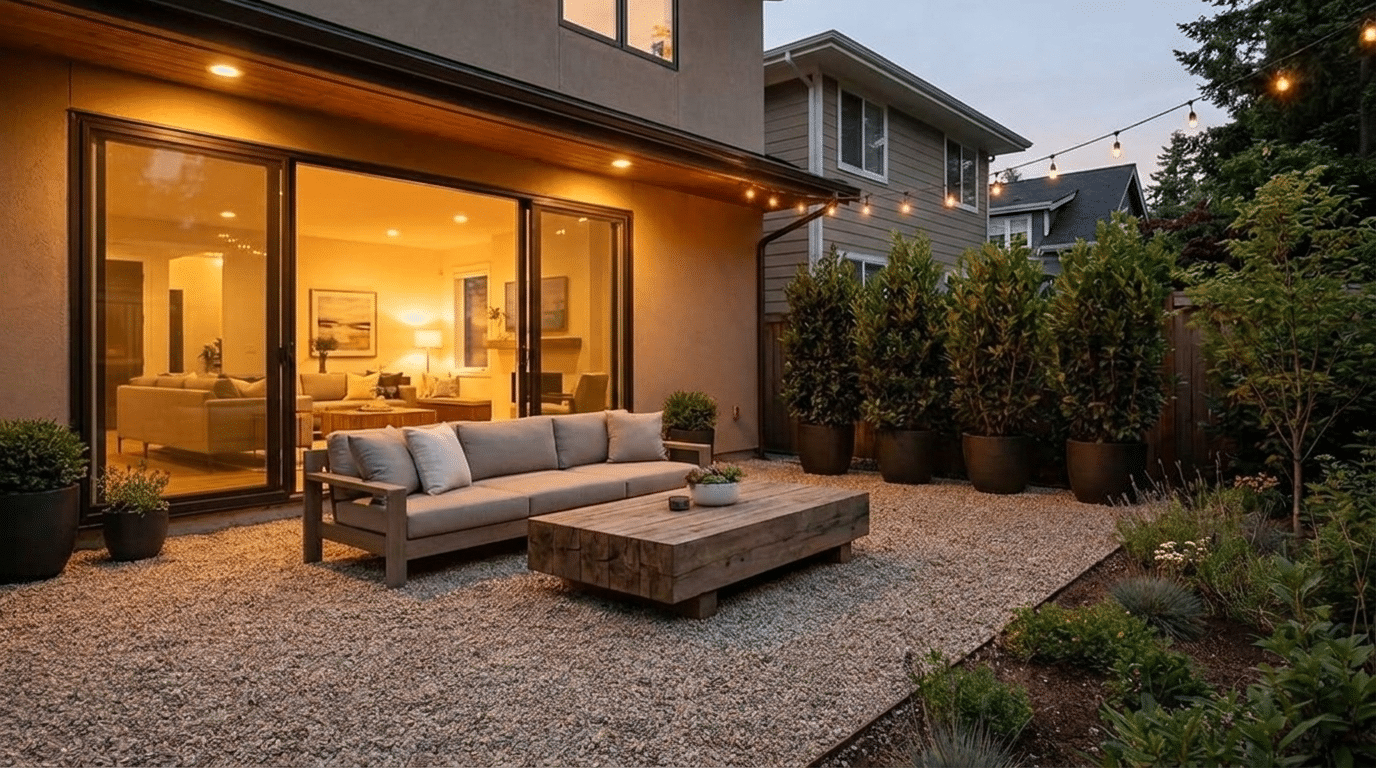
Treat this layout like an outdoor living room built for slow evenings. Anchor it with a low outdoor sofa and a wide, sturdy coffee table. Wide furniture feet sit well on gravel without sinking.
String lights overhead cast a soft glow once the sun drops. Tall potted shrubs along one side add privacy and block wind.
6. Pea Gravel Dining Patio Under a Pergola
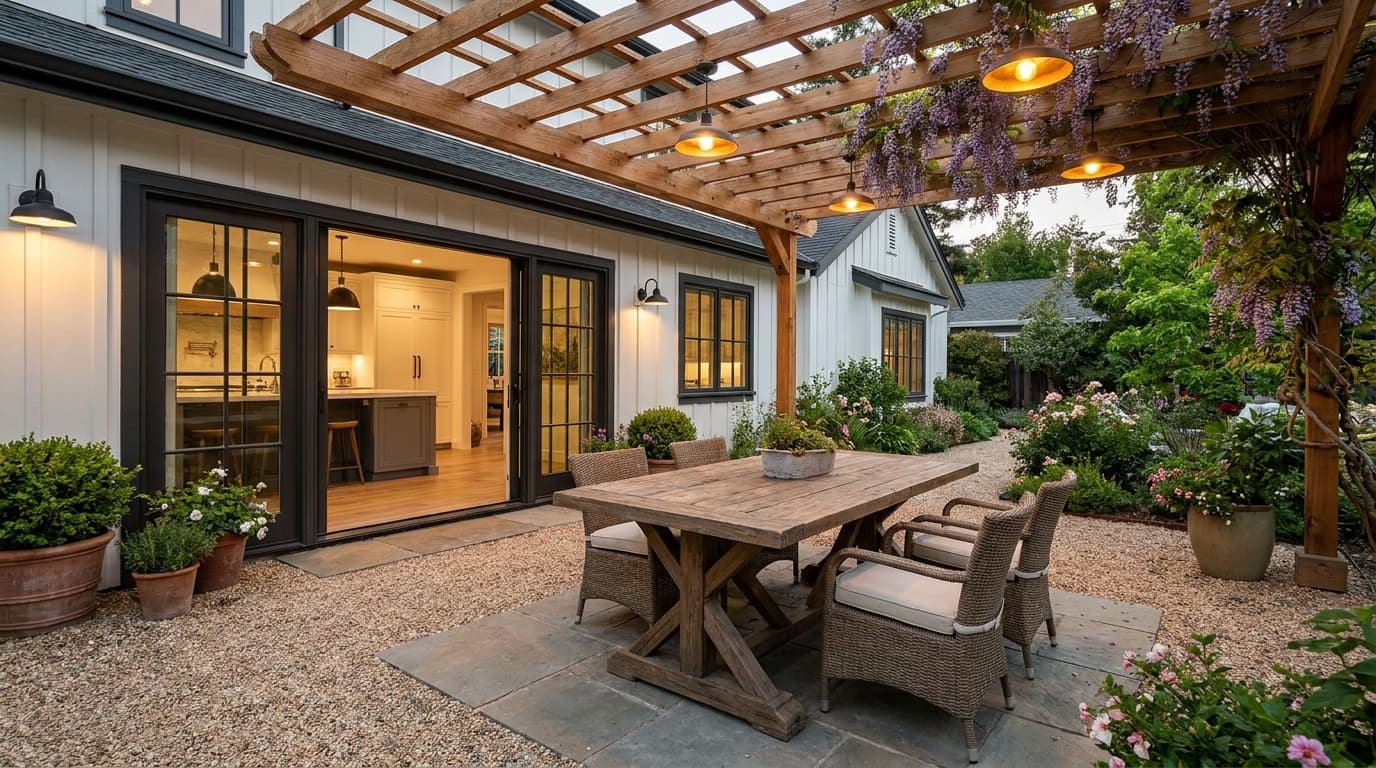
A pergola turns a gravel dining spot into a shaded, all-season favorite. Cedar and painted metal are two common frame choices, each with its own look.
Pick a dining table with a broad base so it stays level on stone.
Slide a paver under each table leg for extra stability during meals. Hang a linear pendant or wrap the beams in warm bulbs for night dinners.
7. Cottage Garden Pea Gravel Patio
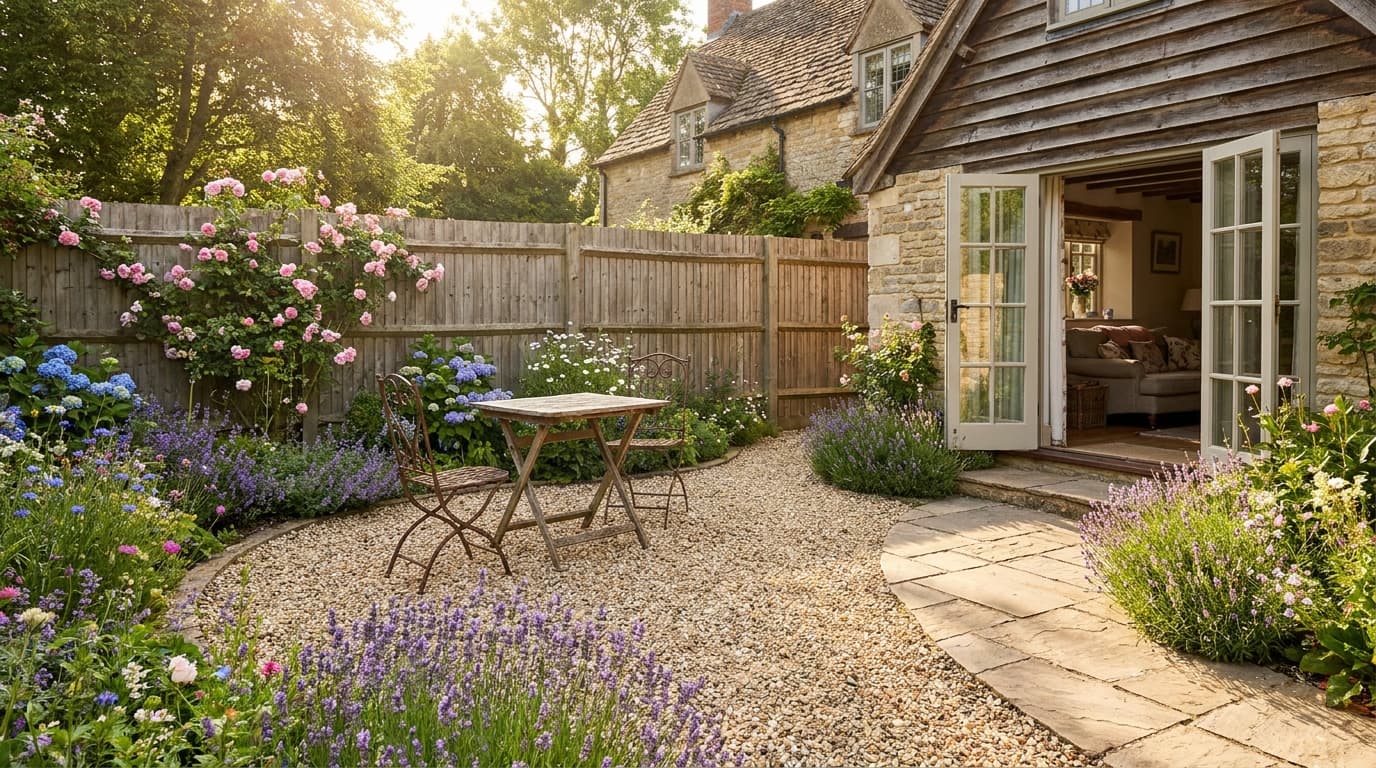
Loose stone and informal flowers make an alluring, lived-in cottage scene. Let lavender spill over the patio edges for scent and soft color.
Peonies and delphiniums fill the back border with height and bloom. A ribbon of wildflowers along the fence line invites bees and butterflies.
The gravel keeps the look neat while the plants ramble happily around it.
8. Pea Gravel Patio Surrounded by Raised Garden Beds
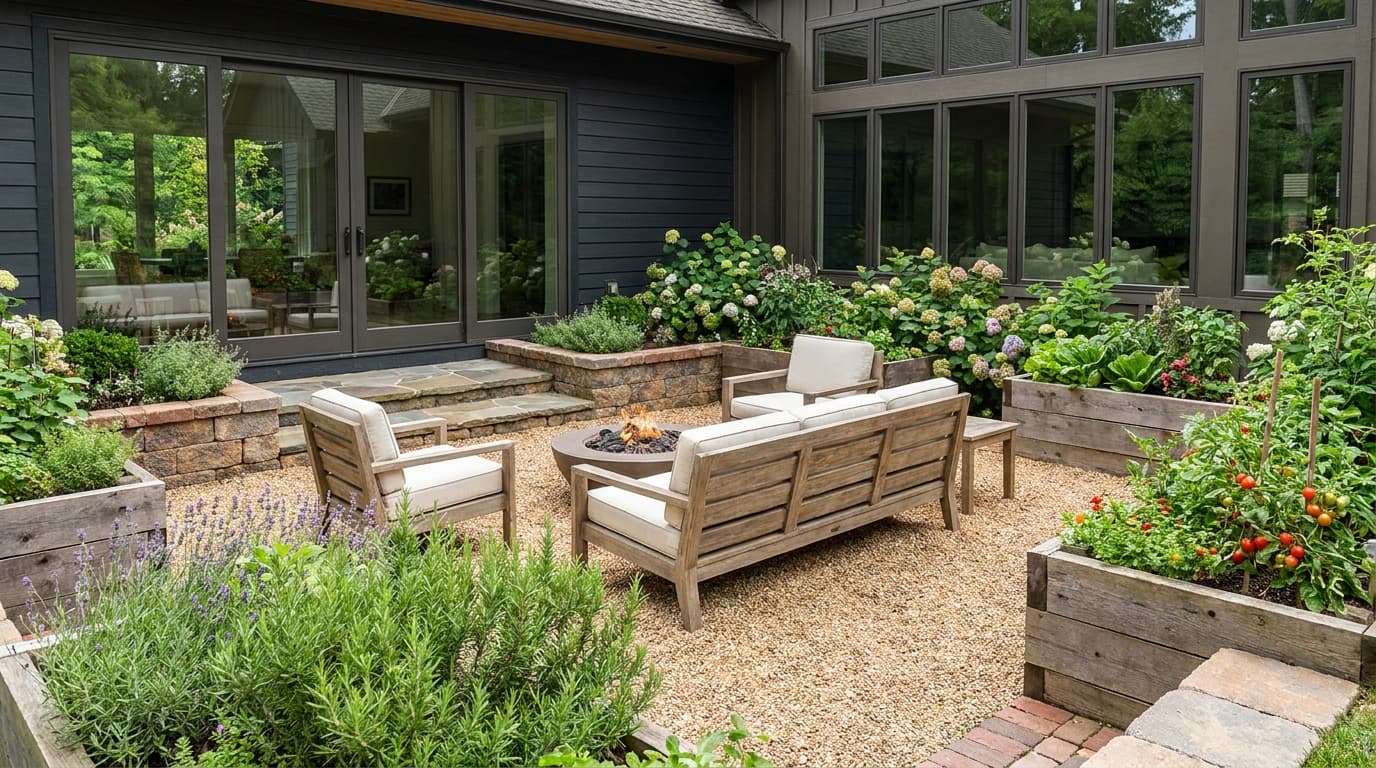
Raised beds frame a gravel patio and give the space clear structure. Timber beds bring a warm, natural edge that suits most backyards.
Stone or brick beds last longer and feel more permanent. Fill them with tomatoes and herbs for a kitchen garden, or flowers for color. The beds also raise planting to a height that saves your back.
9. Pea Gravel Patio With Built-In Bench Seating
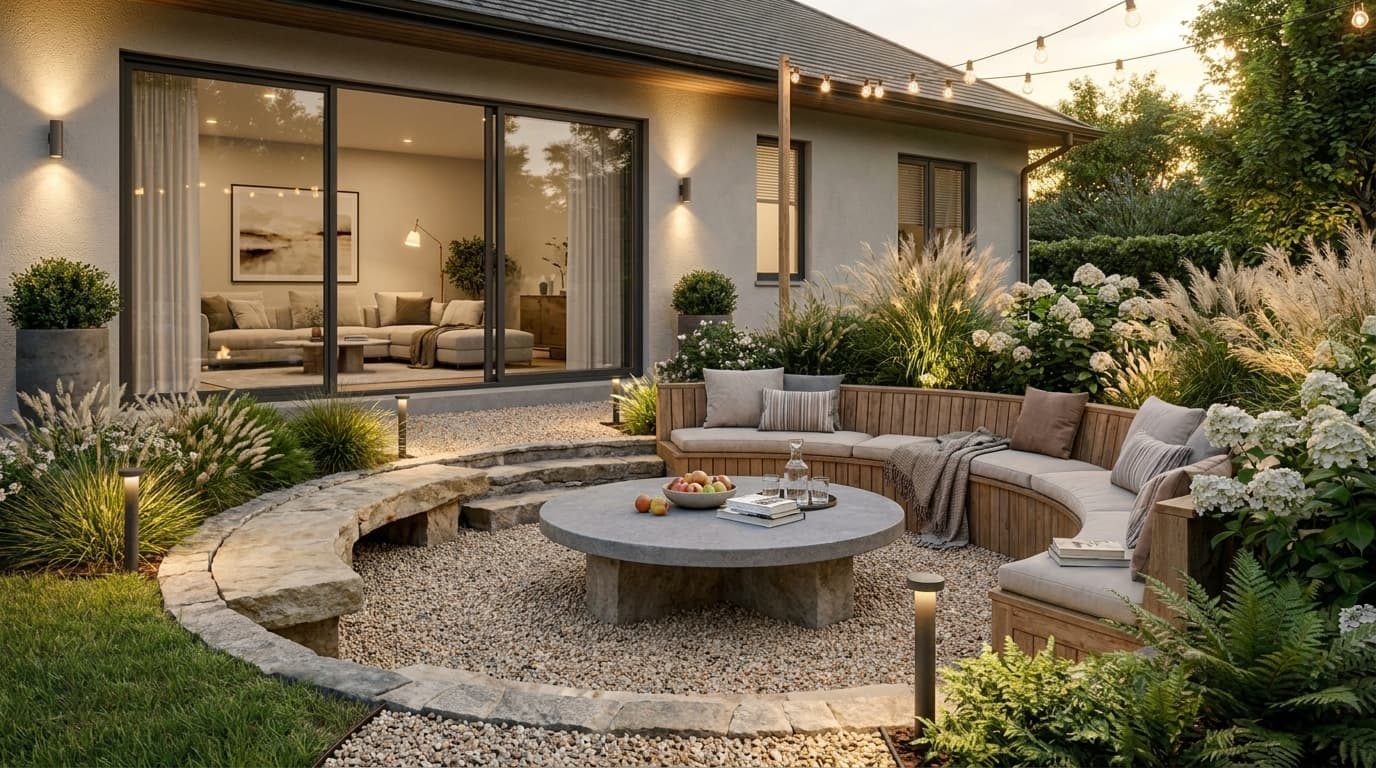
Fixed benches free up floor space and seat a crowd without extra chairs. A low stone bench along one edge doubles as a border wall.
Wooden benches feel softer and warmer, ideal for morning coffee spots.
Add weatherproof cushions in a bold color to break up the neutral stone. Built-in seating gives your patio a settled, purpose-built look.
10. Mediterranean-Style Pea Gravel Patio
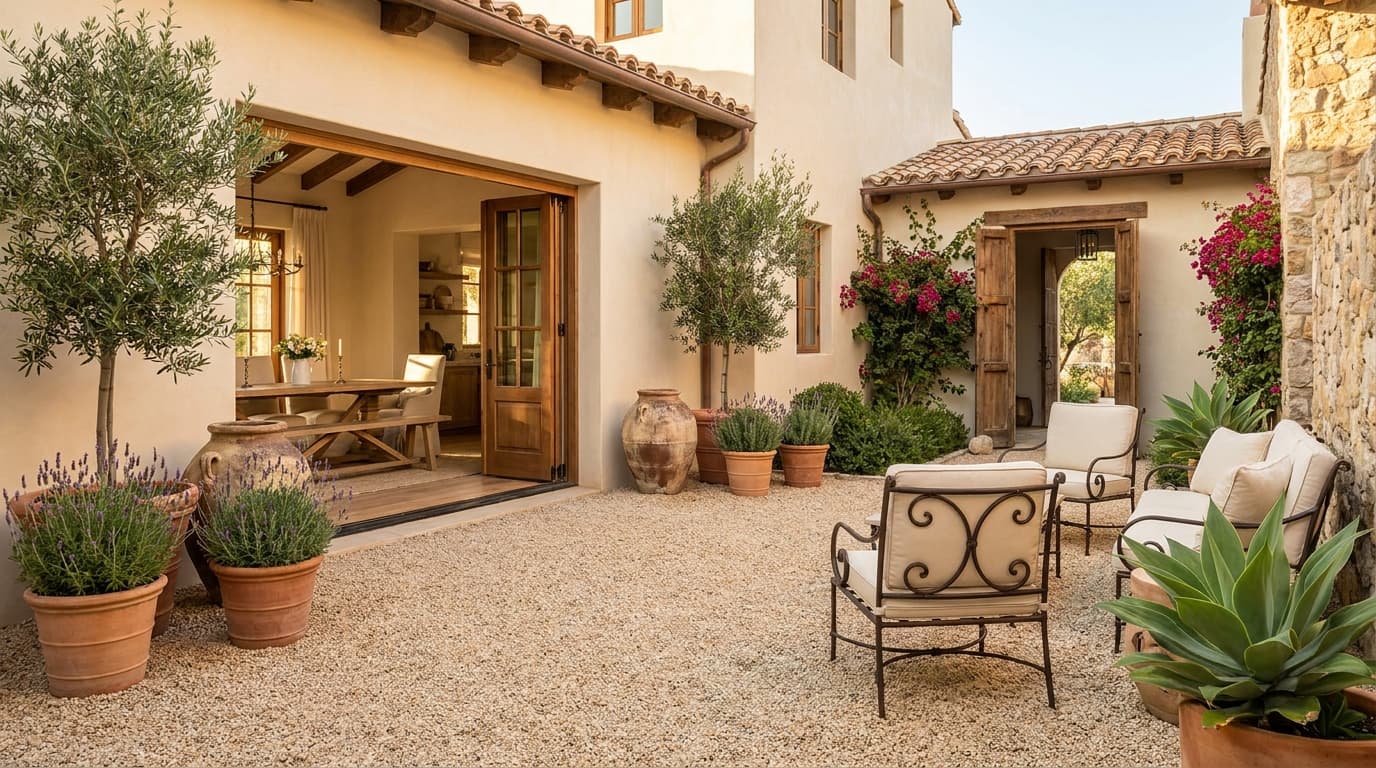
Warm tones and sun-loving plants bring the Mediterranean coast to your yard. Group glazed clay urns in odd numbers for a relaxed, collected feel.
A potted fig tree acts as a living centerpiece with broad, glossy leaves. Clay tiles or a rustic urn add authentic regional character. Keep furniture simple in cream, wood, or wrought iron.
11. Pea Gravel Patio With Large Paver Grid Design
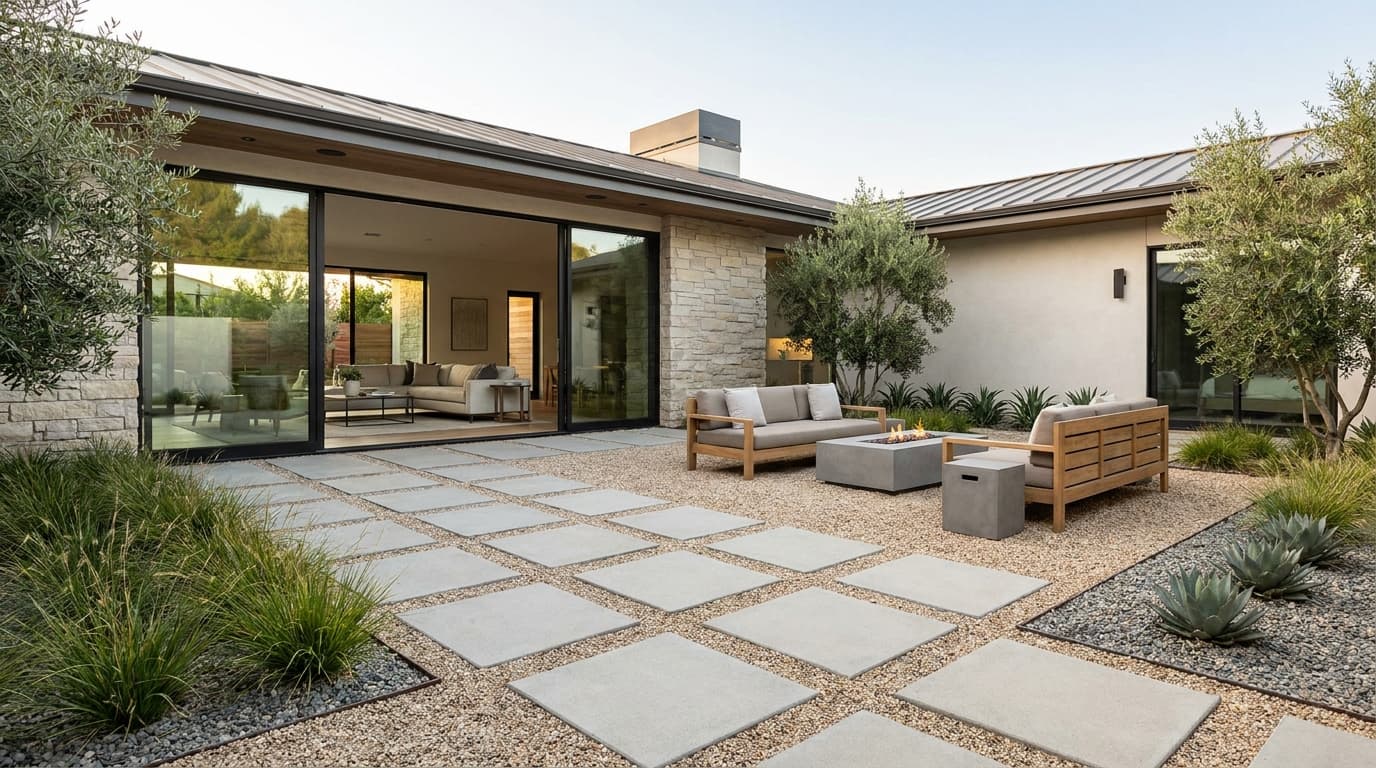
Set big pavers in a grid and pour gravel into the joints between them. Square concrete pavers give a clean, repeating pattern that reads modern.
Natural stone slabs bring subtle color shifts and a high-end finish.
The gravel lines soften the hard edges and let rain drain through. This mix gives you firm footing with the texture you want.
12. Rustic Farmhouse Pea Gravel Patio
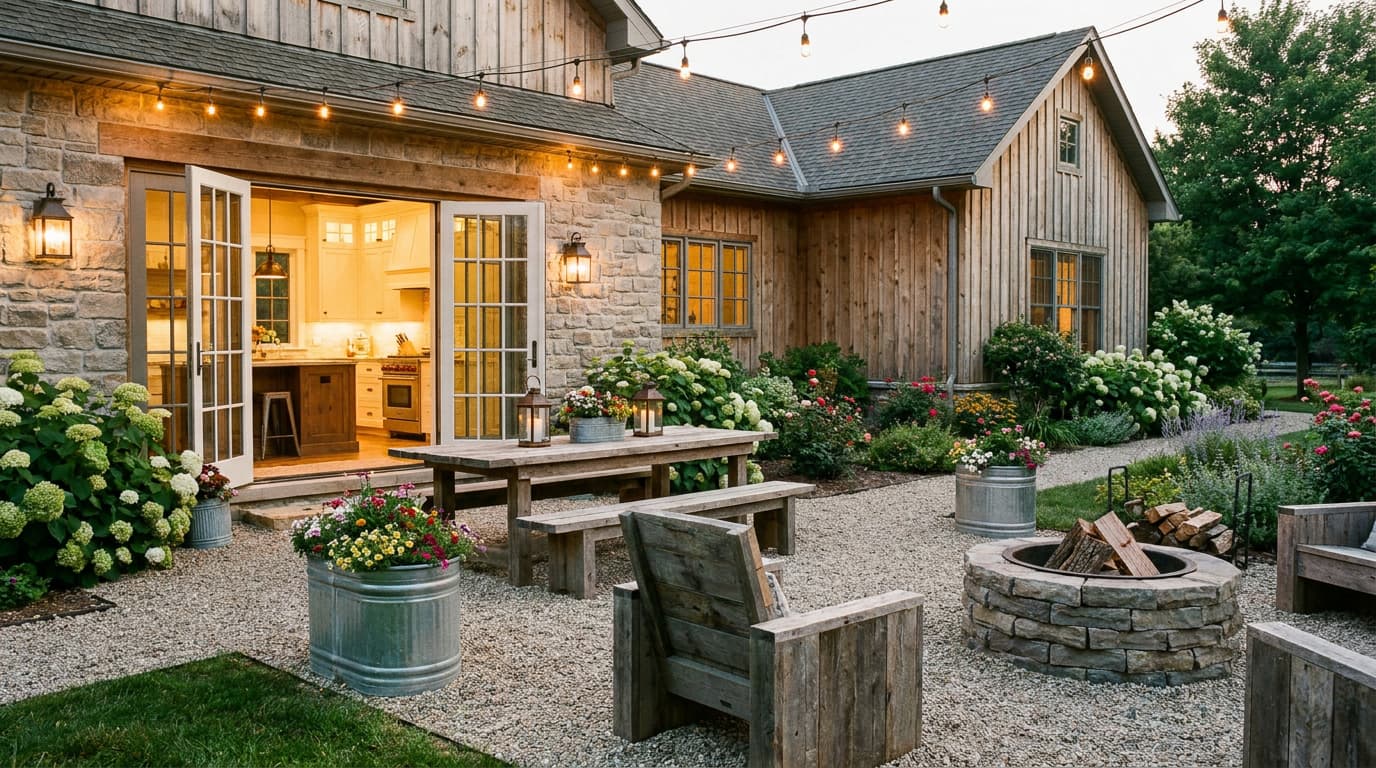
Natural wood and worn accents give this patio easygoing farmhouse charm. Choose chunky wooden furniture that feels solid and handmade.
Vintage lanterns, galvanized buckets, and old crates add character on the cheap.
Stack firewood in a simple rack to serve as both storage and decor. Warm string lights or hanging lanterns finish the cozy, casual mood.
13. Pea Gravel Patio Around a Water Feature
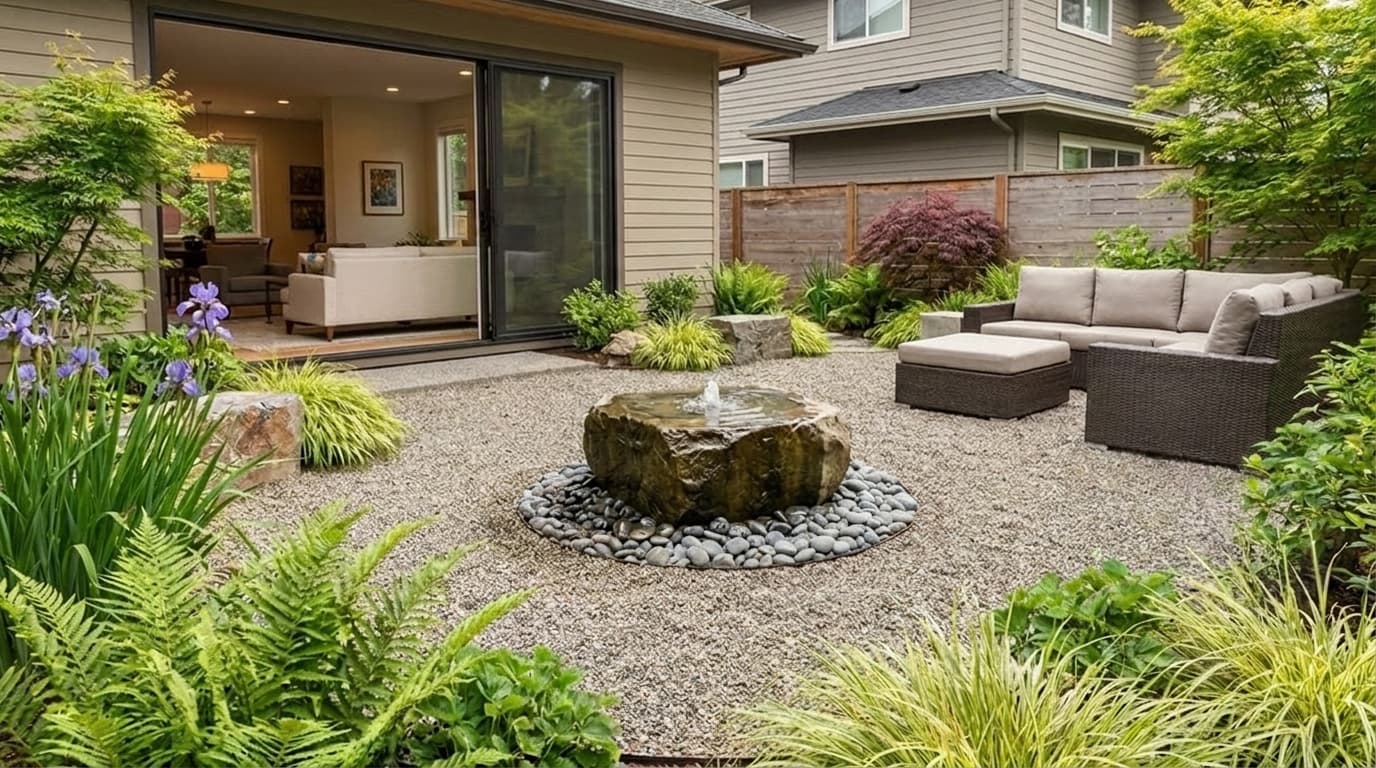
Gravel frames a fountain or small pond and keeps the edges clean and dry. Running water masks street noise and brings a calm, steady sound.
Ring the feature with rushes, ferns, or irises that enjoy damp soil. Keep the gravel base slightly sloped so splashed water drains away.
If small children visit, pick a bubbling fountain over an open pond for safety.
14. Pea Gravel Patio With Privacy Screening
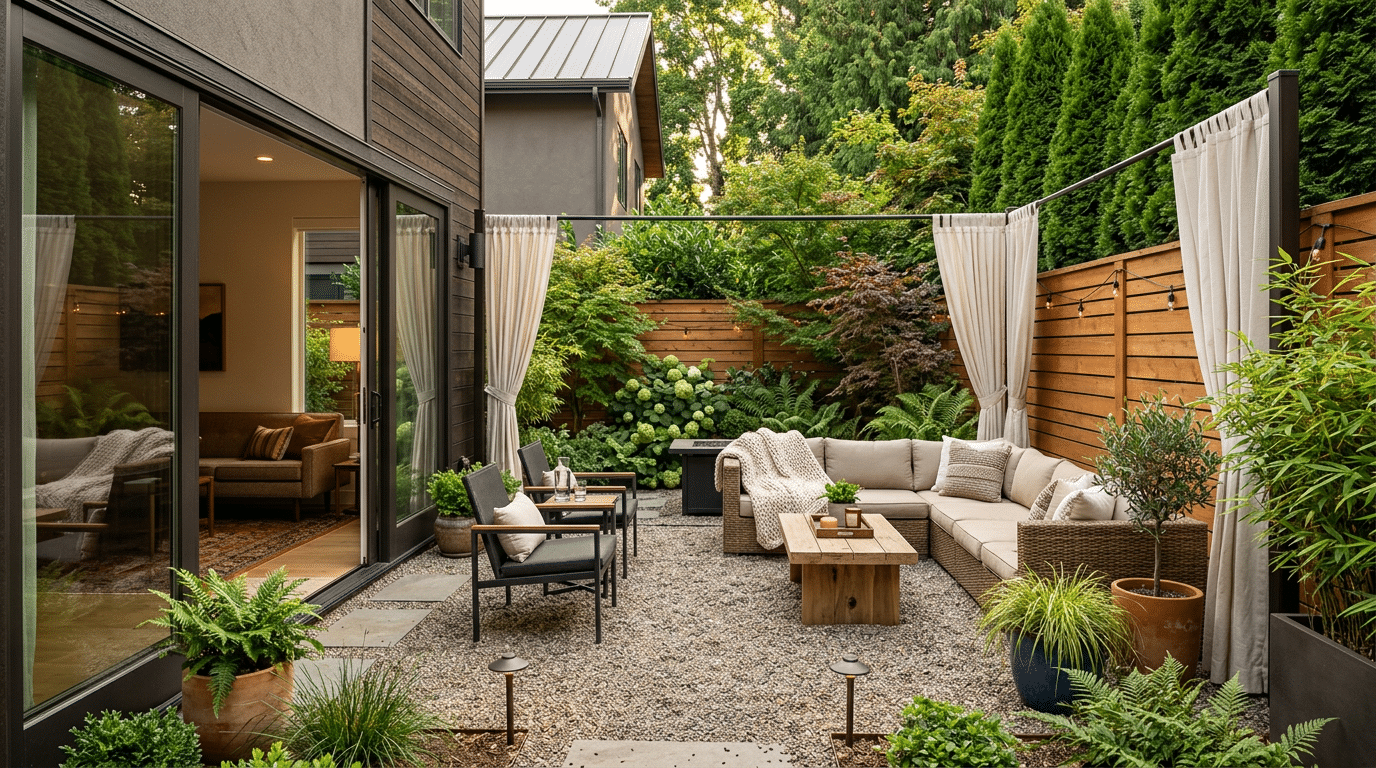
Screens and greenery turn an open gravel patio into a tucked-away retreat. A slatted timber fence blocks sightlines while still letting the breeze through.
Bamboo panels grow fast and add a soft, rustling backdrop. Evergreen shrubs like boxwood or laurel stay green and dense all year.
Outdoor curtains on a frame give flexible cover you can open or close.
15. Pea Gravel Patio With Outdoor Kitchen
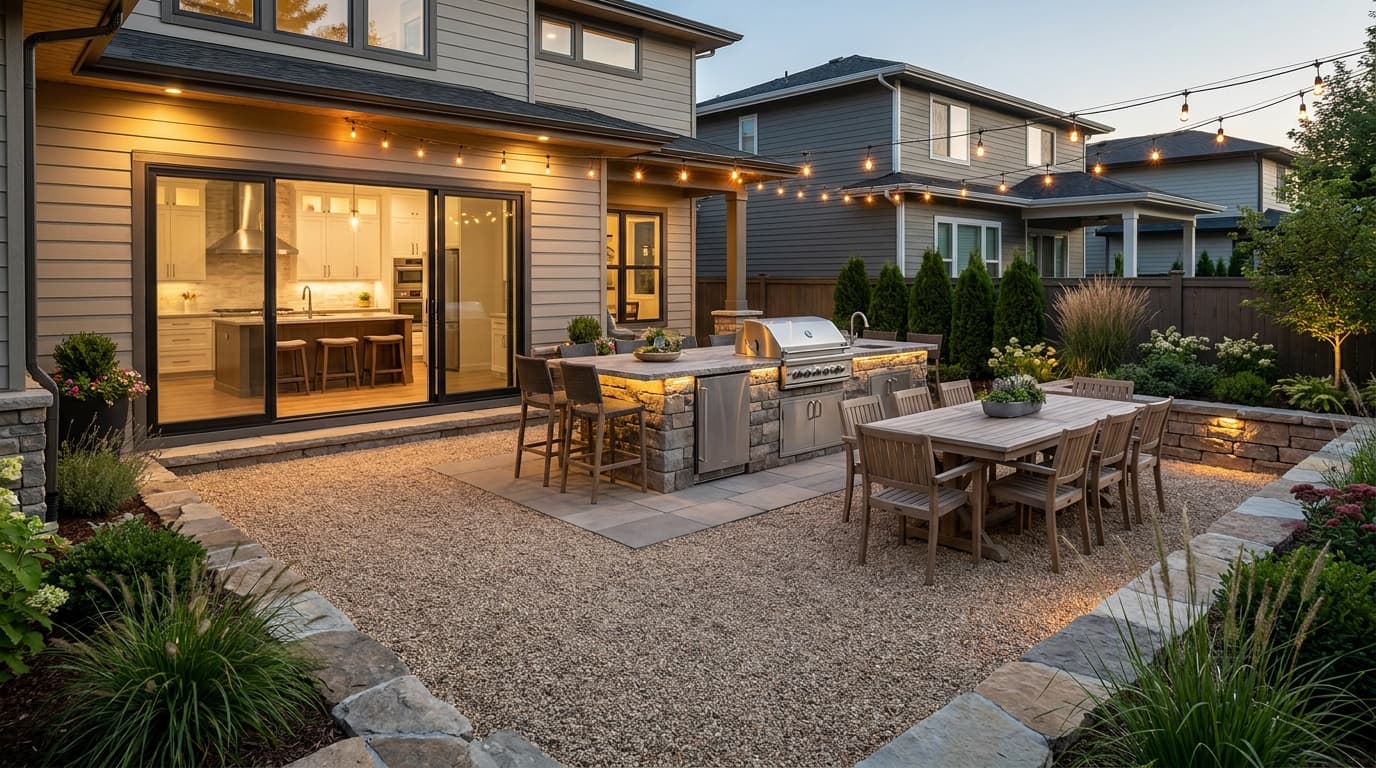
A gravel base handles the traffic and spills of an outdoor cooking zone. Place the grill on a level paver pad so it sits steady and safe.
Choose stone or stainless counters that shrug off heat, grease, and weather. Set a few stools at a counter edge so guests chat while you cook.
Keep at least three feet of clear gravel around the grill for easy movement.
16. Layered Landscape Pea Gravel Patio Design
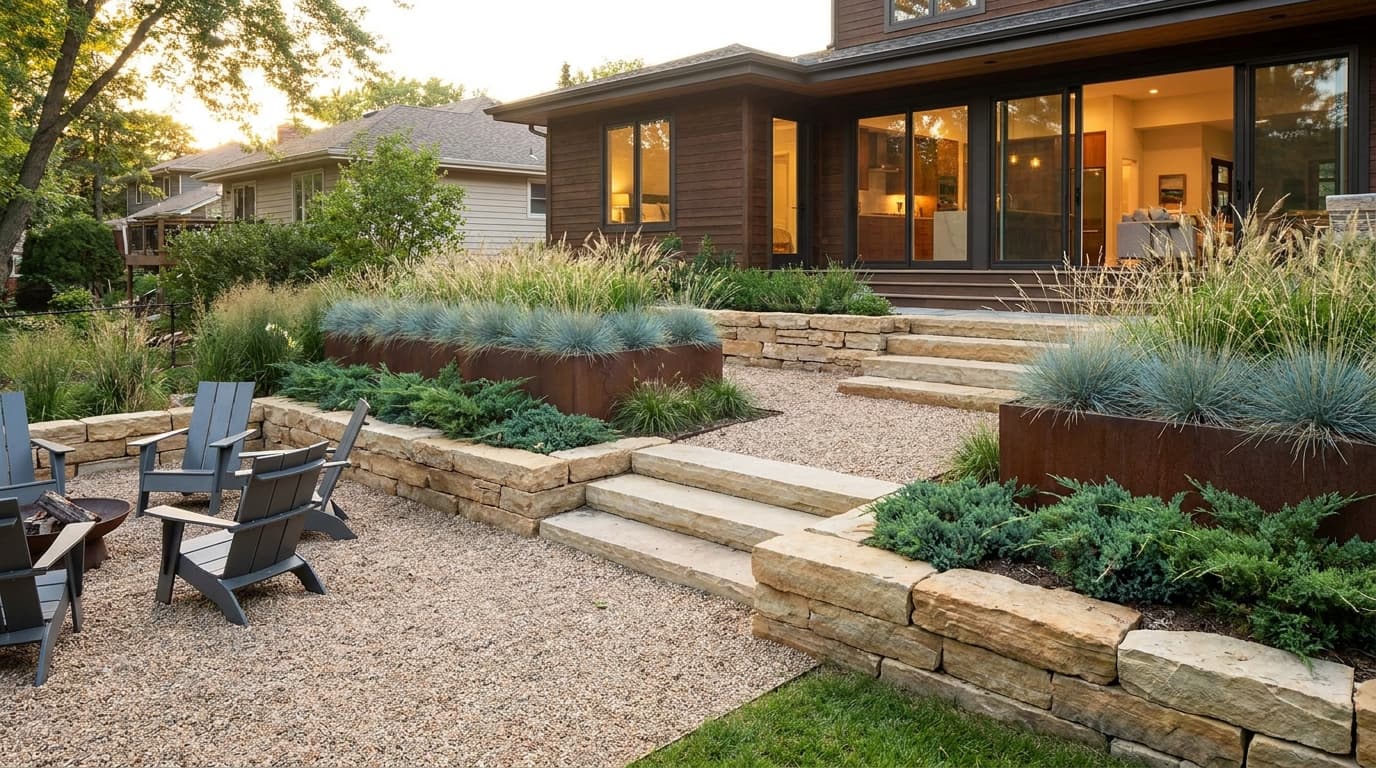
Different heights and textures give a sloped yard depth and interest. A low retaining wall holds back soil and creates a flat gravel level.
Stack planters at two or three heights for a stepped, green effect. Add gravel steps between levels to link the spaces with a natural flow. This approach turns an awkward slope into a real feature.
For an even more textured look, pair a layered patio like this with rock garden ideas that build height with boulders and stacked stone.
17. Pea Gravel Patio With String Lights
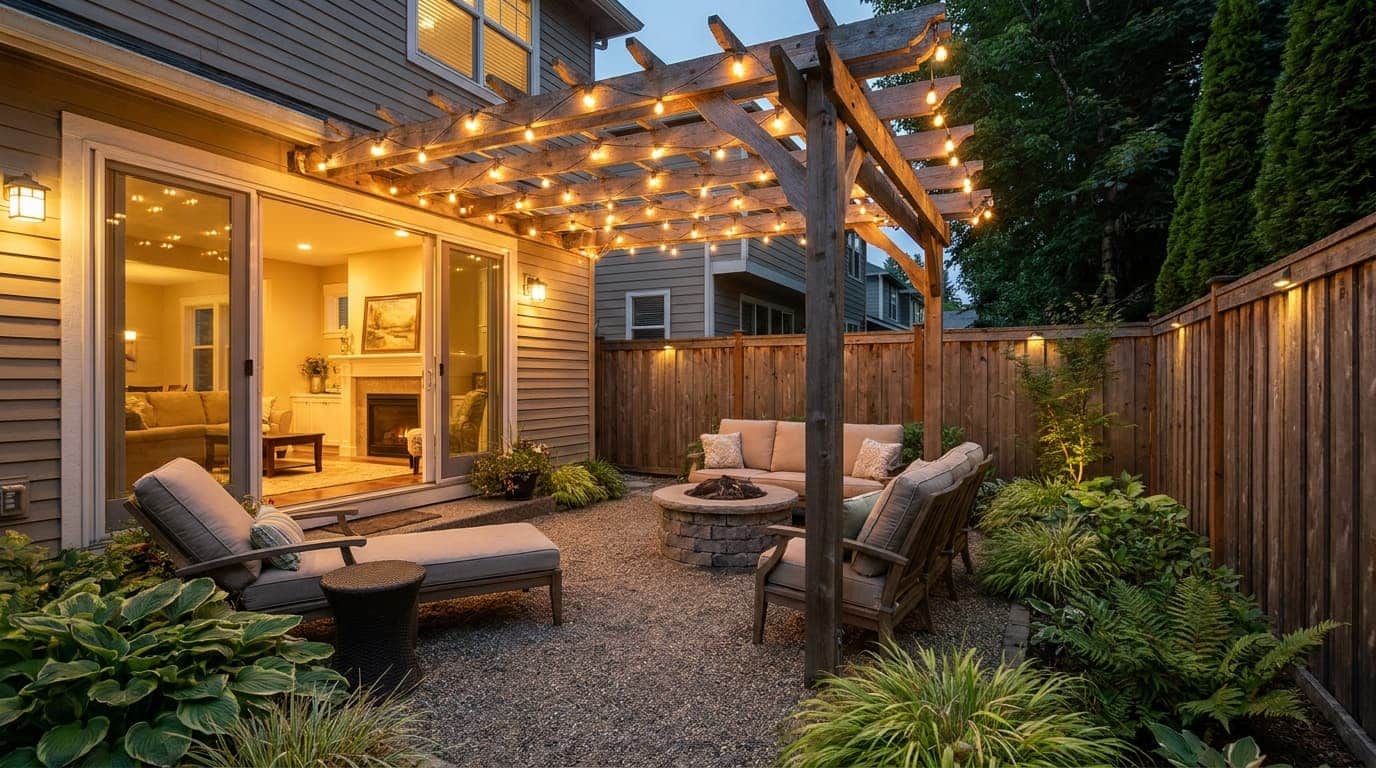
Good lighting stretches your patio hours well past sunset. Drape overhead string lights between posts or the house and a tree.
Mount small fixtures along a fence to wash the border in a soft glow. Solar bulbs cost nothing to run and charge on their own each day. Warm-white bulbs feel cozier than cool blue tones for evening lounging.
18. Desert-Inspired Pea Gravel Patio
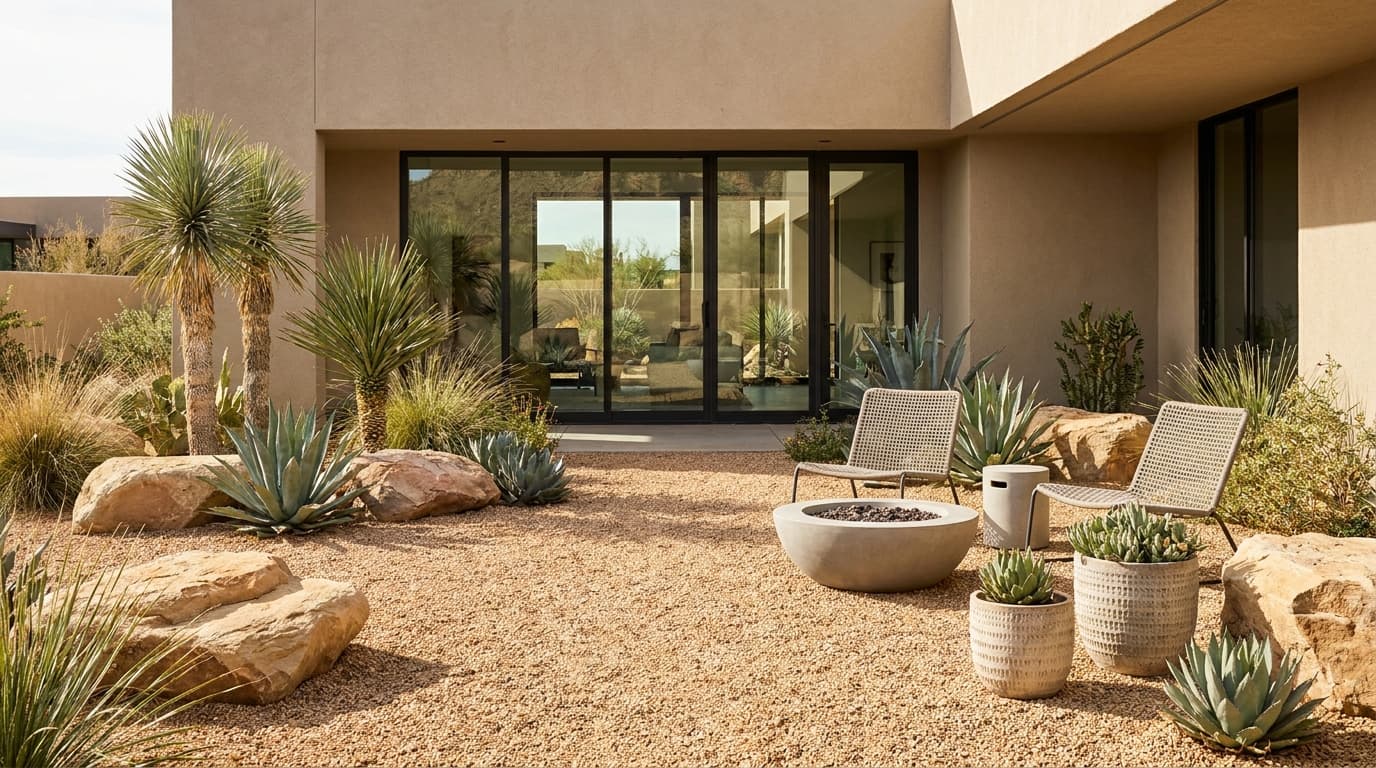
Drought-tough plants and warm stone create a patio built for hot, dry spells. Cluster succulents in shallow bowls for easy, low-water color.
Golden barrel cactus and ocotillo add bold, sculptural shapes that hold their form year-round. Scatter a few larger decorative rocks among the gravel for contrast.
Once established, this planting scheme needs barely any watering through summer.
19. Pea Gravel Patio With Wooden Deck Combination
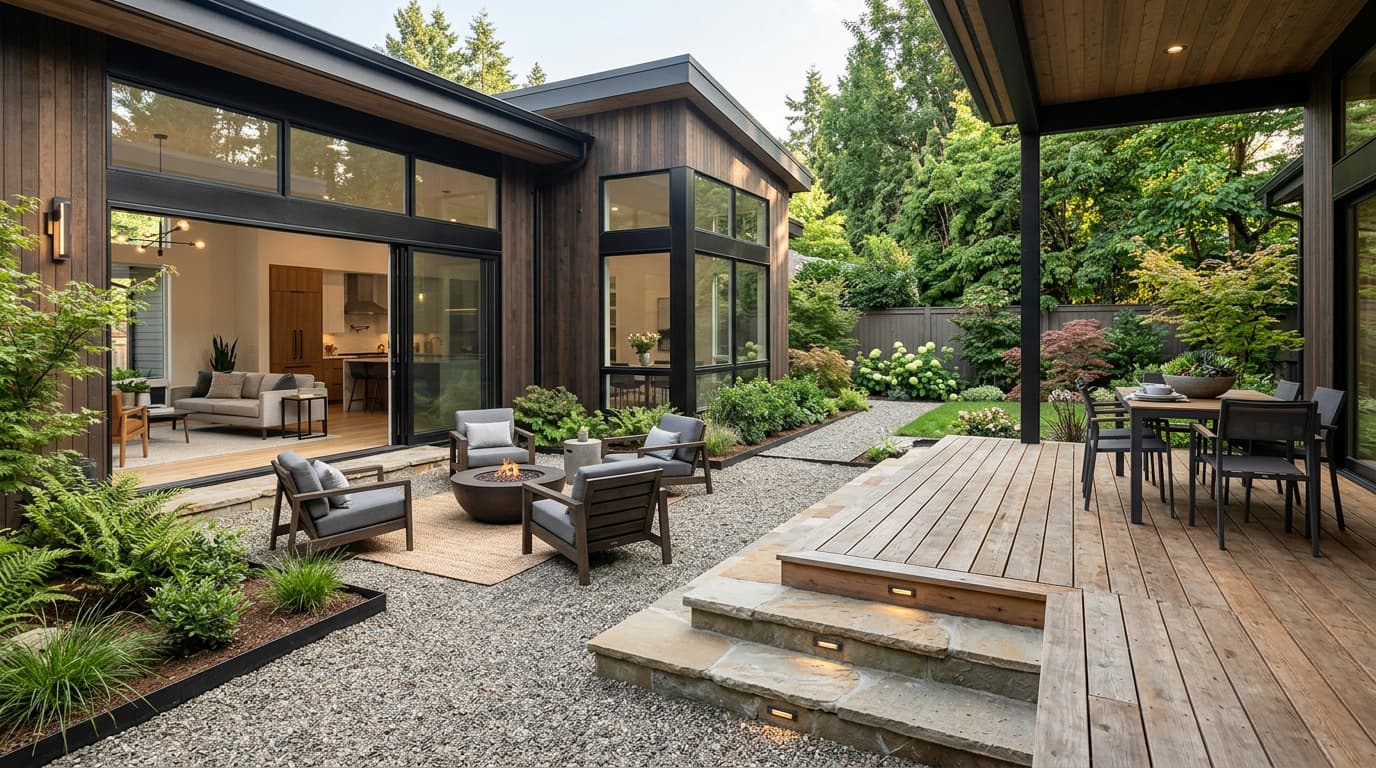
Pairing a wood deck with a gravel patio splits your yard into clear zones. Use the raised deck for dining and the gravel level for lounging by a fire.
Blend the two with a short step or a run of flush pavers. The contrast in texture makes each area feel like its own room. This mix works well when one part of the yard sits higher than the rest.
20. Black and White Contrast Pea Gravel Patio
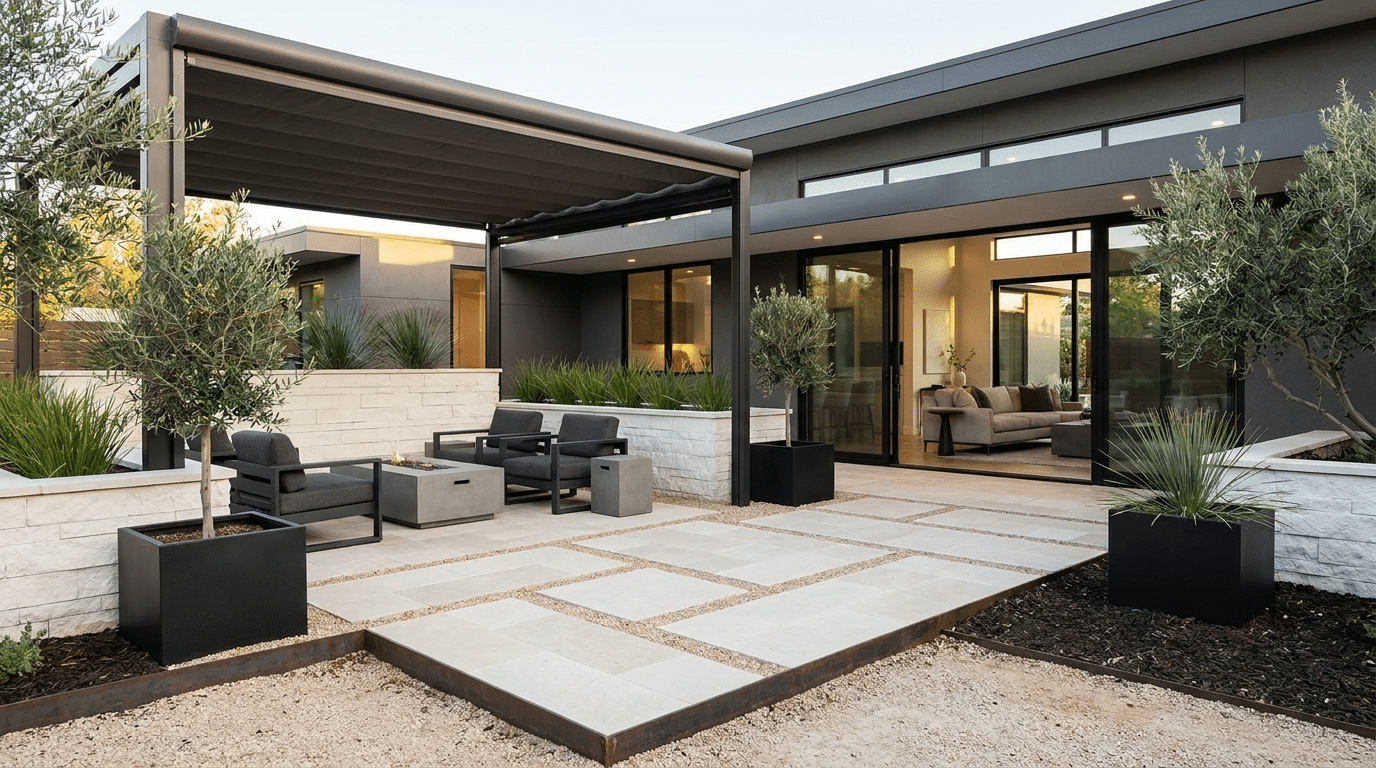
Bold color pairings give this gravel patio a striking, graphic edge. Frame the space with dark steel or charcoal-stained timber edging.
Set pale limestone pavers or white boulders against the stone for punch. Choose black or white furniture to carry the theme through the whole space.
The high contrast suits modern homes and small courtyards especially well.
21. Pea Gravel Patio Connected to a Garden Walkway
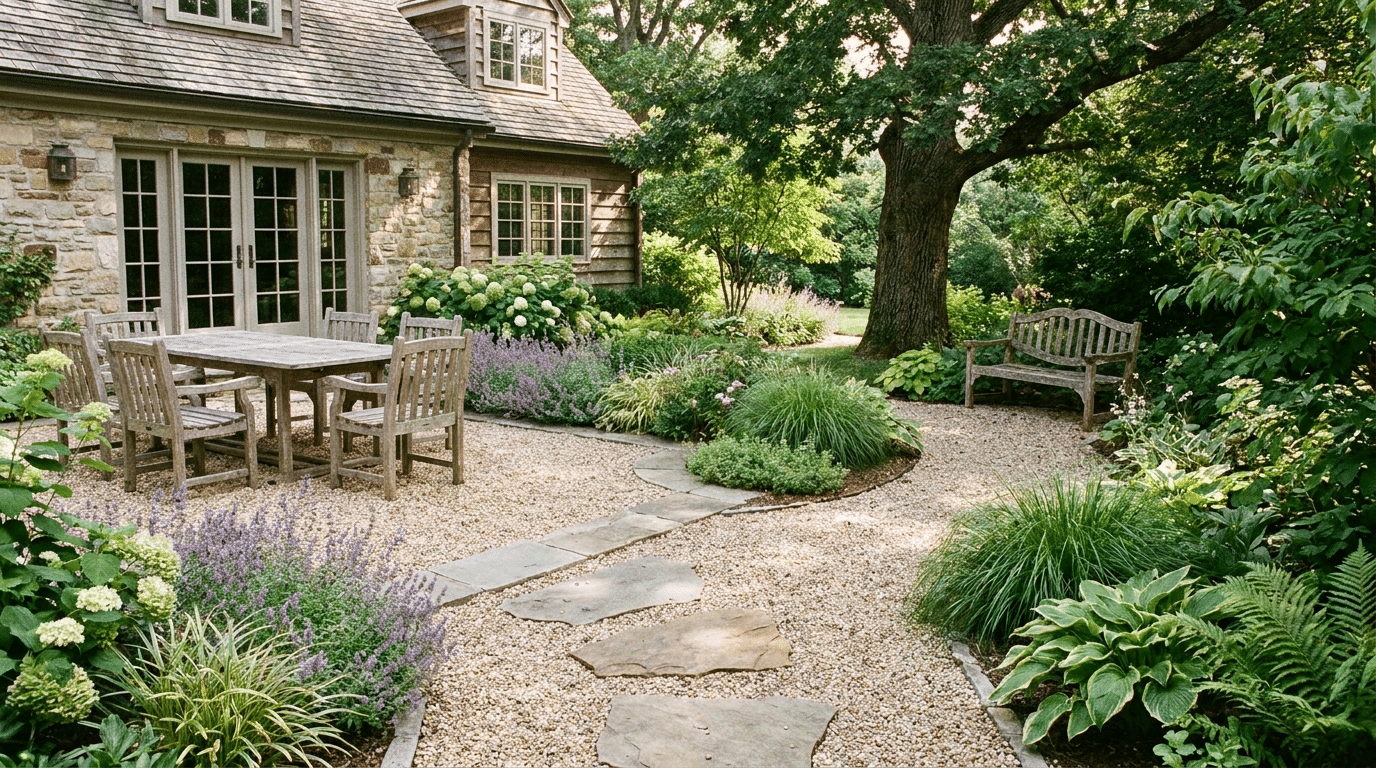
A gravel path links your patio to the rest of the yard and pulls the design together. Gently curve the walkway so it feels like a stroll rather than a straight shot.
Line the edges with low plants that spill softly onto the stone. End the path at a bench or a shaded seat to give it a clear destination.
Running the same stone through both areas is one of the simplest ways to extend the look into a wider gravel garden layout that flows well beyond the patio itself
22. Minimalist Pea Gravel Meditation Patio
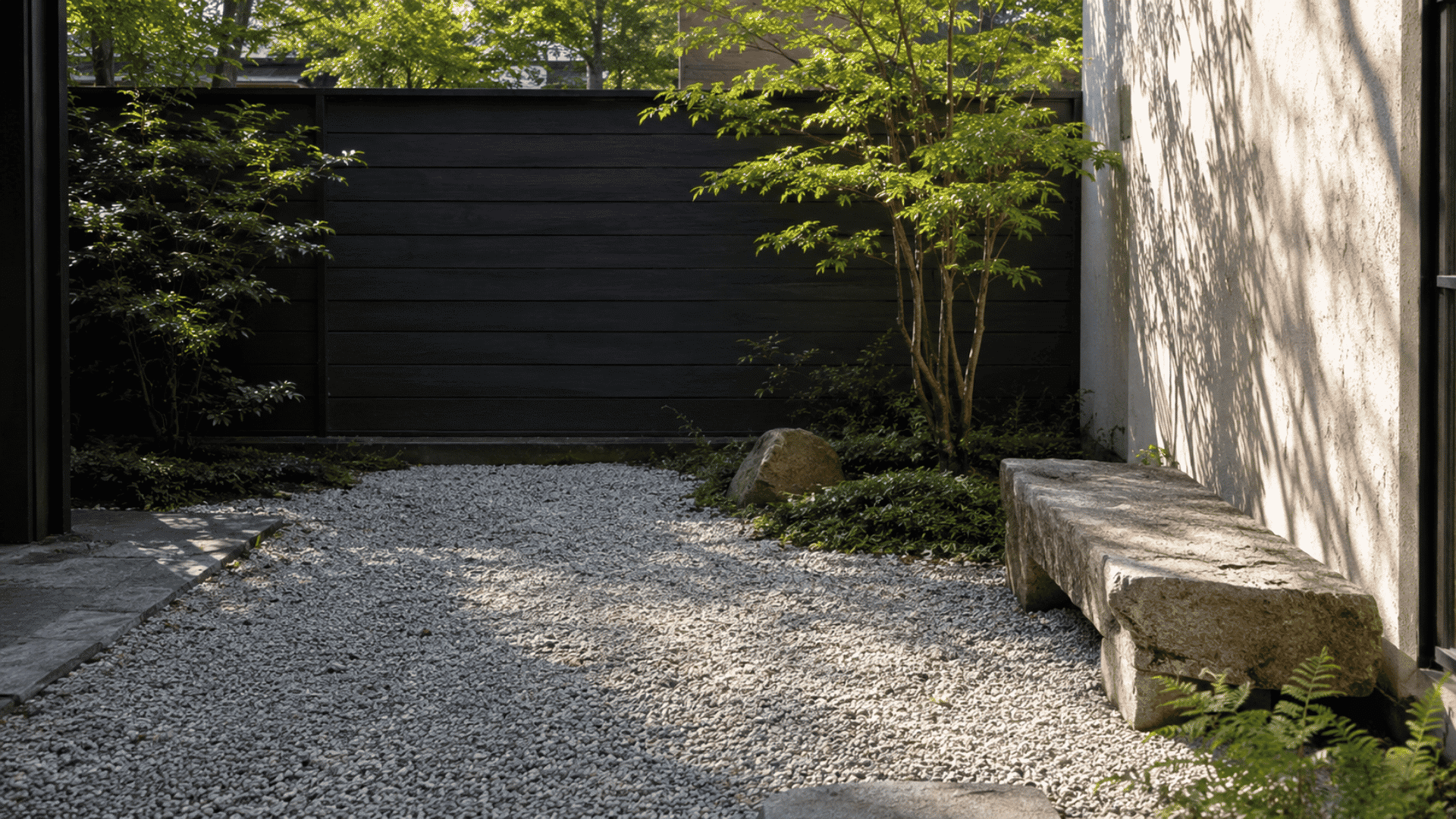
A pared-down gravel patio makes a quiet corner for rest and breathing room. Keep seating simple, with a single bench or a flat meditation stone.
Add one evergreen or a small maple for a calm, green focal point. Raked gravel and clean lines keep the space free of clutter. The stillness here comes from what you leave out, not what you add.
23. Large Pea Gravel Entertainment Patio
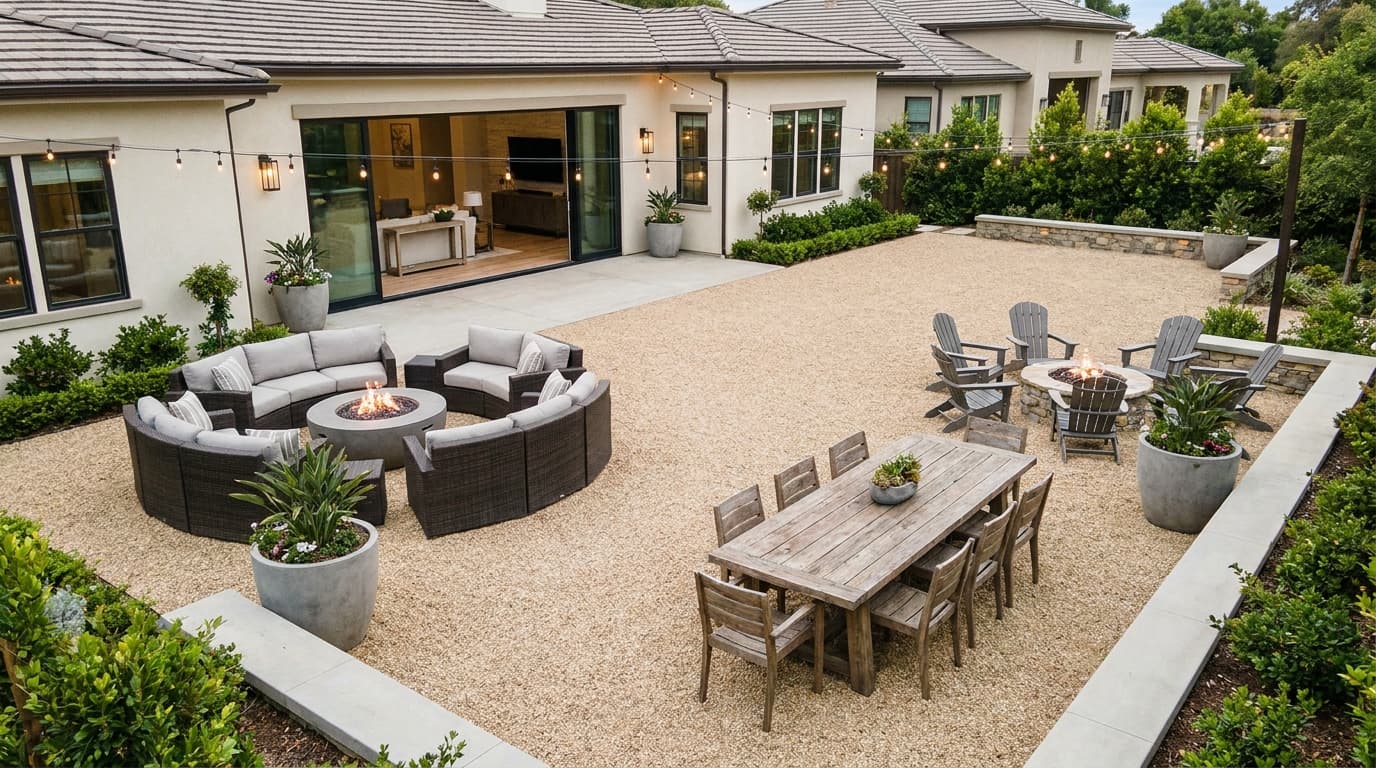
A wide gravel patio gives you room to host without anyone feeling cramped. Split the space into zones: a lounge circle, a dining table, and a fire feature.
Leave an open stretch of gravel for lawn games or a spot to mingle. Repeat one material, like matching planters, to tie the zones together. Wide paths between areas keep guests moving all evening easily.
How to Keep a Pea Gravel Patio Looking Good
A pea gravel patio stays sharp with a little regular care. The stones shift under foot traffic, so most upkeep centers on keeping them level and contained.
- Rake uneven areas: Foot traffic carves out low spots over time. Run a stiff rake across the surface every couple of weeks. Pull stones from the high edges back toward the thin middle.
- Pull weeds early: A few weeds still push through the fabric. Grab them by hand while they are small. Pulling after rain makes the roots slide out easily.
- Top up the gravel: The layer thins as stones scatter and settle. Add a fresh bag every two to three years. Match the new stone to the old in size and color.
- Keep borders firm: Edging stops stones from wandering off. Check timber, steel, or stone borders each season. Press loose sections back and re-stake any that lean.
- Manage furniture movement: Chairs and tables dig into loose stone as they move. Fit wide glides to slim legs, so they rest on top. Set pavers under heavy pieces like tables and grills.
Stick with these habits and your patio stays clean, level, and inviting.
Frequently Asked Questions
How Deep Should Pea Gravel Be for a Patio?
Aim for two to three inches over a compacted base. Deeper stone shifts too much underfoot, while a thinner layer exposes the ground below.
Does a Pea Gravel Patio Attract Snakes or Pests?
Loose gravel offers little cover, so it draws fewer pests than mulch or dense plants. Keeping edges clear of debris lowers the risk further.
Can You Put Pea Gravel Over an Existing Concrete Slab?
Yes, but add an edge to hold the stone and drainage gaps so water escapes. A thin border keeps gravel from sliding off the smooth surface.
Is a Pea Gravel Patio Safe for Bare Feet?
The rounded stones feel smooth, not sharp, so bare feet handle them well. Hot afternoons can warm the surface, so test it before walking across.
How Long Does a Pea Gravel Patio Last?
A well-built one lasts decades with basic care. The base and edging matter most, since they hold everything in place through years of use.
Final Thoughts
A pea gravel patio will not win any award for drama, but it wins on nearly everything else: cost, drainage, and how fast it comes together.
I keep coming back to it on budget-friendly projects because the material bends to whatever shape a client needs, from a tiny bistro corner to a wide entertaining zone.
These pea gravel patio ideas are ones I have built or borrowed myself.
Pick a layout, prep a solid base, set firm borders, and you are most of the way there. Ready to start? Sketch out where your pea gravel patio will go this weekend