
Rock gardens are one of my favorite weekend projects, partly because I garden for fun and partly because a pile of stone forgives more mistakes than a lawn ever will.
These rock garden ideas turn a dry, awkward, or sloped patch of yard into the part everyone actually looks at, using stone that shrugs off poor soil and barely needs water.
Inside, you will find layouts for slopes, flat ground, containers, and shady spots- the same ones I turn to when a client’s yard fights back.
Pick one, start with a single stone, and build from there at your pace.
Rock Garden Ideas for Every Outdoor Space
The right rock garden fits your yard, not the other way around. Sunny slope, shady corner, tiny patio, or wide backyard, there is a stone layout for it.
The design ideas below run from calm and minimal to bold and colorful. Each one pairs real stone with plants that survive rocky, fast-draining ground.
1. Japanese Zen Rock Garden With Minimal Planting
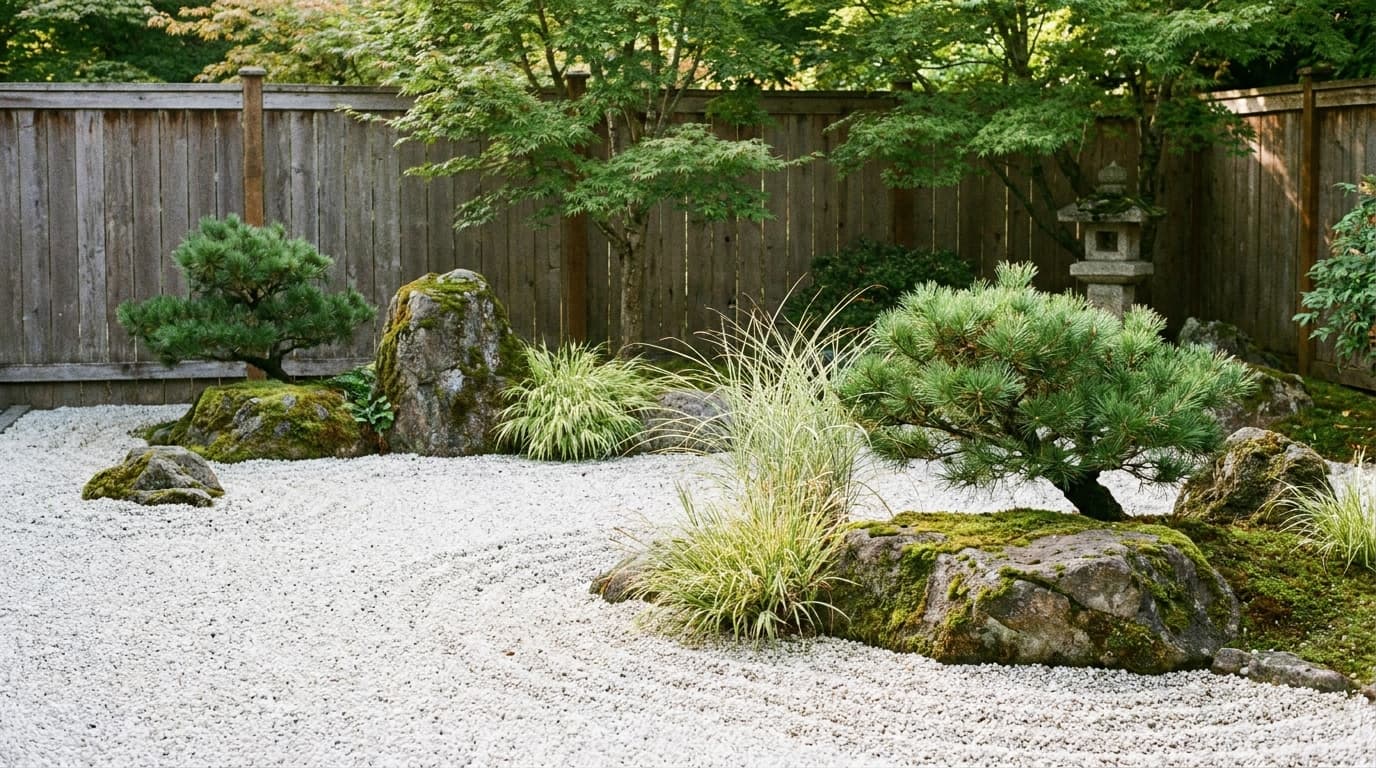
A Zen rock garden speaks through empty space, not crowded beds. Raked gravel stands for water, and set stones stand for mountains or islands.
The point is calm, so you keep planting light and deliberate. Use low, quiet plants like moss, Dwarf shrubs, and ornamental grasses.
Rake the gravel into slow curves around the stones. The pattern gives you a small daily ritual and a still, ordered view.
2. Modern Rock Garden With Clean Lines
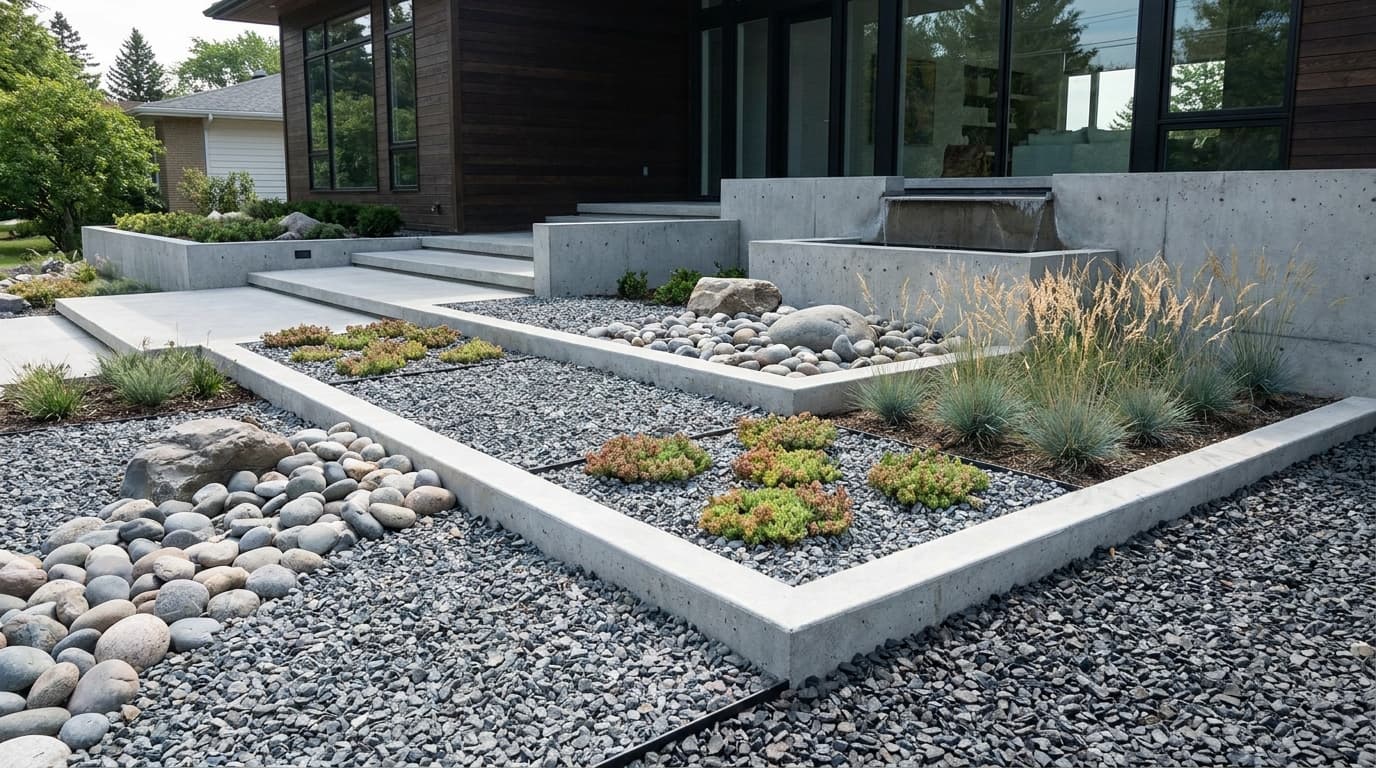
Modern stone gardens favor straight edges and calm color. Think square gravel beds, concrete edging, and stones in grey, black, or off-white. This look suits contemporary homes with simple facades.
Keep the planting sparse and repeated. A row of the same sedum or a single feature grass reads as intentional. Fewer plant types make the whole design feel sharper and easier to care for.
3. Small Backyard Rock Garden
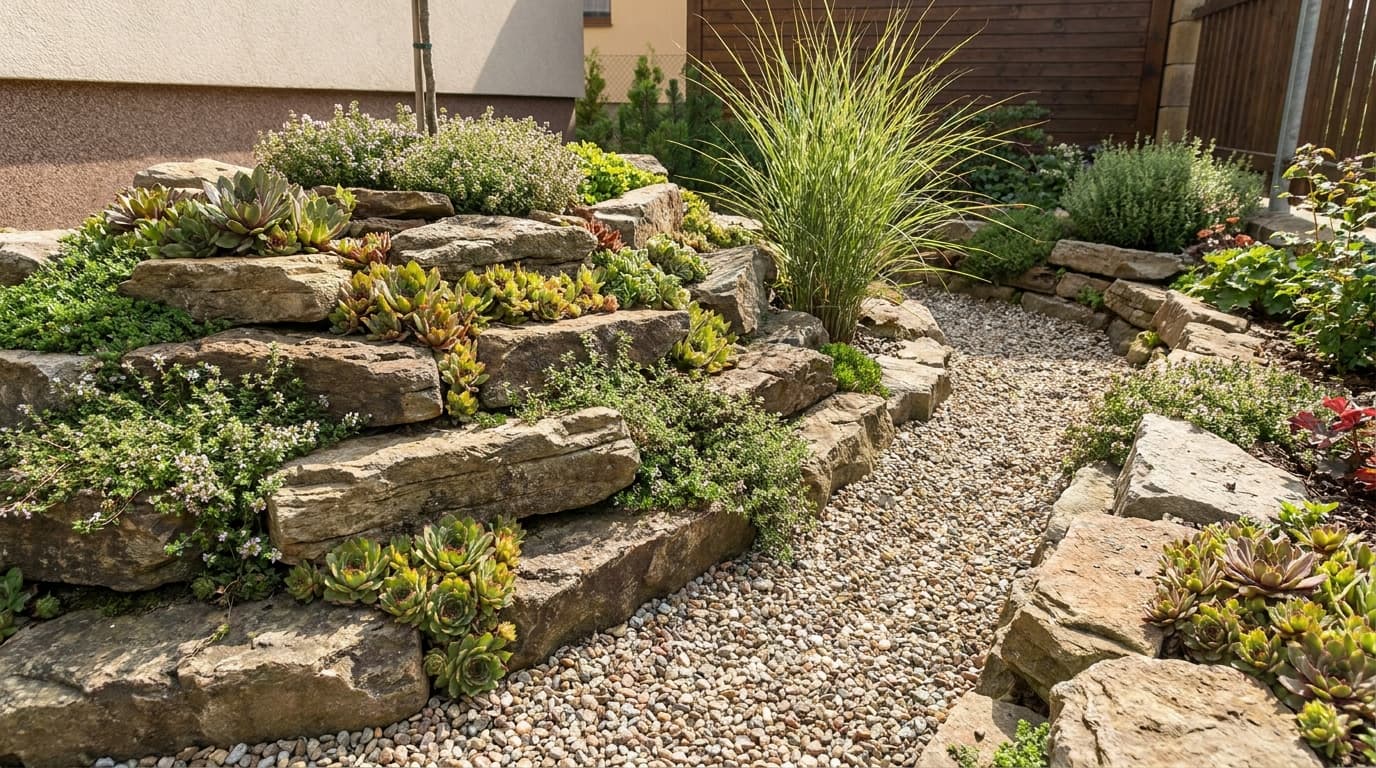
A small yard rewards layers over sprawl. Stack rocks in a low mound, then run a narrow gravel path beside it. Height and a path trick the eye into seeing more space.
Choose compact plants so nothing swallows the area: Creeping thyme, Small sempervivum between stones, and one low grass.
4. Rock Garden Around a Tree
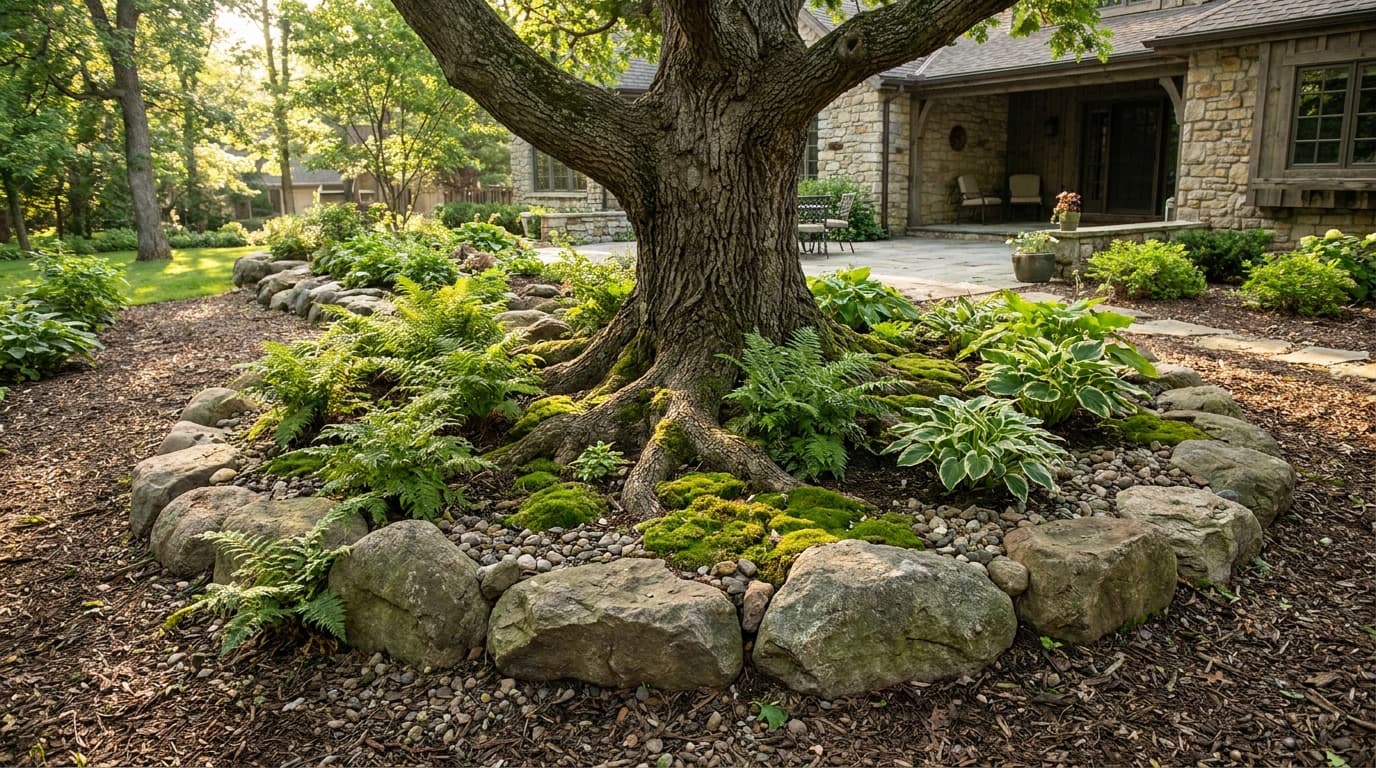
Stones can ring a mature tree and end the struggle to grow grass in its shade. Lay a loose collar of rocks over the root zone, then plant shade-friendly greenery between them.
One rule matters most here. Never pile soil or gravel against the trunk. Buried bark traps moisture and rots the tree over time. Keep the trunk base open and set stones a few inches away from it.
Good picks for the shade below include ferns, hostas, and moss.
5. Rock Garden With Succulents
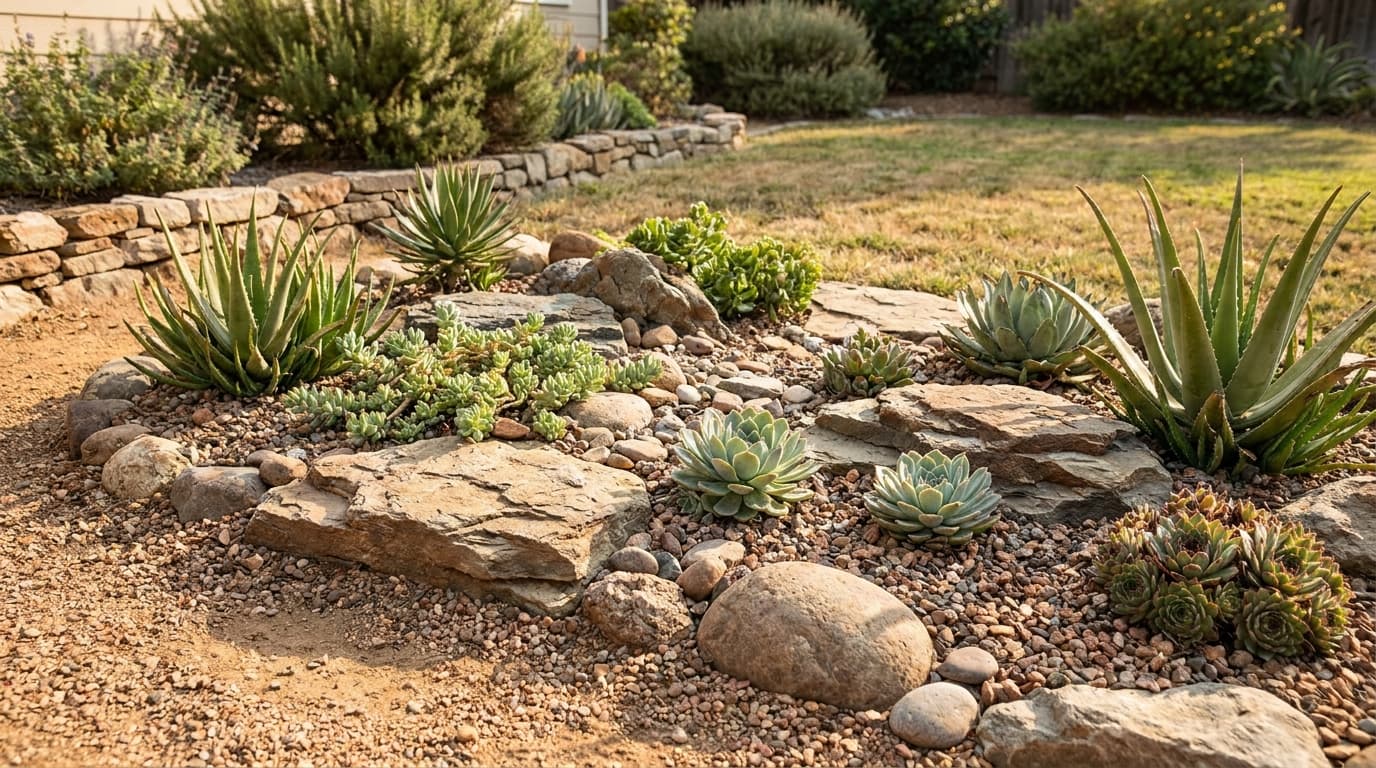
Succulents and rock gardens fit together because both love dry, gritty ground.
These plants store water in their leaves and shrug off drought once settled. That makes them ideal for low-water yards.
Give them full sun and fast drainage. Mix grit into the soil so water never pools around the roots.
6. Desert-Inspired Rock Garden Landscape
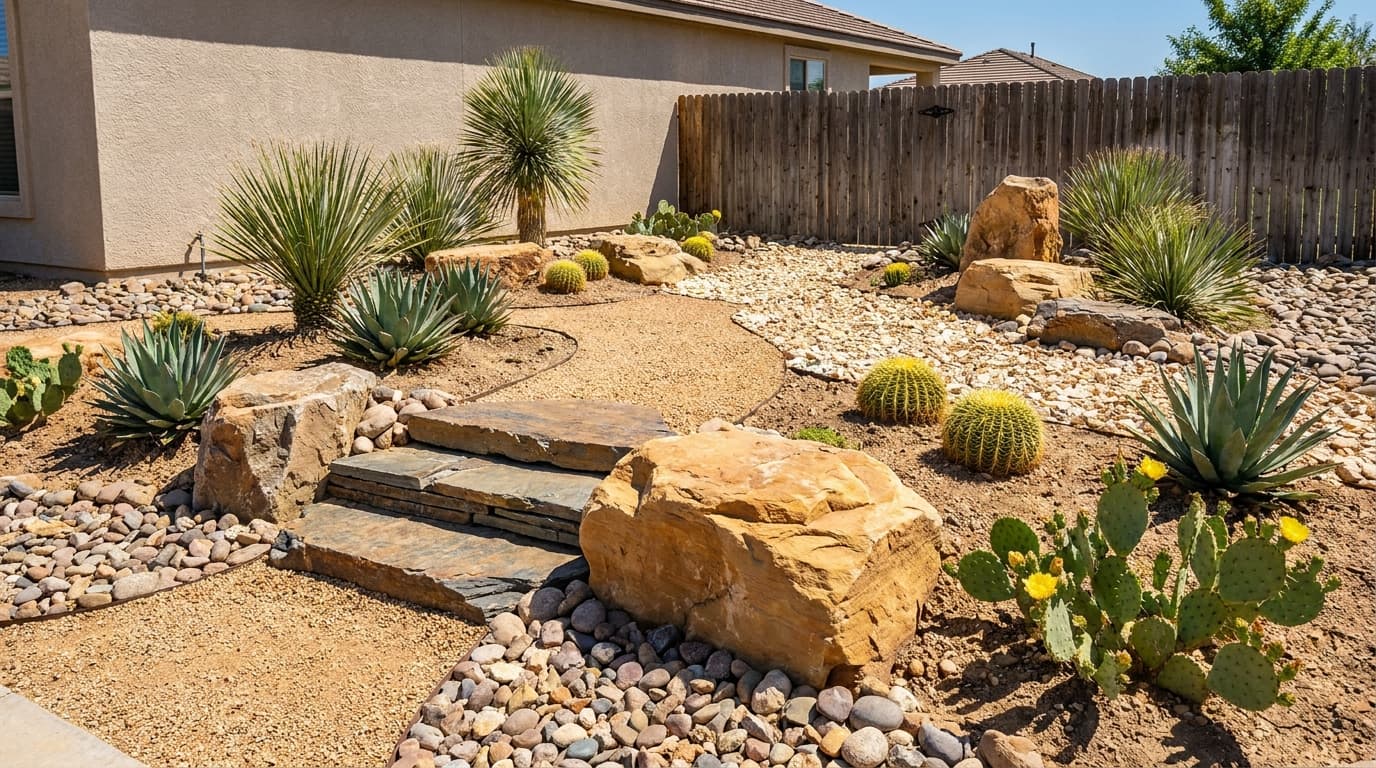
A desert-style stone garden leans on warm materials and heat-loving plants. Use sandstone, tan gravel, and sculptural species that store their own water. The result stays green through blazing summers.
Build it with: Agave and yucca, Barrel or prickly pear cactus, or Warm-toned gravel to hold the desert mood.
Pick heat-resistant materials; lighter stone also reflects heat and keeps roots cooler.
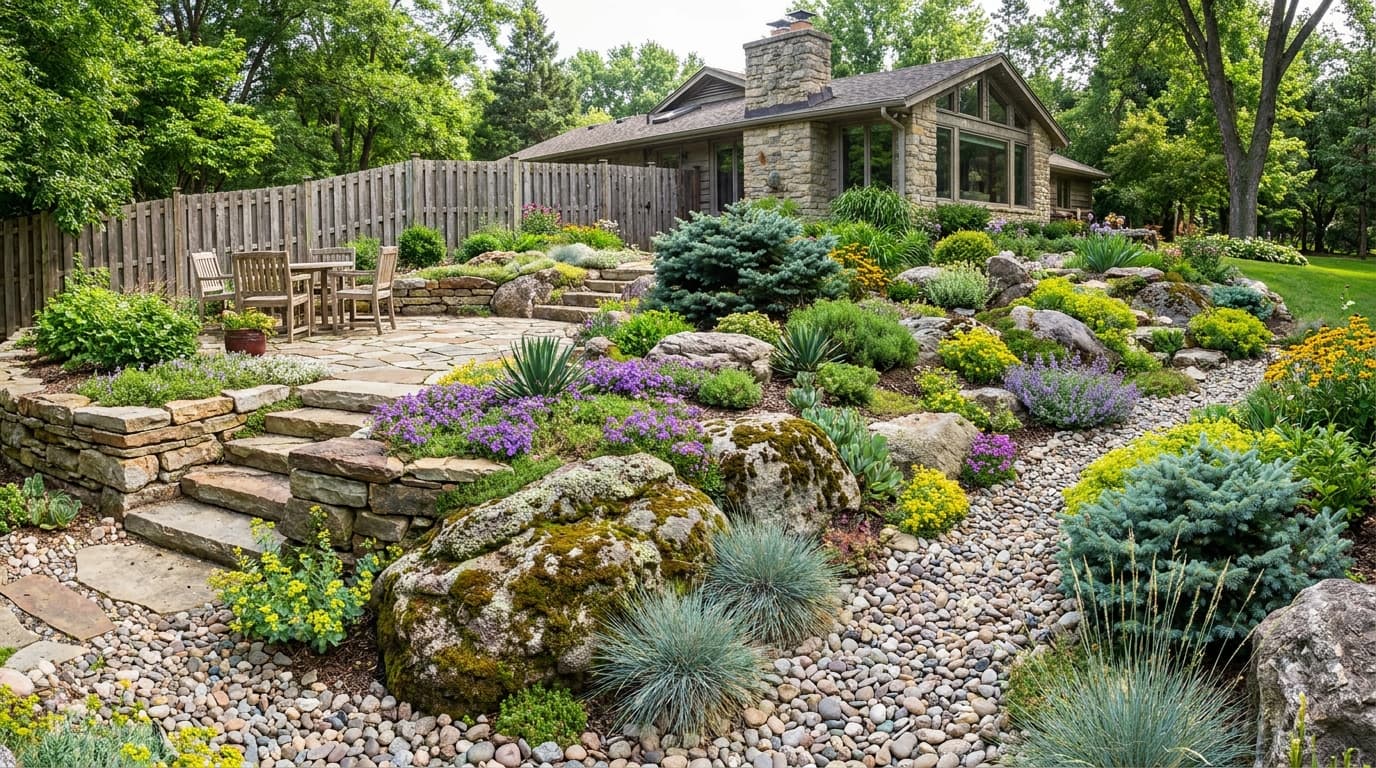
7. Rock Garden Along a Sloped Yard
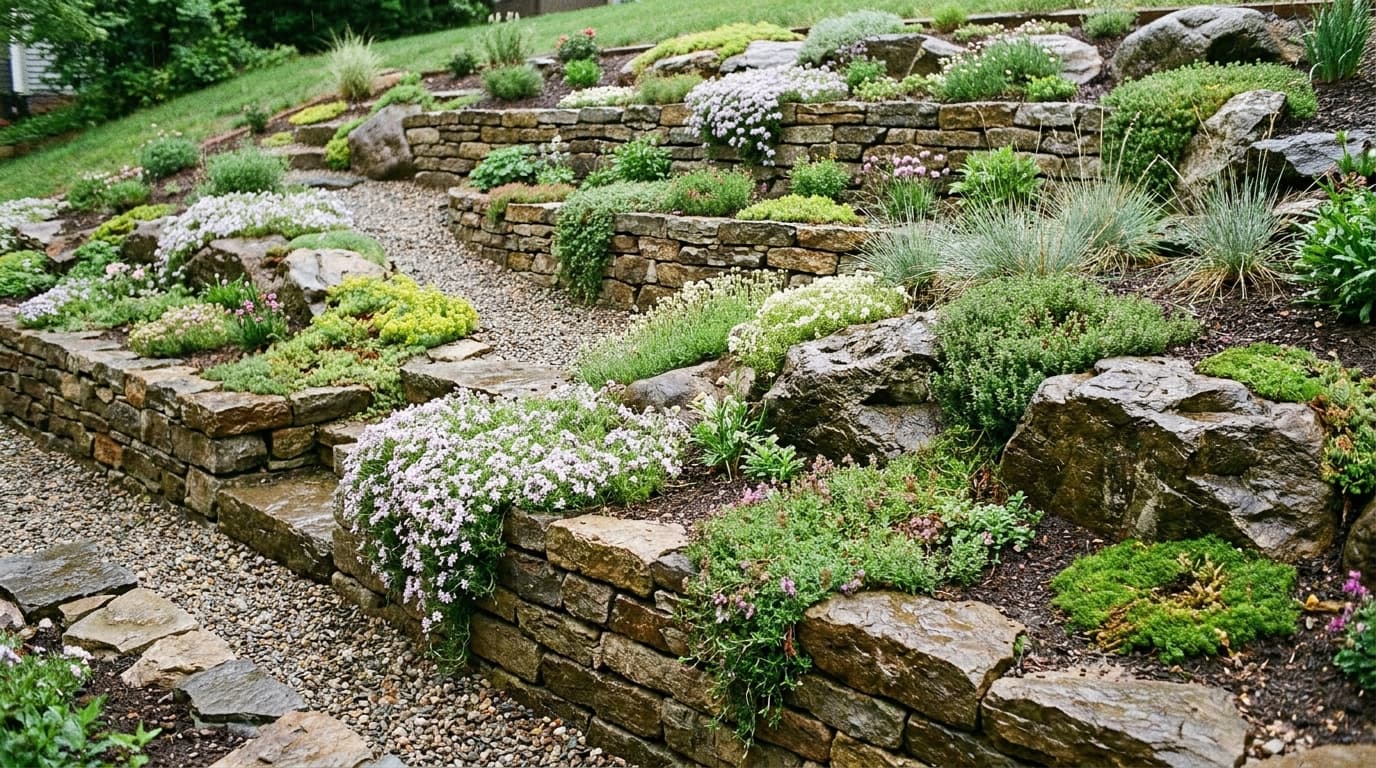
Rocks turn a problem slope into a feature. Their weight holds soil in place and slows rain before it can carve channels. This makes stone one of the best fixes for erosion.
Terrace the slope into a few stepped levels. Each low stone wall catches soil and water, so plants get time to drink. Plant trailing alpines that scramble over the edges.
8. Front Yard Rock Garden Design
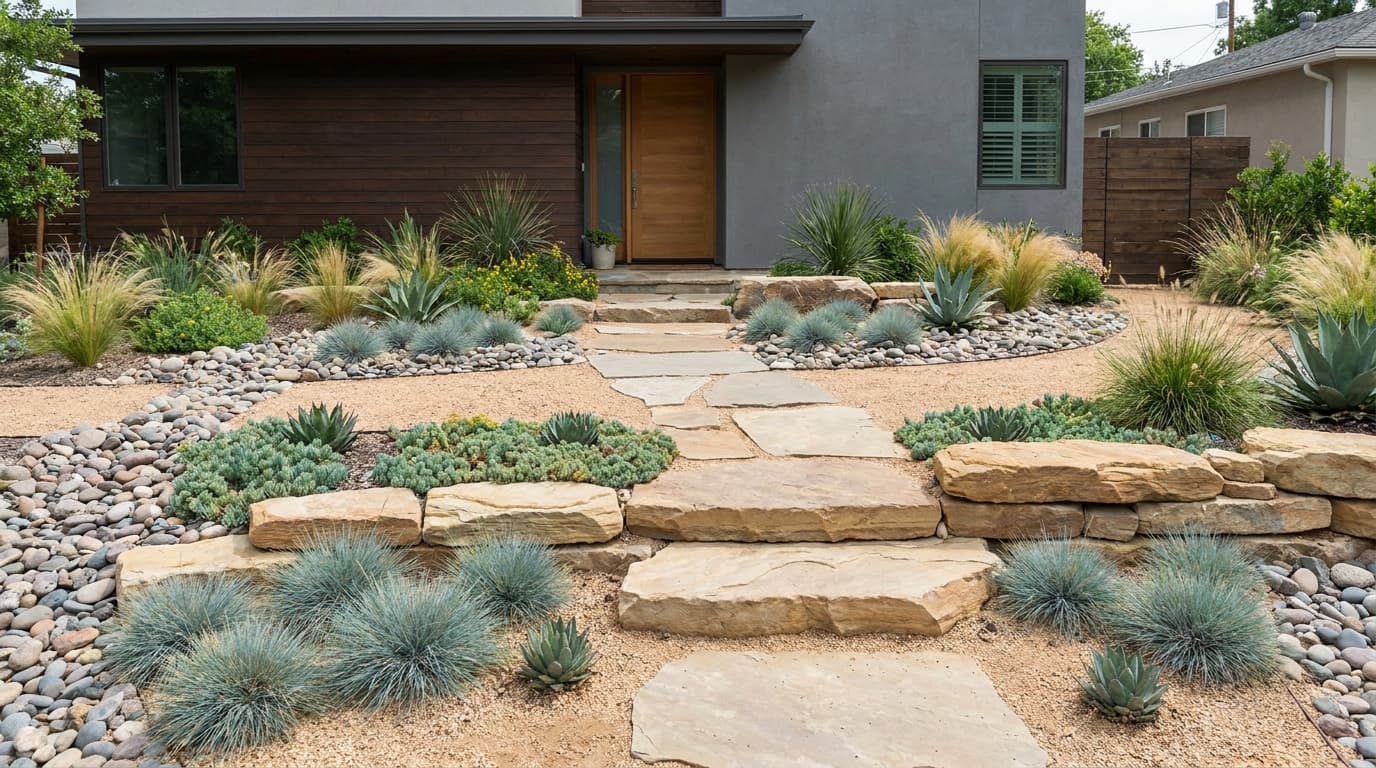
A front-yard rockery boosts curb appeal and cuts your mowing at the same time. Stone replaces thirsty lawn, so you spend weekends resting, not trimming grass.
Aim for a tidy, welcoming look. Repeat a few plant types for a clean, cared-for face on the street.
9. Rock Garden With a Water Feature
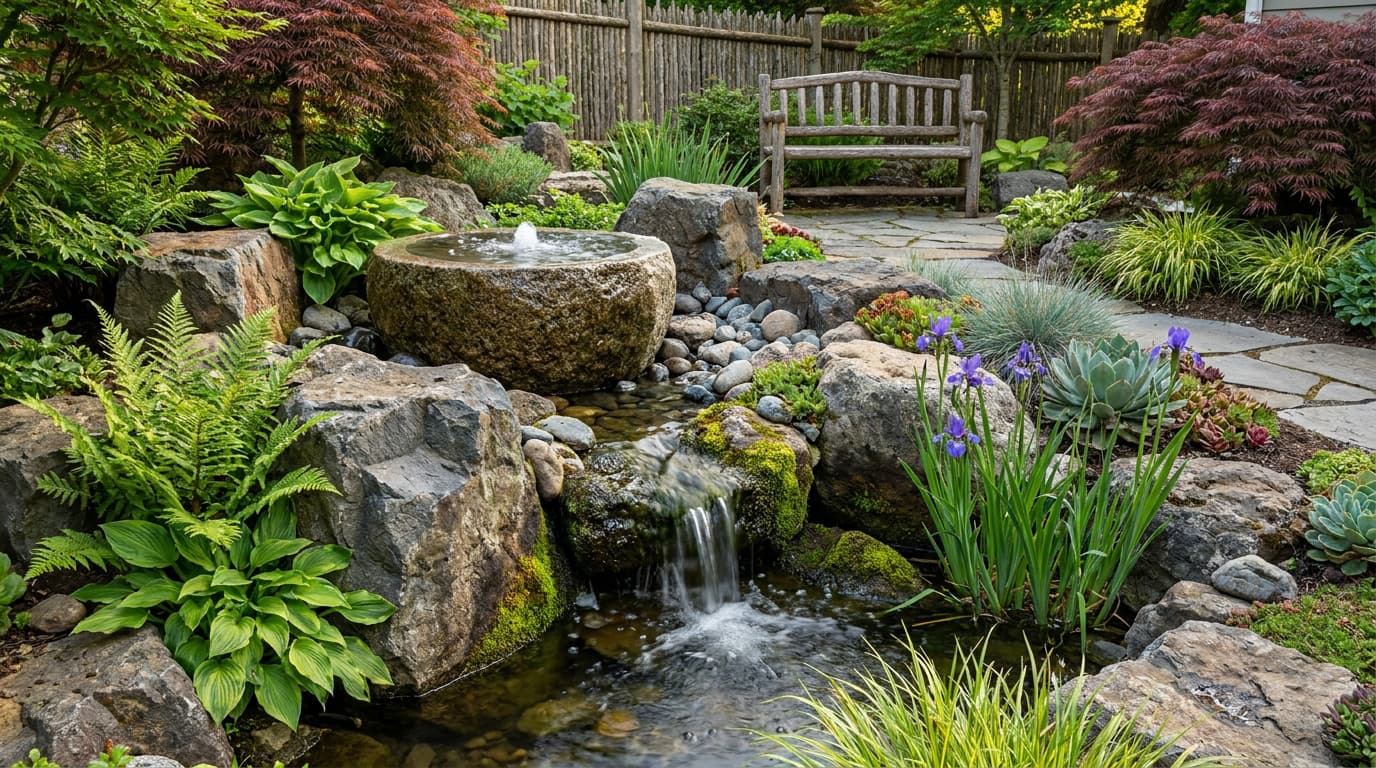
Water changes the whole mood of a stone garden. A small fountain or bubbling bowl adds sound and movement that dry gardens lack. Birds and calm both follow the water.
Choose water-safe stone that will not break down when wet. Hard rock like granite or basalt holds up far better than soft, crumbly types.
Set the feature low among boulders so it looks like a natural spring. Surround it with moisture-tolerant plants near the splash zone.
10. Rock Garden Pathway Design
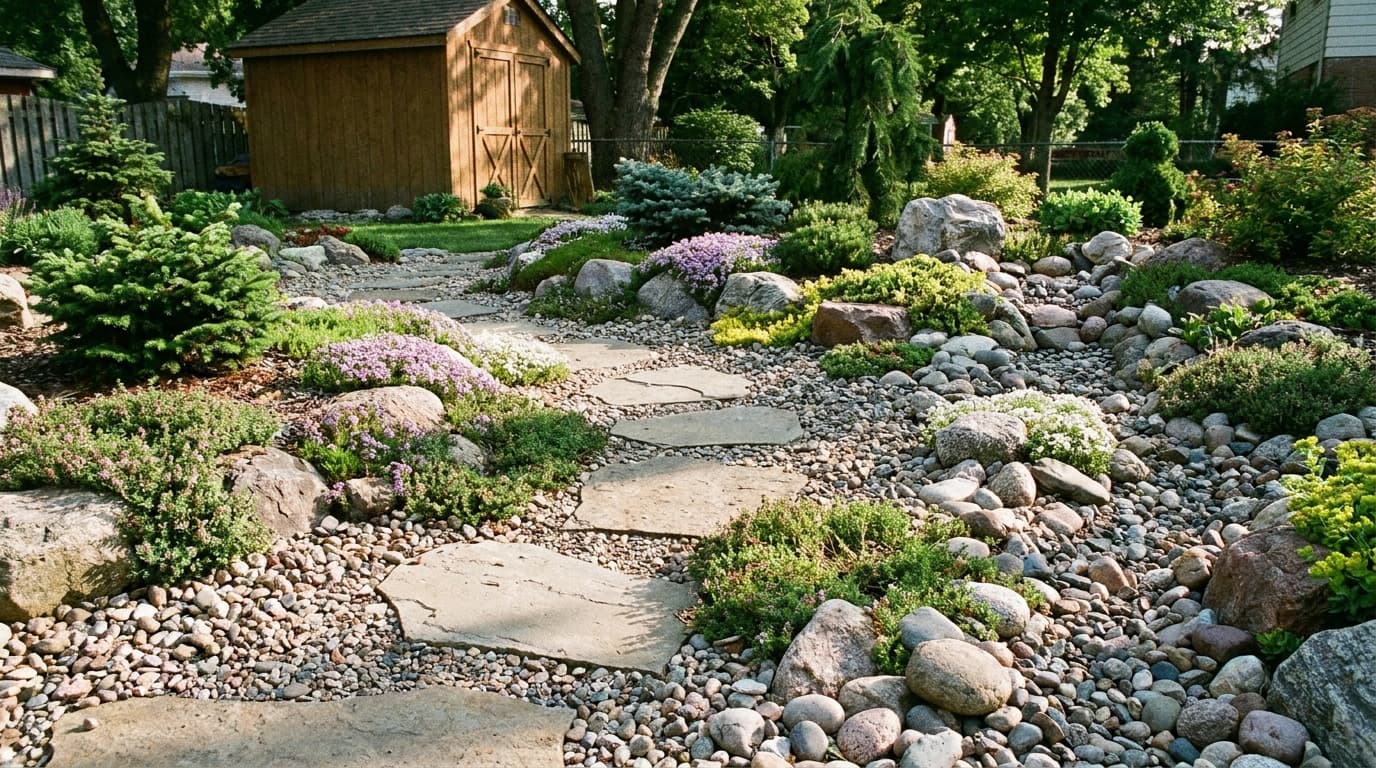
A path pulls a rock garden together and tells feet where to go. Stepping stones set into gravel give a firm, dry route through soft planting. Good flow keeps visitors off the beds and off the plants.
Line the path with low, spreading species. Space the stepping stones for a natural, unhurried stride.
11. Raised Rock Garden Beds
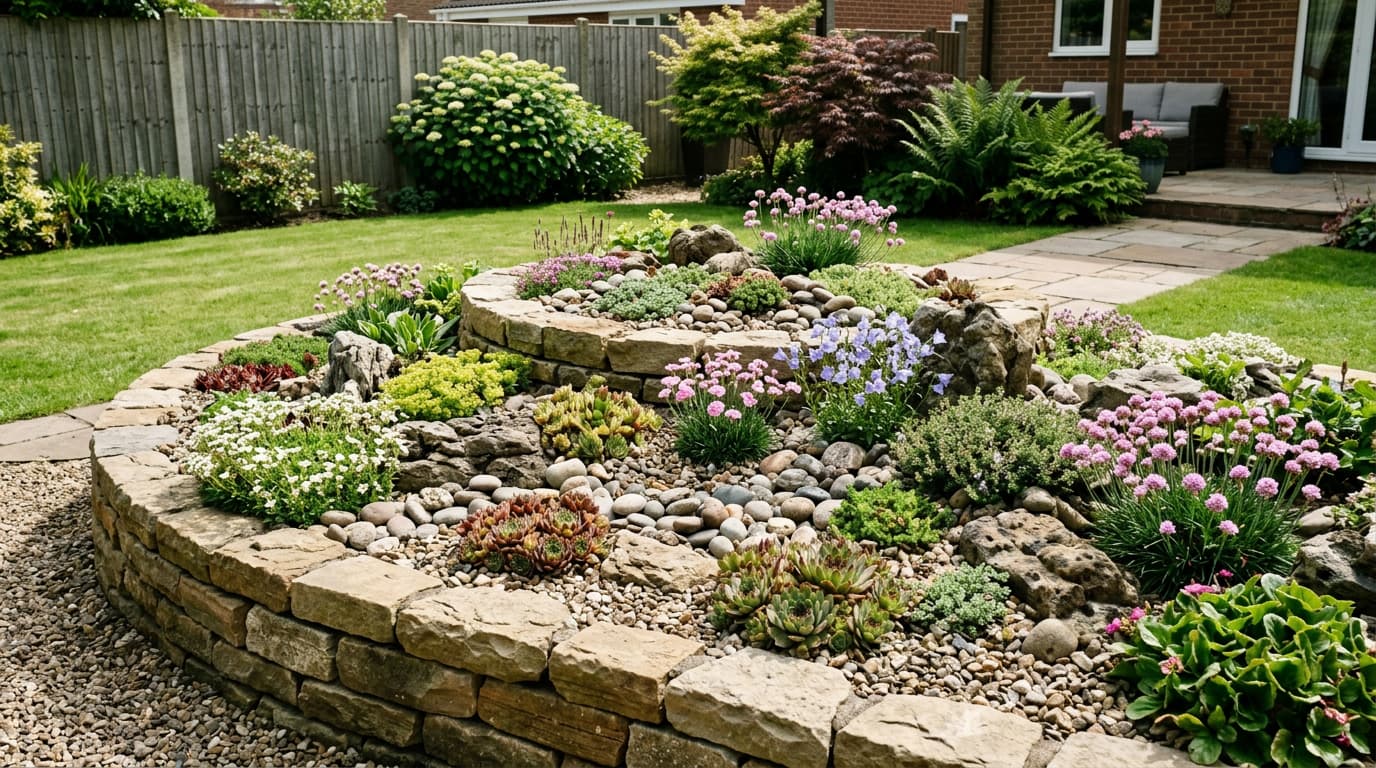
A raised stone bed lifts the garden and its drainage. Building up the soil lets excess water escape fast, which alpine plants demand. It also brings small blooms closer to eye level.
Fill the bed with a mix of soil, grit, and crushed stone. This copies the scree slopes where these plants grow wild.
12. Rock Garden Border Around Flower Beds
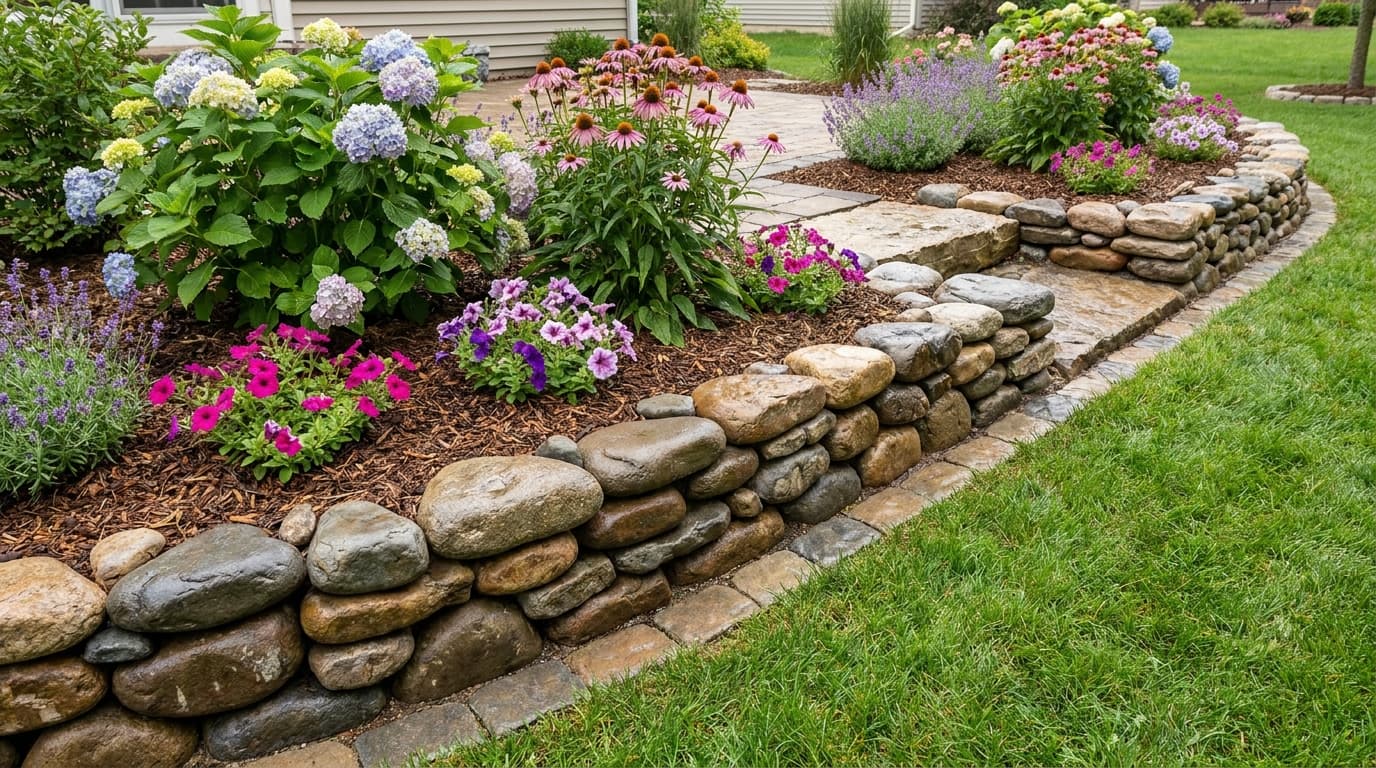
Rocks make a crisp frame around a bed of blooms. The hard stone edge holds mulch in and keeps grass out. It also sets the flowers off with strong contrast.
Use stones of one size for a clean, deliberate line. Mixed sizes read as messy along a border. River rock or matched cobbles both work well for this tidy effect.
13. Crevice Rock Garden Landscape
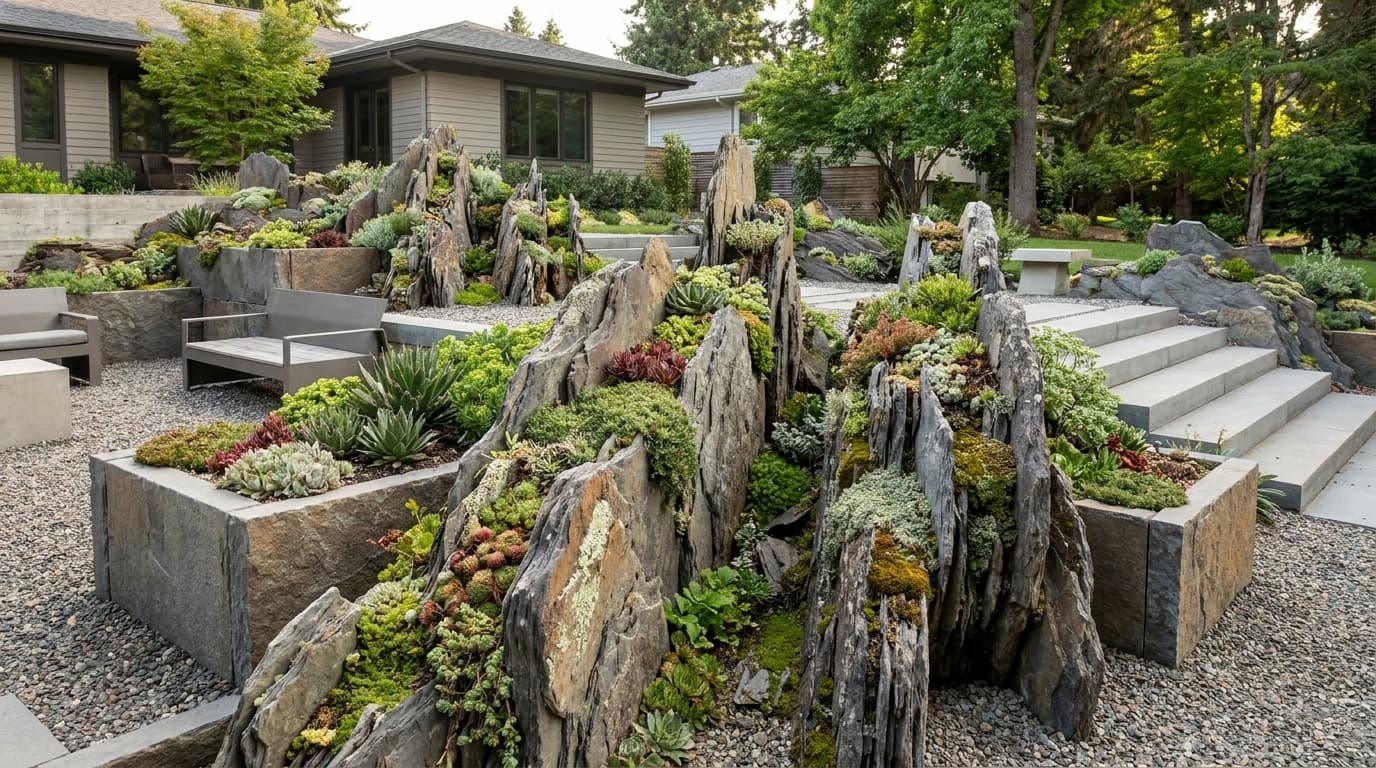
A crevice garden sets slabs of stone upright, packed tightly with narrow gaps between them. Plants root deep in those thin cracks, just as they would on a wild cliff face.
The vertical slabs create a dramatic, sculptural look unlike any flat bed. Tuck tiny alpines and succulents into the seams for pops of color.
This style drains fast and shows off rare plants that struggle elsewhere.
14. Gravel and Rock Garden Combination
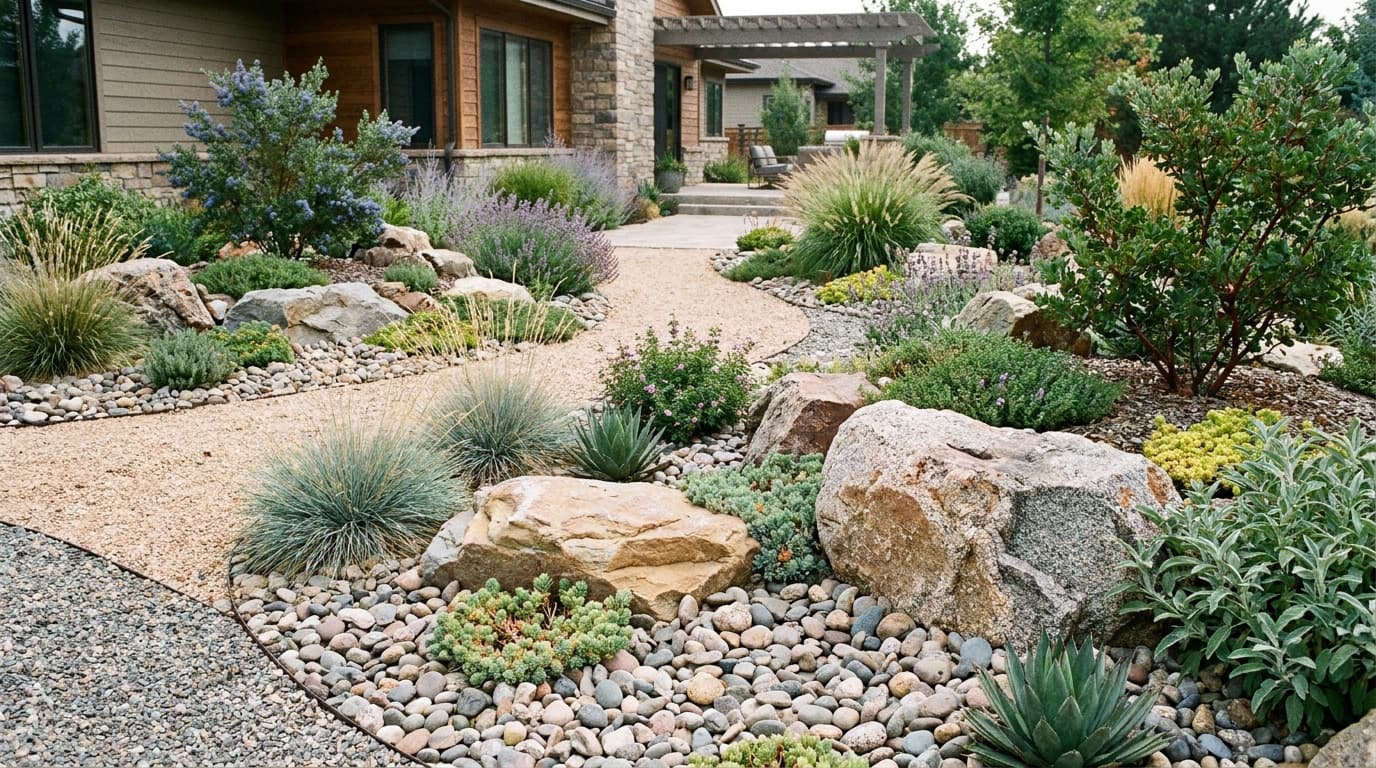
Mixing fine gravel with larger feature stones adds depth to a flat area.
The gravel garden approach stays low maintenance, while boulders break it up and draw the eye. Together they read as one natural surface.
This blend also cuts upkeep. Gravel drains fast and blocks most weeds, while big rocks need no care at all.
15. Rock Garden With Ornamental Grasses
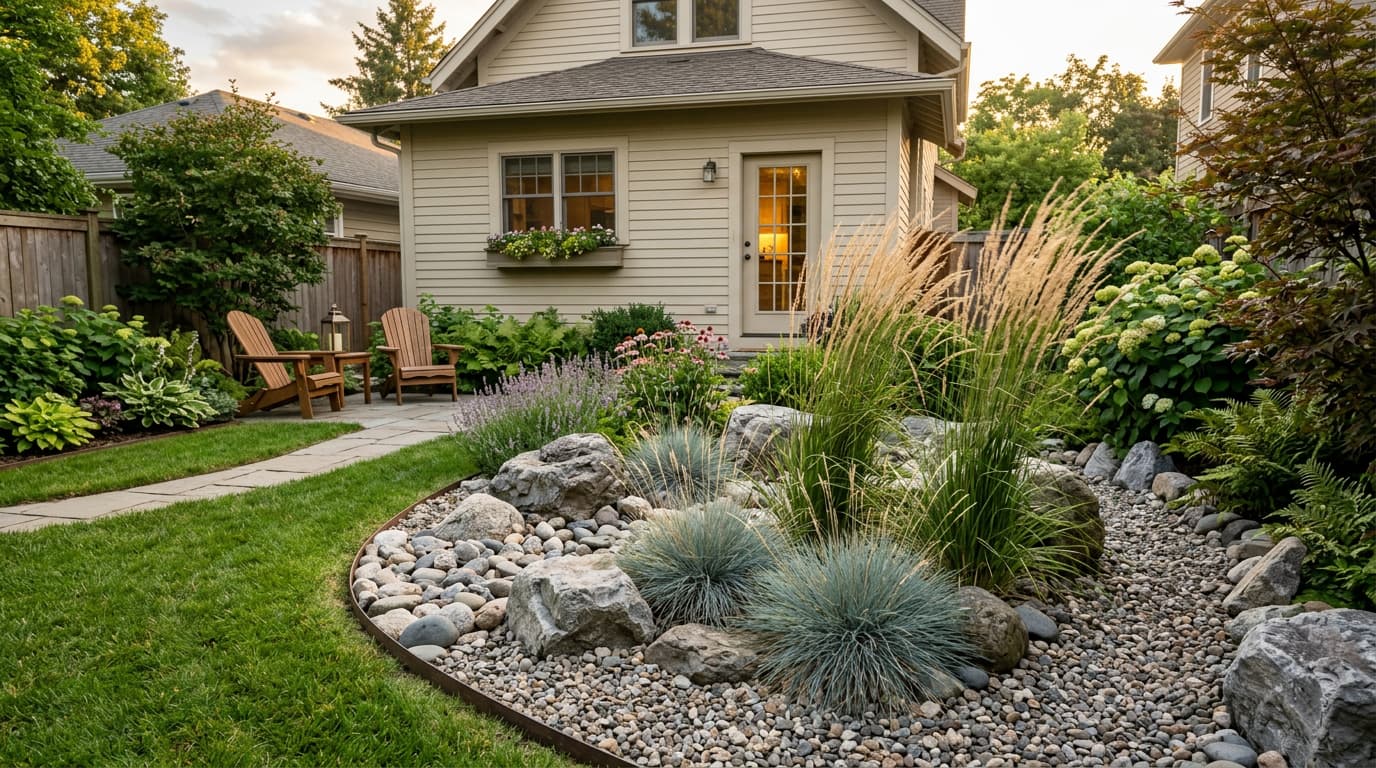
Grasses bring motion to a still stone scene. Their blades sway with every breeze and catch low evening light. Set against solid rock, that movement stands out even more.
Add Grasses that pair well with stone, like Blue fescue and Feather grass. Plant them in clumps between boulders. Cut them back once a year to keep the shape fresh.
16. Rock Garden Around a Patio
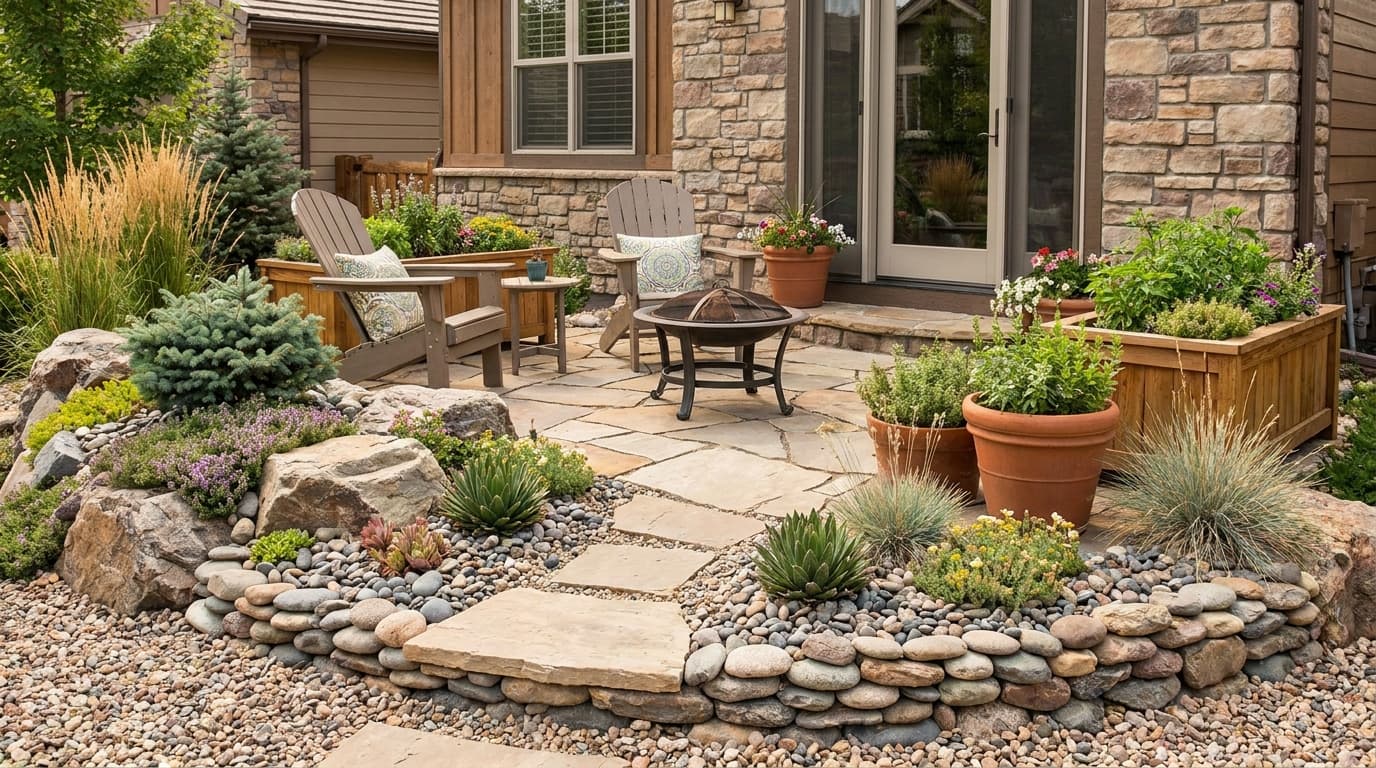
Stone planting softens the hard edges of a patio. A slim rockery along the border blends the paved area into the garden. It stops the patio from feeling like a bare slab.
Rock, containers, and seating blend to give the outdoor space a finished look. It pairs especially well with a pea gravel patio, which drains fast and keeps the floor itself weed-free.
17. Colorful Rock Garden With Flowering Plants
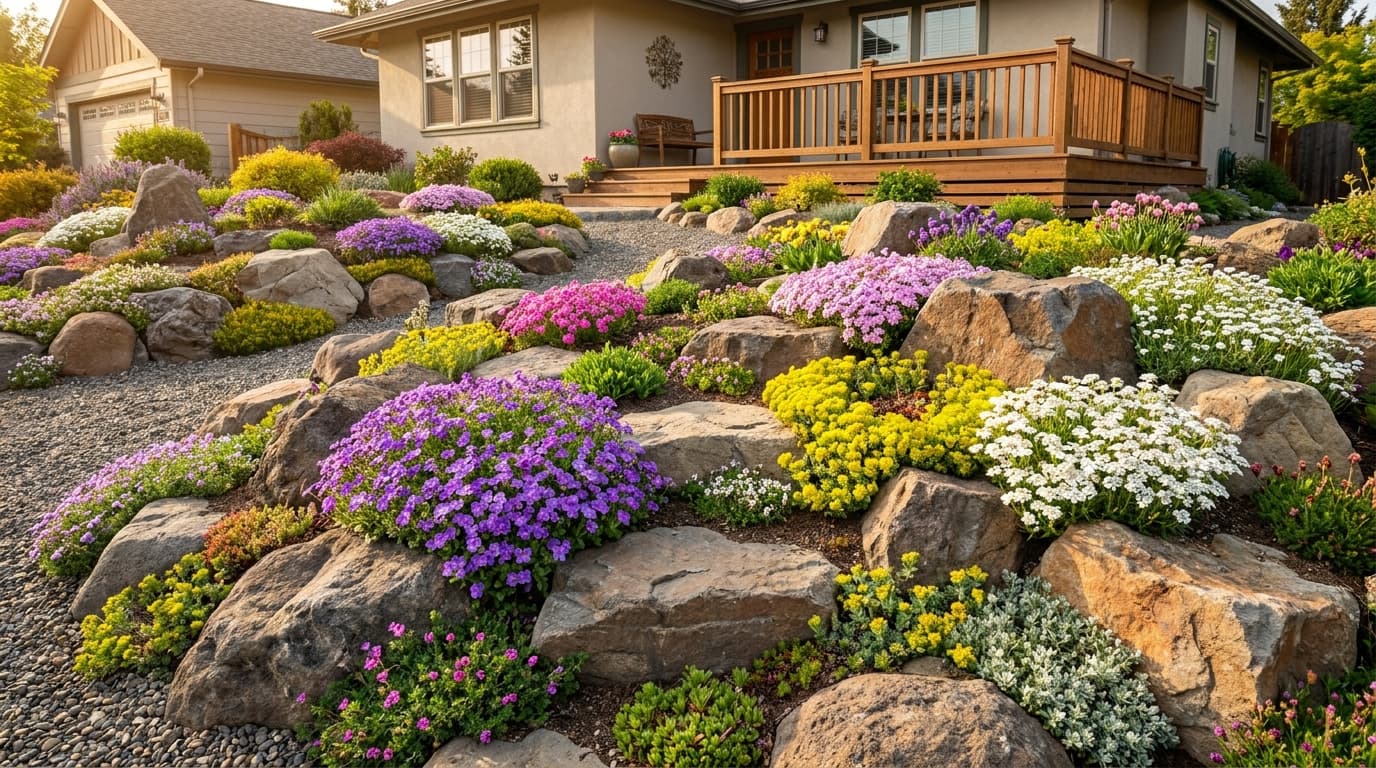
Rock gardens are not all grey and green. The right blooms give you color from spring through summer. Flowering alpines are built for this exact stony, sunny setting.
Stagger their bloom times so the garden never goes fully dull.
18. Rock Garden With Large Statement Boulders
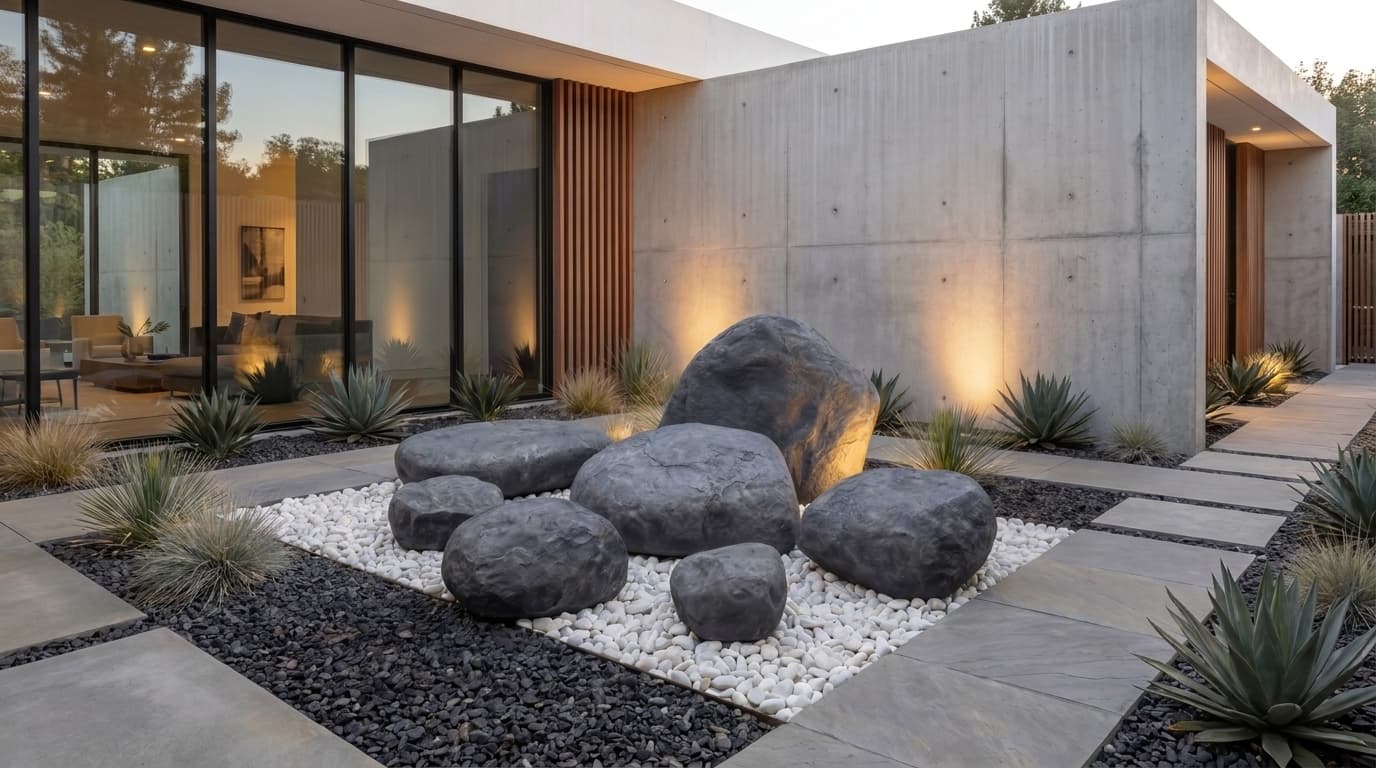
One big boulder can anchor an entire design. Oversized rocks act as focal points and give a young garden instant weight. Placement makes or breaks the effect.
A boulder that looks dropped in feels fake. One that looks half-unearthed feels ancient.
19. Alpine Rock Garden Design
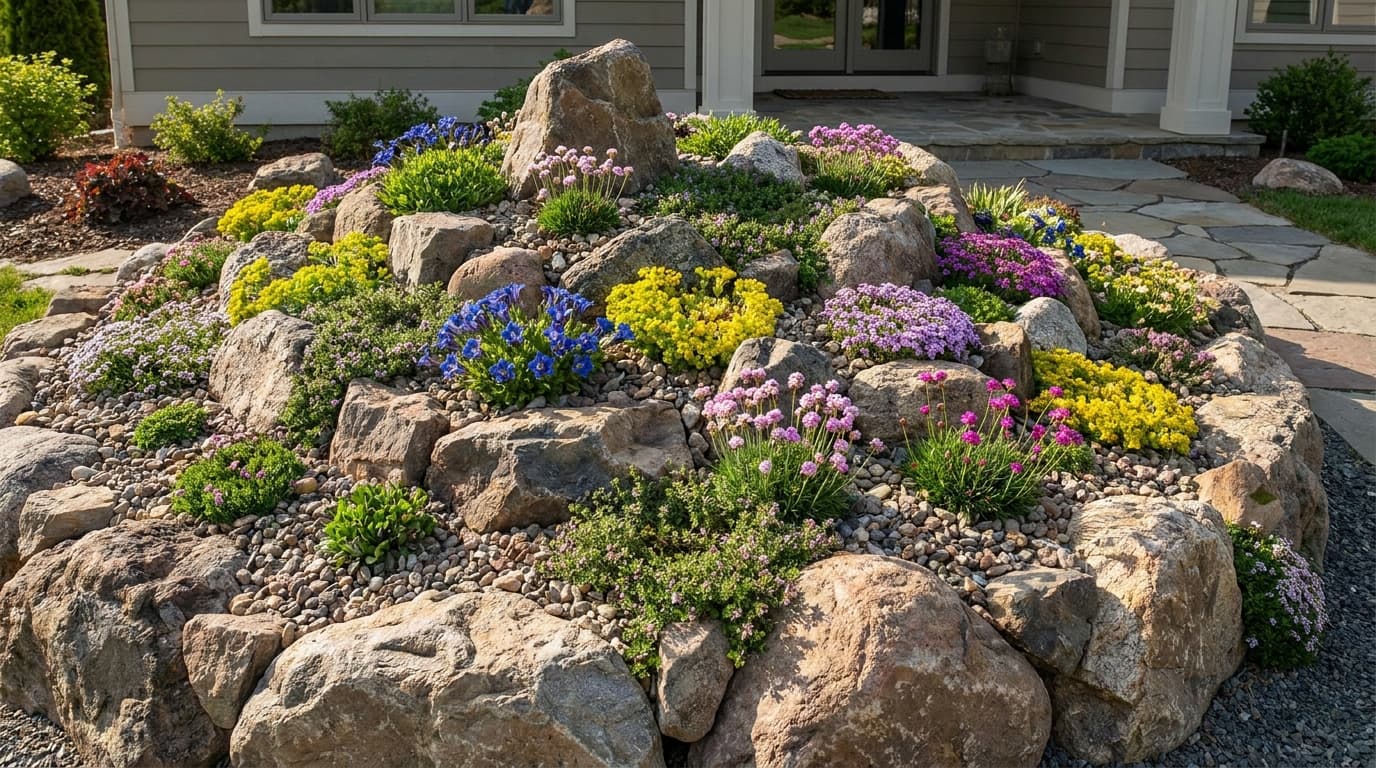
The alpine style is the original rock garden. It copies high mountain ground, where small plants grow among stone in thin, sharp soil. Cool-weather species do best here.
Build a true alpine bed with Small rocks and mountain plants.
Drainage is everything for these plants. They rot fast in wet, heavy ground, so mix in plenty of grit or crushed stone.
20. Low-Maintenance Rock Garden
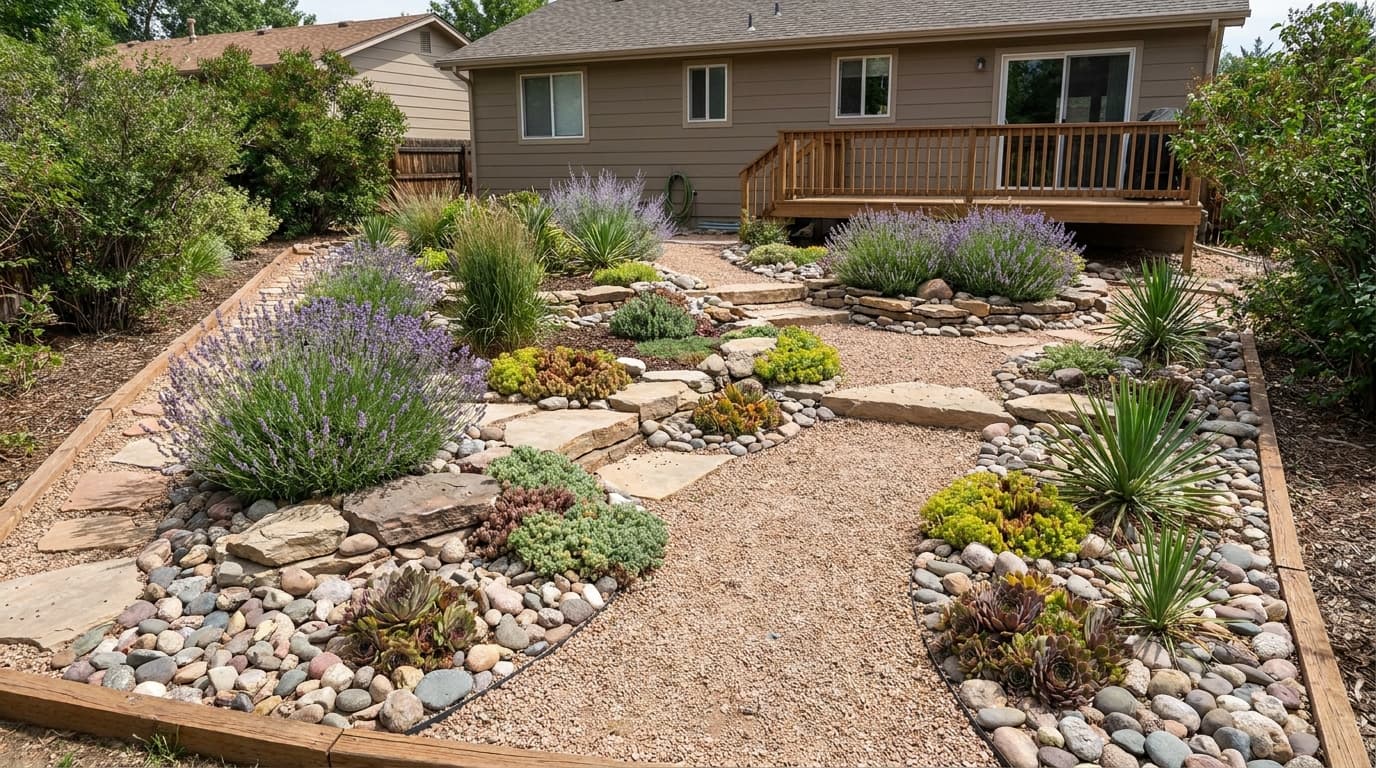
Some yards just need to look good with little work. A low-care rockery leans on tough plants and smart prep to stay tidy on its own. Set it up well, and it mostly runs itself.
Sedum, sempervivum, and lavender all grow well on neglect once rooted.
21. Rock Garden With Succulent Wall Features
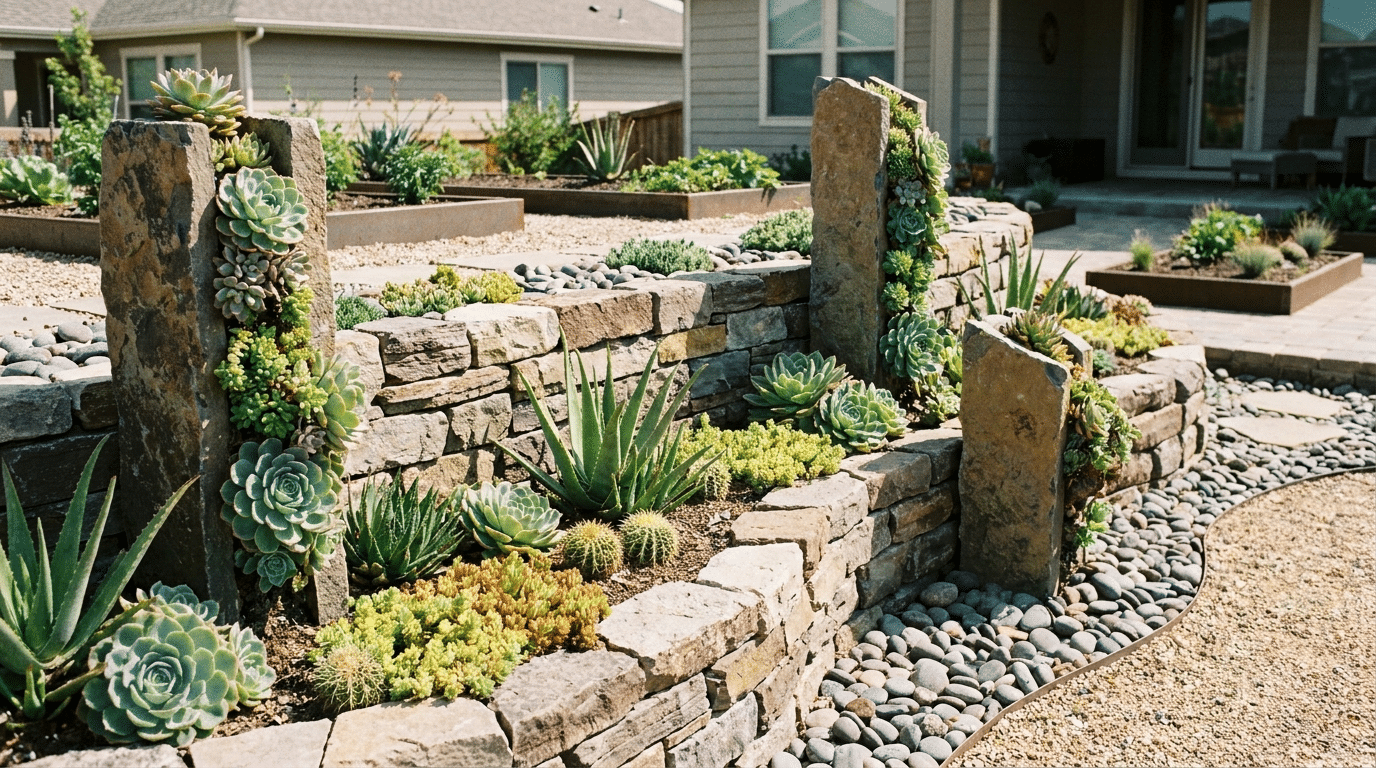
Vertical stone brings a rock garden up off the ground. A retaining wall or stacked stone structure holds pockets of soil for planting. This suits sloped or cramped yards with little flat space.
The living wall doubles as a boundary and a planter. Choose sun-loving succulents for hot, exposed wall faces.
22. Backyard Fire Pit Rock Garden
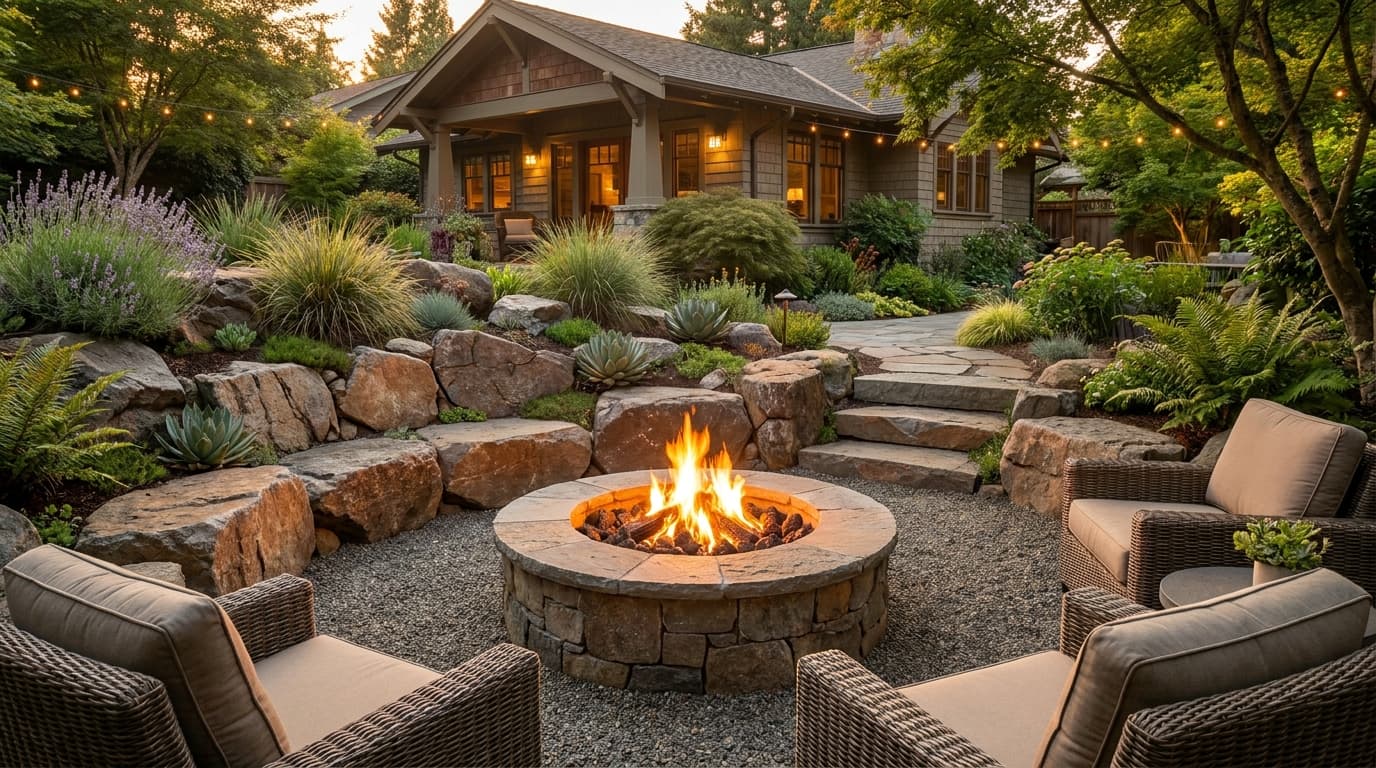
A stone garden and a fire pit make a natural gathering spot. Rock and gravel around the pit stay clean and never catch stray sparks like a lawn might. The setting feels rugged and warm.
Ring the seating with low boulders and hardy grasses for a cozy, grounded look.
23. Tropical Rock Garden Design
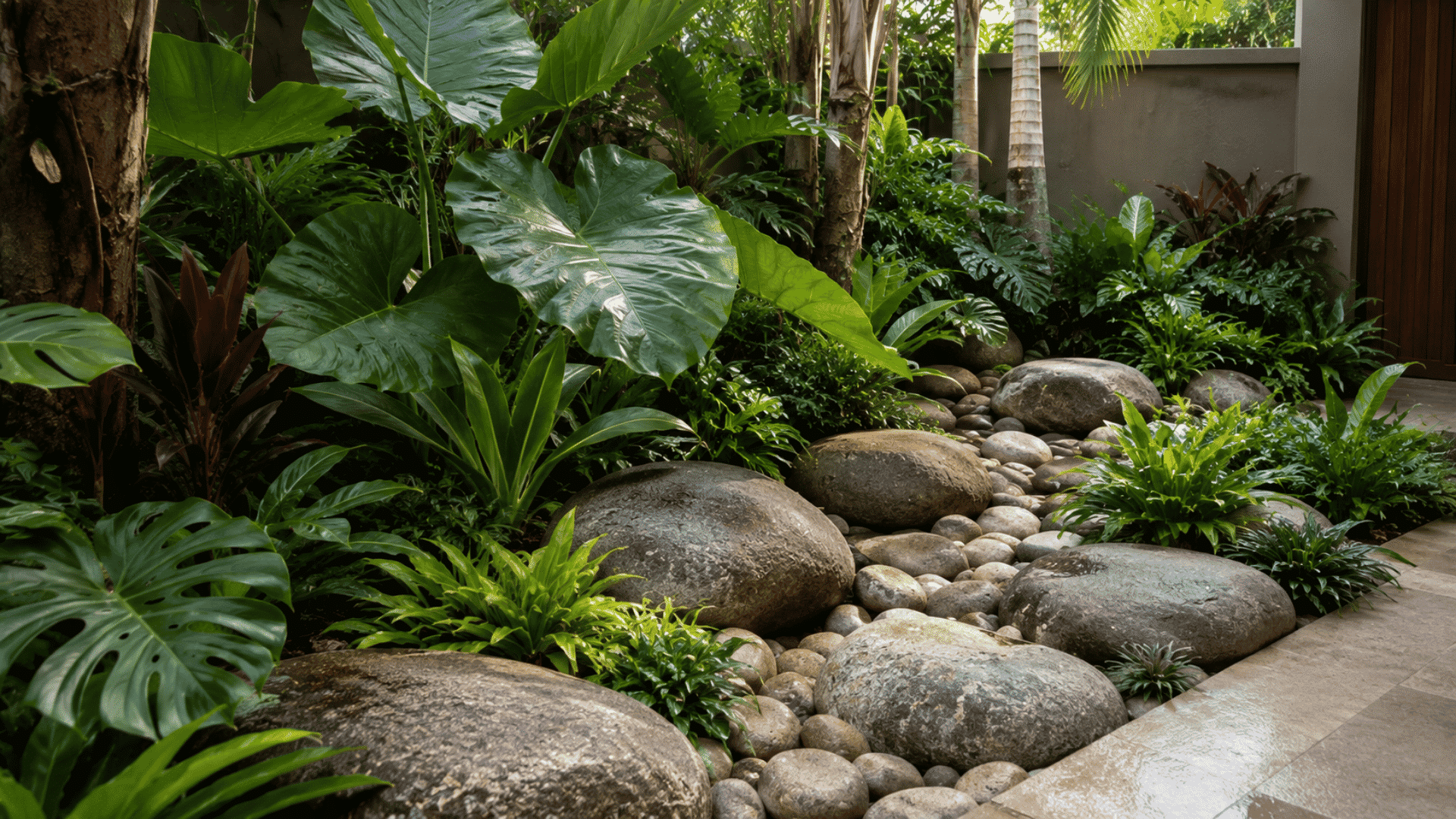
Rock also works with lush, leafy planting. Big smooth boulders play off broad tropical foliage for a bold, green contrast. This style fits warm, humid climates or sheltered corners.
Fill it with large-leaf plants, set rounded river boulders among the greenery. The smooth stone reads as a jungle streambed.
24. Cottage-Style Rock Garden
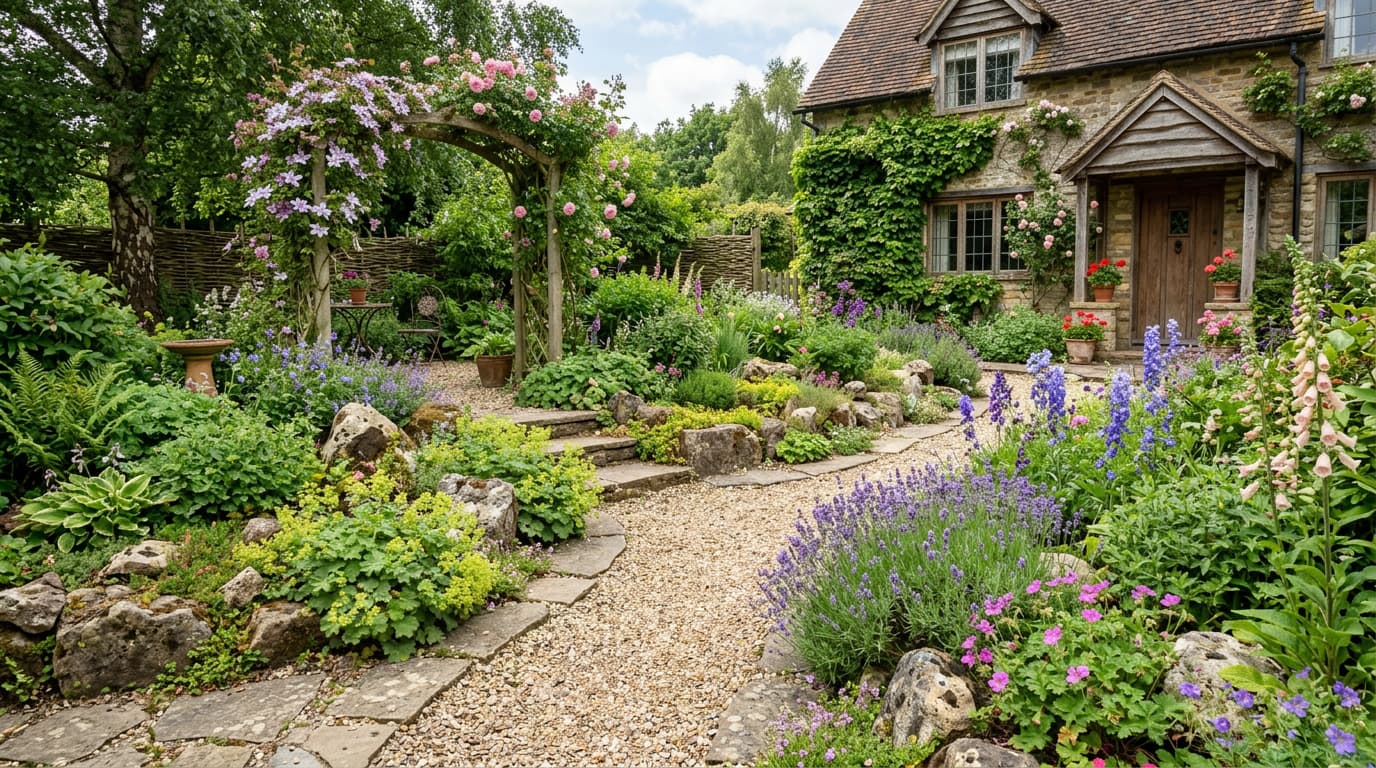
A cottage rockery mixes stone with loose, informal flowers. Nothing lines up in rows here. Blooms spill over rocks and along winding paths for a soft, lived-in feel.
The charm comes from the relaxed, slightly wild layout.
25. Rock Garden Under a Deck or Outdoor Structure
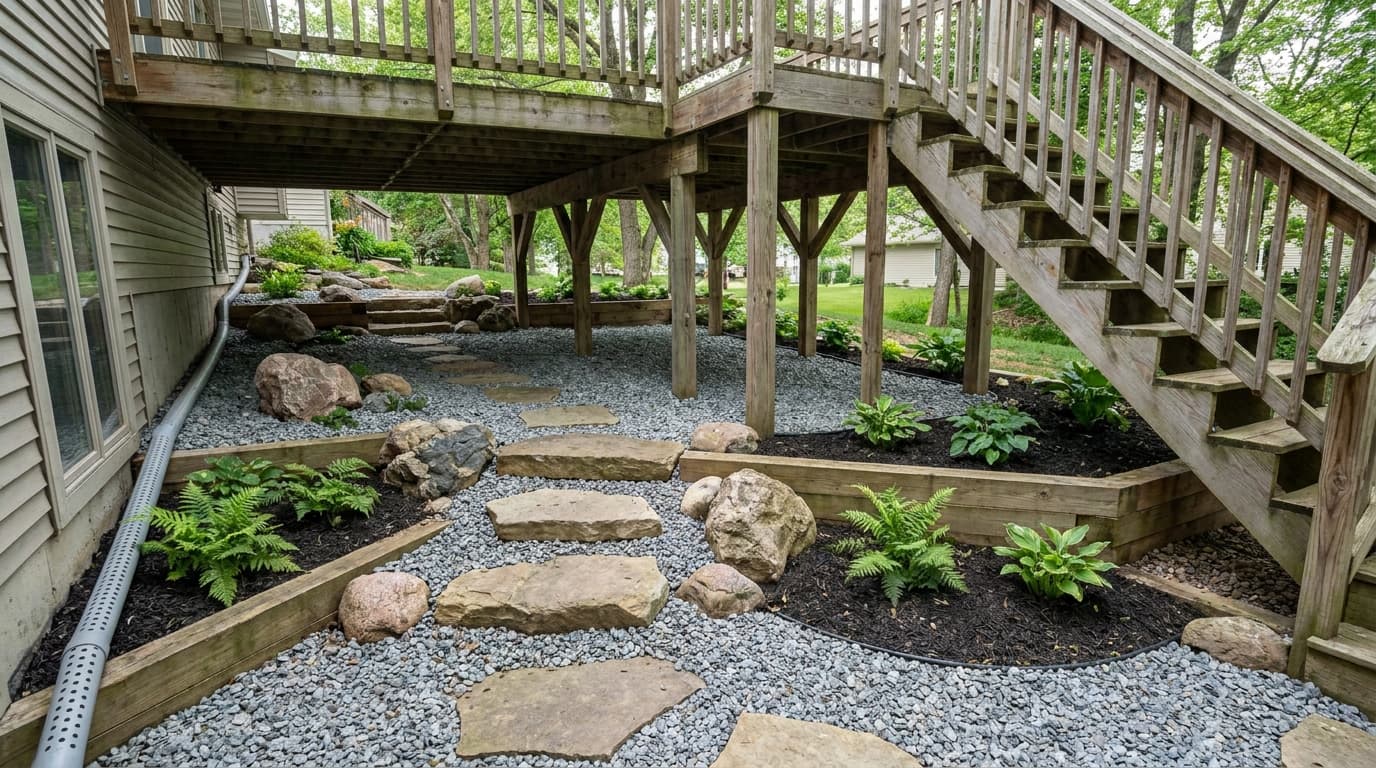
The shady, dry ground under a deck defeats most plants. Stone solves it. Gravel and rock cover the bare dirt, improve drainage, and end the muddy, patchy look.
This zone rarely needs planting at all. If you do add greenery, pick deep-shade plants like ferns for the outer edge. Mostly, let clean gravel and a few set stones do the work in this tricky spot.
26. DIY Rock Garden Corner
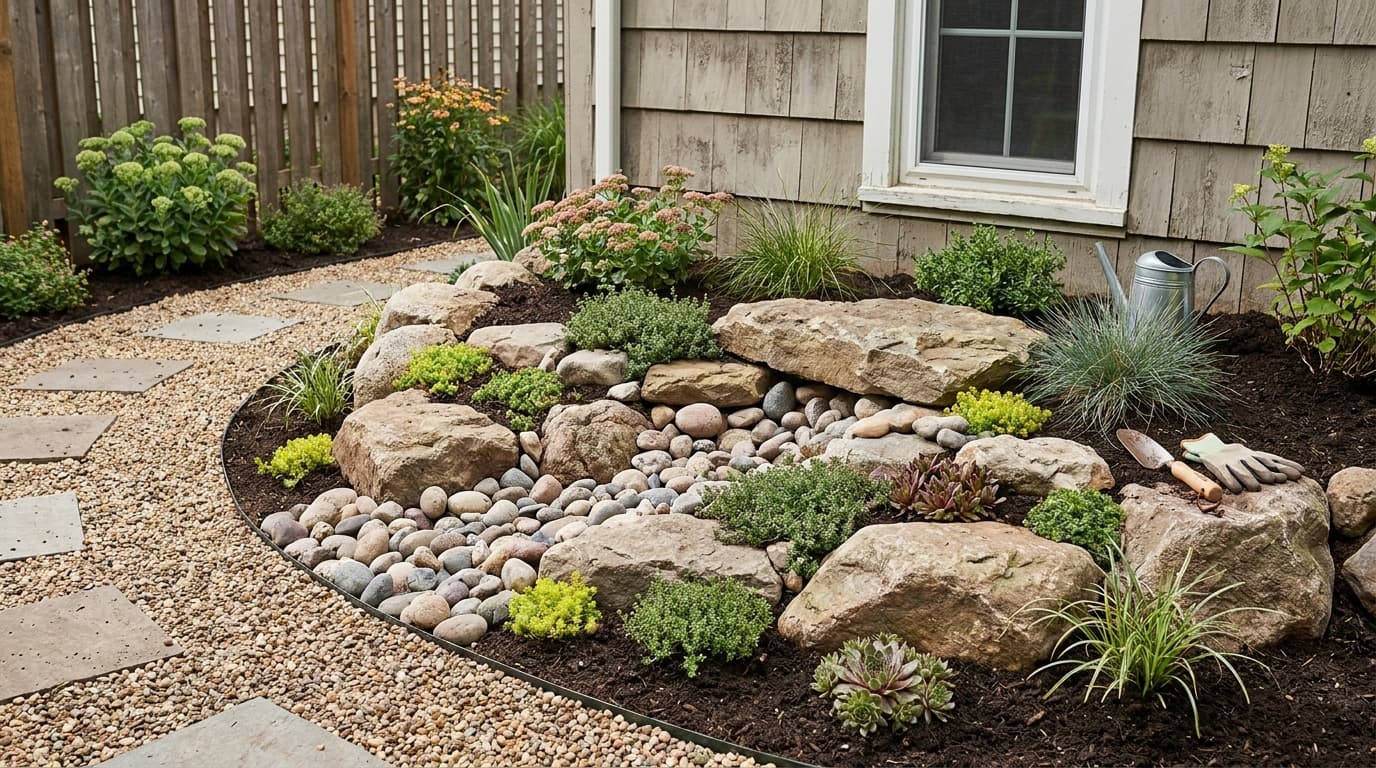
A single corner is the perfect first project. Beginners can build a small rockery in a weekend and learn the basics with low risk. Start small and grow your skills.
Set the largest stones first, then plant around them. Finish with gravel mulch to complete the look.
27. Rock Garden With Lighting for Night Appeal
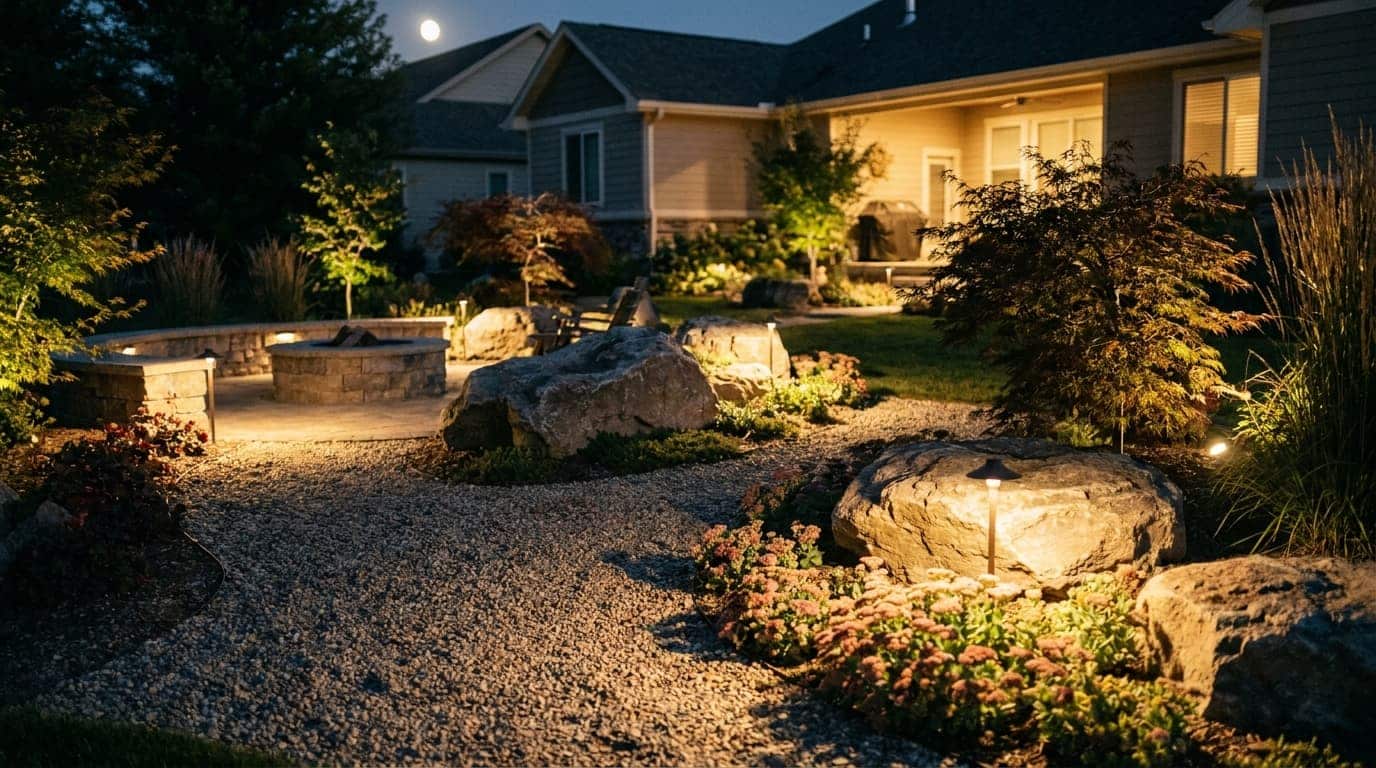
Light gives your rock garden a second life after dark. Well-placed fixtures throw shadows across boulders and turn stone into sculpture. The night view can outshine the day one.
Warm-toned bulbs suit natural stone best. Keep the lighting subtle so the garden glows rather than glares.
How to Choose the Right Rocks for Your Garden
The best rock for your garden depends on the job you need it to do. Big boulders anchor a design, while small stones fill and drain. Match the stone to its role, your climate, and your soil.
Here is a quick guide to common rock garden materials:
| Rock Type | Best Use | Keep in Mind |
|---|---|---|
| Boulders | Focal points and anchors | Heavy; bury part of each for a natural set |
| Flagstone | Paths and stepping stones | Flat and stable; can get slick when wet. |
| River rock | Borders and dry streambeds | Smooth and round; shifts underfoot |
| Crushed stone | Base layer and drainage | Sharp edges lock in place; plain to look at |
| Pea gravel | Ground cover and paths | Soft to walk on; needs occasional raking |
| Slate chips | Modern, dark accents | Bold color; fades slowly in strong sun |
Common Rock Garden Mistakes to Avoid
Most rock garden failures trace back to a few avoidable errors. Learn them now and skip the wasted time and money. Good drainage and honest plant choices prevent nearly all of them.
Watch out for these common slip-ups:
- Skipping drainage: Alpine and succulent roots rot in wet soil. Always dig in grit or crushed stone first.
- Setting rocks on top of the soil: Boulders that sit up look fake. Bury part of each one instead.
- Using one rock size: All-matching stone reads as flat. Mix large, medium, and small for depth.
- Wrong plant for the light: Sun succulents die in shade, and ferns fry in sun. Match each plant to its spot.
- Piling soil against a tree trunk: Buried bark rots. Keep stone and soil back from the base.
- Ignoring weeds early: Small weeds pull out fast. Big ones tangle into the stones.
How to Maintain a Rock Garden
A rock garden asks for little care, but a little goes a long way. A few small habits keep the stone clean and the plants healthy. Most tasks take minutes, not hours.
Keep yours in shape with these steps:
- Pull weeds while small: Check every couple of weeks in the growing season. Loosen the soil first, then pull gently near shallow roots.
- Refresh the gravel mulch: Top up the grit layer around plants every few years as it thins.
- Water deeply but rarely: Once settled, most rock plants need water only in long dry spells.
- Trim plants each year: Cut back grasses and spreading alpines after they flower to keep them tidy.
- Clear leaves and debris: Remove fallen leaves so they cannot rot into weed-friendly pockets.
- Reset shifted stones: Nudge any rocks moved by rain or frost back into place.
Wrapping It Up
Hard ground does not have to stay ugly, and I have proven it in my own backyard.
A dry slope, a shady corner, or a bare strip by the door can become the best part of your yard with just stone and a few tough plants.
These rock garden ideas give you a place to start, whether that is a quiet Zen bed or a boulder-anchored front yard.
You only need the one that fits your space and the time you want to give it. Pick your favorite rock garden idea and set your first stone this weekend.
Frequently Asked Questions
What Plants Grow Best in a Rock Garden?
Rock gardens thrive with drought-tolerant and low-growing plants like sedum, lavender, creeping thyme, succulents, and alpine flowers that prefer well-drained soil.
Are Rock Gardens Easy to Maintain?
Rock gardens need less watering and upkeep than lawns but still require occasional weeding, trimming, and gravel care to stay neat.
How Do You Start a Rock Garden?
Start by choosing a sunny, well-drained spot, placing larger rocks first, then adding suitable plants and gravel to complete the design.
What Rocks are Best for Landscaping?
River rocks, granite, limestone, slate, and gravel are popular choices. The best option depends on your garden style, climate, and layout.
Can a Rock Garden Work in a Small Yard?
Yes, small yards can use compact rock gardens with layered stones, gravel corners, raised beds, or vertical designs to save space.