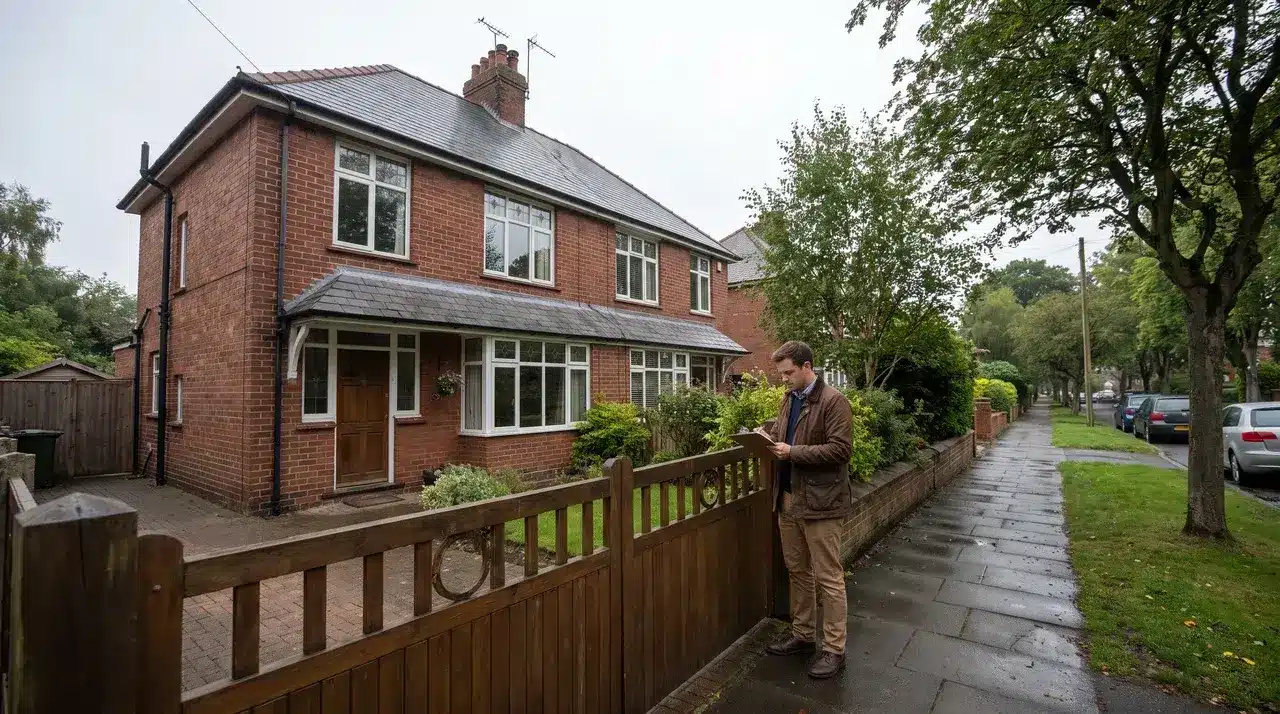

You found the property. You made the offer. It got accepted.
Now your solicitor mentions a survey, and you are weighing up whether it is worth the cost. A property survey is not a formality.
It is the one step that tells you exactly what you are buying before you are legally bound to it.
Damp, roof issues, and structural cracks never show up in a mortgage valuation or an estate agent’s listing. This guide breaks down every survey type and how to use the findings.
What is a Property Survey?
A property survey is a professional inspection of a building’s physical condition. A qualified surveyor visits the property, checks for defects, and gives you a written report before you commit to buying.
- Carried out after your offer is accepted.
- Arranged and paid for by the buyer.
- Based on a visual inspection of the building.
- Produced by a qualified, accredited surveyor.
- Delivered as a written report with condition ratings.
When Should You Book a Property Survey?
Book your survey as soon as your offer is accepted. Waiting too long delays exchange, reduces your negotiating window, and adds unnecessary pressure to a process that already moves fast.
The right time to book:
- Book as soon as your offer is accepted.
- Do not wait until solicitors have drafted contracts.
- Early booking signals commitment and keeps the process moving.
- Most Level 2 surveys take 1–4 hours on-site.
- Reports are usually returned within a few days of the visit.
- Level 3 surveys on complex properties take longer and allow extra time.
By this stage, you’ve likely already walked the property once with a house viewing checklist in hand, spotting the obvious things. The survey goes much further than any checklist can.
How a Property Survey Differs from a Mortgage Valuation
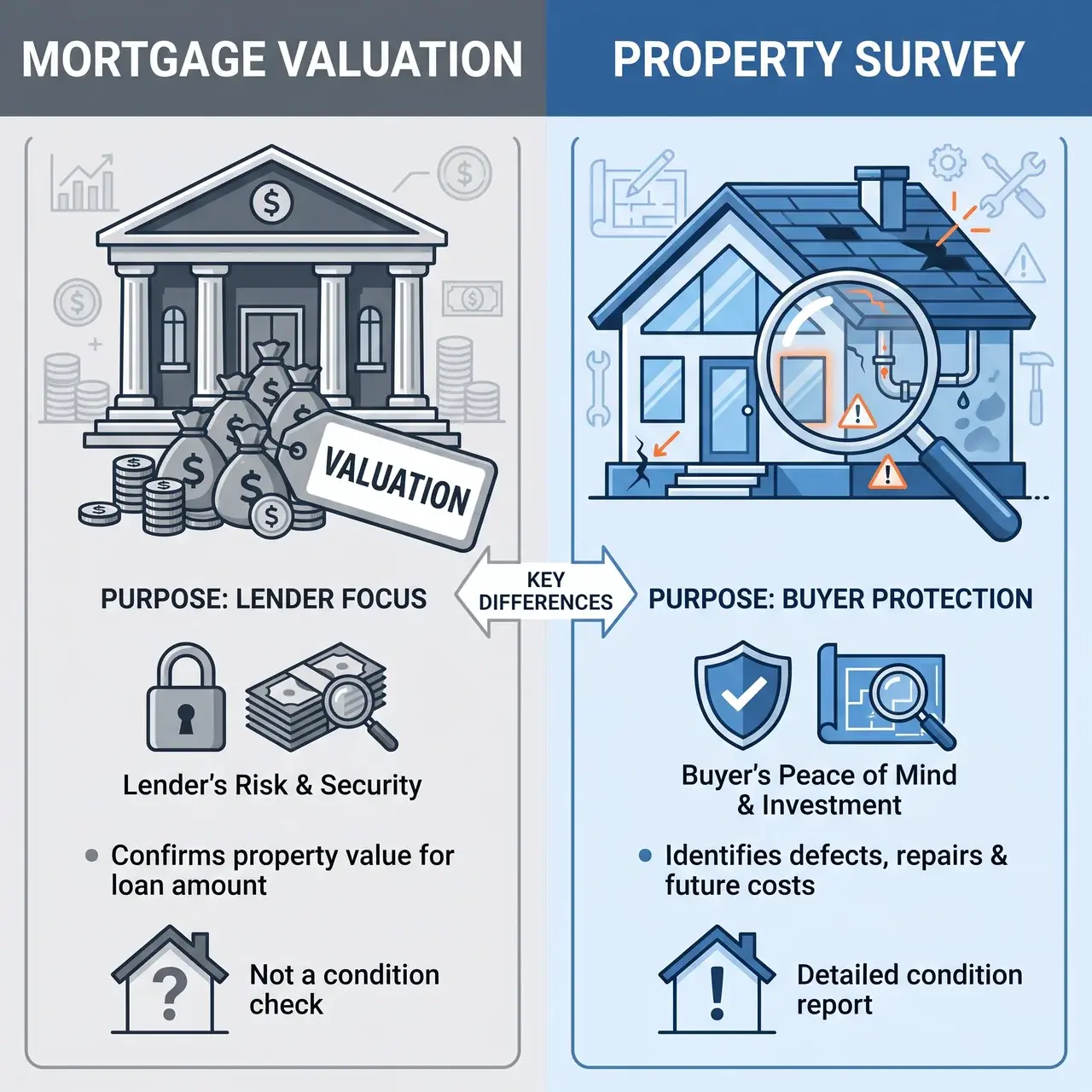
A mortgage valuation protects the lender, while a property survey helps the buyer understand the home’s condition and possible repair costs.
| Check | Mortgage Valuation | Property Survey |
|---|---|---|
| Ordered by | Mortgage lender | Property buyer |
| Main purpose | Confirms the property supports the loan | Examines the building’s condition |
| Checks defects | Usually no | Yes |
| Time on-site | Around 20–30 minutes | Longer, depending on the survey level |
| Benefits | Protects the lender | Protects the buyer |
| Helps negotiation | No | Yes, with repair evidence |
Pro Tip: Before you book anything, it helps to understand what a mortgage deed covers and what you are signing up for, so you know exactly where the valuation fits into the legal process.
The 3 Types of Property Survey
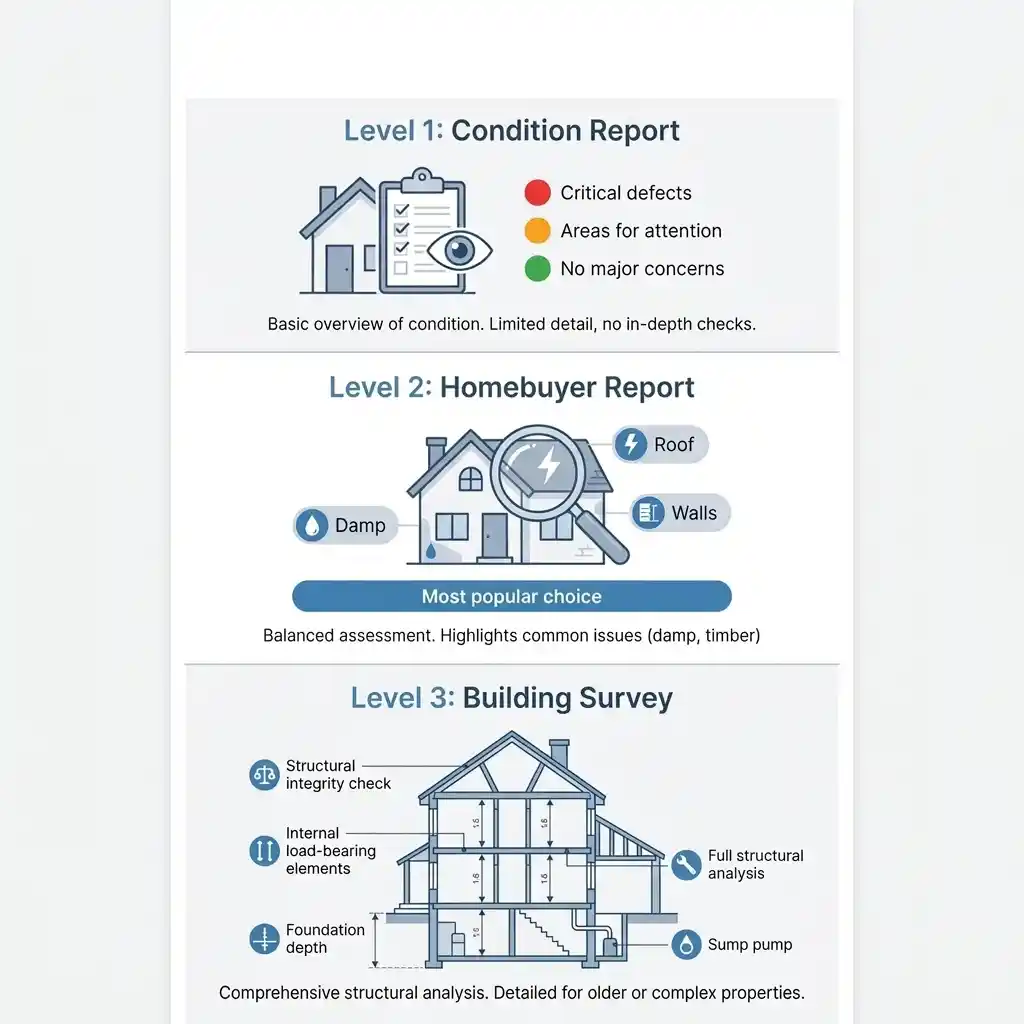
There are three survey levels. Level 1 is the most basic, Level 2 suits most standard homes, and Level 3 covers older or complex properties.
Your choice depends on the property’s age, size, and condition.
Level 1: Condition Report
The most basic option available. It gives a traffic-light rating of the property’s condition but offers very little detail. It usually needs additional information unless the property is brand new.
- Suits newer properties in clearly good condition.
- Uses a simple red-amber-green rating system.
- Does not include a market valuation.
- Offers no repair advice or cost guidance.
- Rarely worth it for anything but the newest builds.
Level 2: Homebuyer Report
The most popular choice among buyers. It covers standard properties and gives a clear, detailed visual inspection with practical findings.
- Suited to standard homes built within roughly the past 80 years.
- Covers visible defects, damp, drainage, and roof condition.
- Often includes a market valuation as an add-on.
- Uses the traffic-light rating system for easy reading.
- Takes between one and four hours on-site.
Level 3: Building Survey (Full Structural)
The most thorough survey available. If the property is old, unusual, extended, or in visible disrepair, this is the one to book.
- Covers older, listed, or structurally complex properties.
- Checks materials, construction methods, and hidden defects.
- Includes repair estimates and maintenance recommendations.
- Takes longer on-site and costs more to produce.
- Worth every penny on a property with any history.
What Does a Property Survey Check?
A survey covers the roof, walls, floors, damp, drainage, and structural condition, everything visible to the surveyor on the day.
But it does not check boilers, electrics, underground pipes, or anything hidden from view.
What a survey does check:
- Roof condition (visual inspection from ground or loft).
- Walls, floors, ceilings, and structural integrity.
- Damp, moisture, and signs of water ingress.
- Signs of subsidence or settlement.
- Windows, doors, and drainage (visual).
- Loft space, chimneys, and boundary walls.
- Grounds and outbuildings (where accessible).
What a survey does not check:
This is the gap most buyers do not realize until after they move in.
- Boiler safety or full functional testing.
- Electrical wiring or full plumbing systems.
- Drainage runs underground.
- Areas hidden behind walls, floors, or ceilings.
- Contamination or environmental risks (unless visually suspected).
- Internal condition of chimneys or flues.
Pro Tip: When a surveyor suspects a problem in an area they cannot access, they flag it and recommend a specialist. That specialist report is a separate cost but it is worth getting.
How Much Does a Property Survey Cost?
Property survey costs vary by survey level, property type, and location. Older, larger, or more complex homes usually cost more to inspect.
| Survey Type | Typical Cost | Best For |
|---|---|---|
| Level 1 | From £300 | Newer homes in good condition |
| Level 2 | £400–£1,000 | Most standard property purchases |
| Level 3 | £630–£1,500+ | Older, unusual, or damaged homes |
| Snagging Survey | £300–£600 | Newly built properties |
Costs may increase based on the property’s size, age, condition, location, local surveyor fees, and whether a market valuation is added.
| Worth knowing: Buyers who skip a survey spend an average of £5,750 on repairs after moving in, according to RICS data. A Level 2 survey at £500 starts to look like a very reasonable investment against that figure. |
Is a Property Survey Worth It?
A property survey can reveal costly defects before contracts are exchanged, giving buyers a chance to negotiate, request repairs, or reconsider the purchase.
- Potential savings: One in three surveyed buyers reportedly saved money after receiving the results.
- Price negotiation: Approximately 10% of buyers renegotiated the purchase price, according to survey findings.
- Seller repairs: About 9% persuaded the seller to fix problems before contracts were exchanged.
- Lower repair risk: Buyers without a survey may face average move-in repair costs of around £5,750.
- A survey is essential: Choose one for older, altered, listed, visibly damaged, or unusual properties.
- A lighter survey may work: It may suit newer homes, simple modern flats, or properties with a recent detailed survey.
What Happens If the Survey Finds Problems?
A problem on a survey report does not mean the deal is over. It means you now have documented evidence and four clear options for how to move forward before you are legally committed to anything.
You have four clear options:
- Renegotiate the price: use the repair cost estimate from the report as direct evidence to lower the agreed price.
- Ask the seller to fix it: request that specific defects are repaired before the exchange of contracts.
- Pull out of the purchase before exchange: you have no legal obligation to proceed.
- Proceed as-is: with full knowledge of the issues and their likely cost.
Key steps after a survey flags problems:
- Ask your surveyor to clarify: severity and estimated repair costs.
- Share relevant findings with your solicitor.
- Get independent quotes: from specialist contractors.
- Use documented evidence: not guesswork, when you negotiate.
- Don’t panic at every amber flag: focus on the red ones first.
Important: A survey with findings is far more useful than a clean one. It gives you leverage, knowledge, and options that you would not otherwise have.
Important: A survey with findings is far more useful than a clean one. It gives you leverage, knowledge, and options that you would not otherwise have.
How to Choose the Right Surveyor
Choose a surveyor registered with RICS or RPSA. Beyond accreditation, check that they have direct experience with your property type, work independently from the selling agent, and give you a clear written quote upfront.
What to check before booking:
- Accreditation: Look for membership in RICS (Royal Institution of Chartered Surveyors) or RPSA (Residential Property Surveyors Association).
- Experience: Ask specifically if they have surveyed similar properties; age, type, and construction matter.
- Local knowledge: A surveyor familiar with the area can spot regional issues more quickly.
- Independence: Avoid surveyors recommended only by the estate agent selling the property.
- Quotes: Get at least two or three before committing.
Conclusion
A property survey will not make buying a home less stressful, but it will make it smarter.
You now know the difference between a valuation and a real survey, which level suits your property, and what gets checked.
Most importantly, you know how to use the findings before you sign anything.
Buying without one is buying on hope, and that is a costly way to make the biggest financial decision of your life.
Book your property survey today, then always negotiate from knowledge, not guesswork.
Frequently Asked Questions
Can I do a Property Survey Myself?
You can walk through a property and spot visible issues. But only a qualified, accredited surveyor can produce a report that carries legal or financial weight.
Where Can I Do a Free Survey?
No legitimate full property survey is free. Some platforms offer basic online tools for rough valuations. For any real protection, you need a paid accredited surveyor.
Can I Use My Phone to Find My Property Lines?
Yes, several apps use GPS data to show approximate boundary lines. However, they are not legally accurate.
Do I Need a Survey If My Mortgage Lender Didn’t Require One?
Yes, Mortgage valuations protect the lender, not you. Skipping a survey because your lender waived theirs leaves defects completely unchecked.
Is a Property Survey Legally Required in Scotland?
Yes, for sellers. Scottish law requires a Home Report, including a Level 2 survey, before the property can be marketed for sale.